Artificial Grass Installation for Dogs: Drainage, Odor Control, and Infill
 James ThorntonLawn Equipment & Maintenance Expert | 20 Years
As an Amazon Associate we earn from qualifying purchases.
Persistent urine odor, slow drainage, and matted turf indicate that a pet area is not designed as a true dog-friendly artificial grass system. The issue is almost always a combination of base construction, turf selection, and infill choice, not just the grass itself.
This guide explains artificial grass installation for dogs: drainage, odor control, and infill in technical but practical detail. Pet turf installs differ from standard landscape turf because dogs add constant moisture, high ammonia loads from urine, and repetitive traffic in small areas. A system that works under ornamental trees fails quickly in a kennel run.
Dog owners are switching from natural grass to artificial grass for pets because of mud around doors, bare dirt in running lanes, urine burn spots, constant reseeding, and the difficulty of keeping a clean surface where dogs play and rest. A correctly designed pet turf system eliminates mud, reduces allergens, and provides a surface that is easier to sanitize than worn natural lawn.
The core challenges with any pet installation are:
- Drainage performance through the turf, infill, and base
- Odor control for urine and organic buildup
- Choosing the right infill and using the correct amount
This article covers how to assess your space and dogs, design the base and drainage, choose the right pet turf, install it step by step, select and apply infill, and maintain long term odor control. For broader context on product selection and yard layout, see How to Choose the Best Artificial Grass for Pets, Dog-Friendly Backyard Ideas, and Artificial Grass Maintenance Checklist for Pet Owners.
If you're dealing with persistent urine odor or slow drainage in your dog's artificial grass, it's likely due to an improper turf system setup. To verify, check if your turf backing has a high drainage rate, ideally 250 to 400 inches per hour. This ensures effective water flow and prevents odor buildup.
To remedy these issues, start by selecting a pet-specific artificial grass with a permeable backing and a pile height of 1.0 to 1.25 inches. Install a proper drainage base and use an antimicrobial infill to control odors. Expect noticeable improvements in drainage and cleanliness within a week of installation.
Understanding Pet-Friendly Artificial Grass Systems
What Makes Artificial Grass “Dog-Friendly”?
Artificial grass products marketed for general landscaping do not automatically perform well under heavy pet use. Dog-friendly turf incorporates design features that handle frequent urine, repeated paw traffic, and regular cleaning.
Key differences between standard landscape turf and pet turf include:
Higher drainage rate and backing design
Standard turf usually has a primary backing with perforated drain holes spaced roughly 3 to 6 inches apart. This works for rainfall on a typical lawn but restricts point-source flows like concentrated urine or hose rinsing in kennel areas.
Pet turf typically uses one of two strategies:
- More frequent and larger-perforation hole patterns
- Fully permeable (flow-through) backing that drains across the entire surface instead of only at holes
According to product specifications from multiple manufacturers, well-designed pet turf often lists drainage rates of 250 to 400 inches per hour or higher, compared to 30 to 60 inches per hour for some landscape products. That high rate prevents puddling when owners rinse down the area with a hose or use disinfectant solutions.
Shorter pile height and denser thatch
For dogs, the optimal pile height is typically in the 1.0 to 1.25 inch range. This height supports easy solid waste pickup and improves contact with a hose stream when rinsing. Extremely long fibers, for example 1.75 to 2.0 inches, trap hair and fecal residue, reduce airflow, and slow evaporation, which increases odor risk.
Dense thatch (the curly support layer at the fiber base) helps keep the pile upright under repeated paw traffic and reduces infill requirements, which improves drainage and cleaning.
Antimicrobial or anti-odor backing options
Some pet turf products include antimicrobial treatments or integrated odor-control layers in the backing. These do not replace rinsing and enzyme treatments, but they slow bacterial growth and reduce baseline odor intensity, especially in multi-dog households.
Heavy traffic, frequent urination in the same zones, and digging create specific stresses. Dogs tend to follow the same paths, which means fiber wear is localized. High-energy dogs also stress the seaming and perimeter more than light-use lawns. Planning for this behavior at the product-selection stage prevents premature wear and seam failure.
Key Performance Priorities for Dog Owners
Dog owners who install artificial grass generally share five performance priorities.
1. Drainage performance
Drainage controls odor, hygiene, and surface stability. A pet system must move liquid rapidly from the fiber level, through the backing and infill, into the aggregate base, and then into native soil or a hard drain. Slow drainage keeps urine in contact with warm surfaces, which accelerates bacterial activity.
2. Odor control
The problematic odor is primarily ammonia released from the breakdown of urea in dog urine. According to University of Minnesota Extension, dog urine has high nitrogen and salt concentrations that quickly affect grass; the same chemistry drives odor in artificial turf systems. High drainage rates, frequent rinsing, enzyme cleaners, and the correct infill (such as zeolite-based products) are the foundation of odor control, especially for multiple dogs or small runs.
3. Durability
Paws, claws, and repetitive sprints concentrate wear. Fibers must resist flattening and abrasion; backing must resist tearing at seams and edges. Nylon fibers are more resilient but can be hotter under direct sun than polyethylene. Dense, shorter-pile polyethylene systems with strong backing and reinforced seaming often provide an effective durability balance for residential pet areas.
4. Safety
Pet turf must be lead-free and made with non-toxic materials. Heat is also a safety factor. Artificial grass surfaces can reach 140 degrees Fahrenheit or higher in full sun. NC State Extension notes that synthetic surfaces in sports applications heat significantly more than natural grass under the same solar load. Lighter-colored turf, shade structures, and cooling infills reduce surface temperature. Adequate cushioning in the base layer also supports joint comfort, especially for older dogs.
5. Cleanability
The ability to remove solid waste thoroughly, rinse away urine, and occasionally disinfect the surface distinguishes a functional pet installation from a cosmetic one. Shorter pile heights, permeable backing, and minimal but appropriate infill all improve cleanability.
Common Myths and Misconceptions
“Any artificial grass works fine for dogs”
Using standard landscape turf for an area where dogs urinate daily causes chronic odor and puddling. The issue is not only the fibers, but the combination of slower drainage, deeper pile, and heavier infill volumes often used for aesthetics. Dog-friendly systems require higher drainage rates, shorter fibers, and specific base profiles.
“More infill always means better performance”
Infill supports fibers, distributes load, and influences surface temperature, but overfilling restricts water flow and traps urine near the top of the system. For pet areas, installers often reduce infill depth compared to sports or decorative installs, then use specialized infills in targeted zones rather than burying the backing under a thick layer of standard silica.
“Odor control products are optional”
For one small dog in a large yard, rinsing and sunlight sometimes manage odor adequately. For two or more medium or large dogs using a confined area, some combination of enzyme cleaners, odor-neutralizing infill, and good drainage is necessary. Without them, ammonia odor builds over weeks and intensifies in hot weather.
“Drainage is just about the turf, not the base”
Backing permeability means little if the base layer is compacted or poorly graded. Drainage is a complete system issue, from turf to soil. A high-drain turf installed over dense, ungraded soil fails quickly. Proper base construction is the foundation of any successful artificial grass installation for dogs: drainage, odor control, and infill all depend on that base.
Planning Your Dog-Friendly Artificial Grass Installation
Assessing Your Space, Climate, and Dogs
Detailed assessment before installation prevents most long-term issues. Treat this phase as a site evaluation rather than a simple measuring step.
Yard assessment checklist
First, measure and observe the physical area:
- Size and shape - Irregular shapes and narrow side yards require more seam planning and careful base grading. Any area under 100 square feet where multiple dogs regularly urinate needs especially aggressive drainage design.
- Sun vs shade exposure - Full sun increases surface temperature and speeds odor formation. Shaded areas stay cooler but dry more slowly, so they need strong base drainage and occasional deep rinsing.
- Existing drainage and slope - Look for where water currently flows and where puddles form after a rain. A minimum finished grade of roughly 1 to 2 percent (about 1 to 2 inches of drop per 10 feet) away from structures is a reliable target for most installations.
- Access for base materials - Every inch of base depth across 100 square feet translates to hundreds of pounds of material. Tight access might limit equipment choices and increase labor time.
Dog-specific factors
Next, evaluate the dogs that will use the turf:
- Number and size of dogs - Multiple large dogs produce high volumes of urine. Small areas with multiple large dogs require the most robust drainage and odor control design.
- Urination habits and favorite spots - Dogs rarely distribute urine evenly. Identify current preferred spots and plan slightly more aggressive drainage and odor control methods in those zones, such as additional perforated pipe or higher concentrations of zeolite infill.
- Digging and chewing behavior - Persistent diggers need stronger edging, deeper perimeter fastening, and sometimes buried deterrent mesh at the edge zone.
- Allergies or sensitivities - If any dog has known contact allergies, use turf and infills certified non-toxic and avoid harsh disinfectants in routine maintenance.
Setting Project Goals and Budget
Design choices depend on whether your priority is maximum odor control, minimal cost, or the softest-feeling surface. Clarifying these priorities keeps decision making consistent.

Common priority tradeoffs
- Low odor vs lowest cost - For high-use pet areas, a more permeable turf, thicker aggregate base, and odor-control infill cost more but significantly reduce odor. A minimal system saves money initially but often requires corrective work within 1 to 3 years.
- Softness vs maximum durability - Taller, plusher fibers feel softer but trap more waste and flatten faster. Shorter, denser fibers with firm infill feel more like athletic turf and wear better under paws.
- DIY vs professional installation - DIY saves on labor but frequently leads to under-built bases or seam issues. Professional installation is often justified for areas over 400 to 500 square feet or where complex drainage (French drains, tie-ins to existing systems) is required.
Cost components overview
Typical cost categories include:
- Turf material (pet-rated backing and fiber)
- Base rock (usually 3/4 inch crushed stone plus a finer layer for leveling)
- Optional drainage layers or pipe (French drains, perforated pipe with gravel bed)
- Weed barrier (for areas with aggressive weed species)
- Infill (silica, coated sand, zeolite-based infills)
- Edging (bender board, concrete curbing, pressure-treated edging)
- Tools and accessories (plate compactor rental, turf nails, seam tape, adhesive)
When professional installation is worth it
Professional installation is particularly justified when:
- The area exceeds roughly 500 square feet
- There is existing drainage infrastructure that should be integrated rather than ignored
- There are steep slopes or retaining walls near the planned turf
- You plan to run drain lines to a lower part of the yard or to a storm drain
These situations benefit from the experience and equipment of a contractor who specializes in pet turf systems, not just general landscaping turf.
Choosing the Right Artificial Grass for Dogs
Selecting turf that matches your dogs and climate is one of the most important decisions in any artificial grass installation for dogs: drainage, odor control, and infill.
Pile height and density
A pile height between roughly 1.0 and 1.25 inches provides an effective balance for dogs. At this height:
- Solid waste sits on top of the fibers instead of sinking into deep thatch
- A standard scoop or bag removes waste without digging
- Hose streams reach the backing and infill easily
Fibers in the 40 to 60 ounce per square yard range with a dense thatch support and resist matting under paws. Extremely tall, lush turf that looks like ornamental lawn is harder to clean and often ends up flattened in pet runs.
Fiber type and thatch
Common fiber types include:
- Polyethylene (PE) - Soft, skin-friendly, and widely used for landscape and pet products. Good for general pet use.
- Polypropylene (PP) - Often stiffer and less expensive, used for thatch layers or low-traffic areas. Less ideal as the primary fiber in high-traffic pet zones.
- Nylon - Extremely resilient and used in some high-traffic commercial pet runs, but can be hotter in direct sun and is usually more expensive.
Blended fiber systems, for example polyethylene blades with polypropylene thatch, provide a realistic look while keeping resilience and cleanability high.
Backing types and minimum drainage specs
Two main backing types are used for pet turf:
- Standard hole-punched backing - A polyurethane or latex backing with regularly spaced drain holes. Suitable when combined with a well-drained base for moderate pet use, especially in larger yards.
- Fully permeable backing - A non-blocking, mesh-like backing that allows water to pass anywhere through the surface, not just at holes. This design is especially effective for small, high-use dog runs where urine concentration is high.
For pet areas, many installers prefer products rated at 250 inches per hour or higher drainage. Values below roughly 50 inches per hour are inadequate for high use. Manufacturer data sheets usually provide these numbers; if not, selecting a product marketed explicitly as pet turf with permeable backing is safer.
Considering cooling and heat
Heat management matters for paws and for odor control, because higher temperatures accelerate bacterial activity and ammonia release. Several strategies help:
- Choose lighter green or mixed-color blades rather than very dark greens that absorb more heat.
- Use infills marketed as cooling or temperature reducing, which often have higher reflectivity and moisture-absorption characteristics.
- Plan shade in part of the area through umbrellas, pergolas, or tree canopy, similar to advice in Dog-Friendly Backyard Ideas.
According to Penn State Extension research on synthetic athletic fields, surface temperatures on artificial turf can exceed 150 degrees Fahrenheit on sunny days; while residential landscaping is often cooler due to less compaction and lighter infills, unshaded surfaces still require planning for hot weather.
Drainage Fundamentals for Artificial Grass Installation for Dogs
Why Drainage Matters More With Dogs
Drainage issues are the primary cause of odor and surface instability in pet turf systems. Urine is not simply water; it contains urea, salts, and organic compounds that bacteria break down into ammonia. If drainage is slow, this breakdown happens within the turf system instead of being flushed into the base and soil.
The urine flow path in a properly designed system follows this sequence:
- Urine lands on fibers and thatch.
- Liquids pass through the infill layer and backing.
- Liquids infiltrate into the compacted aggregate base.
- Liquids travel with gravity along the graded base toward native soil or a collection pipe.
- Liquids disperse into the soil profile or drain to an outlet.
If any layer in this path restricts flow, the system retains urine, and odor increases.
Base Construction for Optimal Pet Drainage
A well-constructed base is critical. The base must be strong enough to resist settling but open enough to allow rapid drainage.
Typical base profile
Residential pet installations often use:
- 3 to 4 inches of compacted 3/4 inch minus crushed stone or similar aggregate
- Optional 0.5 to 1 inch of finer material (such as decomposed granite or stone screenings) as a leveling layer
Ohio State University Extension recommends crushed stone bases for synthetic surfaces because angular particles lock together, resisting movement while maintaining pore space for water flow. Rounded gravel is less stable under paw traffic.
Compaction should reach roughly 90 to 95 percent of standard Proctor density, which in practical homeowner terms means repeated passes with a plate compactor and no noticeable footprints after walking the surface. At the same time, the surface must retain micro-channels for water; over-watering during compaction or using too much fines can create an almost impermeable crust. A moist, but not saturated, base during compaction is best.
Grading and slope
For small dog runs, a consistent slope of about 1.5 to 2 percent away from structures provides a practical balance between drainage and comfort. That is roughly 1.5 to 2 inches of drop over 10 feet.
In larger yards, slopes between 0.5 and 2 percent still function effectively as long as there are no low spots. Laser levels or string lines help verify this. Any depressions in the base will become odor-prone puddle zones under the turf.
Drainage layers and pipe
Where native soils are heavy clay or drainage is limited, integrating a French drain or perforated pipe network is beneficial. A typical design for a small run in poorly drained soil might include:
- A trench 8 to 12 inches deep along the lowest side of the run
- 2 to 3 inches of washed gravel in the bottom
- Perforated pipe laid with a minimum 1 percent slope to a safe discharge point
- Gravel backfill up to the base level, wrapped in permeable geotextile if surrounding soils are fine
This system collects and removes water that reaches the base and keeps the entire profile drier, which reduces odor. Purdue University Extension guidance on French drains for landscapes supports similar design depths and slopes for effective subsurface drainage.
Weed Barriers, Geotextiles, and Their Effect on Drainage
Weed barriers can be useful under pet turf, especially where aggressive rhizomatous weeds are present. However, some non-woven weed fabrics restrict vertical water flow. In pet systems, installers often use:
- A permeable geotextile under the base, to separate soil from aggregate and prevent fines from clogging the base
- No fabric directly under the turf, or a highly permeable mesh only where needed to limit weeds
This approach maintains consistent drainage from turf through base to soil, while still protecting the base layer from contamination over time.
Odor Control in Dog-Friendly Artificial Grass Systems
Understanding Urine Chemistry and Odor Formation
Dog urine contains urea, which bacteria convert into ammonia. According to University of Minnesota Extension, the high nitrogen content in urine causes "burn" spots in natural grass because of this same decomposition process. In synthetic turf, the problem is not plant damage, but ammonia gas release in a confined fiber and infill matrix.
Key factors that intensify odor include:
- High urine volume relative to area size (multiple dogs, small run)
- Slow drainage through turf and base
- High temperature and limited airflow
- Organic buildup from hair, fecal residue, and leaves
Effective odor control addresses all these factors rather than relying on a single product.
System-Level Odor Control Strategies
1. Drainage and rinsing
Fast drainage and regular rinsing dilute urine residues and move them out of the turf layer. In climates with regular rainfall, some rinsing happens naturally, but in covered runs or dry climates, owners should plan to hose down primary potty zones at least once or twice per week for one or two dogs, and more frequently for higher pet density.
2. Enzyme cleaners and microbial treatments
Commercial pet turf cleaners typically use enzymes or beneficial bacteria that digest urea and related organic compounds. These products reduce odor by changing the chemistry instead of masking it. Application intervals depend on usage, but weekly or biweekly treatment in heavy-use areas is typical.
Always choose products labeled as safe for artificial turf and pets, then test a small area before broad application.
3. Odor-neutralizing infills
Infill is a major part of the odor-control system.
- Zeolite-based infills bind ammonium ions and reduce ammonia gas release. They are particularly effective in areas where dogs repeatedly urinate. Over time, heavy rainfall or deep rinsing can "reset" some of the adsorption capacity.
- Coated odor-control sands combine silica sand with odor-neutralizing coatings. These improve stability and provide some odor reduction.
Focusing these infills in primary potty zones rather than across an entire large yard optimizes cost and performance.
4. Organic debris management
Leaves, pollen, and hair contribute to odor by providing food for bacteria. Blowing or brushing debris off the turf weekly during high-shedding or heavy leaf-drop seasons keeps the surface cleaner and reduces odor potential.
Targeted Odor Hot-Spot Management
Even well-designed systems develop specific hot spots where one dog prefers to urinate. Addressing these zones prevents localized odor from affecting the entire yard.

Steps for managing hot spots:
- Identify the exact repeated-use area, often a 3 by 3 foot zone.
- Rinse this spot more frequently, even daily in hot weather or high use.
- Apply enzyme cleaner according to product instructions, focusing on full saturation.
- Top dress with a thin layer (approximately 0.25 to 0.5 pounds per square foot) of zeolite infill and brush it into the fibers.
In severe cases where odor persists after repeated treatment, lifting a small turf section to inspect the base for contamination or compaction is warranted. If the base has become fouled with trapped organic material, partial removal and replacement of the top 1 to 2 inches of base in that zone may be required.
Infill Options and Best Practices for Dog Areas
Roles of Infill in Pet Turf Systems
Infill performs five roles:
- Supports blades so they stay upright
- Distributes traffic load across the backing
- Weighs down turf to reduce movement and wrinkles
- Influences surface temperature and feel
- In pet systems, contributes to odor control
However, more infill is not always better. Too much infill increases the depth of material that urine must move through, which can slow drainage and trap odor.
Common Infill Types for Dog-Friendly Installations
Silica sand
Standard silica sand is widely used because it is inexpensive and stable. In pet systems, it is often used sparingly as a base infill to support fibers, with odor-control infills layered above in key zones.
Zeolite-based infills
Zeolite is a porous mineral with a cage-like structure that adsorbs ammonium and some odor molecules. In pet applications, it is frequently placed as the top layer of infill in areas where dogs urinate most. According to practical field results from commercial pet facilities, zeolite reduces peak ammonia odors significantly when combined with regular rinsing.
Coated or specialty pet infills
Some products use coated sand with antimicrobial or odor-neutralizing additives. These offer a middle ground between standard sand and pure zeolite in both performance and cost. Their effectiveness depends on the quality of the coating and the maintenance schedule.
Infill Depth and Distribution for Dog Areas
Recommended infill depths depend on pile height, fiber density, and turf manufacturer guidelines, but pet-specific installs commonly use:
- Roughly 0.5 to 0.75 pounds of infill per square foot for 1.0 to 1.25 inch pile products
- Less infill than athletic fields or high-pile landscaping installs
Key practices include:
- Apply infill in thin lifts (0.25 to 0.5 inches), brushing between applications to avoid burying fibers suddenly.
- Keep infill at least a quarter inch below the fiber tips to maintain a natural look and better airflow.
- Use odor-control infills more heavily in designated potty areas rather than across the entire square footage when budget is a concern.
Over several months to years, some infill settles or migrates. Plan to inspect and refresh infill in high-use zones annually.
Step-by-Step Installation Process for Dog-Friendly Artificial Grass
Week-by-Week Implementation Timeline
A realistic installation plan for a typical 300 to 500 square foot residential pet area can follow this timeline:
- Week 1 - Site assessment, measurements, turf and material selection, marking utilities.
- Week 2 - Remove existing sod and soil to required depth, install any drainage pipe, begin base rock installation.
- Week 3 - Complete base installation, compaction, and grading, install edging, place weed-separation fabric where needed.
- Week 4 - Lay turf, seam sections, secure perimeter, apply infill, brush fibers, and perform final inspection and cleanup.
Homeowners working only on weekends may stretch this over 5 to 6 weeks, but the sequence remains the same.
Base Preparation Steps
- Remove existing vegetation and soil to a depth of roughly 4 to 6 inches, depending on desired base thickness and local soil type.
- Rough-grade the subgrade to create a consistent slope, filling low spots and shaving high areas.
- Install any drainage pipe or French drains before the base, if needed, following recommended depths and slopes.
- Place a permeable geotextile over the subgrade where soft soils are present, to prevent base contamination.
- Install crushed stone base in 2 inch lifts, compacting each layer thoroughly with a plate compactor.
- Check grade and smoothness, introducing a finer leveling layer if specified, and compact again.
Turf Laying, Seaming, and Securing
Once the base is ready:
- Roll out the turf and allow it to relax for a few hours so wrinkles dissipate.
- Plan seams so that all fibers lean in the same direction to avoid visual mismatch.
- Use seam tape and adhesive specifically designed for artificial turf; maintain consistent glue width and pressure.
- Secure the perimeter with turf nails or staples every 4 to 6 inches, and more closely for dig-prone dogs or at corners.
Inspect seams by gently pulling perpendicular to the seam. If any opening is visible, re-adhere that section before infill application.
Infill Application and Final Grooming
For infill:
- Spread infill evenly with a drop spreader or shovel in thin layers.
- Brush the turf fibers with a stiff broom or power brush between layers to distribute infill and stand fibers up.
- Stop once the specified infill weight has been applied and infill level sits below blade tips.
Finish with a thorough brushing, then a light rinse to settle dust and confirm water flows as intended.
Recommended products
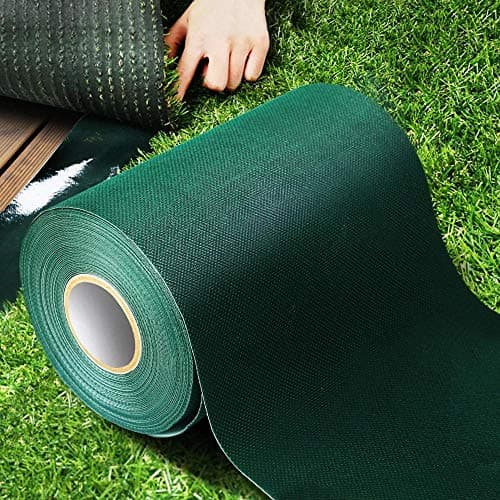
TYLife Artificial Grass Seaming Tape
A 6 inch by 65 foot seaming tape for joining synthetic turf panels.
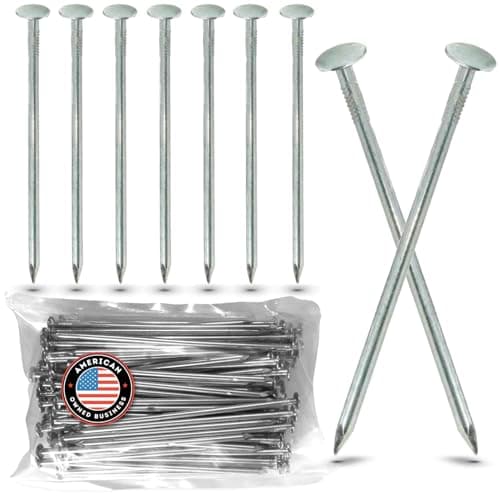
One Stop Outdoor Galvanized Turf Nails
Galvanized 5.5 inch nails for anchoring synthetic turf edges and seams.
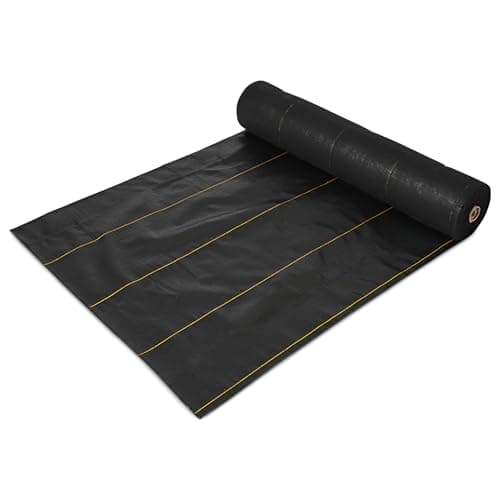
Dewitt Pro-5 Weed Barrier Fabric
A woven 5 ounce weed barrier for under the turf base.
Long-Term Maintenance for Pet Turf: Keeping Drainage and Odor in Check
Routine Maintenance Schedule
A structured maintenance routine keeps artificial grass for dogs performing at a high level.
- Daily or as needed: Remove solid waste promptly. Spot rinse fresh urine in confined runs if odor is a concern.
- Weekly: Blow or brush off leaves and debris, hose down primary potty zones, visually check seams and edges.
- Monthly: Rinse the entire turf area more thoroughly, apply enzyme-based cleaner in high-use spots, check for any infill displacement.
- Every 6 to 12 months: Power brush to lift matted fibers, top up infill in worn paths, inspect drainage during a hose test.
Adapting the schedule to climate and number of dogs is straightforward: hotter weather and more dogs require more frequent rinsing and cleaning.
Seasonal Considerations
Spring: Remove winter debris and perform a deep cleaning. Check for any base heaving or seam movement from freeze-thaw cycles in colder regions.

Summer: Increase rinsing frequency and monitor temperature. Provide shade or cooling periods when surfaces feel hot to your hand.
Fall: Manage falling leaves quickly to avoid organic buildup in the fibers and infill, which affects both drainage and odor.
Winter: In freezing climates, minimize heavy mechanical cleaning when turf is frozen to avoid damage. Most pet usages continue, but rinsing schedules may change depending on hose availability and drainage behavior when ground is frozen.
Troubleshooting Common Problems
Persistent odor despite rinsing indicates that urine residues are trapped in infill or base. The solution is to add enzyme treatments, increase rinsing volume, and in severe cases, remove and replace contaiminated infill or the top layer of base in the worst zones.
Surface puddling after light rinsing signals a base or turf drainage restriction. Check that infill is not over-applied, confirm that backing is permeable, and test base drainage in a small cut-out area if needed. Corrective action may mean re-grading a portion of the base.
Matting or worn paths show that fibers are under-supported or experiencing intense traffic. Grooming with a power brush and adding small amounts of infill in those paths helps restore appearance. For extreme wear, upgrading to a denser, shorter-pile pet turf in that section is appropriate.
Conclusion
A successful artificial grass installation for dogs: drainage, odor control, and infill functions as an integrated system. High-drain pet turf, a properly constructed and graded base, targeted odor-control tools, and the right infill type and depth all work together. When these components are aligned with the number of dogs, their habits, and your climate, you get a surface that drains quickly, resists odor, and stays safe and comfortable for years.
Next, review How to Choose the Best Artificial Grass for Pets for detailed product-selection guidance, then use Artificial Grass Maintenance Checklist for Pet Owners to set up a simple care routine. With a carefully designed system and consistent upkeep, you can maintain a clean, odor-controlled dog area that performs reliably in every season.
Top Picks
- Ortho Weed B Gon Plus Crabgrass Control Ready-To-SprayCheck price on Amazon
- Scotts Turf Builder Starter Fertilizer for New GrassCheck price on Amazon
- Scotts Halts Crabgrass and Grassy Weed PreventerCheck price on Amazon
As an Amazon Associate we earn from qualifying purchases.
Free Lawn Care Tools
Artificial grass products marketed for general landscaping do not automatically perform well under heavy pet use. Dog-friendly turf incorporates design features that handle frequent urine, repeated paw traffic, and regular cleaning.
Drainage controls how quickly urine and rinse water move away from the surface, which directly affects odor, hygiene, and how stable the turf feels underfoot. A good pet system moves liquid rapidly from the fibers through the backing, infill, and base into the soil or drain, instead of letting it sit and heat up. Slow drainage keeps urine in contact with warm turf, which accelerates bacterial growth and ammonia odor. It also leads to puddling and a soggy, unstable surface over time.
For dogs, a pile height of about 1.0 to 1.25 inches works best. This shorter height makes it easier to pick up solid waste, improves how well a hose rinse reaches the fibers, and helps the turf dry faster. Very long fibers, such as 1.75 to 2.0 inches, tend to trap hair and residue, reduce airflow, and increase the risk of lingering odors.
Infill influences how water and urine move through the system and how long moisture stays near the surface. Overfilling with standard materials can restrict water flow and trap urine at the top, which worsens odor. For pet areas, installers often use less infill overall and choose odor-neutralizing options such as zeolite-based products, especially in heavy-use zones. This combination supports drainage while helping control ammonia smells.
A properly designed pet turf system eliminates mud, bare dirt, and urine burn spots that are common with natural lawns. Shorter pile heights, permeable backing, and the right amount of infill make it easier to remove solid waste, rinse away urine, and periodically disinfect the surface. This creates a cleaner, more sanitary play and rest area for dogs with less ongoing yard repair.
Artificial grass can reach 140°F or more in full sun, so heat management is important for safety. Choosing lighter-colored turf, adding shade structures, and using cooling-oriented infills all help lower surface temperatures. Adequate cushioning in the base also improves joint comfort, which is especially helpful for older or sensitive dogs.
Photos: Diana ✨ / Pexels, Eric MASENGESHO / Pexels, Engin Akyurt / Pexels

Beat weeds and brown spots from your phone
Snap a photo, get the fix, and follow a plan timed to your soil and weather. Free on iPhone.