Artificial Grass Installation: Step-by-step Guide (2026)
 Marcus GreenTurf Management Pro | 18 Years
As an Amazon Associate we earn from qualifying purchases.
Uneven, patchy lawns that stay muddy or brown signal a mismatch between site conditions and natural grass requirements. In many urban and high-traffic settings in 2026, artificial turf solves that mismatch more reliably than repeated reseeding or sod replacement. This guide covers what installation really costs, how long it takes, and the exact step-by-step process to install turf so it drains well, feels comfortable underfoot, and looks realistic for 12 to 20 years.
Expect to pay $3.00 to $6.50 per square foot for a DIY artificial grass installation in 2026, or $9 to $16 per square foot professionally installed. The process takes a DIY crew 3 to 4 days: remove the old sod, build and compact a 3 to 4 inch crushed rock base, roll out and seam the turf, secure the edges, then brush in infill. Done right, the lawn lasts 12 to 20 years with a few light maintenance sessions per month instead of weekly mowing. Not sure how much turf you need? Measure your lawn first.
How Much Does Artificial Grass Installation Cost in 2026?
Cost is the first question for most homeowners, so let's get specific before touching a shovel. Artificial grass pricing has two very different answers depending on who does the work.
DIY materials typically total $3.00 to $6.50 per square foot. The turf itself is the biggest line item, and quality matters: economy turf looks flat and fades faster, while mid-tier landscape turf with multi-tone blades and brown thatch is what most yards should use. Professional installation runs $9 to $16 per square foot installed, covering demolition, base construction, seaming, infill, and haul-away.
| Cost item | Typical 2026 price | Notes |
|---|---|---|
| Turf, economy | $2.00 to $3.00 / sq ft | Lower face weight, single-tone blades |
| Turf, mid-range landscape | $3.00 to $4.00 / sq ft | Multi-tone blades, brown thatch, best value |
| Turf, premium or pet system | $4.00 to $6.00 / sq ft | High face weight, PU backing, odor-control ready |
| Crushed rock base (3 to 4 in) | $0.40 to $0.80 / sq ft | 3/8 or 3/4 inch minus, delivered |
| Leveling sand or fines | $0.10 to $0.20 / sq ft | 0.5 to 1 inch screeded layer |
| Weed barrier fabric | $0.10 to $0.20 / sq ft | Permeable geotextile |
| Infill (sand or coated) | $0.15 to $0.40 / sq ft | 1 to 3 lb per sq ft depending on pile |
| Seam tape, adhesive, nails | $0.15 to $0.35 / sq ft | More seams on wide or curved yards |
| Tool rental (compactor, sod cutter) | $150 to $300 flat | 1 to 2 rental days |
| DIY total | $3.00 to $6.50 / sq ft | Materials plus rentals |
| Professional install total | $9.00 to $16.00 / sq ft | Labor, materials, disposal included |
On a 500 square foot yard, that works out to roughly $1,500 to $3,250 DIY versus $4,500 to $8,000 professionally installed. The gap is nearly all labor: demolition, hauling several tons of rock, and seam work.
Long-term savings: Over 10 years, eliminating irrigation, fertilizer, herbicide, and mowing offsets a significant share of the installation cost. According to University of Florida IFAS Extension, irrigated St. Augustinegrass lawns in hot climates often require 30 to 40 inches of supplemental water annually, plus multiple fertilizer and pest treatments. Artificial turf removes those recurring inputs, which is especially valuable as water and service rates climb. If you are weighing turf against a thirstier lawn, our low-water lawn ideas guide covers the middle-ground options too.
How Long Does It Take to Install Artificial Grass?
For a typical 400 to 800 square foot residential installation with two to three DIY workers, plan on 3 to 4 working days. Professional crews compress the same scope into 1 to 2 days.
| Day | Work | DIY hours |
|---|---|---|
| Day 1 | Site layout, sod removal, rough grading | 4 to 6 |
| Day 2 | Base rock placement, compaction, drainage adjustments | 4 to 6 |
| Day 3 | Final grading, turf cutting, seaming, securing edges | 4 to 8 |
| Day 4 | Infill application, power brushing, cleanup | 2 to 4 |
Larger or more complex projects scale proportionally. Seam adhesive also needs 12 to 24 hours of cure time before infill, which is why turf day and infill day are usually separate.
Understanding Artificial Grass in 2026 (Before You Install)
What Is Artificial Grass?
Artificial grass is a layered system, not a single product. The performance of the surface depends on each layer working correctly.
The basic structure includes:
- Backing: A primary backing (typically polypropylene) holds the tufted yarns, while a secondary backing, often polyurethane or latex, locks the fibers in place. Many 2026 products include perforations spaced roughly every 4 to 6 inches to allow water to pass through at drainage rates frequently exceeding 30 inches per hour.
- Pile (blades): The visible fibers are made from polyethylene or similar polymers, designed with different blade shapes (C-shaped, S-shaped, flat, or ribbed) to balance softness, resilience, and light reflection.
- Infill: Granular material such as silica sand, coated sand, or thermoplastic elastomer that sits between the blades. It supports fibers, adds ballast, improves footing, and influences temperature and softness.
- Drainage holes: Factory-punched perforations in the backing that align with a permeable base layer, letting rain and rinse water move vertically into the crushed rock base.
Key performance metrics to evaluate before buying:
Pile height: Blade length from backing to tip, usually 1.0 to 2.0 inches for landscape turf. Shorter piles (1.0 to 1.25 inches) stay upright and clean more easily, especially in pet areas. Taller piles (1.5 to 2.0 inches) look lush but need more infill and grooming.
Density or face weight: Yarn weight per square yard excluding backing, commonly 40 to over 90 ounces. Higher face weights look more realistic and withstand traffic better, but cost more and can hold more heat.
Stitch rate: Tuft rows per unit length. Higher stitch rates create denser coverage, improving appearance and reducing infill splash.
Backing type and drainage rate: Polyurethane backings generally outlast latex. Many high-end turfs publish drainage capacities of 30 to 60 inches per hour, far beyond typical residential storm intensities when paired with a properly graded base.
Types of Artificial Grass and Where Each Works Best
Landscape turf: For front yards, backyards, and decorative areas. Multi-tone blades and brown thatch fibers for realism, pile heights of 1.4 to 1.8 inches, mid to high face weights. Handles foot traffic but is not optimized for intense sports.
Sports turf: Abrasion-resistant fibers, often shorter and straighter, with more rubber or specialized infill for shock absorption and consistent ball roll. For backyard multi-use areas, hybrid products with moderate pile height and resilient infill are the best compromise.
Pet turf: Engineered for urine, solids, and odor: shorter pile (1.0 to 1.25 inches) for cleanup, open tufting for fast drainage, and antimicrobial treatments or odor-control infills. The system works only when combined with a permeable base and a rinsing routine.
Balcony and rooftop turf: Lighter products, sometimes with integrated cushion or drainage mats to protect waterproof membranes. Fire ratings and wind uplift matter more here than at ground level.
Short-pile versus long-pile is the other big fork: short pile (0.75 to 1.25 inches) is easier to clean, needs less infill, and runs cooler, but reads less lush. Long pile (1.5 to 2.0 inches) is plush and natural underfoot but traps more debris and heat and demands more brushing.
By 2026, UV-stabilized fibers are standard. According to turf durability testing summarized by Texas A&M AgriLife, quality UV-stabilized fibers maintain color and tensile strength for 8 to 10 years under intense southern U.S. sun before noticeable decline, and often longer in milder climates. Recyclable systems have also expanded: separable backings, reusable thermoplastic infills, and manufacturing that allows end-of-life separation of backing and fibers.
Pros and Cons of Installing Artificial Grass
Pros:
Low water usage: Artificial turf removes nearly all irrigation demand. In states where outdoor irrigation accounts for 40 to 60 percent of residential water use, as documented by University of Arizona Cooperative Extension, the change meaningfully cuts household consumption. Natural lawns in arid regions often need 1 to 1.5 inches of water weekly in summer, roughly 620 to 930 gallons per week for a 1,000 square foot lawn.
Lower maintenance time: No mowing, fuel, fertilizing, or seasonal overseeding. Penn State Extension guidance puts high-quality natural turf at 20 to 40 mowing events per growing season; synthetic turf converts that into a few light sessions per month.
Year-round green: No dormancy transition, no patchy spring green-up, no thinning in dense shade. NC State Extension notes natural cool-season turf thins significantly above 50 to 60 percent shade; synthetic turf does not care.
Cons:
Upfront cost: As the cost table above shows, a quality system costs more than sod or seed up front, then runs far cheaper annually.
Heat retention: Surfaces can hit 140 degrees Fahrenheit or more on 90 degree days in full sun. Utah State University tests show lighter infills and brief watering drop surface temperature 20 to 30 degrees for short periods; shade structures give sustained relief.
Surface hardness if installed incorrectly: An over-compacted or too-thin base feels hard. Play areas may warrant a shock pad underlay.
Environmental considerations: Synthetic materials eventually need end-of-life management, and infill migration and microplastic shedding are real concerns. Durable yarns, stable infills, and secure edges reduce them; some municipalities restrict crumb rubber, so coated sand or TPE infills align better with current policies.
When Artificial Grass Is (and Isn't) Right for You
Ideal use cases: small urban yards with compacted soil and building shade; narrow side-yard strips that are miserable to mow and irrigate; play areas under swing sets; dog runs; and rooftops, patios, and balconies where soil does not exist.
Reconsider if:
Your yard floods: If water stands after storms from poor grading or high groundwater, fix the drainage first with grading or French drains. Turf on top of a drainage problem just hides it while it gets worse.
Your slope is steep: Beyond about a 3:1 slope, base movement and turf slippage risk climbs, and anchoring gets complicated. Deep-rooted groundcovers often stabilize slopes better.
Your HOA or city restricts it: Some regulate color, reflectivity, or the percentage of synthetic surface allowed. Get written approval before ordering materials.
Planning Your Artificial Grass Installation (Step 0)
Clarifying Your Goals and Use Case
The right turf product, base depth, and infill all depend on how the space gets used:
- Kids' play: Prioritize softness and shock absorption: slightly thicker base, potentially a shock pad, and infill levels that avoid a slippery or overly firm surface.
- Pets: Prioritize rapid drainage, odor control, and easy cleaning: pet-oriented turf, shorter pile, open tufting, odor-control infill.
- Aesthetic front yard: Prioritize realism: color blending and a pile height that matches regional lawn styles.
- Sports practice: Prioritize uniform bounce and footing: shorter, denser turf with specific infill depth.
Also estimate traffic honestly. A yard with daily dog laps and active kids needs higher face weight, denser stitching, and seams placed outside the main travel paths. Concentrated traffic is the main cause of wear in natural turf per Ohio State University Extension, and the same paths concentrate stress on synthetic seams and infill.
Measuring and Designing Your Turf Area
Accurate measurements prevent costly overages or shortages.

Start with a site sketch: outline the perimeter, mark patios, trees, and irrigation boxes, and note slopes and low spots. For rectangles, length times width. For irregular shapes, break the space into rectangles, triangles, and circles, or measure widths at regular intervals along a baseline and average them.
Then plan the roll layout. Most turf ships in 12 or 15 foot wide rolls. Overlay roll strips on your sketch and aim to:
- Run seams away from primary viewing angles and out of high-traffic zones.
- Keep the pile direction (grain) identical across all pieces so color and sheen match.
- Face the grain toward the primary viewpoint, usually the house or curb, where the turf looks fullest.
Checking Local Regulations, HOAs, and Climate Factors
Rules first: Some municipalities require permits when changing impervious surface ratios or front yard landscaping. Review zoning codes for "artificial turf" or "synthetic grass," and get HOA approval in writing where required.
Cold climates: Repeated freeze-thaw demands a free-draining granular base; Minnesota Extension notes well-drained granular bases resist frost heave far better than fine-textured soils. Avoid any detail that traps water under the turf.
Hot climates: Choose heat-reflective fibers and lighter infills, plan shade, and keep a hose bib close for cooling sprays.
Wet climates: Clay soils and high rainfall call for French drains or perforated pipe under low points. Oregon State University Extension stormwater guidance recommends designing for at least the local 2-year storm and keeping a 1 to 2 percent slope away from buildings.
Step-by-step Artificial Grass Installation (2026)
Here is the full system you are building, from the soil up. Every step that follows maps to one of these layers.
Step 1: Site Assessment and Preparation
Inspect drainage patterns: Identify where water flows and puddles. The finished turf area needs a minimum slope of 1 to 2 percent away from structures, which is roughly a 1 to 2.5 inch drop per 10 feet of run.
Locate utilities and irrigation: Call your local utility marking service. Map sprinkler heads, drip lines, and control wiring, and decide what you will cap, re-route, or convert to drip for adjacent plantings.
Plan access and staging: Figure out how base materials come in and spoil goes out. Protect hardscapes and plantings with plywood paths or tarps.
Step 2: Removing Existing Turf and Vegetation
Mechanical removal: A rented sod cutter slices under the grass at a consistent depth so you can roll up and remove existing sod. Manual digging works for small areas but is slow.
Depth: Remove turf and roots to about 3 to 4 inches below planned finished grade, making room for the compacted rock base and leveling layer while keeping final turf height flush with sidewalks.
Weed control: Mechanical removal plus a barrier fabric handles most residential situations. If you use chemical control, follow the label and local regulations.
Step 3: Grading and Drainage Setup
Establish slope: Use a string line or laser level to confirm the subgrade slopes gently away from structures with no low spots.
Install drainage if needed: In heavy soils or low sites, trench for perforated pipe in gravel at low points with at least 1 percent fall to a discharge point, covered with clean gravel and a geotextile separator. Iowa State University Extension drainage guidance stresses continuous slope on subsurface drains; the turf system depends on them where infiltration is poor.
Step 4: Installing the Base Layer
The base determines how your turf feels, drains, and resists movement. This is the most critical construction phase.
Aggregate: Crushed stone or decomposed granite in a 3/8 or 3/4 inch minus blend. The mixed particle sizes lock together into a stable, permeable layer. Avoid rounded gravel.
Depth: 3 to 4 compacted inches for standard residential use; 4 to 6 for heavy traffic or light sports, consistent with sports field construction guidelines referenced by Penn State Extension.
- Spread aggregate in 2 inch lifts, not the full depth at once.
- Compact each lift with a plate compactor, misting lightly so fines settle and interlock.
- Target roughly 90 percent density as a practical field goal: minimal foot imprint, no shifting underfoot.
Final shaping: Rake and screed to refine grade, hold the 1 to 2 percent slope, and knock down high spots. The smoother the base, the smoother the finished lawn.
Step 5: Adding a Leveling Layer and Weed Barrier
Leveling layer: Screed 0.5 to 1 inch of fines or sharp sand over the compacted base with a straight board for a uniform surface against the turf backing.
Weed barrier: Lay permeable geotextile over the leveling layer, overlap seams 6 to 12 inches, staple flat with no wrinkles. Purdue Extension weed management guidance notes that light-blocking mechanical barriers sharply reduce weed emergence, especially annuals.
Step 6: Rolling Out and Positioning the Turf
Acclimate: Store rolls in shade, then unroll and let each piece relax for at least an hour to reduce edge curl.
- Lay each roll per your layout plan with all pile leaning the same direction.
- Leave 2 to 3 inches of overhang at edges and seams for precise trimming.
- Dry-fit multi-piece layouts completely before any cutting or gluing.
Step 7: Seaming Multiple Turf Pieces
Seams are the most technically sensitive part of the job. Done correctly, they disappear.
Trim factory edges: Cut along a tuft row with a sharp utility knife, removing 0.5 to 1 inch so both edges present clean, straight tuft rows.
Align: Bring edges together so tufts just touch, no overlap or gap, and sight along the grain from standing height to verify the fibers blend.
- Fold both edges back and lay seam tape centered under the seam path.
- Apply turf adhesive in a continuous bead or troweled layer per product directions.
- Fold each edge onto the tape, pressing backing into adhesive without gluing fibers.
- Weight the seam with sandbags while it cures, typically 12 to 24 hours.
Reinforcement: On slopes, add nails or staples along seam edges, driven flush with the backing without pinching fibers.
Step 8: Trimming Edges and Securing Perimeter
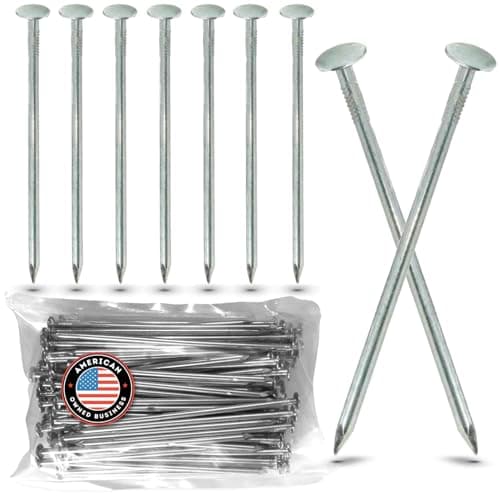
Trim from the backside where possible with fresh blades. Secure: exterior construction adhesive along concrete and pavers; 5 to 6 inch turf nails every 4 to 6 inches along soil edges, heads just below fiber level; and nails angled inward where bender board or metal edging frames the lawn. A crisp border makes or breaks the finished look, and our lawn edging ideas guide has options that pair well with turf. Walk every edge and tug gently to confirm nothing moves.
Step 9: Adding Infill and Brushing
Choosing infill: Silica sand is the landscape standard for ballast and fiber support. Coated sand and TPE infills run cooler, resist compaction, and some carry antimicrobial agents. Pet infills target ammonia odor. Check local rules before using any rubber-based infill.
- Confirm turf is dry and seam adhesive fully cured.
- Spread infill in light passes with a drop spreader.
- Brush after each pass with a stiff broom or power broom to stand fibers up and work infill down.
- Repeat to the manufacturer's recommended depth, usually leaving 0.5 to 0.75 inches of exposed blade.
Step 10: Final Inspection and Cleanup
- Seams tight, level, and blended from standing height.
- No nails or spikes above fiber level.
- Edges secure and aligned with hardscapes.
- No soft or hollow zones underfoot that indicate thin base or infill.
Rinse off dust, verify any subsurface drains discharge properly, and keep heavy traffic off until adhesives reach full cure, usually 24 to 48 hours.
Installing Artificial Grass Over Concrete
Turf over an existing patio, walkway, or pool deck is one of the easiest installs because the "base" is already built. Three things change:
- Drainage: The slab must shed water. If it slopes at least 1 percent, you are fine. If water pools, drill 1/2 inch drainage holes at the low spots down to the soil below, or route water to a deck drain. Confirm there is a drainage path below the slab first, and avoid any embedded conduit or rebar.
- Cushion: Concrete has zero give, so add a foam or drainage underlay pad (usually 10 to 20 mm). It softens the surface and creates a lateral drainage gap under the backing.
- Attachment: No staking into concrete. Glue the perimeter and seams with exterior-rated adhesive, and weight the field while it cures.
Skip the rock base, leveling sand, and weed barrier entirely. A concrete install of a few hundred square feet is a comfortable one-day project.
How Long Does Artificial Grass Last?
Quality landscape turf lasts 12 to 20 years under moderate use when installed on a stable, well-draining base. The failure curve is driven by three things: UV degradation of fibers (8 to 10 years to noticeable decline in the harshest sun, longer elsewhere), traffic wear concentrated on seams and paths, and drainage problems that move the base underneath. Regular brushing and infill top-ups are what push a lawn toward the 20 year end; neglect and standing water pull it toward 12 or below. Most manufacturer warranties in 2026 run 10 to 15 years on fiber and backing, which is a reasonable proxy for build quality when comparing products.
Maintenance and Troubleshooting After Installation
Routine Maintenance Schedule
Weekly to biweekly: Remove leaves and debris with a plastic rake, blower, or broom. Spot rinse pet areas, especially in warm weather.
Monthly: Brush high-traffic areas to keep fibers upright and redistribute infill. Inspect seams and edges for early movement.
Seasonally: Top up infill where levels have dropped, and deep clean pet zones with a turf-safe enzymatic cleaner if odors appear.
Managing Heat and Comfort
Short-term cooling: Mist the turf 10 to 15 minutes before use; Utah State University Extension experiments show a significant temporary drop that fades as the surface dries.
Design solutions: Trees, pergolas, shade sails, and light-colored surrounding hardscapes give the most reliable relief. In hot climates, pair those with heat-reflective fibers and low-heat infills at purchase time.
Troubleshooting Common Issues
Puddling: Isolated puddles soon after install mean localized base settlement: cut back the turf, recompact, relay, and reseam. Widespread drainage failure means the original grading and base design need rework.
Wrinkles or ripples: Under-stretched turf or base movement. For small wrinkles, release nearby perimeter fasteners, stretch flat, and re-secure with extra spikes. Larger deformations require fixing the base.
Odor in pet areas: Urine is not flushing through, or infill is holding contaminants. Rinse more often with enough volume to reach the drainage layer, use enzymatic cleaners at label rates, and in severe cases replace the infill in the affected zone.
Flattened fibers: Traffic compresses blades and infill. Power brush to realign; if matting persists, infill is probably low, so add small amounts and brush between applications.
Conclusion
Artificial grass in 2026 is a technically mature landscape surface. Know your real cost ($3.00 to $6.50 per square foot DIY, $9 to $16 installed), budget 3 to 4 DIY days, and treat the base as the project it is: a compacted, free-draining rock layer at 1 to 2 percent slope. Get the seams right, brush in the infill, and the result delivers the usability of a well-kept lawn for 12 to 20 years without the mowing, watering, and feeding a living lawn demands. If you are still weighing turf against thirstier alternatives, start with your numbers: measure your lawn, price both paths over ten years, and let the math decide.
Top Picks
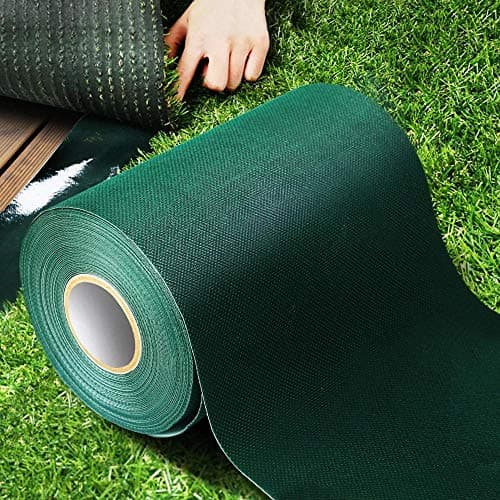
 TYLife Artificial Grass Seaming Tape (6" x 65.6')Check price on Amazon
 One Stop Outdoor 5.5" Galvanized Turf Nails (150 Pack)Check price on Amazon
As an Amazon Associate we earn from qualifying purchases.
Free Lawn Care Tools
For a typical 400 to 800 square foot yard, a two or three person DIY crew needs about 3 to 4 working days: one day for sod removal and grading, one for base construction and compaction, one for turf layout, seaming, and edging, and a final half day for infill and brushing. A professional crew usually finishes the same area in 1 to 2 days. Large areas, slopes, or drainage work add time.
In 2026, DIY installations typically run $3.00 to $6.50 per square foot for materials and tool rental, depending on turf quality. Professional installation usually lands between $9 and $16 per square foot installed, with premium pet systems or difficult access pushing higher. A 500 square foot lawn is roughly $1,900 to $3,200 DIY versus $4,500 to $8,000 professionally installed.
Yes, and it is one of the easier installations because the base already exists. The concrete needs to drain (a 1 percent slope or drilled drainage holes at low spots), and you should add a foam or drainage underlay pad so the surface is not hard underfoot. The turf is then glued down at the perimeter and seams with exterior-rated adhesive instead of staked. Skip the crushed rock base entirely.
Quality landscape turf lasts 12 to 20 years when installed on a properly compacted, well-draining base. UV-stabilized polyethylene fibers hold color and strength for 8 to 10 years even under intense southern sun before gradual decline. Heavy traffic, low infill levels, and poor drainage shorten lifespan, while regular brushing and infill top-ups extend it.
Purpose-built pet turf works very well for dog runs. Look for a shorter pile around 1.0 to 1.25 inches, open tufting for fast drainage, and an antimicrobial or odor-control infill. The key is the system underneath: a permeable base, enough slope to move rinse water through, and a routine of rinsing urine spots weekly plus an enzymatic cleaner as needed.
Silica sand is the standard for landscape turf, applied at roughly 1 to 3 pounds per square foot depending on pile height. Coated sand or TPE infills cost more but run cooler and resist compaction, and specialized pet infills help control ammonia odor. Aim to fill until about 0.5 to 0.75 inches of blade remains exposed, brushing between passes.
Yes, for flat or gently sloped areas under about 1,000 square feet with simple shapes. The hard parts are moving several tons of base rock and getting seams invisible, so rent a plate compactor and a sod cutter, and dry-fit every seam before gluing. Complex slopes, large areas, or lots of curves are where a professional crew earns its price.
Photos: ANH LÊ / Pexels

Beat weeds and brown spots from your phone
Snap a photo, get the fix, and follow a plan timed to your soil and weather. Free on iPhone.