Benefits of Using Liquid Kelp on Your Lawn
 Marcus GreenTurf Management Pro | 18 Years
As an Amazon Associate we earn from qualifying purchases.
Liquid kelp, sometimes sold as sea kelp, is a concentrated extract made from marine seaweed, most commonly the brown algae Ascophyllum nodosum. It is not fish emulsion, and it is not simply ground-up seaweed in water. Quality products are usually cold processed so that delicate plant hormones, amino acids, and micronutrients remain intact instead of being damaged by high heat or harsh chemicals.
More advanced DIY lawn owners and many professionals are adding liquid kelp to their programs because it targets something regular fertilizer does not: plant hormones and soil biology. Traditional lawn fertilizer mainly focuses on NPK (nitrogen, phosphorus, potassium). Liquid kelp supplies growth regulators, trace elements, and organic compounds that help grass handle stress, grow deeper roots, and use applied fertilizer more efficiently.
The core promise of liquid kelp for lawns is straightforward: stronger roots, better stress tolerance, deeper color, and improved microbial activity in the root zone. Used correctly, it can help turf survive heat waves, rebound from drought, and stay greener longer into tough seasons. Used incorrectly, it can be a waste of money or confused with a full fertilizer replacement.
If you are wondering about the benefits of using liquid kelp on your lawn compared to standard fertilizer, whether kelp actually works or is just "snake oil," or if you can replace traditional fertilizer with kelp, this guide walks through the science and practical application. We will cover what liquid kelp is and how it works, the real benefits you can expect, how to apply it through the seasons, how to combine it with fertilizer, and the common mistakes that lead to poor results.
Liquid kelp is best thought of as a turf health supplement, not a main meal. If your lawn is generally green but struggles in heat, shows shallow roots, or fades quickly under drought, that typically points to weak root systems and stress sensitivity. You can confirm root issues by cutting a small 4-6 inch deep plug with a shovel. If roots are mostly in the top 1-2 inches, your lawn is a good candidate for liquid kelp support.
The simplest fix is to spray liquid kelp as a foliar application at the label rate every 3-4 weeks during active growth, and especially 7-10 days before expected stress periods like summer heat waves or winter cold snaps. Do not stop your normal fertilizer program, because kelp alone does not supply enough nitrogen or potassium. Within 2-4 weeks you should see improved color response to fertilizer and better resilience: slower wilting between irrigations and quicker recovery after stress.
Understanding Liquid Kelp: What It Is and How It Works
What Is Liquid Kelp, Exactly?
Liquid kelp is a concentrated extract derived from marine macroalgae, most commonly the species Ascophyllum nodosum harvested from cold ocean waters. In lawn care, it is usually sold as a dark brown liquid that is diluted with water and applied as a spray or soil drench. You may also see it labeled as sea kelp or seaweed extract; in lawn care these names refer to the same type of ocean-harvested kelp concentrate.
It is important to distinguish between different seaweed products you might see:
- Liquid kelp extract is a refined, concentrated product. It focuses on soluble compounds like plant hormones, micronutrients, amino acids, and organic acids. It is designed for foliar spraying and easy tank mixing with other products.
- Dried kelp meal is simply dried and ground seaweed. It is applied as a granular soil amendment and breaks down slowly. It has some similar components to liquid kelp but works over months, not weeks, and is less targeted for foliar effects.
- DIY seaweed tea is typically made by soaking seaweed in water. While it can release some nutrients, it is far less standardized and usually has much lower concentrations of the beneficial compounds found in commercial extracts.
- Fish fertilizer is made from fish byproducts and mainly provides nitrogen, phosphorus, and some micronutrients. It can have a strong odor, while most modern liquid kelp products have a mild sea smell or are nearly odorless. Fish fertilizer does not provide the same spectrum of plant hormones as high quality kelp extract.
Manufacturing method matters because it changes what survives the extraction process. There are three primary categories:
- Cold extraction uses mechanical and sometimes enzymatic processes at low temperatures. This method tends to preserve delicate growth regulators like auxins, cytokinins, and gibberellins, as well as amino acids and some vitamins. For turf health, cold extracted kelp is generally preferred.
- Chemical or alkaline extraction uses high pH solutions, often sodium or potassium hydroxide, to break down cell walls and solubilize components. This produces a high-alkalinity product and can degrade some hormones, though it may increase certain soluble nutrients.
- Heat extraction uses high temperatures to speed breakdown, which can destroy some bioactive compounds. These products may still supply micronutrients but may be less effective as hormone sources.
When you are comparing products, labels that mention cold processed or enzymatic extraction signal a focus on preserving the bioactive compounds that drive most of the lawn benefits of using liquid kelp on your lawn.
The Key Components That Benefit Your Lawn
Liquid kelp is valuable not because of its NPK numbers, which are typically low, but because of the unique mix of plant hormones, trace elements, and organic compounds that interact with turfgrass physiology and soil biology.
The primary plant growth regulators found in kelp include:
- Auxins, which influence root elongation and branching. In turf, modest auxin activity encourages roots to grow deeper and produce more lateral branches, so the plant can access water and nutrients from a larger soil volume.
- Cytokinins, which promote cell division and are associated with shoot density and delayed leaf aging. In lawns, this can translate into thicker turf and slower yellowing, especially under stress.
- Gibberellins, which affect leaf expansion and seed germination. Low levels can improve early establishment and foliage development without causing excessive top growth.
On the micronutrient side, kelp naturally contains a suite of trace elements including iron, manganese, zinc, boron, copper, cobalt, molybdenum, and iodine. While the exact amounts vary, these micronutrients are often present in chelated or organically complexed forms that are more available to plants. Even though lawns only need these elements in tiny quantities, a deficiency in one can limit growth or color, particularly iron and manganese in high pH or sandy soils.
Kelp also carries a wide range of organic compounds:
- Amino acids, which can serve as building blocks for proteins and can be taken up directly by plants and microbes.
- Mannitol, a sugar alcohol that can assist with nutrient chelation and might help plants handle osmotic stress.
- Alginates, which are polysaccharides that can improve soil structure and water holding capacity over time when applied to the soil.
- Natural chelating compounds that help keep micronutrients soluble and available in the root zone rather than locked up on soil particles.
When you look at the label of a liquid kelp product, you will typically see very low NPK numbers, often something like 0-0-1 or 1-0-2. That low analysis is the key reality check: liquid kelp is not a complete fertilizer. It does not supply enough nitrogen for growth or potassium for overall stress resilience by itself. Instead, it is a supplement that improves how efficiently the lawn uses the nutrients you already supply through granular or liquid fertilizer.
How Liquid Kelp Interacts With Turfgrass Physiology
Liquid kelp applied to a lawn works along two main pathways: foliar uptake through the leaves and root zone effects in the soil. Both are important for understanding the practical benefits.
When you spray kelp on the grass blades, a portion of the hormones, micronutrients, and small organic molecules is absorbed directly through the leaf cuticle and stomata. This foliar uptake is especially efficient when you apply kelp in the early morning or late afternoon, when stomata are more open and evaporation is slower. The absorbed compounds can move within the plant, influencing root growth, shoot density, and stress responses without needing to travel through the soil first.
In the root zone, kelp interacts with the rhizosphere, the thin layer of soil around roots that is rich in biological activity. Some of the sugars, amino acids, and organic acids in kelp act as food for beneficial bacteria and fungi. Others stimulate root exudation, encouraging the plant itself to release more carbohydrates and compounds that feed microbes. Over time, this can improve soil structure and increase the populations of microbes that help make nutrients more available and support disease suppression.
There is also evidence that kelp extracts can trigger induced systemic resistance, often abbreviated as ISR. This is a plant defense mechanism where exposure to certain compounds primes the plant's own immune system. The plant does not become immune to disease, but it responds faster and stronger when challenged by pathogens or environmental stress. For turfgrass, this "priming" can result in fewer and less severe bouts of disease and a quicker recovery after stress events like drought or low temperature exposure.
Different turf types respond somewhat differently. Cool season C3 grasses like tall fescue, Kentucky bluegrass, and perennial ryegrass, which dominate lawns in the northern half of the United States, often show clear root and color benefits from kelp, especially around summer stress. Warm season grasses like bermudagrass, zoysiagrass, and St. Augustine, common in warmer climates, can benefit from kelp as well, particularly in spring green-up, summer stress, and fall transitions. The mechanisms are similar, but the seasonal timing of maximum response differs, which matters for your application calendar.
Core Benefits of Using Liquid Kelp on Your Lawn
1. Stronger, Deeper Root Systems
One of the most reliable benefits of using liquid kelp on your lawn is improved root development. The auxins and cytokinins in kelp influence the root architecture: root length, root density, and lateral branching. When these hormones are present in balanced, low concentrations, turf roots tend to explore deeper soil layers and produce more fine roots that are responsible for water and nutrient absorption.
Practically, this means your grass is less dependent on the top inch of soil staying moist. A lawn with a strong, deep root system can pull water from 4-6 inches or deeper, so it takes longer to wilt between irrigation cycles or rain events. It is also more efficient at scavenging nitrogen, phosphorus, potassium, and micronutrients from fertilizer and the soil itself, which can reduce the need for very high fertilizer rates.
Better rooting also improves physical anchoring of the turf. Lawns with deeper roots resist traffic damage and pulling, which is noticeable on sports turf but also matters for home lawns with kids, pets, or frequent mowing. If you have areas that consistently thin out near sidewalks, driveways, or along slopes, that often points to shallow rooting combined with heat and drought stress. Those areas usually respond well when you combine proper watering and mowing with regular kelp applications.
To verify that kelp is actually improving rooting on your property, do not rely only on how the lawn looks from above. Every 4-6 weeks during the growing season, cut a small plug with a pocket soil probe or a flat shovel. Slice down 4-6 inches, then pry back a section to expose the root profile. If you have been using kelp plus sound cultural practices, you should start to see a noticeable extension of roots deeper than 3 inches within 6-10 weeks, depending on your grass type and soil. Comparing a treated test strip to an untreated control strip is the best way to see this in your own yard.
2. Enhanced Stress Tolerance (Heat, Cold, Drought, and Salinity)
Liquid kelp shines when lawns are pushed into stressful conditions. Heat, cold, drought, and even salinity all impose oxidative and osmotic stress on turfgrass cells. The compounds in kelp help the plant manage water more efficiently and reduce cellular damage from reactive oxygen species.

Several components of kelp, including mannitol and certain amino acids, act as osmoprotectants. They help maintain cell turgor when water is limited, allowing stomata to function longer and photosynthesis to continue at a reduced but sustainable level. Antioxidant related compounds and hormone signaling also play a role in minimizing tissue damage under high heat or after frost exposure.
For lawn care, timing is crucial. To get maximum stress protection, kelp is best used as a conditioning tool rather than just a rescue product. Applying liquid kelp 7-10 days before a forecasted heat wave or cold snap gives the grass time to absorb and respond to the signals. In practice, many homeowners get good results by spraying kelp at low rates every 3-4 weeks through the main stress window. For cool season lawns, that is usually late spring through late summer. For warm season lawns, peak summer and shoulder seasons around spring green-up and fall transition are key windows.
Lawns irrigated with salty water or located near the coast face an additional challenge: salt stress. Excess sodium in the root zone competes with potassium and disrupts water balance inside the plant. Kelp's osmoprotectant compounds and its influence on root health can partially buffer against salinity stress, especially when combined with adequate potassium fertility and, where possible, periodic deep leaching irrigations to flush salts below the root zone.
If you notice that your lawn wilts faster than neighbors' lawns, or that leaf tips burn quickly during hot, dry spells even when watering is consistent, that usually indicates limited stress tolerance. After integrating kelp into your program for 4-8 weeks, watch for changes like slower onset of wilting and less tip burn during similar weather conditions. That functional resilience is a better measure of success than just color alone.
3. Deeper, More Stable Color Without Excess Growth
Most lawn owners are interested in color first, but they do not always want the excessive top growth that comes with heavy nitrogen applications. Liquid kelp can support a deeper, more stable green by improving micronutrient availability, especially iron and manganese, and by helping the plant maintain active chlorophyll production under moderate stress.
In slightly alkaline soils or soils with high phosphorus levels, iron and manganese can become tied up and unavailable, even if total soil levels are adequate. The natural chelating compounds in kelp, combined with small amounts of these micronutrients present in the extract, help keep them in forms the plant can actually use. That means you may see an improved response to the nitrogen you are already applying, with darker color and fewer yellowish areas.
Importantly, kelp tends to improve color without forcing sudden flushes of growth. So if you prefer mowing 1-2 times per week instead of every other day, kelp is a way to enhance appearance without dramatically increasing clipping volume. This is especially useful for warm season lawns that can grow very quickly in midsummer with high nitrogen rates.
If you have areas of the lawn that stay slightly pale even when the rest is dark green, and you have ruled out irrigation coverage problems, that often points to localized nutrient availability issues. Spot treating those sections with a kelp plus micronutrient mix can be more effective than simply adding more nitrogen across the entire yard.
4. Improved Soil Biology and Structure Over Time
Another benefit of using liquid kelp on your lawn is its impact on soil life. Turf grows in a living ecosystem. Bacteria, fungi, protozoa, nematodes, and earthworms all play roles in nutrient cycling and soil structure. The organic compounds in kelp provide an easily accessible carbon and energy source for many beneficial microbes, especially when applied as a soil drench or allowed to wash off leaves into the root zone.
As microbial populations respond, they break down organic matter more efficiently and release nutrients in plant-available forms. They also help create soil aggregates that improve structure, porosity, and root penetration. Over time, soils with active biology typically show better infiltration and less surface crusting, which also helps water and fertilizer move into the root zone instead of running off.
Alginates in kelp can contribute to better moisture retention and aggregate stability, particularly in sandy or degraded soils. While a few kelp applications will not transform poor soil overnight, consistent use as part of a holistic program that includes proper mowing, irrigation, and occasional core aeration can gradually shift soil conditions in a favorable direction.
If you are trying to reduce dependence on synthetic inputs over the long term, strengthening soil biology is a key strategy. Kelp is not a magic bullet, but it is a useful tool alongside compost topdressing, mulching clippings, and avoiding overuse of high salt index fertilizers and pesticides that can stress microbes.
5. Better Seed Germination and Establishment
Many liquid kelp products can also support germination and early establishment of new lawns or overseeded areas. The gibberellins and cytokinins in kelp influence seed germination rate and early root and shoot development. When applied at seeding, kelp can help seeds emerge more uniformly and seedlings establish more robust root systems in the first few weeks.
For new seeding projects, you can either spray a kelp solution on the soil surface after seeding or mix kelp with your starter fertilizer according to label compatibility. A common approach is to apply kelp at seeding, then repeat at 2-3 week intervals during the first 6-8 weeks of establishment. This is particularly useful for cool season species like Kentucky bluegrass that germinate slowly and benefit from any edge that improves early vigor.
The key is not to expect kelp to compensate for poor seeding practices. Proper seed-to-soil contact, correct seeding rate, consistent moisture, and appropriate starter fertilizer are still the main drivers. Kelp helps fine tune that process by assisting with hormonal signaling and root development during the most vulnerable stage of turf life.
How to Use Liquid Kelp on Your Lawn
Application Methods: Hose-End, Pump Sprayer, and Backpack
Most homeowners apply liquid kelp using one of three methods: hose-end sprayers, hand pump sprayers, or backpack sprayers. Each method works, but the choice influences coverage consistency and convenience.
Hose-end sprayers are convenient for small to medium lawns. You pour the concentrated kelp into the sprayer bottle, set the dilution rate if adjustable, and walk the lawn while the water flow automatically dilutes and sprays. This method is fast but less precise, since water pressure, walking speed, and sprayer design all affect the actual rate applied.
Pump sprayers and backpack sprayers require more setup but offer more control. You mix a known amount of kelp in a known volume of water, then apply evenly at a known walking pace. This allows you to hit a specific application rate in ounces per 1,000 square feet consistently. For lawns larger than about 5,000 square feet, a backpack sprayer is often the most efficient choice for regular kelp applications.
Regardless of method, aim for a uniform light film of solution on the leaves, not heavy drips or puddling. Overapplication does not improve results and only wastes product.
Typical Rates and Frequency
Always follow the label of the specific product you buy, since concentrations vary. That said, common lawn application rates for liquid kelp fall in the range of 1-4 ounces of product per 1,000 square feet per application. Many homeowners get good results starting around 2 ounces per 1,000 square feet, then adjusting up or down based on product strength and turf response.
In terms of frequency, a practical starting schedule is every 3-4 weeks during active growth, concentrating on the periods before and during environmental stress. For cool season lawns in a typical northern climate, that would mean:
- 1-2 applications in spring as the lawn greens up and growth resumes.
- 3-4 applications between late May and late August to help with heat and drought stress.
- 1-2 applications in early fall to support recovery and root growth.
For warm season lawns, shift the schedule to focus more heavily on late spring through early fall when the grass is actively growing. As a rough guideline, 4-8 applications per year is common for a lawn care program that includes kelp, but the exact number should match your goals and budget.
A useful timing window is to avoid spraying kelp on frozen ground or fully dormant turf, since uptake and biological activity are minimal. Aim for soil temperatures above about 50-55 degrees Fahrenheit for cool season grass or above 60 degrees Fahrenheit for warm season grass to get meaningful plant response.
Combining Liquid Kelp With Fertilizer and Other Inputs
Because liquid kelp is not a complete fertilizer, the best approach is to integrate it with your existing fertilization program instead of replacing it. You can spray kelp on its own or tank mix it with compatible liquid fertilizers and micronutrient products, as long as the pH and mixing instructions are followed.
Many liquid kelp products mix well with urea, liquid iron, and humic acid products, allowing you to create a multifunction spray. However, always perform a jar test before mixing new combinations. Add a small amount of each product to a jar of water, shake, and observe for clumping, precipitation, or separation. If the mix stays uniform for at least 15-30 minutes, it is usually safe to use in your sprayer.
Do not stop applying nitrogen just because you start using kelp. For most home lawns, a fertilizer program supplying 2.5-4 pounds of actual nitrogen per 1,000 square feet per year, divided across appropriate seasonal applications, is still needed. Kelp will help your turf use that nitrogen more effectively and maintain color under stress, but it does not replace the nitrogen itself.
When using herbicides or fungicides, check both labels for compatibility before tank mixing with kelp. Some systemic herbicides specify not to add surfactants or additional products that could affect uptake. If in doubt, apply kelp in a separate pass at least a few days apart from pesticides.
- Penn State Extension recommends limiting total nitrogen on cool season home lawns to 1 pound of N per 1,000 square feet per application, and 3-4 pounds per 1,000 square feet per growing season, with lighter rates during summer stress.
Seasonal Strategies for Using Liquid Kelp
Spring: Kickstarting Growth and Recovery
In spring, liquid kelp is most useful as a gentle starter that supports root activity and recovery from winter rather than as a primary driver of top growth. As your grass breaks dormancy, a kelp application can help stimulate root regrowth, especially in areas that suffered winter injury or snow mold.
For cool season lawns, consider a kelp application when soil temperatures first reach the mid 50s Fahrenheit and the lawn is about 50 percent greened up. Combine it with a light nitrogen application, typically 0.5-0.75 pounds of N per 1,000 square feet, to avoid pushing soft, lush growth that is susceptible to disease. In regions with spring diseases like red thread or leaf spot, kelp's support of overall turf vigor can also help the lawn tolerate minor outbreaks.
If you are overseeding in spring, kelp can be included at seeding and again 2-3 weeks later to support establishment. For warm season lawns, spring is also a good time to use kelp after green-up to help the turf fill in winter damaged or thin areas more quickly.
Summer: Building and Maintaining Stress Resistance
Summer is when the benefits of using liquid kelp on your lawn are most evident. Heat and drought combine to stress turf, especially cool season species that prefer temperatures between 60 and 75 degrees Fahrenheit. Kelp supports deeper roots, osmotic balance, and antioxidant activity, all of which help grass survive this period with less damage.

For cool season lawns, a strategic plan is to apply kelp 7-10 days before the first expected heat waves of late spring or early summer. Then continue every 3-4 weeks as long as temperatures remain regularly above 80 degrees Fahrenheit. Pair kelp with reduced nitrogen rates in summer, typically 0.25-0.5 pounds of N per 1,000 square feet per application, to prevent excessive growth and disease. Focus on consistent moisture, aiming for about 1-1.5 inches of total water per week from rain and irrigation, and raise mowing height to the upper end of the recommended range for your grass type.
For warm season lawns, summer is the prime growing season. Kelp applications help the turf handle intense sun and intermittent drought. It is also valuable in coastal areas or where reclaimed water with higher salt levels is used. With appropriate fertility, warm season lawns often tolerate slightly higher kelp rates and can be sprayed every 2-4 weeks during active growth.
Fall: Recovery and Root Building
Fall is the best time of year to build roots on cool season lawns, and liquid kelp fits that goal well. As temperatures moderate and moisture typically increases, roots grow aggressively even when top growth slows. Kelp's auxin and cytokinin activity supports that root flush and helps the lawn repair summer damage.
A well timed fall program might include 1-2 kelp applications spaced 3-4 weeks apart, combined with your normal fall fertilization. Many extension recommendations suggest applying 1-1.5 pounds of N per 1,000 square feet in fall, split into two applications about 4-6 weeks apart, to maximize root growth and carbohydrate storage for winter.
If you are doing fall overseeding or total renovation, kelp can be part of the seeding plan. Apply kelp at or just after seeding, then repeat when seedlings have 2-3 leaves. This helps new turf establish stronger roots before winter.
- Rutgers University Extension notes that the best time to fertilize cool season lawns in the Northeast is in the fall, with 1-2 pounds of nitrogen per 1,000 square feet applied between September and November to promote root growth and winter hardiness.
Winter and Dormant Periods: When to Pause
During winter or when warm season grasses are fully dormant, kelp applications provide minimal benefit because plant uptake and microbial activity are very low. Spraying kelp on frozen or snow covered turf is not recommended, and it is more efficient to save product for active growth periods.
In mild climates where cool season lawns remain somewhat active through winter, an occasional low rate kelp application during a warm spell can be reasonable, but it is not a priority compared to core fall and spring windows. Focus your kelp budget where the lawn can actually respond physiologically: when soil temperatures and light levels support growth and stress resistance.
Does Liquid Kelp Actually Work, or Is It Snake Oil?
Liquid kelp has been researched in various crops and turf systems for decades. The general consensus from university and industry trials is that kelp extracts can provide measurable benefits, especially under stress, but they are not miracle cures. Results depend strongly on product quality, rate, timing, and how well they are integrated with overall turf management.
In independent turf studies, kelp and other seaweed extracts often show improvements in root length, shoot density, and stress tolerance compared to untreated controls, though the magnitude of effect can vary. Under ideal growing conditions with perfect irrigation and fertility, the visible differences may be modest. Under stressful conditions, the advantages tend to be more pronounced.
Where the "snake oil" perception comes from is usually misuse or unrealistic expectations. Applying kelp to a severely compacted, underfertilized, or chronically overwatered lawn will not fix the core issues. You must address mowing height, irrigation timing, soil compaction, and nutrient balance first. Kelp amplifies good practices. It cannot fully overcome poor fundamentals.
If you want to verify that liquid kelp is doing something in your own lawn instead of relying on marketing claims, design a simple on site trial. Mark off two or three 200-500 square foot test plots. Treat one with your normal program plus kelp, one with your normal program without kelp, and optionally a third with reduced fertilizer plus kelp. Record your application dates and take photos every 2 weeks through at least one full stress season. Also inspect root depth monthly with a shovel. If you see consistent differences in rooting, stress recovery, or color between plots over one season, that is meaningful evidence for your conditions.
What Other Guides Miss: Common Mistakes to Avoid
Confusing Kelp With Fertilizer
A frequent mistake is treating liquid kelp as a replacement for conventional lawn fertilizer. Since many kelp products have a small nitrogen or potassium number on the label, it is easy to assume they can carry the nutrient load. In reality, the total NPK supplied at typical kelp rates is tiny compared to what turf requires.
If you cut out fertilizer and rely solely on kelp, you will almost always see gradual thinning, pale color, and increased weed pressure. The fix is simple: keep your normal fertilizer schedule and use kelp as a supplement. Think of fertilizer as calories and kelp as a multivitamin and stress support.
Overapplication and "More Is Better" Thinking
Another common error is assuming that double or triple rates of kelp will produce double or triple benefits. Plant hormones do not work that way. Many of the compounds in kelp are effective in very low concentrations, and excess can actually disrupt normal growth patterns or simply be wasted.

Stick to label rates and reasonable frequencies, especially if you are just starting. If a product suggests 2-4 ounces per 1,000 square feet, start at the low or middle range and observe. If after 2-3 months you feel more benefit is possible, you can adjust slightly. Blasting the lawn with very high doses is not necessary and does not speed up root development.
Ignoring Application Timing and Environmental Conditions
Some guides gloss over timing, but it is critical. Spraying kelp in the middle of a hot, dry afternoon can result in rapid evaporation and limited foliar uptake. Also, waiting to apply kelp until your lawn is already severely stressed reduces the potential benefit.
Apply kelp in the early morning or late afternoon when temperatures are cooler and stolmata are more active. Whenever possible, use kelp proactively, for example 7-10 days before an expected stress event or at the start of a seasonal stress window. Do not spray before heavy rain if you want maximum foliar absorption, as the product may wash off before being fully absorbed.
Skipping Basic Diagnostics
Liquid kelp is often thrown at problems without any basic diagnosis. If your lawn has large dead patches from grubs, or heavy fungal disease, or severe compaction, kelp alone will not solve it. You should first identify the primary issue.
For example, if you have spongy turf and brown patches, peel back the sod. If you find more than about 10 white grubs per square foot, that confirms grub damage and requires insecticide treatment. You can still use kelp later to support recovery, but it cannot control the pests. Similarly, if a screwdriver cannot penetrate your soil beyond 2 inches, that indicates compaction and calls for core aeration in addition to any kelp use.
Can You Replace Traditional Fertilizer With Kelp?
In most home lawn situations, the answer is no. You cannot fully replace traditional fertilizer with kelp without sacrificing turf quality. Grass needs relatively large quantities of nitrogen, phosphorus (in establishing situations), and potassium to sustain dense, green growth and recover from wear. Kelp products simply do not supply those nutrients in sufficient amounts at economic application rates.
What you can do, in some situations, is slightly reduce your synthetic fertilizer inputs once the lawn and soil are healthy and you have built a strong root system, especially if you also use compost, mulch clippings, and practice sound cultural management. Kelp can help your lawn use applied fertilizer more efficiently, which might allow you to trim 10-25 percent off total nitrogen inputs while maintaining comparable quality. That reduction is highly site specific and requires experimentation and observation.
If your goal is to move toward a more organic or low input lawn, pair kelp with slow release organic fertilizers, compost topdressing, proper mowing, and irrigation discipline. Kelp is most powerful as part of an integrated program rather than a standalone solution.
Putting It All Together: A Sample Kelp-Enhanced Lawn Program
To make this practical, here is an example of how you might incorporate liquid kelp into a cool season lawn program in a temperate climate. Adjust dates and details for your region and grass type.
- Early spring (soil 50-55 F, lawn 50 percent green): Apply 0.5-0.75 pounds of N per 1,000 square feet with a balanced fertilizer. Spray 2 ounces of liquid kelp per 1,000 square feet within the same week.
- Late spring (4 weeks later): Apply 0.5 pounds of N per 1,000 square feet. Spray 2-3 ounces of kelp per 1,000 square feet 7-10 days before anticipated heat stress begins.
- Summer (June-August): Every 3-4 weeks, spray 2 ounces of kelp per 1,000 square feet. If needed, apply very light nitrogen, 0.25 pounds of N per 1,000 square feet, once or twice depending on lawn use and color targets. Maintain 1-1.5 inches of water per week and higher mowing height.
- Early fall (late August/September): Core aerate if soil is compacted. Apply 0.75-1 pound of N per 1,000 square feet. Spray 2-3 ounces of kelp per 1,000 square feet to support root growth.
- Late fall (October/early November): Apply a final 0.5-0.75 pounds of N per 1,000 square feet if your region supports it, to build winter reserves. Optional kelp application if budget allows, especially on stressed or overseeded areas.
For warm season lawns, shift the main fertilizer and kelp combination to late spring through summer, with lighter or no applications in winter dormancy. Refer to guides on warm season lawn calendars and fall fertilizer timing for more nuanced regional adjustments.
Conclusion: Is Liquid Kelp Worth It for Your Lawn?
Liquid kelp is not a miracle cure, but when used correctly it is a powerful supplement that can make a noticeable difference in root depth, stress tolerance, color stability, and soil biology. The main benefits of using liquid kelp on your lawn come from plant hormones and organic compounds that traditional NPK fertilizers simply do not provide.
If your lawn is already fed appropriately and you are willing to add a simple spray step every few weeks during the growing season, kelp is often worth the investment, especially in hot, dry, or high traffic situations. Start with a small test area, follow label rates, and evaluate root depth and stress response over at least one full season before making big changes to your program.
To build a complete program around kelp, you still need to get the basics right: proper mowing height, 1-1.5 inches of weekly water, timely nitrogen, and periodic aeration on compacted soils. For help on that side of the equation, check out our guide on creating a yearly lawn care schedule so you can integrate kelp where it makes the most impact.
Top Picks
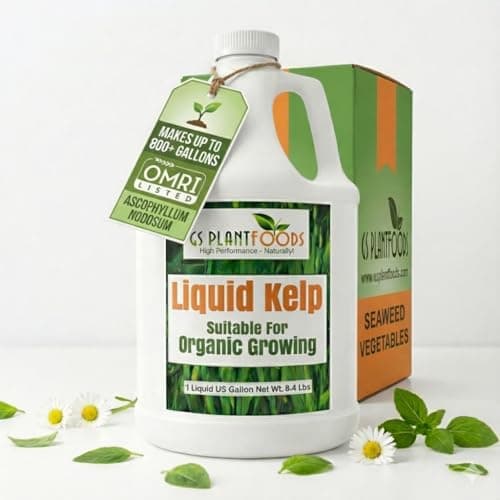
 GS Plant Foods Liquid Kelp Fertilizer (1 gal, OMRI listed)Check price on Amazon
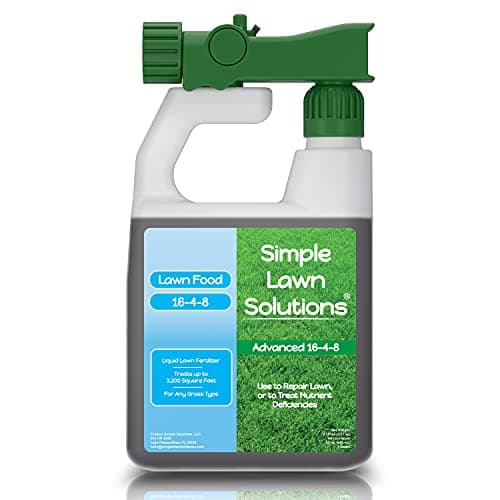
 Simple Lawn Solutions Advanced 16-4-8 Liquid FertilizerCheck price on Amazon
As an Amazon Associate we earn from qualifying purchases.
Free Lawn Care Tools
Liquid kelp is a concentrated extract derived from marine macroalgae, most commonly the species Ascophyllum nodosum harvested from cold ocean waters. In lawn care, it is usually sold as a dark brown liquid that is diluted with water and applied as a spray or soil drench.
No, liquid kelp should not replace regular fertilizer on your lawn. It has very low NPK values, so it does not supply enough nitrogen or potassium to meet turfgrass needs. It works best as a supplement alongside your normal fertilizer program to improve root strength, stress tolerance, and nutrient efficiency.
For most lawns, spraying liquid kelp every 3–4 weeks during active growth works well. Timing applications 7–10 days before expected stress periods, such as summer heat waves or winter cold snaps, helps the grass build resilience. Always follow the label rate and keep your regular fertilizer schedule in place.
Lawns that stay generally green but struggle in heat, wilt quickly, have shallow roots, or fade fast during drought are good candidates. You can check by cutting a 4–6 inch deep plug with a shovel; if most roots are only in the top 1–2 inches, the turf is likely to benefit from liquid kelp support for deeper root growth and better stress tolerance.
Yes, when used as a supplement. Sea kelp is just another name for the liquid kelp extract used on lawns, and it can help grass develop stronger, deeper roots and improve its ability to handle stress from heat, drought, and harsh seasons. It can also enhance microbial activity in the root zone and help turf use applied fertilizer more efficiently, often leading to deeper color and better recovery after stress when used correctly.
Yes, liquid kelp extract is a refined, concentrated product designed for quick foliar and root uptake, with a focus on plant hormones, micronutrients, and organic compounds. Kelp meal is a dried, ground seaweed applied as a granular amendment that breaks down slowly over months and is less targeted for rapid, foliar-driven effects. For fast turf health responses and easy tank mixing, liquid extract is the preferred form.
Photos: Pok Rie / Pexels, Kampus Production / Pexels, Jonas Thomann / Pexels

Beat weeds and brown spots from your phone
Snap a photo, get the fix, and follow a plan timed to your soil and weather. Free on iPhone.