Best Granular Pre-Emergent Herbicides: Which to Buy and When to Apply
 James ThorntonLawn Equipment & Maintenance Expert | 20 Years
As an Amazon Associate we earn from qualifying purchases.
Weed-free lawns usually come down to two things: timing and technique. Granular pre emergent herbicide, the pre-emergent weed killer granules you spread with a regular fertilizer spreader, works very well, but only if it is applied before weed seeds germinate and spread evenly over the turf. Choosing an active ingredient? Compare Prodiamine vs Dithiopyr.
Granular pre emergent herbicides are products you spread over the lawn to create a thin chemical barrier in the top layer of soil. That barrier stops new weed roots and shoots from developing after seeds germinate. They do not kill existing weeds, and they do not burn down green growth the way many post emergent sprays do. In other words, a granular pre emergent is a preventative weed killer, not a cure for the weeds you can already see.
Because these products work at the seed and seedling stage, the brand on the bag matters less than when and how you apply it. A cheaper product applied at the right soil temperature and watered in properly will outperform a premium product applied two weeks too late or too lightly. This guide is written for homeowners, advanced DIYers, and lawn care pros who want consistent, repeatable weed control instead of guessing every spring.
This guide focuses specifically on granular pre emergent timing and application. Liquid pre emergents use the same active ingredients in many cases, but the calibration, handling, and coverage patterns are different enough that they deserve their own discussion. Here we will walk through when to apply granular pre emergent in spring and fall for different regions, how to calibrate a spreader, and how to integrate these products with overseeding, fertilization, and irrigation.
If you see crabgrass and other summer annual weeds popping up by mid to late spring every year, it usually means your pre emergent barrier was late, thin, or skipped entirely. Confirm by checking soil temperature with a soil thermometer: if it has already been at or above about 55°F for several days when you apply, you are likely behind the ideal timing for crabgrass prevention. In that case, look for a product containing dithiopyr, which can control very young crabgrass both pre and very early post emergent.
The fix is to time granular pre emergent so it is on the lawn and watered in before weed seed germination. For crabgrass, this usually means early spring when soil temps are around 50°F to 55°F at 2 inches, often 1 to 2 weeks before forsythia shrubs in your area are in full bloom. Apply at the label rate using a calibrated spreader, then water with about 0.25 to 0.5 inches of irrigation to activate the barrier. Do not dethatch, core aerate, or overseed immediately after application or you will break or neutralize the herbicide layer.
Understanding Granular Pre-Emergent Herbicides
What “Pre-Emergent” Actually Means
Pre emergent herbicides target weeds before they become visible plants in your lawn. They work at the stage where seeds are germinating and trying to send out their first root and shoot. The active ingredient disrupts cell division or root formation in that very early stage, so the seedling never establishes.
Post emergent herbicides, by contrast, are used on weeds that are already up and growing. They are typically sprayed onto foliage and absorbed into the plant. Many homeowners confuse the two and expect a pre emergent to kill the green weeds they already see. That expectation leads to the impression that the product “does not work,” when in reality it was used for the wrong job.
Throughout this guide, timing means getting the product down and activated before the target weed’s seeds emerge from the soil. If you apply after you already see a lawn full of crabgrass plants, purslane, or chickweed, you are too late for those individual plants. You can still stop the next wave of seeds, but the existing weeds will need a separate post emergent treatment or manual removal.
Key capabilities and limits:
- Pre emergents stop new weeds from establishing by interfering with root or shoot development right after germination.
- They do not kill mature weeds, or even well established young weeds with real roots.
- The barrier affects seeds in general, not just “weed seeds,” which is why pre emergents also interfere with grass seed germination.
Granular vs Liquid Pre-Emergent: Pros & Cons
Granular pre emergents are formulated on small fertilizer-like granules that you spread with a broadcast or drop spreader. Liquid pre emergents are mixed with water and sprayed. Both can be highly effective when used correctly, but their pros and cons are different, especially for DIYers.

Granular advantages include ease of use, especially on medium to large lawns. Most homeowners already own a rotary spreader and are comfortable walking the yard to apply fertilizer. Many granular pre emergent products also include fertilizer, so you can accomplish weed prevention and feeding in one pass. Coverage rates are clearly labeled, for example “covers 5,000 sq ft,” which simplifies planning.
On the downside, granular products must be watered in to move the active ingredient off the granule and into the top half inch of soil where weed seeds are germinating. Until you get about 0.25 to 0.5 inches of water on the lawn from rainfall or irrigation, the barrier is not fully active. Granular applications also depend heavily on even spread. Overlaps can cause striping or, with some products, slightly stressed turf, while gaps create “holidays” that allow weeds to break through in lines or patches.
Granular products are ideal when you have:
- Large, relatively open lawns without lots of tight curves or small flower beds.
- A reliable sprinkler or irrigation system to water in the product within a day or two.
- A preference for combining fertilizer and pre emergent into one application.
Liquid pre emergents are better when you are dealing with irregular shapes, numerous landscape beds, and hard edges where precision is critical. It is easier to keep spray off ornamentals using shields or careful wand spraying than it is to keep bouncing granules out of beds or off sidewalks. Liquids also allow finer control of application rate if you are comfortable calibrating a sprayer.
How Granular Pre-Emergent Herbicides Work in the Soil
Once you spread a granular pre emergent and water it in, the granules dissolve and release the active ingredient into the upper layer of the soil. This creates a thin, relatively uniform zone that affects germinating seeds passing through it. The herbicide is typically absorbed by emerging roots or shoots and disrupts growth processes like root formation or cell division.
Soil texture and organic matter influence how that active ingredient behaves. In sandy soils with low organic matter, herbicides tend to move more readily with water and may leach deeper, so labels often recommend lower rates or shorter re-application intervals. In heavier clay or high organic matter soils, the herbicide binds more strongly and moves less, which can increase residual life but also means it mostly stays in the top fraction of an inch.
Most granular pre emergent herbicides provide control for roughly 6 to 16 weeks, depending on the active ingredient, application rate, climate, and soil. Prodiamine is known for long residual control and can last up to 16 weeks or more at higher label rates in cooler regions. Pendimethalin typically has a shorter residual, often around 6 to 10 weeks. Dithiopyr is mid range, with many products giving 8 to 12 weeks of control when applied at recommended rates.
Several environmental factors gradually break down or move the herbicide:
- Sunlight (UV) can degrade surface residues if the product is not watered in.
- Soil microbes slowly break down the active ingredient, especially in warm, moist soils.
- Rainfall and irrigation can dilute and move the herbicide out of the top zone if amounts are heavy over time.
- Cultural practices like core aeration, dethatching, and aggressive raking physically disturb the barrier.
This is why timing is not just about putting the product down before soil warms; it is also about choosing a rate and re-application interval that will maintain coverage through the main germination window without breaking the barrier too early.
Choosing a Granular Pre-Emergent: Prodiamine (Barricade) vs Dithiopyr (Dimension) vs Pendimethalin
Different granular pre emergents use different active ingredients, and each has strengths, weaknesses, and seeding limitations. The most common for home lawns are prodiamine, dithiopyr, and pendimethalin. Manufacturer brands often market these actives as “Barricade” (prodiamine) or “Dimension” (dithiopyr), especially in professional products. Here is how the three compare at a glance:
| Active (brand) | Granular rate per 1,000 sq ft | Residual | Fall soil-temp trigger | Blocks grass seed for | Notes |
|---|---|---|---|---|---|
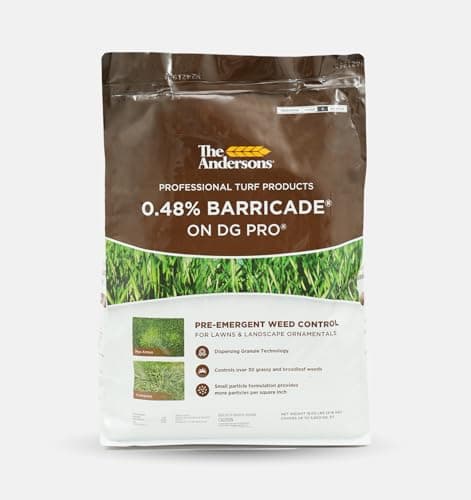
| Prodiamine (Barricade 0.48%) | ~3 lb | 8 to 16+ weeks by rate | Apply before soil falls to 70°F | Up to 12 weeks | Longest residual, cheapest per 1,000 sq ft, no post-emergent activity. Sold as The Andersons Barricade Professional-Grade Granular Pre-Emergent |
| Dithiopyr (Dimension) | ~3 lb | 8 to 12 weeks | Before soil falls to 70°F | 6 to 8 weeks | Kills crabgrass up to 1 to 3 tillers, more forgiving if you are late |
| Pendimethalin (Scotts Halts, Pendulum 2G) | Per bag label | 6 to 10 weeks | Before soil falls to 70°F | Shortest of the three | Yellow staining risk on hardscape. Sold as Scotts Halts Crabgrass & Grassy Weed Preventer, 20.12 lbs. |
| Mesotrione (Tenacity) | Liquid only | 3 to 4 weeks | At seeding | Safe at seeding, cool-season only | The overseeding workaround, inhibits warm-season grass |
Always follow the label on your specific bag for rates and reseeding intervals, since the same active ingredient can carry different restrictions at different rates.
When you are comparing pre emergent granules at the store, ignore the front of the bag and compare two numbers: the active ingredient percentage and the real cost per 1,000 square feet. An 18 lb bag of prodiamine that covers 5,800 sq ft at the crabgrass rate often works out cheaper per square foot than a bargain bag with a low active percentage that covers half the area. Big-box pricing shifts constantly, so do the per-square-foot math on the coverage number, not the bag price.
Prodiamine: This is one of the longest lasting pre emergent herbicides for crabgrass and many other annual grasses. It is often the active in “Barricade” products. When applied at higher labeled rates, it can protect for 4 months or more, especially in cooler climates. The tradeoff is that prodiamine is also very aggressive toward grass seed germination. Labels commonly restrict overseeding or reseeding for 3 to 6 months after application, depending on rate. Prodiamine has no post emergent activity, so timing before germination is critical.
Dithiopyr: Often sold in products labeled with “Dimension,” dithiopyr provides strong crabgrass pre emergent control and has the unique benefit of early post emergent activity. It can control very small crabgrass seedlings after they emerge, usually up to the 1 to 3 tiller stage. This makes it more forgiving if your timing is slightly late. Its residual is typically a bit shorter than a high rate of prodiamine but still good, usually around 8 to 12 weeks. Reseeding restrictions are still present but often shorter than prodiamine at similar weed control levels. Dithiopyr granular products usually put the active on a fertilizer or fine mineral carrier, and many retail crabgrass preventer plus fertilizer bags are dithiopyr underneath the brand name, so check the fine print on the bag for the actual active ingredient and percentage.
Pendimethalin: This was one of the earlier pre emergent herbicides widely used on turf. It controls many annual grasses and some broadleaf weeds but has a shorter residual than prodiamine or dithiopyr, meaning it may need to be applied twice in a season for full coverage. Pendimethalin can stain concrete and hardscapes with a yellowish tint if not swept or blown off promptly, which is why it has fallen somewhat out of favor in residential settings.
When comparing Dimension vs Barricade granular products for home use, the tradeoff is mainly between timing flexibility and season length. Barricade (prodiamine) at a full rate lets you apply early and still get long season control, but you must hit the timing before germination and accept a long wait before seeding. Dimension (dithiopyr) gives you a small post emergent window if you are a little late, but you may need a slightly split or higher rate strategy for full season coverage in long, hot summers.
Because these products affect seed germination generally, you must always check the label for reseeding and overseeding restrictions. Many labels specify exact waiting periods for common cool season grasses like Kentucky bluegrass, perennial ryegrass, and tall fescue. For example, a prodiamine label may specify no overseeding for at least 4 months after application at a standard rate. If you plan to overseed in fall, your spring pre emergent rate or product choice should reflect that.
To read a granular herbicide label effectively, look for three key items:
- Target weeds: The label lists annual grassy weeds (crabgrass, goosegrass, foxtail), broadleaf weeds, and in some cases winter annuals like poa annua. Make sure your problem weeds are covered.
- Seeding and overseeding restrictions: Labels will spell out how many weeks or months must pass before you seed safely. This is your primary planning number.
- Re-application intervals and maximum yearly rates: Especially for long-season control, many homeowners and pros split the total annual rate into two applications. The label will show how much total active ingredient per year is allowed and how to divide it.
- Penn State Extension recommends checking pre emergent labels for crabgrass and annual bluegrass control separately, since not all active ingredients control both, and adjusting timing and rate accordingly.
Identifying Your Weed Pressure and Targets
Cool-Season vs Warm-Season Weeds
Not all weeds germinate at the same time. Understanding whether your main problem is summer annuals, winter annuals, or both tells you whether to focus on spring pre emergent timing, fall timing, or a two season strategy.
Summer annual grassy weeds like crabgrass, goosegrass, and foxtail germinate when soil temperatures warm into roughly the 55°F to 70°F range. They thrive in thin turf, compacted areas, and along hot edges like driveways and sidewalks. Granular pre emergent herbicides are very effective against them when applied in early spring before soil temperatures consistently reach about 55°F at a depth of 2 inches.
Winter annuals, including poa annua (annual bluegrass), chickweed, and henbit, germinate in late summer into fall as soils cool, then overwinter as small plants and grow rapidly in early spring. Many homeowners think these are “spring weeds,” but the seeds actually sprouted months earlier. If you see patches of poa annua every spring in a cool season lawn, that suggests you may need a fall pre emergent targeting these winter annuals as well.
Broadleaf vs grassy weeds also matters. Granular pre emergents are strongest on grassy weeds. They control some broadleaf species, but far fewer. For example, prodiamine and dithiopyr controls might list pigweed or spurge, but not dandelion. Deep rooted perennials like dandelion or plantain are not effectively controlled with pre emergents alone because they spread by root pieces or crowns as well as seed. Those typically require a separate broadleaf post emergent treatment.
Your turf type shapes your weed spectrum too. Warm season grasses like bermuda, zoysia, centipede, and St. Augustine are often maintained in regions with heavy summer annual pressure as well as winter annuals in milder climates. Cool season lawns of Kentucky bluegrass, perennial ryegrass, and fescue in the north see significant crabgrass and goosegrass in summer, with poa annua, chickweed, and henbit as winter annuals. The pre emergent schedule you follow needs to align with that pattern.
Assessing Your Lawn’s Weed History
Last season’s weeds are usually the best predictor of this season’s weed pressure. If you pay attention to where and when weeds appear in your yard now, you can tune product choice, rate, and timing for the next cycle instead of starting from scratch every year.
Crabgrass often appears first along curb strips, sidewalks, and driveways. These areas heat up faster and dry out more easily, which speeds soil warming and seed germination. If you see crabgrass there in May or June while the middle of the lawn stays relatively clean, that suggests your pre emergent barrier was either thin in those edges (often due to uneven spread) or the barrier broke down too soon there. Thin spots, bare soil patches, and newly renovated areas are also hot spots for weed breakthrough.
Pay attention to patterns:
- Sunny vs shady zones: Crabgrass loves full sun and heat. Poa annua and chickweed can do well in cooler, damp, shaded areas.
- High traffic zones: Compaction and turf thinning from foot traffic or pets create openings for weeds.
- Recent disturbance: Any spot where you had soil work, dethatching, aeration, or reseeding may show different weed pressure because the soil seed bank was disturbed.
If you see heavy crabgrass in July across the entire lawn, even though you know you applied a granular pre emergent earlier in spring, consider two possibilities. Either the product went down after soil temperatures were already in the germination window for several weeks, or the rate was too low or not watered in, so the barrier never fully formed. Confirm timing by looking at local historical weather data or checking when forsythia in your neighborhood was blooming relative to your application date.
In contrast, if spring brings carpets of poa annua and chickweed but crabgrass is minimal later, your spring pre emergent timing is likely fine for summer weeds, but you probably are not using a fall pre emergent or you are overseeding in fall without a good plan to address winter annuals.
Timing Granular Pre-Emergent Herbicide Applications
Spring Timing for Crabgrass and Summer Annuals
Spring timing is the core of most granular pre emergent strategies. For crabgrass and other summer annual grasses, your goal is to have an active barrier in place before soil temperatures at 2 inches reach 55°F for several days in a row. This is a widely used threshold, and a simple soil thermometer you push 2 inches into the soil can tell you where you stand.
In many northern and transition zone climates, that timing lines up roughly with forsythia shrubs coming into full bloom, not the very first flowers but when the shrubs are mostly yellow. In warmer regions, especially the Southeast and Gulf Coast, soil warms more quickly, and relying on plant cues or a soil thermometer is more precise than the calendar.
Common timing windows by region (approximate):
- Upper Midwest / Northeast cool season lawns: early to mid April, depending on year, when soil temps first reach about 50°F and are climbing.
- Transition zone (Kansas City, St. Louis, Nashville): late March to early April.
- Southeast and Gulf Coast warm season lawns: as early as late February to mid March in warm years.
- West Coast: highly variable, often February to April in coastal zones; rely on soil temperatures.
These are starting points only. The practical rule is: apply granular pre emergent so that it can be watered in and fully activated 7 to 10 days before consistent germination conditions. Since prodiamine and dithiopyr do not break down quickly in cool soil, it is usually better to be a bit early than late, especially if you choose a product with long residual.
If you run Scotts products specifically, see our Scotts pre-emergent schedule for product-by-product timing.
If you are consistently late or have long summers, a split application is very effective. For example, you could apply half the labeled yearly rate of prodiamine in early spring when soil temps are about 45°F to 50°F, then apply the second half 6 to 8 weeks later. This keeps you protected into late summer without one heavy early dose and also reduces risk of turf injury.
Using Soil Temperature and Growing Degree Days
Calendar dates are rough guides; soil temperature and growing degree days (GDD) are precise tools. GDD models use temperature data to estimate plant development stages, including weed seed germination. Several universities and turf websites offer GDD calculators where you enter your zip code and see recommended windows for crabgrass pre emergent.
If you do not want to dive into GDD, a basic soil thermometer still gives you a big edge. Push it 2 inches into the soil in a representative turf area, out of direct sun, at about the same time each day. When you see readings consistently in the 50°F to 55°F range and a warming trend in your forecast, that is your cue to apply. Try to complete application and watering before multiple days over 55°F with warm nights.
- Ohio State University Extension notes that crabgrass germination typically begins after 3 to 5 days of soil temperatures averaging 55°F or higher at a 2 inch depth, making that a key trigger point for pre emergent application.
Fall Granular Pre-Emergent: Timing for Poa Annua and Winter Annuals
Spring pre-emergent gets all the attention, but the weeds that ruin your lawn in March germinated last September. Poa annua, henbit, chickweed, and lawn burweed are winter annuals. They sprout when soil cools, sit low through winter, then explode when everyone else is thinking about crabgrass. By then a pre-emergent does nothing, and getting rid of stickers in your yard turns into a winter spraying job.
The trigger is soil temperature falling back through 70°F at a 2 inch depth, not a date on the calendar. Texas A&M AgriLife puts it plainly: the fall regimen starts when soil hits about 70°F, and "don't get into the habit of relying on the same calendar date every year." UGA's home lawn guidance adds a simpler field cue for anyone without a soil thermometer: apply when nighttime temperatures drop to 65 to 70°F.
Get the barrier down before soil reaches 70°F, not after. If soil is already at 68°F and falling, some seed has germinated under your barrier and the application will only be partly effective.
For the full fall playbook, including split applications and what to do if you have already missed the window, read our fall pre-emergent timing guide.
If you fight annual bluegrass, chickweed, henbit, and other winter annuals every spring, a fall granular pre emergent is often required. These weeds generally begin germinating when soil temperatures drop back into the 70°F and then 60°F range, usually late August into September in many temperate regions.
The timing target is similar, just in reverse: you want your pre emergent barrier active before soil at 2 inches cools to around 70°F consistently. In the Upper Midwest and Northeast, that often lands in late August to early September. In the transition zone, it might push into September. In the Deep South, significant winter annual germination may not start until October or even November, but again soil temps are your most reliable guide.
If you do not own a soil thermometer, you can check your soil temperature for your area and watch the 2 inch reading trend down toward that 70°F mark.
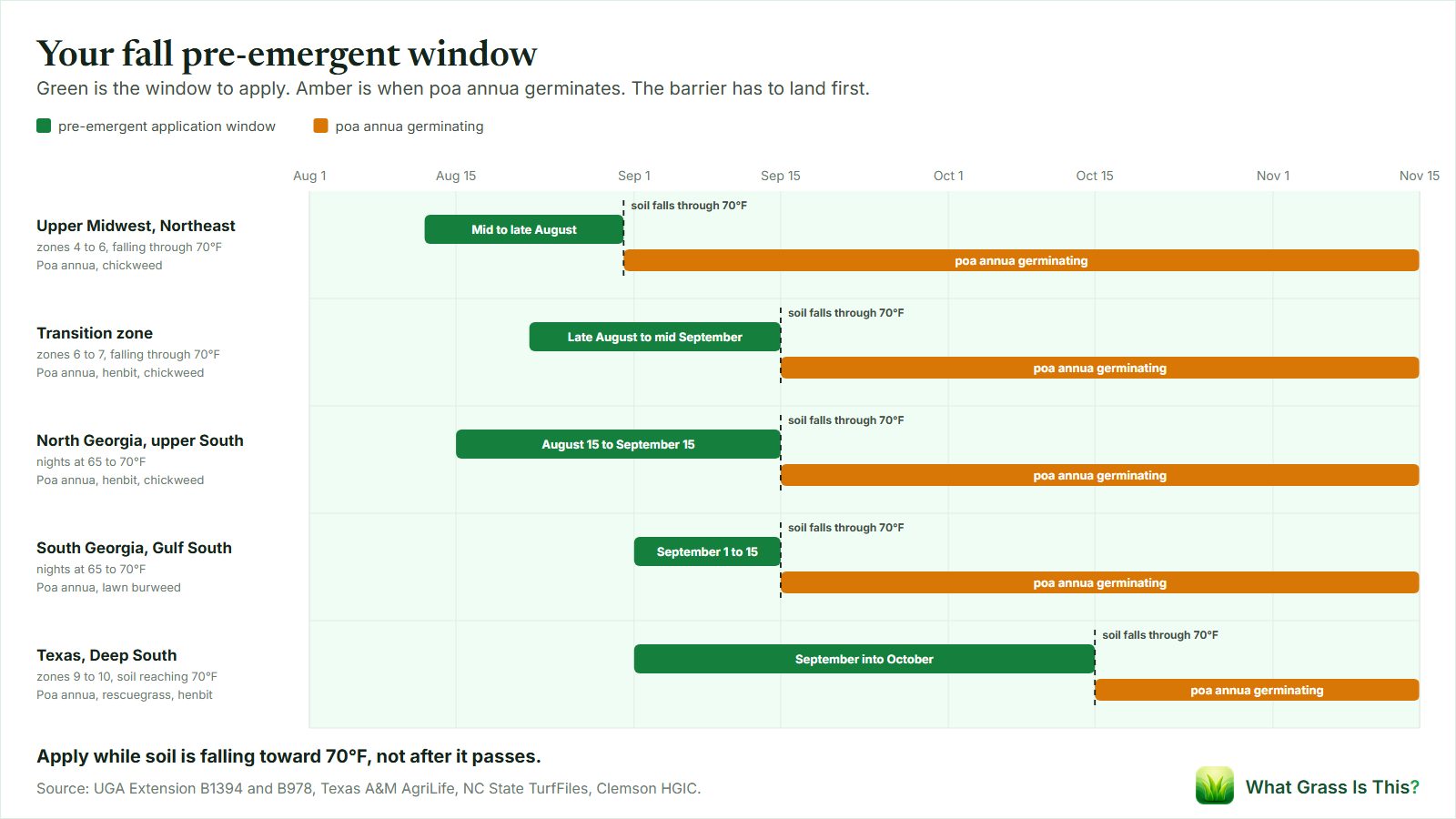
Here is roughly when that window opens by region.
| Region | Soil temp cue at 2 in. | Typical window | Primary targets |
|---|---|---|---|
| Upper Midwest, Northeast (zones 4 to 6) | Falling through 70°F | Mid to late August | Poa annua, chickweed |
| Transition zone (zones 6 to 7) | Falling through 70°F | Late August to mid September | Poa annua, henbit, chickweed |
| North Georgia and upper South | Nights at 65 to 70°F | August 15 to September 15 | Poa annua, henbit, chickweed |
| South Georgia, Gulf South | Nights at 65 to 70°F | September 1 to 15 | Poa annua, lawn burweed, Carolina geranium |
| Texas, Deep South, zones 9 to 10 | Soil reaching ~70°F | September into October | Poa annua, rescuegrass, henbit |
Fall timing gets tricky when you also plan to overseed cool season grasses. Because granular pre emergents inhibit grass seed germination, you generally cannot apply a standard crabgrass pre emergent in the fall and then seed a week later. You have three main options:
- Skip fall pre emergent in areas you plan to overseed that season and manage winter annuals with post emergent herbicides later.
- Use a much lower rate and accept partial control while still potentially impacting some overseeding success.
- Delay pre emergent until after seed is down and newly germinated turf has been mowed several times, which often pushes you past the ideal pre emergent window and reduces effectiveness.
If you are overseeding cool-season grass this fall, you have a real conflict, because prodiamine and pendimethalin stop your grass seed just as effectively as they stop poa annua. You do not have to give up either one. Seed first, then apply the pre emergent once the new turf has been mowed three times, which usually lands in late October. Or use mesotrione, which is the one pre emergent labeled to go down at seeding on cool-season grass, and follow it with a standard prodiamine application the following spring. If you are not overseeding at all, there is no conflict and no reason to skip the fall pass.
One thing a fall application will not do is touch the poa annua you can already see, so clumps that are already up in the lawn need a post emergent plan of their own.
Granular Pre-Emergent for Bermuda Grass
Bermuda grass lawns are some of the best candidates for a granular pre emergent program. Established bermuda is tough, spreads by rhizomes and stolons rather than seed, and tolerates the common pre emergent actives well, so you can run a full rate program without babying the turf. Prodiamine and dithiopyr granular products are both widely labeled for bermuda, and pendimethalin is also commonly used on it.
The timing catch is that bermuda is usually still brown or just waking up when crabgrass starts germinating. Do not wait for green-up. In the Southeast and Gulf Coast, granular pre emergent on bermuda typically goes down from late February to mid March, before soil temperatures at 2 inches hold at about 55°F. Applying to dormant or semi-dormant bermuda is fine and is actually standard practice; the herbicide works in the soil, not on the leaf.
A few bermuda-specific pointers:
- Skip fertilizer in the early pass. Dormant bermuda cannot use nitrogen, so a straight granular pre emergent without fertilizer is the better early choice. Feed later, after full green-up, when the lawn is actively growing.
- Plan a split application. Southern growing seasons are long, so one early application often runs out before crabgrass and goosegrass pressure ends. Apply the second half of the yearly rate 6 to 8 weeks after the first.
- Add a fall application for winter weeds. Poa annua, henbit, and chickweed are highly visible in dormant brown bermuda over winter. A fall granular pre emergent when soil temps drop back toward 70°F keeps the lawn clean.
- Hold off on new bermuda. Do not apply granular pre emergent to newly seeded, sprigged, or sodded bermuda until it is fully established, since the same root-inhibiting action that stops weeds also stunts new bermuda roots. Check the label for the specific establishment interval.
One quirk worth knowing: if you overseed bermuda with ryegrass for winter color, a fall pre emergent will block the ryegrass just like it blocks poa annua. Pick one or the other for a given season; you cannot have a fall pre emergent barrier and a fresh ryegrass overseed in the same lawn area.
How Long Granular Pre-Emergent Herbicides Last (and When to Reapply)
Most granular pre emergent herbicides last about 6 to 16 weeks in the soil, depending on the active ingredient, application rate, climate, and soil type. Warm, moist soils break the barrier down faster, sandy soils let more of it move with water, and mechanical disturbance like aeration or dethatching can end it early. Here is what to expect from the common actives and when to plan a second application:
| Active Ingredient | Typical Control Window | When to Reapply |
|---|---|---|
| Prodiamine (Barricade) | 8 - 16+ weeks depending on rate | Split applications 6 - 8 weeks apart for season-long control |
| Dithiopyr (Dimension) | 8 - 12 weeks | Around 8 weeks after the first pass in long, hot summers |
| Pendimethalin (Scotts Halts) | 6 - 10 weeks | 6 - 8 weeks after the first pass for full-season coverage |
A practical approach for long growing seasons is the split application: apply roughly half the maximum yearly labeled rate in early spring, then the second half 6 to 8 weeks later. You stay protected into late summer without one heavy early dose, and the label's total yearly maximum is never exceeded.
Calibrating Your Spreader and Applying Granular Pre-Emergent Correctly
Calibrating a Broadcast or Drop Spreader
Even the best herbicide will fail if it is applied at half rate in some areas and double rate in others. Spreader calibration is what turns “bag settings” into accurate coverage. Different brands and models spread differently, so relying solely on the number printed on the bag is often imprecise.
A simple homeowner calibration method looks like this:
- Measure out a 1,000 square foot test area, for example 20 feet by 50 feet, and mark the corners.
- Weigh out the amount of product you should apply to 1,000 square feet according to the label. If the bag says, “Apply 3 lbs per 1,000 sq ft,” then weigh 3 lbs.
- Start with a midrange spreader setting suggested on the bag, fill the hopper with your 3 lbs, and walk your test area at a normal mowing pace, overlapping wheel tracks slightly as you would normally.
- If you run out of product before you finish the area, the setting is too high. If you still have product left at the end, the setting is too low.
- Adjust the setting and repeat with another weighed amount until the calibrated setting empties your weighed product just as you finish the 1,000 sq ft area.
This process takes a bit of time up front, but once dialed in, you can note your personal “3 lbs per 1,000” setting for that spreader and brand, and re-use it for similar products. Accurate calibration minimizes streaks, missed strips, and overapplication that might stress turf.
Application Pattern and Overlap
After calibration, your walking pattern is the next critical piece. A good technique is to divide the lawn into sections. Spread around the perimeter first, then make straight passes back and forth across the area, overlapping wheel tracks slightly so the spread pattern from one pass meets the next without gaps.
To reduce overlap issues, many pros set the spreader to apply half the desired rate, then cover the area twice in a criss-cross pattern, once north-south and once east-west. This smooths out any inconsistencies from individual passes and leads to more uniform coverage. For example, if the label calls for 3 lbs per 1,000 sq ft, you would calibrate your spreader for 1.5 lbs per 1,000, then make two passes at right angles.
Along hard edges, like driveways and sidewalks, use a deflector shield or side guard if your spreader has one, or adjust your walking line so granules fall just to the edge of the turf, not heavily onto the pavement. Immediately after application, blow or sweep any granules off hard surfaces back into the lawn, especially with pendimethalin products that can stain.
Windy conditions are another factor. Moderate wind can throw granules off target, creating thin spots on the upwind side and heavy deposits downwind. If wind is strong enough that you see granules visibly drifting, it is better to wait for calmer conditions.
Watering In and Activation
Granular pre emergent herbicides require moisture to move off the granule into the soil surface and form that effective barrier zone. Most labels ask for 0.5 inch of rainfall or irrigation, and prodiamine labels give you up to 14 days after application to get it on, though sooner is better. Heavier watering is usually not necessary immediately and could move the product too deep in very sandy soils.
If rain is forecast within 24 to 48 hours, you can time your application ahead of that rainfall and let nature do the work, as long as the predicted rainfall is in that quarter to half inch range. Very heavy downpours, especially on slopes or compacted soil, can cause runoff and reduce uniformity. If you rely on irrigation, set your system to run long enough to deliver that quarter to half inch. A simple rain gauge or several tuna cans placed in the yard can confirm depth.
Do not delay watering for a week after application. Until the product is washed into the soil, it is vulnerable to photodegradation and can be moved or picked up by traffic. The sooner it is in the soil profile, the sooner it begins providing reliable pre emergent control.
Do You Need to Water In Granular Pre-Emergent Immediately?
Not the same hour, but do not treat it as optional either. The practical target is water within 24 to 48 hours of application, whether from irrigation or rain. Nothing bad happens to the lawn if granules sit dry for a day, but you have zero weed protection until they are watered in, and extended sun exposure slowly degrades some actives sitting on the surface. If your only watering option is a hose and the forecast is dry for a week, apply on a day you can drag the sprinkler around, or simply wait for a rain window. The application date matters less than the activation date.
Integrating Pre-Emergent with Overseeding, Fertilization, and Irrigation
Pre-Emergent and Overseeding Compatibility
Pre emergent herbicides and overseeding work against each other by design. Because the herbicide prevents seedling establishment, applying a full rate pre emergent shortly before seeding virtually guarantees poor germination and thin results. The label for your specific product will list “do not seed for X weeks after application” restrictions, and in practice this number is not optional.
For cool season lawns, many homeowners aim to overseed in early fall, typically early September in the north or late September in the transition zone. If you have used a long residual product like prodiamine in spring at a high rate, its effects may still be present at that time and can reduce or delay grass germination. To balance yearly weed control with fall overseeding, consider:
- Using a shorter residual spring pre emergent like pendimethalin at a moderate rate if you know fall overseeding is part of your plan.
- Using lower split doses of prodiamine in early spring and late spring instead of a single heavy early dose, so residual heading into fall is lower.
- Skipping pre emergent applications in specific areas you plan to heavily renovate and seed, while treating the rest of the lawn normally.
If you plan to seed in spring, your options are even more limited. Any granular pre emergent applied just before or after seeding will suppress the new grass. In general, the sequence is: seed first, allow germination and then 2 to 3 mowings on new grass, then consider a pre emergent labeled as safe for established turf at that stage, and only at the recommended timing. That often means you miss the main crabgrass germination window for that year in seeded areas.
Since thick turf is the best long term weed control, many homeowners accept a season of higher weed pressure in newly seeded areas and focus on pre emergent elsewhere. Then, once the turf is mature, they bring those zones into the regular pre emergent schedule.
Combining Pre-Emergent with Fertilizer
Many retail granular products are pre emergent plus fertilizer blends. For example, you may see “Crabgrass Preventer plus Lawn Food 26-0-4” on the label. These combination products are convenient and can fit well into a seasonal fertilization schedule if you pay attention to nutrient rates as well as herbicide timing.
Typical spring fertilizer applications for cool season lawns fall in the range of 0.5 to 1.0 lb of nitrogen per 1,000 sq ft. If your combined pre emergent plus fertilizer product delivers 0.8 lb N per 1,000 at the recommended weed control rate, that is usually appropriate for a spring feeding. Match the timing of your first planned fertilizer application with the ideal pre emergent window, and you achieve both goals with one pass.
Warm season lawns have different fertilizer timing. For bermuda and zoysia in the Southeast, you generally want to wait to fertilize until after the lawn has fully greened up and is actively growing. However, you may need a pre emergent for crabgrass earlier, when turf is still partially dormant. In that case, a straight pre emergent without fertilizer is often better early, then you apply fertilizer later when the lawn is ready to use it.
If your preferred fertilization schedule does not match ideal herbicide timing, splitting the two can improve both outcomes. Use a straight granular pre emergent at the correct time with minimal or no added nutrients, then feed separately when your grass type and region call for it. Guides like “spring lawn fertilizer timing” and “warm season grass fertilizer schedule” can help align those pieces.
Irrigation Strategy Before and After Application
Irrigation interacts with pre emergents in two ways: activation and longevity. Immediately before application, avoid heavy watering that leaves the lawn soggy and prone to runoff. Slightly dry turf is fine and may even reduce granules sticking to leaves instead of soil. Immediately after application, you want that 0.25 to 0.5 inch of water, as discussed earlier, to move the active ingredient into place.
Over the following weeks, regular deep and infrequent watering is usually best for turf health and does not significantly harm the pre emergent barrier. However, very frequent, shallow watering several times a day, often used to keep seed moist, can gradually speed herbicide movement and breakdown in very sandy soils. Again, this is another reason not to combine heavy overseeding and strong pre emergents in the same space and time.
If your irrigation schedule is on a timer, adjust it so that the first post-application watering cycle runs long enough on the same day or the next morning to fully activate the product. Then resume your normal weekly total of roughly 1 to 1.5 inches of water for established cool season lawns or the appropriate level for your warm season turf, accounting for rainfall.
Granular Post-Emergent Herbicides: How They Differ and When to Use Them
If you are staring at weeds that are already up and green, a pre emergent is the wrong tool for those plants. That is the job of a post emergent herbicide, and yes, granular post emergent products exist. Most are weed and feed formulas that pair fertilizer with a broadleaf herbicide like 2,4-D, dicamba, or MCPP. The mechanics are completely different from a pre emergent: instead of forming a soil barrier, the granules must contact and stick to the weed's leaves, which is why labels tell you to apply to damp grass (morning dew works) and to skip watering for 24 to 48 hours afterward. Notice that is the exact opposite of the water-it-in rule for pre emergents, so never assume one granular product behaves like another.
Granular post emergents work best on young, actively growing broadleaf weeds like dandelion, clover, and henbit. They are a poor match for established crabgrass, mature broadleaf weeds, or sedges like nutsedge; for those, a targeted liquid post emergent spray is usually far more effective. The winning combination for most lawns is both tools on a schedule: granular pre emergent at the right soil temperature to stop the next wave, plus spot treatment with a post emergent for anything already growing. For product picks and how to choose between sprays, concentrates, and granules, see our guide to the best weed killers for lawns.
What Other Guides Miss: Common Mistakes to Avoid
Many online articles on granular pre emergent timing and application gloss over several points that determine whether your effort pays off. Avoiding the following mistakes will put you ahead of most DIY programs.
1. Using air temperature instead of soil temperature. Air can hit 70°F on a sunny day in early spring while soil is still in the 40s. If you apply based only on a “warm weekend,” you may be weeks early in a cold spring or too late in a sudden warm one. Confirm with a soil thermometer at 2 inches or use a reputable GDD tool tied to your zip code.
2. Expecting pre emergent to fix existing weeds. If you already have mature crabgrass, poa annua, or chickweed, pre emergents will not remove them. You need an integrated plan: pre emergent to stop new weeds and selective post emergents for what is already present. For example, combine a spring dithiopyr application with a post emergent crabgrass killer later for any escapes.
3. Ignoring label seeding restrictions. Many guides mention that “pre emergents affect seeding” but do not stress how strict the timing is. If the label says “do not seed for 4 months after application,” seeding 8 weeks later will almost always produce poor results. Plan your renovation and pre emergent schedule 6 to 12 months ahead when possible.
4. Not calibrating the spreader. Bag chart settings are starting points, not guarantees. If you simply spin the dial to the suggested setting without a test, you risk underapplying by 30 percent in parts of the lawn, which is enough to allow weeds through. The 1,000 sq ft calibration method takes under an hour and locks in accuracy for future applications.
5. Skipping the water in step. Granular product sitting dry on foliage or thatch will not do much for you. If no rain is forecast, many homeowners forget to irrigate, then assume the product failed weeks later. Schedule your application on a day when you can run sprinklers or expect light, steady rain within 24 hours.
6. Disturbing the soil after application. Dethatching, power raking, or core aerating after you apply a pre emergent breaks the barrier and drags the herbicide deeper than the germination zone. Plan these mechanical practices either before your pre emergent goes down or after its main effective life is over.
Putting It All Together: Seasonal Timeline Example
To make this guide practical, here is an example annual plan for a cool season lawn in a northern climate with heavy crabgrass and moderate poa annua issues, and a desire to overseed in fall.
Early Spring (soil 40°F to 45°F): Perform any needed core aeration or dethatching before herbicides are applied. Test your spreader calibration using a fertilizer or inexpensive carrier material if you like, so you are ready.
Mid Spring (soil 50°F to 55°F): Apply a granular pre emergent containing prodiamine or dithiopyr at about half the maximum yearly rate when soil hits around 50°F and is trending upward. Water in with 0.25 to 0.5 inches. This covers early crabgrass germination. Optionally combine with 0.5 to 0.75 lb N per 1,000 sq ft as part of your spring fertilizer plan.
Late Spring (6 to 8 weeks later): Apply the second half of your yearly pre emergent rate with the same product or dithiopyr if you want some early post emergent reach on escaped crabgrass seedlings. Water in well. At this point, your crabgrass control should extend into mid to late summer.
Summer: Focus on mowing height, irrigation, and spot post emergent treatments for any weeds that do appear. Maintain cool season grass at roughly 3 to 4 inches mowing height, water 1 to 1.5 inches per week total, and avoid stressing the turf, which opens space for weeds.
Early Fall (overseeding window): Because you used moderate, split rates in spring, residual pre emergent activity is lower by early September. Verify by checking your product’s label and counting weeks since last application. Overseed thin areas or the entire lawn with appropriate cool season varieties. Keep seed moist with light, frequent watering until established.
Late Fall: Once new grass has been mowed at least 2 to 3 times and is well established, consider a light rate of a pre emergent labeled with shorter seeding restriction windows if poa annua is a severe problem. Many homeowners skip this in the first year after renovation. Apply a fall fertilizer at 0.75 to 1.0 lb N per 1,000 sq ft according to a fall lawn fertilizer timing guide for strong root growth going into winter.
For warm season lawns, adjust the calendar forward: pre emergent for crabgrass and goosegrass often goes down between late February and early April, followed by another dose in late spring for extended control, and possibly a fall pre emergent if winter annuals are an issue in your area.
Conclusion
Granular pre emergent herbicides are powerful tools, but they are not magic. When they fail, the cause is almost always off timing, poor application uniformity, or conflicts with overseeding plans, not a bad product. By basing your schedule on soil temperature, calibrating your spreader, watering in properly, and respecting seeding restrictions, you can convert a weed plagued lawn into one where crabgrass and other annuals struggle to get a foothold each year.
If you are building your broader lawn program, the next step is to align weed control with nutrition and mowing. Check out our guide on spring lawn fertilizer timing to pair pre emergent applications with the right feeding schedule for your grass type and climate. Look for granular products that clearly list active ingredients like prodiamine or dithiopyr, include accurate coverage rates, and provide detailed label information on seeding intervals so you can confidently plan an entire season instead of guessing month to month.
Top Picks
 The Andersons Barricade Professional-Grade Granular Pre-Emergent Weed Control (18 lb)Check price on Amazon
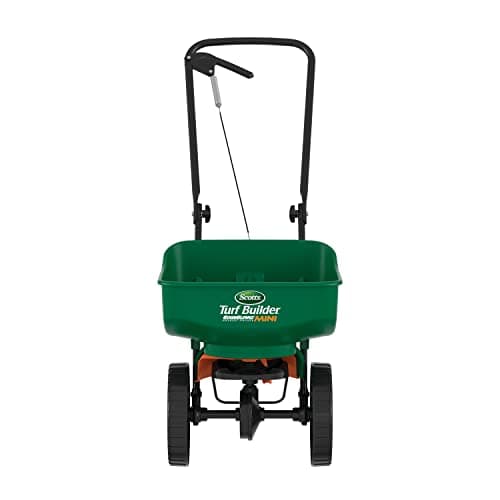
 Scotts Turf Builder EdgeGuard Mini Broadcast SpreaderCheck price on Amazon
As an Amazon Associate we earn from qualifying purchases.
Free Lawn Care Tools
Apply granular pre emergent in early spring when soil temperatures at 2 inches are around 50°F to 55°F and before they have stayed above about 55°F for several days. A practical visual cue is to apply about 1 to 2 weeks before forsythia shrubs in your area reach full bloom. Getting the product on and watered in before crabgrass seeds germinate is critical for effective prevention.
No, granular pre emergent herbicides do not kill existing, visible weeds. They only stop new weeds from establishing by disrupting root or shoot development right after seeds germinate. Established weeds with real roots need a separate post emergent treatment or manual removal.
Granular pre emergent products need to be watered in with about 0.25 to 0.5 inches of irrigation or rainfall. This moves the active ingredient off the granules and into the top half-inch of soil where weed seeds are germinating. Until that water is applied, the chemical barrier is not fully active.
Not the same hour, but soon. Aim to water in granular pre emergent within 24 to 48 hours of application with about 0.25 to 0.5 inches of irrigation or rain. The granules sitting dry on the surface are not protecting anything yet, and sunlight can slowly degrade exposed product. The barrier only forms once water moves the active ingredient into the top layer of soil, so the sooner it is watered in, the sooner protection starts.
Prodiamine (Barricade) and dithiopyr (Dimension) granular products are both excellent choices for established Bermuda grass and are widely labeled for it. Prodiamine gives the longest residual for a single early application, while dithiopyr adds a safety net of early post emergent activity on tiny crabgrass if you run late. Apply in late winter to early spring, before soil temperatures at 2 inches hold at 55°F, and avoid applying to newly sprigged or newly seeded Bermuda until it is fully established.
Granular pre emergent stops weed seeds from establishing and does nothing to weeds you can already see. Granular post emergent products, usually sold as weed and feed blends, attack existing broadleaf weeds through their foliage and work best applied to young weeds on damp grass so the granules stick to the leaves. For mature crabgrass or tough grassy weeds, a targeted liquid post emergent spray usually outperforms any granular option.
No, overseeding immediately after applying a granular pre emergent is not recommended. The barrier affects seeds in general, not just weed seeds, so it will interfere with grass seed germination as well. Dethatching, core aeration, or overseeding right after application can also physically break or neutralize the herbicide layer.
Granular pre emergents are spread with a broadcast or drop spreader and are often combined with fertilizer, making them convenient for larger, open lawns. They rely on even spreading and proper watering-in to form a consistent barrier. Liquid pre emergents are mixed with water and sprayed, offering better precision around tight curves, beds, and hard edges, as well as finer control of application rates for users comfortable calibrating a sprayer.
Most granular pre emergent herbicides provide about 6 to 16 weeks of control, depending on the active ingredient, rate, climate, and soil type. Prodiamine can last up to 16 weeks or more at higher label rates in cooler regions, while pendimethalin usually provides around 6 to 10 weeks of control, and dithiopyr typically offers 8 to 12 weeks. Soil texture and organic matter also affect how the herbicide moves and how long it remains active.
Rain within 24 to 48 hours after application actually helps, because granular pre emergents need about 0.25 to 0.5 inches of water to move the active ingredient off the granules and into the soil. The only concern is a heavy downpour, especially on slopes or compacted soil, which can wash granules out of place and thin the barrier. If a storm dumps well over an inch right after you apply, watch those areas for weed breakthrough.
Yes, applying just before a light to moderate rain is ideal timing. A forecast of roughly 0.25 to 0.5 inches within the next day or two waters the product in for you and activates the barrier without any irrigation. Skip application right before a predicted heavy downpour, since intense runoff can move granules and leave gaps in coverage.
For most home lawns, prodiamine granules (sold as Barricade, such as The Andersons Barricade) are the best all-around pre-emergent weed killer granules because a single early application at the higher label rate can protect for 16 weeks or more. If you tend to run late in spring, choose dithiopyr (Dimension) granules instead, since they also control very young crabgrass just after it sprouts. Pendimethalin products like Scotts Halts work well too but have the shortest residual, so plan on a follow-up application in long growing seasons.
Apply when soil at 2 inches is falling back through 70°F and still trending down, not on a fixed calendar date. That is mid to late August in the Upper Midwest and Northeast, late August into mid September in the transition zone, and September into October across Texas and the Deep South. If you do not own a soil thermometer, use nighttime lows of 65 to 70°F as your cue.
Yes, as long as it goes down before the seed germinates. Prodiamine, dithiopyr, and pendimethalin all block poa annua at germination, which makes the fall pass the single most effective thing you can do about it. None of them touch plants that are already up, so existing clumps need a post emergent product or hand removal instead.
Not at the same time with prodiamine or pendimethalin, because they stop grass seed as effectively as weed seed. Seed first, then apply the pre emergent once the new turf has been mowed three times, which usually lands in late October. The other option is mesotrione, the one pre emergent labeled to go down at seeding on cool season grass.
Yes, because the two passes target different weeds. The spring application stops crabgrass and summer annuals. The fall application stops poa annua, henbit, chickweed, and lawn burweed, which germinate as soil cools and are already established by the time spring product goes down. Skipping fall means spraying those weeds in March instead of preventing them in September.
Photos: Tamara Elnova / Pexels

Beat weeds and brown spots from your phone
Snap a photo, get the fix, and follow a plan timed to your soil and weather. Free on iPhone.