How Often to Water Based on Grass Type
 James ThorntonLawn Equipment & Maintenance Expert | 20 Years
As an Amazon Associate we earn from qualifying purchases.
If you have ever asked yourself how often to water lawn areas and gotten ten different answers, it is not your imagination. There is no single perfect lawn watering frequency that works for every yard. The right schedule depends heavily on what is growing under your feet and what that grass type needs to stay healthy.
Different grasses use water at different rates, grow roots to different depths, and handle drought in different ways. On top of that, soil type, drainage, sunlight, and local climate all change how quickly moisture leaves the soil. A lawn on sandy soil in a hot, windy climate needs a very different grass watering schedule than a shady lawn on heavy clay in a cool region.
Many homeowners fall into a few common traps. They water by the calendar instead of by conditions, or they water for a few minutes every day. That kind of frequent, shallow watering encourages weak, shallow roots that dry out fast. Others ignore stress signals from the lawn, like folding blades, dull or bluish color, or footprints that linger in the grass.
This guide walks you through how to set a smart, grass specific lawn watering schedule. You will learn how grass type, soil, and season work together, then see practical recommendations for cool-season and warm-season grasses. By the end, you will know how often to water, how much to apply each time, and what to change as temperatures swing.
If you want to go even deeper, pair this guide with topics like Avoiding Overwatering Mistakes, Signs of Underwatering in Grass, Best Time of Day to Water Your Lawn, Smart Irrigation Systems: Are They Worth It, and Low‑Water Lawn Ideas.
To determine how often to water your lawn, start by identifying your grass type. For example, if you have a cool-season grass like tall fescue, it generally requires 1 to 1.5 inches of water per week. You can verify this by checking your lawn's root depth and observing any signs of stress, such as wilting or a bluish tint in the blades.
Once you've identified your grass type, adjust your watering schedule accordingly. For cool-season grasses, aim to water deeply once or twice a week, ensuring the soil is moistened to a depth of 6-8 inches. This encourages deep root growth and helps your lawn stay healthy and resilient. Expect to see improvements in lawn color and vitality within a few weeks as you refine your watering routine.
Section 1: Key Principles of Lawn Watering Frequency
1.1 How Grass Uses Water: Deep Roots vs Shallow Sips
The starting point for any lawn watering schedule is understanding how grass uses water. Turf loses water through a process called evapotranspiration, which is simply water that evaporates from the soil surface plus water that moves through the plant and out through the leaves. Hot, sunny, windy conditions speed up this water loss.
Grass with deep, well developed roots can reach water stored further down in the soil. That means it can go longer between watering days. Grass with shallow roots can only access moisture in the top inch or two, so it dries out quickly when that thin layer warms up.
Root depth varies by grass species. Many cool-season grasses, such as tall fescue, can develop deeper roots than some warm-season grasses. However, there are important exceptions. Healthy hybrid Bermuda, for example, can produce very deep roots in well prepared soil, which lets it tolerate drought with less frequent watering.
As a general rule, most established lawns do best with about 1 to 1.5 inches of water per week, total. That includes both rainfall and irrigation. From there, you adjust based on grass type, soil, and climate. In hot, dry weather some grasses need closer to 2 inches per week, while in cool or cloudy periods they might need half that amount.
1.2 The “Deep and Infrequent” Rule, Explained
When lawn pros talk about deep and infrequent watering, they mean you should water enough each time to soak the root zone, then wait until the lawn starts to dry before watering again. For most sprinkler systems, that usually means applying about 0.5 to 0.75 inch of water per session, one or two times per week during active growth.
Instead of running your sprinklers every day for 10 minutes, you might water twice a week for 30 to 45 minutes, depending on your system output. This forces roots to grow deeper to chase moisture. Over time, that creates a more drought tolerant lawn that holds color longer between waterings.
Frequent, light watering has the opposite effect. It keeps only the surface damp, trains roots to stay shallow, increases disease risk, and makes the lawn dependent on constant watering. It also wastes water because more of it is lost to evaporation. The exception is newly seeded grass, which does need light, frequent watering until it roots; see how often to water new grass seed.
To build a precise lawn watering schedule, you need to know how fast your sprinklers apply water. A simple test with a few shallow containers, like tuna cans or a basic rain gauge, can tell you how many minutes it takes to apply 0.5 inch. Once you know that, you can schedule the number of watering days per week you need to hit your total 1 to 1.5 inches, adjusting for rainfall and season.
Section 2: Factors That Change How Often You Should Water
2.1 Climate and Season: Hot Summers vs Cool Springs
Climate and season are just as important as grass type when you decide how often to water lawn areas. In hot, dry summers, evapotranspiration rates climb. Sunshine is more intense, soil temperatures rise, and warm winds pull moisture out of leaves and soil faster. Your lawn may need its full 1 to 1.5 inches of water, or even more, each week during these periods.
In contrast, cooler spring and fall weather slows down water use. Cloudy days, shorter sunlight hours, and lower air temperatures reduce evaporation. In many regions, you can water less often in spring and fall without stressing the grass, especially if you receive regular rainfall.
Winter is different. Where grass goes fully dormant, like warm-season lawns in cold climates, irrigation is usually not needed at all or is limited to an occasional deep soak during extended dry spells if the ground is not frozen.
Cool-season grasses grow most vigorously in spring and fall, so they use more water in those seasons even though temperatures are mild. Warm-season grasses like Bermuda and zoysia peak from late spring through summer, so that is when their water demand is highest. Even for the same grass type, you should adjust lawn watering frequency several times per year as temperatures and rainfall change.
2.2 Soil Type and Drainage: Sand, Loam, and Clay
Your soil type often decides how often you should water, even if the total weekly inches stay similar. Sandy soils drain quickly because they have larger particles and larger pore spaces. Water moves through sand fast, so the soil dries out sooner and cannot store as much moisture. On sand, you often need to water more frequently, while still aiming for 1 to 1.5 inches per week overall.
Clay soils are the opposite. The tiny particles hold water very tightly, and drainage is slow. That means clay can store more water but is easy to overwater. If you irrigate too often, the soil stays saturated, roots suffocate, and disease risk climbs. With clay, it is smarter to water less often but long enough to soak the root zone, then wait until the top few inches start to dry before watering again.
Loam sits in the middle. It has a balanced mixture of sand, silt, and clay, so it holds a good amount of water while still draining adequately. Most lawn care recommendations assume loam, which is why they often fit the average yard reasonably well.
You can run a quick squeeze test to identify your soil. Moisten a small handful and squeeze it into a ball. If it falls apart easily, you likely have sandy soil. If it holds together and feels slick or sticky, it is probably clay based. Something that forms a ball but breaks apart with a poke is often loam. For clay heavy yards, it is especially important to review topics like Avoiding Overwatering Mistakes before setting up your watering schedule.
Recommended products

RAINPOINT 3-in-1 WiFi Soil Moisture Sensor
A wireless probe reporting soil moisture, temperature, and light to your phone.

Rachio 3 Smart Sprinkler Controller
An eight-zone controller that shifts run times with local weather and skips cycles after rain.
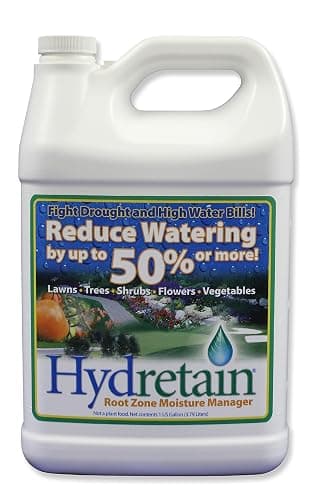
Hydretain Root Zone Moisture Manager
A humectant that stretches the interval between deep waterings by holding moisture near the roots.
Section 3: How Often to Water Cool-Season Grasses
Cool-season grasses dominate lawns in northern regions and many transition zones. These grasses prefer temperatures in the 60 to 75 degree range and can struggle in intense summer heat. They include Kentucky bluegrass, perennial ryegrass, tall fescue, and fine fescues. These grasses often green up early in spring, stay active through fall, and may go semi dormant in hot, dry summers.
In general, cool-season lawns use more water in spring and fall when they are growing quickly, then need careful management to avoid stress in summer. For many cool-season lawns, 1 to 1.5 inches of water per week during active growth is a solid target, with adjustments for heat waves or frequent rain.
3.1 Kentucky Bluegrass (KBG) Watering Schedule
Kentucky bluegrass is a popular cool-season grass in many northern and transition zones. It forms a dense, attractive turf but often has shallower to medium depth roots compared with tall fescue. KBG can go dormant during moderate drought, turning brown and crispy on top while the crowns stay alive. It will generally recover when rainfall returns, as long as the drought is not extreme or overly long.
During active growth in spring and fall, most KBG lawns do best with about 1 to 1.25 inches of water per week. In many climates, rain supplies a portion of this, so you only need to irrigate when rainfall is lacking. In summer heat, especially when temperatures push above 85 degrees, KBG may need closer to 1.5 inches per week to stay green, or you can allow controlled dormancy with lighter maintenance watering.
For a deep and infrequent schedule, water Kentucky bluegrass 2 times per week, delivering about 0.5 to 0.75 inch each time. On heavier soils or in cooler conditions, once per week might be enough. Pay close attention to stress signs, such as a bluish cast, blades folding lengthwise, or footprints that remain visible for several minutes. These are key Signs of Underwatering in Grass and cue you to water sooner.
If you choose to let KBG go dormant in a long drought, provide about 0.5 inch of water every 3 to 4 weeks. This is not for green color but to keep crowns alive so the lawn can bounce back when cooler, wetter weather returns.
Top Picks
- Jonathan Green (10322) Black Beauty Ultra Grass Seed - Cool Season Lawn Seed (7 lb)Check price on Amazon
- Outsidepride Maya (Blackjack II) Bermuda Grass Seed (5 lb)Check price on Amazon
- Orbit 21004 B-hyve Smart Hose Watering Timer with Wi-Fi HubCheck price on Amazon
As an Amazon Associate we earn from qualifying purchases.
Free Lawn Care Tools
Most established lawns do best with about 1 to 1.5 inches of water per week in total, including both rainfall and irrigation. In hot, dry weather some grasses may need closer to 2 inches, while in cool or cloudy periods they may need only about half the usual amount. The exact amount should be adjusted based on grass type, soil, and climate.
“Deep and infrequent” watering means soaking the root zone with enough water in a single session, then waiting until the lawn starts to dry before watering again. For most sprinkler systems, that usually means applying about 0.5 to 0.75 inch of water per session, one or two times per week during active growth. This approach encourages deeper roots and better drought tolerance.
Watering for just a few minutes every day is a common sign of frequent, shallow watering. This routine keeps only the surface soil damp, encourages shallow roots, increases disease risk, and makes the lawn depend on constant moisture. A healthier pattern is fewer watering days with longer run times that reach the full root zone.
Place a few shallow containers, like tuna cans or a simple rain gauge, around your lawn and run your sprinklers to see how long it takes to collect about 0.5 inch of water. Use that time as your baseline run time for a single deep watering session. Then schedule enough of those sessions each week to reach your target 1 to 1.5 inches, adjusting for rainfall and season.
In hot, dry summers, higher evapotranspiration and intense sun mean your lawn may need its full 1 to 1.5 inches of water per week or more. In cooler spring and fall weather, shorter days, lower temperatures, and more frequent rainfall usually allow you to water less often. In winter, many dormant lawns need little or no irrigation, aside from an occasional deep soak during long dry spells if the ground is not frozen.
Yes, soil type plays a big role in watering frequency even if the total weekly inches stay similar. Sandy soils drain quickly and dry out faster, so they typically need more frequent watering. Heavier soils like clay hold water longer, so they may be watered less often while still meeting the lawn’s overall moisture needs.

Beat weeds and brown spots from your phone
Snap a photo, get the fix, and follow a plan timed to your soil and weather. Free on iPhone.