Meyer Zoysia: Identification, Care & Tips
 Marcus GreenTurf Management Pro | 18 Years
As an Amazon Associate we earn from qualifying purchases.
Brown summer patches, a straw-colored winter lawn, and a dense, carpet-like feel underfoot typically point to zoysia. The next question is whether you actually have Meyer zoysia, and whether you are caring for it correctly. For the complete reference, see the Zoysiagrass pillar guide.
Meyer zoysia, officially Zoysia japonica 'Meyer' and often sold as Z-52, is one of the most widely used zoysia cultivars for home lawns in the transition zone. It was originally released as an improved selection of Japanese zoysia, with better cold tolerance and a more refined look than common zoysia. It thrives in regions that are too hot for cool-season grasses like fescue, yet too cold for some of the more tender warm-season types.
Understanding Meyer zoysia: identification, care & tips is important for several reasons. Correct identification helps you avoid confusing it with Emerald zoysia, bermuda, or even tall fescue, all of which require different mowing heights, fertilizer schedules, and herbicides. Misidentification often leads to problems like thinning, excessive thatch, winter injury, and weed invasion because the lawn is managed as the wrong grass type.
Most readers looking for Meyer zoysia information fall into three groups. Some are trying to identify the turf they inherited with a home purchase. Others are do‑it‑yourself owners considering installing Meyer sod or plugs. A third group is troubleshooting issues like yellowing, bare spots, or new weeds and wants to know if the problem is with Meyer itself or with how it is being maintained.
This guide covers how to identify Meyer zoysia in your yard, how it differs from other grasses, and the seasonal care calendar it needs. It also walks through mowing, watering, fertilizing, dethatching, and overseeding options, plus troubleshooting and what most other guides leave out.
If your lawn turns straw brown in winter, greens up slowly in late spring, feels dense and carpet-like, and has medium-fine blades about as wide as a toothpick, you likely have Meyer zoysia. Confirm by looking for horizontal runners (stolons) at the soil surface and underground rhizomes when you peel back a small section; Meyer forms a tight mat instead of clumps like tall fescue.
Once you confirm Meyer zoysia, the core fixes for yellowing or thinning are usually proper mowing height, correcting watering, and adjusting fertilizer timing. Keep Meyer at about 1 to 2 inches, water deeply but infrequently to reach roughly 1 inch per week in summer, and fertilize only during active growth from late spring through mid-summer. Avoid heavy nitrogen in early spring or fall, because that timing encourages disease and winterkill.
With correct care, recovery from stress usually takes 3 to 6 weeks of good growing weather. New stolons will slowly fill bare areas, especially if soil is loosened and weeds are controlled. If you see no recovery after about 8 weeks of ideal temperatures and moisture, test soil fertility and consider plugging or replacing severely damaged sections.
Understanding Meyer Zoysia Grass
What Is Meyer Zoysia?
Meyer zoysia is a selected cultivar of Japanese zoysia, with the full botanical name Zoysia japonica 'Meyer'. It was introduced as an improved turfgrass with better cold tolerance and a more uniform appearance than older common zoysia types. In many catalogs and sod farms it is also listed as Z-52, which refers to its original selection name.
As a warm-season turfgrass, Meyer grows best when daytime temperatures are consistently above about 80°F and night temperatures stay above 60°F. It is more cold tolerant than bermuda and most other zoysia species, which is why it is widely used across the transition zone from the Mid-Atlantic through the lower Midwest. In very cold winters, especially where temperatures regularly drop below 0°F, it can suffer winter injury, but in most transition climates it survives where bermuda sometimes thins.
Visually, Meyer zoysia has fine to medium-textured blades. The leaf blades are narrower than tall fescue but slightly wider than Emerald zoysia. The turf forms a very dense, carpet-like mat thanks to both stolons that creep along the soil surface and rhizomes that run below ground. This dense habit helps it outcompete many weeds and gives it a manicured, fairway-like look when properly maintained.
Homeowners often choose Meyer zoysia for its combination of appearance and durability. It tolerates regular foot traffic better than most cool-season grasses and recovers from moderate wear through its rhizomes and stolons. It also has a slower vertical growth rate than bermuda, which means fewer mowings per month during peak season. At the same time, it provides a high-quality lawn surface that, when cut with a sharp mower, looks similar to what you see on golf course fairways in warm-season regions.
Meyer Zoysia vs Emerald vs Zenith: Top Zoysia Variety Comparison
Many homeowners mix up Meyer with other zoysia cultivars, especially Emerald, Zenith, and some newer proprietary varieties. Knowing the differences helps you confirm what you have and what care products or renovation choices are realistic.
Compared with Emerald zoysia (Zoysia japonica x Zoysia tenuifolia), Meyer has noticeably wider blades. Emerald is a hybrid with extremely fine, wiry leaves and a very deep emerald green color. Meyer is more of a medium green with a slightly lighter tone. If your lawn looks like a very dark green indoor carpet with extremely fine blades and a more delicate, cushiony feel, it is more likely Emerald than Meyer. Emerald generally requires higher maintenance, including more frequent mowing at lower heights and more attention to thatch control.
Zenith zoysia is another Zoysia japonica type that is sometimes confused with Meyer. One major distinction is that Zenith is commonly available from seed, while Meyer is typically sold only as sod or plugs. If your zoysia lawn was established by seeding from a big-box-store bag, odds are high that it is Zenith or a similar seeded cultivar, not Meyer. Zenith generally has somewhat better shade tolerance than Meyer, though both prefer at least 5 to 6 hours of direct sun for best density.
Some newer varieties like Geo, Zeon, and others are mostly Zoysia matrella types. These usually have finer blades than Meyer, a softer feel, and are often positioned as high-end turf for sports fields and upscale residential lawns. They can have better shade performance and smoother texture but tend to have lower cold tolerance than Meyer, making them riskier in the upper transition zone.
In weighing options for a new lawn, think in terms of tradeoffs. Meyer offers:
- Pros: Dense turf, moderate cold tolerance, excellent appearance, good wear tolerance, reduced mowing frequency compared with bermuda.
- Cons: Slow establishment from plugs or sod, a tendency to build thatch if overfertilized, and a relatively high upfront cost when installed as sod.
Understanding these traits is important if you are deciding whether to keep an existing Meyer lawn, convert to another variety, or install Meyer for the first time.
How to Identify Meyer Zoysia in Your Lawn
Visual Identification: Leaf, Color, and Texture
Identifying Meyer zoysia starts with close inspection of the leaf blades. Meyer blades are typically medium-fine, with a width similar to or slightly narrower than a standard toothpick, usually around 2 to 3 millimeters. They are clearly narrower than tall fescue, which has blades closer to the width of a matchstick, but they are not as thread-like as Emerald or some matrella types. The leaf tips are typically pointed and the blades feel slightly stiff but not extremely wiry.
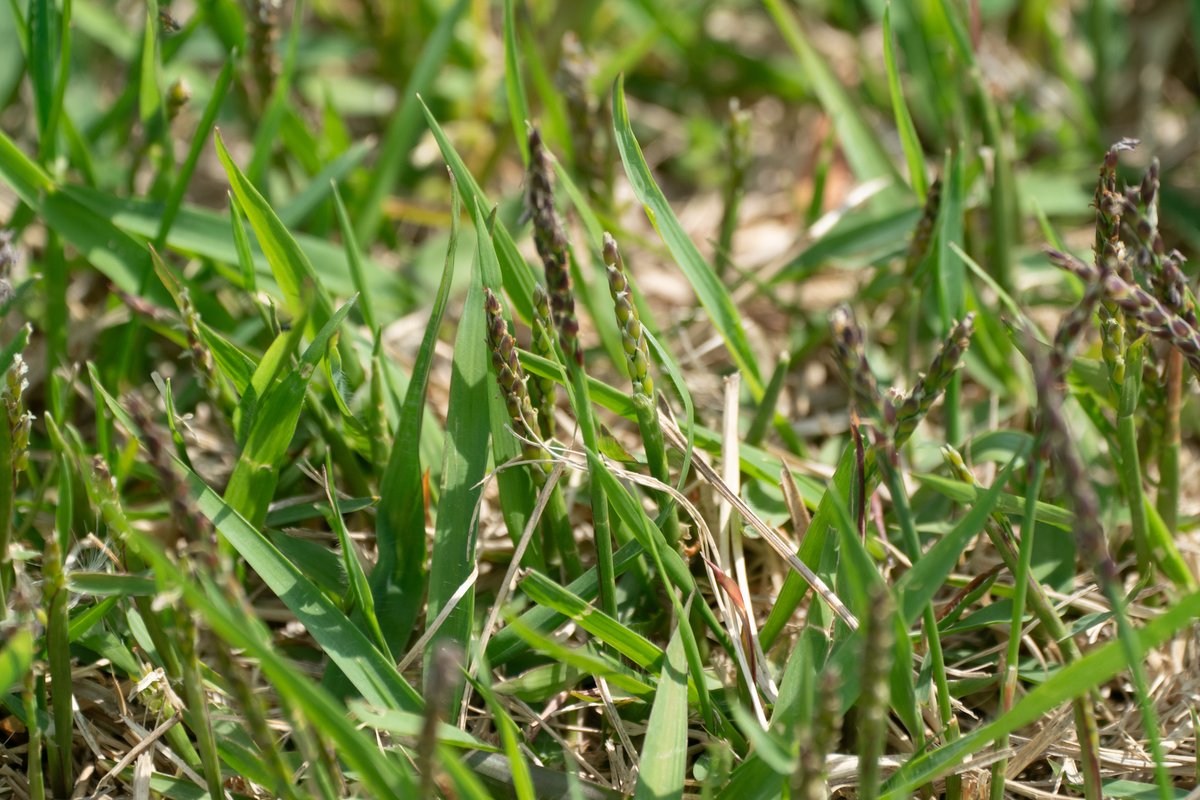
The color of Meyer zoysia during the growing season is usually a uniform medium to dark green. It rarely has the intense bluish or emerald tone of Emerald zoysia, and it avoids the pale, washed-out look of nitrogen-starved bermuda. If your lawn has overseeded cool-season grasses mixed in, you may see lighter or darker patches, but a pure Meyer lawn will appear fairly consistent across the yard.
Texture is another clue. When you walk on a healthy Meyer zoysia lawn barefoot, it feels dense and springy instead of soft and loose. The density makes it difficult to see bare soil from above unless the turf is stressed or very young. When you part the grass with your fingers, you should see tightly packed shoots emerging from a thatch layer and soil surface, with very little open space between them.
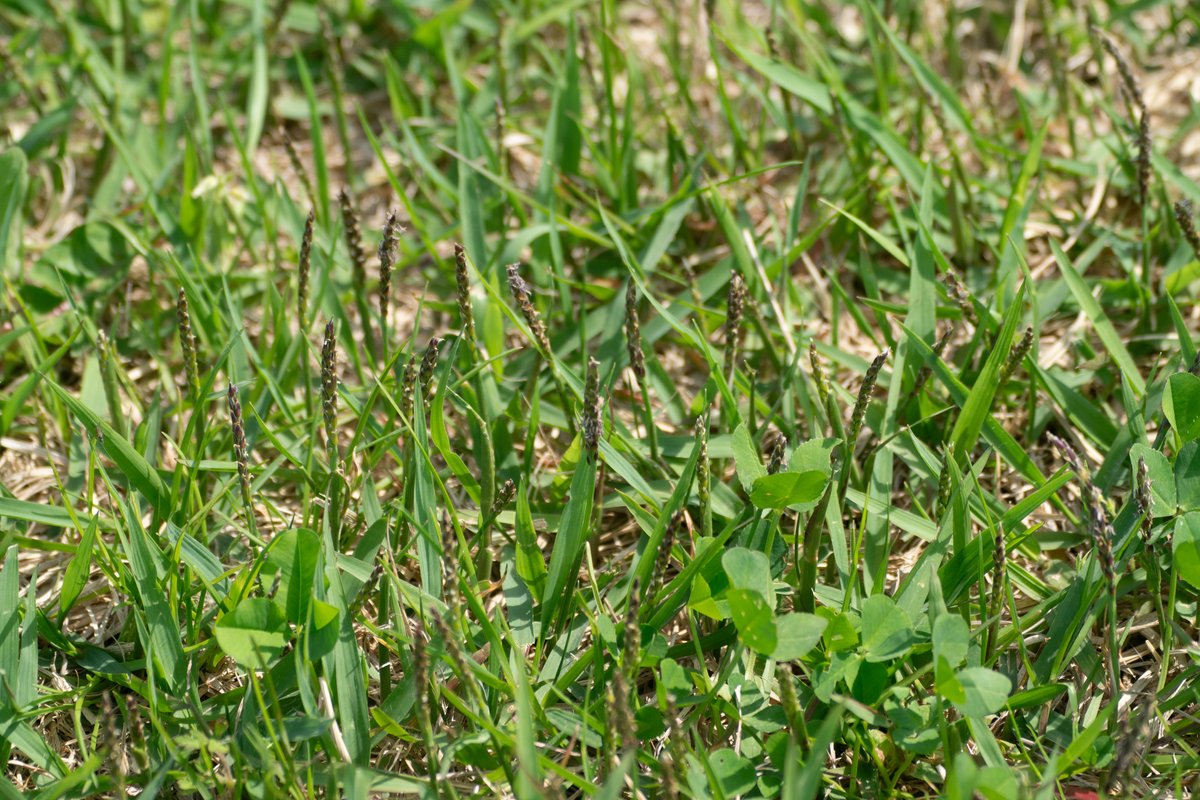
Take a small plug of turf about 2 inches in diameter to examine more closely. A piece from a Meyer lawn will show a dense network of stems at the base, along with surface runners and fibrous roots. This structural density is much greater than what you would see in cool-season grasses like ryegrass or bluegrass, which form more upright, less intertwined shoots.
Growth Pattern and Seasonal Appearance
Meyer zoysia behaves like other warm-season grasses in terms of growth and dormancy. It enters active growth as soil temperatures at a 2 to 4 inch depth reach roughly 60 to 65°F for several days in a row, and it grows most vigorously when daytime highs are between about 80 and 95°F. In the transition zone, that usually means active growth from late May through early September.
During winter, Meyer zoysia goes fully dormant in cooler climates, taking on a straw or tan color. In the upper transition zone, lawns can be tan from roughly November through late April. Farther south, dormancy may be shorter or partial. If your lawn is completely brown in winter while nearby fescue lawns stay at least somewhat green, that strongly suggests a warm-season grass like Meyer or bermuda.
Green-up timing is another diagnostic clue. Meyer zoysia is typically slower to green up than bermuda in spring. If you see your lawn still mostly tan when neighbors' bermuda is already showing strong green growth, that fits Meyer or other cold-tolerant zoysia. Full color often does not return until late May in cooler transition climates, which can worry new homeowners but is normal for Meyer.
Throughout the growing season, Meyer spreads horizontally by both stolons and rhizomes. You will see creeping stems on the soil surface that root at the nodes and gradually fill gaps. Below ground, rhizomes also help the lawn recover from minor damage, drought, or winter injury. If you dig around the edges of a bare spot and see these runners reaching in from the sides, that is typical of Meyer and other stoloniferous grasses.
In contrast, cool-season grasses like Kentucky bluegrass may have some rhizomes, but they generally do not develop the same tightly woven mat of surface runners. Clump-forming grasses like tall fescue will not show lateral spread from stolons at all, which makes diagnosis straightforward in most cases.
Meyer Zoysia vs. Bermuda and Other Look-Alikes
Bermuda grass is the most common look-alike for Meyer zoysia, especially in the South and lower transition zone. Both are warm-season grasses that go dormant in winter and spread aggressively via stolons and rhizomes. However, there are several practical differences you can use to separate them.
Bermuda typically has finer blades in many home lawn cultivars and grows more rapidly upright. If you find that your lawn requires mowing every 3 to 4 days in summer to avoid looking shaggy, bermuda is more likely. Meyer zoysia grows slower vertically and usually can be maintained on a 7 day mowing schedule during peak summer growth without becoming overgrown, assuming you are cutting at the recommended height.
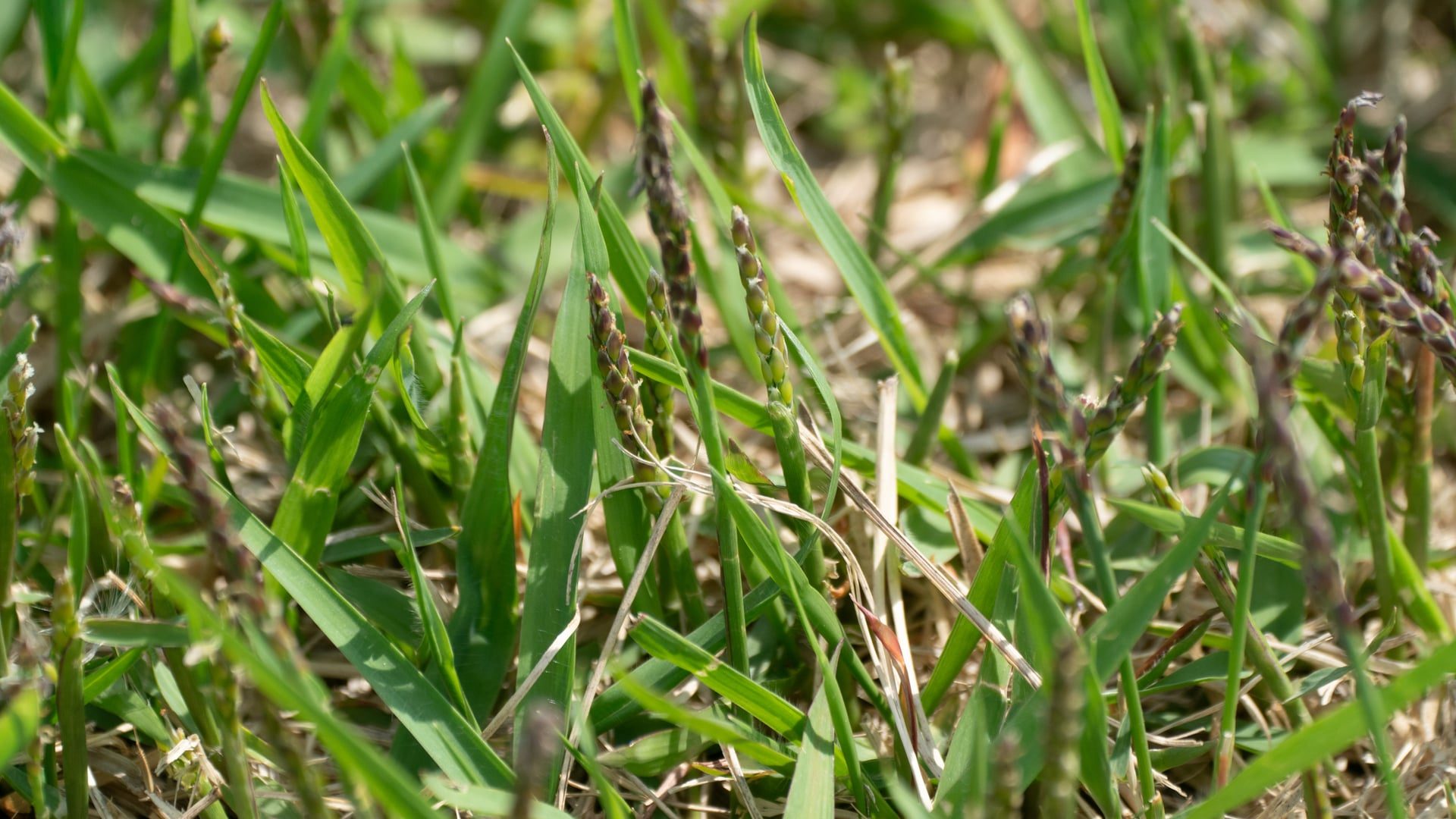
Seed heads also differ. Bermuda tends to produce frequent seed heads that give the lawn a slightly fuzzy or bristly look if mowing is skipped. Meyer zoysia can produce seed heads but usually fewer and less conspicuous in regularly maintained turf. If you frequently notice abundant seed stalks sticking above the canopy in summer, bermuda is a strong candidate.
Tall fescue is another grass often mistaken for zoysia by new homeowners, but the structural differences are clear once you know what to look for. Tall fescue is a cool-season grass that stays green through much of the winter and often struggles in the heat of midsummer without irrigation. Its blades are much wider and the grass grows in clumps. When you pull on a tuft of tall fescue, you can often separate a distinct clump, unlike Meyer which stays connected in a mat.
In the Deep South and coastal regions, St. Augustinegrass and centipedegrass may also be present and can confuse identification. St. Augustine has very wide blades, often 8 to 10 millimeters or more, with a coarse, thick feel underfoot and large stolons that are easy to see. Centipedegrass has medium-width blades but a distinctly lighter apple-green color and a more open, less dense growth habit. Compared with both, Meyer zoysia appears finer-textured, denser, and more uniform in color.
If you are still uncertain after visual inspection, a simple confirmation step is to take a detailed photo of the turf surface and a 2 inch plug and compare it to images from reputable university turf programs or send it to your local cooperative extension office for identification.
Meyer Zoysia Care: Seasonal Calendar
Spring (Green-Up to Early Growth)
Spring is a transition period for Meyer zoysia and is where many homeowners make mistakes that affect the lawn for the rest of the year. The grass is slowly coming out of dormancy and is vulnerable to late frosts and diseases if pushed too hard, too early.
Begin spring maintenance by cleaning debris such as leaves and twigs from the lawn once the soil is firm enough to walk on without leaving deep footprints. Avoid aggressive raking while the grass is still mostly tan and dormant, since this can damage crowns. As color begins to return, usually when daytime highs consistently reach the 60s, you can plan your first mow. Set the mower on the higher side of the recommended range, around 1.5 to 2 inches, for the first cut to remove dead leaf tips and gradually bring the lawn into season.
Fertilization in early spring should be conservative. Most extension recommendations for zoysia in the transition zone suggest avoiding heavy nitrogen before the lawn is 50 to 75 percent green. Applying more than about 0.5 pound of nitrogen per 1,000 square feet before consistent warm weather can increase the risk of spring dead spot and other issues. A soil test every 2 to 3 years is the best way to know if phosphorus or potassium are needed and to adjust pH if necessary.
Pre-emergent herbicides for crabgrass and other summer annual weeds are typically applied in early spring, when soil temperatures reach around 55°F for several days, which in many regions corresponds to when forsythia shrubs are blooming. Many pre-emergent products are safe for established Meyer zoysia but should not be used on newly sodded or plugged areas until the turf is well rooted. Always check the label for zoysia-specific instructions.
Summer (Peak Growth Period)
Summer is when Meyer zoysia does most of its growing, filling in thin areas and building density. Your main tasks are mowing, watering correctly, monitoring for insects or disease, and carefully timing any additional fertilization.
Mowing height for Meyer zoysia can range from about 0.75 to 2 inches depending on your equipment. Most homeowners without reel mowers are better off at 1 to 2 inches. The key rule is not to remove more than one-third of the leaf blade in a single mowing. In hot weather, allowing the grass to stay near the upper end of the range helps shade the soil, reduce stress, and suppress weeds. During peak growth, expect to mow roughly once per week if you are applying modest nitrogen and irrigating appropriately.
Watering is critical. Meyer zoysia prefers deep, infrequent watering to shallow, frequent irrigation. A general target is about 1 to 1.25 inches of water per week from rain or irrigation during hot, dry spells. The simplest way to measure this is to place several small containers, like tuna cans, in the lawn while sprinklers run and time how long it takes to reach 1 inch. If you notice the lawn turning bluish-gray and footprints remaining visible for more than a few minutes, that typically indicates drought stress. Confirm by pushing a screwdriver into the soil. If you struggle to reach 4 to 6 inches, the soil is too dry and it is time to water.
Fertilization during summer should be moderate. Many extension programs suggest a total of 1 to 2 pounds of nitrogen per 1,000 square feet for the entire growing season for zoysia lawns in the transition zone. If you applied 0.5 pound in late spring at green-up, you might add another 0.5 to 1 pound in early summer, divided into two applications 4 to 6 weeks apart. Avoid very late-summer or early-fall nitrogen, which can interfere with proper hardening for winter.
- NC State Extension recommends 1 to 2 pounds of nitrogen per 1,000 square feet per year for zoysiagrass in the transition zone, split into late spring and summer applications.
Monitor for insect activity such as grubs or chinch bugs during summer. If you see irregular brown patches that do not respond to irrigation, pull back the turf at the edge. Finding more than about 10 white grubs per square foot typically indicates a threshold where treatment is justified. For chinch bugs, look for small insects in the thatch and test by placing a coffee can cylinder partially driven into the soil and filling it with water to float insects to the surface.
Fall (Transition to Dormancy)
Fall care focuses on helping Meyer zoysia prepare for dormancy. In much of the transition zone, growth slows markedly by late September. At this stage, you should stop nitrogen fertilization. Continuing to feed with nitrogen within about 6 weeks of the expected first frost often leads to lush late growth that is more susceptible to winter injury and diseases.
Continue mowing as needed, gradually lowering back into your preferred in-season height if you allowed it to be slightly taller to help through summer heat. Maintain sharp blades to avoid shredding tips, which can make the lawn look dull as it approaches dormancy. In areas with leaf drop, keep leaves from matting on the surface, since this can create conditions for fungal problems and weaken the turf going into winter.
Fall is a good time to take a soil test if you have not done one in a few years. October is ideal in many regions, because it gives you time to apply lime or sulfur if pH adjustments are needed. Zoysia typically prefers a slightly acidic soil, roughly pH 6.0 to 6.5, but follow your soil test recommendations rather than guessing. If your test shows low potassium, a fall application of a potassium-rich, low-nitrogen fertilizer can help winter hardiness without pushing unwanted leaf growth.
If significant thatch has developed, light vertical mowing or power raking can be considered, but this is usually better done in late spring to allow quick recovery. In cooler climates, disruptive practices too close to winter can expose crowns and increase the risk of cold damage.
Winter (Dormant Season)
During winter, Meyer zoysia is dormant in most of its range and requires minimal active care. The turf will be straw-colored and rigid. The main priority is to avoid unnecessary damage to the crowns, especially when the ground is frozen or extremely wet. Heavy traffic on frozen zoysia can cause crown breakage and lead to dead spots visible when the lawn greens up next spring.
Irrigation is usually not necessary in winter except in unusually dry, warm spells in far southern areas where the soil might dry out completely. Even then, very modest watering is usually enough. Avoid fertilizing at this time, since the grass will not use nutrients and they are more likely to leach away or fuel cool-season weeds.
Some homeowners in southern areas overseed dormant Meyer zoysia with perennial ryegrass to maintain winter color. If you consider this, be aware that overseeding introduces competition in spring and can delay zoysia green-up. It also adds mowing and fertilizing tasks in cooler months. Weigh the aesthetic benefit against the extra management and potential for longer-term thinning of the zoysia base.
Recommended products
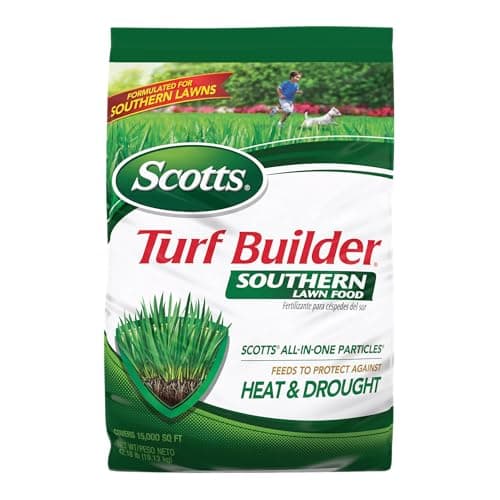
Scotts Turf Builder Southern Lawn Food
A warm-season lawn food built for zoysia, bermuda, and centipede that carries the lawn through the summer growing window.
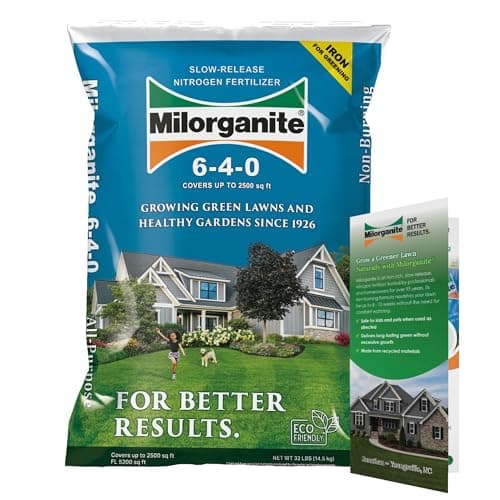
Milorganite 6-4-0 (32 lb)
A slow-release organic nitrogen source with iron that greens zoysia without the surge of top growth a synthetic feed causes.
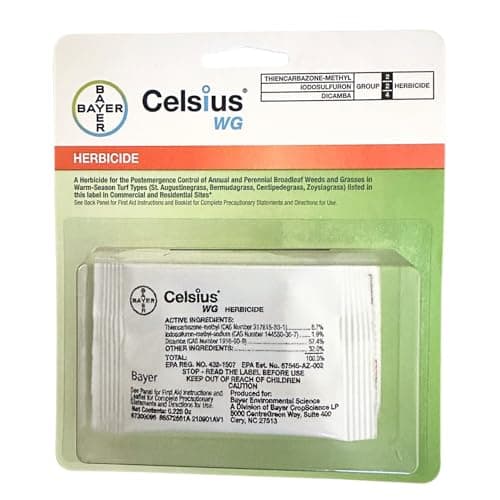
Celsius WG Herbicide (Easy Mix Packet)
A warm-season selective herbicide labeled for zoysia that handles broadleaf and grassy weeds in summer heat.
Meyer Zoysia Maintenance Best Practices
Mowing Height and Frequency
Correct mowing is one of the most important care tips for Meyer zoysia. The recommended mowing height typically ranges from 0.75 to 2 inches. If you have a reel mower and are comfortable mowing more frequently, you can maintain Meyer on the lower end for a tight, golf-fairway appearance. With a rotary mower, most homeowners have better results at around 1.25 to 1.75 inches, which allows a cleaner cut without scalping high spots.
The rule of removing no more than one-third of the blade height per mowing is crucial. At a 1.5 inch target height, you would mow when the grass reaches about 2.25 inches. During peak summer growth, this usually translates to mowing every 5 to 7 days. If you wait until the grass is 3 inches tall and then cut back to 1.5 inches, the sudden removal of too much leaf tissue stresses the plant and leads to a pale, scalped look that may take weeks to recover.
Clippings can typically be left on the lawn as long as you are mowing frequently enough that they are short and disperse into the canopy. Returning clippings recycles nutrients, reducing the need for fertilizer by up to 25 percent over the season. If you see clumps, particularly after cutting overgrown areas, bag the clippings or mulch them in multiple passes so they do not smother the turf.
Watering and Drought Management
Meyer zoysia is relatively drought tolerant compared with many cool-season grasses, largely because of its deep root system and ability to go temporarily dormant during extended dry periods. However, for best appearance and long-term health, it still needs periodic deep watering.
A useful watering schedule is to apply about 0.75 to 1.25 inches per week during hot, dry weather, adjusting based on rainfall, soil type, and temperature. On sandy soils, you may split this into two applications per week, while heavier clay soils can often handle one deeper irrigation. Always aim for the water to penetrate at least 6 inches into the soil. You can confirm with a screwdriver test or by digging a small hole after irrigation to check moisture depth.
Look for the early signs of drought stress as your cue rather than watering strictly by a calendar. Meyer leaves will start to fold, the lawn may take on a dull bluish cast, and footprints will remain visible longer when moisture is low. Respond within a day or two of seeing these signs. If you wait until extensive browning occurs, the grass can survive but will take longer to recover and weeds may exploit the gaps.
Fertilization and Soil Health
Meyer zoysia performs best in moderately fertile soils but is more easily overfertilized than underfertilized. Excess nitrogen, especially in spring and fall, drives excessive thatch buildup and increases disease pressure. A good seasonal total in the transition zone is generally in the 1 to 2 pounds of nitrogen per 1,000 square feet range, with the bulk supplied between late spring and mid-summer.
Always start with a soil test. This will tell you if pH adjustment is necessary and whether phosphorus (P) or potassium (K) are deficient. Many established lawn soils already have adequate P, and some states restrict P applications, so do not assume you need a high phosphate fertilizer. Zoysia tends to respond well to adequate K, which supports stress tolerance. If your soil test shows potassium below the recommended range, use a balanced or K-rich fertilizer as advised by the report.
When applying fertilizer, avoid "spikes" of nitrogen above about 0.75 to 1 pound of N per 1,000 square feet in a single application. For example, if you use a 25-0-10 product and you want 0.5 pound of N per 1,000 square feet, you would apply 2 pounds of product per 1,000 square feet (since 25 percent of 2 pounds is 0.5 pound N). Calibrate your spreader, and make two perpendicular passes at half rate to improve uniformity.
- Texas A&M AgriLife Extension notes that zoysiagrass often requires less nitrogen than bermudagrass, and suggests 2 pounds of N per 1,000 square feet or less per year for home lawns, depending on desired appearance and clipping return.
Thatch, Aeration, and Renovation
Because of its dense growth and stolons, Meyer zoysia can develop a thatch layer over time. Thatch is a layer of undecomposed stems and roots between the green canopy and the soil surface. A thin layer, less than about 0.5 inch, can be beneficial as cushioning, but thicker thatch reduces water infiltration, encourages shallow rooting, and increases disease risk.
If you notice the lawn feeling unusually spongy and you can compress it noticeable underfoot, suspect excess thatch. Confirm by cutting a small wedge of turf. Measure the brown, fibrous layer between the green shoots and the soil. If this layer is more than about 0.75 inch thick, dethatching is warranted. For Meyer, the best time to dethatch is late spring to early summer, when the grass is fully green and has the whole warm season to recover.
Mechanical dethatching with a vertical mower or power rake will thin the turf temporarily and can look drastic. It is important to set the equipment so that it penetrates into the thatch but does not aggressively tear into the soil. After dethatching, collect debris, then irrigate and, if needed, apply a light fertilizer (no more than 0.5 pound N per 1,000 square feet) to help recovery.
Core aeration is also valuable, particularly on compacted soils. Aeration removes plugs of soil and improves oxygen movement, water infiltration, and root growth. For Meyer zoysia, schedule core aeration during active growth - typically late spring or early summer - so holes close quickly. Aeration can be combined with topdressing using compost or sand/soil blends to improve surface smoothness and encourage organic matter breakdown in the thatch layer.
Troubleshooting Common Meyer Zoysia Problems
Yellowing, Pale Color, or Slow Green-Up
Yellow or pale patches in Meyer zoysia can have several causes: nutrient deficiency, overwatering, poor soil drainage, disease, or spring cold damage. The pattern often helps narrow it down.
If the entire lawn appears light green and growth is sluggish once temperatures are suitable, a nitrogen deficiency is a common culprit. Confirm by checking your recent fertilizer history. If you have not applied any nitrogen since the previous summer, and a soil test does not show major issues, a modest application of about 0.5 pound N per 1,000 square feet, once the lawn is mostly green, usually corrects the problem within 2 to 3 weeks of warm weather.
Patchy yellowing, especially in low areas, may indicate overwatering or drainage problems. Soggy soil reduces root oxygen, which impairs nutrient uptake and can trigger fungal diseases. Confirm by digging 4 to 6 inches and checking soil moisture. If the soil is saturated days after rain or irrigation, cut back watering and improve drainage if feasible.
In spring, areas that stay straw-colored or rusty looking while the rest of the lawn greens up can indicate spring dead spot or winter injury. These patches often have well-defined edges and may feel slightly sunken. To confirm, probe the crowns and roots in the affected area. If they are mushy or dry and brittle with no green tissue, that turf is dead and will need to be filled in by stolon growth or plugged. Managing spring dead spot typically involves proper fall potassium, avoiding late nitrogen, and in severe cases, fungicide application in fall as directed by local extension guidance.
Weeds in Meyer Zoysia Lawns
Due to its dense habit, a healthy Meyer zoysia lawn naturally suppresses many weeds. When weeds appear, it usually indicates thinning turf, overwatering, nutrient imbalance, or recent disturbance. Weed types also give clues. Crabgrass and goosegrass point to thin, open areas with plenty of light and surface soil exposure. Nutsedge suggests wet or compacted spots. Cool-season weeds like chickweed or henbit indicate open areas during dormancy.
For pre-emergent control of summer annual weeds like crabgrass, apply a suitable herbicide in early spring when soil temperatures reach around 55°F, as mentioned earlier. Check labels for products approved on zoysiagrass. For established weeds, select a post-emergent herbicide that lists zoysia as tolerant and your target weeds as controlled. Always test a small area if you are unsure how the turf will react, especially in hot weather.
For broadleaf weeds, many three-way herbicides containing 2,4-D, MCPP, and dicamba are labeled safe on zoysia when used correctly. Apply when temperatures are below about 85°F to reduce turf stress and avoid windy days to prevent drift. For grassy weeds in zoysia, options are more limited and timing is more critical. It is often more effective to combine cultural practices (thickening the turf, correcting mowing and watering) with carefully timed pre-emergents than to rely on rescue treatments.
Thin or Bare Spots
Thin or bare areas in a Meyer zoysia lawn are commonly caused by shade, traffic, soil compaction, or past disease and drought. Meyer needs a minimum of about 5 to 6 hours of direct sun for satisfactory density. If a thin area corresponds exactly with the shade pattern of a tree or structure, limited light is likely. In such cases, pruning to increase light, reducing competition from tree roots, or shifting to a more shade-tolerant groundcover may be more realistic than forcing zoysia to thrive.
Traffic patterns, such as a route to a gate or between driveway and front door, can wear down Meyer over time despite its decent wear tolerance. If you see thinning exactly in footpaths, consider installing stepping stones or redirecting foot traffic. For compacted spots, confirm by pushing a screwdriver 6 inches into the soil. If it is difficult to penetrate, plan on core aeration and possibly topdressing.
To repair bare spots, you have three main options: allow natural fill-in, plug from healthy areas or purchased trays, or resod sections. Natural fill-in works for small patches up to perhaps 6 to 8 inches across, provided surrounding turf is healthy and conditions (water, fertility) are ideal. Expect stolons to close such gaps in 4 to 8 weeks of good growing weather.
For larger areas, plugging is a practical method. Cut small plugs, typically 2 inch squares or circles, from healthy zoysia and install them 6 to 12 inches apart in the bare area. Water regularly to keep the top few inches of soil moist for the first 2 to 3 weeks. Once rooted, transition to deeper, less frequent irrigation. Complete fill-in may take a full growing season depending on spacing and management.
Insects and Diseases in Meyer Zoysia
Meyer zoysia has moderate resistance to many pests but is not immune. Common insect pests include white grubs, chinch bugs, and occasionally billbugs. Disease issues may include large patch, dollar spot, and spring dead spot, especially in overfertilized or poorly drained sites.
Grubs typically feed on roots, leading to irregular brown patches that pull up like a carpet because the root system has been eaten. Confirm by cutting and peeling back a 1 square foot area at the edge of a damaged patch. Count the grubs. If you find more than 10 grubs per square foot, treatment with an appropriate insecticide is justified. Apply according to label directions and water in as recommended so the product reaches the root zone.
Chinch bugs suck sap from grass blades, often starting in hot, sunny spots near pavement. Damage may look like drought stress that does not respond to irrigation. Confirm by looking closely in the thatch or using the coffee can float test. If chinch bugs are present in high numbers, use a labeled insecticide and adjust mowing and watering to reduce stress.
Large patch (a form of Rhizoctonia disease) can create circular or irregular patches of orange, yellow, or brown turf, often in fall or spring when temperatures are cool and moisture is high. It is promoted by excessive nitrogen, poor drainage, and thatch. Management focuses on reducing these risk factors. In severe or recurring cases, a fungicide applied preventively in fall and again in early spring may be recommended, but follow local extension guidelines and integrate with cultural fixes.
What Other Guides Miss
Many lawn articles on zoysia care gloss over three important points that are critical for Meyer zoysia success: confirmation tests, timing nuances, and regional caveats.
First, confirmation tests. Visual identification is useful, but borderline cases sometimes involve mixtures of grasses, for example, Meyer zoysia invaded by bermuda or overseeded with ryegrass. Before you commit to a specific fertilizer or herbicide program, physically inspect the turf for stolons, blade width, and seasonal behavior. If you cannot confidently match all three to Meyer, take a plug to your local extension office or a reputable turf lab. This prevents misapplication of products that might be safe for one grass but damaging to another.
Second, timing nuances. Many general guides recommend fertilizing "in spring" and "in fall" without distinguishing between warm-season and cool-season grasses. For Meyer, "spring" should mean late spring, after the lawn is mostly green and soil temperatures are above about 65°F. "Fall fertilizing" of nitrogen is often inappropriate for Meyer in the transition zone. Applying nitrogen in September or October can encourage lush growth that is vulnerable to winter injury and diseases like large patch and spring dead spot.
Third, regional caveats. Recommendations from coastal Deep South regions do not always translate well to the upper transition zone and vice versa. For example, a mowing height or nitrogen rate that looks perfect in coastal Georgia may lead to winterkill or disease in Kansas City. Always cross-check national recommendations with a local university extension publication that covers zoysiagrass in your specific climate. This is especially important for fungicide selection and application timing.
- Contact your local extension office for region-specific Meyer zoysia recommendations on fertilization timing, mowing height, and fungicide use.
Conclusion: Making Meyer Zoysia Work in Your Yard
Meyer zoysia can deliver a dense, attractive lawn with relatively low mowing frequency and good wear tolerance, but it responds best when managed according to its warm-season nature. Correct identification, with attention to blade width, density, runners, and seasonal color, is the starting point. From there, aligning mowing height, deep but infrequent watering, modest growing-season fertilization, and timely thatch and aeration work will prevent most of the thinning, yellowing, and weed problems homeowners experience.
If you are planning a new lawn or a major renovation, give Meyer the conditions it needs: full sun or very light shade, well-drained soil, and patience during establishment. Expect a full season or more for plugs to fill an area, and schedule key steps like dethatching and aeration during peak growth for fastest recovery. For those troubleshooting existing lawns, start with a soil test, adjust your mowing and watering, then address specific issues such as insects or diseases based on clear confirmation tests.
For a deeper dive into warm-season lawn management and how Meyer compares with other options like bermuda or fescue, check out our guide on choosing the right grass type for your region. Use that alongside this Meyer zoysia: identification, care & tips guide to build a long-term plan that matches your climate, soil, and maintenance goals.
Top Picks
- The Andersons Professional PGF Complete 16-4-8 Fertilizer with 7% Humic DG (5,000 sq ft)Check price on Amazon
- GS Plant Foods Liquid Humic AcidCheck price on Amazon
- Scotts Turf Builder Southern Lawn FoodCheck price on Amazon
As an Amazon Associate we earn from qualifying purchases.
Free Lawn Care Tools
Meyer zoysia is a selected cultivar of Japanese zoysia, with the full botanical name Zoysia japonica 'Meyer'. It was introduced as an improved turfgrass with better cold tolerance and a more uniform appearance than older common zoysia types. In many catalogs and sod farms it is also listed as Z-52, which refers to its original selection name.
Meyer zoysia forms a dense, carpet-like mat, while tall fescue grows in individual clumps. Meyer blades are medium-fine, about the width of a toothpick, and much narrower than tall fescue’s matchstick‑wide blades. Meyer also spreads with stolons and rhizomes, so you’ll see horizontal runners above and just below the soil instead of upright bunches. Another clue is seasonal color: Meyer turns straw brown in winter, while tall fescue usually stays at least partly green.
Meyer zoysia performs best when maintained at about 1 to 2 inches. Keeping it in this range supports a dense, fairway‑like surface without scalping the stolons. Mowing higher than 2 inches can encourage thatch and a spongy feel, while mowing much lower increases stress and can thin the turf. Sharp mower blades are important to get a clean cut on its medium‑fine leaves.
Meyer zoysia does best with deep, infrequent watering that totals about 1 inch of water per week during summer. Applying this in one or two soakings encourages deep roots and helps the lawn tolerate heat and regular foot traffic. Light daily watering keeps the surface wet, weakens the turf, and can promote disease and thatch. Adjust slightly based on rainfall and your soil’s ability to hold moisture.
Fertilize Meyer zoysia only during its active growth period, from late spring through mid‑summer, when daytime temperatures are consistently warm. This timing supports healthy stolon and rhizome growth and helps the lawn recover from wear or minor damage. Avoid heavy nitrogen applications in early spring or fall, because feeding at those times can encourage disease and increase the risk of winter injury. If the lawn is stressed, focus first on proper mowing and watering, then fine‑tune fertilizer based on its response.
With correct mowing, watering, and fertilizing, Meyer zoysia usually takes about 3 to 6 weeks of good growing weather to show visible recovery. New stolons slowly creep into thin or bare areas, especially if the soil is loosened and weeds are controlled. If you see little to no improvement after roughly 8 weeks of ideal temperatures and moisture, it’s time to check soil fertility and consider plugging or replacing severely damaged spots.
Meyer zoysia (Z-52) is a medium-coarse cool-tolerant zoysiagrass bred for the transition zone, while Emerald zoysia is a finer-bladed hybrid of Zoysia japonica and Zoysia tenuifolia that looks more refined but is less cold-hardy. Meyer handles winters down into USDA zone 6 and recovers reliably in the upper South and Midwest. Emerald has a softer, more manicured look, stays green slightly later in fall, but suffers winter damage more easily north of zone 7. If you live in Arkansas, Kentucky, Virginia, or similar transition-zone states, Meyer is the safer pick. If you live in the Deep South and want a finer-textured lawn, Emerald is worth considering.
Yes, Meyer zoysia grows well in Arkansas and is one of the most popular warm-season turf choices statewide because it handles the state’s cold winters better than other zoysia varieties. Meyer (also called Z-52) was specifically bred for transition-zone performance and is rated for USDA zones 6-10, which covers all of Arkansas. It typically greens up in early to mid-April in central Arkansas and goes dormant after the first hard freeze in November. For Little Rock and similar latitudes, Meyer is the benchmark zoysia pick; Emerald and finer-bladed varieties often suffer winterkill in harder winters.
Photos: WATANABE Hitoshi / iNaturalist · CC BY 4.0, WATANABE Hitoshi 渡辺仁 / iNaturalist · CC BY 4.0, Allan Mas / Pexels

Beat weeds and brown spots from your phone
Snap a photo, get the fix, and follow a plan timed to your soil and weather. Free on iPhone.