New Homeowner Lawn Care Checklist: Everything to Do in Your First Year
 Sarah MitchellLawn Diagnostics Specialist | 12 Years
As an Amazon Associate we earn from qualifying purchases.
Thin turf, random brown patches, and weed explosions in a new yard all point to the same problem: the lawn has no established care plan. The first 12 months in a new home set the trajectory for that yard for years, either toward a dense, low-maintenance lawn or an ongoing cycle of patching and spraying.
This new homeowner lawn care checklist: everything to do in your first year is designed as a practical, science-based roadmap. It explains how to diagnose your starting point, what to do in each season, and how to avoid product misuse that kills grass or wastes money. The focus is on typical suburban lots with cool-season grasses (like Kentucky bluegrass, perennial ryegrass, tall fescue) and warm-season grasses (like bermudagrass, zoysiagrass, St. Augustine, centipede).
Throughout the guide, the priorities are clear: understand your site, build healthy soil, mow and water correctly, and time fertilizer and weed control to your grass type and climate. According to Kansas State University Extension, correct mowing and irrigation alone prevent most common homeowner lawn complaints, which is why those basics run through every step of this plan.
Before starting, treat safety as non-negotiable. Always follow label instructions on herbicides and fertilizers, store products away from children and pets, use hearing and eye protection with mowers and trimmers, and keep guards and safety switches intact on all power tools.
To kickstart your first year of lawn care, begin by thoroughly diagnosing your lawn's current state. Spend around 30 minutes walking through your yard at different times of the day to observe sun patterns and soil conditions. Take note of any thin areas, patches, or weeds, as these indicate where your lawn needs the most attention. A quick soil test, which you can conduct for about $15, will provide insights into pH and nutrient levels, helping you make informed decisions.
Once you've pinpointed the problem areas, focus on improving your lawn's health with a targeted plan. Start by addressing soil compaction through aeration, ideally in the fall or spring when grass growth is vigorous. Follow up with a balanced fertilization program tailored to your grass type, and expect noticeable improvements within 4 to 6 weeks. Consistent watering and correct mowing height are crucial, so aim to water deeply once a week and maintain your mower blades at the recommended height for your grass species.
Step 1: Get to Know Your Lawn (First 1-2 Weeks After Moving In)
The first step is assessment. Without a clear picture of what you have, it is impossible to select the right products or schedule. The goal in weeks 1 and 2 is to walk the lawn, document conditions, and collect soil samples before any major treatments.
Assess Your Lawn’s Starting Condition
Plan one slow walkthrough in the morning and one in late afternoon so you can see both soil surface details and sun-shade patterns. Take photos or short notes; this becomes your baseline for the rest of your first year.
Use this simple checklist:
- Overall coverage: Map areas that are full, thin, bare, or dominated by weeds. Full turf with uniform color and density indicates decent prior care. Thin or bare zones, especially along driveways or in corners, signal past stress or poor soil. Large patches of broadleaf weeds like dandelions and clover indicate low fertility and thin grass, since weeds exploit open soil and weak turf.
- Soil surface condition: Walk the yard in flat-soled shoes. Compacted soil feels hard underfoot and shows little give when you press with a screwdriver. Spongy areas indicate thatch or buried debris. Soggy spots that squish even after several dry days signal drainage problems. Cracked, open soil indicates low organic matter and poor structure.
- Surface grade and drainage: Identify slopes toward the house, low spots where water stands after rain, and any channels where runoff concentrates. According to Iowa State University Extension, standing water for more than 24 hours after a typical rain event restricts root growth and invites disease, especially in cool-season grasses.
- Shade versus sun: Note which sections receive full sun (6 or more hours), partial sun (3 to 6 hours), or heavy shade (less than 3 hours). Grass performance is tightly linked to light. Dense shade under mature trees often requires shade-tolerant fescues or groundcovers instead of full-sun turf species.
- Traffic patterns: Look for compacted paths from previous foot traffic, such as shortcuts from driveway to door, areas where kids played, or where trash cans were stored. These zones often show thin or no turf and a hard surface.
Also scan for specific problem indicators:
Pet damage appears as small, round patches of dead grass with dark green edges. Vehicle tracks look like parallel compressed strips with deformed or missing turf. Old fire pits or construction debris produce thin or bare circles or rectangles where heat, rubble, or subsoil are near the surface. High-traffic areas that cut corners around walkways or decks often benefit from adding a stepping stone path rather than repeatedly re-seeding the same worn turf.
Identify Your Grass Type and Climate Zone
Your grass species and climate zone control almost every major decision in this new homeowner lawn care checklist: everything to do in your first year. Timing for fertilizing, when to seed, appropriate mowing height, and how aggressive you can be with weed control all depend on what is actually growing in your yard.
First, determine whether your lawn is primarily cool-season or warm-season turf:
- Cool-season grasses (common in the northern half of the United States): Kentucky bluegrass, perennial ryegrass, tall fescue, fine fescues. These grasses grow most actively in spring and fall when air temperatures range from about 60 to 75 degrees Fahrenheit.
- Warm-season grasses (common in the South and transition zones): bermudagrass, zoysiagrass, St. Augustinegrass, centipedegrass, bahiagrass. These species peak in growth at 80 to 95 degrees Fahrenheit and go fully dormant and tan in cool winters.
Use practical methods to identify what you have:
Ask the previous owner, builder, or property manager what seed or sod was used. Review any landscape plans or builder packets. Compare the leaf blade width and texture to grass ID guides. Kentucky bluegrass typically has a fine to medium blade with a boat-shaped tip, tall fescue has a wider blade and visible veins, while bermudagrass shows a dense, fine texture with many stolons.
Then determine your USDA Plant Hardiness Zone and regional climate. This is available on the USDA website or local extension publications. Combine that information with grass type:
- Mowing height: According to Purdue University Extension, most cool-season lawns perform best at 2.5 to 3.5 inches, while many warm-season lawns like bermuda or zoysia perform well at 1 to 2 inches, and St. Augustine prefers 3 to 4 inches. Cutting below these ranges causes scalping and shallow roots.
- Renovation strategy: Cool-season grasses respond well to fall overseeding. Warm-season lawns in southern climates respond better to plugging or sprigging in late spring to early summer when the grass is actively growing.
- Fertilizer timing: Cool-season lawns receive most nitrogen in fall and late spring. Warm-season lawns receive most nitrogen from late spring through summer. Ohio State University Extension notes that nitrogen applied to cool-season turf in mid-summer increases disease risk and stress, while the same application on warm-season turf in that period supports growth.
- Weed control timing: Pre-emergent herbicides for crabgrass go down when soil temperature at 2 inches reaches about 55 degrees Fahrenheit for several days. This date arrives earlier in warm climates and later in cooler regions, and it should never be guessed without considering your local soil temperature pattern.
If you are uncertain, see a reference like How to Identify Your Grass Type for more photos and distinctions, or bring a clump (with roots and leaves) to your local cooperative extension office for identification.
Test Your Soil (Critical First-Year Step)
Soil testing is the most valuable diagnostic tool in your first year. According to University of Minnesota Extension, soil pH and nutrient levels vary widely even within a city, especially on new construction sites where subsoil is often left near the surface. Without a test, lime or fertilizer applications are guesswork and often incorrect.
A standard turf soil test report typically includes pH, phosphorus (P), potassium (K), organic matter percentage, and sometimes micronutrients such as iron or zinc. These values indicate what your lawn actually needs instead of what a bag label claims.
Follow this basic testing process within the first 1 to 2 weeks after moving in:
- Obtain sample boxes and instructions from your local county extension office or a reputable soil lab.
- Use a clean trowel or soil probe to collect cores from 10 to 15 locations across the lawn, avoiding recent fertilizer spots, compost piles, or pet areas.
- Sample depth should be about 3 to 4 inches for established lawns.
- Mix all cores in a clean bucket, remove stones and plant material, and fill the sample box according to instructions.
- Label front yard and back yard separately if they look or perform very differently.
While waiting 1 to 3 weeks for results, avoid major fertilizer or lime applications. According to North Carolina State University Extension, applying lime when pH is already in the optimal range (usually 6.0 to 7.0 for most turf) can lock up micronutrients and cause deficiency symptoms. Instead, focus on the management actions that do not depend on test results: correct mowing height, consistent mowing schedule, and proper watering based on rainfall and soil moisture.
Once the soil report arrives, note the recommendations and keep the document. You will use it to build your fertilizer and amendment plan later in this first year checklist.
Step 2: Understand the Previous Lawn Care History
The chemical and physical history of your yard influences what you can safely do in the first 6 to 12 months. Overlapping herbicides, fertilizing too soon after seeding, or ignoring past insect problems all lead to poor outcomes.
Gather Information from the Previous Owner or Builder
If possible, contact the previous owner or builder and ask specific questions. A short conversation often saves significant time and cost later.
Key questions include:
- When was the lawn last fertilized, and with what product (brand or N-P-K ratio) and approximate rate?
- Has any pre-emergent herbicide or weed-and-feed product been applied in the last 6 to 9 months, and if so, when?
- Have there been repeated insect problems such as grubs, chinch bugs, or sod webworms, and what treatments were used?
- Was the lawn originally installed as seed, sod, or a mix of both?
For new construction or recently built neighborhoods, add:
- Was topsoil imported and spread, or is the yard mainly native subsoil?
- Was the lot heavily compacted by construction equipment, and was any mechanical aeration performed after building?
This information matters for three main reasons:
First, some pre-emergent herbicides inhibit grass seed germination for 8 to 16 weeks, depending on the active ingredient and rate. According to Penn State Extension, overseeding too soon after products containing prodiamine or dithiopyr results in poor seedling establishment. Knowing whether these products were applied in late winter or early spring helps you determine when seeding is realistic.
Second, heavy starter fertilizer applied recently increases the risk of phosphorus runoff and turf burn if you add more nitrogen without a soil test. Third, repeated insect damage in past years signals vulnerable turf. If you know grubs were treated 2 years in a row, that yard may sit in a high-pressure beetle area and may need monitoring around midsummer when larvae begin feeding.
Look for Signs of Past Issues
Even if you cannot reach a previous owner, the lawn itself retains evidence of past management. During your walkthroughs, scan for patterns that indicate historical problems.
Insect activity leaves distinct signatures:
- White grubs: Irregular brown patches that appear in late summer or early fall, turf that feels spongy, and sod that peels back like a carpet when tugged. According to Michigan State University Extension, finding 10 or more grubs per square foot signals enough feeding to justify treatment in most home lawns.
- Chinch bugs (often in warm-season lawns): Dry-looking, sun-exposed patches that do not respond to irrigation, often near sidewalks or driveways. Closer inspection shows small black and white insects at the soil surface.
Fungal diseases produce repeating shapes or color differences. Dollar spot tends to cause small, straw-colored spots in cool-season turf in late spring, while brown patch forms larger circular areas in humid, hot weather. Necrotic ring spot often appears as rings of dead or thinning grass in Kentucky bluegrass lawns. If you observe these patterns, note the approximate size and timing, then refer to a resource like Common Lawn Diseases and How to Identify Them for specific diagnostics.
Herbicide injury appears as twisted, cupped, or deformed blades following an application of broadleaf products. Bare or off-color stripes parallel to mower paths suggest uneven granular product application or a sprayer malfunction. Compaction stripes from construction equipment show as linear zones where grass is permanently thin and soil feels hard.
All of these signs inform your first-year plan. Areas that show chronic disease or insect damage benefit from improved drainage, correct mowing height, and balanced fertility in addition to any targeted product use.
Step 3: Set Your First-Year Lawn Care Priorities and Seasonal Plan
Once you understand your starting condition and history, the next task is to set clear priorities. New homeowners often try to fix everything at once, which leads to overlapping products, stress on the turf, and wasted effort. Instead, build a simple seasonal roadmap for your first 12 months.
Define Your Top Priorities
For most new homeowners, three priorities generate the largest improvement per hour of work:
- Strengthen existing turf: Healthy, dense grass is the best weed control tool. This means correct mowing height, consistent watering, and right-time fertilizing based on your grass type and soil test.
- Repair bare and thin areas: Bare soil invites weeds and erosion. Use seed, sod, or plugs at the proper time of year for your grass species.
- Address chronic soil problems: Compaction and extreme pH or nutrient imbalance impair everything else. Aeration, organic matter additions, and targeted lime or sulfur based on your soil test are long-term corrections.
Cosmetic issues such as perfect weed-free status in year one are lower priority. According to University of Nebraska-Lincoln Extension, lawns with 5 to 15 percent weed cover still function and appear acceptable for most households. Your first year focuses on building a resilient system, not necessarily eliminating every dandelion immediately.
Build a Simple 12-Month Timeline
The timings below assume a typical cool-season lawn in a northern or transition climate. For warm-season lawns, the seasonal labels shift, but the structure stays similar.
Weeks 1 to 4 after moving in:
- Complete your lawn assessment and soil test collection.
- Set up mowing at the correct height for your grass type.
- Begin a regular watering habit if rainfall is less than 1 inch per week.
- Address immediate hazards such as exposed irrigation heads, tripping hazards, or severely eroded areas.
Month 2 to early summer (for cool-season lawns):
- Review soil test results and apply any recommended lime or sulfur, following the extension lab guidelines on rate and timing.
- Apply a light spring fertilizer only if recommended by your soil test and local extension calendar. Many cool-season lawns only need 0.5 to 1 pound of nitrogen per 1,000 square feet in spring, if any.
- Spot-treat or selectively control broadleaf weeds once grass is actively growing and temperatures are within product label ranges.
Mid-summer:
- Focus on proper irrigation and mowing height to reduce heat stress. For cool-season turf, this often means raising the mower height to the top of the recommended range.
- Avoid aggressive fertilization on cool-season grasses in hot weather.
- Monitor for insect and disease symptoms, but only treat when thresholds or clear diagnoses indicate a problem.
Late summer to fall (prime renovation window for cool-season lawns):
- Core aerate compacted areas, especially if soil tests show low organic matter and your screwdriver test indicates hard soil.
- Overseed thin and bare patches in early fall when soil is warm and air is cooler.
- Apply fall fertilizer at rates recommended by your extension service, often totaling 1 to 2 pounds of nitrogen per 1,000 square feet split into one or two applications.
Winter:
- Clean and maintain tools, service your mower, and plan any landscape changes such as converting heavy shade zones to mulch beds or groundcovers.
- Review your first-year results and refine your plan for year two.
For warm-season lawns, shift the intensive renovation and fertility window to late spring and early summer, when turf is at peak growth, and keep fall fertility modest to avoid winter injury.
Step 4: Mowing Correctly From Day One
Mowing errors cause more stress to home lawns than any other single practice. Cutting too short, cutting too infrequently, or using dull blades all signal poor management. According to University of Missouri Extension, proper mowing height and frequency significantly reduce weeds, disease, and drought stress.
Set and Maintain the Right Mowing Height
Use these general target heights unless your local extension service provides more specific numbers for your cultivar:
- Kentucky bluegrass, perennial ryegrass, and tall fescue: 2.5 to 3.5 inches
- Fine fescues: 2.0 to 3.0 inches
- Bermudagrass and zoysiagrass: 1.0 to 2.0 inches (homeowners without reel mowers often stay at the higher end)
- St. Augustinegrass: 3.0 to 4.0 inches
- Centipedegrass: about 1.5 to 2.0 inches
Follow the one-third rule: never remove more than one-third of the leaf blade in a single mowing. If your target height is 3 inches, mow when the grass reaches about 4.5 inches. Removing more than one-third shocks the plant, reduces root mass, and exposes soil to sunlight, which increases weed germination.
Sharpen Blades and Maintain Equipment
Dull blades tear grass instead of cutting it, leaving frayed, brown tips that increase moisture loss and disease entry points. According to University of Florida IFAS Extension, mower blades should be sharpened at least once per season for home lawns, or more often in sandy soils.
Within your first month:
- Inspect the mower blade for nicks, bends, or heavy wear.
- Sharpen or replace blades before the second or third mowing.
- Check tire pressure and deck level to avoid scalping one side of the lawn.
- Never remove safety shields or bypass interlock switches.
Grass clippings do not cause thatch when mowing correctly. According to Cornell University Extension, leaving clippings on the lawn returns nitrogen and other nutrients to the soil and reduces fertilizer needs. Only collect clippings when they form clumps that could smother turf, such as after catching up from an extended period without mowing.
Step 5: Watering Wisely in Your First Year
Irrigation patterns in the first 12 months either train lawn roots to stay shallow or encourage them to explore deeper soil. Over-watering and daily light sprinkling are among the most common new homeowner errors.
Know How Much Water Your Lawn Needs
Most established lawns require about 1 to 1.5 inches of water per week from rainfall and irrigation combined during active growth. According to Texas A&M AgriLife Extension, deep and infrequent watering promotes deeper roots and better drought tolerance, compared to frequent shallow watering that keeps roots near the surface.
Use a rain gauge or simple containers (like shallow cans) placed around the yard to measure how much water your sprinklers deliver in 20 to 30 minutes. This allows you to determine how long to run a zone to provide 0.5 to 0.75 inches in a single session.
Adopt Deep, Infrequent Irrigation
For most lawns and soils:
- Water 1 or 2 times per week during dry weather, providing enough each time to reach at least 4 to 6 inches deep in the soil.
- Water in the early morning, typically between 4 a.m. and 9 a.m., to reduce evaporation and disease risk. Evening watering leaves leaves wet through the night and supports fungal development.
- Skip watering in weeks with at least 1 inch of rain. Over-watering wastes water and encourages shallow roots.
A simple screw-driver test helps determine depth. Push a screwdriver or soil probe into the ground after irrigation. It moves easily through moist soil and meets resistance in dry zones. Adjust runtime so moisture extends into the range where you want roots to grow.
New seed and sod are exceptions and require more frequent light watering during establishment. Follow specific instructions in resources such as How to Water New Grass Seed and New Sod Care Checklist for detailed schedules, then transition to deep, infrequent watering once roots are established.
Step 6: Fertilizing Based on Soil Test and Grass Type
Fertilizer is most effective when timed to turf growth patterns and guided by soil test results. Unplanned applications increase thatch, disease, and nutrient runoff.
Read and Apply Your Soil Test Recommendations
When your soil report arrives, identify these key values:
- pH: For most home lawns, an ideal pH range lies between 6.0 and 7.0. Below 5.5 indicates acidity that restricts nutrient availability. Above 7.5 indicates alkalinity that often leads to iron and manganese deficiencies.
- Phosphorus and potassium levels: Labs typically classify these as low, medium, high, or very high, and they provide specific fertilizer rates. Many newer lawns on construction soil have low phosphorus and potassium, while older suburban lawns sometimes test high from repeated applications.
- Organic matter: Values around 3 to 5 percent support good structure and water holding. Less than 2 percent indicates potential for compaction and poor moisture retention.
Follow the lab’s fertilizer recommendations per 1,000 square feet. Pay attention to maximum annual nitrogen rates and seasonal timing. According to University of Wisconsin Extension, cool-season home lawns generally perform well with 2 to 4 pounds of nitrogen per 1,000 square feet per year, split into multiple applications, while warm-season lawns often need 2 to 3 pounds in their growing season.
Time Fertilizer Applications for Your Grass
For cool-season grasses:
- Apply the majority of nitrogen in fall, typically September through November, when grass is actively growing roots. A common schedule is 1 pound of nitrogen per 1,000 square feet in early fall and another 0.5 to 1 pound in late fall, following local extension guidance.
- Limit spring nitrogen to light doses if needed, especially if fall fertilization was strong. Excessive spring nitrogen stimulates lush top growth and increases disease risk.
- Avoid mid-summer high-nitrogen applications on stressed cool-season turf.
For warm-season grasses:
- Begin fertilization after the turf greens up fully and the chance of frost has passed. This often corresponds to soil temperatures above 65 degrees Fahrenheit.
- Apply 0.5 to 1 pound of nitrogen per 1,000 square feet in late spring and early summer, with additional light applications through mid-summer as recommended locally.
- Reduce or stop nitrogen in late summer to early fall, depending on your region, to prevent late growth that suffers winter injury.
Always calibrate spreaders for granular products, follow label rates exactly, and avoid overlapping passes that create dark green stripes or burning. Sweep or blow fertilizer off hard surfaces back onto the lawn to prevent runoff into storm drains.
Recommended products

MySoil Soil Test Kit
A mail-in lab test reporting pH and 13 nutrients with target ranges.
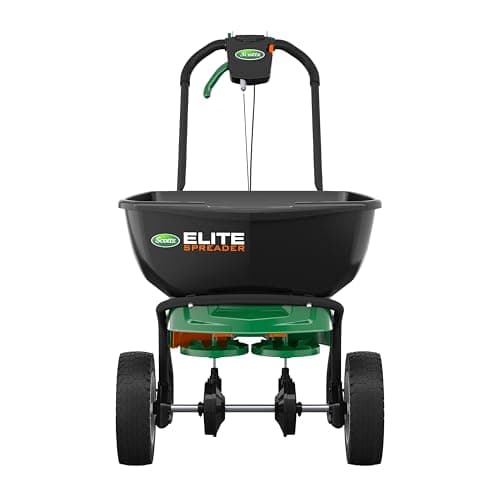
Scotts Elite Spreader
A twin-rotor broadcast spreader with a six-foot pattern and an edge guard.

The Andersons PGF Complete 16-4-8
A slow-release 16-4-8 with humic acid that suits almost any grass type as a first feeding.
Step 7: Weed Management Without Damaging the Lawn
Weeds signal gaps in turf density, compacted soil, or misaligned mowing and fertilizing practices. Your first-year goal is to reduce the worst offenders while building stronger grass that naturally suppresses future weeds.
Start With Identification and Thresholds
Identify your main weed species. Broadleaf weeds include dandelion, plantain, clover, and chickweed. Grassy weeds include crabgrass, foxtail, and annual bluegrass. Sedges such as yellow nutsedge have triangular stems and require specific controls.
Do not rush to blanket treatments without identification. According to Clemson University Extension, accurate weed ID directly determines which herbicide active ingredients are effective and safe on your turf species.
Use a practical threshold. A few scattered weeds in a dense lawn do not justify broad herbicide use. In contrast, large patches of crabgrass in a thin sunny front yard may warrant a combination of pre-emergent in late winter or early spring and overseeding in fall.
Choose Control Strategies Appropriate for Year One
In your first year focus on:
- Cultural control: Maintain mowing height near the top of the recommended range for your grass. Taller turf shades weed seedlings and reduces germination. Correct fertilizer timing and deep watering also favor grass over weeds.
- Spot treatments: Use selective broadleaf herbicides as spot sprays or limited area applications rather than whole-yard blanket applications where possible.
- Targeted pre-emergent: For crabgrass and similar annual weeds, use pre-emergent herbicides in early spring at the correct soil temperature window. Avoid areas you plan to seed soon, or choose products labeled as seed-safe when appropriate.
Always read the label restrictions for your grass type. Some products safe on Kentucky bluegrass or bermudagrass injure St. Augustine or centipede. If you are unsure, check a resource like Lawn Herbicide Safety for Warm-Season Grasses or consult your extension office.
Step 8: Repairing Bare Spots and Renovating Thin Areas
Repairing bare and thin zones in your first year directly improves appearance and reduces future weed invasion. The approach differs for cool-season and warm-season lawns, but the objectives are similar: expose prepared soil, add quality seed or plant material, and maintain moisture until establishment.
Overseeding Cool-Season Lawns
Early fall is the prime season for overseeding cool-season turf in most regions, when soil remains warm and air temperatures cool. According to Virginia Tech Extension, seeding in late August through mid-September in many temperate regions produces the strongest establishment before winter.
Basic overseeding steps:
- Mow existing turf slightly shorter than normal and collect clippings to expose soil.
- Core aerate compacted areas to improve seed-to-soil contact and relieve compaction.
- Rake or lightly dethatch to remove debris and open the canopy.
- Apply quality seed at rates recommended for your species (for example, 3 to 5 pounds per 1,000 square feet for tall fescue overseeding).
- Lightly rake or drag to incorporate seed into the top 0.25 inch of soil.
- Water lightly 1 to 3 times per day to keep the top layer consistently moist until germination, then transition slowly to deeper, less frequent watering.
Use starter fertilizer only if your soil test indicates low phosphorus and local regulations allow its use. Some states restrict phosphorus fertilizers except during establishment based on soil test results.
Repair Options for Warm-Season Lawns
Warm-season grasses spread laterally through stolons or rhizomes, which allows for repair through sprigs, plugs, or sod. Late spring to early summer, when soil is warm and the grass is fully green, is the ideal time for these repairs.
For bermuda and zoysia:
- Use plugs or sod pieces to fill bare areas. Space plugs according to product instructions, often 6 to 12 inches apart. These grasses will spread to fill gaps during the growing season.
- Keep new plantings consistently moist but not waterlogged until roots establish.
For St. Augustine:
- Use sod or plugs. Seeded options are limited and not common for most homeowners.
- Protect new installations from heavy traffic until firmly rooted.
In your first year, focus on stabilizing the worst bare or eroded spots rather than complete renovation, unless the lawn is more than 50 percent weeds or dead. In that case, a full renovation plan, including killing existing vegetation and reestablishing turf, may be appropriate in a later season when you can fully commit to it.
Step 9: Addressing Soil Compaction and Organic Matter
Compacted soil restricts root growth, limits water infiltration, and contributes to runoff. Low organic matter decreases the soil’s ability to hold moisture and nutrients. Both problems are widespread in new construction lawns where heavy equipment compresses the soil and topsoil layers are thin.
Diagnose Compaction and Organic Matter Problems
Use the observations from Step 1 plus your soil test:
- Hard, resistant soil when probing with a screwdriver, especially after rain, indicates compaction.
- Water that ponds in low areas for more than 24 hours instead of infiltrating signals poor structure.
- Organic matter values below about 2 percent on your soil test indicate low biological activity and storage capacity.
According to Colorado State University Extension, core aeration improves rooting and reduces compaction most effectively when performed annually or semi-annually on compacted lawns, especially those with heavy foot traffic or clay soils.
Core Aeration and Topdressing
Plan at least one core aeration in your first year, timed to the active growth period of your grass:
- Cool-season lawns: early fall or spring, though fall is preferred because weeds are less aggressive and turf recovers quickly.
- Warm-season lawns: late spring to early summer when grass is fully green and growing actively.
Core aerators remove plugs of soil about 0.5 to 0.75 inches in diameter and 2 to 3 inches deep. Leave the cores on the surface to break down naturally. Aerate in multiple directions for best coverage.
Topdressing with a thin layer (about 0.25 inch) of compost after aeration, especially when organic matter is low, adds carbon and improves structure. Use well-finished compost free of weed seeds. Spread evenly and rake lightly to settle material into aeration holes without smothering grass.
Step 10: Safety, Record-Keeping, and Long-Term Habits
Safe handling of products and tools, plus basic record-keeping, keeps your first-year lawn care organized and repeatable.
Product and Tool Safety
For all lawn chemicals:
- Read the entire label before use and follow application rates, personal protective equipment recommendations, and re-entry intervals.
- Store products in original containers with labels intact, in locked or child-inaccessible areas.
- Mix and rinse sprayers on turf areas, not on driveways or near storm drains, to reduce runoff risk.
For power equipment:
- Wear eye and hearing protection when mowing or trimming.
- Never reach under mower decks with the engine running or spark plug connected.
- Keep bystanders, especially children and pets, at a safe distance during operation.
Maintain Simple Lawn Records
A small notebook or digital note for your yard provides significant value over time. Record:
- Dates and products used for fertilizer, weed control, insect control, and disease treatments.
- Soil test results and recommendations.
- Dates of major cultural practices like aeration and overseeding.
- Observations of problems such as insect damage, disease patterns, or chronic wet spots.
These records allow you to adjust timing in year two and beyond, avoid repeating mistakes, and provide accurate information if you consult local extension experts or professional services.
Conclusion: Turning Your First Year Into Long-Term Success
The first 12 months with a new lawn are a diagnostic and stabilization period. By following a structured new homeowner lawn care checklist: everything to do in your first year, you identify your grass and climate, test your soil, understand past treatments, and then align mowing, watering, fertilizing, and repairs with turf science rather than guesswork.
If you build these habits now, your lawn will require less corrective work in future years and will withstand weather swings, foot traffic, and occasional neglect more effectively. As a next step, use a personalized lawn analysis tool, consult your local extension’s lawn calendar, or explore detailed guides like How to Identify Your Grass Type and Overseeding Cool-Season Lawns to refine this first-year plan for your specific property.
Top Picks
- MySoil Soil Test KitCheck price on Amazon
- HSLGOVE 7-in-1 Soil Test KitCheck price on Amazon
- Simple Lawn Solutions - Ryan Knorr - Lawn Essentials Bundle BoxCheck price on Amazon
As an Amazon Associate we earn from qualifying purchases.
Free Lawn Care Tools
During the first walkthrough, map areas of full, thin, bare, or weedy turf and note any patterns. Pay attention to soil firmness, soggy or spongy spots, surface grade and drainage, sun and shade patterns, and traffic paths. Look for specific issues like pet damage, vehicle tracks, old fire pits, or construction debris that may be affecting grass growth. Take notes or photos so you have a clear baseline for the rest of your first year.
Compacted soil feels hard underfoot and resists penetration when you push in a screwdriver, while healthy soil has some give. Drainage problems show up as soggy areas that stay wet or squishy for more than a day after normal rain. Low spots where water stands or channels where runoff concentrates are key red flags. These conditions restrict root growth and increase the risk of disease, especially in cool-season grasses.
Start by considering your region: the northern half of the U.S. typically has cool-season grasses like Kentucky bluegrass, perennial ryegrass, and fescues, while southern and transition zones often have warm-season species like bermudagrass, zoysiagrass, St. Augustine, centipede, or bahiagrass. Then look closely at the leaf blades and growth habit: for example, Kentucky bluegrass has a boat-shaped tip, tall fescue has wider blades with visible veins, and bermudagrass is fine-textured with many stolons. You can also ask the previous owner, builder, or check any landscape plans for seed or sod details. If you’re still unsure, take a sample with roots and leaves to your local cooperative extension office.
Mowing height directly affects root depth, stress levels, and how well grass competes with weeds. Most cool-season lawns do best between 2.5 and 3.5 inches, while many warm-season lawns like bermuda or zoysia perform well at 1 to 2 inches, and St. Augustine prefers 3 to 4 inches. Cutting below these ranges scalps the lawn, weakens roots, and encourages weeds and disease. Getting mowing height right early on sets up a healthier, thicker lawn long term.
Fertilizer timing depends on whether you have cool-season or warm-season grass and your regional climate. Cool-season lawns receive most of their nitrogen in fall and late spring, when temperatures are in their ideal growth range, and heavy mid-summer feeding should be avoided because it increases stress and disease risk. Warm-season lawns take most of their nitrogen from late spring through summer, when they are actively growing. A soil test early in your first year helps fine-tune both timing and rates so you avoid waste and potential damage.
Grass performance is tightly linked to how many hours of direct sun an area receives. Full-sun areas (6+ hours) can support typical lawn species, but heavily shaded zones (less than 3 hours) often struggle with standard turf and may need shade-tolerant fescues or even non-turf groundcovers. During your initial assessment, mark full sun, partial sun, and heavy shade areas so you can match grass types or alternatives to each zone. Planning around light conditions reduces ongoing problems with thin, weak turf.
Photos: Rodolfo Gaion / Pexels, Lachlan Ross / Pexels, Amanda Charlton / Pexels

Beat weeds and brown spots from your phone
Snap a photo, get the fix, and follow a plan timed to your soil and weather. Free on iPhone.