When to Fertilize Your Lawn: Simple Timing Rules for Every Grass Type
 James ThorntonLawn Equipment & Maintenance Expert | 20 Years
As an Amazon Associate we earn from qualifying purchases.
The best time to fertilize grass is when it is actively growing: cool-season lawns get a light spring feeding and their heaviest meals in fall, while warm-season lawns get fed from late spring through summer. Soil temperature is the trigger, roughly 55°F and climbing for cool-season grass and 65°F for warm-season grass. Fertilizer applied when grass is not actively growing stresses plants, wastes money, and increases runoff risk. This guide explains exactly when to fertilize your lawn: simple timing rules for every grass type, so you match fertilizer to growth cycles instead of the calendar on the wall.
Loading Fertilizer Calculator...
This article covers three core ideas:
- How fertilizer nutrients interact with grass growth cycles
- How cool-season and warm-season grasses differ in timing needs
- Simple, research-based calendars you can follow in any region
Timing matters as much as the fertilizer itself. Nitrogen applied when roots are active improves density, color, and weed resistance. Nitrogen pushed during heat or dormancy increases disease, thatch, and drought sensitivity. According to Purdue University Extension, lawns fertilized in sync with growth cycles require less total nitrogen per year for the same or better quality compared with poorly timed applications.
Several misconceptions drive most fertilizing mistakes:
- "More fertilizer equals better lawn" - Excess nitrogen causes surge growth, shallow roots, and more disease pressure.
- "You can fertilize any time it is warm" - Grass physiology, not air temperature alone, dictates nutrient demand.
- "All grass types follow the same fertilizing schedule" - Cool-season and warm-season grasses have opposite peak growth windows.
Cool-season grasses (like Kentucky bluegrass and tall fescue) grow most vigorously in spring and fall and slow down or even go dormant in summer heat. Warm-season grasses (like Bermuda and zoysia) stay brown in winter, then surge from late spring through summer. That difference sets your fertilization calendar more than any other factor.
The goal here is not a complicated program. The goal is simple seasonal timing rules for every grass type that any homeowner can follow, even without a turf degree. Once you understand the basic growth patterns and a few soil and weather cues, you can schedule fertilizer so it works with your lawn instead of against it.
If your lawn looks brown or thin after fertilizing, you might be applying it at the wrong time. To verify, check if you’re fertilizing when your grass is not actively growing. For example, cool-season grasses like Kentucky bluegrass thrive in spring and fall, while warm-season grasses such as Bermuda peak in late spring through summer.
For a lush, green lawn, align your fertilizing schedule with your grass type’s growth cycle. Apply fertilizer to cool-season grasses in early spring and early fall, and target warm-season grasses in late spring and summer. Doing this not only improves lawn health but also reduces nitrogen usage by up to 30% annually, maximizing results with less waste.
Best Time to Fertilize Grass: The Simple Rules
Before we get into the details, here are the season windows at a glance. If you only remember one table from this guide, make it this one.
| Grass type | Feed heaviest | Feed lightly | Do not feed |
|---|---|---|---|
| Cool-season (Kentucky bluegrass, ryegrass, tall and fine fescues) | Early fall (Sept) and late fall (Oct-Nov) | Spring, once soil hits about 55°F | Summer heat and winter |
| Warm-season (Bermuda, zoysia, St. Augustine, centipede, Bahia) | Late spring through mid-summer, soil 65°F and rising | Early fall potassium only, if a soil test calls for it | From 4-6 weeks before first frost through winter dormancy |
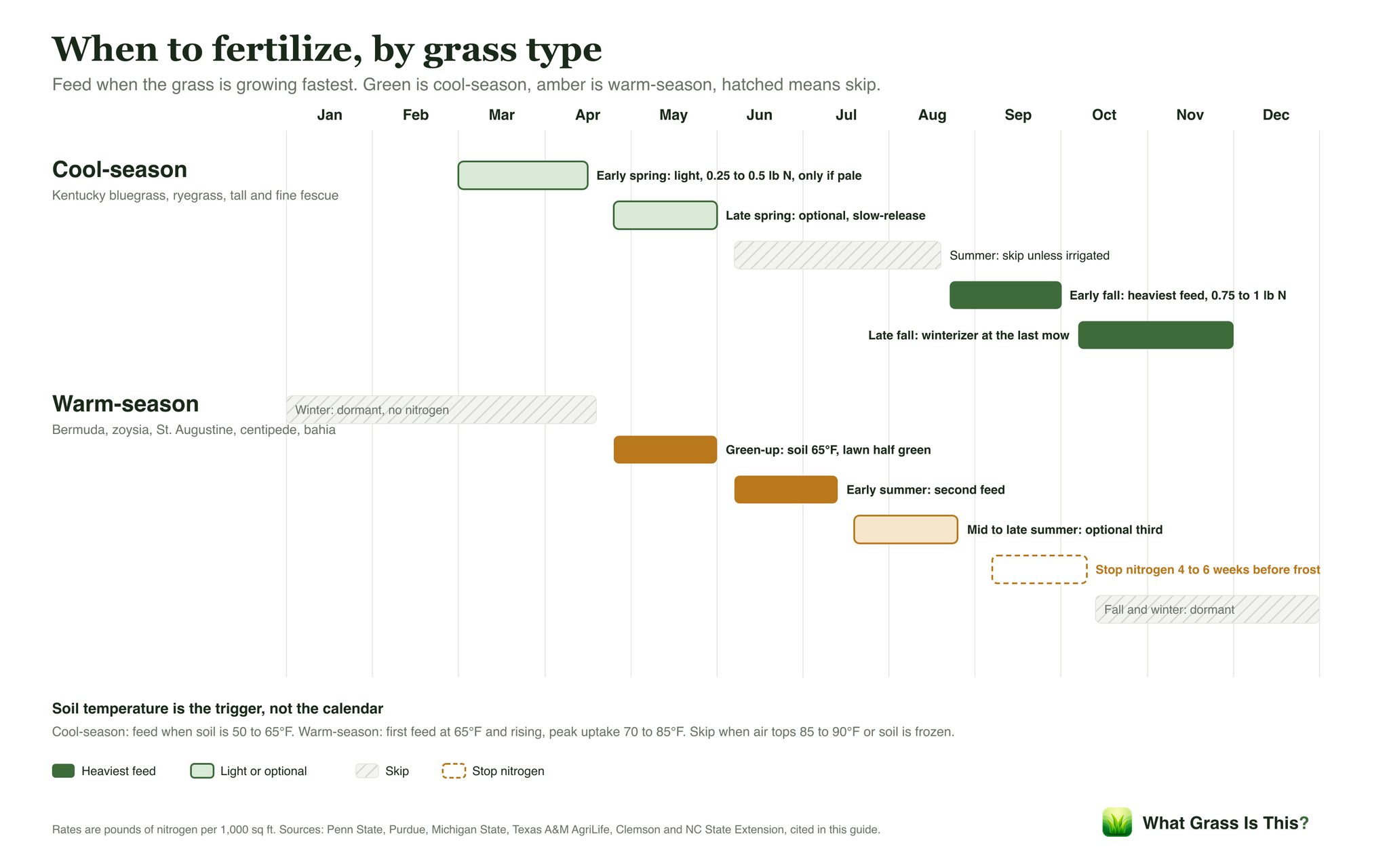
Best temperature to fertilize: go by soil temperature, not the calendar. Cool-season grasses take up nutrients best when soil is roughly 50-65°F, so about 55°F and climbing is your spring go signal. Warm-season grasses want soil at 65°F and rising, with peak uptake around 70-85°F. Skip applications when daytime air temperatures are pushing past 85-90°F, since fertilizer salts plus heat stress is a recipe for burn.
Best time of day to fertilize: early morning or late afternoon into evening, when temperatures are cooler and you can water the product in without it flash-drying on the blades. Avoid midday heat, especially in summer. Applying shortly before a light rain is actually helpful, since the rain waters the fertilizer in for you. Just do not fertilize ahead of a heavy storm, because a downpour washes nutrients off the lawn before they can soak in.
Cool-Season Grass Fertilizer Schedule
The cool season grass fertilizer schedule is fall-heavy by design. That is when roots are rebuilding and the plant is banking carbohydrates for next year:
- September: the biggest feeding of the year, 0.75 to 1 pound N per 1,000 square feet once summer stress breaks.
- Late October to November: a winterizer application at similar rates, timed around your last mowing while the grass is still green.
- Spring: a light feeding only, about 0.25 to 0.5 pound N, and only if the lawn is pale or thin. A lawn that got its fall feedings usually does not need much in spring.
- Summer: skip it, unless the lawn is irrigated and actively growing, and even then keep it light and slow-release.
Warm-Season Grass Fertilizer Schedule
Warm-season lawns flip the calendar. Feed during the summer surge, then stop well before cold weather:
- Late spring: first feeding once soil reaches 65°F and the lawn is at least half green, 0.5 to 1 pound N per 1,000 square feet.
- Early summer (June): second application at similar rates.
- Mid to late summer (July-August): optional third feeding for high-maintenance Bermuda and zoysia lawns.
- 4-6 weeks before first frost: stop nitrogen entirely. Late feedings invite winter injury.
If your main question is spring specifically, we break down green-up timing, pre-emergent conflicts, and month-by-month spring windows in our spring lawn fertilizer schedule.
The rest of this guide explains why these windows work and how to fine-tune them for your grass type, soil, and region.
Understanding Lawn Fertilizer Basics (So Timing Actually Makes Sense)
What Lawn Fertilizer Really Does
Lawn fertilizers supply macronutrients that grass needs in relatively large quantities. The three numbers on the bag, the N-P-K ratio, represent nitrogen (N), phosphorus (P), and potassium (K). Each nutrient influences timing decisions.
Nitrogen (N) drives shoot growth, color, and density. According to Penn State Extension, nitrogen is the most yield-limiting nutrient in turf, and managing its timing controls both quality and environmental risk. When applied during active growth, nitrogen thickens turf, improves color, and helps the lawn outcompete weeds. Applied during stress periods, it forces top growth when roots cannot support it, which weakens the plant.
Phosphorus (P) supports root growth and establishment. Most established lawns already have adequate phosphorus, especially where fertilizers have been used historically. Many states now restrict phosphorus in maintenance fertilizers because of runoff concerns. Minnesota and Wisconsin, for example, allow phosphorus only during establishment or when a soil test shows deficiency. That means for existing lawns, phosphorus is mostly a concern during seeding or sodding, not in regular yearly timing.
Potassium (K) improves stress tolerance, disease resistance, and cold hardiness. NC State Extension notes that adequate potassium strengthens cell walls and helps turf withstand traffic, drought, and winter injury. The best timing for potassium typically mirrors nitrogen timing, because both are taken up actively during growth periods. Fall potassium on cool-season turf and late spring to summer potassium on warm-season turf support stress resilience.
Every fertilization decision should connect those nutrients back to the growth stage of the grass. The objective is to feed when the plant can use the nutrients quickly for roots and shoots, not when they will sit in the soil or wash away.
How Grass Growth Cycles Dictate Fertilizer Timing
The single most useful concept in lawn fertilization is understanding seasonal growth curves.
Cool-season grass pattern
- Spring: Rapid shoot and root growth from soil temperatures around 50-65°F
- Summer: Growth slows sharply once soil temperatures exceed about 75°F, with possible dormancy in prolonged heat or drought
- Fall: Second strong growth peak as temperatures drop back into the 50-65°F range
- Winter: Dormancy or minimal growth in freezing conditions
According to University of Wisconsin Extension, cool-season lawns in the upper Midwest achieve their best density and root development from mid August through October. Fertilizing heavily in that fall window creates a thicker, deeper-rooted lawn the following spring with fewer weeds.
Warm-season grass pattern
- Spring: Green up begins once soil temperatures reach roughly 60-65°F
- Late spring-summer: Peak growth from soil temperatures around 70-85°F
- Fall: Growth slows significantly as soil temperatures drop below 65°F
- Winter: Full or partial dormancy with brown color in many climates
Texas A&M AgriLife Extension notes that Bermudagrass responds best to nitrogen from late spring through late summer, and late fall nitrogen on Bermuda or St. Augustine increases winter injury risk. Warm-season lawns need their main fertilization during their true growing season, not at spring green-up or fall color loss.
Fertilizing during dormancy or heat stress causes problems because fertilizer stimulates leaf growth without corresponding root support. That mismatch leads to weak turf that burns out quickly in stress periods, even if it looks green for a short time.
Matching Fertilizer Type to the Season
Once you understand growth cycles, fertilizer type becomes the next lever. Nitrogen sources release at different speeds, and that release rate needs to match plant demand.
Quick-release vs slow-release nitrogen
Quick-release nitrogen (such as urea or ammonium nitrate) dissolves and becomes plant-available almost immediately once watered in. It produces fast color change, often within 5 to 7 days, and a noticeable flush of growth. According to University of Missouri Extension, quick-release products typically supply all their nitrogen in 2 to 6 weeks.
Slow-release nitrogen (such as polymer-coated urea, sulfur-coated urea, or organic sources) releases over several weeks to months. This creates steadier growth and reduces surge mowing and leaching risk. Many premium lawn fertilizers use a blend of slow and fast-release nitrogen.
A practical timing rule is:
- Prefer slow-release nitrogen during stress-prone periods or when you want steady growth, such as summer on cool-season grass or mid-summer on warm-season turf.
- Use limited quick-release nitrogen when soil temperatures are moderate and plants are robust, for example early fall on cool-season lawns or late spring on warm-season lawns, but avoid repeated heavy doses.
Organic vs synthetic fertilizers
Organic fertilizers (composted manure, feather meal, biosolids, plant-based meals) rely on soil microbes to break them down. That means their release rate depends heavily on soil temperature and moisture. They work best when soil temperatures are consistently above 55-60°F and soil is moist but not saturated. In many climates, that aligns with late spring through early fall.
Synthetic fertilizers provide nutrients in mineral forms that dissolve with water. They are less dependent on microbial activity, so they can be effective earlier in the spring and later into the fall as long as the ground is not frozen and the grass is still growing.
When planning timing, this means an organic-heavy program on cool-season turf in northern climates should focus on late spring and fall, when soil biology is most active. Synthetic products can extend that window, especially in early spring and late fall, but still must align with grass growth.
Liquid vs granular products
Liquid fertilizers are sprayed onto leaves and soil. They act quickly, and many contain fast-acting nitrogen. Their timing is more weather-sensitive, since they should not be applied right before heavy rain or high heat. They are useful for small corrections or quick green-up when growth conditions are already favorable.
Granular fertilizers are spread dry and then watered in. Their nutrient release is more gradual, especially for slow-release formulations. Timing considerations here include irrigation or rain availability to move granules off the leaves and into the soil within 24 hours, and scheduling away from heavy storms that would cause runoff.
The key connection is this: pick a nitrogen speed that matches the growth demand of your lawn in that season. You want the nitrogen curve to mirror the grass growth curve.
Step 1: Identify Your Grass Type Before You Fertilize
Cool-Season vs Warm-Season Grasses: The Big Split
Before you can apply any timing rules, you need to know whether you have cool-season or warm-season grass. The fertilization calendar changes completely depending on that answer.
Common cool-season grasses include:
- Kentucky bluegrass
- Perennial ryegrass
- Tall fescue
- Fine fescues (creeping red, chewings, hard, sheep)
Characteristics of cool-season lawns:
- Natural peak color and density in spring and fall
- Often struggle or turn tan in hot, dry summers
- Stay at least somewhat green through much of the winter in milder northern climates
- Leaf blades often fine to medium in width, depending on variety
Common warm-season grasses include:
- Bermudagrass
- Zoysiagrass
- St. Augustinegrass
- Centipedegrass
- Bahiagrass
Characteristics of warm-season lawns:
- Brown or straw-colored in winter, then green up in late spring
- Strongest color and density in mid to late summer
- Struggle or thin in shade (especially Bermuda and zoysia)
- Blades often coarser and stiffer, especially in St. Augustine and Bahia
Seasonal cues answer the question quickly. If your lawn is bright green and growing fastest in April and October, and looks stressed in July, it behaves like a cool-season lawn. If it is brown or dormant in January, then surges in June and July, it behaves like a warm-season lawn.
Regional Cheat Sheet: What You Likely Have
Geography also provides strong clues. Turf specialists divide the country into three broad zones for grass type.
Northern zones (Upper Midwest, New England, Pacific Northwest, northern Great Plains) are dominated by cool-season grasses. According to Ohio State University Extension, Kentucky bluegrass and tall fescue are the primary lawn grasses through most of Ohio, Michigan, Pennsylvania, and similar latitudes.
If you live roughly north of a line from St. Louis to Baltimore, and your lawn stays somewhat green in winter, assume cool-season unless you know of a specific warm-season installation.
Southern zones (Deep South, Gulf Coast, much of Texas, southern California) are dominated by warm-season grasses. Auburn University Extension notes that Bermuda and centipede dominate home lawns in much of Alabama, while St. Augustine is common along the Gulf Coast and in Florida.
If you are in USDA Zone 8 or warmer and your lawn turns tan every winter, then greens up late, you almost certainly have warm-season turf.
Transition zone regions (roughly from Kansas City through Kentucky, Virginia, and into parts of the mid-Atlantic) can support both types, but neither thrives perfectly. Tall fescue is widely used in this zone, but many sites also use zoysia or Bermuda. Homeowners here sometimes have mixed lawns or overseeded warm-season turf.
If you are unsure, a guide such as How to Identify Your Grass Type, coupled with a local Extension office call, clarifies species. You can also combine this step with How to Test Your Lawn's Soil the Right Way for Better Results, since soil testing and species identification are logical first steps before building any long-term fertilizer plan.
Why Mixed Lawns Need Extra Timing Care
Many lawns in the transition zone and southern states are technically mixed. Two common scenarios create complexity:
Overseeded warm-season lawns
In the southern United States, property managers often overseed dormant Bermuda with annual or perennial ryegrass in fall to maintain winter color. This creates two different grass types in the same space with different ideal fertilization calendars.
In that case, you need to decide your priority:
- If Bermuda is the long-term primary turf, you time major fertilization for late spring and summer, then use only very light nitrogen on the rye in winter and early spring.
- If winter green color is the priority, and the Bermuda is already well established, you may feed the rye more heavily from fall through early spring, but you then reduce or skip fertilization during the most stressful summer periods for the rye as it declines.
According to University of Georgia Extension, excessive spring nitrogen on overseeded rye delays Bermuda green-up and increases competition. Their recommendation is to limit nitrogen on overseeded lawns to about 0.5 pound of N per 1,000 square feet in early spring until Bermuda is 50 percent green.
Patchy or blended lawns
Some northern or transition zone lawns contain blends of Kentucky bluegrass, rye, and tall fescue, or areas where neighbors have patched with different sod. Fortunately, these cool-season mixes share similar timing windows, so you can follow the same general calendar.
Problems arise when warm-season patches exist within predominantly cool-season lawns or vice versa. In that case, base timing on the grass type that covers the majority of the area and adjust local cultural practices (like mowing height and irrigation) to avoid severely stressing the minority species.
Simple Timing Rules for Every Grass Type (At-a-Glance Cheat Sheets)
One-Page Timing Summary for Busy Homeowners
When to fertilize your lawn: simple timing rules for every grass type can be summarized in one guiding principle:
Fertilize when the grass is naturally growing fastest, and avoid fertilizing when it is naturally slowing down or dormant.
From that principle, the practical calendars look like this.
Cool-season lawns (Kentucky bluegrass, ryegrass, fescues)
- Main fertilization window: fall
- Secondary window: light applications in spring
- Summer: mostly skip, except in special cases with very light, slow-release feeding
Typical cool-season schedule:
- Early spring (optional, March-April): Light application if the lawn is thin or pale, about 0.5 pound N per 1,000 square feet using mostly slow-release nitrogen.
- Late spring (May): Optional moderate feeding in high-use lawns or poor soils.
- Early fall (late August-September): Major application, around 0.75 to 1 pound N per 1,000 square feet, after summer stress breaks and rainfall resumes.
- Late fall (October-November): "Winterizer" application in many northern regions, timed when top growth slows but the grass is still green, again 0.75 to 1 pound N per 1,000 square feet. According to Michigan State University Extension, this late fall timing improves root reserves and spring green-up without stimulating late-season leaf growth.
Warm-season lawns (Bermuda, zoysia, St. Augustine, centipede, Bahia)
- Main fertilization window: late spring through summer
- Stop fertilizing early fall, usually 4 to 6 weeks before expected first frost
- Do not fertilize in winter dormancy
Typical warm-season schedule:
- Spring green-up (soil 65°F, lawn about 50-75 percent green): First fertilizer of the year, about 0.5 to 1 pound N per 1,000 square feet, using a balanced product if a soil test supports it.
- Early summer (June): Second application, particularly for Bermuda and zoysia, often 0.5 to 1 pound N per 1,000 square feet.
- Mid to late summer (July-August): Third application for high-maintenance lawns, with some southern guidelines allowing up to four applications spaced 6 to 8 weeks apart, as long as irrigation is adequate and diseases are managed.
- Early fall: Discontinue nitrogen 4-6 weeks before first frost, especially on centipede and St. Augustine, to reduce winter injury, as recommended by Clemson University Extension.
High-level "never do this" rules
- Do not fertilize frozen, snow-covered, or waterlogged lawns. Nutrients will not be taken up and will instead run off.
- Avoid fertilizing drought-stressed lawns that are dormant or crunchy underfoot. Rehydrate first with irrigation or rainfall over 5 to 7 days, then fertilize once growth resumes.
- Do not fertilize right before large rain events. The practical rule is to avoid application if more than 1 inch of rain is forecast within 24 hours.
- Avoid heavy nitrogen on cool-season grass in midsummer heat unless you have irrigation, and even then use slow-release nitrogen in low rates.
- Do not apply nitrogen to warm-season grasses later than recommended for your zone, since late fall nitrogen increases winter kill risk.
Rule of Thumb by Soil
Soil conditions significantly modify fertilizer timing and frequency. Two lawns with identical grass species can require very different schedules depending on soil quality, organic matter, and pH.
Coarse, sandy soils
Sandy soils have low cation exchange capacity (CEC) and hold fewer nutrients. According to University of Florida IFAS Extension, sandy Florida soils often require more frequent, lighter fertilizer applications, because large single doses leach below the rootzone quickly.
Timing rules for sandy soils:
- Use smaller nitrogen doses (0.25 to 0.5 pound N per 1,000 square feet) per application.
- Increase the number of applications, spacing them 4 to 6 weeks apart within the recommended seasonal window for your grass type.
- Favor slow-release formulations to reduce leaching and extend availability.
Heavy clay soils
Clay soils hold nutrients more effectively but can be poorly drained and compacted. According to Kansas State University Extension, clay lawns benefit from aeration and organic matter additions to improve root depth and oxygen levels.
Timing rules for clay soils:
- Follow standard seasonal windows, but prioritize fall fertilization on cool-season lawns to drive deeper root growth before winter.
- On warm-season lawns, ensure that soil is not saturated at application time, because slow infiltration increases runoff risk.
- Use moderate doses of nitrogen, avoiding heavy single applications that turf cannot utilize quickly in compacted zones.
Soil pH and nutrient availability
Soil pH controls how available nutrients are. Most turfgrasses prefer a pH between about 6.0 and 7.0. According to Virginia Tech Extension, nutrient efficiency decreases strongly outside that range, especially for phosphorus and micronutrients.
Fertilizer timing does not override pH problems. A lawn with a pH of 5.0 or 8.0 will not respond normally to standard fertilizer schedules. In those situations, How to Improve Soil pH for Grass becomes just as important as when you fertilize. Apply lime or sulfur based on soil test recommendations, then maintain normal fertilizer timing as pH moves into the optimal zone over 6 to 12 months.
Organic matter and compost
Soils with 3 to 5 percent organic matter hold nutrients and moisture more effectively and supply a portion of nitrogen through mineralization. When lawns receive regular topdressing with finished compost, such as described in Composting for a Healthier Lawn, they often need less synthetic nitrogen and tolerate slightly extended intervals between applications.
When organic matter is very low (under 2 percent), lawns tend to respond strongly to properly timed fertilizer, but they also burn out faster in stress periods. In that case, timing must be precise, and integrating organic matter additions improves long-term stability.
Season-by-Season Timing Guides for Cool-Season Lawns
Cool-season lawns dominate northern and many transition-zone regions, so their timing guides deserve a detailed breakdown.
Early Spring (When Snow Melts to Soil 50°F)
Extension recommendations from Penn State and University of Minnesota converge on a principle: do not rush the first spring fertilizer. Early spring growth is driven mostly by carbohydrates stored in roots from the previous fall, not by immediate nitrogen availability.
Key indicators and rules:
- Soil temperature consistently above 50°F, which often coincides with forsythia bloom and active mowing needs.
- Grass color improving naturally from winter dullness.
- You have already mowed at least once.
At this stage, a light application of 0.25 to 0.5 pound N per 1,000 square feet using a slow-release product is appropriate if:
- The lawn is thin or pale after winter.
- You did not apply a late fall "winterizer" nitrogen the previous year.
- Traffic or snow mold damage created bare patches that you plan to overseed.
Avoid heavy early spring nitrogen (over 0.75 pound N per 1,000 square feet). According to University of Wisconsin Extension, excessive early nitrogen forces lush shoot growth at the expense of roots and increases summer disease susceptibility.
Late Spring (Soil 55-65°F, Before Summer Heat)
From late April through May in many northern zones, cool-season grasses continue strong growth. This period often coincides with pre-emergent crabgrass herbicide applications.
Timing rules:
- If the lawn is dense, dark green, and was fertilized in fall, you can reduce or skip late spring nitrogen.
- If color is fading or the lawn has high traffic, a moderate application of 0.5 to 0.75 pound N per 1,000 square feet supports density before entering summer.
- Use a product with at least 30-50 percent slow-release nitrogen to minimize a midsummer flush.
This timing is also logical for split applications after core aeration or overseeding, especially in compacted soils.
Summer (Heat Stress Period)
Summer strategy for cool-season lawns is largely about restraint. When daytime highs exceed 85°F and soil temperatures rise above 75°F, Kentucky bluegrass and perennial ryegrass shift into a survival mode.
According to Iowa State University Extension, non-irrigated cool-season lawns often enter semi-dormancy in midsummer and should not receive nitrogen during this period. The turf is not actively growing enough to use it, and fertilizer will instead drive weak, succulent growth that burns out rapidly.
Summer timing rules:
- If the lawn is not irrigated and has slowed or gone tan, do not fertilize. Wait until late August when cooler nights return and growth resumes.
- If the lawn is irrigated and remains actively growing, very light applications of slow-release nitrogen (0.25 to 0.5 pound N per 1,000 square feet) can be made in early summer and mid-summer, but avoid quick-release sources in hot, humid weather.
- Monitor for disease. High nitrogen plus heat plus moisture increases risk of brown patch and other diseases in tall fescue and bluegrass.
Fall (Primary Fertilization Season)
Fall is the centerpiece of cool-season fertilization schedules. As temperatures drop, roots recover, and the plant stores carbohydrates for winter and spring.
Early fall (late August to September)
Once night temperatures fall into the 50s and the lawn begins to recover from summer stress, apply a substantial dose of nitrogen. Typical rates are 0.75 to 1 pound N per 1,000 square feet.
Benefits documented by Michigan State University Extension and other sources include:
- Increased tillering (new shoots) that thicken turf
- Improved root density entering winter
- Fewer fall and early spring weeds due to better turf competition
Early fall is also the preferred time for overseeding and core aeration in cool-season lawns, as covered in many seeding guides. Combining aeration, overseeding, and fertilization over a 4 to 6 week window from late August to early October produces dramatic density improvements.
Late fall (October to early November)
The "late fall" or "winterizer" application is timed when mowing frequency decreases, top growth slows, but the grass remains green. In many northern states this falls 2 to 3 weeks before the ground freezes.
According to research summarized by Purdue University Extension, a late fall application of about 1 pound N per 1,000 square feet using a quick- or mixed-release source increases root carbohydrate reserves and improves early spring color and density without causing late-season soft growth.
Key timing cues:
- You have made your last or second-to-last mowing of the season.
- Lawn growth has slowed significantly, requiring mowing only every 10-14 days.
- Soil is not frozen, and air temperatures are generally above 35-40°F during the day.
This application effectively "front loads" nitrogen for the next spring, which is why heavy early-spring fertilizer is seldom needed on lawns that receive a proper winterizer.
Season-by-Season Timing Guides for Warm-Season Lawns
Warm-season grasses require a nearly opposite schedule, focused on late spring to summer, with no fertilization in winter dormancy and limited nitrogen as temperatures cool.
Spring Green-Up (Soil 60-65°F and Rising)
The critical factor for first fertilization on warm-season lawns is soil temperature, not calendar date. According to Texas A&M AgriLife Extension, Bermudagrass should not receive nitrogen until after it is at least 50 percent green and the risk of a hard frost has passed.
Spring timing cues:
- Soil temperature at 2-4 inches consistently 60-65°F or warmer for several days (you can check with a soil thermometer).
- Lawn at least half green, with active new leaves, not just old tissue turning green.
- No frost in the 10-day forecast.
Apply about 0.5 to 1 pound N per 1,000 square feet at this time using a balanced product if a recent soil test indicates phosphorus and potassium needs. This first feeding supports early growth and density as the turf comes out of dormancy.
Early to Mid-Summer (Peak Growth)
From late spring through summer, warm-season grasses operate at full throttle. Bermudagrass, for example, can spread aggressively by stolons and rhizomes under good fertility and moisture.
Typical timing:
- Second application: 6-8 weeks after the spring green-up feeding, usually late May or June.
- Third application: Another 6-8 weeks later, in mid to late summer, especially for Bermuda and zoysia under regular mowing and irrigation.
Rate guidelines from Clemson University Extension for home lawns often recommend a total of 2 to 4 pounds N per 1,000 square feet per growing season for Bermuda, spaced across 2-4 applications, and lower total rates for centipede and Bahia.
Summer timing rules:
- Do not apply heavy nitrogen when daytime highs exceed about 95°F without reliable irrigation, because drought plus fertilizer stresses the turf.
- Use slow-release nitrogen in midsummer to avoid forcing excessive top growth and mowing.
- Monitor thatch and disease. Excess nitrogen accelerates thatch buildup in zoysia and St. Augustine.
Late Summer and Early Fall (Wind-Down Period)
As nights cool and growth slows, fertilizer timing shifts toward shutting down nitrogen at the correct point.
General guidelines:
- Stop nitrogen applications about 4-6 weeks before your average first frost date for zoysia, Bermuda, and St. Augustine.
- Centipedegrass and Bahia often should stop even earlier, since they are more sensitive to cold and excess fertility.
- Optional potassium applications without nitrogen can be considered if a soil test shows K deficiency and winter stress is a concern.
According to NC State Extension, late season nitrogen on warm-season turf increases the risk of winter injury because it encourages tender growth that does not harden off before cold weather. That is why many southern fertility bulletins explicitly warn against "winterizer" nitrogen products for warm-season lawns.
Winter (Dormancy)
Winter is simple: no fertilization. Dormant warm-season turf is not actively taking up nutrients. Winter fertilizer on brown Bermuda or zoysia either leaches or feeds cool-season weeds. Focus instead on pre-emergent herbicide timing, soil test corrections for lime or sulfur, and planning for the next growing season.
Putting Timing Into Action: A Practical Yearly Plan
To connect these timing rules to real-world planning, it helps to see a sample yearly implementation timeline for each grass type. These are generic; your soil test and local climate refine them.
Sample cool-season lawn plan (northern U.S.)
Assuming Kentucky bluegrass/tall fescue mix, average soil, and basic irrigation.
- March - early April (Week 1-4): Soil test if not done in last 3 years. Light spring fertilizer only if lawn is pale or thin and no late fall nitrogen was applied. Begin mowing.
- Late April - May (Week 5-10): Optional moderate feeding if needed. Apply pre-emergent herbicide if crabgrass is a concern, often at forsythia bloom.
- June - July (Week 11-18): Avoid nitrogen if heat intensifies and lawn is not irrigated. Focus on mowing height (3-4 inches) and conservative irrigation.
- Late August - September (Week 19-24): Core aerate, overseed thin areas, and apply 0.75 to 1 pound N per 1,000 square feet as a high-quality fertilizer. Maintain consistent moisture for seed germination over 2-4 weeks.
- October - early November (Week 25-30): Apply late fall nitrogen (0.75 to 1 pound N per 1,000 square feet) once growth slows and you are near the last mowing. Address lime or sulfur needs based on soil test.
- Winter (Week 31-52): No fertilizer. Plan any major renovations for next late summer.
Sample warm-season lawn plan (Bermuda, Southeast U.S.)
Assuming hybrid Bermudagrass, sandy soil, and regular irrigation.
- February - March (Week 1-8): Soil test, apply lime or sulfur if needed, and apply spring pre-emergent. No nitrogen while turf is brown and dormant.
- April - May (Week 9-16): When soil temperature reaches 65°F and lawn is at least 50 percent green, apply 0.5 to 1 pound N per 1,000 square feet. Begin regular mowing at recommended height.
- June (Week 17-20): Second nitrogen application, 0.5 to 1 pound N per 1,000 square feet, using partly slow-release nitrogen. Monitor thatch and disease.
- July - early August (Week 21-28): Third nitrogen application if a higher maintenance level is desired. Adjust rate based on growth and color, typically 0.5 to 0.75 pound N.
- Late August - September (Week 29-36): Discontinue nitrogen 4-6 weeks before first frost. Consider a potassium-only product if soil test indicates deficiency and winter injury is a concern.
- October - January (Week 37-52): No fertilization. Turf is entering or in dormancy. Manage weeds and plan mechanical practices for next season.
Choosing Products That Fit the Timing Rules
Once timing is set, product selection becomes much easier. You can then use resources like Best Fertilizers for Lawns and Organic vs Synthetic Fertilizers to fine-tune choices. The key is aligning nutrient release rate to your window of need.
For example:
- Cool-season early fall: A granular fertilizer with a blend of 30-50 percent slow-release nitrogen works well, because it supplies an initial boost plus several weeks of sustained feeding as temperatures remain favorable.
- Cool-season late fall: A product with more quick-release nitrogen is appropriate, because the goal is to load roots quickly before soil freezes, not promote extended top growth.
- Warm-season mid-summer, sandy soil: A predominantly slow-release nitrogen fertilizer in smaller doses reduces leaching and maintains even color between applications.
- Organic-based programs: Schedule applications when soil temperatures are reliably above 55°F and moisture is adequate, since microbial activity drives nutrient release.
Always cross-check product rates with university recommendations, which typically express nitrogen needs in pounds of N per 1,000 square feet per year. Then divide that total into 2-4 applications according to your timing windows.

Recommended products
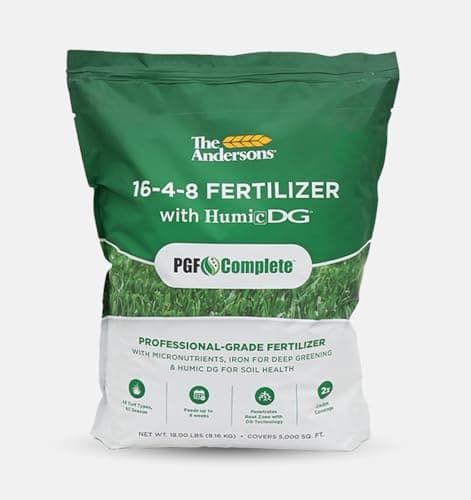
The Andersons PGF Complete 16-4-8
A slow release 16-4-8 granular with humic acid that fits the main spring and fall windows.
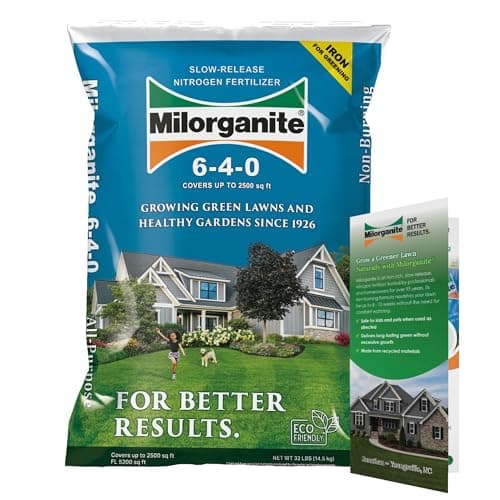
Milorganite 6-4-0
A slow release organic nitrogen with very low burn risk in hot weather.
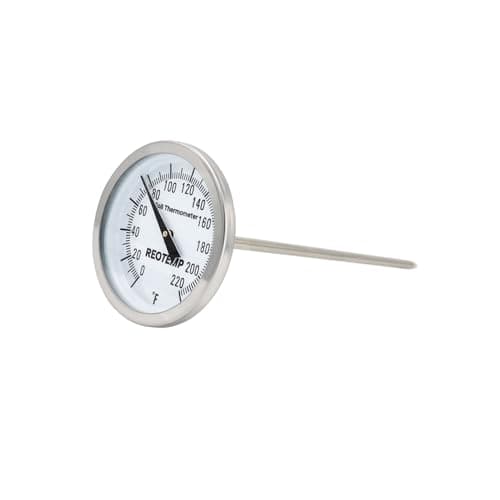
REOTEMP Waterproof Soil Thermometer
A waterproof dial thermometer with a 5 inch stem for reading soil temperature.
Conclusion: Make Timing the Core of Your Fertilizer Strategy
When to fertilize your lawn: simple timing rules for every grass type reduces down to a few clear principles:
- Feed cool-season lawns primarily in fall, sparingly in spring, and rarely in summer.
- Feed warm-season lawns mainly from late spring through summer, then stop before fall dormancy.
- Never fertilize frozen, dormant, or severely drought-stressed turf.
- Match fertilizer release rate and product type to the season and soil conditions.
- Use soil testing and grass identification as the foundation of any schedule.
Extension research from universities such as Penn State, Purdue, and NC State consistently shows that lawns fertilized on the right calendar stay denser, resist weeds, and require less total nitrogen over time. With proper timing and a few simple rules, your fertilizer budget works directly toward a healthier, more resilient lawn.
For next steps, confirm your grass species with a guide like How to Identify Your Grass Type, run a soil test following How to Test Your Lawn's Soil the Right Way for Better Results, then choose appropriate products using Best Fertilizers for Lawns and Organic vs Synthetic Fertilizers. Once those pieces are in place, your annual fertilizer calendar becomes a predictable, efficient routine instead of a guessing game.
Top Picks
 The Andersons Professional PGF Complete 16-4-8 Fertilizer with 7% Humic DG 5,000 sq ftCheck price on Amazon
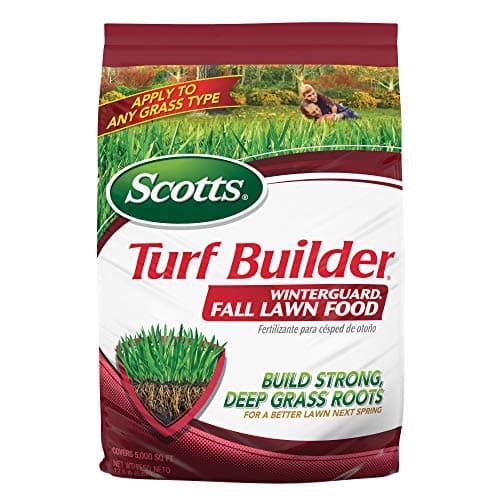
 Scotts Turf Builder WinterGuard Fall Lawn Food, 12.5 lb.Check price on Amazon
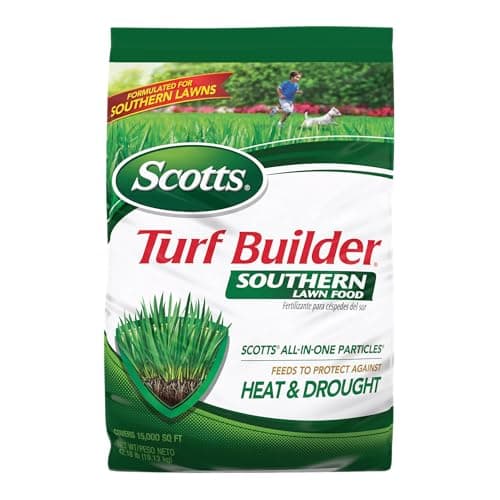
 Scotts Turf Builder Southern Lawn Food, 42.18 lbs.Check price on Amazon
As an Amazon Associate we earn from qualifying purchases.
Free Lawn Care Tools
The best time to fertilize grass is when it is actively growing. For cool-season grasses like Kentucky bluegrass and tall fescue, that means a light feeding in spring and the heaviest feedings in early fall and late fall. For warm-season grasses like Bermuda and zoysia, it means late spring through late summer, once soil temperatures reach about 65°F and the lawn is at least half green. Feeding during dormancy or peak heat stress wastes fertilizer and can weaken the turf.
Go by soil temperature rather than air temperature. Cool-season grasses take up fertilizer best when soil is roughly 50-65°F, so wait until soil hits about 55°F and is climbing in spring, or drops back into that range in fall. Warm-season grasses want soil around 65°F and rising, with peak uptake at 70-85°F. For air temperature, avoid fertilizing when daytime highs are above about 85-90°F, since heat plus fertilizer salts stresses the grass.
Early morning or late afternoon into evening are the best times of day to fertilize. Cooler temperatures reduce the risk of fertilizer burn, and you can water the product in right after. Avoid the midday heat, especially in summer, when fertilizer salts pull moisture from already stressed grass. Applying shortly before a light rain is fine and can even help water the fertilizer in, but skip it if heavy rain is forecast, since a downpour washes nutrients away before they reach the roots.
Cool-season grasses perform best when most of their fertilizer is applied in fall, from mid-August through October, when soil temperatures are in the 50–65°F range. This is when they naturally have their strongest root and shoot growth, leading to thicker turf and fewer weeds the following spring. Light spring feeding can be helpful, but heavy fertilizing in summer heat should be avoided. Summer applications during stress periods can weaken the lawn and increase disease and drought problems.
Warm-season grasses should be fertilized mainly from late spring through late summer, when soil temperatures are roughly 70–85°F and growth is at its peak. Fertilizing too early at spring green-up or too late in fall, when soil is cooling below about 65°F, increases the risk of winter injury and wasted nutrients. Keeping nitrogen in the true growing season gives better color, density, and stress tolerance.
Fertilizing during dormancy or heat stress forces top growth at a time when roots are not actively supporting that growth. This mismatch creates weak, shallow-rooted turf that burns out quickly and is more vulnerable to disease and drought. It also increases the chance of nutrient loss and runoff because plants cannot use the fertilizer efficiently. Timing applications to active growth periods prevents these problems.
Quick-release nitrogen gives fast green-up and a flush of growth within a few days and is best used in moderate conditions when grass is robust, such as early fall for cool-season lawns or late spring for warm-season lawns. Slow-release nitrogen feeds over weeks to months, supporting steadier growth with less surge mowing and leaching risk. Slow-release sources are especially useful in stress-prone periods, like summer on cool-season grass or mid-summer on warm-season turf. Matching release speed to growth demand keeps the lawn healthier and reduces waste.
Soil temperature is a more reliable guide than air temperature because it tracks the actual growth activity of the grass. Cool-season grasses respond best when soil is roughly 50–65°F, while warm-season grasses need soil around 70–85°F for peak uptake. Fertilizing when soil is too cold or when prolonged heat and drought are expected leads to poor nutrient use and stress. Watching soil temperature and upcoming weather lets you sync fertilizer with active, healthy growth.
Nitrogen timing is the main driver of lawn response, but phosphorus and potassium still matter. Phosphorus is most important during seeding or sodding for root establishment, and many established lawns already have enough, with some states even restricting routine phosphorus use. Potassium timing generally follows nitrogen timing, with fall applications on cool-season lawns and late spring to summer applications on warm-season lawns to boost stress, disease, and cold tolerance. Aligning all three nutrients with growth cycles helps the lawn use them efficiently and reduces environmental impact.
Photos: Engin Akyurt / Pexels, cottonbro studio / Pexels

Beat weeds and brown spots from your phone
Snap a photo, get the fix, and follow a plan timed to your soil and weather. Free on iPhone.