

Best Weed Killer: Top Products & DIY Methods
 Sarah MitchellLawn Diagnostics Specialist | 12 Years
As an Amazon Associate we earn from qualifying purchases.
Weed killer, or herbicide, is any product or solution designed to control or kill unwanted plants. Choosing the best weed killer for your property is not just about making weeds disappear. The right product or DIY method protects lawn health, preserves landscape plants, and helps maintain property value by keeping everything neat and uniform.
Most people searching for the best weed killer: top products & DIY methods fall into three groups. Some want a store-bought product that will actually work on stubborn weeds. Others are DIY-focused and want natural or homemade weed killer methods that avoid harsh chemicals. A third group wants targeted weed control that will not kill grass or harm pets and kids.
This guide is structured around those needs. It covers the best weed killer products and DIY methods for specific areas, including lawns, flower beds, vegetable gardens, and driveways. You will see how to read herbicide labels, how to match the product to your weeds, how to avoid common mistakes, and how to time applications throughout the season for maximum effectiveness.
Herbicides are regulated and must be used according to label directions and local laws. Not every product is legal or appropriate in every region. Treat all products and even strong DIY mixes with respect, apply them correctly, and always follow the label. The label is not a suggestion. It is the law and your best guide to safe, effective weed control.
To pick the best weed killer, start by identifying where the weeds are growing and what type they are. If you see broad, flat leaves in your lawn, like dandelions or clover, you usually want a selective broadleaf weed killer that will spare the grass. If the weeds are in gravel, cracks, or driveway joints, a non-selective product or strong DIY vinegar solution is more effective. Confirm your weed type by comparing leaf shape and growth pattern to photos in a guide like Common Lawn Weeds and How to Remove Them.
For a safe and effective fix, match the mode of action to the problem. Use pre-emergent weed control, such as a crabgrass preventer, in early spring when soil temperatures reach about 55°F to stop annual weeds from sprouting. Use post-emergent sprays on actively growing weeds when daytime temperatures are between 60 and 85°F and rain is not expected for at least 24 hours. Do not blanket spray non-selective killers in lawns or near desirable plants, or you will create dead patches that can take months to recover.
With most products, you will see early yellowing or wilting within 3 to 7 days and full control within 2 to 4 weeks, especially on perennial weeds. If weeds survive after 14 days, check whether you used the correct product, rate, and timing before reapplying. Over-application does not speed results and increases risk to your grass, pets, and the environment. Consistent seasonal timing and spot treatment, combined with a thick, healthy lawn, usually brings weed pressure down dramatically within one growing season.
What weed killer won't kill your grass?
Which grass do you have, and which weed are you looking at? Those two answers pick the product, because a lawn weed killer is only safe on the grasses its label lists. If you aren't sure of your grass type, run a photo through our free grass identifier before you buy anything.
Once you know both, match them to an active ingredient below. Each entry comes from the product label or the extension source in the last column, so check the bottle you buy against the same list.
| Active ingredient (example product) | Controls | Labeled for | Injures or off-label | Source |
|---|---|---|---|---|
| 2,4-D + mecoprop-p + dicamba + sulfentrazone (Spectracide Weed Stop for Lawns Concentrate2) | Broadleaf weeds such as dandelion, clover, and plantain | Kentucky bluegrass, fescues, perennial ryegrass, zoysia, bahia, bentgrass, Bermuda, centipede, and St. Augustine at the lowest rate (0.75 fl oz per gallon) | Floratam and Bitterblue St. Augustine, carpetgrass, dichondra, and any clover you want to keep | Product label |
| Mesotrione (Tenacity) | Crabgrass and many broadleaf weeds | Kentucky bluegrass, tall and fine fescue, perennial ryegrass, centipede, buffalograss, and St. Augustine | Bermuda (dormant Bermuda only at a reduced rate), zoysia, bentgrass, Poa annua, kikuyugrass, and seashore paspalum | Product label |
| Quinclorac (Drive XLR8, and the crabgrass ingredient in Spectracide Weed Stop Plus Crabgrass Killer) | Crabgrass and foxtail | Kentucky bluegrass, fescues, perennial ryegrass, and established Bermuda | St. Augustine, carpetgrass, and dichondra | Product labels; UF/IFAS |
| Atrazine | Doveweed, dollarweed, spurge, and young crabgrass | St. Augustine (UF/IFAS rates it tolerant) and centipede | Bermuda, which it can thin | UF/IFAS; LSU AgCenter |
| Halosulfuron (Sedgehammer) | Nutsedge and other sedges | Bermuda and other established lawns; confirm your grass on the label | Check the label for your grass | Product label |
| Glyphosate (Roundup and generics) | Every plant it touches, lawn grass included | No lawn grass, with ProVista St. Augustine as the one bred exception | All other lawn grasses | UF/IFAS |
Is your lawn St. Augustine? Check the cultivar before you spray. The Spectracide Concentrate2 label excludes Floratam and Bitterblue, and UF/IFAS says to skip anything containing quinclorac. If the weed turns out to be a grass like Bermuda or torpedograss, no selective product in the list will remove it from St. Augustine. Our guides to weeds in St. Augustine grass and weed control that won't kill Bermuda go grass by grass.
Understanding Weed Control Basics (Before You Pick a Product or DIY Method)
Choosing the best weed killer starts with understanding what you are actually trying to control and how herbicides work. Without that foundation, even the best products and DIY methods can be wasted or misused.
What Counts as a “Weed” and Why It Matters
A “weed” is simply any plant growing where you do not want it. That could be crabgrass in a bluegrass lawn, Bermuda grass invading a flower bed, or moss in a shaded walkway. The key point is that weeds are defined by location and context, not by a strict list of species.
In lawns, problem weeds usually fall into three main groups:
- Broadleaf weeds have wider leaves with visible veins and distinct flowers. Examples include dandelion, clover, chickweed, plantain, and creeping Charlie (ground ivy).
- Grassy weeds look more like lawn grass, with narrow blades. Common examples are crabgrass, foxtail, annual bluegrass (Poa annua), and goosegrass.
- Sedges look grass-like but have triangular stems and a waxy feel. Yellow nutsedge and purple nutsedge are the most common in lawns.
In garden beds and along fences, you may also see woody or aggressive perennial weeds like blackberries, ivy, poison ivy, or bindweed. These tend to have deep or spreading root systems that are harder to kill with contact-only products.
Identification matters because different herbicides are designed to target different plant types. A product labeled as a “broadleaf weed killer” usually will not control crabgrass. A grass killer may wipe out lawn turf along with grassy weeds. If you are unsure what you are looking at, cross-check with photos in Common Lawn Weeds and How to Remove Them or take a sample to your local garden center or extension office.
Weed Life Cycles and Why Timing Is Everything
Weed life cycle largely determines the best weed killer and ideal timing. Most problem weeds are annuals, biennials, or perennials.
Annual weeds, such as crabgrass and many summer weeds, complete their life cycle in a single season. They sprout from seed, grow, set new seed, then die. Since they rely on seeds, pre-emergent weed killers are especially effective. These form a barrier near the soil surface that prevents seeds from successfully germinating.
Biennial weeds, like wild carrot (Queen Anne's lace), grow leaves in the first year and then flower and seed in the second year before dying. Control is most effective when you treat young rosettes before they bolt and produce seeds.
Perennial weeds, such as dandelions, white clover, creeping Charlie, and nutsedge, live for multiple years and store energy in roots or underground stems. They often regrow from root pieces and are more difficult to eliminate. Systemic post-emergent herbicides, which move through the plant into the roots, are usually needed for lasting control.
Timing also depends on climate. In northern regions with cool-season lawns (Kentucky bluegrass, perennial ryegrass, tall fescue), many weeds germinate in spring and fall when temperatures are mild. In southern regions with warm-season lawns (Bermuda, Zoysia, St. Augustine, centipede), weed pressure is often highest in late spring through summer.
As a practical timing rule, pre-emergent for crabgrass should be applied in early spring when soil temperatures reach about 55°F for several days. Post-emergent applications for most broadleaf weeds are most effective when weeds are young, actively growing, and the air temperature is roughly 60 to 85°F. Very hot or very cold weather reduces effectiveness and increases risk of turf injury.
Modes of Action: How Weed Killers Actually Work
Weed killers differ by what they kill and how they kill it. Using the wrong mode of action for your situation is the fastest way to waste money or damage desirable plants.
Contact herbicides kill only the plant tissue they touch. They are fast-acting and are often used for quick burn-down of small annual weeds or weeds on hard surfaces. However, they usually do not move into roots, so deep-rooted perennials often regrow. Many natural or organic-type products, like vinegar or clove oil sprays, act as contact herbicides.
Systemic herbicides are absorbed by leaves or roots and move throughout the plant's vascular system, eventually killing both top growth and roots. Products containing glyphosate, triclopyr, or 2,4-D are common systemics. These are more effective on perennial weeds that would otherwise resprout.
Selective herbicides kill certain types of plants while leaving others relatively unharmed. For example, many lawn weed killers are selective for broadleaf weeds and spare most common turfgrasses when used correctly. Other products are selective for grassy weeds or sedges.
Non-selective herbicides kill almost any green plant tissue they contact. Glyphosate and some high-strength vinegar formulations fall in this category. These are best reserved for driveways, patios, gravel, and fence lines, or for clearing areas before replanting. They are usually a poor choice for spot treating in lawns unless you are very precise.
Finally, herbicides are classified as pre-emergent or post-emergent. Pre-emergent products prevent weed seeds from establishing. They do not kill existing mature weeds. Post-emergent products kill existing, visible weeds and must contact foliage or be taken up by the plant. Many complete weed management programs use both: pre-emergent to reduce new weeds, post-emergent to clean up escapes.
Safety, Pets, Kids, and the Environment
Every herbicide label includes a signal word indicating relative toxicity: Caution, Warning, or Danger. Products labeled “Caution” are the lowest toxicity category and are typical of many homeowner lawn herbicides. “Danger” products require special care and personal protective equipment.
Pets and children are usually most at risk during and immediately after application. Many lawn weed killers state that treated areas are safe for people and pets to reenter once the spray has dried, which is often within 2 to 4 hours. Granular products often require watering in and drying before normal use. Always verify on the label. If a product explicitly says “do not use where animals graze” or warns about toxicity to cats or dogs, do not assume it is safe just because the grass looks fine.
Herbicides can move with water into storm drains or groundwater, especially if applied just before heavy rain or over-applied on slopes. This is one reason labels specify maximum application rates and timing relative to rainfall. Applying at the labeled rate and avoiding applications within 24 hours of a significant rain forecast reduces runoff risk.
Non-chemical and integrated approaches help reduce how often you need herbicides in the first place. Thick mulch suppresses weeds in beds, while dense, healthy turf crowds out many lawn weeds. Hand pulling, hoeing, and spot treatment, combined with good cultural practices like proper mowing height and fertilization, form an Integrated Pest Management (IPM) approach that minimizes both weeds and herbicide use.
- Penn State Extension recommends maintaining mowing heights of 3 to 3.5 inches in cool-season lawns to reduce weed pressure and improve turf density.
Step 1: Diagnose Your Weed Problem (So You Don’t Waste Time and Money)
Before you choose the best weed killer product or DIY method, you need a clear picture of your grass type, landscape layout, and the specific weeds present. This diagnostic step prevents accidental turf damage and improves control success.
Identify Your Grass Type and Landscape Areas
Start by confirming which turf type you have. In northern and transition-zone states, lawns are usually cool-season grasses like:
- Kentucky bluegrass
- Perennial ryegrass
- Tall fescue or fine fescues
In warmer regions, lawns are often warm-season grasses such as:
- Bermuda grass
- Zoysia grass
- St. Augustine grass
- Centipede grass
Why this matters: some herbicides that are safe on tall fescue will severely injure St. Augustine grass. Many “weed and feed” products are labeled for specific turf types only. If you see wording like “Do not use on St. Augustine or centipede,” take that seriously.
Next, map out your property into zones:
- Lawn/turf areas that need selective herbicides which will not kill grass.
- Mulched ornamental beds that often benefit from mulch plus spot treatment or hand weeding.
- Vegetable gardens and raised beds where you must be extremely careful with chemicals and often prefer mechanical or organic approaches.
- Hardscapes like driveways, sidewalks, gravel paths, and fence lines, which are good candidates for non-selective herbicides or strong DIY solutions.
Each zone may require a different “best weed killer” strategy. For example, a selective liquid broadleaf killer for the lawn, heavy mulch plus spot spraying in shrub beds, boiling water or vinegar in brick cracks, and hand pulling in vegetables.
Identify the Weeds You’re Dealing With
Once you know where weeds are, narrow down what they are. A quick visual checklist helps:
- If leaves are broad and flat with obvious veins or flowers, and the weed stands out from the grass, it is likely a broadleaf weed such as dandelion, chickweed, clover, or plantain.
- If the weed looks like grass with similar blades but grows in clumps or patches, you may be dealing with a grassy weed like crabgrass, goosegrass, or foxtail.
- If the plant has glossy, bright green leaves and a triangular stem (roll a stem between your fingers to feel the edges), nutsedge is likely.
- If vines or woody stems are involved, such as ivy or blackberry, you are in the woody perennial category.
If you see rosettes (a circle of leaves at ground level) that come back year after year despite mowing, you are looking at a perennial broadleaf like dandelion. If a weed explodes in numbers each summer but is gone by winter, it is probably an annual that is best controlled with pre-emergent plus early post-emergent treatments.
When in doubt, take clear close-up photos of leaves, stems, and flowers and compare them to images in Common Lawn Weeds and How to Remove Them. You can also collect a small sample and ask your county extension office to identify it, which is especially useful for sedges and tricky grasses.
Best Weed Killer Options by Area and Use-Case
With the basics covered, we can match specific product types and DIY methods to each area: lawns, beds, vegetable gardens, and hardscapes. Instead of focusing on brand names, this section focuses on categories and label terms so you can choose the right fit on the shelf.
Best Weed Killer for Lawns (Without Killing Grass)
In lawns, the goal is to remove weeds while preserving and strengthening turf. That usually means selective herbicides plus good lawn care practices.

For broadleaf weeds in cool-season lawns, look for a selective post-emergent liquid labeled as a “lawn weed killer” that controls dandelion, clover, plantain, and other broadleaves. Common active ingredients include 2,4-D, dicamba, MCPP (mecoprop), or triclopyr. These products are often used as spot sprays rather than blanket sprays once the worst infestations are under control.
Apply when weeds are young and actively growing, usually in spring or early fall, and when temperatures are 60 to 80°F with no rain forecast for 24 hours. If you see weeds still standing 14 days after application, you can consider a second treatment, but do not exceed label rates or minimum intervals between applications.
For crabgrass and annual grassy weeds, the best line of defense is a pre-emergent crabgrass preventer in early spring. Look for products with pendimethalin, prodiamine, or dithiopyr, and apply before crabgrass seeds germinate. In many areas, this means applying when soil temperatures reach about 55°F for several days, often around the time forsythia shrubs finish blooming.
If crabgrass has already emerged, certain post-emergent products with quinclorac or fenoxaprop can control young plants. These must be applied while the crabgrass is small, typically before it produces seed heads. Always confirm on the label that the product is safe for your specific turf type.
For nutsedge in lawns, you will need a product specifically labeled for sedges. Common active ingredients include halosulfuron or sulfentrazone. These are systemic and work best when applied to actively growing sedge in late spring or early summer. It often takes 2 or more applications spaced 3 to 4 weeks apart for solid control.
Beyond herbicides, cultural practices like mowing high (3 to 3.5 inches for cool-season grasses, 2 to 3 inches for many warm-season grasses), watering deeply but infrequently (about 1 inch per week including rain), and fertilizing at the right times help turf outcompete many weeds and reduce your reliance on chemicals over time. Brown Patch Prevention and How to Control Grubs in Your Lawn are also relevant because stressed, diseased, or grub-damaged turf is more vulnerable to weed invasion.
Best Weed Killer for Flower Beds and Ornamental Landscapes
In ornamental beds, you want to protect shrubs, perennials, and groundcovers while reducing hand weeding. A combination of mulch, pre-emergents, and targeted spot treatments usually works best.
Mulch is your first weed control layer. A 2 to 3 inch layer of shredded bark, wood chips, or composted mulch inhibits light from reaching weed seeds and moderates soil conditions. Avoid piling mulch directly against plant stems to prevent rot.
Pre-emergent herbicides for beds can be applied on top of soil and under mulch or on top of mulch, depending on the product. Look for labels indicating “for use in established ornamental beds” and listing common landscape plants. Products containing trifluralin, pendimethalin, or isoxaben are widely used. They prevent many annual weeds from sprouting and can dramatically cut down on hand weeding.
Post-emergent spot treatments in beds require care. A non-selective herbicide like glyphosate can be used if you shield desirable plants with cardboard or plastic and spray only the target weeds. Alternatively, you can use a foam brush or sponge to wipe the solution onto weed leaves. Many homeowners prefer lower-risk DIY options here, like full-strength white vinegar sprayed carefully on weeds between widely spaced plants.
Always double check labels in ornamental beds, because some pre-emergent products can injure certain perennials, groundcovers, or newly planted shrubs. Newly installed plants are more sensitive than well-established ones, so follow label instructions for waiting periods before and after planting.
Best Weed Killer for Vegetable Gardens and Edibles
Vegetable gardens are where you must be most careful. Many synthetic herbicides labeled for lawns or ornamentals specifically say not to use in vegetable gardens or around fruit trees and berries. Residues can affect crops or soil biology.
For most home gardens, the best weed control program combines:
- Mulch with clean straw, grass clippings that are free of herbicide residues, or weed-free compost between rows.
- Hand weeding and hoeing when weeds are small, which is much easier and safer than trying to control big, established weeds near vegetable roots.
- Landscape fabric or cardboard under paths or between rows for long-term suppression of recurrent weeds.
Some gardeners use approved pre-emergent products like corn gluten meal early in the season, but these are less consistent and cannot distinguish between weeds and direct seeded vegetables like carrots and lettuce. They are more compatible with transplanted crops like tomatoes or peppers where you are not relying on seed germination in the treated zone.
For spot control, strong DIY methods like vinegar, boiling water, or a flame weeder can be used in paths or between raised beds, but you must avoid contact with vegetable foliage. Applying boiling water to weeds in gravel or brick around garden beds is particularly effective and leaves no residues.
Best Weed Killer for Driveways, Sidewalks, and Gravel Areas
Hardscapes and gravel driveways are prime candidates for non-selective weed killers, since you do not need to protect turf or ornamentals in the cracks. Your main options are non-selective systemic herbicides or robust DIY kill-on-contact methods.
Non-selective systemic herbicides with glyphosate, glufosinate, or similar actives penetrate and kill roots, which is useful for deep-rooted perennials pushing up through cracks or gravel. Look for “total vegetation killer” or “weed and grass killer” on the label. Many of these products are rainfast within 30 minutes to 2 hours and show results within 7 to 14 days.
DIY options for driveways and cracks include:
- Full-strength household white vinegar (5 percent acetic acid) or stronger horticultural vinegar (10 to 20 percent) sprayed on sunny days. The higher strength acts more quickly but can irritate skin and eyes, so treat it like a chemical herbicide regarding protection.
- Boiling water poured directly on weeds, which is most effective on young plants and along walkway edges. You may need repeat treatments, but there is no residue or drift.
- Salt solutions in very limited, controlled applications where you never plan to grow plants. Excessive salt can damage concrete and contaminate soil runoff, so this is not recommended as a routine treatment.
For large gravel areas, some “bare ground” products combine a non-selective burn-down herbicide with a pre-emergent to prevent new weeds for several months. Use these carefully and only where you truly want long-term vegetation control, such as under utility lines or in remote driveways, because they make replanting difficult for an extended period.
Recommended products
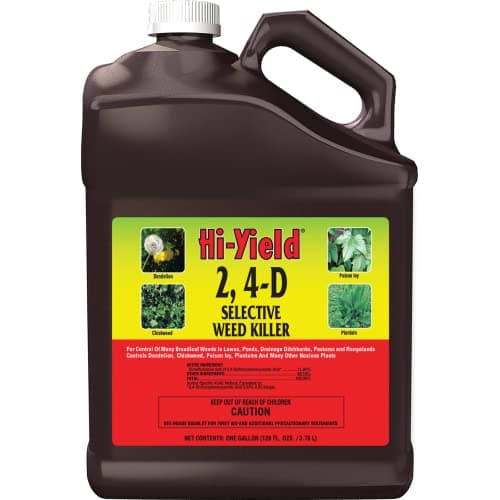
Hi-Yield 2,4-D Amine Selective Herbicide
A selective broadleaf herbicide for weeds growing in the lawn itself.
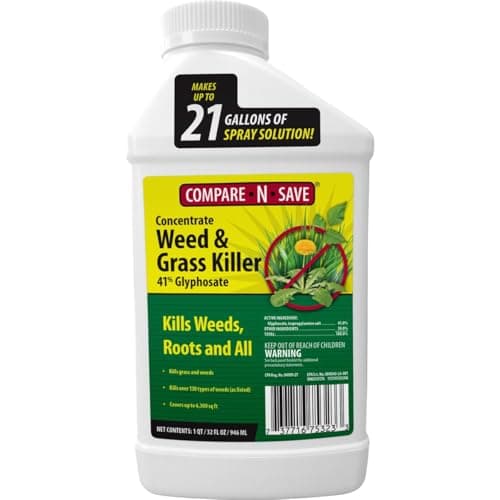
Compare-N-Save Concentrate Glyphosate Grass and Weed Killer
A non-selective glyphosate concentrate for driveways, gravel and pavement cracks.
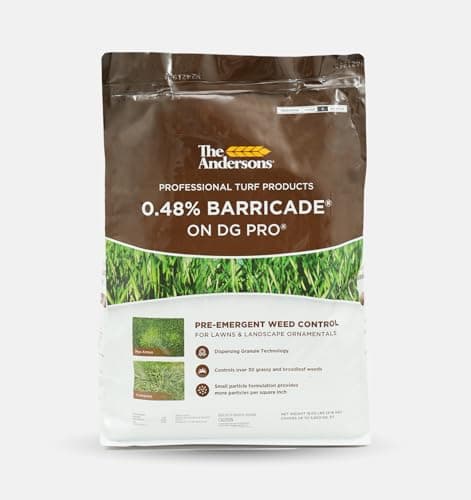
The Andersons Barricade Professional-Grade Prodiamine
A granular prodiamine pre-emergent that stops crabgrass and annual weeds before they emerge.
DIY Weed Killer Methods: What Works and Where
Many homeowners want alternatives to synthetic herbicides. DIY methods can be effective when used correctly and in the right situations, especially in small spaces and around sensitive areas. However, “natural” does not mean risk-free, and most DIY methods act as contact herbicides rather than systemic.
Vinegar-Based Weed Killers
Vinegar is one of the most popular DIY weed killers. The acetic acid in vinegar damages plant cell membranes and dehydrates leaf tissue.
Household vinegar (5 percent acetic acid) will burn the top growth of small, tender weeds, particularly annuals. For best results, spray on a warm, sunny day when no rain is expected for 24 hours. You will usually see wilting within hours. However, larger and perennial weeds often regrow from the roots because household vinegar does not penetrate deeply.
Horticultural vinegar (10 to 20 percent acetic acid) is much stronger and can cause skin and eye burns, so wear gloves and eye protection. It is more effective on larger weeds and can provide longer lasting control, but it still behaves as a contact herbicide. It is non-selective and will damage any leaves it touches, including lawn grass and ornamentals.
Vinegar is a good choice for: cracks in sidewalks, along fences where you can avoid drift, and as a quick knockdown for young weeds in paths. It is not ideal for established perennial weeds with deep roots, where systemic herbicides or repeated physical removal will be more reliable.
Salt, Soap, and Vinegar Mixes
DIY recipes often mix vinegar with salt and dish soap. Salt adds a soil sterilizing effect, while dish soap acts as a surfactant that helps the spray stick to leaves.
A common recipe is 1 gallon of vinegar, 1 cup of salt, and 1 tablespoon of dish soap. This mixture will quickly desiccate small plants and can suppress regrowth for a while where salt concentrations are high.
The major downside is that high salt levels can damage soil structure, harm nearby plants, and travel with runoff. Salt is very persistent. For that reason, it is best reserved for areas where you truly never plan to grow plants, such as cracks in old concrete or remote gravel strips. It is not recommended for lawns, beds, or near trees and shrubs.
Boiling Water
Boiling water poured directly on weeds kills plant tissues on contact. It is especially potent on tender annual weeds and seedlings in gravel or between paving stones.
To use boiling water safely, boil a kettle, carefully carry it to the target area, and slowly pour over the weeds, starting at the crown of the plant. Avoid splashing near desirable plants or your feet. You may need multiple treatments for tough perennials, but boiling water leaves no chemical residue, which makes it an appealing choice for organic gardens and play areas.
Flame Weeders
Flame weeders use propane torches to briefly heat weed foliage until cells rupture. The goal is not to burn the plant to ash, but to pass the flame over leaves for just long enough that they turn a dull olive color.
Flame weeding is effective for young annual weeds in gravel, along fence lines, or on bare soil. It is less effective on well-rooted perennials unless repeated frequently. Extreme caution is required around dry vegetation, wooden structures, and mulched beds because of fire risk. It is not suitable near flammable materials or in drought conditions with burn bans.
How to Read Herbicide Labels and Apply Correctly
Even the best weed killer: top products & DIY methods will not work well if misapplied. Herbicide labels are your instruction manual and legal guide. Learning to read them saves time, money, and turf.
Key Label Sections to Understand
Most homeowner products include these critical sections:
- Active ingredients and their percentages, which tell you what is doing the work.
- Target weeds list, often categorized by broadleaf, grassy, or sedges.
- Approved sites, such as lawns, ornamental beds, or hardscapes, and specific turf types.
- Application rates and coverage area, such as ounces per gallon of water or per 1,000 square feet.
- Timing and restrictions, including temperature ranges, rainfast periods, re-entry intervals, and maximum applications per year.
If any part of the label conflicts with advice you see online, follow the label. It is specific to that formulation and has been tested for safety and efficacy.
Mixing and Application Tips
For liquid concentrates, always measure both product and water carefully. If the label says 1 ounce per gallon of water to cover 500 square feet, do not “round up” to 2 ounces. That doubles the rate and increases the risk of turf injury without doubling results. Calibrate your sprayer by timing how long it takes to cover a known area with water, then mix enough solution to match that capacity.
For ready-to-use products, keep the nozzle set to the proper pattern and walk at a steady pace. Spot spraying means lightly coating weed leaves until just wet, not until they are dripping. Over-spraying can cause drift and contact with desirable plants.
Granular applications, such as pre-emergent crabgrass preventers or weed and feed products, must be distributed evenly. Use a spreader with a known setting, overlap wheel tracks slightly, and avoid double passes. Most labels specify a coverage area, such as “treats up to 5,000 square feet.” Measure your lawn or estimate using lot dimensions so you know how much product is appropriate.
As a general rule, wait at least 24 hours after spraying before watering unless the label says to water in immediately. For granular pre-emergents, watering in with about 0.25 to 0.5 inches of water within a few days is typically required to activate the barrier in the soil. You can use a rain gauge or a small straight-sided container to confirm how much water your sprinkler is applying.
- NC State Extension notes that most lawn herbicide applications should be made when air temperatures are below 85°F to reduce the risk of turf injury, especially in cool-season grasses.
Seasonal Timing for the Best Weed Killer Results
Weed control is not a one-time event. It follows a seasonal rhythm that depends on weed life cycles and your climate. Aligning your applications with those windows dramatically increases success.
Spring: Pre-Emergent and Early Post-Emergent
In early spring, your focus is prevention. When soil temperatures consistently reach about 55°F at a depth of 2 inches for several days, it signals the emergence of crabgrass and many other annual weeds.
Key spring actions include:
- Apply pre-emergent crabgrass preventer once soil temps hit 55°F, usually sometime between late March and late April depending on region.
- Spot spray broadleaf weeds that overwintered, like dandelions and plantain, once they start active growth.
- Begin addressing nutsedge in late spring as it emerges, using sedge-specific products.
Do not seed new grass within the pre-emergent’s exclusion window, which is often 8 to 12 weeks. If you plan to seed, either skip pre-emergent in that area or use a product labeled as safe with new seed, then adjust your expectations for weed control.
Summer: Spot Treatment and Cultural Control
Summer heat stresses turf and encourages some weeds. Broadleaf herbicides also become riskier in high temperatures.
In summer, focus on:
- Spot spraying post-emergent herbicides during cooler parts of the day when temperatures are under about 85°F.
- Monitoring for grub damage and disease, which indirectly affect weed invasion. If you see spongy turf and animals digging, check How to Control Grubs in Your Lawn.
- Maintaining mowing height and irrigation at recommended levels to keep grass dense and competitive.
Avoid aggressive blanket spraying in mid-summer heat in cool-season lawns, as this can cause browning or stunt turf. Use targeted spot treatments instead and let cultural practices do more of the work.
Fall: Broadleaf Clean-Up and Repairs
Fall is one of the most effective times to control perennial broadleaf weeds. As temperatures cool and days shorten, weeds move energy back into their roots. Systemic herbicides applied in this period are carried down into those storage tissues.
Key fall steps include:
- Apply broadleaf herbicides in early to mid fall, when weeds are still growing and soil is warm.
- Overseed thin areas in cool-season lawns to increase density and crowd out weeds the next year.
- Hand pull or spot treat weeds in beds before adding a fresh layer of mulch for winter.
For many homeowners, a single well-timed fall broadleaf treatment followed by fall fertilization and overseeding is the most powerful combination for reducing weeds long term.
What Other Guides Miss: Common Mistakes to Avoid
Many weed control articles focus on product names but skip crucial diagnostic and application details. Avoiding these common mistakes will save you a lot of frustration.
1. Ignoring weed and grass identification. Spraying a broadleaf-only herbicide on crabgrass will not work, no matter how many times you apply it. Likewise, using a non-selective killer in a lawn because “it kills weeds fast” almost always results in dead patches. Confirm whether you are dealing with broadleaf, grassy weeds, sedges, or woody plants before buying anything.
2. Missing the pre-emergent window. Applying crabgrass preventer after you already see crabgrass seedlings is too late. The threshold to act is when soil temperatures first hit about 55°F for several days. If you miss that window, switch to a post-emergent crabgrass control rather than repeating the pre-emergent.
3. Over-applying DIY mixes. Many “recipes” for salt and vinegar herbicides circulate without regard for soil or concrete damage. If you see white salt crusts or repeated use along the same edges, you are likely building up salt levels that can kill desirable plants nearby. Use salt mixes sparingly and only in areas where long-term sterility is acceptable.
4. Spraying at the wrong temperature or time of day. Applying broadleaf herbicides when temperatures are above about 85°F or during drought stress often leads to turf injury and mediocre weed control. Apply in the morning or evening when it is cooler and weeds are less stressed. Similarly, spraying just before a thunderstorm often results in herbicide washing off before it can be absorbed.
5. Expecting instant perfection. Even the best weed killer: top products & DIY methods rarely give a perfectly weed-free lawn after one application. A realistic timeline is several weeks for visible reduction and one full growing season of consistent practices for major improvement. If you see 50 to 70 percent reduction after a treatment and follow up appropriately, you are on the right track.
Conclusion: Building a Long-Term Weed Control Plan
Effective weed control is not about a single miracle product. It is about diagnosing your weeds and turf type accurately, choosing the best weed killer products and DIY methods for each area of your property, and applying them at the correct rates and seasons. When you combine that with sound lawn and garden practices, weed pressure drops and stays manageable.
Start by walking your yard and grouping areas into lawns, beds, gardens, and hardscapes. Identify the main weed types in each, then select targeted approaches: selective herbicides or overseeding for lawns, mulch and pre-emergent for beds, mechanical and organic methods in vegetable gardens, and non-selective or DIY solutions for driveways and cracks. Give each strategy a full season while monitoring results and adjusting timing.

If you want to focus more on knowing exactly what you are fighting, review Common Lawn Weeds and How to Remove Them next. Understanding the plants in your yard makes every decision about the best weed killer: top products & DIY methods more precise, safer, and more effective.
Top Picks
- Ortho WeedClear Lawn Weed Killer Ready-to-SprayCheck price on Amazon
- Scotts Halts Crabgrass and Grassy Weed PreventerCheck price on Amazon
- Scotts Turf Builder Triple Action (4,000 sq. ft., 11.31 lb)Check price on Amazon
As an Amazon Associate we earn from qualifying purchases.
Free Lawn Care Tools
Start by identifying where the weeds are growing (lawn, garden bed, driveway, gravel, etc.) and what type of weeds you have (broadleaf, grassy, or sedge). In lawns, selective broadleaf killers are best for weeds like dandelions or clover because they spare the grass. In cracks, gravel, and driveways, non-selective products or strong DIY options like high-strength vinegar work better. Matching both location and weed type to the product gives you better control and reduces damage to desirable plants.
Timing depends on the weed life cycle and your climate. Pre-emergent crabgrass preventers work best in early spring when soil temperatures reach about 55°F for several days. Post-emergent sprays are most effective when weeds are young, actively growing, and air temperatures are roughly 60–85°F, avoiding very hot or cold conditions. In cooler northern lawns, peak weed activity is often spring and fall, while in warmer southern lawns it’s usually late spring through summer.
Most products show early yellowing or wilting within 3–7 days and achieve full control in 2–4 weeks, especially on perennial weeds. If weeds are still healthy after about 14 days, review whether you used the correct product, rate, and timing before applying again. Simply adding more product or spraying more often does not speed results and increases risk to your lawn and the environment. Patience and proper timing usually bring weed pressure down significantly within a single growing season.
Selective weed killers are designed to target specific types of plants, such as broadleaf weeds in a lawn, while leaving desirable grass relatively unharmed. Non-selective weed killers kill most green plants they contact, including lawn grass and ornamentals. Selective products are ideal for use in lawns and mixed plantings, whereas non-selective options are better suited for areas like driveways, sidewalks, and gravel where you don’t want any vegetation. Using a non-selective spray in a lawn or near landscape plants can create dead patches and long-term damage.
Strong DIY vinegar solutions can be very effective as contact herbicides on small weeds growing in gravel, cracks, and driveway joints. They burn back the foliage they touch but usually don’t move into deep roots, so tough perennials may regrow and need repeat treatments. Because they are non-selective, they will damage any green plant they hit, so they must be applied carefully near desirable plants. Even DIY mixes should be treated with respect and used thoughtfully to avoid unnecessary damage.
Use selective broadleaf weed killers on problem weeds in the lawn, and avoid non-selective products in turf or near ornamentals. Follow the label exactly for application rate, timing, and re-entry intervals so treated areas are safe to use once sprays have dried or as directed. Focus on spot-treating visible weeds instead of blanket spraying the entire yard, and combine herbicide use with good lawn care practices to build a thick, healthy turf that naturally suppresses weeds. Matching the right product to the weed type and location minimizes risk to grass, pets, and children.
Photos: Thomas Kinto / Unsplash, Jonas Thomann / Pexels, Engin Akyurt / Pexels

Beat weeds and brown spots from your phone
Snap a photo, get the fix, and follow a plan timed to your soil and weather. Free on iPhone.
Related Articles
 Weed Control
9 Best Natural Weed Killers: 2026 Guide to Products & DIY
Dec 18, 2025•13 min read Weed Control
How to Use Ortho WeedClear Lawn Weed Killer: Mix Ratio, Timing + What It Kills
Jul 8, 2026•12 min read Weed Control
Best Weed Killer for Bermuda Grass: Safe Products That Won't Kill It
Mar 30, 2026•7 min read

