

Common Lawn Weeds and How to Remove Them
 Sarah MitchellLawn Diagnostics Specialist | 12 Years
As an Amazon Associate we earn from qualifying purchases.
Lawn weeds signal specific weaknesses in turf, soil, or maintenance practices. When patches of clover, dandelions, or crabgrass appear, the issue is competition for light, water, nutrients, and space that your grass is currently losing. Weeds outcompete thin or stressed turf, reduce uniform color and density, and over time they reduce overall lawn health and property value.
Can’t tell which weed you’re dealing with? Get a free AI identification from a photo before you pick a herbicide, the wrong product can damage your lawn.
Understanding which lawn weeds you are dealing with is critical because each group responds to different control methods. According to Purdue University Extension, successful weed management always combines accurate identification, targeted control, and cultural practices that favor turfgrass. Some weeds pull easily by hand and rarely return. Others require selective herbicides, pre-emergent products, or multi-season strategies that attack roots, seeds, and growing points.
Homeowners often start with a few key questions. Not all weeds are equally harmful; some, like clover, indicate low nitrogen in the soil rather than a catastrophic problem. A 100 percent weed-free lawn is unrealistic in most home situations; the practical goal is a dense, healthy lawn where weeds exist at such low levels that they are hard to notice. Hand pulling works for some species if done correctly and consistently, but deep-rooted or spreading weeds usually require additional tools or chemistry.
This guide explains how to identify common lawn weeds, remove them, and prevent them from returning. You will see how seasonal timing affects crabgrass and dandelions, why certain weeds appear after compaction or overwatering, and how to create a weed control plan that fits into a larger program that also includes topics like Common Lawn Care Mistakes Beginners Make, How to Create a Lawn Maintenance Schedule, and Essential Lawn Care Tools Every Homeowner Needs.
To tackle common lawn weeds, start by identifying exactly what you're dealing with. Notice if you have clover, dandelions, or the pesky crabgrass that often sprouts in early spring. You can verify your suspicions by comparing the weed's characteristics against online resources or using a plant identification app. Accurate identification is crucial since different weeds require different removal strategies.
Once you've identified the weeds, it's time to take action. For annual weeds like crabgrass, apply a pre-emergent herbicide in early spring before seeds germinate. If you're dealing with perennial weeds, focus on consistent hand-pulling or use selective herbicides that target roots. Expect to see noticeable improvements in your lawn's appearance within 4 to 6 weeks, as healthier grass begins to outcompete the weeds.
Understanding Lawn Weeds: Basics for Beginners
What Is a Weed in Your Lawn?
In turfgrass management, a weed is any plant growing where you want uniform grass. The plant might have attractive flowers or ecological value, but in a lawn it disrupts the consistent texture and performance you expect from turf.
Weed control starts with understanding life cycles. Extension research from Ohio State University divides lawn weeds into three main life spans, and this directly affects timing and strategy:
- Annual weeds complete their life cycle in one growing season. They sprout from seed, mature, set seed, and die in less than 12 months. Crabgrass, goosegrass, and many summer annual broadleaf weeds fall into this category. Pre-emergent herbicides target annuals by preventing seed germination in spring.
- Biennial weeds live for two growing seasons. In year one, they produce leaves and store energy. In year two, they flower and set seed, then die. Common mullein and some thistles behave this way. Timely control in the rosette stage in year one is much easier than after flowering in year two.
- Perennial weeds live for multiple years and regrow from underground roots, rhizomes, or crowns. Dandelions, white clover, nutsedge, quackgrass, and plantain are perennial. They require strategies that damage or kill underground structures, not just top growth.
Weeds also fall into functional groups that affect how you recognize and treat them:
- Broadleaf weeds have wider leaves with visible veins, often branching stems, and conspicuous flowers. Dandelion, clover, plantain, chickweed, and henbit are examples. They differ from grasses because they do not form narrow blades in clumps or rows. Most selective “weed and feed” products target broadleaf weeds.
- Grassy weeds produce narrow leaf blades that resemble turfgrass. Their stems are usually round or flat, and they lack showy flowers. Crabgrass, goosegrass, foxtail, dallisgrass, and nimblewill fit this group. Because they closely resemble turf, selective control is more difficult, and some require non-selective products followed by reseeding.
- Sedges occupy an intermediate category. They look grass-like, but they belong to a different plant family. Yellow nutsedge and purple nutsedge, the most common lawn sedges, have solid triangular stems and glossy, stiff leaves. They thrive in wet, compacted soils and require specific sedge herbicides.
Grassy weeds are generally harder to control than broadleaf weeds because fewer selective herbicides exist that kill an unwanted grass without also injuring desirable turfgrass. According to NC State Extension, many grassy weeds like nimblewill or dallisgrass in a cool-season lawn require spot treatment with a non-selective herbicide and then overseeding that area.
Why Lawn Weeds Show Up in the First Place
Weeds do not appear randomly. They exploit specific weaknesses in the lawn environment. Identifying those weaknesses is central to long-term control.
Common drivers include:
Thin, weak turf and bare spots. When grass is sparse, sunlight reaches the soil surface and warms it, triggering germination of weed seeds that were already present. According to Penn State Extension, dense turfgrass can reduce weed invasion by up to 80 percent compared to thin turf at the same site. Drought stress, poor fertilization, improper seeding, or insect damage, such as grub injury discussed in How to Control Grubs in Your Lawn, all create openings.
Soil compaction and poor drainage. High-traffic areas, paths where people or pets walk, and zones where mowers repeatedly turn experience compaction. Roots then struggle to penetrate deeper than an inch or two, and grass growth slows. Shallow-rooted weeds like plantain and knotweed tolerate compaction better, so they dominate those spots. Sedges thrive in poorly drained, saturated areas where turf declines.
Incorrect mowing height or frequency. Mowing too short (scalping) removes too much leaf area, which reduces photosynthesis and depletes root reserves. Purdue University Extension notes that cool-season grasses, such as Kentucky bluegrass, perennial ryegrass, and tall fescue, perform best at 2.5 to 4 inches. When lawns are routinely cut below this range, crabgrass and other heat-loving weeds gain an advantage because the soil surface heats faster and more light reaches germinating seeds.
Over- or under-watering. Frequent, shallow irrigation encourages shallow roots and favors weeds adapted to surface moisture. In contrast, deep, infrequent watering (about 1 inch per week, including rainfall, for many turf types) promotes deeper roots and greater turf resilience. Overwatering in heavy soils creates saturated pockets where nutsedge and algae thrive. Underwatering leads to dormant or dead turf and opens space for drought-tolerant weeds like prostrate knotweed and spurge.
Fertilizing incorrectly or at the wrong time. Under-fertilized lawns thin out and permit invasion by clover and other opportunists that can fix nitrogen or tolerate low fertility. Over-fertilizing or fertilizing cool-season grasses heavily in late spring and summer shifts more energy to leaves than roots, which stresses turf in heat and makes it prone to diseases like brown patch. This is addressed further in Brown Patch Prevention. Nutrient bursts in warm weather also accelerate growth of summer annual weeds.
Pet damage and high-traffic zones. Dog urine creates high nitrogen “burn” spots that initially kill grass and then encourage weeds to colonize those bare patches as they recover. Repeated traffic from children or equipment compresses soil and leads to thinning.
Many of these issues overlap with topics covered in Common Lawn Care Mistakes Beginners Make. Addressing those common errors, such as mowing too low and watering lightly every day, directly reduces future weed pressure.
How Weeds Spread and Take Over
Once a few weeds appear, they spread through multiple mechanisms. Understanding those mechanisms clarifies why some lawns move from a few random dandelions to widespread infestation in two or three seasons.
Seed production and dispersal. Many weed species produce large numbers of seeds. A single mature crabgrass plant can generate thousands of seeds that fall to the soil surface and join the existing seed bank. Dandelion seeds disperse by wind and travel significant distances from neglected neighboring yards. Mowing decks, leaf blowers, and string trimmers move seeds across the property, while birds and small animals transport them in droppings.
Underground spread by rhizomes, stolons, and taproots. Some perennials grow horizontally under or above the soil surface. Rhizomes are underground stems that send up new shoots at nodes, as seen in quackgrass. Stolons are aboveground runners that root at the nodes, common in creeping Charlie (ground ivy) and some warm-season grasses. Deep taproots, such as those in dandelions, store energy and regenerate new crowns if the upper portion is removed but the root base remains. That is why shallow pulling leaves dandelions intact.
Dormant seed banks in the soil. The soil in an established lawn already contains thousands of weed seeds per square foot. According to Michigan State University Extension, many weed seeds remain viable for years, then germinate when light, temperature, and moisture conditions become favorable. Disturbing soil, such as by aggressive raking or cultivating, exposes buried seeds to the surface and can trigger a flush of germination.
Because seeds and vegetative fragments accumulate over time, early detection and regular inspection are essential. Walking the lawn every one to two weeks during the growing season and spot-treating small patches prevents larger, more expensive problems later.
Essential Tools and Safety for Weed Removal
Basic Tools Every Homeowner Should Have
A minimal set of tools increases efficiency and reduces physical strain during weed removal. The list below aligns with the broader breakdown offered in Essential Lawn Care Tools Every Homeowner Needs.
Gloves and kneeling pad. Gloves protect hands from thorns, sap, and soil organisms. A cushioned kneeling pad reduces knee pressure, which is important when removing weeds by hand for extended periods.
Hand weeder or dandelion digger. This narrow, forked tool reaches beneath rosettes and taproots. It allows you to lever the root upward with minimal soil disturbance. For dandelions and plantain, inserting the tool 3 to 5 inches deep next to the root and rocking back and forth loosens the soil enough to remove most of the taproot.
Garden fork or trowel. A trowel assists with smaller fibrous-root weeds, while a garden fork lifts compacted soil around larger perennials or clusters. Forks are especially useful when removing patches of nutsedge or creeping weeds, because they loosen the soil without cutting as many rhizomes as a shovel would.
Hose-end sprayer or pump sprayer. When using liquid herbicides, even at small scale, a dedicated sprayer ensures accurate dilution and targeted application. A pump sprayer with an adjustable nozzle allows you to alter droplet size and spray pattern to match the weed patch you are treating.
Bucket or yard waste bags. Weeds containing seeds or rhizomes should not be left on the soil surface. Collecting them in a bucket or heavy-duty bag and disposing of them appropriately prevents reinfestation.
String trimmer and sharp mower blades. A string trimmer manages edges and tight areas where mowers cannot reach. Sharp mower blades cut grass cleanly, which reduces stress. Dull blades tear grass and increase susceptibility to disease and weed invasion.
Optional / Advanced Weed Control Tools
For larger properties or persistent infestations, advanced tools improve both ergonomics and control.
Stand-up weed pullers. Stand-up tools with jaws or claws grab taproots when you press them into the soil and tilt back. They are effective on dandelions, plantain, and other rosette-forming weeds in relatively soft soil. The main benefit is reduced bending and kneeling.
Weed torch or flame weeder. Propane-powered flame weeders deliver intense heat to the foliage of weeds, rupturing cell walls. They do not typically incinerate the plant, but a brief pass with the flame causes lethal tissue damage. They are safer on gravel or hardscape than in turf and must be used with strict adherence to local fire regulations and wind conditions. They are not appropriate in drought or near flammable materials.
Soil knife. Also known as a hori-hori, this serrated knife is useful for cutting around crowns of perennial weeds, tracing stolons, and prying out roots from dense soil. It offers more precision than a standard trowel.
Spreader for pre-emergent and granular herbicides. A calibrated broadcast or drop spreader applies granular weed controls and fertilizers evenly. According to University of Nebraska Extension, uneven application often produces striping where weeds thrive in under-treated strips. Calibration according to the product label ensures proper delivery rate.
Safety First: Working With Herbicides
Chemical weed controls are effective when used correctly, but they require strict attention to labeling and safety. In lawn care, the product label is a legal document, not a suggestion.
Reading and understanding the label. Every herbicide label specifies target weeds, turf species that tolerate the product, mixing ratios, application rate per 1,000 square feet, and environmental precautions. The label also lists re-entry intervals for people and pets. Misreading these instructions leads directly to turf injury or ineffective control.
Personal protective equipment (PPE). Basic PPE for homeowner herbicide applications includes chemical-resistant gloves, long sleeves, long pants, and closed-toe shoes. For mixing concentrates, safety glasses or goggles prevent splashes from reaching the eyes. Some labels also require a respirator when spraying in enclosed spaces, although typical lawn work is outdoors with adequate ventilation.
Keeping kids and pets off treated areas. Labels frequently specify that people and pets should remain off treated turf until the spray has dried or granules have been watered in and the surface has dried. For example, many broadleaf herbicides recommend a delay of at least 24 hours before mowing or heavy use, which ensures the product stays on the weed leaves long enough to be absorbed.
Environmental considerations. Herbicides should not be applied immediately before rain events that are likely to cause runoff. Avoid spraying when wind speeds exceed about 5 to 8 miles per hour to minimize drift. Never rinse sprayer tanks or dump leftover mixtures into storm drains, ditches, or near water bodies. According to University of Minnesota Extension, small droplets are more prone to drift, so adjusting nozzles to a coarse spray pattern and spraying closer to the target reduces off-target movement.
When to consider hiring a professional. Complex infestations involving multiple weed types, extensive areas, or sensitive nearby plants can justify consulting a licensed lawn care operator. Professionals have access to some commercial formulations not sold at retail and can integrate weed control with fertilization, disease management, and insect control programs.
Step 1: Identify the Type of Lawn Weed
Broadleaf Weeds
Broadleaf weeds are usually the easiest to spot because they break up the smooth, grassy texture of the lawn. They often have wider leaves, distinct veins, and prominent flowers.
Typical visual characteristics include:
- Leaves broader than a standard grass blade, frequently forming rosettes (dandelion, plantain) or trifoliate patterns (clover).
- Stems that branch, sometimes woody or square in cross-section (creeping Charlie has square stems).
- Flowers that stand out visually, such as dandelion’s yellow blooms or white clover’s spherical white flowers.
Broadleaf weeds stand upright or sprawl, unlike bunch-forming grasses. They usually have taproots or fibrous root systems rather than rhizomatous grass-like growth. Because they differ so much from turfgrass, herbicides can target physiological pathways in broadleaf plants while sparing grasses, which is why broadleaf weed killers are common and effective when label directions are followed.
Grassy Weeds
Grassy weeds blend much more easily into the lawn, especially when they first emerge. Their foliage looks like grass, so identification often relies on growth habit, leaf width, and color differences.
Common indicators include:
- Clumps or patches of grass that grow faster or taller than surrounding turf, such as tall fescue clumps in a bluegrass lawn, or coarse barnyardgrass in a fine-bladed turf.
- Wider leaf blades or different coloration, such as the lighter green or purplish base often seen in crabgrass.
- Distinct seedheads, for example crabgrass’s finger-like seedhead clusters or goosegrass’s flattened whitish stem near the base.
Many grassy weeds are annuals that germinate when soil temperatures at 0.5 inch depth reach about 55 to 60 degrees Fahrenheit for several consecutive days. According to Iowa State University Extension, this window usually falls in early to mid spring, which is why timing of pre-emergent herbicide applications is tied to soil temperature rather than calendar date.
Some grassy weeds are perennials, such as quackgrass or dallisgrass. These spread by rhizomes or tillers and reappear each year from established crowns, making them more difficult to control selectively in an existing lawn.
Sedges (The “In-Between” Weeds)
Sedges occupy an intermediate position between broadleaf and grassy weeds from an identification standpoint. To an untrained eye, they look like a slightly shinier or stiffer grass, but their stems and growth habits reveal their true identity.
The key diagnostic features include:
- Triangular stems when rolled between fingers, often described as “sedges have edges.”
- Leaves arranged in three ranks around the stem rather than the two-row pattern of typical grasses.
- Rapid vertical growth that results in bright yellow-green shoots sticking above the surrounding turf, particularly after wet weather.
Yellow nutsedge and purple nutsedge spread by nutlike tubers in the soil as well as by seed. According to Cornell University Extension, a single nutsedge plant can produce hundreds of tubers in a single season. These tubers remain viable and regenerate new plants even when top growth is removed, which is why standard broadleaf herbicides or mowing alone fail to control sedges.
Step 2: Common Lawn Weeds and How to Remove Them
Dandelions
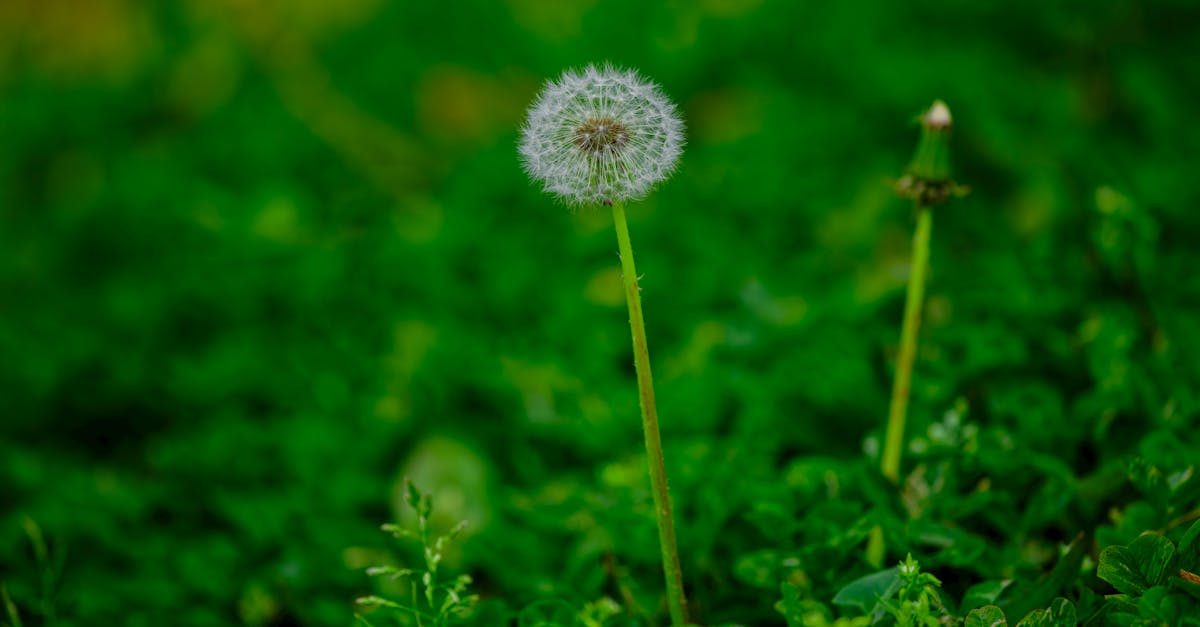
Dandelions are perennial broadleaf weeds with rosettes of deeply toothed leaves and bright yellow flowers that mature into spherical seed heads. They thrive in a wide range of soil types and tolerate mowing at standard turf heights.
Why they appear. Dandelion presence indicates open spaces in turf, low mowing height, or inadequate competition from grass. Their parachute-like seeds travel easily from surrounding areas.
Removal methods.
- Hand pulling and digging. The goal is to remove as much of the taproot as possible, ideally at least 4 to 6 inches. Working after a rain or deep watering softens soil and allows deeper extraction. Insert a dandelion digger next to the root, rock it back and forth, then pull gently on the crown while continuing to loosen the soil until the root slides out. If part of the taproot snaps, the remaining section can regenerate, so monitor that spot over the next few weeks.
- Spot herbicide treatment. Selective broadleaf herbicides that contain active ingredients such as 2,4-D, dicamba, or MCPA control dandelions effectively when applied to actively growing plants. Fall applications, when dandelions are moving carbohydrates back into roots, translocate herbicides more deeply and achieve more complete control than spring sprays. University of Wisconsin Extension data confirms that fall broadleaf applications result in longer-lasting suppression of dandelions compared to similar spring treatments.
Timing tips. For organic or hand removal programs, plan a major removal effort in early spring when rosettes are large but before significant seed production, then repeat spot checks in late summer and fall. For chemical programs, target early fall when soil is moist and daytime temperatures are between about 60 and 80 degrees Fahrenheit.
Crabgrass
Crabgrass is a summer annual grassy weed that germinates in spring, spreads low to the ground, and forms radiating branches that resemble crab legs. It thrives in hot, dry conditions and bare or thin sections near sidewalks and driveways where soil heats quickly.
Why it appears. Crabgrass indicates thin turf, low mowing height, and soil that is warm and frequently dry at the surface. It often colonizes areas where turf was damaged by winter salt or plowing.
Removal methods.
- Pre-emergent herbicides. According to Kansas State University Extension, crabgrass germination begins when soil at a depth of about 0.5 to 2 inches reaches 55 degrees Fahrenheit for several consecutive days. Pre-emergent herbicides that contain prodiamine, pendimethalin, or dithiopyr must be applied before this threshold to create a chemical barrier that prevents seed germination. Watering the product in after application activates it.
- Post-emergent options. Once crabgrass has emerged, specialized post-emergent products that include quinclorac or fenoxaprop can control young plants. These are most effective when applied to small, actively growing crabgrass with two to four tillers. Mature crabgrass with seedheads is much harder to control within the same season.
- Hand removal. In small lawns or where only a few plants exist, pulling crabgrass before it sets seed is helpful. Loosen the soil and remove the entire crown and root. Repeat checks every one to two weeks through summer.
Timing tips. Apply pre-emergent products roughly 2 to 3 weeks before expected germination or at the point when local phenological indicators, such as forsythia bloom, begin. One application often provides 8 to 12 weeks of control, and in long growing seasons a split application can extend protection.
Clover
White clover is a low-growing perennial with trifoliate leaves and white to pinkish flower heads. It forms patches that spread through stolons that root at the nodes. It tolerates low mowing and moderate traffic.
Why it appears. Clover indicates low nitrogen fertility because it can fix atmospheric nitrogen and succeed where grass struggles. It also colonizes thin and moderately compacted soil.
Removal methods.
- Cultural correction. Raising soil nitrogen through proper fertilization reduces clover competitiveness. According to Rutgers University Extension, well-fertilized cool-season lawns experience significantly lower clover encroachment compared to under-fertilized lawns.
- Hand pulling. Small patches pull relatively easily when soil is moist, but stolons must be removed to prevent regrowth. A soil knife helps trace and lift runners.
- Broadleaf herbicides. Many three-way broadleaf herbicides control clover, particularly when applied in mid to late fall. For larger infestations, two to three applications spaced 3 to 4 weeks apart might be necessary.
Timing tips. Adjust lawn fertility program first, then use spot herbicide applications in fall when clover is actively translocating nutrients to roots.
Creeping Charlie (Ground Ivy)
Creeping Charlie is a perennial broadleaf weed with square stems, roundish leaves with scalloped edges, and a distinct mint-like smell when crushed. It grows aggressively by stolons that form dense mats, especially in shady, moist areas.
Creeping Charlie also throws small violet blooms in spring, so if flower color is what caught your eye, compare it against the other lawn weeds with purple flowers before you pick a herbicide.
Why it appears. Creeping Charlie indicates poor turf performance in shade, excessive moisture, and insufficient competition from shade-tolerant grasses. It often invades under trees or along north-facing walls.
Removal methods.
- Mechanical removal. Small patches can be pulled or raked out, but all stolons must be removed, or the weed will regrow from nodes. Repeated efforts over several months are usually necessary. Follow removal by overseeding with a shade-tolerant turf mix and improving drainage or light conditions if possible.
- Chemical control. Herbicides containing triclopyr offer effective control of creeping Charlie in many cool-season lawns, according to University of Illinois Extension. Applications in mid fall or late spring, when the weed is actively growing and before or after flowering, yield better results. Multiple applications might be required in dense mats.
Timing tips. A two-application sequence in mid spring and mid fall, combined with cultural improvements like reduced irrigation in shady zones, yields the most reliable control.
Nutsedge
Nutsedge, commonly called nutgrass, is actually a sedge, not a true grass. Yellow nutsedge has light yellow-green foliage, while purple nutsedge appears darker. Both grow faster than turfgrass, giving the lawn a patchy appearance as sedge spikes push above the canopy.
Why it appears. Nutsedge signals wet, poorly drained, or compacted areas. It thrives in overwatered lawns and poorly graded spots where water stands after rain.
Removal methods.
- Hand pulling. For very small infestations, pulling before tuber formation can help, especially when soil is soft and roots slide out with minimal breakage. However, tubers often remain in the soil and produce new plants, so this approach requires persistence and repeated checks.
- Selective sedge herbicides. Products with active ingredients such as halosulfuron or sulfentrazone target sedges specifically. According to Texas A&M AgriLife Extension, two or more applications, spaced about 6 to 10 weeks apart during active growth, usually provide better control than a single application. These products work best when the sedge is 3 to 8 inches tall and not yet producing seedheads.
- Drainage correction. Reducing irrigation frequency, fixing low spots, or installing drainage improves conditions for turf and reduces nutsedge vigor over the long term.
Timing tips. Apply sedge herbicides in late spring or early summer when new shoots are actively growing. Avoid mowing right before or immediately after application, since sufficient leaf area is necessary for uptake.
Plantain, Chickweed, and Other Broadleaf Weeds
Plantain. Broadleaf plantain and buckhorn plantain are perennials forming low rosettes with fibrous roots. They tolerate compaction and wet conditions. Hand digging is effective if the entire root crown is removed. Broadleaf herbicides in spring or fall also control plantains.
Chickweed. Common chickweed is a cool-season annual that thrives in moist, shaded areas, spreading rapidly in early spring and fall. It forms dense mats with small white star-shaped flowers. Improving drainage, reducing irrigation, and raising mowing height reduce chickweed presence. Standard broadleaf herbicides are effective in active growth periods.
Other common broadleaf weeds, such as henbit, prostrate knotweed, and spurge, all respond to similar principles: improve lawn density, correct moisture issues, and use selective herbicides when necessary and labeled for those species.
Step 3: Weed Removal Methods - From Manual to Chemical
Hand-Pulling and Digging: When It Works
Mechanical removal is suitable for smaller lawns, isolated weeds, and gardeners who prefer non-chemical methods. It is most effective against young annual weeds whose roots are shallow and whose seed production can be prevented by early removal.
For best results:
- Work after rainfall or irrigation when soil is moist but not waterlogged.
- Use tools like hand weeders or soil knives to loosen soil around the root, avoiding excessive disturbance that brings buried weed seeds to the surface.
- Grasp the weed at the crown, not by the leaves, and pull vertically while gently rocking back and forth.
- Collect and discard any plants producing flowers or seeds rather than composting them in a home pile that does not reach high sanitizing temperatures.
Perennial weeds with deep taproots or rhizomes require multiple removal sessions. If time is limited or infestation is large, combining hand removal with other methods is more practical.
Mulching and Smothering in Non-Turf Areas
Mulching and smothering are highly effective in landscape beds or future lawn areas, but not typically used on established turf because they also kill grass. In non-turf zones, applying a 2 to 3 inch layer of organic mulch, such as shredded bark or composted leaves, blocks light from reaching weed seeds and reduces germination.
For particularly persistent patches, such as where you plan to renovate a section of lawn, you can smother existing vegetation with heavy-duty landscape fabric, cardboard plus mulch, or black plastic for 4 to 8 weeks during the growing season. This depletes roots and kills most existing weeds before reseeding or sodding.
Selective vs Non-selective Herbicides
Herbicides divide into two major functional groups:
- Selective herbicides target specific categories of plants (for example, broadleaf weeds in grass) while leaving desired turfgrass largely unharmed when used according to the label. Most residential “weed and feed” products employ selective broadleaf herbicides.
- Non-selective herbicides kill almost any green plant they contact, including turfgrass. Glyphosate is the most common example at the homeowner level. These products are used primarily for spot treatment of severe infestations, edging along hardscapes, or full renovation where an area will be reseeded.
According to University of Missouri Extension, successful selective herbicide use depends on three main factors: correct identification of the weed, application at the right growth stage, and adherence to temperature and moisture conditions listed on the label. Spraying at high temperatures above the recommended range risks turf injury, while spraying dormant or drought-stressed weeds reduces uptake.
Pre-emergent vs Post-emergent Herbicides
The timing of herbicide activity relative to weed germination is a second critical classification.
- Pre-emergent herbicides create a chemical barrier in the upper soil layer that prevents weed seeds from successfully germinating or establishing roots. They do not kill existing plants. Lawns receive pre-emergent treatments in early spring for summer annuals like crabgrass and in late summer or early fall for winter annuals like annual bluegrass in some regions. Many pre-emergent products also inhibit turf seed germination, so you cannot seed or overseed until the product’s residual period has passed, which can be 8 to 16 weeks depending on the active ingredient and rate.
- Post-emergent herbicides act on existing weeds with visible foliage. They can be systemic (moving through the plant) or contact-based. Systemic products are necessary for deep-rooted perennials such as dandelions or creeping Charlie, while contact herbicides are more suitable for tender young annuals.
Aligning pre- and post-emergent treatments yields the best long-term control. For example, a spring pre-emergent followed by spot post-emergent applications later in the season for escapees keeps crabgrass populations low.
Organic and Low-Impact Options
Organic and low-impact weed control relies heavily on cultural practices, mechanical removal, and less persistent chemicals. Vinegar-based herbicides, fatty acid formulations, and iron-based products burn back leaf tissue but rarely kill perennial roots, so repeated treatments are necessary. Corn gluten meal has been promoted as a pre-emergent, but Iowa State University Extension notes that results are inconsistent and that effective rates are high, making it less practical as a primary weed barrier in home lawns.
Maintaining turf density, appropriate mowing height, and calibrated fertilization remains the most consistent low-impact strategy to suppress weeds while minimizing chemical input.
Recommended products
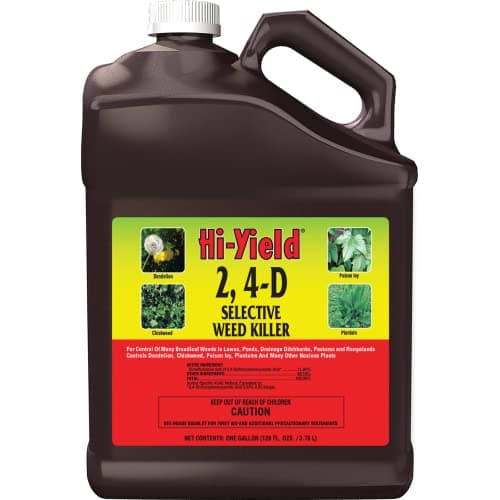
Hi-Yield 2,4-D Amine Selective Herbicide
A broadleaf herbicide for dandelion, plantain, and clover that leaves cool-season grass and bermuda unharmed.
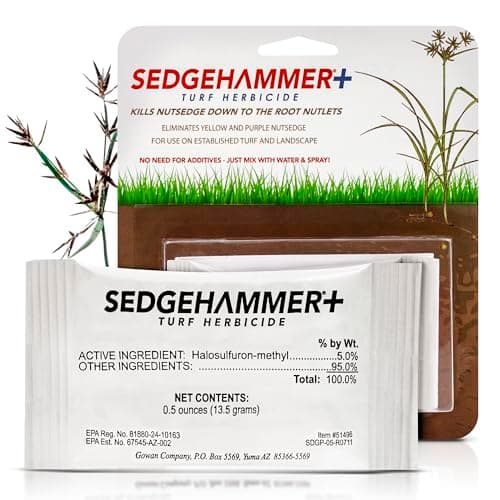
SedgeHammer Herbicide
A halosulfuron treatment for nutsedge, the triangular-stemmed weed that broadleaf herbicides ignore.
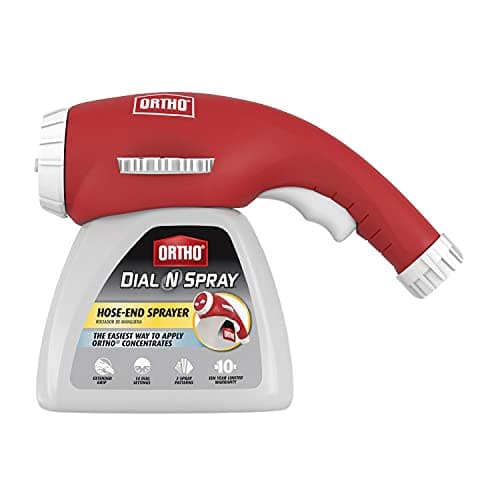
Ortho Dial N Spray Hose-End Sprayer
A hose-end sprayer with 14 dilution settings for applying concentrates at the labeled rate.
Step 4: Preventing Weed Return Through Better Lawn Care
Thick, Healthy Turf as Your Best Defense
A dense, vigorous lawn prevents weed seeds from reaching soil and outcompeting seedlings that do manage to emerge. The goal is to maintain enough leaf area and root mass that light, space, and water are largely captured by turfgrass.
Key strategies include:
- Overseeding thin areas in early fall for cool-season grasses or late spring/early summer for warm-season grasses.
- Using grass varieties adapted to your climate, sun exposure, and soil type. Extension offices often publish recommended turf varieties by region.
- Maintaining recommended mowing heights for your species, typically 2.5 to 4 inches for cool-season lawns and 1 to 3 inches for many warm-season types, depending on cultivar.
Healthy turf also withstands insect pressure, such as grub feeding discussed in How to Control Grubs in Your Lawn, and disease issues like brown patch covered in Brown Patch Prevention, which indirectly reduces weed invasion following damage.
Soil Testing, Fertilizing, and Watering Correctly
Soil testing identifies pH imbalances and nutrient deficiencies that contribute to weak turf. According to University of Minnesota Extension, most cool-season turfgrasses perform best in a pH range of about 6.0 to 7.0. Outside this range, nutrient availability shifts and grass struggles.
Based on soil test results, adjust fertilizer timing to match grass growth cycles. For cool-season lawns, the most important applications typically occur in early fall and late fall, when temperatures are cooler and roots grow vigorously. Light spring feeding is acceptable, but avoid heavy nitrogen in summer.
Water deeply and infrequently. A common guideline for many regions is 1 to 1.5 inches of water per week, including rainfall, applied in one or two deep soakings. This promotes deep roots, which outcompete shallow-rooted weeds. Use a rain gauge or shallow containers to measure irrigation output.
Aeration, Overseeding, and Repairing Bare Spots
Core aeration relieves compaction and improves air and water movement into the root zone. Fall is the ideal time for cool-season lawns, typically 2 to 4 weeks before overseeding. Aeration opens channels that seed can fall into and provides an excellent seed-to-soil contact environment.
A practical implementation timeline for a cool-season lawn might look like this:
- Week 1-2 (late August to early September in many regions): Perform core aeration, then overseed thin or bare areas with a regionally appropriate seed mix. Apply a starter fertilizer if recommended by soil test.
- Week 2-4: Keep the seedbed consistently moist with light, frequent watering until germination and establishment, then gradually reduce frequency and increase depth of watering.
- Week 4-6: Begin mowing new grass when it reaches about 3 to 3.5 inches, cutting back to roughly 2.5 to 3 inches. Avoid heavy traffic.
- Late fall: Apply a final fertilizer to strengthen roots and prepare turf for winter.
Repair pet damage by flushing urine spots with water soon after occurrence and reseeding or sodding severely burned patches. Prompt repair prevents weeds from colonizing bare soil.
Integrating Weed Management Into a Maintenance Schedule
Weed control is not a single event; it is part of an annual cycle. Coordinating tasks into a coherent plan, as described in How to Create a Lawn Maintenance Schedule, prevents last-minute reactions and missed windows.
A sample annual sequence in a cool-season lawn could include:
- Early spring: Inspect for winter damage and existing broadleaf weeds. Apply crabgrass pre-emergent when soil temperature approaches 55 degrees Fahrenheit. Begin regular mowing at the correct height.
- Late spring to summer: Spot-treat broadleaf weeds and sedges as needed. Monitor irrigation, adjust for weather, and avoid heavy nitrogen fertilization.
- Late summer to early fall: Core aerate and overseed thin areas. Apply fall broadleaf weed control once new grass has been mowed several times and is mature enough to tolerate herbicides.
- Late fall: Apply a final fertilizer. Remove late germinating weeds by hand or with spot treatments.
Warm-season lawns like bermudagrass or zoysiagrass follow a different calendar, with major growth in late spring and summer and pre-emergent timings adjusted accordingly, but the principle is the same: anticipate weed pressure and integrate tactics with mowing, watering, and fertilization.
Conclusion: Turning Weed Problems Into a Manageable System
Lawn weeds indicate specific weaknesses in turf density, soil health, and maintenance practices. By identifying whether you are dealing with broadleaf, grassy, or sedge weeds, understanding their life cycles, and applying targeted control methods, you transform weed removal from random reactions into a predictable system.
The core approach is consistent: strengthen the lawn, correct underlying issues like compaction or low fertility, remove existing weeds with appropriate tools and herbicides, and prevent re-infestation through a planned schedule of mowing, watering, fertilization, and overseeding. Integrating this guide with resources such as Common Lawn Care Mistakes Beginners Make, Essential Lawn Care Tools Every Homeowner Needs, Brown Patch Prevention, How to Control Grubs in Your Lawn, and How to Create a Lawn Maintenance Schedule gives you a complete framework for long-term lawn health.
If you apply these principles and timelines step by step, you can maintain a dense, resilient lawn where weeds play a minor, manageable role instead of taking over the yard.
Top Picks
- Ortho Weed B Gon Plus Crabgrass Control Ready-To-SprayCheck price on Amazon
- Ortho WeedClear Lawn Weed Killer Ready-to-SprayCheck price on Amazon
- Scotts Turf Builder Triple Action (4,000 sq. ft., 11.31 lb)Check price on Amazon
As an Amazon Associate we earn from qualifying purchases.
Free Lawn Care Tools
In turfgrass management, a weed is any plant growing where you want uniform grass. The plant might have attractive flowers or ecological value, but in a lawn it disrupts the consistent texture and performance you expect from turf.
Check how long the plant survives and how it behaves over time. Annual weeds sprout from seed, grow, set seed, and die within one season, while biennials form leaves the first year and flower and seed in the second. Perennial weeds come back year after year from underground roots, rhizomes, or crowns, even if you remove the top growth.
Grassy weeds like crabgrass take advantage of thin turf, low mowing heights, and warm, exposed soil. When grass is cut too short or bare spots let more light reach the soil, crabgrass seeds germinate and outcompete weakened turf. These weeds are also harder to control selectively because they resemble desirable grasses, so prevention and proper mowing are critical.
Clover often signals low nitrogen levels in the soil rather than a severe lawn problem. It can thrive in under-fertilized turf where grass starts to thin out. Improving your fertilization program and overall lawn density reduces clover pressure over time.
Mowing too short removes too much leaf area, weakens roots, and exposes the soil surface to more heat and light, which helps weed seeds germinate. Cool-season grasses like Kentucky bluegrass, perennial ryegrass, and tall fescue perform best when kept around 2.5 to 4 inches tall. Maintaining this height gives turf a competitive edge and makes it harder for weeds such as crabgrass to establish.
Sedges thrive in wet, compacted soils where turfgrass struggles. Areas with poor drainage, overwatering, or constant saturation become prime spots for yellow and purple nutsedge to dominate. Improving drainage and reducing soil compaction are key steps, along with using herbicides specifically labeled for sedges.
Photos: Egor Komarov / Pexels, Максим Власенко / Unsplash, Engin Akyurt / Pexels

Beat weeds and brown spots from your phone
Snap a photo, get the fix, and follow a plan timed to your soil and weather. Free on iPhone.
Related Articles
 Problem Solving
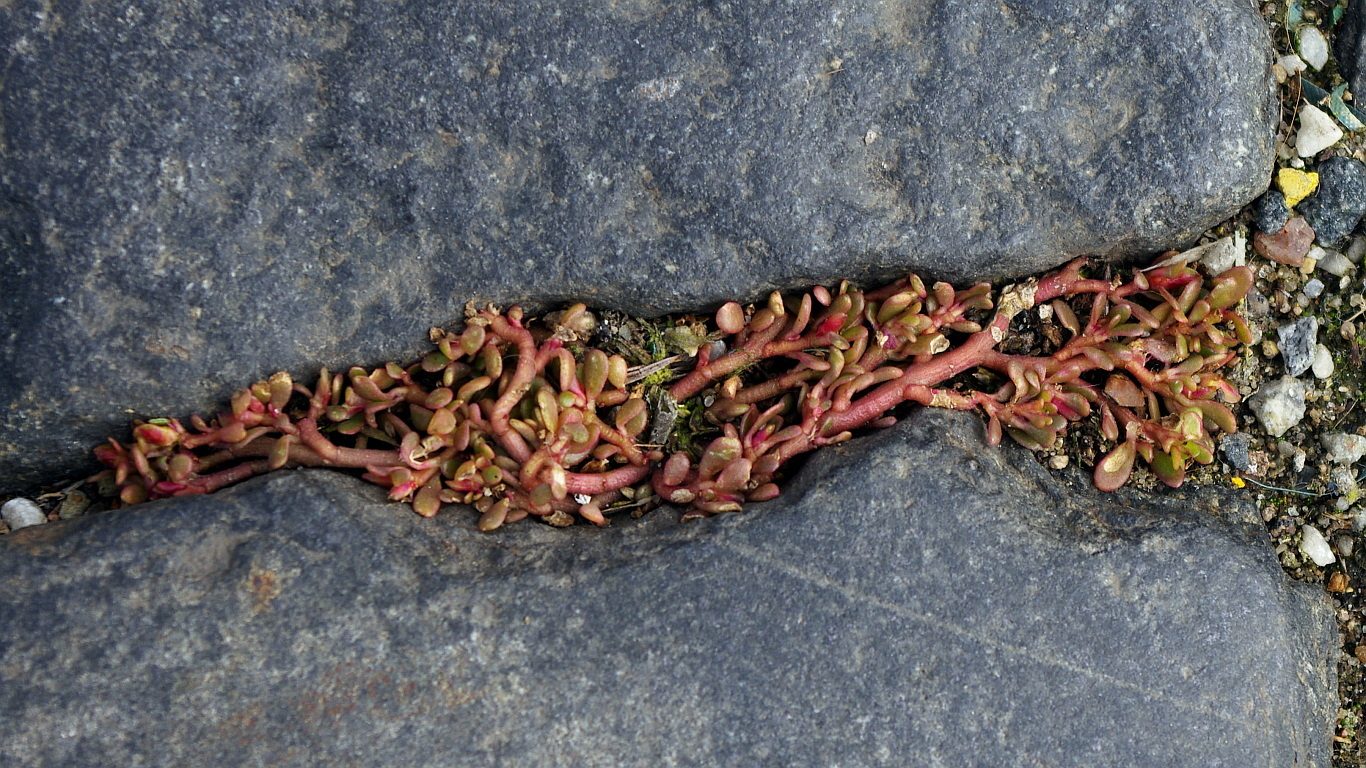
Common Purslane in a Lawn: How to Identify It and What to Check First
Sep 22, 2026•4 min read Pest Control
Lawn Pest Control: Identify Common Bugs and Get Rid of Them Fast
Dec 11, 2025•8 min read Problem Solving
Prostrate Knotweed in a Lawn: How to Identify It and Clear a Patch
Sep 24, 2026•3 min read

