How to Get Rid of Grubs in Your Lawn: Treatment and Timing
 Sarah MitchellLawn Diagnostics Specialist | 12 Years
As an Amazon Associate we earn from qualifying purchases.
Quick answer: A healthy lawn tolerates up to 5 grubs per square foot; treat when you count 10 or more. For prevention, apply chlorantraniliprole between late April and early June (neonicotinoid preventives run June to July). If damage is already visible, use a curative product like trichlorfon and water it in with 0.5 inches of irrigation. The full guide below covers diagnosis, thresholds, product timing, and organic options.
Lawn grubs damage turf from the roots up, which is why random brown patches, spongy footing, and sod that lifts like carpet all signal the same underlying issue. Effective grub control depends on diagnosing whether grubs are actually present, how many are in the soil, and where you are in their life cycle.
Not sure grubs are the culprit behind your dead patches? Upload a photo for a free AI diagnosis, it distinguishes grub damage from disease, drought, and other pests.
This guide explains exactly what lawn grubs are, how they live, when they do the most damage, and how to control them with both organic and chemical options. It also clarifies when treatment is truly needed, how to time products so they work, and how to build a lawn care program that reduces future grub problems.
Lawn grubs are the white, C-shaped larvae of several scarab beetles, including Japanese beetles, June beetles, and masked chafers. They live in the top few inches of soil and feed on grass roots. As they eat, they sever roots and limit the plant’s ability to take up water and nutrients.
Grub damage is especially visible in summer and early fall. Turf that looked fine in June can develop brown, irregular patches by August. When infestations are heavy, you can grab the grass and peel it back like old carpet because the roots are gone. Skunks, raccoons, armadillos, and birds often tear up the lawn further while hunting the grubs.
Search terms like "grub control," "lawn grubs," and "grub treatment" typically indicate the same core intent. Homeowners want to:
- Identify whether grubs are the real problem
- Understand the best timing for treatment
- Choose between organic and chemical products
- Prevent grubs from coming back year after year
Several misconceptions complicate that process. Not every brown spot is caused by lawn grubs. Drought stress, dog urine, and fungal diseases like brown patch or dollar spot all create discolored turf. Killing every grub in the lawn is neither possible nor necessary; a low population exists in most lawns with no visible damage. And one application of a grub treatment product does not create permanent protection. Effective grub control requires a strategy that combines correct diagnosis, threshold-based treatment, and ongoing lawn care.
This guide covers how to identify lawn grubs accurately, how many grubs signal a true infestation, the differences between preventive and curative products, organic versus conventional options, proper timing by region, and long-term cultural practices that make your lawn less vulnerable. For related issues such as disease spotting, see Brown Patch Prevention, and for broader planning, see How to Create a Lawn Maintenance Schedule.
To determine if grubs are causing your lawn issues, start by checking for visible signs like brown patches or spongy turf. Peel back a section of your sod; if it lifts easily and you see white, C-shaped larvae, you've found your culprits. A healthy lawn can tolerate up to five grubs per square foot, so confirm infestation levels before treating.
For effective grub control, apply a grub treatment product in early summer when grubs are young and vulnerable. Use a preventive insecticide if you spot more than 10 grubs per square foot. Expect visible improvement in a few weeks, but remember to integrate ongoing lawn care practices to minimize future infestations.
Understanding Lawn Grubs and Their Life Cycle
What Are Lawn Grubs?
Lawn grubs are the larval stage of several scarab beetle species that commonly inhabit turf. The most important species in home lawns include Japanese beetles (Popillia japonica), Northern and Southern masked chafers (Cyclocephala spp.), and various May or June beetles (Phyllophaga spp.). While the adult beetles look different, the larvae that damage turf look very similar.
According to Purdue University Extension, typical lawn grubs share these characteristics:
- C-shaped body when at rest
- Creamy white to grayish body color
- Brown head capsule
- Three pairs of legs located near the head
- Soft body, usually 0.5 to 1 inch long, depending on age and species
They live in the root zone of the grass, usually the top 2 to 3 inches of soil. In well-watered lawns, they tend to stay closer to the surface. In dry conditions or cold weather, they move deeper.
Lawn grubs feed primarily on grass roots, although some species also feed on organic matter. The root feeding causes thinning, wilting, and eventually death of turf in patches.
The Grub Life Cycle (Annual and Multi-Year Cycles)
Understanding the grub life cycle is central to effective grub control. Products work best at specific stages, and timing treatment incorrectly sharply reduces results.
Most common turf-infesting grubs have either a one-year (annual) or three-year life cycle. Japanese beetles and masked chafers typically complete their life cycle in one year. Many June beetles have a two- or three-year cycle, with grubs present and feeding through multiple seasons.
A typical one-year grub life cycle in cool-season regions (Midwest, Northeast, parts of the Mid-Atlantic) follows this pattern, as outlined by Ohio State University Extension:
Spring (April to May)
Grubs that hatched the previous summer overwinter in deeper soil layers. As soil warms to around 50 to 55°F, they migrate back up and resume feeding on roots for several weeks. This spring feeding is usually light compared to late summer feeding.
Late Spring to Early Summer (May to June)
Grubs pupate in the soil. Adult beetles emerge in late spring or early summer, typically when day temperatures regularly exceed 70°F.
Mid to Late Summer (June to August)
Adult beetles mate and lay eggs in turfgrass. According to Penn State Extension, Japanese beetle females lay most of their eggs in July and early August, favoring well-watered, sunny lawns. Eggs are deposited 1 to 3 inches deep in the soil.
Late Summer to Early Fall (August to October)
Eggs hatch within about 2 weeks. Newly hatched grubs feed aggressively on roots and grow through several instars (growth stages). This late summer period is when grubs cause the most damage, because both population and feeding intensity are highest, and grass is already stressed by heat and possible drought.
Late Fall to Winter (October to March)
As soil temperatures drop in fall, grubs tunnel deeper, often 4 to 8 inches, and enter a dormant state. In frozen climates, they remain inactive until spring.
For species with a multi-year cycle, the overall pattern is similar, but grubs remain in the soil for two or three seasons, with varying feeding intensity each year.
The life cycle explains the difference between two major treatment categories:
- Preventive grub control targets eggs or very young grubs and is applied before or at the time of egg hatch (early to mid summer).
- Curative grub treatment targets actively feeding larger grubs and is applied in late summer or early fall once damage is visible.
Region affects timing. In warm-season lawn regions (Southeast, southern Plains), beetle activity often starts earlier in the year and continues longer. In northern regions, peak egg laying and egg hatch occur later. As a practical guideline:
- Northern and cool-season regions: main egg-laying window is roughly late June through early August.
- Transition zone: often early June through late July.
- Southern and warm-season regions: late May through July, sometimes into early August depending on weather.
Local extension agencies provide the most precise windows. Extension research from NC State University confirms that peak grub damage in many warm-season lawns occurs from late August through October, which shifts curative treatment toward that period.
How Grubs Damage Your Lawn
Grubs harm turf by directly consuming roots. As they feed, they cut off root tips and small roots that supply water and nutrients to the grass blades. The grass plants then enter water stress even when soil moisture looks acceptable, because the roots are no longer able to absorb it efficiently.
The effects are most visible during environmental stress, especially hot, dry periods in late summer. According to Penn State Extension, turf that would normally tolerate mild drought starts to wilt, thin, and brown out when root systems are compromised by grubs. A lightly infested lawn might still appear acceptable during mild, wet weather but will decline quickly during heat waves.
Damage appears as irregular brown patches that gradually enlarge. Because beetles tend to lay eggs in favored areas, such as sunny, irrigated, and well-fertilized turf, these patches are often scattered in higher quality turf rather than uniformly across the yard.
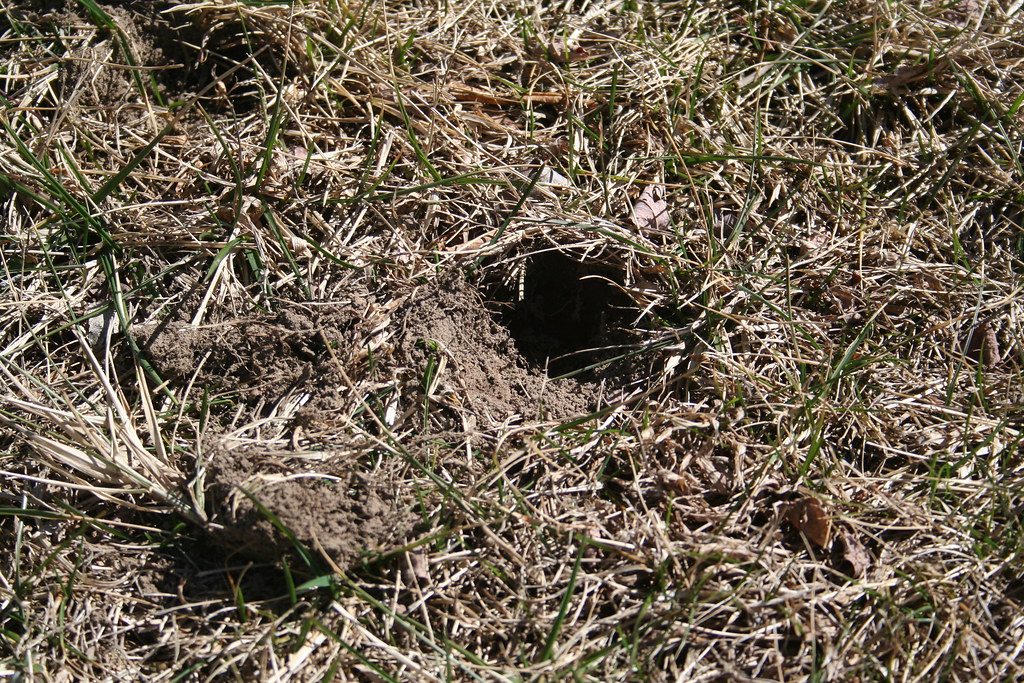
Secondary damage is also significant. Skunks, raccoons, armadillos, and crows identify grub-rich areas quickly. They dig or peel back turf to access the larvae, often creating more visible destruction than the grubs themselves. If you see freshly turned sod and small holes or flipped strips of turf, that activity strongly indicates a grub presence.
Not every grub creates visible damage. A small number of grubs per square foot often coexists with healthy turf. When populations exceed certain thresholds, root loss and plant stress reach a level that causes visible decline and requires treatment. The next section explains how to evaluate that threshold.
How to Tell If You Really Have a Grub Problem
Visual Symptoms of Grub Damage
Grub control starts with correct diagnosis. Many lawn problems mimic each other, and applying a grub treatment to a lawn that is actually suffering from drought or disease wastes both time and money.
Typical visual symptoms that indicate grub activity include:
Irregular brown patches
Patches are not perfect circles. They look ragged along the edges and tend to expand over a period of weeks in late summer. They do not green up quickly after rainfall or irrigation, unlike simple drought dormancy.
Poor response to water and fertilizer
According to Ohio State University Extension, grass affected by grubs remains wilted and off-color even after 1 inch of water in a week and a balanced fertilizer application. The issue is root loss, not nutrient deficiency at the soil surface.
Spongy or loose turf
When you walk over heavily infested areas, the lawn can feel soft or bouncy. The thatch and upper soil layer disconnect from the deeper soil because roots are gone.
Turf that peels up easily
This is the classic sign. When you grab the grass and pull gently, the sod lifts like carpet, revealing very short or missing roots. Grubs are often visible in the top few inches of soil directly under the damaged turf.
Edge patterns and preferred areas
Grub damage often shows first on lawn edges or in specific microenvironments. Beetles prefer to lay eggs in:
- Full sun areas rather than shade
- Regularly irrigated lawns over dry, compacted ground
- Lawns with moderate to high fertility
As a result, you might see damage where a front lawn meets a driveway, on a sunny hill, or in an irrigated section, while a nearby dry or shady area remains intact.
Because many brown patch diseases can look similar, examining the roots and soil is essential. For a deeper discussion of disease symptoms, see Brown Patch Prevention.
Confirming Grubs: Simple Inspection Tests
Visual symptoms indicate a problem but do not confirm its cause. To confirm a grub infestation, inspect the soil directly.
The spade test is the most reliable method for homeowners.
- Select test locations. Choose at least 3 to 5 spots, including healthy green turf and areas transitioning from green to brown. Focus on where animals have been digging or where turf feels spongy.
- Cut a turf flap. Using a sharp spade or edging tool, cut three sides of a 1 foot by 1 foot square. Leave the fourth side attached so you can fold back the turf like a flap.
- Inspect the root zone. Gently peel the turf back and examine the top 2 to 3 inches of soil. Break apart the soil with your hand or a small trowel. Lawn grubs will be visible as white, C-shaped larvae.
- Count the grubs. Count how many grubs you find in that 1 square foot area. Note both the number and their size (small, medium, or large).
- Replace the turf. Carefully lay the turf back in place, press it down to re-establish contact with the soil, and water to help it recover.
Perform this test in late summer or early fall, when grubs are actively feeding near the surface. According to Penn State Extension, late August through mid October is the ideal inspection window in many cool-season regions, while NC State Extension identifies September through November as critical months in parts of the Southeast.
Some homeowners use a soap flush test for lawn insect diagnosis. This involves mixing 1 to 2 tablespoons of dish soap in a gallon of water, then pouring the solution over a small area to flush surface insects to the top. This method helps diagnose chinch bugs, armyworms, and sod webworms. It does not reliably bring grubs to the surface because they are deeper in the soil. Use the soap flush to rule out surface-feeding insects, but rely on the spade test to confirm grubs. If a soap flush brings up tan, shovel-legged crickets instead of C-shaped grubs, you are likely dealing with mole crickets, which cause similar spongy, loose turf but need a different fix.
Grub Thresholds: When You Need Treatment vs When You Don’t
Grub control decisions should be based on population thresholds, not simply on the presence of a few grubs. Extension research from multiple universities provides consistent ranges for economic thresholds, which is the number of grubs per square foot at which damage becomes likely.
Typical thresholds are:
- 0 to 5 grubs per square foot: Turf in good condition generally tolerates this population without visible damage. No treatment is required.
- 6 to 9 grubs per square foot: Areas with thin turf, compacted soil, or drought stress can start to experience damage at this level. Treatment is justified if turf quality is already marginal.
- 10 or more grubs per square foot: This population level indicates a damaging infestation in most home lawns. Curative or preventive grub treatment is recommended.
According to University of Wisconsin Extension, Kentucky bluegrass and perennial ryegrass lawns can tolerate up to 10 grubs per square foot when well-watered and fertilized, while stressed turf shows damage at 6 to 8 grubs. Similar thresholds are reported by Michigan State University Extension.
Evaluate several sampling locations rather than relying on a single test. If one 1 square foot area has 2 grubs and another has 12, consider both the average and the distribution. Heavy infestations tend to be patchy. Spot treatment in the worst areas can be appropriate in some cases, especially with curative products.
Also consider turf vigor and maintenance. A dense, deep-rooted lawn withstands more root feeding than a thin, overcut, or compacted lawn. Integrating grub control with proper mowing, watering, and fertilizing often reduces the need for repeated insecticide applications.
Choosing Between Preventive and Curative Grub Control
Preventive Grub Control: What It Is and When to Use It
Preventive grub control targets grubs before they cause visible damage. These products create a protective zone in the soil that affects eggs and early instar larvae soon after they hatch.
Common active ingredients in preventive products include:
- Imidacloprid
- Clothianidin
- Thiamethoxam
- Chlorantraniliprole
According to Ohio State University Extension, chlorantraniliprole is often applied earlier in the season (late April to early June) because it moves more slowly into the root zone but provides long residual control. Neonicotinoid preventives such as imidacloprid are typically applied slightly later (June through mid July in many cool-season regions) and offer strong control when timed properly.
Use preventive grub control when:
- You had a documented grub infestation last season (above threshold counts) and want to avoid a repeat.
- Your lawn is in a high-risk area for Japanese beetles or masked chafers and neighbors report recurrent issues.
- Local extension services predict heavy grub pressure for the year.
Preventive products must be watered in thoroughly, usually with 0.25 to 0.5 inches of irrigation, to move the active ingredient into the root zone. Always follow the specific label directions.
Curative Grub Treatment: When Damage Is Already Visible
Curative grub treatment targets larger, actively feeding grubs that are already damaging turf. Timing is critical; curative products work best when grubs are medium sized and still near the surface, which typically occurs in late August through September in cool-season regions and somewhat later in some warm-season areas.
The most common curative active ingredient is trichlorfon. It acts quickly and provides short residual control. Some neonicotinoids can offer partial curative activity when applied in late summer, but their efficacy declines as grubs grow larger.
Use curative grub treatment when:
- Spade tests confirm 10 or more grubs per square foot in late summer or early fall.
- Visible turf damage is spreading and roots are largely gone in the affected areas.
- Preventive grub control was not applied earlier in the season or failed due to improper timing or application.
Ohio State University Extension recommends applying trichlorfon as soon as damaging populations are confirmed, then irrigating with 0.5 inches of water to drive the product into the grub zone. You can expect a reduction in feeding within about a week under proper conditions.
Curative treatment cannot regrow dead roots or resurrect dead grass. Its role is to stop further root loss so that surviving turf can recover. Severely damaged patches often require overseeding or resodding in fall.
Reading Product Labels and Matching Them to Your Situation
Many products marketed as "grub killer" or "season-long grub control" contain different active ingredients and have very different timing requirements. The most important step is to read the label and identify:
- The active ingredient name and percentage
- Whether the product is labeled as preventive, curative, or both
- Recommended application window for your region
- Required watering-in depth
For example:
- A product containing chlorantraniliprole is usually applied in spring or early summer for season-long preventive control.
- A product containing trichlorfon is meant for fast-acting curative treatment and is applied after damage appears.
Using a curative product in May or a preventive product in late September results in poor control, even though both are marketed for grubs. Matching product to life cycle stage is non-negotiable for consistent grub control.
Organic and Low-Impact Options for Grub Control
Beneficial Nematodes
Beneficial nematodes are microscopic roundworms that parasitize and kill soil-dwelling insects, including lawn grubs. Specific species such as Heterorhabditis bacteriophora have demonstrated efficacy against white grubs in turf.
According to Cornell University research, Heterorhabditis nematodes applied at appropriate rates in moist soil can significantly reduce grub populations, particularly when targeting younger larvae. Key requirements for success include:
- Soil temperature typically between 60 and 80°F at application
- Moist but not waterlogged soil at the time of application and for at least 7 to 10 days after
- Application in the evening or on cloudy days to protect nematodes from UV light
- Use of fresh, live nematode products stored and handled according to label directions
Beneficial nematodes are more sensitive than chemical products to handling and environmental conditions. They represent a good choice for homeowners prioritizing low-impact grub control and willing to follow more precise application practices.
Milky Spore (Paenibacillus popilliae)
Milky spore is a bacterium that infects Japanese beetle grubs specifically. Once ingested by a susceptible grub, the bacterium multiplies, kills the host, and releases more spores into the soil.
USDA and university trials, including those summarized by Michigan State University Extension, show that milky spore can provide long-term suppression of Japanese beetle grubs in certain climates, but results vary. Key considerations:
- Milky spore primarily targets Japanese beetle larvae, not other grub species such as masked chafers.
- In colder northern climates, soil temperatures may limit spore development and establishment, reducing effectiveness.
- Full benefits may take several years to develop because the disease builds up gradually as more grubs become infected.
Milky spore works best as a long-term component of an integrated grub management plan in areas with reliably warm soils and consistent Japanese beetle pressure. It is not a quick fix for an existing heavy infestation.
Cultural Practices That Reduce Grub Impact
Even without any direct insecticide, certain cultural practices increase the lawn’s tolerance of moderate grub populations and reduce beetle egg laying.
Key practices include:
- Proper mowing height. Maintaining cool-season grasses at 3 to 4 inches and warm-season grasses at their recommended upper range promotes deeper root systems and improved drought resilience.
- Correct irrigation. Deep, infrequent watering (about 0.75 to 1 inch once or twice per week, depending on climate) encourages roots to grow deeper rather than staying near the surface.
- Balanced fertilization. Following soil test recommendations prevents both nutrient deficiencies and excessive growth that can be more attractive to beetles.
- Core aeration. Relieving soil compaction improves root penetration and water infiltration, which indirectly improves tolerance to root-feeding insects.
These practices overlap with general good lawn care, as outlined in Common Lawn Care Mistakes Beginners Make and Essential Lawn Care Tools Every Homeowner Needs. By building a deep-rooted, vigorous turf, you reduce the need for frequent grub treatment.
Step-by-Step Grub Control Plan by Season
To integrate diagnosis, treatment, and prevention, it is helpful to think in terms of a yearly schedule. The following timeline is oriented to typical cool-season lawns in the Midwest and Northeast; shift timing a few weeks earlier for warmer regions and a bit later for colder ones.
Spring (March to May)
Week 1-4: Assess winter recovery.
As lawns green up, note any thin or dead areas. Confirm whether these are winterkill, salt damage, or residual grub impact from the previous season. Perform a few spade tests if you suspect grubs, but remember that spring grub populations are usually lower near the surface and cause less damage than late summer populations.
Week 4-8: Plan preventive strategy.
If you documented damaging grub levels (10+ per square foot) the previous fall, schedule preventive grub control. For chlorantraniliprole products, plan application between late April and early June. For neonicotinoid preventives, plan for June to mid July, adjusting based on local extension guidance.
Continue core lawn care practices: spring cleanup, light fertilization if needed, and pre-emergent weed control if you also manage crabgrass. For weed identification and removal tactics, see Common Lawn Weeds and How to Remove Them.
Early to Mid Summer (June to July)
Week 1-4: Apply preventive grub control (if needed).
Apply preventive products within the labeled window. Mow the lawn beforehand, remove heavy clippings, then spread the product evenly using a calibrated spreader. Immediately irrigate with 0.25 to 0.5 inches of water unless the label specifies otherwise.
Week 2-8: Maintain consistent irrigation and mowing.
During hot weather, avoid mowing too short and avoid removing more than one-third of the leaf blade at a time. Water deeply and less frequently to encourage deep roots.
Late Summer to Early Fall (August to October)
Week 1-4 (typically August): Monitor for damage.
Walk the lawn weekly. Watch for irregular brown patches that do not respond to irrigation. Inspect areas where animals are digging. Perform spade tests in any suspicious area.
Week 4-8 (typically September): Apply curative treatment if thresholds are exceeded.
If spade tests reveal 10 or more grubs per square foot and turf is declining, apply a curative product such as trichlorfon. Follow label rates and irrigate with 0.5 inches of water.
Week 6-10: Repair damaged turf.
Once feeding has stopped, rake out dead material, loosen the topsoil, and overseed with a suitable grass mix. Apply a starter fertilizer according to label instructions and keep the seedbed moist for 2 to 3 weeks until germination.
Late Fall to Winter (November to February)
Week 1-4: Final assessment.
Note which areas recovered well and which did not. Plan fall core aeration and overseeding schedules if not completed earlier. Consider whether grub control was successful or requires adjustment for next season.
Winter: Plan annual maintenance.
Use the off-season to build a comprehensive lawn schedule that integrates mowing, fertilization, irrigation, weed control, grub control, and disease management. For a structured approach, refer to How to Create a Lawn Maintenance Schedule.
Long-Term Prevention: Building a Grub-Resistant Lawn
Grub control becomes easier when your lawn is inherently resilient. Long-term prevention focuses on creating conditions that support dense turf and less favorable conditions for heavy beetle egg laying.
Key strategies include:
1. Maintain optimal mowing height.
Mow cool-season grasses at 3 to 4 inches and warm-season grasses at the upper end of their recommended range. Taller grass develops deeper roots, shades the soil, and withstands root loss better than scalped turf.
2. Optimize irrigation.
Water so that the root zone receives about 0.75 to 1 inch of water per week, including rainfall, during active growth. Avoid daily light watering. Deep watering once or twice per week encourages deeper rooting and resilience.
3. Feed according to soil tests.
Soil testing identifies pH and nutrient levels. Following recommendations from your state extension service prevents both deficiency and excess that can alter root growth or make your lawn overly lush and attractive to beetles.
4. Manage thatch and compaction.
Thatch thicker than about 0.5 inch can insulate grubs from predators and limit water and nutrient movement. Core aeration and, if needed, power raking restore healthier soil contact and root environment.
5. Diversify grass species where appropriate.
Mixed-species lawns, such as blends of Kentucky bluegrass, perennial ryegrass, and fescues, often show better tolerance to pests, diseases, and environmental stress than monocultures. Some species recover more quickly from grub damage and fill in bare areas faster.
6. Monitor annually.
Even when no damage is visible, perform a few spade tests each late summer to monitor grub populations. This simple practice keeps you informed and allows you to adjust preventive or curative treatments based on actual risk, rather than guesswork.
Conclusion
Grub control is most effective when it is diagnostic, threshold-based, and timed to the grub life cycle. Brown patches and animal digging signal a potential problem, but confirming grubs with a spade test and counting them per square foot is the critical first step. Once you know whether populations exceed 10 grubs per square foot, you can choose between preventive products earlier in the season, curative treatments in late summer or early fall, or organic and cultural methods for long-term suppression.
A dense, deep-rooted lawn tolerates low grub levels and recovers quickly from stress. Integrating mowing, irrigation, fertilization, thatch management, and periodic inspection creates a system where grubs are just one manageable factor, not a yearly crisis. For additional guidance on building that system, review Common Lawn Care Mistakes Beginners Make and How to Create a Lawn Maintenance Schedule, then align your grub control plan with your overall lawn care program.
With a clear diagnosis process, correctly timed treatments, and ongoing lawn maintenance, you can keep lawn grubs below damaging levels and maintain a healthy, resilient yard season after season.
Top Picks
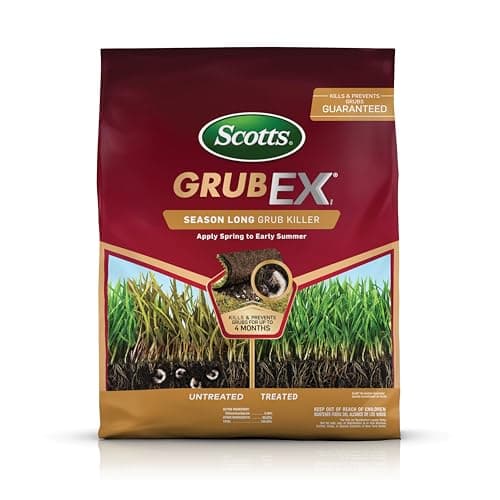
 Scotts GrubEx1 Season Long Grub Killer, 5,000 sq. ft.Check price on Amazon
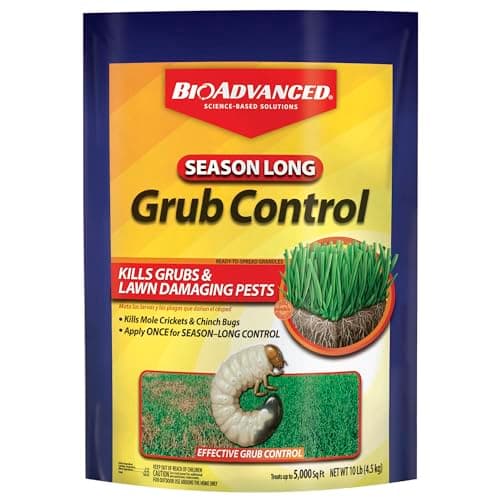
 BioAdvanced Season Long Grub Control Granules (10 lb)Check price on Amazon
As an Amazon Associate we earn from qualifying purchases.
Free Lawn Care Tools
Lawn grubs are the larval stage of several scarab beetle species that commonly inhabit turf. The most important species in home lawns include Japanese beetles (Popillia japonica), Northern and Southern masked chafers (Cyclocephala spp.), and various May or June beetles (Phyllophaga spp.). While the adult beetles look different, the larvae that damage turf look very similar.
Brown patches from grubs usually come with other signs: the turf feels spongy, wilts in late summer, and the sod can often be lifted and peeled back like carpet because the roots are gone. You may also see animals such as skunks, raccoons, armadillos, or birds tearing up the lawn to feed. Problems like drought, dog urine, or fungal diseases cause discoloration too, but they do not usually cause the sod to detach easily from the soil. Digging into the top few inches of soil to look for white, C-shaped larvae is the best way to confirm grub activity.
The ideal timing depends on whether you are using a preventive or curative product and which region you live in. Preventive treatments work best in early to mid-summer, around the time beetles lay eggs and young grubs are just hatching. Curative treatments are most effective in late summer to early fall, when larger grubs are actively feeding and damage is visible. In northern regions this usually means late June through early October, while in southern and warm-season regions activity starts earlier and can extend into fall.
Completely eliminating grubs is neither realistic nor necessary for a healthy lawn. Most lawns have some grubs present without any visible damage, because grass can tolerate low populations. Treatment is typically reserved for when grub numbers cross a damage threshold and you see symptoms like irregular brown patches and sod that lifts easily. A strategy based on correct diagnosis and thresholds prevents unnecessary pesticide use.
Preventive grub control products are designed to target eggs or very young grubs and are applied before or during the main egg hatch period in early to mid-summer. Curative grub treatments focus on actively feeding, larger grubs and are applied in late summer or early fall after damage appears. Using a preventive product too late, or a curative product too early, greatly reduces effectiveness. Matching product type to the correct life stage is key for reliable control.
A well-planned lawn care program makes grass more resilient so it can better tolerate some root feeding without showing severe damage. Practices like proper watering, mowing, and fertilization keep roots stronger and reduce stress during hot, dry periods when grub injury is most visible. Healthy turf is also less attractive to egg-laying beetles compared to thin, stressed lawns. Combining sound cultural practices with correctly timed grub treatments lowers the chance of recurring infestations.

Beat weeds and brown spots from your phone
Snap a photo, get the fix, and follow a plan timed to your soil and weather. Free on iPhone.