Creeping Charlie: Identification & Removal Guide
 Sarah MitchellLawn Diagnostics Specialist | 12 Years
As an Amazon Associate we earn from qualifying purchases.
Creeping Charlie is one of the most persistent broadleaf weeds in home lawns. It forms dense mats that choke out grass, spreads aggressively in shade, and seems to come back no matter how many times you pull it. For homeowners who care about a thick, uniform yard, it is a serious and often frustrating problem.
This creeping charlie: identification & removal guide is designed as a practical, step-by-step resource for serious lawn care. It focuses on accurate identification, confirmation tests you can do in minutes, and a clear comparison of organic and chemical control strategies. It also explains how to adjust your lawn care practices so Creeping Charlie is less likely to return.
Left unchecked, Creeping Charlie reduces turf density, creates uneven texture, and can lower curb appeal and perceived property value. It thrives where grass struggles, filling in shady or compacted spots, then creeping into healthier areas. Its survival tools are impressive: underground rhizomes, aboveground stolons, shade tolerance, and the ability to regrow from tiny stem fragments.
This guide covers how to recognize Creeping Charlie with visual and scent tests, how it behaves in different parts of the yard, and which control methods actually work. You will see when to hand pull, when to use herbicides, how to time your applications for best results, and how to rebuild a strong lawn that resists reinvasion.
If you see low-growing mats of round or kidney-shaped leaves with scalloped edges in shady, moist parts of your lawn, you are probably dealing with Creeping Charlie. To verify, pinch and crush a leaf between your fingers and smell it. If there is a strong minty, herbal odor and the stems feel square when you roll them, that typically confirms Creeping Charlie rather than violets or dollarweed.
The most reliable fix in cool-season lawns is a targeted broadleaf herbicide containing triclopyr, applied in fall when the weed is moving energy down to its roots. Avoid random mowing scalps or shallow pulling, because both leave root and stem fragments that quickly resprout. With a proper fall application, plus spot treatments the following spring, you usually see clear thinning of the weed within 2 to 4 weeks and major reduction over one full growing season.
Understanding Creeping Charlie (Ground Ivy) Basics
What Is Creeping Charlie?
Creeping Charlie, also known as ground ivy, is a low-growing perennial weed with the scientific name Glechoma hederacea. It is part of the mint family (Lamiaceae), which explains its square stems and minty aroma when crushed. You may also hear it called gill-over-the-ground, cat's foot, or Creeping Jenny in some regions, though Creeping Jenny is technically a different plant.
In its native range in Europe and parts of Asia, Creeping Charlie has been used traditionally as an herbal plant and groundcover. It was brought to North America intentionally, mainly as a medicinal herb and for erosion control. In lawns and landscape beds, though, it behaves as a nuisance weed, especially in cool, moist climates.
Some people mistake Creeping Charlie for a useful groundcover because it fills in bare soil and tolerates shade where grass fails. While it can stabilize soil, in residential turf it typically outcompetes desired grasses, is difficult to confine, and complicates mowing and maintenance. That is why most homeowners classify it as an invasive aggressor rather than a helpful plant.
How Creeping Charlie Spreads and Survives
Creeping Charlie survives by spreading both above and below the soil surface. It grows as a creeping, mat-forming perennial that sends out stolons, which are horizontal stems that run along the soil line and root at the nodes. Each node can form new roots and shoots, essentially producing a new plant that is still connected to the original.
It can also spread using rhizomes, which are underground stems. While homeowners do not need the botanical detail, the practical takeaway is important: you are not just dealing with one plant. You are dealing with a network. Pulling up a section rarely removes every stolon and rhizome fragment, so it often regrows from what remains.
Creeping Charlie does produce seeds, but in most home lawns, vegetative spread through stems and nodes is the primary problem. That is why mowing, edging, or light hand pulling typically only sets it back temporarily. Any small piece of stem with a node that remains in contact with soil and moisture can re-root and re-colonize the area.
Because it is a true perennial, Creeping Charlie lives for many years. Killing the top growth once does not eliminate the weed if the roots and rhizomes survive. This longevity is one of the key reasons a one-time treatment or a single weekend of pulling seldom provides a permanent solution.
Where Creeping Charlie Thrives
Creeping Charlie favors conditions where turf is at a disadvantage. It thrives in moist, shaded areas, especially where soils are compacted and low in fertility. Under mature trees, along the north side of fences and buildings, near downspouts, and along shaded lawn edges are common hotspots. Neglected landscape beds and thin turf around play areas or pathways are also frequent starting points.
Poor lawn care practices give Creeping Charlie even more of an edge. Mowing the lawn too short (below about 2.5 inches for most cool-season grasses), skipping regular fertilization, and overwatering can weaken turf density. Once bare or thin spots appear, Creeping Charlie moves in, takes hold, and spreads outwards into healthier turf.
Regionally, it tends to be more aggressive in the Midwest, Northeast, Upper South, and Pacific Northwest, regions where cool-season grasses like Kentucky bluegrass, perennial ryegrass, and tall fescue dominate. In these climates, the moist springs and cool falls line up perfectly with Creeping Charlie's preferred growth windows. It can survive in full sun if soil moisture is adequate, but it is most competitive where grass is shaded, stressed, or poorly maintained.
Accurate Identification of Creeping Charlie
Visual Identification: Leaves, Stems, and Flowers
Accurate ID is the first and most important step in any creeping charlie: identification & removal guide. Many low-growing weeds look similar from a distance, and using the wrong control strategy wastes time and money. Focus on a few key features of leaves, stems, and flowers.
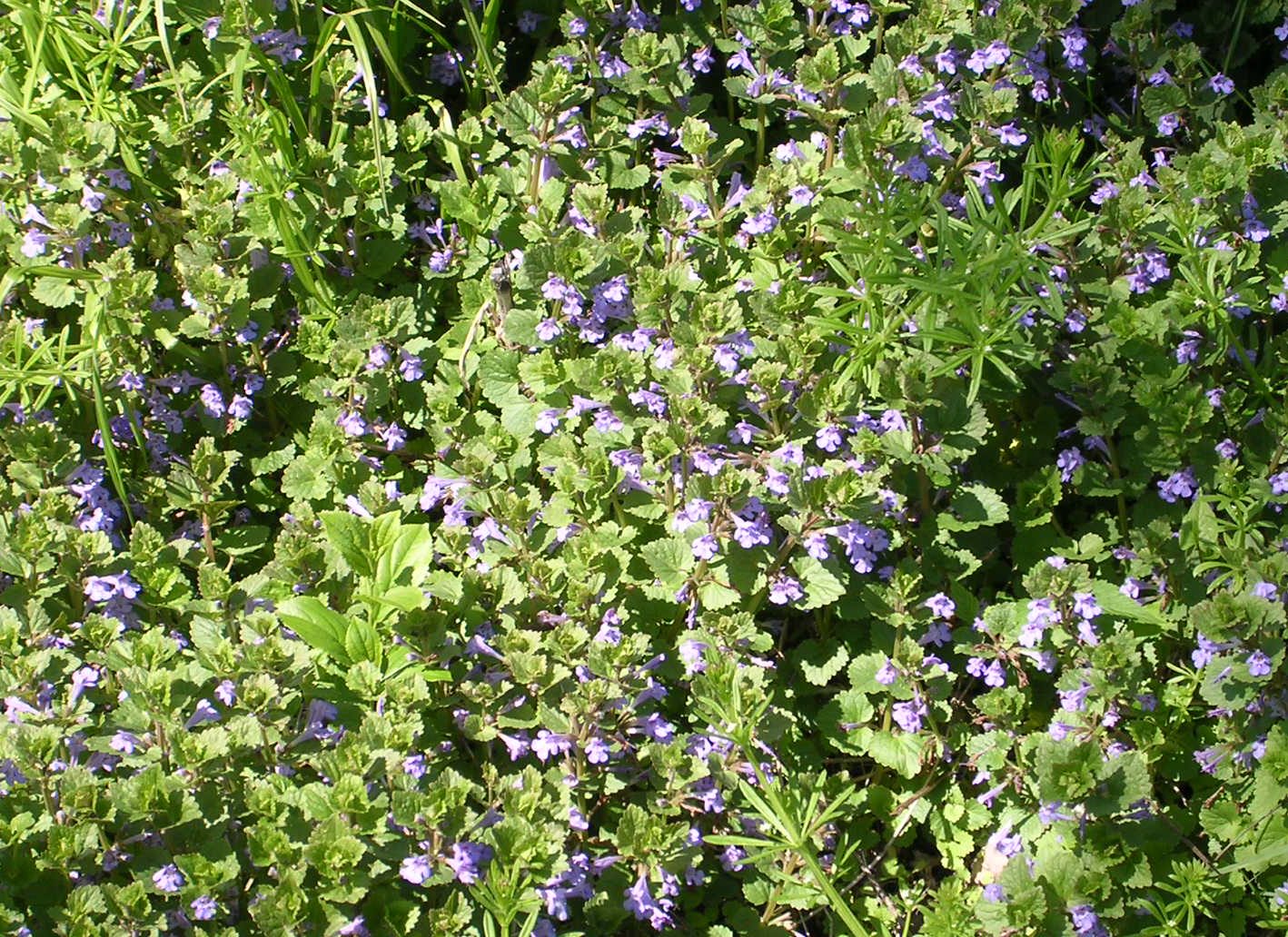
Leaves: Creeping Charlie has round to kidney-shaped leaves with clearly scalloped or crenate edges. Each leaf is attached to the stem by a small petiole (leaf stalk). The surface is slightly textured, often described as somewhat glossy, and ranges from medium to dark green. In cooler weather in spring or fall, leaves may take on a purplish or bronzy tint.
Stems: The stems are a hallmark. They are square in cross section, not round. If you roll a stem gently between your fingers, you will feel the corners. The stems run along or just above the soil surface in a creeping pattern. At each node, you often see roots digging into the soil and new shoots heading upward. This node rooting is critical for its persistence.
Flowers: Creeping Charlie produces small, bluish-purple to violet flowers in clusters along the stems. Each flower is tubular and two lipped, with a shape reminiscent of small mint flowers. Flowering typically occurs in spring, roughly late April through June depending on your region and weather. In heavy infestations, those purple flowers can lightly tint an area of lawn in spring, almost like a low blue haze.
In turf, these plants grow in dense mats that weave through and above the grass blades. Over time, the mats become thick enough to shade and smother grass at the soil level, especially in shade and around obstacles like tree trunks or irrigation heads. If you see an area where grass is thinning but a low broadleaf mat is thriving, you are likely dealing with Creeping Charlie or a close look-alike.
Tactile and Scent Identification
Beyond appearance, Creeping Charlie has a distinctive smell that is extremely useful for confirmation. This is often the deciding factor when you are unsure.
To perform the crushed leaf test, pick a fresh leaf and a short piece of stem. Place it between your thumb and forefinger and crush or rub it firmly until the leaf cells break. Then bring your fingers close to your nose and inhale.
If the plant is Creeping Charlie, you will notice a clear minty or herbal aroma, somewhat similar to spearmint or oregano, but not exactly the same. The intensity of the scent can vary, but it is almost always noticeable. If the plant has no scent or only a faint "green" smell, you are likely dealing with something else, such as wild violets or dollarweed.
This mint-like smell is one of the strongest confirmation signals for proper identification. Combined with square stems and scalloped, kidney-shaped leaves, the crushed-leaf aroma gives you a high degree of certainty before you decide on a treatment plan.
Photo Checklist: How to Confirm You Actually Have Creeping Charlie
If you are not fully confident, walk through this simple field checklist in your lawn. This helps avoid confusion with similar weeds.
Step 1: Check leaf shape and scalloped edges. Look for round to kidney-shaped leaves with obvious scallops around the perimeter, not smooth or sharply lobed leaves.
Step 2: Inspect stems for squareness and creeping habit. Gently pull up a section. Do the stems run horizontally across the soil, and do they feel square if you roll them between your fingers?
Step 3: Look for rooting at nodes. At points where the stems contact the soil, do you see small roots? Are new shoots emerging upward from those points?
Step 4: Note the habitat. Is the weed concentrated in shade or part shade, in a moist spot, and in areas where turf is thin or patchy? This habitat pattern supports a Creeping Charlie diagnosis.
Step 5: Perform the crushed leaf mint-smell test. Crush a leaf between your fingers and smell as described above. A clear minty aroma, combined with the other traits, typically confirms Creeping Charlie.
If you still have doubts, take a few clear close-up photos of the leaves, stems, and any flowers. Many county extension offices and local lawn professionals will identify the plant for you from photos.
- Purdue Extension recommends confirming Creeping Charlie by checking for square stems, opposite leaves with scalloped margins, and a minty odor from crushed foliage.
Common Look-Alikes (And How to Tell Them Apart)
Several ground-hugging weeds can be mistaken for Creeping Charlie at first glance. Distinguishing them correctly matters, because some respond differently to herbicides and cultural controls.
Purple deadnettle and henbit: These are also in the mint family and have square stems and purple flowers. However, they tend to grow more upright, not as flat mats. Their leaves are often more triangular or heart-shaped with a fuzzy texture, and the upper leaves may be purplish. They behave as winter annuals in many regions, dying off in summer, while Creeping Charlie is a perennial that persists.
Wild violets: Wild violets prefer shade and moist soil like Creeping Charlie, and their purple flowers can appear at a similar time. Their leaves, though, are distinctly heart-shaped with a more pointed tip, and the leaf margin is more gently toothed rather than strongly scalloped. The biggest distinction is the smell: crushed violet leaves lack the minty aroma.
Dollarweed (pennywort): Dollarweed has round, shiny leaves that can superficially resemble Creeping Charlie leaves. The key difference is how the stem attaches. In dollarweed, the petiole connects at the center of the leaf like a tiny umbrella, not at the edge. The leaf margin is generally smooth, not deeply scalloped, and there is no mint smell when crushed.
Dichondra species: Dichondra are low, mat-forming plants sometimes used intentionally as groundcovers. Their leaves are more fan- or kidney-shaped with a shallow notch, but the edges are smoother and less scalloped than Creeping Charlie. Dichondra leaves also usually sit more flat to the ground and do not emit the minty odor.
Correct identification prevents the common mistake of applying a broadleaf herbicide assuming Creeping Charlie, when the target is actually violets or another species that may need a slightly different product or strategy.
Non-Chemical and Cultural Control Strategies
When Hand Pulling and Physical Removal Can Work
Hand pulling and physical removal are attractive options if you want to avoid herbicides, but their effectiveness depends heavily on infestation size and thoroughness. For small patches in beds or at lawn edges, careful pulling can be part of a workable plan.
If you see just a few early runners or a young colony, loosen the soil with a hand trowel or small cultivator and gently lift the entire mat, following each stem to its rooted nodes. The goal is to remove as much of the stolon network and root system as possible. Do not simply rip the top growth off, because fragments will remain.
A practical threshold is area size. If you have less than about 10 to 20 square feet in total and can see where the patch clearly ends, hand removal is reasonable. For larger infestations that weave through turf over hundreds of square feet, hand pulling alone becomes extremely labor intensive and usually leaves enough fragments to regrow.
Smothering and Solarization
For garden beds, along fences, or in narrow strips where turf is not essential, smothering can help eliminate patches. Cover the affected area with a light-blocking material like cardboard, multiple layers of newspaper, or black plastic. Extend the cover 6 to 12 inches beyond the visible patch to catch stolons that are just starting to spread outward.
Leave the cover in place for at least 4 to 6 weeks during active growing periods, and check periodically to ensure edges are sealed so light does not leak in. In summer, solarization using clear plastic can also overheat and kill the plant and some seeds or roots below. After removal, you may need to regrade and reseed or replant the area.
These methods are not ideal in the middle of a lawn you want to keep, because they will also kill or severely stress your grass. They are most useful where you are already planning to renovate or where weedy groundcover is acceptable.
Improving Lawn Health to Outcompete Creeping Charlie
Cultural control focuses on making your lawn a hostile environment for Creeping Charlie and a supportive one for turfgrass. While cultural practices rarely eliminate an existing heavy infestation by themselves, they are crucial to preventing reinvasion after you reduce the weed with other methods.
Key lawn practices include:
- Mowing at the correct height: For cool-season grasses like Kentucky bluegrass, perennial ryegrass, and tall fescue, a mowing height of about 3 to 4 inches is ideal. Taller grass shades the soil surface, reducing available light for Creeping Charlie stolons and seedlings.
- Regular, appropriate fertilization: Thin, nutrient-poor turf is easily invaded. A cool-season lawn typically benefits from 2 to 4 pounds of nitrogen per 1000 square feet per year, applied in 2 or 3 split applications, with the primary feeding in fall. Follow your grass-type and soil test recommendations rather than guesswork.
- Core aeration for compaction: In areas where a screwdriver cannot be pushed 4 to 6 inches into the soil by hand, compaction is limiting grass roots. Core aeration in fall or spring opens channels for air and water, supporting deeper turf roots that can better compete.
- Watering correctly: Deep, infrequent watering encourages deep turf roots and discourages shallow-rooted weeds. Aim for about 1 to 1.5 inches of water per week from rain or irrigation, applied in one or two deep soakings rather than frequent light sprinklings.
These practices do not kill established Creeping Charlie outright but reduce its competitive advantage. When combined with direct control approaches, they make it much harder for the weed to reestablish in treated areas.
Best Herbicide for Creeping Charlie: Chemical Controls That Actually Work
Choosing the Right Herbicide Active Ingredient
Creeping Charlie is notoriously tolerant of many "standard" lawn weed-and-feed mixes. Generic 2,4-D products alone often only burn the top growth and the weed recovers. If you decide to use herbicides, picking the right active ingredients is critical.
The most consistently effective active ingredient for Creeping Charlie in cool-season lawns is triclopyr. It is often found in products labeled for "tough brush and vine" or "difficult lawn weeds" and is frequently combined with 2,4-D and other broadleaf herbicides. Product labels may describe control of ground ivy or Creeping Charlie specifically.
Mixtures containing dicamba plus 2,4-D and MCPP (mecoprop) can also provide control, but research and extension recommendations often note that triclopyr-containing products outperform these on heavy ground ivy infestations. When comparing products on the shelf, check the active ingredient list, not just marketing claims on the front.
- Ohio State Extension notes that herbicides containing triclopyr applied in fall provide the most reliable Creeping Charlie control in cool-season lawns, often outperforming 2,4-D alone.
Best Timing for Herbicide Applications
Timing is a key factor. You can spray the right product at the wrong time and see disappointing results. Creeping Charlie moves carbohydrates between leaves and roots at different times of the year, and herbicide effectiveness follows those patterns.
For cool-season regions, the best window for control is fall, typically from mid September through late October. During this period, Creeping Charlie is actively growing and moving energy down into its roots and rhizomes to prepare for winter. Herbicides applied at this time are carried with that flow into the root system, improving the chance of complete kill.
A second good opportunity is the spring flush, just after flowering, usually late April to early June depending on your climate. At this time, the plant is also actively growing, and systemic herbicides can move effectively through the plant, though results are often a bit less consistent than fall applications.
A practical timing guideline is this: if nighttime temperatures are regularly above about 45 to 50 degrees Fahrenheit and the plants have healthy, green growth, you are within an effective treatment window. Avoid spraying during summer heat stress or winter dormancy when plants are not actively transporting herbicides.
How to Apply Herbicides Safely and Effectively
Once you have chosen a triclopyr-based or other recommended product and identified a good timing window, careful application makes the difference between a set-back and a real reduction.
Read the label completely before use and follow all instructions on mixing, rate, and safety. Most lawn herbicides specify applications in ounces or fluid ounces per 1000 square feet. Exceeding the recommended rate risks turf injury and does not speed the kill.
For uniform coverage, use a pump sprayer or hose-end sprayer rather than a makeshift bottle. Calibrate your sprayer by spraying a known area (for example, 250 square feet) with plain water and measuring how much volume you used. This lets you adjust walking speed and spray pattern so you apply the right amount of herbicide over the correct square footage.
Target days when there is little or no wind, and avoid spraying if rain is expected within at least 24 hours, or per the label. Herbicides need time to be absorbed by the foliage. Do not mow immediately before or after application. A simple rule is: stop mowing 2 days before treatment and wait 2 days after treatment to mow again, so you preserve enough leaf area for herbicide uptake.
If you are concerned about nearby trees, shrubs, or garden plants, avoid spraying on very hot days when volatility can increase, and shield sensitive areas with cardboard as you spray. Keep herbicides off bare tree roots and shallow-rooted ornamentals where possible.
When to Expect Results and The Need for Repeat Applications
After a properly timed application, you should not expect instant browning. Systemic herbicides work by disrupting plant growth from the inside, so symptoms take a bit of time. In typical conditions, you will see leaf curling, discoloration, and decline within 7 to 14 days.
Creeping Charlie patches often thin and weaken significantly within 2 to 4 weeks, but complete eradication usually requires at least one follow up. Many extension recommendations mention that two applications, spaced 3 to 4 weeks apart, provide more consistent long-term control than a single spray.
Monitor treated areas. If after 3 or 4 weeks you still see healthy-looking patches, especially at the edges, a second application at the label rate is appropriate. If you have a heavy infestation larger than a few hundred square feet, plan from the start for a multi-season approach: a fall application, a follow up, and potentially another light treatment the next fall to clean up survivors.
What Kills Creeping Charlie Best: A Product Shortlist
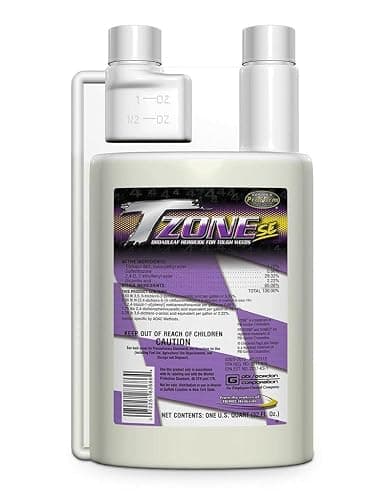
If you want names rather than chemistry, here is the shortlist. The best herbicide for creeping charlie in a home lawn is a triclopyr-based broadleaf killer; Ortho WeedClear and similar triclopyr plus 2,4-D combination products are the most widely available. For stubborn infestations, T-Zone SE is the product lawn care professionals reach for: it combines triclopyr with three other actives and consistently outperforms single-ingredient sprays on ground ivy, though it costs more and demands careful label reading. Dicamba-containing three-way mixes (the standard "weed and feed" actives) work too but usually need two or three applications. Whatever you choose, the best spray to kill creeping charlie is the one applied in mid fall, when the plant is pulling carbohydrates down to its roots and carries the herbicide with them.
Integrated Strategy: Combining Methods for Lasting Control
Assessing Infestation Severity and Setting a Strategy
Not every lawn needs the same level of intervention. Before diving in, walk your property and roughly map out how much area is affected. This determines if you can manage with hand pulling and spot sprays or if you need a more extensive renovation.
If Creeping Charlie covers less than about 5 percent of your total lawn and is confined to a few shady corners, focused spot treatment and improved cultural practices may be enough. If it is taking up more than 25 to 30 percent of the visible lawn, especially in multiple zones, you are dealing with a major infestation where a systematic, multi-year plan is more realistic than a quick fix.
Also note where the weed is spreading from. Patches in beds, under hedges, or beyond fences can serve as reservoirs, reinvading the lawn even after you treat it. Include these source areas in your management plan if you want lasting results.
Step-by-Step Plan for Moderate to Heavy Infestations
For a typical cool-season lawn with noticeable Creeping Charlie, a practical integrated plan might look like this:
- Late summer to early fall (August to mid September): Improve lawn health first. Raise mower height to at least 3 inches, schedule core aeration if soils are compacted, and apply a balanced fertilizer according to soil test recommendations. Correct chronic overwatering or poor drainage where possible.
- Mid to late fall (September to October): Apply a triclopyr-based broadleaf herbicide over areas with visible Creeping Charlie. Focus on days with mild temperatures and no rain forecast. Avoid mowing 2 days before and after.
- 3 to 4 weeks after first fall application: Reevaluate. If green patches persist, especially around the edges, make a second application at the label rate to catch surviving stems and new growth.
- Late fall: Overseed thin areas with a grass mix well adapted to your site conditions, focusing on shady-tolerant cultivars under trees or along buildings. Keep seed moist until established, then transition to standard irrigation.
- Spring (April to June) of the next year: Watch for any Creeping Charlie regrowth. Spot treat individual patches shortly after flowering if needed. Continue good mowing, fertilization, and irrigation practices to help turf fill in any gaps.
This timeline acknowledges that Creeping Charlie is a perennial problem that usually requires at least one full growing season to bring under control. It combines direct herbicide action with structural improvements to your lawn that make reinfestation less likely.
Special Considerations for Shady Lawns
In heavily shaded yards, especially under dense tree canopies or next to north-facing walls, turfgrass may never thrive, even with excellent care. In these environments, Creeping Charlie has a built in advantage. If you repeatedly fight it in deep shade and grass continues to thin, it may be more effective to redesign the landscape.
Options include converting the area to a mulched bed with shade-tolerant shrubs, using an approved groundcover that you intentionally maintain, or selectively thinning tree branches to allow more light for grass. Simply trying to force sun-loving turf to compete with Creeping Charlie in near-full shade usually leads to ongoing frustration.
What Other Guides Miss: Common Mistakes to Avoid
Skipping Confirmation Tests Before Treating
Many online articles imply that any low, creeping weed in shade is Creeping Charlie, then recommend broadleaf herbicides. Treating wild violets, dichondra, or dollarweed with a plan optimized for Creeping Charlie can produce mixed results. Using the crushed leaf mint-smell test and checking for square stems raises your certainty level and reduces wasted effort.
Spraying at the Wrong Time of Year
A frequent mistake is spraying during mid summer heat or early spring cold when the weed is stressed or not moving nutrients efficiently. This often results in superficial burn but poor root kill. Targeting fall and the immediate post-flowering spring window, as many university extensions recommend, leads to much higher success rates.
Underestimating the Need for Repeat and Multi-Season Control
Some guides suggest a single herbicide treatment will eliminate Creeping Charlie. In practice, especially in long infested lawns, the creeping network of stolons and rhizomes almost always requires at least one follow up application and, in heavy cases, coordinated efforts over more than one growing season. Planning for this from the start avoids disappointment when some patches reappear.

Ignoring Cultural Problems That Favor Reinfestation
If you kill Creeping Charlie but continue to mow at 2 inches, skip fertilization, and overwater shady spots, the same conditions that allowed it to thrive remain. Thin turf and bare soil will eventually attract new Creeping Charlie or another opportunistic weed, such as wild violet, which loves the same shady, damp corners. Integrating proper mowing height, reasonable watering, and soil improvement is not optional if you want lasting results.
Long-Term Prevention and Monitoring
Building a Resilient Lawn
Once you have reduced Creeping Charlie to manageable levels, the focus shifts to keeping your lawn dense and resilient. For many homeowners, this is where investing in knowledge about identifying your grass type and understanding fall fertilizer timing pays off. Different grasses have different optimal mowing heights and fertilization schedules, and aligning your care with your grass's needs strengthens its competitive edge.
Routine overseeding every few years, especially after problem patches are cleared, helps maintain thick turf. In areas that repeatedly struggle under shade, choosing cultivars bred for shade tolerance or considering fine fescues and similar species can improve performance compared to standard sun-oriented mixes.
Monitoring and Thresholds for Action
Creeping Charlie almost never disappears from a neighborhood entirely. Birds, lawn equipment, and windblown stem fragments can reintroduce it at any time. The key is early detection and prompt action at small scales.
A practical monitoring habit is to walk your lawn every few weeks during the growing season, especially in spring and fall, and look closely at shaded and moist edges. If you notice a patch the size of a dinner plate or smaller, you can often remove it with a single spot treatment or careful hand removal, preventing it from becoming a multi-square-foot mat.
If you regularly see new patches larger than about 2 or 3 square feet forming in multiple locations, that indicates a larger systemic issue with shade, compaction, or fertility. In that case, revisiting cultural conditions and rechecking your control strategy is warranted.
Coordination With Neighbors and Adjacent Areas
Creeping Charlie does not respect property lines. If your lawn is bordered by a neglected field, unmanaged common area, or a neighbor's heavily infested yard, reinvasion pressure will remain high. Where possible, discuss weed control with neighbors and consider coordinating fall treatments.
Also pay attention to landscape beds, along driveways, and behind sheds or fences. These are common "reservoir" zones where Creeping Charlie hides and then creeps back into the visible lawn. Treating only the main turf area while ignoring hidden outposts often leads to repeated reinfestation from these edges.
Conclusion: Making Creeping Charlie a Manageable Problem
Creeping Charlie is difficult to eradicate because of its stolons, rhizomes, and shade tolerance, but it is not impossible to control. Accurate identification using leaf shape, square stems, rooting nodes, and the minty crushed-leaf test puts you on firm diagnostic ground. From there, combining properly timed triclopyr-based herbicide applications with improved mowing height, fertilization, and aeration dramatically improves outcomes.
Think of Creeping Charlie management as a one to two year project instead of a one weekend chore. With a clear plan, regular monitoring, and realistic follow up, most home lawns can shift from heavy infestation to occasional spot treatments and long-term prevention. For a broader context on building a dense, competitive yard that resists weeds in general, check out our guide on fall lawn renovation and overseeding strategies.
When comparing products, look for selective lawn herbicides labeled for ground ivy or Creeping Charlie control, containing triclopyr or similar actives, and always match applications to fall or post-flowering windows. With those criteria and the steps in this guide, Creeping Charlie becomes a manageable, not overwhelming, lawn issue.
Top Picks

As an Amazon Associate we earn from qualifying purchases.
Free Lawn Care Tools
Look for low-growing mats of round or kidney-shaped leaves with scalloped edges, especially in shady, moist spots. Pinch and crush a leaf between your fingers and smell it—Creeping Charlie has a strong minty, herbal odor. Roll a stem between your fingers; if it feels square instead of round, that’s another strong sign. These quick checks usually distinguish it from lookalikes like violets or dollarweed.
Creeping Charlie spreads through a network of aboveground stolons and underground rhizomes, and each node along the stem can root and form a new plant. Hand pulling usually leaves behind small root and stem fragments that quickly resprout. Because it’s a true perennial, killing or removing just the top growth doesn’t eliminate the plant. Thorough, repeated control is needed to disrupt the whole network.
This weed thrives in moist, shaded areas where turf struggles, such as under trees, along fences and buildings, and near downspouts. Compacted soil, low fertility, and thin or neglected turf give it a big advantage. Mowing too short, skipping fertilization, and overwatering all weaken grass and create bare spots that Creeping Charlie quickly fills. Improving those conditions makes it much harder for the weed to dominate.
The most effective timing in cool-season lawns is fall, when Creeping Charlie is moving energy down into its roots. A targeted broadleaf herbicide containing triclopyr applied in this window penetrates more deeply into the plant’s root system. You can then follow up with spot treatments the next spring. With this schedule, you typically see thinning within 2 to 4 weeks and major reduction over one full growing season.
In its native range, Creeping Charlie has been used as an herbal plant and for erosion control, and it can fill bare soil in shady spots. However, in residential lawns it usually outcompetes desirable grasses, is hard to confine, and interferes with mowing and maintenance. Most homeowners consider it an invasive weed rather than a beneficial groundcover. If you want a uniform, healthy turf, it’s usually best to remove it.
In regions dominated by cool-season grasses like Kentucky bluegrass, perennial ryegrass, and tall fescue, the climate often matches Creeping Charlie’s preferred conditions. Moist springs and cool falls line up with its peak growth periods, allowing it to spread aggressively. It is especially competitive in shaded, stressed, or poorly maintained turf common in these areas. As a result, it can quickly move from thin spots into otherwise healthy lawn sections.
Triclopyr is the active ingredient that kills creeping charlie most reliably, found in products like Ortho WeedClear and professional combination herbicides like T-Zone SE. Apply in mid fall for the best kill, since the plant moves the herbicide into its roots along with winter food reserves. Expect to need a follow-up application, and fix the shade and thin-turf conditions that let it invade or it will return.
For homeowners, a triclopyr-based broadleaf herbicide is the best choice; Ortho WeedClear is the most accessible option. For heavy infestations, T-Zone SE, a four-way professional mix built around triclopyr, gives the most complete kill in the fewest applications. Skip borax and vinegar home remedies: university trials show they damage grass as much as the creeping charlie and rarely kill the roots.
Photos: Erik Mclean / Pexels

Beat weeds and brown spots from your phone
Snap a photo, get the fix, and follow a plan timed to your soil and weather. Free on iPhone.
Related Articles
 Problem Solving
Prostrate Knotweed in a Lawn: How to Identify It and Clear a Patch
Sep 24, 2026•3 min read Problem Solving
Common Purslane in a Lawn: How to Identify It and What to Check First
Sep 22, 2026•4 min read Problem Solving
Torpedograss in Lawns: How to Identify It and What to Do Next
Sep 20, 2026•5 min read