

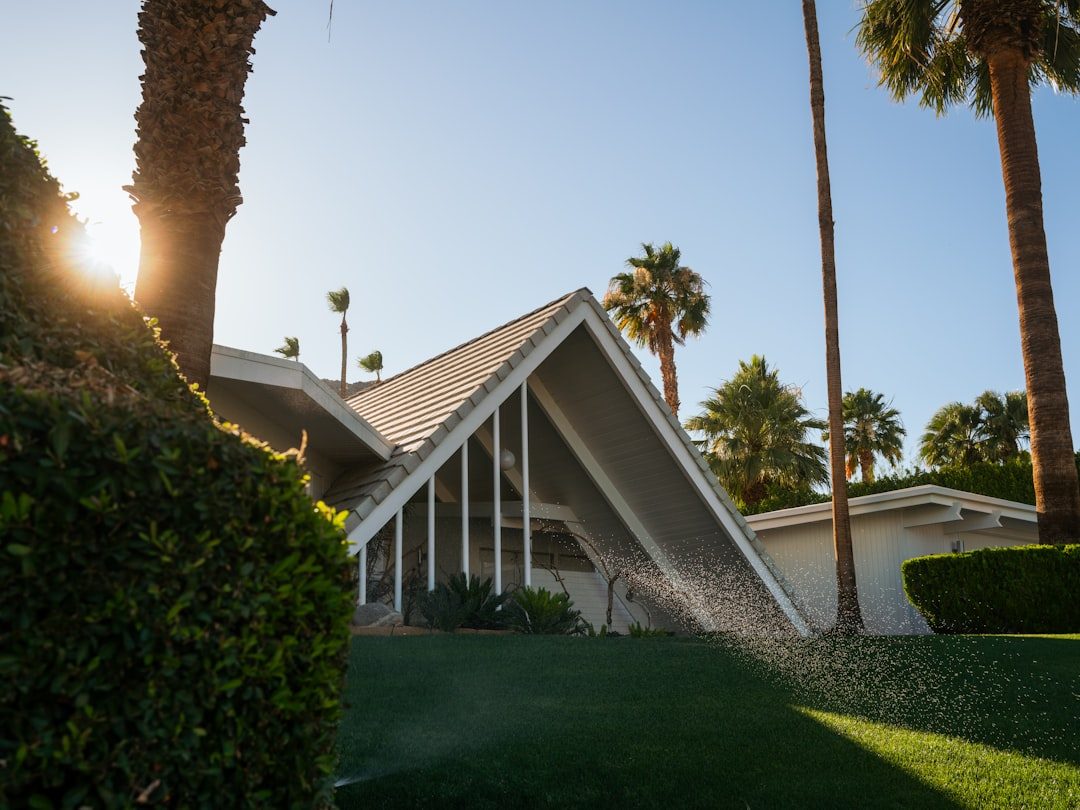
Environmental Impact of Lawns
 James ThorntonLawn Equipment & Maintenance Expert | 20 Years
As an Amazon Associate we earn from qualifying purchases.
Lawns look simple, but the environmental impact of lawns is anything but. Once you add up the water, fertilizer, mowing, and land area involved, turfgrass becomes one of the most important residential landscape issues for local ecosystems, water supplies, and even climate emissions.
Short, uniform turf started as a status symbol on European estates, where only the wealthy could afford land that did not produce food. Over time, that aesthetic was exported and reinvented in places like North America and Australia, eventually becoming the default landscaping choice in many suburbs. Today, the idea of a "normal yard" is still dominated by traditional lawn, even in regions where it is poorly suited to the climate.
This guide addresses three core questions: Are lawns bad for the environment, or just misunderstood? What are the real trade-offs between traditional turfgrass and alternatives? And how can you reduce the environmental impact of your lawn without giving up a green, usable yard? The focus is on residential properties, but the same principles apply to commercial and municipal turf such as parks, road medians, and campuses.
To stay clear, this article uses a few terms consistently. A traditional lawn means a mostly single-species, mowed turfgrass area, often Kentucky bluegrass or similar, maintained to look uniformly green using regular fertilizer, irrigation, and pesticides. An ecological lawn is still turf-like, but managed with lower inputs, more species diversity, and more tolerance for seasonal color changes and "imperfections." Turf alternatives include groundcovers, meadows, native plantings, and shrub or tree-based landscapes that replace some or all turf. Inputs refer to the resources and products used to maintain a lawn: water, fertilizers, herbicides, pesticides, and mowing or other mechanical care.
If you maintain a traditional, frequently mowed, heavily fertilized lawn, the environmental impact of that lawn is typically high. The main red flags are weekly or more frequent irrigation in summer, synthetic fertilizer 3 or more times per year, routine "just in case" pesticide use, and gas-powered mowing every 5 to 7 days. If several of these apply to your yard, your lawn is almost certainly using more water and generating more pollution than necessary.
You can verify this by checking your practices against a few benchmarks. If you apply more than 1 inch of water per week in summer, mow shorter than 3 inches, or fertilize more than twice per growing season, you are in high-input territory. The fix is to convert that lawn into a low-input or ecological lawn by raising mowing height, cutting irrigation to only when footprints remain visible on the grass, spot-treating weeds instead of blanket spraying, and gradually overseeding with more drought-tolerant and diverse species. Most homeowners see noticeable reductions in water and chemical use within one season and visible improvements in soil health and turf resilience within 1 to 2 years.
The Modern Lawn in Context
The History and Culture of Lawns
Short, manicured turf originated in aristocratic landscapes in 17th and 18th century Europe, especially in England and France. Closely cropped grass around a manor required workers, scythes, or grazing animals, which signaled that the landowner had enough wealth that fields near the house did not need to grow crops. Lawns also provided clear sightlines, reinforcing control over the landscape.
When the idea crossed the Atlantic, it blended with new technologies. The invention of mechanical reel mowers in the 1800s and later rotary mowers made it possible for middle class households to maintain short turf on smaller plots. After World War II, suburban development exploded in North America. Cheap land, mass-produced housing, sprinkler systems, and expanding water infrastructure created perfect conditions for lawns to become standard issue for millions of homes.
Cultural expectations locked this in. Subdivisions and homeowners associations (HOAs) wrote rules requiring neat, uniform lawns and prohibiting taller native vegetation or alternative landscapes. Real estate practices and media promoted "curb appeal," usually illustrated with bright green turf. At the same time, fertilizer and pesticide companies advertised heavily, equating a uniform green lawn with personal responsibility and success, and promoting annual "programs" of multiple products whether a lawn needed them or not.
How Common Are Lawns and Why That Matters
Lawns are now one of the largest irrigated "crops" in the United States, often cited as covering an area on the scale of tens of millions of acres. Even if a given square foot of turf has a modest impact, the sheer cumulative area makes lawns an environmental issue comparable to many agricultural systems. In highly developed suburbs, turf can cover a majority of open space once you include front yards, backyards, and institutional grounds.
Compared with natural ecosystems like prairie or woodland, traditional lawns usually support less biodiversity and require more inputs to maintain their appearance. Compared with major crops, lawns produce almost no food or fiber, so the environmental costs are not offset by direct human nutrition. In other words, lawns are a large, resource-intensive land use that yield mostly aesthetic and recreational benefits.
Season also matters. In spring, many homeowners over-fertilize and overwater lawns "to wake them up," which can increase runoff and early season water demand. In summer, irrigation demand peaks, especially in arid or semi-arid regions, stressing local water supplies. Fall is when many people apply weed control and winterizers, sometimes too late or at higher rates than needed. In winter, frozen turf and compacted soil reduce infiltration of snowmelt, contributing to runoff and road salt transport into waterways.
Key Environmental Impacts of Lawns: Big Picture Overview
Direct vs Indirect Impacts
Direct impacts are those caused on-site by daily lawn care practices. Water use is often the most obvious, especially in climates where irrigation is needed to keep turf green. A typical cool-season lawn often needs around 1 to 1.5 inches of water per week during active growth, including rainfall. Many homeowners apply more than that, particularly with fixed irrigation schedules, which increases pressure on municipal supplies and aquifers.
Chemical use is another direct impact. Synthetic fertilizers contribute nitrogen and phosphorus that can wash off into streams and lakes, while herbicides and insecticides can affect non-target organisms like pollinators, soil microbes, and aquatic life. Mowing with gasoline equipment creates localized air and noise pollution. At landscape scale, converting diverse habitat to uniform turf reduces plant and insect diversity, interrupts migration corridors, and simplifies the food web.
Indirect impacts occur upstream or at broader scales. Producing and transporting synthetic fertilizer requires significant energy, which generates greenhouse gas emissions. Gas-powered mowers, trimmers, and blowers add to that both through fuel combustion and the manufacture of the machines. Lawns can also alter local microclimates by reflecting more or less sunlight compared to other groundcovers, and by changing humidity and evapotranspiration patterns. Finally, there is the land use opportunity cost: a lawn could instead be a native plant garden, food-producing landscape, or small urban woodland that offers more ecosystem services per square foot.
How to Think Critically About the Environmental Impact of Lawns
It is tempting to say "all lawns are bad" or, on the other hand, "lawns are green so they must be good." Both are oversimplifications. A high-input, frequently irrigated lawn in a desert climate with heavy fertilizer and pesticide use is environmentally costly. A low-input, mixed-species lawn in a humid climate that rarely needs irrigation can provide ground cover, cooling, infiltration, and recreation with relatively modest impacts.

To evaluate your own lawn, start with a simple framework that compares inputs and outputs. On the input side, list water use, fertilizer applications, herbicides, insecticides, and fuel or electricity for mowing. On the output side, note what the lawn actually provides: erosion control, cooling around the home, rainfall infiltration, habitat for insects and soil life, recreation for pets and kids, and some carbon storage in soil and roots. If the lawn is highly managed but rarely used, it is functioning more like an ornamental surface than a functional landscape.
This leads to the useful distinction between low-input lawns and high-input conventional turf. Low-input lawns are managed with minimal irrigation, perhaps 1 or 2 fertilizer applications per year or none at all, higher mowing heights, and spot treatments rather than blanket pesticides. A functional lawn is one where turf exists because people actually walk, play, or use the space. Ornamental lawns are primarily for looks, often in front yards, where the same aesthetic benefit could be achieved with lower impact planting designs.
Water Use and Hydrological Impacts
How Much Water Lawns Really Use
In many climates, lawns are the single largest outdoor water use for a household. A common guideline is that cool-season grasses like Kentucky bluegrass, perennial ryegrass, and fescues typically need about 1 to 1.5 inches of water per week during peak growth, including rainfall. Warm-season grasses like Bermuda or zoysia often need a similar total, but concentrated in their warm growing period.
If you use an automatic irrigation system set to run multiple days per week regardless of weather, it is easy to exceed this. One quick test is to place shallow containers or tuna cans in your lawn and run a normal irrigation cycle, then measure how much water accumulates. If you see more than 0.5 inch per cycle and the system runs several times per week, your irrigation likely exceeds turf needs, especially if you live in a region that receives regular summer rain.
When you compare lawn irrigation to indoor household use, the difference can be stark. In some western U.S. cities, more than half of residential water consumption in summer goes to outdoor irrigation, predominantly lawns. In a humid climate, lawn irrigation may be much lower or unnecessary, but homeowners sometimes water "just in case," particularly in spring and fall. Over-irrigation not only wastes water but also promotes shallow roots, making grass more drought sensitive in the long run.
Water Scarcity, Drought, and Legal Restrictions
In drought-prone or arid regions, the environmental impact of lawns is magnified. Using potable water to maintain purely aesthetic turf competes directly with human consumption, agriculture, and ecological needs for rivers and aquifers. Many municipalities respond with watering restrictions, such as odd-even day schedules or limits on hours and days when irrigation is allowed. Some areas offer rebates to remove turf and install water-efficient landscaping in place of high-input lawns.
Tiered water pricing is another tool. Under this system, basic indoor use is billed at a low rate, but higher tiers that typically represent outdoor irrigation are increasingly expensive. This pricing structure encourages homeowners to reconsider large lawns and adopt low-water practices or alternatives. From an environmental standpoint, the threshold where irrigation becomes problematic depends on local water supply. If your region regularly issues drought advisories, any non-essential irrigation should be minimized.
Seasonal behavior patterns also matter. Peak demand often hits in late spring and summer, precisely when water supplies can be most stressed. In contrast, many lawns need little to no irrigation in spring and fall in temperate climates, yet routines and irrigation controller settings are rarely adjusted. A practical threshold is this: if you can push a screwdriver or soil probe 6 inches into the lawn and it comes out moist, you do not need to water that day. Waiting until the grass shows early drought signs, like footprints that remain visible, usually results in deeper roots and lower total water use.
Runoff, Stormwater, and Flood Risk
Lawns interact with rainfall and runoff in complex ways. In theory, vegetated surfaces absorb more water than pavement, reducing stormwater flows. In practice, compacted lawn soils and very short mowing heights often limit infiltration. When soil is compressed by foot traffic, heavy equipment, or repeated mowing in wet conditions, its pore space shrinks, and water moves across the surface instead of soaking in.
Runoff from lawns can carry fertilizers, herbicides, and soil particles into storm drains, streams, and lakes. Elevated nitrogen and phosphorus from lawn runoff contribute to algae blooms and low oxygen zones in lakes and coastal waters. Herbicide residues and insecticides can harm aquatic insects and fish. If you notice water flowing off your lawn and onto sidewalks or into the street during moderate rain, that indicates compaction or over-irrigation is causing the turf to act more like a sealed surface.
Deeper-rooted plants such as native perennials, shrubs, and trees usually improve infiltration compared with shallow-rooted turf, particularly if the soil beneath has not been heavily compacted. However, a well-managed lawn with healthy soil can still provide useful infiltration. The key is to manage the lawn hydrologically rather than just aesthetically.
A hydrologically smarter lawn practice set typically includes: annual or biennial core aeration in compacted areas, especially those that fail the screwdriver test; maintaining a higher mowing height, usually 3 to 4 inches for cool-season grasses, which promotes deeper roots; and adding landscape features like rain gardens or vegetated buffer strips along hardscapes and at the base of slopes to intercept runoff. These practices reduce flood peaks, protect water quality, and make your lawn more resilient in both heavy rain and drought.
- Penn State Extension recommends mowing cool-season lawns at 3 to 4 inches and irrigating only when 30 to 50 percent of the lawn shows drought stress, which typically keeps total water use near the 1 to 1.5 inch per week range including rainfall.
Fertilizers, Chemicals, and Soil Health
Fertilizer Use and Nutrient Pollution
Fertilizing a lawn is not inherently harmful. Grass requires nutrients, especially nitrogen, to grow dense, healthy turf that resists weeds and erosion. Problems arise when application rates are too high, timing is poor, or fertilizers are applied to frozen or saturated ground. Under those conditions, nutrients are more likely to leach into groundwater or run off into surface waters.
A common guideline for cool-season lawns is no more than about 3 to 4 pounds of nitrogen per 1,000 square feet per growing season, split into 2 to 4 applications. Many "4-step" programs are designed around this range, but homeowners sometimes double up products or overlap application zones, effectively exceeding recommended rates. If you see vivid green flushes followed by quick fading, or if you need to mow more than once per week because of rapid growth after fertilizing, that typically points to over-application.
Nitrogen that is not used by turfgrass can convert to nitrate and move into groundwater, where high levels can be a drinking water concern, or wash into streams and cause eutrophication. Phosphorus from lawn fertilizers is especially problematic in ponds and lakes, where even small amounts can fuel algae blooms. Many regions now restrict or ban phosphorus in lawn fertilizers except when a soil test shows deficiency or when establishing new turf.
Herbicides, Pesticides, and Non-Target Effects
Weed control in lawns often relies on selective herbicides, such as 2,4-D or dicamba, that kill broadleaf species while sparing grasses. When used according to label directions and only where necessary, these herbicides can be part of a targeted program. However, routine blanket applications of weed-and-feed products over the entire lawn, regardless of weed pressure, magnify environmental impact and are usually unnecessary if you tolerate a modest number of non-turf species.
Insecticides used for grubs or surface-feeding insects can also affect non-target organisms. Some older products are toxic to beneficial insects, aquatic organisms, or soil life. Overuse or mis-timed use can harm predators and pollinators more than the pests they are meant to control. A more sustainable approach is to monitor pest levels and treat only when thresholds are exceeded. For example, finding 10 or more live white grubs per square foot when you peel back the sod typically indicates treatment is warranted, while a few scattered grubs do not justify a broad application.
The combined effect of synthetic fertilizers, herbicides, and insecticides can reduce soil biodiversity and disrupt nutrient cycles over time. That does not mean you must avoid all products, but it does mean you should move from calendar-based applications to problem-based, threshold-driven decisions.
Soil Organic Matter and Lawn Ecology
Soil health is often overlooked when people discuss the environmental impact of lawns. Healthy soil with high organic matter supports more microbial life, stores more carbon, retains more water, and releases nutrients more gradually. However, repeated removal of clippings, excessive synthetic fertilizer, and lack of organic inputs can deplete soil organic matter in turf over time.
Leaving grass clippings on the lawn is one of the simplest ways to improve soil health. Clippings return nutrients and organic material to the soil surface, where microbes break them down. Over a season, this can provide the equivalent of roughly 1 pound of nitrogen per 1,000 square feet, reducing the need for synthetic fertilizer. Mulching autumn leaves into the turf rather than bagging and removing them also increases organic matter.
Core aeration, topdressing with compost, and reducing pesticide intensity allow beneficial organisms like earthworms and fungi to thrive. Over 1 to 3 years, these practices can transform a compacted, chemically dependent lawn into a more resilient system that requires fewer inputs to maintain acceptable quality.
- Cornell Cooperative Extension notes that returning grass clippings can supply up to one third of a lawn's annual nitrogen needs, often allowing homeowners to reduce fertilizer applications from four per year to two without loss of quality.
Carbon, Air Pollution, and Mowing Impacts
Lawn Carbon Balance and Greenhouse Gases
Lawns are green plants, so they photosynthesize and store carbon in leaves, roots, and soil. In some cases, especially when managed with low inputs and minimal disturbance, lawns can act as minor carbon sinks, gradually increasing soil organic carbon. However, that benefit must be weighed against emissions associated with fertilizer manufacture, mowing, irrigation, and decomposition of clippings or thatch.
Synthetic nitrogen fertilizers can indirectly increase nitrous oxide emissions, a potent greenhouse gas, through soil microbial processes. Over-fertilization increases the chance that excess nitrogen is lost this way instead of being taken up by plants. Mowing with gasoline equipment emits carbon dioxide and other pollutants. The overall carbon balance of a lawn often hinges on how intensively it is managed. A high-input lawn with frequent mowing and heavy fertilization can easily tip into net emissions.
One practical way to improve the carbon profile of your lawn is to reduce nitrogen input levels to those recommended by soil tests and extension guidance, and to consider areas where turf could be replaced by perennials or shrubs with deeper root systems and longer-lived biomass. Those plantings often sequester more carbon per square foot with fewer recurring inputs.
Air and Noise Pollution from Mowing
Gas-powered mowers, trimmers, and blowers emit not just carbon dioxide but also volatile organic compounds, nitrogen oxides, and fine particulates. These contribute to local smog and can affect respiratory health. Older two-stroke engines are particularly polluting compared with modern four-stroke or electric motors. Running a gas mower for an hour can produce emissions comparable to driving a car for many miles, especially if the mower is poorly maintained.
Noise pollution is another factor. Regular mowing, often on weekends or evenings, adds to urban and suburban noise loads. While this might seem like a minor issue compared with climate or water, cumulative noise can affect wildlife behavior and human stress levels. Reducing mowing frequency and switching to quieter equipment improves neighborhood quality of life as well as environmental performance.
From a lawn health standpoint, mowing less often and at a higher height is usually beneficial. Many cool-season grasses perform best when kept around 3 to 4 inches, with no more than one third of the leaf blade removed in a single mowing. That typically translates to mowing every 7 to 14 days in active growth periods rather than every 5 days. Electric mowers, especially battery-powered models, can significantly reduce air and noise pollution while handling most residential lot sizes on a single charge.
Biodiversity, Habitat, and Aesthetic Trade-offs
Lawns and Urban Wildlife
A single lawn rarely determines the fate of a species, but when lawns dominate urban and suburban landscapes, they shape habitat patterns. Uniform turf provides limited food and shelter for pollinators, birds, and small mammals. Some species, like Canada geese, can benefit from open turf, but many others struggle in these simplified environments.
Replacing portions of lawn with flowering perennials, shrubs, or native grasses increases nectar, pollen, seeds, and nesting cover. Even small patches - such as a 100 square foot bed of mixed perennials - can provide stepping stones for bees and butterflies moving through neighborhoods. Maintaining some areas with less frequent mowing, such as a back corner allowed to grow taller, also boosts habitat value without eliminating functional turf where it is needed.
Tolerating so-called "weeds" like clover or violets in an ecological lawn can be particularly beneficial. These plants offer flowers for pollinators and fix nitrogen or improve soil in ways that help turf as well. From ten feet away, a mixed-species low-input lawn still reads as green and lawn-like to most observers, while supporting more life.
Aesthetics, Social Norms, and HOAs
One of the biggest barriers to lowering the environmental impact of lawns is social expectation. In many neighborhoods, a brown or patchy lawn is interpreted as neglect, even if it reflects responsible water conservation or a seasonal dormancy pattern that is normal for your grass type. HOAs may enforce rules regarding maximum grass height or visible weeds, constraining what homeowners feel free to do.
Within these constraints, there is often more flexibility than people assume. Higher mowing heights typically remain within HOA rules yet deliver environmental benefits. Flower beds, foundation plantings, and defined edges around ecological lawn areas can signal that the yard is intentionally managed, reducing complaints even when turf is less uniform. When planning to replace lawn with alternatives, starting in the backyard or less-visible areas is a practical way to prove the concept.
Where HOAs strictly enforce lawn standards, it can be helpful to consult local extension recommendations and municipal ordinances. Many jurisdictions now recognize rain gardens, pollinator plantings, and "managed natural landscapes" as permitted uses. Presenting evidence-based guidance about recommended mowing heights, fertilizer limits, and water conservation can support conversations with HOA boards about updating outdated rules.
Reducing the Environmental Impact Without Losing Your Lawn
Low-Input and Ecological Lawn Strategies
If you want to keep a lawn but reduce its environmental footprint, shifting to a low-input or ecological lawn is often the best compromise. The goal is not a golf-course surface, but a healthy, mostly green yard with less irrigation, fewer chemicals, and more biodiversity. The main levers are mowing, watering, fertilizing, and species composition.
Start by raising your mowing height to around 3 to 4 inches for cool-season grasses, or to the upper end of the recommended range for your warm-season species. Taller turf shades soil, suppresses some weeds, and promotes deeper roots, which improves drought tolerance and infiltration. Next, switch from calendar-based watering to need-based irrigation: water only when the turf shows early stress, such as bluish-gray color or persistent footprints, and then apply about 0.5 to 0.75 inch of water in a single deep soaking rather than frequent light sprinkles.
On fertility, base your program on soil test results rather than generic bag recommendations. Many established lawns perform well with 1 to 2 pounds of nitrogen per 1,000 square feet per year when clippings are returned. Apply in late summer or early fall for cool-season lawns, when roots are active, rather than heavy spring doses that mostly grow top growth and require extra mowing. Spot-treat weeds instead of blanket spraying, and tolerate a moderate presence of non-turf species that do not interfere with use.
Partial Lawn Replacement and Functional Zoning
Another powerful approach is to right-size your lawn to match actual use. Walk your yard and note where people and pets routinely travel or play, and where turf is rarely stepped on. Front yards often fall in the latter category, functioning primarily as decorative space. Backyards might have clearly defined play areas, paths, or open rectangles for activities, with other regions remaining largely unused.
Once you identify low-use areas, consider converting them to turf alternatives that fit your climate and style. Options include native or adapted groundcovers, mixed shrub and perennial borders, edible landscapes with fruiting shrubs and vegetables, or small native meadows. Even removing 20 to 30 percent of your existing turf can significantly cut water use and chemical inputs, while increasing habitat and visual interest.
For the remaining high-use zones, manage turf as a durable surface. Choose appropriate grass species or blends for your region, overseed thin areas in fall or early spring, and accept some seasonal color change or mild dormancy during heat or drought instead of chasing perfect uniformity with water and fertilizer.
Timeline for Transitioning to a Greener Lawn
Transitioning away from a high-input lawn is best done over 1 to 3 growing seasons, not in a single weekend. In year one, focus on changing habits: raise mowing height, leave clippings, start watering by need, and reduce fertilizer applications to those recommended by a soil test. Monitor how the lawn responds through the seasons.
In year two, overseed with more drought-tolerant or low-input species such as fine fescues in suitable climates, and begin converting one or two defined lawn areas to alternative plantings. This might involve smothering turf with cardboard and mulch in late summer, then planting perennials or shrubs in fall. Adjust irrigation zones so that non-turf plantings and remaining turf receive water according to their specific needs.
By year three, you can refine plant choices, expand successful non-turf zones, and further cut back on inputs as soil health improves. At this stage, many homeowners find they can mow less frequently, skip pesticides except for specific threshold-based problems, and maintain acceptable lawn quality with far fewer environmental costs.
What Other Guides Miss: Common Mistakes to Avoid
Many articles on the environmental impact of lawns focus on broad messages like "remove your lawn" without providing practical diagnostics or region-specific nuance. Several important points are often overlooked that matter greatly when you are making decisions for a specific yard.
First, guides rarely emphasize confirmation tests. Before changing your entire fertilizer program, for example, you should get a soil test rather than assuming deficiency or excess. Before applying insecticides "for grubs," peel back a few pieces of sod and count actual grubs per square foot to see if you exceed the usual treatment threshold around 10 per square foot. These simple checks prevent unnecessary applications and help target interventions.
Second, timing mistakes are common. Many sources promote heavy spring fertilization, which produces lush growth that needs frequent mowing and can be prone to disease, rather than recommending late summer or early fall applications that support root growth and winter hardiness. Similarly, some guides suggest water "twice a week" without considering rainfall or soil type, which can lead to chronic overwatering in humid regions. Shifting the timing of inputs to match plant biology and local climate often yields the biggest environmental gains with minimal sacrifice in lawn quality.
Third, regional differences are frequently ignored. A grass mix, mowing height, or irrigation practice that makes sense in the Pacific Northwest may be inappropriate in the Southwest. Warm-season grasses that thrive on summer heat can be lower input than cool-season lawns in the South, but are poor choices in northern climates. When you read or implement advice, always cross-check recommendations with your grass type and USDA hardiness zone, and consult state-specific extension resources when possible.
Conclusion: Rethinking Lawns as Living Systems
The environmental impact of lawns is significant not because any individual yard is uniquely destructive, but because lawns occupy vast areas and are often managed in resource-intensive ways. Yet lawns also provide real benefits: cooling around homes, erosion control, and usable space for people and pets. The question is not whether lawns are inherently good or bad, but whether your lawn is sized and managed to balance these benefits against its costs.
By raising mowing heights, watering only when necessary, basing fertilizer on soil tests, reducing blanket pesticide use, and converting underused turf to more diverse plantings, you can substantially shrink the footprint of your yard while keeping it green and functional. Most of these changes do not require special equipment or expensive products, just different habits and expectations.

If you are ready to go deeper into practical steps, check out our guide on creating a low-input lawn for your region, including grass selection, overseeding strategies, and seasonal maintenance calendars. As you work, treat your lawn not as a static carpet, but as a living system that can evolve toward lower inputs, higher resilience, and a better fit with the surrounding environment.
Top Picks
- PetraTools Liquid Iron for LawnsCheck price on Amazon
- BioAdvanced Fungus Control for LawnsCheck price on Amazon
- Spectracide Weed Stop for LawnsCheck price on Amazon
As an Amazon Associate we earn from qualifying purchases.
Free Lawn Care Tools
Traditional lawns are not automatically bad, but they become environmentally costly when maintained with high inputs of water, fertilizer, and pesticides. Short, uniform turf that is frequently mowed, heavily irrigated, and regularly treated with chemicals tends to use more resources and generate more pollution than necessary. With lower-input practices and more diverse plantings, a lawn-like yard can provide many of the same benefits with less impact.
A typical cool-season lawn needs around 1 to 1.5 inches of water per week during active growth, including rainfall. Many homeowners exceed this amount, especially when using automatic irrigation on fixed schedules. Overwatering not only wastes water but can also increase runoff and stress local water supplies.
Clear signs of a high-impact lawn include watering more than 1 inch per week in summer, mowing shorter than 3 inches, and fertilizing more than twice per growing season. Routine “just in case” pesticide applications and gas-powered mowing every 5 to 7 days are additional red flags. When several of these practices are combined, the lawn is almost certainly using more resources than it needs.
Simple changes like raising your mowing height to at least 3 inches and cutting irrigation back to only when footprints remain visible on the grass can make an immediate difference. Switching from blanket spraying to spot-treating weeds and overseeding with more drought-tolerant, diverse species further reduces inputs. Most homeowners see noticeable reductions in water and chemical use within a season and better soil health within 1 to 2 years.
Traditional lawns are often managed as single-species turf that relies on synthetic fertilizers to stay uniformly green. Excess nitrogen and phosphorus can wash off into streams and lakes, contributing to water pollution and harming aquatic life. Frequent fertilization also drives more mowing and can increase dependence on other chemicals.
An ecological lawn is still turf-like and usable, but it is managed with lower inputs, more species diversity, and greater tolerance for seasonal color changes and minor “imperfections.” It relies less on regular irrigation, synthetic fertilizers, and blanket pesticide applications. Compared to a traditional lawn, it typically supports more biodiversity and has a smaller environmental footprint.
Photos: Kindel Media / Pexels, juan rojas / Pexels, Karola G / Pexels

Beat weeds and brown spots from your phone
Snap a photo, get the fix, and follow a plan timed to your soil and weather. Free on iPhone.
Related Articles
 Lawn Care Tips
Lawn Rust Disease: Why Your Grass Looks Orange and How to Fix It
Jun 15, 2026•11 min read Lawn Care Tips
Summer Patch: The Root Disease That Browns Lawns in Heat
Jun 15, 2026•11 min read Lawn Care Tips
Leaf Spot and Melting Out: Identifying and Treating This Lawn Disease
Jun 15, 2026•11 min read

