How Plant Growth Regulation Can Make Your Lawn Thicker and Greener
Learn how plant growth regulation can make your lawn thicker and greener by redirecting growth into density, roots, and color using pro techniques at home.
Plant growth regulation is one of the main tools that separates an ordinary lawn from the thick, dark green turf you see on high-end sports fields and golf fairways. Instead of just feeding the grass or cutting it shorter, plant growth regulators (PGRs) actually change how the plant grows so more energy goes into density, roots, and color instead of height.
In plain language, a plant growth regulator is a product that adjusts the plant’s internal growth hormones so it grows slower upward, but stronger overall. When used correctly, PGRs do not damage the lawn. They can make your lawn thicker and greener by increasing tillers and roots and by improving stress tolerance over time. Although they are heavily used on golf courses and stadiums, many products are labeled and safe for home lawns when applied according to directions.
Most homeowners want to know three things: Will plant growth regulation hurt my lawn, can it actually make my lawn thicker and not just shorter, and is this only for pros? The answers, when you choose the right product and follow the label, are: no, yes, and no. Residential users can absolutely use the same tools the pros use, in a scaled and simplified way, to dramatically improve turf quality.
If your grass is growing fast vertically, feels thin, and shows small gaps between plants even after fertilizing, that usually means growth energy is going mostly upward instead of into density and roots. Confirm by checking a small patch: part the grass with your hands and look at how many shoots emerge from each crown. If you can easily see soil between plants in a healthy season, density is lacking and plant growth regulation can help redirect growth.
The fix is to apply a suitable plant growth regulator, usually a Type II product like trinexapac-ethyl, at the label rate for your grass type every 3 to 5 weeks during active growth. Combine it with proper mowing height and balanced fertilizing so the grass has nutrients to build new tillers and roots. Avoid overapplying, stacking multiple PGRs unless you know what you are doing, or spraying stressed or droughted turf, because that can slow recovery and cause temporary discoloration.
Most lawns show noticeably thicker, tighter turf within 4 to 8 weeks of consistent regulation, along with deeper color and a slowed mowing schedule. Expect the first application to slightly slow growth within 5 to 7 days. Stay on a repeat schedule through the main growing season, and your lawn will gradually transition from a leggy, fast-growing stand to a compact, dense surface that better resists weeds, heat, and traffic.
Plant growth regulation is the practice of using specific products to influence how a plant grows, not just how fast it grows. These products, called plant growth regulators or PGRs, interact with the plant’s hormone system and change the balance between vertical growth, lateral spread, and root development.
Plants naturally produce growth hormones such as gibberellins, auxins, and cytokinins. These compounds control everything from stem stretching to leaf expansion and root branching. A turf PGR is a synthetic or naturally derived compound that nudges those hormone pathways. In lawns, the goal is simple: reduce excessive upward growth and encourage the plant to put more effort into forming more shoots, roots, and chlorophyll.
Many people confuse PGRs with herbicides. A herbicide is designed to injure or kill unwanted plants. A turf PGR, when correctly selected and used at labeled rates, does not kill the plant. It simply changes the growth pattern. If you think of mowing as the gas pedal for how fast your lawn looks shaggy, PGRs are the cruise control system. They keep growth controlled and consistent so you mow less, while the plant quietly redirects energy into thickening.
So PGRs are not “plant steroids” that force extreme growth, and they are not herbicides. They are fine-tuning tools. That is why golf course superintendents, sports turf managers, and high-end landscape managers include PGRs in their regular maintenance programs to achieve uniform, dense, dark green turf that can handle stress.
Most turf PGRs used on home lawns focus on one hormone family: gibberellins. Gibberellins drive cell elongation, which is what causes leaf blades and stems to grow longer between joints, or internodes. When gibberellin levels are high and nutrients are available, turf tends to stretch upward quickly, which is what you see as that “I just mowed two days ago and it is already tall again” effect.
Products such as trinexapac-ethyl work by inhibiting gibberellin synthesis. In other words, they partially block the plant’s ability to produce the form of gibberellin that drives elongation. The plant still functions normally, but its cells do not elongate as much. The result is shorter internodes, smaller leaf cells, and a slower vertical growth rate. The grass is still photosynthesizing and producing carbohydrates, but it is no longer spending all that energy on height.
When upward growth is slowed, the plant often compensates by increasing tillering and improving root development. Tillers are new shoots that emerge from the crown of the plant. More tillers per plant means more individual blades, more surface area to capture light, and a tighter canopy. At the same time, reduced mowing and reduced stretching let the grass store more carbohydrates in the crown and roots. That extra stored energy supports thicker roots, better recovery from traffic, and improved stress tolerance.
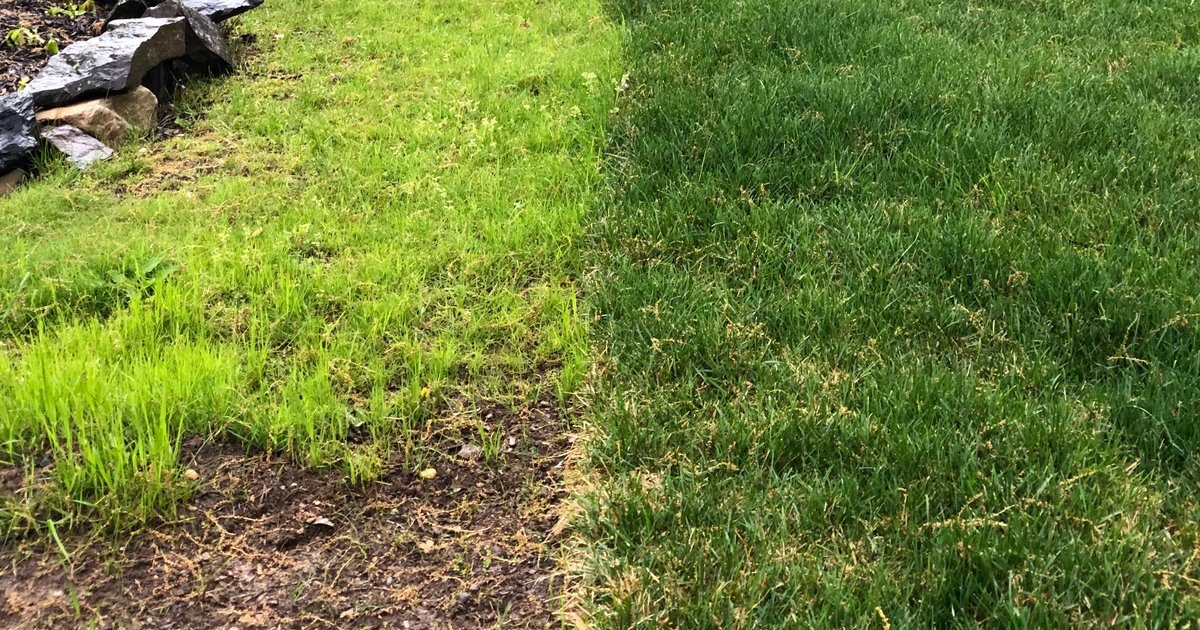
From above, this shift looks like thicker and greener turf. Each plant produces more shoots, and those shoots are closer together. Many research trials have also found that leaves under PGR regulation have slightly higher chlorophyll concentration, so the color looks deeper and more uniform. Combined with less tip burn from mowing, the lawn appears richer and more “painted” than an unregulated stand.
Turf managers usually group plant growth regulators for lawns into two main categories: Type I and Type II. The difference is important, because it explains why most home lawns are best served by Type II products.
Type I PGRs are mitotic inhibitors. They interfere with cell division in the growing points of the plant. These products are older technology and are more commonly used on specialized turf or for very specific purposes. They can cause more bronzing or injury if misapplied and are less forgiving for homeowners. Examples include some older active ingredients used primarily on cool-season fairways or nursery crops.
Type II PGRs are gibberellin inhibitors. These include trinexapac-ethyl and prohexadione-calcium, which are widely used on golf greens, fairways, sports fields, and, increasingly, residential lawns. Because they primarily affect cell elongation rather than cell division, they provide a smoother, more predictable growth regulation response. Turf color and quality are usually maintained or improved when these are used as directed.
Ethephon is another compound sometimes used as a PGR in turf, usually for seedhead suppression in cool-season grasses like Poa annua and Kentucky bluegrass. It works differently by releasing ethylene, a plant hormone associated with maturation and senescence. Ethephon use is more advanced and timing-sensitive, so it is generally not the first choice for homeowners whose main goal is a thicker, greener lawn.
For residential lawns, Type II gibberellin inhibitors are usually the best fit to make your lawn thicker and greener. Products containing trinexapac-ethyl are the most common. They are designed to be safe when applied at labeled rates, but you must always check that the product is labeled for residential turf in your region. Country, state, or province regulations determine what can be used on home lawns.
When you read a PGR label, you will see approved grass species, application rates in fluid ounces per 1,000 square feet, and reapplication intervals, often in the 21 to 35 day range depending on growth and climate. Never exceed label rates, and do not assume that “more PGR” will create “more density.” Overregulation can thin turf or cause discoloration, especially under stress.
To understand how plant growth regulation can make your lawn thicker and greener, you need to know a few simple turf terms: tillers, stolons, and rhizomes. A tiller is a new shoot that comes out of the base of an existing grass plant. Stolons are aboveground runners that some grasses use to spread sideways, while rhizomes are underground stems that create new plants a short distance away.
Cool-season bunch-type grasses, like perennial ryegrass and many tall fescue cultivars, mainly thicken by producing more tillers from the crown. Spreading grasses, like Kentucky bluegrass, bermudagrass, and zoysiagrass, use a combination of tillers, stolons, and/or rhizomes. In all cases, density improves when each plant produces more shoots and spreads laterally, not when a few shoots simply grow taller.
PGRs shift the plant’s energy from vertical growth to lateral and basal growth. Because less energy is spent on stretching leaf blades upward, more resources are available for bud formation in the crown. Those buds become new tillers. In spreading species, stolon and rhizome activity can also increase or become more efficient, leading to more shoots per square foot.
From a homeowner’s perspective, this shows up within 4 to 8 weeks of consistent regulation as a lawn that looks like it has “filled in.” If you look closely, you will see more leaf blades packed into the same area and fewer visible gaps where soil shows through. A denser canopy minimizes light reaching the soil surface, which helps prevent weed seeds from germinating. The lawn becomes more competitive, so opportunistic weeds like crabgrass and spurge have less room to establish.
Because the leaves are shorter and more compact, mowing also removes less leaf surface at each cut. That means less stress per mow and less tip burn, which further encourages a lush appearance. Over time, reduced mowing shock plus extra stored carbohydrates in the crown and roots combine to raise the baseline health of the turf.
Different grass species respond to plant growth regulation in slightly different ways. Understanding your grass type is critical before you decide how to use a PGR and what kind of results to expect. If you are not sure, review a resource on identifying your grass type before you begin.
In cool-season lawns, Kentucky bluegrass tends to respond extremely well to Type II PGRs. Bluegrass is rhizomatous, meaning it spreads via underground stems as well as tillering. Under regulation, Kentucky bluegrass often shows increased tiller numbers and more active rhizomes. This produces a tight, carpet-like stand. When combined with a good fall fertilization program, PGR-treated bluegrass can fill in small bare areas noticeably faster.
Perennial ryegrass is a bunch-type grass, so it does not spread with rhizomes or stolons, but it can still increase tiller density. PGR treatment on ryegrass often results in a very uniform, dense appearance with reduced seedhead production in some cases. Because ryegrass naturally has finer leaves and a fast growth rate, regulation keeps it looking groomed with fewer mowings.
Tall fescue lawns can also benefit from PGRs, but the response is slightly different. Tall fescue is a bunch-type grass with relatively coarse blades. Under plant growth regulation, tall fescue produces more tillers and maintains a more even height, but it is important not to overregulate or combine PGRs with very low mowing because that can exaggerate clumpiness. When used with a mowing height around 3 to 4 inches, PGRs help tall fescue stands fill in and look more uniform.
Warm-season grasses often show some of the most dramatic improvements from plant growth regulation. Bermudagrass is extremely responsive: PGRs can increase shoot density, shorten internodes along stolons, and make the turf look like a tight, sports-field-quality mat. Zoysiagrass is already naturally dense, but regulation can reduce scalping, improve color, and further tighten the canopy. For St. Augustinegrass, some PGRs are used more cautiously, so it is vital to verify label approval and follow the lower end of rate ranges.
Because warm-season grasses grow most vigorously in hot weather, the timing and frequency of PGR applications may be slightly different from cool-season turf. You will usually apply from late spring through summer when soil temperatures are consistently above about 65 degrees Fahrenheit, and you will often be closer to the shorter end of labeled intervals due to faster growth.
Thicker turf is not only about what you see at the surface. Root performance is just as important if you want a lawn that stays green during heat, traffic, and mild drought. Plant growth regulation supports a stronger root system through two main mechanisms: reduced shoot demand and increased carbohydrate reserves.
When vertical growth slows, the plant’s overall demand for water and nutrients is slightly reduced. The grass still needs proper fertilization and watering, but it is not burning through resources as quickly just to keep up with rapid top growth. This gives the root system a chance to catch up and stabilize. Many studies have shown that regulated turf maintains root mass better under stress compared to nonregulated turf that is chasing rapid growth.
At the same time, the plant is able to store more carbohydrates in the crown and roots. Normally, a lot of photosynthesized sugar is quickly used to make new, longer cells in expanding leaves. Under PGR treatment, that expansion is limited, so more of the sugar is stored. These reserves are then available when the plant encounters stress, such as heat, drought, or traffic damage, and when it needs to regenerate tissue.
Practically, this means a lawn under a well managed PGR program can stay greener longer in moderate drought, recover faster from footprints and mower turns, and handle seasonal transitions more smoothly. Combined with good soil management and correct irrigation (about 1 to 1.5 inches of water per week in most climates when rainfall is lacking), the result is a turf that is not only thicker and greener, but also more resilient.
Before you buy any plant growth regulator, identify your grass species and whether you are working with a cool-season or warm-season lawn. This affects which products you can use, the best timing, and how often to apply. If you see your lawn goes dormant and brown in mid-summer but grows strongly in spring and fall, you likely have cool-season grasses like Kentucky bluegrass, perennial ryegrass, or tall fescue. If your lawn thrives in summer heat and goes dormant in winter, you likely have warm-season species like bermuda, zoysia, or St. Augustinegrass.
Once you know your grass type, read product labels carefully. Many trinexapac-ethyl products list specific rates for Kentucky bluegrass, ryegrass, tall fescue, bermudagrass, and zoysiagrass. Some may not list St. Augustinegrass or centipedegrass, or may have reduced rates or restrictions. If your species is not on the label, do not assume it is safe to use.
For most homeowners, a single Type II gibberellin inhibitor is sufficient. Look for a product that clearly lists trinexapac-ethyl or prohexadione-calcium as the active ingredient and is labeled for residential turfgrass. Many professional-grade products are available in small packages that can be calibrated for home use.
Check that the label specifies application rates in fluid ounces per 1,000 square feet along with reapplication intervals. Typical trinexapac-ethyl rates might range from about 0.10 to 0.20 fluid ounces per 1,000 square feet for cool-season lawns, and slightly higher for warm-season turf, although exact values depend on the formulation. Use the lower end of the rate range when you first start so you can observe how your lawn responds.
Minor formulation differences exist, but from a homeowner’s perspective, the key is legality for residential use, clear instructions, and compatibility with your grass. Avoid advanced combinations or stacking multiple PGRs until you have experience, as interactions can create more intense regulation or unpredictable responses.
Plant growth regulators work best on actively growing turf. For cool-season lawns, that means spring and fall when daytime highs are generally between about 60 and 80 degrees Fahrenheit. You want to avoid heavy regulation during peak summer stress if your grass is already struggling from heat or drought. Many homeowners in cool climates start their first PGR application in late spring, for example when soil temperatures first reach about 55 to 60 degrees, and continue with repeat applications until early summer, then resume in late summer or early fall.
For warm-season lawns, the core season is different. You should wait until the grass is fully out of dormancy and actively growing, typically when soil temperatures at 2 to 4 inches are consistently above about 65 degrees Fahrenheit. That often corresponds to late spring. You can then apply PGRs through summer into early fall, stopping several weeks before expected dormancy so the grass can gradually transition without being heavily regulated.
On most labels you will see a recommended interval between applications, often 21 to 35 days. Rapidly growing bermuda or ryegrass in warm weather may need closer to a 21 day interval to maintain steady regulation, while slower growth conditions may allow 28 to 35 days. A practical threshold is visual: if you notice the mowing frequency increasing again and the grass looks like it is “escaping” the previous application, you are near the end of the regulation window.
Accurate application rate is essential with PGRs. The fix for many problems with plant growth regulation is better calibration. Use a backpack or pump sprayer with a known spray volume, and test how much water you apply over 1,000 square feet by spraying a driveway or bare area. Once you know your gallons per 1,000 square feet, you can mix the appropriate fluid ounces of PGR into that volume of water.
For example, if your label says to apply 0.15 fluid ounces per 1,000 square feet and your sprayer delivers 1 gallon per 1,000 square feet, you would mix 0.15 ounces of product into each gallon of water. If your sprayer delivers 2 gallons per 1,000 square feet, you would mix 0.15 ounces into 2 gallons to maintain the same amount per area. It is the product per 1,000 square feet that matters, not the total water volume.
Most foliar-applied PGRs work best when allowed to dry on the leaf. Labels commonly recommend not mowing or irrigating for at least 1 to 2 hours after application, sometimes 4 hours, so the product can be absorbed. Always follow the specific label for your product. Some formulations may recommend light post-application irrigation, but in general, do not heavily water it in like a granular fertilizer.
Apply on a day with minimal wind to avoid drift and with no rain forecast for at least a few hours. Wear appropriate personal protective equipment as listed on the label, such as gloves and eye protection. Keep children and pets off the lawn until the spray has dried.
Plant growth regulation is not a replacement for basic lawn care. It works best when combined with correct mowing height and a balanced fertilization schedule. If you push heavy nitrogen fertilization at the same time you try to regulate growth, especially from quick-release sources, you can partially override the effect of the PGR and risk a growth surge when regulation begins to wear off.
In most cases, aim for a moderate nitrogen program, for example 3 to 4 pounds of nitrogen per 1,000 square feet per year on cool-season lawns, split across the growing season, and slightly less or region specific for warm-season grasses. Heavy application of more than about 1 pound of nitrogen per 1,000 square feet at a single time can create flushes of growth that are harder to regulate smoothly.
Adjust your mowing schedule in response to the regulation. The “one third rule” still applies: never remove more than one third of the leaf blade at a single mowing. With PGRs, you will often find you can extend mowing intervals from every 3 or 4 days to every 5 to 7 days while staying within that rule. Maintain species appropriate mowing heights: usually 2.5 to 3.5 inches for cool-season lawns and 1 to 2 inches for most hybrid bermudagrass, with higher settings for zoysia and St. Augustinegrass.
For a typical cool-season lawn (Kentucky bluegrass, perennial rye, tall fescue) in a northern climate, a simple starter PGR program might look like this:
In spring, once soil temperatures consistently reach about 55 degrees Fahrenheit and the lawn has been mowed at least twice, make your first PGR application at the low to mid label rate. This usually falls in April or May, depending on your region. Continue your regular mowing and light fertilization. Within 5 to 7 days, you should observe slightly slower vertical growth.
Repeat the application every 3 to 4 weeks until early summer, adjusting the interval based on observed growth. If temperatures spike into the upper 80s or 90s and the lawn shows heat stress, you can extend the interval or skip one cycle until conditions moderate. Resume applications in late summer or early fall, typically around late August or early September, and continue through mid fall.
Pair this with a strong fall fertilization plan focused on 1 to 1.5 pounds of nitrogen per 1,000 square feet split between early and late fall. The combination of regulation plus fall nutrients drives dense tillering and root growth just before winter, which sets up a very thick and green lawn for the following spring.
For a warm-season lawn like bermudagrass or zoysiagrass in a southern climate, the pattern is shifted later in the year. Once soil temperatures are above about 65 degrees Fahrenheit and the lawn is fully greened up, usually late spring, you can start the first PGR application.
Apply your PGR at the lower end of the label rate for your grass species. Warm-season grasses can respond more vigorously, so it is wise to ease into regulation. Within about a week, you should see slower vertical growth and tighter internodes, particularly on aggressive runners such as bermuda stolons.
Reapply every 3 to 4 weeks through summer. Because warm-season grasses are at peak growth in hot weather, missing an interval can lead to a noticeable growth flush, so consistency matters. Stop applications 4 to 6 weeks before your typical first frost date if your grass goes dormant in winter. This gives the turf time to gradually adjust its growth pattern as it prepares for dormancy.
Combine PGRs with a summer fertilization schedule suitable for your species, generally 0.5 to 1 pound of nitrogen per 1,000 square feet per application, and total seasonal nitrogen that matches local extension recommendations.
Not every lawn needs plant growth regulation, but many can benefit. If you see that your lawn grows rapidly upward yet still looks open or thin when you look down through the canopy, that typically points to a growth pattern dominated by vertical elongation. Confirm by pulling apart a small area and counting the number of shoots at a single crown; if there are only a few with obvious bare soil around them, density is limited.
If you are mowing more than twice per week during active growth just to keep the grass at a manageable height, and you see frequent mower scalping on small humps or dips, PGRs can help smooth the growth curve. They are particularly useful if you have moderate to high fertility and irrigation and the lawn feels like it is “running away” from you.
On the other hand, if your lawn is currently very thin from disease, insect damage, or severe drought, the priority is recovery, not regulation. In those cases, address the primary stress factors, consider overseeding or sodding, and restore basic vigor before adding PGRs. Regulation slows growth, which is good for stability but can slow recovery if the turf is already compromised.
To confirm that plant growth regulation is a logical next step rather than a distraction from a more serious issue, run a couple of quick checks. First, do a screwdriver test for compaction: push a flathead screwdriver or similar tool into the soil. If you cannot push it at least 4 to 6 inches deep with moderate effort in moist soil, compaction is likely limiting root growth. Aeration may be more important than PGRs in the short term.
Next, evaluate fertility. If your grass is pale green to yellow across the lawn, not just in spots, and growth is already slow, lack of nitrogen or other nutrients could be the main problem. In that case, a soil test and appropriate fertilization should come before growth regulation. PGRs cannot fix nutrient deficiencies; they only redirect how the plant uses what it has.
If your soil is reasonably loose, your lawn is already fairly well fed and watered, and the primary issues are excessive growth and lack of density, then adding a PGR can make a significant difference in how thick and green the turf becomes over the next 1 to 2 months.
Many online guides gloss over the risk of overregulation. The assumption is often “more regulation equals better results.” In reality, applying above-label rates or mixing multiple PGRs without knowing their interaction can push the grass into a state where it barely grows at all. While that might sound appealing for mowing, it can thin the stand, reduce root turnover, and increase vulnerability to disease.
If you see the lawn’s growth almost stop for more than 2 to 3 weeks and color begin to fade slightly gray-green after an application, that usually means regulation is too strong. Confirm by checking your mixing math and ensuring you applied the correct fluid ounces per 1,000 square feet. If you did accidentally overapply, the fix is usually to wait it out, avoid further regulation until normal growth resumes, and provide gentle fertilizer and irrigation support. Do not try to “reverse” a PGR with extra nitrogen; that can cause a severe flush and stress the turf.
Another common oversight is treating PGRs as a set-and-forget schedule without regard to weather. Regulating turf that is already under significant heat or drought stress can prolong recovery. If your cool-season lawn is running at survival mode in a hot, dry summer with limited irrigation, strong regulation may not be appropriate. Similarly, applying heavy PGR rates right before winter dormancy on warm-season lawns can interfere with normal hardening off.
A more nuanced approach is to treat regulation like fertilizer: adjust timing based on turf health and weather. If turf is off-color, wilting, or disease stressed, wait until it is actively recovering before resuming PGR applications. If a heat wave or drought is forecast, it often makes sense to stretch your interval by a week or two and focus on irrigation management and mowing height.
Many homeowner issues with plant growth regulation trace back to poor sprayer calibration. Applying to “the whole lawn” without knowing whether you actually covered 8,000 or 12,000 square feet will lead to uneven results, with some areas heavily regulated and others barely touched. This patchy effect is more noticeable with PGRs than with many fertilizers because growth rate differences are easy to see.
To avoid this, always measure your lawn area, at least roughly, and practice spraying an area of known size with plain water first. If a label rate is 0.15 fluid ounces per 1,000 square feet and your lawn is 5,000 square feet, you should be using 0.75 fluid ounces of product for the entire lawn. Spread that evenly across however many gallons your sprayer uses to cover that area. Consistency is more important than the exact spray volume, as long as you stay within label directions.
Some guides treat PGRs as a stand-alone solution for lawn perfection. In reality, they are one tool in a system. If your lawn has significant weed pressure or chronic disease, growth regulation alone will not solve those problems. Dense turf from PGRs can help suppress new weeds by shading the soil surface, but existing perennial weeds still require appropriate herbicide or cultural control.
Similarly, diseases that thrive in dense, moist canopies, such as dollar spot or brown patch, may still occur, especially on highly maintained lawns. When you thicken the turf, it becomes even more important to manage thatch, control moisture, and time fungicides when needed. For more on this, review a resource on diagnosing lawn diseases or a guide on integrated weed management.
Plant growth regulators for turf are regulated like other pesticides and must go through safety evaluations before approval. When applied according to label directions, they are considered safe for residential use. As with any pesticide, follow basic precautions: keep people and pets off the treated area until the spray has dried, store products in original containers out of reach of children, and wear gloves and other recommended protection when mixing and spraying.
If you are concerned about exposure, one way to add reassurance is to apply PGRs late in the day when foot traffic is minimal. Once the spray has dried, the risk of transfer to paws or shoes is greatly reduced. Most labels do not require extended reentry intervals for homeowners beyond the drying period.
PGRs are applied at very low rates compared to fertilizers or many herbicides, often only a fraction of an ounce per 1,000 square feet. That said, you still want to avoid runoff and non-target exposure. Do not spray near open water, storm drains, or on hard surfaces where product can wash into drains. Avoid spraying when heavy rain is imminent.

An indirect environmental benefit of plant growth regulation is reduced mowing. Fewer mowings mean less fuel use, lower emissions, and less wear on equipment. Additionally, by promoting denser turf and better rooting, PGRs can help reduce soil erosion and improve the lawn’s ability to filter water.
In the first month, focus on setup and observation. Identify your grass, select a suitable PGR, calibrate your sprayer, and apply your first low to mid rate application during active growth. Confirm irrigation is adequate, targeting about 1 inch of water per week including rainfall. Do not make large changes to fertilization at the exact same time unless you are correcting a clear deficiency.
Within 5 to 7 days, look for a modest slowdown in vertical growth and slightly decreased mowing frequency. If you still have to mow every other day, and conditions are not unusually hot or fertile, your lawn may require the upper end of the labeled rate on the next application.
Over the next 2 to 3 months, maintain a consistent PGR schedule, typically every 3 to 5 weeks depending on growth rate and species. This is when you will see the main thickening benefit. After 4 to 8 weeks, evaluate density by parting the grass in several areas and comparing soil visibility to your starting point. In most cases, you will see more shoots and fewer visible gaps.
Fine tune your mowing height and schedule to match the new growth pattern. You may be able to raise mowing height slightly to increase leaf area and color while still keeping the lawn well groomed thanks to reduced vertical surge. Continue standard weed, disease, and insect monitoring and treatments as needed.
With each active season of consistent plant growth regulation, your lawn’s baseline density and resilience should improve. Thick turf, strong roots, and a deep green canopy are not instant, but once established, they are easier to maintain than to build from scratch. Many golf and sports turf programs treat PGRs as core tools, not add-ons, because the cumulative benefits are so clear.
As you gain experience, you may experiment with slightly different rates, timing adjustments around stress periods, or integration with other advanced practices like light overseeding and targeted spoon-feeding of nutrients. Always make one change at a time so you can clearly see its effect rather than guessing which factor caused a result.
Understanding how plant growth regulation can make your lawn thicker and greener allows you to use the same strategies that professionals rely on to maintain elite turf surfaces. PGRs change how the plant allocates energy, slowing vertical growth so it can build more tillers, stronger roots, and deeper color. When combined with good fundamentals like proper mowing height, balanced fertilization, and consistent irrigation, they turn an average yard into a dense, dark green lawn that stands up to stress.
If your lawn is already basically healthy but feels thin, hard to keep mowed, or uneven in growth, a carefully planned PGR program is worth considering. Start simple, follow the label, observe your turf, and adjust gradually. For your next step, check out our guide on fall fertilizer timing to pair growth regulation with optimal nutrition and lock in those gains for seasons to come.

Plant growth regulation is one of the main tools that separates an ordinary lawn from the thick, dark green turf you see on high-end sports fields and golf fairways. Instead of just feeding the grass or cutting it shorter, plant growth regulators (PGRs) actually change how the plant grows so more energy goes into density, roots, and color instead of height.
In plain language, a plant growth regulator is a product that adjusts the plant’s internal growth hormones so it grows slower upward, but stronger overall. When used correctly, PGRs do not damage the lawn. They can make your lawn thicker and greener by increasing tillers and roots and by improving stress tolerance over time. Although they are heavily used on golf courses and stadiums, many products are labeled and safe for home lawns when applied according to directions.
Most homeowners want to know three things: Will plant growth regulation hurt my lawn, can it actually make my lawn thicker and not just shorter, and is this only for pros? The answers, when you choose the right product and follow the label, are: no, yes, and no. Residential users can absolutely use the same tools the pros use, in a scaled and simplified way, to dramatically improve turf quality.
If your grass is growing fast vertically, feels thin, and shows small gaps between plants even after fertilizing, that usually means growth energy is going mostly upward instead of into density and roots. Confirm by checking a small patch: part the grass with your hands and look at how many shoots emerge from each crown. If you can easily see soil between plants in a healthy season, density is lacking and plant growth regulation can help redirect growth.
The fix is to apply a suitable plant growth regulator, usually a Type II product like trinexapac-ethyl, at the label rate for your grass type every 3 to 5 weeks during active growth. Combine it with proper mowing height and balanced fertilizing so the grass has nutrients to build new tillers and roots. Avoid overapplying, stacking multiple PGRs unless you know what you are doing, or spraying stressed or droughted turf, because that can slow recovery and cause temporary discoloration.
Most lawns show noticeably thicker, tighter turf within 4 to 8 weeks of consistent regulation, along with deeper color and a slowed mowing schedule. Expect the first application to slightly slow growth within 5 to 7 days. Stay on a repeat schedule through the main growing season, and your lawn will gradually transition from a leggy, fast-growing stand to a compact, dense surface that better resists weeds, heat, and traffic.
Plant growth regulation is the practice of using specific products to influence how a plant grows, not just how fast it grows. These products, called plant growth regulators or PGRs, interact with the plant’s hormone system and change the balance between vertical growth, lateral spread, and root development.
Plants naturally produce growth hormones such as gibberellins, auxins, and cytokinins. These compounds control everything from stem stretching to leaf expansion and root branching. A turf PGR is a synthetic or naturally derived compound that nudges those hormone pathways. In lawns, the goal is simple: reduce excessive upward growth and encourage the plant to put more effort into forming more shoots, roots, and chlorophyll.
Many people confuse PGRs with herbicides. A herbicide is designed to injure or kill unwanted plants. A turf PGR, when correctly selected and used at labeled rates, does not kill the plant. It simply changes the growth pattern. If you think of mowing as the gas pedal for how fast your lawn looks shaggy, PGRs are the cruise control system. They keep growth controlled and consistent so you mow less, while the plant quietly redirects energy into thickening.
So PGRs are not “plant steroids” that force extreme growth, and they are not herbicides. They are fine-tuning tools. That is why golf course superintendents, sports turf managers, and high-end landscape managers include PGRs in their regular maintenance programs to achieve uniform, dense, dark green turf that can handle stress.
Most turf PGRs used on home lawns focus on one hormone family: gibberellins. Gibberellins drive cell elongation, which is what causes leaf blades and stems to grow longer between joints, or internodes. When gibberellin levels are high and nutrients are available, turf tends to stretch upward quickly, which is what you see as that “I just mowed two days ago and it is already tall again” effect.
Products such as trinexapac-ethyl work by inhibiting gibberellin synthesis. In other words, they partially block the plant’s ability to produce the form of gibberellin that drives elongation. The plant still functions normally, but its cells do not elongate as much. The result is shorter internodes, smaller leaf cells, and a slower vertical growth rate. The grass is still photosynthesizing and producing carbohydrates, but it is no longer spending all that energy on height.
When upward growth is slowed, the plant often compensates by increasing tillering and improving root development. Tillers are new shoots that emerge from the crown of the plant. More tillers per plant means more individual blades, more surface area to capture light, and a tighter canopy. At the same time, reduced mowing and reduced stretching let the grass store more carbohydrates in the crown and roots. That extra stored energy supports thicker roots, better recovery from traffic, and improved stress tolerance.
From above, this shift looks like thicker and greener turf. Each plant produces more shoots, and those shoots are closer together. Many research trials have also found that leaves under PGR regulation have slightly higher chlorophyll concentration, so the color looks deeper and more uniform. Combined with less tip burn from mowing, the lawn appears richer and more “painted” than an unregulated stand.
Turf managers usually group plant growth regulators for lawns into two main categories: Type I and Type II. The difference is important, because it explains why most home lawns are best served by Type II products.
Type I PGRs are mitotic inhibitors. They interfere with cell division in the growing points of the plant. These products are older technology and are more commonly used on specialized turf or for very specific purposes. They can cause more bronzing or injury if misapplied and are less forgiving for homeowners. Examples include some older active ingredients used primarily on cool-season fairways or nursery crops.
Type II PGRs are gibberellin inhibitors. These include trinexapac-ethyl and prohexadione-calcium, which are widely used on golf greens, fairways, sports fields, and, increasingly, residential lawns. Because they primarily affect cell elongation rather than cell division, they provide a smoother, more predictable growth regulation response. Turf color and quality are usually maintained or improved when these are used as directed.
Ethephon is another compound sometimes used as a PGR in turf, usually for seedhead suppression in cool-season grasses like Poa annua and Kentucky bluegrass. It works differently by releasing ethylene, a plant hormone associated with maturation and senescence. Ethephon use is more advanced and timing-sensitive, so it is generally not the first choice for homeowners whose main goal is a thicker, greener lawn.
For residential lawns, Type II gibberellin inhibitors are usually the best fit to make your lawn thicker and greener. Products containing trinexapac-ethyl are the most common. They are designed to be safe when applied at labeled rates, but you must always check that the product is labeled for residential turf in your region. Country, state, or province regulations determine what can be used on home lawns.
When you read a PGR label, you will see approved grass species, application rates in fluid ounces per 1,000 square feet, and reapplication intervals, often in the 21 to 35 day range depending on growth and climate. Never exceed label rates, and do not assume that “more PGR” will create “more density.” Overregulation can thin turf or cause discoloration, especially under stress.
To understand how plant growth regulation can make your lawn thicker and greener, you need to know a few simple turf terms: tillers, stolons, and rhizomes. A tiller is a new shoot that comes out of the base of an existing grass plant. Stolons are aboveground runners that some grasses use to spread sideways, while rhizomes are underground stems that create new plants a short distance away.
Cool-season bunch-type grasses, like perennial ryegrass and many tall fescue cultivars, mainly thicken by producing more tillers from the crown. Spreading grasses, like Kentucky bluegrass, bermudagrass, and zoysiagrass, use a combination of tillers, stolons, and/or rhizomes. In all cases, density improves when each plant produces more shoots and spreads laterally, not when a few shoots simply grow taller.
PGRs shift the plant’s energy from vertical growth to lateral and basal growth. Because less energy is spent on stretching leaf blades upward, more resources are available for bud formation in the crown. Those buds become new tillers. In spreading species, stolon and rhizome activity can also increase or become more efficient, leading to more shoots per square foot.
From a homeowner’s perspective, this shows up within 4 to 8 weeks of consistent regulation as a lawn that looks like it has “filled in.” If you look closely, you will see more leaf blades packed into the same area and fewer visible gaps where soil shows through. A denser canopy minimizes light reaching the soil surface, which helps prevent weed seeds from germinating. The lawn becomes more competitive, so opportunistic weeds like crabgrass and spurge have less room to establish.
Because the leaves are shorter and more compact, mowing also removes less leaf surface at each cut. That means less stress per mow and less tip burn, which further encourages a lush appearance. Over time, reduced mowing shock plus extra stored carbohydrates in the crown and roots combine to raise the baseline health of the turf.
Different grass species respond to plant growth regulation in slightly different ways. Understanding your grass type is critical before you decide how to use a PGR and what kind of results to expect. If you are not sure, review a resource on identifying your grass type before you begin.
In cool-season lawns, Kentucky bluegrass tends to respond extremely well to Type II PGRs. Bluegrass is rhizomatous, meaning it spreads via underground stems as well as tillering. Under regulation, Kentucky bluegrass often shows increased tiller numbers and more active rhizomes. This produces a tight, carpet-like stand. When combined with a good fall fertilization program, PGR-treated bluegrass can fill in small bare areas noticeably faster.
Perennial ryegrass is a bunch-type grass, so it does not spread with rhizomes or stolons, but it can still increase tiller density. PGR treatment on ryegrass often results in a very uniform, dense appearance with reduced seedhead production in some cases. Because ryegrass naturally has finer leaves and a fast growth rate, regulation keeps it looking groomed with fewer mowings.
Tall fescue lawns can also benefit from PGRs, but the response is slightly different. Tall fescue is a bunch-type grass with relatively coarse blades. Under plant growth regulation, tall fescue produces more tillers and maintains a more even height, but it is important not to overregulate or combine PGRs with very low mowing because that can exaggerate clumpiness. When used with a mowing height around 3 to 4 inches, PGRs help tall fescue stands fill in and look more uniform.
Warm-season grasses often show some of the most dramatic improvements from plant growth regulation. Bermudagrass is extremely responsive: PGRs can increase shoot density, shorten internodes along stolons, and make the turf look like a tight, sports-field-quality mat. Zoysiagrass is already naturally dense, but regulation can reduce scalping, improve color, and further tighten the canopy. For St. Augustinegrass, some PGRs are used more cautiously, so it is vital to verify label approval and follow the lower end of rate ranges.
Because warm-season grasses grow most vigorously in hot weather, the timing and frequency of PGR applications may be slightly different from cool-season turf. You will usually apply from late spring through summer when soil temperatures are consistently above about 65 degrees Fahrenheit, and you will often be closer to the shorter end of labeled intervals due to faster growth.
Thicker turf is not only about what you see at the surface. Root performance is just as important if you want a lawn that stays green during heat, traffic, and mild drought. Plant growth regulation supports a stronger root system through two main mechanisms: reduced shoot demand and increased carbohydrate reserves.
When vertical growth slows, the plant’s overall demand for water and nutrients is slightly reduced. The grass still needs proper fertilization and watering, but it is not burning through resources as quickly just to keep up with rapid top growth. This gives the root system a chance to catch up and stabilize. Many studies have shown that regulated turf maintains root mass better under stress compared to nonregulated turf that is chasing rapid growth.
At the same time, the plant is able to store more carbohydrates in the crown and roots. Normally, a lot of photosynthesized sugar is quickly used to make new, longer cells in expanding leaves. Under PGR treatment, that expansion is limited, so more of the sugar is stored. These reserves are then available when the plant encounters stress, such as heat, drought, or traffic damage, and when it needs to regenerate tissue.
Practically, this means a lawn under a well managed PGR program can stay greener longer in moderate drought, recover faster from footprints and mower turns, and handle seasonal transitions more smoothly. Combined with good soil management and correct irrigation (about 1 to 1.5 inches of water per week in most climates when rainfall is lacking), the result is a turf that is not only thicker and greener, but also more resilient.
Before you buy any plant growth regulator, identify your grass species and whether you are working with a cool-season or warm-season lawn. This affects which products you can use, the best timing, and how often to apply. If you see your lawn goes dormant and brown in mid-summer but grows strongly in spring and fall, you likely have cool-season grasses like Kentucky bluegrass, perennial ryegrass, or tall fescue. If your lawn thrives in summer heat and goes dormant in winter, you likely have warm-season species like bermuda, zoysia, or St. Augustinegrass.
Once you know your grass type, read product labels carefully. Many trinexapac-ethyl products list specific rates for Kentucky bluegrass, ryegrass, tall fescue, bermudagrass, and zoysiagrass. Some may not list St. Augustinegrass or centipedegrass, or may have reduced rates or restrictions. If your species is not on the label, do not assume it is safe to use.
For most homeowners, a single Type II gibberellin inhibitor is sufficient. Look for a product that clearly lists trinexapac-ethyl or prohexadione-calcium as the active ingredient and is labeled for residential turfgrass. Many professional-grade products are available in small packages that can be calibrated for home use.
Check that the label specifies application rates in fluid ounces per 1,000 square feet along with reapplication intervals. Typical trinexapac-ethyl rates might range from about 0.10 to 0.20 fluid ounces per 1,000 square feet for cool-season lawns, and slightly higher for warm-season turf, although exact values depend on the formulation. Use the lower end of the rate range when you first start so you can observe how your lawn responds.
Minor formulation differences exist, but from a homeowner’s perspective, the key is legality for residential use, clear instructions, and compatibility with your grass. Avoid advanced combinations or stacking multiple PGRs until you have experience, as interactions can create more intense regulation or unpredictable responses.
Plant growth regulators work best on actively growing turf. For cool-season lawns, that means spring and fall when daytime highs are generally between about 60 and 80 degrees Fahrenheit. You want to avoid heavy regulation during peak summer stress if your grass is already struggling from heat or drought. Many homeowners in cool climates start their first PGR application in late spring, for example when soil temperatures first reach about 55 to 60 degrees, and continue with repeat applications until early summer, then resume in late summer or early fall.
For warm-season lawns, the core season is different. You should wait until the grass is fully out of dormancy and actively growing, typically when soil temperatures at 2 to 4 inches are consistently above about 65 degrees Fahrenheit. That often corresponds to late spring. You can then apply PGRs through summer into early fall, stopping several weeks before expected dormancy so the grass can gradually transition without being heavily regulated.
On most labels you will see a recommended interval between applications, often 21 to 35 days. Rapidly growing bermuda or ryegrass in warm weather may need closer to a 21 day interval to maintain steady regulation, while slower growth conditions may allow 28 to 35 days. A practical threshold is visual: if you notice the mowing frequency increasing again and the grass looks like it is “escaping” the previous application, you are near the end of the regulation window.
Accurate application rate is essential with PGRs. The fix for many problems with plant growth regulation is better calibration. Use a backpack or pump sprayer with a known spray volume, and test how much water you apply over 1,000 square feet by spraying a driveway or bare area. Once you know your gallons per 1,000 square feet, you can mix the appropriate fluid ounces of PGR into that volume of water.
For example, if your label says to apply 0.15 fluid ounces per 1,000 square feet and your sprayer delivers 1 gallon per 1,000 square feet, you would mix 0.15 ounces of product into each gallon of water. If your sprayer delivers 2 gallons per 1,000 square feet, you would mix 0.15 ounces into 2 gallons to maintain the same amount per area. It is the product per 1,000 square feet that matters, not the total water volume.
Most foliar-applied PGRs work best when allowed to dry on the leaf. Labels commonly recommend not mowing or irrigating for at least 1 to 2 hours after application, sometimes 4 hours, so the product can be absorbed. Always follow the specific label for your product. Some formulations may recommend light post-application irrigation, but in general, do not heavily water it in like a granular fertilizer.
Apply on a day with minimal wind to avoid drift and with no rain forecast for at least a few hours. Wear appropriate personal protective equipment as listed on the label, such as gloves and eye protection. Keep children and pets off the lawn until the spray has dried.
Plant growth regulation is not a replacement for basic lawn care. It works best when combined with correct mowing height and a balanced fertilization schedule. If you push heavy nitrogen fertilization at the same time you try to regulate growth, especially from quick-release sources, you can partially override the effect of the PGR and risk a growth surge when regulation begins to wear off.
In most cases, aim for a moderate nitrogen program, for example 3 to 4 pounds of nitrogen per 1,000 square feet per year on cool-season lawns, split across the growing season, and slightly less or region specific for warm-season grasses. Heavy application of more than about 1 pound of nitrogen per 1,000 square feet at a single time can create flushes of growth that are harder to regulate smoothly.
Adjust your mowing schedule in response to the regulation. The “one third rule” still applies: never remove more than one third of the leaf blade at a single mowing. With PGRs, you will often find you can extend mowing intervals from every 3 or 4 days to every 5 to 7 days while staying within that rule. Maintain species appropriate mowing heights: usually 2.5 to 3.5 inches for cool-season lawns and 1 to 2 inches for most hybrid bermudagrass, with higher settings for zoysia and St. Augustinegrass.
For a typical cool-season lawn (Kentucky bluegrass, perennial rye, tall fescue) in a northern climate, a simple starter PGR program might look like this:
In spring, once soil temperatures consistently reach about 55 degrees Fahrenheit and the lawn has been mowed at least twice, make your first PGR application at the low to mid label rate. This usually falls in April or May, depending on your region. Continue your regular mowing and light fertilization. Within 5 to 7 days, you should observe slightly slower vertical growth.
Repeat the application every 3 to 4 weeks until early summer, adjusting the interval based on observed growth. If temperatures spike into the upper 80s or 90s and the lawn shows heat stress, you can extend the interval or skip one cycle until conditions moderate. Resume applications in late summer or early fall, typically around late August or early September, and continue through mid fall.
Pair this with a strong fall fertilization plan focused on 1 to 1.5 pounds of nitrogen per 1,000 square feet split between early and late fall. The combination of regulation plus fall nutrients drives dense tillering and root growth just before winter, which sets up a very thick and green lawn for the following spring.
For a warm-season lawn like bermudagrass or zoysiagrass in a southern climate, the pattern is shifted later in the year. Once soil temperatures are above about 65 degrees Fahrenheit and the lawn is fully greened up, usually late spring, you can start the first PGR application.
Apply your PGR at the lower end of the label rate for your grass species. Warm-season grasses can respond more vigorously, so it is wise to ease into regulation. Within about a week, you should see slower vertical growth and tighter internodes, particularly on aggressive runners such as bermuda stolons.
Reapply every 3 to 4 weeks through summer. Because warm-season grasses are at peak growth in hot weather, missing an interval can lead to a noticeable growth flush, so consistency matters. Stop applications 4 to 6 weeks before your typical first frost date if your grass goes dormant in winter. This gives the turf time to gradually adjust its growth pattern as it prepares for dormancy.
Combine PGRs with a summer fertilization schedule suitable for your species, generally 0.5 to 1 pound of nitrogen per 1,000 square feet per application, and total seasonal nitrogen that matches local extension recommendations.
Not every lawn needs plant growth regulation, but many can benefit. If you see that your lawn grows rapidly upward yet still looks open or thin when you look down through the canopy, that typically points to a growth pattern dominated by vertical elongation. Confirm by pulling apart a small area and counting the number of shoots at a single crown; if there are only a few with obvious bare soil around them, density is limited.
If you are mowing more than twice per week during active growth just to keep the grass at a manageable height, and you see frequent mower scalping on small humps or dips, PGRs can help smooth the growth curve. They are particularly useful if you have moderate to high fertility and irrigation and the lawn feels like it is “running away” from you.
On the other hand, if your lawn is currently very thin from disease, insect damage, or severe drought, the priority is recovery, not regulation. In those cases, address the primary stress factors, consider overseeding or sodding, and restore basic vigor before adding PGRs. Regulation slows growth, which is good for stability but can slow recovery if the turf is already compromised.
To confirm that plant growth regulation is a logical next step rather than a distraction from a more serious issue, run a couple of quick checks. First, do a screwdriver test for compaction: push a flathead screwdriver or similar tool into the soil. If you cannot push it at least 4 to 6 inches deep with moderate effort in moist soil, compaction is likely limiting root growth. Aeration may be more important than PGRs in the short term.
Next, evaluate fertility. If your grass is pale green to yellow across the lawn, not just in spots, and growth is already slow, lack of nitrogen or other nutrients could be the main problem. In that case, a soil test and appropriate fertilization should come before growth regulation. PGRs cannot fix nutrient deficiencies; they only redirect how the plant uses what it has.
If your soil is reasonably loose, your lawn is already fairly well fed and watered, and the primary issues are excessive growth and lack of density, then adding a PGR can make a significant difference in how thick and green the turf becomes over the next 1 to 2 months.
Many online guides gloss over the risk of overregulation. The assumption is often “more regulation equals better results.” In reality, applying above-label rates or mixing multiple PGRs without knowing their interaction can push the grass into a state where it barely grows at all. While that might sound appealing for mowing, it can thin the stand, reduce root turnover, and increase vulnerability to disease.
If you see the lawn’s growth almost stop for more than 2 to 3 weeks and color begin to fade slightly gray-green after an application, that usually means regulation is too strong. Confirm by checking your mixing math and ensuring you applied the correct fluid ounces per 1,000 square feet. If you did accidentally overapply, the fix is usually to wait it out, avoid further regulation until normal growth resumes, and provide gentle fertilizer and irrigation support. Do not try to “reverse” a PGR with extra nitrogen; that can cause a severe flush and stress the turf.
Another common oversight is treating PGRs as a set-and-forget schedule without regard to weather. Regulating turf that is already under significant heat or drought stress can prolong recovery. If your cool-season lawn is running at survival mode in a hot, dry summer with limited irrigation, strong regulation may not be appropriate. Similarly, applying heavy PGR rates right before winter dormancy on warm-season lawns can interfere with normal hardening off.
A more nuanced approach is to treat regulation like fertilizer: adjust timing based on turf health and weather. If turf is off-color, wilting, or disease stressed, wait until it is actively recovering before resuming PGR applications. If a heat wave or drought is forecast, it often makes sense to stretch your interval by a week or two and focus on irrigation management and mowing height.
Many homeowner issues with plant growth regulation trace back to poor sprayer calibration. Applying to “the whole lawn” without knowing whether you actually covered 8,000 or 12,000 square feet will lead to uneven results, with some areas heavily regulated and others barely touched. This patchy effect is more noticeable with PGRs than with many fertilizers because growth rate differences are easy to see.
To avoid this, always measure your lawn area, at least roughly, and practice spraying an area of known size with plain water first. If a label rate is 0.15 fluid ounces per 1,000 square feet and your lawn is 5,000 square feet, you should be using 0.75 fluid ounces of product for the entire lawn. Spread that evenly across however many gallons your sprayer uses to cover that area. Consistency is more important than the exact spray volume, as long as you stay within label directions.
Some guides treat PGRs as a stand-alone solution for lawn perfection. In reality, they are one tool in a system. If your lawn has significant weed pressure or chronic disease, growth regulation alone will not solve those problems. Dense turf from PGRs can help suppress new weeds by shading the soil surface, but existing perennial weeds still require appropriate herbicide or cultural control.
Similarly, diseases that thrive in dense, moist canopies, such as dollar spot or brown patch, may still occur, especially on highly maintained lawns. When you thicken the turf, it becomes even more important to manage thatch, control moisture, and time fungicides when needed. For more on this, review a resource on diagnosing lawn diseases or a guide on integrated weed management.
Plant growth regulators for turf are regulated like other pesticides and must go through safety evaluations before approval. When applied according to label directions, they are considered safe for residential use. As with any pesticide, follow basic precautions: keep people and pets off the treated area until the spray has dried, store products in original containers out of reach of children, and wear gloves and other recommended protection when mixing and spraying.
If you are concerned about exposure, one way to add reassurance is to apply PGRs late in the day when foot traffic is minimal. Once the spray has dried, the risk of transfer to paws or shoes is greatly reduced. Most labels do not require extended reentry intervals for homeowners beyond the drying period.
PGRs are applied at very low rates compared to fertilizers or many herbicides, often only a fraction of an ounce per 1,000 square feet. That said, you still want to avoid runoff and non-target exposure. Do not spray near open water, storm drains, or on hard surfaces where product can wash into drains. Avoid spraying when heavy rain is imminent.

An indirect environmental benefit of plant growth regulation is reduced mowing. Fewer mowings mean less fuel use, lower emissions, and less wear on equipment. Additionally, by promoting denser turf and better rooting, PGRs can help reduce soil erosion and improve the lawn’s ability to filter water.
In the first month, focus on setup and observation. Identify your grass, select a suitable PGR, calibrate your sprayer, and apply your first low to mid rate application during active growth. Confirm irrigation is adequate, targeting about 1 inch of water per week including rainfall. Do not make large changes to fertilization at the exact same time unless you are correcting a clear deficiency.
Within 5 to 7 days, look for a modest slowdown in vertical growth and slightly decreased mowing frequency. If you still have to mow every other day, and conditions are not unusually hot or fertile, your lawn may require the upper end of the labeled rate on the next application.
Over the next 2 to 3 months, maintain a consistent PGR schedule, typically every 3 to 5 weeks depending on growth rate and species. This is when you will see the main thickening benefit. After 4 to 8 weeks, evaluate density by parting the grass in several areas and comparing soil visibility to your starting point. In most cases, you will see more shoots and fewer visible gaps.
Fine tune your mowing height and schedule to match the new growth pattern. You may be able to raise mowing height slightly to increase leaf area and color while still keeping the lawn well groomed thanks to reduced vertical surge. Continue standard weed, disease, and insect monitoring and treatments as needed.
With each active season of consistent plant growth regulation, your lawn’s baseline density and resilience should improve. Thick turf, strong roots, and a deep green canopy are not instant, but once established, they are easier to maintain than to build from scratch. Many golf and sports turf programs treat PGRs as core tools, not add-ons, because the cumulative benefits are so clear.
As you gain experience, you may experiment with slightly different rates, timing adjustments around stress periods, or integration with other advanced practices like light overseeding and targeted spoon-feeding of nutrients. Always make one change at a time so you can clearly see its effect rather than guessing which factor caused a result.
Understanding how plant growth regulation can make your lawn thicker and greener allows you to use the same strategies that professionals rely on to maintain elite turf surfaces. PGRs change how the plant allocates energy, slowing vertical growth so it can build more tillers, stronger roots, and deeper color. When combined with good fundamentals like proper mowing height, balanced fertilization, and consistent irrigation, they turn an average yard into a dense, dark green lawn that stands up to stress.
If your lawn is already basically healthy but feels thin, hard to keep mowed, or uneven in growth, a carefully planned PGR program is worth considering. Start simple, follow the label, observe your turf, and adjust gradually. For your next step, check out our guide on fall fertilizer timing to pair growth regulation with optimal nutrition and lock in those gains for seasons to come.

Common questions about this topic
Plant growth regulation is the practice of using specific products to influence how a plant grows, not just how fast it grows. These products, called plant growth regulators or PGRs, interact with the plant’s hormone system and change the balance between vertical growth, lateral spread, and root development.
Plant growth regulators slow down vertical growth so the grass doesn’t stretch upward as quickly. That freed-up energy is redirected into producing more tillers (shoots), stronger roots, and higher chlorophyll levels in the leaves. More shoots packed closer together create a tighter canopy, and increased chlorophyll gives the grass a deeper, darker green color. Over several weeks, the lawn shifts from thin and leggy to dense and richly colored.
A good sign is grass that grows very fast vertically but still looks thin or patchy even after regular fertilizing. Part the grass with your hands and look down at the crowns; if you can easily see soil between plants during a healthy growing season, density is lacking. That usually means most growth energy is going into height instead of tillers and roots, and a PGR program can help redirect that growth. Lawns in this condition often respond with noticeable thickening and improved color in 4 to 8 weeks.
Most Type II turf PGRs, such as trinexapac-ethyl, are applied every 3 to 5 weeks during active growth. The exact interval depends on your grass type, growth rate, and the specific product label, but staying on a consistent schedule is key. Expect growth reduction to start about 5 to 7 days after each application. Maintaining that cycle through the main growing season produces the most uniform thickening and color improvement.
Yes, one of the main benefits of turf PGRs is a slower vertical growth rate, which means the lawn stays at a more even height for longer between cuts. By inhibiting gibberellin-driven cell elongation, the grass blades don’t stretch as quickly, so the “shaggy” look takes longer to appear. At the same time, the grass is still photosynthesizing and building density and roots, so mowing frequency drops while overall turf quality improves. Many users notice a more consistent growth pattern and fewer sudden growth flushes.
Yes, many turf PGRs, especially Type II products like trinexapac-ethyl, are labeled and safe for residential lawns when the label is followed. These products are designed to regulate growth, not to harm the grass, and they are used routinely on golf courses and sports fields for high-quality turf. Homeowners should avoid overapplying, mixing multiple PGRs without experience, or spraying stressed or droughted turf, as those mistakes can cause temporary discoloration or slow recovery. Used correctly, they give homeowners access to the same performance-enhancing tools that turf professionals rely on.
Subscribe for monthly lawn care tips and expert advice
Loading product recommendations...