

How to Fix Bare Spots in Your Lawn Before Winter
 Sarah MitchellLawn Diagnostics Specialist | 12 Years
As an Amazon Associate we earn from qualifying purchases.
Bare spots are areas in your lawn where grass is missing, severely thinned, or clearly dead, so you see exposed soil or mostly brown stubble. They usually result from foot traffic, pet urine, drought, disease, insect damage, or shade. In late season, they stand out as irregular patches that stay thin while the rest of the yard recovers in fall.
Going into winter with untreated bare spots causes more problems than just an ugly lawn. Exposed soil erodes under fall rains and melting snow. Weed seeds take advantage of open ground in late fall and again in very early spring. Freeze-thaw cycles can heave and crack the top layer of soil, making it even harder for new grass to establish next year.
Someone searching how to fix bare spots in your lawn before winter usually wants a specific, weather-aware plan that works in their climate, is safe around kids and pets, and does not waste time or money on fixes that will fail over winter. They need to know whether they should seed, sod, or simply stabilize the soil and wait until spring.
This guide walks through the full process: diagnose what killed the grass, prepare the soil, choose the right repair method, apply seed, sod, or patch mix, protect the area, and handle late-fall care. You will also see how the plan changes for cool-season versus warm-season grasses and what to do if you are already past the ideal seeding window.
The information here is for homeowners with typical cool-season lawns like Kentucky bluegrass, perennial ryegrass, or fescue, as well as those with warm-season lawns such as Bermuda, Zoysia, St. Augustine, or Centipede. It will help whether you have just a few pet spots or a lawn that has thinned out with many bare areas. For broader projects, you may also want to read Fall Lawn Overseeding & Prep Guide, How to Repair a Damaged Lawn, Best Time to Fertilize Your Lawn in Fall, Spring Lawn Preparation Checklist, Summer Lawn Care: Heat & Drought Strategies, Winter Lawn Protection & Care, and Monthly Lawn Care Calendar.
To fix bare spots before winter, first confirm that the grass is truly dead and not just dormant. Tug on the blades in the patch: if they pull up easily with brown, brittle roots or no roots at all, the turf is dead and must be replaced. If the area is bare soil or mostly dust without attached crowns, you are dealing with a true bare spot. If you suspect grubs or disease, lift a small section and look for grubs or black, rotted roots before you reseed.
Once you know the cause is not still active, loosen the top 2 to 3 inches of soil, mix in compost, and level the spot so water does not pool. For cool-season lawns, seed in late summer or early fall when soil is around 50 to 65 degrees Fahrenheit, lightly cover with straw or a repair mulch, and keep the surface consistently moist for 2 to 3 weeks. Do not over-fertilize or let leaves smother new growth. If it is too late in the season, use dormant seeding: prepare the soil now, spread seed when soil is consistently below about 40 degrees so it will not germinate, and let it sprout naturally in early spring.
Understanding Bare Spots in Your Lawn (Before You Start Repairing)
What Actually Counts as a “Bare Spot”?
Not every ugly area qualifies as a true bare spot, and that distinction matters because dormant or stressed grass can recover with basic care, while dead turf must be replaced. Bare spots fall into a few categories you should separate before repairing.
True bare soil is exactly that: exposed dirt with no visible grass plants. You might see a crusted surface or a thin layer of thatch at the edge, but there are no living crowns or blades. These areas absolutely require reseeding or sodding, because there is no grass left to spread.
Very thin turf with visible soil is the in-between stage. You see scattered grass plants, but the canopy does not cover the ground and soil shows through. Thin areas can sometimes rebound with overseeding and better cultural practices, but if they are the result of a specific stress like pet urine or heavy traffic, targeted repair is still needed. Dead patches versus dormant grass can be tricky. Dormant grass (from heat, drought, or cold) is brown on top but has firm, whitish crowns at soil level. Dead turf usually feels brittle and detaches easily.
Use a simple tug test and visual check. Gently pull on a handful of blades in the suspect area. If they resist and you see white or cream crowns firmly anchored, the grass is likely dormant or stressed but alive. If the blades slide out with little resistance and you see dry, shriveled roots or bare soil under them, that patch is dead and counts as a bare spot that needs repair.
Common Causes of Bare Spots
Most bare spots are symptoms of an underlying cultural, environmental, or pest problem. Repairing without resolving the cause usually leads to the same spot failing again next season.
High foot traffic and compaction are among the most common reasons. Repeated walking along the same path to a gate, kids playing goalmouth soccer, or dogs racing a fence line all compress the soil. Compacted soil restricts root growth and water infiltration, so grass thins and eventually disappears. A screwdriver test helps confirm this: if you cannot push a screwdriver 6 inches into moist soil with hand pressure, compaction is likely part of the problem.
Pet urine and animal damage create bare, burned-looking circles or irregular patches. Dog urine spots often appear as a straw-colored center with a dark green ring where excess nitrogen diffuses outward. Over time, repeated urination in the same area can completely kill the turf. Wildlife, such as raccoons or skunks, may also rip up turf while hunting for grubs, leaving torn bare areas.
Drought stress and heat scorch occur during summer when lawns do not receive the recommended 1 to 1.5 inches of water per week. Some patches, such as those close to pavement, over septic lines, or on south-facing slopes, dry out faster than the rest of the lawn. If drought persists, plants die rather than simply going dormant, leading to bare spots by late summer.
Mowing issues contribute as well. Scalping, which happens when you cut too short (often below 2.5 inches for many cool-season grasses), removes too much leaf area and weakens plants. Hitting uneven high spots with a low mower deck can repeatedly scalp the same area until the grass dies. Dull mower blades tear rather than cut, increasing stress and making turf more prone to disease.
Shade and root competition from trees or shrubs create thin areas that can turn bare over time. Tree roots near the surface compete for water and nutrients. Dense shade under evergreen branches limits photosynthesis. Piles of leaf litter left in place through fall can smother grass, leaving bare soil under winter snow.
Fungal diseases and insects are another common source. Brown patch, dollar spot, and snow mold each create characteristic patterns. Grubs feed on roots just below the surface, causing patches that feel spongy and can be rolled back like a carpet. Chinch bugs or sod webworms feed on foliage and crowns. If you see irregular or circular patches that rapidly expand, pests or disease are likely at work.
Chemical or salt damage rounds out the list. Too much fertilizer in one spot, a spilled herbicide, or winter ice melt salt washed from sidewalks can burn turf. Construction and renovation projects also cause bare spots where soil was scraped, compacted by equipment, or contaminated with debris.
Why Bare Spots Are Worse Going Into Winter
Ignoring bare spots as winter approaches sets you up for more issues next year. Exposed soil is vulnerable to erosion from heavy fall rains and melting snow. Fine particles wash away, leaving behind compacted or uneven surfaces that are harder for new grass to establish in spring.
Weed colonization is another big risk. Many cool-season weeds, such as annual bluegrass, chickweed, and henbit, germinate in late summer and fall when soil is cooling down. Bare soil is exactly the opening they need. Even if weeds do not fully mature before winter, seedlings often overwinter and surge in early spring before your turf wakes up.
Freeze-thaw damage, also called frost heave, occurs when bare or poorly rooted soil repeatedly freezes and thaws. Water in the top layer expands and contracts, pushing up small clumps of soil and any shallow roots. Newly seeded areas that are not well established are especially prone to this, which is why timing and protection matter. Thin, low spots where water pools can also develop snow mold, especially in cool, wet, and snowy winters.
Because of these risks, treating bare areas before winter, even if you only stabilize them with mulch or dormant seed, is usually better than leaving them exposed until spring.
Timing: When to Fix Bare Spots Before Winter (By Region and Grass Type)
Cool-Season Lawns (Fescue, Kentucky Bluegrass, Perennial Ryegrass)
Cool-season grasses grow best in moderate temperatures, typically when soil is around 50 to 65 degrees Fahrenheit. For these lawns, the ideal window to fix bare spots is late summer through early fall, which often means late August through September in many regions. During this period, soil is still warm enough for fast germination, but air temperatures are cooler and weed pressure is lower.
Fall seeding works best because grass plants can devote energy to root growth rather than top growth. As days shorten and temperatures decline, new seedlings build dense root systems that help them survive winter. In spring, those established plants wake up ready to spread and fill remaining thin areas ahead of summer stress.
Latest safe seeding dates vary by region, and you should always adjust for your local climate. In the Upper Midwest and New England, mid to late September is often the cutoff for reliable fall establishment, with some northern areas needing to seed by early September. In the Mid-Atlantic, you can often seed into late September or even early October, depending on the year. The Pacific Northwest, with cooler, wetter falls, often allows seeding well into October, but heavy fall rains can create erosion risks on slopes.
If you are already past the ideal window but soil has not fully cooled, it can be tempting to seed anyway. Late seedlings may germinate but fail to develop enough roots before consistent freezes, making them vulnerable to winter kill. In that case, consider dormant seeding: you prepare the soil in late fall, then spread seed once soil temperatures stay at or below about 40 degrees. Seeds will not germinate until soil consistently warms in spring, but they will already be in place to sprout early.
Warm-Season Lawns (Bermuda, Zoysia, St. Augustine, Centipede)
Warm-season grasses behave differently. They grow most vigorously when soil temperatures are higher, commonly above about 65 degrees, and they slow or go dormant as temperatures fall. In many warm-season regions, fall is simply too late to expect meaningful recovery or establishment from seed.
Optimal repair windows for warm-season lawns are typically late spring through mid-summer. That is when daytime highs and soil temperatures support rapid rooting and lateral spread. For example, in many southern states, late April through July is the primary period for seeding or plugging Bermuda or Zoysia and for sodding St. Augustine or Centipede.
So what does "before winter" mean for a warm-season lawn? It usually shifts your goal away from aggressive growth and toward stabilization. Sod can sometimes still be used later in fall, because it comes with an existing root mass. If you patch with sod 4 to 6 weeks before your average first hard frost and keep it moist, it can knit in enough to survive winter. Seeding late is more risky because seedlings may not develop deep enough roots before dormancy.
In many cases, your best late-season approach for warm-season lawns is to address the cause of the bare spot, rough up the surface, add soil or compost where needed, then cover the area with mulch, straw, or erosion matting. That protects soil structure and reduces weed germination. You then plan your true repair for late spring when growth resumes strongly.
There is also a point in fall when you should stop aggressive repair and shift attention to winterization. For warm-season turf, once average daytime highs drop consistently into the 60s and nights into the 40s, growth slows. Over-fertilizing or heavy disturbance at that stage can stress the lawn going into dormancy. Focus instead on removing leaves, managing thatch, and ensuring good drainage.
Fast Check: Should You Fix Bare Spots Now or Wait?
To decide whether to act now or wait, use a quick decision framework based on your grass type, region, and current conditions.
First, consider the calendar and your climate. If you are in a cool-season region and it is still August or September, you are likely in the prime repair window. If it is October or later, check your average first frost date and soil temperature. For cool-season lawns, if soil is still above about 50 degrees and you have at least 4 weeks before consistent freezes, fall seeding can still work. If soil is closer to 40 to 45 degrees with frosts expected within a couple of weeks, dormant seeding becomes the safer bet.
Next, look at your ability to water. Successful seeding requires light, frequent watering to keep the top quarter inch of soil evenly moist for 10 to 21 days. If you cannot reliably water for 3 to 4 weeks, consider waiting until a time of year when rainfall and your schedule can support it. For warm-season lawns heading into cooler weather, if you are already in late fall and growth has slowed, lean toward soil protection and plan to seed, plug, or sod in late spring.
Dormant seeding is a strategic option when you have missed the active growing window but want a head start on spring. Prepare the soil in late fall, right up to the point where you would normally seed. Then wait until soil temperatures stay consistently low enough that seeds will not germinate, typically at or below about 40 degrees. Spread seed at normal rates, lightly rake in, and protect the area with straw or mulch. The seed will sit harmlessly through winter and germinate as soon as soil warms in spring, often giving you earlier coverage than a spring seeding done on the same date.
Step 1: Diagnose the Root Cause of the Bare Spot
Visual and Physical Diagnosis Checklist
Before you repair bare spots, you need to understand why the grass died so the problem does not immediately recur. Use a simple checklist as you inspect each area.
Shape gives the first clue. Circular or crescent-shaped patches can indicate pet urine, many fungal diseases, or grub damage. More or less uniform irregular patches in high-traffic lanes, near play equipment, or along sidewalks often point to compaction and wear. Long, narrow bare streaks can result from fertilizer or herbicide spills, or from mower scalping along uneven ground.
Color and texture matter as well. Pet spots often look straw yellow with a dark green rim. Drought-killed turf may appear uniformly tan and brittle. Disease patches often have a mix of colors and distinct borders, with some blades showing water-soaked spots or lesions. Chemical burn typically creates a sharply defined area that turned brown shortly after an application or spill.
Use the tug test and root inspection to refine your diagnosis. Gently pull on several clumps of grass at the margin of the bare area. If the entire plant, roots and all, lifts easily and you see white or gray, C-shaped larvae (grubs) beneath the sod, grub feeding is likely. If roots are short, brown, and rotted, disease or prolonged saturation may be to blame. If roots are simply absent and the soil is hard and dry, drought, heat, or chronic neglect are more probable.
Specific Clues and Confirmation Steps
Pet urine: Look for small to medium circles that start bright green from nitrogen, then bleach to yellow or straw. These are often most noticeable where one dog habitually uses the same spot. To confirm, observe your pet's routes, or lightly irrigate suspected areas right after use and watch whether new spots stop forming where you water more.
Compaction: If a bare area matches a traffic pattern or is near a gate, shed, or play equipment, compaction is a good candidate. Confirm with the screwdriver test or a simple soil probe. If you cannot push the tool 6 inches into ground that is not bone dry, the soil is compacted enough to restrict root growth. Core aeration and rerouting traffic will be part of the long-term fix.
Grubs: Spongy turf that peels back easily like a carpet typically points to grub activity. Cut a 1 square foot section at the edge of the dead patch and peel back the sod. Count any white, C-shaped larvae you see in the top 2 inches of soil. A population of about 10 or more grubs per square foot is a common treatment threshold for many regions. If you are above that, you should treat before or in conjunction with reseeding.
Fungal disease: If patches appear during warm, humid weather or under snow cover, disease is a candidate. Look closely at individual blades around the edge. You may see lesions, webby growth, or bleached areas. Confirming specific diseases often requires lab analysis, but you can often manage many by adjusting watering, mowing, and thatch rather than relying solely on fungicides.
Chemical or salt damage: Look for bare areas where fertilizer was piled, a sprayer leaked, or ice melt drains off a sidewalk. The borders are often sharply defined. If new grass dies again soon after germinating in the same pattern, suspect residual salts or chemicals and consider flushing with irrigation or replacing the top inch or two of soil before reseeding.
- Penn State Extension notes that more than 8 to 10 white grubs per square foot often warrants treatment before reseeding, and advises reseeding in early fall for best recovery.
Step 2: Prepare the Bare Spot for Repair
Remove Debris and Dead Thatch
Preparation is as important as the seed or sod you choose. Begin by cleaning the area thoroughly. Rake out loose dead grass, thatch, sticks, stones, and any remaining weeds. For small spots, a hand rake works; for larger areas, a metal leaf rake or dethatching rake helps pull up matted material.
If the area is weedy, remove weeds by hand or with a targeted herbicide long enough before seeding for the product's waiting period to pass. Many broadleaf herbicides require a 2 to 4 week delay before seeding. If you seed too soon, residual herbicide can kill or stunt the new grass. For bare spots dominated by annual weeds late in the season, it is often easier to hand pull or cut them close and then choke them out with new turf.
Loosen and Improve the Soil
Once the surface is clear, loosen the topsoil so new roots can penetrate. Use a hand cultivator, garden fork, or small tiller to work the upper 2 to 3 inches. Avoid deep tilling that brings dormant weed seeds to the surface or creates a fluffy layer that will settle unevenly.
If your diagnosis pointed to compaction, also consider core aerating the surrounding area to improve root environment more broadly. Plug aerators remove small soil cores 2 to 3 inches deep, opening channels for air and water. For very small bare spots, poking multiple holes with a garden fork can help.
Mix in organic matter to improve soil structure. A thin layer, about a quarter to half an inch of screened compost or high-quality topsoil, worked into the top couple of inches, improves water retention in sandy soils and drainage in tight clays. This creates a better seedbed and reduces the risk of crusting or puddling. Aim for a final grade that matches the surrounding lawn so water does not collect in the repaired spot.
Level and Firm the Seedbed
After amendment, rake the area smooth. Fill low spots, break up clods, and feather the edges into the existing turf. Once it looks level, lightly firm the soil. You can do this by gently tamping with the flat side of a rake or by walking over the area with small, shuffling steps. The goal is to create good seed-to-soil contact while avoiding overly compacting the surface.
A properly prepared seedbed should feel firm but not rock-hard. When you step on it, your footprint should be shallow. If you sink deeply, the soil is too fluffy and may settle unevenly, creating depressions that collect water and encourage disease.
Step 3: Choose the Best Repair Method: Seed, Sod, or Patch Mix
When to Use Seed
Seeding is the most economical and flexible method for fixing bare spots, especially for cool-season lawns within the proper fall window. Seed is ideal when the surrounding lawn is healthy and you can match the same species or a compatible blend.
Use seed when the bare area is small to medium sized, when you have at least 4 to 6 weeks of suitable temperatures before winter, and when you can commit to daily light watering in the first 2 weeks. Seed is also the main option for grasses like tall fescue or bluegrass in many regions where sod of your exact cultivar is not readily available.
Choose high-quality seed that lists the species and cultivar, not generic "lawn mix." For sunny cool-season lawns, Kentucky bluegrass, perennial ryegrass, and turf-type tall fescue blends are common. For partial shade, a higher proportion of fine fescue may be appropriate. Match the seed type to your existing turf as closely as possible so color and texture blend well once established.
When to Use Sod
Sod is essentially mature grass with an attached root layer that you roll out like a carpet. It is more expensive than seed but delivers instant coverage and faster functional use. Sod is the best option when you repair late in the season, especially in warm-season regions, or when you need an immediate fix for erosion-prone slopes or high-visibility areas.

Choose sod if the bare spot is fairly large, if erosion is a concern, or if your climate does not provide enough time for seed to establish before winter. Sod is also useful for warm-season species like St. Augustine, which are rarely seeded by homeowners. For late-season work, try to lay sod at least 4 weeks before your average first hard freeze so roots can begin to knit into the soil.
Be sure the sod you buy matches your existing lawn species and general appearance. Fresh sod should feel moist, with white roots visible on the underside, and should not be dry, yellow, or full of weeds.
When to Use Combination Patch Mixes
Retail "lawn repair" or "patch" products typically combine seed, starter fertilizer, and some sort of mulch, often paper or coir. These can be convenient for small spots, especially if you do not want to buy separate materials.
Patch mixes are best for small, scattered bare areas in cool-season lawns when you are still within a decent fall window. They reduce steps by including mulch, which helps maintain moisture around germinating seeds. However, the seed quality and species blend may not perfectly match your lawn, and pre-mixed fertilizer may not be ideal if you have already fertilized.
If you use a patch product, read the label carefully. Confirm that the grass species listed align with your existing turf and that the fertilizer rate will not exceed your total recommended nitrogen for the fall season. In many cases, buying your own seed and a bale of clean straw or a bag of compost offers more control and often better long-term results.
Step 4: How to Seed Bare Spots Before Winter
Apply Seed at the Correct Rate
After soil preparation, spread seed evenly across the bare spot. Rates vary by species, but as a ballpark, turf-type tall fescue is often applied at about 5 to 8 pounds per 1,000 square feet for bare soil, while Kentucky bluegrass is often in the 2 to 3 pound range because the seeds are much smaller. Always follow the rate on your seed bag, which typically provides recommendations for bare soil versus overseeding.
For small spots, you can simply sprinkle seed by hand, aiming for even coverage without heavy clumping. For larger areas, a handheld or drop spreader improves consistency. After spreading, lightly rake the seed into the top 1/8 inch of soil so that most seeds are just covered. Good seed-to-soil contact significantly improves germination.
Topdressing and Mulching
Once seed is in place, apply a thin topdressing. A 1/8 to 1/4 inch layer of screened compost, peat, or fine topsoil helps keep seed moist, protects it from birds, and improves seedbed quality. Avoid burying seed too deep; if you cannot see some seed on the surface, you probably covered it too heavily.
Mulching further protects the area. Clean straw (not hay, which contains weed seeds) is a traditional choice. Apply a light layer that covers about half the soil surface. You should see straw, but you should still see some soil. Many commercial patch mixes come with a fiber mulch that swells when wet; if you use these, follow the label's coverage recommendations.
On slopes or erosion-prone sites, you may want to use a biodegradable erosion control blanket over the seeded and mulched area. These blankets hold soil and seed in place during heavy rains and can be especially helpful if you are seeding relatively late in the fall when storms are common.
Watering Schedule and Establishment Timeline
Water is critical for successful repair. Immediately after seeding and mulching, gently water the area until the top inch of soil is uniformly moist but not saturated. A fine spray or gentle oscillating sprinkler works best to avoid washing seed away.
For the first 10 to 14 days, keep the top quarter inch of soil consistently moist. That often means watering 1 to 3 times per day for short durations, depending on weather and soil type. The goal is never to let the seedbed dry out completely. Once germination begins, gradually reduce the frequency but increase the depth of watering, transitioning toward a schedule that eventually provides about 1 inch of water per week from rainfall and irrigation combined.
Germination times vary by species and temperature. Perennial ryegrass may sprout in 5 to 7 days under ideal fall conditions, while Kentucky bluegrass may take 14 to 21 days or more. Tall fescue typically emerges in 7 to 14 days. Plan on a total establishment period of 4 to 6 weeks before the new turf is ready for regular traffic, a little longer if temperatures turn cool quickly.
- Ohio State University Extension recommends watering new seed lightly 2 to 3 times per day to keep the top 0.25 inch of soil moist, then transitioning to deeper, less frequent irrigation after germination.
Recommended products
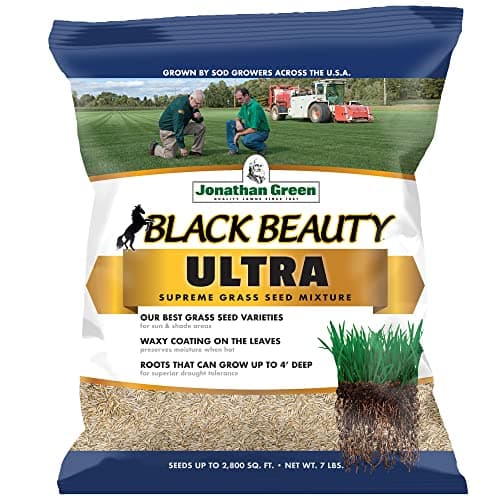
Jonathan Green Black Beauty Ultra Grass Seed
A tall fescue blend that germinates reliably in cooling fall soil and matches most cool-season lawns.
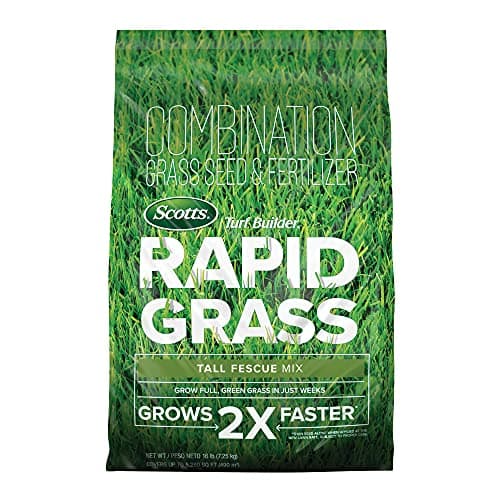
Scotts Turf Builder Rapid Grass Tall Fescue Mix
A seed and mulch combination for bare spots that dry out between waterings.
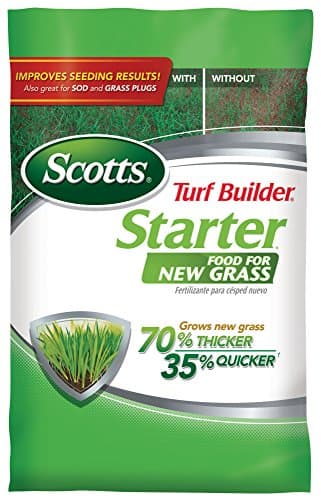
Scotts Turf Builder Starter Food for New Grass
A starter fertilizer that pushes roots down before the ground cools.
Step 5: How to Patch with Sod Before Winter
Cut and Fit the Sod
When repairing with sod, the preparation steps are similar: remove debris, loosen and amend the soil, and level the area. Then measure the bare spot and cut a piece of sod slightly larger than needed. Use a sharp knife to trim it to fit the shape.
Set the sod into place so its surface is level with the surrounding lawn. Avoid overlapping onto existing turf, which can create a lip that catches mower blades. Push the edges of the sod firmly against the bordering grass so there are no visible seams. Good edge contact reduces drying and helps the patch blend more quickly.
Ensure Good Root Contact and Watering
After placing the sod, roll or tamp it lightly to ensure good root-to-soil contact. A lawn roller filled partially with water or even firm foot pressure can work for small patches. This step eliminates air pockets that could dry out roots.

Water sod thoroughly right after installation so moisture penetrates several inches into the underlying soil. For the first 7 to 10 days, keep the sod and the soil beneath consistently moist but not saturated, which may require daily watering depending on weather. After the first week, gradually shift to less frequent, deeper watering. By about 2 to 3 weeks, if conditions are favorable and you installed sod at least 4 weeks before hard freezes, roots should be knit enough to lightly tug without lifting.
Mowing and Traffic
Do not mow the new sod until it has rooted. A simple test is to gently pull up on a corner. If it resists, roots are grabbing. When you do mow, use a sharp blade and a higher setting, often around 3 inches for many cool-season lawns, to reduce stress. Avoid heavy traffic on the patch until it has gone through several mowing cycles.
Step 6: Protecting New Repairs Through Late Fall and Winter
Leaf Management
Newly seeded or sodded spots are particularly sensitive to leaf cover. A blanket of wet leaves can smother seedlings, cause rot, and encourage snow mold. Keep the repaired areas clear by gently raking or using a leaf blower on a low setting. For established parts of the lawn, mulching leaves with the mower is beneficial, but avoid running the mower over tiny seedlings until they are tall and robust enough, usually after they have been mowed 2 or 3 times.
Foot Traffic and Pet Management
Limit traffic on repaired areas as much as possible through fall and into early winter. Set up temporary flags, stakes, or landscape edging to remind family members to avoid the spots. For pet-related bare spots, consider training your dog to use a different area, installing stepping stones, or setting up a small dog run to protect freshly repaired turf.
If you must cross a repair zone, place temporary planks or stepping stones to distribute weight and reduce soil compaction and shear on delicate roots. The more you protect new grass in the first 4 to 6 weeks, the better its winter survival and spring performance will be.
Fertilizing and Late-Fall Care
Starter fertilizer at seeding or sodding time can be beneficial, especially if a soil test indicates low phosphorus. However, avoid exceeding recommended nitrogen rates. Many cool-season lawns benefit from a "late fall" or "winterizer" fertilizer application, typically in late October or November in many regions, when top growth has slowed but the grass is still green. That application supports root growth and carbohydrate storage.
If you recently applied a starter fertilizer as part of the patch process, factor that into your total nitrogen for the season. In many cool-season regions, 2 to 4 pounds of actual nitrogen per 1,000 square feet per year is a common range, split into several applications. Over-fertilizing late can drive tender top growth that is more susceptible to winter injury and snow mold.
Continue to mow the whole lawn at the correct height until growth stops. Do not scalp in late fall. Slightly lowering your mowing height for the last cut, while still within the recommended range for your species, can reduce snow mold risk by reducing leaf matting, but avoid sudden extreme reductions.
What Other Guides Miss: Common Mistakes to Avoid
Many quick guides on how to fix bare spots in your lawn before winter skip critical diagnostic and timing details that determine success. Avoiding these oversights will save you wasted effort and seed.
One common omission is cause confirmation. If you reseed a spot that is still full of grubs, has ongoing pet urine damage, or sits under chronic compaction, the new turf will likely fail again. Always verify by using tests such as the grub count threshold (around 10 per square foot), the screwdriver compaction check, and observing pet patterns before you invest in repair.
Another frequent mistake is ignoring regional timing. Many general guides say to "seed in fall" without acknowledging that for a homeowner in northern Minnesota, "fall" may mean seeding by late August, while someone in Virginia can seed into early October. Use your local average first frost date and soil temperature, not generic calendar advice, to decide if active seeding or dormant seeding is appropriate.

Watering advice is also often oversimplified. "Keep it moist" is not specific enough. You need to maintain moisture in roughly the top quarter inch of soil through germination, typically requiring multiple light waterings per day in dry, sunny conditions, then transitioning to fewer, deeper irrigations as roots grow. Overwatering to the point of puddling can suffocate seeds and encourage disease, while under-watering leads to patchy germination.
Finally, many guides under-emphasize protection. New lawns are fragile. Allowing heavy fall leaf cover to sit on top of new seedlings, letting pets tunnel back into repaired zones, or mowing too early can undo weeks of work. Taking simple steps like gentle leaf removal, temporary barriers, and using sharp mower blades makes a significant difference in survival over winter.
Conclusion: Lock In Repairs Now for a Stronger Lawn Next Year
Fixing bare spots in your lawn before winter is not just cosmetic. It prevents erosion, blocks weeds from colonizing open soil, and gives new grass the chance to establish roots before harsh weather. The process starts with accurate diagnosis, continues with careful soil preparation, and finishes with the right repair choice for your grass type, region, and timing.
If you are within the ideal fall window for your cool-season lawn, active seeding or sodding can give you visible improvement before the ground freezes and a big head start next spring. If you are past that window or working with a warm-season lawn headed toward dormancy, strategies like dormant seeding and soil protection set the stage for successful repair in the coming growing season.
For a broader seasonal plan that keeps bare spots from returning, review Fall Lawn Overseeding & Prep Guide now, then pair it with Spring Lawn Preparation Checklist and Monthly Lawn Care Calendar so your lawn receives consistent, timely care all year. When choosing any seed or repair product, look for a species blend that matches your existing turf, clear labeling with recommended rates, and, where possible, certification tags that confirm seed quality. Thoughtful repair now results in a denser, healthier lawn that is better equipped to handle next year's stress.
Top Picks
- BioAdvanced Fungus Control for LawnsCheck price on Amazon
- Scotts DiseaseEx Lawn FungicideCheck price on Amazon
- Scotts GrubEx1 Season Long Grub KillerCheck price on Amazon
As an Amazon Associate we earn from qualifying purchases.
Free Lawn Care Tools
Not every ugly area qualifies as a true bare spot, and that distinction matters because dormant or stressed grass can recover with basic care, while dead turf must be replaced. Bare spots fall into a few categories you should separate before repairing.
To decide whether to act now or wait, use a quick decision framework based on your grass type, region, and current conditions.
Use a simple tug test and visual check. Gently pull on a handful of blades: if they resist and you see firm white or cream-colored crowns at soil level, the grass is likely dormant or just stressed. If the blades slide out easily and you see dry, shriveled roots or bare soil, the turf is dead and needs to be replaced. Dormant grass feels anchored and flexible, while dead turf feels brittle and detaches quickly.
Loosen the top 2 to 3 inches of soil and mix in compost to improve structure and drainage. Level the area so water does not pool and you have a smooth surface for seeding or sodding. Make sure any active causes like grubs or disease are addressed first, so new grass is not immediately stressed again. Good preparation helps seed-to-soil contact and stronger root development before winter.
For cool-season grasses like Kentucky bluegrass, ryegrass, and fescue, the ideal time is late summer to early fall, when soil temperatures are around 50–65°F. Warm-season grasses such as Bermuda, Zoysia, St. Augustine, and Centipede are usually repaired during their active growing season, then stabilized before winter. If you miss the main fall window for cool-season lawns, you can prepare the soil now and use dormant seeding once soil temperatures stay below about 40°F. That seed will sit safely through winter and sprout naturally in early spring.
If you’re past the normal fall seeding window, focus on stabilizing the soil and planning for dormant seeding. Prepare and level the bare area now, then wait until soil temperatures are consistently below about 40°F to spread seed so it will not germinate in late fall warmth. The seed will overwinter in the soil and start growing on its own when conditions warm in early spring. This approach helps prevent erosion and early weed takeover while still giving you a thicker lawn next season.
Photos: Helena Lopes / Pexels, Magda Ehlers / Pexels, Ron Lach / Pexels

Beat weeds and brown spots from your phone
Snap a photo, get the fix, and follow a plan timed to your soil and weather. Free on iPhone.
Related Articles
 Seasonal Care
How to Build a Stress Proof Lawn Before the Summer Heat Hits
Apr 25, 2026•8 min read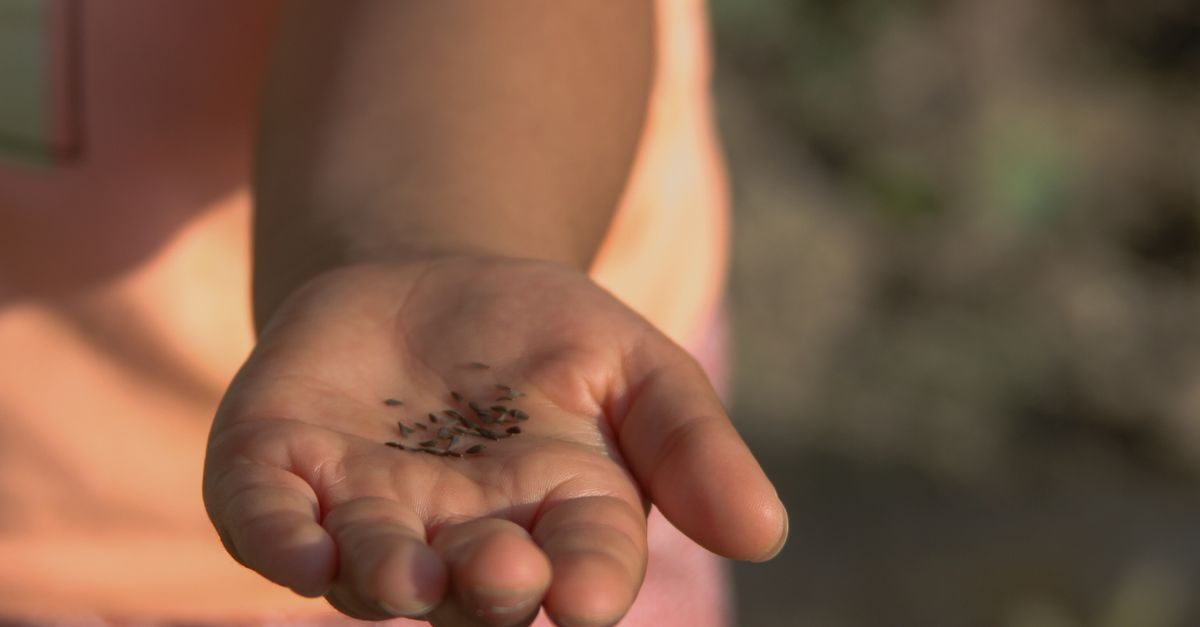 Seasonal Care
Dormant Seeding: How to Seed Your Lawn in Late Fall for Spring Germination
Jul 17, 2026•11 min read Seasonal Care
Complete Spring Lawn Aeration Guide: Timing, Equipment, and Technique
Jan 6, 2026•10 min read

