How to Revive Bermuda Grass After Summer Heat Stress
 Marcus GreenTurf Management Pro | 18 Years
As an Amazon Associate we earn from qualifying purchases.
Brown Bermuda in late summer falls into two big buckets: grass that is heat or drought stressed but still alive, and turf that is truly dead. The challenge is that both can look equally crispy from the sidewalk, and guessing wrong wastes weeks of recovery time or money on products that cannot help. The right approach starts with diagnosis, not a bag of fertilizer. For the complete reference, see the Bermudagrass pillar guide.
Bermuda grass is one of the toughest warm season grasses we work with on golf courses and sports fields. It can survive weeks of dormancy in brutal heat if the crowns and roots are intact. That toughness is why your lawn often can be revived after summer heat stress, as long as you identify what is still alive, stabilize moisture, avoid further injury, and then push regrowth through the rest of the growing season. This guide walks step by step through assessing damage, setting a realistic timeline, adjusting watering and mowing, repairing soil problems, and deciding when you need plugs or a full renovation.
If your Bermuda lawn turned brown after intense summer heat, the first step is to decide if it is dormant or dead. Check several spots by tugging on the grass and scratching the stolons and crowns at the soil line. If you feel resistance and see any green or white tissue inside the stems or along the runners, the turf is stressed but alive; if whole sections pull up easily with brittle, brown roots, that area is dead and will not recover.
To revive Bermuda grass after summer heat stress where the crowns are still alive, you should stabilize it with consistent deep watering, raise the mowing height slightly, and stop applying high nitrogen fertilizer until you see new green shoots. Aim for roughly 1 to 1.5 inches of water per week in hot weather, split into 2 deep waterings and adjusted to your soil and local conditions, avoid evening irrigation that keeps leaves wet overnight, and keep traffic off the worst areas. Most lightly to moderately stressed Bermuda responds in 2 to 6 weeks once temperatures moderate; severely stressed but living turf can take 8 to 10 weeks to fill back in if you also address underlying issues like compaction and thatch.
Understanding Bermuda Grass Heat Stress (So You Don’t Misdiagnose It)
What Heat-Stressed Bermuda Grass Actually Looks Like
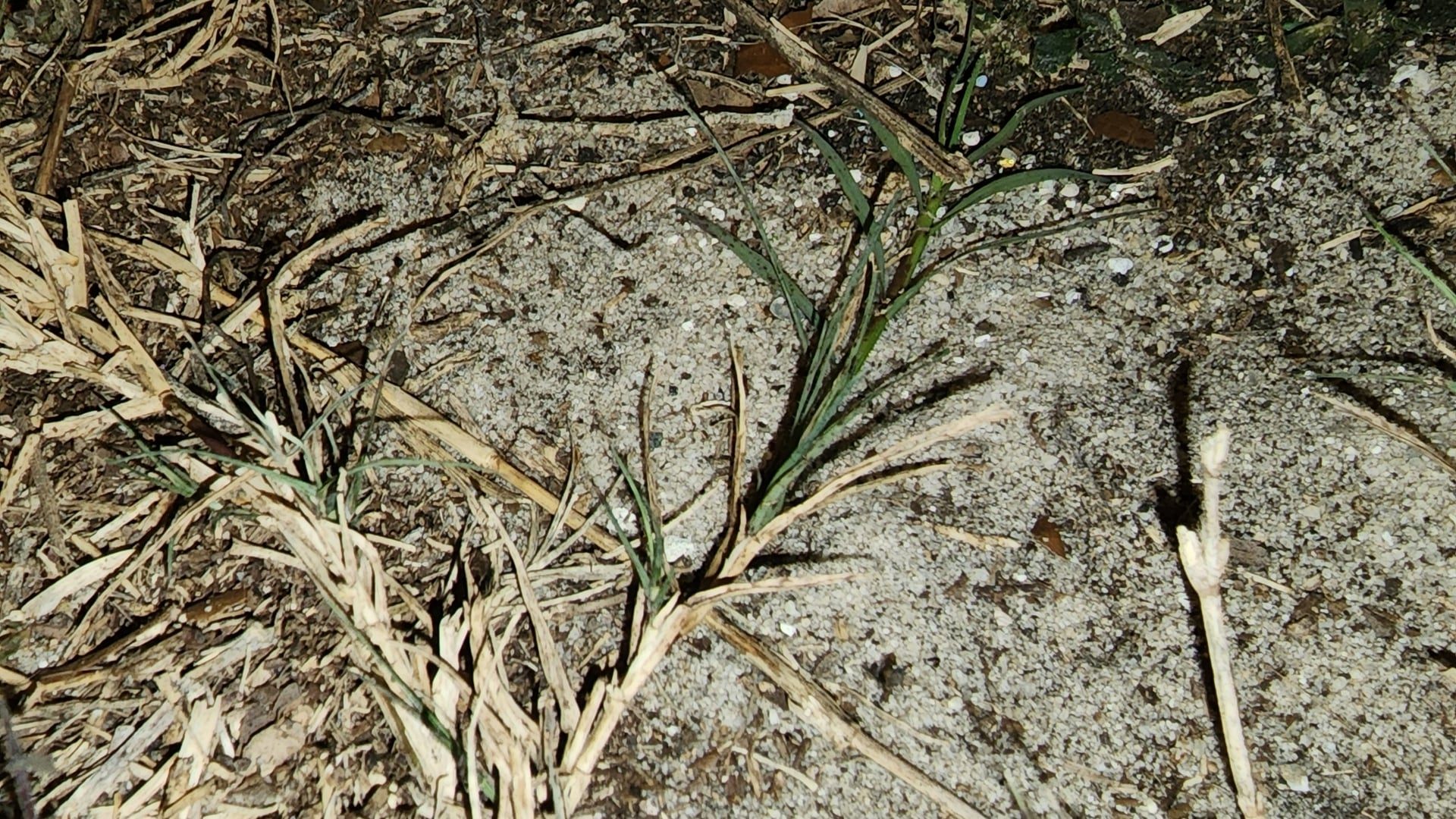
Heat stress in Bermuda has a very specific look when you know what you are seeing. The earliest stage is a dull, bluish-green color instead of the normal bright green. Leaves start to curl or fold lengthwise to reduce surface area and water loss. If you catch it at this stage, the grass is telling you it is under pressure but not yet damaged.
As stress increases, the lawn shifts to a light green and then yellow cast. Tips may turn tan, and you will see irregular patches, usually in the hottest, driest zones like south facing slopes or next to concrete and asphalt. Leaf blades wilt and feel dry and papery rather than springy. When the stress is prolonged, the entire leaf blades go straw brown, though there may still be some green tissue down at the base around the nodes and crowns.
Heat stress patterns differ from many other issues. Disease patches, like dollar spot or leaf spot, tend to have more defined circular areas or lesions on individual blades that look water soaked or have distinct margins. Insect damage such as grubs often creates areas where the turf feels spongy underfoot and peels back like a carpet, with visible larvae underneath. Chemical burn from fertilizer or herbicides usually follows the spreader or sprayer pattern - stripes or sharp-edged blocks - instead of following sun and slope patterns.
If you see a gradual color fade over the hottest part of the yard, leaves folding and then turning straw colored, and no obvious pattern of applicator error, you are typically dealing with heat and drought stress. The confirmation step is to look at the crowns and stolons at soil level and test root integrity, which I will cover in the next section.
At What Temperature Does Bermuda Grass Go Dormant or Heat-Stressed?
Bermuda is a warm season grass, so its color is tied directly to temperature. Knowing the rough thresholds helps you separate normal seasonal browning from real trouble, and it is why brown midsummer Bermuda is usually stressed or drought dormant rather than dead.
| Condition | Approximate temperature | What you see |
|---|---|---|
| Active, vigorous growth | Soil around 65°F+, air roughly 75 to 95°F | Bright green, fast spread and quick recovery |
| Heat and drought stress begins | Air sustained above about 95 to 100°F with dry soil | Bluish-green cast, folded leaves, wilting in the hottest zones |
| Summer (drought) dormancy | Prolonged heat plus no water | Straw-brown leaves, but crowns and stolons still alive |
| Cold dormancy | Nighttime lows consistently below about 50°F | Uniform tan lawn heading into fall and winter |
Bermuda tolerates heat better than almost any other home lawn grass, which is a big reason brown turf in July or August is far more often alive than dead. The confirmation is always below the surface: check the crowns and stolons, which I cover next.
Is My Bermuda Grass Dead or Dormant?
Bermuda naturally has a dormancy response to both cold and severe drought or heat. In the Southeast, I routinely see non-irrigated Bermuda lawns go nearly completely brown in August yet bounce back when consistent moisture returns. The grass survives because the crowns, stolons, and rhizomes are still alive even when the leaves have been sacrificed.
There are three simple field tests you can use:
- Tug test: Grab a handful of brown grass and pull upward with moderate force. If the grass resists and stays anchored, roots are still holding and there is a good chance the crowns are alive. If it comes up easily in sheets or clumps with dry, brittle roots or almost no roots attached, that area is likely dead.
- Scratch test: Get down at soil level and scrape your fingernail or a small knife along a stolon or the base of a stem. If you see green or creamy white tissue inside, it is still alive. If the tissue is completely tan and fibrous all the way through, that individual stem is dead.
- Core sample: Use a small trowel or soil probe to pull a plug 3 to 4 inches deep. Look for firm, white to light tan roots and moist soil. Gray, mushy, or black roots indicate rot, while completely dry, brittle roots plus bone dry soil tell you the plant has been without adequate water for too long.
If you are not sure what you are looking at, you can upload a photo of your brown lawn for an instant diagnosis to help confirm whether you are dealing with heat stress, disease, or dead turf before you spend money on fixes.
Use the matrix below to match what you are seeing to the most likely cause. The three conditions homeowners confuse most are drought dormancy, dead turf, and disease, and they call for completely different responses.
| Signal | Dormant / stressed (alive) | Dead | Disease |
|---|---|---|---|
| Pattern | Follows sun, slope, and dry zones | Irregular patches that never green up | Defined circles or spots with distinct margins |
| Tug test | Resists, stays anchored | Pulls up easily in brittle sheets | Usually stays rooted |
| Scratch test (stolon/crown) | Green or creamy-white inside | Tan and fibrous all the way through | Often green base with lesioned blades |
| Blades | Straw-brown, dry, papery | Brittle, crumbles apart | Water-soaked spots or lesions |
| Recovery outlook | Returns with water in 1 to 10 weeks | Needs plugs, sod, or stolons | Recovers after fungicide plus a culture fix |
Bermuda can survive in drought dormancy for several weeks in midsummer if crowns and roots are not cooked. As a working rule from my time managing championship greens in the Deep South, if irrigations resume within about 10 to 14 days of full browning, most hybrid Bermudas will come back, especially varieties like TifTuf that are bred for drought tolerance. Non irrigated, shallow rooted lawns on thin soil may have a shorter survival window.
It is too late when large areas fail the tug test, stolons scratch brown all the way through, and the soil profile shows nothing but dead, brittle roots. In that case, no amount of watering or fertilizer will revive those spots. You are looking at plugging or sodding those sections, or doing a more complete renovation once temperatures moderate.
Common Causes of Summer Heat Stress in Bermuda Lawns
Heat stress is rarely just about air temperature. On residential Bermuda lawns, I consistently see a handful of compounding factors that push turf over the edge.
First is localized high heat. Areas along driveways, sidewalks, patios, or south and west facing slopes can run 10 to 20 degrees hotter at the surface than shaded or open lawn. Reflective heat plus full sun for 10 or more hours a day rapidly evaporates moisture and can cook shallow crowns.
Second is inadequate or inconsistent irrigation. Bermuda prefers deep, infrequent watering that penetrates 6 to 8 inches. Light, frequent watering encourages roots to sit in the top 1 to 2 inches of soil where temperatures and moisture swing wildly. When a heat wave hits and that shallow layer dries, the turf has no reserves. Missed irrigation cycles, broken heads, or poor coverage further worsen this problem.
Compacted soil is another common driver. If you cannot push a screwdriver 6 inches into the soil by hand, roots cannot get there either. Compaction from construction, foot traffic, or repeated mowing along the same lines restricts root depth and water infiltration, so the plant has less usable soil volume during a drought or heat wave.
Poor mowing practices compound heat stress. Scalping high spots, running the mower with dull blades, or cutting Bermuda too short for its condition, all reduce leaf area and stress the plant. After a spring of mowing at 0.5 to 1 inch, many homeowners do not raise the height when summer stress arrives, so the plant has no buffer and burns out quickly.
Excess thatch acts like insulation at the surface. A layer thicker than about 0.5 inch holds heat, sheds water off the surface, and traps crowns in a hot, dry zone. Combined with summer fertilizer or herbicide applications at high air temperatures, thatch increases the risk of chemical burn and desiccation.
Finally, a shallow or weak root system from incorrect spring practices sets the stage for summer failure. Overwatering in cool spring weather, under fertilizing when Bermuda is actively growing, or leaving compacted soils untreated all lead to a lawn that looks fine in May but collapses in July. That is why planning with tools like a Spring Lawn Preparation Checklist and a Monthly Lawn Care Calendar is not just housekeeping - it is insurance for the stress periods.
Step 1: Assessing the Damage and Setting Realistic Expectations
Quick Heat Stress Assessment Checklist
Before you jump into fixes, spend 20 to 30 minutes doing a structured walk of your lawn. When I assess heat stress on a golf course fairway, I never skip this step; the same logic applies at home. You are trying to separate lightly stressed, salvageable turf from truly dead zones so you know where to invest effort.
Work through this checklist:
First, map the damage. Walk the entire lawn and mentally (or on paper) categorize areas as lightly stressed, severely stressed, or dead looking. Light stress is areas that are dull or yellow but still have some green at the base and pass the tug test. Severe stress is straw colored, mostly brown, but stolons still show some life when scratched. Dead patches fail both tug and scratch tests and peel up easily.
Second, think about timing. Ask yourself when you first noticed the decline. Has it looked bad for 3 to 4 days, 2 weeks, or more than a month? Rapid browning that coincides with a missed irrigation schedule or a heat wave suggests acute stress that Bermuda may recover from if corrected quickly. Areas that have been bone brown for many weeks despite some rain are more likely dead.
Third, note any recent changes. Did you fertilize, apply weed control, spray insecticide, or change your mowing height in the 7 to 14 days before symptoms appeared? Sharp lines or stripes that match a spreader path often implicate fertilizer burn. Widespread yellowing after a herbicide application may indicate chemical stress layered on top of heat.
Fourth, document environmental context. Think through your watering history over the last 4 to 6 weeks: how many days per week, how long each run, and whether heads cover all areas evenly. Clay soils with poor drainage can stay wet near the surface but still leave deeper roots in dry zones. Sandy soils dry fast and need slightly more frequent watering to supply the same weekly depth.
Finally, take photos. Get several pictures now from different angles, including shady vs full sun sections and stressed vs healthy patches. As you implement recovery steps, compare weekly photos. On professional crews, we rely on this kind of visual record because subtle improvements are easy to miss day to day.
How Long It Takes to Revive Bermuda Grass After Summer Heat Stress
Once you know what you are working with, you can set realistic expectations. Bermuda can recover impressively, but it does not rewrite biology. There is a typical recovery window after relief from extreme heat and after moisture is stabilized.
| Stress level | Week 1 to 2 | Week 3 to 6 | Week 7 to 10 |
|---|---|---|---|
| Minor (leaves discolored, crowns fine) | Green tint returns, new shoots at nodes | Near-full density and color | Fully recovered |
| Moderate (large straw areas, tests show life) | Little visible change, roots stabilizing | 60 to 80% fill-in from runners | Dense recovery if warm weather holds |
| Severe but living (thin, scattered stolons) | Slow, crowns rehydrating | Patchy new growth along stolons | Fills in, may need plugging to finish |
For minor heat stress where leaves are discolored but crowns and most roots are in good shape, you often see noticeable improvement within 1 to 3 weeks. Color deepens, new leaves emerge from the nodes, and the lawn regains density.
For moderate stress, where large areas are straw colored but tug and scratch tests show life, expect 3 to 6 weeks to see significant filling in from runners, provided temperatures are still in the growing range and you correct water and mowing.“Significant” here means 60 to 80 percent fill in, not perfection.
For severe stress that is still not dead, where you have many thin patches with scattered living stolons, the recovery window stretches to 8 to 10 weeks and may require supplemental plugging or stolonizing to speed coverage. The limiting factor is how many growing points remain and how long your warm season is. If you are in the Deep South with warm nights into October, you have more time. In the transition zone, once night temperatures consistently drop into the 50s, Bermuda slows dramatically.
Several factors speed or slow recovery. Soil health and fertility are big ones: a lawn with adequate potassium and phosphorus and organic matter content around 3 to 5 percent simply rebounds faster. Variety matters too. Common Bermuda often has good drought tolerance but slower spread, while some hybrids like Tifway have aggressive lateral growth if they are not completely wiped out. TifTuf and Celebration are known for better drought and wear tolerance compared to older varieties.
Sun exposure is another driver. Full sun Bermuda recovers significantly better than turf in 50 percent shade, even with perfect care. Finally, your local growing season length controls the upper limit. A heat stressed lawn in south Georgia in August has a much better chance to fully recover that same year than one in northern Georgia or the Carolinas entering shorter days.
Step 2: Stabilizing the Lawn - Immediate Actions in the Heat
Resetting Your Watering Strategy
The first actionable step to revive Bermuda grass after summer heat stress is to stop the moisture roller coaster. Professional crews approach this by targeting a consistent soil moisture profile instead of chasing color day by day, and you should do the same on a residential scale.
The best approach is deep, infrequent irrigation. Aim to deliver roughly 1 to 1.5 inches of water per week in hot weather, split into 2 deep waterings and adjusted to your soil and local conditions. A common pattern is about 0.6 inches on Monday and 0.6 on Thursday if your system allows, though very sandy soils may do better with a third lighter soaking. Use tuna cans or rain gauges to measure your actual output; irrigation system labels are often inaccurate.
| Soil type | Weekly total | Schedule in heat | Depth target |
|---|---|---|---|
| Loam / average | 1 to 1.5 inches | 2 deep soakings | Moist to 6 inches |
| Clay (slow infiltration) | 1 to 1.5 inches | Split each cycle to avoid runoff | Moist to 6 inches |
| Sandy (drains fast) | 1.25 to 1.5 inches | 3 shorter, more frequent soakings | Moist to 6 inches |
Run each zone long enough that water penetrates 6 inches deep. You can confirm by probing the soil immediately after irrigation with a screwdriver or probe. If it only goes moist 2 inches, you need to run longer or split cycles to avoid runoff on compacted or sloped areas. On sandy soils, you may need slightly more frequent but shorter applications to avoid leaching.
Timing matters. Water in the early morning, typically between 4 a.m. and 9 a.m. This allows foliage to dry quickly after sunrise, reducing disease pressure, and puts water into the root zone ahead of the hottest part of the day. Avoid late evening watering that keeps leaf blades wet overnight, which encourages diseases in heat stressed turf.
If your lawn has gone completely dry, do not blast it daily with shallow watering. That keeps the surface cool temporarily but never recharges deeper soil reserves. Instead, gradually rewet the profile over several days with longer cycles, watching for runoff. A good pattern is two deep irrigations 3 days apart in week one, then settle into your 2 to 3 day schedule.
Adjusting Mowing Height and Frequency
Mowing can either help or hurt a heat stressed Bermuda lawn. The key most homeowners miss is that a plant under stress needs as much healthy leaf area as possible to photosynthesize and recover. When everything is brown, the instinct is to scalp it down to "start fresh," but that often removes what little live tissue remains.
For common Bermuda lawns typically maintained at 1.5 to 2 inches, you should raise the mowing height by about 0.25 to 0.5 inch during severe heat stress. So if you normally cut at 1.5 inches, go up to 1.75 or even 2 inches temporarily. Hybrid Bermudas maintained like golf course fairways at 0.5 to 1 inch can be raised 0.25 inch in stress periods. This extra leaf area shades the soil, reduces surface temperatures, and supports root regrowth.
Continue mowing, but only when needed and with sharp blades. Letting the lawn grow too tall, then hacking off more than one third of the blade at once, shocks stressed plants. Instead, mow frequently enough that you are removing at most one third of the leaf each time. In heat stress periods, that might mean mowing every 5 to 7 days instead of every 3 to 4, depending on growth.
Sharpen your mower blades if you have not done so this season. Dull blades tear the grass, creating frayed, brown tips that increase water loss and elevate disease risk. On golf courses we sharpen reels weekly in midsummer; homeowners do not need that frequency, but at least once or twice per season makes a visible difference in cut quality.
Avoid mowing during the hottest part of the day. Cut in the morning or late afternoon so you are not adding mechanical stress at the same time the plant is under maximum heat load. And stay off severely stressed or borderline areas with heavy equipment; footprints that linger for more than an hour in brown areas are a sign you should keep traffic there to a minimum.
Pausing or Modifying Fertilizer and Herbicide Use
Fertilizer is not a rescue product for severely heat stressed Bermuda. High nitrogen applied to a brown, dormant lawn in extreme heat frequently does more harm than good by pushing tender growth when the plant cannot support it. The best course is usually to pause high nitrogen feeding until you see consistent new green shoots and temperatures start to moderate slightly.
If you are in the middle of your summer program and your lawn goes into heat stress, switch to a lighter rate or a balanced product with less nitrogen and adequate potassium. Potassium supports stress tolerance and recovery, while excessive nitrogen demands more water and increases susceptibility to disease. As a rough guide, keep midsummer nitrogen under about 0.5 pound of N per 1000 square feet in any 4 to 6 week period during extreme heat, or even skip it entirely until recovery begins.
Avoid applying herbicides to significantly stressed turf unless you are dealing with a major invasive issue and you are comfortable risking slower recovery. Most post emergent herbicide labels for warm season grasses advise against use during extreme heat or drought. If you see browning immediately after a weed control treatment in hot weather, consider that chemical injury may be part of the problem.
For pre emergent herbicides, timing matters more than current stress. Spring pre emergents should be down before summer stress hits. If you missed that window and are considering a late application in midsummer, weigh the potential root pruning effect on already strained Bermuda; in many cases, it is better to delay and handle weeds in cooler weather.
- NC State Extension recommends avoiding heavy nitrogen applications and most herbicides on warm season grasses during periods of drought or when turf is not actively growing.
Step 3: Repairing Soil and Root Zone Issues
Relieving Compaction and Improving Infiltration
Once you have stabilized watering and mowing, the next step to revive Bermuda grass after summer heat stress is to deal with the root zone. Compacted, shallow soils are one of the biggest underlying reasons a lawn collapses during heat waves. Even if you cannot do full scale professional aeration in peak summer, you can plan and start addressing the problem.
The most effective tool is core aeration with hollow tines that pull 2 to 3 inch plugs out of the soil. For home lawns, the ideal window for aggressive core aeration on Bermuda is when the grass is actively growing but not at peak stress. In much of the Southeast, that is late spring or early summer and again in late summer as heat moderates. If you are already in the middle of a severe heat wave, it is often better to schedule aeration for the first break in extreme temperatures, rather than punching additional holes into severely wilted turf.
In the short term, you can do a "screwdriver test" across the lawn. Push a long screwdriver into the soil at various points. Anywhere you cannot get 6 inches deep with firm but reasonable pressure is a candidate for focused aeration later. Mark compacted areas mentally or on a sketch so you know where to concentrate passes when you rent a machine.
After aeration, leave cores on the surface to break down. You can drag them with a mat, rake lightly, or simply let rainfall help them crumble. The goal is to increase pore space, let water penetrate more evenly, and give roots a path deeper into cooler soil layers for the next stress cycle. Professional crews often combine core aeration with topdressing and overseeding or plugging if coverage is poor, which we will discuss below.
Managing Thatch and Surface Organic Matter
Thatch is the layer of undecomposed stems, roots, and organic material that sits between the green leaf canopy and the soil. In Bermuda lawns it can build quickly because the grass produces a lot of stems and stolons. A thin thatch layer, under about 0.5 inch, cushions traffic and is not a problem. Beyond that, it starts to act like a sponge and insulation layer at the surface.
During summer heat, excessive thatch traps heat around the crowns and restricts water infiltration. Water tends to sit in the thatch and evaporate instead of moving into the soil profile where roots access it. From my golf course experience, fairways with 0.75 inch or more thatch always showed more drought and heat damage than well managed surfaces at the same irrigation level.
To evaluate thatch, cut a small wedge of turf or use a knife to slice a vertical cross section. Measure the spongy brown layer between green leaves and soil. If it is more than about 0.5 inch, plan to reduce it. Aggressive dethatching or verticutting is best done when Bermuda is actively growing and not under severe stress, usually late spring or early summer.
However, light vertical mowing or power raking in late summer as temperatures moderate can help open the canopy to let water and nutrients reach the soil. Be cautious not to scalp down into crowns on already thin areas; start with a light setting and check results after a small test area. In many residential cases, a combination of annual core aeration, moderate nitrogen fertility, and proper mowing will naturally reduce excessive thatch over a season or two.
Topdressing and Soil Amendment
Topdressing is the practice of applying a thin layer of soil, sand, or compost mix over the surface of the lawn. On stressed Bermuda, topdressing serves two roles: smoothing minor scalped spots and improving the root zone over time. Professional crews use it heavily after aeration; for home lawns it is still one of the best tools if you are serious about long term performance.
For most residential Bermuda lawns in the Southeast, a sandy loam or a mix of sand and quality compost is ideal. Pure sand topdressing is common on golf courses to firm up playing surfaces, but it can be too drying on already stressed home lawns if overused. A 70/30 sand to compost mix at about 0.25 inch depth across the surface after aeration is a good starting point.
Apply topdressing when the Bermuda is actively growing and you are not in peak heat. Light topdressing in late summer, as the lawn begins to recover, helps crowns reanchor and collects around stolons, encouraging rooting. Work the material into the canopy with a rake or drag mat so you are not burying live foliage more than about one third of its height.
Soil amendments like gypsum (for certain sodic clay soils) or lime (for low pH soils) should be based on a soil test, not guesswork. Many Bermuda lawns benefit from pH in the 6.0 to 6.5 range. If a soil test from your local extension service shows pH below 5.5, you should plan lime applications in fall or early spring so the material can react before the next summer. Potassium levels are important as well; low K is linked to poor stress tolerance in warm season turf.
- Texas A&M AgriLife Extension notes that core aeration combined with topdressing and proper fertilization can significantly improve drought tolerance and recovery in Bermuda grass by increasing root depth and soil oxygen.
Step 4: Encouraging Regrowth, Filling In Thin or Bare Areas
Pushing Lateral Growth on Surviving Turf
Once crowns are stabilizing, the focus shifts to getting Bermuda to spread and fill in gaps. Unlike cool season grasses that are typically overseeded with seed, many Bermuda lawns are better restored by encouraging existing stolons and rhizomes to run.
As you see new green shoots at the nodes and along stolons, you can restart a more normal fertilization program, but still mindful of heat. Apply about 0.5 pound of nitrogen per 1000 square feet using a slow release or balanced product, ideally when daytime highs are under the high 90s and you have consistent irrigation. This gives the plant enough nutrition to grow without forcing weak, succulent tissue. A balanced bag like The Andersons PGF Complete 16-4-8 fits that description, and it carries humic acid for a root zone that just came through a hard summer. Light rate, steady water.
Maintain your slightly elevated mowing height until coverage improves. The extra leaf area supports carbohydrate production, which fuels stolon growth. Once the lawn is largely filled back in and temperatures begin to ease into later summer or early fall, you can gradually step mowing height back down if you prefer a shorter cut.
Keep traffic off thin or newly recovering zones. Bermuda spreads faster when stolons and young shoots are not being crushed by foot traffic, pets, or equipment. On golf courses, we often rope off recovery areas; at home you can at least redirect kids' play or move pathways temporarily.
Plugging, Sodding, or Stolonizing Dead Patches
Where tests confirm that sections are dead, regrowth from surrounding turf may be too slow or impossible if the patch is large. In those spots, the best approach is mechanical replacement: plugging, sodding, or stolonizing.
Plugging involves cutting small plugs of healthy Bermuda from a donor area or purchased trays and installing them in a grid pattern in the dead zone. Spacing can range from 6 to 12 inches on center depending on how quickly you want coverage. With good water and fertility, plugs at 6 inch spacing often knit together in 6 to 8 weeks during peak growing conditions.
Sodding is faster but more expensive. For areas where you want immediate cover, like front lawn focal points, laying Bermuda sod is often worth it. Make sure you prep the soil by removing dead material, loosening the top 2 to 3 inches, and raking smooth. Lay sod tight, roll or press it to ensure soil contact, and water immediately to keep it uniformly moist until roots knit in, usually 10 to 14 days.
Stolonizing is a lower cost method, essentially planting pieces of stolons and stems across bare soil and letting them root. Scatter cut stolons and lightly topdress them into the surface, then keep the area consistently moist. This works best in hot, humid conditions when Bermuda is very active. It is slower to establish than sod but uses less plant material.
Time your renovation moves with your climate. In the Deep South, plugging or sodding can work from late spring through late summer as long as you have 8 to 10 weeks of growing weather left. In the transition zone, aim to complete major repairs by mid to late August so turf has time to root before cooler nights arrive.
Step 5: Integrating Recovery Into Your Seasonal Lawn Plan
Late Summer and Early Fall Aftercare
After you have revived Bermuda grass after summer heat stress, the next 6 to 10 weeks are about consolidation. You want to build root mass, correct remaining soil issues, and prepare the lawn to handle winter so it can come back strong next spring.
Continue deep, consistent irrigation as long as temperatures stay warm. As days shorten and evapotranspiration slows, you may be able to reduce total weekly water slightly, but keep aiming for 0.75 to 1 inch per week unless rainfall supplies it. Avoid letting the lawn swing back into dry stress as it tries to rebuild roots.
A balanced fertilizer application in late summer or early fall, often with a slightly higher potassium content, helps strengthen cell walls and carbohydrate storage. Avoid heavy late season nitrogen that pushes lush top growth right before dormancy. In most warm season programs, the last significant nitrogen application for Bermuda is in late August or early September, depending on latitude.
If you have not already, this is a good period to schedule core aeration and light topdressing, especially if compaction or thatch contributed to your summer problems. Pair that with a comprehensive soil test so you know exactly what amendments, if any, are needed before next season. Integrating these steps into your broader plans, like those covered in a Fall Lawn Overseeding & Prep Guide or Winter Lawn Protection & Care resource, keeps you ahead of the curve.
Winter and Following Spring Strategy
What you do in winter and the following spring has a direct impact on how well your Bermuda rides out the next summer heat cycle. Winter itself is mostly about protecting what you have built. Avoid excessive traffic on dormant, especially soft or waterlogged, turf. Compaction created in winter shows up as weak spots in summer.
Monitor for winter weeds and address them with appropriate pre emergent or spot treatments according to label guidelines. A winter full of weeds competing for nutrients and light will leave Bermuda weaker coming into spring. In some regions, a light topdressing or soil amendment application in late winter can be timed before green up.
In spring, follow a structured plan similar to a Spring Lawn Preparation Checklist. As soil temperatures climb into the 60s and Bermuda begins to green, focus on correcting pH or nutrient issues identified in your soil test, ramping up a sensible fertilization schedule, and addressing compaction early. Core aeration in late spring when Bermuda is actively growing sets your root system up for depth and resilience.
Dial in your irrigation system before summer, not after stress appears. Run a catch can test to verify output, adjust heads for full coverage, and program run times to support deep watering. The best way to revive Bermuda grass after summer heat stress is to keep it from getting that stressed in the first place; a good Summer Lawn Care: Heat & Drought Strategies plan is your roadmap here.
What Other Guides Miss: Common Mistakes to Avoid
Many online guides about how to revive Bermuda grass after summer heat stress either oversimplify or skip a few critical details that I see cost homeowners weeks each year. Here are the big ones to avoid.
First, treating all brown Bermuda as dead or all as dormant. The truth is usually a patchwork. Some areas will be salvageable, others not. If you apply the same recovery method to the whole yard without doing tug and scratch tests, you either waste water and fertilizer on dead zones or miss the chance to push recovery where there is still life. Always diagnose by checking below the surface, not just looking at color.
Second, turning to heavy nitrogen too early. Many articles recommend "feeding the lawn back to health" immediately, but fertilizer is not a magic defibrillator. Pushing growth before crowns and roots are hydrated and stable often leads to burned tips, more disease, and a second round of stress. The right order is water and mowing adjustments first, structural fixes like aeration when conditions allow, then moderate nutrition once you see active growth.
Third, ignoring water depth and distribution. A lot of advice mentions "water more" without specifying that you should be targeting at least 1 inch per week and verified with a simple can test. Overhead estimation is notoriously bad. I routinely see systems that homeowners think are putting out 1 inch in a cycle actually delivering 0.3. Without checking depth and pattern, no watering schedule will be reliable.
Finally, not adjusting practices to your region and season length. Some guides speak about Bermuda lawns as if Atlanta, Dallas, and Kansas City have the same calendar, and they do not. In shorter warm seasons, you cannot count on late season recovery the same way. That is why tying your plan to a Monthly Lawn Care Calendar tuned to your region, or checking with your local extension service, makes a measurable difference.
Bringing It All Together
Reviving Bermuda grass after summer heat stress is not about a single product or trick. It is a sequence: diagnose what is alive vs dead, stabilize moisture with deep, consistent watering, relieve stress by adjusting mowing height and pausing aggressive inputs, repair the root zone through aeration and thatch management when conditions allow, and then encourage regrowth with sensible fertility and, if needed, plugs or sod. With that structure, even a crispy lawn can return to dense green in 4 to 10 weeks if enough of the plant is still viable and you still have growing weather.
From my time managing championship greens and fairways, the lawns that held up best in brutal summers were not the ones with the most products, but the ones with the best roots and most consistent care. Apply that mindset at home and you will not only bring your Bermuda back this year, you will be building a turf system that shrugs off future heat waves instead of collapsing at the first dry spell.
If you want to stay ahead of the next stress cycle, check out our Summer Lawn Care: Heat & Drought Strategies guide and pair it with a Monthly Lawn Care Calendar tailored to warm season grasses. That combination will turn this year's recovery effort into a long term, professional grade maintenance plan.
Top Picks
- Outsidepride Maya (Blackjack II) Bermuda Grass Seed (5 lb)Check price on Amazon
- Simple Lawn Solutions Superior 15-0-15 Liquid FertilizerCheck price on Amazon
- Scotts Turf Builder Lawn FoodCheck price on Amazon
As an Amazon Associate we earn from qualifying purchases.
Free Lawn Care Tools
Check several spots with a tug and scratch test. If the grass resists when you pull and stolons or crowns show green or creamy white tissue when scratched, it is stressed but alive. If whole sections peel up easily with dry, brittle roots and stems are brown all the way through, that area is dead and will need plugging or sodding.
Lightly stressed bermuda often recovers in 1 to 3 weeks once watering is corrected and heat eases. Moderately stressed turf usually needs 3 to 6 weeks, while severely stressed but still living areas can take 8 to 10 weeks, especially if you add aeration, topdressing, and light fertilization to support regrowth.
Aim for about 1 to 1.25 inches of water per week, split into 2 or 3 deep applications. Each irrigation should moisten the soil to roughly 6 inches deep; you can confirm this with a screwdriver or soil probe. Use tuna cans or rain gauges to measure output instead of guessing based on run time.
You should avoid heavy nitrogen fertilization on severely heat or drought stressed bermuda. Focus on restoring consistent moisture first, then apply a light rate, around 0.5 pound of nitrogen per 1000 square feet, once you see new green shoots and temperatures are slightly lower. Excess nitrogen on stressed turf can cause burn and increase disease risk.
During heat stress, raise your normal mowing height by about 0.25 to 0.5 inch to leave more leaf area. For common bermuda usually cut at 1.5 to 2 inches, mow closer to 1.75 to 2.25 inches until the lawn recovers. Always use sharp blades and avoid removing more than one third of the leaf blade in a single mowing.
Bermuda can be seeded, but seeding into existing turf in midsummer heat is rarely successful. For dead patches after heat damage, plugging or sodding with matching bermuda is more reliable and faster. If you want to establish bermuda from seed, plan it for late spring or early summer when soil is warm, and keep the seedbed consistently moist until germination and early establishment.
To bring bermuda grass back to life after summer heat stress, start by determining whether the lawn is actually dead or just dormant. Pull a few runners (stolons): if they are green and flexible inside, the grass is alive and will recover. Then reset watering to deep and infrequent (about 1 to 1.5 inches per week in 1-2 applications), raise mowing height to 1.5-2 inches until stress passes, and hold off on nitrogen fertilizer until the grass is actively greening up. Most heat-stressed bermuda lawns begin showing green tint in 7 to 14 days after correcting water and mowing, with full recovery of thinned areas over 4 to 8 weeks if soil temperatures stay warm and you avoid scalping or over-fertilizing during recovery.
Bermuda grass rarely dies from summer heat alone. It is a warm season grass built for heat and usually enters drought dormancy, turning straw-brown while the crowns, stolons, and roots stay alive. Tug a few runners and scratch the stolons: green or creamy-white tissue inside means the lawn is dormant and will green back up once you restore deep, consistent watering. Only areas that pull up easily with brittle brown roots are truly dead.
Bermuda usually turns brown in summer from heat and drought stress, especially along driveways, sidewalks, and south or west facing slopes that can run 10 to 20 degrees hotter. Shallow, infrequent watering, compacted soil, thick thatch, or scalping make it worse. Before assuming heat is the only cause, check for a spreader or sprayer pattern that points to fertilizer or herbicide burn, and defined circular spots that point to disease.
Bermuda grass goes into cold dormancy and turns uniformly tan once nighttime lows stay consistently below about 50°F, typically in fall. In summer it can also enter drought dormancy during prolonged heat above roughly 95 to 100°F without water. It grows most actively with soil around 65°F and air in the 75 to 95°F range, so midsummer brown is far more often dormancy than death.
Photos: Kaden Slone / iNaturalist · CC BY 4.0

Beat weeds and brown spots from your phone
Snap a photo, get the fix, and follow a plan timed to your soil and weather. Free on iPhone.