5 Common Lawn Problems and Quick Fixes for Beginners
 Sarah MitchellLawn Diagnostics Specialist | 12 Years
As an Amazon Associate we earn from qualifying purchases.
Thin patches, weeds taking over, and grass that never looks as green as the neighbor's lawn all signal the same underlying issue: the lawn is not getting what it needs at the soil, water, and mowing level. The phrase lawn care made easy: common problems and quick fixes for beginners describes a practical approach that focuses on these core factors instead of expensive products or complex routines.
Lawn care feels overwhelming for beginners because advice often arrives in fragments: unfamiliar jargon, conflicting fertilizer recommendations, and shelves full of products that all claim to be essential. The reality is simpler. According to turf research from Penn State Extension, correct mowing, watering, and fertilizing practices account for most of visible lawn quality. In other words, about 20 percent of the work generates 80 percent of the results when you address the most common lawn problems first.
This guide explains those common problems and shows the quick, research-based fixes that actually work. You will see:
- The most frequent beginner lawn issues and what they indicate
- Simple step-by-step solutions that match your grass type and climate
- When it makes sense to handle tasks yourself and when to call a professional
- A basic year-round roadmap so you know what to do and when to do it
This article serves:
- New homeowners facing their first yard
- Renters who are allowed to maintain their own grass
- Anyone who wants a healthy, good-looking lawn without turning lawn care into a hobby
Regional differences matter. Cool-season grasses like Kentucky bluegrass and tall fescue dominate northern states. Warm-season grasses like Bermuda and St. Augustine dominate the South. Climate changes the correct mowing height, fertilizer timing, and even the right type of seed. Whenever you are unsure, local help such as your county extension office or a reputable garden center aligns general advice with your specific conditions.
The rest of this guide builds a foundation so that common problems become easy to diagnose and fix instead of frustrating mysteries.
To diagnose lawn issues like thin patches or weed invasions, start by identifying your grass type and checking the soil's nutrient levels. Use a simple soil test kit, available at garden centers, to measure pH and nutrient content. Knowing whether you have cool-season or warm-season grass, which thrive in different conditions, is crucial for effective care.
Once you've identified the problem, tackle it with targeted solutions. For example, if your soil lacks nutrients, apply a slow-release fertilizer according to the package instructions, typically every 6-8 weeks during the growing season. Expect to see improvements in your lawn's thickness and color within a few weeks, transforming it into a lush, healthy expanse.
Understanding Your Lawn: The Foundation for Easy Quick Fixes
Every quick fix for beginners relies on three basic facts about your yard: what grass you have, what soil it grows in, and how much sun and moisture it receives. Without this information, products and tips turn into guesswork. With it, lawn care made easy becomes realistic, because you apply the right tactic to the right problem.
What Type of Grass Do You Have?
Grass type controls nearly every decision you make. Mowing height, watering schedule, fertilizing timing, and even when the lawn looks best all depend on whether you grow cool-season or warm-season turf.
Extension research from Purdue University emphasizes that cutting cool-season lawns too short or fertilizing warm-season turf at the wrong time of year directly causes thinning and weed invasion. Identifying your grass correctly prevents those mistakes from the start.
Cool-season grasses
Cool-season grasses grow best when air temperatures sit between about 60 and 75 degrees Fahrenheit. They dominate the northern half of the United States and many transition-zone states. Common cool-season grasses include:
- Tall fescue
- Kentucky bluegrass
- Perennial ryegrass
- Fine fescues (such as creeping red fescue)
General characteristics and needs of cool-season lawns:
- Strengths: Stay green into late fall, recover quickly from winter, tolerate some shade, respond well to fall overseeding.
- Weaknesses: Struggle in mid-summer heat, often develop brown patches or go dormant in July and August without irrigation.
- Typical mowing height: 2.5 to 4 inches, with tall fescue often best at 3 to 4 inches for deeper roots.
- Best fertilizing window: Mainly in fall (September to November) with a lighter application in late spring. According to Ohio State University Extension, fall fertilization improves root growth and spring green-up far more effectively than heavy summer feeding.
Warm-season grasses
Warm-season grasses prefer hotter conditions, typically 80 to 95 degrees Fahrenheit, and dominate southern states and much of the coastal Southeast. Common warm-season species include:
- Bermuda grass
- St. Augustine grass
- Zoysia grass
- Centipede grass
Key characteristics and needs of warm-season lawns:
- Strengths: Thrive in summer heat, use water efficiently, spread aggressively to fill bare spots, often resist many common weeds once established.
- Weaknesses: Turn brown and go dormant during cool months, less cold tolerant, many types dislike heavy shade.
- Typical mowing height: Bermuda and Zoysia often at 1 to 2.5 inches, St. Augustine and centipede closer to 2.5 to 4 inches. Proper height prevents scalping and reduces thatch buildup.
- Best fertilizing window: Late spring and summer when the grass is actively growing. NC State Extension recommends waiting until soil temperatures reach about 65 degrees Fahrenheit at 4 inches depth before the first full fertilizer application.
Simple ways to identify your grass type
Beginners do not need a botanist's eye to tell grass types apart. A few basic observations point you in the right direction.
- Color and texture: Kentucky bluegrass forms a fine to medium texture and rich blue-green color. Tall fescue blades appear wider and coarser. St. Augustine blades are broad and thick, often with a slightly coarse feel underfoot. Bermuda forms a dense, fine-textured mat.
- Growth habit: Some grasses spread by above-ground stems (stolons) or underground stems (rhizomes). Bermuda and St. Augustine form visible runners on top of the soil. Kentucky bluegrass spreads mostly by rhizomes under the surface. Tall fescue forms clumps and spreads slowly, so individual clumps are easy to see.
- Seasonal behavior: If your lawn stays green longer into fall and greens up early in spring, it likely contains cool-season grasses. If it turns fully brown in winter but looks excellent in July, it is likely warm-season.
A practical approach combines these clues with local information. Use a free plant identification app, then confirm the result with a photo shown to staff at a local nursery or through your county extension office. For even more detail, resources such as How to Identify Your Grass Type provide photo comparisons and region-specific guidance.
Know Your Soil: The Hidden Key to “Lawn Care Made Easy”
Most recurring lawn problems signal soil issues, not surface-level mistakes. According to Kansas State University Extension, poor soil conditions such as low pH, compaction, and nutrient imbalance cause weak turf that invites weeds and disease, even when watering and mowing are correct.
Soil quality affects root depth, nutrient availability, and water movement. When the soil environment supports healthy roots, many visible problems resolve with minimal intervention.
Key soil factors that matter
Several basic traits of your soil determine how easy lawn care feels:
- pH: This measures acidity or alkalinity on a scale from 0 to 14, with 7 as neutral. Most turfgrasses grow best between pH 6.0 and 7.0. Outside that range, nutrients already present in the soil become less available, and fertilizer efficiency drops.
- Compaction: Foot traffic, heavy equipment, and repeated mowing compress soil particles together. Compacted soil restricts root growth, decreases oxygen for roots, and causes poor drainage, which leads to puddling and shallow roots.
- Organic matter: Decayed plant material improves soil structure, water holding, and nutrient storage. Lawns with low organic matter struggle in both drought and wet conditions, because they cannot retain or release water efficiently.
- Texture and drainage: Sand, silt, and clay proportions define how fast water moves through the soil. Sandy soils drain quickly and dry out between waterings. Clay soils hold water but drain slowly and compact easily. A balanced loam falls in between and tends to grow grass more easily.
Beginner-friendly ways to test soil
Guessing at soil conditions extends problems. Simple testing provides specific numbers and recommendations tailored to your yard.
Two main options are available:
- Inexpensive home test kits: These kits, available at garden centers, provide approximate values for pH and sometimes nitrogen, phosphorus, and potassium (N-P-K). They cost less and deliver instant results, but accuracy is limited.
- Lab soil tests through extension or private labs: Most state university extension services offer soil testing for a modest fee. You collect small samples from several spots in your lawn, mix them, and mail them in. Results typically include pH, buffer pH (for lime recommendations), levels of phosphorus and potassium, organic matter percentage, and lime or fertilizer guidance.
For beginners, a lab soil test gives the clearest path to easy fixes, because it explains exactly what the soil lacks or has in excess. Many reports rank nutrients as low, medium, or high and include specific pounds per 1,000 square feet of fertilizer or lime to apply.
Quick interpretation of common soil results
Several phrases appear frequently in soil reports. Translating them into action removes confusion.
- "pH is low" (acidic soil): A pH below about 6.0 means the soil is too acidic for optimal nutrient availability. Extension research from Virginia Tech shows that low pH locks up nutrients such as phosphorus, so the grass cannot access them even when fertilizer is present. The fix is liming: applying agricultural limestone at the rate recommended in your soil test. Lime requires several months to fully react, so application in fall or early spring works best.
- "pH is high" (alkaline soil): A pH above about 7.5 indicates alkaline conditions. Nutrients like iron become less available, and grass can develop yellowing leaves with green veins, a condition called iron chlorosis. Lowering pH significantly is difficult, but elemental sulfur or acid-forming fertilizers gradually help. In these lawns, choosing grass types that tolerate higher pH, such as tall fescue, often produces better long-term results.
- Nutrient deficiencies: Reports often show nitrogen, phosphorus, and potassium levels. If phosphorus and potassium test adequate or high, you avoid starter fertilizers that contain these nutrients and instead use nitrogen-only products. Overapplying nitrogen burns grass blades and roots, especially in summer. Many extension services, including University of Minnesota Extension, recommend no more than about 1 pound of actual nitrogen per 1,000 square feet in a single application for cool-season lawns.
- Organic matter percentage: Values under about 3 percent indicate low organic matter. In this case, core aeration followed by topdressing with compost and leaving grass clippings on the lawn gradually improves soil structure.
Sun, Shade, and Microclimates
Two sections of the same yard often behave like different lawns because of sun exposure, shade, and localized conditions. A quick evaluation of how much sun your soil receives at different times of day guides both what you plant and how you care for it.
How much sun the lawn really receives
Plant tags often describe "full sun" or "partial shade," but actual sunlight hours matter more. Turf scientists generally define:
- Full sun: At least 6 to 8 hours of direct sunlight daily
- Partial shade: About 3 to 5 hours of direct sun or filtered light through trees
- Full shade: Less than 3 hours of direct sun, with dense tree cover or building shadow
Most traditional lawn grasses require at least 4 to 6 hours of sun to perform well. According to University of Missouri Extension, many cool-season grasses thin significantly below 4 hours of direct sun, while warm-season grasses like Bermuda require even more, sometimes 6 to 8 hours, for dense growth.
Microclimates within one yard
Several common microclimates create different growing conditions within a single property:
- Under trees: Tree canopies block light and tree roots compete for water and nutrients. Soil under mature trees often remains drier than open areas, despite appearing shaded and cool.
- Next to concrete, stone, or brick: Hard surfaces reflect heat and light, warming nearby soil and drying it faster. South-facing walls increase temperature and evaporate moisture, which stresses cool-season turf in summer.
- Low spots: Areas where water collects after rain hold moisture longer and sometimes remain saturated. Poor drainage there leads to root diseases and moss growth.
Quick beginner assessment of sun and shade
A simple observation method yields usable data without specialized tools:
- Pick a clear day.
- Check the lawn every 2 hours between 8 a.m. and 6 p.m.
- Note which areas are in full sun, partial shade, or full shade at each check.
- Tally the total hours of direct sunlight for each major area of your yard.
Once you know where light is limited, you avoid the common beginner mistake of trying to grow dense turf in full shade. In these spots, the practical fix is often to switch to shade-tolerant groundcovers, mulch beds, or a mix of shade-tolerant fine fescue instead of insisting on a uniform lawn.
Guides such as How to Grow Grass in Shade go deeper into grass selection and alternative groundcover strategies for low-light areas.
Must-Have Basics: Tools and Products That Make Lawn Care Easier
Lawn care made easy depends less on owning every tool and more on having the right core equipment in good working order. A small, well-chosen toolkit handles the most common problems and lets you apply the quick fixes described later without frustration.
Essential Tools for Beginners (Plus Optional Upgrades)
A few tools are non-negotiable for basic lawn maintenance. Without them, even simple tasks become laborious or ineffective. Additional tools function as upgrades that prevent common issues like uneven fertilizer application or ragged mowing cuts that invite disease.
Non-negotiable basics
Lawn mower
The mower is the central tool for any lawn. Correct mowing height and sharp blades directly influence turf health. According to Iowa State University Extension, cutting cool-season grass to about 3 inches instead of 1.5 inches improves root depth and drought tolerance, reducing weed invasion.
For beginners, two main decisions matter: push vs self-propelled and gas vs electric.
- Push vs self-propelled: A push mower requires you to provide all the forward force. It works well for small, relatively flat yards and costs less. A self-propelled mower powers its drive wheels, which reduces effort, especially on slopes or larger lawns. This feature increases comfort and consistency, because you are less likely to rush mowing and scalp the turf when the mower does more of the work.
- Gas vs electric: Gas mowers offer long run times and strong power but require more maintenance (oil changes, spark plugs, fuel storage). Cordless electric mowers run quietly and start easily, with lower maintenance, but run time depends on battery capacity. For suburban lawns under about 10,000 square feet, modern cordless mowers with two batteries often provide sufficient runtime for a full mow.
Regardless of type, maintain sharp blades. Dull blades tear grass, leaving frayed brown tips that increase water loss and disease risk. Sharpen or replace blades at least once per season, or more often if you notice tearing instead of clean cuts.
Hose and adjustable nozzle or basic sprinkler
Watering correctly prevents many common lawn problems such as shallow roots and fungal issues. A simple garden hose with an adjustable nozzle covers spot-watering and cleaning tasks. For uniform irrigation, a basic oscillating or rotary sprinkler is sufficient.
University of Nebraska Extension recommends applying about 1 to 1.5 inches of water per week, including rainfall, for most established lawns. You can measure sprinkler output with several shallow containers placed across the lawn. Run the sprinkler for 30 minutes, measure water depth in each container, and adjust run times to deliver the target amount in one or two deep waterings per week instead of daily light sprinkling.
Rakes
Two rakes handle nearly all lawn situations:
- Leaf rake: Flexible tines and a wide head collect leaves and light debris without damaging grass. Removing thick leaf layers in fall prevents smothering and mold.
- Metal garden rake: Stiffer tines loosen soil for small patch repairs, spread topsoil or compost, and pull out loose thatch.
Hand spreader or broadcast spreader
Even distribution of seed and fertilizer prevents stripes, burned spots, and thin sections. A handheld spreader suits very small lawns or narrow side yards. A walk-behind broadcast spreader works better for larger areas, producing a more uniform pattern.
Most fertilizer and seed bags list spreader settings by brand. When in doubt, start on a lower setting and make two perpendicular passes, which reduces the risk of overapplication in one direction.
Nice-to-have tools that prevent common problems
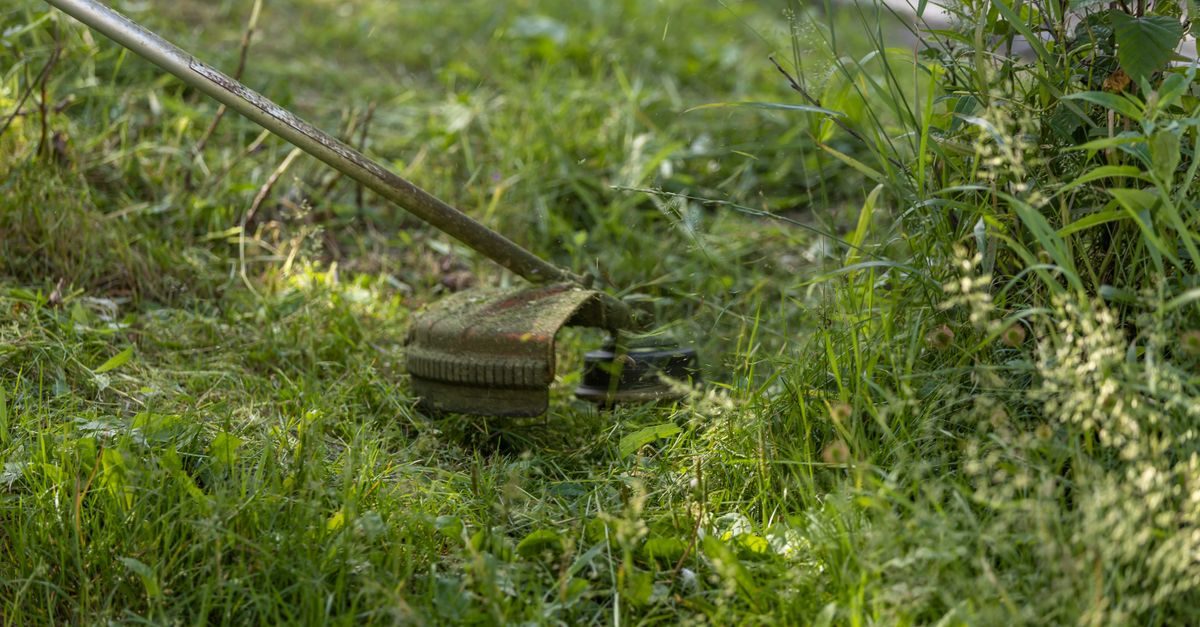
A string trimmer cleans up edges along fences, around trees, and near beds where mowers cannot reach. This prevents tall tufts that go to seed and spread weeds. Battery-powered models reduce noise and maintenance, which suits most home lawns.
Lawn edging tool
Edgers define clear boundaries between lawn and pavement or beds. A crisp edge reduces grass encroachment into beds and improves appearance with minimal effort. Manual half-moon edgers are inexpensive and effective when used a few times per season.
Dethatching rake or simple dethatching tool
Thatch is the layer of undecomposed stems and roots between soil and green grass. A thin layer, under about 0.5 inch, insulates soil and cushions foot traffic. When thatch exceeds about 0.75 to 1 inch, it restricts water and nutrient movement and creates a spongy feel underfoot.
A specialized dethatching rake or lightweight dethatching tool removes excess thatch in small areas. For entire lawns with severe thatch, renting a power dethatcher is more efficient, but that falls into occasional rather than routine use.
Hand weeder
A basic hand weeder or dandelion digger extracts individual weeds and their taproots. For isolated broadleaf weeds like dandelions and plantain, spot removal combined with improved mowing and fertilization often controls the issue without broad herbicide use.
When to rent instead of buy
Aerator
Compacted soil and water puddling in low spots indicate a need for core aeration. This process removes small plugs of soil to relieve compaction and increase air exchange in the root zone. According to Michigan State University Extension, core aeration improves root growth and soil structure, especially in heavy clay soils and areas with high foot traffic.
Most homeowners do not need to own an aerator, because aeration usually takes place once every 1 to 3 years. Renting a core aerator from a home improvement store or hiring a professional service is more efficient and cost effective.
For cool-season lawns, early fall aeration aligns with overseeding and fertilizing. For warm-season lawns, late spring through early summer works better, when the grass actively grows and recovers quickly.
Recommended products

MySoil Soil Test Kit
A mail-in soil test that replaces guesswork about pH and nutrients.
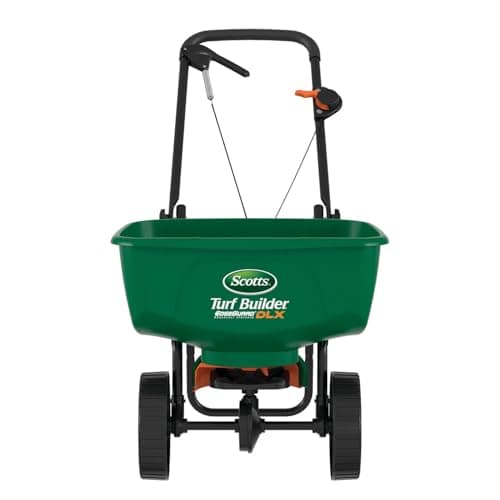
Scotts Turf Builder EdgeGuard DLX Broadcast Spreader
A broadcast spreader with an edge shield for keeping product off walks and beds.
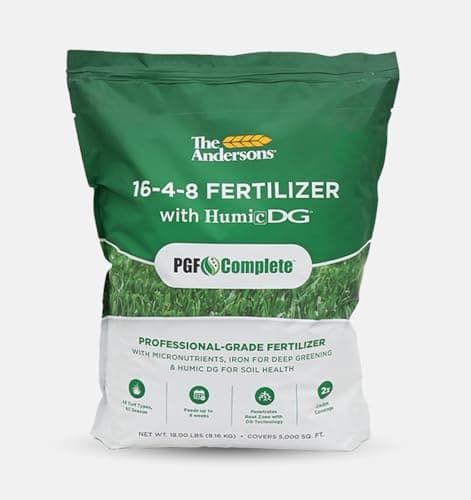
The Andersons PGF Complete 16-4-8
A slow-release 16-4-8 with humic acid that suits nearly any grass type.
Common Lawn Problems and Quick Fixes for Beginners
With grass type, soil status, and tools in place, the next step is addressing common visible problems. The focus remains on lawn care made easy: common problems and quick fixes for beginners, so each problem includes a simple diagnostic tip and a clear action plan.
Problem 1: Thin, Patchy Grass
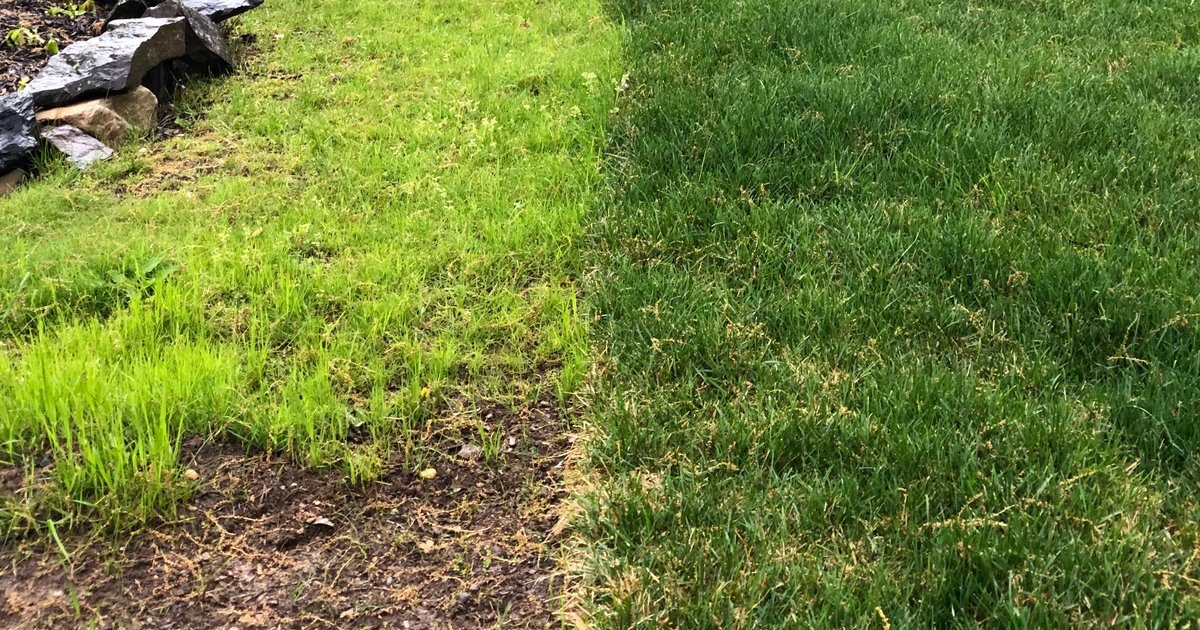
Thin areas that show soil, along with weak grass that does not fill in after damage, indicate either poor seed establishment, inadequate nutrients, or low-quality turf varieties. The fix is overseeding at the right time with appropriate grass seed and supportive care.
Quick fix: Overseeding schedule and steps
According to Penn State Extension, overseeding refreshes thinning cool-season lawns most effectively in early fall, when soil is warm and air temperatures cool. For warm-season lawns, late spring to early summer after green-up aligns with active growth.
- Week 1: Prepare the area
Mow the lawn on the low end of the recommended range for your grass, without scalping. Remove clippings and debris so seed can contact soil. In heavily compacted areas, consider renting a core aerator and making 2 passes in opposite directions. - Same week: Apply seed
Use a high-quality seed blend suited to your region and light conditions. For cool-season lawns, tall fescue blends often provide durability and drought tolerance. Spread seed at the rate listed on the bag for overseeding, typically 3 to 5 pounds per 1,000 square feet for tall fescue. Use a broadcast spreader for even coverage. - Week 1-3: Water correctly
Keep the top 0.5 inch of soil consistently moist until seedlings reach about 1 inch tall. This usually means light watering 1 to 2 times per day, depending on weather. Once established, reduce frequency and increase depth to encourage deeper roots. - Week 3-4: First mow
Mow when new grass reaches about one-third higher than the target height. For a 3 inch lawn, mow at about 4 inches. Ensure mower blades are sharp to avoid tearing tender seedlings.
Apply a starter fertilizer only if your soil test indicates need for phosphorus or potassium. Otherwise, a light nitrogen application after seedlings establish is sufficient. Many extension guides, including those from University of Maryland Extension, recommend no more than 0.5 to 0.75 pounds of nitrogen per 1,000 square feet at seeding time.
Problem 2: Brown Patches and Dead Spots
Brown patches fall into two categories: dormant turf that revives with better water and care, and dead turf that will not recover. Diagnosing which you face determines whether to reseed or simply adjust maintenance.
Diagnosis
- Dormant but alive: Grass crowns at soil level still feel firm and show a hint of green when peeled back. Roots hold the plant in place. These areas often occur during drought or extreme heat, especially in cool-season lawns.
- Dead patches: Grass pulls up easily with little resistance, roots appear dry or rotten, and no green tissue is visible. Damage from grubs, severe disease, or chemical burn creates this pattern.
Quick fix for dormant areas
For dormancy caused by heat or drought:
- Resume or adjust deep watering to reach 6 to 8 inches into the soil once or twice per week.
- Raise mowing height by about 0.5 to 1 inch to reduce stress and shade the soil.
- Avoid heavy fertilization during peak heat; wait until cooler conditions return.
Cool-season grass often recovers fully within 2 to 4 weeks after consistent watering resumes, as long as crowns and roots remain alive.
Quick fix for dead spots
Dead patches require renovation:
- Remove dead turf and any thatch to expose bare soil.
- Loosen the top 1 to 2 inches with a garden rake.
- Add a thin layer, about 0.25 to 0.5 inch, of compost or quality topsoil.
- Seed with the same or compatible grass variety, following overseeding rates.
- Water lightly and frequently until germination, then follow the same regime as for overseeded areas.
If dead patches occur in irregular shapes and increase gradually, investigate grubs or fungal diseases. Many extension resources, such as the Purdue Turfgrass Disease Guide, provide photo-based diagnosis and treatment recommendations.
Problem 3: Weeds Taking Over
Weeds indicate thin turf, compacted soil, or incorrect mowing and watering. Common broadleaf weeds such as dandelion and clover, and grassy weeds such as crabgrass, respond to different strategies.
Quick fix: Strengthen turf and use targeted control
- Raise mowing height: Taller grass shades the soil surface and outcompetes many weeds. For cool-season lawns, maintain 3 to 4 inches. Research from Rutgers University Extension shows that higher mowing heights significantly reduce crabgrass germination compared to closely mowed turf.
- Improve fertility: Weeds exploit nutrient-poor soils. Based on your soil test, apply nitrogen and other nutrients at recommended rates. Do not overfertilize, which encourages some weeds and diseases.
- Spot treat broadleaf weeds: For small infestations, a hand weeder or small spot-spray with a selective broadleaf herbicide during active growth is effective. Follow label directions closely and avoid spraying on windy days.
- Prevent grassy weeds with timing: Preemergent herbicides applied in early spring prevent crabgrass and some other grassy weeds from emerging. Many extension agencies, including Ohio State University Extension, advise timing preemergent products when soil temperatures reach about 55 degrees Fahrenheit at 2 inches depth for several days.
For lawns with more weeds than grass, a renovation that combines weed control, aeration, overseeding, and correct fertilization offers a cleaner long-term solution than repeated spot treatments.
Problem 4: Compacted, Hard Soil and Puddles
Lawns that feel hard underfoot and show areas where water puddles instead of soaking in are compacted. Roots in compacted soil remain shallow and weak, and grass thins even with adequate fertilizer and water.
Quick fix: Core aeration and gradual soil improvement
Core aeration removes plugs of soil about 0.5 inch wide and 2 to 3 inches deep. Spaces left behind allow air and water to enter more easily and give roots room to expand.
- Timing
Aerate during active growth so turf recovers quickly. For cool-season grasses, early fall (September to early October) is ideal. For warm-season grasses, late spring to early summer after full green-up is best. - Execution
Rent a core aerator or hire a service. Make at least two passes across the lawn in perpendicular directions. Leave soil plugs on the surface; they break down over several weeks and help improve structure. - Optional topdressing
After aeration, spread a thin layer of compost, about 0.25 inch deep, over the lawn and rake lightly to work it into aeration holes. This gradually increases organic matter. - Follow-up care
Overseed thin areas immediately after aeration, water as needed for seed establishment, and fertilize according to soil test recommendations.
Extension research from Texas A&M University notes that lawns with high clay content and frequent traffic often benefit from yearly aeration, while sandy or lightly used lawns require less frequent treatment.
Problem 5: Uneven Color and Stripes
Uneven green color, stripes, or dark and light bands usually signal inconsistent fertilizer or irrigation coverage rather than disease. The cause is mechanical, and the fix focuses on application patterns.
Quick fix: Calibrate and adjust application patterns
- Spreader calibration: Check spreader settings against product labels and perform a test on a driveway or tarp using a measured amount of product. Adjust settings until coverage appears even across the width of your walking path.
- Overlap correctly: Walk passes so the spreader covers slightly into the tire marks of the previous pass, which prevents gaps or heavy bands.
- Sprinkler coverage: Place several straight-sided containers across the lawn and run sprinklers for a set time. Compare water depth in each container and adjust sprinkler position or type to even out application.
Once application becomes uniform, new growth gradually evens color over 2 to 4 weeks. Severe fertilizer burn that produces stark yellow or brown stripes, however, requires flushing with water and possibly reseeding damaged bands.
Year-Round Lawn Care Roadmap for Beginners
Isolated quick fixes work better when they fit into a simple seasonal plan. A year-round roadmap organizes tasks so you know what to prioritize each season, without turning lawn care into a complex calendar.
Cool-season lawn roadmap (typical northern climates)
- Early spring (March - April)
- Rake leaves and debris, inspect for bare spots.
- Apply preemergent crabgrass control if needed, timed when soil reaches about 55 degrees Fahrenheit.
- Perform first mowing at 2.5 to 3 inches once grass resumes growth.
- Light fertilizer application only if soil test recommends it. - Late spring (May - early June)
- Maintain regular mowing at 3 to 4 inches.
- Irrigate as rainfall declines, targeting 1 to 1.5 inches per week.
- Spot treat broadleaf weeds while they actively grow. - Summer (June - August)
- Keep mowing height at the high end of the range.
- Water deeply and infrequently during dry periods.
- Avoid heavy fertilizer applications to reduce stress. - Early fall (September - October)
- Core aerate compacted areas.
- Overseed thin spots or entire lawn as needed.
- Apply main fertilizer dose, about 0.75 to 1 pound of nitrogen per 1,000 square feet, guided by your soil test. - Late fall (October - November)
- Apply a final "winterizer" fertilizer if recommended by local extension, often another 0.5 to 1 pound of nitrogen.
- Continue mowing until growth stops, lowering height slightly on the last mow but not below about 2.5 inches.
Warm-season lawn roadmap (typical southern climates)
- Late winter - early spring (February - March)
- Rake off leaves, inspect for winter damage.
- Apply preemergent herbicide for crabgrass and some broadleaf weeds as soil warms.
- Avoid heavy fertilization until consistent green-up. - Spring (April - May)
- Begin mowing at recommended height once turf greens up.
- Apply first fertilizer, often 0.5 to 1 pound nitrogen per 1,000 square feet, after full green-up and when soil temperatures reach about 65 degrees Fahrenheit.
- Irrigate as needed during dry spells. - Summer (June - August)
- Maintain regular mowing and irrigation.
- Apply additional fertilizer in midsummer if recommended, but avoid late applications that encourage growth into cool weather.
- Spot treat weeds and monitor for pests such as grubs. - Fall (September - October)
- Gradually reduce fertilizer, following local extension advice.
- Repair any thin or bare areas early enough for roots to establish before dormancy.
- Maintain mowing until growth slows, keeping height within recommended range. - Winter (where applicable)
- Allow warm-season grass to go dormant naturally.
- Minimize traffic on frozen or saturated turf to prevent damage.
When to DIY and When to Call a Pro
The "made easy" approach includes recognizing when professional help yields better results or saves time and cost compared to repeated DIY attempts. Many tasks suit beginners, but some situations signal that a consultation or service visit is appropriate.
Good candidates for DIY
- Routine mowing, watering, and leaf cleanup.
- Overseeding small to medium lawns following extension guidelines.
- Basic fertilization guided by a soil test report.
- Spot weed pulling or targeted herbicide treatments in limited areas.
- Small patch repairs for pet damage or localized wear.
Situations that favor calling a pro
- Severe or recurring disease: Large irregular brown patches, especially with visible mold, lesions on blades, or rapid spread, indicate fungal disease. Diagnosis and targeted fungicide selection benefit from turf professionals or an extension plant diagnostic lab.
- Major renovation: Complete lawn replacement, large-scale grading to correct drainage, or sod installation often require specialized equipment and experience.
- Pest infestations: Confirmed grub populations above threshold levels, typically more than 10 to 12 grubs per square foot according to Michigan State University Extension, or other serious insect issues, justify professional treatment programs.
- Complex irrigation systems: Installing or repairing in-ground sprinklers efficiently and meeting local codes is usually beyond beginner scope.
A hybrid approach works well for many beginners: start with a professional soil test and perhaps a one-time consultation, then handle routine tasks and quick fixes yourself following the plan.

Conclusion: Turning Common Problems into Simple Steps
Most lawn frustrations trace back to a small set of causes: wrong grass for the site, neglected soil, inconsistent watering, and incorrect mowing height. By understanding grass type, testing and adjusting soil, observing sun and shade patterns, and using a basic set of tools correctly, lawn care made easy: common problems and quick fixes for beginners becomes a practical reality instead of a slogan.
Start with one focus area this season, such as correcting mowing height or overseeding thin spots, then build toward the full year-round roadmap. For more targeted help, explore resources such as How to Identify Your Grass Type, How to Read a Soil Test Report, and Beginner’s Guide to Lawn Watering, then adapt their recommendations to your yard. With each small, informed step, your lawn transitions from problem source to low-maintenance green space.
Top Picks
- HSLGOVE 7-in-1 Soil Test KitCheck price on Amazon
- MySoil Soil Test KitCheck price on Amazon
- Scotts Wizz Spreader for Grass SeedCheck price on Amazon
As an Amazon Associate we earn from qualifying purchases.
Free Lawn Care Tools
Grass type controls nearly every decision you make. Mowing height, watering schedule, fertilizing timing, and even when the lawn looks best all depend on whether you grow cool-season or warm-season turf.
Look at both when your lawn looks its best and how it behaves through the year. Lawns that stay green into late fall and green up early in spring are usually cool-season, while lawns that turn brown in winter but thrive in summer heat are typically warm-season. Blade width and texture also help: tall, coarse blades often indicate tall fescue or St. Augustine, while fine, dense mats suggest Kentucky bluegrass or Bermuda. Using a plant ID app and confirming with a local nursery or extension office gives you extra confidence.
Mowing height directly affects root depth, stress tolerance, and weed resistance. Cutting grass too short, especially cool-season types, weakens the plants and invites thinning and weed invasion. Keeping cool-season grasses around 2.5–4 inches and warm-season grasses within their recommended ranges helps prevent scalping and reduces thatch buildup. Proper height makes lawn care easier because the grass can better handle heat, drought, and foot traffic.
Cool-season lawns do best with most of their fertilizer in the fall, from roughly September to November, with only a light feeding in late spring. This timing builds strong roots and improves spring green-up without stressing the lawn in summer. Warm-season lawns respond best to fertilizing in late spring and through summer when they are actively growing. For these grasses, it’s smart to wait until soil temperatures reach about 65°F a few inches down before the first full application.
Local resources fine-tune general lawn care tips to your exact climate, soil, and grass types. County extension offices and reputable garden centers can confirm what grass you have, recommend ideal mowing heights, and suggest the right fertilizing schedule for your region. They also help you avoid common mistakes like using the wrong product or treating at the wrong time of year. This makes it easier to get good results without guesswork or wasted money.
You need to know three things: your grass type, your soil conditions, and how much sun and moisture your lawn receives. Grass type drives decisions about mowing height, watering, and fertilizing. Soil traits like pH, compaction, and nutrient balance determine how well roots grow and how efficiently the lawn uses water and fertilizer. When you understand these basics, common problems become much easier to diagnose and fix.
Photos: RDNE Stock project / Pexels, Kindel Media / Pexels

Beat weeds and brown spots from your phone
Snap a photo, get the fix, and follow a plan timed to your soil and weather. Free on iPhone.