Watering Your Lawn the Right Way: How Often and How Much to Water
 James ThorntonLawn Equipment & Maintenance Expert | 20 Years
As an Amazon Associate we earn from qualifying purchases.
Patchy color, random dry spots, and fungus-prone turf all signal the same core problem: the lawn is not being watered correctly for its grass type, soil, and climate.
The short answer: water your lawn 2 to 3 times per week in summer (not daily), giving it 1 to 1.5 inches of water total per week including rainfall. Per session, run spray heads about 15 to 20 minutes per zone and rotor heads about 30 to 45 minutes per zone to apply roughly half an inch. Cool-season grasses like fescue and bluegrass want the higher end of that range in summer heat; warm-season grasses like bermuda and zoysia usually do fine on 0.75 to 1.25 inches per week, often in a single deep soak.
Watering your lawn the right way means dialing in four variables at the same time: how often you water, how much water you apply, what time of day you water, and the technique or equipment you use to apply it.
Getting watering right has become a higher priority in recent years. Municipal water rates have increased in many areas, drought restrictions are common, and overwatering wastes a resource that communities and landscapes depend on. At the same time, turfgrass science is very clear: watering habits directly control root depth, color, density, and the lawn’s resistance to disease and heat stress.
This guide explains watering your lawn the right way: how often and how much to water, using research from leading turf programs. It answers core questions for homeowners:
- How often should I water my lawn in my climate?
- How much water does my grass really need per week?
- What is the best time of day to water for efficiency and disease prevention?
- How do soil type, grass species, lawn age, and sun exposure change my schedule?
The goal is an intermediate-level, practical reference. You will see quick wins you can start this week along with more advanced insights, such as adjusting watering by soil type and using simple tests to measure how much water your sprinklers really apply. For deeper lawn care planning, pair this guide with topics such as How to Test and Improve Your Lawn Soil and The Best Time to Mow Your Lawn for a Thicker, Greener Yard.
If you're seeing patchy color or dry spots in your lawn, it's likely a sign of incorrect watering, often tied to your grass type or local climate. To verify, measure your lawn's weekly water intake with a rain gauge. Ideally, you'll want to provide about 1 to 1.5 inches of water per week, including rainfall.
To correct your watering routine, adjust your schedule to ensure deep watering once or twice a week rather than daily light watering. This encourages deeper root growth and better drought resistance. Within a few weeks, you should start to see a more vibrant and resilient lawn, especially if you water early in the morning.
Understanding Lawn Water Needs: How Much Water Does a Lawn Really Need?
Correct frequency and timing do not matter if the total weekly volume is wrong. Too little water keeps turf in chronic stress, while too much saturates soil, limits oxygen to roots, and promotes disease. Extension research from multiple universities agrees: successful lawn care starts with knowing the target weekly water depth for your grass and climate.
The “One Inch Per Week” Rule - And When It Applies
Homeowners hear a common guideline: provide 1 to 1.5 inches of water per week, including rainfall. According to Penn State Extension, this general rule works well for many cool-season lawns in moderate climates when temperatures are in the 60 to 80 degree Fahrenheit range. It provides enough moisture to support active growth without keeping the soil constantly saturated.
This rule is a starting point, not a fixed law. Several factors shift the ideal weekly total:
- Climate - In hot, arid climates with low humidity and frequent wind, evapotranspiration (ET) is much higher, so lawns require more than 1 inch. In cool, humid regions with regular rainfall, the real requirement from irrigation often falls below 1 inch.
- Grass species - Some turfgrasses tolerate mild drought and need less frequent watering. Others, such as shallow rooted or heavily fertilized Kentucky bluegrass, demand closer attention in heat.
- Soil and lawn age - Coarse sandy soils drain quickly and cannot store a full inch of water for long. Newly seeded lawns have shallow roots and need a different approach than established turf.
Purdue University Extension notes that many cool-season lawns in the Midwest perform well on 1 to 1.5 inches per week during summer, while warm-season lawns in hot climates often thrive with similar or slightly lower weekly totals but on a different seasonal schedule. The key is to treat 1 inch as a benchmark, then fine tune based on your conditions and visual feedback from the turf.
Cool-Season vs Warm-Season Grasses and Their Water Requirements
Water needs differ significantly between cool-season and warm-season grasses because their peak growth periods and physiology are different.
Cool-season grasses such as Kentucky bluegrass, tall fescue, fine fescue, and perennial ryegrass dominate northern and transition-zone lawns.
According to Ohio State University Extension:
- In spring and fall, cool-season grasses grow most actively and use water efficiently. Around 1 inch per week, including rainfall, usually maintains dense, green turf.
- In summer heat, especially once temperatures exceed about 85 degrees Fahrenheit, cool-season grasses experience stress. Kentucky bluegrass and perennial ryegrass require closer to 1.5 inches per week to stay fully green, while tall fescue often tolerates slightly less due to its deeper roots.
- Cool-season lawns can enter a protective drought dormancy if irrigation is withheld. Color fades to tan, but crowns survive as long as the drought is not extreme or prolonged. If you allow dormancy, universities such as Michigan State recommend providing at least 0.5 inch of water every 2 to 3 weeks to prevent complete desiccation.
Warm-season grasses such as bermudagrass, zoysiagrass, St. Augustinegrass, and centipedegrass dominate southern lawns.
NC State Extension outlines several consistent patterns:
- Warm-season grasses achieve peak growth and water use in summer when soil temperatures are above about 70 degrees Fahrenheit. Weekly water needs typically fall in the 0.75 to 1.25 inch range, depending on soil and climate.
- In spring and fall, water use drops as growth slows, so irrigation volume can be reduced significantly unless there is an extended dry spell.
- Most warm-season grasses have deeper or more drought tolerant root systems than cool-season turf. They maintain color and density under moderate deficits better than Kentucky bluegrass or ryegrass.
Transitional zones and mixed lawns create added complexity. Many homeowners in the central United States have lawns with more than one species. A yard might contain Kentucky bluegrass and perennial ryegrass in sun, with fine fescue in shade, or have a mix of bermudagrass and tall fescue where seeding and encroachment have overlapped.
In these cases, the irrigation strategy needs to be based on observation rather than a universal weekly number:
- Set your target volume near the middle of the likely range, for example around 1.25 inches during hot weather.
- Watch which species show stress first. If bluegrass wilts while tall fescue remains fine, keep the same weekly total but water less often and more deeply to encourage deeper roots on the bluegrass.
- In shaded zones with fine fescue, reduce run times or cap sprinkler nozzles, since shaded turf uses less water.
When lawns have a mix of cool and warm-season grasses, basing irrigation on the dominant or preferred species yields the best results. The other species adapt, and over several seasons, the lawn tends to shift toward the grass that thrives under your watering and mowing regime.
How Soil Type Affects How Often and How Much to Water
Soil texture controls how much water the soil can hold and how quickly it moves. The same one inch of water behaves very differently in sand than in clay. According to University of California Cooperative Extension, this water holding capacity determines whether you should water more frequently in smaller doses or less frequently in deeper soakings.
Sandy soil has large particles and large pores. Water drains quickly and does not stay in the root zone very long.
- Sandy lawns benefit from more frequent, shorter irrigation sessions. For example, instead of a single 1 inch application once per week, two applications of 0.5 inch spaced 3 to 4 days apart keep roots supplied without losing as much water below the root zone.
- Nutrient leaching is more likely in sand, so combining correct watering with appropriate fertilization improves both color and efficiency.
Loam soil is a balanced mix of sand, silt, and clay. It retains water well but still drains adequately.
- Loam is ideal for deep, infrequent watering. Most lawns on loam perform well with 1 to 1.5 inches per week applied in one or two sessions.
- Because loam can store several inches of plant available water per foot of depth, it supports deeper rooting and longer intervals between irrigation cycles.
Clay soil has very small particles and small pores. It holds water tightly but admits water slowly.
- Clay lawns require slower application rates to avoid runoff and puddling. This often means using lower gallon-per-minute nozzles or using cycle-and-soak programming on automatic systems.
- Clay retains moisture longer than sand, so watering frequency can be lower, but total weekly volume still needs to hit the target for your grass and climate.
You can estimate your soil type with two simple home tests.
Jar test:
- Collect soil from 3 to 5 spots in your lawn, mix them, and remove debris.
- Fill a clear jar about one third with soil and two thirds with water plus a drop of dish soap.
- Shake thoroughly, then let it sit 24 to 48 hours.
- Sand settles at the bottom, silt in the middle, clay on top. The relative thickness of each layer reveals whether your soil is sandy, loamy, or clay heavy.
Squeeze test:
- Moisten a handful of soil until it feels like a wrung out sponge.
- Roll it into a ball and then a ribbon between your thumb and fingers.
- Sandy soil crumbles and will not hold a ribbon. Loam holds a short ribbon that breaks easily. Clay forms a longer, stable ribbon.
These tests do not replace formal analysis, but they provide enough information to adjust watering frequency and technique intelligently.
Other Factors That Change Your Lawn’s Watering Needs
Even on the same property, not every part of the lawn needs the same amount of water. Microclimates, turf management, and lawn age all affect ideal watering schedules.
Sun vs shade and microclimates
Full sun areas dry faster than shaded areas. South facing slopes, zones next to driveways or sidewalks, and spots exposed to reflected heat from buildings experience higher evapotranspiration. According to Texas A&M AgriLife Extension, turf in full sun can use 30 to 50 percent more water than turf under light shade during peak summer.
Shaded lawns receive less direct sun and are often cooler and more humid. Fine fescue and some St. Augustine cultivars grown in shade require less irrigation, and overwatering these zones increases the risk of disease and moss.
Wind exposure and elevation
Wind increases evaporation from soil and transpiration from blades. Elevated areas and ridges are more exposed and usually drain faster than low spots, so they show stress first. For lawns irrigated with sprinklers, wind also changes distribution uniformity, which means some areas receive less water than run time calculations suggest.
Lawn age
New seed, new sod, and established turf do not need the same schedule.
- Newly seeded lawns require frequent, light watering to keep the top 0.5 to 1 inch of soil consistently moist. According to University of Missouri Extension, this often means 2 to 3 light irrigations per day for the first 2 weeks, then a gradual reduction in frequency as roots deepen.
- New sod requires thorough watering immediately after installation to soak the sod and the soil beneath. For the first 10 to 14 days, the goal is to keep the sod uniformly moist so roots knit into the native soil. Short, daily or near daily watering is typical, then frequency is reduced as sod anchors and roots deepen.
- Established turf benefits most from deep, infrequent irrigation that encourages deep roots instead of shallow ones.
Mowing height
Mowing height directly affects water use. Taller grass blades shade the soil surface, reduce evaporation, and promote deeper roots. According to University of Minnesota Extension, raising mowing height by 0.5 to 1 inch can reduce irrigation demand and improve drought tolerance.
Maintaining cool-season lawns in the 3 to 4 inch range and many warm-season lawns in the 2 to 3 inch range supports better moisture conservation. This connects closely with the guidance in The Best Time to Mow Your Lawn for a Thicker, Greener Yard.
Fertilizer and lawn vigor
Heavily fertilized lawns grow faster, which increases water demand slightly because more leaf area transpires more water. Over fertilization also produces lush, tender growth that is more sensitive to drought and disease. How to Fertilize Your Lawn Without Burning It provides a framework that complements correct irrigation by avoiding excessive nitrogen that drives water hungry growth.
How Frequently Should You Water Your Lawn?
The grass watering frequency that works for almost every established lawn: 2 to 3 days per week in summer, 1 to 2 days per week in spring and fall, and often zero supplemental days when rain covers the weekly total. Here is how frequently to water by season and grass type:
| Season | Cool-Season (fescue, bluegrass, rye) | Warm-Season (bermuda, zoysia, St. Augustine) |
|---|---|---|
| Spring | 0 to 1 day/week (rain usually covers it) | 0 to 1 day/week after green-up |
| Summer | 2 to 3 days/week, 1 to 1.5 in. total | 1 to 2 days/week, 0.75 to 1.25 in. total |
| Fall | 1 to 2 days/week, tapering to 0 | 0 to 1 day/week as growth slows |
| Winter | None (dormant/frozen) | None, or 0.5 in. monthly in dry warm climates |
Frequency is where many lawns go off track. Daily or every other day watering often keeps the lawn green temporarily but creates shallow roots and higher disease pressure. The correct strategy is deep and infrequent watering tailored to your soil and grass type.
The Core Principle: Deep and Infrequent Watering
Deep and infrequent watering means applying enough water in a single session to moisten the root zone to a depth of 4 to 6 inches, then waiting until the soil begins to dry and the turf shows early stress signals before watering again. This approach trains roots to grow deeper, improves drought tolerance, and reduces the time leaves stay wet, which limits disease.
According to Kansas State University Extension, shallow daily watering causes several predictable issues:
- Shallow root systems - Roots concentrate in the top 1 to 2 inches of soil because moisture is always available there. This makes the lawn extremely vulnerable to heat and any lapse in irrigation.
- Higher disease incidence - Frequent watering keeps leaf surfaces and the thatch layer damp, which favors fungi that cause dollar spot, brown patch, and other diseases.
- Weed pressure - Weeds with shallow root systems, such as annual bluegrass, thrive in constantly moist surface soil.
Deep, infrequent watering, in contrast, delivers several benefits:
- Roots chase moisture deeper, resulting in a root system that can access stored soil water during hot, dry spells.
- The upper surface dries between waterings, which suppresses many fungal pathogens.
- The lawn requires fewer total watering events, which simplifies scheduling and often saves water.
For many established lawns on loam or clay:
- Cool-season turf is often best watered once or twice per week during summer, providing the full weekly total (for example, 1.25 inches) in those one or two applications.
- Warm-season turf may only need weekly irrigation in many climates once established, provided each watering is deep enough.
In sandy soils, the same total volume is divided into more frequent sessions because storage capacity is lower, but the goal remains to avoid daily shallow watering.
How to Know When It Is Time to Water
Instead of using the calendar alone, using visible and tactile signs from the turf and soil yields more precise timing. University of Nebraska-Lincoln Extension outlines several reliable indicators that it is time to irrigate:
- Grass blades lose some of their sheen and appear a duller green or slightly gray.
- Footprints or mower tracks remain visible because grass blades do not spring back quickly.
- The top 2 to 3 inches of soil feel dry when probed with a screwdriver or soil probe.
Using these cues, you can adjust for weekly weather fluctuations. During a cool, cloudy week with some rain, you may not need to water at all even if your regular schedule calls for it. During a hot, windy period, you may need to irrigate sooner than the calendar interval.
For homeowners interested in technology based approaches, the topic Smart Irrigation Systems: Are They Worth It? covers controllers that use local weather or soil moisture sensors to automate this decision, but the visual signs above remain essential for verifying performance.
Practical Frequency Guidelines by Grass and Soil Type
While observation should override rigid rules, these ranges provide a practical starting point for established lawns once temperatures are in typical summer ranges:
- Cool-season lawns on loam or light clay: Water once or twice per week, supplying 0.6 to 0.75 inch per session if watering twice, or 1 to 1.25 inches if watering once.
- Cool-season lawns on sandy soil: Water two or three times per week, supplying about 0.4 to 0.6 inch per session, aiming for 1 to 1.5 inches total.
- Warm-season lawns on loam or clay: Water about once per week in summer, supplying 0.75 to 1.25 inches depending on weather, with longer intervals possible during cooler periods.
- Warm-season lawns on sandy soil: Water one to three times per week depending on heat, supplying smaller volumes per session to avoid deep percolation losses.
In all cases, adjust based on the lawn’s visual response and any local restrictions. Where irrigation is limited by regulation, focus on maximizing root depth with core aeration, correct mowing height, and improved soil organic matter to help the soil store more water between permitted watering days.
How Long Should Sprinklers Run?
How long to keep sprinklers on depends almost entirely on the head type, because each applies water at a very different rate. As a rule of thumb, to put down about half an inch per session:
| Sprinkler Type | Typical Application Rate | Minutes per Zone (0.5 in.) | Minutes per Zone (0.75 in.) |
|---|---|---|---|
| Fixed spray heads | 1.5 to 2 in./hour | 15 to 20 min | 25 to 30 min |
| Rotor heads | 0.5 to 0.75 in./hour | 30 to 45 min | 45 to 60 min |
| Impact sprinklers | 0.5 to 1 in./hour | 30 to 45 min | 45 to 60 min |
| Oscillating hose-end | 0.5 to 1 in./hour | 30 to 60 min | 45 to 90 min |
So if you water twice a week with spray heads, two 20-minute runs per zone gets you close to the 1 inch weekly target. With rotors, plan on two 40-minute runs. These are starting points, not gospel: pressure, nozzle wear, and spacing all shift the real number, which is why the catch can test below is worth 15 minutes of your time.
How Much Water Should You Apply Each Time?
Knowing you want to deliver, for example, 1.25 inches per week does not automatically translate to a run time. Sprinklers and hoses put out water at different rates. To apply the correct volume, you need to measure how much water your system applies in a given period.
How to Measure Your Sprinkler Output
Several universities, including Colorado State University Extension, recommend a simple catch can test to determine application rate:
- Gather 6 to 10 straight sided containers such as tuna cans, small plastic cups, or rain gauges.
- Place them randomly but evenly in the sprinkler coverage area, including near the edges.
- Run your sprinkler or irrigation zone for 15 minutes.
- Measure the depth of water in each container using a ruler to the nearest 0.1 inch.
- Calculate the average depth by adding all measurements and dividing by the number of containers.
- Multiply that average by 4 to estimate the hourly application rate in inches per hour.
For example, if the average depth in 15 minutes is 0.25 inch, then the sprinkler applies 1 inch per hour. If you want to apply 0.75 inch in a single session, you would run that zone for 45 minutes. If a different zone averages 0.5 inch in 15 minutes (2 inches per hour), then 0.75 inch only requires about 23 minutes.
This test also reveals distribution uniformity. If some containers receive much less water than others, the pattern indicates that the zone would benefit from nozzle adjustments, head leveling, or spacing corrections.
Adjusting Run Time for Soil Infiltration Rates
Application rate is only half of the equation. The soil also has a maximum infiltration rate, which is the speed at which it can absorb water without ponding or runoff. Clay soils and compacted soils have low infiltration rates, while sandy and well structured loam soils absorb water quickly.
If your sprinklers apply water faster than the soil can take it in, water will puddle and run off after a certain number of minutes. In this case, the fix is to use a cycle and soak approach:
- Split the total run time into two or three shorter cycles.
- Allow 30 to 60 minutes of soak time between cycles so water can move deeper into the profile.
- The total water applied stays the same, but the soil actually absorbs it instead of shedding it.
For example, if your clay soil begins to pond after 10 minutes, but you need 30 minutes total run time to reach 0.75 inch, program three 10 minute cycles spaced 45 minutes apart. Modern controllers with a cycle and soak function make this straightforward.
Accounting for Rainfall
Weekly water needs include rainfall. If rain provides most or all of that target, supplemental watering is unnecessary. According to University of Florida IFAS Extension, overwatering on top of sufficient rainfall increases disease risk and wastes water.
Use a simple rain gauge or a weather station to track rainfall in your yard. Then apply these steps:
- Determine your target weekly total, for example 1 inch.
- Check rainfall over the past 7 days.
- Subtract rainfall from the target. If you received 0.7 inch of rain, you only need to supply about 0.3 inch with irrigation.
- If a heavy rainfall of 1 inch or more occurs at once, skip the next scheduled irrigation and reassess soil moisture in several days using the soil probe and visual signs.
Many smart controllers integrate local weather data and make these adjustments automatically, which is explored further in Smart Irrigation Systems: Are They Worth It?.
The Best Time of Day to Water Your Lawn
Time of day strongly affects how efficiently water is used and how vulnerable the lawn is to disease. According to multiple university extensions, early morning is consistently the best time to water established turf. See Best Time of Day to Water Your Lawn for the full timing breakdown.
Why Early Morning Watering Works Best
Early morning, typically between 4 a.m. and 9 a.m., aligns with several favorable conditions:
- Air temperatures are cooler, so less water is lost to evaporation during application.
- Wind speeds are often lower, which improves uniform coverage and reduces drift.
- Grass blades have time to dry quickly once the sun rises, which limits the duration leaves stay wet.
University of Georgia Extension notes that watering in the early morning supports deeper percolation of water into the root zone, improves efficiency, and reduces conditions that favor fungal pathogens such as brown patch and dollar spot.
Why Evening and Night Watering Increases Disease Risk
Watering late in the evening or at night means leaf surfaces often remain wet for 10 to 14 hours until sunlight and higher daytime temperatures evaporate moisture. This prolonged leaf wetness is a key driver of turf disease outbreaks.
For cool-season grasses, brown patch and dollar spot are particularly aggressive when nights are warm and humid and leaves stay wet. For warm-season lawns, diseases such as large patch also thrive when soil and thatch remain moist overnight.
If your schedule or local regulations only allow evening watering, reduce total frequency, water as early in the evening as possible, and focus on deep root zone soaking rather than light, frequent surface wetting.
Midday Watering and Efficiency
Midday watering is less efficient because temperatures and wind are typically higher, which increases evaporation and reduces uniform distribution. However, turfgrass science recognizes one limited case where midday watering has a role: short syringing cycles to cool putting greens or highly stressed turf during extreme heat.
For home lawns, this technique is rarely necessary and easily misused. Instead of using midday cycles, manage stress with correct mowing height, deep roots, and proper weekly water totals.
Watering Technique: Sprinklers, Hoses, and Smart Systems
How water is delivered matters as much as when and how often. Different irrigation methods offer different levels of control, uniformity, and labor.
Hose-End Sprinklers
Hose-end sprinklers are common and inexpensive. Their effectiveness depends on proper selection and placement.
- Oscillating sprinklers cover rectangular areas and are suitable for small to medium lawns with simple shapes. They tend to apply water more gently, which is an advantage on clay soils.
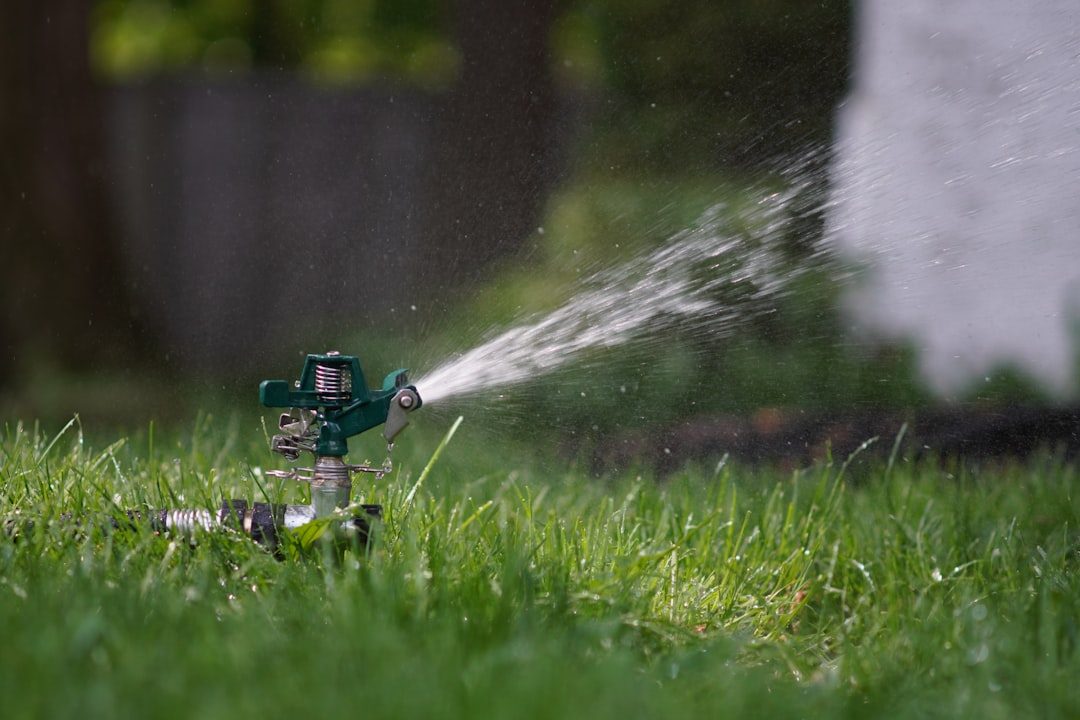
- Rotating or impulse sprinklers throw water in a circular pattern and cover large areas. They can have higher application rates, which require attention on heavy soils.
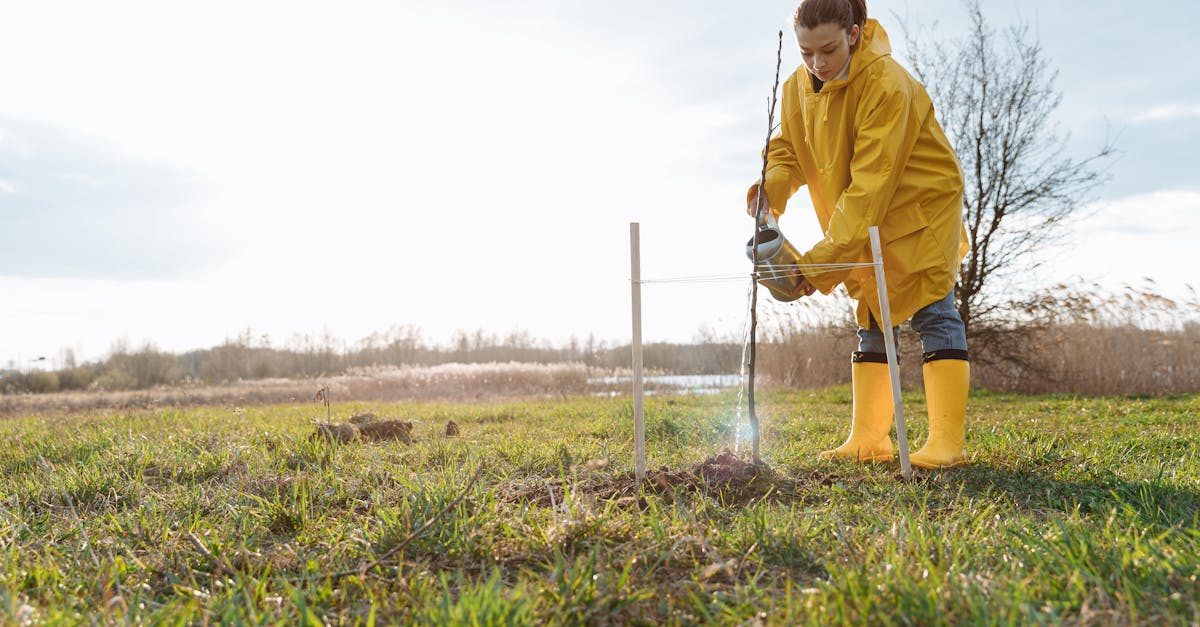
- Stationary or spot sprinklers suit small patches, corners, and newly seeded areas where targeted coverage is needed.
Regardless of type, always perform a catch can test to determine run time, and avoid leaving a sprinkler in one location for too long on clay or compacted soils.
In-Ground Irrigation Systems
Automatic systems provide convenience and precise scheduling. Their effectiveness, however, depends on design, maintenance, and programming. Common head types include:
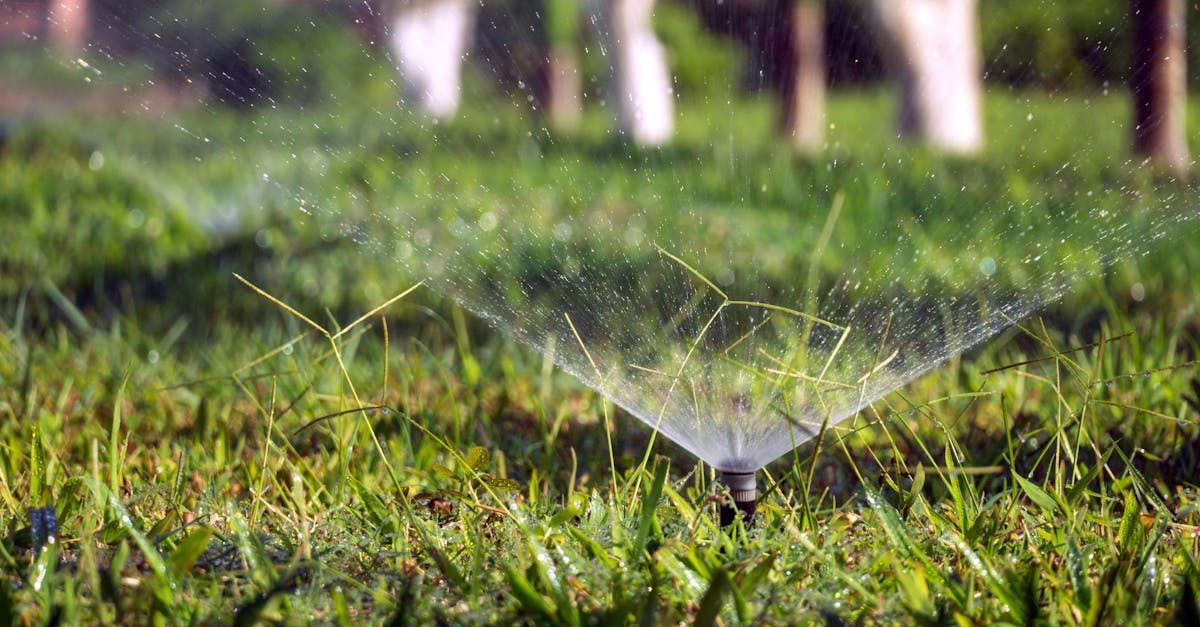
- Spray heads that deliver a fixed pattern and are suitable for small or irregularly shaped turf areas.
- Rotors that rotate streams of water and are more efficient for larger areas.
To water your lawn the right way with an in ground system:
- Schedule zones based on plant material and sun exposure. Do not water shrubs, beds, and turf with identical programs.
- Adjust seasonal run times. Many controllers have seasonal adjust features that cut or increase run times by percentage across all zones.
- Regularly inspect for clogged nozzles, misaligned heads, and leaks that affect uniformity.
Colorado State University Extension emphasizes that many overwatering issues stem from poor controller programming, not from lawn needs. Reviewing controller settings seasonally and after any power outage or system modification is essential.
Smart Controllers and Soil Moisture Sensors
Smart Irrigation Systems: Are They Worth It? evaluates modern controllers that use weather data and sometimes soil moisture sensors to automatically adjust watering frequency and duration.
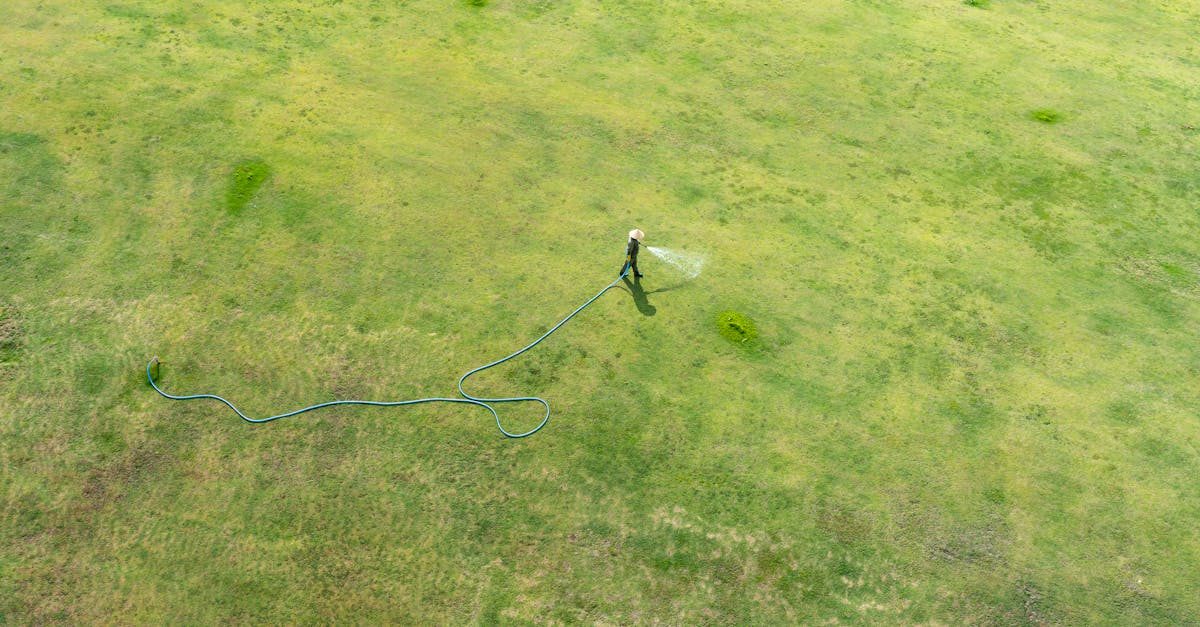
Key advantages when configured correctly include:
- Automatic reduction or suspension of watering after rainfall events.
- Seasonal adjustment without manual programming.
- Integration with local evapotranspiration data to match lawn water use more precisely.
However, even a smart controller requires correct baseline setup: accurate zone mapping, soil types, plant types, and precipitation rates. Without this input, the controller cannot make accurate decisions. Smart devices enhance, but do not replace, the principles described in this guide.
Recommended products

Rachio 3 Smart Sprinkler Controller
An 8-zone controller that adjusts run times from local weather and skips cycles after rain.

RAINPOINT 3-in-1 WiFi Soil Moisture Sensor
A buried probe reporting soil moisture, temperature, and light to your phone.
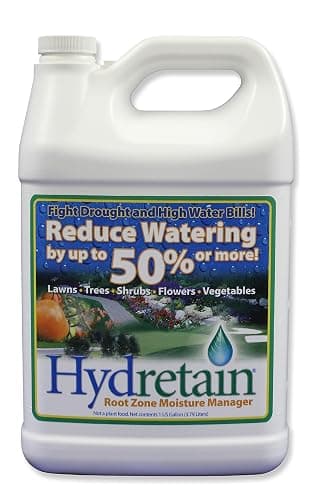
Hydretain Root Zone Moisture Manager
A humectant that holds soil moisture in the root zone between deep waterings.
Lawn Watering Schedule by Grass Type
Pulling the frequency, volume, and run-time numbers together, here is a best watering schedule for grass by type during peak summer:
| Grass Type | Inches/Week (summer) | Days/Week | Per Session |
|---|---|---|---|
| Kentucky bluegrass | 1.25 to 1.5 | 2 to 3 | 0.5 to 0.6 in. |
| Tall fescue | 1 to 1.25 | 1 to 2 | 0.6 to 1 in. |
| Perennial ryegrass | 1.25 to 1.5 | 2 to 3 | 0.5 to 0.6 in. |
| Bermudagrass | 0.75 to 1.25 | 1 to 2 | 0.75 to 1 in. |
| Zoysiagrass | 0.75 to 1 | 1 | 0.75 to 1 in. |
| St. Augustinegrass | 1 to 1.25 | 1 to 2 | 0.6 to 1 in. |
| Centipedegrass | 0.75 to 1 | 1 | 0.75 to 1 in. |
Sandy soil? Split the weekly total into an extra session. Clay? Keep the sessions but use cycle and soak so the water actually gets in. Full seasonal detail below.
Seasonal Watering Adjustments and Implementation Timeline
Watering your lawn the right way: how often and how much to water changes with the seasons. Matching irrigation to the lawn’s growth cycle improves health and reduces waste.
Cool-Season Lawns: Spring Through Fall
Early spring (soil temperatures 50 to 60 degrees Fahrenheit):
- Growth resumes and roots rebuild. Natural rainfall often meets most water needs in many regions.
- Implementation: Turn on irrigation only after visual signs indicate stress or if rainfall is below normal. Start with one deep watering every 7 to 10 days if needed.
Late spring to summer (daytime highs consistently above 75 degrees Fahrenheit):
- Water demand peaks. Aim for 1 to 1.5 inches per week based on your grass and climate.
- Implementation:
- Week 1: Perform a catch can test and set zone run times to deliver 0.5 to 0.75 inch per cycle.
- Week 2: Observe stress indicators and turf response. Adjust frequency to one or two deep waterings per week.
- Weeks 3 to 8: Maintain schedule, adjusting for rainfall, and monitor for Signs of Underwatering in Grass and for disease.
Late summer to early fall:
- Temperatures moderate and water use declines. Overwatering at this stage encourages disease like rust and snow mold in some regions.
- Implementation: Gradually reduce weekly total to around 1 inch, then to 0.75 inch in cool, wet periods, or shut off entirely if rainfall is adequate.
Late fall:
- Prepare for dormancy. According to Michigan State University Extension, cool-season lawns benefit from entering winter with soil Moist but not saturated.
- Implementation: Water only as needed to prevent severe drying before ground freeze, then shut down and winterize irrigation systems.
Warm-Season Lawns: Spring Through Dormancy
Spring green-up (soil temperatures approach 65 to 70 degrees Fahrenheit):
- Warm-season lawns exit dormancy. Root growth begins before heavy top growth. Moderate irrigation supports this phase.
- Implementation: Begin watering when grass shows green-up and soil in the top few inches dries. One deep watering per 7 to 10 days is often sufficient early on.
Summer peak (consistently warm to hot temperatures):
- Warm-season grasses grow most actively and use the most water.
- Implementation:
- Week 1: Run a catch can test and set cycles to deliver about 0.75 to 1 inch in one deep watering.
- Week 2: Observe for any localized dry spots or runoff, adjust run time or use cycle and soak as needed.
- Weeks 3 to 10: Maintain a weekly irrigation cycle, adjusting between about 0.75 and 1.25 inches based on weather and soil type, factoring in rainfall.
Fall transition:
- Growth slows and water use declines.
- Implementation: Reduce weekly irrigation gradually, spacing waterings farther apart, then shut off when lawns naturally enter dormancy or when consistent rainfall covers needs.
Diagnosing and Correcting Overwatering and Underwatering
Fine tuning watering your lawn the right way: how often and how much to water requires recognizing the signs of both excessive and insufficient water.
Signs of Underwatering in Grass
Underwatering produces predictable visual and physical symptoms, many summarized in Signs of Underwatering in Grass:
- Grass takes on a bluish gray hue instead of a rich green.
- Footprints, tire tracks, or mower lines remain imprinted for several minutes or longer.
- Leaves curl or fold lengthwise, and the turf feels crisp or rough to the touch.
- Soil in the top 2 to 3 inches is dry and hard when probed.
If these signs are present across most of the lawn, increase either weekly volume, frequency, or both within the recommended ranges. If only isolated spots show stress, investigate localized causes such as compacted soil, high spots, or poor sprinkler coverage.
Indicators of Overwatering
Overwatering causes different but equally distinct symptoms, covered in depth in Avoiding Overwatering Mistakes. Key indicators include:
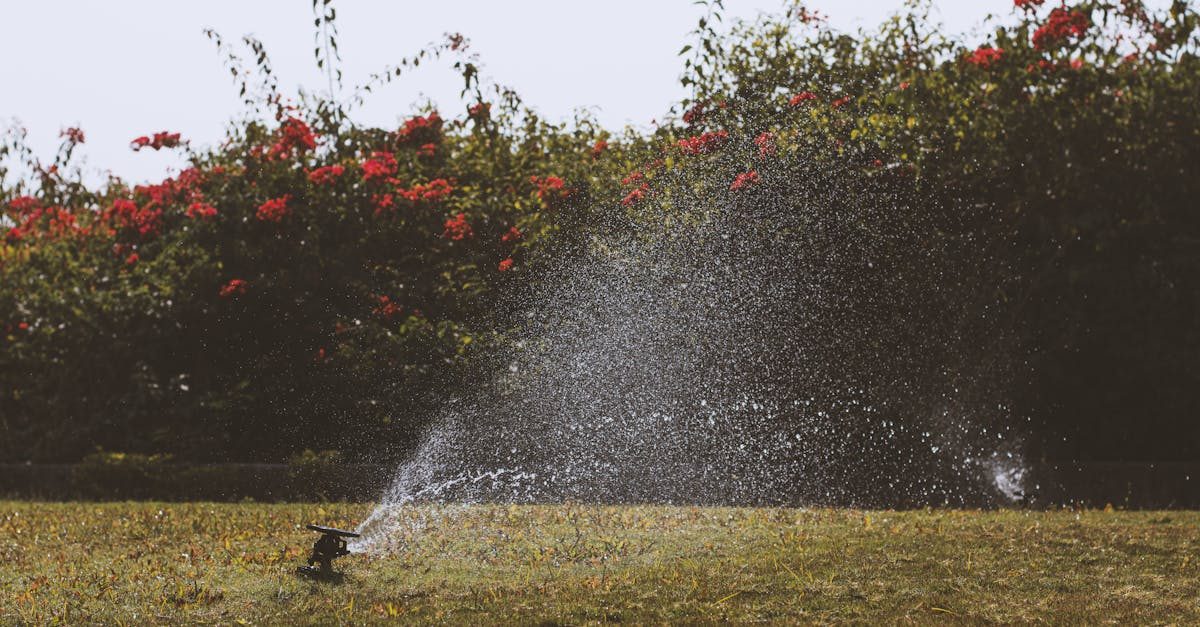
- Mushy or spongey turf underfoot, even a day or two after watering or rainfall.
- Algae, moss, or constant wetness on the soil surface.
- Yellowing grass despite adequate fertilization, indicating root rot or oxygen deprived roots.
- Mushrooms appearing frequently in the turf.
In these cases, the solution is to reduce frequency, allow the soil surface to dry between waterings, and if necessary correct drainage or compaction problems with aeration and soil improvement.
Putting It All Together: A Practical Action Plan
To implement watering your lawn the right way: how often and how much to water in a systematic manner, use this 4 week plan during the growing season.
Week 1: Measure and assess
- Identify your dominant grass type and general soil category using the jar or squeeze test and, if needed, a guide like How Often to Water Based on Grass Type.
- Perform catch can tests on each irrigation zone or sprinkler configuration to determine application rate.
- Walk the lawn and note sunny vs shaded areas, slopes, and spots that historically show stress.
Week 2: Set baseline schedule
- Set weekly water targets based on grass type and climate, for example 1.25 inches for cool-season turf in mid summer on loam.
- Program your controller or plan hose run times to deliver that total in one or two sessions per week (more sessions for sandy soil).
- Set watering times for early morning between 4 a.m. and 9 a.m. whenever possible.
Week 3: Observe and refine
- Monitor the lawn on non watering days for early stress signs or any evidence of puddling or runoff.
- Adjust frequency, run time, or cycle and soak programming to ensure water penetrates 4 to 6 inches deep without surface saturation.
- Watch for differences between full sun and shaded zones, and shorten run times on shaded zones if they stay too wet.
Week 4 and beyond: Maintain and adjust seasonally
- Factor in rainfall each week, subtracting from your planned irrigation total.
- Increase or decrease weekly volume by 10 to 20 percent as temperatures and day length change with the seasons.
- Recheck sprinkler output and uniformity at least once per season or after any system changes.
This structured approach, backed by university extension research, aligns your watering with the biological needs of your specific lawn rather than with arbitrary calendar rules.
Conclusion
Watering your lawn the right way: how often and how much to water is a technical process, not guesswork. The correct schedule depends on grass type, soil texture, climate, sun exposure, and season. Extension research from universities such as Penn State, Purdue, Ohio State, NC State, and others is consistent: deep, infrequent watering timed for early morning, calibrated by actual sprinkler output and refined by observing the turf, produces deeper roots, richer color, and better drought and disease resistance, all while using less water.
As a next step, combine this watering strategy with soil improvement and mowing practices. Explore How to Test and Improve Your Lawn Soil to boost water holding capacity, and review The Best Time to Mow Your Lawn for a Thicker, Greener Yard to align mowing height with water conservation. With these pieces in place, your lawn management will be based on data and plant science, and your turf will respond with consistent, durable performance.
Top Picks
- BioAdvanced Fungus Control for LawnsCheck price on Amazon
- Scotts DiseaseEx Lawn FungicideCheck price on Amazon
As an Amazon Associate we earn from qualifying purchases.
Free Lawn Care Tools
Most established lawns do well with about 1 to 1.5 inches of water per week, including rainfall, when temperatures are in the 60–80°F range. This is a starting benchmark, not a strict rule, and should be adjusted based on your climate, grass species, and soil type. In hotter, drier regions or windy conditions, lawns may need more than 1 inch. In cooler, wetter areas, the actual irrigation need can be less than 1 inch.
Yes, cool-season and warm-season grasses have different peak growth periods and water use patterns. Cool-season grasses like Kentucky bluegrass and tall fescue typically need around 1 inch per week in spring and fall, and closer to 1.5 inches during summer heat to stay fully green. Warm-season grasses such as bermudagrass and zoysiagrass usually need about 0.75 to 1.25 inches per week in summer and can get by with much less in spring and fall as growth slows.
Soil texture controls how much water the soil can hold and how fast it drains, so it directly affects watering frequency. Sandy soils drain quickly and often need smaller amounts of water applied more frequently, such as two 0.5-inch applications instead of a single 1-inch soaking. Heavier soils can hold more water and generally allow for deeper, less frequent watering sessions.
Newly seeded lawns have shallow roots and can’t access deeper soil moisture, so they need lighter but more frequent watering to keep the surface consistently moist. Established lawns with deeper root systems benefit from less frequent, deeper soakings that encourage roots to grow down into the soil. As the new lawn matures and roots deepen, watering can be gradually shifted toward the deeper, less frequent pattern used for established turf.
For mixed lawns, a practical approach is to choose a weekly target in the middle of the typical range—around 1.25 inches in hot weather—and then adjust based on what you see. Watch which grass type shows stress first and tweak how deeply and how often you water, rather than changing the total amount dramatically. Over time, the lawn usually shifts toward the grass species that responds best to your consistent mowing and watering routine.
Cool-season grasses such as Kentucky bluegrass can safely enter a protective drought dormancy in summer, where the color fades to tan but the crowns remain alive. To prevent permanent damage during dormancy, it’s important to provide at least about 0.5 inch of water every 2 to 3 weeks so the plants don’t completely dry out. When cooler, wetter weather returns and regular watering resumes, these lawns typically green up again.
For an established lawn in summer, water 2 to 3 times per week for cool-season grasses and 1 to 2 times per week for warm-season grasses, delivering 1 to 1.5 inches total per week including rainfall. Avoid daily light watering, which creates shallow roots and invites disease. In spring and fall, rainfall often covers the need entirely, so one deep watering per week or less is usually plenty.
It depends on the head type. Fixed spray heads apply roughly 1.5 to 2 inches per hour, so 15 to 20 minutes per zone delivers about half an inch. Rotor and impact heads apply around 0.5 to 0.75 inch per hour, so plan on 30 to 45 minutes per zone for the same amount. Run a quick catch can test with tuna cans to confirm your system’s actual rate, then set run times from that measurement.
In summer, water cool-season lawns 2 to 3 days per week and warm-season lawns 1 to 2 days per week, aiming for 1 to 1.5 inches total weekly. Per session, that works out to about 15 to 20 minutes per zone with spray heads or 30 to 45 minutes with rotors. Water in the early morning, between 4 a.m. and 9 a.m., and skip a session whenever rain delivers half an inch or more.
Photos: Quang Nguyen Vinh / Pexels, Animesh Srivastava / Pexels

Beat weeds and brown spots from your phone
Snap a photo, get the fix, and follow a plan timed to your soil and weather. Free on iPhone.