

Managing Salt Damage on Lawns Winter Recovery and Prevention Strategies
 Sarah MitchellLawn Diagnostics Specialist | 12 Years
As an Amazon Associate we earn from qualifying purchases.
Brown strips and dead patches along sidewalks, driveways, and roadsides usually fall into a small set of problems: salt damage, pet damage, or winter disease. Managing salt damage on lawns in winter and early spring is critical if you want a fast green-up, dense turf, and to avoid long-term bare strips that hurt curb appeal. This guide breaks down how to recognize salt damage, what to do right away, how to rebuild damaged areas, and how to prevent the problem next winter.
If the worst damage is in a clean, narrow band right along pavement or where snow piles were dumped, and the rest of the lawn looks normal, it typically points to salt damage. Confirm by comparing the damaged strip to an area a few feet away: if color and density improve quickly as you move away from the pavement, salt is usually the issue. In tougher cases, you can test by soaking a small damaged area heavily for a week and watching for new green growth along the edges.
The first fix is leaching the salt out of the soil. Once the ground thaws, water those damaged strips deeply, aiming for about 1 inch of water every 3 to 4 days for 2 to 3 cycles, to flush salts below the root zone. Do not rush to scalp, power rake, or dump high-nitrogen fertilizer on severely burned turf, since this adds stress without solving the salt problem. Expect mild salt injury to recover in 3 to 6 weeks with watering and light feeding, while areas where the grass is completely dead will need reseeding or sod and may take most of a growing season to fully blend in.
Understanding How Salt Damages Lawns
In lawn care, "salt damage" usually means injury caused by de-icing products that accumulate in soil or on grass blades over winter. The most familiar one is rock salt, or sodium chloride, but many driveways and sidewalks are also treated with calcium chloride, magnesium chloride, or potassium chloride. These products differ in how fast they melt ice and how they behave in very low temperatures, but all can damage turfgrass when levels in soil or on leaves get high enough.
There are two main ways these salts hurt your lawn. First is direct burn, when salty slush or spray coats grass blades and physically draws water out of the plant tissue. The tips and sides of the leaves dry out, turn brown, and, in severe cases, the whole plant dies. Second is indirect or soil-based damage, where sodium and chloride build up in the soil, change its chemistry, and make it harder for grass roots to take up water and nutrients.
Winter is the highest risk period because salt is applied repeatedly, snow piles concentrate meltwater, and the soil is often frozen. Frozen or saturated soil cannot drain well, so the salty water tends to sit near the surface and right at lawn edges. When temperatures rise and snow banks finally melt, large amounts of salt are released in a short window and can wash directly into the first 1 to 3 feet of turf next to pavement.
What “Salt Damage” Really Means in Lawn Care
Most homeowners think of salt as rock salt, but multiple types of de-icers are involved in managing ice, and all can affect lawns.
The most common are:
- Sodium chloride (NaCl) - traditional rock salt, cheap and very widely used on roads and many driveways.
- Calcium chloride (CaCl₂) - works at lower temperatures, often in premium blends and some liquid de-icers.
- Magnesium chloride (MgCl₂) - also effective in colder weather, often marketed as safer for concrete.
- Potassium chloride (KCl) - sometimes used in "plant safer" blends because potassium is a plant nutrient, but it is still a salt and can be damaging at high levels.
Direct damage happens when salty spray or slush lands on foliage. You will see leaf tip burn, bleaching, and banding on the side facing the road or sidewalk. If the grass was already stressed going into winter, such as from drought or low fertility, this desiccation can kill entire plants.
Indirect damage is often slower but more serious long term. Sodium can displace calcium and magnesium on soil particles, especially in clay or compacted soils. This leads to soil structure breaking down, poorer aggregation, and tighter, less aerated soil. Over time this can cause chronic thin turf and weeds that tolerate poor, salty soils, such as annual bluegrass or some broadleaf weeds.
Managing salt damage on lawns winter recovery and prevention strategies must deal with both the leaf surface and the root environment. Washing salt off leaves right after application can help, but the bigger issue is usually the salt that infiltrates the top few inches of soil and lingers into spring.
The Science: How Salt Affects Grass and Soil
At the plant level, salt causes what agronomists call osmotic stress. Salt in the soil solution raises the osmotic pressure, so roots have a harder time pulling water in. In extreme cases, water can actually move out of the plant cells into the salty soil, even if the soil looks damp. You may see grass wilting or looking drought stressed right after snowmelt in early spring even when the ground is moist, which is a classic sign of salt-driven osmotic stress rather than simple lack of water.
Inside the soil, sodium ions compete with calcium and magnesium for binding sites on clay particles and organic matter. When sodium dominates, soil particles tend to disperse, leading to sealing and crusting at the surface and compaction in the top few inches. Water infiltration slows down, oxygen levels drop, and root growth becomes shallow. Microbial life that breaks down thatch and organic matter also slows in a salty environment, which can compound problems over years.
If salt problems are not managed for several seasons in a row, the pattern is usually predictable: the turf thins, bare soil appears along pavement edges, weeds and moss take over, and irrigation needs go up because the compromised root system cannot access deeper moisture. These areas also become more vulnerable to summer heat and diseases, which ties into broader maintenance topics like Summer Lawn Care: Heat & Drought Strategies and a Monthly Lawn Care Calendar that balances fertilization, watering, and repair.
Grasses and Sites Most Vulnerable to Winter Salt Damage
Not all lawns respond to salt the same way. Cool-season grasses, which dominate in northern climates, generally have moderate to low salt tolerance. Kentucky bluegrass and perennial ryegrass are somewhat sensitive, while tall fescue is usually a bit more tolerant. Fine fescues can be surprisingly salt-tolerant in some studies, but they are often used in shaded, low-input areas that are already stressed, making them more likely to show damage.
Warm-season grasses such as bermudagrass and zoysia can have higher salt tolerance when actively growing, but in cold-winter regions they are dormant when salts are applied. Their brown dormant tissue can still be damaged if there is heavy salt spray or standing salty water, and because they green up later, diagnosis of salt damage can be delayed until late spring.
Site conditions strongly influence risk:
- Roadway strips and parkways are the classic salt-damage zones. They receive splash from snowplows and run-off from the road, and snow is often piled here.
- Driveway and walkway edges are at risk when homeowners over-apply de-icers or push salty snow directly onto the grass.
- Low spots and drainage paths collect meltwater from multiple areas, concentrating salts as they move and pool.
- Shaded areas stay frozen longer and dry out more slowly, so they have more prolonged contact with salty water.
Soil type also matters. Clay and compacted urban soils have lower infiltration and more binding sites for sodium, so salts accumulate and cause more structure damage. Sandy soils, by contrast, leach salts faster, which can limit buildup, but they also hold less water and nutrients, so grass may show drought stress more quickly when salts increase osmotic pressure. A lawn on heavy clay next to a busy, salted street is far more at risk than a sandy lawn set back from the road.
How to Identify Salt Damage vs Other Winter Lawn Problems
In late winter and early spring, turf can look rough for several reasons. Correctly identifying salt damage versus disease, pet damage, or simple winter kill prevents you from wasting time and money on the wrong fix. Managing salt damage on lawns winter recovery and prevention strategies starts with clear diagnosis.
Visual Symptoms of Salt-Damaged Lawns
The most reliable field clue is location. If the worst injury lines up precisely with treated pavement or where snow is stacked, salt should be near the top of the suspect list. Early in spring, you will often see a straw-colored or tan band 6 to 36 inches wide along the pavement edge. Inside that band, blades look dry, with tip burn and no green at the base even when the rest of the lawn is starting to wake up.
As the season progresses, light salt injury may show some green regrowth from surviving crowns, but the strip usually remains thinner and more open than adjacent turf. In severe cases, the grass plants are dead, and you see bare soil or only a few scattered plants recovering. The line between healthy and damaged turf is often quite sharp, matching where snow slush or meltwater reached.
Different grasses show slightly different symptoms. Kentucky bluegrass often goes from gray-green to tan, with tips and margins burned and whole plants collapsing in bad spots. Perennial ryegrass may show more streaky bleaching. Taller mowing heights can hide mild injury, but the underlying density loss is still there and will show up in summer as weeds invade.
Distinguishing Salt Damage from Other Winter Issues
Several other common issues can mimic or overlap with salt injury. You can usually separate them by pattern and context.

Salt damage vs snow mold: Snow mold, a fungal disease, appears as circular or irregular patches of matted grass, sometimes with white, gray, or pinkish mycelium shortly after snow melt. It is not confined to pavement edges and can appear randomly across the lawn, especially where leaves or long grass were matted under snow. Salt damage, by contrast, forms long, continuous bands along roads or where plowed snow sat. If you see fungal growth and rings, snow mold is likely. If you see clean, linear burn matching de-icer use, salt is more probable.
Salt damage vs winter desiccation: Winter desiccation is common on exposed slopes and windy spots where grass dries out but the soil is frozen and roots cannot pull new moisture. The browning is usually more uniform across an exposed area, not just along pavement. If an entire hillside is affected with no special connection to de-icer use, wind desiccation may be the main factor. If only the first foot or two along the sidewalk is dead, salt is the likely culprit, even if desiccation also played a minor role.
Salt damage vs dog urine: Dog urine spots are usually round or irregular patches, not a continuous band. They often have a dark green ring around a dead center, because light nitrogen fertilization around the edge stimulates growth while the concentrated urine in the center burns the grass. A strip of dead grass that tracks the driveway length is almost never urine alone. If you see both patterns, you might be dealing with both pet damage and salt, but they are easy to distinguish by shape.
Salt damage vs grubs or insect damage: Grub damage appears as large, irregular dead patches, often in late summer or early fall, and the turf peels up like a carpet when you tug on it because roots have been eaten. If you suspect grubs, try lifting a small square of sod. If the roots are intact and the soil is firm, it is unlikely to be grubs. Early spring salt-damaged turf usually remains anchored, even if the top growth is dead.
Thatch and compaction can cause slow green-up and weak growth that may resemble light salt stress. However, these tend to be broader issues across the lawn, not just confined to pavement edges. If your entire yard is slow to green up, look at overall care, aeration, and fertilization. If only the edge next to a salted sidewalk is struggling, salt is almost always involved.
Simple Tests to Confirm Salt Damage
In many residential cases, pattern and history are enough to confirm that salt is the main issue. If you use or receive de-icers and see damage exactly where the slush and piles sit, you can proceed with salt management strategies without lab tests.
For more serious or recurring problems, an advanced DIYer may want to measure salt levels. One practical approach is a simple conductivity comparison between damaged and healthy zones. You can collect soil samples from 0 to 3 inches deep in the damaged strip and from a visually healthy area 10 or more feet away. Mix each sample with distilled water in a clean container, stir, let it settle, and then use a handheld electrical conductivity (EC) meter to compare.
If the EC reading in the damaged area is significantly higher, that supports salt as a primary cause. Soil testing labs can also measure soluble salts and sodium levels more precisely. Many university extension services offer this as an add-on to a standard soil test. If you see elevated soluble salts or sodium saturation in the edge strip compared to the rest of the yard, that is a clear signal that your plan should focus on flushing and soil remediation.
- Penn State Extension notes that soluble salt levels above about 2 millimhos/cm in the root zone can begin to stress cool-season turfgrass, and they recommend leaching with multiple light irrigations when levels are high.
Immediate Winter and Early Spring Prevention Strategies
Managing salt damage on lawns winter recovery and prevention strategies is much easier if you reduce how much salt reaches the grass in the first place. Some steps have to happen while there is still ice and snow, while others begin as soon as the first thaw arrives.
Smarter De-icer Use During Winter
The biggest lever is how much and what type of de-icer you put down. Over-application is common and unnecessary. Many bag labels recommend something in the range of 2 to 4 ounces of product per square yard, but homeowners often spread much more because "more must be better." In reality, mechanical removal and traction aids do most of the safety work, and de-icer just accelerates melting.
Here are practical adjustments:
- Shovel or use a snow blower first. Remove as much snow and ice mechanically as possible before adding any chemical. This drastically cuts the amount of salt needed.
- Use sand or grit for traction in low-traffic areas instead of more salt. This provides safety without adding more dissolved ions to your soil.
- Choose products labeled "low chloride" or "plant safer" when you are treating areas adjacent to lawn or landscape beds. They are not harmless, but many are less damaging than straight rock salt.
- Apply in a light, even pattern. If you can see white piles or heavy bands of granules, you are putting down too much. A handheld spreader on a low setting gives better control than throwing salt by hand.
For HOAs and property managers, calibrating commercial spreaders and training staff on proper rates can prevent chronic strip damage along large parking lots and internal roads. If you contract snow removal, specify in the contract that minimal effective de-icer rates should be used near turf areas, especially as winter transitions to early spring.
Snow Pile Management
Where snow piles are placed can matter more than the amount of de-icer in some situations. When large mounds melt, they create a concentrated flush of salty water that can easily overwhelm the first few feet of lawn.
Whenever possible:
- Stack snow on hard surfaces or gravel where meltwater can drain to storm drains, not directly onto grass.
- Avoid repeatedly pushing snow to the same narrow strip of turf, year after year. Rotate or widen pile zones if space allows.
- Cut small drainage channels in snowbanks or along curbs during thaw periods so meltwater can move off the lawn instead of sitting on it.
Even a small change, like pushing driveway snow to one central island or corner rather than along the entire grass edge, can dramatically reduce the width of the damage you have to repair each spring.
Early Spring Flushing Once Soil Thaws
As soon as the ground is thawed to a few inches deep and is not fully saturated, you can start flushing salts from the root zone. This is the first recovery step and a key prevention step for the coming growing season.
A practical regime is to water the damaged strip with about 1 inch of water, then allow it to drain for 3 to 4 days, and repeat this 2 or 3 times. An inch of water is roughly 600 gallons per 1,000 square feet, but for a narrow strip you can estimate using a sprinkler and a rain gauge: when the gauge shows 1 inch, you are done. The goal is to push the salts below the main root zone, typically the top 4 to 6 inches.
This is one of the most important timing windows in this whole process. If you can begin leaching within 1 to 2 weeks of the final major snowmelt while the salts are still near the surface, recovery is usually much faster. Waiting until late spring or early summer allows more root injury and structural damage to accumulate.
Step-by-Step Recovery Plan for Salt-Damaged Lawns
Once you have limited new salt inputs and begun flushing, you can plan a structured recovery process. The exact steps will vary depending on how severe the damage is, but the sequence is similar whether you manage a small front yard or multiple properties.
Step 1: Assess Severity and Decide Whether to Repair or Replace
Begin with a close look at the damaged strips when the rest of the lawn is 30 to 50 percent greened up. If you see live crowns at the base of burned blades, some green shoots emerging, and at least roughly 50 percent plant cover, there is a good chance that area will fill in with proper care. If, however, you see mostly bare soil, mushy dead crowns, and very little green, you should plan on reseeding or installing sod.
A simple rule of thumb: if less than about one-third of the area has living grass plants by late spring, full renovation of that strip is usually faster and produces better results than waiting for partial recovery. Trying to "fertilize your way" out of a mostly dead strip rarely works because there are not enough viable plants to respond.
Step 2: Continue Flushing and Light Feeding
For areas that show some life, keep leaching salts for another week or two if needed. Once new growth is visible, apply a light spring fertilizer, in the range of 0.25 to 0.5 pounds of nitrogen per 1,000 square feet, to encourage recovery without overstimulating lush growth that is vulnerable to disease.
Use a balanced product appropriate to your soil test rather than a high-burn, fast-release fertilizer. A slow-release formulation is preferable for these stressed areas. Integrate this application into your broader Spring Lawn Preparation Checklist so that the edge strips are treated as part of the overall fertility plan, not in isolation.
Step 3: Mechanical Relief - Aeration and Surface Loosening
Salt-affected strips often suffer compaction from foot traffic, plows, or snow blower wheels. Once the soil is no longer soggy, core aeration in the damaged zones can help restore structure and speed recovery. You do not need to aerate the entire yard if only the edges are compacted, though full-lawn aeration is often beneficial.
Use a core aerator that pulls plugs at least 2 inches deep. If the screwdriver test shows that you cannot easily push to a depth of 4 to 6 inches in the edge zone, aeration within the next 2 to 4 weeks can significantly improve water infiltration and root growth. For small areas, a manual coring tool or a spading fork can be used to punch holes and break up crusted soil before overseeding.
Step 4: Overseeding or Sodding Dead Strips
If you determine that a strip is mostly dead, plan either overseeding or sodding. Overseeding is cheaper, especially for larger properties, but sod gives instant cover and is more resistant to renewed salt stress next winter if properly established.
For cool-season lawns, the best overseeding window is usually late summer to early fall, when soil is warm, weed pressure is lower, and moisture is more reliable. However, if the damage is severe and you cannot tolerate bare soil all summer, you can seed in spring with the understanding that results might be less ideal and supplemental seeding in fall may still be needed.
Steps for overseeding a salt-damaged strip:
- Rake out dead material to expose soil, but avoid overly aggressive dethatching that further damages remaining roots.
- Loosen the top 0.5 to 1 inch of soil with a rake or cultivator.
- Apply a thin layer of compost or topsoil if the existing soil is very compacted or has poor structure.
- Spread seed at the recommended overseeding rate for your grass mix, often 3 to 5 pounds per 1,000 square feet for cool-season blends.
- Lightly rake to work seed into the topsoil, then roll or press for good contact.
- Keep the area consistently moist by watering lightly 1 to 2 times per day until germination, then gradually reduce frequency and increase depth.
Sodding is more straightforward. After removing dead turf and loosening soil, lay strips of sod tightly along the damaged area, staggering seams. Water thoroughly so the soil below is moist to a depth of 3 to 4 inches. For the first 10 to 14 days, keep sod consistently moist but not waterlogged. Once roots knit into the subsoil, shift to deeper, less frequent watering.
Whichever method you choose, select grass varieties with relatively better salt tolerance if they match your region and lawn use. Some tall fescue and fine fescue blends handle salt slightly better than pure Kentucky bluegrass, for example, though appearance and texture must match the existing lawn to avoid visual patchwork.
Step 5: Ongoing Care Through the Growing Season
Newly repaired strips require careful attention through the first summer. Avoid heavy foot traffic on reseeded or newly sodded areas for at least 4 to 6 weeks. Mow at a higher height, 3 to 3.5 inches for many cool-season lawns, to encourage deeper roots and provide some insulation from surface salts next winter.
Water deeply and infrequently once the turf is established, aiming for about 1 to 1.5 inches of water per week, including rainfall, as recommended by many turf programs. This practice supports deep rooting and dilutes lingering salts in the upper soil layer. Fertilize modestly in late spring and again in early fall, integrating these applications with your Fall Lawn Overseeding & Prep Guide where applicable.
Recommended products

MySoil Soil Test Kit
A mail-in test that shows how much sodium is actually sitting in the damaged strip.
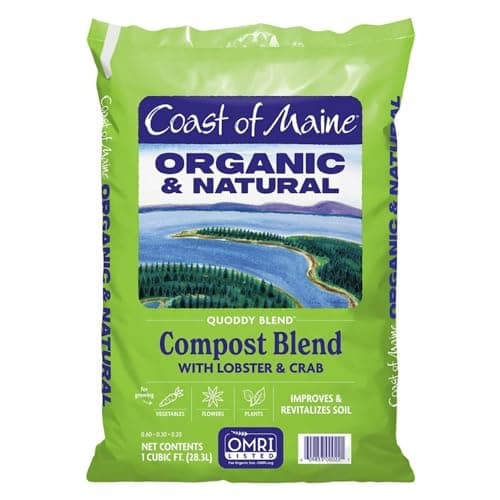
Coast of Maine Quoddy Blend Lobster Compost
A finished compost that rebuilds structure in salt-collapsed soil along walks and drives.

Jonathan Green Black Beauty Ultra Grass Seed
A tall fescue blend with better salt tolerance than bluegrass for the strip nearest the pavement.
Long-Term Strategies to Reduce Future Salt Damage
Once you have gone through a full salt-damage recovery, the goal is to make next winter less destructive. Long-term strategies focus on soil health, grass selection, and permanent adjustments to how you manage snow and ice.
Improve Soil Structure and Organic Matter
Healthy, well-structured soils are more resilient to salt stress. They drain better, hold more water in the root zone, and are less prone to dispersion when sodium enters the system. To build this resilience:
- Topdress edge strips with a thin layer (about 0.25 inch) of compost once or twice per year, then lightly rake it into the grass canopy.
- Continue periodic core aeration, at least every 1 to 2 years in compacted, high-traffic areas near sidewalks and driveways.
- Maintain a moderate thatch layer, not more than 0.5 inch, to prevent runoff while still allowing water infiltration.
In extreme or chronic cases where soil tests show high sodium levels, especially on clay soils, some extension services may suggest applying gypsum (calcium sulfate). Gypsum provides calcium that can help displace sodium from soil particles, which is then leached away with irrigation. This is not a universal fix and should be based on soil test recommendations, not guesswork.
- Colorado State University Extension notes that gypsum applications are most effective when a soil test confirms high exchangeable sodium and when combined with adequate leaching irrigation.
Choose More Tolerant Grass Mixes for High-Risk Zones
When renovating strips that face heavy road salt year after year, it can be smart to tweak your seed blend. Some turf-type tall fescues and fine fescues handle salty conditions slightly better than Kentucky bluegrass, and they often have deeper root systems.
In northern climates, a mixture that includes 20 to 40 percent tall fescue along the roadway strip, blended with your primary lawn species, can offer a bit more resilience without looking dramatically different once established. Consult local recommendations or your extension office for regionally adapted, salt-tolerant cultivars rather than relying on generic labels.
Design Changes and Hardscaping Tweaks
In some properties, repeated salt damage is a sign that the layout itself is not lawn friendly. Modest design changes can eliminate many of the worst trouble spots.
Options include:
- Adding a narrow gravel or mulch band between pavement and lawn to intercept salty runoff.
- Creating a planting bed with salt-tolerant groundcovers or shrubs along heavy salt areas instead of maintaining turf there.
- Regrading subtle low spots so meltwater flows toward drains instead of pooling in turf.
These changes can be phased in over several seasons and combined with more traditional lawn care planning, as outlined in Winter Lawn Protection & Care and a Monthly Lawn Care Calendar that schedules aeration and topdressing around other maintenance.
What Other Guides Miss: Common Mistakes to Avoid
Many articles on salt and lawns give partial advice that can lead to slow or incomplete recovery. Being aware of these common gaps helps you avoid frustration.
Mistake 1: Skipping the leaching step. Some guides jump straight to reseeding without stressing that salts must be flushed first. If you seed into salty soil without leaching, germination can be poor and young seedlings may die quickly. Always prioritize flushing once the soil has thawed.
Mistake 2: Over-fertilizing damaged strips. It is tempting to apply heavy fertilizer in the hope that it will "bring the lawn back." Stressed, salt-injured roots cannot use high doses of nitrogen effectively, and excessive fertilizer can compound stress or burn. Stick to light rates initially and only ramp up after clear signs of recovery.

Mistake 3: Ignoring soil tests. Not all chronic edge problems are purely salt. High pH, compaction, and low organic matter can coexist with mild salt exposure and together create severe symptoms. A basic soil test that includes soluble salts and sodium can clarify whether gypsum or other amendments are appropriate and whether you also need lime, sulfur, or organic matter.
Mistake 4: Treating every bare edge the same in every region. In regions with little de-icer use, winter kill or snow mold may be far more common than salt injury. Conversely, in heavily salted urban corridors, salt is almost always involved. Regional climate and local practices matter, so match your diagnosis to your actual winter conditions rather than assuming a one-size-fits-all cause.
When to Call a Pro
Most homeowners can handle basic diagnosis and repair of small salt-damaged strips. However, there are situations where professional help is justified and can save money in the long run.
If large areas along roads are dead, you manage multiple properties, or your attempts at repair have repeatedly failed, a turf professional or landscape contractor can:
- Coordinate detailed soil testing that includes salinity, sodium, and structure indicators.
- Design site-specific drainage or grading improvements.
- Recommend or install appropriate grass varieties or alternative groundcovers for the worst zones.
- Integrate salt management with broader programs like Summer Lawn Care: Heat & Drought Strategies and a full Spring Lawn Preparation Checklist.
Cost will vary, but a rough range is a few hundred dollars for testing and consultation on a single residence, up to several thousand for full strip renovation and hardscape adjustments along a large HOA or commercial frontage. If your salt problem is localized to a narrow 1 to 2 foot band, DIY recovery is often very cost effective. If 20 to 30 percent of your front lawn is repeatedly damaged each winter, investing in a professional plan may pay for itself in avoided rework.
Conclusion: Building a Salt-Resilient Lawn
Managing salt damage on lawns winter recovery and prevention strategies is ultimately about three things: controlling how much salt reaches the grass, flushing and fixing the soil each spring, and strengthening the lawn so it can tolerate occasional stress. When you match symptoms to location and timing, confirm salt as the driver, and then follow a structured plan to leach, aerate, and repair, most lawns can regain full density within a season.
From there, relatively small tweaks in de-icer use, snow pile placement, and soil-building practices can turn chronic edge damage into a manageable, minor issue. For a broader, year-round plan that keeps your lawn ready to handle winter stress, check out resources like Spring Lawn Preparation Checklist, Fall Lawn Overseeding & Prep Guide, and Winter Lawn Protection & Care so that salt management fits smoothly into your overall turf strategy rather than becoming an emergency project every March.
Top Picks
- GS Plant Foods Liquid Kelp FertilizerCheck price on Amazon
- PetraTools Liquid Iron for LawnsCheck price on Amazon
- BioAdvanced Fungus Control for LawnsCheck price on Amazon
As an Amazon Associate we earn from qualifying purchases.
Free Lawn Care Tools
Salt damage usually appears as a clean, narrow band of brown or dead grass right along pavement or where snow piles were dumped, while the rest of the lawn looks fairly normal. If color and density improve quickly as you move a few feet away from the edge, salt is a strong suspect. You can also soak a small damaged area heavily for about a week and watch for new green growth along the edges; recovery there further points to salt as the cause.
Mild salt injury often recovers in about 3 to 6 weeks once the soil is flushed with water and the grass receives light feeding. Severely burned areas where the grass is completely dead will not regrow on their own and need reseeding or sod. Those repaired areas can take most of a growing season to fully blend in with the surrounding turf.
Once the ground has thawed, water the damaged strips deeply to leach salt below the root zone. Aim for about 1 inch of water every 3 to 4 days, repeated for 2 to 3 cycles. This pattern pushes salts down through the top few inches of soil where most roots are concentrated, reducing osmotic stress and helping grass recover.
Many cool-season grasses common in northern lawns have moderate to low salt tolerance. Kentucky bluegrass and perennial ryegrass are relatively sensitive, while tall fescue tends to handle salt a bit better. Fine fescues can show good tolerance in research, but they are often grown in already stressed sites, so damage still appears easily in the landscape.
High salt levels in the soil create osmotic stress, making it harder for roots to pull water in, even when the soil appears moist. In more extreme situations, water can actually move out of plant cells into the salty soil, causing wilt and off-color turf right after snowmelt. This pattern is a classic sign of salt issues rather than simple lack of moisture.
Yes, certain sites are much higher risk. Roadway strips, parkways, and lawn edges along driveways and walkways receive splash, runoff, and piled snow that concentrate salts. Low spots, drainage paths, and shaded areas also tend to hold salty meltwater longer, increasing contact time and the likelihood of turf injury.
Photos: qwerty lllllliu / Pexels, Kampus Production / Pexels

Beat weeds and brown spots from your phone
Snap a photo, get the fix, and follow a plan timed to your soil and weather. Free on iPhone.
Related Articles
 Seasonal Care
Snow Mold on Grass: How to Identify, Treat, and Prevent It
Dec 16, 2025•12 min read Seasonal Care
California Winter Lawn Care Checklist (Dec–Mar): Mow, Water, Fertilize
Dec 9, 2025•12 min read Seasonal Care
How to Protect Grass in Winter: Winterization and Damage Prevention
Dec 10, 2025•11 min read

