Texas Spring Lawn Care 101 Expert Guide
 Sarah MitchellLawn Diagnostics Specialist | 12 Years
As an Amazon Associate we earn from qualifying purchases.
Brown, patchy, or weedy grass after a Texas winter usually is not a sign your lawn is ruined, but it does mean it needs a very specific kind of help. Texas lawns live through big temperature swings, soil extremes, and wildly different regional conditions between the Panhandle, Hill Country, Gulf Coast, and South Texas. When I see frustrated homeowners in March and April, the problem is almost always that they followed generic national advice that does not fit Texas timing or grass types.
This texas spring lawn care 101 expert guide is built for Texas conditions only. We will look at how your region and soil affect timing, how to identify your grass, when to apply pre-emergent, how to feed without burning, when to water and mow, what to do about weeds, and how to repair winter damage. We will take an investigative approach rather than a quick fix, so you understand why you are doing each step and how to avoid repeating the same problems next spring.
Most Texas lawns coming out of winter fall into one of three categories: fully dormant but healthy, partially thinned from cold or drought, or truly dead in patches. If your grass is tan but has green at the base and the stolons or runners resist when you tug gently, it is usually just dormant and will respond to proper mowing height, irrigation of about 1 inch per week, and a light spring feeding once soil is reliably above 65°F.
If you tug and runners pull up easily, crumble, or reveal bare soil underneath, that area is likely dead or badly damaged. In that case, focus first on diagnosis: compaction, shade, standing water, or past disease. Avoid the temptation to dump heavy fertilizer or water heavily right away, which can invite weeds and fungus. Instead, use a pre-emergent when soil hits about 55°F, then repair bare areas after your grass type is actively growing, expecting 4-8 weeks for visible fill-in or establishment.
What you should not do in Texas is scalp warm-season lawns repeatedly in early spring, fertilize before the last realistic frost, or apply cool-season weed-and-feed formulas designed for northern lawns. The most reliable timeline is soil-driven, not calendar-driven: pre-emergent at 55°F soil temperature, first full fertilizer when at least 60-70% of the lawn has greened up, and any major repairs once nightly lows stay consistently above 60°F for at least a week.
Understanding Texas Spring Lawn Conditions and Timing
Why Texas Lawns Are Different: Climate and Soil Basics
In 12 years of diagnosing Texas lawns, the first pattern I look at is not the grass itself, but where in the state the yard sits. Texas is essentially several lawn climates in one border. Treating a Houston St. Augustine yard like a Lubbock Bermuda yard is a guaranteed way to waste money and stress the turf.
North Texas, including DFW and Wichita Falls, has a longer winter and real late freeze risk. Soils here are often heavy black clay that hold water and then crack in summer. That means spring work must balance compaction relief and careful watering so you do not create waterlogged, fungus-prone soil while it is still cool.
Central Texas around Austin, Waco, and the Hill Country is a different puzzle. Soils tend to be shallow, rocky, and alkaline, often over caliche. Grass here fights drought stress and high pH, which ties up nutrients. Spring care has to prioritize building organic matter, tuning irrigation, and choosing fertilizers that your soil can actually use, not just applying more nitrogen.
East Texas sees higher rainfall and more acidic soils. Those conditions support lush growth but also heavy fungal disease pressure, especially in St. Augustine and zoysia. Spring lawn care in East Texas often involves more disease monitoring and cautious fertilization, because too much nitrogen in a damp, mild spring is a classic trigger for brown patch and other diseases.
South Texas and the Gulf Coast have the longest growing season, more humidity, and in coastal zones, occasional salt stress. Lawns in Corpus Christi, Brownsville, or Galveston might start greening earlier and grow faster, but they also face weed pressure almost year-round and more susceptibility to fungal issues in dense, humid air.
Under your feet, soil type is the second major reason generic advice fails here. Heavy black clay holds water and nutrients but compacts easily. Sandy loam drains fast and leaches nutrients, so fertilizer timing and rates change. Caliche and thin soils over rock have limited rooting depth and poor water holding capacity. If a national article tells every homeowner to water "twice a week" or apply "4 pounds of nitrogen per 1000 square feet per year", that completely ignores how differently those soils behave across Texas.
Warm-season grasses like Bermuda, St. Augustine, zoysia, and buffalograss dominate in Texas. These grasses go dormant in winter, turning tan or brown. In early spring, they do not wake up all at once. Green-up starts in the warmest microclimates and sunny spots first, then gradually spreads. Understanding that slow transition is key, because feeding or mowing aggressively before the grass is ready is one of the most common mistakes I see.
Spring Lawn Care Calendar for Texas (By Region)
Calendar dates are a starting point, but in Texas I always tell homeowners: follow soil temperature and local frost risk first. That said, a framework helps. Think in three phases - late winter, early spring, and mid to late spring - then adjust by region.
In late winter, roughly February to early March, your primary tasks are planning, soil testing, and pre-emergent herbicide timing. In North Texas, you might still see hard freezes into early March, so pre-emergent for crabgrass and many annual weeds usually lands between late February and mid March, when soil hits about 55°F at a 2 inch depth. In South Texas and along the Gulf Coast, that same soil temperature can arrive in late January to February, so pre-emergent needs to be earlier or you miss the window.
Early spring, about March to April, is where you plan your first mow, evaluate winter damage, and start weed control in earnest. This is also when some lawns can handle a light feeding, but only once they are actively growing. If by early April your St. Augustine lawn in Houston is at least half green and you have no more realistic frost risk, a light nitrogen application can help. In DFW or Amarillo, you might delay that same step by 2 to 4 weeks depending on your last frost date.
Mid to late spring, April to May, is the window where core services like your main spring fertilization, aeration where needed, and topdressing or leveling usually belong. This is when warm-season grasses in most of Texas are out of dormancy and able to respond. It is also the time to adjust irrigation schedules from "off for winter" to a deep and infrequent pattern that delivers about 1 inch of water per week from rain plus irrigation.
Because Texas weather is fickle, using soil temperature helps refine this calendar. When your soil holds at 55°F, pre-emergent goes down. When nighttime lows are consistently above 50°F and days above 70°F, your warm-season turf is waking up. When your yard is 60 to 70 percent green and you can see new runner growth, you are in the safe window for real fertilization.
A quick readiness checklist I use with clients before starting major spring work looks like this: First, has the last expected frost date for your county passed, and are there no hard freezes in the 10 day forecast. Second, is your soil temperature at 2 inches above 55°F for pre-emergent, and above 60°F for most fertilizer plans. Third, is at least half of your lawn showing active green growth. If all three are yes, your yard is ready for full spring operations. If one or more are no, you scale back to planning, light cleanup, or spot weed work only.
Identifying Your Texas Grass Type (Crucial Before You Start)
Before spending a dollar on products, you need to know what grass you actually have. The symptom you are seeing usually points to one of a few things, but the correct fix often changes entirely between Bermuda and St. Augustine or between zoysia and buffalograss. Herbicides that are safe on Bermuda can injure St. Augustine badly. Mowing heights differ by more than an inch. Even how often you should fertilize depends heavily on species.
St. Augustinegrass is the thick bladed, coarse, carpet-like grass common in Houston, San Antonio, and coastal and shaded yards. Its blades are wide, often a quarter inch or more, with a blunt tip and a dense stolon network that creeps above ground. It feels cushy underfoot but can be prone to disease in damp conditions.
Bermudagrass, both common and hybrid, has finer blades, a more upright growth habit, and both stolons and rhizomes. It spreads aggressively in full sun and tolerates low mowing. If your lawn looks like a sports field with fine, dense, fast growing turf in full sun, it is likely Bermuda.
Zoysia sits between those two. It has a medium blade width, often stiff to the touch, and forms a very dense, slow growing turf that handles sun and some shade, depending on cultivar. Many newer home developments in parts of Texas are using zoysia for its appearance and relative drought tolerance.
Buffalograss is a native, low-input grass more common in drier regions and eco-focused landscapes. It has thin, curly or wavy blades and a softer, open look. It does not like heavy fertilization or frequent watering, so treating it like a Bermuda lawn can actually harm it.
In some North and Central Texas shaded areas you might see tall fescue or ryegrass, particularly where overseeding was done in fall. Tall fescue has upright, broad blades with a clumping habit, and ryegrass is shiny and fine. These cool-season grasses behave differently, often greening early and declining in summer heat, so spring care planning must factor their eventual fade if they are only temporary overseed.
Once you have a good idea of your grass type, build a quick plan: St. Augustine and zoysia need higher mowing heights and more cautious herbicide selection. Bermuda benefits from lower mowing, regular fertilization, and aggressive weed control. Buffalograss needs lighter feeding, less water, and weed control options labeled safe for native or low-input turf. Write down your grass type and assign its spring priorities: weed control, density recovery, or disease management. That simple step saves a lot of trial and error later.
Step 1: Assessing Winter Damage and Lawn Health
Walk-Through Inspection: What to Look For in Early Spring
Let us diagnose this step by step, starting with a walk-through. I always tell homeowners to grab a notepad or phone and actually tour the yard in early spring rather than just glancing out a window. You want to compare front versus back, full sun versus shade, and high traffic versus untouched corners.
Start by looking at color and density. Are there large uniform tan areas, or are there irregular patches? Uniform tan in February can simply be dormancy. Patchy, thin areas in April or May could indicate winter kill, disease damage, or chronic compaction.
Next, note any thinned out patches or bare soil. Bare soil is a red flag because it invites weeds quickly once temperatures warm. Also pay attention to low spots where water stands after a rain. If you have areas that stay squishy or puddled longer than 24 hours, that tells you there is either grading or severe compaction to address.
Test for compaction by trying to push a screwdriver or soil probe 6 inches into the soil. If you cannot get it in more than 2 or 3 inches without serious effort, the soil is compacted and will limit root growth and water infiltration. Heavily trafficked side yards and play areas often fail this test.
Check the thatch layer by cutting or pulling up a small plug of grass and soil. Thatch is the spongy layer of undecomposed stems and roots between the soil and grass blades. A light thatch layer up to about half an inch is normal, more than that can impede water and nutrients and can harbor pests and disease.
Take photos of representative problem spots, and jot down notes like "front north corner thin", "back shady strip muddy", or "driveway edge compacted and weedy". When we build your spring action plan, these specifics will tell you where to prioritize repair, aeration, or drainage fixes rather than applying the same treatment across the whole yard.
Distinguishing Dormant Grass from Dead Grass
One of the most common spring questions I get is, "Is this dead or just dormant?" Warm-season grasses in Texas can stay mostly tan longer than you might expect, especially after a cold winter. Before you decide to rip out or reseed, do a few simple tests.
First is the tug test for stolon and runner grasses like St. Augustine, Bermuda, and zoysia. Gently grasp a small handful of brown grass and tug upward. If the runners resist and stay attached firmly, and you see any hint of green at the nodes or base, that section is likely still alive and just slow to wake. If the grass pulls up easily, leaving bare soil or only dry, brittle roots, that spot is probably dead.
In early spring, look closely at the crown, the area where stems meet the roots near soil level. Use your fingers to part the grass and see if there is any pale green or white tissue. Live crowns will often have firm, slightly moist tissue. Dead crowns are dry, hollow, or mushy and disintegrate when pressed.
Timing is another clue. If you are in South or Central Texas and by late April your sunny areas are still uniformly tan with no new runners, that suggests more serious winter damage. In North Texas, you might give it until early May before declaring a warm-season lawn section dead, especially after a severe winter.
If you are not sure, mark a small test area, avoid applying extra fertilizer, and monitor for two weeks once daytime highs are consistently above 75°F. If you see no new stolons or green blades emerging from that test patch in that period, it is reasonable to move forward with repair or replacement in that spot.
Step 2: Soil Testing and Preparation
Why Soil Testing Matters So Much in Texas
Texas lawns live on soils that span from acidic sands in East Texas to high pH caliche in the Hill Country. Without a soil test, you are guessing at pH, nutrient levels, and how your fertilizer will behave. I have seen many yards where repeated nitrogen use could not fix chlorosis because the problem was iron tie-up in alkaline soil, not a lack of fertilizer.
A basic lab soil test tells you pH, phosphorus and potassium levels, and often organic matter percentage. These numbers indicate whether your lawn can actually access the nutrients you are putting down. If your pH is above 7.8, for example, iron and some micronutrients are less available, which is why St. Augustine in Central Texas often yellows even when fertilized.
Collect soil samples by taking small cores or trowel scoops 3 to 4 inches deep from 8 to 10 spots in the lawn, mixing them in a clean bucket, and sending a composite sample. Avoid recent fertilizer or lime spots, and let the soil air dry before packaging if the lab requests it.
- Texas A&M Extension recommends soil testing every 2-3 years and adjusting fertilizer based on their region-specific recommendations rather than generic national labels.
Once you have the results, match your fertilizer plan to what the soil actually lacks. If phosphorus is already high, choose a low or zero phosphorus product. If potassium is low, choose a balanced fertilizer that includes it. This targeted approach is especially important in Texas where high pH or sandy soils can waste or leach nutrients if you overapply.
Basic Soil Prep Steps Before Spring Growth
After testing, early spring is a good time to do light soil preparation so your lawn can take full advantage of the growing season. In heavy clay soils, focus on improving structure and reducing compaction. For sandy or shallow soils, focus on building organic matter and water holding capacity.
Core aeration, where plugs of soil are removed, is particularly useful on compacted clay or high traffic areas. The most effective timing for core aeration of warm-season Texas grasses is mid to late spring when the turf is actively growing, but you can plan the work in early spring based on what you found in your inspection. Aeration helps water and air reach the root zone and creates pathways for organic amendments.
Topdressing with a thin layer of compost, typically about a quarter inch deep, is a powerful way to improve soil without disrupting the lawn. Spread screened compost evenly and rake it lightly so it falls into the canopy and holes created by aeration. Over time this increases organic matter, which buffers pH extremes and improves both nutrient holding and drainage.
In alkaline, caliche-prone areas, topdressing and gradual organic matter additions are more effective and realistic than trying to change pH with large lime or sulfur applications. A soil test may recommend elemental sulfur for modest pH adjustments, but dramatic pH changes in native Texas soils are rarely cost-effective for lawns.
Step 3: Weed Prevention and Control in Texas Spring
Pre-Emergent Herbicides: Timing and Grass-Safe Choices
Spring weeds in Texas are often the result of seeds that germinated when the soil first warmed to around 55°F. That is why pre-emergent herbicides are about timing, not what you see today. A pre-emergent does not kill existing weeds, it creates a barrier that prevents new ones from sprouting.
The action threshold here is soil temperature. When soil reaches about 55°F for several days in a row at a depth of 2 inches, crabgrass and many annual grassy weeds are ready to germinate. In North Texas, that might be late February to mid March. In South Texas or the Gulf Coast, that can be as early as late January or February. Waiting until you see weeds in April often means you are too late for the most effective pre-emergent control.
Select a pre-emergent that is labeled for your grass type. Many common actives are safe for Bermuda, zoysia, and buffalograss, but some can stress or are not labeled for St. Augustine. Always check the label for species safety, and do not use pre-emergents on areas where you plan to seed or overseed within the label's restricted window, which can be anywhere from 8 to 16 weeks depending on product.
Apply evenly at the labeled rate per 1000 square feet and water in lightly, usually a quarter to half inch, to move the product into the top layer of soil. Skipping the water in step is a frequent reason pre-emergents underperform. If your soil is dry and you sprinkle it only with dew or a light rain, the herbicide often sits on top and breaks down before doing its job.
Post-Emergent Weed Control Without Damaging Your Turf
Even with good pre-emergent timing, you will likely have some weeds to treat in spring, especially cool-season broadleaf weeds like clover, henbit, or chickweed. Post-emergent control requires more precision because what kills a weed can easily injure desirable grass if used incorrectly.
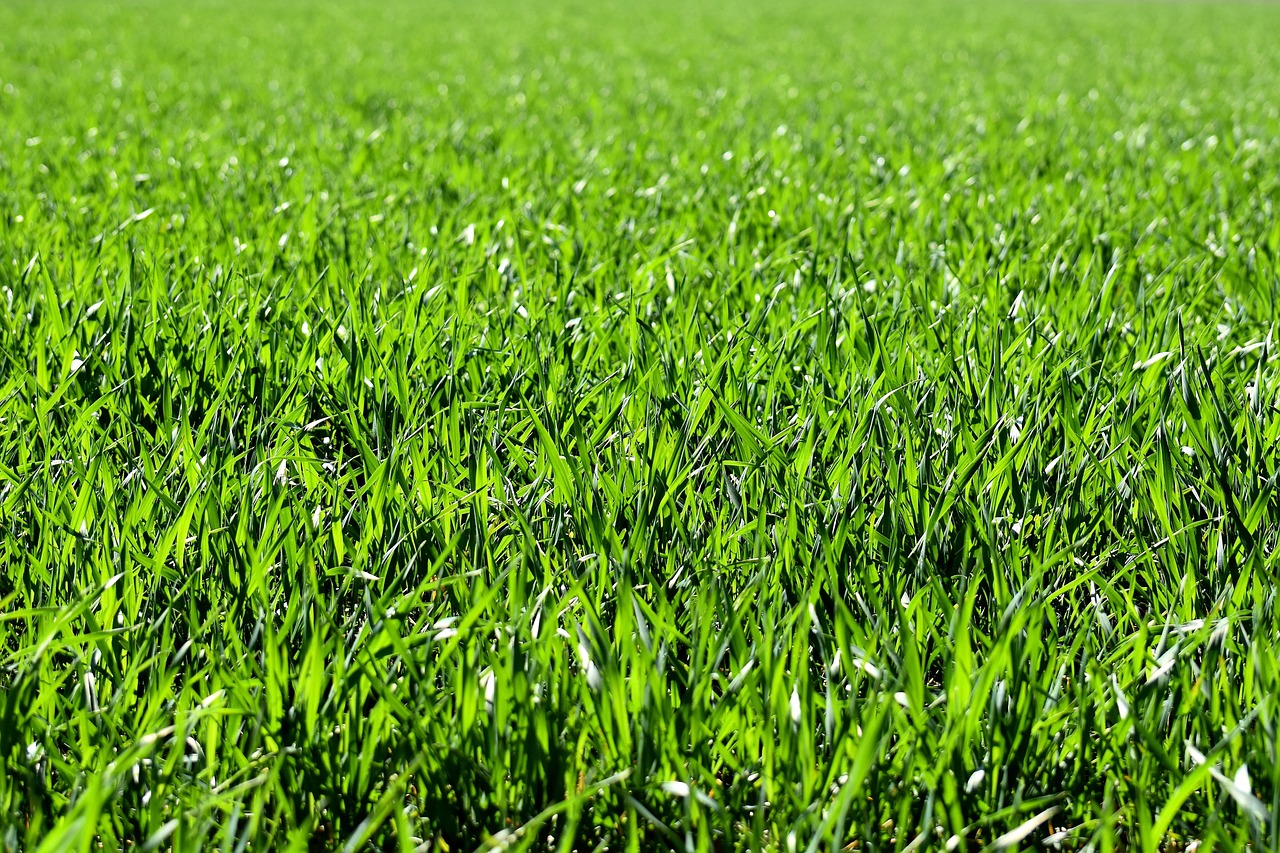
First, identify the weed type: broadleaf versus grassy versus sedge. Broadleaf weeds usually have wider leaves and are easier to control selectively in turf. Grassy weeds resemble grass and need specific chemistry. Sedge, like nutsedge, has triangular stems and often requires specialized products.
If you have St. Augustine, be very careful with 2,4-D based mixes in warm weather. Some broadleaf herbicides that are fine on Bermuda can burn St. Augustine if applied at high temperatures or high rates. Spot treating with a pump sprayer, following the lowest effective rate on the label, is safer than blanket applications for many home lawns.
In Bermuda and zoysia, there is more flexibility, and you can use many standard broadleaf three-way herbicides safely if you respect label temperatures, usually avoiding applications when air temperatures exceed about 85°F to reduce turf stress.
For sedges, such as yellow or purple nutsedge in damp areas, look for sedge-specific products, and pair chemical control with fixing the underlying moisture issue. If the soil stays saturated, sedge will keep returning no matter how often you spray.
Step 4: Mowing Strategy for Texas Spring Lawns
First Mow and Correct Mowing Height by Grass Type
Your first spring mow sets the tone for the season. The goal is to remove winter debris and just a bit of the old leaf tissue, not to scalp the lawn down to the dirt. Scalping can injure warm-season grasses by removing too much energy reserve, especially if a late cold snap follows.
For Bermuda in full sun, the target mowing height in the active season is usually about 1 to 2 inches, depending on whether it is common or hybrid. For the first mow, set your mower at the higher end of that range or even slightly higher, then gradually work down over several mowings if you want a lower cut. Cutting down more than one third of the leaf blade at a time is the threshold to avoid, because that level of removal stresses the plant.
St. Augustine should generally be kept taller, about 3 to 4 inches. Cutting it too low weakens the turf and invites weeds and disease. For your first spring mow, aim near the 4 inch mark, especially if you are in a region with shade or disease pressure. Zoysia typically likes 1.5 to 3 inches, depending on the cultivar, again avoiding drastic early scalping.
For buffalograss, the approach is different. Many homeowners maintain it at 3 to 5 inches or even allow a more natural meadow look. Short, frequent mowing and heavy fertilization can actually reduce its drought tolerance and favor weeds.
Mowing Frequency and Blade Care
Once growth starts, adjust your mowing frequency to the "one third rule": never remove more than one third of the blade at a time. In spring as growth picks up, this may mean weekly mowing for Bermuda, and every 7 to 10 days for St. Augustine and zoysia, depending on rainfall and fertilization.
Sharp blades are a small detail with a big impact. Dull mower blades tear grass instead of cutting it cleanly, leading to frayed tips that dry out and give the lawn a whitish or brown cast. Torn tissue also increases disease entry points. Sharpen blades at least twice a season, and more often if you mow frequently or hit debris.
Mulch mowing, where clippings are finely chopped and left on the lawn, is usually beneficial in Texas if done correctly. As long as you are not removing too much height at once, clippings decompose and return a portion of nitrogen to the soil, reducing fertilizer needs. Bag only when dealing with excessive debris, heavy weed seedheads, or initial cleanup after winter.
Step 5: Spring Fertilization and Feeding
When to Fertilize in Texas Spring
Early fertilization is one of the top spring mistakes in Texas. Applying heavy nitrogen while the grass is mostly dormant does little for the turf and can encourage weeds or run off with spring rains. Instead, use the grass itself as your timing guide.
Wait to apply your main spring fertilizer until your warm-season lawn is at least 60 to 70 percent green and you see new stolons and blade growth. In many parts of Central and South Texas, this is often late March to April. In North Texas and the Panhandle, it may be mid April to early May, depending on the year.
If your soil test indicates a specific deficiency, you can sometimes use a light application earlier, but I rarely recommend more than about 0.5 pound of actual nitrogen per 1000 square feet in a single early spring application. Once conditions are fully warm, typical seasonal applications might be in the range of 0.75 to 1 pound of nitrogen per 1000 square feet, again guided by soil results and turf type.
Choosing the Right Fertilizer for Your Texas Lawn
Match your fertilizer to both your soil test and your grass species. High nitrogen, quick release fertilizers give a fast green up but can push excessive growth, increase mowing, and raise disease risk, especially in St. Augustine. Slow release or controlled release products provide a steadier feed and are often safer for Texas springs, where we can jump quickly from cool to hot.

On heavy clay soils, split applications can help prevent nutrient loss and reduce burn risk. For example, instead of a single heavy 1 pound nitrogen application, you might apply 0.5 pound in mid spring and another 0.5 pound 6 to 8 weeks later. On sandy soils, more frequent, lighter applications are important because nutrients leach more quickly.
Organic and natural fertilizers, such as compost, manure based products, or organic blends, are excellent options for building soil health over time. They release nutrients slowly and add organic matter, which benefits both clay and sandy soils. The tradeoff is that their nitrogen percentage is lower, so you apply more product by weight to reach the same nitrogen rate, and the response is slower but steadier.
- Michigan State University Extension notes that warm-season grasses generally perform well with 2-4 pounds of nitrogen per 1000 square feet per growing season, applied in split doses and adjusted for soil and species.
Whatever you choose, always calculate the actual nitrogen per 1000 square feet, not just the bag rate. Multiply the bag's nitrogen percentage by the pounds applied to get your real dose. This avoids common errors like unintentionally applying 2 or more pounds of nitrogen at once, which can burn turf and drive disease.
Recommended products
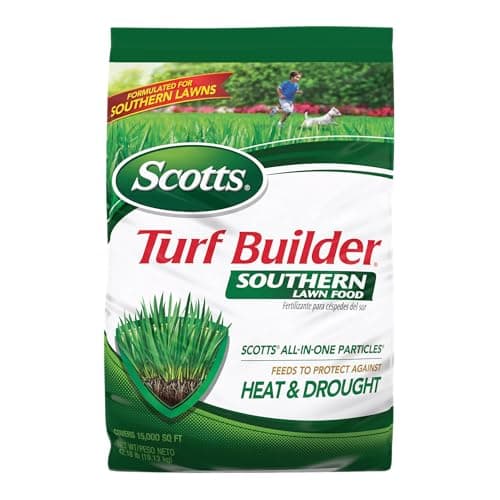
Scotts Turf Builder Southern Lawn Food
A warm-season feed formulated for St. Augustine, zoysia, bermuda, and centipede.
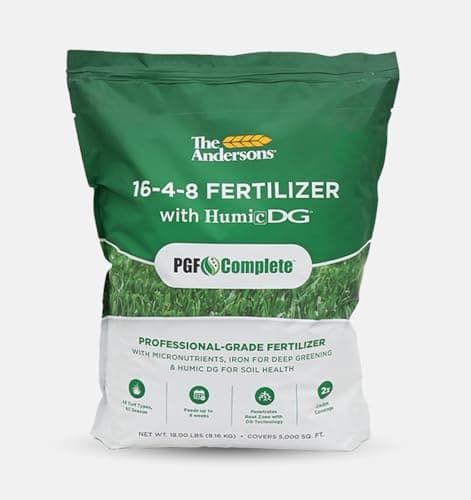
The Andersons PGF Complete 16-4-8
A slow-release 16-4-8 with humic acid that spreads evenly and feeds over several weeks.
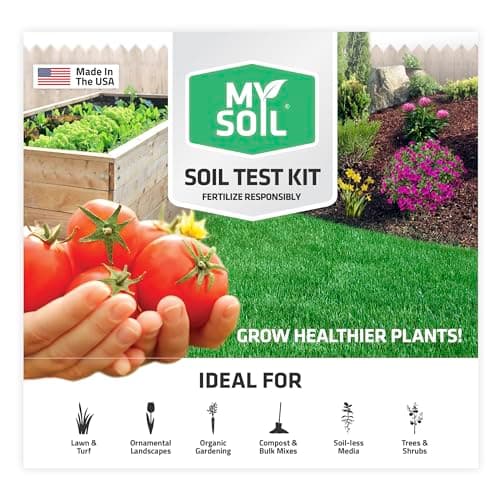
MySoil Soil Test Kit
A mail-in test that settles the pH question across Texas soils, from East Texas sand to Hill Country caliche.
Step 6: Watering Strategy for Texas Spring
Transitioning From Winter to Spring Watering
Many Texas homeowners either leave irrigation off too long into spring or flip straight into a summer-like schedule. Neither extreme is ideal. The goal is to support new root and shoot growth without keeping the soil saturated or encouraging shallow roots.
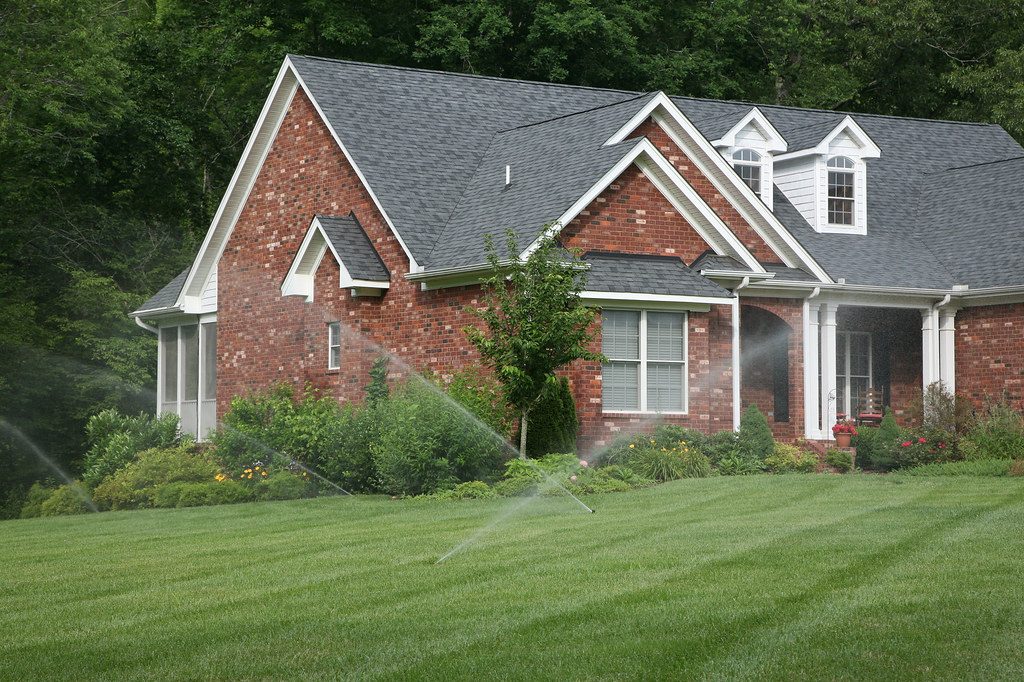
Once your lawn starts to green and rainfall becomes less frequent or more erratic, transition to deep, infrequent watering. For most Texas lawns, the target is about 1 inch of total water per week from rain plus irrigation during spring, adjusting up or down with actual weather. A simple rain gauge or empty tuna can test under a running zone helps calibrate your system: run the sprinklers and see how long it takes to accumulate half an inch, then plan your runtimes accordingly.
Watering is most efficient in early morning, typically between 4 am and 8 am. This reduces evaporation and allows blades to dry quickly after sunrise, lowering disease risk. Avoid evening watering in spring when nights can still be cool and damp.
Checking Coverage and Adjusting for Soil Type
Use your spring tune up window to check for coverage issues. Look for dry spots, mismatched nozzles, heads buried below turf level, or overspray onto sidewalks and driveways. These problems lead to both brown patches and wasted water once heat returns.
On heavy clay, cycle and soak scheduling is often best. Instead of one long 30 minute run, break it into two or three shorter runs, allowing 30 to 60 minutes between cycles. This gives water time to soak in rather than run off. On sandy soils, you might be able to water longer in one pass, but you will likely need to water more often because the soil drains rapidly.
Pay attention to early signs of overwatering: mushrooms, algae on the soil surface, persistent squishiness, or yellowing despite adequate fertilizers. These symptoms usually point to too much moisture or poor drainage. If you see them, reduce watering duration or frequency and consider aeration or drainage improvements.
Step 7: Overseeding, Spot Repair, and Renovation
When and How to Repair Winter Damage
Once you have confirmed which areas are truly dead, you can plan repairs. For warm-season Texas grasses, seeding options are limited compared to cool-season regions, so repair often involves plugs, sod, or encouraging lateral spread from healthy surrounding turf.
The best time for major repair of Bermuda, St. Augustine, or zoysia in Texas is late spring to early summer, once soil temperatures are warm and there is no frost risk. Nighttime lows consistently above 60°F for at least a week is a good timing threshold. Repair too early, and the new material struggles. Too late, and extreme heat makes establishment harder without heavy watering.
For small bare spots in Bermuda, you can loosen the top inch of soil, mix in a bit of compost, and then either seed with a Bermuda variety suitable for your region or encourage runners to grow into the area by lightly staking or pinning them. For St. Augustine and zoysia, using plugs cut from healthy sections or purchased from a supplier is often more successful than seed, since many popular cultivars are only available vegetatively.
If you have chronic thin or bare areas due to shade, compaction, or poor drainage, address those root causes alongside any replanting. Removing or thinning low limbs, aerating, or regrading may be necessary. Without fixing the underlying issue, new grass will likely fail in the same spots over time.
Dealing With Cool-Season Overseeded Lawns
In some Texas lawns, especially Bermuda sports or show lawns, ryegrass is overseeded in fall to keep green color all winter. In spring, you need to carefully transition out of the cool-season rye so the Bermuda can regain dominance.
As temperatures rise into the 80s, rye will naturally decline, but heavy fertilization of rye early in spring can delay Bermuda green up. To help the transition, reduce watering slightly and raise mowing height temporarily so you are not favoring the shallower rooted rye. Once Bermuda starts to assert itself, you can resume a Bermuda-oriented fertilization schedule in late spring.
If your overseeded lawn is heavily dominated by rye into late April or May in warm regions, it may be necessary to reduce watering and avoid further nitrogen applications until the rye fades, otherwise you risk a weak, thin Bermuda base going into summer stress.
Step 8: Pest and Disease Monitoring in Texas Spring
Common Spring Diseases and How to Confirm Them
Spring in Texas, especially in East and Gulf Coast regions, can bring ideal conditions for turf diseases. The key is differentiating disease from nutrient issues or simple dormancy hangover. Brown patches that are circular, with a smoke ring margin and sometimes a slightly sunken look, often point to fungal issues like large patch in St. Augustine or zoysia.
If blades in an affected area pull up easily and you see dark, rotted crowns, that suggests disease rather than just drought or nutrient problems. Yellowing in diffuse, non-patterned areas, especially in alkaline regions, can point more toward iron or nitrogen deficiency than disease.
Confirming a disease diagnosis can be done by close visual inspection and sometimes by submitting a sample to a diagnostic lab if you are unsure. Fungicides work best as preventatives or early intervention. Applying them repeatedly without a solid diagnosis can waste money and, in some cases, stress the lawn.
Early Season Insect Issues
Most serious warm-season lawn insect problems in Texas, like chinch bugs in St. Augustine or armyworms in Bermuda, peak later in the year. Still, spring is the time to establish a baseline and get familiar with what normal turf looks like so you notice changes early.
If you see irregular dead patches that do not respond to watering or fertilizer, and especially if they expand quickly, consider a closer insect check. Pull back a small section of sod at the margin of the damage and inspect for grubs, or part the canopy and look for small insects on the stems and soil surface. As a rule of thumb, finding 10 or more grubs per square foot is often cited as a treatment threshold in many extension guidelines.
Resist blanket insecticide use in spring "just in case". Beneficial insects help keep pests in check, and unnecessary applications can disrupt that balance. Targeted treatments based on confirmed pests and thresholds are both more sustainable and more effective long term.
What Other Guides Miss: Common Mistakes to Avoid
When I compare this texas spring lawn care 101 expert guide approach to many generic spring lawn prep articles, a few consistent gaps show up. Filling those gaps can make the difference between a lawn that improves each year and one that stays stuck in a cycle of weeds and thin turf.
First, many guides ignore regional timing differences and soil temperatures. They tell every homeowner to apply pre-emergent in "early spring" without defining that by soil temp. In Texas, missing the 55°F soil window by even 2 to 3 weeks can dramatically lower crabgrass control, especially in South and Gulf Coast regions. Always confirm with a soil thermometer or local extension updates instead of relying purely on the calendar.
Second, weed-and-feed products marketed nationally often do not line up with Texas grass types or climates. Applying a cool-season style weed-and-feed to a mostly dormant South Texas St. Augustine lawn in February can stress the turf and miss the weed timing window. Separating your herbicide and fertilizer strategies, at least in spring, usually gives you more control and safer species-specific choices.
Third, many guides gloss over confirmation tests. They say "brown patch" or "grubs" without walking you through tug tests, screwdriver tests for compaction, or stem inspections to differentiate disease from nutrient issues. Before you treat, confirm: if a screwdriver cannot penetrate 6 inches, compaction is a likely contributor; if stolons break off dry and brittle, that patch is likely dead; if you pull back sod and do not see grubs in numbers near 10 per square foot, grubs are probably not the primary culprit.
Putting It All Together: A Simple Texas Spring Lawn Action Plan
Understanding why this happens helps you prevent it next time, and at this point you should have a clearer picture of your lawn’s current state. To make it practical, here is how the pieces fit into a straightforward but region-aware plan.
Start in late winter by identifying your grass, walking your yard, and testing your soil. As soil hits 55°F, apply a grass-safe pre-emergent, calibrated to your region's normal warming pattern. In early spring, perform your first mow at the correct height for your species, sharpen mower blades, and spot treat obvious weeds according to grass type and label safety.
Once your lawn is 60 to 70 percent green and nighttime temps are above 50°F, make your first main fertilizer application using the rate and type that matches your soil test and grass. At the same time, verify irrigation coverage and shift to delivering about 1 inch of water per week. Plan any aeration and compost topdressing for mid to late spring when turf is actively growing and ready to heal.
As late spring arrives, evaluate winter damage areas that have not filled in and schedule repairs during the window of warm soils and moderate temperatures. Throughout the season, keep mowing at the right height for your grass, obey the one third rule, and keep an eye on any unusual patches, using tug, screwdriver, and crown checks to differentiate true damage from slow green up.
By approaching your yard like a diagnostic puzzle rather than a one size fits all project, you will see steadier improvement year over year, even in Texas’s challenging conditions. If you want to carry this same region-specific thinking through the rest of the year, take a look at Summer Lawn Care: Heat & Drought Strategies, Fall Lawn Overseeding & Prep Guide, Winter Lawn Protection & Care, and the Monthly Lawn Care Calendar so your spring work supports a full annual plan.
Top Picks
- Outsidepride Maya (Blackjack II) Bermuda Grass Seed (5 lb)Check price on Amazon
- The Andersons Professional PGF Complete 16-4-8 Fertilizer with 7% Humic DG (5,000 sq ft)Check price on Amazon
- GS Plant Foods Liquid Humic AcidCheck price on Amazon
As an Amazon Associate we earn from qualifying purchases.
Free Lawn Care Tools
Apply pre-emergent when your soil reaches about 55°F at a 2 inch depth and stays there for several days. In North Texas this is often late February to mid March, while in South Texas and the Gulf Coast it can be late January to February. Always water the product in lightly so it can form an effective barrier in the top layer of soil.
Do a tug test and crown check. Gently pull on small sections of turf: if stolons resist and you see firm, pale green or white tissue at the base, it is usually dormant. If runners pull up easily, are dry and brittle, and crowns are hollow or mushy, that area is likely dead and will need repair once soil is warm.
For St. Augustine, maintain a height of about 3 to 4 inches, leaning higher in shade or stress-prone areas. For Bermuda, 1 to 2 inches is typical, with common Bermuda often closer to 1.5-2 inches in home lawns. Never remove more than one third of the blade at a single mowing to avoid stressing the grass.
Aim for about 1 inch of total water per week from rain plus irrigation once grass is actively growing. Use a rain gauge or shallow container to measure how long it takes your sprinklers to deliver half an inch, then adjust runtimes. Water in the early morning and adjust for soil type, using shorter, repeated cycles on heavy clay to prevent runoff.
You can, but they are often not ideal for Texas because their timing and chemistry may not match your grass type or local conditions. Many contain herbicides that can stress St. Augustine or miss the most effective pre-emergent window. It is usually better to separate weed control and fertilization so you can time each based on soil temperature and turf needs.
For warm-season grasses like Bermuda, St. Augustine, and zoysia, expect 4 to 8 weeks to see solid establishment or fill-in if you repair in late spring when soil is warm. Recovery is faster with proper watering, correct mowing height, and balanced fertilization. If underlying issues like compaction or shade are not addressed, damaged areas may be slow to recover or fail again.
Photos: Macleay Grass Man / Openverse, simpleinsomnia / Openverse, aqua.mech / Openverse

Beat weeds and brown spots from your phone
Snap a photo, get the fix, and follow a plan timed to your soil and weather. Free on iPhone.