When to Apply Scotts Turf Builder & Pre-Emergent: 2026 Schedule
 James ThorntonLawn Equipment & Maintenance Expert | 20 Years
As an Amazon Associate we earn from qualifying purchases.
If you’ve ever fought the same patch of crabgrass or clusters of weeds year after year-no matter how often you mow, fertilize, or water-you're not alone. For most homeowners, the missing piece isn’t effort, but precise timing: knowing exactly when to apply Scotts pre-emergent, and at what rate, is what separates a lush, weed-free lawn from a patchwork of frustration. With new climate patterns and shifting weed cycles in 2026, the old “first warm weekend” advice just doesn’t cut it anymore. That’s why this 2026 Scotts pre-emergent schedule works off soil temperature, not calendar dates. For the active-ingredient decision, see Prodiamine vs Dithiopyr.
New to pre-emergents in general? Our unbranded granular pre-emergent guide covers the fundamentals that apply to any bag: active ingredients, soil temps, and watering-in.
This comprehensive guide breaks down the science behind pre-emergent herbicides, the 2026 application schedule by region, exact product rates, step-by-step pro techniques, and advanced troubleshooting that most guides don’t even touch. Whether you’re a first-timer or a seasoned DIYer tired of mixed results, you’ll find actionable advice here-drawn from two decades of hands-on turf management, not just product marketing. Get ready to outsmart weeds once and for all.
If you want to stop crabgrass and other annual weeds before they take over, apply Scotts pre-emergent when your soil temperature approaches 55°F for several days-not just when the calendar says it's spring. Use a digital soil thermometer or check with your local extension service to confirm the soil temp at 2 inches deep. If you apply too early, the product can break down before weeds germinate; too late, and it won’t stop what’s already sprouting. Water in your application right after spreading to activate the barrier-don’t skip this step, or you’ll waste your time and money.
Avoid the common mistake of overapplying “just to be sure”-stick to the label rate, which for Scotts Halts Crabgrass and Grassy Weed Preventer is 2 lbs per 1,000 sq ft. If you plan to overseed, delay pre-emergent until after seedling establishment, or you’ll block your new grass too. Results show up as a reduction in weed seedlings over 2-6 weeks, with best results when you nail the timing and watering.
Understanding Scotts Pre-emergent: How It Works and Why Timing Matters
What Is a Pre-emergent and How Does Scotts Formula Work?
Pre-emergent herbicides are your first line of defense against annual grassy weeds like crabgrass, foxtail, and goosegrass. Unlike post-emergent herbicides, which kill weeds after they've already sprouted, pre-emergents create an invisible barrier at the soil surface that disrupts the germination process. When weed seeds begin to sprout, the active ingredient-most commonly pendimethalin or dithiopyr in Scotts formulas like Halts Crabgrass and Grassy Weed Preventer-prevents roots and shoots from developing. The seedling dies before it ever emerges above the soil.
Recommended products
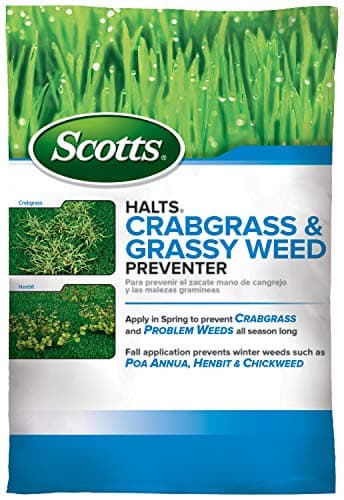
Scotts Halts Crabgrass and Grassy Weed Preventer
Granular pre-emergent for homeowners who want a simple crabgrass-prevention product before soil temperatures hit the danger zone.
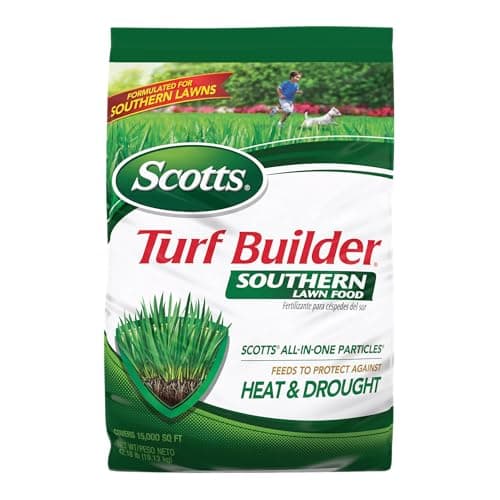
Scotts Turf Builder Southern Lawn Food
Warm-season fertilizer built for southern lawns, especially when you want a homeowner-friendly granular option.
Scotts Halts uses pendimethalin, a well-studied pre-emergent that is effective on a wide range of annual grassy weeds. It’s formulated as a granular product, making it easy for homeowners to apply with a spreader. The key is that pre-emergents do not kill existing weeds; they only prevent new ones from sprouting, so timing is everything.

Why Proper Timing Is Critical for Weed Control Success
Weed seeds germinate based on soil temperature, not the calendar. For crabgrass-the number one target of most pre-emergent programs-the trigger point is a consistent soil temperature of 55°F at a 2-inch depth for several days. Apply your pre-emergent before this threshold, and you’ll catch the weeds before they start. Wait too long, and you’ll miss the window entirely. If you’re relying on air temperature or a fixed calendar date, you risk missing that brief but crucial period each year.
The last few years have seen more unpredictable springs, with odd warm spells or lingering cold delaying or accelerating weed emergence. In 2026, following weather patterns and using soil temperature as your main indicator is more important than ever. If you want the barrier to work, the product must be in place and watered in before those first weed seeds break dormancy.
When to Apply Scotts Pre-emergent: 2026 Timing Guide
National Schedule Overview: North, South, Midwest, and West
Across the U.S., the optimal window for pre-emergent application shifts by region and weather. Traditionally, northern lawns target early to mid-spring, while southern lawns may start as early as late winter. The Midwest, with its late frosts, often applies weeks after the Northeast or Southeast. Western lawns face extra complexity with drought, irrigation, and microclimates.
For 2026, expect earlier weed germination in many areas due to warming trends, though late cold snaps can still surprise you. The best approach is to confirm soil temps locally, not just rely on last year’s dates. If you want a deeper dive, see our guide on when to apply crabgrass preventer for even more timing details.
Region-by-Region Application Calendar for 2026
Here’s a region-by-region breakdown using both industry standards and our Regional Climate Data. This table summarizes your best pre-emergent window, soil temperature targets, and common challenges by region:
| Region | Best Application Window (2026) | Soil Temp Target | Notes/Challenges |
|---|---|---|---|
| Northeast (Cool Season) | March 15 - April 15 | 55°F | Snow mold, summer stress, crabgrass |
| Southeast (Warm Season) | Feb 15 - March 15 | 55°F | Chinch bugs, brown patch, summer diseases |
| Upper Midwest (Cool Season) | April 15 - May 15 | 55°F | Short season, winter damage, snow mold |
| Transition Zone | March 1 - April 1 | 55°F | Mixed grass types, variable weather |
| West (Varied) | Feb 15 - April 1 | 50-55°F | Drought, irrigated lawns, microclimates |
According to our Regional Climate Data, the Southeast pre-emergent window opens February 15, with soil temperatures in March already reaching 50-65°F-weeks ahead of the Northeast or Upper Midwest. In the Northeast, aim for March 15 to April 15, but only when the soil hits that 55°F mark. The Upper Midwest should wait until at least mid-April, due to later last frost dates and colder soil.
Transition Zone lawns-those in the mid-Atlantic and central states-need to watch both soil temps and erratic weather. Western lawns, especially those irrigated or at higher elevation, should monitor local conditions closely as microclimates can shift germination windows by weeks.
Soil Temperature and Local Weather: The Ultimate Timing Indicators
Soil temperature is the gold standard for pre-emergent timing. Use a digital soil thermometer to check temps at a 2-inch depth early each morning. When you see readings consistently at or just below 55°F, it’s time to apply. University extension websites often publish real-time soil temps for your area. You can also use local weather apps or growing degree day calculators, which predict weed germination based on accumulated heat units.
Crabgrass and other annual weeds don’t wait for your schedule-they germinate when the conditions are right. For most lawns, this means applying pre-emergent 1-2 weeks before soil temps hit 55°F for several days. If you want ultra-precise timing, track soil temps daily and pull the trigger the day before you hit that threshold. This approach consistently delivers the best weed control results after maintaining thousands of lawns over 20 years.
Enter your ZIP code below to find your exact timing:
Loading Herbicide Timing Calculator...
When to Apply Scotts Turf Builder and Every Step Product
Halts is just one piece of the Scotts lineup, and the timing questions pile up fast: when does Step 2 go down, when is GrubEx worth it, can WinterGuard go out in spring? Here’s the whole program in one table, with month windows and the cues that matter more than the calendar.
| Product | When to Apply | Timing Cue |
|---|---|---|
| Step 1 / Halts Crabgrass Preventer | February - April (by region) | Soil approaching 55°F at 2 inches |
| Step 2 Weed Control Plus Lawn Food | April - June | 4-6 weeks after Step 1; broadleaf weeds actively growing; apply to a dew-damp lawn |
| Turf Builder Lawn Food | Any point in the growing season | Grass actively growing; feed every 6-8 weeks |
| GrubEx | April - June | Before grub eggs hatch in early summer; protects for up to 4 months |
| SummerGuard (Step 3) | June - August | Heat and insect pressure ramping up; water in after applying |
| WinterGuard (Step 4) | September - November | Fall only, while grass is still green and roots are rebuilding |
| Green Max Lawn Food | Spring through fall | Anytime grass is actively growing; the 5% iron greens things up in about 3 days |
When to Apply Scotts Step 1, 2, 3, and 4 by Region (2026 Dates)
The month windows above shift with your climate. Here are practical 2026 date ranges for the four-step program by region. Let soil temperature override the calendar whenever the two disagree.
| Region | Step 1 (Halts) | Step 2 (Weed Control) | Step 3 (SummerGuard) | Step 4 (WinterGuard) |
|---|---|---|---|---|
| South (zones 8-10) | Feb 1 - Mar 15 | Apr - May | Jun - Jul | Sep - Oct |
| Transition Zone (zones 6-7) | Mar 1 - Apr 10 | Apr 15 - Jun 1 | Jun 15 - Aug 15 | Sep 15 - Nov 1 |
| North (zones 3-5) | Apr 1 - May 10 | May 15 - Jun 30 | Jul - Aug | Sep - Oct 15 |
Can You Apply Scotts Crabgrass Preventer Twice?
Yes, but with limits. The Scotts Halts label allows a maximum of two applications per year, with at least two months between them. The classic split is an early spring application when soil temps approach 55°F, then a second in late summer or early fall to catch goosegrass, Poa annua, and other late germinators. Don’t stack two applications back-to-back in spring “just to be sure”-that’s off-label and risks thinning your turf.
How Long After Applying Scotts Crabgrass Preventer Can You Seed?
Plan on four growing months. The Halts label says not to plant grass seed for four months after application, because the same barrier that stops crabgrass will stop your seed from establishing. In practice, a spring Halts application means you’re seeding in early fall at the soonest, which happens to be the best seeding window for cool-season lawns anyway. Going the other direction, don’t apply Halts to a newly seeded lawn until you’ve mowed it four times.
Does Scotts Weed and Feed Have Pre-Emergent?
No. Scotts Turf Builder Weed & Feed and Step 2 are post-emergent products: they kill broadleaf weeds like dandelion and clover that are already up and growing, and they do nothing to stop crabgrass seeds from germinating. If you want fertilizer plus a pre-emergent in one bag, the product you’re looking for is Scotts Turf Builder Halts Crabgrass Preventer with Lawn Food. We break this down fully in Is Scotts Weed and Feed a Pre-Emergent?
Can You Use Scotts WinterGuard in Spring?
It won’t hurt your lawn, but it’s the wrong tool for the season. WinterGuard’s formula is built for fall, when grass is banking nutrients in its roots ahead of winter. In spring, your lawn wants the crabgrass protection of Step 1 or the steady feeding of regular Turf Builder instead. If you have a leftover bag of WinterGuard in April, save it for September rather than putting it down early.
Scotts Pre-emergent Application Rate: How Much to Use for Maximum Effect
Official Label Rates for Popular Scotts Pre-emergent Products
Label rates are more than just a suggestion-they’re the balance point between effective weed control and turf safety. Here’s a breakdown of the most common Scotts pre-emergent product rates by grass type:
| Product | Grass Type | Rate per 1,000 sq ft | Max Applications/Year |
|---|---|---|---|
| Scotts Halts Crabgrass & Grassy Weed Preventer | All (see label for specifics) | 2 lbs | 1 (spring) or 2 (split: spring/fall) |
| Scotts Turf Builder + Halts (combo) | Cool & warm season | 4 lbs (covers 1,000 sq ft) | 1-2 (split applications) |
Always follow the rate on your bag’s label. For Scotts Halts, that’s 2 lbs per 1,000 sq ft. Overapplying can thin your grass or even damage roots. Underapplying won’t create a strong enough barrier to stop weeds. Don’t double up “just to be safe”-it’s a waste of product and money.

Calculating the Right Amount for Your Lawn
Start by measuring your lawn’s square footage. Don’t guess-pace it out or use satellite tools. Subtract hardscapes, beds, and non-lawn areas. For irregular or multi-zone lawns, break it down by section and add up the totals. If you’re using a granular product, check the spreader setting chart for your model (usually on the bag or online). If you have overlap areas-along driveways or walkways-factor in a slight reduction to avoid double dosing.
For liquid pre-emergents (rare in Scotts consumer line), mix according to label directions and use a calibrated sprayer with consistent walking speed. Precision matters more than you think: a 20% over- or under-application can mean the difference between a weed-free lawn and a patchy mess.
Over- and Under-Application: Risks and Results
Too much pre-emergent can cause thin turf, yellowing, and stunted root growth-especially on fine fescues and certain warm-season grasses. Worse, it can move off-target with heavy rain, affecting flower beds or tree roots. Too little, and weeds will find the gaps in your barrier, popping up even in the best-maintained lawns. Environmental safety is also at stake: overuse increases runoff risks and doesn’t improve results. Stick to label rates-after maintaining thousands of lawns, the pattern is clear: more is not better.
Step-by-Step: How to Apply Scotts Pre-emergent Like a Pro
Pre-Application Checklist
Preparation is half the battle. Here’s what to do before you start:
- Check soil temperature at 2-inch depth-target 55°F for crabgrass.
- Review the weather forecast-no heavy rain (>1 inch) predicted in the next 24 hours, but light rain is fine.
- Mow your lawn to recommended height (don’t scalp).
- Remove existing weeds-pre-emergents won’t kill them.
- Prep your irrigation system or hoses for post-application watering.
Granular vs. Liquid Application: Which to Choose and Why
Scotts Halts is available in granular form, the preferred choice for most homeowners due to ease of use. Granular spreads evenly with a broadcast or drop spreader and is less likely to drift onto unintended areas. Liquids offer more flexibility for pros, but require careful calibration and can be tricky on windy days.
For hilly or shaded lawns, granular products are less likely to run off than liquids. If you have a small or oddly shaped lawn, a handheld spreader like the Scotts Wizz Spreader for Grass Seed makes quick work of tight spaces and minimizes waste. You don’t need expensive gear-just something that delivers the right amount evenly.
Equipment Guide: Spreaders, Sprayers, and Calibration
Choose a broadcast (rotary) spreader for large, open lawns. A drop spreader gives more precision along edges or beds. For spot treatments or small patches, a handheld spreader is plenty. Before you start, calibrate your spreader:
- Weigh out enough product for a 200 sq ft test strip.
- Set your spreader to the recommended setting (on bag/chart).
- Walk at a steady pace and apply over your test area.
- Check coverage-adjust setting as needed, then scale up for full lawn.
Always clean your spreader after use-leftover product can clog mechanisms or contaminate future applications.
The Application Process: Start-to-Finish Instructions
1. Mow lawn and remove debris. Don’t apply to wet grass or saturated soil.
2. Load pre-measured product into your spreader. Double-check the setting.
3. Apply in parallel passes, overlapping slightly for full coverage. Avoid double application along edges.
4. Water in immediately after application-0.25 to 0.5 inches is ideal. This activates the barrier at the soil surface. If rain is expected within 12 hours, you can skip irrigation.
5. Clean your spreader and wash hands/equipment thoroughly. Keep pets and kids off the lawn until the product is dry and watered in (usually 24-48 hours).
Post-Application Care: Maximizing Efficacy
Avoid mowing for 1-2 days after application to allow the barrier to set. Limit heavy foot traffic or pet play during this window. If a heavy rainstorm (>1 inch) hits within 24 hours, you may need to reapply, but most spring showers are fine. If drought conditions set in, maintain regular irrigation to prevent product breakdown. If you’re overseeding this season, delay pre-emergent until new grass is established, or look for products labeled as “seeding safe.”
2026 Scotts Pre-emergent Schedule: Month-by-Month Breakdown
Spring 2026: Key Weeds and Application Windows
Spring is the main battleground for crabgrass, foxtail, and annual bluegrass. In the Northeast, our Regional Climate Data puts the pre-emergent window at March 15 to April 15, when soil temps climb from 35-45°F in March to 45-55°F in April. For the Southeast, start as early as February 15 to March 15, as soil temps can hit 55°F weeks earlier.
Early spring applications target the first flush of annual weeds. In late spring, a second application or post-emergent touch-up may be needed if you have a long growing season or heavy weed pressure. Always stick to label rates and avoid doubling up unless the product specifically allows split applications.

Summer 2026: Mid-Season Touch-Ups and Second Applications
Some lawns-especially in the Southeast or irrigated Western regions-benefit from a second pre-emergent application in early to mid-summer if weed pressure is high or the spring barrier has broken down. Target summer annual weeds like goosegrass or barnyardgrass. Reapply only if your product label allows it (usually 2 applications per year max for Scotts Halts). Monitor for new weeds-if you see breakthrough, spot-treat with a post-emergent rather than overapplying pre-emergent.
Fall 2026: Preventing Winter and Cool-Season Weeds
Fall applications target winter annuals like Poa annua (annual bluegrass) and chickweed, especially in warm-season lawns or areas with mild winters. Time your application before soil temps drop below 70°F and before fall rains. In the Upper Midwest, early September is best; in the South, late September to mid-October works well. Coordinate with your fall fertilization or overseeding schedule-pre-emergents will block grass seed, so time accordingly.
Special Cases: Overseeding and Renovation Years
If you’re overseeding or renovating, do not apply pre-emergent before or during seed establishment, unless using a product specifically labeled as safe for new seedings (rare with pre-emergents). Wait until your new grass has been mowed at least 2-3 times before applying a standard pre-emergent. If you must seed in spring, skip pre-emergent and plan for post-emergent spot control later.
- Penn State Extension recommends delaying pre-emergent application until after new grass seedlings have been mowed 2-3 times, to avoid stunting establishment.
Advanced Tips: Maximizing Results and Avoiding Hidden Pitfalls
Combining Scotts Pre-emergent with Other Lawn Products
Some Scotts products combine fertilizer and pre-emergent, like Scotts Turf Builder + Halts. These are best for homeowners who want one easy step, but timing must still match the pre-emergent window. Don’t combine pre-emergent with broadleaf post-emergent weed killers in the same pass unless the label allows it-many products aren’t compatible. If you need both, apply pre-emergent first, then wait 2-4 weeks and tackle existing weeds with a post-emergent.
Adapting to Weed Pressure and Lawn Type
Lawns with heavy weed infestations may require a split application (spring and late summer/fall) or supplementary post-emergent spot treatments. For fine fescue or newly established lawns, stick to the lower end of label rates. Warm-season grasses like Bermudagrass and St. Augustine can handle standard rates but always read the label for exceptions. Our Regional Climate Data lists Bermudagrass, Zoysiagrass, and St. Augustinegrass as the primary Southern grasses-each with its own quirks, but all benefit from well-timed pre-emergent applications at 55°F soil temp.
Organic and Eco-Friendly Alternatives
If you want to avoid synthetic herbicides, corn gluten meal is a popular organic pre-emergent. Results are less consistent than with products like Scotts Halts, but it can help reduce annual weeds when applied at high rates (20 lbs per 1,000 sq ft) at the same soil temp triggers. Combine this with cultural practices like mowing high, mulching, and improving lawn density to crowd out weeds naturally. No pre-emergent, organic or not, is a substitute for healthy, dense turf.
Common Mistakes to Avoid
Relying on the Calendar Instead of Soil Temperatures
Most guides tell you to apply “in March” or “when the forsythia blooms”-but unusual weather in 2026 means those cues can be weeks off. Always confirm with a soil probe or check local extension soil temp reports. If in doubt, err on the side of waiting until just before 55°F, not weeks ahead.
Overlooking Regional Nuances and Microclimates
Lawns near water, in cities, or at higher elevations may warm up or cool down at different rates. Microclimates can shift weed germination by as much as two weeks. Our Regional Climate Data highlights these differences-don’t assume the same date works for everyone in your state.
Misusing Product Rates or Application Equipment
Misreading spreader charts or skipping calibration leads to common dosing errors. Too much pre-emergent can thin turf, while too little leaves gaps for weeds. Always calibrate your spreader and double-check the math. Don’t mix products unless the label allows it.
Ignoring Safety for Kids, Pets, and Wildlife
Pre-emergents are generally safe when used as directed, but always keep pets and children off treated areas until granules are watered in and the lawn is dry (24-48 hours). Use signage if you have neighbors or service providers. For pollinator gardens, avoid drift or runoff into beds.
- Contact your local extension office for soil temperature benchmarks and product-specific safety guidance.
Conclusion
Mastering the use of Scotts pre-emergent means knowing exactly when to apply, sticking to the right application rate, and following a region-specific 2026 schedule built on real soil temperatures-not just dates on a calendar. The best results come from measuring, calibrating, and watering in your product at the right time. If you’re serious about a weed-free lawn, track soil temps, watch local weather, and don’t rely on shortcuts.
For next steps, check out our guide on best crabgrass preventers for 2026 or our spring lawn care checklist for a complete seasonal strategy. After 20 years in the field, I can tell you: getting pre-emergent timing right is the single most effective move you can make for a lush, resilient lawn year after year.
Related Scotts Guides
- Lawn Weed Control: The Complete Guide
- Lawn Fertilizing: A Complete Guide
- Is Scotts Weed and Feed a Pre-Emergent? (Short Answer: No)
- Scotts Halts Crabgrass Preventer Instructions: How to Apply, Water, and Time It
- Scotts Weed and Feed Instructions: When, How & Settings (2026)
- Scotts Turf Builder Triple Action Instructions: Complete Application Guide
Top Picks
 Scotts Halts Crabgrass & Grassy Weed Preventer, 20.12 lbs.Check price on Amazon
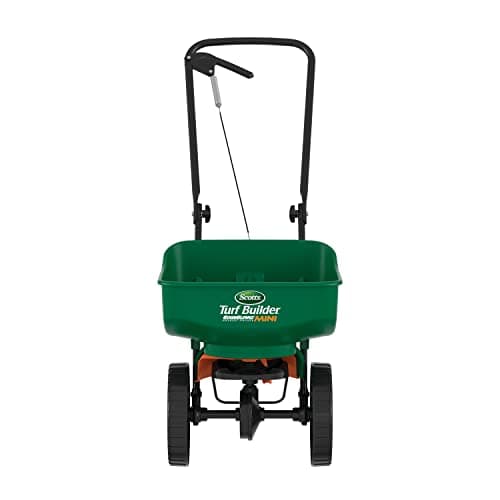
 Scotts Turf Builder EdgeGuard Mini Broadcast SpreaderCheck price on Amazon
As an Amazon Associate we earn from qualifying purchases.
Free Lawn Care Tools
Apply when soil temperature at 2 inches deep consistently approaches 55°F for several days. This typically falls between February and May depending on your region.
The recommended rate is 2 lbs per 1,000 sq ft. Always measure your lawn and calibrate your spreader for accurate coverage.
No, standard pre-emergents will prevent grass seed from germinating. Wait until new grass has been mowed 2-3 times before applying.
If you see crabgrass or other annual weeds sprouting, it's too late for pre-emergent control. Use a post-emergent herbicide for existing weeds.
Yes, water in immediately with 0.25-0.5 inches of irrigation or rain to activate the product and form a barrier at the soil surface.
Some products combine both, like Scotts Turf Builder + Halts. If using separate products, ensure application timing aligns with pre-emergent needs.
Apply Scotts Step 2 Weed Control Plus Lawn Food between April and June, 4 to 6 weeks after Step 1, once broadleaf weeds are actively growing. Put it down on a dew-damp lawn so the particles stick to weed leaves.
Yes. The Halts label allows up to two applications per year with at least two months between them. The usual split is early spring for crabgrass, then late summer or early fall for goosegrass and winter annuals like Poa annua.
Wait four growing months after applying Halts before seeding, since the pre-emergent barrier blocks grass seed too. A spring application means seeding in early fall at the soonest.
No. Weed and Feed and Step 2 are post-emergent broadleaf weed killers plus fertilizer. For a fertilizer with pre-emergent built in, use Scotts Turf Builder Halts Crabgrass Preventer with Lawn Food.
Plain Scotts Turf Builder Lawn Food can go down any time your grass is actively growing, with feedings spaced 6 to 8 weeks apart. The step products are stricter: Step 1 (Halts) goes down when soil temperatures approach 55°F in late winter to spring, Step 2 about 4 to 6 weeks later, Step 3 (SummerGuard) in early to mid summer, and Step 4 (WinterGuard) in fall while the lawn is still green. If you only fertilize twice a year, prioritize one feeding in late spring and one in early fall.
Photos: Engin Akyurt / Pexels, Masood Aslami / Pexels, Candiix / Pixabay

Beat weeds and brown spots from your phone
Snap a photo, get the fix, and follow a plan timed to your soil and weather. Free on iPhone.