How Long to Water Your Lawn in Summer (Run Times by Grass Type)
 James ThorntonLawn Equipment & Maintenance Expert | 20 Years
As an Amazon Associate we earn from qualifying purchases.
The short answer: in summer heat, most lawns need 1 to 1.5 inches of water per week, split into two deep early-morning sessions between 4 and 9am. That works out to roughly 30 to 45 minutes per session with an oscillating sprinkler, 15 to 25 minutes per zone on an in-ground spray system, or 20 to 30 minutes on a rotor zone. Sandy soil in hot, dry climates needs shorter, more frequent runs; clay soil needs slower, longer soaks. And under drought stress, deep and infrequent always beats a little every day.
It’s the height of summer, your lawn is turning brown, and you’re left wondering-how long should you water your lawn during summer to keep it healthy and green? This question is more critical than most homeowners realize. Overwatering drains your wallet and wastes precious water, while underwatering leaves your grass brittle, patchy, and vulnerable to weeds and pests. The difference between a vibrant, resilient lawn and a stressed-out mess often comes down to timing and precision-especially when the heat is relentless.
Proper summer watering isn’t just about setting a timer and walking away. Heat, intense sunlight, and rapid evaporation all combine to raise the stakes. But with the right approach, summer can also be your opportunity to build deep roots and a lush, green lawn that sails through dry spells. In this guide, I’ll break down exactly how long to water your lawn in summer, why timing matters, how to adjust for your region and grass type, and the most common mistakes I’ve seen homeowners make. After maintaining thousands of lawns, the pattern is clear: a smart, seasonally-adjusted watering routine makes all the difference. Here’s what works-no marketing hype, just field-tested results.
If your lawn is turning brown in summer, the first step is to check soil moisture after watering. Push a screwdriver 6 inches into the soil right after irrigation-if it slides in easily and feels moist at that depth, you’re watering deeply enough. If it’s dry or hard, you’re likely underwatering. Standard advice is 1 to 1.5 inches of water per week, ideally delivered in two deep soakings. Don’t rely on your sprinkler’s timer alone-run a tuna can or rain gauge test to measure exactly how much your system delivers in 15 or 30 minutes, and adjust your schedule accordingly.
Never water during the hottest part of the day (10am-6pm) or late evening, as this wastes water and promotes disease. Early morning (4-9am) is ideal. If you notice runoff or puddling, split your watering into two shorter cycles. With these adjustments, most lawns respond within 10-14 days, greening up and showing fewer dry patches. Avoid the trap of daily, shallow watering-that leads to weak roots and more summer stress.
Quick answer: water 2 to 3 times per week in summer, deep enough to total about 1 to 1.5 inches including rain, in the early morning (4 to 9 a.m.). Run times by sprinkler type:
| Sprinkler Type | Minutes per Session | Sessions per Week (Summer) |
|---|---|---|
| Oscillating sprinkler | 45 - 60 | 2 - 3 |
| In-ground spray heads | 15 - 25 | 2 - 3 |
| In-ground rotor heads | 30 - 45 | 2 - 3 |
| Impact/pulsating sprinkler | 30 - 40 | 2 - 3 |
| Soaker hose (beds/strips) | 45 - 90 | 2 |
Those ranges assume typical output; the tuna-can test below calibrates them to your actual system.
Understanding Your Lawn’s Summer Watering Needs
The Science Behind Lawn Watering in Summer
Summer challenges your lawn in unique ways. When temperatures rise above 85°F, evaporation rates skyrocket, and grass loses moisture faster than at any other time of year. The sun’s intensity not only heats the air but also bakes the soil surface, meaning water applied at the wrong time can disappear before it ever reaches the roots. This is doubly true for lawns with thin or compacted soil, where water runs off instead of soaking in.
Grass species play a huge role in how much water your lawn needs. Cool-season grasses (like Kentucky bluegrass, perennial ryegrass, and tall fescue) are adapted to spring and fall growth, struggling in peak summer heat unless watered deeply and infrequently. Warm-season varieties (such as bermudagrass, zoysiagrass, and St. Augustine) thrive in summer but still require consistent moisture to stay green and resist drought stress.
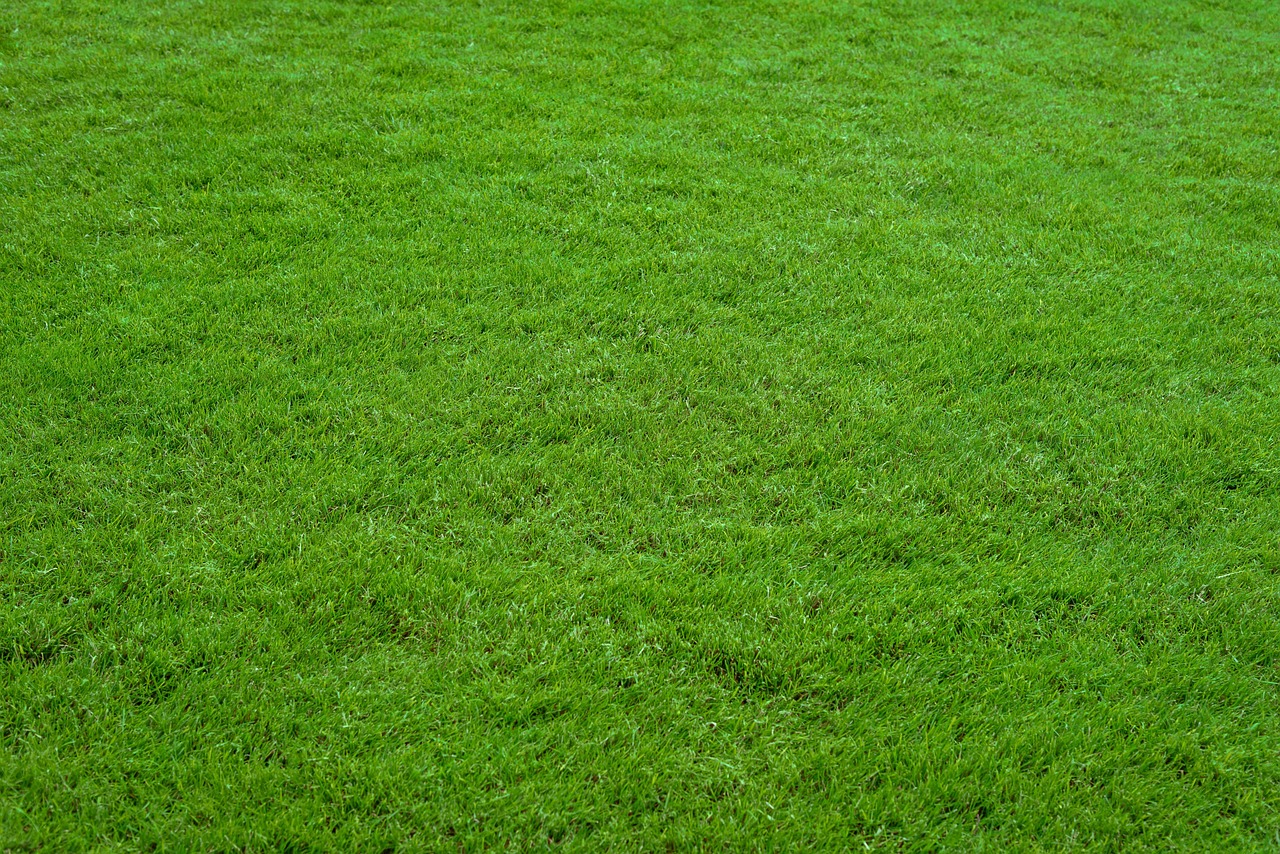
Root depth is the unsung hero here. Deep-rooted lawns can access moisture below the surface, while shallow roots dry out fast. Soil composition matters as well-sandy soils drain quickly and need shorter, more frequent watering; clay holds water longer but can become compacted and resist absorption. Loam, the ideal, holds water just right. Knowing your grass type and soil is step one in dialing in your summer watering plan.
How Much Water Does a Lawn Need Each Week in Summer?
The widely accepted standard, backed by university turf research, is 1 to 1.5 inches of water per week during summer. This range covers the combined total from irrigation and rainfall. However, this is just a starting point-your actual needs will shift depending on grass type, soil, and weather extremes.
Cool-season grasses like Kentucky bluegrass and tall fescue need the full 1 to 1.5 inches, especially during prolonged heat. Warm-season types such as bermudagrass and zoysiagrass often get by with 0.75 to 1 inch per week, especially if they’re well established. Sandy soils may need a higher frequency (3-4 times per week in small doses), while clay soils prefer fewer, deeper soakings to avoid runoff.
Drought, local rainfall, and temperature spikes can push these numbers higher. If your area is under drought stress or water restrictions, prioritize survival-keep grass alive, even if it loses color. Our Grass Database recommends 1.0-1.5 inches for Kentucky bluegrass and 0.75-1.0 inches for bermudagrass per week during peak summer. Always subtract rainfall from your total irrigation to avoid waste. This guide covers the summer playbook specifically; for the year-round schedule, see our general guide on how often and how much to water your lawn.
- Purdue Extension recommends 1 to 1.5 inches of water per week in summer for most lawn grasses, delivered in one or two deep irrigations.
How Long to Water Lawn in Summer: Step-by-Step Guidance
Calculating the Right Watering Duration for Your Lawn
Forget “set it and forget it” timers-watering duration must be based on output, not just minutes. The “1-inch per week” rule matters because it encourages deep root growth and drought resistance. But sprinklers vary wildly in how much water they deliver, so you need a measurement, not a guess.
Here’s the step-by-step: Place a few empty tuna cans or rain gauges around your lawn, spaced out to catch an average. Run your sprinkler for 15 minutes. Measure the water collected in each can-if you get 0.25 inches, you know you’ll need to run your system for an hour to reach 1 inch (0.25 x 4 = 1.0 inch). If you have multiple sprinkler zones or types, test each one. For sloped areas or spots that dry out faster, check separately.
Below is a table showing typical watering times to deliver 1 inch based on common sprinkler types. These are averages-always confirm with your own test, as pressure and coverage vary by system.
This table summarizes typical watering times needed to apply 1 inch of water for different sprinkler types:
| Sprinkler Type | Average Time for 1 Inch | Notes |
|---|---|---|
| Oscillating Sprinkler | 60-90 minutes | Best for small/medium lawns, may require moving for full coverage |
| Rotary Sprinkler | 45-75 minutes | Better for larger lawns, more even distribution |
| In-ground System (Fixed Spray) | 30-45 minutes | High output, best for dense coverage |
| In-ground System (Rotor) | 45-60 minutes | Adjustable arc/speed affects total time |
| Soaker Hose | 60-120 minutes | Good for deep soaking, less evaporation |
In summer, split those weekly totals into two sessions. For an oscillating sprinkler, that means roughly 30 to 45 minutes per session, twice a week, in each area it covers. In-ground fixed spray zones typically need 15 to 25 minutes per session, and rotor zones 20 to 30 minutes. In hot, dry climates on sandy soil, shorten each run and add a third session; on clay in humid heat, run longer but pause halfway to let water soak in. These are starting points-your tuna can test is the final word for your system and soil.
If you notice water running off before your cycle is done, split your watering into two sessions spaced an hour apart. For shaded or north-facing areas, you may need less; for sunny southern exposures or slopes, a little more. Our mowing data shows that raising your mowing height during summer (to 3-4 inches for cool-season grasses) will also help reduce evaporative loss and improve moisture retention-see Best Mowing Height for Summer for specifics.
Best Time to Water Your Lawn in Summer
The absolute best time to water your lawn in summer is early morning-ideally between 4am and 9am, and no later than 10am. Here’s why: temperatures are lower, wind is calmer, and water has time to soak in before the sun ramps up evaporation. Grass blades dry quickly in the morning sun, reducing the risk of fungal diseases.
Midday watering (10am-6pm) is a waste-most of the water evaporates before it reaches the roots, especially on hot, sunny days. Late evening watering (after 7pm) might seem convenient, but it leaves grass wet overnight, creating a perfect breeding ground for lawn diseases like dollar spot and brown patch. This matters most in humid summer heat: the fungi behind brown patch need grass blades to stay wet for 10-12 hours straight, and an evening soak on a muggy July night hands them exactly that.
There are a couple of hot-weather exceptions worth knowing. If morning watering is truly impossible, late afternoon (4-6pm) is the least-bad alternative-blades still get a few hours to dry before dark, unlike a 9pm soak. And during extreme heat waves, a very light midday misting (a minute or two, just enough to wet the blades) can cool heat-stressed cool-season grass; golf courses call this syringing. It cools the canopy, it does not replace deep watering, so keep your two deep morning sessions on schedule.
In dry desert climates (like Arizona or parts of Colorado), early morning is even more crucial-humidity is lowest, and every drop counts. In humid regions (the Southeast or coastal areas), morning is still best, but you may need to monitor for fungal issues and adjust as needed. For tech-minded homeowners, a smart timer like the Orbit 21004 B-hyve Smart Hose Watering Timer with Wi-Fi Hub is a great fit-its weather-based adjustments help prevent waste and disease by skipping unnecessary cycles when rain is in the forecast.
Adapting Summer Watering Schedules for Lawn Type and Region
Cool-Season vs. Warm-Season Grasses
Knowing your grass species is half the battle in summer watering. Cool-season types (Kentucky bluegrass, perennial ryegrass, tall fescue) actively grow in spring and fall, going semi-dormant in summer heat. They require 1 to 1.5 inches per week, sometimes more in prolonged heat waves. Water deeply, but less often-two soakings per week is ideal for most conditions.
Warm-season grasses (bermudagrass, zoysiagrass, St. Augustine) love summer heat. They generally need 0.75 to 1 inch per week. Their deeper root systems allow them to withstand brief dry spells. For recently seeded or overseeded lawns, you’ll need to water lightly once or twice a day for the first 2-3 weeks, then gradually reduce frequency while increasing depth. For details, see Lawn Overseeding Timing for the full establishment schedule.

- Texas A&M Extension recommends watering warm-season grasses to a soil depth of 6-8 inches, usually achieved with 0.75 to 1 inch of water per week in most soils.
Regional Considerations: Adapting to Your Climate
Regional climate and soil make a massive difference in how long and how often to water your lawn in summer. In dry or arid climates (the Southwest, High Plains, or mountain regions), evaporation is rapid. You may need to split your 1-inch weekly goal into three or four shorter sessions. Humid climates (Midwest, Southeast) allow for longer, deeper soakings, but you must watch for fungal problems after heavy rains.
Soil type is the next big factor. Sandy soils drain quickly and may require shorter, more frequent watering to avoid drought stress. Clay soils retain water but are prone to runoff-apply more slowly and check for pooling. Loam soils, which balance drainage and retention, allow for classic deep and infrequent watering.
Here are a few region-specific examples based on experience and regional data:
- High-altitude lawns (Colorado, Utah): Higher UV and lower humidity mean water evaporates fast-stick to early morning irrigation, and monitor soil moisture closely.
- Coastal regions (California, Pacific Northwest): Cool-season grasses dominate, but marine air can slow evaporation. Adjust for cloudy weeks by reducing frequency.
- Southern states (Texas, Florida): Warm-season lawns thrive, but sandy soils may require split watering sessions. Use a soil probe or screwdriver test to ensure moisture reaches 6-8 inches deep.
Our Regional Climate Data shows that peak summer rainfall in the Midwest often covers 0.3-0.5 inches per week-meaning you’ll still need to irrigate to hit the 1-inch minimum, even in “rainy” July and August.
Drought Restrictions and Smart Watering
Summer often brings water restrictions or outright bans. If your municipality imposes limits, your focus must shift from lushness to survival. Prioritize the most visible or high-traffic lawn areas. Water just enough to keep crowns alive (about 0.5 inch every 10-14 days), and let less critical sections go dormant. Choose drought-tolerant grasses for future overseeding-see Drought-Tolerant Lawn Care for options like turf-type tall fescue or buffalograss.
Mulching, raising mowing height, and using soil moisture managers like Hydretain Root Zone Moisture Manager can help your lawn survive between waterings. Hydretain makes a real difference for homeowners who can’t water as often as they’d like-it captures soil humidity and converts it into usable moisture for the roots. Mulch clippings after mowing to shade the soil and reduce water loss. See our related guide on Drought-Tolerant Lawn Care for more survival strategies.
Pro Tips for Efficient and Effective Summer Watering
Tools and Technology for Better Watering
There’s no substitute for dialing in your system. Oscillating and rotary sprinklers are affordable and effective for most homeowners, but they need to be moved for even coverage. In-ground systems are efficient but require calibration and maintenance. Smart controllers, like the Orbit 21004 B-hyve Smart Hose Watering Timer with Wi-Fi Hub, are perfect for those who want set-it-and-forget-it convenience with weather-based adjustments that prevent waste.
Rain sensors and soil moisture meters are handy add-ons. They’ll automatically skip a cycle if the ground is already wet, saving water and money. For hoses, skip the cheap rubber options and grab something like the BIONIC STEEL 50 Ft Metal Garden Hose with Sprayer Nozzle if you’re tired of kinks and leaks-especially useful for larger properties or anyone frustrated with hose failures.
To optimize your irrigation system, use this quick audit checklist:
- Run each zone and inspect for clogged or misaligned heads.
- Check for leaks or puddling in all areas.
- Test output with rain gauges or tuna cans in multiple locations.
- Adjust heads or move sprinklers for 100% coverage with minimal overlap.
- Set timers for early morning cycles only.
- Re-test monthly during peak summer for accuracy.
Smart Irrigation Systems: Are They Worth It? For most busy homeowners or anyone facing strict water bills, the answer is yes-they’re more consistent and much less likely to waste water or miss cycles during dry spells.
Deep Watering vs. Frequent Shallow Watering
Here’s the bottom line: deep, infrequent watering is always superior for root health. When you water deeply (soaking to 6-8 inches), you encourage roots to grow downward and withstand summer stress. Frequent, shallow watering keeps roots close to the surface-making grass more vulnerable to heat, drought, and foot traffic.
To transition your lawn to deeper watering, start by doubling the length of your watering cycle and reducing frequency to twice per week. Over several weeks, roots will follow the moisture deeper. If you see wilting or hot spots in between, spot-water those areas by hand rather than reverting to daily cycles. For more on this principle, see Avoiding Overwatering Mistakes and Signs of Underwatering in Grass.
Water Conservation Strategies
Efficient watering is about more than just timing. Compost, topdressing, and core aeration all improve soil’s ability to retain water. Lawn Aeration Benefits are well documented-by relieving compaction and increasing pore space, aeration allows water to soak in deeper and roots to expand.
Leave grass clippings on the lawn as mulch after mowing. This helps shade the soil and returns nutrients, further reducing water needs. Raising your mowing height (see Best Mowing Height for Summer) shades the root zone and reduces evaporation, allowing you to stretch days between waterings by 1-2 days in most regions.
When possible, apply a thin layer of organic mulch (such as finely shredded bark or compost) around trees and along edges to further conserve moisture. Every step you take to build soil health pays off in less watering and less stress for your lawn.
Recommended products
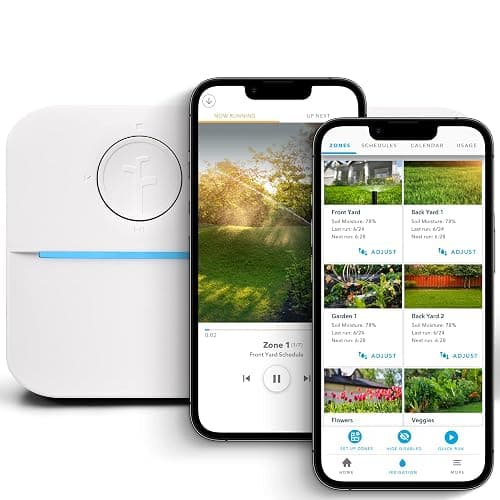
Rachio 3 Smart Sprinkler Controller
An eight zone smart controller that skips cycles using local weather data.
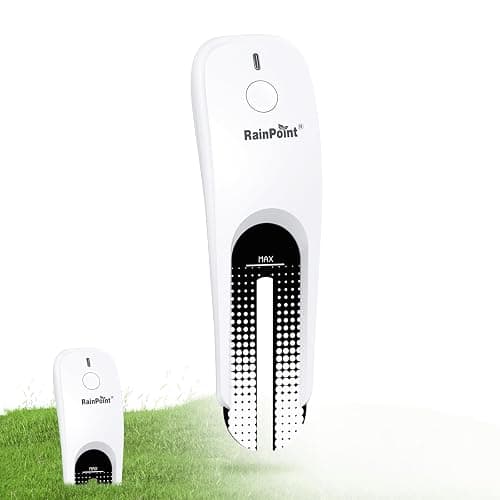
RAINPOINT 3-in-1 WiFi Soil Moisture Sensor
A WiFi soil probe that reports moisture, temperature and light from the root zone to your phone.
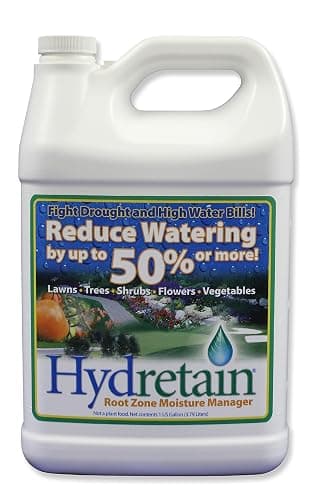
Hydretain Root Zone Moisture Manager
A root zone humectant that keeps soil moisture available to roots between cycles.
Advanced Insights: Special Circumstances and Seasonal Transitions
Watering Newly Seeded or Sodded Lawns in Summer
New lawns need a completely different schedule. For fresh seed, keep the top 1 inch of soil consistently moist-but not soggy-until germination (typically 7-21 days depending on species). This usually means light watering once or twice daily. For new sod, water immediately after installation to a depth of 3-4 inches, then daily for the first week. Gradually reduce frequency while increasing depth over 2-3 weeks until you reach the standard summer schedule.
After the first month, test soil moisture with a screwdriver or probe-if you can push it 6 inches deep into moist soil, you’re on the right track. For a full timeline by grass type, see Lawn Overseeding Timing and consult our Grass Database for species-specific recommendations.
Preparing for Heatwaves and Extreme Weather
When a heatwave is forecast, water deeply the morning before the hottest days arrive. This helps grass store moisture and withstand stress. During the heatwave, avoid fertilizing or heavy mowing-let the grass grow a bit taller for shade. If you spot drought stress (gray-green color, footprints remain), water early the next morning, not midday. After the heat breaks, resume your regular deep watering schedule and watch for signs of recovery.
To recover from heat or drought damage, continue deep watering and avoid aggressive dethatching or aeration until the lawn is actively growing again. See Signs of Underwatering in Grass for more on diagnosing and fixing summer stress.
Summer Watering and Lawn Fertilization
Coordinating fertilizer and watering is crucial. Always water deeply after applying granular fertilizer to prevent burning and ensure nutrients reach the root zone. The best timing is to fertilize right before a scheduled irrigation cycle, not during the heat of the day. Summer Lawn Fertilization Guide covers the specifics for your grass type and region.
Never fertilize drought-stressed lawns-wait until after a deep watering and visible recovery. Otherwise, you risk chemical burn and further stress. Our Grass Database recommends summer fertilizer applications only for warm-season grasses, and always at label rates. For cool-season lawns, hold off until fall unless absolutely necessary.
How Long to Water Your Lawn the Rest of the Year
The same logic works year-round; only the totals change. In spring and fall, most lawns need about half the summer schedule: one to two sessions per week totaling around 1 inch including rainfall, and often nothing at all in rainy stretches. In winter, dormant warm-season lawns need water only during extended dry, warm spells, and cool-season lawns generally need none once the ground cools. Whatever the season, the run times in the table above stay the same per session; you simply water fewer times per week. For a schedule tuned to your grass type and region, use our watering schedule generator.
Common Mistakes to Avoid
Skipping Confirmation Tests: Not Measuring Actual Water Output
Guessing at how long to water is the single biggest mistake I see. Even in-ground systems vary by pressure and coverage, and manual sprinklers are all over the map. Always run a tuna can or rain gauge test to measure real output. If you’re not hitting 1 inch per week, your lawn will suffer-no matter what the timer says.
Watering at the Wrong Time of Day
Midday and evening watering are a recipe for wasted water and disease. I’ve seen countless lawns develop fungal problems from nighttime irrigation, or stay dry despite heavy watering at noon. Use timers with early morning cycles and never water when the sun is high or the grass will stay wet overnight.
Ignoring Regional and Seasonal Adjustments
One-size-fits-all schedules don’t work. Adjust for rainfall-skip watering after a good rain, and irrigate during dry spells even if your schedule says otherwise. Soil type, grass species, and climate all need to be factored in. Our calculators and Grass Database have region- and species-specific recommendations if you need a starting point.
Overlooking Safety Around Pets and Kids
Wet lawns can become slippery, muddy hazards-especially after heavy irrigation. Avoid watering right before peak play or pet use. After any chemical application, don’t water until the label specifies, and always keep kids and pets off the grass until it’s dry and safe. See Avoiding Overwatering Mistakes for more on timing around activities.
Conclusion
The key to a healthy lawn in summer is knowing exactly how long to water, when to water, and how to adapt for your unique conditions. Start by measuring your sprinkler’s output with a simple tuna can test, then aim for 1 to 1.5 inches per week, delivered in two deep, early morning cycles. Adjust your schedule for grass type, soil, climate, and rainfall-and never rely on set-it-and-forget-it timers alone.
Remember the actionable steps: measure, water deeply and infrequently, raise your mowing height, mulch clippings, and use smart technology if it fits your lifestyle. Avoid common mistakes by testing your system, timing your cycles for early morning, and always adjusting for weather and region. For more specialized help, check out Drought-Tolerant Lawn Care, Lawn Overseeding Timing, Summer Lawn Fertilization Guide, and Best Mowing Height for Summer.
Final tip: Walk your lawn weekly-look for trouble spots, test soil moisture, and adjust as needed. With these real-world strategies, you’ll build a lawn that stays green and resilient all summer long-even when the heat is on.
Top Picks
- BioAdvanced Fungus Control for LawnsCheck price on Amazon
- Scotts DiseaseEx Lawn FungicideCheck price on Amazon
As an Amazon Associate we earn from qualifying purchases.
Free Lawn Care Tools
Aim for 1 to 1.5 inches of water per week, delivered in two deep sessions. With an oscillating sprinkler that usually means 30 to 45 minutes per session; in-ground spray zones often need 15 to 25 minutes per zone. Measure your sprinkler's actual output with a tuna can test, then adjust for your soil and climate.
Early morning, between 4 and 9am. Temperatures are low, wind is calm, and water soaks in before the sun drives evaporation. Grass blades also dry quickly once the sun is up, which cuts the risk of fungal disease. Evening watering leaves grass wet overnight, a real problem in humid summer heat.
Plan on 60 to 90 minutes total per week for each area to deliver about 1 inch of water, usually split into two 30 to 45 minute sessions. Sandy soil does better with shorter, more frequent runs, while clay soil may need a mid-session pause to prevent runoff. Output varies a lot by water pressure, so confirm with a tuna can test.
After watering, push a screwdriver 6 inches into the soil. If it slides in easily and the soil is moist at that depth, you’re watering adequately. Dry, hard soil means you need longer or deeper watering.
Daily watering leads to shallow roots and makes grass more vulnerable to drought. Instead, water deeply 1-2 times per week to encourage deep root growth.
Sandy soil requires shorter, more frequent watering as it drains quickly. Clay soil holds water longer but is prone to runoff, so water more slowly and less often. Loam is ideal and allows classic deep watering.
Prioritize high-traffic or visible areas, water only enough to keep grass alive, and use mulch or soil moisture products to stretch intervals. Choose drought-tolerant grasses for future overseeding.
Only with in-ground spray heads, which put out water fast: 15 to 25 minutes per zone is a real watering with those. With an oscillating sprinkler or rotor heads, 15 minutes barely wets the surface and trains shallow roots. Run the tuna-can test once: whatever time it takes your setup to fill cans to half an inch is your true per-session run time for a half-inch watering. Two or three of those sessions per week hit the 1 to 1.5 inch summer target.
Plan on 45 to 60 minutes per spot, 2 to 3 times per week in summer. Oscillating sprinklers throw water high and lose more to evaporation than in-ground heads, which is why they need the longest run times, and why early morning (4 to 9 a.m.) matters even more with them.
Morning, specifically 4 to 9 a.m. You lose the least water to evaporation, the wind is usually calm, and the grass dries during the day. Evening watering leaves blades wet overnight, which is the single best setup for fungal diseases like brown patch, and midday watering wastes a third or more of the water to evaporation.
Photos: Alexas_Fotos / Pixabay, Magda Ehlers / Pexels, Engin Akyurt / Pexels

Beat weeds and brown spots from your phone
Snap a photo, get the fix, and follow a plan timed to your soil and weather. Free on iPhone.