

Kentucky Bluegrass vs Tall Fescue: Which Cool-Season Grass Wins?
Updated July 11, 2026
As an Amazon Associate we earn from qualifying purchases. Disclosure.
Kentucky bluegrass and tall fescue are the two heavyweight cool-season grasses, and almost every northern-tier US homeowner ends up picking one or the other when they reseed or install new turf. Bluegrass is the postcard lawn: fine-bladed, deep blue-green, self-repairing through rhizomes, and the king of dense uniform carpets. Tall fescue is the work-horse: coarser-bladed, deeper-rooted, far more drought and heat tolerant, and increasingly the smart pick as summers get hotter.
The decision usually breaks down on three axes. How cold are your winters? How hot and dry are your summers? And how much watering and fertilizing are you willing to do? Bluegrass wants colder winters, cooler summers, and a higher input lawn. Tall fescue handles transition-zone climates that would burn bluegrass out, requires roughly 30 percent less water, and asks for fewer fertilizer applications. The trade is appearance and feel: bluegrass forms a tighter, finer carpet that bare feet love.
Quick verdict
Kentucky bluegrass wins on appearance, density, and cold tolerance for cold-winter / mild-summer climates. Tall fescue wins on drought tolerance, deeper roots, and works in the transition zone where bluegrass struggles.
Personalize for your ZIP
Enter a 5-digit ZIP and we'll highlight which grass fits your climate zone.
Kentucky Bluegrass vs Tall Fescue: at a glance
Climate zone (USDA)
Sun requirement
Shade tolerance
Traffic tolerance
Drought tolerance
Heat tolerance
Cold tolerance
Mowing height
Annual nitrogen need
Water need (peak)
Spreading habit
Recovery from damage
Blade width
Establishment time
Maintenance level
APick Kentucky bluegrass if...
- You live in the northern tier with cold winters and mild summers (Zones 3-6).
- You want the finest, most postcard-perfect lawn appearance and you do not mind paying for it in water and fertilizer.
- You have a high-traffic lawn and want the self-repairing rhizome network to fill in worn spots on its own.
- You can commit to weekly mowing and 4 or more fertilizer applications per year.
- Your lawn gets at least 6 hours of direct sun.
BPick tall fescue if...
- You live in the transition zone (Zones 6-8) where summers regularly hit 90+.
- You have water restrictions or want a lower water bill (about 30 percent less than bluegrass).
- Your lawn has partial shade from trees that bluegrass would thin out under.
- You want a tough, deep-rooted lawn that handles drought stress without going dormant.
- You prefer fewer fertilizer applications and less weekly maintenance.
Top pick to grow each grass


As an Amazon Associate we earn from qualifying purchases. Disclosure.
Get your seasonal lawn care calendar for your ZIP
Every task, from feeding to weed control to aeration, has a window that shifts by region. Add your ZIP and we will email your 12-month lawn calendar right away, starting with this month.
Seasonal reminders and tips. No spam. Unsubscribe anytime.
Frequently asked questions
Is tall fescue better than Kentucky bluegrass for hot summers?
Tall fescue is significantly better than Kentucky bluegrass for hot summers. Tall fescue grows roots 3 feet deep or more, which lets it pull water from soil depths that bluegrass cannot reach. In a hot, dry summer, bluegrass will go dormant (brown) by mid-July without irrigation, while tall fescue stays green with the same or less water. In the transition zone (Zones 6-8), tall fescue is almost always the better cool-season pick.
Can you mix Kentucky bluegrass and tall fescue?
Yes, mixing Kentucky bluegrass and tall fescue is common and works well. A typical premium cool-season blend is 60 to 70 percent turf-type tall fescue plus 20 to 30 percent Kentucky bluegrass. The fescue provides drought tolerance and bulk, while the bluegrass adds fine texture and self-repair through rhizomes. In a mixed stand, the bluegrass will fill in any thin spots the bunching fescue leaves behind, and the result is more resilient than either grass alone.
Which is easier to grow from seed, bluegrass or tall fescue?
Tall fescue is significantly easier to grow from seed than Kentucky bluegrass. Tall fescue germinates in 7 to 14 days; bluegrass takes 14 to 28 days, sometimes longer in cool soil. Tall fescue also tolerates a wider range of soil and moisture conditions during establishment. For first-time DIY seeders, especially in fall when timing is tight, tall fescue is much more forgiving.
Does Kentucky bluegrass or tall fescue need more water?
Kentucky bluegrass needs significantly more water than tall fescue. Bluegrass has a shallow root system (6 to 8 inches deep) and requires about 1.5 inches of water per week in peak summer. Tall fescue has roots 2 to 3 feet deep and gets by on 1 to 1.25 inches per week, roughly 30 percent less. Over a full growing season in a 5,000 square foot lawn, switching from bluegrass to tall fescue saves about 5,000 to 8,000 gallons of water.
Which grass repairs damage faster?
Kentucky bluegrass repairs damage faster than tall fescue because it spreads through underground rhizomes that send up new shoots to fill gaps. Tall fescue is a bunch grass; it does not spread, so any bare spot has to be filled in by overseeding. If your lawn takes a lot of traffic that creates small dead spots, bluegrass self-repairs. If your damage is one big section (pet urine spot, equipment scar), you will overseed either way.
How do you tell Kentucky bluegrass from tall fescue?
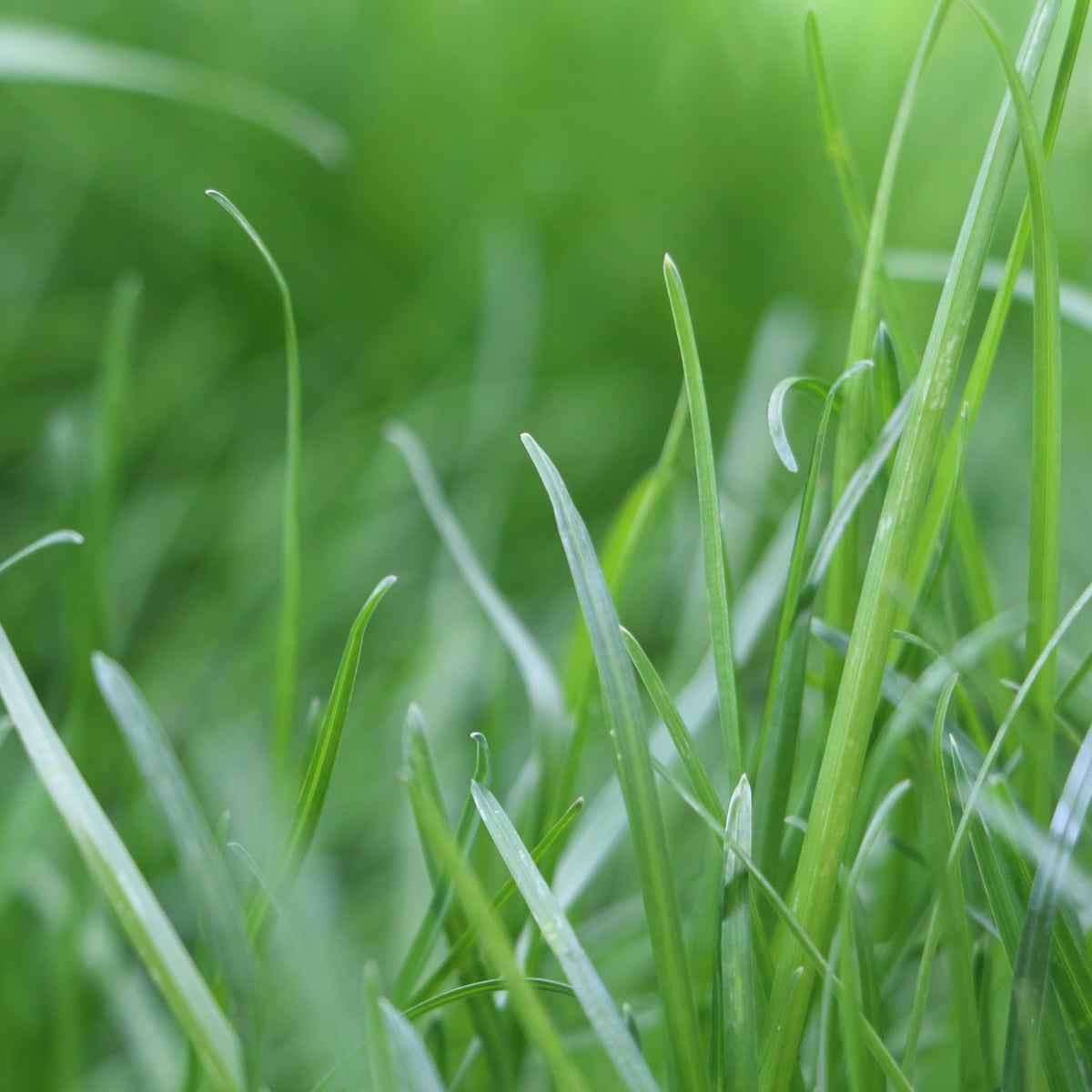
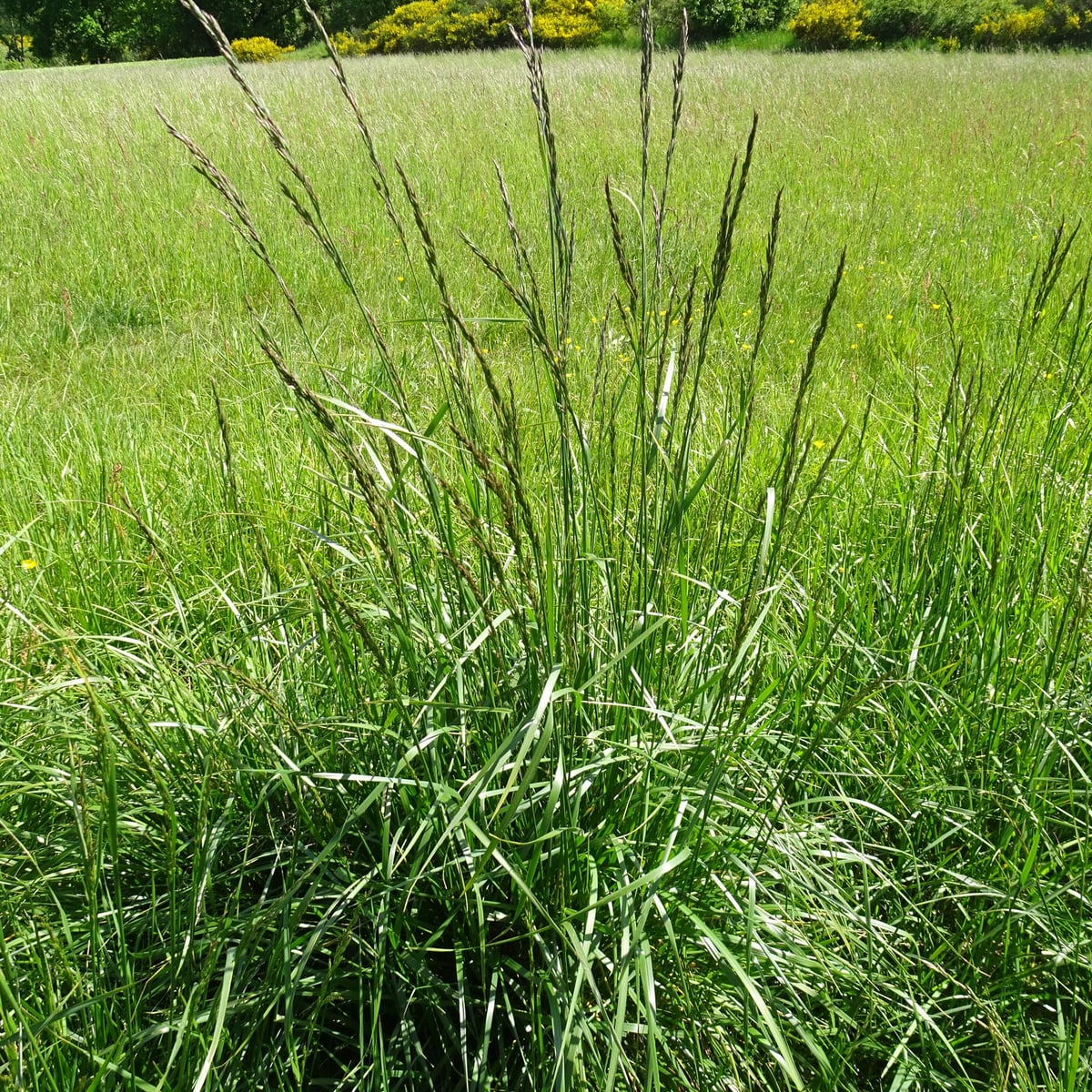
Look at blade width and the leaf tip. Kentucky bluegrass has narrow, fine blades with a distinctive boat-shaped tip that looks like the prow of a canoe. Tall fescue has noticeably wider, coarser blades with prominent veins and a pointed tip. In a lawn, bluegrass forms a tight, fine, uniform carpet while tall fescue grows in coarser clumps. Bluegrass is also the one that fills in bare spots on its own through underground rhizomes, so if your lawn quietly self-repairs worn areas, it has bluegrass in it.
Is Kentucky bluegrass or tall fescue better for shade?
Tall fescue is the better choice for shade. It holds up in partial shade with about 4 to 6 hours of sun, while Kentucky bluegrass needs 6 or more hours of direct sun and thins out under tree cover. If your lawn has filtered light or north-facing areas, lean toward tall fescue or a fescue-heavy blend. For deep shade where even tall fescue struggles, fine fescue is the more shade-tolerant cool-season option.
Is tall fescue or Kentucky bluegrass cheaper?
Tall fescue is usually cheaper to establish from seed. Turf-type tall fescue seed runs roughly 3 to 5 dollars per pound and germinates in 7 to 14 days, while Kentucky bluegrass seed costs more per pound and takes 14 to 28 days to germinate, which means more watering before the lawn fills in. As sod the two are priced similarly. Tall fescue also costs less to maintain over time because it needs about 30 percent less water and fewer fertilizer applications.