
About Tall Fescue
Tall Fescue (Festuca arundinacea) is the grass I recommend most often to homeowners in the transition zone who are tired of watching their lawns struggle every summer. It's a cool-season grass, yes, but it handles heat better than any other cool-season option, and its deep root system gives it a level of drought tolerance that surprises people who've only grown Kentucky Bluegrass.
Here's the thing about Tall Fescue: it's not going to give you that ultra-fine, carpet-like appearance of a pure KBG lawn. Its blades are wider, its texture is coarser, and it grows in clumps rather than spreading via rhizomes. But what it lacks in refinement, it makes up for in sheer toughness. Those roots reach down 8 inches or more into the soil, pulling moisture and nutrients from depths that shallow-rooted grasses simply can't access.
Modern turf-type Tall Fescue varieties (often called TTTF) are a huge step up from the old pasture-type fescues your grandparents might remember. They're finer-textured, darker green, denser, and look genuinely great as a home lawn. If you're shopping for seed, look for turf-type varieties like Rhino, Rebel, or Titanium.
Key Characteristics
- Blade width: Wide (3-8mm) with a flat shape and a thick, prominent vein running down the center
- Color: Deep green to blue-green, holds color well into summer when KBG is fading
- Growth habit: Bunch-type (clumping). This is important to understand because it means Tall Fescue cannot repair bare spots on its own. You'll need to overseed damaged areas
- Root system: Deep fibrous roots reaching 6-8 inches, the deepest of any common cool-season grass. This is its superpower
- Texture: Coarse to medium depending on variety. Newer turf-type varieties are noticeably finer than older types
Why Choose Tall Fescue?
If you're in the transition zone (roughly Virginia to Kansas, south through northern Georgia and Arkansas), Tall Fescue is almost certainly your best cool-season option. It stays green longer in summer heat, bounces back faster from drought, and tolerates the clay soils common in this region better than KBG or ryegrass.
It's also a fantastic choice if you don't want to babysit your lawn. Tall Fescue needs about half the fertilizer of KBG, requires less water, and handles neglect better than almost any other cool-season grass. For busy homeowners who want a good-looking lawn without a demanding care schedule, this is the grass.
The Honest Trade-offs
Every grass has downsides, and I'd rather you know them upfront:
- No self-repair: Because it's bunch-type, bare spots won't fill in on their own. You'll need to overseed thin areas, typically once a year in fall
- Clumping appearance: In thin lawns, you can see the individual clumps. The solution is dense seeding and regular overseeding to keep the lawn thick
- Coarser texture: Even turf-type varieties are wider-bladed than KBG. If the ultra-fine golf course look is your goal, Tall Fescue won't deliver that
- Can look like a weed: If you have a few Tall Fescue plants in a KBG lawn, they'll stick out as coarse, wide clumps. It looks best as a pure stand or in a Tall Fescue blend
How to Identify Tall Fescue
What Tall Fescue looks like
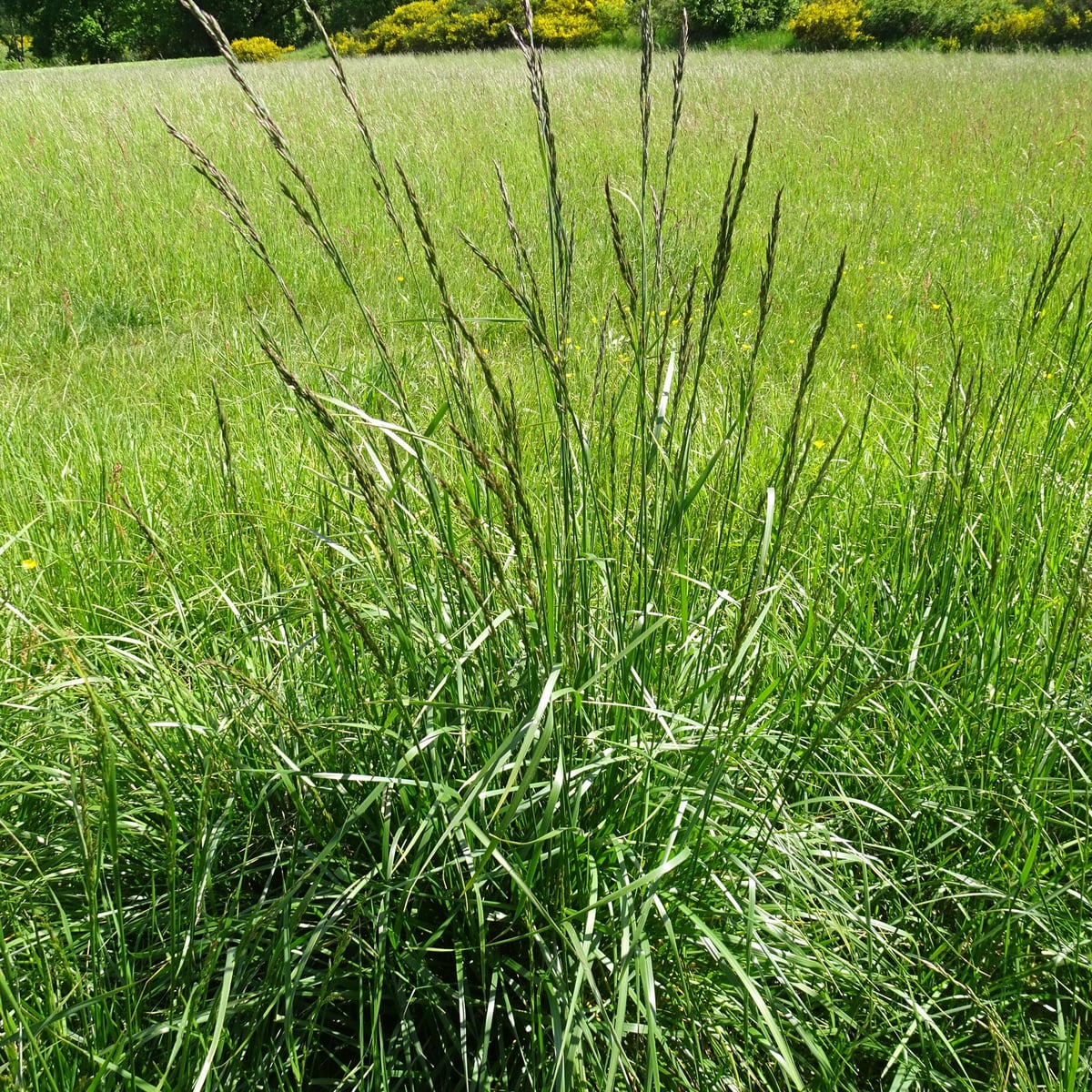
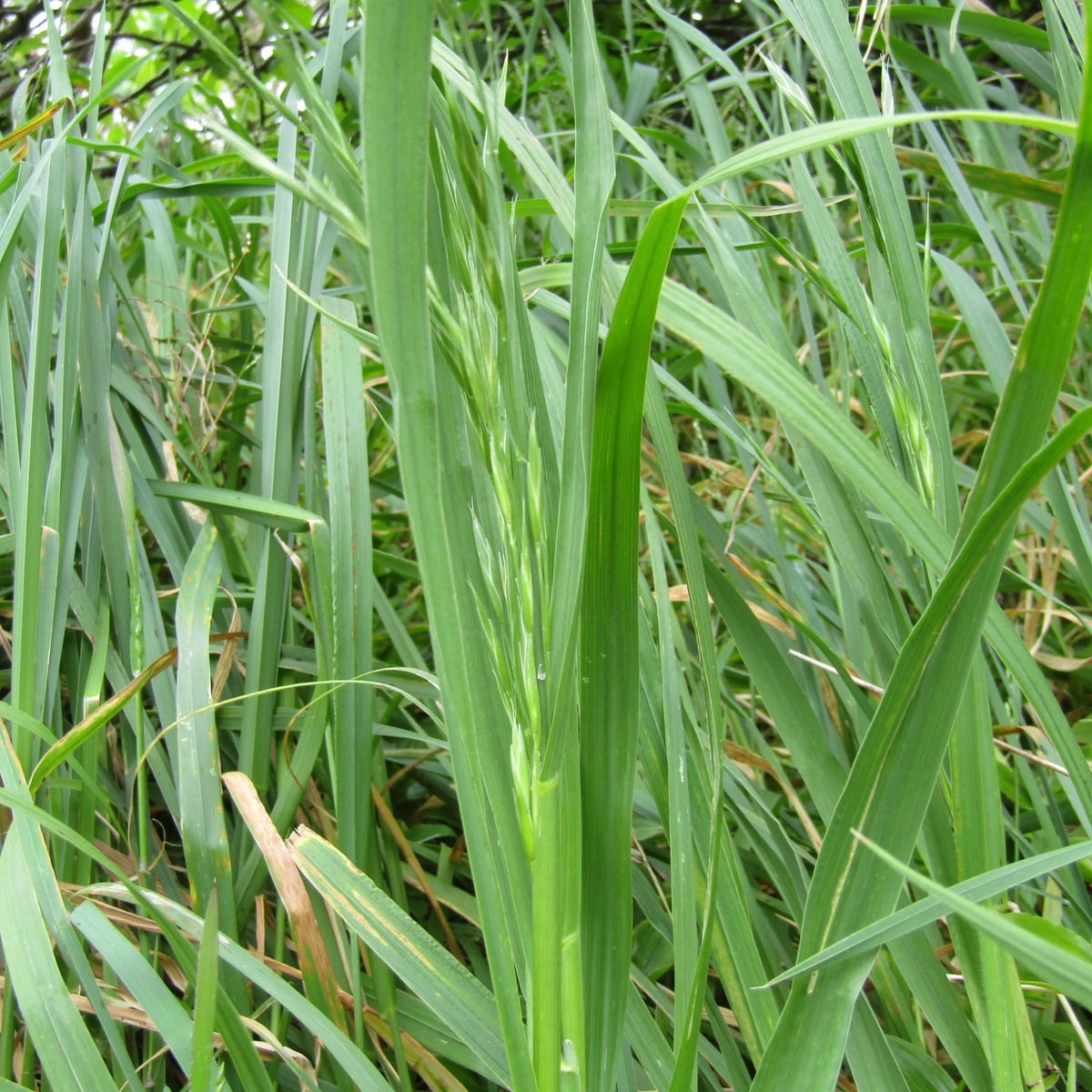
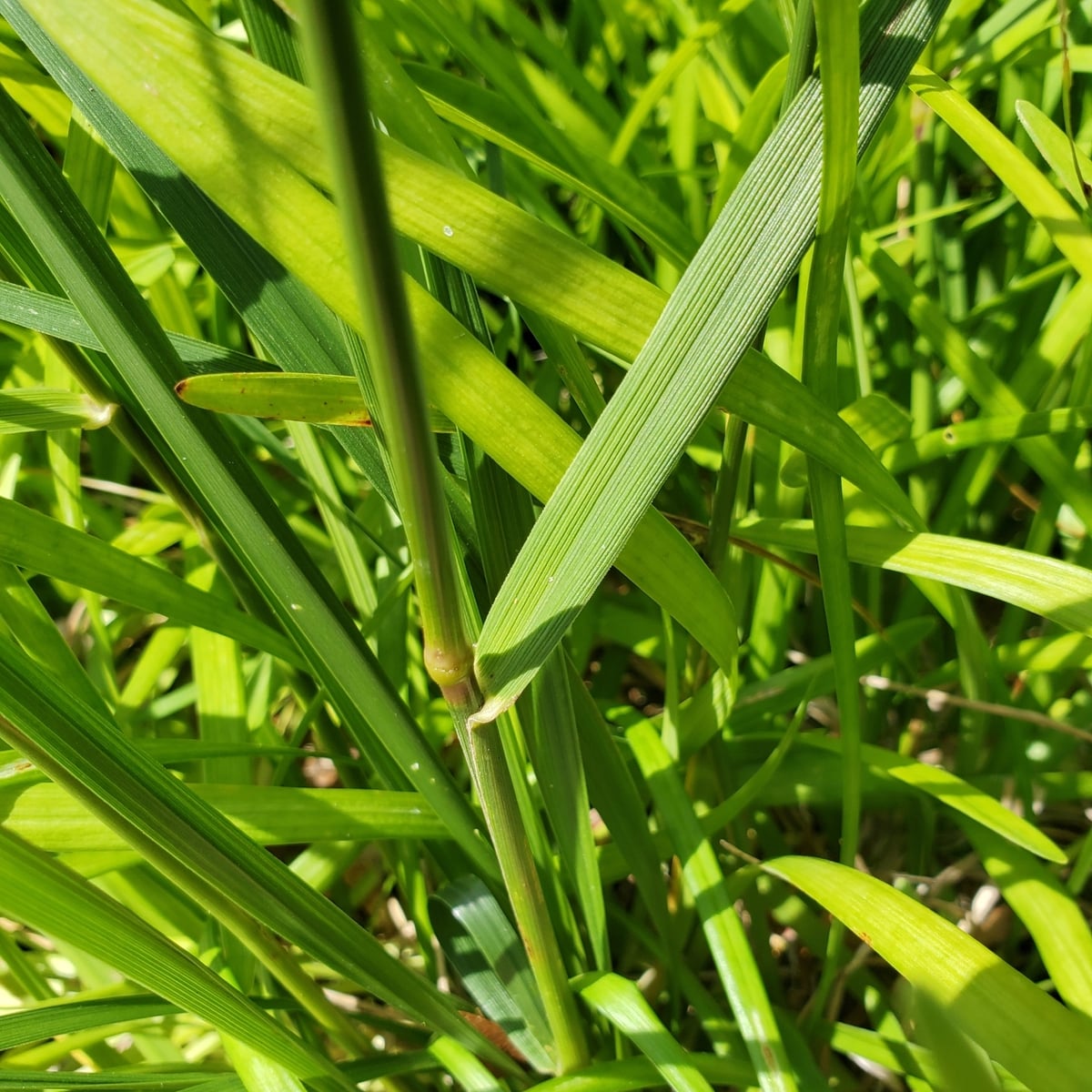
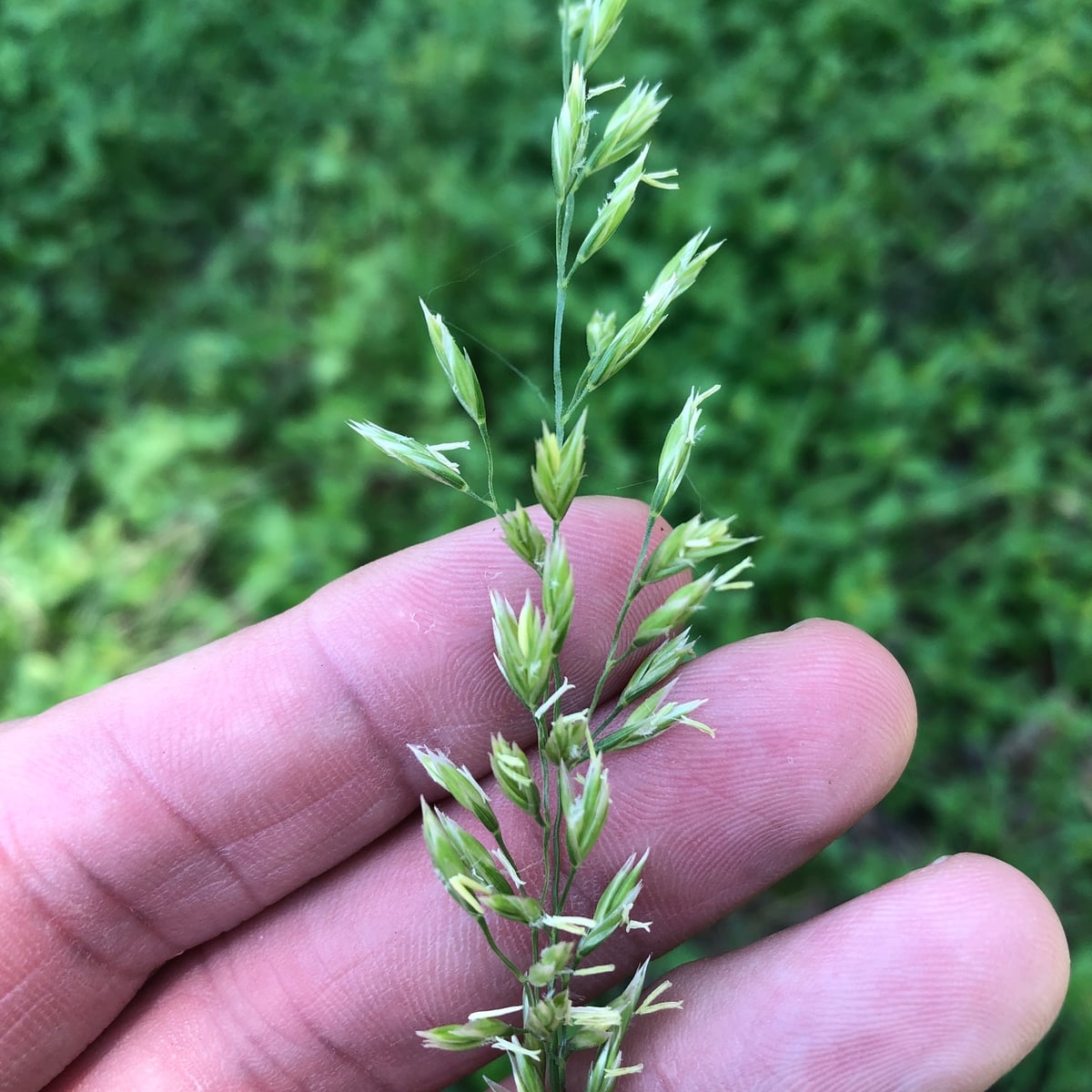
Tall Fescue is actually one of the easier cool-season grasses to identify because of its distinctive coarse texture and growth pattern. Here's what to look for.
The Quick Test
Run your finger from the tip of a grass blade down toward the base. If it feels rough and you can feel prominent ridges (veins) on the upper surface, you're almost certainly touching Tall Fescue. Kentucky Bluegrass feels smooth, and ryegrass feels smooth and glossy.
Visual Identification
- Blade width: Noticeably wider than KBG or ryegrass (3-8mm). It's the widest common cool-season lawn grass
- The midrib: Look at a blade in the light. You'll see a thick, prominent vein running straight down the center. This midrib is one of Tall Fescue's most distinctive features
- Blade tip: Pointed and sharp (not boat-shaped like KBG)
- Surface texture: Run your finger against the grain (tip to base) and you'll feel distinct roughness from the prominent veins
- Vernation: If you look at how new blades emerge from the stem, they're rolled (not folded like KBG)
Growth Pattern Clues
Tall Fescue grows in distinct clumps or bunches. If you see individual grass plants growing in tight clusters without any underground runners connecting them, that's bunch-type growth and points to Tall Fescue (or ryegrass). Pull the grass gently: if there are no underground rhizomes connecting plants, it's not KBG.
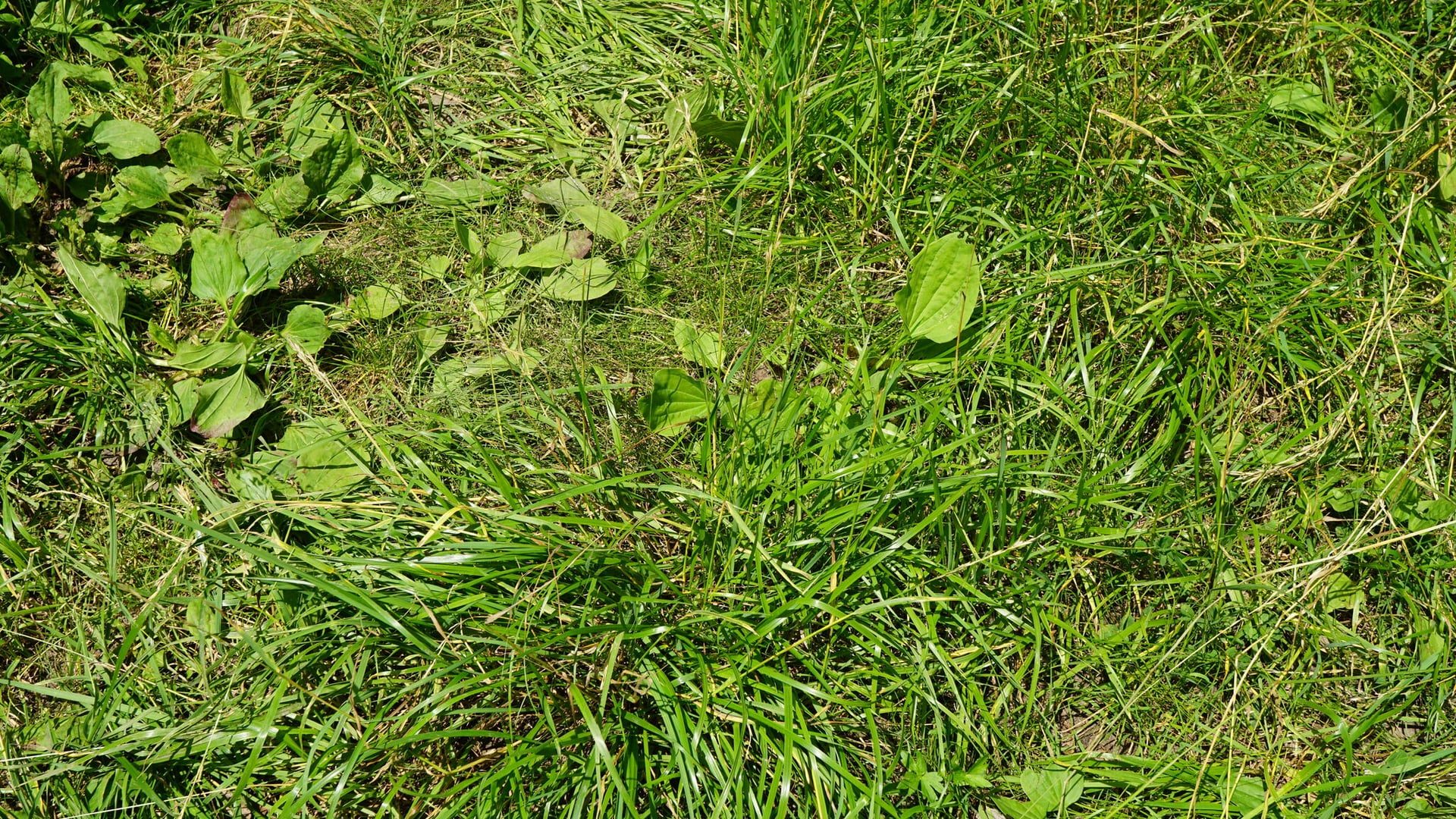
In a mixed lawn, Tall Fescue plants often stand out as wider, coarser clumps among finer-textured grasses. Homeowners sometimes mistake these clumps for grassy weeds, but they're actually just Tall Fescue doing its thing. If you are trying to work out whether to spray a clump or dig it, see tall fescue clumps vs crabgrass, because crabgrass killer does nothing to fescue.
Tall Fescue vs. Perennial Ryegrass
These two are sometimes confused since both are bunch-type cool-season grasses. The key differences: Tall Fescue has wider, rougher blades with a prominent midrib. Ryegrass has narrower, smoother, glossy blades. Ryegrass also has small "ears" (auricles) where the blade meets the stem, which Tall Fescue either lacks or has very small ones.
Still not sure? Upload a photo to our free grass identifier for an instant AI-powered analysis.
Best Zones & Climate for Tall Fescue
Tall Fescue performs best in USDA Zones 3-8, but where it truly shines is the transition zone where other grasses struggle.
Ideal Climate Conditions
- Air temperature: 60-80°F for peak growth
- Soil temperature: 50-65°F for active root development
- Cold tolerance: Excellent. Survives well below 0°F while dormant
- Heat tolerance: Best of any cool-season grass. Handles sustained 90°F+ temperatures better than KBG or ryegrass
The Transition Zone Champion
The transition zone is that frustrating band across the middle of the country (roughly Virginia to Kansas, south to northern Georgia and Arkansas) where warm-season grasses go dormant and brown for months in winter, but cool-season grasses struggle through the summer heat. It's the "too hot for this, too cold for that" zone, and it makes lawn care genuinely difficult.
Tall Fescue is the answer for this region. Its deep root system pulls moisture from soil depths other cool-season grasses can't reach, and its natural heat tolerance means it stays green weeks longer into summer than KBG. When combined with proper watering and fall overseeding, a Tall Fescue lawn in the transition zone can look good year-round.
Where Tall Fescue Excels Beyond the Transition Zone
Even in solidly cool-season territory (Zones 4-6), Tall Fescue is worth considering if you have clay soil, hot microclimates (south-facing slopes, heat islands near pavement), or if you simply want a lower-maintenance lawn. Many homeowners in the upper Midwest and Northeast are switching from KBG to Tall Fescue specifically because they're tired of the water bills and constant care KBG demands.
Shade Tolerance
Tall Fescue has moderate shade tolerance, needing about 4-5 hours of direct sunlight daily. It handles shade better than Kentucky Bluegrass but not as well as Fine Fescue. For yards with mixed sun and shade, a blend of Tall Fescue (for the sunny areas) and Fine Fescue (for the shady spots) works beautifully.
Where Tall Fescue Isn't the Best Choice
If you're in the Deep South (Zones 8b-10), Tall Fescue will struggle with the extended heat. Warm-season grasses like Bermuda or Zoysia are better choices there. And if you're after that ultra-fine, golf-course-smooth appearance, KBG or a KBG/ryegrass blend will deliver that aesthetic better.
Soil Preparation & pH
One of the things I love about Tall Fescue is how forgiving it is about soil. I've seen it grow in heavy clay that would make a KBG lawn miserable, and I've seen it thrive in rocky, thin soil alongside driveways where nothing else would take. That said, "will grow in bad soil" and "will thrive in good soil" are two very different things.
Start with a Soil Test
I say this to every homeowner and I'll say it again: a $15-25 soil test through your local extension office is the single best investment you can make in your lawn. It tells you exactly what your soil needs, what it already has too much of, and saves you from wasting money on products you don't need. Tall Fescue is forgiving, but it still performs noticeably better when the soil basics are right.
Ideal Soil Conditions
- pH range: 5.5-7.5. This is the widest pH tolerance of any common cool-season grass, which is part of why Tall Fescue adapts to so many different regions
- Soil type: Grows in clay, loam, sandy, and rocky soils. Deep roots help it access nutrients and water even in poor conditions
- Drainage: Prefers well-drained but tolerates clay better than most grasses thanks to those deep roots
- Organic matter: 2-5% is ideal, but Tall Fescue handles lower levels better than KBG
Adjusting Soil pH
If your pH is below 5.5 (too acidic): Apply pelletized lime at 50 lbs per 1,000 sq ft. Fall is the best time to apply since it takes 2-3 months to take full effect. Retest in spring and repeat if needed.
If your pH is above 7.5 (too alkaline): Apply elemental sulfur according to your soil test recommendations. This is more common in western states.
Dealing with Clay Soil
If you're in the transition zone, there's a good chance you have clay soil. Tall Fescue handles clay better than most grasses, but you'll still get better results if you improve it over time. The best approach is annual core aeration (fall) combined with topdressing with compost. Don't try to rototill in amendments once a lawn is established. Instead, let aeration holes gradually introduce organic matter into the clay layer. It takes 2-3 years to see major improvement, but the results are lasting.
Preparing Soil for a New Tall Fescue Lawn
If you're starting from scratch, you have an opportunity to set your lawn up for long-term success:
- Get a soil test before doing anything else
- Kill existing vegetation with glyphosate and wait 2 weeks
- Rototill the top 4-6 inches and incorporate 2-3 inches of compost
- Correct pH based on soil test
- Grade for drainage (water should flow away from structures)
- Roll lightly to firm the seedbed without compacting
- Let the soil settle for a week before seeding
Recommended Products
- 1Check price
 Top pick
Espoma Organic Lightning Lime (Fast-Acting Pelletized Lime)
Fast-acting pelletized lime for low-pH lawns when a soil test confirms you need to raise pH before fertilizing harder. Covers up to 5,000 sq ft.
- 2Check price
 Best value
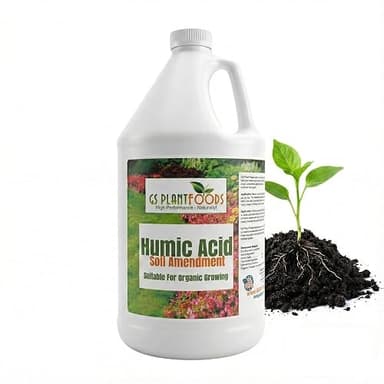
GS Plant Foods Liquid Humic Acid
Leonardite-derived humic acid that improves soil structure and nutrient availability. OMRI listed, 1 gallon.
As an Amazon Associate we earn from qualifying purchases.
Fertilizer Program
Here's one of Tall Fescue's biggest selling points: it needs about half the fertilizer that Kentucky Bluegrass demands. Where KBG wants 3-4 lbs of nitrogen per year, Tall Fescue does well with 2-3 lbs. And if you push too much nitrogen on Tall Fescue, you'll actually create problems, including increased disease susceptibility, shallow root growth, and a lawn that looks lush but is weaker underneath.
Annual Fertilizer Requirements
- Nitrogen: 2-3 lbs per 1,000 sq ft per year (split across 2-3 applications)
- Phosphorus: Based on soil test only. Don't apply if not needed
- Potassium: 1-2 lbs per 1,000 sq ft per year. Potassium strengthens cell walls and improves drought and heat tolerance, which is especially valuable for Tall Fescue
- Ideal ratio: 3-1-2 or 4-1-2 (e.g., 15-5-10 or 16-4-8)
Seasonal Fertilizer Schedule
Early Spring (soil temp reaches 55°F)
Light application: 0.5 lb N per 1,000 sq ft. Think of this as a gentle wake-up call, not a feast. If you applied pre-emergent herbicide that contains fertilizer, you can skip this entirely. The biggest spring fertilizing mistake I see is going too heavy too early, which pushes leafy top growth at the expense of root development.
Early Fall (September): The Big One
This is your most important application of the year, and it's not close. Apply 1 lb N per 1,000 sq ft of slow-release fertilizer. Fall is when Tall Fescue does most of its root building, tillering (thickening), and carbohydrate storage. A well-fed Tall Fescue lawn in September will reward you with better density, better color, and better heat tolerance the following summer.
Late Fall (November, before ground freezes)
Apply 0.5-1 lb N per 1,000 sq ft. This can be a quick-release formula since you want nutrients available immediately for the roots that are still active beneath the slowing top growth. This "winterizer" application helps the lawn store energy for spring green-up.
What About Summer Fertilizing?
Skip it. Seriously. Applying nitrogen to Tall Fescue during summer heat stress is one of the worst things you can do. It pushes top growth when the plant is already struggling, increases disease susceptibility (especially brown patch), and wastes your money since stressed grass can't effectively use the nutrients. If your lawn looks pale in summer, iron supplements can safely improve color without the risks of nitrogen.
The Endophyte Advantage
Many modern Tall Fescue varieties contain beneficial endophytes, which are naturally occurring fungi that live inside the grass plant. These endophytes make the grass more resistant to insects (surface-feeding pests like armyworms and sod webworms avoid endophyte-enhanced grass) and improve drought tolerance. When buying seed, look for varieties that are "endophyte-enhanced" on the label. The endophytes are alive in the seed, so buy fresh seed (check the test date) and store it in a cool, dry place.
Recommended Products
- 1Check price
 Top pick
The Andersons PGF Complete 16-4-8
Balanced slow-release fertilizer for established lawns that need steady feeding without a quick flush of top growth.
- 2Check price
 Best value
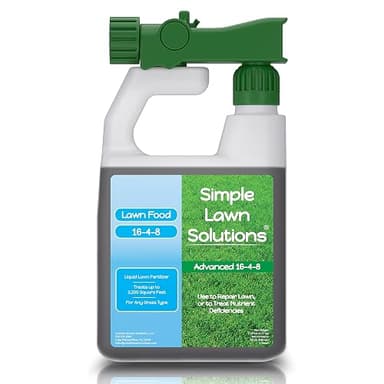
Simple Lawn Solutions Advanced 16-4-8
Liquid 16-4-8 lawn food for quick feeding on established lawns when you want balanced NPK and simple hose-end application.
As an Amazon Associate we earn from qualifying purchases.
Month-by-Month Care Calendar
Tall Fescue has two growth surges per year: spring and fall. Fall is the more important one for long-term lawn health. Summer is survival mode, and winter is rest. Here's your month-by-month roadmap.
Winter (December - February)
Your lawn is dormant or semi-dormant. This is your planning season, not your doing season.
- Minimize foot traffic on frozen turf (ice crystals can shatter grass crowns)
- Sharpen mower blades and service equipment
- Order seed, fertilizer, and pre-emergent for spring
- If soil test indicates low pH, you can apply lime now. The freeze-thaw cycles actually help work it into the soil
- Enjoy not mowing. You've earned it
Early Spring (March - April)
This is when your lawn wakes up, and it's tempting to do everything at once. Resist that urge.
- Apply pre-emergent herbicide when soil temperature reaches 50-55°F for 3 consecutive days. This is critical for crabgrass prevention. Timing matters more than brand
- Light raking to remove winter debris and break up any matted areas
- Begin mowing when grass is actively growing. First cut can be slightly lower than normal (2.5-3 inches) to remove dead tips
- Optional: light fertilizer application (0.5 lb N/1,000 sq ft) if you didn't apply a winterizer in November
- Check irrigation system for leaks and coverage gaps
- Do NOT overseed in spring. Save that for fall. Spring-seeded Tall Fescue faces summer heat before roots are established
Late Spring (May - June)
Your lawn should be looking great now. Enjoy it while building toward summer resilience.
- Maintain mowing height at 3-4 inches. Start moving toward the higher end as temps climb
- Spot-treat broadleaf weeds with selective herbicide while they're actively growing
- Begin regular irrigation if rainfall drops below 1 inch per week
- Apply grub preventer (late May through early June) if you've had grub issues
- This is your last chance for any herbicide applications before summer heat makes them risky
Summer (July - August): Survival Mode
Let's be real: summer is not Tall Fescue's favorite season. Your goal isn't peak performance. It's keeping the lawn healthy enough to explode back in fall.
- Raise mowing height to 4 inches. This is non-negotiable. Taller grass shades roots, retains soil moisture, and reduces heat stress
- Water deeply (1-1.5 inches per week) if you can. If not, Tall Fescue can go dormant and recover when cool weather returns
- Do NOT fertilize. No nitrogen in summer. Period. If you want greener color, use iron supplements only
- Watch for brown patch disease (circular brown patches with a darker border). Most common in hot, humid weather. Reduce watering frequency and avoid evening irrigation
- Minimize heavy traffic on heat-stressed turf
- Some thinning is normal. This is why we overseed in fall
Early Fall (September - October): Prime Time
This is the single most important period of the year for your Tall Fescue lawn. Everything you do in September and October determines how your lawn will look for the next 12 months.
- Core aerate if soil is compacted. This is your best window
- Overseed thin or bare areas. Tall Fescue's bunch-type growth means annual overseeding is how you maintain thick, dense turf. Seed when soil temps are 50-65°F
- Apply your most important fertilizer of the year (1 lb N/1,000 sq ft slow-release)
- Lower mowing height back to 3-3.5 inches as temperatures cool
- Continue watering until the ground freezes (new seed needs consistent moisture)
- This is also a good time for soil amendments if your test showed issues
Late Fall (November)
The season is wrapping up, but there's still important work to do.
- Apply winterizer fertilizer (0.5-1 lb N/1,000 sq ft quick-release)
- Final mowing: lower to 2.5-3 inches to reduce snow mold risk
- Remove fallen leaves promptly. A blanket of wet leaves smothers grass and creates disease conditions
- Winterize your irrigation system before the first hard freeze
- Apply fall pre-emergent if winter annual weeds (like Poa annua) are a problem in your area
Mowing Guide
Mowing height might be the single most impactful thing you control with Tall Fescue. Get it right and everything else gets easier. Get it wrong and you'll fight an uphill battle all season.
Optimal Mowing Height
- Spring and Fall: 3-3.5 inches
- Summer: 3.5-4 inches. Raise that deck. Taller grass shades the soil, reduces evaporation, keeps roots cooler, and makes your lawn significantly more drought-resistant
- Final fall cut: 2.5-3 inches to reduce snow mold risk
Why Height Matters So Much for Tall Fescue
There's a direct relationship between blade height and root depth. When you mow at 3.5-4 inches, Tall Fescue's roots grow deeper, reaching that full 6-8 inch potential. Mow at 2 inches and you're cutting the root depth roughly in half. In the transition zone where summer heat is the main challenge, that root depth difference is the difference between a lawn that survives July and one that doesn't.
The 1/3 Rule
Never remove more than one-third of the grass blade in a single mowing. If your target height is 3.5 inches, mow when the grass reaches about 5 inches. Cutting more than a third at once shocks the plant, exposes the lower stem to sunlight (which it's not adapted for), and can cause temporary growth stall.
Mowing Frequency
- Peak growth (spring and fall): Every 5-7 days
- Summer: Every 7-14 days (growth slows significantly in heat)
- Late fall/winter: As needed, or not at all once growth stops
Practical Mowing Tips
- Sharp blades are critical. Tall Fescue's wider blades show the damage from dull mower blades very clearly. You'll see white, ragged tips instead of clean, green cuts. Dull cuts also create entry points for disease. Sharpen blades every 20-25 hours of use, or roughly monthly during the growing season
- Mulch your clippings. Leave them on the lawn. They decompose quickly and return roughly 1 lb of nitrogen per 1,000 sq ft per year back to the soil. That's free fertilizer
- Alternate your mowing direction each time. Mowing the same direction repeatedly creates a "grain" in the lawn and can cause the grass to lean
- Mow when dry for a cleaner cut and less clumping
- A rotary mower is ideal for Tall Fescue at standard lawn heights. Reel mowers are designed for low-cut grasses and don't work well above 2.5 inches
Watering Schedule
Tall Fescue's deep root system (6-8 inches) is its ace in the hole for drought situations. Those roots reach water that KBG's 3-4 inch roots simply can't access. But you need to water correctly to train those roots to actually go deep. If you water a little bit every day, Tall Fescue's roots will stay shallow because they have no reason to dig deeper.
Weekly Water Requirements
- Spring: 0.75-1 inch per week
- Summer: 1-1.25 inches per week (or allow dormancy if you prefer)
- Fall: 0.75-1 inch per week (increase during overseeding)
- Winter: None needed unless your area has dry, snowless winters
The Deep Watering Strategy
This is the most important watering principle for Tall Fescue: water deeply and infrequently. You want to apply enough water in each session to wet the soil 6-8 inches deep (matching the root zone), then let the soil dry out before watering again. This cycle forces roots to chase the moisture deeper into the soil.
- Frequency: 1-2 times per week in most conditions. Not daily
- Amount per session: 0.5-0.75 inch (enough to penetrate deep)
- Time: Early morning (4-8 AM) to minimize evaporation and reduce disease risk
- Test penetration: Push a screwdriver into the soil 6-8 hours after watering. It should slide in easily to 6+ inches. If it stops at 2-3 inches, you're not applying enough per session
The Tuna Can Trick
Place 4-5 empty tuna cans (or cat food cans) around your sprinkler zone. Run your sprinklers and time how long it takes to accumulate 0.5 inch of water in the cans. That's your watering duration. Most sprinkler systems need 20-40 minutes per zone to deliver 0.5 inch, but it varies wildly by system type and pressure.
Can I Just Let It Go Dormant?
Absolutely. This is one of Tall Fescue's strengths. If you don't want to irrigate through summer, Tall Fescue will go semi-dormant, turning a lighter green to tan color. It's not dead. It's sleeping. Once cooler weather and rain return in fall, it greens back up. The key rule: commit to one strategy. Either water consistently all summer OR let it go dormant. The worst thing you can do is alternate between watering and drought, which forces the grass to repeatedly shift between active growth and dormancy, exhausting its energy reserves.
Watering New Seed
After overseeding in fall, the rules change temporarily. New seed needs consistent surface moisture to germinate, so water lightly 2-3 times daily for the first 2-3 weeks (just enough to keep the top 1/2 inch moist). Once seedlings are established (after first mowing), transition back to deep, infrequent watering over a week or two.
Seeding & Overseeding
If there's one thing that separates a great Tall Fescue lawn from a mediocre one, it's this: the best Tall Fescue lawns get overseeded every single fall. Because Tall Fescue is bunch-type and can't spread to fill gaps, annual overseeding is how you maintain that thick, dense turf that crowds out weeds and looks great.
Best Time to Seed
Fall is the answer. Late August through mid-October is your window, with early-to-mid September being the sweet spot in most areas. The soil is still warm from summer (speeding germination), air temperatures are cooling (reducing stress on seedlings), weed pressure is declining, and the new grass has both fall and spring to establish deep roots before the next summer.
Can you seed in spring? Yes, but it's riskier. Spring-seeded Tall Fescue faces summer heat before it's fully established, and you can't apply pre-emergent herbicide if you're seeding (it prevents grass seed germination too). If you must spring-seed, do it as early as possible (April) to maximize establishment time before heat arrives.
Seeding Rates
- New lawn from scratch: 6-8 lbs per 1,000 sq ft
- Annual overseeding (good condition): 3-4 lbs per 1,000 sq ft
- Renovation overseeding (thin/damaged): 5-6 lbs per 1,000 sq ft
These rates are higher than what you'd use for KBG or ryegrass because Tall Fescue's bunch-type growth means each plant occupies a small footprint. You need more seeds to achieve the same density.
Germination Timeline
Tall Fescue germinates in 7-14 days under good conditions (warm soil, consistent moisture). You'll see a green haze appear across the seeded area, then individual seedlings become visible. Full establishment takes 6-8 weeks. First mow when seedlings reach 4-4.5 inches (cut to 3.5 inches with a sharp blade).
The Overseeding Process Step by Step
- Mow low: Cut your existing lawn down to 2-2.5 inches and bag the clippings. This lets sunlight reach the soil and gives seed a chance to make contact
- Core aerate: Run a core aerator over the entire lawn in two directions. The holes create perfect seed pockets and relieve compaction
- Spread seed: Use a broadcast spreader at half rate in two perpendicular passes for even distribution
- Topdress (optional but valuable): A thin layer (1/4 inch) of compost over the seeded area improves germination dramatically by maintaining moisture around the seeds
- Starter fertilizer: Apply a starter fertilizer (high phosphorus, like 18-24-12) at the label rate. This is the one time extra phosphorus makes sense
- Water: Begin the light, frequent watering schedule (2-3 times daily) to keep seed moist
- First mow: When new grass reaches 4-4.5 inches, mow to 3.5 inches with a sharp blade
- Transition watering: Gradually shift from frequent light watering to deep, infrequent watering over 2 weeks
Seed Selection Tips
Buy a blend of 3 or more turf-type Tall Fescue (TTTF) varieties rather than a single variety. Blends provide genetic diversity, which means better disease resistance and adaptability to different conditions across your yard (sun vs. shade, wet vs. dry, etc.).
Look for: NTEP-rated varieties, endophyte-enhanced seed, a test date within the last 12 months, and germination rates above 85%. Check the label for weed seed content, and a lower number is always better. Zero "noxious weeds" is a must.
Recommended Products
- 1Check price
 Top pick
Jonathan Green Black Beauty Ultra Grass Seed (7 lb)
The enthusiast-favorite turf-type tall fescue blend with deep roots, dark color, and drought tolerance; 7 lb full-lawn bag.
As an Amazon Associate we earn from qualifying purchases.
Weed Control
The best weed control strategy for Tall Fescue is a thick lawn. A dense, well-maintained Tall Fescue stand shades the soil surface so effectively that most weed seeds can't germinate. But we don't live in a perfect world, and weeds happen. Here's how to deal with them.
Pre-Emergent Herbicides (Your First Line of Defense)
Pre-emergents create a chemical barrier in the top layer of soil that prevents weed seeds from germinating. They don't kill existing weeds. They prevent new ones from starting.
- Spring application: Apply when soil temperature reaches 50-55°F for 3 consecutive days. This is your crabgrass prevention window. In most areas, that's late March to mid-April. Too early and it breaks down before crabgrass season ends. Too late and crabgrass has already germinated
- Fall application: Apply in late August to September to prevent winter annual weeds like Poa annua (annual bluegrass), henbit, and chickweed
- The overseeding conflict: You cannot apply pre-emergent and overseed at the same time. Pre-emergent will prevent your grass seed from germinating too. If you're overseeding in fall, skip the fall pre-emergent in those areas. Some products like mesotrione (Tenacity) can be used at seeding, but they're the exception
Post-Emergent Herbicides (Killing What's Already There)
For existing weeds, you need a selective herbicide that kills weeds without harming your Tall Fescue.
- Broadleaf weeds (dandelions, clover, plantain, henbit): Use a three-way herbicide containing 2,4-D, dicamba, and MCPP. Apply when weeds are actively growing, temps are 60-85°F, and no rain is expected for 24-48 hours
- Liquid sprays are more effective than granular "weed and feed" products. Spot-treating individual weeds is better than blanket applications
- Grassy weeds (crabgrass, goosegrass): Once established, these are harder to kill. Quinclorac works on crabgrass in Tall Fescue lawns. For others, hand-pulling or targeted applications may be needed
Common Weeds in Tall Fescue Lawns
- Crabgrass: The number one enemy. Prevented by properly timed spring pre-emergent. If it breaks through, treat with quinclorac or hand-pull before it seeds
- Dandelions: Spot-treat with 2,4-D. Or dig them out with a dandelion tool, getting the entire taproot
- Clover: Often indicates low nitrogen in the soil. Proper fertilization frequently resolves clover without herbicides. If you want to treat, triclopyr is effective
- Poa annua (annual bluegrass): Light green, clumpy grass that seeds prolifically. Fall pre-emergent is your best defense. Very difficult to control once established
- Wild violets: Tough to kill. Triclopyr-based products work best, often requiring multiple applications
The Natural Approach
If you prefer to minimize chemicals, focus on cultural practices: maintain a dense lawn through annual overseeding, mow high to shade out weed seeds, fertilize appropriately to keep grass competitive, and hand-pull weeds when populations are small. A thick Tall Fescue lawn at 3.5-4 inches is remarkably resistant to weed invasion without any herbicide at all.
Recommended Products
- 1Check price
 Top pick
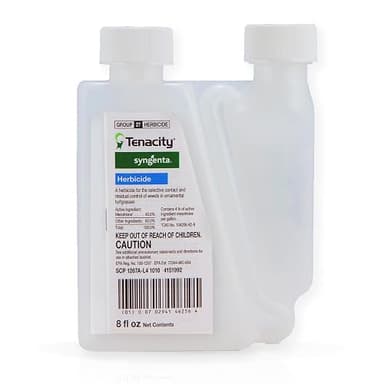
Tenacity Turf Herbicide 8 oz
Mesotrione pre/post-emergent for crabgrass, nimblewill, and bentgrass. Safe on cool-season lawns.
- 2Check price
 Best value
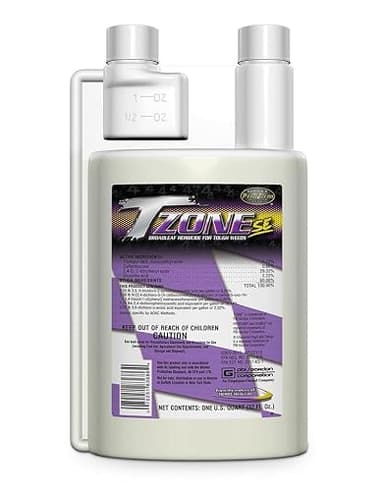
T-Zone SE Broadleaf Herbicide
Pro-grade broadleaf herbicide for tough weeds including clover, ground ivy, wild violet, and oxalis. 1 quart.
As an Amazon Associate we earn from qualifying purchases.
Pest & Disease Management
Tall Fescue is generally more disease-resistant than Kentucky Bluegrass, but it's not immune. Understanding the common problems helps you catch them early when they're easiest to address.
The Big One: Brown Patch (Rhizoctonia solani)
Brown patch is the most common and most damaging disease for Tall Fescue. It shows up as circular patches of light brown, thinning turf, typically 6 inches to several feet across, often with a darker "smoke ring" border that's visible in the morning when dew is present.
When it strikes: Hot, humid weather with nighttime temperatures above 65°F. June through September is peak season.
What triggers it: Excess nitrogen in summer (this is why we don't fertilize Tall Fescue in summer), evening watering that keeps blades wet overnight, poor air circulation, and thick thatch.
How to manage it:
- Reduce nitrogen fertilization, especially avoid summer applications
- Water in the morning only, never in the evening
- Improve air circulation (prune low tree branches, reduce shade where possible)
- If you have recurring outbreaks, apply a preventive fungicide (azoxystrobin or propiconazole) in early June before symptoms appear
- The good news: brown patch rarely kills Tall Fescue. The crowns survive and the lawn recovers when conditions improve. Fall overseeding fills in any gaps
Other Diseases to Watch For
Dollar Spot
Small (silver-dollar-sized), straw-colored spots, often with a distinctive hourglass-shaped lesion on individual blades. Most common in low-nitrogen lawns during warm, humid weather. The fix is usually just proper fertilization, since well-fed grass resists dollar spot naturally.
Pythium Blight
Appears as greasy, water-soaked patches that turn brown quickly. Most common in newly seeded areas during hot, wet weather. Improve drainage, avoid overwatering, and apply fungicide if you see it spreading.
Red Thread
Pink or red thread-like strands on blade tips, typically during cool, wet weather in spring or fall. Like dollar spot, it's usually a sign of nitrogen deficiency. Fertilize and it typically resolves.
Common Pests
White Grubs
Larvae of Japanese beetles, June bugs, and similar beetles that feed on grass roots. Signs include irregular brown patches that peel up like carpet, and increased bird or animal digging in your lawn (they're hunting the grubs).
Prevention: Apply preventive grub control (chlorantraniliprole or trichlorfon) in late May through June when beetles are laying eggs. Treatment: If you find grubs in fall (more than 6-8 per square foot when you pull back turf), apply carbaryl or trichlorfon for curative control.
Armyworms and Sod Webworms
Caterpillars that feed on grass blades, creating irregular brown patches. Look for birds feeding heavily on your lawn or small moths flying in zigzag patterns at dusk. Endophyte-enhanced Tall Fescue varieties have natural resistance to these pests, which is another reason to choose endophyte seed.
Chinch Bugs
Sap-sucking insects causing yellowing patches that expand outward, especially in sunny, dry areas. Treat with bifenthrin if populations are high.
Aeration & Dethatching
Core aeration might be the most underrated lawn care practice. For Tall Fescue specifically, it's doubly important because it creates the seed pockets that make fall overseeding so effective.
Core Aeration
Why Tall Fescue Lawns Need Aeration
Tall Fescue's deep root system (6-8 inches) benefits enormously from loosened soil. Compacted soil literally prevents those roots from reaching their potential depth, and in clay soils (common in the transition zone), compaction is almost guaranteed. Aeration pulls 2-3 inch plugs of soil out of the ground, creating channels for water, oxygen, and nutrients to reach the root zone.
When to Aerate
- Best time: Early fall (September), immediately before overseeding. This is the golden combination: aeration + overseeding in fall
- Second best: Early spring (April), before heavy growth begins
- Soil temperature: 55-65°F for fastest recovery
- Soil moisture: Aerate when soil is moist but not waterlogged. Dry soil is too hard to penetrate effectively. Water the day before if conditions are dry
How to Aerate Effectively
- Use a core aerator that pulls plugs, not a spike aerator. Spike aerators actually increase compaction around the holes
- Make 2 passes in perpendicular directions for thorough coverage
- Leave the plugs on the lawn. They break down within 2-3 weeks and return topsoil to the surface
- Target 2-3 inch plug depth and 20-40 holes per square foot
- Rent a core aerator from your local home improvement store (roughly $75-100 per day) or hire a lawn service ($75-150 for an average lawn)
- For best results, follow immediately with overseeding. Seeds fall into the aeration holes, which provide ideal germination conditions: soil contact, moisture retention, and protection from birds
Dethatching
Thatch is the layer of dead stems and roots that accumulates between the green grass blades and the soil surface. A thin thatch layer (under 1/2 inch) is actually beneficial, protecting roots from temperature extremes and retaining moisture. Problems start when thatch exceeds 1/2 inch, blocking water and nutrients from reaching the soil.
Does Tall Fescue Build Thatch?
Less than KBG or Bermuda, but it can accumulate over time, especially if you bag clippings (which removes the beneficial soil organisms that decompose thatch) or overfertilize with nitrogen.
When to Dethatch
- Only if thatch exceeds 1/2 inch. Check by cutting a small wedge of turf and measuring the brown spongy layer
- Best timing: early fall (September), before overseeding
- Use a power dethatcher (vertical mower) set to just score the thatch layer. Don't tear into the soil
Prevention Is Better Than Cure
Regular core aeration (annually or every other year) is usually enough to prevent thatch problems in Tall Fescue. The aeration holes introduce soil into the thatch layer, bringing decomposing organisms with it. Combined with proper fertilization (don't overdo nitrogen) and mulching clippings, most Tall Fescue lawns never need dedicated dethatching.