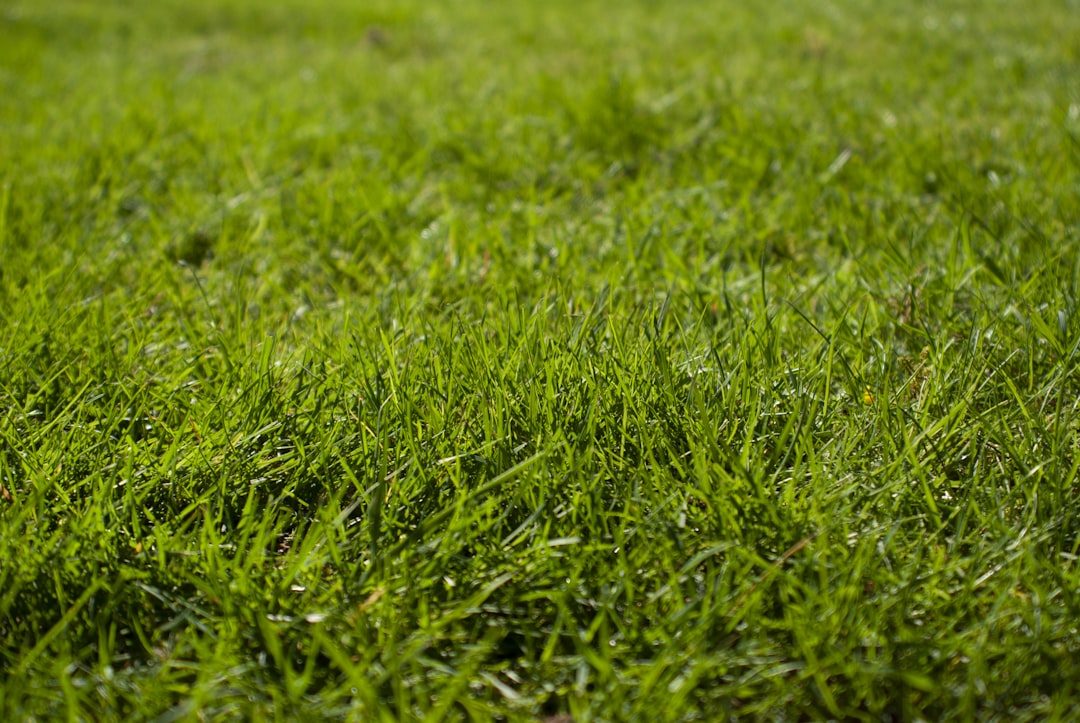

About Perennial Ryegrass
Perennial Ryegrass (Lolium perenne) is the sports car of cool-season grasses. It germinates in as few as 5 days (compared to 14-21 for KBG), establishes a visible lawn within 2-3 weeks, and creates one of the most attractive, glossy, dark green turf surfaces you'll find in any home lawn.
You'll find Perennial Ryegrass on professional sports fields, golf course tees and fairways, and in the lawns of homeowners who want a fast, attractive result. It's also the grass that gets overseeded into Bermuda lawns across the South every fall to maintain green color through winter.
But Perennial Ryegrass isn't perfect, and understanding its limitations is just as important as knowing its strengths. It's a bunch-type grass that can't self-repair. It has relatively shallow roots that make it less drought-tolerant than Tall Fescue. And it doesn't handle extreme cold or heat as well as some alternatives. Where it excels, though, nothing else comes close.
Key Characteristics
- Blade width: Fine to medium (2-4mm), with a distinctive glossy sheen on the underside
- Color: Rich, dark green. Among the darkest natural greens of any cool-season grass
- Growth habit: Bunch-type (clumping). Does not spread via rhizomes or stolons
- Texture: Smooth, fine, almost silky when touched
- Germination: 5-7 days under ideal conditions. This is remarkably fast
- Root depth: 3-4 inches (shallow compared to Tall Fescue's 6-8 inches, which directly affects drought tolerance)
Why Choose Perennial Ryegrass?
If you need a lawn fast, Perennial Ryegrass is unbeatable. It's the first grass you'll see sprout after seeding, and it fills in quickly. It's also the best choice for active yards where kids, dogs, and heavy foot traffic are part of daily life, since it handles wear better than KBG or Fine Fescue. The reason comes down to plant structure: ryegrass produces a dense crown with strong tillers that flex under pressure rather than tearing out.
It's also an essential component of most cool-season lawn seed blends. The ryegrass germinates quickly and provides soil coverage while the slower-germinating KBG and fescues catch up. This "nurse grass" role is one of the most valuable things Perennial Ryegrass does, and it's why you'll find it in nearly every premium cool-season blend on the market.
The Honest Trade-offs
- No self-repair: Like Tall Fescue, it's bunch-type and can't fill in bare spots on its own. If a section dies, you need to reseed it
- Shallow roots (3-4 inches): Less drought-tolerant than Tall Fescue. Needs consistent moisture, especially through summer
- Heat sensitivity: Struggles in extended periods above 90°F. Not ideal as a standalone lawn in the transition zone
- Cold limits: Can suffer winterkill in the coldest areas (Zone 3-4) without snow cover
- Can dominate blends: Its fast germination means it can crowd out slower grasses in a blend if seeded too heavily. This is the most common mistake I see with ryegrass in mixes
Perennial vs. Annual Ryegrass
Don't confuse Perennial Ryegrass with Annual Ryegrass (Lolium multiflorum). Annual Ryegrass dies after one season and has coarser, lighter-colored blades. It's used for temporary erosion control and winter overseeding in the South but is not suitable for permanent lawns. Always check the seed label for "Perennial" ryegrass when buying for a permanent lawn. Annual ryegrass seed is cheaper, which is why some budget mixes sneak it in. Read labels carefully.
How to Identify Perennial Ryegrass
What Perennial Ryegrass looks like
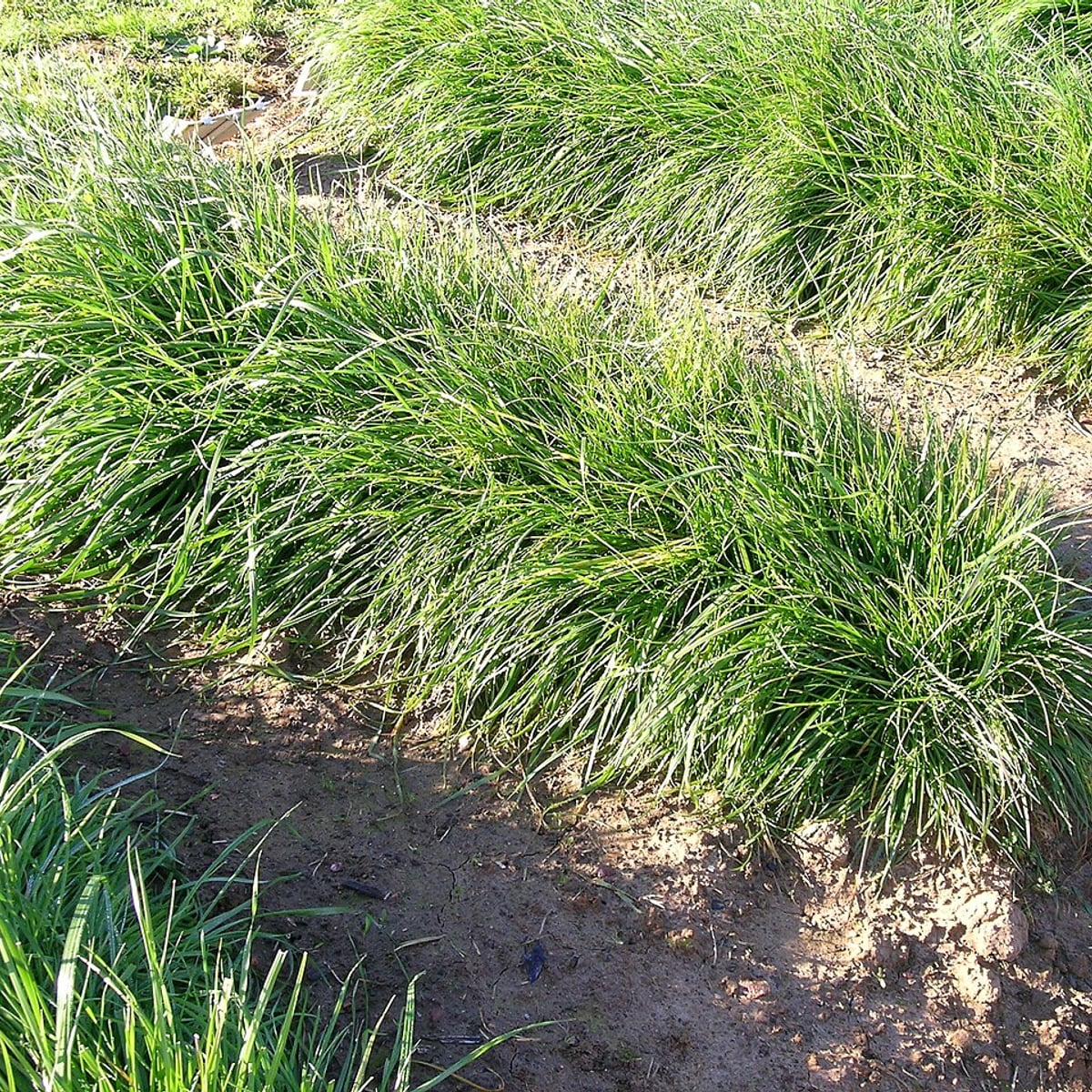
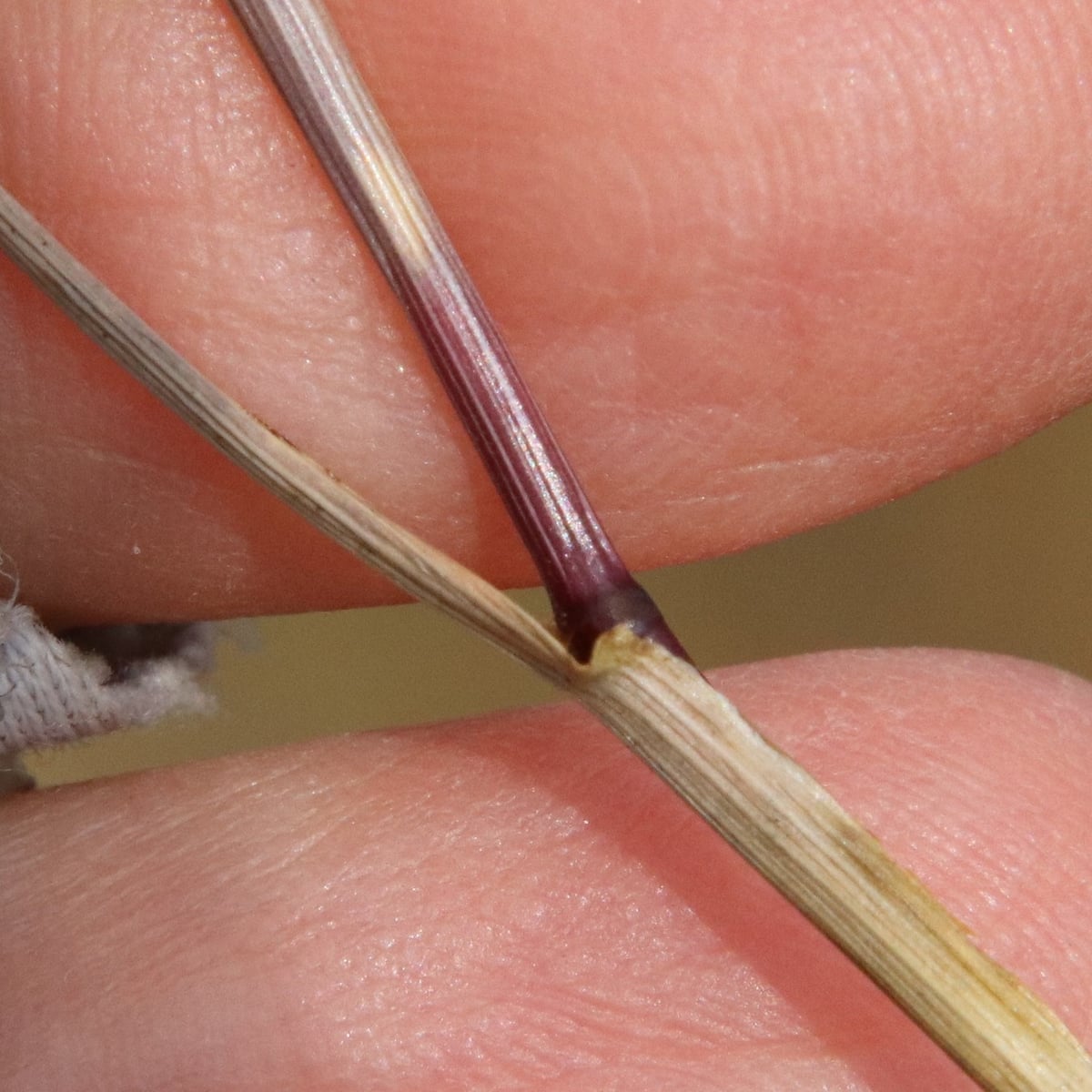
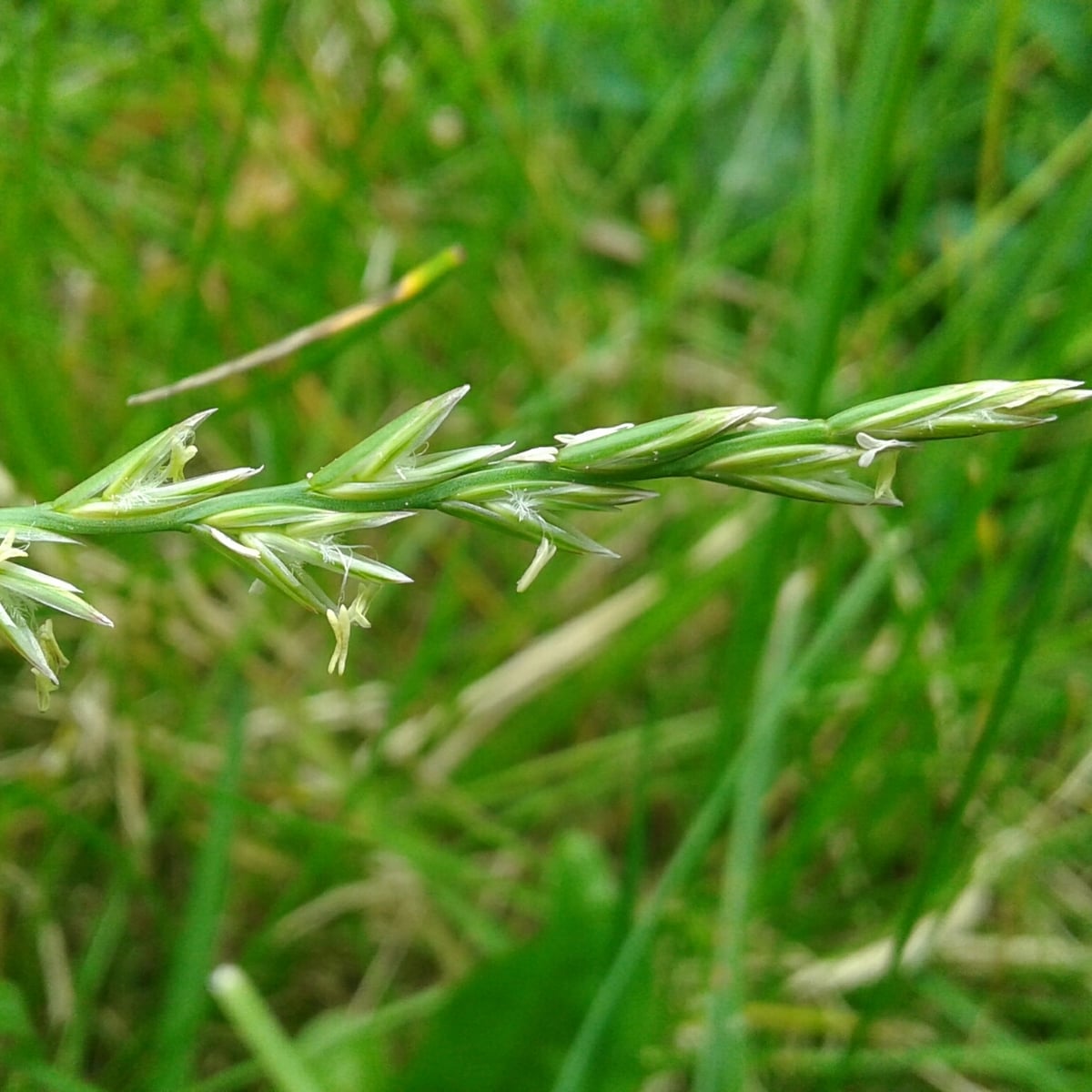
Perennial Ryegrass has several distinctive features that make it identifiable once you know what to look for. I find that most homeowners can nail the ID in under a minute once they learn the signature test.
The Quick Test (The Glossy Flip)
Flip a grass blade over and look at the underside. If it has a noticeable glossy, glass-like sheen, you're looking at Perennial Ryegrass. No other common lawn grass has this level of shine on the blade's underside. The sheen is caused by a waxy cuticle layer that's unique to ryegrass, and it catches the light in a way that's surprisingly easy to spot once you know to look. Try this on a sunny day and the difference between ryegrass and any neighboring fescue or KBG is immediately obvious.
Visual Identification
- Glossy sheen: The most distinctive feature. The underside of blades has a visible shine that catches the light
- Blade width: Fine to medium (2-4mm), narrower than Tall Fescue but similar to KBG
- Blade tip: Pointed (not boat-shaped like KBG). This is one of the fastest ways to rule out KBG
- Color: Dark green, among the richest greens of cool-season grasses
- Auricles: Small, claw-like projections where the blade meets the stem. These are present on ryegrass but absent on fescues. You'll need to pull a blade and look closely at the collar region
- Vernation: Folded in the bud (like KBG, unlike Tall Fescue which is rolled)
Common Identification Mistakes
The most frequent mix-up I see is between Perennial Ryegrass and fine-bladed Tall Fescue. Both can have similar widths and dark green color. Here's how to tell them apart: check the sheen (ryegrass is glossy, fescue is matte), check the auricles (ryegrass has them, fescue does not), and look at vernation by splitting open a new leaf shoot (ryegrass is folded, Tall Fescue is rolled). If you can confirm two out of three, you have your answer.
Another common mistake is confusing Perennial Ryegrass with Annual Ryegrass. Annual has a lighter, yellow-green color and coarser texture. In spring, annual ryegrass produces prominent seed heads much earlier and more aggressively than perennial types.
Growth Pattern
Perennial Ryegrass grows in bunches like Tall Fescue. There are no underground rhizomes or above-ground stolons connecting plants. In a mixed lawn, ryegrass stands are often identifiable by their glossy appearance and slightly finer texture compared to surrounding fescue. Over time, ryegrass clumps can become visible as distinct tufts if the lawn thins, which is one reason overseeding periodically matters for maintaining a uniform appearance.
Not sure what you're looking at? Upload a photo to our free grass identifier for an instant analysis.
Best Zones & Climate
Perennial Ryegrass performs best in USDA Zones 4-7, preferring mild temperatures and moderate humidity. It's a grass that loves moderation, and understanding exactly where it thrives (and where it doesn't) will save you a lot of frustration.
Ideal Climate Conditions
- Air temperature: 60-75°F for optimal growth. Ryegrass has a narrower comfort window than KBG or Tall Fescue
- Soil temperature: 50-65°F for germination and active growth
- Cold tolerance: Good but not exceptional. Can suffer winterkill in Zone 3-4 without consistent snow cover. Snow acts as an insulating blanket; without it, exposed ryegrass crowns can freeze and die
- Heat tolerance: Moderate. Struggles with sustained temperatures above 90°F. Growth slows significantly above 85°F, and prolonged heat combined with humidity opens the door to gray leaf spot disease
Where Perennial Ryegrass Shines
The Pacific Northwest, the Northeast, and the upper Midwest are where Perennial Ryegrass performs best. Maritime climates with mild summers and moderate winters (think Oregon, Washington, coastal New England) are ideal. It's also excellent in the UK and northern Europe, where it's the dominant lawn grass. In these regions, ryegrass can function beautifully as a standalone lawn because summer temperatures rarely push it past its limits.
Perennial Ryegrass in Blends
While it can be grown as a standalone lawn, Perennial Ryegrass is most commonly used as part of a blend with KBG and/or Fine Fescue. Typical blend ratios are 10-20% Perennial Ryegrass (by weight) with KBG and/or fescues making up the remainder. Higher percentages of ryegrass are used for athletic fields and high-traffic areas. The reason for blending is simple: ryegrass covers the weaknesses of other grasses (slow germination, poor wear tolerance) while those grasses cover ryegrass's weaknesses (no self-repair, shallow roots).
Southern Overseeding
In the South (Zones 7-10), Perennial Ryegrass has a completely different role: it's overseeded into dormant Bermuda lawns in fall to provide green color through winter. This "winter lawn" dies when summer heat returns and Bermuda takes over again. If you're in the South, this is likely how you'd use ryegrass. Timing is everything here: seed too early and the Bermuda competes with the ryegrass. Seed too late and soil temperatures drop below the 50°F minimum for germination. The sweet spot is when Bermuda starts showing dormancy (usually mid-October in most southern areas).
Where It Struggles
The transition zone's extreme summer heat is hard on standalone Perennial Ryegrass lawns. In these areas, Tall Fescue is a better primary grass, with ryegrass mixed in at 10-15% for quick establishment and wear resistance. Deep South heat (Zones 8+) is too much for Perennial Ryegrass as a permanent lawn grass. I've seen homeowners in those zones try pure ryegrass lawns, and the results are consistently disappointing by midsummer. If summer highs regularly exceed 90°F for more than 2-3 consecutive weeks, ryegrass should be a supporting player in a blend, not the star.
Soil Preparation & pH
Perennial Ryegrass isn't particularly fussy about soil, but it does best in well-drained conditions with moderate fertility. That said, I see plenty of ryegrass lawns underperform simply because the soil wasn't set up correctly from the start. The grass may be forgiving, but that doesn't mean you should skip the fundamentals.
Ideal Soil Conditions
- pH range: 6.0-7.0 (slightly acidic to neutral). This is the sweet spot where ryegrass absorbs nitrogen, phosphorus, and potassium most efficiently
- Soil type: Loam is ideal, but ryegrass grows well in clay and sandy soils too. In clay, focus on improving drainage. In sand, focus on adding organic matter to retain moisture
- Drainage: Good drainage is important. Ryegrass doesn't handle waterlogged soil well. Standing water after rain should drain within a few hours. Persistently wet soil promotes root rot and Pythium blight, both of which can destroy ryegrass quickly
- Organic matter: 3-5% is optimal. Organic matter acts like a sponge in sandy soil and opens up pore space in clay, and it feeds the soil biology that keeps your lawn healthy long-term
Soil Testing
A soil test ($15-25 through your extension office) is always worthwhile, especially before establishing a new lawn. It takes the guesswork out of pH and nutrient adjustments. I've seen homeowners spend $200 on lime they didn't need because they skipped a $20 test. The report will tell you exactly what your soil has, what it lacks, and how much of each amendment to apply. Test every 2-3 years for established lawns to track changes over time.
Adjusting Soil pH
If pH is too low (below 6.0, too acidic): Apply pelletized lime at 50 lbs per 1,000 sq ft to raise pH by roughly half a point. Fall is the best time since freeze-thaw cycles help lime integrate into the soil. Retest after 3-4 months before adding more. Over-liming is a real problem, and it takes much longer to fix than under-liming.
If pH is too high (above 7.0, too alkaline): Apply elemental sulfur at 5-10 lbs per 1,000 sq ft. Sulfur works slowly over 2-3 months, so don't expect overnight results. Iron sulfate acts faster but is a temporary fix. Follow your soil test recommendations for exact rates.
Soil Preparation for New Lawns
Because Perennial Ryegrass germinates so fast, soil preparation is especially important. You want to get it right before seeding since you won't have the luxury of weeks of prep time while waiting for germination. Once you put seed down, you'll have green sprouts in less than a week, and the window for making corrections closes fast.
- Test soil and correct pH if outside the 6.0-7.0 range
- Remove existing vegetation (glyphosate application, then wait 7-14 days)
- Till the top 4-6 inches and incorporate 2 inches of compost
- Grade for drainage (water should flow away from structures) and roll lightly to firm without compacting
- Apply starter fertilizer (high phosphorus, like 18-24-12) at the label rate
- Seed within a few days of final prep since ryegrass germinates fast and you want to beat the weeds
Improving Existing Soil
For established ryegrass lawns on compacted or poor soil, the best approach is annual core aeration followed by a thin (1/4 inch) layer of compost topdressing. Do not try to rototill amendments into an existing lawn. That destroys the turf. Aeration plus topdressing is the non-destructive path, and over 2-3 years it meaningfully transforms soil structure, organic matter content, and drainage.
Recommended Products
- 1Check price
 Top pick
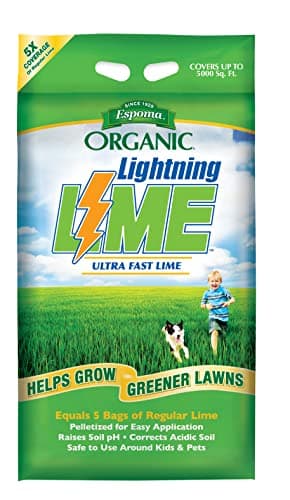
Espoma Organic Lightning Lime (Fast-Acting Pelletized Lime)
Fast-acting pelletized lime for low-pH lawns when a soil test confirms you need to raise pH before fertilizing harder. Covers up to 5,000 sq ft.
- 2Check price
 Best value
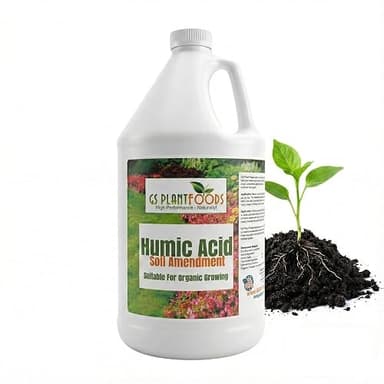
GS Plant Foods Liquid Humic Acid
Leonardite-derived humic acid that improves soil structure and nutrient availability. OMRI listed, 1 gallon.
As an Amazon Associate we earn from qualifying purchases.
Fertilizer Program
Perennial Ryegrass has moderate fertilizer needs, sitting between the heavy appetite of KBG and the minimal requirements of Fine Fescue. It responds well to nitrogen but doesn't demand as much as KBG to look good. The key with ryegrass is timing: feed it when it's actively growing (spring and fall) and leave it alone during summer stress. Getting this rhythm wrong is the single biggest fertilizer mistake I see with ryegrass lawns.
Annual Fertilizer Requirements
- Nitrogen: 2-3 lbs per 1,000 sq ft per year, split across 3-4 applications
- Phosphorus: Based on soil test only. Many established lawns already have adequate phosphorus, and adding more when it's not needed wastes money and can contribute to water pollution
- Potassium: 1-2 lbs per 1,000 sq ft per year. Potassium strengthens cell walls and helps ryegrass handle both heat and cold stress better
- Ideal ratio: 3-1-2 or 4-1-2 (e.g., 24-8-16 or 16-4-8)
Seasonal Schedule
Early Spring (soil temp reaches 55°F)
Apply 0.5-0.75 lb N per 1,000 sq ft of slow-release fertilizer. This fuels spring growth without pushing it too hard. The biggest mistake here is going heavy. Excess spring nitrogen creates lush, soft growth that's vulnerable to disease and diverts energy from root development. Think of this application as a gentle nudge, not a feast.
Late Spring (May)
Optional: 0.5 lb N per 1,000 sq ft if the lawn needs a boost. Skip if it looks healthy and dense. If you applied a pre-emergent that contained fertilizer, that may have covered your late spring needs already. Check the label for the nitrogen content before doubling up.
Early Fall (September)
Your most important application: 1 lb N per 1,000 sq ft of slow-release fertilizer. Fall is when ryegrass builds root mass and carbohydrate reserves that carry it through winter and fuel spring green-up. This single application has more impact on your lawn's health over the next 12 months than any other feeding you'll do. Don't skip it.
Late Fall (November)
Apply 0.5 lb N per 1,000 sq ft of quick-release fertilizer as a winterizer. This feeds roots that are still active beneath slowing top growth. Quick-release is appropriate here because you want immediate nutrient availability while the root system is still absorbing. The grass may look like it's done growing up top, but below the surface, roots are working hard to store energy for winter.
Summer Fertilizing: The Critical Rule
Avoid nitrogen applications during summer heat (June through August). Perennial Ryegrass is heat-sensitive, and pushing growth during summer stress increases disease risk, particularly gray leaf spot, which can devastate ryegrass. I cannot stress this enough: summer nitrogen on ryegrass is like pouring gasoline on a fire. The lush growth it produces creates exactly the conditions that gray leaf spot fungus needs to explode.
If you want summer color improvement, use iron supplements only. Chelated iron spray gives you a darker green without stimulating growth or increasing disease pressure. Apply at label rates every 3-4 weeks through summer for a noticeable color boost.
Common Fertilizer Mistakes
- "I fertilize in summer because it looks pale." Summer color loss in ryegrass is normal heat stress, not a feeding problem. Adding nitrogen makes it worse. Use iron for color instead
- "I use weed-and-feed for everything." Weed-and-feed products apply herbicide across the entire lawn when you may only need it in spots. They also apply fertilizer on someone else's schedule, not yours. Buy fertilizer and herbicide separately for better results and lower cost
- "More fertilizer means a better lawn." Beyond 3 lbs N per 1,000 sq ft per year, you're creating problems: excessive thatch, increased disease pressure, and environmental runoff. More is not better with ryegrass
Recommended Products
- 1Check price
 Top pick
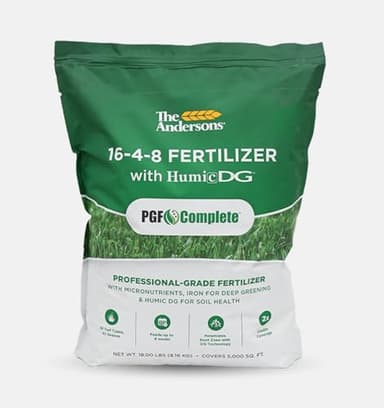
The Andersons PGF Complete 16-4-8
Balanced slow-release fertilizer for established lawns that need steady feeding without a quick flush of top growth.
- 2Check price
 Best value
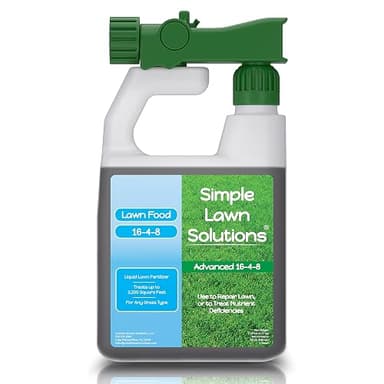
Simple Lawn Solutions Advanced 16-4-8
Liquid 16-4-8 lawn food for quick feeding on established lawns when you want balanced NPK and simple hose-end application.
As an Amazon Associate we earn from qualifying purchases.
Month-by-Month Care Calendar
Perennial Ryegrass follows the same two-surge growth pattern as other cool-season grasses, with active periods in spring and fall separated by summer stress and winter dormancy. But ryegrass has its own quirks within that pattern: it greens up earlier in spring, handles summer heat worse than KBG or Tall Fescue, and recovers explosively in fall. Your care calendar should reflect these differences.
Winter (December - February)
Your lawn is dormant or semi-dormant. This is your planning season.
- Ryegrass may retain some green color in mild winters, going fully dormant only in the coldest areas. Don't mistake this lingering color for active growth
- Minimize traffic on frozen turf. Ice crystals can shatter grass crowns, and damage won't show until spring
- Service equipment, sharpen blades, and order seed. Quality ryegrass varieties sell out fast
- Apply lime if a fall soil test showed low pH. Freeze-thaw cycles help work lime into the soil
- Review last year's problem areas and plan your fall overseeding strategy
Early Spring (March - April)
Ryegrass is one of the first cool-season grasses to break dormancy. You'll see green-up before your neighbor's KBG or fescue shows any signs of life.
- Ryegrass greens up early, often the first cool-season grass to show spring growth
- Apply pre-emergent when soil temp reaches 50-55°F for 3 consecutive days. This is your crabgrass prevention window, and timing is everything
- Begin mowing when active growth resumes. First cut can be slightly lower than normal to remove dead tips
- First fertilizer application (0.5-0.75 lb N/1,000 sq ft slow-release)
- Inspect and test irrigation system for leaks and coverage gaps
- Do NOT overseed in spring unless absolutely necessary. Fall is far better for ryegrass establishment
Late Spring (May - June)
- Peak growth period for Perennial Ryegrass. This is when it looks its absolute best
- Mow every 5-7 days at 2-3 inches, never removing more than 1/3 of the blade
- Spot-treat broadleaf weeds with selective herbicide while they're actively growing (temps 60-85°F)
- Begin irrigation if rainfall drops below 1 inch per week
- Optional second fertilizer application (0.5 lb N/1,000 sq ft)
- Apply grub preventer (late May through early June) if you've had grub issues in the past
Summer (July - August): Survival Mode
This is Perennial Ryegrass's weakest period, and managing it correctly separates thriving lawns from failing ones.
- Growth slows as temperatures rise above 85°F and nearly stops above 90°F
- Raise mowing height to 3-3.5 inches. This is non-negotiable. Taller grass shades roots and retains soil moisture
- Water consistently: 1-1.25 inches per week. Ryegrass's shallow roots make it less drought-tolerant than Tall Fescue or KBG
- Watch closely for gray leaf spot disease (the number one threat to Perennial Ryegrass). Hot, humid nights above 70°F are the trigger
- Do not fertilize with nitrogen. Use iron for color if needed
- Reduce traffic on heat-stressed areas. Damaged ryegrass can't self-repair like KBG can
- If you can't irrigate and the lawn goes dormant, commit to dormancy. Don't alternate between watering and letting it dry out
Early Fall (September - October)
This is prime time for Perennial Ryegrass. Everything you do now pays dividends for the next 12 months.
- Growth surges as temperatures cool. Ryegrass recovers from summer stress faster than most cool-season grasses
- Apply your most important fertilizer (1 lb N/1,000 sq ft slow-release)
- Overseed thin areas. Ryegrass will germinate and fill in within days, giving you visible results before any other grass would even sprout
- Core aerate if compacted, ideally right before overseeding
- Lower mowing back to 2-3 inches
- This is also the best time for soil amendments if your test showed issues
Late Fall (November)
- Apply winterizer fertilizer (0.5 lb N quick-release)
- Final mow at 2-2.5 inches to reduce snow mold risk. Tall grass going into winter traps moisture against crowns
- Remove leaves promptly. A layer of wet leaves smothers grass and creates disease conditions
- Winterize irrigation system before the first hard freeze
- Apply fall pre-emergent if Poa annua or winter annual weeds are a problem in your area
Mowing Guide
Perennial Ryegrass mows beautifully. Its fine, uniform blades create clean, even cuts that show off striping patterns exceptionally well. If you're the type who likes a professionally manicured look, ryegrass delivers better than almost any other cool-season grass. But there's more to mowing ryegrass well than just pushing the mower. Height, frequency, and blade sharpness all matter more than people realize.
Optimal Mowing Height
- Spring and Fall: 2-3 inches
- Summer: 3-3.5 inches (raise height to reduce heat stress). This single adjustment can be the difference between a lawn that survives summer and one that doesn't
- Final fall cut: 2 inches to reduce snow mold risk
- Premium/sport turf: Can be mowed as low as 0.5-1 inch with a reel mower. This is what you see on professional sports fields, but it requires daily mowing and professional-level maintenance
Why Height Matters for Ryegrass
There's a direct relationship between mowing height and root depth. Mow at 3 inches and ryegrass's roots reach their full 3-4 inch potential. Mow at 1.5 inches and root depth is roughly halved. Since ryegrass already has the shallowest roots of the common cool-season grasses, cutting it too short in summer effectively eliminates whatever drought tolerance it has. Every quarter inch of height you add in summer translates to meaningful improvement in stress resistance.
The 1/3 Rule
Never remove more than one-third of the grass blade in a single mowing. If your target height is 3 inches, mow when grass reaches 4.5 inches. Violating this rule scalps the lawn, exposing lower stem tissue that hasn't seen sunlight and isn't adapted for it. This stresses the plant and opens the door to disease. If you've been away and the lawn is overgrown, bring it down gradually over 2-3 mowings rather than scalping it in one pass.
Mowing Frequency
- Peak growth (spring/fall): Every 5-7 days. During the fastest spring growth, you may need to mow every 4-5 days to stay within the 1/3 rule
- Summer: Every 7-10 days as growth slows
- Dormant season: As needed, or not at all once growth stops
Mowing Tips for the Best Results
- Striping: Perennial Ryegrass shows mowing patterns (stripes) better than almost any other cool-season grass. If you want that striped look, alternate mowing directions each time. The glossy blades reflect light differently depending on the direction they're bent, which is what creates the visual effect
- Blade sharpness is everything: Keep blades sharp. Ryegrass's fine blades cut cleanly with sharp blades but tear with dull ones, leaving white, ragged tips that are entry points for fungal disease. Sharpen every 20-25 hours of mowing, or roughly monthly during the season. Buy a spare blade so you can swap instantly
- Rotary vs. reel: A rotary mower works well at standard heights (2+ inches). For sport turf cut below 1 inch, a reel mower is necessary. For homeowners, a quality rotary mower with a freshly sharpened blade is all you need
- Mulch clippings: Mulch clippings back into the lawn. They decompose quickly and return roughly 1 lb of nitrogen per 1,000 sq ft per year. That's free fertilizer. Only bag clippings if the lawn is diseased or clippings are clumping heavily
- Mow when dry: Wet ryegrass clumps badly and cuts unevenly. Wait until the lawn is dry for the cleanest results
Watering Schedule
Here's where Perennial Ryegrass shows its biggest vulnerability: shallow roots. At 3-4 inches of root depth, it simply can't access the deep soil moisture that Tall Fescue (6-8 inches) or even KBG (4-5 inches) can reach. This means ryegrass needs more consistent watering, especially during summer. If you understand why ryegrass is thirstier than its cousins, you can water smarter rather than just watering more.
Weekly Water Requirements
- Spring: 1 inch per week (including rainfall)
- Summer: 1-1.25 inches per week (do not skip watering in summer). In sustained heat above 90°F, the upper end of this range is necessary
- Fall: 1 inch per week. Continue watering until the ground freezes, especially if you overseeded
- Winter: Usually not needed unless dry and snowless for extended periods
The Deep Watering Strategy
Even though ryegrass has shallow roots, you still want to water deeply rather than giving light, frequent sprinkles. The goal is to wet the full 3-4 inch root zone each time, encouraging roots to grow as deep as their genetics allow.
- Water 2-3 times per week rather than daily. Daily light watering keeps only the top inch wet and trains roots to stay at the surface, making the problem worse
- Amount per session: 0.3-0.5 inches per watering, enough to wet the soil 4 inches deep
- Early morning (before 8 AM) is critical. Ryegrass is susceptible to fungal diseases, and evening watering keeps blades wet overnight, which is the single worst irrigation habit for disease-prone grasses like ryegrass
- Monitor closely in summer. Ryegrass shows drought stress faster than Tall Fescue or KBG. Watch for a dull gray-green color and footprints that stay visible after you walk across the lawn
How to Measure Your Sprinkler Output
Place 4-5 empty tuna cans around your sprinkler zone. Run your sprinklers and time how long it takes to collect 0.5 inches of water in the cans. That's your watering duration per session. Most in-ground systems need 20-40 minutes per zone, but it varies widely based on sprinkler type and water pressure. Do this test once and you'll know your numbers forever.
Drought Tolerance
Perennial Ryegrass is less drought-tolerant than Tall Fescue or KBG. It will go dormant during drought, turning brown, but recovery is less reliable than deeper-rooted grasses. If you have ryegrass and no irrigation, you may lose significant turf during extended dry periods. This is the main reason ryegrass works better in blends than as a standalone lawn in areas with inconsistent rainfall.
The Commitment Rule
If drought hits and you can't keep up with watering, commit to one strategy: either water consistently all summer, or let the lawn go dormant. The worst approach is alternating between watering and drought. Each time the grass breaks dormancy to grow and then gets stressed back into dormancy, it burns through its carbohydrate reserves. After 2-3 of these cycles, the plant may not have enough energy left to recover at all. Pick a lane and stick with it.
Seeding & Overseeding
If there's one thing Perennial Ryegrass does better than any other cool-season grass, it's germinate. Five to seven days from seed to visible green sprouts. In the grass world, that's like going from zero to sixty in seconds while everyone else is still warming up. This speed is both ryegrass's greatest strength and, if you're not careful with blend ratios, a potential problem.
Best Time to Seed
Fall (late August through October) is ideal for permanent lawns in cool-season areas. Soil is still warm from summer (speeding germination), air temps are cooling (less stress on seedlings), and weed competition is declining. Ryegrass seeded in fall has both fall and spring to establish before facing its first summer.
Spring seeding (March to May) works well for Perennial Ryegrass since its fast germination gives it a head start before summer heat. This is one advantage ryegrass has over KBG for spring projects: KBG spring-seeded faces summer stress before it's established, but ryegrass matures fast enough to handle it.
For winter overseeding of Bermuda in the South, seed when Bermuda begins going dormant (typically October in most areas). Watch for the Bermuda to start losing color as your signal.
Seeding Rates
- New lawn (pure ryegrass): 6-8 lbs per 1,000 sq ft
- In a blend with KBG/fescue: 1-2 lbs per 1,000 sq ft (10-20% of the mix by weight). Don't overdo it or ryegrass will dominate the stand and crowd out the other species
- Overseeding existing lawn: 3-5 lbs per 1,000 sq ft
- Winter overseeding of Bermuda: 8-10 lbs per 1,000 sq ft (higher rate needed because you're seeding into existing turf, and some seed won't make soil contact)
Germination Timeline
Under ideal conditions (soil temp 50-65°F, consistent moisture), Perennial Ryegrass germinates in 5-7 days. You'll see a green haze across the seeded area almost before you can believe it. Full establishment takes 4-6 weeks, and a truly dense, mature stand develops over 2-3 months. Even so, you'll have a mowable lawn in roughly 2-3 weeks from seeding, which is remarkably fast.
The "Nurse Grass" Role
In cool-season blends, Perennial Ryegrass serves as a "nurse grass." It germinates quickly, providing soil cover and erosion protection while slower-germinating KBG (14-21 days) and fescues (10-21 days) catch up. This is why most quality lawn seed blends include 10-20% Perennial Ryegrass.
The key is not using too much. If ryegrass makes up more than 20-25% of a blend by weight, it can dominate the stand and prevent KBG and fescues from establishing properly. I see this mistake constantly: someone buys a high-ryegrass blend for the fast results, then wonders why their lawn is entirely ryegrass three years later with no KBG self-repair capability. Stick to the recommended blend ratios on the package.
Seed Selection
Not all Perennial Ryegrass seed is equal. Look for improved, turf-type varieties with high NTEP scores. Choose varieties bred for gray leaf spot resistance, which is the number one disease threat. Endophyte-enhanced varieties provide built-in insect resistance. Check the seed label for a test date within the last 12 months, germination rate above 90%, and zero noxious weed seed. Avoid any mix containing Annual Ryegrass unless you specifically want temporary cover.
Seeding Tips
- Prepare soil and seed as close together as possible since ryegrass will germinate before weeds if you're quick
- Use a broadcast spreader at half rate in two perpendicular passes for even coverage
- Maintain consistent surface moisture for the first 7-10 days. Light watering 2-3 times daily is ideal
- First mow when grass reaches 3-3.5 inches (cut to 2.5 inches). Use a sharp blade and be gentle
- Ryegrass establishes so quickly that you can usually mow within 2-3 weeks of seeding
- Transition from light, frequent watering to deep, infrequent watering once seedlings are established (around week 3)
Recommended Products
- 1Check price
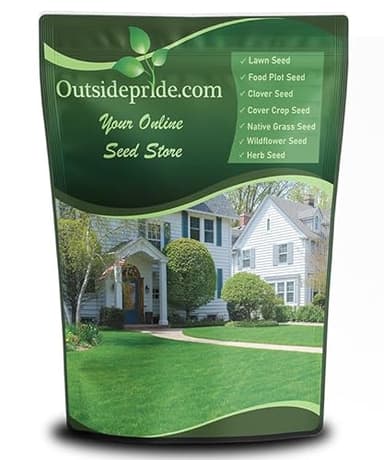 Top pick
Outsidepride Fireball & Hattrick Perennial Ryegrass Blend (5 lb)
Elite 50/50 blend of Fireball and Hattrick perennial ryegrass cultivars — dark, fine-bladed, wear-tolerant turf; 5 lb full-lawn bag.
As an Amazon Associate we earn from qualifying purchases.
Weed Control
Perennial Ryegrass's fast germination is actually a weed control advantage: when you seed, ryegrass establishes ground cover before most weeds can get started. Once established, a dense ryegrass lawn suppresses weeds effectively. But because ryegrass is bunch-type and can't self-repair like KBG, any thinning in the stand opens the door for weeds to move in. Keeping ryegrass thick through proper care and periodic overseeding is your best long-term defense.
Pre-Emergent Herbicides (Prevention)
Pre-emergents create a chemical barrier in the top layer of soil that prevents weed seeds from germinating. They don't kill existing weeds; they stop new ones from starting.
- Spring: Apply when soil temp reaches 50-55°F for 3 consecutive days. This is your crabgrass prevention window. In most areas, that's late March to mid-April. Too early and the product breaks down before crabgrass season ends. Too late and crabgrass has already germinated
- Fall: Apply in September for winter annual weeds (Poa annua, henbit, chickweed)
- The seeding conflict: Do not apply pre-emergent within 8 weeks of seeding. Pre-emergent prevents grass seed germination too. If you're overseeding in fall, skip pre-emergent in those areas. Mesotrione (Tenacity) is one exception that can be used at seeding time
Post-Emergent Herbicides (Treatment)
Perennial Ryegrass tolerates most selective broadleaf herbicides well. Standard three-way herbicides (2,4-D + dicamba + MCPP) are safe at label rates. Apply when weeds are actively growing and temperatures are 60-85°F. Do not apply herbicide when temps exceed 85°F, as the stress on ryegrass combined with herbicide exposure can cause damage.
- Liquid is better than granular. Spray-on herbicides provide better coverage and more consistent results than granular "weed and feed" products
- Spot-treat when possible. Rather than blanket-spraying the entire lawn, target individual weeds or weed patches. Less chemical, less lawn stress, better results
- Two applications may be needed for tough perennial weeds. Spray, wait 2-3 weeks, and spray again if the weed is still alive
Common Weeds and How to Handle Them
- Crabgrass: Spring pre-emergent is your primary defense. If it breaks through, spot-treat with quinclorac or hand-pull individual plants before they set seed. One crabgrass plant can produce over 100,000 seeds, so pulling early matters
- Annual bluegrass (Poa annua): Light green, clumpy grass that produces seed heads in spring. Fall pre-emergent helps. Very difficult to control once established. In a ryegrass lawn, Poa annua stands out due to its lighter color and different texture
- Broadleaf weeds (dandelions, clover, plantain): Spot-treat with selective herbicide as they appear. Clover often indicates low nitrogen, so proper fertilization may resolve it without herbicide
- Wild violets: Among the toughest weeds to eliminate. Triclopyr-based products work best, but plan on multiple applications over 2-3 seasons
The Cultural Control Approach
If you prefer to minimize herbicide use, focus on keeping the ryegrass stand thick and healthy. Mow at the higher end of the range to shade weed seedlings. Fertilize on schedule so ryegrass outcompetes weeds for nutrients. Overseed thin areas in fall before weeds can colonize them. A dense, well-fed ryegrass lawn at 3 inches is remarkably resistant to weed pressure even without chemical intervention.
Recommended Products
- 1Check price
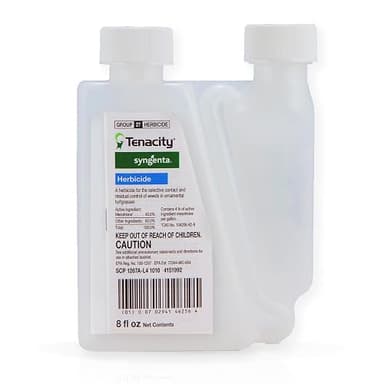 Top pick
Tenacity Turf Herbicide 8 oz
Mesotrione pre/post-emergent for crabgrass, nimblewill, and bentgrass. Safe on cool-season lawns.
- 2Check price
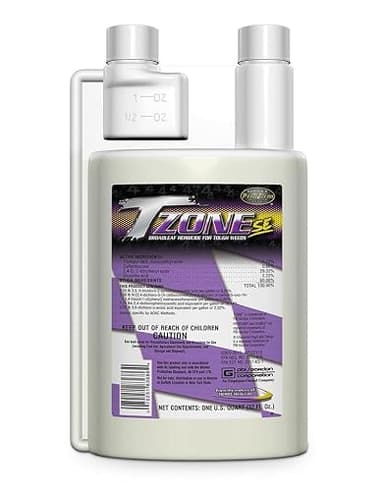 Best value
T-Zone SE Broadleaf Herbicide
Pro-grade broadleaf herbicide for tough weeds including clover, ground ivy, wild violet, and oxalis. 1 quart.
As an Amazon Associate we earn from qualifying purchases.
Pest & Disease Management
Every grass has its Achilles' heel, and for Perennial Ryegrass, the disease picture is dominated by one threat that towers over everything else. Understanding this threat, and the secondary issues that can also cause problems, is critical for keeping a ryegrass lawn healthy.
The Big Threat: Gray Leaf Spot
Gray leaf spot (Pyricularia grisea) is the most serious disease for Perennial Ryegrass and the reason many turf professionals have reduced ryegrass percentages in their seed blends over the past decade. This fungal disease can devastate a ryegrass stand in a matter of days during hot, humid weather. I've seen lawns go from healthy to 70% dead in under two weeks when conditions align and the homeowner doesn't catch it early.
What it looks like: Small, gray-brown oval lesions on grass blades with a darker border. In the early morning, you may see a grayish cast to affected areas. In severe cases, entire patches of ryegrass can turn brown and die rapidly. The lesions are distinctive: oval with a dark margin and a gray center, almost like tiny fish eyes.
When it strikes: Hot, humid weather (July through September), especially after periods of rain or heavy irrigation. Nighttime temperatures above 70°F with high humidity create ideal conditions. The fungus is already present in most soils; it's the environmental trigger that activates it.
Prevention and management:
- Avoid nitrogen fertilizer during summer. Excess nitrogen dramatically increases gray leaf spot severity. This is the most important prevention step
- Water in the morning only. Never irrigate in the evening. Extended leaf wetness overnight is exactly what the fungus needs
- Improve air circulation around the lawn by pruning low tree branches and clearing dense plantings near turf edges
- Choose gray leaf spot-resistant varieties (newer varieties have much better resistance). This is worth researching before you buy seed
- Preventive fungicide (azoxystrobin) applied in early July if you have a history of outbreaks. Curative applications work too, but prevention is far more effective. Once you see widespread symptoms, the damage is already done
Other Diseases
Brown Patch
Circular brown patches (6 inches to several feet across) during hot, humid weather, often with a darker "smoke ring" border visible in the early morning. Less devastating than gray leaf spot but still problematic. Reduce summer nitrogen, water in the morning only, improve air circulation, and apply fungicide if outbreaks are severe or recurring.
Red Thread
Pink or red thread-like strands on blade tips during cool, wet weather (spring and fall). The affected areas look pinkish from a distance. Red thread usually indicates nitrogen deficiency. Proper fertilization resolves it without fungicide in most cases. If your lawn has red thread, your first response should be a soil test, not a fungicide application.
Dollar Spot
Small straw-colored patches about the size of a silver dollar. Like red thread, often a sign of low nitrogen. Individual blades show hourglass-shaped lesions. Fertilize on schedule and it typically clears up. Dollar spot is your lawn telling you it's hungry.
Pythium Blight
Greasy, dark patches that appear suddenly during hot, humid conditions. Can spread rapidly along drainage patterns. Most common in poorly drained areas. Improve drainage, avoid evening irrigation, and treat with mefenoxam or propamocarb if severe.
Pest Resistance: The Endophyte Advantage
Many modern Perennial Ryegrass varieties contain endophytes, beneficial fungi that live inside the grass plant and produce compounds toxic to surface-feeding insects like armyworms, sod webworms, chinch bugs, and billbugs. Always choose endophyte-enhanced varieties when buying seed. The endophytes are harmless to humans and pets but provide excellent, chemical-free pest protection.
One important note: endophytes are living organisms in the seed. They die over time in storage, especially in warm conditions. Always buy fresh seed (check the test date on the label) and store unused seed in a cool, dry place. Seed stored in a hot garage for a year may have lost its endophyte benefit entirely.
Grubs
White grubs can still damage ryegrass since they feed underground where endophytes don't reach. Ryegrass's shallow roots make it more vulnerable to grub damage than deep-rooted Tall Fescue. Even 4-5 grubs per square foot can cause visible damage in ryegrass, compared to the 6-8 threshold for deeper-rooted grasses. Apply preventive grub control (chlorantraniliprole) in late spring if you've had issues. For existing infestations found in fall, use carbaryl or trichlorfon for curative control.
Aeration & Dethatching
Core aeration is one of the most beneficial things you can do for a Perennial Ryegrass lawn, and it's especially impactful for ryegrass because of those shallow roots. Compacted soil is bad for any grass, but for a grass that only roots 3-4 inches deep, even mild compaction can cut the usable root zone in half. If there's one maintenance task beyond mowing and fertilizing that I'd call essential for ryegrass, it's annual aeration.
Core Aeration
Perennial Ryegrass benefits from annual aeration, particularly in clay soils or high-traffic areas. Its shallow root system makes it more sensitive to compaction than deeper-rooted grasses. Aeration punches holes through compacted soil, creating channels for water, oxygen, and nutrients to reach the root zone. For ryegrass, this directly translates to better drought tolerance and healthier root development.
When to Aerate
- Best time: Early fall (September), combined with overseeding for maximum benefit. This is the golden combination for ryegrass lawns
- Second best: Early spring (April), before heavy growth begins
- Soil temperature: 55-65°F for fastest recovery
- Soil moisture: Aerate when soil is moist but not waterlogged. The tines need to penetrate cleanly and pull full plugs. Water the day before if conditions are dry
How to Aerate Effectively
- Use a core aerator that pulls 2-3 inch plugs. Spike aerators just push soil aside without removing it, which can actually increase compaction around the holes. Don't waste your time or money on spike-type tools
- Make 2 passes in perpendicular directions for thorough coverage. Target 20-40 holes per square foot
- Leave plugs to decompose naturally (2-3 weeks). They break down and return topsoil to the surface. If they bother you aesthetically, drag a mat or the back of a leaf rake over them to break them up
- Ryegrass recovers from aeration relatively quickly (2-3 weeks) due to its vigorous growth rate
- Overseed immediately after aeration for best results. Ryegrass seed in aeration holes germinates extremely well because the holes provide perfect conditions: direct soil contact, moisture retention, and protection from birds
- Rent a core aerator ($75-100/day from most home improvement stores) or hire a lawn service ($75-150 for an average lawn). The rental is worth it even for small lawns
The Fall Aeration + Overseeding Combo
This is the single best maintenance practice for a Perennial Ryegrass lawn. Because ryegrass is bunch-type and can't fill in bare spots on its own, annual overseeding is how you maintain density. Pair it with aeration, and seed falls directly into the holes where germination conditions are ideal. The sequence: aerate, overseed, apply starter fertilizer, water. Ryegrass lawns that get this annual treatment maintain density that rival KBG's self-repairing growth. Skip it for a few years, and you'll notice the stand thinning and weeds creeping in.
Dethatching
Here's some good news: Perennial Ryegrass builds less thatch than rhizomatous grasses like KBG since it's bunch-type without underground runners. Thatch, that spongy brown layer between the green grass and the soil surface, is rarely a significant problem in pure ryegrass lawns.
When Dethatching Is Needed
- Dethatch only if thatch exceeds 1/2 inch (uncommon with pure ryegrass)
- A thin thatch layer (under 1/2 inch) is actually beneficial: it insulates roots from temperature extremes and retains moisture
- If needed, do it in early fall before overseeding so the seedbed is clear
- Core aeration is usually sufficient for thatch management in ryegrass lawns. The aeration process introduces soil into the thatch layer, bringing decomposing organisms that break it down naturally
How to Check Thatch
Cut a small wedge of turf with a knife or sharp spade. Measure the brown, spongy layer between the green blades and the soil. If it's under 1/2 inch, you're fine. If it's over 1/2 inch (which would be unusual for a ryegrass lawn), consider either aggressive core aeration or a power dethatcher. In most cases, annual core aeration prevents thatch from ever becoming an issue in ryegrass lawns.
Preventing Thatch Buildup
- Core aerate annually (the best prevention)
- Don't overfertilize (excess nitrogen accelerates thatch accumulation)
- Mulch clippings rather than bagging. Despite the common myth, mulched clippings do NOT cause thatch. They decompose quickly. Thatch comes from stems and roots, not clippings
- Maintain proper soil pH (6.0-7.0) so microorganisms that decompose thatch can do their job effectively