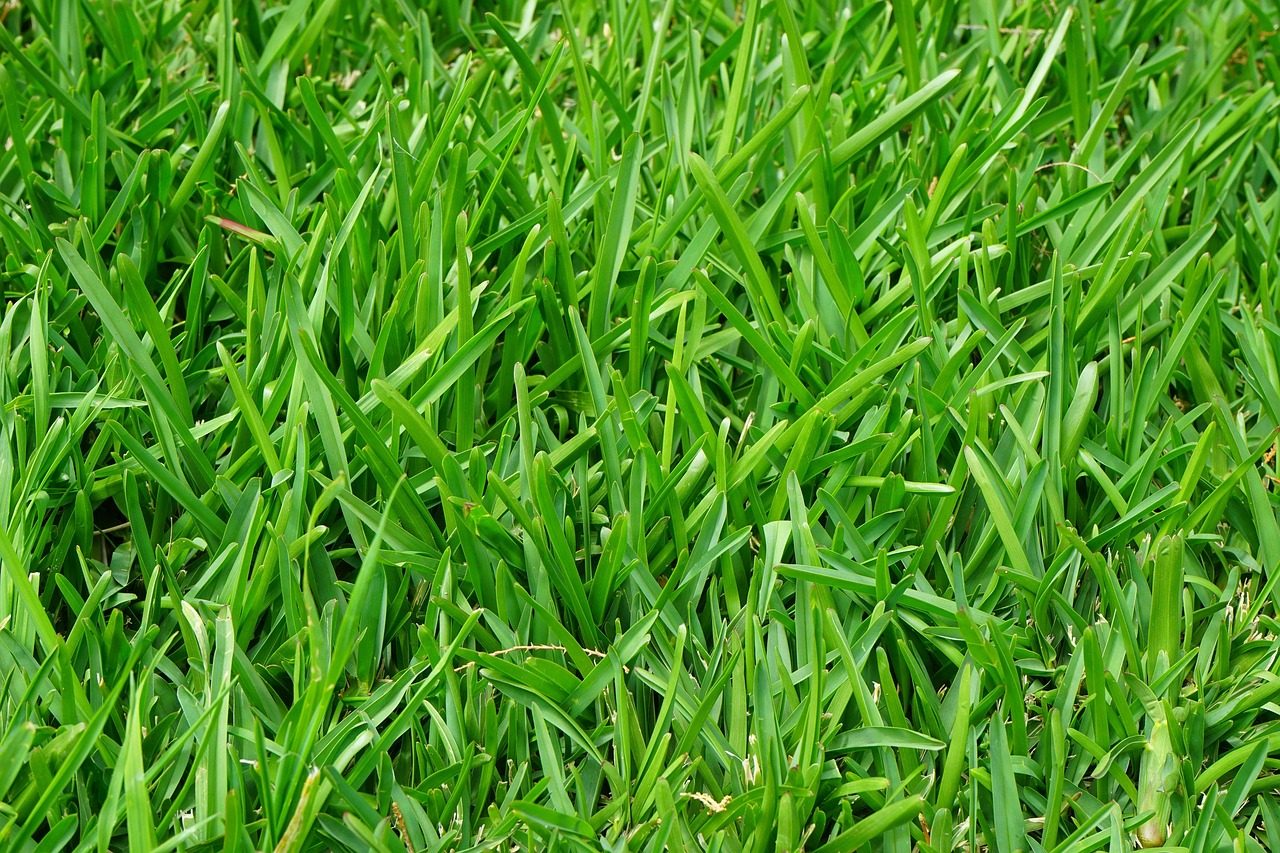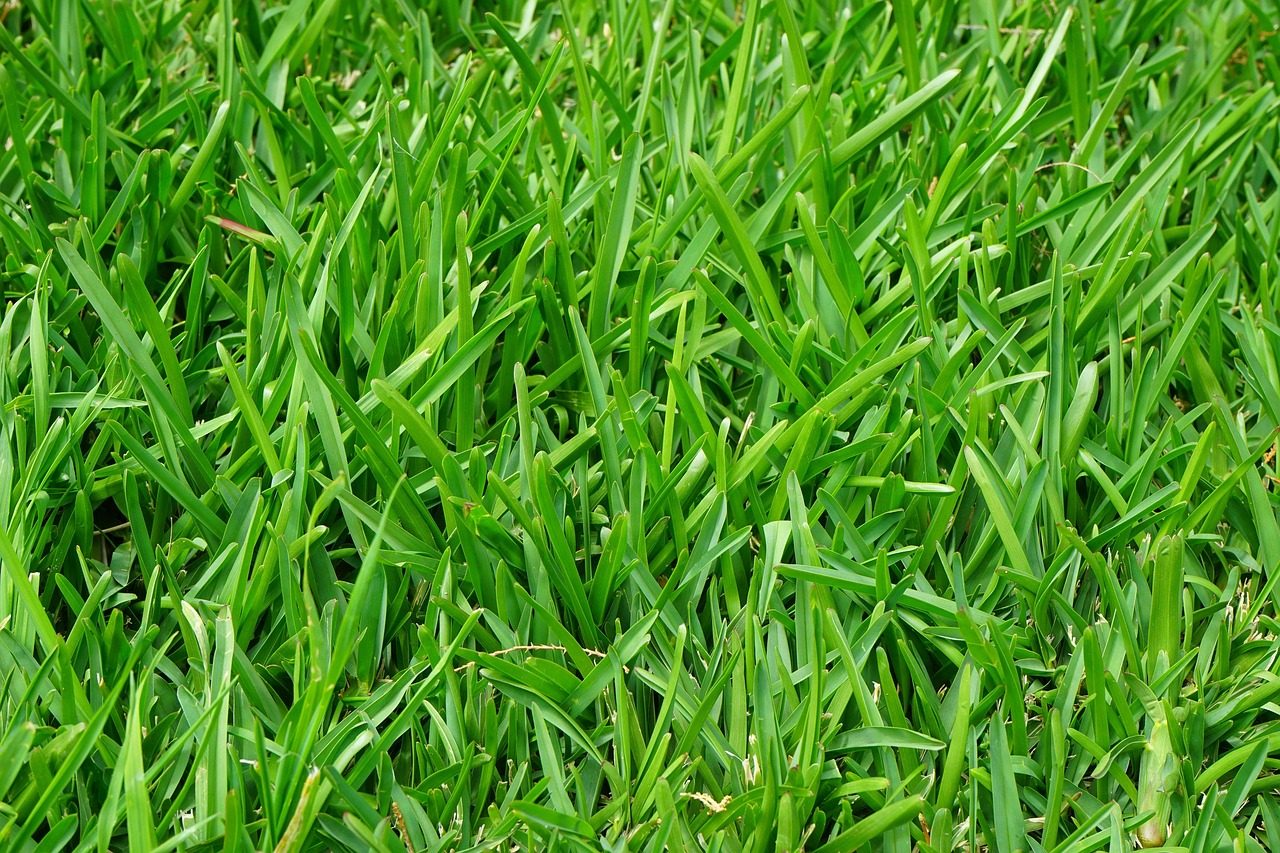

About Fine Fescue
Fine Fescue is the cool-season grass I recommend for every homeowner who says, "I just want something that looks decent in the shade without a lot of work." It's actually a group of closely related species, not a single grass, and understanding which type you have (or should plant) makes a real difference in results.
What makes Fine Fescue special is what it doesn't need. It requires less fertilizer than any other cool-season grass (1-2 lbs of nitrogen per year, compared to KBG's 3-4 lbs). It handles shade that would thin out every other option. It can even be left unmowed for a natural, meadow-like appearance if that's your style. In an era where people are looking to reduce their lawn care footprint, Fine Fescue is having a moment.
The Fine Fescue Family
When someone says "Fine Fescue," they could mean any of several species. Here are the main players, and picking the right one for your situation is half the battle:
- Creeping Red Fescue (Festuca rubra): The most common Fine Fescue in lawn blends. It spreads slowly via rhizomes (the only Fine Fescue that does), which helps it fill in thin areas over time. Best all-around choice for shade lawns because it forms that dense, knitted mat that resists weeds. If you're only going to plant one Fine Fescue species, this is the one
- Chewings Fescue (Festuca rubra commutata): A bunch-type Fine Fescue with an upright growth habit. Tolerates closer mowing than other Fine Fescues (down to 1.5 inches in cool weather) and works well in both sun and shade. It's also the most competitive against weeds among the bunch-type Fine Fescues because of its dense, upright growth
- Hard Fescue (Festuca brevipila): The toughest Fine Fescue for drought and poor soil. Very slow growing, which means very little mowing. Excellent for no-mow areas, slopes, and roadside applications. Hard Fescue can survive on as little as 12 inches of annual rainfall once established
- Sheep Fescue (Festuca ovina): Forms dense, blue-green tufts. Very drought tolerant but not as shade tolerant as others. Used primarily in low-maintenance and naturalized areas. Its distinctive blue-green color makes it attractive in ornamental plantings
Key Characteristics (All Fine Fescues)
- Blade width: Very fine (1-2mm), needle-like. The finest texture of any common lawn grass
- Color: Light green to gray-green (naturally lighter than KBG or Tall Fescue)
- Growth habit: Mostly bunch-type except Creeping Red, which spreads via rhizomes
- Texture: Soft, fine, almost feathery when touched
- Root system: Shallow but efficient, adapted to extract moisture from lean soils
Why Choose Fine Fescue?
Choose Fine Fescue if you have significant shade (4+ hours of direct sun is enough), want low maintenance, prefer a natural aesthetic, or are looking to reduce water and chemical inputs. It's also excellent blended with Kentucky Bluegrass or Perennial Ryegrass, where the Fine Fescue handles the shady spots and the other grasses handle the sun. Many university turfgrass programs now recommend Fine Fescue blends as the most sustainable cool-season lawn option for homeowners who don't want to spend every weekend on lawn care.
The Honest Trade-offs
- Traffic tolerance is low. Fine Fescue isn't built for heavy foot traffic, play areas, or dog runs. It thins out under repeated stress because the bunch-type species can't self-repair the way KBG does with its rhizomes
- Heat sensitivity. Fine Fescue struggles in hot, sunny locations (above 90°F consistently). If your yard is full sun in a hot climate, Tall Fescue is a better choice
- Lighter color. If you want that deep, dark green KBG look, Fine Fescue's natural light green color won't satisfy you. No amount of fertilizer will make it look like KBG, and trying just creates problems
- Can look "wispy" when thin. Fine Fescue's needle-like blades need density to look good. A thin stand looks sparse rather than lush, so proper seeding rates and patience during establishment are critical
How to Identify Fine Fescue
What Fine Fescue looks like
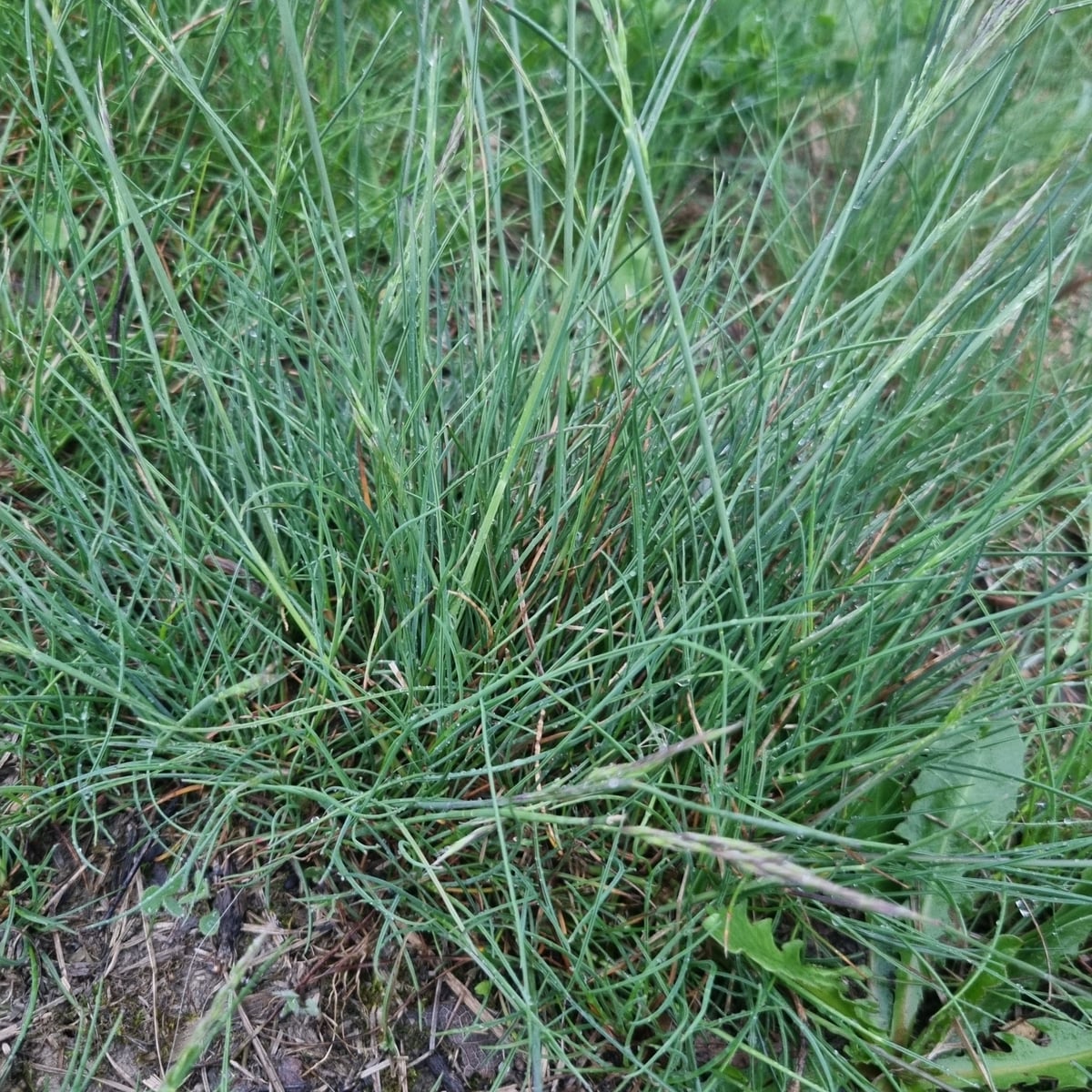
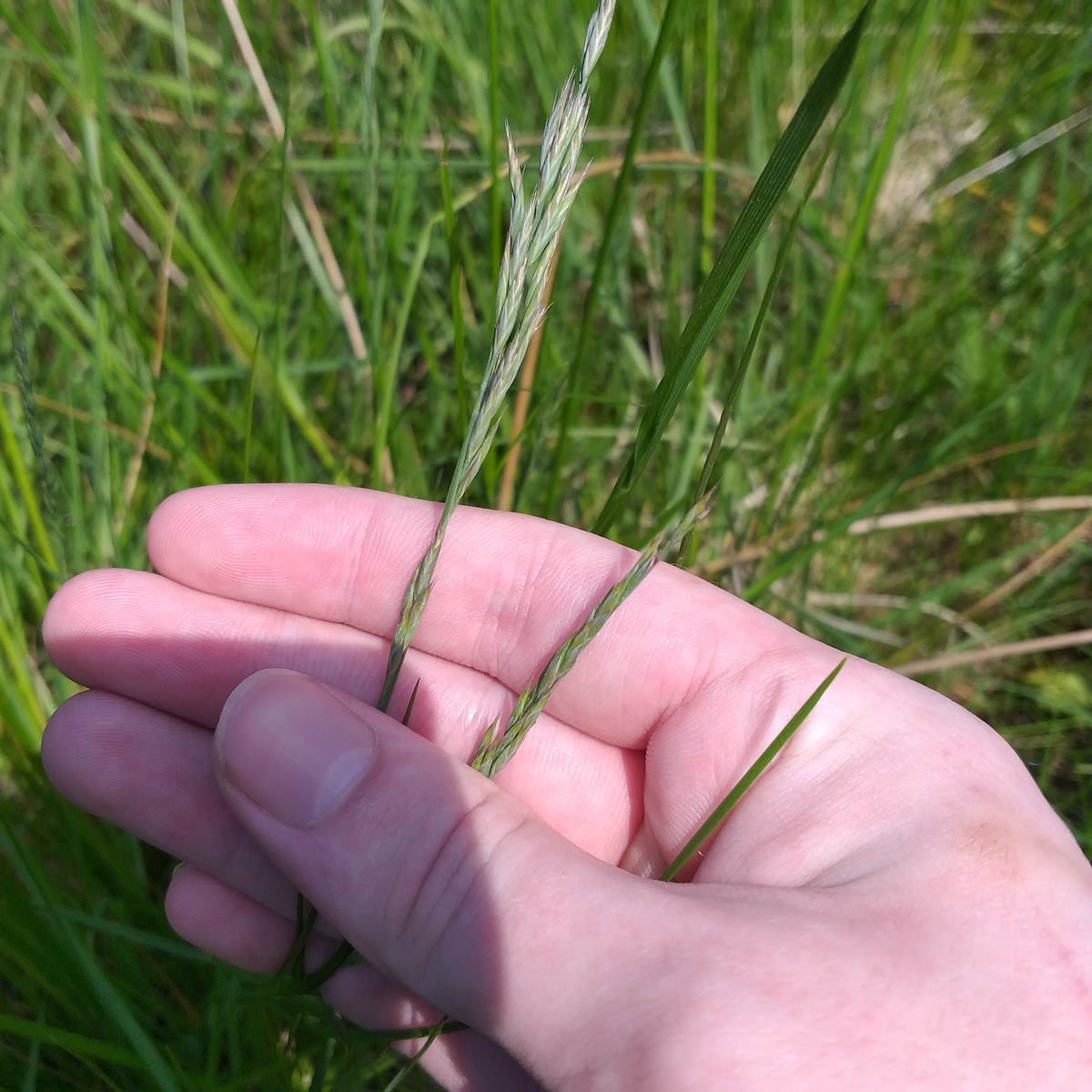
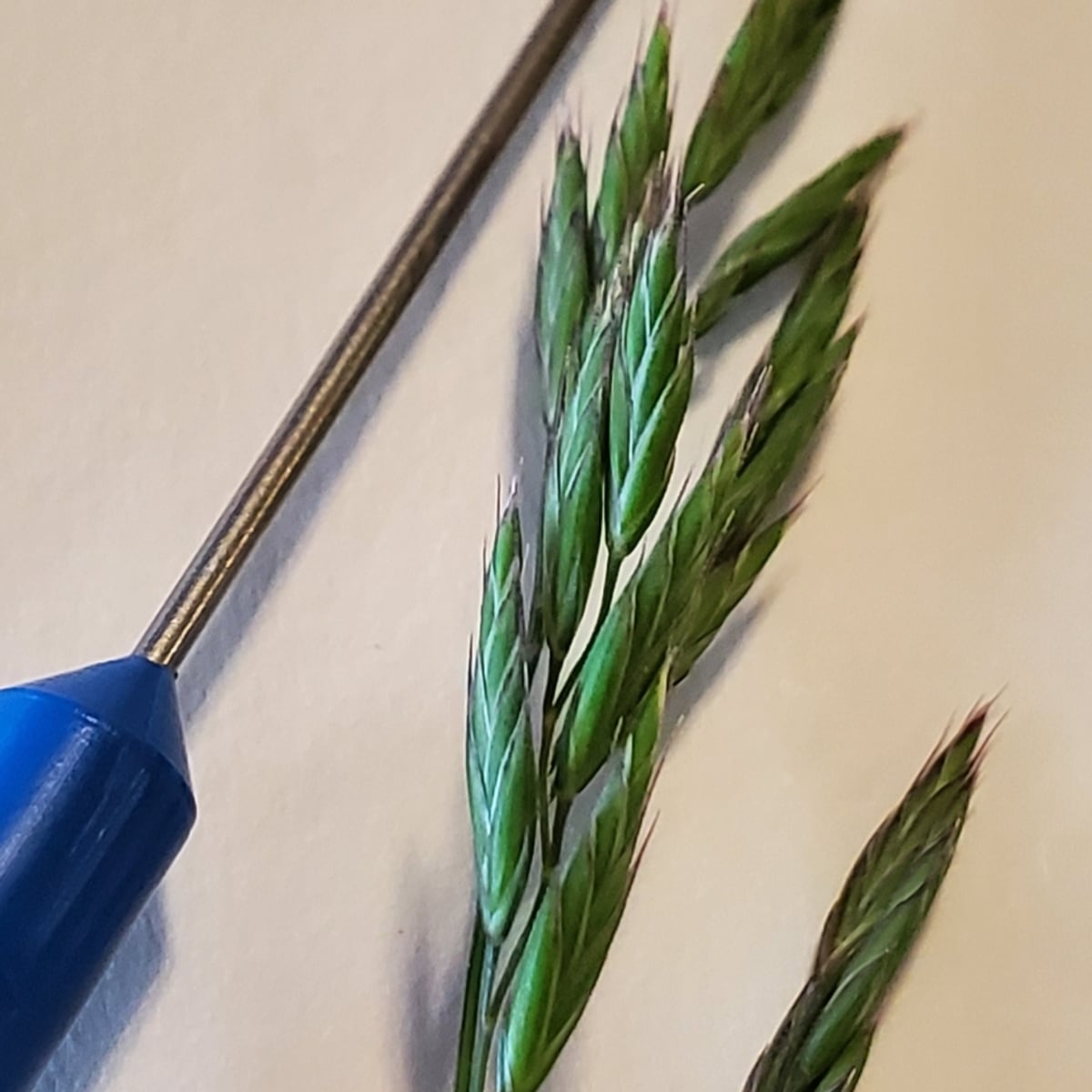
Fine Fescue is easy to identify once you know what to feel for. The blades are distinctly narrower and softer than any other common lawn grass. In fact, identification by touch is often more reliable than identification by sight, because the texture is so unique.
The Quick Touch Test
Grab a small handful of grass blades between your thumb and finger. If they feel like thin, soft needles rather than flat blades, you're almost certainly holding Fine Fescue. Compare to Tall Fescue (wide, rough, flat blades) or KBG (medium width, smooth, boat-shaped tips) and the difference is obvious. Fine Fescue blades are so narrow that they almost feel cylindrical, like a piece of soft thread. If you roll a single blade between your fingers, it won't lay flat the way a KBG or Tall Fescue blade does.
Visual Identification
- Blade width: Extremely narrow (1-2mm), the thinnest of any common lawn grass. They look almost like pine needles when viewed up close
- Blade shape: Rolled or folded rather than flat. If you look at a cross-section, it's V-shaped or cylindrical. This is a key distinguishing feature
- Color: Lighter green than KBG or Tall Fescue, sometimes with a gray or blue-green cast, especially in Hard Fescue and Sheep Fescue varieties
- Texture: Soft and fine to the touch, pleasant underfoot. Children and pets tend to prefer it over coarser grasses
- Growth habit: Depending on species, either tight bunches (Chewings, Hard, Sheep) or a creeping habit with fine rhizomes (Creeping Red). If you see clumpy growth with no runners connecting plants, you have a bunch-type Fine Fescue
Telling Fine Fescue Species Apart
Distinguishing between Fine Fescue species is trickier, but there are clues. Creeping Red Fescue has visible rhizomes connecting plants below the soil, while the others grow in isolated bunches. Hard Fescue tends to have stiffer, more upright blades with a blue-green tint. Sheep Fescue forms distinctive tussocks (dense, rounded clumps) and has the most pronounced blue color. Chewings Fescue has the most upright, dense growth habit of the bunch types and tends to be the darkest green.
Fine Fescue vs. Perennial Ryegrass
These can occasionally be confused because both can be fine-textured. The key difference: Fine Fescue blades are rolled or cylindrical when you look at the cross-section, while ryegrass blades are folded and have a glossy sheen on the underside. Ryegrass also has small ear-like projections (auricles) where the blade meets the stem. Another quick check is to look at the back of the blade. Ryegrass has a prominent, shiny midrib running down the center of the lower surface. Fine Fescue lacks this feature entirely.
Fine Fescue in Mixed Lawns
In blended lawns, Fine Fescue is usually easy to spot because its needle-like texture stands out against broader-bladed grasses. You'll often find it concentrated in the shadier areas where other grasses have thinned, because it naturally outcompetes them in low light. If you see patches of very fine, soft grass under trees surrounded by coarser grass in the sun, the fine stuff is almost certainly Fine Fescue.
Not sure? Upload a photo to our free grass identifier for an instant analysis.
Best Zones & Climate
Fine Fescue performs best in USDA Zones 3-7, thriving in the cooler regions of the northern United States, the Pacific Northwest, and at higher elevations. But within that range, understanding the nuances of where it excels versus where it merely survives will save you a lot of frustration.
Ideal Climate Conditions
- Air temperature: 60-75°F for optimal growth. Fine Fescue's growth peaks are spring and fall, similar to other cool-season grasses, but it reaches peak quality at the cooler end of that range
- Soil temperature: 50-65°F for active growth. Below 45°F, it enters dormancy. Above 70°F soil temperature, it slows dramatically
- Cold tolerance: Excellent. Among the most cold-hardy lawn grasses available. Hard Fescue, in particular, has been documented surviving minus 40°F winter temperatures in Minnesota without significant stand loss
- Heat tolerance: Poor to moderate. This is Fine Fescue's biggest limitation and the single most important factor in deciding whether it's right for your lawn
Where Fine Fescue Excels
The northern tier of states (Minnesota, Wisconsin, Michigan, New England, Pacific Northwest) and shaded landscapes everywhere in the cool-season zone. Fine Fescue is also outstanding at higher elevations where cooler temperatures prevail even in southern states. In the Pacific Northwest, Fine Fescue practically takes care of itself because the mild, cool climate matches its preferences almost perfectly. Coastal areas in the Northeast benefit from marine-moderated temperatures that keep summer highs in Fine Fescue's comfort zone.
Shade Performance: Fine Fescue's Superpower
This is where Fine Fescue genuinely has no equal among lawn grasses. Creeping Red Fescue and Chewings Fescue can maintain acceptable turf quality with as little as 4 hours of filtered sunlight per day. That's better shade tolerance than any other common lawn grass. To put that in perspective, KBG needs 4-6 hours of direct sun (not filtered), and Tall Fescue needs at least 4 hours of direct sun. Fine Fescue can work with dappled light filtering through a tree canopy, which is a completely different situation than open sky sun.
For the deepest shade where even Fine Fescue struggles (less than 3 hours of any light), consider shade-tolerant ground covers instead of grass. No grass, no matter how shade-tolerant, will perform in near-darkness.
Where Fine Fescue Struggles
Hot, humid summers (the Southeast, transition zone) are tough on Fine Fescue, especially in full sun. If you're south of Zone 7 and your lawn gets significant sun, Tall Fescue is a much better choice. Fine Fescue also doesn't handle wet, poorly drained soils well and can develop disease problems in persistently humid conditions. The combination of heat and humidity is particularly damaging because it creates the exact conditions that favor summer patch disease, which is Fine Fescue's most serious fungal threat.
The Sun Exposure Question
Here's something that surprises people: Fine Fescue can grow in full sun in Zones 3-5 where summers stay cool. In those regions, Hard Fescue and Sheep Fescue make excellent low-maintenance full-sun lawns. The problem starts when you combine full sun with summer temperatures that regularly exceed 85°F. In Zones 6-7, Fine Fescue should be reserved primarily for shaded areas, with Tall Fescue or KBG handling the sunny spots. Blending grasses by sun exposure is one of the smartest strategies for a mixed-light property.
Soil Preparation & pH
Fine Fescue actually prefers soil conditions that many other grasses would consider subpar. It does well in sandy, dry, acidic, and low-fertility soils. Rich, heavily amended soil can actually cause problems by encouraging faster-growing grasses and weeds to outcompete the Fine Fescue. This is one of the most counterintuitive things about this grass, and it's where I see well-meaning homeowners make expensive mistakes.
Ideal Soil Conditions
- pH range: 5.5-7.0 (tolerates more acidity than KBG, which needs 6.0-7.0). This wider range means Fine Fescue works in soils under pine trees and in naturally acidic regions without lime amendments
- Soil type: Sandy, well-drained soils are ideal. Fine Fescue evolved in lean, dry conditions and performs best when the soil mimics that environment
- Fertility: Low to moderate is actually preferred. Over-enriching the soil encourages competing species to move in
- Drainage: Good drainage is essential. Fine Fescue does not handle wet feet well. Persistently saturated soil leads to root rot and opens the door to summer patch disease
Get a Soil Test (But Expect Different Advice)
I always recommend a soil test before any major lawn project, and Fine Fescue is no exception. Contact your local university extension office for a test kit ($15-25). But here's the key difference: when you get the results back, the recommendations will likely be calibrated for standard lawn grasses that want fertile, neutral soil. For Fine Fescue, you can often ignore recommendations to add lime, increase phosphorus, or boost organic matter, unless the numbers are severely out of range. The goal is not "ideal" soil by conventional standards. The goal is soil that gives Fine Fescue a competitive advantage over weeds and more aggressive grasses.
The "Less Is More" Philosophy
Here's something counterintuitive: with Fine Fescue, improving your soil too much can actually hurt. Adding heavy compost, high-nitrogen amendments, or lime to create "ideal" lawn conditions often backfires because those ideal conditions favor more aggressive grasses and weeds that will crowd out the Fine Fescue. I've seen homeowners dump 3 inches of premium compost on a Fine Fescue planting only to watch crabgrass and bluegrass take over because those species thrive in rich soil. Unless your soil test shows something severely out of balance, leave the soil mostly as-is.
When to Amend
Only amend if your soil test shows:
- pH below 5.0: Apply a light lime application (25-50 lbs per 1,000 sq ft). Don't overshoot. You just want to nudge the pH up, not reach neutral
- pH above 7.5: Apply elemental sulfur at 5-10 lbs per 1,000 sq ft. Retest after 3 months
- Severely compacted clay: Core aerate rather than amending. Aeration improves drainage without changing the soil fertility profile that Fine Fescue prefers
- Zero organic matter: A light compost topdressing (1/4 inch) is okay, but resist the urge to go heavier
Preparing Soil for New Fine Fescue
If you're starting from bare ground, the preparation is deliberately minimal compared to a KBG installation. Kill existing vegetation, lightly till the top 2-3 inches (just enough for seed contact), grade for drainage, and seed. Skip the compost incorporation that you'd do for KBG. Skip the starter fertilizer unless the soil test shows very low phosphorus. The lean approach gives Fine Fescue its best chance at long-term dominance because it creates conditions only Fine Fescue truly enjoys.
Recommended Products
- 1Check price
 Top pick
Espoma Organic Lightning Lime (Fast-Acting Pelletized Lime)
Fast-acting pelletized lime for low-pH lawns when a soil test confirms you need to raise pH before fertilizing harder. Covers up to 5,000 sq ft.
- 2Check price
 Best value
GS Plant Foods Liquid Humic Acid
Leonardite-derived humic acid that improves soil structure and nutrient availability. OMRI listed, 1 gallon.
As an Amazon Associate we earn from qualifying purchases.
Fertilizer Program
If you're used to Kentucky Bluegrass's appetite for fertilizer, Fine Fescue is going to feel like a vacation. This grass needs so little fertilizer that the biggest risk is applying too much. Excess nitrogen pushes soft, disease-prone growth and encourages competing grasses to invade. I diagnose more Fine Fescue problems caused by overfertilization than underfertilization, and that's saying something.
Annual Fertilizer Requirements
- Nitrogen: 1-2 lbs per 1,000 sq ft per year. That's 1-2 applications total. Compare that to KBG's 3-4 lbs across 3-4 applications
- Phosphorus: Based on soil test. Usually not needed in established lawns
- Potassium: 0.5-1 lb per 1,000 sq ft per year. Potassium strengthens cell walls and helps with stress tolerance, so it's worth including if your soil test shows a deficiency
The Simple Schedule
Option 1: One Application (Lowest Maintenance)
Apply 1 lb N per 1,000 sq ft of slow-release fertilizer in early fall (September). That's your entire fertilizer program for the year. Seriously. Fine Fescue does not need more than this in most situations. Fall is when the grass is doing its most important work: building root mass, storing carbohydrates, and thickening up before winter. One well-timed fall feeding gives it everything it needs for 12 months.
Option 2: Two Applications (Moderate Maintenance)
Apply 0.5 lb N per 1,000 sq ft in late spring (May) and 1 lb N per 1,000 sq ft in early fall (September). This gives a slight density and color boost without pushing the grass beyond its comfort zone. Use slow-release fertilizer for both applications. The spring application should be light because you don't want to push heavy top growth heading into summer stress.
Why Slow-Release Matters Even More for Fine Fescue
Quick-release fertilizer dumps nitrogen into the soil all at once, creating a growth surge. For Fine Fescue, that surge is harmful because the grass doesn't have the aggressive growth habit to use all that nitrogen productively. Instead, the excess feeds disease organisms and weeds. Slow-release products (look for "slow-release nitrogen" or "controlled-release" on the label) meter out the nitrogen over 6-8 weeks, which matches Fine Fescue's gentle growth rate. Organic fertilizers like Milorganite work well here because they're naturally slow-release.
Critical Warnings
- Never apply more than 2 lbs N per 1,000 sq ft per year. More nitrogen makes Fine Fescue weaker, not stronger. Research from Rutgers University found that Fine Fescue turf quality actually declined when nitrogen exceeded 2 lbs per year
- Never fertilize in summer. Fine Fescue is already heat-stressed. Adding nitrogen during summer is a recipe for disease, especially summer patch and red thread
- Avoid "weed and feed" products. They typically contain too much nitrogen for Fine Fescue and deliver it at the wrong time (spring, when you should be feeding lightly if at all)
- If your lawn looks yellow, the problem is probably something other than nitrogen deficiency (pH, drainage, disease, compaction). Get a soil test before adding more fertilizer. I've seen homeowners chase yellowing with nitrogen application after nitrogen application, only to discover the real culprit was soil pH of 4.8
- No winterizer needed. Unlike KBG, which benefits from a late fall quick-release application, Fine Fescue doesn't need or want a winterizer. The single fall application in September is sufficient
Recommended Products
- 1Check price
 Top pick
Simple Lawn Solutions Advanced 16-4-8
Liquid 16-4-8 lawn food for quick feeding on established lawns when you want balanced NPK and simple hose-end application.
- 2Check price
 Best value
The Andersons PGF Complete 16-4-8
Balanced slow-release fertilizer for established lawns that need steady feeding without a quick flush of top growth.
As an Amazon Associate we earn from qualifying purchases.
Month-by-Month Care Calendar
Fine Fescue's care calendar is refreshingly simple. The mantra is "do less" and the calendar reflects that. Where a KBG calendar has multiple action items every month, the Fine Fescue calendar has long stretches of intentional inaction. That's not laziness. It's the correct strategy for a grass that genuinely performs better with minimal intervention.
Winter (December - February)
Your lawn is dormant. Enjoy the break.
- Minimize foot traffic on frozen turf. Ice crystals can damage grass crowns, and Fine Fescue's bunch-type growth means damaged plants don't self-repair the way KBG does
- No fertilizer, no herbicide, no mowing needed
- Service equipment if desired. Sharpen mower blades (Fine Fescue's thin blades are particularly susceptible to tearing from dull blades)
- If you plan to overseed thin areas in fall, order seed now. Quality Fine Fescue varieties can sell out
Early Spring (March - April)
Resist the urge to rush out and "do things" to your lawn. Early spring is about observation, not action.
- Light raking to remove winter debris and any matted areas. Don't use a power rake, just a gentle hand rake
- Apply pre-emergent if crabgrass is a problem (soil temp 50-55°F for 3 consecutive days). Use the lower end of the label rate. Fine Fescue is more sensitive to pre-emergent chemicals than KBG
- Begin mowing once active growth resumes (if you mow at all). Set the deck to 3-4 inches
- Do not fertilize yet. Spring nitrogen pushes top growth that Fine Fescue doesn't need heading into summer
- Inspect for winter damage. If you see dead patches, note them for fall overseeding rather than trying to fix them now
Late Spring (May - June)
- Optional: apply 0.5 lb N/1,000 sq ft if using the two-application program. Use slow-release only
- Mow at 3-4 inches if maintaining a mowed lawn. Fine Fescue grows slowly enough that mowing every 10-14 days is typical
- Spot-treat weeds if needed. Use the lowest effective label rate for any herbicide. Fine Fescue recovers slowly from chemical stress
- Water only if rainfall is significantly below 0.75 inch per week. In most years, natural rainfall is sufficient through spring
- Watch for red thread disease (pink or red strands on blade tips). If it appears, a light nitrogen application usually resolves it
Summer (July - August): Leave It Alone
This is the season where doing nothing is the right answer. Fine Fescue's summer strategy is survival, not growth.
- Fine Fescue may go semi-dormant in hot weather. This is normal, especially in full sun areas. The grass will turn brown or straw-colored. Don't panic
- Raise mowing height to 4 inches if mowing. Taller blades shade roots and reduce soil temperature by as much as 10°F
- Water lightly during extreme drought (above 90°F for more than 2 weeks with no rain) to keep crowns alive. A single deep watering of 0.5 inch every 2 weeks is enough to prevent crown death without forcing the grass out of protective dormancy
- Do NOT fertilize. Do NOT apply herbicides. Let the grass rest. Any chemical application during summer heat stress multiplies the damage
- Minimize traffic on heat-stressed turf. Weakened plants can't recover from physical damage until fall cooling arrives
Early Fall (September - October): Your Action Window
This is when you do nearly everything that matters for the entire year.
- Apply your main (or only) fertilizer application: 1 lb N/1,000 sq ft slow-release
- Overseed thin areas if needed. Soil temperature between 50-65°F is ideal for germination
- Core aerate if compaction is an issue (do this before overseeding)
- Fine Fescue recovers from summer stress as temperatures cool. You should see green-up within 1-2 weeks of the first cool rains
- Resume normal mowing schedule at 3-4 inches
Late Fall (November)
- Final mow before dormancy (if mowing). Fine Fescue can go into winter at its normal 3-4 inch height. Unlike KBG, you don't need to cut it short to prevent snow mold
- Remove fallen leaves to prevent smothering. A layer of wet leaves on Fine Fescue creates disease conditions and can kill patches over winter
- No winterizer fertilizer needed for Fine Fescue. The September application was your last feeding of the year
Mowing Guide
Here's where Fine Fescue really sets itself apart: you can mow it like a regular lawn, or you can skip mowing almost entirely and let it grow into a soft, flowing, natural meadow. Both approaches are completely valid, and your choice depends on the look you're going for. I genuinely love that this grass gives you options that no other lawn grass does.
Option 1: Traditional Mowed Lawn
- Height: 3-4 inches. This is higher than KBG's typical 2.5-3.5 inches, and the extra height matters. Fine Fescue's shallow root system needs the shade and moisture retention that taller blades provide
- Frequency: Every 10-14 days (Fine Fescue grows slowly). During the peak spring growth period, you might mow weekly, but through most of the season, every other week is plenty
- Result: A fine-textured, soft, light green lawn that has a graceful, almost feathery quality that KBG and Tall Fescue can't match
Option 2: Low-Mow / No-Mow Approach
This is increasingly popular, and Fine Fescue is the only lawn grass that genuinely supports it.
- Height: Let it grow to its natural height (6-10 inches depending on species). The grass will arch over gracefully rather than standing straight up
- Mowing: 2-3 times per year, or once in late fall for cleanup. Some homeowners mow a path through the lawn and leave the rest natural
- Result: A soft, flowing, meadow-like appearance that sways in the breeze. It's a completely different aesthetic from a traditional lawn, and many people find it beautiful
- Best species for this: Hard Fescue and Sheep Fescue, which naturally grow shorter and more compact. Hard Fescue typically tops out at 6-8 inches, while Creeping Red can reach 10-12 inches
- HOA considerations: Check your neighborhood rules before going no-mow. Some HOAs have height restrictions. A compromise is mowing the front yard traditionally and going no-mow in the back
Why Mowing Height Matters More Than You Think
There's a direct relationship between mowing height and root depth. Mow at 4 inches and Fine Fescue's roots develop to their full potential. Mow at 2 inches and you're cutting root depth roughly in half. For a grass that already has a shallow root system, that difference determines whether the lawn survives summer or browns out completely. I've diagnosed failing Fine Fescue lawns where the only problem was the homeowner mowing at 2 inches because "that's what the neighbor does." The neighbor had KBG.
Mowing Tips Specific to Fine Fescue
- Sharp blades are critical. Fine Fescue's thin blades tear easily with dull blades, creating a ragged, brown-tipped appearance that looks terrible and invites disease. Sharpen blades every 20-25 hours of mowing
- A standard rotary mower works fine at 3+ inches. You don't need a reel mower
- If switching from no-mow to mowed, reduce height gradually over 2-3 mowings. Never cut more than 1/3 of the blade at once. Removing more than that shocks the plant and can cause die-back
- Mulch clippings. They decompose quickly and return nutrients, which is especially valuable since Fine Fescue gets so little fertilizer
- Alternate mowing direction each time to prevent the fine blades from developing a permanent lean
Mowing in Shade
In shaded areas, raise your mowing height to the maximum (4 inches or higher). Taller blades capture more light, which is critical when light is already limited. Mowing shade grass too short is one of the fastest ways to thin it out. I've seen shade lawns go from decent to bare dirt in a single season because someone decided to mow at 2.5 inches "for a cleaner look." In shade, every fraction of an inch of blade height is collecting precious photons that keep the plant alive. Don't sacrifice function for appearance.
Watering Schedule
Fine Fescue has surprisingly good drought tolerance for a shade grass. While it doesn't have the deep roots of Tall Fescue (6-8 inches), it has a natural ability to go dormant during dry periods and recover when moisture returns. Most Fine Fescue lawns do fine with minimal supplemental watering, and overwatering is genuinely more dangerous than underwatering. That's worth repeating because it runs counter to most lawn care advice.
Weekly Water Requirements
- Spring: 0.5-0.75 inch per week (natural rainfall often covers this entirely)
- Summer: 0.75-1 inch per week (or allow dormancy, which is perfectly healthy)
- Fall: 0.5-0.75 inch per week
- Winter: None needed
Compare those numbers to KBG's 1-1.8 inches per week and you can see why Fine Fescue appeals to homeowners who want a lower water bill. In many northern climates, natural rainfall provides everything Fine Fescue needs for the entire year.
The "Keep It Dry" Strategy
Fine Fescue prefers to stay on the dry side. Overwatering is actually more dangerous than underwatering because wet conditions promote the fungal diseases that Fine Fescue is susceptible to, particularly red thread, dollar spot, and the devastating summer patch. Water only when the grass shows drought stress (wilting, color change to dull gray-green), and then water deeply to encourage what root growth the plant can develop.
- Once per week is typically sufficient, even in summer. Twice per week is the maximum under any conditions
- Water early morning (before 8 AM) to reduce disease risk. Evening watering is the single worst thing you can do for Fine Fescue because wet blades overnight in cool temperatures are a breeding ground for fungal pathogens
- In shade, reduce watering further since shaded soil retains moisture longer. This is important because many people water shaded areas on the same schedule as sunny areas, creating chronically wet conditions that Fine Fescue hates
- Sandy soils may need slightly more frequent watering, but still less than you'd give KBG or Tall Fescue
How to Measure Your Watering
Place 4-5 empty tuna cans around your sprinkler zone and time how long it takes to collect 0.5 inches of water. That's your baseline watering duration. Most sprinkler systems need 15-30 minutes per zone to deliver 0.5 inches, but it varies significantly. Do this test once so you know your actual numbers rather than guessing.
Drought Response: Let It Happen
Fine Fescue goes dormant (turns brown) during extended dry periods but recovers well when moisture returns. Hard Fescue and Sheep Fescue are particularly drought-tolerant and can survive 4-6 weeks of complete dormancy without significant stand loss. Creeping Red Fescue is slightly less drought-tolerant but still better than KBG.
If you're willing to accept temporary dormancy, you may not need to irrigate Fine Fescue at all in many climates. The critical rule is the same as with KBG: commit to one strategy. Either water consistently or let it go dormant. Don't alternate between the two, because forcing the plant to repeatedly switch between growth and dormancy exhausts its energy reserves and weakens the stand long-term.
The Overwatering Trap
The most common watering mistake with Fine Fescue is treating it like KBG. Homeowners who switch from a KBG lawn to Fine Fescue often keep their old irrigation schedule running, which delivers twice the water Fine Fescue wants. The result is a lawn that looks increasingly thin and diseased despite "doing everything right." If you've inherited a Fine Fescue lawn and it's struggling, try cutting your irrigation by 40-50% before trying anything else. The improvement can be dramatic.
Seeding & Overseeding
Fine Fescue establishes reasonably well from seed, though it requires patience and a lighter touch than most grasses. The biggest mistake I see is treating Fine Fescue seeding like a KBG or Tall Fescue project, with heavy soil amendments, aggressive starter fertilizer, and overwatering. Fine Fescue wants the opposite of all those things.
Best Time to Seed
Fall (late August through mid-October) is ideal, just like other cool-season grasses. The warm soil speeds germination while cooling air temperatures reduce stress on young seedlings. Fall-seeded Fine Fescue has both fall and spring to establish before facing its first summer, which dramatically improves survival rates.
Spring seeding (April to May) is possible but less reliable due to upcoming summer heat stress. Fine Fescue seedlings are especially vulnerable to their first summer because the root system isn't developed enough to access deeper soil moisture. If you must spring-seed, do it as early as soil temperatures allow (50°F) to maximize the establishment window before heat arrives.
Seeding Rates
- New lawn (pure Fine Fescue): 4-5 lbs per 1,000 sq ft. This is higher than KBG's 2-3 lbs because Fine Fescue seed is smaller and you need more seeds per square foot for adequate coverage
- New lawn (blend with KBG or ryegrass): Fine Fescue component at 2-3 lbs per 1,000 sq ft, combined with 1-1.5 lbs KBG and/or 1-2 lbs Perennial Ryegrass
- Overseeding existing lawn: 2-3 lbs per 1,000 sq ft. Focus seed on thin areas rather than spreading evenly across the entire lawn
Germination Timeline
Fine Fescue typically germinates in 10-21 days, depending on species and conditions. Creeping Red Fescue tends toward the faster end (10-14 days), while Hard Fescue is slower (14-21 days). Full establishment takes 8-12 weeks, meaning a September seeding should be reasonably filled in by late November. Don't judge your results until the following spring, though, because Fine Fescue really comes into its own after surviving its first winter and putting on spring growth.
Seeding Tips Specific to Fine Fescue
- Use a broadcast spreader at half rate in two perpendicular passes. Fine Fescue seed is tiny (roughly 500,000 seeds per pound) and clumps easily in a spreader. Two lighter passes at right angles give much more even distribution than one heavy pass
- Don't bury seed deep. A light raking or thin topdressing (1/8 to 1/4 inch) is all that's needed. Seed buried deeper than 1/4 inch may not have the energy to push through to the surface
- Keep seed consistently moist until germination. Light, frequent watering (2-3 times daily for 5-10 minutes) keeps the surface moist without saturating the soil. This is the one time Fine Fescue wants frequent light water
- Reduce watering gradually after germination since Fine Fescue prefers drier conditions once established. Transition to deep, infrequent watering over 2-3 weeks
- Go easy on starter fertilizer. A light application is fine (half the label rate), but heavy starter fertilizer encourages weeds more than it helps Fine Fescue. If your soil has reasonable fertility, you can skip starter fertilizer entirely
Blending Fine Fescue with Other Grasses
Fine Fescue is commonly blended with KBG and/or Perennial Ryegrass in shade mixes. A typical shade blend might be 40-60% Fine Fescue (for shade tolerance), 20-30% KBG (for self-repair), and 10-20% Perennial Ryegrass (for quick establishment). The Fine Fescue dominates in the shady areas while the other grasses take over in sunnier spots. This self-sorting behavior is one of the best things about blended lawns: each species naturally gravitates to the conditions it prefers.
Choosing the Right Seed
When buying Fine Fescue seed, look for endophyte-enhanced varieties. Endophytes are beneficial fungi that live inside the grass plant and provide natural resistance to surface-feeding insects. Check the seed label for a germination rate above 85%, a test date within the last 9 months, and zero noxious weed seeds. For blends, consider using multiple Fine Fescue species together (such as Creeping Red plus Chewings plus Hard Fescue) for genetic diversity and adaptability across different conditions in your yard.
Recommended Products
- 1Check price
 Top pick
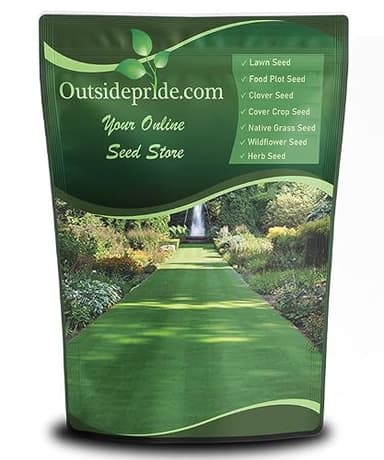
Outsidepride Legacy Fine Fescue Blend (10 lb)
Elite fine-fescue blend (hard, chewings, creeping red) for soft, shade-tolerant, low-input lawns; 10 lb for full coverage.
As an Amazon Associate we earn from qualifying purchases.
Weed Control
Fine Fescue's low-input nature means you need to be careful with herbicide applications. The grass is more sensitive to certain chemicals than KBG or Tall Fescue, and its slower growth means it takes longer to recover from herbicide stress. I've seen homeowners do more damage to their Fine Fescue with aggressive weed control than the weeds themselves ever caused. The approach here is restraint and precision.
Pre-Emergent Herbicides
Pre-emergents are your most important chemical tool for Fine Fescue because they prevent problems before they start, avoiding the need for more stressful post-emergent treatments later.
- Apply when soil temp reaches 50-55°F for 3 consecutive days for crabgrass prevention. Timing matters more than product choice
- Use at the lower end of label rates since Fine Fescue can be sensitive to chemical stress. Full-rate applications that KBG handles without issue can thin Fine Fescue noticeably
- Do not apply pre-emergent if you plan to seed within 8-12 weeks. Pre-emergent prevents grass seed germination just as effectively as weed seed germination
- Prodiamine and dithiopyr are generally well-tolerated by Fine Fescue at reduced rates. Avoid products containing benefin or bensulide, which can cause more injury to Fine Fescue
- If you're using mesotrione (Tenacity), note that Fine Fescue may show temporary bleaching (white discoloration). This is cosmetic and the grass recovers, but it can look alarming if you're not expecting it
Post-Emergent Herbicides
For weeds that are already growing, a careful approach prevents collateral damage to your Fine Fescue.
- Use selective broadleaf herbicides at the lowest effective label rate. A three-way herbicide containing 2,4-D, dicamba, and MCPP handles most broadleaf weeds
- Apply only when Fine Fescue is actively growing and not heat-stressed. That means spring (April to May) or fall (September to October). Never spray in summer
- Spot-treat individual weeds rather than blanket applications when possible. A pump sprayer targeting specific weeds puts 90% less chemical on your lawn than a broadcast application
- Fine Fescue is more sensitive to herbicide injury than other cool-season grasses, so always test a small area first if using a product for the first time. Wait 7-10 days and check for yellowing or thinning before treating the whole lawn
- Triclopyr-based products are effective on tough weeds like wild violets and ground ivy, but use them cautiously on Fine Fescue. Reduce the rate by 25% compared to what you'd use on KBG
The Best Weed Control: Density
A thick, well-established Fine Fescue stand actually does a good job of suppressing weeds naturally, especially Creeping Red Fescue which forms a tight, weed-resistant mat. Focus on maintaining density through appropriate seeding rates, proper mowing height, and minimal but consistent fertilization. In no-mow settings, the tall grass shades the soil surface and significantly reduces weed germination. University research has shown that unmowed Fine Fescue stands can reduce weed populations by 60-80% compared to mowed stands, simply through light competition.
Common Weed Challenges in Fine Fescue
- Crabgrass: The biggest threat in sunny areas. Properly timed pre-emergent is essential. Hand-pull any breakthroughs before they set seed in late summer
- Clover: Often indicates the soil is too fertile or the lawn is too thin. In a healthy Fine Fescue stand, clover struggles to compete. If clover is widespread, the lawn likely needs overseeding, not herbicide
- Moss: Common in shaded Fine Fescue areas. Moss indicates poor drainage, soil compaction, or extremely low pH. Address the underlying cause rather than treating the moss itself
- Coarse grasses (Tall Fescue clumps): These can't be selectively removed with herbicide. Hand-dig individual clumps and overseed the spots with Fine Fescue
The Low-Chemical Approach
Fine Fescue is arguably the best grass for homeowners who want to minimize chemical use. Its natural competitiveness in shade, its low fertility requirements (which don't favor weeds), and its no-mow capability all reduce weed pressure without chemicals. If you maintain a dense stand at 3-4 inches, apply pre-emergent only where crabgrass is a documented problem, and hand-pull the occasional broadleaf weed, you can manage a Fine Fescue lawn with very little herbicide.
Recommended Products
- 1Check price
 Top pick
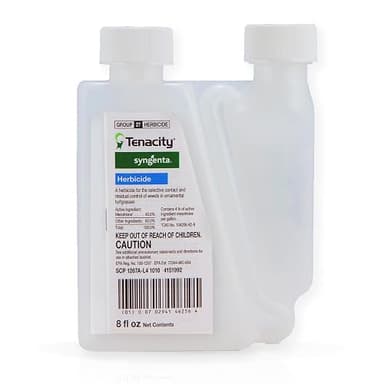
Tenacity Turf Herbicide 8 oz
Mesotrione pre/post-emergent for crabgrass, nimblewill, and bentgrass. Safe on cool-season lawns.
- 2Check price
 Best value
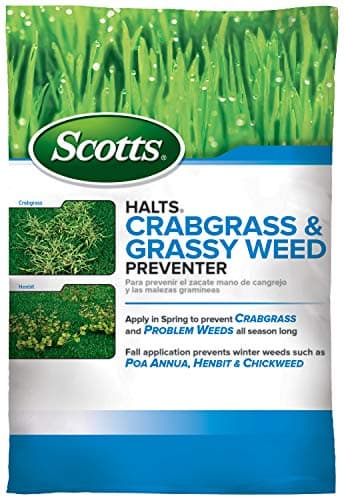
Scotts Halts Crabgrass and Grassy Weed Preventer
Granular pre-emergent for homeowners who want a simple crabgrass-prevention product before soil temperatures hit the danger zone.
As an Amazon Associate we earn from qualifying purchases.
Pest & Disease Management
Fine Fescue has a mixed disease profile that's worth understanding. On one hand, endophyte-enhanced varieties have excellent natural insect resistance. On the other hand, the grass is susceptible to several fungal diseases, particularly when conditions are too wet or too warm. Most disease problems I diagnose in Fine Fescue lawns trace back to one of two root causes: overwatering or overfertilizing. Fix those and you eliminate most disease pressure before it starts.
Common Diseases
Red Thread
This is the most common Fine Fescue disease, and it's the one I get asked about more than any other. You'll see pink or red thread-like strands extending from blade tips, giving patches of lawn a pinkish cast. It's most active during cool, wet weather in spring and fall, typically when temperatures are 60-75°F with high humidity. The good news: red thread is almost always a sign of nitrogen deficiency. A light fertilizer application (0.5 lb N per 1,000 sq ft) usually resolves it within 2-3 weeks without fungicide. Don't overreact and dump heavy nitrogen on it. A gentle nudge is all the grass needs.
Dollar Spot
Small circular patches of straw-colored turf, roughly 2-4 inches in diameter. Individual blades show distinctive hourglass-shaped lesions. Like red thread, it's often tied to low nitrogen and is most active during warm, humid weather when dew lingers on blades. Proper fertilization is usually the fix. Watering early in the morning so blades dry quickly also helps reduce dollar spot pressure. If both red thread and dollar spot appear, that's a clear signal your fertilization program is too lean, even by Fine Fescue's minimal standards.
Leaf Spot
Brown or purplish lesions on blades during cool, wet weather in spring. Improve air circulation by pruning low tree branches, avoid evening watering, and mow regularly to remove infected blade tips. Usually cosmetic and self-resolving as weather warms and dries. Fungicide treatment is rarely warranted.
Summer Patch
This is the most serious Fine Fescue disease and the one I watch for most carefully. Circular patches of dying turf (6-12 inches in diameter) appear during hot, humid weather, often with a ring of brown grass surrounding green grass in the center (a "frog eye" pattern). Summer patch is caused by a soil-borne fungus that attacks roots when soil temperatures exceed 65°F. It's most common in heavy clay soils with poor drainage and in lawns that receive excessive nitrogen. Prevention is the only reliable approach: improve drainage, reduce compaction through aeration, keep nitrogen below 2 lbs per year, and avoid watering in the evening. Fungicide (azoxystrobin or propiconazole) may be needed for severe recurring cases, applied preventively in late spring before symptoms appear.
Natural Pest Resistance Through Endophytes
Fine Fescue has a natural advantage when it comes to pests: many varieties contain endophytes (beneficial fungi that live inside the plant) that make the grass toxic or unpalatable to surface-feeding insects like sod webworms, armyworms, chinch bugs, and billbugs. When buying seed, look for endophyte-enhanced varieties (the label will state "endophyte enhanced" or show an endophyte percentage above 70%). The endophytes don't affect humans, pets, or earthworms, only leaf-feeding insects. This built-in pest control is one of Fine Fescue's most underappreciated features.
Grubs: The Exception
White grubs can still damage Fine Fescue since they feed on roots rather than leaves (endophytes don't affect root-feeding pests). Apply preventive grub control (chlorantraniliprole/GrubEx) in late spring (May to early June) if you've had grub problems. The telltale signs are irregular brown patches that peel up like loose carpet and increased bird or raccoon digging. Fine Fescue's shallow root system makes it slightly more vulnerable to grub damage than deep-rooted Tall Fescue, so 5-6 grubs per square foot can cause visible damage (compared to 8-10 per square foot for Tall Fescue). Check by pulling back turf at the edge of a brown patch and counting the C-shaped white larvae in one square foot of soil.
When to Consider Fungicide
For most Fine Fescue diseases, cultural practices (proper watering, appropriate fertilization, good mowing height) are the real cure, and fungicide is rarely needed. Reserve fungicide treatments for recurring summer patch problems and severe dollar spot outbreaks that don't respond to fertilization. If you do apply fungicide, use it preventively (before symptoms appear) rather than curatively, and always combine it with changes to the underlying cultural practice that's creating the problem.
Aeration & Dethatching
Fine Fescue generally needs less aeration and dethatching than more aggressive grasses because it grows slowly and its preferred sandy soils don't compact as readily. That said, when compaction does occur, it affects Fine Fescue significantly because its shallow root system has less depth to work with. The key is to aerate only when there's a genuine need, and to do it gently.
Core Aeration
When to Aerate
- Best time: Early fall (September), before or during overseeding. This gives the grass 6-8 weeks of good growing conditions to recover before winter dormancy
- Frequency: Every 1-2 years, or only when needed. Many Fine Fescue lawns on sandy, well-drained soil can go 2-3 years between aerations without any problem
- Avoid: Aerating during summer heat stress. Fine Fescue recovers slowly from any disturbance in hot weather, and aeration holes expose roots to heat and drying. Spring aeration (April) is acceptable if fall timing was missed, but fall is strongly preferred
How to Tell If Aeration Is Needed
Don't aerate on autopilot. Check first. Push a screwdriver or soil probe into the ground. If it slides in easily to 3-4 inches, your soil isn't compacted and aeration isn't necessary. If it meets significant resistance in the top 2 inches, aeration will help. Also look for these signs: water pooling on the surface rather than soaking in, thin turf despite adequate fertilization and watering, and soil that feels hard underfoot after rain. High-traffic areas (paths, play zones) compact faster than lightly used areas, so you may only need to aerate specific zones rather than the entire lawn.
Aeration Tips for Fine Fescue
- Use a core aerator that pulls actual plugs, not a spike aerator. Spike aerators just push soil aside and can increase compaction around the holes
- Use shorter tines (2 inches is fine for Fine Fescue's shallower root system). You don't need 3-inch plugs like you would for deep-rooted Tall Fescue
- One pass is usually sufficient. Two passes (in perpendicular directions) are only needed for severely compacted soil. Fine Fescue doesn't recover from aggressive disturbance the way KBG does with its rhizomes
- In shade areas, aerate lightly. Shade-stressed grass recovers more slowly, and excessive disruption can open gaps that weeds colonize before the Fine Fescue fills back in
- Follow with overseeding for best results. Seeds fall into the aeration holes, which provide ideal germination conditions: good soil contact, moisture retention, and protection from birds
- Rent a core aerator ($75-100 per day from most home improvement stores) or hire a lawn service ($75-150 for an average lawn). If you have a small lawn under 3,000 sq ft, a manual step-on aerator works fine and costs under $40
Dethatching
Fine Fescue builds thatch slowly due to its slow growth rate. Dethatching is rarely needed and should be approached with extreme caution since Fine Fescue recovers slowly from aggressive mechanical disruption. I've seen well-meaning homeowners set their lawns back an entire season by power-dethatching Fine Fescue based on advice written for KBG.
How to Check Thatch
Cut a small wedge of turf with a knife or sharp spade and measure the brown, spongy layer between the green blades and the soil. A thin thatch layer (under 1/2 inch) is actually beneficial for Fine Fescue. It insulates roots, retains moisture, and protects crowns from temperature extremes.
When and How to Dethatch
- Only dethatch if thatch exceeds 1/2 inch (uncommon with Fine Fescue due to its slow growth rate)
- Use a light touch. A gentle hand dethatching rake is safer than a power dethatcher. If you must use a power dethatcher, set the blades to barely penetrate the thatch layer
- Early fall is the only acceptable timing. Never dethatch in spring (the grass needs all its energy for the growing season ahead) or summer (the grass is already stressed)
- Core aeration is almost always a better choice than dethatching for Fine Fescue. Aeration addresses compaction and introduces soil microorganisms into the thatch layer that break it down naturally, without the mechanical damage that dethatching inflicts. If you're debating between the two, choose aeration every time
Preventing Thatch Buildup
The best approach is preventing excessive thatch rather than removing it:
- Don't overfertilize (the number one cause of thatch in Fine Fescue lawns that do develop it)
- Mulch clippings rather than bagging. Mulched clippings do not cause thatch. Thatch comes from stems and roots, not from leaf clippings. This is one of the most persistent myths in lawn care
- Core aerate every 1-2 years to introduce thatch-decomposing soil organisms
- Maintain proper soil pH so the microorganisms that break down thatch can do their work. Excessively acidic soil (below 5.0) slows microbial activity, which slows thatch decomposition