Common Lawn Care Mistakes Beginners Make
 James ThorntonLawn Equipment & Maintenance Expert | 20 Years
As an Amazon Associate we earn from qualifying purchases.
Patchy turf, random weeds, and thin, brittle grass almost always trace back to a small set of predictable lawn care mistakes. The issues look different on the surface, but the underlying causes repeat: wrong grass for the climate, neglected soil, poor mowing practices, and treating lawn care as a one-time chore instead of a managed system.
These lawn care errors matter because turf problems compound. According to Penn State Extension, weakened grass creates open space that weeds occupy rapidly, which then requires more herbicide and renovation over time. Correcting a severely damaged lawn often requires months of overseeding, topdressing, and repeated inputs, while preventing the damage usually requires only small, consistent actions.
Most beginners want the same thing: a thick, green, relatively low-maintenance lawn and straightforward lawn care tips that do not require professional-level expertise or specialty equipment. The barrier is rarely effort. The barrier is doing the right actions at the right time for the right grass under the right conditions.
Every yard is different. Climate, soil type, drainage pattern, sun and shade, and how the lawn is used all influence what works. The goal is not perfection or laboratory-level turf. The goal is to avoid the biggest, most damaging mistakes that prevent any lawn from improving, no matter how much time you spend.
This guide focuses on the most common lawn care mistakes beginners make, why they cause trouble from a turfgrass science perspective, and what to do instead. For definitions of common terms like thatch, aeration, and pre-emergent, refer to Understanding Lawn Care Terminology. For tools, see Essential Lawn Care Tools Every Homeowner Needs. To keep everything on track long term, pair this article with How to Create a Lawn Maintenance Schedule and, if you are starting fresh, How to Start a Lawn from Scratch.
To avoid common lawn care mistakes, start by identifying your grass type and understanding your local climate. Knowing whether you have a cool-season or warm-season grass is crucial, as these differ in their optimal growth temperatures. For example, cool-season grasses thrive when temperatures are between 60-75°F. You can verify your grass type by checking its growth pattern during different seasons or consulting a local extension service.
Once you've identified your grass type, adjust your lawn care routine accordingly. For cool-season grasses, consider fertilizing in early fall and spring to promote healthy growth. Warm-season grasses, on the other hand, benefit from fertilization in late spring and summer. Expect noticeable improvements in your lawn's density and color within 6-8 weeks of consistent, targeted care tailored to your grass type.
1. Big-Picture Lawn Care Mistakes That Sabotage Everything
1.1 Not Knowing Your Grass Type, Climate, or Lawn Conditions
Diagnosing lawn issues without knowing your grass type and climate is like prescribing medicine without knowing the patient. Grass species differ in ideal temperatures, mowing height, fertility needs, and stress tolerance. Using advice meant for another grass type leads directly to many of the most common lawn care errors.
Turfgrasses in North America divide broadly into:
- Cool-season grasses - Grow best when air temperatures are roughly 60-75°F. Common in northern regions.
- Warm-season grasses - Grow best when air temperatures are roughly 80-95°F. Common in southern regions.
- Transition zone lawns - Areas where summers are hot and winters are cold, and both warm- and cool-season grasses are used, each with tradeoffs.
According to Purdue University Extension, cool-season grasses, such as Kentucky bluegrass, perennial ryegrass, and tall fescue, perform best in USDA zones generally north of about Tennessee and Oklahoma. Warm-season grasses, such as bermudagrass, zoysiagrass, St. Augustinegrass, and centipedegrass, dominate along the Gulf Coast, Southeast, and lower Southwest.
Why grass type matters
Each category has different requirements:
- Cool-season grasses prefer mowing heights in the 2.5 to 4 inch range, peak growth in spring and fall, and experience heat stress in mid-summer.
- Warm-season grasses tolerate shorter mowing (often 1 to 3 inches), go dormant and brown after frost, and require most of their management in late spring through summer.
Common beginner mistakes linked to ignoring grass type and climate include:
- Following fertilization calendars from a different region, which either starves the lawn or burns it with nitrogen at the wrong time.
- Mowing warm-season grasses too high because advice came from a cool-season article, or cutting cool-season lawns too short because the neighbor has bermudagrass.
- Planting Kentucky bluegrass in hot, humid Gulf climates where it consistently fails, or planting St. Augustinegrass in regions with severe winterkill risk.
Quick identification tips
A precise ID sometimes requires a close-up look, but some quick traits help narrow it down:
- Common cool-season grasses: Kentucky bluegrass has boat-shaped leaf tips and spreads by rhizomes; tall fescue has wide blades with a coarse texture; perennial ryegrass has shiny undersides and very fine blades.
- Common warm-season grasses: Bermudagrass is fine-textured, forms a dense mat, and spreads with both stolons and rhizomes; zoysiagrass feels stiff and almost wiry; St. Augustinegrass has very broad blades and spreads with thick stolons; centipedegrass has a lighter, apple-green color and slow growth.
Action steps for beginners
- Confirm your grass type. Use photos and descriptions from your state or regional extension service. Many offer turf ID keys. You can also take a sample to a local nursery or contact your county extension office for identification.
- Map your lawn conditions. Over one sunny day, note which areas receive full sun (6+ hours), partial shade, or heavy shade. Also note slopes, low spots where water stands more than 24 hours, and compacted paths from foot traffic or pets.
- Align your expectations. If your grass type is inherently prone to disease in your climate, such as fine fescue in humid summers, expect to adjust your approach or consider long-term overseeding with a more suitable mix.
Once you know your grass type and local conditions, every other decision, from mowing to watering to renovation, becomes more precise and less frustrating.
1.2 Ignoring the Soil (Focusing Only on the Grass Blades)
Healthy lawns are a root-and-soil system, not just a collection of green blades. Many lawn care mistakes originate below the surface. According to Ohio State University Extension, soil pH, compaction, and nutrient imbalances directly control how well turfgrass uses fertilizer, resists drought, and recovers from wear.
When beginners focus only on what they can see, they often repeat the same surface-level fixes year after year while the underlying soil problem remains unchanged.
Common soil-related mistakes
Three issues dominate beginner lawn care errors related to soil:
- Skipping soil testing. Applying fertilizer or lime without data frequently leads to over-liming, salt buildup, or nutrient excesses in one element and deficiencies in another.
- Assuming all soil is "good enough". Clay, sand, and compacted fill behave very differently. Water infiltration, nutrient storage, and root depth all change with soil structure.
- Overlooking compaction and drainage. Thin, struggling grass in high-traffic areas or low spots often indicates roots starved of oxygen rather than lack of fertilizer.
What a basic soil test tells you
A lab soil test typically reports:
- Soil pH - Most turfgrasses perform best between 6.0 and 7.0. According to NC State Extension, pH below 5.5 restricts availability of phosphorus and several micronutrients, while pH above 7.5 can limit iron and manganese.
- Macronutrients - Levels of phosphorus (P) and potassium (K) and sometimes magnesium and calcium. Nitrogen is usually not tested directly but recommendations are provided.
- Organic matter - Indicator of soil structure and biological activity. Values around 3 to 5 percent are typical for many lawns, with higher levels improving moisture retention and nutrient holding capacity.
Skipping this step creates guesswork. For example, applying lime to a lawn already at pH 7.0 pushes it toward alkalinity, which can cause chlorosis even though the soil contains iron, because the grass cannot access it.
How to get a professional soil test
- Contact your state or county extension office. Most provide soil testing services or recommend approved labs, with instructions and forms.
- Collect samples correctly. Using a clean trowel or soil probe, take 10 to 15 small cores from the upper 3 to 4 inches across the lawn, mix them in a clean bucket, remove any debris, and submit a composite sample. Avoid sampling right after fertilization.
- Follow the recommendations. When the results arrive, base lime and fertilizer applications on the lab's specific guidance for "turfgrass." Extension research from the University of Minnesota shows that following soil test recommendations significantly reduces nutrient runoff while maintaining turf quality.
Checking compaction and drainage
Two simple field checks help diagnose non-chemical soil problems:
- Screwdriver test. Push a long screwdriver or soil probe into the ground. If it stops within 1 to 2 inches in multiple spots, compaction is limiting root depth. Lawns often show this in paths, around swingsets, and near driveways.
- Observation after rain. Standing water that persists more than 24 hours, or puddling during moderate irrigation, signals poor infiltration or a high water table. In these areas, grass thins and moss or algae appear.
Correcting soil issues is not instant. Allow 3 to 6 months after pH corrections and organic matter additions before expecting full results, especially in heavy clay. The article How to Start a Lawn from Scratch covers how to build soil health from day one when you have the option to renovate completely.
1.3 Treating Lawn Care as a One-Time Project Instead of a Year-Round Routine
Lawn care behaves like fitness, not like painting a room. One hard weekend cannot replace consistent, appropriately timed actions. When beginners view lawn care as a single spring cleanup followed by neglect, several predictable problems appear.
According to Michigan State University Extension, irregular mowing, inconsistent watering, and infrequent fertilization all weaken turf density, which in turn increases weed pressure and disease severity. Gaps in the canopy give annual weeds like crabgrass and goosegrass the exact space and light they require.
Consequences of inconsistent care
Typical patterns from "set it and forget it" approaches include:
- Overgrown, then scalped grass. Long intervals between mowings lead to removing more than one-third of the blade at a time, which shocks the grass and leaves brown stems exposed.
- Stress cycles. Lawns that fluctuate between periods of drought and overwatering, or feast-and-famine fertilization, show more disease and thinning.
- Weed and disease encroachment. Once bare patches open, opportunistic species occupy them long before desirable turf can recover.
Seasonal lawn needs overview
While exact timing depends on your region and grass type, a simplified seasonal framework provides structure:
- Spring - Repair winter damage, apply pre-emergent herbicide for crabgrass at soil temperatures around 55°F, resume regular mowing, and supply a moderate spring fertilizer application if recommended by your soil test.
- Summer - Focus on stress management: proper mowing height, deep but infrequent watering (typically 1 to 1.5 inches per week including rainfall), and minimal nitrogen on cool-season grasses during peak heat.
- Fall - For cool-season lawns, this is the primary recovery period: core aeration, overseeding, and a heavier nitrogen feeding program, often 1 to 1.5 pounds of nitrogen per 1000 square feet split into September and October, as recommended by Iowa State University Extension.
- Winter - Protect dormant warm-season grass from excessive traffic, keep leaves from matting on cool-season lawns, and plan your next year's schedule.
Creating a simple lawn maintenance routine
The article How to Create a Lawn Maintenance Schedule walks through building a custom calendar. At a high level, a beginner-friendly monthly checklist might look like this for a cool-season lawn in a temperate climate:
- March-April: Rake debris, repair snow mold damage, apply pre-emergent if needed, and begin mowing when grass reaches the upper end of its target height.
- May-June: Maintain weekly mowing, spot-treat weeds, and apply a light fertilizer if soil tests support it.
- July-August: Raise mowing height by 0.5 inch, water deeply once or twice per week, and avoid heavy nitrogen.
- September-October: Core aerate, overseed thin areas, and apply fall fertilizer per soil test; continue mowing until growth stops.
- November-December: Remove leaves, winterize equipment, and record what worked for next year.
Shifting from one-time projects to a structured routine is one of the most effective ways to avoid chronic lawn care mistakes and allows every other improvement to build on a stable base.
Recommended products

MySoil Soil Test Kit
A mail in soil test that ends the guessing behind most beginner fertilizer mistakes.
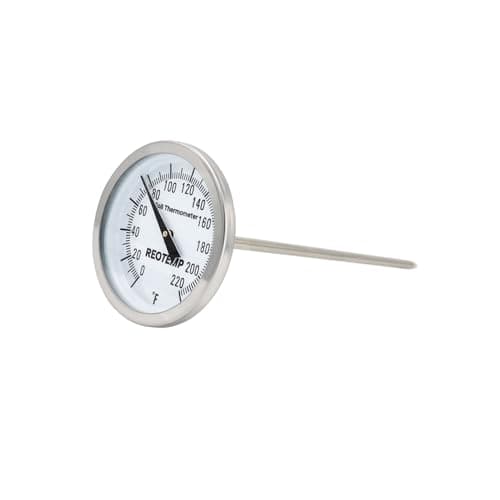
REOTEMP Waterproof Soil Thermometer
A waterproof dial thermometer with a 5 inch stem for reading soil at seeding depth.

The Andersons PGF Complete 16-4-8
A slow release 16-4-8 granular that is hard to burn a lawn with.
2. Mowing Mistakes That Damage Your Lawn
2.1 Cutting Grass Too Short ("Scalping" the Lawn)
Cutting grass too short is one of the fastest ways to weaken a lawn, yet it remains widely practiced because shorter grass looks neat initially and reduces mowing frequency. From a turf physiology standpoint, this approach strips away the plant's photosynthetic capacity and forces shallow, weak root systems.
According to University of Nebraska-Lincoln Extension, mowing below the recommended height reduces root depth in direct proportion to height. Grass maintained at 1 inch can have roots only a few inches deep, while the same species at 3 inches develops significantly deeper roots that better access water and nutrients.
Why "shorter is better" is incorrect
Several problems stem from chronic low mowing:
- Reduced photosynthesis. Grass blades are solar panels. Cutting them too short limits energy production, which restricts root growth and recovery from traffic or disease.
- Shallow roots. With less leaf area, the plant supports only a shallow root system. Shallow roots dry out faster, require more frequent irrigation, and provide fewer stored reserves.
- Increased weed pressure. Taller, dense turf shades the soil surface and reduces weed seed germination. Short turf exposes the soil surface to light, which stimulates weed emergence.
Recommended mowing heights by grass type
General height ranges that align with extension guidance are:
- Cool-season grasses: 2.5 to 4 inches. Kentucky bluegrass, perennial ryegrass, and tall fescue perform best toward the higher end of this range in summer.
- Warm-season grasses: 1 to 3 inches. Bermudagrass and zoysiagrass tolerate and often benefit from 1 to 2 inches under reel mowing. St. Augustinegrass typically performs best around 2.5 to 3 inches. Centipedegrass often performs well at 1.5 to 2 inches.
Always check recommendations from your specific state extension service for your grass cultivar and mower type. Rotary mowers usually require slightly higher settings than reel mowers to avoid scalping.
Signs you are mowing too low
Several visual cues indicate scalping:
- Visible brown stems or sheaths after mowing, instead of mostly green leaf tissue.
- Uneven brown patches on slight humps or high spots where the mower deck contacts the turf first.
- Rapid invasion by low-growing weeds such as crabgrass in sunny areas and prostrate spurge along edges.
How to correct low mowing
- Adjust the mower deck. Many homeowners never change the default setting. Consult your manual, raise the deck one notch, and measure. Place the mower on a flat surface, measure from ground to blade with a ruler, and adjust until it matches your target height.
- Increase height gradually. If you have been cutting extremely low, raise the height in stages over two or three mowings to avoid an abrupt change in appearance. Follow the one-third rule: never remove more than one-third of the blade at a single mowing.
- Observe recovery over 3 to 4 weeks. As mowing height increases, color deepens, weeds decline, and the lawn tolerates dry periods better.
2.2 Mowing Too Infrequently or Removing Too Much
The second major mowing mistake is not the exact height, but the interval between cuts. Long gaps followed by severe reductions stress the turf even when the final height falls within recommended ranges.

Extension research from Rutgers University demonstrates that removing more than one-third of the leaf blade at a single mowing shock-loads the plant's energy balance and reduces root growth for several days. Repeating this pattern weakens turf over the season.
Why infrequent mowing causes problems
When grass grows from 2 inches to 6 inches, then is cut back to 2 inches, several issues occur at once:
- Sudden loss of leaf area. The plant must divert energy from root growth and storage to regenerate blades quickly.
- Exposed stems and crowns. Brown stubble and stem tissue show, giving a scalped or burned appearance even though the actual mower height is correct.
- Excess clippings. Clippings from tall grass clump on the surface, smothering patches and creating an ideal environment for leaf diseases in damp conditions.
The one-third rule
The one-third rule provides a simple guideline: do not remove more than one-third of the grass blade in a single mowing. This rule determines mowing frequency more accurately than a fixed calendar interval.
Example with a cool-season lawn maintained at 3 inches:
- Desired height: 3 inches
- Maximum pre-mow height: 4.5 inches (since one-third of 4.5 is 1.5 inches, leaving 3 inches)
During cool, wet spring weather, grass might reach 4.5 inches in 4 to 5 days, requiring more frequent mowing. In mid-summer, the same lawn might only grow from 3 to 3.5 inches over a week, allowing longer intervals.
Practical mowing schedule guidance
- Spring and fall: Plan for at least weekly mowing for cool-season grasses, sometimes every 4 to 5 days during peak flush periods.
- Summer: Growth slows in heat or drought, especially for cool-season grasses. Maintain height but adjust frequency based on actual growth.
- Warm-season lawns: Growth peaks in hot weather, so weekly or even twice-weekly mowing may be needed for low-cut bermudagrass or zoysiagrass.
Following this simple growth-based approach eliminates one of the most common lawn care mistakes and aligns your mowing practice with how turfgrasses actually grow and recover.
At this point, you have seen how big-picture planning, soil understanding, and correct mowing prevent many of the classic lawn care errors that create thin, weedy turf. The same principles apply to other aspects such as watering, fertilizing, and choosing between DIY and professional help, which are explored further in How to Choose Between DIY and Professional Lawn Care.
Correcting existing damage requires a structured plan rather than isolated fixes. A realistic implementation timeline for rehabilitating a typical cool-season lawn might look like this:
- Week 1-2: Conduct a soil test, map sun and shade, and identify grass type; adjust mowing height to the upper recommended range.
- Week 3-4: Apply lime or sulfur if recommended, start following the one-third rule for mowing, and begin deep, infrequent watering if drought stress is present.
- Week 5-8: Schedule core aeration for early fall, plan overseeding if turf density remains low, and use targeted weed control as needed.
- Season 2: Fine-tune fertilizer applications based on response, consider topdressing with compost to improve soil structure, and maintain a consistent seasonal maintenance schedule.
This type of staged approach respects the biology of turfgrass and the pace at which soil systems change. It also transforms lawn care from a cycle of repeated mistakes and disappointments into a predictable, manageable process.
Conclusion: Breaking the Cycle of Common Lawn Care Mistakes
Most struggling lawns do not suffer from a lack of effort. They suffer from a small, repeatable set of lawn care mistakes: using climate-inappropriate advice, ignoring soil testing and structure, treating lawn care as a sporadic project, mowing too short or too infrequently, and reacting to visible symptoms without correcting underlying causes.
Extension research from universities across the country consistently demonstrates that when homeowners align their practices with their grass type, local climate, and soil conditions, turf performance improves sharply without dramatically increasing time or cost. A few key shifts, such as maintaining correct mowing height, following the one-third rule, performing a soil test every 2 to 3 years, and using a simple seasonal schedule, resolve a majority of chronic lawn issues.
Next steps are straightforward:
- Identify your grass type and climate zone.
- Order a soil test and adjust pH and nutrients based on the results.
- Raise your mowing height to the recommended range and mow often enough to avoid removing more than one-third of the blade.
- Build a basic calendar based on How to Create a Lawn Maintenance Schedule, then refine it after one full season.
With these fundamentals in place, more advanced topics like overseeding, irrigation system tuning, or deciding between DIY and professional services become much simpler. By focusing on the biggest, most impactful lawn care errors and correcting them systematically, you can establish a resilient, attractive lawn that responds predictably to your efforts.
Top Picks
- Outsidepride Maya (Blackjack II) Bermuda Grass Seed (5 lb)Check price on Amazon
- Jacklin Seed by Barenbrug Heisman Kentucky Bluegrass Blend (5 lb)Check price on Amazon
- The Andersons Professional PGF Complete 16-4-8 Fertilizer with 7% Humic DG (5,000 sq ft)Check price on Amazon
As an Amazon Associate we earn from qualifying purchases.
Free Lawn Care Tools
The most common mistake is treating lawn care as a one-time chore instead of an ongoing system. When basic tasks like mowing, watering, and soil care aren’t done consistently, turf weakens and weeds, diseases, and bare spots quickly move in. Small, regular actions timed correctly for your grass type prevent problems from compounding and becoming much harder to fix later.
Start with your region and typical temperatures, then confirm by looking at the grass itself. Cool-season grasses like Kentucky bluegrass, perennial ryegrass, and tall fescue are more common in northern areas and grow best in 60–75°F weather, while warm-season grasses like bermudagrass, zoysiagrass, St. Augustinegrass, and centipedegrass dominate in hotter southern climates. Blade traits also help: for example, St. Augustinegrass has very broad blades and thick stolons, while Kentucky bluegrass has narrow blades with a boat-shaped tip.
Each grass type is adapted to specific temperature ranges and stress conditions, so planting the wrong one means it is constantly under stress. Cool-season grasses struggle and thin out in hot, humid southern summers, while some warm-season grasses can suffer severe winterkill in colder regions. That chronic stress leads to patchy turf, more weeds, and a lawn that never looks good no matter how much fertilizer or water you add.
One major mowing mistake is using the same cutting height for every lawn, regardless of grass type. Cool-season grasses generally prefer a higher cut of about 2.5–4 inches, while many warm-season grasses tolerate and even prefer being kept shorter, often 1–3 inches. Copying a neighbor’s mowing height or generic advice for a different grass type can leave your lawn scalped, stressed, and more vulnerable to weeds.
Grass blades are just the visible part of a root-and-soil system, so poor soil conditions quietly limit everything from root depth to drought tolerance. Issues like wrong pH, compaction, and nutrient imbalances can make fertilizer less effective and keep grass in a constant state of stress. Without addressing the soil, surface fixes like more seed or more fertilizer usually give only short-term or disappointing results.
The first step is to confirm your grass type and understand your local conditions, including climate, sun and shade patterns, slopes, and drainage. From there, take a basic soil test to check pH and nutrient levels, and look for signs of compaction or standing water. With that information, you can choose appropriate mowing heights, fertilization timing, and renovation plans that match your specific lawn instead of relying on generic advice.
Photos: Maggie Zhan / Pexels

Beat weeds and brown spots from your phone
Snap a photo, get the fix, and follow a plan timed to your soil and weather. Free on iPhone.