Composting for a Healthier Lawn
 James ThorntonLawn Equipment & Maintenance Expert | 20 Years
As an Amazon Associate we earn from qualifying purchases.
Patchy color, frequent drought stress, and thin turf on a regularly fertilized lawn indicate a soil problem, not a fertilizer problem. Composting targets that soil weakness directly, which is why it consistently produces healthier, more resilient lawns than synthetic fertilizer alone. The good news is that using compost for lawn improvement is simple: you spread a thin layer of fine, screened compost right over the grass, a practice called topdressing, and let it work down into the soil.
Compost for lawn use is simply decomposed organic matter that has become stable, nutrient rich, and biologically active. When it is applied correctly, it changes how your soil holds water, cycles nutrients, and supports grass roots. This article explains exactly how that works and how to put lawn composting into practice without creating mess, pests, or unnecessary work.
Several misconceptions slow homeowners from using compost fertilizer on turf. Many people assume compost is only for vegetable gardens, or that spreading it over grass smothers the lawn. Others picture smelly piles and pests, or they assume lawn composting requires advanced equipment. Turfgrass and extension research contradicts these ideas. Well finished compost, applied at the right rate, functions as a precise soil amendment that integrates smoothly into normal mowing, fertilizing, and watering.
In this guide you will learn how compost improves soil and grass health, how to assess whether your yard will benefit, how to choose or make the right compost, and step by step methods for applying it as part of a complete lawn care program. Where helpful, you will see references to related topics such as How to Test Your Lawn's Soil, Organic vs Synthetic Fertilizers, Best Fertilizers for Lawns, and How to Improve Soil pH for Grass so you can dive deeper into specific issues.
If your lawn is struggling with patchy color, frequent drought stress, or thin turf despite regular fertilization, it may be a sign of soil problems rather than a lack of nutrients. To verify this, conduct a simple soil test to check for compaction and nutrient imbalances, as these issues often require more than just synthetic fertilizers.
The solution is to incorporate compost into your lawn care routine, which can transform your soil into a nutrient-rich, stable foundation for healthier grass. Apply a thin layer of well-finished compost, about 1/4 inch, over your lawn in early spring or fall. Within weeks, you'll notice your grass becoming denser and more drought-tolerant, as the compost works its magic.
Understanding Compost and Lawn Soil Health
What Is Compost and How Does It Work in a Lawn?
Compost is organic material that has been decomposed by microbes, fungi, and invertebrates until it becomes stable, dark, and crumbly. According to Cornell University Cooperative Extension, finished compost typically contains 1 to 4 percent nitrogen, along with phosphorus, potassium, and a wide range of micronutrients bound in organic forms.
It is important to distinguish compost from mulch and topsoil:
- Compost is a nutrient rich soil amendment, high in stable organic matter and microbial life. It is blended into the soil or applied in thin topdressings.
- Mulch is usually coarse, undecomposed material like wood chips that is applied on the surface to reduce evaporation and erosion. Mulch is not meant to be mixed into turf soil.
- Topsoil is mineral soil, sometimes with a small organic fraction. It may be high or low quality depending on the source and often benefits from added compost.
In lawn soils, compost acts as a slow release, biologically moderated fertilizer. Nutrients in compost are locked inside organic molecules. Soil bacteria and fungi break those molecules down gradually, releasing nitrogen, phosphorus, sulfur, and micronutrients in step with plant demand. This stands in contrast to quick release synthetic fertilizers that dissolve rapidly and release most of their nutrients in days, not months.
Compost also introduces and feeds beneficial organisms. Bacteria and fungi build soil aggregates by binding mineral particles with organic glues. According to Ohio State University Extension, earthworms and other soil fauna increase in number in compost amended soils, which further improves aeration and nutrient mixing. This living network is what converts compost from just "organic matter" into a functioning soil improvement tool.
Why Compost Is Ideal for Lawns
Grass is a perennial crop that stays in place for years, so any improvement to the underlying soil has a long payback period. Compost is ideal for lawn use because it improves several critical physical and biological properties at once.
Soil structure and porosity. Compost particles act as a flexible bridge between sand, silt, and clay. In sandy soils, compost fills some of the large pores so water does not drain away immediately. In clay soils, compost keeps mineral particles separated, creating more pore space. Penn State Extension notes that a 1 to 2 percent increase in soil organic matter dramatically improves aggregation, which increases air filled pores and root penetration depth.
Moisture retention and drainage. Compost holds water like a sponge but also releases it readily. This dual behavior improves drought tolerance and reduces waterlogging. Lawns treated with compost topdressing show slower drying between rain or irrigation events and more uniform wetting. In practical terms, this means you can often reduce irrigation frequency once the soil organic matter content rises into the 4 to 6 percent range.
Nutrient cycling and availability. Compost contributes nutrients and also increases the soil's capacity to hold them. Organic matter has a high cation exchange capacity (CEC), which means it attracts and temporarily stores positively charged nutrients such as potassium, calcium, and magnesium. This stabilizes fertility and supports steady turf growth with fewer spikes and crashes in color.
Soil biology and disease suppression. A lawn rooted in compost enriched soil hosts a more diverse community of microbes. According to research summarized by North Carolina State University Extension, diverse microbial communities limit certain soil borne pathogens through competition and predation. Compost also supports thatch degrading organisms, which reduces the risk of thick thatch layers forming.
These benefits apply to both cool season grasses such as Kentucky bluegrass, tall fescue, and perennial ryegrass, and warm season grasses such as bermudagrass, zoysiagrass, and St. Augustinegrass. Cool season turf particularly benefits from improved moisture retention during summer stress, while warm season turf benefits from improved structure in heavy clay and from quicker recovery after winter dormancy.
As soil structure improves and biology becomes more active, grass roots respond. Purdue University Extension notes that turf in well structured soil typically develops root systems several inches deeper than turf on compacted or low organic matter soil. Deeper roots access more stored soil moisture and nutrients, which significantly increases drought tolerance and recovery after stress.
Compost or Fertilizer for Your Lawn?
So should you use compost or fertilizer on your lawn? The honest answer is usually both, because they solve different problems. Compost builds the soil over time while fertilizer feeds the grass quickly.
Compost for lawn use often gets compared directly to granular synthetic fertilizers. Each has strengths and limitations, and the most resilient lawns usually rely on both, used strategically.
Synthetic lawn fertilizers deliver nutrients in highly concentrated, immediately soluble forms. A typical lawn fertilizer might contain 24 percent nitrogen, while compost commonly contains 1 to 2 percent nitrogen. That means a small amount of fertilizer can supply a full season's nitrogen needs, while compost supplies lower amounts but over longer periods.
However, fertilizer alone does not change soil structure or organic matter levels. According to Michigan State University Extension, many home lawns with regular fertilization still test at only 1 to 2 percent organic matter, especially on newer construction sites. These lawns green up quickly after feeding, then fade fast under heat or drought because the soil stores little water and compacts easily.
Key contrasts between compost and synthetic fertilizers include:
- Nutrient density vs soil health. Fertilizers excel at correcting nutrient deficiencies quickly. Compost excels at improving the soil environment so roots can explore a larger volume and access more resources.
- Short term color vs long term resilience. Fertilizer causes rapid top growth and color in 5 to 10 days. Compost produces slower but more durable gains in density, rooting, and drought resistance over months.
- Leaching and runoff risk. Soluble nitrogen and phosphorus from synthetic fertilizers leach downward or run off into storm drains if misapplied or followed by heavy rain. Nutrients in compost are more tightly bound to organic material and released gradually, which reduces loss and environmental impact.
For many lawns, the best strategy is to use compost as the base soil building tool and synthetic fertilizer as a precise supplement. For example, you might apply a half inch of compost topdressing in spring and fall, then apply 1 to 2 pounds of nitrogen per 1000 square feet per year as synthetic or organic fertilizer split into 2 to 4 applications. This keeps turf well fed while steadily increasing organic matter and soil quality.
In some situations, compost alone is appropriate. For low maintenance lawns, or lawns in regions with nutrient rich native soils, a regular compost topdressing can supply adequate nutrients. On nutrient poor sandy soils or heavily used lawns, pairing compost with a product from a resource such as Best Fertilizers for Lawns provides better control over growth and color.
For more background on how different product types behave, see discussions in Organic vs Synthetic Fertilizers before you design your combined program.
Is Compost Right for Your Lawn? Assessing Needs and Site Conditions
Evaluating Your Lawn’s Current Health
Not every lawn problem responds to compost. Shade, incorrect grass species, or active pest damage require other interventions. The first step is to diagnose whether your yard shows signs of poor soil and low organic matter, which compost addresses directly.
Visual indicators that your lawn will benefit from compost for lawn use include:
- Thinning grass and bare patches in sunny areas despite regular watering.
- Hard, compacted soil where a screwdriver or small trowel is difficult to push in more than 2 inches when the soil is moist.
- Excessive thatch buildup, defined by most extension sources as more than 0.5 inch of tightly packed brown layer between the green blades and the soil.
- Poor color or slow recovery from traffic even after fertilization.
You can perform a few simple at home checks to confirm soil issues:
Screwdriver test for compaction. After a good rain or irrigation, push a screwdriver, soil probe, or long nail into the soil. If penetration stops within the top 2 inches or requires heavy force, this signals compaction and weak structure. Compost combined with core aeration is an effective fix.
DIY soil texture jar test. Place a few tablespoons of dry soil from 3 to 4 inches deep into a clear jar, add water and a bit of dish soap, shake, and let it settle for 24 hours. Sand settles first, then silt, then clay. A very sandy soil column indicates low water and nutrient holding capacity. A very clay heavy column indicates risk of compaction. Compost benefits both extremes.
Basic pH checks. Turfgrass grows best when soil pH is between about 6.0 and 7.0 for most cool season species and between 5.5 and 7.0 for many warm season species. Inexpensive pH test kits give a rough range. If your pH is far outside these ranges, compost alone will not correct it quickly, but it can move pH gradually. Use a resource such as How to Improve Soil pH for Grass for targeted liming or sulfur applications when needed.
Some conditions do not respond significantly to compost:
- Dense shade. If lawns receive less than 4 hours of direct sun or bright filtered light, compost will not overcome the lack of photosynthesis. Shade tolerant grass species or groundcovers, pruning, or design changes are required.
- Severe pest damage. Grubs, chinch bugs, and fungal diseases need direct control. Compost can improve long term resilience but does not remove active infestations.
- Wrong grass for climate. For example, cool season grasses in hot humid southern climates decline in summer regardless of soil health. Correct grass selection must come first.
Soil Testing Before You Start
Soil testing provides hard data on what your lawn already has and what it lacks. Applying compost without understanding current conditions still improves soil structure, but you miss the opportunity to fine tune application rates and fertilizer supplements.
University soil labs and many private labs provide turf specific tests. For detailed instructions and interpretation, see How to Test Your Lawn's Soil. At minimum, a useful test includes:
- Organic matter percentage. Most turf extension programs, including those at Penn State and the University of Minnesota, consider 3 to 5 percent organic matter an excellent target. Lawns on new construction often test at 1 percent or lower. Regular compost topdressing aims to raise that number gradually.
- pH level. The report usually includes recommendations for lime or sulfur if pH falls outside the optimal turf range.
- Macronutrients (P, K, sometimes N). Phosphorus (P) and potassium (K) are typically reported with interpretations such as low, medium, or high. Nitrogen (N) is more dynamic and is often not tested directly, but recommendations are given.
- Selected micronutrients. Iron, manganese, and others sometimes appear, particularly in high pH or sandy soils.
Compost influences these parameters over time.
Organic matter. Each half inch of compost topdressing contributes roughly 0.5 to 1 percentage point of organic matter to the top few inches of soil over several years, depending on decomposition rates. Raising soil organic matter by 2 percentage points can take 3 to 5 years of repeated applications.
pH. Stable compost typically has a pH between 6.5 and 8.0. Repeated applications gently buffer acidic soils upward and alkaline soils downward because organic matter increases the soil's buffering capacity. However, compost is not a replacement for lime on very acidic soils (pH below about 5.5) or for elemental sulfur on highly alkaline soils (pH above 7.8).
Nutrient balance. Compost adds modest amounts of N, P, K, sulfur, and micronutrients. If your soil test shows high phosphorus levels, you should choose a low phosphorus compost or limit application rates, because many composts contain relatively more phosphorus than turfgrass removes annually.
Matching Compost Types to Your Lawn’s Needs
Not all composts are equal. The source materials and the composting process strongly influence nutrient content, salt levels, and suitability for turf. Selecting the correct compost type prevents problems such as salt stress or weed introduction.
Common compost sources for lawns include:
Yard waste compost. This compost is made from leaves, grass clippings, and small branches. It usually has moderate nutrient levels, relatively low salt content, and good structure. It is often ideal for lawn composting, especially when fully screened and finished.
Food scrap compost. Compost derived from kitchen scraps and food processing waste is often richer in nitrogen and phosphorus. When processed correctly, it is safe and effective for lawns, but it must be fully finished to avoid odors and pests. Check for salt content, particularly if large amounts of cheese, meats, or processed foods were part of the input stream.
Manure based compost. Cow, horse, poultry, and other manures produce nutrient rich compost. Poultry manure compost, for example, often has higher nitrogen and phosphorus content than yard waste compost. According to Colorado State University Extension, manure based composts can also contain higher soluble salt levels, which requires attention on salt sensitive grasses or poorly drained soils.
Municipal compost. Many cities produce compost from collected yard waste and sometimes food scraps. Quality varies, so it is important to review their testing data. Municipal compost is often affordable and abundant, which makes it an attractive material for topdressing large lawns.
Pros and cons for lawn use include:
- Nutrient content. Manure and food scrap composts tend to be higher in nutrients. Yard waste compost tends to be more moderate. High nutrient composts allow thinner application rates to achieve the same nutrient contribution.
- Salt levels. Some composts, particularly those from manure or biosolids, contain elevated salts. On well drained soils and salt tolerant grasses, this is manageable. On compacted or poorly drained lawns, or on fine fescue or centipedegrass, high salt can stress turf.
- Weed seeds and contaminants. Properly hot composted materials reach at least 131 degrees Fahrenheit for several days, which kills most weed seeds and pathogens. Poorly composted materials can carry viable seeds or debris. Always look for supplier documentation of process control and testing.
Signs that a compost is not finished or not suitable for lawn use include a strong ammonia or rotten smell, visible recognizable food or plant chunks, excessive stickiness, or temperatures above ambient in the pile. Unfinished compost can cause nitrogen tie up in the soil surface and uneven lawn performance.
Choosing or Making the Right Compost for Lawn Use
Characteristics of High-Quality Lawn Compost
High quality compost fertilizer for lawns shares several physical and chemical characteristics. Choosing material that meets these standards reduces application problems and improves results.
Desirable traits include:
- Dark, crumbly texture. Finished compost should resemble rich topsoil, not raw plant matter. Crumbs should break apart easily when squeezed.
- Uniform particle size. For lawn topdressing, particles should generally be smaller than 0.25 to 0.5 inch. Many turf managers use compost that has been screened to 3/8 inch or finer so it settles into the turf canopy without smothering blades.
- Earthy smell. A neutral, earthy, forest floor scent indicates stability. Strong ammonia, sour, or garbage like odors signal incomplete decomposition or anaerobic conditions.
- Moist but not soggy. Compost should feel slightly damp, not dripping. Overly wet compost clumps and spreads poorly.
- Documented analysis. Reputable suppliers provide lab reports with organic matter percentage, pH, soluble salts (electrical conductivity), and N-P-K estimates.
For turf specifically, several numeric ranges provide good guidance:
- pH between 6.0 and 8.0. This range blends well with most turf soils.
- Soluble salts below 4 dS/m. Many extension services, including University of Maryland Extension, consider compost with electrical conductivity below about 4 deciSiemens per meter acceptable for most landscape uses. For sensitive grasses and compacted soils, aim for even lower salt levels.
- Organic matter 30 to 60 percent (by weight). Finished compost is high in organic matter, but extreme values can indicate incomplete processing.
Ask suppliers specifically whether their compost meets standards such as the U.S. Composting Council's Seal of Testing Assurance (STA) program. STA participation indicates regular, third party testing for maturity, stability, and contaminants.
Buying vs Making Your Own Compost
You can either purchase compost for lawn use in bulk or bags, or you can make it on site using yard and kitchen waste. Both options work well when done correctly.
Buying compost. Purchasing screened compost from a reputable producer saves time and space. Bulk delivery by the cubic yard usually costs less per unit than bagged products. Bulk compost is often ideal for initial topdressing projects that require 1 to 3 cubic yards for a typical suburban lawn.
Bagged compost products are convenient for small areas or for homeowners without space for a storage pile. Garden centers, big box stores, and landscape suppliers stock a range of composts, including manure based, humus products, and blended compost topsoil mixes. Read labels for analysis data and ensure the product is truly composted, not simply "forest products" or raw bark.
Making your own compost. Home composting requires more involvement but gives you control over ingredients and quality. According to guidance from the University of Wisconsin Extension, an effective compost pile maintains an approximate 2 or 3 to 1 ratio of carbon rich "browns" (dried leaves, straw, shredded cardboard) to nitrogen rich "greens" (fresh grass clippings, kitchen scraps). Piles should be kept moist like a wrung out sponge and turned periodically to maintain oxygen.
For lawn owners, clippings and fall leaves are valuable feedstocks. Instead of bagging grass clippings for disposal, you can either mulch mow them back into the lawn or collect some to add nitrogen to a compost pile. Leaves provide bulk and carbon. Over 3 to 12 months, depending on pile size and management, these materials transform into a finished compost suitable for turf.
Home composting works especially well when you want ongoing smaller volumes of compost for spot treatments, flower beds, and portions of the lawn. For whole yard initial topdressing, purchased compost usually provides the necessary volume efficiently.
Screening and Preparing Compost for Turf
Regardless of whether you buy or make compost, final preparation before lawn application is important. Turf topdressing requires finer texture than garden bed mulching. Fine compost for lawn use, screened to 3/8 inch or smaller, settles between the blades instead of matting on top, which is why turf managers insist on it.
Screening removes sticks, rocks, and large chunks. Commercial producers use mechanical screeners, but homeowners can use simple DIY methods. A common approach is a wooden frame with half inch wire mesh stretched across it. Shovel compost onto the screen and rub it through with a rake or gloved hands. The fines that fall through are ideal for topdressing; oversized pieces can be returned to the compost pile for further breakdown.
Check moisture before spreading. If compost clumps when squeezed and stays in a tight ball, spread it out to dry slightly. Material that is too dry creates dust and uneven coverage, while material that is too wet is hard to distribute evenly.
Immediately before application, break apart any remaining clods and inspect visually for contaminants like plastic or glass, especially if using municipal compost. Removing these by hand avoids problems with mower blades later.
How to Apply Compost to Your Lawn (Topdressing)
Topdressing: The Core Lawn Composting Method
Topdressing is the primary way to apply compost to established lawns. It involves spreading a thin, even layer of compost across the lawn surface and working it down to the soil between grass blades.
And yes, you can put compost directly on your lawn without harming it. The trick is keeping the layer thin, 1/4 to 1/2 inch of fine, screened compost, so the grass blades stay exposed and the material filters down to the soil surface instead of smothering the turf. Spring and fall are the best windows, ideally right after core aeration.
Extension guidelines for turf generally recommend applying compost at rates between 0.25 and 0.5 inch depth across the surface in a single application. According to Washington State University Extension, a 0.25 inch topdressing of compost adds roughly 0.8 cubic yards per 1000 square feet, and a 0.5 inch layer adds about 1.6 cubic yards per 1000 square feet.
Steps for effective compost topdressing:
- Mow and clean the lawn. Mow slightly shorter than usual, removing excess clippings to open the canopy. Aim for a cutting height around 2 to 2.5 inches for cool season grasses and around 1 to 1.5 inches for warm season grasses before application.
- Core aerate if needed. On compacted lawns, use a core aerator to remove plugs 2 to 3 inches deep, spaced 2 to 3 inches apart. Aeration before composting allows more material to enter the root zone. This is typically done once per year or every other year.
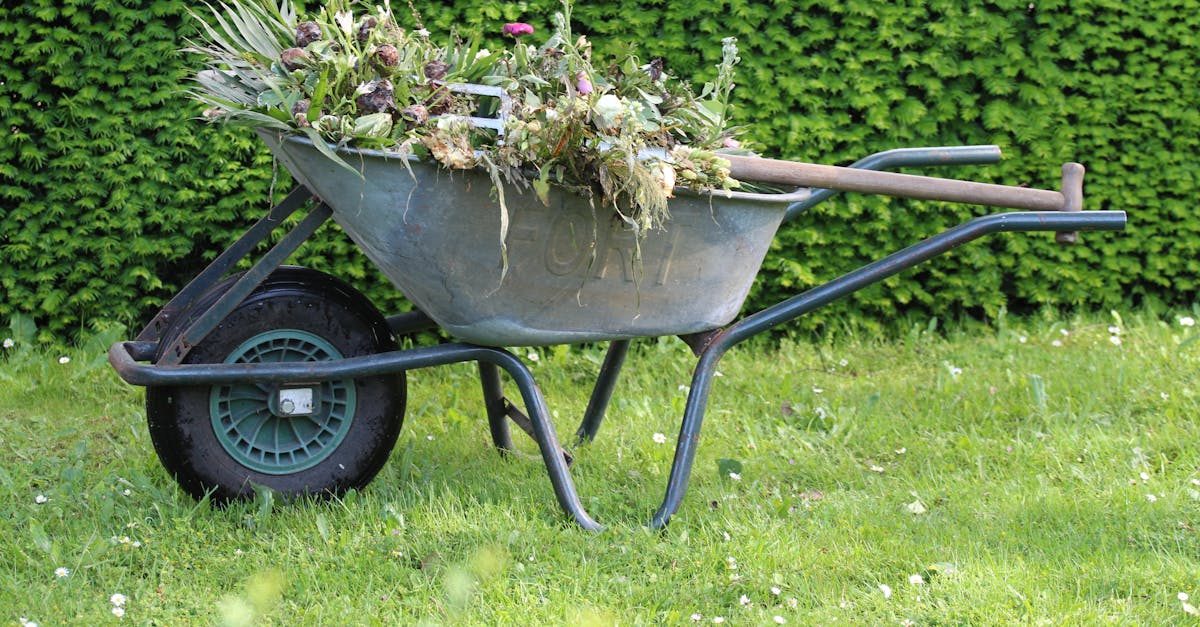
- Spread compost evenly. Use a wheelbarrow and shovel, a broadcast topdresser, or a compost spreader to apply a measured amount of compost per 1000 square feet. Drop small piles and then drag a leveling rake, landscape rake, or the back of a sturdy push broom to distribute it uniformly.
- Work compost into the canopy. After spreading, you should still see most of the grass blades. The compost should sit mainly at the soil surface and in aeration holes, not as a thick layer on top of the leaves. Raking or dragging helps achieve this.
- Water lightly. Irrigate enough to settle the compost and wash fine particles into the soil, usually 0.25 to 0.5 inch of water. Avoid heavy watering that causes runoff.
Topdressing at 0.25 inch can be repeated one or two times per year. Heavier 0.5 inch applications are better limited to once annually unless you are renovating a very poor soil and monitoring turf response carefully.
When to Apply Compost: Seasonal Timing
Timing compost applications to match grass growth cycles improves results and minimizes stress. Turfgrass extension programs consistently recommend treating cool season and warm season grasses on different calendars.

Cool season lawns (Kentucky bluegrass, tall fescue, perennial ryegrass).
- Primary window: Early fall. Late August through September in cool climates, or September through early October in milder regions, is ideal. Soil temperatures are warm enough for microbial activity, air temperatures are cooler, and fall rains help incorporation. This period also coincides with peak root growth.
- Secondary window: Mid to late spring. After soil has warmed above about 50 to 55 degrees Fahrenheit but before summer heat, usually April through May, a lighter topdressing can support growth.
Warm season lawns (bermudagrass, zoysiagrass, St. Augustinegrass, centipedegrass).
- Primary window: Late spring to early summer. Apply compost after turf has fully greened up and is actively growing, usually when soil temperatures are consistently above 65 degrees Fahrenheit.
- Avoid late fall. Adding compost just before dormancy slows decomposition and can lead to excess moisture retention over winter in some climates.
According to guidance from Texas A&M AgriLife Extension for warm season turf, major soil modifications and organic additions should occur when the grass can recover quickly, not during early spring green up or late season slowdown.
Seeding, Overseeding, and Compost
Compost for lawn renovation also functions as an excellent seedbed. For overseeding or full renovation, you can combine seeding and composting into one operation.
For overseeding thin lawns:
- Core aerate and dethatch if necessary. Remove excessive thatch and provide seed to soil contact.
- Broadcast seed at the recommended overseeding rate for your grass species, usually 2 to 5 pounds per 1000 square feet for cool season turf.
- Topdress with 0.25 inch of screened compost. The compost covers seed lightly, protects it from desiccation, and provides a nutrient rich germination environment.
- Water lightly and frequently. Keep the top half inch of soil consistently moist until seedlings reach mowing height.
For full renovation, some lawn managers incorporate a thicker compost layer, up to 1 inch, into the top 3 to 4 inches of soil before seeding or sodding. This larger amendment is more labor intensive but yields significant long term soil improvement.
Application Frequency and Multi-Year Plan
Raising soil organic matter and transforming structure is a multi year process, not a one time event. Designing a realistic schedule helps set expectations and aligns with other lawn tasks.
An example 3 year plan for a low organic matter cool season lawn:
- Year 1.
- Early fall: Core aerate, apply 0.5 inch compost topdressing, overseed thin areas if needed, apply starter fertilizer if soil test indicates.
- Late spring: Optional 0.25 inch compost topdressing without aeration, plus balanced fertilizer to reach annual nitrogen target.
- Year 2.
- Early fall: Core aerate, apply 0.25 to 0.5 inch compost, overseed as spot repair.
- Late spring: Routine fertilizer program, no or light compost depending on progress.
- Year 3.
- Retest soil organic matter.
- Continue annual fall 0.25 inch topdressing for maintenance if organic matter has reached 3 to 5 percent.
Warm season lawns follow a similar plan but centered on late spring and early summer. You can integrate fertilizer applications by using soil test recommendations and references such as Best Fertilizers for Lawns to fine tune nutrient inputs alongside compost.
Recommended products
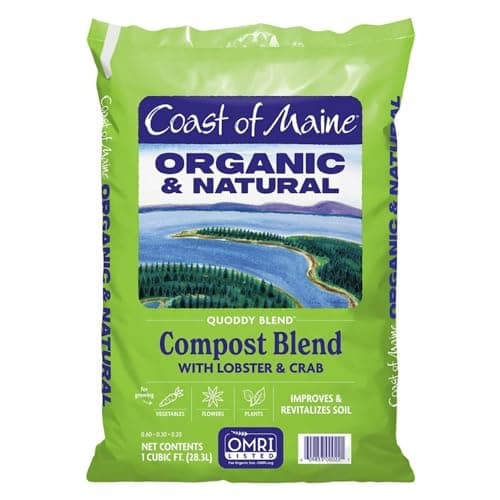
Coast of Maine Quoddy Blend Lobster Compost
A finished, screened compost that spreads evenly at the quarter-inch depth topdressing calls for.
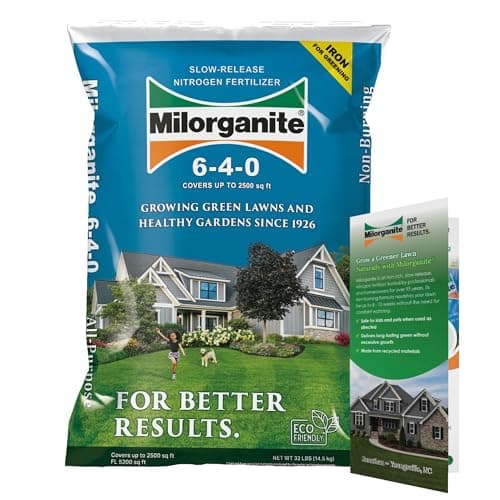
Milorganite 6-4-0 (32 lb)
A slow-release organic nitrogen source that pairs with compost when the nutrient math comes up short.
MySoil Soil Test Kit
A mail-in lab test covering pH, organic matter context, and 13 nutrients.
Integrating Compost with the Rest of Your Lawn Care Program
Compost and Fertilizer: Balancing Nutrient Inputs
To avoid over or under fertilizing, you need to account for nutrients that compost contributes. While compost is less concentrated than granular fertilizers, repeated applications add measurable nitrogen, phosphorus, and potassium.
As a rough guideline, one cubic yard of typical yard waste compost contains about 10 to 20 pounds of total nitrogen, much of which becomes plant available over 1 to 3 years. If you apply 1 cubic yard per 1000 square feet (about a 0.3 inch layer), you can consider that compost to supply approximately 0.2 to 0.4 pounds of nitrogen per 1000 square feet during the first year, depending on compost analysis and mineralization rates.
For cool season lawns, many extension programs recommend total annual nitrogen inputs of 2 to 4 pounds per 1000 square feet for moderate to high maintenance turf. If compost supplies 0.3 pounds, you would reduce synthetic or organic fertilizer applications accordingly to maintain the target range.
Compost also typically has a phosphorus content that ranges from 0.2 to 1 percent by weight. In soils that already test high in phosphorus, reduce compost rates or choose low phosphorus composts to avoid nutrient buildup that can contribute to runoff issues. Local regulations sometimes restrict phosphorus use on established turf unless a soil test indicates deficiency.
When planning nutrient programs, consider using the framework outlined in Organic vs Synthetic Fertilizers to determine which parts of your annual nitrogen and potassium budget you want compost to supply, and which parts granular products will cover.
Compost and Irrigation
Compost increased organic matter changes how your soil holds water. As organic matter rises from, for example, 1 percent to 3 or 4 percent, the soil can store significantly more plant available water. The exact amount depends on texture, but research summarized by Iowa State University Extension shows that each 1 percent increase in organic matter can add up to 0.75 inch of available water in the top 12 inches of a medium textured soil.
This storage increase means that, after a few years of compost topdressing, you can often reduce irrigation frequency while maintaining or improving turf performance. Instead of watering lightly every 2 days, for instance, you might shift toward deeper watering every 3 to 4 days, allowing roots to explore a deeper profile.
However, during the first season after initial compost application, maintain your existing irrigation pattern while monitoring lawn response. As structure improves and thatch reduces, infiltration also changes. Periodically dig small test holes to observe moisture depth and adjust watering intervals gradually.
Compost, Mowing, and Thatch Management
Compost interacts directly with thatch and mowing practices. Thatch is a layer of dead and living stems, roots, and rhizomes that accumulates between the soil and the green leaf canopy. Contrary to a common misconception, grass clippings do not significantly contribute to thatch when decomposition is functioning well.
According to University of Minnesota Extension, returning clippings to the lawn recycles up to 1 pound of nitrogen per 1000 square feet per year and does not increase thatch if mowing height and frequency are appropriate. Compost enhances this process because it boosts populations of thatch decomposing organisms. As a result, moderate thatch layers often thin over several seasons of compost topdressing and proper mowing.
To support these benefits:
- Mow at the recommended height for your grass species, generally 2.5 to 3.5 inches for cool season grasses and 1 to 3 inches for many warm season species.
- Remove no more than one third of the blade length per mowing to avoid excessive shock and large clippings.
- Use sharp blades to reduce tearing and disease entry points.
If thatch exceeds about 0.5 inch, mechanical dethatching or power raking in combination with compost topdressing often produces faster correction than compost alone.
Tools and Equipment for Efficient Lawn Composting
Several simple tools make lawn composting more efficient and less physically demanding. A basic kit often includes:
- Wheelbarrow and shovel. For transporting and rough placing compost piles across the lawn.
- Landscape rake or leveling rake. For spreading compost piles into a uniform thin layer.
- Core aerator. Either a rental machine or a professional service, for creating holes that accept compost.
- Drop style or drum style compost spreader. These tools, sometimes called peat moss spreaders, allow you to roll compost across the lawn and achieve even distribution with less labor.
For a broader overview of essential tools that integrate with composting and general turf maintenance, see Essential Lawn Care Tools Every Homeowner Needs. Choosing durable, properly sized tools reduces fatigue and improves results, especially on larger yards.
Troubleshooting Common Compost and Lawn Issues
Signs of Over-Application or Poor Compost
Properly applied compost rarely harms turf, but excessive rates or poor quality material cause noticeable symptoms.
Indicators of over application or unsuitable compost include:
- Yellowing or stunted grass shortly after application, especially when a thick layer covers most of the leaf blades. This signals smothering or nitrogen immobilization by unfinished compost.
- Persistent foul odors from the lawn, which indicate anaerobic decomposition and poor compost stability.
- Salt burn symptoms, such as leaf tip browning and patchy dieback, particularly on sensitive species. This often occurs when high salt compost is applied heavily without adequate rainfall or irrigation.
- Weed outbreaks, especially from recognizable species present in the compost feedstock. This signals that the composting process did not reach adequate sanitizing temperatures.
Corrective actions include raking and removing excess compost, irrigating heavily to flush soluble salts, and suspending further applications until the lawn recovers. For minor smothering, vigorous raking to pull compost down off leaf blades usually restores normal growth without long term damage.
Managing Pests and Misconceptions About Attracting Wildlife
Finished compost placed on lawns does not inherently attract pests like rodents or raccoons. These animals respond primarily to fresh food odors and accessible garbage, not stable humus. If a compost pile or applied layer smells like food or strong ammonia, decomposition is incomplete.
To avoid nuisance wildlife issues:
- Use only finished compost that smells earthy, not like kitchen scraps.
- Avoid spreading food scraps directly on the lawn or adding meat, dairy, or oily foods to home compost piles.
- Maintain tight fitting lids on exterior garbage and compost collection bins.
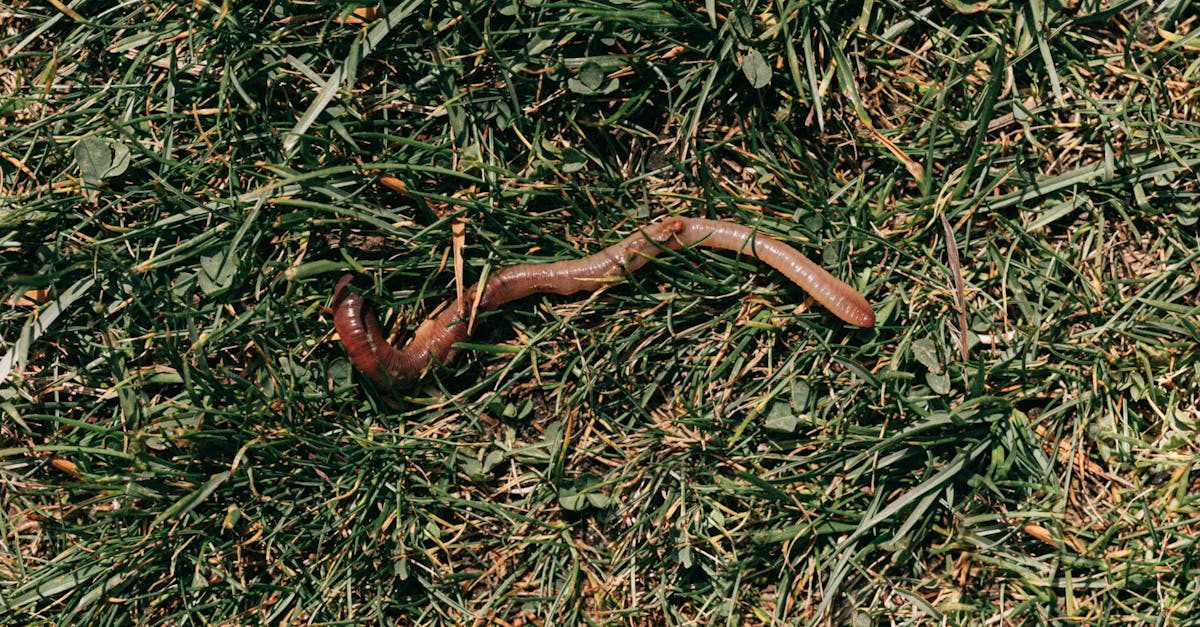
Insects such as earthworms, springtails, and beneficial beetles increase in compost rich soils. These organisms improve soil quality and are not pests. Some birds may visit compost treated lawns more frequently to feed on these invertebrates, which is generally beneficial for natural balance.
Timelines for Visible Results
Homeowners often expect compost to produce an immediate dramatic green up, similar to quick release fertilizer. Compost works differently. Its effects accumulate steadily, with some visible changes occurring in weeks and others taking years.
Typical timeframes look like this:
- Within 2 to 6 weeks. Slight color improvement, better turf density in thin areas (especially if combined with overseeding), and more uniform moisture patterns.
- Within 3 to 6 months. Noticeable reduction in localized dry spots, easier soil penetration with a screwdriver, and improved mowing quality.
- Within 1 to 3 years. Measurable increases in soil organic matter in soil tests, deeper root systems, fewer irrigation requirements, and reduced fertilizer needs for the same level of quality.
By coordinating compost applications with a clear calendar of tasks (aeration, overseeding, seasonal fertilization, and pH adjustments as recommended in How to Improve Soil pH for Grass), you establish a sustainable, predictable development path rather than chasing short lived cosmetic fixes.
Conclusion: Compost as the Foundation of a Healthier Lawn
Persistent lawn problems that resist fertilizer and water almost always trace back to poor soil structure, low organic matter, or weak microbial activity. Compost for lawn use addresses those root causes. It improves soil aggregation, water holding, nutrient cycling, and biological diversity in ways synthetic fertilizers cannot replicate alone.
By selecting high quality, screened compost, verifying your soil status with a test, matching application rates to your site, and integrating topdressing into your seasonal lawn care routine, you establish a long term foundation for dense, resilient turf. The process is straightforward and scalable, from small home lawns to larger properties.
Next steps are simple: test your soil using the guidance in How to Test Your Lawn's Soil, choose whether you will buy or make compost, then schedule your first topdressing in the appropriate seasonal window. As you refine your program with the help of resources like Organic vs Synthetic Fertilizers and Best Fertilizers for Lawns, you can achieve a lawn that looks better, withstands stress, and relies less on constant chemical inputs.
Top Picks
- Simple Lawn Solutions - Ryan Knorr - Lawn Essentials Bundle BoxCheck price on Amazon
- PetraTools Liquid Iron for LawnsCheck price on Amazon
- Scotts Turf Builder Lawn FoodCheck price on Amazon
As an Amazon Associate we earn from qualifying purchases.
Free Lawn Care Tools
Compost is organic material that has been decomposed by microbes, fungi, and invertebrates until it becomes stable, dark, and crumbly. According to Cornell University Cooperative Extension, finished compost typically contains 1 to 4 percent nitrogen, along with phosphorus, potassium, and a wide range of micronutrients bound in organic forms.
Patchy color, frequent drought stress, and thin turf on a regularly fertilized lawn are often signs of a soil problem, not a lack of fertilizer. Compost directly improves soil structure, water-holding capacity, and biological activity, which helps grass roots grow deeper and access more moisture and nutrients. Over time, this leads to more even color, better drought tolerance, and thicker, more resilient turf.
In sandy soils, compost fills some of the large pores so water and nutrients do not drain away immediately. In clay soils, compost helps keep mineral particles separated, creating more pore space for air and root growth. Even a 1–2 percent increase in soil organic matter can dramatically improve aggregation, making the soil easier for roots to penetrate.
Yes, compost acts like a sponge that holds water yet releases it readily to plant roots. As soil organic matter levels increase into the 4–6 percent range, lawns typically dry out more slowly between rain or irrigation events and wet more uniformly. This improved moisture retention often allows you to reduce irrigation frequency while maintaining healthy turf.
Compost benefits both cool-season grasses like Kentucky bluegrass, tall fescue, and perennial ryegrass, and warm-season grasses like bermudagrass, zoysiagrass, and St. Augustinegrass. Cool-season lawns gain extra drought protection during summer stress, while warm-season lawns see better structure in heavy clay and faster recovery after winter dormancy. In all cases, improved soil conditions encourage deeper, stronger root systems.
Compost introduces and feeds a diverse community of beneficial microbes, fungi, and soil fauna such as earthworms. These organisms build soil aggregates, improve aeration and nutrient mixing, and support thatch-degrading species. A more diverse microbial community also helps limit certain soil-borne pathogens through competition and predation, which can reduce disease pressure over time.
Yes, you can put compost directly on your lawn, and it is one of the best things you can do for your soil. Spread a thin layer of fine, screened compost, about 1/4 to 1/2 inch deep, over the grass in spring or fall, ideally after core aeration. At that depth the grass blades stay exposed and the compost works down to the soil surface within a few waterings instead of smothering the turf. A 1/4 inch layer works out to roughly 0.8 cubic yards per 1,000 square feet.
The best compost for lawns is fully finished, fine compost screened to 3/8 inch or smaller so it settles between the grass blades rather than sitting on top. Yard waste compost is usually the safest choice: moderate nutrients, low salts, and good texture. Look for a dark, crumbly product with an earthy smell, soluble salts below 4 dS/m, and ideally certification under the US Composting Council's Seal of Testing Assurance program.
Use both, but for different jobs. Fertilizer delivers concentrated nutrients fast and greens up the lawn in 5 to 10 days, while compost improves soil structure, water holding, and microbial life so grass roots grow deeper and the lawn holds its color longer. A practical program is a 1/4 to 1/2 inch compost topdressing in spring or fall plus a reduced fertilizer schedule, since compost supplies a portion of the lawn's annual nitrogen on its own.
Photos: Alexas_Fotos / Pixabay, Ron Lach / Pexels, Karola G / Pexels

Beat weeds and brown spots from your phone
Snap a photo, get the fix, and follow a plan timed to your soil and weather. Free on iPhone.