


Does White Vinegar Actually Kill Weeds?
 Sarah MitchellLawn Diagnostics Specialist | 12 Years
As an Amazon Associate we earn from qualifying purchases.
Brown or bare spots in a lawn often start where weeds are competing with the grass, and many homeowners search "does white vinegar actually kill weeds?" before they ever look at a herbicide label. The issue is that vinegar behaves very differently from standard lawn weed killers, and using it without understanding those differences can damage turf while barely slowing tough weeds. To use vinegar effectively, you need to know what it can do, what it cannot do, and how to match it to the right weeds and conditions.
In this guide, we will look at what is actually in white vinegar, how it injures plants, and how that compares to synthetic herbicides. We will cover which weeds vinegar can realistically control, which ones it will mostly burn on top, and why lawns often get accidentally spot-killed in the process. Finally, you will see when vinegar is a reasonable tool in your weed control program, and when to choose other approaches like hand removal, mulching, or selective herbicides.
White vinegar can kill small, young weeds by burning their leaves, but it usually does not kill the roots, especially on deep-rooted perennials like dandelions or plantain. To see if vinegar is working, spray a few target weeds on a warm, sunny day with household 5% white vinegar, then check after 24 hours. If the foliage is bleached, brown, and shriveled while nearby grass or ornamentals look unaffected because you shielded them, you are using it correctly.
The fix for light weed pressure in cracks or mulched beds is to use vinegar only on very small weeds and to repeat the spray as soon as you see green regrowth. Do not spray vinegar across a lawn or into planting beds where you want plants to survive, because it is a non-selective contact herbicide and will burn any foliage it touches. For established weeds in turf, a selective lawn herbicide or manual removal is usually more effective and safer for the grass.
You will usually see visible burn within 2 to 24 hours in warm weather. For annual weeds, one to three treatments spaced 7 to 10 days apart can suppress them until the season ends. For perennial weeds, expect them to come back unless you change the underlying problem, such as thin turf, bare soil, or poor mowing practices, and consider more targeted methods described below.
Understanding How White Vinegar Works on Weeds
What Is in White Vinegar?
In a lawn and garden context, "white vinegar" almost always refers to household distilled white vinegar used in kitchens. It typically contains about 5% acetic acid and 95% water. The acetic acid is the active component that injures plant tissue; the water simply carries it to the leaf surface.
You may also see "horticultural vinegar" or "agricultural vinegar" marketed specifically for weed control. These products usually contain 20 to 30% acetic acid, sometimes with added surfactants. That is 4 to 6 times stronger than kitchen vinegar. At those levels, acetic acid is caustic to skin, eyes, and lungs and is regulated in many areas as a restricted use or labeled pesticide product.
- Cornell University has reported that 5% acetic acid solutions can give over 80% control on very small annual weeds when sprayed to full coverage, but control drops sharply on older plants.
- Oregon State University Extension notes that 20% acetic acid products are effective as contact herbicides yet require protective clothing and eye protection due to their corrosive nature.
The reason acetic acid matters is that it directly disrupts plant cells on contact. Higher concentrations provide a more aggressive burn, but they also increase risk to the applicator, pets, and any desirable plants. Simply "stronger" does not automatically mean "better" from a lawn care standpoint, especially around turfgrass that you want to protect.
How Acetic Acid Affects Plant Tissue
Acetic acid acts as a non-selective, contact "burn-down" herbicide. When you spray it on green leaves or stems, it penetrates the outer cuticle and disrupts cell membranes. This causes cell contents to leak, leading to rapid dehydration and tissue collapse. On a sunny, warm day, you may see wilting or bleaching in a matter of hours.
Because the effect is purely contact-based, only the plant parts that are directly wetted by the spray are damaged. The acetic acid does not move (translocate) inside the plant to reach roots or underground stems. This is why vinegar often kills top growth but fails to kill the entire weed, especially if the plant has deep roots or underground storage organs like taproots or rhizomes.
Young, tender weeds with thin leaves and minimal root reserves are much more vulnerable. If you spray them at the cotyledon stage (seed leaves) up to 2 or 3 true leaves, the plant usually does not have enough stored energy to regrow after all foliage is destroyed. Mature weeds, with thicker cuticles, waxy or hairy leaves, and stronger root systems, often regrow within days or weeks.
Vinegar vs. Synthetic Herbicides
To understand where vinegar fits in, it helps to compare it with common synthetic herbicides used in lawns.
Systemic herbicides, such as glyphosate or selective broadleaf lawn herbicides (2,4-D, dicamba, MCPP, etc.), are absorbed through the leaves and then moved inside the plant's vascular system to roots and new growth points. This internal movement allows them to kill the entire plant, including roots, which is why they can take several days to show full effect even if the foliage looks normal at first.
Vinegar, in contrast, has no systemic action. It kills what it touches and stops there. This is one reason many people ask "does white vinegar actually kill weeds?" after seeing quick burn followed by equally quick regrowth.
On selectivity, vinegar will injure any green plant tissue it contacts: broadleaf weeds, grassy weeds, vegetable seedlings, groundcovers, flowers, and your lawn grass. It is non-selective. Most lawn weed killers, by contrast, are selective and designed to spare turfgrass while targeting broadleaf weeds.
Regarding residual effect, acetic acid breaks down relatively quickly in soil. It binds to soil particles and is metabolized by microbes, so it does not provide long-term residual weed control. That can be an advantage for soil health but it also means that vinegar does not prevent new weeds from germinating. In contrast, some pre-emergent herbicides remain active in the top inch of soil for weeks or months to stop seedling growth.
Many homeowners choose vinegar because they see it as "natural." It is important, however, to separate "natural" from "inherently safe." A 20 to 30% acetic acid product can cause severe eye damage on contact and can burn skin. Just like with synthetic herbicides, the label and safety data sheet should be followed, including gloves, eye protection, and avoiding windy conditions.
Does White Vinegar Actually Kill Weeds? The Real Answer
When White Vinegar Works Well
White vinegar can be an effective weed control tool in very specific situations. The conditions that favor good results are fairly narrow, but if you match them, you can get meaningful control without resorting to synthetic herbicides.
Vinegar works best on:
- Young, small weeds in the seedling stage, from cotyledons up to 2 or 3 true leaves. At this size, the plant has limited stored energy.
- Annual weeds that only live for one season, such as many common garden and walkway weeds. Once they are top-killed and cannot regrow before frost, they are effectively controlled.
- Thin-skinned, broadleaf weeds with smooth, non-waxy leaves. These allow rapid penetration of the acetic acid solution.
Weather strongly affects performance. Warm, sunny conditions with low humidity usually give the fastest and most complete burn because the vinegared leaves dry quickly and cannot recover. Air temperatures of 65 to 85 degrees Fahrenheit are a good practical window. Spraying when rain is expected within a few hours reduces effectiveness because the solution can be washed off before it fully penetrates.
Dry conditions before and immediately after application also help. If weeds are already water stressed and wilted, they may have thicker cuticles or closed stomata, which can reduce spray penetration. Moderately hydrated plants on a dry soil surface often show the strongest response.
- University of Maryland Extension notes that acetic acid herbicides are most effective when applied to small, actively growing weeds under bright sunlight, with control dropping sharply on plants taller than 4 to 6 inches.
- Washington State University guidance highlights that repeated applications, 7 to 10 days apart, are usually required to maintain control of annual weeds with vinegar-based products.
In practical terms, vinegar works well in sidewalk cracks, gravel driveways, and mulched ornamental beds where you can direct the spray onto very small weeds and avoid contact with desired plants. In these locations, one or two well-timed applications can keep annual weeds suppressed.
When White Vinegar Does Not Work Well
Vinegar is far less successful on weeds that rely on large root systems or woody structures. Common problem categories include:
Deep-rooted perennial broadleaf weeds. Dandelions, plantain, thistle, dock, and similar species store a large amount of carbohydrate in their taproots. Vinegar will burn the top growth, but the root responds by sending up new leaves, often within 1 to 3 weeks in growing season. Even multiple top-kills rarely deplete the root enough to kill the plant outright.
Woody or semi-woody weeds and vines. Weeds like poison ivy, blackberry canes, and woody vines have thick bark and robust root networks. Vinegar on the foliage will scorch leaves but generally does not penetrate stems or kill the crown. They tend to re-leaf from buds below the treated area.
Weeds with thick, waxy, or hairy leaves. Many succulent-type weeds or those with a heavy cuticle, such as certain sedums or waxy groundcovers, resist acetic acid penetration. Hairy leaves can hold droplets away from the actual tissue. In these cases, surfactants help, but household vinegar alone may be disappointing.
Environmental conditions also limit performance. Weeds growing in shade, in very cool weather, or in extreme drought may be less affected because the chemical reactions and drying that complete the injury process are slowed down.
This mismatch between user expectations and actual behavior is the root of the question "does white vinegar actually kill weeds?" For many common lawn weeds that are perennial and deep-rooted, the honest answer is that vinegar alone mostly provides cosmetic burn, not full kill.
How Strong Does White Vinegar Need To Be to Kill Weeds?
Household white vinegar at 5% acetic acid can injure and often kill very small annual weeds. However, you should keep realistic expectations:
On seedlings shorter than about 2 inches, if you spray until leaves are thoroughly wetted, you may get 70 to 90% control under good conditions. On larger annuals or small perennials, the control percentage drops, and regrowth is common. For weeds taller than 4 to 6 inches, 5% vinegar mostly gives partial leaf burn.
Horticultural vinegar at 20 to 30% acetic acid increases the speed and severity of burn. It can injure slightly larger weeds and may suppress regrowth somewhat longer. However, even at these high concentrations, perennial roots are rarely killed outright. You also increase safety risks significantly. At 20% or above, acetic acid can cause immediate eye injury and painful skin burns and the fumes can irritate lungs.
Research that compares different strengths generally finds a pattern like this:
- 5% acetic acid: good control of very small seedlings, poor control of established perennials.
- 10 to 15% acetic acid: improved control on slightly larger weeds, but still limited root kill.
- 20%+ acetic acid: strong top kill on many species, with some suppression of regrowth, yet still primarily a contact herbicide.
From a lawn care standpoint, "stronger is not always better." If you are working near turf, gardens, or play areas, the marginal increase in weed control from moving to 20% vinegar rarely justifies the jump in hazard compared to a well-chosen synthetic herbicide or careful hand removal.
Types of Weeds: Which Ones Vinegar Can Kill (and Which Ones It Will Not)
Annual Broadleaf Weeds
Annual broadleaf weeds are the easiest targets for white vinegar. These plants germinate from seed, grow, set seed, and die within one season. They do not carry large root reserves from year to year, so destroying their foliage early can be enough to end their life cycle.

Examples include chickweed, purslane, lambsquarters, and many small "nuisance" weeds in gravel or along edges. When these weeds are less than 2 to 3 inches tall, a thorough spray of 5% white vinegar during warm weather will usually collapse their top growth within 24 hours.
Regrowth potential depends on timing and root size. If you catch them early, the plant often lacks the energy to push out new leaves. If you treat them a bit later, they may regrow once or twice. A practical approach is to monitor the area every 7 to 10 days and spot treat any new green tissue you see. After 2 or 3 cycles, most annuals are exhausted or shaded out by mulch or surrounding plants.
Perennial Broadleaf Weeds
Perennial broadleaf weeds such as dandelions, clover, plantain, and creeping charlie are a different challenge. These species persist for multiple years and store carbohydrates in roots, crowns, or stolons.
If you spray dandelion leaves with vinegar, you will see fast burn on the visible foliage. The problem is that the taproot below the soil is still alive. It senses the loss of leaves and allocates stored energy to push up new growth. Unless you repeat this injury many times in a single season, and unless you completely prevent any photosynthesis between sprays, the plant usually survives.
Some gardeners attempt "persistence" by spraying vinegar every time a dandelion leaf appears. In theory, enough repeated defoliation could eventually starve the root, but in practice this requires very vigilant attention and frequent spraying, often every 7 to 14 days for much of the growing season. Even then, some plants survive, especially larger, older weeds.
For tough lawn perennials, selective systemic herbicides or mechanical removal often provide better long-term control with fewer repeat treatments. In turf, products designed to target broadleaf weeds without harming grass are typically more efficient than trying to spot treat with vinegar.
Grassy Weeds
Grassy weeds present an additional complication. Species like crabgrass, foxtail, and annual bluegrass have narrow leaves and growing points located near or slightly below the soil surface. Vinegar sprayed from above may scorch the exposed blades, but if the crown and lower stem are not fully contacted, the plant can quickly push new leaves from the protected growing point.
Because grass leaves are slender, it is harder to get full coverage compared to a broadleaf plant, especially with coarse spray nozzles. As a result, vinegar is generally less reliable on grassy weeds. It can provide top burn, but full kill is inconsistent even on annual grasses and particularly poor on perennial grasses like quackgrass or bermudagrass.
In lawns, using vinegar against grassy weeds is risky because any overspray will also injure the desirable grass. For heavy grassy weed infestations, cultural strategies like mowing height adjustment, overseeding, and pre-emergent herbicides are usually more practical. The topic Common Lawn Weeds and How to Remove Them provides more focused guidance on species specific strategies, including for crabgrass and annual bluegrass.
How to Use White Vinegar Safely and Effectively on Weeds
Choosing the Right Vinegar Product
For most homeowners, regular 5% distilled white vinegar is sufficient for spot treatment of very small weeds in hardscapes or mulched beds. It is inexpensive, widely available, and relatively manageable with basic protective gear.
Horticultural vinegar products between 10 and 20% acetic acid may be worth considering only if you are treating larger annual weeds outside of turf areas and you are prepared to wear full protective equipment. Anything 20% or higher should be handled like a strong chemical, with chemical-resistant gloves, eye protection, long sleeves, and care around children and pets.
Mixtures of vinegar with dish soap or salt are popular online, but they come with tradeoffs. The soap can act as a surfactant and help wet waxy leaves, which may improve contact. However, adding table salt introduces sodium chloride to the soil, which can build up and injure desirable plants, especially in planting beds. From a lawn care perspective, salt is usually a poor choice because of its longer lasting soil impact compared to acetic acid.
Application Technique and Timing
If you decide to use white vinegar for weed control, the way you apply it is as important as the product:
- Pick a calm, warm day. Aim for air temperatures between about 65 and 85 degrees Fahrenheit with little or no wind. This reduces drift and improves injury speed.
- Target only the weeds. Use a handheld spray bottle or a pump sprayer with a narrow, coarse spray pattern and hold it close to the weeds. Avoid misting, because fine droplets drift easily onto grass or ornamentals.
- Spray to wet, not to drip. Leaves should be thoroughly coated but not dripping. Excessive runoff does not add benefit and can reach nearby plants or the soil in higher volume.
- Keep children and pets away until dry. Even household vinegar can irritate skin and eyes. With stronger vinegar, keep them out of the area for at least several hours after application.
- Re-check in 24 to 48 hours. Evaluate how much burn you achieved. If only partial whitening occurred, conditions may not have been ideal or the weeds may be too mature.
A useful timing window is to check every 7 to 10 days for regrowth during active growing season. If new leaves appear, you can reapply vinegar. A maximum of 3 to 4 applications in a single area per season is a reasonable threshold, since beyond that you are mostly repeating cosmetic burn, not increasing long-term control. At that point, switching to another method is more efficient.
Protecting Your Lawn and Desirable Plants
Since vinegar is non-selective, the primary risk in a lawn setting is accidental turf injury. If you see bleached or brown spots in your grass a day or two after using vinegar nearby, it usually means overspray or drift contacted the blades. Fortunately, if only the leaves are burned and the crown is intact, healthy turfgrass can often recover in 1 to 3 weeks, especially with regular irrigation.
To minimize unwanted damage:
- Avoid using vinegar within a foot or two of your lawn edge when the wind is more than a light breeze.
- Shield nearby plants with cardboard or plastic while spraying.
- Use a spray bottle with a stream setting instead of a fine mist to better direct the flow.
- If you must work near turf, consider using a foam brush or sponge to "paint" vinegar on individual weeds rather than spraying.
If you accidentally spot-burn grass, you can accelerate recovery by maintaining proper mowing height and watering 1 to 1.5 inches per week in total rainfall plus irrigation. If the area does not green back up within about 3 weeks and the crowns appear dead when inspected closely, you may need to overseed that patch, following similar timing guidance to what is used in Brown Patch Prevention and recovery strategies.
Integrating Vinegar Into a Broader Weed Management Plan
Vinegar as a Spot-Treatment Tool
In an integrated weed management plan, white vinegar is best treated as a narrow, spot-treatment tool, not a standalone solution.
Good fits include:
- Sidewalk cracks and driveway edges where you do not need selectivity and can accept bare soil.
- Mulched shrub beds where occasional small annual weeds emerge and can be easily sprayed without hitting shrubs.
- Garden paths covered with gravel or stepping stones where manual pulling is impractical.
In these scenarios, the goal is to knock back small weeds quickly and cheaply, knowing they may reappear and that you will re-treat a few times per season. Vinegar does this reasonably well without soil residual that could affect nearby tree or shrub roots.
When to Choose Other Methods Instead
For lawn areas or heavy perennial weed infestations, other methods are more suitable:
In turfgrass: For dandelions, clover, and similar broadleaf weeds in lawns, selective herbicides that list your grass type on the label will target weeds while preserving turf. Timing in spring or early fall is often recommended, and the topic Common Lawn Weeds and How to Remove Them gives species specific windows. Proper mowing height and fertilization also thicken the lawn, which naturally suppresses weed germination.
In vegetable or flower beds: Hand weeding, hoeing, and mulching with 2 to 3 inches of organic material often outcompete vinegar in the long run. Mulch reduces weed seed germination dramatically and maintains soil moisture, though you should avoid piling mulch against plant stems.
For invasive or woody weeds: Cut and paint methods using labeled systemic herbicides on freshly cut stems are more reliable. Vinegar usually only burns leaves and does not stop regrowth of invasive vines or shrubs.
For lawns facing multiple issues like weeds, grubs, and disease, it is useful to look at guidance like How to Control Grubs in Your Lawn and Brown Patch Prevention alongside this discussion. Many times what appears as a weed problem is compounded by insect or disease stress that thins grass and leaves open space for weeds to invade.
Seasonal Timing and Implementation Plan
Weed pressure and vinegar effectiveness change over the season. A simple action timeline can help you plan:

Early spring (soil temps ~50 to 60°F): Many cool-season annual weeds emerge early. This is a good time to spot treat tiny seedlings in beds or along edges with household vinegar, before they are established. Check treated areas after 7 to 10 days and re-treat if needed.
Late spring to early summer: Warm-season annuals and crabgrass begin to appear. Focus on cultural controls in lawn areas, including proper mowing height and possibly a pre-emergent herbicide. Reserve vinegar for hardscape cracks and non-turf areas only.
Mid-summer: Be cautious with any herbicide or vinegar in heat stress. If daytime highs exceed about 90°F, both turf and weeds are under stress. Spot treatments with vinegar in shaded or early morning hours can work in non-turf zones, but avoid broad spraying near lawns.
Late summer to fall: Perennial weeds are moving carbohydrates to roots. This period is ideal for systemic broadleaf herbicides rather than vinegar if your goal is long-term control. Use vinegar sparingly for small annuals in beds. Fall is also the best time to overseed thin lawns, which is a key long-term weed prevention strategy.
Recommended products
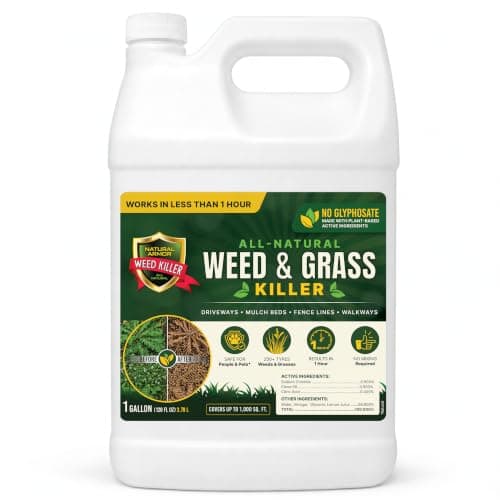
Natural Armor All-Natural Weed & Grass Killer
A glyphosate-free contact killer at a far higher acid concentration than kitchen vinegar.
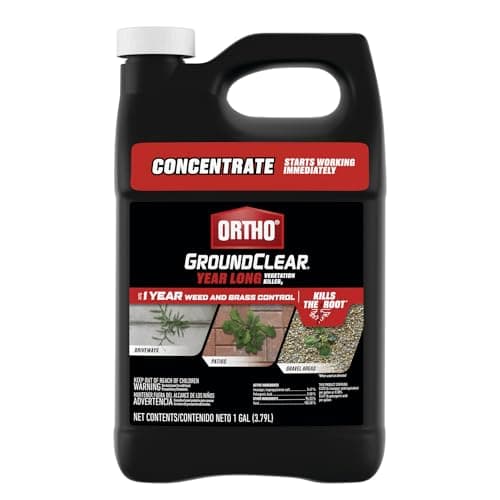
Ortho GroundClear Year Long Vegetation Killer2 Concentrate
A residual vegetation killer for gravel drives, fence lines, and hardscape cracks where nothing should grow.
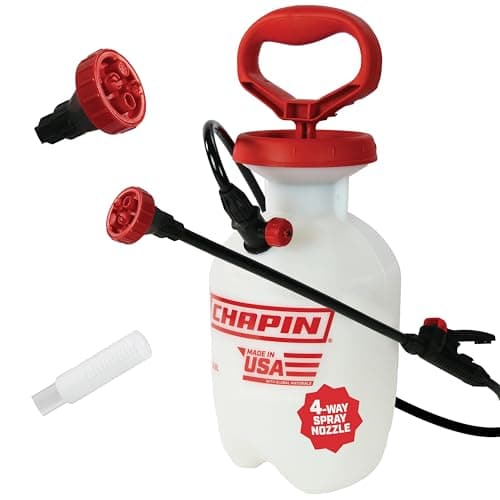
Chapin 20084 1-Gallon Pump Sprayer
A one-gallon pump sprayer with an adjustable nozzle for tight, low-drift spot treatment.
What Other Guides Miss
Many quick articles that answer "does white vinegar actually kill weeds?" either oversell vinegar as a miracle natural herbicide or dismiss it outright. There are a few nuances that are often missing.
First, most guides fail to emphasize weed age and size as a threshold for success. If the weeds are taller than about 2 to 3 inches, particularly for annuals, your control rate with 5% vinegar drops significantly. A simple confirmation step is to treat a small test patch and decide whether the level of burn in 24 to 48 hours is acceptable before committing to a larger area.
Second, safety around pets and children is often glossed over. Even though vinegar is familiar in kitchens, a 20% horticultural vinegar is not the same as salad dressing. You should treat it with the same caution as a strong cleaning chemical: keep it in labeled containers, store it out of reach, and prevent access to treated areas until leaves are dry.
Third, regional and site differences matter. In hot, arid climates, vinegar may desiccate foliage more completely, while in cool, humid regions, weeds may recover more readily. To calibrate expectations, it is useful to consult your local extension's weed management resources or test vinegar on a few representative weeds in your yard rather than assuming online recipes will behave the same everywhere.
Conclusion: Should You Use White Vinegar on Weeds?
White vinegar does actually kill weeds, but mainly in the sense of rapidly burning the foliage it touches. On small, young annual weeds in non-turf areas, it can be a practical, low-cost spot treatment if you accept that you may need multiple applications and that it will not prevent new weeds from germinating. On deep-rooted perennial weeds, vines, and grassy weeds, vinegar is mostly a cosmetic, short-term fix, not a true solution.
If you choose to use vinegar, treat it as one tool in a larger weed management toolkit, alongside mulching, hand weeding, overseeding, and, when appropriate, selective herbicides. Focus it where its contact-only action is an advantage, and protect your lawn and desirable plants from unintended spray. Ready to take the next step in refining your approach to common invaders in your yard? Check out Common Lawn Weeds and How to Remove Them for species by species strategies that pair well with, or sometimes replace, vinegar-based methods.
Top Picks
- Ortho WeedClear Lawn Weed Killer Ready-to-SprayCheck price on Amazon
- Gordon’s SpeedZone Lawn Weed KillerCheck price on Amazon
- Bonide Chickweed, Clover & Oxalis Killer (Ready-to-Use)Check price on Amazon
As an Amazon Associate we earn from qualifying purchases.
Free Lawn Care Tools
In a lawn and garden context, "white vinegar" almost always refers to household distilled white vinegar used in kitchens. It typically contains about 5% acetic acid and 95% water. The acetic acid is the active component that injures plant tissue; the water simply carries it to the leaf surface.
Household white vinegar at 5% acetic acid can injure and often kill very small annual weeds. However, you should keep realistic expectations:
White vinegar acts as a non-selective contact herbicide, so it only damages the green parts it directly touches. It disrupts cell membranes in the leaves and stems, causing them to dehydrate and collapse. Because it does not move inside the plant, it usually does not reach or kill the roots, especially on deep-rooted perennials. That’s why many weeds, particularly mature ones, regrow after the top is burned off.
Visible damage from white vinegar often appears within 2 to 24 hours in warm, sunny weather. Leaves typically turn bleached, brown, or shriveled as the tissue dehydrates. Small annual weeds can be suppressed with one to three treatments spaced 7 to 10 days apart. Perennial weeds may look burned quickly but usually recover from their roots unless other control methods are used.
White vinegar is not safe to broadcast over a lawn because it is non-selective and will burn any grass blades it touches. It should only be used as a spot treatment on target weeds, and nearby turf or ornamentals need to be shielded from drift or overspray. For weeds that are already established in turf, selective lawn herbicides or manual removal are generally safer and more effective. Spraying vinegar across the entire lawn risks creating brown or bare patches where grass is damaged.
Other methods are usually better when dealing with mature, deep-rooted perennials or heavy weed infestations in turf. Vinegar struggles to kill roots on plants like dandelions or plantain, so they often regrow unless the underlying issues such as thin turf, bare soil, or poor mowing are corrected. In those cases, options like hand-pulling, mulching, improving lawn density, or using selective systemic herbicides provide longer-lasting control. Vinegar is best reserved for very small, young weeds in cracks or mulched beds where precise spot treatment is possible.
Photos: Kindel Media / Pexels, cottonbro studio / Pexels, Jonas Thomann / Pexels

Beat weeds and brown spots from your phone
Snap a photo, get the fix, and follow a plan timed to your soil and weather. Free on iPhone.
Related Articles
 Weed Control
9 Best Natural Weed Killers: 2026 Guide to Products & DIY
Dec 18, 2025•13 min read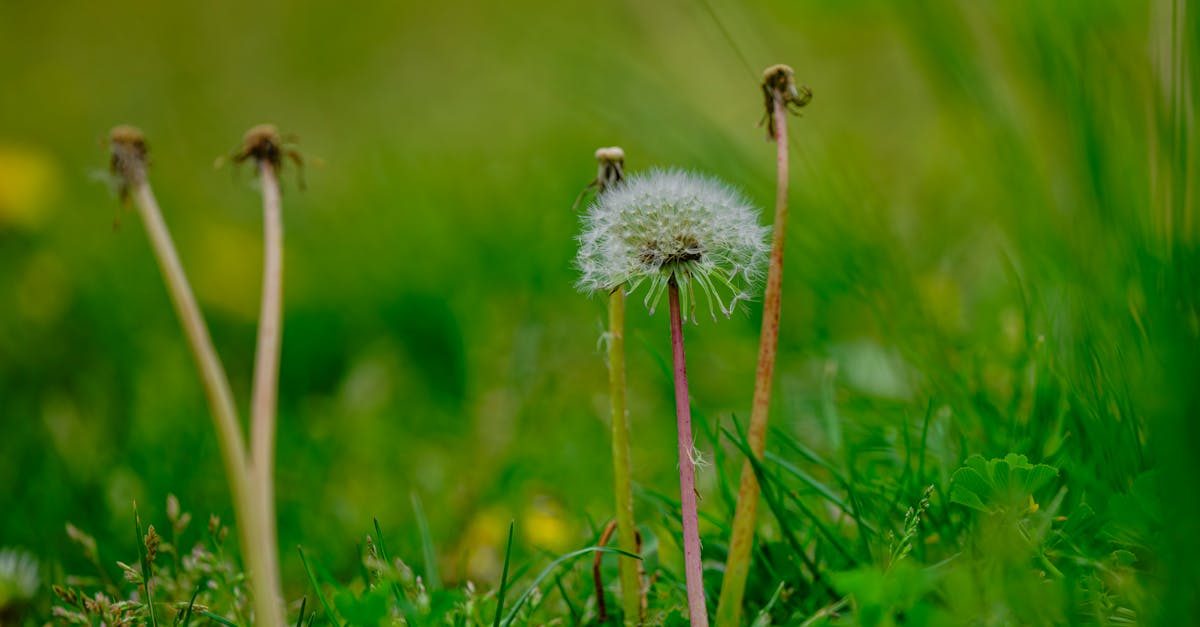 Weed Control
Best Weed Killer for Bermuda Grass: Safe Products That Won't Kill It
Mar 30, 2026•7 min read Weed Control
Ortho GroundClear vs Roundup: Which to Use (and How to Apply GroundClear)
Jul 8, 2026•11 min read

