How to Identify Quack Grass (and Why It's Taking Over Your Lawn)
 Sarah MitchellLawn Diagnostics Specialist | 12 Years
As an Amazon Associate we earn from qualifying purchases.
Patchy, coarse, light green streaks cutting across an otherwise uniform lawn are rarely a coincidence. In cool-season yards, that pattern almost always signals a perennial grassy invader, and quack grass is one of the most common culprits. Misidentifying it as crabgrass or "just a different grass" leads to years of frustration, because the usual weed-and-feed or mowing tweaks will not make it disappear.
Understanding how to identify quack grass (and why it's taking over your lawn) is central to any long-term fix. This weed has a deep, aggressive rhizome system that behaves very differently from common annual weeds. If you can spot the right visual clues - from patch color to the tiny "arms" called auricles at the leaf base - you can decide whether you are dealing with quack grass, a less aggressive coarse grass, or something you can safely ignore.
This guide walks through quack grass identification step by step, explains why it spreads so fast, shows what conditions in your yard are helping it win, and outlines realistic first steps to control and prevent it. Along the way, you will see how it differs from crabgrass, tall fescue, ryegrass, and other look-alikes, and why some common herbicide and mowing strategies fail against it.
If you see light green, coarse patches that stay taller than the rest of your lawn even right after mowing, you are likely dealing with quack grass rather than crabgrass or normal turf. The quickest 2-minute test is to pull up a suspicious clump: if it resists hard and you uncover thick, white, wiry underground stems running sideways through the soil, and if the leaf base has narrow, claw-like "arms" (auricles) that wrap around the stem, that strongly indicates quack grass.
The practical fix is to avoid random weed-and-feed products, because most do not touch perennial grassy weeds like this. For small patches, dig 6 to 8 inches deep and wide, removing as many white rhizomes as possible, then re-sod or seed with your desired grass type. For widespread infestations, the usual strategy is to spot treat or renovate sections with a nonselective herbicide, wait 7 to 14 days, then reestablish with an appropriate cool-season grass from resources like Complete Guide to Cool-Season Grass Types or How to Identify Your Grass Type by Look & Feel.
Expect the control process to take at least one growing season, and in heavy infestations possibly 1 to 2 years, with periodic spot checks to remove any rhizomes or regrowth. Combining removal or herbicide with thicker, healthier turf, proper mowing height, and correcting thin or compacted areas reduces the chance that quack grass will keep taking over your lawn.
Understanding Quack Grass: The Basics
What Is Quack Grass?
Quack grass is a cool-season, perennial grassy weed with the scientific name Elymus repens (often listed under the older name Agropyron repens). It grows vigorously in the same temperature range as cool-season turf species like Kentucky bluegrass, perennial ryegrass, and tall fescue, so its growth peaks in spring and fall and slows during hot summer weather.
It is most common in northern and transition-zone lawns, roughly the same general belt where cool-season turf dominates, but it can also appear farther south in cooler microclimates, irrigated lawns, or lightly shaded sites. Farmers know it as a serious agricultural weed in small grains and other crops, because it competes aggressively for moisture and nutrients.
- Penn State Extension notes that quack grass spreads aggressively through rhizomes, which can extend several inches or more between shoot nodes, allowing rapid colonization of turf and crops.
- Purdue Extension describes quack grass as a perennial weed that survives winter through its underground rhizomes and crowns, then resumes growth early in spring ahead of many desirable grasses.
Unlike a desirable turf grass, quack grass is usually not planted intentionally in home lawns. It arrives through contaminated seed, soil from other sites, neighboring properties, or areas where the soil has been disturbed. Once it establishes even a few plants, the rhizomes allow it to spread horizontally under the soil surface, forming new shoots a few inches away, then a few inches more.
That vigorous underground network is the main reason it is classified as a noxious weed in several regions. Rhizomes can form dense mats that are difficult to pull out fully. Any surviving pieces can re-sprout, which is why simple hand-pulling of the leaves rarely works long term.
From a lawn perspective, it behaves very differently from your intentionally planted turf. Well-managed turf forms a dense, uniform canopy with similar color and texture. Quack grass creates lighter, coarser patches that interrupt that uniform look and compete strongly for the same space, water, and fertilizer. Compared to many invasive grassy weeds, quack grass is among the most persistent because of that perennial life cycle and rhizome system.
Why “Grassy Weeds” Are Harder to Control Than Broadleaf Weeds
Many homeowners are used to dealing with clover, dandelions, or plantain, which are broadleaf weeds. Broadleaf plants have wide leaves, often with obvious veins, and they are biologically different enough from narrow-leaved turf grasses that selective herbicides can target them without killing the whole lawn. That is why a typical weed-and-feed granule can kill broadleaf weeds while leaving most grass unharmed.
Quack grass, by contrast, is a grass itself. It has narrow blades, a fibrous root system, and similar growth patterns to your desirable turf. Most common lawn herbicides, particularly "3-way" broadleaf mixes, do not affect quack grass at all. The granules or sprays simply do not recognize it as a target, because the chemicals are designed for the physiology of broadleaf plants.
This is why accurate identification matters more for grassy weeds than for broadleaf weeds. If you mistake quack grass for crabgrass, for example, you might try a pre-emergent or an annual grass herbicide that works on crabgrass. Those products often have little to no effect on an established perennial like quack grass, because it survives underground year after year. Misidentification leads to wasted time, wasted money, and a weed that seems to "laugh" at whatever you apply.
How to Identify Quack Grass: Step-by-Step Visual Guide
1. Start with the Big Picture: How the Patch Looks in Your Lawn
The first step in learning how to identify quack grass (and why it's taking over your lawn) is not to zoom in on a single blade, but to step back and look at how the patch behaves compared to the rest of your yard.
In most cool-season lawns, quack grass appears as irregular clumps or streaks of lighter green, often slightly bluish, scattered through the darker green of Kentucky bluegrass or perennial ryegrass. The texture looks coarser from a few feet away, and the affected areas frequently stand a little taller than the surrounding grass, even if everything is mowed at the same time.
Seasonal patterns offer important clues. Quack grass usually jumps out visually in early spring and again in fall. It breaks dormancy early, so while your lawn is just starting to wake up, these patches are already tall and vigorous. During hot, dry summer weather, some desirable cool-season turf thins or browns at the tips. Quack grass often stays greener longer, especially if there is enough moisture, so light green streaks may be more noticeable against stressed turf.
As you scan the lawn, note three key patch traits:
- Color: Quack grass tends to be light green to dull blue-green, whereas many turf varieties are deeper, richer green during healthy growth.
- Texture: The patch looks coarse and stiff, not soft and fine. It makes the lawn appear rough from above and underfoot.
- Growth pattern: Instead of a perfect circle, patches often have "fingers" or runners extending from the main clump, following where the underground rhizomes have spread.
If you see streaks that look like they are radiating out from one original spot, that is a common quack grass pattern. However, other coarse grasses can also create irregular patches, so field-level observation is only the first step.
2. Blade & Leaf Characteristics: What a Single Quack Grass Plant Looks Like
Next, focus on a single plant from the suspect patch. Snip or pull a few leaves, then collect a few leaves from your desirable turf right next to it. Laying them side by side on a white surface makes the differences much easier to spot.

Typical quack grass leaf traits include:
Blade width and texture. Quack grass blades are usually wider than Kentucky bluegrass and perennial ryegrass, often similar to or slightly narrower than tall fescue, and noticeably thicker and stiffer. When you run your fingers along the blade, the upper surface often feels rough. This roughness is more pronounced than on many cool-season turf types.
Color and sheen. The color is often dull green or slightly bluish, not the bright, glossy green you might see in a healthy ryegrass lawn. Under direct sun, quack grass leaves rarely look shiny.
Leaf tips and twist. The tips tend to be long and pointed rather than blunt. Many quack grass leaves twist slightly along their length, giving the plant a somewhat disorganized, scruffy appearance compared to the straighter leaves of many turf varieties.
When comparing side by side, look for three differences: the quack grass leaf will generally be wider, duller in color, and stiffer to the touch. If all three are true, you have a strong candidate for quack grass, but there are still other grasses that can match those traits, so you need a more precise diagnostic feature.
3. Key Identification Feature: Auricles (The “Clasping Arms”)
The most reliable way to identify quack grass is to look at the auricles. Auricles are small appendages where the leaf blade meets the stem, at the collar region. Many grasses have them, but their presence, shape, and size differ by species and are a key turfgrass identification tool.
To check the auricles, find a healthy stem on your suspect plant. Gently peel the leaf blade away from the stem at the base. Right at the junction, you will see a thin, lighter colored collar and, if present, two small arms or "claws" wrapping around the stem.
Quack grass has very distinctive auricles: they are long, narrow, and claw-like, and they often wrap all the way around the stem, hugging it tightly. If you rotate the stem between your fingers, you can see the auricles clasping on both sides like tiny arms. They are usually more prominent than the subtle or absent auricles on many turf species.
If you see long, clasping auricles that nearly encircle the stem, your identification is close to certain. A few other grasses, such as ryegrass, have short auricles, but they are usually smaller and do not wrap around as fully. The combination of coarse blades and strong, prominent, nearly encircling auricles is a hallmark of quack grass in lawn settings.
Along with auricles, you can also look at the ligule (a thin membrane or fringe on the inner side of the leaf base) and the way the leaf is rolled or folded in the bud, but for most homeowners, auricles alone provide a clear enough distinction.
4. Underground: Rhizomes and Root System
For confirming why it keeps taking over your lawn, examining the underground parts is just as important as the above-ground features. Quack grass spreads primarily via rhizomes, which are specialized underground stems. These rhizomes are thick, white to creamy in color, and can extend several inches or more horizontally from the parent plant before sending up new shoots.
To inspect them, use a hand trowel or small shovel to dig up a suspect clump with a plug of soil around it, at least 4 to 6 inches deep. Gently shake or wash off the soil. You will often see a network of firm, white rhizomes, sometimes with slightly jointed segments. These rhizomes may pass directly under neighboring turf and continue into otherwise healthy-looking areas.
This is the underlying reason many attempts at hand pulling fail. If you only pull the leaves and a small portion of the crown, the rhizomes remain intact and will send up new shoots, sometimes within a couple of weeks. To truly remove quack grass manually, you need to chase and remove as much of that rhizome network as possible, at least 6 to 8 inches around and below the visible patch.
The presence of these thick, white rhizomes, combined with long, clasping auricles and coarse, light green blades, confirms you are dealing with quack grass and not just a random coarse turf variety.
Quack Grass vs Other Common Look-Alike Grasses
Quack Grass vs Crabgrass
Homeowners often search "Is this crabgrass or quack grass?" because both can make the lawn look patchy. However, they are quite different in biology and control strategy.
Crabgrass is an annual warm-season weed that germinates in late spring once soil temperatures reach roughly 55 to 60 degrees Fahrenheit and dies with the first hard frost. It forms low, spreading, prostrate clumps with wide, often lighter green blades and distinctive seedheads later in the season. Because it is an annual that starts from seed each year, pre-emergent herbicides are very effective if applied before germination.
Quack grass, in contrast, is a cool-season perennial that survives winter in the soil and resumes growth from its crowns and rhizomes early in spring. It often grows more upright than crabgrass, and its patches are present year after year in roughly the same areas. The long, clasping auricles, early spring growth, and thick rhizomes clearly distinguish quack grass from crabgrass.
If you are trying to control what you believe is quack grass using a crabgrass pre-emergent, and the weed seems unaffected, that is exactly what turf science would predict. The herbicide is targeting seed germination rather than established perennial rhizomes. And if you dig up a low, spreading clump and find only fibrous roots with no white rhizomes, that points to crabgrass instead. Our crabgrass identification and control guide covers what to do next.
Quack Grass vs Perennial Ryegrass
Perennial ryegrass is a desirable turf species in many cool-season lawns, often planted for quick establishment or overseeding. It can have a somewhat coarse texture compared to Kentucky bluegrass, and it has short auricles, so confusion with quack grass is understandable.
However, ryegrass blades are usually more glossy, with a distinct sheen when you look at them in angled light. The leaves are often narrower than quack grass and more uniform in width and color across the lawn. Auricles on ryegrass are shorter and less likely to wrap fully around the stem. In addition, ryegrass does not have thick white rhizomes; it spreads mostly in a bunch-type pattern, without the aggressive underground network seen in quack grass.
If your grass looks slightly coarse but consistent across the entire lawn, and if you do not see thick rhizomes when you dig, you may simply have a ryegrass-heavy lawn rather than a quack grass infestation.
Quack Grass vs Tall Fescue and Orchardgrass
Tall fescue lawns can also look coarse compared to bluegrass or ryegrass, and older pasture-type fescues are particularly wide-bladed. Some older lawns or areas near fields may also have orchardgrass mixed in. Both species can form clumps with coarse leaves that resemble quack grass at first glance.
Tall fescue, especially turf-type varieties, usually has a darker green color than quack grass and a more upright, bunching growth habit. It lacks the dense white rhizomes that define quack grass. Auricles in tall fescue are either absent or very small, and they do not wrap around the stem.
Orchardgrass forms loose clumps, often a lighter green, and it tends to go to seed and form distinct seedheads if mowed too high or infrequently. Like tall fescue, it is a bunch-type grass and does not spread aggressively through rhizomes in turf. If you dig up orchardgrass, you will not find the long, jointed, white underground stems typical of quack grass. In warm-season lawns, a much taller rhizome weed with a broad, white-striped blade is usually Johnson grass rather than quack grass.
Quack Grass vs Your Desired Turf Mix
Many lawns are mixtures of several species selected for sun or shade tolerance, and the exact blend can be hard to remember a few years after seeding. If your lawn looks patchy but the coarse areas lack rhizomes and long clasping auricles, you may simply be noticing natural variation in your turf blend.
Resources like Complete Guide to Cool-Season Grass Types or How to Identify Your Grass Type by Look & Feel can help you determine what you originally planted. Once you can confirm which grasses are supposed to be there, you can contrast them against the quack grass traits discussed above. If a coarse patch does not line up with your desired species and does have strong auricles and rhizomes, you have identified the problem weed accurately.
Why Quack Grass Is Taking Over Your Lawn
The Biology: Rhizomes and Perennial Lifecycle
The primary reason quack grass takes over is its biology. As a perennial grass, it invests energy into persistent structures: crowns and rhizomes that survive winter and drought. When conditions improve, these structures sprout new tillers even if the previous season's leaves have been removed or damaged.
Each plant can send rhizomes in multiple directions, and each rhizome node can generate a new shoot. Over time, a single plant can form a colony several feet across if unchecked. This rhizome-driven spread is more efficient than relying solely on seeds because the new shoots already have a direct connection to the parent plant's energy reserves and root system.
Even if you mow short, bag clippings, or spot spray some leaves, the underground system often remains largely intact unless you specifically target it. That is why quack grass can seem to reappear after every attempt, often in the same spots and sometimes with even denser growth as surrounding desirable turf is weakened.
Site Conditions That Favor Quack Grass
Quack grass is highly adaptable, but certain conditions make it more competitive than your desired turf. Some of the most common include:
- Thin or damaged turf: Bare soil or thin areas provide open real estate for rhizomes to colonize and shoots to emerge. Traffic damage, insect injury, disease, or poor establishment create these opportunities.
- Compacted or disturbed soil: Areas along driveways, paths, or construction zones often become compacted, which stresses shallow-rooted turf but does not bother deep rhizomes as much. When topsoil is disturbed or brought in from other sites, quack grass rhizomes or seeds can hitch a ride.
- Excessive nitrogen on weak turf: When lawns receive high nitrogen fertilizer but have underlying issues like compaction or poor species selection, quack grass can utilize that nutrient surge more aggressively than weakened turf.
- Full sun with irregular care: Quack grass thrives in sunnier spots where it can outcompete cool-season turf that is under-watered, scalped, or otherwise stressed. Shaded lawns can have different weed profiles, often more broadleaf or fine fescue issues, but quack grass prefers at least moderate light.
If you notice that quack grass patches are concentrated where the soil was recently disturbed, near old garden beds, or where the lawn has always struggled, that pattern reinforces the diagnosis. These are exactly the conditions that let a rhizome-driven weed outpace a thin or poorly adapted turf stand.
- Contact your local extension office and ask for turf weed identification resources, including fact sheets on quack grass and similar coarse grasses.
- Check your state's turfgrass extension publications for photos of auricles, rhizomes, and patch patterns typical of quack grass in your region.
Why Mowing and “Weed and Feed” Often Fail
Two common homeowner responses to any lawn weed problem are to mow shorter and to apply a weed-and-feed fertilizer. Neither is effective for quack grass control, and in many cases they make the problem relatively worse.

Mowing shorter than recommended (below 2.5 to 3 inches for most cool-season turf) weakens your desirable grasses by reducing their leaf area and root depth, making them less competitive for water and nutrients. Quack grass, with its robust rhizomes and thick leaves, tolerates scalping better. Over time, repeated low mowing tips the competition in favor of quack grass rather than against it.
Most weed-and-feed products are formulated for broadleaf weeds. Their active ingredients target dicot plants, not grasses. Applying them to a quack grass infestation may remove some dandelions or clover, but the grassy weeds remain unaffected, and the fertilization can actually fuel their growth. The result is greener quack grass patches in a somewhat greener lawn, but no reduction in the underlying problem.
Recognizing that quack grass is a perennial grassy weed, rather than a broadleaf or annual weed, shifts the control strategy away from generic weed-and-feed applications and toward more targeted removal or renovation techniques.
First Steps to Controlling Quack Grass
Step 1: Confirm Identification with Auricles and Rhizomes
Before you invest significant time or money, confirm that the weed is quack grass. As discussed earlier, the two confirmation tests are:
- Inspect the auricles at the leaf base. Long, narrow, clasping arms that wrap around the stem strongly indicate quack grass.
- Dig up a plug 4 to 6 inches deep from a patch. The presence of thick, white, jointed rhizomes running sideways through the soil, sometimes with buds or small shoots, confirms a rhizome-driven weed, consistent with quack grass.
If you see both traits, you can proceed with confidence that you are dealing with quack grass rather than another coarse species. If you are uncertain, bringing a sample to a local extension office or experienced garden center can provide a professional confirmation.
Step 2: Decide Between Spot Control and Renovation
The right control approach depends on how much of your lawn is affected. A useful threshold is approximate coverage:
- If quack grass occupies less than about 10 to 15 percent of the lawn, spot control (digging or targeted herbicide) plus overseeding is usually reasonable.
- If quack grass dominates more than 30 to 40 percent of the lawn, a more extensive renovation of sections or the entire yard often yields better results over the long term.
Between those percentages, your choice depends on your tolerance for patchiness, your time and budget, and whether you are already planning to upgrade your turf species. For example, if you want to switch from a mixed, patchy lawn to a more uniform Kentucky bluegrass blend anyway, a phased renovation that also eliminates quack grass may be the most efficient strategy.
Step 3: Manual Removal for Small Patches
For isolated clumps or small patches, careful manual removal can be effective if done thoroughly. The key is to remove as much of the rhizome network as possible, not just the visible leaves.
- Irrigate the area the day before removal to soften the soil.
- Use a sharp spade or sod cutter to outline a rectangle or circle around the patch, extending at least 6 to 8 inches beyond the visible quack grass in all directions.
- Cut down 6 to 8 inches deep and lift the entire plug of sod and soil.
- On a tarp or in a wheelbarrow, crumble the soil and remove all visible white rhizomes and crowns. It is best to discard this material in the trash rather than a compost pile, since rhizomes can survive in home compost systems.
- Backfill the hole with clean topsoil if needed and immediately reseed or patch with sod using your desired turf species.
Manual removal is labor intensive but avoids herbicide use and works well for early-stage infestations. Check the area regularly for the next several weeks and remove any new shoots quickly before they can establish new rhizomes.
Step 4: Chemical Control for Larger Infestations
When quack grass is widespread, most homeowners turn to nonselective herbicides, typically glyphosate, because there are very few postemergent selective herbicides that reliably remove quack grass from cool-season lawns without also damaging turf. Nonselective products kill or injure any plant tissue they contact, so they must be used carefully.
The usual approach is:
- Mark the areas dominated by quack grass, either entire sections or individual patches.
- Allow the quack grass to grow actively for several weeks, with adequate moisture but no mowing for 3 to 5 days before treatment, so there is plenty of leaf surface to absorb the herbicide.
- On a calm, dry day when temperatures are between roughly 60 and 85 degrees Fahrenheit, apply the herbicide as a directed spray or with a shield to minimize drift onto desirable turf.
- Wait 7 to 14 days and observe the treated areas. If some green patches remain, a second application may be needed.
- Once everything in the treated zone is fully brown and dead, rake out the debris, loosen the top inch of soil, and reseed or sod with your chosen turfgrass.
Always follow label instructions for rates, re-entry intervals, and seeding delays. Many glyphosate products allow reseeding 7 days after application, but check the specific product. Over-applying does not typically speed control and can increase environmental risk, so stay within labeled rates.
Timelines: When to Act
In cool-season regions, the best windows for quack grass control and lawn renovation are early fall and, secondarily, spring.
- Early fall (roughly late August through September in many northern areas): Soil is warm, air temperatures are cooler, and cool-season turf seeds germinate and establish quickly. If you need to spray, kill, and reseed, this is typically the preferred window.
- Spring (roughly April through early June, depending on region): Also good for growth and establishment, but you may face competition from annual weeds and summer heat before new turf is fully mature.
In either season, aim to complete killing and removal at least 4 to 6 weeks before the first hard frost in fall or before the peak summer heat in spring renovations. That gives new grass a chance to develop a root system that can tolerate weather extremes better than newly sprouted seedlings.
Recommended products
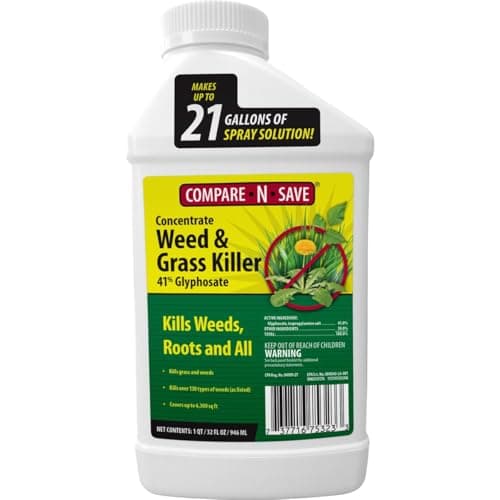
Compare-N-Save Concentrate Glyphosate Grass and Weed Killer
A 41 percent glyphosate concentrate for spot killing quack grass patches down to the rhizome.
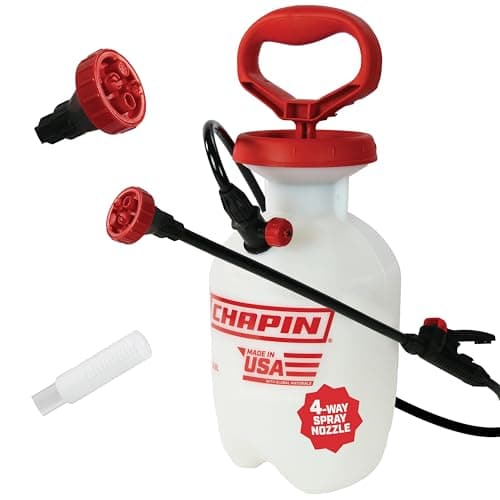
Chapin 1-Gallon Pump Sprayer
A one gallon pump sprayer with an adjustable nozzle for placing herbicide on the patch and nowhere else.
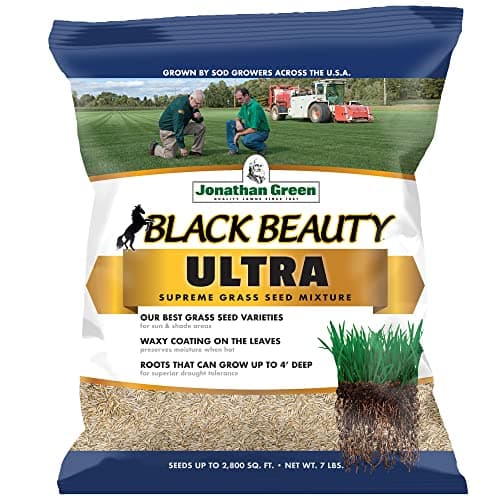
Jonathan Green Black Beauty Ultra Grass Seed
A deep-rooting cool-season blend for reseeding the bare ground left after a quack grass kill.
Preventing Quack Grass from Coming Back
Thicken and Strengthen Your Turf
Once you have reduced an infestation, prevention relies on dense, healthy turf that can compete effectively. This includes:
- Mowing at the correct height: For most cool-season lawns, keep the mower at 3 to 4 inches. Higher mowing encourages deeper roots, shades the soil, and leaves less light and space for invading rhizomes or stray seeds.
- Providing 1 to 1.5 inches of water per week: Apply through rainfall or irrigation, preferably in 1 or 2 deep soakings. Deep, infrequent watering supports deeper turf roots and reduces stress that quack grass can exploit.
- Balanced fertilization: Follow soil test recommendations rather than guessing. Most cool-season lawns need roughly 2 to 4 pounds of nitrogen per 1,000 square feet per year, split into 2 to 4 applications, with the largest share applied in fall.
- Overseeding thin areas: Every 1 to 3 years, overseed in late summer or early fall with improved cultivars adapted to your sun and soil conditions. This maintains density and helps your desired grass occupy any opening before quack grass or other weeds do.
Guides like Best Grass Types for Shade and Best Grass Types for Full Sun can help ensure that the species you choose match your site conditions. Well-chosen, well-managed turf species are your best long-term defense.
Address Soil and Site Problems
Because quack grass takes advantage of compacted, disturbed, or poor soil, improving the root zone reduces the conditions that favor it.
- Aeration: Core aeration once every 1 to 3 years in compacted lawns relieves soil density and promotes deeper root growth. Overseeding immediately after aeration improves turf density.
- Traffic management: Redirect foot traffic or install stepping stones in high-use areas to prevent chronic compaction and turf thinning.
- Topdressing and organic matter: A light topdressing of compost, perhaps 0.25 inch once a year in conjunction with aeration, can improve soil structure over time. Avoid very thick layers that might smother turf.
- Grading and drainage: Fix low spots or hardpan issues that lead to standing water or dryness, both of which stress turf and open windows for weed invasion.
Healthy soil and matched turf species will not completely prevent quack grass from appearing if rhizomes or seeds arrive from neighboring areas, but they make it much less likely that a single plant will expand into a significant patch.
Monitoring and Early Intervention
After major control efforts, regular monitoring is essential. Once each month during the growing season, walk your lawn and check for light green, coarse streaks or new clumps that stand taller than surrounding turf. Pay special attention to edges, disturbed areas, and spots where you have previously removed quack grass.
If you see a very small new patch, dig and remove it immediately using the manual removal technique, going 6 to 8 inches around the visible plant. The threshold for chemical control should be higher for these tiny patches, since early manual removal is usually simpler and avoids collateral damage.
In this way, you change quack grass management from a large renovation project every few years to a series of small, manageable interventions that keep it from ever dominating again.
What Other Guides Miss
Many online resources mention quack grass but leave out a few practical details that matter in real lawns. Understanding these gaps can save you from common mistakes.
Auricle and Rhizome Confirmation
Some guides focus solely on leaf width and color, which can easily lead to confusion with tall fescue or ryegrass. Without checking the auricles and rhizomes, you may misidentify your grass and choose the wrong control option.
A more reliable diagnostic approach is: if you suspect quack grass, always confirm by inspecting auricles and digging for rhizomes. If both are consistent, you have the confidence to proceed with more aggressive control, such as renovation, that you might not undertake if you were still uncertain.
Timing of Control vs Seeding
Another point often glossed over is the timing window between herbicide use and reseeding. Labels may allow seeding relatively soon after glyphosate use, but new grass still requires favorable temperatures and moisture to establish. Killing weeds in midsummer heat or late fall often leads to poor turf establishment, and bare soil is then vulnerable to new invasions.

A more realistic schedule is to plan your major quack grass control for early fall in cool-season regions, allowing at least 4 to 6 weeks of good growing weather after seeding. If you miss that window, it is usually better to live with the weed until the next suitable season rather than rush into a renovation that leaves the lawn thin and exposed.
Regional and Species Selection Nuances
Finally, some guides ignore regional grass differences. For example, in transition zones where both cool-season and warm-season lawns exist, misidentifying a coarse cool-season grass in a warm-season yard or vice versa can lead to poor species choices after renovation. Cross check your location and lawn type against resources such as Complete Guide to Cool-Season Grass Types and Complete Guide to Warm-Season Grass Types before choosing a new seed mix.
Choosing an adapted grass type is not just about appearance, it is also about long-term weed resistance. Turf that is poorly adapted to your climate will always be more vulnerable to quack grass and other invasive species.
Conclusion: Putting Quack Grass Back in Its Place
When you see coarse, light green patches that stay taller than the rest of the lawn, you are often looking at quack grass, not just "ugly grass." Identifying the long, clasping auricles at the leaf base and the thick white rhizomes underground confirms what you are dealing with and explains why it keeps coming back each year despite mowing and weed-and-feed products.
Effective management starts with that accurate identification. From there, you can choose between manual removal for small patches or more extensive renovation with nonselective herbicides for larger infestations. Pairing removal with proper timing, overseeding, and long-term turf strengthening gives your desirable grass species the advantage they need to hold their ground.
If you approach quack grass management as a one-time spray, it is likely to return. If you treat it as a combination of precise identification, targeted removal, and improved turf and soil health, you can keep it confined to the occasional small patch that is easily handled. Ready to take the next step? Check out How to Identify Your Grass Type by Look & Feel so you can match your renovation seed choice to the grass that will thrive best in your yard and outcompete quack grass over the long term.
Top Picks
- Ortho WeedClear Lawn Weed Killer Ready-to-SprayCheck price on Amazon
- Syngenta Tenacity HerbicideCheck price on Amazon
- Ortho Weed B Gon Plus Crabgrass Control Ready-To-SprayCheck price on Amazon
As an Amazon Associate we earn from qualifying purchases.
Free Lawn Care Tools
Look for light green, coarse patches that stay taller than the rest of your lawn even right after mowing. Do a quick pull test: if the clump resists strongly and you uncover thick, white, wiry underground stems running sideways (rhizomes), that points to quack grass. Also check the leaf base for narrow, claw-like auricles that wrap around the stem, which crabgrass does not have.
Quack grass spreads aggressively through underground rhizomes that can extend several inches or more between shoot nodes. These rhizomes form dense mats that send up new shoots a short distance away, allowing it to colonize bare or thin spots fast. Even small rhizome pieces left in the soil can re-sprout, which is why it often seems to come back after pulling.
Most weed-and-feed products are designed to kill broadleaf weeds like dandelions and clover, not grassy weeds. Quack grass is a grass with similar biology to your turf, so those selective broadleaf herbicides simply ignore it. As a result, you can apply weed-and-feed multiple times and see no change in quack grass patches.
Quack grass is most common in northern and transition-zone lawns where cool-season grasses dominate. It thrives in the same temperature range as Kentucky bluegrass, perennial ryegrass, and tall fescue, growing most vigorously in spring and fall. It can also appear farther south in cooler microclimates, irrigated lawns, or lightly shaded areas.
For small patches, the most practical approach is to dig 6 to 8 inches deep and wide around the clump, removing as many of the white rhizomes as possible. After removing the plant and roots, refill and re-sod or reseed the area with your desired grass. This helps prevent regrowth from leftover rhizome pieces and restores a more uniform lawn.
Expect quack grass control to take at least one full growing season, and heavy infestations can require 1 to 2 years of effort. The process often involves digging, spot herbicide treatments or renovation, then reestablishing desirable turf. Regular spot checks for rhizomes or new shoots, combined with thicker, healthier turf and proper mowing, greatly reduce its ability to come back.
Photos: Engin Akyurt / Pexels, Jonas Thomann / Pexels, Ashish / Pexels

Beat weeds and brown spots from your phone
Snap a photo, get the fix, and follow a plan timed to your soil and weather. Free on iPhone.