First Time Mowing? How High to Cut Your Grass (by Type and Season)
 James ThorntonLawn Equipment & Maintenance Expert | 20 Years
As an Amazon Associate we earn from qualifying purchases.
Quick answer: never remove more than one third of the grass blade in a single cut. If you seeded a new lawn, wait until the grass reaches 3 to 4 inches tall and is firmly rooted before mowing for the first time. New sod is usually ready about 2 to 3 weeks after installation, once it resists a gentle tug. And for the first spring mow of an established lawn, set the mower slightly lower than your normal height for one pass to clean up winter-browned tips, then raise it back up.
First-time mowing decisions fall into three diagnostic categories: how high to cut after winter, how high to cut after new seeding, and how high to cut when you have never used a mower before. In each case, mowing height directly controls how deep the roots grow, how much water the lawn needs, and how aggressively weeds invade.
Turfgrass science is clear on this point. According to Penn State Extension, taller mowing heights produce deeper roots, greater drought tolerance, and fewer weeds. Purdue University Extension reports that lawns maintained at 3 inches or higher have significantly lower weed pressure than lawns maintained below 2 inches. Mowing height is not just a cosmetic choice, it is a primary cultural practice that determines long-term lawn health.
When someone searches “first time mowing? how high to cut your grass (by type and season)”, the situation usually fits one of these:
- First mow of the year after winter dormancy.
- First mow after new seed has germinated or sod has rooted.
- First time ever mowing as a new homeowner or a new mower user.
This guide explains how to set mowing height correctly for each scenario. It covers ideal mowing ranges by grass type, how to adjust mowing height through the seasons, and step-by-step instructions for that first pass with the mower. It also explains how to identify your grass type so you do not rely on guesswork.
For a complete lawn-care plan, pair this article with related resources such as How Often Should You Mow Your Lawn?, Beginner’s Guide to Lawn Care Tools, and When Is the Best Time of Day to Mow Your Lawn? If you are still choosing equipment, guides like Best Lawn Mowers in 2026 and Robotic Lawn Mowers: Are They Worth It? provide helpful context on mower types and features.
When mowing for the first time, it's crucial to identify your grass type to set the right cutting height. You can verify this by measuring the grass blade from the soil to its tip, ensuring it matches the mower's setting. For example, if your mower is set to 3 inches, make sure the actual cut is close to this height by measuring with a ruler.
To promote healthy growth and prevent weeds, mow cool-season grasses like Kentucky bluegrass to 2.5-3.5 inches and warm-season grasses like Bermuda to 1-2 inches. Start mowing once the grass reaches about one-third above the ideal height, which typically means mowing every 5-7 days during the active growing season. This practice helps deepen roots and maintain a lush, green lawn.
How High to Cut Grass the First Time
Your first cut looks different depending on which "first" you are facing. Here is the short version for each scenario, with the details covered later in this guide.
First mow of new grass from seed: forget the calendar and watch the blades. Once the new grass reaches 3 to 4 inches tall and the seedlings are firmly rooted (usually 3 to 6 weeks after germination), it is ready. Set the mower at the top of your grass type's range, make sure the blades are sharp, and take off no more than an inch or so. Soft, soggy soil means wait a few more days.
First mow of new sod: sod needs about 2 to 3 weeks to knit into the soil. Do the tug test: gently pull on a corner, and if it lifts easily, hold off. Once it resists, mow high for the first couple of passes before easing toward your long-term height.
First mow of the spring: an established lawn waking up from winter can handle one pass at a slightly lower setting than your normal maintenance height. That single lower cut removes winter-browned tips and encourages fresh growth. After that, move the deck back up and follow the one-third rule for the rest of the season.
Whatever the scenario, these first-mow heights are safe starting points for the most common lawn grasses:
- Tall fescue: 3 to 4 inches
- Kentucky bluegrass: 2.5 to 3.5 inches
- Perennial ryegrass: 2 to 3 inches
- Bermudagrass: 1 to 2 inches
- Zoysiagrass: 1 to 2.5 inches
- St. Augustinegrass: 2.5 to 4 inches
These numbers cover the grasses most first-time mowers are working with. For every species, cultivar notes, and season-by-season adjustments, the full mowing height chart linked earlier in this article goes deeper.
Understanding Mowing Height Basics
What “Mowing Height” Actually Means
Mowing height means the distance from the soil surface to the tip of the grass blades immediately after you cut. It is a biological setting, not just a number printed on the mower dial.
Many homeowners assume that the “3” or “2.5” setting on a mower equals 3 inches or 2.5 inches of grass. That assumption is often incorrect. Mower decks vary in design, wheel diameters differ, and worn tires or uneven ground change the effective cutting height. Two mowers set to “3” can cut at noticeably different actual heights.
To check the real cutting height:
- Place the mower on a flat, hard surface such as a driveway or garage floor.
- Turn the mower off and remove the spark plug wire or battery for safety.
- Measure from the ground to the bottom of the cutting blade using a ruler or tape measure.
- Adjust the wheel height until that distance matches the target mowing height.
This quick test ensures your 3 inch setting is truly 3 inches at the blade, not 2.25 or 3.75. For robotic or reel mowers, consult the manual for calibration details, and still verify with a ruler if possible.
Why Cutting Too Low Is So Harmful (“Scalping”)
Scalping occurs when you cut so low that you remove almost all of the green leaf tissue, often exposing the grass crowns or even bare soil. This injury produces immediate cosmetic damage and long-term stress to the turf.
According to Ohio State University Extension, low mowing height forces grass to use stored energy reserves to regrow leaves instead of building roots. That shift leads to shallow root systems that dry out quickly, provide less anchoring, and compete poorly with weeds.
The key problems created by chronic low mowing include:
- Shallow roots: The plant invests in faster leaf regrowth instead of deeper root growth, which reduces drought and heat tolerance.
- Increased weed pressure: Short grass allows more sunlight to reach the soil surface, which triggers weed seed germination.
- Greater disease susceptibility: Stressed, scalped grass has weaker natural defenses against fungal diseases and insects.
- Soil and crown exposure: Exposing crowns or soil leads to brown, patchy appearance and can kill individual plants if repeated.
Visual signs that you scalped the lawn include:
- Large areas that look tan or straw-colored immediately after mowing.
- Uneven “choppy” patches where mower wheels dipped into low spots and cut extremely short.
- Visible soil or white to tan plant crowns at the surface.
The turfgrass rule that prevents scalping is the “one-third rule”. According to University of Missouri Extension, removing more than one third of the grass blade in a single mowing event significantly increases stress on the plant. The practical application is simple:
- If you maintain your lawn at 3 inches, mow when it reaches 4.5 inches.
- If you maintain it at 2 inches, mow when it reaches 3 inches.
For first-time mowing situations where the lawn is overgrown, the one-third rule means you must reduce the height gradually. For example, if grass is 8 inches tall and you want a 3 inch maintenance height, cut to about 5 inches first, then to 3.5 or 4 inches 3 to 5 days later, and finally to 3 inches after another 3 to 5 days.
How Grass Type and Season Change the “Right” Height
Grass species and regional climate determine the biologically appropriate mowing range. Turfgrasses fall into two main categories: cool-season and warm-season.
Cool-season grasses grow most actively in spring and fall, and slow down or stress in hot midsummer conditions. They dominate northern and transition-zone lawns. Common species include:
- Kentucky bluegrass
- Perennial ryegrass
- Tall fescue
- Fine fescues (creeping red, chewings, hard fescue, sheep fescue)
Warm-season grasses grow most actively in late spring through summer when soil temperatures are higher, and they go dormant or brown in cool weather. They dominate southern and coastal regions. Common species include:
- Bermudagrass
- St. Augustinegrass
- Zoysiagrass
- Centipedegrass
Seasonal conditions modify optimum height within each type. The general pattern is:
- In heat and drought, slightly higher mowing heights increase shade on the soil, reduce evaporation, and encourage deeper rooting.
- During peak growth periods, slightly lower but still safe heights can promote denser turf by encouraging lateral growth and tillering.
It is more accurate to think in terms of mowing ranges instead of one fixed number. For example, tall fescue performs well between 3 to 4 inches, while bermudagrass lawns usually perform best between 1 to 2 inches, depending on whether you use a rotary or reel mower. Later sections break down specific ranges by species.
Step Zero: Identify Your Grass Type Before You Cut
Why Identifying Grass Type Matters
Differing grass species have distinct ideal mowing ranges, growth habits, and seasonal patterns. Cutting at the wrong height repeatedly does more than temporarily change the look, it changes the plant’s energy balance and survival prospects.
For example:
- Tall fescue develops deep roots and wide blades that perform best at 3 to 4 inches. Cutting it repeatedly at 1.5 inches thins the stand and exposes soil, which leads to weeds.
- Bermudagrass tolerates and even prefers lower heights of 1 to 2 inches under proper management. Letting it grow to 4 inches creates a puffy, thatchy canopy that scalps easily when you eventually lower the height.
Extension research from North Carolina State University shows that maintaining warm-season grasses like bermuda and zoysia within their specific height ranges significantly improves density and wear tolerance. Tall fescue studies from Kansas State University Extension show that mowing above 3 inches reduces crabgrass invasion compared to mowing at or below 2 inches.
Diagnosing the grass type correctly before that first mow sets the foundation for all later decisions, including fertilizer timing, overseeding, and irrigation scheduling.
Quick Visual Guide: Cool-Season vs Warm-Season Grasses
Cool-season and warm-season lawns show clear visual differences when observed through the year.

Cool-season lawns (Kentucky bluegrass, perennial ryegrass, tall fescue, fine fescue) typically:
- Turn rich green in early spring when soil temperatures reach roughly 50 to 55°F.
- Grow vigorously in spring and again in fall.
- Often thin out or show brown patches in mid to late summer heat without irrigation.
- Stay somewhat green into late fall and may stay green through winter in milder climates.
Blade and growth clues:
- Kentucky bluegrass: Medium-fine blades, V-shaped tip, spreads via underground rhizomes to create a carpet-like lawn.
- Perennial ryegrass: Fine to medium blades, very glossy on the underside, mostly bunch-type with little spreading.
- Tall fescue: Wider blades, pronounced veins, bunch-type growth with clumps rather than a smooth carpet if not overseeded.
- Fine fescues: Very fine, needle-like blades, soft texture, shade tolerant.
Warm-season lawns (bermuda, St. Augustine, zoysia, centipede) typically:
- Green up later in spring, when soil temperatures exceed about 60°F.
- Reach peak color and growth in summer.
- Go dormant and straw-brown after the first hard frosts or sustained cool conditions.
- Appear completely brown in winter in colder parts of their range.
Blade and growth clues:
- Bermudagrass: Fine to medium leaf texture, aggressive runners (stolons and rhizomes), forms dense, low-growing turf.
- St. Augustinegrass: Very coarse, wide blades with rounded tips, thick stolons that sit on top of the soil, strong shade tolerance compared to other warm-season species.
- Zoysiagrass: Fine to medium blades, very dense and stiff, forms a firm “mat” underfoot, slow to spread compared to bermuda.
- Centipedegrass: Medium blades, apple-green color, creeping stolons but less dense than zoysia or bermuda, low nutrient requirement.
Seasonal color and texture often provide the quickest clue. If your lawn stayed brown until late May and then turned bright green in summer, you probably have a warm-season species. If it greened up early and struggled in July heat, it is likely cool-season.
How to Figure Out What’s Growing in Your Yard
To identify your grass type before your first time mowing, examine several small patches in full sun and shade, not just one spot. Look closely at three features: blade width, growth pattern, and color/texture.
1. Blade width and tip shape
Fine blades (like thread or needles) usually indicate fine fescues or some zoysias. Medium blades fit Kentucky bluegrass, perennial ryegrass, or many zoysias. Very wide blades almost always indicate St. Augustinegrass or a mixed lawn with weedy grasses.
2. Growth pattern
- If you see above ground runners or stolons that creep horizontally, that signals bermuda, St. Augustine, centipede, or some zoysias.
- If the grass forms individual clumps with little horizontal spread, that signals bunch-type species like tall fescue or perennial ryegrass.
- If you see smooth, carpet-like coverage with no clear stolons but rhizomes underground, that often indicates Kentucky bluegrass.
3. Color and texture
Observe the lawn across seasons and in different light. Some species like perennial ryegrass have a distinctive shine in sunlight. Others like zoysia feel stiff compared to the softer feel of bluegrass or fescue.
If visual inspection is not enough, local resources are very effective:
- Contact your county extension office and request turf identification help. Most offices accept photos or small samples.
- Visit local garden centers or sod farms and compare your clippings to their sample trays.
- Ask neighbors, homeowner associations, or local lawn-care providers which grass types dominate your neighborhood.
When identification remains uncertain, use conservative, mid-range mowing heights that fit both cool and warm-season lawns. A range of 2.5 to 3 inches is safe for most cool-season grasses and does not harm most warm-season grasses for a season while you gather better information.
Ideal Mowing Heights by Grass Type
The short version: warm-season grasses like Bermuda (1 to 1.5 inches) and zoysia (1 to 2 inches) are cut low, while St. Augustine and the cool-season grasses like tall fescue and Kentucky bluegrass want 2.5 to 4 inches. Rather than repeat every species here, we keep the master reference on one page: see the full grass cutting height chart for all 10 common lawn grasses, the height that should trigger a mow, and summer adjustments.
For your very first mow, set the deck at the top of your grass type's range from that chart. You can dial it down over the next two or three mows once you have seen how the lawn responds.
Adjusting Mowing Height by Season
Season changes the target by about half an inch either way: drop slightly below target for the first spring mow, raise 0.5 to 1 inch in summer heat, return to normal in fall, and finish the year half an inch lower on the final mow. The mowing height guide covers the seasonal adjustments per grass type; for a first-time mower the summer rule matters most, because scalping a heat-stressed lawn is the fastest way to undo a new lawn.
First Mow After Seeding or Sod
First time mowing after establishing new grass is a separate case from the first mow of the year. The timing and height here determine whether fragile seedlings or shallow roots survive.
Newly Seeded Lawns
For seeded lawns, do not mow based on a calendar date. Schedule the first cut based on blade height and establishment progress.
According to Penn State Extension, the correct timing is when new grass reaches about one-third taller than the intended cutting height. For most cool-season seedings maintained at 3 inches, this means mowing when the grass reaches 4 to 4.5 inches in height.
Step-by-step for first mow after seeding:
- Wait for adequate height: Let the seedlings reach at least 3 to 4 inches, depending on target height. This usually occurs 3 to 6 weeks after germination, depending on species and weather.
- Ensure soil firmness: The soil should be firm enough to support mower wheels without deep ruts. Very soft soil will cause uneven cutting and can uproot seedlings.
- Use sharp blades: Dull blades tear young grass, which increases disease risk. Guides such as How to Sharpen Lawn Mower Blades explain how to ensure a clean cut.
- Set mower high: Start at the upper end of the recommended range (for example, 3.5 to 4 inches for tall fescue) for the first two or three mows.
- Mow slowly and carefully: Walk at a reduced pace, avoid tight turns on the lawn, and do not pivot the mower on its wheels in place.
Timeline example for a fall cool-season seeding:
- Week 0: Seed applied and watered.
- Week 2 to 3: Germination occurs, but do not mow.
- Week 3 to 5: Grass reaches 3 to 4 inches, schedule the first mow at about 3 to 3.5 inches.
- Week 5 to 8: Continue mowing at the same height every 5 to 7 days as needed, still at the high end of the range.
- After 8 weeks: Gradually move toward your long-term preferred height, still observing the one-third rule.
New Sod Lawns
Sod behaves differently because it already contains mature plants and a pre-grown root mass, but those roots are initially shallow and disconnected from the underlying soil.
According to University of California Cooperative Extension, sod usually requires about 10 to 14 days in warm weather, or up to 3 weeks in cooler conditions, to root firmly into the soil. Check rooting by gently pulling on a corner of sod. If it resists lifting, roots have begun to knit down.
First mow after sod installation should follow these rules:
- Wait until sod is rooted: Test as above at around 10 to 14 days in warm weather. Do not mow if the sod lifts easily.
- Mow when grass height exceeds 3 to 4 inches: For most cool-season sod types, this triggers the first mow.
- Set mower at the upper range: For bluegrass or fescue sod, cut at about 3 inches for the first mow, even if your long-term goal is 2.5 inches.
- Ensure blades are sharp and soil is not saturated: Wet, soft soil increases the risk of tearing sod seams.
For warm-season sod like bermuda or zoysia, the same rooting check applies. Once rooted, adjust mowing height to the recommended range, beginning at the higher end for the first couple of cuts.
First Time Using a Mower: Practical Setup and Safety
New homeowners or first-time mower operators benefit from a straightforward setup sequence before focusing on precise mowing height.
Step 1 - Choose the right mower type
For most small to medium home lawns, a walk-behind rotary mower (gas or battery) provides sufficient power and flexibility. For very small areas, manual reel mowers are quiet and low maintenance, but they require more frequent mowing and perform best on relatively smooth, low-cut turf such as bermuda or zoysia.
If you are evaluating automation options, resources such as Robotic Lawn Mowers: Are They Worth It? can help compare long-term costs and performance. Many robotic mowers have adjustable cutting heights within the same general ranges described earlier.
Step 2 - Calibrate mowing height
Before the first mow, place the mower on a hard, level surface and use a ruler to confirm that your chosen setting equals the target height. If the scale on the mower does not match actual measurements, make note of the correct notch or number to use for 2.5, 3, or other key heights.
Step 3 - Safety checks
- Read the safety section in the mower manual.
- Clear the lawn of rocks, toys, branches, and other debris that could become projectiles.
- Wear sturdy shoes, not sandals, and eye protection.
- Never adjust the mower height or reach under the deck while the engine is running or the battery is connected.
After these steps, you can focus on mowing patterns, overlap between passes, and consistent height management.
Recommended products
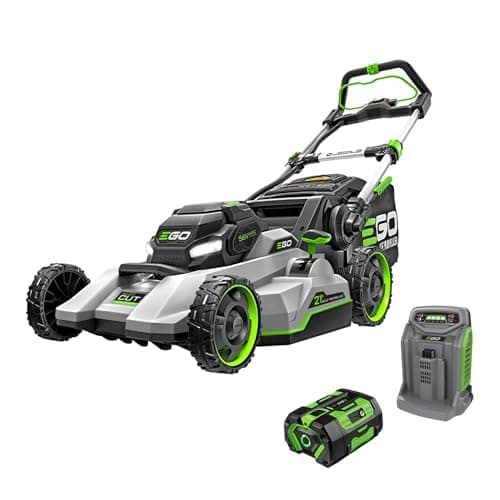
EGO POWER+ Self-Propelled Mower LM2135SP
A battery self-propelled mower with a clearly marked height dial, which matters when you are dialing in a target cut.
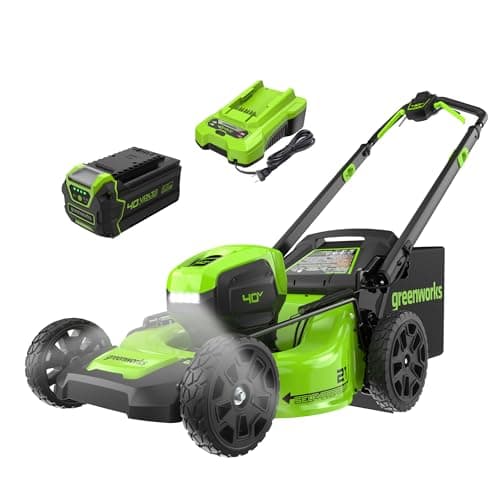
Greenworks 40V 21-inch Self-Propelled Cordless Mower
A lighter, lower-cost cordless option for small and mid-size yards.
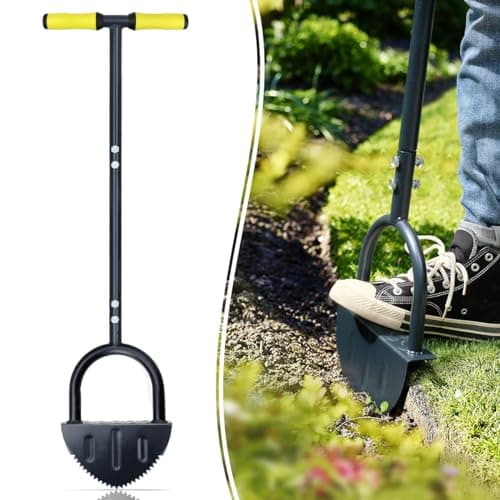
Colwelt Saw-Tooth Half Moon Lawn Edger
A manual half-moon edger for cleaning up bed lines the mower cannot reach.
Seasonal Mowing Height Action Plan
To translate the guidelines into an annual schedule, it helps to map out a simple plan by season for each major grass type. The following examples assume average conditions and a target maintenance height within recommended ranges.
Cool-season lawn (tall fescue or bluegrass) in a northern climate:
- Early spring (soil 50-55°F): First mow at 2.5 to 3 inches when grass reaches about 3.5 to 4 inches.
- Late spring: Maintain 2.5 to 3 inches, mowing when height reaches about 3.5 to 4 inches.
- Summer: Raise to 3 to 3.5 inches. Mow when height reaches about 4 to 4.5 inches. Avoid height reductions.
- Early fall: Maintain 3 to 3.5 inches. Overseed any thin spots and keep blades sharp.
- Late fall: Final mow at 2.5 to 3 inches, so the lawn enters winter not excessively tall but still healthy.
Warm-season lawn (bermuda) in a southern climate:
- Late spring green-up: Once fully green, set height at 1.5 to 2 inches. If dormant stems or leaves are long, reduce gradually over two or three mows.
- Summer peak: Maintain 1.5 to 2 inches, mowing frequently since bermuda grows rapidly in heat. Never remove more than one third of leaf height.
- Early fall: Continue at the same height until growth slows.
- Late fall / early winter: As the lawn goes dormant, cease mowing when growth stops and heights stabilize.
Key Troubleshooting Signs Related to Mowing Height
During the season, the lawn will show visible signals if mowing height is inappropriate.
Signs mowing is too low:
- Brown or tan streaks where mower wheels dip slightly on uneven ground.
- Frequent scalped patches on high spots.
- Increased weed presence, especially crabgrass and low-growing broadleaf weeds.
- Thin, open turf with soil visible between plants.
Signs mowing is too high or too infrequent:
- Grass looks puffy, lays over, or “lodges” instead of standing upright.
- Clumps of clippings remain on the surface even with mulching blades.
- Difficult mowing, with the mower bogging down or leaving uncut blades.
If you see symptoms of low mowing stress, raise the cutting height by 0.5 to 1 inch immediately and follow the one-third rule for future cuts. Combine the change with blade sharpening and consistent mowing frequency. If the turf is too tall and puffy, begin reducing height in two or three steps, never more than one third of the blade per mow, spaced 3 to 5 days apart.
Conclusion
The correct answer to “first time mowing? how high to cut your grass (by type and season)” always starts with grass identification, then uses season-specific height ranges supported by extension research. Cool-season grasses generally perform best between 2.5 to 4 inches, with slightly higher summer settings. Warm-season grasses like bermuda and zoysia thrive at lower heights, typically between 1 to 2.5 inches, while coarse species like St. Augustine and centipede prefer moderate ranges.
By verifying your mower’s actual cutting height, following the one-third rule, and adjusting settings slightly as seasons change, you create deeper roots, reduce weeds, and stabilize lawn color and density. For next steps, review How Often Should You Mow Your Lawn? to pair height with frequency, check Beginner’s Guide to Lawn Care Tools to confirm you have the right equipment, and consult When Is the Best Time of Day to Mow Your Lawn? to fine tune timing. With those pieces in place, your first cut sets a solid foundation for a consistently healthy lawn.
Top Picks
- Pennington Full Season Lawn Fertilizer 32-0-5Check price on Amazon
- Jonathan Green (10322) Black Beauty Ultra Grass Seed - Cool Season Lawn Seed (7 lb)Check price on Amazon
- Outsidepride Maya (Blackjack II) Bermuda Grass Seed (5 lb)Check price on Amazon
As an Amazon Associate we earn from qualifying purchases.
Free Lawn Care Tools
Mowing height controls how deep the roots grow, how much water the lawn needs, and how well it resists weeds. Taller mowing heights generally promote deeper roots, better drought tolerance, and fewer weeds. Lawns kept at 3 inches or higher usually experience significantly less weed pressure than lawns cut shorter than 2 inches. Treating mowing height as a core lawn-care setting, not just a cosmetic choice, leads to healthier turf over time.
Place the mower on a flat, hard surface, turn it off, and disconnect the spark plug wire or battery. Then measure from the ground to the bottom of the cutting blade with a ruler or tape measure. Adjust the wheel height until that distance matches your target mowing height. This quick check ensures the “3” on your dial really cuts at about 3 inches instead of being off by half an inch or more.
Lawn scalping happens when you cut so low that you remove most of the green leaf tissue and may even expose the crowns or bare soil. Signs include large tan or straw-colored areas immediately after mowing, rough choppy patches where the mower dropped into low spots, and visible soil or pale crowns at the surface. Repeated scalping forces grass to burn stored energy regrowing leaves instead of building roots, making it more vulnerable to drought, weeds, and disease. Keeping to safe mowing heights and following the one-third rule helps prevent this damage.
The one-third rule means you should never remove more than one third of the grass blade in a single mowing. Cutting more than that puts significant stress on the plant and encourages shallow roots and recovery problems. For example, if you maintain your lawn at 3 inches, you should mow when it reaches about 4.5 inches. Sticking to this rule is especially important when dealing with overgrown grass or the first mow of the season.
When grass is much taller than your desired maintenance height, lower it in stages instead of all at once. For example, if the lawn is 8 inches tall and you want to maintain it at 3 inches, first cut it to around 5 inches. Then mow again 3 to 5 days later down to about 3.5–4 inches, and finally drop to 3 inches after another 3 to 5 days. This gradual approach respects the one-third rule and reduces stress and scalping.
Yes, cool-season and warm-season grasses have different ideal mowing ranges because they grow best in different temperature conditions. Cool-season grasses like Kentucky bluegrass, tall fescue, and perennial ryegrass typically do better at higher mowing heights, often in the 3–4 inch range. Warm-season grasses like bermudagrass, St. Augustinegrass, and zoysiagrass usually perform best at lower heights, with bermudagrass often thriving between 1–2 inches under good management. Seasonal conditions also matter, with slightly higher heights helping during heat and drought and slightly lower, but still safe, heights working during peak growth to encourage dense turf.
Set the mower at the top of your grass type's recommended range for the first cut and never remove more than one third of the blade. For new seed, wait until the grass is 3 to 4 inches tall and rooted, then take off just an inch or so. For new sod, wait about 2 to 3 weeks until it resists a gentle tug. For the first spring mow of an established lawn, you can go slightly lower than your normal setting for one pass to clean up winter-browned tips, then raise the deck back up.
Tall fescue does best at 3 to 4 inches. Aim for 3 to 3.5 inches in spring and fall, then raise to 3.5 to 4 inches in summer heat. University extension research from Virginia Tech and Kansas State consistently shows that keeping tall fescue at 3 inches or higher improves drought tolerance and cuts crabgrass invasion compared to mowing at 2 inches or below.
Mow new grass for the first time once it reaches 3 to 4 inches tall and the seedlings are firmly rooted, which usually happens 3 to 6 weeks after germination. The soil should be firm and dry enough that mower wheels do not leave ruts. Use sharp blades, set the mower high, and remove no more than one third of the blade. For sod, wait about 2 to 3 weeks and do the tug test first.
Photos: Ollie Craig / Pexels, Richard REVEL / Pexels

Beat weeds and brown spots from your phone
Snap a photo, get the fix, and follow a plan timed to your soil and weather. Free on iPhone.