Best Lawn Mowers in 2026
 James ThorntonLawn Equipment & Maintenance Expert | 20 Years
As an Amazon Associate we earn from qualifying purchases.
Patchy, uneven grass after mowing signals a mismatch between your mower and your lawn. In 2026, with higher equipment costs, rapid battery improvements, and tighter neighborhood expectations for noise and appearance, this mismatch wastes time, money, and fuel or battery life. Ready to buy? Go deeper with our robot lawn mower buying guide and our riding mower and zero-turn buying guide.
This guide explains how to choose the best lawn mower in 2026 based on yard size, terrain, grass type, and budget. It organizes current lawn mower reviews by power type and use case, then explains how cut quality, durability, ease of use, and maintenance differ across models. The aim is to answer the most common search intents directly: best lawn mower for small or large yards, best mower for hills, and top mowers for beginners.
By the end, you will know which mower type fits your property, how to avoid common new owner mistakes, and how to build a complete lawn care setup around your purchase. For deeper maintenance and mowing habits, the guide Common Lawn Care Mistakes Beginners Make pairs well with this article.
If your lawn looks patchy or uneven after mowing, it's likely that your mower isn't the right fit for your yard. To verify, measure your lawn size and check its terrain. For instance, if your yard is over 0.5 acre or has slopes exceeding 15 degrees, a walk-behind mower may not be adequate.
To achieve a well-manicured lawn in 2026, choose a mower that matches your specific needs by considering yard size, terrain, and budget. For lawns larger than 0.5 acre, a riding or zero-turn mower will save you time, often reducing mowing to under 60 minutes. Expect improved cut quality and efficiency with the right equipment.
Understanding Your Needs Before You Buy
Every “best lawn mower” recommendation depends on the lawn it serves. Two different yards that look similar from the street often require very different machines once you factor in slopes, obstacles, and user preferences. Before comparing models, answer a structured set of questions about your property and routine.
Key Questions to Ask Yourself
The first and most important variable is yard size. Manufacturers generally design walk-behind mowers for lawns under about 0.5 acre and riding or zero-turn mowers for anything larger.
- Small yard: under 1/4 acre (roughly under 11,000 square feet). Typical for townhomes, urban lots, and smaller suburban properties.
- Medium yard: 1/4 to 1/2 acre. Common in standard suburban neighborhoods.
- Large yard: 1/2 to 1 acre. Often corner lots or semi-rural homes.
- Very large / acreage: 1 acre and above. Often requires ride-on or tractor equipment for reasonable mowing times.
A simple time guideline is helpful. According to estimates used by many equipment dealers, a typical 21 inch walk-behind mower covers about 0.25 acre in 45 to 60 minutes on flat, unobstructed ground. If your lawn routinely takes more than 90 minutes with a push mower, a self-propelled or ride-on platform improves efficiency significantly.
The second variable is terrain and obstacles. Mower suitability changes drastically when slopes exceed about 15 degrees or when the lawn has many trees, beds, and tight corners.
- Flat lawns: Almost any mower type works. Battery walk-behind, corded electric, gas, or reel mowers can all perform adequately.
- Moderate slopes: Self-propelled walk-behind mowers or lawn tractors handle these conditions. Battery models with rear-wheel or all-wheel drive are particularly useful.
- Steep hills: For slopes above roughly 15 degrees, most riding and zero-turn mowers present rollover risk. Many manufacturers explicitly warn against operating ride-on units on steeper slopes. Walk-behind mowers with strong self-propel assist are safer.
- Obstacles: Trees, playsets, tight garden beds, fences, and landscaping islands favor compact, highly maneuverable mowers. Zero-turn mowers excel in open, obstacle-dense areas, while small battery walk-behind units help in very tight suburban lots.
Grass type and density influence how much power the mower requires. According to Penn State Extension turfgrass guidance, cool-season grasses such as Kentucky bluegrass, tall fescue, and perennial ryegrass typically maintain mowing heights between 2.5 and 4 inches, while dense warm-season grasses like hybrid Bermuda and Zoysia often tolerate 1 to 2 inches in well maintained lawns. Thicker, denser turf at lower heights demands more torque, especially in wet or fast growth periods.
Next, evaluate your time, budget, and physical ability. These three shape the type of machine that will actually get used consistently:
- If you prefer to finish mowing in under 45 minutes, you likely need a self-propelled walk-behind for up to about 1/3 acre, or a riding mower above that.
- If pull starting a gas engine or pushing a heavy mower is difficult, prioritize electric start or battery mowers, and self-propel drive systems.
- If you prefer to handle minimal maintenance, battery platforms and corded electrics reduce oil changes, fuel storage, and carburetor issues.
Environmental and neighborhood expectations also matter. Many municipalities and homeowner associations now restrict noise during early morning or evening hours. Battery and corded electric mowers operate substantially quieter than traditional gas units. A study summarized by NC State Extension on small engine noise estimates typical gas walk-behind mowers at 85 to 90 decibels at the operator's ear, while many battery mowers operate closer to 75 to 82 decibels. The perceived difference is significant in tightly spaced neighborhoods.
Finally, align your mower choice with your broader lawn care plan. If you are building a complete kit, see Essential Lawn Care Tools Every Homeowner Needs. Combining the right mower, trimming tools, and irrigation strategy, such as those discussed in Smart Irrigation Systems: Are They Worth It?, saves overall time and produces better turf quality than upgrading any single tool in isolation.
Quick “Best Mower Type” Decision Snapshot
The following decision snapshot translates the above questions into mower categories. It does not replace detailed reviews, but it quickly narrows options.
- Small, flat yard under 1/4 acre, simple layout, convenience focus: Battery-powered walk-behind or robotic mower. A high quality push battery mower provides quiet operation and zero fuel handling. In very small, flat lawns, a robotic mower can maintain a lawn with minimal weekly input.
- Small yard with very short turf heights (like hybrid Bermuda): Reel mower, either manual or powered, provides a cleaner, scissor-like cut at low heights.
- Medium yard (1/4 to 1/2 acre) with light slopes: Self-propelled gas or powerful battery mower, preferably with variable speed drive and at least a 21 to 22 inch deck.
- Large yard (1/2 to 1 acre), mostly open: Lawn tractor or compact zero-turn mower. Battery riding mowers are increasingly viable in 2026 for these sizes if charging access is easy.
- Very large or acreage (1+ acre): Garden tractor, large zero-turn, or compact utility tractor with mowing deck. Battery ride-on options are still limited at this size but are expanding each year.
- Complex terrain with many trees, beds, and landscaping islands: Small zero-turn for larger properties, or agile self-propelled walk-behind for smaller ones. Tight turning radius and precise control provide efficiency here.
The key takeaway is that there is no universal best lawn mower. The best mower is the one that matches your yard size, grass type, terrain, and available time. Aligning those variables before you look at brands or features prevents costly overbuying or underpowered purchases.
Types of Lawn Mowers in 2026 (Pros, Cons, and Best Uses)
In 2026, the core mower categories remain the same as in previous years, but battery technology, robotic systems, and hybrid platforms have shifted what counts as “top mowers” within each type. Understanding how each category works clarifies which direction to research further.
Reel Mowers (Manual Push)
Reel mowers use a cylinder of helical blades that spin past a stationary bed knife, producing a scissor-like cut. This mechanism differs from rotary mowers, which use a horizontally spinning blade to shear grass with impact. According to Purdue Extension turf guidance, reel mowers produce a cleaner cut at very low heights, which reduces frayed leaf tips and limits entry points for certain fungi.
Pros:
- Extremely quiet operation and zero exhaust emissions.
- No fuel, batteries, or complex maintenance, aside from occasional blade adjustment and sharpening.
- Very lightweight, easy to store, and generally more affordable up front than powered mowers.
- Excellent cut quality on short, dense turf such as hybrid Bermuda, Zoysia, or closely cut ryegrass.
Cons:
- Require consistent mowing. Once grass exceeds about 3 to 4 inches, most manual reel mowers struggle to cut effectively.
- Less effective on uneven ground or very weedy lawns where stems differ in height and texture.
- Cutting tall or thick grass requires significant physical effort.
- Cutting width is usually narrow, around 14 to 20 inches, which increases mowing time on larger areas.
Best for: Small city or townhome yards under roughly 3,000 square feet, flat terrain, and owners committed to mowing at least once or twice per week during peak growth. They also pair well with lawns managed at low heights, where optimal turf health depends on a clean, precise cut.
To keep reel mowing practical, mowing frequency matters more than for rotary systems. The guide Common Lawn Care Mistakes Beginners Make explains why letting grass grow too tall between cuts forces severe height reductions, which stress turf and overload manual reel mechanisms.
Corded Electric Mowers
Corded electric mowers remain available in 2026, although cordless battery mowers now dominate the residential market. Corded units draw power directly from a household outlet and use an extension cord for reach.

Pros:
- Lightweight and easy to maneuver because they do not carry a battery or gas engine.
- Unlimited run time as long as they remain plugged in.
- Low maintenance, with no oil changes and minimal moving parts compared to combustion engines.
- Often lower in price than comparable cordless or gas models.
Cons:
- Constant cord management is required. The operator must avoid running over the cord, tangling it, or stretching it across traffic paths.
- Limited reach based on outlet location and extension cord length. For safety, heavy duty outdoor-rated cords are mandatory.
- Less practical for lawns with many obstacles or complex geometry because cord routing becomes cumbersome.
Best for: Very small, simple yards close to a power outlet. If the mowing area is within about 50 to 75 feet of the outlet and has few obstacles, corded mowers provide a quiet, low maintenance solution at minimal cost. As soon as yard complexity or distance increase, cordless battery mowers provide a better balance of safety and convenience.
Battery-Powered (Cordless) Walk-Behind Mowers
Battery walk-behind mowers represent the fastest growing segment of the residential market. Lithium-ion battery technology has improved energy density, charge speed, and cold weather performance compared to products sold ten years ago. Many brands now use a cross-compatible battery platform across mowers, trimmers, blowers, and even snow throwers.
Pros:
- Quiet operation, typically in the 75 to 82 decibel range, which satisfies many noise sensitive neighborhoods.
- No fuel storage, oil changes, carburetor issues, or pull starting. Most use push-button or key-start operation.
- Reliable starting after seasonal storage if batteries are stored indoors at moderate temperatures and topped off every few months.
- Instant torque control and often smart load sensing that increases power automatically in thicker grass to maintain blade speed.
Cons:
- Run time per battery charge is finite. Typical 40 to 80 volt residential mowers in 2026 deliver 30 to 60 minutes per battery under average conditions, depending on deck size and grass density.
- Replacement batteries are relatively expensive. Planning for at least two batteries for lawns larger than 1/4 acre is often necessary.
- Cold weather storage and use require some care. According to guidance from Ohio State University Extension on battery powered equipment, lithium-ion batteries lose effective capacity at low temperatures and should be stored above freezing and charged at moderate indoor temperatures for maximum life.
- For very thick or wet grass, lower tier models struggle compared to mid-range gas units, although premium brushless motor designs are competitive.
Best for: Small to medium yards, especially under 1/2 acre, with owners who prioritize ease of use, low noise, and minimal maintenance. When matched with the right battery capacity, modern cordless mowers rank among the top mowers for beginners because they remove many frustrations associated with gas engines.
In 2026, many manufacturers offer self-propelled battery models with variable speed drives. For users mowing sloped or larger small yards, self-propel is worth the additional cost because it allows more consistent walking speed and reduces fatigue.
Gas-Powered Walk-Behind Mowers
Gas walk-behind mowers remain common because they supply high torque at comparatively low upfront cost. They use small internal combustion engines, typically in the 140 to 200 cubic centimeter range, to spin a single rotary blade under a 20 to 22 inch deck.
Pros:
- Strong power output for tall, thick, or wet grass, which prevents bogging in overload conditions.
- Readily available fuel and widespread service options at mower shops and small engine technicians.
- Lower purchase price than high-end battery systems with multiple large batteries.
- Flexible run time as long as fuel is available. Refueling takes minutes compared to battery charging cycles.
Cons:
- Regular maintenance is required. Oil changes, air filter cleaning or replacement, spark plug inspection, and carburetor care are all part of seasonal routines.
- Storage with ethanol blended gasoline often causes varnish buildup and starting problems. Many owners need fuel stabilizer or ethanol-free fuel to limit issues.
- Noise and exhaust emissions are higher than electric options. As mentioned earlier, NC State Extension data points to 85 to 90 decibel levels at the operator's position.
- Pull-start systems can be difficult for some users. Electric start models reduce this but increase cost.
Best for: Medium yards with heavy or fast growing turf, especially when mowing height is moderate or low. If you regularly mow after rain or allow the lawn to grow tall between cuts, gas mowers handle overload conditions better than entry-level battery equipment. For hills, choose self-propelled units with rear-wheel drive for better traction.
Riding Lawn Tractors
Riding lawn tractors use a front-engine design, steering wheel control, and mid or rear mounted cutting deck. They resemble small tractors more than zero-turn mowers and typically operate at lower speeds. Deck sizes usually range from 38 to 54 inches, which makes them efficient for 1/2 to 2 acre lawns.
Pros:
- Significant time savings on larger properties compared to walk-behind equipment. A 48 inch deck can often mow 1 acre in roughly 45 to 60 minutes under open conditions.
- Higher comfort due to seating, larger tires, and optional accessories like baggers or snow blades.
- Front attachment points on some models allow for leaf collection, snow removal, or light hauling, which increases overall utility.
Cons:
- Larger turning radius than zero-turn mowers, which reduces efficiency around tight landscaping or obstacles.
- Not suitable for steep slopes above the manufacturer rated limit, often around 15 degrees, because of rollover risk.
- Require more storage space and more complex maintenance than walk-behind units, including transmission and belt care.
Best for: Large, mostly open lawns from about 1/2 to 2 acres with moderate slopes and relatively few tight obstacles. For owners who want greater utility than just mowing, lawn tractors support additional implements that zero-turn mowers seldom accommodate.
Zero-Turn Mowers
Zero-turn mowers use dual hydrostatic transmissions and independent rear wheel control to turn within their own footprint. Operators control the mower with lap bars or, in some models, a steering wheel that translates to independent wheel control.
Pros:
- Exceptional maneuverability. The ability to pivot in place drastically reduces trimming and edge cleanup time.
- High ground speed and large deck widths, often from 42 to 60 inches for residential units, allow rapid mowing of large, open areas.
- Consistent cut quality at higher speeds because deck suspension and blade tip speeds are optimized for productivity.
Cons:
- Steep learning curve for completely new users, especially with lap bar control systems.
- Poor performance on steep slopes and ditches. Most manufacturers restrict use above about 15 degrees, similar to lawn tractors, but the rear-heavy weight distribution can feel less stable sideways on slopes.
- Less flexible for non mowing tasks compared to tractors. They typically lack front attachments or towing capacities for heavy implements.
Best for: Larger properties, typically from 3/4 acre upward, with many trees, beds, or complex landscaping but without extreme slopes. When time efficiency is critical and the mowing area is mostly turf, zero-turn designs rank among the top mowers for productivity.
Robotic Lawn Mowers
Robotic mowers have advanced significantly and are now a realistic primary mowing solution for many small to medium yards. They operate autonomously within a defined boundary, either through buried guide wire systems or, in newer models, GPS and camera guidance.
Pros:
- Minimal ongoing labor. The robot handles mowing on a frequent schedule, typically several times per week, which keeps grass height very consistent.
- Very quiet operation, frequently under 60 decibels, which allows night or early morning runs where local rules permit.
- Mulching only, which returns clippings to the lawn and supports nutrient recycling. According to Michigan State University Extension, regular grasscycling can return up to 1 pound of nitrogen per 1,000 square feet per season to the turf, reducing fertilizer needs.
Cons:
- Higher initial cost than most basic walk-behind mowers.
- Require installation of boundary systems and careful adjustment of docking and routing. This setup typically takes 2 to 6 hours, depending on yard complexity.
- Best suited to lawns free of major holes, exposed tree roots, or steep slopes.
- Still require manual trimming in tight areas, edges, and near obstacles.
Best for: Small to medium, relatively simple lawns where owners prefer to offload most mowing labor. For a deeper evaluation of costs and benefits, see Robotic Lawn Mowers: Are They Worth It?. For many tech-friendly homeowners in 2026, a robotic mower paired with a trimmer and occasional manual touch-ups represents a compelling alternative to traditional weekly mowing.
Best Lawn Mowers in 2026 by Yard Size and Situation
Once mower types are understood, the next step is to match them with yard size and complexity. The following sections provide scenario based guidance that aligns with common search phrases such as best lawn mower for small yard or best mower for hills.
Best Mowers for Small Yards (Under 1/4 Acre)
Small yards reward simplicity. Equipment that is easy to start, maneuver, and store offers more value than raw power.
Recommended categories:
- Battery-powered push or self-propelled mowers, 14 to 21 inch decks.
- Manual reel mowers for low cut cool-season or warm-season turf.
- Corded electric mowers for very simple layouts close to outlets.
In this size range, battery mowers stand out in lawn mower reviews because runtime demands stay within what a single battery can handle. One 4 to 6 amp hour pack at 40 to 80 volts typically completes a 2,000 to 4,000 square foot lawn on a single charge under average conditions. Choosing a mower that shares batteries with other outdoor tools such as trimmers or blowers increases platform value.
For homeowners maintaining hybrid Bermuda, Zoysia, or tightly cut ryegrass at heights around 1 to 2 inches, a quality reel mower often produces superior cut quality compared to low end rotary units. According to guidance from University of Georgia Extension on warm-season turf, reel mowers are preferred for elite Bermuda grass lawns at heights at or below 1.5 inches because they limit scalping and produce a more uniform appearance.
Best Mowers for Medium Yards (1/4 to 1/2 Acre)
Medium yards sit at the overlap point between walk-behind and ride-on equipment. In 2026, powerful battery self-propelled mowers compete strongly with gas models in this category, especially when owners invest in at least two high capacity batteries.
Recommended categories:
- Self-propelled battery mowers with 21 to 22 inch decks and 2 or more batteries.
- Self-propelled gas mowers for thick, fast growing turf or infrequent mowing schedules.
- Compact rear engine riders or small lawn tractors at the upper end of this size range.
A practical rule is mowing duration. If it regularly takes more than about 60 to 75 minutes with a push mower, moving to self-propel or a small rider improves efficiency and comfort. Battery mowers with selectable power modes help tailor runtime to conditions: eco modes extend battery life for light weekly trims, while high power modes maintain blade speed in tall or damp grass.
Terrain becomes more important at this scale. If your medium yard includes noticeable slopes, rear wheel drive or all wheel drive self-propelled systems provide significantly better traction than front wheel drive units, which tend to lose grip when the bagger fills with clippings and loads the rear wheels.
Best Mowers for Large Yards (1/2 to 1 Acre)
Above about 1/2 acre, the physical effort and time required for walk-behind mowing increases sharply. Large yards benefit from ride-on solutions unless the terrain is too steep or inaccessible for such equipment.
Recommended categories:
- Lawn tractors with 42 to 54 inch decks.
- Residential zero-turn mowers with 42 to 54 inch decks.
- High capacity battery ride-on mowers where charging and budget allow.
When deciding between a tractor and zero-turn mower, layout is the key factor. For relatively open, rectangular, or gently curved lawns with few trees, traditional tractors work well and offer added versatility for towing carts or using snow attachments. For landscapes with many trees, islands, or beds, zero-turn mowers drastically reduce trimming and backtracking.
Operator comfort also increases in importance. On mowing sessions lasting 60 to 90 minutes, seat quality, vibration damping, and steering feel affect fatigue. Reading lawn mower reviews that specifically reference long session comfort is useful before committing to a particular platform.
Best Mowers for Very Large Yards and Acreage (1+ Acre)
Acreage management requires productivity above all. At this scale, mowing often becomes one of several land management tasks, including trail upkeep, field cutting, or light grading.
Recommended categories:
- Heavy duty zero-turn mowers with 54 to 60 inch decks or larger.
- Garden tractors or compact utility tractors with mowing decks.
- Dedicated field mowers or brush cutters for rough, non turf areas.
The most efficient mowing plan at this scale typically divides property into high quality turf near the home and rough areas elsewhere. Higher end zero-turn or tractor platforms maintain lawn areas, while separate equipment or contractor services manage fields, ditches, and wooded edges.
Battery ride-on options in 2026 can handle some 1 acre properties, especially when rapid charging or battery swapping is available. However, for multi acre work without frequent returns to a charger, gas or diesel platforms still dominate.
Recommended products
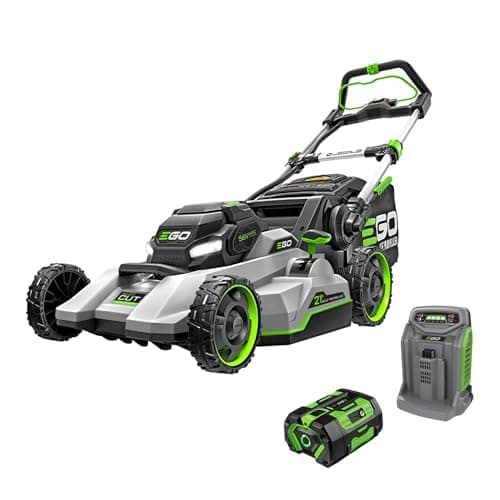
EGO POWER+ Self-Propelled Mower with Select Cut (LM2135SP)
A 21 inch battery self-propelled mower with a dual-blade Select Cut system and a variable-speed drive for slopes.
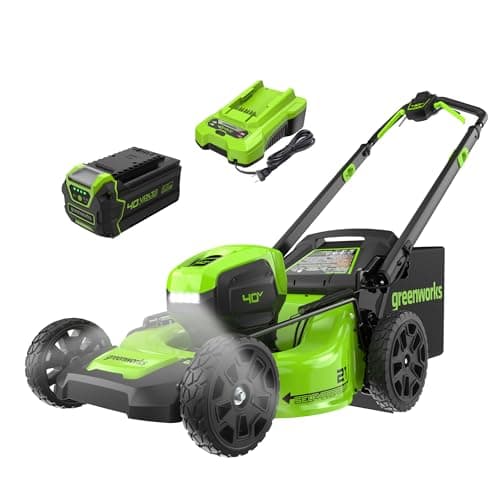
Greenworks 40V 21 inch Self-Propelled Cordless Mower
A lighter self-propelled cordless mower with a battery and charger included, aimed at small to mid-size flat yards.
Greenworks 13 Amp Corded Electric Dethatcher and Scarifier
A corded dethatcher for the thatch layer that no mower, however good, will remove.
Cut Quality, Durability, Ease of Use, and Maintenance
Regardless of mower type, three evaluation criteria strongly influence owner satisfaction: how the mower cuts, how long it lasts, and how easy it is to operate and maintain.
Cut Quality
Cut quality depends on blade sharpness, deck design, blade tip speed, and how well the mower handles different turf heights and moisture levels. According to Ohio State University Extension, a sharp mower blade reduces tearing, which improves appearance and reduces browning at the tips, especially visible 24 to 48 hours after mowing.
Key indicators of high cut quality include:
- Evenness across the width of the deck, without scalped stripes or uncut streaks.
- Minimal clumping or windrows of clippings in normal moisture conditions.
- Grass tips that appear cleanly sheared when examined up close, rather than shredded.
Decks designed for mulching incorporate internal baffles that recirculate clippings until they reach small particle sizes. Side discharge decks prioritize throughput instead, which handles heavy growth but leaves visible rows of clippings. Many top mowers in 2026 use convertible decks with plug or baffle kits to support mulching, bagging, or side discharge as needed.
Regular blade sharpening is critical for maintaining performance. Most residential mowers benefit from sharpening at least once per season for small lawns, or every 20 to 25 mowing hours on larger or sandier properties. For a complete sharpening procedure, see How to Sharpen Lawn Mower Blades.
Durability
Durability relates to construction materials, engine or motor quality, and deck resistance to rust or impact. Steel decks provide strength but require cleaning and occasionally rust control, especially if clippings and debris remain wet under the deck. Composite or poly decks resist corrosion but can be more vulnerable to impact damage from rocks or large debris.

For gas mowers, engine brand and displacement matter. Engines from recognized manufacturers with overhead valve designs and cast iron cylinder sleeves typically outlast lower tier engines. According to long term testing referenced by University of Nebraska turf equipment programs, consistent oil changes at manufacturer recommended intervals extend engine life significantly, often beyond 10 years in residential use.
Battery mower durability centers on motor quality and battery cycle life. Most lithium-ion batteries are rated for several hundred charge cycles. If a homeowner mows 25 to 35 times per year and charges fully after each use, that equates to 5 to 10 years of use before capacity drops noticeably, depending on storage practices and environmental conditions.
Ease of Use and Maintenance
Ease of use considerations include starting system, self-propel controls, weight, handle adjustment, and storage footprint. For beginners, push button start and intuitive drive controls reduce barriers to regular mowing.
Maintenance demands differ by power type:
- Gas mowers: Require annual oil changes, fuel stabilizers or fresh fuel, air filter cleaning, periodic spark plug replacement, and carburetor cleaning if storage practices are poor.
- Battery mowers: Require blade sharpening, deck cleaning, and periodic battery checks. Battery storage at around 40 to 60 percent charge in cool, dry conditions extends lifespan according to guidance from several university extension ergonomics resources, including Iowa State University recommendations for power tool battery storage.
- Reel mowers: Require occasional blade adjustment and lapping. For low cut, high quality turf, professional sharpening services every 1 to 3 years maintain precision.
- Riding and zero-turn mowers: Add belt, spindle, and transmission servicing to the above routines, along with tire pressure checks and greasing of pivot points.
For many homeowners, the best lawn mower in 2026 is the model that produces an acceptable cut with minimal complexity. This is one reason battery walk-behind mowers consistently receive high owner satisfaction ratings in current lawn mower reviews, even when raw power trails top tier gas units.
Implementation Timeline: From Research to First Mow
Translating all this information into a practical purchase and setup process benefits from a simple timeline. While specific dates vary by region, a general sequence ensures the mower is ready for the main growing season.
- Week 1: Assess your lawn and needs. Measure or estimate square footage, map slopes and obstacles, determine grass type, and review neighborhood noise or emissions expectations. Use the decision snapshot above to narrow to 1 or 2 mower categories.
- Week 1 to 2: Research and shortlist models. Read recent lawn mower reviews that focus on the categories you selected. Compare battery capacities or engine sizes, deck widths, and user feedback on reliability. Ensure any battery platform you choose supports other tools you plan to buy, such as trimmers or blowers.
- Week 2: Purchase and assemble. Buy the mower and any essential accessories, such as additional batteries, mulching kits, or baggers. Assemble according to the manual, paying attention to deck level adjustment and handle height so the mower matches your stance.
- Week 2 to 3: Initial test mow and adjustments. Perform a short mow on a dry section of lawn. Evaluate cut quality, clumping, and self-propel speed. Adjust deck height to follow the one third rule referenced by many universities, including University of Missouri Extension, which recommends removing no more than one third of the grass blade height in a single mowing.
- Week 3 onward: Integrate into lawn care routine. Combine mowing with a consistent irrigation and fertilization plan. For irrigation optimization, Smart Irrigation Systems: Are They Worth It? provides useful technology comparisons. Reassess blade sharpness mid season if cut quality declines.
Following this sequence keeps the purchase process structured rather than reactive and ensures your chosen mower integrates smoothly with your broader lawn care strategy.
Conclusion: Choosing the Best Lawn Mower in 2026
Selecting the best lawn mower in 2026 is a technical matching exercise, not a brand popularity contest. The key is to align mower type and features with yard size, terrain, grass type, and your available time and physical capacity. Small, flat lawns often favor battery or reel mowers. Medium lawns with slopes benefit from self-propelled gas or high quality battery units. Large properties call for riding tractors or zero-turn mowers, possibly supplemented with robotic units for detailed maintenance near the home.
Focusing on cut quality, durability, ease of use, and maintenance demands provides a clearer evaluation framework than marketing claims alone. University extension research from institutions such as Penn State, Ohio State, and NC State confirms that sharp blades, appropriate mowing height, and consistent schedules matter more for turf health than any single feature, as long as the mower is correctly matched to the site.
Next steps are straightforward: assess your lawn, narrow your mower category using the decision snapshot, then compare a short list of models using recent lawn mower reviews. To build a complete system around your choice, review Essential Lawn Care Tools Every Homeowner Needs and Common Lawn Care Mistakes Beginners Make so your new mower supports a healthy, consistent lawn care routine all season long.
Top Picks
- Garden Weasel Edger-Chopper Manual Lawn EdgerCheck price on Amazon
- Professional Lawn Leveling Rake 36x10 inchCheck price on Amazon
- Goplus Lawn Roller Push/Tow BehindCheck price on Amazon
As an Amazon Associate we earn from qualifying purchases.
Free Lawn Care Tools
Start by measuring or estimating your yard size. Walk-behind mowers are generally best for lawns under about 0.5 acre, while riding or zero-turn mowers make more sense for anything larger. If a 21-inch push mower takes more than 90 minutes to finish your lawn, you’ll likely benefit from a self-propelled or ride-on mower. Matching deck size and mower type to your lawn size keeps mowing time reasonable and reduces fatigue.
For slopes above roughly 15 degrees, walk-behind mowers with strong self-propel assist are safer than most riding or zero-turn mowers, which carry rollover risk. On moderate slopes, self-propelled walk-behind mowers or lawn tractors work well, especially models with rear-wheel or all-wheel drive. Always check manufacturer slope recommendations and avoid using ride-on machines on steep areas.
Battery-powered walk-behind mowers are an excellent fit for small, flat yards under about 1/4 acre, especially if you value quiet operation and minimal maintenance. They eliminate fuel storage, oil changes, and most carburetor issues while staying within neighborhood noise limits more easily than gas mowers. For very small, flat lawns, a robotic mower can even handle routine mowing with very little weekly input.
Thick, dense warm-season grasses such as hybrid Bermuda and Zoysia often get mowed at lower heights (around 1–2 inches) and need more torque to cut cleanly. A reel mower, either manual or powered, provides a clean, scissor-like cut when maintaining very short turf. For dense turf at low heights, prioritize more powerful mowers and avoid underpowered models that struggle in wet or fast-growth periods.
Many cities and homeowner associations now limit noise during early morning and evening hours, which makes quieter mowers a practical choice. Gas walk-behind mowers typically produce around 85–90 decibels at the operator’s ear, while many battery mowers run closer to 75–82 decibels. That difference is very noticeable in tightly spaced neighborhoods, so battery or corded electric mowers are often better for keeping peace with neighbors and complying with local rules.
Yards filled with trees, playsets, garden beds, and tight corners benefit from compact, highly maneuverable mowers. On larger properties with many obstacles, small zero-turn mowers excel because of their tight turning radius and precise control. On smaller lots, an agile self-propelled walk-behind mower makes it easier to navigate around landscaping without constant backtracking or trimming.
Photos: Gift Omoh / Pexels, Magic K / Pexels

Beat weeds and brown spots from your phone
Snap a photo, get the fix, and follow a plan timed to your soil and weather. Free on iPhone.