

Native Grass Lawn: Best Native Grass Types for Your Region
 Sarah MitchellLawn Diagnostics Specialist | 12 Years
As an Amazon Associate we earn from qualifying purchases.
Somewhere around the third watering restriction notice, most homeowners start asking the same question I hear every summer: is there a grass that just belongs here? One that does not need me to prop it up with sprinklers, fertilizer bags, and fungicide? That is the whole promise of a native grass lawn, and it is a real option in most of the country. But I want to walk you through it the way I would diagnose a struggling yard: what native actually means, where it works, where it disappoints, and what the conversion really costs in money and patience.
Yes, you can grow a lawn from native grass. Buffalograss and blue grama make a true low-water turf across the Plains, Southwest, and much of the central U.S. In cooler and shadier regions, fine fescue "no-mow" mixes are the closest practical equivalent. Expect a slower start (one to two seasons to fill in), a softer, less uniform look, and in return roughly 50 to 75 percent less watering and mowing than conventional turf once established.
What Actually Counts as a Native Grass Lawn?
"Native" gets stretched a lot in seed marketing, so let's set the terms before you spend money. A native grass evolved in your region before European settlement and co-evolved with your local soil life, insects, and rainfall pattern. That history is why natives handle your climate without inputs: they were never bred for irrigation.
The species you will actually see recommended for lawns fall into four buckets:
- Buffalograss (Bouteloua dactyloides): The flagship native turf. A warm-season, sod-forming shortgrass from the Great Plains that tops out around 4 to 6 inches even unmowed. Soft gray-green color, spreads by stolons, and once established it can live on 1 inch of water per month in summer. Our full buffalograss guide covers varieties and establishment in detail.
- Blue grama (Bouteloua gracilis): Buffalograss's prairie companion, a bunchgrass with distinctive eyelash-shaped seed heads. Usually blended with buffalograss to thicken a stand and add drought insurance on poor soils.
- Fine fescues (hard, sheep, and creeping red fescue): Here is the honest complication. Festuca rubra has native populations in North America, but most commercial seed is European-derived cultivars. Botanically that makes fine fescue lawns "native-ish" at best. Practically, they are the backbone of every low-input eco-lawn mix in the Northeast, Upper Midwest, and Pacific Northwest because nothing truly native performs as lawn there. I recommend them without apology, just with accurate labeling.
- Sedges (Carex species): Not grasses at all, but Pennsylvania sedge in the East and various western Carex species make genuinely native lawn substitutes for dry shade, the one site where almost every true grass gives up. Mow two or three times a year and they hold at ankle height.
Best Native Grass by Region
The right species is almost entirely a function of where you live. This table is the short version; your state's extension office and our grass types by state breakdown can take you the rest of the way.
| Region | Best native choice | Realistic expectation |
|---|---|---|
| Great Plains and Central U.S. | Buffalograss, or a buffalograss + blue grama blend | The strongest case in the country. True walkable turf on rainfall alone in most years. |
| Southwest and arid West | Buffalograss, blue grama; galleta and alkali sacaton for naturalized areas | Excellent with full sun. Blue grama handles elevation and alkaline soil better than buffalograss. |
| Southeast | No strong true-native turf; native ecotypes of bermudagrass, or a meadow approach with wiregrass and broomsedge | Humidity and acid soils rule out buffalograss. Most homeowners here are better served by low-input conventional warm-season turf. |
| Northeast and Upper Midwest | Fine fescue no-mow mixes; Pennsylvania sedge in shade; little bluestem for meadow zones | A fescue eco-lawn mows 4 to 6 times a year and skips irrigation in average summers. |
| Pacific Northwest | Native red fescue, tufted hairgrass, western sedges | One of the few regions where the fescue on the shelf may genuinely match native coastal populations. |
Texas readers sit right on the buffalograss sweet spot in the western two-thirds of the state; our Texas grass guide covers where it beats bermuda and where it does not.
Extension guidance: Colorado State University's Garden Notes on native lawn establishment is one of the best free references for seeding rates and first-year care of buffalograss and blue grama in the dry interior West.
The Honest Trade-Offs vs Conventional Turf
I have talked more than one homeowner out of a native conversion, and it is always over the same three points. Go in with clear eyes.
It will not look like a golf course. Buffalograss is gray-green, not emerald. Fine fescue lawns are fine-bladed and slightly shaggy. Warm-season natives go straw-tan from the first hard frost until late spring, which means four to six months of dormant color in the central states. If a deep green February lawn matters to you or your HOA, that is a real conflict, not a detail. Check your covenants before you kill anything; some HOAs explicitly require "turf grass maintained in a green condition," and native lawns have triggered violation letters. Many states, including Texas and Colorado, now have laws limiting an HOA's ability to prohibit drought-tolerant landscaping, so you may have more leverage than the covenant implies.
Establishment is slow. Seeded buffalograss typically needs a full season to knit into something you would call a lawn, and two seasons to look finished. Fine fescue mixes are quicker but still slower than a ryegrass patch job. The first summer is the danger zone: young natives need regular water precisely because their famous deep roots do not exist yet.
Weed pressure is front-loaded. A slow-filling stand is an open invitation to crabgrass and pigweed in year one. Most people who declare native lawns "a failure" quit during this window.
Now the other side of the ledger, because it is substantial:
- Water: 50 to 75 percent less. A conventional Kentucky bluegrass lawn wants 1 to 1.5 inches per week in summer. Established buffalograss stays acceptably green on 0.25 to 0.5 inches per week and survives on nothing, and fine fescue eco-lawns in the North typically skip irrigation entirely in average years. On a 5,000 square foot lawn in a metered western city, that difference commonly runs $300 to $600 per irrigation season.
- Mowing: 70 to 90 percent less. Buffalograss can be mowed monthly at 3 inches, or two or three times a year if you accept the 5-inch meadow look. Fescue no-mow lawns get 4 to 6 cuts a year against 25 to 30 for conventional turf.
- Fertilizer: nearly none. One pound of nitrogen per 1,000 square feet per year is the ceiling for buffalograss; more actually helps the weeds outcompete it. Compare that to the 3 to 4 pounds a bluegrass program burns through.
Converting an Existing Lawn
You have two workable paths, and one tempting shortcut that fails.
Kill and seed is the standard route. Take out the existing turf completely: glyphosate in mid-summer with a follow-up application three weeks later, solarization under clear plastic through the hottest six weeks, or a sod cutter if you want it gone this weekend. Half-measures fail here. Bermudagrass or bluegrass remnants will reinvade a slow-starting native seeding, and there is no selective herbicide that rescues you afterward. Seed warm-season natives (buffalograss, blue grama) in late spring once soil hits 60F; seed fine fescue mixes in early fall. Run your numbers through our seeding calculator before you order, because native seed is priced in a way that punishes guesswork.
Plugs are the faster, pricier route for buffalograss. Female-only cultivars like Legacy and Prestige (no pollen, no seed heads) only come as plugs or sod. Set plugs on 12-inch centers into killed ground in late spring and they knit closed in one season. Expect roughly $0.50 to $0.85 per plug, which lands around $500 to $850 per 1,000 square feet before shipping, versus $60 to $120 in seed for the same area.
The shortcut that fails: overseeding native grass into a living conventional lawn. The existing turf wins every time. I have never seen it work, and I have seen it attempted a lot.
First-year expectations, honestly: sparse cover and visible soil for the first two months, real weed pressure by midsummer, and something lawn-like by fall. Mow high, pull or spot-spray weeds while seedlings establish, and water lightly but consistently for the first six to eight weeks. Year two is when visitors stop asking what happened to your yard.
Extension guidance: Penn State Extension's lawn alternatives resource is a solid starting point for Northeastern readers weighing fine fescue eco-lawns and sedge plantings against conventional turf renovation.
Recommended products
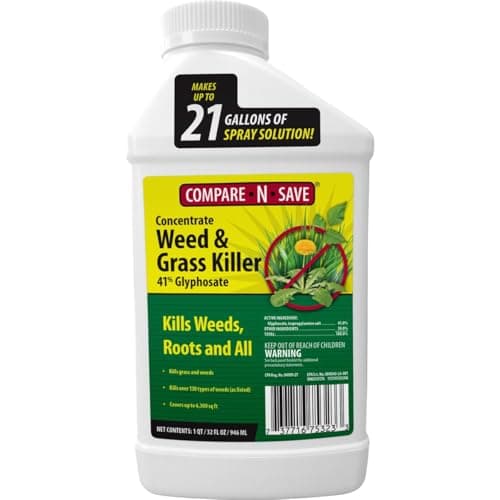
Compare-N-Save 41% Glyphosate Concentrate
A nonselective glyphosate concentrate for killing the existing turf before a native seeding.
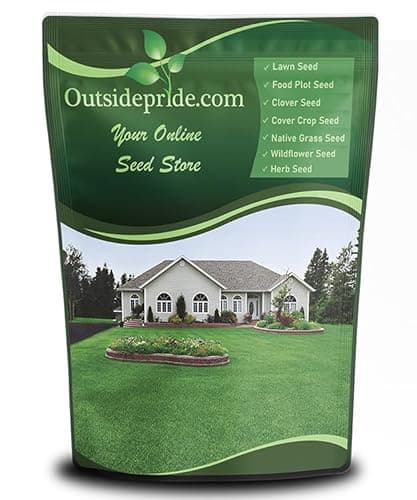
Outsidepride Perennial Buffalo Grass Seed
A five pound bag of buffalograss seed for Plains and interior West lawns.
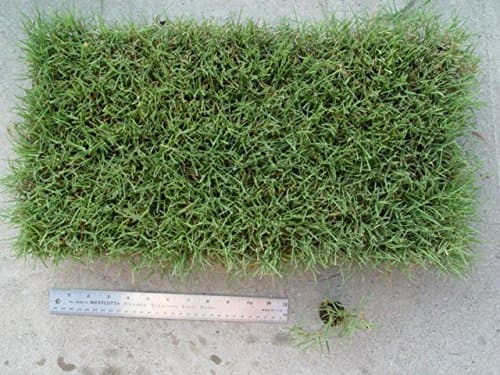
UC Verde Buffalograss Plugs
Live buffalograss plugs bred for California and the Southwest.
Native Lawn Maintenance Calendar
This assumes an established stand. Adjust one season earlier or later at the climate extremes.
| Season | Buffalograss / blue grama (warm-season) | Fine fescue eco-lawn (cool-season) |
|---|---|---|
| Spring | One cleanup mow at 2 to 3 inches as green-up starts. Spot-treat cool-season weed invaders while the native is still waking up. | First mow at 3.5 to 4 inches. Overseed thin patches early. |
| Early summer | Optional single fertilization, no more than 1 lb N per 1,000 sq ft. Water only if you want more green. | Raise the mower, stretch mowing to every 3 to 4 weeks. No fertilizer. |
| Late summer | Mostly nothing. A deep soak during extreme drought keeps color. | Let it go summer-dormant if unirrigated; it recovers with fall rain. |
| Fall | Final mow if desired. No fall fertilizer, it only feeds weeds. | Best seeding and repair window. One light organic feeding if the stand looks hungry. |
| Winter | Dormant and tan. Stay off it during freeze-thaw, otherwise ignore it. | Green to olive through most winters. No work. |
What a Native Grass Lawn Costs
Sticker shock at the seed counter is real, so here is the full picture for a typical 5,000 square foot lawn. The pattern to notice: natives cost more in year one and dramatically less every year after.
| Cost item | Conventional bluegrass/bermuda | Native (buffalograss or fescue eco-lawn) |
|---|---|---|
| Seed | $2 to $5 per lb, roughly $50 to $150 to establish | $10 to $25 per lb for buffalograss, $300 to $600 to establish; fescue eco-mixes $5 to $9 per lb |
| Plugs or sod (optional) | Sod about $0.35 to $0.80 per sq ft | Buffalograss plugs $500 to $850 per 1,000 sq ft planted area |
| Annual water (metered, arid West) | $400 to $900 | $100 to $250 |
| Annual fertilizer and weed control | $150 to $350 | $0 to $60 |
| Mowing (paid service, per season) | $900 to $1,500 at 25 to 30 cuts | $150 to $400 at 4 to 8 cuts |
Run that forward and the expensive seed pays for itself in one to three seasons in any region with metered irrigation, faster if you hire out mowing. In rainy regions with cheap water the payback is slower and the argument shifts to time saved and ecology rather than dollars.
So, Should You Do It?
Here is how I triage it in the field. If you are in the Plains, the interior West, or a drought-restricted part of Texas or California with a full-sun yard, a buffalograss or buffalograss-blue grama lawn is one of the best decisions you can make, full stop. If you are in the North with average shade and average rainfall, a fine fescue eco-lawn gets you 80 percent of the benefit with none of the botanical purity, and that is fine. If you are in the humid Southeast, or your yard hosts daily soccer games, or your HOA enforces emerald-green uniformity, a native lawn will fight you, and I would rather you run a smart low-input program on conventional turf than resent a meadow.
Whichever way you lean, start with one zone, not the whole yard. Convert the strip you hate watering most, live with it for a full year, and let the grass make the argument.
Top Picks
- Jonathan Green (10322) Black Beauty Ultra Grass Seed - Cool Season Lawn Seed (7 lb)Check price on Amazon
- Jacklin Seed by Barenbrug Heisman Kentucky Bluegrass Blend (5 lb)Check price on Amazon
- Scotts Turf Builder Grass Seed Bermudagrass (4 lb)Check price on Amazon
As an Amazon Associate we earn from qualifying purchases.
Free Lawn Care Tools
Yes. Buffalograss and blue grama form a true walkable turf across the Great Plains, Southwest, and central U.S., surviving on rainfall alone in most years once established. In cooler northern regions, fine fescue no-mow mixes are the practical equivalent, and Pennsylvania sedge works in dry shade. The main trade-offs are a slower start (one to two seasons to fill in) and a softer, less uniform look than conventional turf.
Buffalograss is the best all-around native lawn grass for full-sun yards in the Plains, Southwest, and much of Texas and the interior West. It tops out around 4 to 6 inches, needs about a quarter of the water of Kentucky bluegrass, and can be mowed monthly or less. In the Northeast, Upper Midwest, and Pacific Northwest, fine fescue mixes are the strongest choice even though most commercial seed is European-derived rather than strictly native.
For low-traffic, full-sun yards in dry climates, buffalograss is an excellent lawn. It stays short naturally, tolerates severe drought, and needs at most one pound of nitrogen per 1,000 square feet per year. Its weaknesses are real, though: gray-green rather than emerald color, winter dormancy from first frost to late spring, poor shade tolerance, and slow recovery from heavy foot traffic.
Native seed costs more upfront: buffalograss runs $10 to $25 per pound versus $2 to $5 for conventional seed, and plugs cost $500 to $850 per 1,000 square feet. But annual costs flip hard the other way. Expect 50 to 75 percent less watering, 4 to 8 mows per year instead of 25 to 30, and little to no fertilizer. In metered western cities the higher establishment cost typically pays for itself within one to three seasons.
Kill the existing turf completely first, using glyphosate with a follow-up application, summer solarization under clear plastic, or a sod cutter. Then seed warm-season natives like buffalograss in late spring once soil reaches 60F, or fine fescue mixes in early fall. Overseeding natives into a living conventional lawn fails; the established turf outcompetes the slow-starting seedlings every time. Expect sparse cover the first two months and a finished look in year two.
Check your covenants before converting. Some HOAs require turf maintained in a green condition, and dormant tan buffalograss or a shaggy fescue meadow can trigger violation letters. That said, many states, including Texas and Colorado, now limit an HOA's ability to prohibit drought-tolerant landscaping, so you may have legal leverage. A tidy mowed edge and a small sign identifying the planting also go a long way toward acceptance.

Beat weeds and brown spots from your phone
Snap a photo, get the fix, and follow a plan timed to your soil and weather. Free on iPhone.
Related Articles
 Climate & Regional Tips
7 Types of Grass in New Mexico and How to Tell Them Apart
Sep 2, 2026•8 min read Climate & Regional Tips
6 Types of Grass in Utah and How to Tell Which You Have
Aug 30, 2026•7 min read Climate & Regional Tips
Types of Grass in Nebraska: Bluegrass to Buffalograss
Aug 2, 2026•6 min read

