Natural Lawn Pest Control: Pet-safe and Kid-safe Approaches
 Sarah MitchellLawn Diagnostics Specialist | 12 Years
As an Amazon Associate we earn from qualifying purchases.
Random brown patches, spongy turf that lifts like a carpet, and kids coming inside with flea bites all indicate the same problem: your lawn environment favors pests more than it favors healthy grass. The solution is not to blanket the yard with harsh chemicals, especially when children and pets play there. The solution is a structured, natural lawn pest control strategy that is genuinely pet-safe and kid-safe, and that keeps grass strong enough to tolerate minor pest activity without visible damage.
This guide explains how to identify common lawn pests, what “natural, pet-safe and kid-safe approaches” really means, and how to use integrated pest management (IPM) to control pests with the least risk to your family. The focus is managing pest populations to acceptable levels, not eliminating every insect. A lawn with zero insects is unhealthy and unstable; a lawn with balanced insect life is resilient and easier to maintain over time.
The methods below combine cultural practices (how you mow, water, and feed), biological tools (beneficial nematodes, milky spore), and low-toxicity products with short re-entry times. The aim is a lawn where kids and pets can be back on the grass quickly, the soil ecosystem improves year after year, and you avoid long-term chemical residues.
If you notice irregular brown patches or spongy turf that lifts easily, it's time to check for grubs. An easy way to verify is to dig up a square foot section of grass and count the grubs; more than 8 to 10 grubs per square foot indicates a problem that needs addressing. Remember, a healthy lawn can support a few grubs, but excessive numbers mean trouble.
For a natural, kid-safe, and pet-safe solution, consider introducing beneficial nematodes or applying milky spore, which target and control grubs effectively. These methods start showing results in about 2 to 4 weeks, and you'll notice a gradual improvement in your lawn's health. Keep your grass robust with proper mowing, watering, and feeding practices to maintain balance and prevent future infestations.
Understanding Lawn Pests and “Natural” Control
What Counts as a Lawn Pest?
A lawn pest is any organism that damages turf to a level that affects appearance, safety, or function. Many insects, earthworms, and soil microbes support healthy lawns and never need control. The problem appears when a specific species reaches a population that removes roots, chews foliage, or creates unsafe conditions.
According to Penn State Extension, the key distinction is damage level, not just insect presence. A few grubs in a square foot of soil are normal; 10 or more grubs per square foot signals a treatment threshold for many cool-season lawns. The same principle applies to chinch bugs, armyworms, and other pests: numbers and visible injury define when action is required.
Common lawn pests that homeowners encounter include:
Grubs
Grubs are the white, C-shaped larvae of beetles such as Japanese beetles, June beetles, and chafers. They chew on grass roots and reduce the plant’s ability to take up water. Symptoms include:
- Irregular brown patches, often appearing in late summer to early fall.
- Turf that feels spongy underfoot.
- Sod that lifts easily from the soil like a loose carpet.
- Increased bird activity, especially crows, starlings, or robins feeding intensively in certain areas.
According to Michigan State University Extension, 8 to 10 or more grubs per square foot in Kentucky bluegrass or perennial ryegrass indicates a damaging level that justifies treatment.
Chinch bugs are tiny, needle-mouthed insects that suck juices from grass blades, injecting toxins that cause yellowing and death. They thrive in hot, dry conditions on sunny, compacted areas, especially in lawns dominated by Kentucky bluegrass or perennial ryegrass.
Symptoms include:
- Irregular patches of yellow or straw-colored turf that enlarge during summer heat.
- Grass that does not respond to irrigation in affected spots.
- Visible chinch bugs at the thatch line when you part the grass and look closely.
Sod webworms
Sod webworm larvae are small caterpillars that feed at night and hide in silk-lined tunnels in the thatch during the day. Dull, uneven patches of turf and thinning are typical. Small moths flying up from the lawn at dusk indicate adult sod webworms are present, but caterpillar feeding causes the damage.
Armyworms and cutworms
Armyworm outbreaks cause rapid defoliation. According to University of Kentucky Extension, entire sections of a lawn can be stripped nearly bare within days. Cutworms feed more locally but produce similar chewed, ragged blades and thinning turf, especially in spring and fall.
Ants and fire ants
Most ant species in lawns are primarily nuisance pests, building small mounds and disturbing smooth turf. Fire ants are different: they create large mounds and deliver painful stings that present a clear risk for kids and pets. Their control strategy must balance effectiveness with low toxicity in the play area.
Fleas and ticks
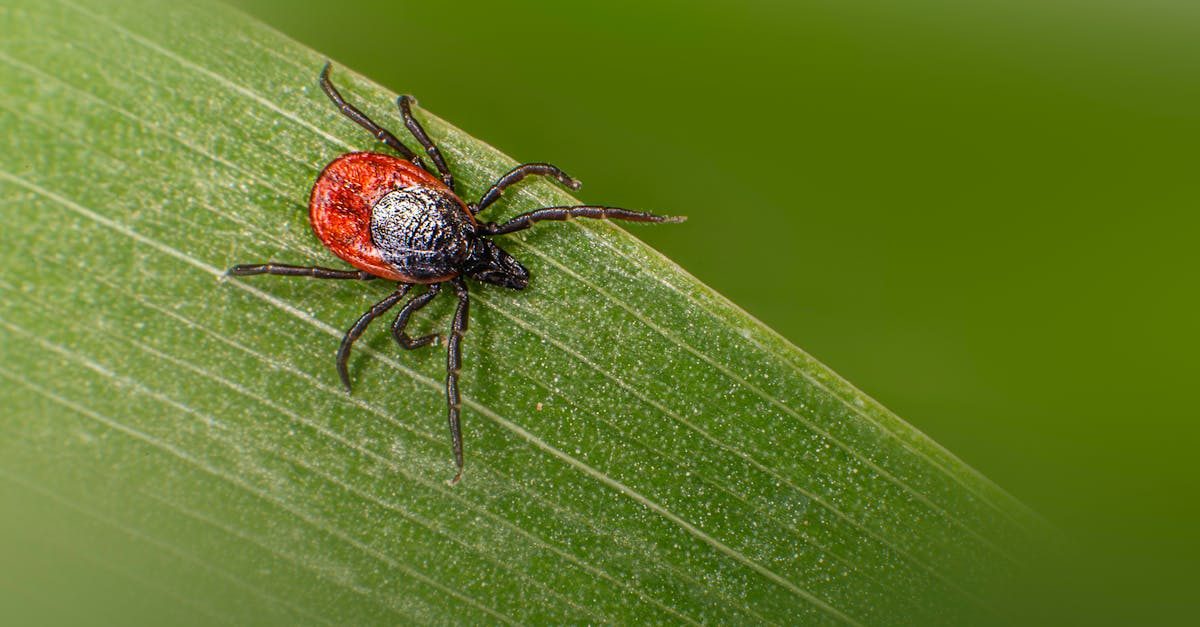
Fleas and ticks do not damage grass directly, but lawns, especially those with tall border vegetation and wildlife activity, provide ideal habitat. This creates a direct health risk for pets and children because of bites and vector-borne diseases. Control focuses on habitat modification and targeted, pet-safe and kid-safe products around high-use areas.
Mosquitoes in lawn environments
Mosquitoes require standing water to breed, not turf itself. However, dense, shaded lawns, clogged gutters, birdbaths, and toys that hold water create a mosquito-friendly environment around your yard. Reducing these breeding sites is central to natural lawn pest control: pet-safe and kid-safe approaches for mosquitoes.
Moles, voles, and other critters
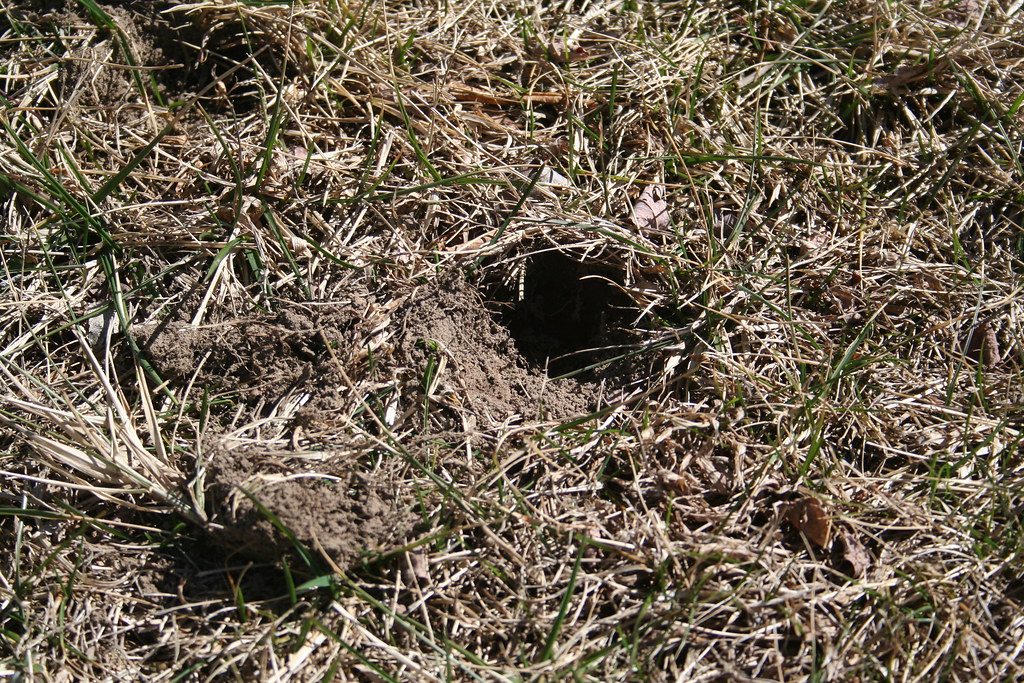
Moles and voles do not consume turf in the same way insects do. Moles tunnel while hunting grubs and earthworms, raising ridges and creating soft spots. Voles chew on roots and stems, especially in winter, and leave runways. Their activity indirectly weakens turf and creates tripping hazards. Control focuses on habitat changes and, for moles, reducing the food sources like heavy grub infestations.
What Does “Natural, Pet-safe and Kid-safe” Really Mean?
Natural lawn pest control does not mean every product is homemade or that no inputs are used. It means choosing methods and materials that minimize toxicity, exposure, and environmental persistence while still delivering effective control at realistic pest thresholds.
Think of a spectrum:
- Conventional synthetic insecticides: Often broad-spectrum, longer residuals, higher toxicity to non-target organisms. Many require significant re-entry intervals when children and pets should stay off treated areas.
- Natural or organic products: Derived from plant, mineral, or microbial sources, often lower toxicity and shorter residuals, but not inherently harmless.
- Biological and cultural controls: Beneficial organisms, improved lawn care practices, and habitat manipulation that reduce pest pressure with minimal direct toxicity.
For a lawn where kids and pets play regularly, “pet-safe and kid-safe approaches” should meet these criteria:
- Low toxicity to mammals: The product’s active ingredient should have low acute toxicity to humans, dogs, and cats when used as directed.
- Minimal residue on grass and soil: The product should break down relatively quickly, so residues do not linger long on surfaces children touch.
- Short re-entry intervals (REI): The time between application and safe re-entry should be short, ideally once the product has dried or within a few hours.
- No bioaccumulation or long-term soil contamination: Materials should not build up in the soil or enter the food chain at concerning levels.
Two common misconceptions interfere with good decisions:
Misconception 1: “Organic” equals “safe.”
Organic status focuses on how a product is derived and its environmental profile, not absolute safety. Some natural materials are highly toxic in concentrated form. For example, certain essential oil-based products can irritate pet skin, and borax, often promoted in DIY ant remedies, can be harmful if ingested by small children or pets or if overapplied to soil.
Misconception 2: “Natural” equals “non-toxic.”
Nicotine is natural and highly toxic. So are some plant alkaloids. The key is hazard and exposure. A product can be “natural” and still require gloves, protective eyewear, and careful storage away from children. Always read and follow the label, even when a product is marketed as eco-friendly.
Look for products that are:
- Labeled as EPA “minimum risk” pesticides under FIFRA 25(b), when available, which signals a favorable safety profile.
- OMRI-listed (Organic Materials Review Institute) if you want compatibility with organic gardening practices.
The label is the law. It includes specific re-entry intervals and pet instructions that define safe use. Pet-safe and kid-safe approaches start with respecting those instructions.
Integrated Pest Management (IPM) for Lawns
Integrated Pest Management (IPM) is a structured, stepwise approach that uses a combination of methods to keep pests below damaging levels with the least risk. IPM is especially effective for families that want natural lawn pest control: pet-safe and kid-safe approaches because it reduces broad-spectrum chemical use and builds lawn resilience.
Homeowner-friendly IPM has four pillars:
1. Prevention
Strong turf resists pests. Thick, deep-rooted grass tolerates some feeding without obvious damage and recovers quickly. Prevention includes proper mowing height, correct watering, matched grass species, soil health, and routine overseeding of thin areas.
2. Monitoring
Regular inspection identifies issues early, before they become expensive or require harsher interventions. Monitoring steps include:
- Checking for brown patches or thinning areas every 1 to 2 weeks during the growing season.
- Inspecting thatch and soil for grubs or chinch bugs if damage appears.
- Noting changes in bird, mole, or insect activity that signal pest population shifts.
3. Identification
Different pests require different controls. Misidentifying a lawn disease as insect damage leads to wasted treatments and continued decline. Use local extension diagnostic guides, or consult a lawn professional to confirm whether symptoms point to grubs, chinch bugs, sod webworms, brown patch fungus, or other causes. For example, the topic Brown Patch Prevention is valuable when you see circular lesions resembling pest damage but rooted in fungal activity.
4. Targeted intervention
Once a pest reaches a threshold (for example, 10+ grubs per square foot), IPM prioritizes the least-toxic effective control. Options include:
- Cultural adjustments, such as changing watering schedules.
- Biological controls like beneficial nematodes for grubs.
- Narrow-spectrum, low-toxicity products applied only to affected areas.
According to University of California IPM guidelines, consistent use of IPM leads to reduced pesticide use over time, more stable turf ecosystems, and lower pest outbreaks. For families, this means fewer chemical applications across the lawn, shorter periods when kids and pets need to stay off treated areas, and better long-term lawn health.
Step 1: Build a Healthy, Pest-Resistant Lawn
Any natural lawn pest control program starts with the lawn itself. Weak, shallow-rooted turf with compacted soil and improper species choices will always struggle, regardless of how many “natural” treatments you apply. A strong lawn reduces pest pressure and raises the threshold at which pests cause noticeable damage.
Choose the Right Grass and Soil Conditions
Grass that matches your climate and site conditions requires fewer inputs and resists pests more effectively. Turfgrass science from Ohio State University Extension emphasizes that turf variety selection is the first line of defense against insects and diseases.
Match grass type to climate
Lawns fall into two broad categories:
Cool-season lawns
These grow best in regions with cold winters and moderate summers, such as the northern and transition zones of the United States.
- Tall fescue: Deep rooting, good drought tolerance, less thatch, strong tolerance to many pests and diseases.
- Kentucky bluegrass: Attractive, dense turf but more susceptible to certain diseases and grubs if mismanaged.
- Perennial ryegrass: Quick to establish, often used in mixtures, but less drought tolerant than tall fescue.
Warm-season lawns
These thrive in regions with hot summers and mild winters.
- Bermuda grass: Aggressive spreader, excellent heat tolerance, but can invade beds and requires regular edging.
- Zoysia: Dense and wear-tolerant, good for high-traffic lawns, but slow to establish.
- St. Augustine: Shade tolerant among warm-season species, but sensitive to some herbicides and cold.
Using the wrong grass for your climate or sun exposure creates chronic stress, which increases susceptibility to chinch bugs, brown patch, and other problems. For more detailed selection advice, see a resource such as Choosing the Best Grass Seed for Your Climate and Yard Conditions.
Soil testing basics
Soil conditions determine how well grass roots can grow, how efficiently they take up nutrients, and how resilient they are to insect feeding. According to Purdue University Extension, routine soil testing every 3 to 4 years is one of the highest-return lawn care practices.
To get a soil test:
- Contact your local cooperative extension service for test kits and instructions.
- Collect 10 to 15 small cores or slices from the top 4 to 6 inches of soil across your lawn, avoiding recent fertilizer or lime spots.
- Mix samples in a clean bucket, let them air dry, then submit the composite sample.
The lab report typically includes:
- pH: Most turfgrasses perform best between pH 6.0 and 7.0.
- Organic matter percentage: Values around 3 to 5 percent support good soil structure and microbial activity.
- Macronutrients (N, P, K) and secondary nutrients or micronutrients depending on the test level.
Amending soil naturally
Once you know your soil status, you can choose natural amendments that improve structure and fertility without harsh salts or residues.
Key options include:
- Compost: Finished compost adds organic matter, improves water holding, and supports beneficial microbes. Apply 0.25 to 0.5 inch as a topdressing after aeration once or twice per year. Thicker layers smother turf.
- Leaf mold: Composted shredded leaves improve structure and moisture retention similarly to compost.
- Worm castings: Highly concentrated organic material rich in microbial life, suitable for topdressing in high-traffic or problem spots.
- Lime or sulfur: Only apply based on soil test recommendations to adjust pH. Over-liming or acidifying without data causes nutrient imbalances.
These amendments improve root depth and turf vigor over 3 to 12 months. Thicker, better-rooted turf tolerates insect feeding, recovers faster from grub pruning, and outcompetes weeds that often accompany pest damage. For weed-specific issues, see the resource Common Lawn Weeds and How to Remove Them, which complements pest management by removing competing stressors.
Mowing Practices That Reduce Pests
Mowing height, frequency, and blade sharpness directly affect lawn stress and pest susceptibility. According to University of Maryland Extension, proper mowing practices increase root depth by up to 50 percent compared to scalped lawns, which significantly boosts resilience to insect feeding and drought.
Ideal mowing height
Most home lawns benefit from slightly higher mowing heights than many homeowners use. Taller grass produces deeper roots and shades soil, which stabilizes moisture and temperature.
Typical recommended heights:
- Cole-season grasses (tall fescue, Kentucky bluegrass, rye): 2.5 to 4 inches, with 3 to 3.5 inches as a common target for a pest-resistant lawn.
- Warm-season grasses (Bermuda, Zoysia): 1 to 2 inches, depending on cultivar and mower type. St. Augustine usually does best around 3 to 4 inches.
Cutting too short stresses the plant, exposes more soil to sunlight (which favors weed seeds and some surface pests), and creates more entry points for disease. Slightly higher mowing creates a cooler, more stable microclimate that supports beneficial soil organisms.
Sharpening blades
Dull mower blades tear grass instead of cutting it cleanly. Torn leaf tips brown and increase water loss. According to Kansas State University Extension, dull blades increase water use and disease susceptibility, which indirectly raises pest stress as well.
Sharpen mowing blades at least twice per growing season, or every 25 mowing hours. Check blades if you see frayed, white-tipped grass after mowing.
Mowing frequency and the “one-third rule”
Never remove more than one-third of the grass blade height at a single mowing, known as the one-third rule.
- If your target height is 3 inches, mow when grass reaches about 4.5 inches.
- This may mean weekly mowing in spring and every 10 to 14 days in summer, depending on growth rate.
Cutting too much at once shocks the plant, reduces its photosynthetic capacity, and slows root growth. Shallower roots reduce tolerance to grubs, chinch bugs, and drought stress.
Grasscycling: leave the clippings
Leaving grass clippings on the lawn, known as grasscycling, returns nitrogen and organic matter to the soil. According to University of Minnesota Extension, clippings can supply the equivalent of one fertilizer application per year when left in place, as long as they are spread evenly and not clumped.
Grasscycling benefits pest resistance by:
- Feeding soil microbes that build structure and suppress some disease organisms.
- Maintaining consistent moisture at the soil surface.
- Reducing the need for synthetic fertilizers, which can stimulate excessive top growth and thatch if overused.
Use a mulching mower blade and avoid mowing when grass is excessively wet or tall to prevent clumping. Proper grasscycling does not cause thatch buildup; thatch primarily consists of stems and roots that decompose slowly, not leaf blades.
Step 2: Diagnose Problems Before You Treat
Accurate diagnosis prevents wasted time and unnecessary exposure to any pest control product, natural or not. Many brown patches result from drought, compaction, dog urine, or disease rather than insects. Applying even a low-toxicity insect treatment to a drought-stressed area solves nothing and adds cost.
Visual Clues and Simple Tests
Use these steps when you see damage:
Check color and pattern
- Irregular, straw-colored patches that expand slowly and do not recover with water frequently indicate grubs or chinch bugs.
- Circular or ring-shaped patches, especially with a smoky or gray margin, often point toward fungal issues such as brown patch rather than insects.
- Small, round dead spots near sidewalks or where pets frequent suggests urine damage.
Lift-test for grubs
- Use a shovel to cut three sides of a 1-foot square in the affected area.
- Peel back the sod and inspect the top 2 inches of soil.
- Count visible white, C-shaped grubs.
If you count 10 or more per square foot in cool-season lawns, this indicates a damaging population. For detailed tactics, see How to Control Grubs in Your Lawn, which aligns well with natural control strategies such as beneficial nematodes and milky spore.
Float-test for chinch bugs
- Remove the bottom of a large coffee can.
- Push the can 2 to 3 inches into the soil at the margin of healthy and damaged turf.
- Fill the can with water and keep topping it off for 10 minutes.
- Observe the insects that float to the surface. Chinch bugs are small, with black and white patterns on adults.
Counts of 20 or more chinch bugs per square foot indicate a significant infestation according to many extension references.
Look for frass and silk for sod webworms
Inspect the thatch layer for greenish fecal pellets (frass) and silk-lined tunnels. Moths flying up at dusk from the lawn signal adult presence, but these tunneling signs confirm larval feeding.
When to Seek Confirmation
Contact your local extension office or a turf diagnostician if:
- The pattern of damage is unclear or mixed.
- Multiple issues overlap, such as drought plus possible insects.
- You suspect a less common pest or a regulatory concern like imported fire ants in new regions.
High-quality photos, accurate descriptions of your mowing and watering practices, and notes on timing of damage help an expert provide specific guidance. This step fits directly into IPM’s identification pillar and improves the chances that your chosen natural control will be effective on the first attempt.
Step 3: Pet-safe and Kid-safe Control Options for Key Lawn Pests
Once you confirm which pest is present and whether it has crossed a damage threshold, you can apply targeted, low-risk controls. The sections below focus on options that align with natural lawn pest control: pet-safe and kid-safe approaches when used according to label directions.
Natural Control of Grubs
Beneficial nematodes
Beneficial nematodes, especially species like Heterorhabditis bacteriophora, are microscopic worms that enter grub bodies and release bacteria that kill the host. According to Rutgers University Extension, properly applied beneficial nematodes significantly reduce white grub populations in lawns without harming people, pets, or most non-target organisms.
Usage guidelines:
- Apply when soil temperatures are consistently above 55°F and grubs are in younger stages, typically late summer to early fall, or early spring depending on your region.
- Water the lawn thoroughly before application so the upper soil is moist.
- Apply nematodes with a hose-end sprayer or watering can in the evening or on a cloudy day to protect them from UV light.
- Water again lightly after application to wash nematodes into the soil.
Re-entry for kids and pets is essentially immediate once the surface is dry, because nematodes target insects, not mammals.
Milky spore disease
Milky spore (Paenibacillus popilliae) is a bacterial pathogen specific to Japanese beetle grubs. When applied to soil, it infects grubs that ingest spores and can persist for years in the lawn. According to USDA research summarized by various extensions, milky spore performs best in regions with established Japanese beetle populations and soil temperatures above 60°F during the active season.
Key points:
- Milky spore is highly specific and does not harm people, pets, birds, earthworms, or most beneficial insects.
- It functions as a long-term population reducer rather than an immediate knockdown treatment.
- Apply according to label directions, often in a grid pattern across the lawn.
Cultural support
Deep watering practices, promoting longer roots, and regular overseeding of cool-season grasses in fall help lawns outgrow moderate grub feeding. Raising mowing height during grub season further enhances tolerance.
Natural Control of Chinch Bugs and Sod Webworms
Water management and thatch
Chinch bugs and sod webworms both favor dry, thatchy lawns. Keeping thatch under about 0.5 inch and watering deeply but infrequently (for example, 1 inch once per week in the absence of rain) reduces favorable habitat.
Core aeration in compacted areas supports better infiltration and root growth. Over several months, this practice reduces the hot, dry microzones where chinch bugs concentrate.
Biological insecticides
Bacillus thuringiensis subsp. kurstaki (Btk) is a microbial insecticide that targets caterpillars, including sod webworm larvae and armyworms, when they ingest treated foliage. According to Cornell University Extension, Btk is considered low risk to mammals, birds, and most non-target insects when applied correctly.
Guidelines:
- Apply in late afternoon or evening when caterpillars are active and feeding.
- Ensure good coverage of grass blades in infested areas.
- Keep kids and pets off the lawn until the spray has dried, often a few hours depending on conditions.
Repeat applications may be needed in 7 to 10 days if monitoring shows continued feeding. This fits IPM by targeting only caterpillar pests without harming beneficial predators.
Encouraging natural predators
Ground beetles, birds, and parasitic wasps help keep caterpillar and chinch bug populations in check. Avoiding broad-spectrum insecticides that persist in the environment preserves these predators. Maintaining a slightly diverse lawn edge with native plants can support natural enemy populations, further stabilizing pest numbers.
Pet-safe and Kid-safe Approaches for Fleas, Ticks, and Mosquitoes in Lawns
Habitat modification for fleas and ticks
Fleas and ticks thrive in shaded, humid areas near tall grass, leaf litter, and wildlife pathways. According to University of Rhode Island TickEncounter, simple habitat adjustments significantly reduce tick encounters.
Action steps:
- Mow lawn areas where kids and pets play to the recommended height and avoid letting grass along fences and woodlines grow tall and weedy.
- Remove leaf litter, brush piles, and tall weeds around the yard perimeter.
- Create a 3 to 6 foot wide mulch or gravel barrier between lawn and wooded areas to reduce tick movement into play zones.
- Discourage wildlife that carry ticks and fleas (such as rodents and stray animals) by securing garbage and removing food sources.
Targeted, low-toxicity products
Some products based on insect growth regulators (IGRs) or specific active ingredients like pyriproxyfen target flea and tick life stages with lower mammalian toxicity when used as directed. Choose formulations specifically labeled for use around homes, lawns, and pet areas, and follow label instructions for re-entry. Always coordinate yard treatments with veterinarian-recommended on-pet flea and tick preventives.
Mosquito control around lawns
Most mosquito problems originate from standing water, not turf. Natural, pet-safe and kid-safe approaches focus on eliminating breeding sites and using biological controls where water cannot be drained.
Steps:
- Empty and scrub containers that hold water weekly: birdbaths, toys, buckets, plant saucers.
- Unclog gutters and downspouts so water does not pool.
- Fill or drain low spots in the yard where water stands for more than 3 to 4 days.
- For unavoidable standing water, use mosquito dunks containing Bacillus thuringiensis israelensis (Bti). According to EPA and multiple extension sources, Bti targets mosquito larvae and a few related flies with minimal risk to people, pets, fish, and most other organisms when used as labeled.
For lawn-adjacent seating areas, outdoor fans reduce mosquito landing rates by disrupting their flight, and physical barriers like screened porches or fine-mesh netting around play structures provide immediate, non-chemical protection.
Managing Ants and Fire Ants Safely
Regular ants
For non-stinging ant species that build small mounds in lawns, the main issue is aesthetics and minor disturbance of soil. Natural lawn pest control: pet-safe and kid-safe approaches for these ants emphasizes tolerance where possible and gentle control methods when needed.
Options include:
- Leveling small mounds with a rake before mowing to avoid scalping.
- Pouring hot (not boiling) water on individual mounds to disrupt colonies, taking care to protect yourself and nearby plants.
- Using low-toxicity bait stations labeled for outdoor use and placing them away from direct pet and child access, such as in mulch beds or under landscaping features.
Fire ants
Imported fire ants present a more serious risk because of their stings. Texas A&M AgriLife Extension advocates a “two-step” method that integrates bait applications in large areas with targeted mound treatments as needed. To keep approaches pet-safe and kid-safe:
- Select baits and mound treatments with low acute toxicity to mammals, and strictly follow label precautions.
- Apply baits when grass is dry and no rain is expected for 24 hours, and keep kids and pets away until the product is settled and, when applicable, watered in as directed.
- Spot-treat only active mounds in or near high-use areas rather than blanket-treating the entire lawn whenever possible.
Recommended products
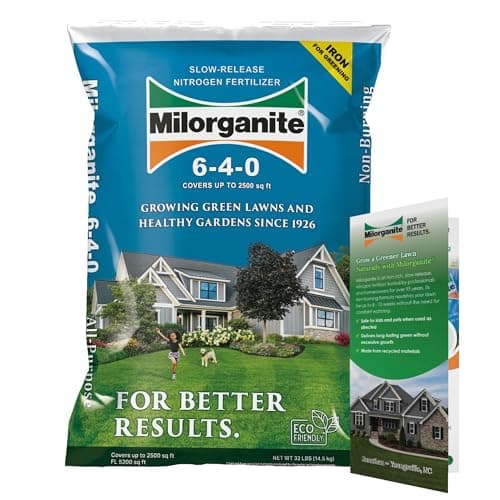
Milorganite 6-4-0
A slow-release organic nitrogen source that builds the dense turf pests struggle to damage.
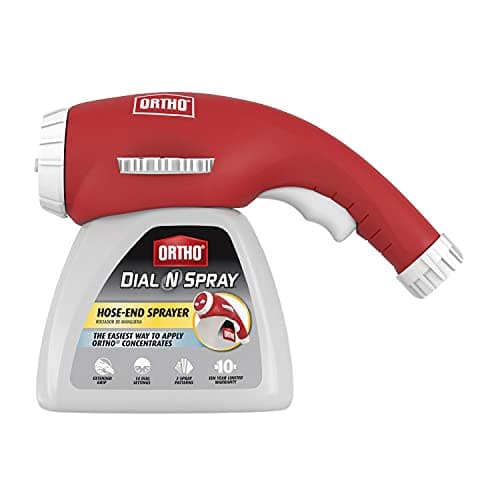
Ortho Dial N Spray Hose-End Sprayer
A hose-end sprayer with fourteen dilution settings, the applicator the beneficial nematode step above calls for.
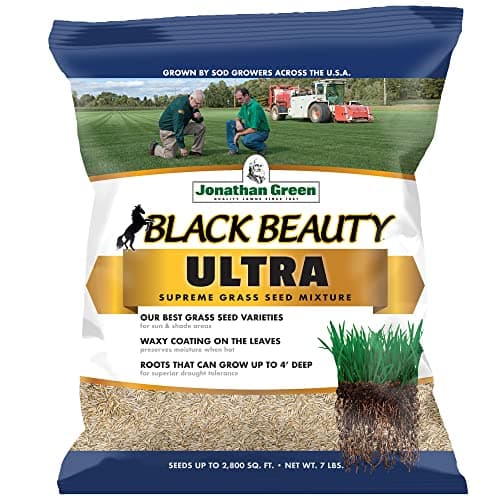
Jonathan Green Black Beauty Ultra Grass Seed
A deep-rooting cool-season blend for the fall overseeding that helps a lawn outgrow moderate grub feeding.
Step 4: Seasonal Strategy and Implementation Timeline
Natural lawn pest control requires timing aligned with pest life cycles and turf growth. A seasonal plan keeps interventions predictable, minimizes surprises, and reduces the need for reactive, higher-risk controls.
Cool-season Lawn Timeline (Fescue, Kentucky Bluegrass, Rye)
Early spring (soil temps 50 to 55°F)
- Perform a soil test if it has been more than 3 to 4 years.
- Inspect for winter damage, voles, and compaction.
- Core aerate compacted areas and apply a light compost topdressing.
- Begin mowing at the upper end of the recommended height as growth resumes.
Late spring (active growth)
- Maintain consistent mowing and grasscycling.
- Monitor for early signs of chinch bugs or sod webworms in sunny, stressed spots.
- Adjust irrigation to encourage deep roots: 0.75 to 1 inch of water per week split into 1 to 2 applications.
Summer (stress period)
- Raise mowing height to the top of the recommended range (around 3.5 to 4 inches for tall fescue and Kentucky bluegrass).
- Monitor for chinch bugs, sod webworms, and early grub damage. Use float-tests and small turf squares to verify presence.
- Apply Btk or other low-toxicity, targeted products if caterpillar populations reach damaging levels.
- Adjust watering scheduling to early morning applications to reduce disease and mosquito habitat.
Late summer to early fall
- Inspect for grub damage and perform grub counts. If numbers exceed 8 to 10 per square foot, consider beneficial nematodes or, in Japanese beetle regions, milky spore applications.
- Core aerate and overseed thin areas to thicken the lawn and improve competition with weeds and tolerance to pests.
- Apply a balanced, slow-release fertilizer if soil test and growth indicate need.
Late fall
- Continue mowing until growth stops, gradually lowering height to the lower end of the recommended range to reduce snow mold risk, but avoid scalping.
- Remove or mulch fallen leaves to prevent thick mats that harbor pests and diseases.
- Review the season’s pest issues and plan adjustments for the coming year.
Warm-season Lawn Timeline (Bermuda, Zoysia, St. Augustine)
Late winter to early spring
- Rake to remove excess thatch and debris.
- Check for mole tunnels and address underlying grub issues if present.
- As green-up begins, set mowing height appropriate for your grass type.
Late spring to summer (peak growth)
- Mow frequently to maintain proper height, often every 5 to 7 days.
- Water deeply but sparingly, around 0.75 to 1 inch per week depending on rainfall.
- Monitor for armyworms, sod webworms, and mole cricket activity in susceptible regions.
- Apply Btk or other targeted controls if caterpillar thresholds are reached; keep kids and pets off until sprays dry.
Late summer to early fall
- Inspect for grub damage and apply beneficial nematodes during warm soil periods as needed.
- Spot overseed with compatible varieties in thinning areas if your warm-season species allows it, or plan for sprigging or plugging.
Fall to early winter
- Gradually reduce watering as grass enters dormancy.
- Continue mosquito and tick habitat management, especially leaf litter removal.
- Evaluate fire ant presence and plan early-season bait applications following extension recommendations.
Step 5: Safety Practices for Families with Kids and Pets
Even natural, low-toxicity products require careful handling. Safety practices ensure that your pet-safe and kid-safe approaches stay that way in real life.
Reading and Following Labels
Every registered product includes specific instructions on:
- Application rates and methods.
- Personal protective equipment (PPE) for applicators.
- Re-entry intervals (REI) for people and pets.
- Storage and disposal.
If a label states “Keep children and pets off until spray is dry,” this is a minimum. Drying typically takes 1 to 4 hours depending on temperature, humidity, and product formulation. For granular products, labels usually direct you to water the lawn after application, then allow it to dry before re-entry.
Application Best Practices
To minimize exposure:
- Keep children, pets, toys, and pet bowls indoors or away from the treatment zone during application.
- Apply treatments in calm weather to avoid drift, especially around play equipment and dog areas.
- Use spot-treatments rather than blanket applications whenever thresholds and label directions allow.
- Store products in original containers, out of reach of children and pets, in a locked or elevated location.
Rinse application equipment outdoors on the treated lawn area rather than over driveways or drains so residues do not wash into storm sewers.
Communication and Record Keeping
Maintain a simple log of:

- What products you used.
- Where and when you applied them.
- Observed pest levels before and after treatment.
This record helps fine-tune your IPM program, demonstrate responsible use, and avoid repeated or unnecessary treatments. If professionals treat your lawn, request product names, active ingredients, and instructions for pet and child re-entry.
Conclusion: A Safer, Stronger Lawn Through Natural Pest Control
Effective natural lawn pest control: pet-safe and kid-safe approaches relies on three pillars: a healthy, well-matched turf, accurate pest diagnosis, and targeted, low-toxicity interventions used only when damage surpasses clear thresholds. A lawn built on proper mowing, balanced watering, soil health, and suitable grass species resists most insects and recovers quickly when some feeding occurs.
By applying integrated pest management principles, choosing biological and minimum-risk products, and timing your actions across the season, you protect both your turf and your family. As a next step, review your current lawn practices against this guide, then explore focused resources such as How to Control Grubs in Your Lawn, Common Lawn Weeds and How to Remove Them, and Brown Patch Prevention to build a complete, safe lawn care plan tailored to your yard.
Top Picks
- Scotts GrubEx1 Season Long Grub KillerCheck price on Amazon
- BioAdvanced 24-Hour Grub Killer PlusCheck price on Amazon
As an Amazon Associate we earn from qualifying purchases.
Free Lawn Care Tools
A lawn pest is any organism that damages turf to a level that affects appearance, safety, or function. Many insects, earthworms, and soil microbes support healthy lawns and never need control. The problem appears when a specific species reaches a population that removes roots, chews foliage, or creates unsafe conditions.
Natural lawn pest control does not mean every product is homemade or that no inputs are used. It means choosing methods and materials that minimize toxicity, exposure, and environmental persistence while still delivering effective control at realistic pest thresholds.
Grub damage usually shows up as irregular brown patches in late summer to early fall, along with turf that feels spongy underfoot. The grass may lift easily from the soil like a loose carpet because the roots have been eaten. You might also notice increased bird activity, with crows, starlings, or robins feeding heavily in specific spots.
Chinch bugs create irregular patches of yellow or straw-colored turf that spread during hot, dry weather, especially in sunny, compacted areas. The damaged grass doesn’t green up even when you water it. If you part the grass and look at the thatch line closely, you may see tiny chinch bugs moving around.
Flea and tick management in lawns focuses on habitat modification and targeted, low-toxicity treatments around high-use areas. Keeping grass trimmed, reducing tall border vegetation, and discouraging wildlife activity all make the yard less hospitable to these pests. When products are needed, choose options labeled for pet-safe and kid-safe use and apply them only where children and pets spend the most time.
Integrated pest management focuses on keeping pest populations at acceptable levels instead of trying to eliminate every insect. It combines cultural practices like proper mowing, watering, and feeding with biological tools such as beneficial nematodes and milky spore, plus low-toxicity products with short re-entry times. This approach supports a resilient lawn, protects soil life, and allows kids and pets to get back on the grass quickly.
Photos: Karola G / Pexels, Magda Ehlers / Pexels

Beat weeds and brown spots from your phone
Snap a photo, get the fix, and follow a plan timed to your soil and weather. Free on iPhone.