Best Practices to Avoid Lawn Diseases
 Sarah MitchellLawn Diagnostics Specialist | 12 Years
As an Amazon Associate we earn from qualifying purchases.
Brown patches, yellowing blades, and thinning turf fall into two broad categories: true lawn diseases and problems that only look like disease. Distinguishing between them is the first step before you apply any product or change your routine. Once you understand what conditions allow diseases to start, you can adjust your mowing, watering, fertilizing, and soil care so problems rarely get a foothold.
Lawn diseases matter because they do more than make your yard ugly. Repeated or severe disease outbreaks weaken roots, invite weeds and insects, and can eventually force a full renovation that may cost 10 to 20 times more than good annual maintenance. Consistent best practices to avoid lawn diseases, tailored to your grass type and climate, are far cheaper than repeated fungicide treatments or re-sodding large areas.
This guide walks through how common fungal diseases like brown patch, dollar spot, leaf spot, red thread, rust, snow mold, pythium blight, and large patch get started and how to prevent them with practical, step by step care. It also flags non-disease lookalikes like drought stress, pet urine, thatch buildup, and grubs so you do not treat the wrong issue. Keep in mind that regional climate, turf species, and soil type change how each best practice should be applied, so timing and details will be a little different in Maine than in Texas.
If you see circular or irregular patches that turn brown, tan, or straw colored while the rest of the lawn looks normal, you may be dealing with a disease rather than simple drought. Look closely at the edge of the spots early in the day; if blades have dark, water soaked lesions, a smoky halo, or cottony white growth when dew is present, that typically points to fungal activity. To separate disease from drought or grubs, test a small area: pull up a handful of turf at the margin of a patch. If roots are short but intact and soil is moist, think disease. If the sod peels back easily with many white grubs underneath, or the soil is bone dry several inches down, the main issue is not disease.
Once you suspect disease, the fix begins with adjusting mowing height, watering deeply but only once or twice per week, and correcting any over fertilizing with high nitrogen. Avoid the instinct to water every day or spread extra fertilizer over damaged areas, since both practices tend to worsen fungal problems. For many diseases, visible improvement starts 10 to 21 days after you correct cultural issues and, if needed, apply an appropriate fungicide at label rates. Going forward, follow a seasonal schedule that includes soil testing every few years, core aeration at the right time for your grass type, and consistent mowing at the recommended height to keep future outbreaks rare.
Understanding Lawn Diseases: Foundations for Prevention
What Are Lawn Diseases? (High-Level Science in Plain English)
Lawn diseases are usually caused by fungi that live in the soil or on plant debris and feed on turfgrass leaves, stems, or roots when conditions favor them. The core concept professionals use is the disease triangle: a susceptible host (your grass), a pathogen (fungus or other organism), and a favorable environment. All three must be present at the same time for disease to develop. If you break any side of that triangle, you prevent or greatly limit disease.
Fungi spread by tiny spores or existing threads of growth called mycelium. Spores are like seeds, often moved by wind, water, mowers, or shoes, and they can sit dormant until conditions line up. Infection usually happens at natural openings or wounds on the grass blade or at the crown near soil level. Extended leaf wetness, high humidity, and specific temperature ranges give fungi time to germinate and penetrate the plant.
Each disease has its own preferred temperature window. For example, brown patch in cool season grasses typically flares when nighttime temperatures stay above about 60 to 65 degrees Fahrenheit and humidity is high. Snow mold loves long snow cover on unfrozen ground. If you water late in the evening, over fertilize, or mow too low during those temperature windows, you are unintentionally making the environment side of the triangle more favorable to disease.
Some lawns develop disease even when the owner thinks they are providing good care. This usually happens because one or two details are off, such as slightly too much nitrogen, a chronic thatch layer that holds moisture, or compacted soil that keeps roots shallow. The lawn may look fine most of the time, but when weather suddenly favors a particular fungus, those underlying issues show up as noticeable damage.
Major Disease Types Homeowners Should Know
Cool season lawns with Kentucky bluegrass, perennial ryegrass, and tall fescue have a fairly consistent set of common diseases. Recognizing a few patterns saves you a lot of guesswork:
Brown patch often appears in mid to late summer as irregular or circular patches, usually 6 inches to several feet wide. In humid mornings, you may see a gray or dark halo at the edge. Dollar spot forms small, silver dollar sized straw patches that can merge into larger areas. Leaf spot and melting out start as small dark spots on leaves, eventually killing the whole blade and thinning the turf. Red thread produces pinkish to red threadlike strands on leaf tips in cool, wet weather, while rust shows as orange powder on your shoes or mower when you walk through infected grass. After winters with long snow cover, snow mold leaves matted, gray or pink circular patches that slowly recover if the turf is otherwise healthy.
Warm season grasses like bermuda, zoysia, St. Augustine, and centipede have their own main set of problems. Large patch, essentially a warm season version of brown patch, causes large, orange to brown rings in spring or fall, especially in zoysia. Take all root rot attacks the roots and stolons of St. Augustine and other warm season grasses, leading to yellowing and areas that thin out, often in high pH soils. Gray leaf spot, common in St. Augustine, causes small gray to brown lesions that coalesce, making blades look burned. Spring dead spot in bermuda shows up as circular dead patches that do not green up with the rest of the lawn.
You do not need to be a turf scientist to narrow down what you are seeing. Focus on three clues: shape of the damage, color and appearance of individual blades, and seasonal timing. Small, coin sized spots that merge in early summer usually point toward dollar spot, while large circular areas during hot, humid weather often indicate brown patch or large patch. Powdery, dust like coatings tend to be rust or powdery mildew. Dense, matted, water soaked turf suggests pythium blight or snow mold depending on temperature.
Cool-Season vs Warm-Season Lawns: Different Best Practices
The best practices to avoid lawn diseases are not identical for every lawn because cool season and warm season grasses grow actively at different times of year. Cool season grasses prefer temperatures in the 60 to 75 degree range and struggle in heat, so most of the intensive work like core aeration and overseeding happens in fall. Warm season grasses grow best at 80 to 95 degrees and go dormant with frost, so their major maintenance falls in late spring and summer.
Cool season zones, generally the northern half of the United States and higher elevations, are dominated by Kentucky bluegrass, perennial ryegrass, fine fescue, and tall fescue. The transition zone, stretching roughly from southern Kansas to North Carolina, can grow both cool and warm season species, but disease pressure is often higher because summers are hot and humid while winters are still cold enough to stress warm season turf. Warm season zones in the South and coastal regions rely more on bermuda, zoysia, St. Augustine, bahia, and centipede.
Because of those differences, copying your neighbor's regimen can be risky if you have different turf species. Watering schedules, mowing heights, fertilization rates, and even which months you aerate should match your grass type. For instance, aerating a bermuda lawn in October can cause winter injury, while that same timing is ideal for a tall fescue lawn. Always confirm what turf you have before adopting any schedule or following advice from a generic calendar.
Build Disease Resistance from the Ground Up: Soil and Site Management
Soil Health as Your First Line of Defense
Soil health is the foundation of a disease resistant lawn. Grass that has deep, extensive roots in well structured soil can tolerate minor infections and recover quickly without you ever noticing a problem. Poor soil, on the other hand, leads to shallow roots and stressed plants that are much more easily overwhelmed by fungi.
Key aspects of soil health include organic matter, texture and structure, pH, nutrient availability, and microbial activity. Organic matter, typically in the 3 to 5 percent range for many lawns, improves water holding capacity, supports beneficial microbes that compete with pathogens, and helps buffer nutrient levels. Soil texture (proportions of sand, silt, and clay) affects drainage and compaction tendencies, which in turn influence how long leaf surfaces stay wet and how deep roots can grow.
Soil pH controls nutrient availability and can tilt the environment in favor or against certain diseases. Microbial activity, much of it invisible, helps decompose thatch and organic residues that would otherwise harbor fungal spores. When microbes are active and diverse, they often outcompete or suppress disease causing organisms.
Getting a soil test every 2 to 3 years is one of the highest value steps you can take. Ask for pH, organic matter percent, and basic macronutrients like nitrogen (often inferred by recommendations rather than measured directly), phosphorus, and potassium. Many labs also offer micronutrient analysis. Once you receive the results, focus first on pH and major nutrient imbalances before worrying about minor elements.
- Penn State Extension recommends soil testing lawns every 2-3 years and adjusting pH into the target range before applying additional fertilizers.
Correcting Soil pH and Nutrient Imbalances
Most cool season grasses perform best at a pH between about 6.0 and 7.0. Many warm season species do well between 5.5 and 6.5, although centipedegrass in particular prefers slightly acidic conditions. When soil pH climbs much above 7.5, diseases like take all root rot tend to be more severe in St. Augustine and similar grasses. Very acidic soils below 5.5 often reduce root growth and increase certain root diseases.

If your soil test shows pH below target, agricultural lime is used to raise it. The rate depends on your current pH, soil type, and lime product, but lawn recommendations commonly fall in the 20 to 50 pounds of lime per 1,000 square feet range, often split into multiple applications at least 6 months apart. If pH is too high, elemental sulfur or acid forming fertilizers like ammonium sulfate are used in moderate amounts to gradually lower it. Always follow the lab recommendations and the product label, because large swings in pH over a short period can stress turf.
Balancing N P K is equally important in disease prevention. Nitrogen drives leaf growth. Mild nitrogen deficiency leads to pale, thin turf that is more open to invasion, but excessive nitrogen, especially quick release forms, encourages lush, succulent growth that most foliar fungi prefer. As a rule of thumb, cool season lawns often receive 2 to 4 pounds of actual nitrogen per 1,000 square feet per growing season, split into several applications, while many warm season lawns do well with 2 to 3 pounds, depending on species and soil.
Phosphorus supports root development, particularly in new seedings, but is often already sufficient or high in established lawns. Excess phosphorus rarely causes disease directly but can contribute to environmental issues. Potassium plays a key role in water regulation and stress tolerance. Research has shown that adequate potassium levels often reduce the severity of diseases like dollar spot and leaf spot because the plant is better able to maintain cell wall integrity and recover.
Based on a soil test, a seasonal nutrient adjustment might look like this for a cool season lawn with low potassium and adequate phosphorus: apply a balanced fertilizer such as 20-0-20 in early fall at a rate that supplies 0.75 to 1.0 pound of nitrogen per 1,000 square feet, repeat in late fall, then apply a lighter 0.5 pound nitrogen application in late spring. For a warm season lawn with slightly high pH and take all root rot history, you might use an ammonium sulfate based product in late spring and mid summer, combined with light sulfur applications as recommended to slowly bring pH down.
Managing Drainage and Compaction
Poor drainage and compacted soil increase the duration of leaf wetness and keep crowns and roots in saturated conditions. Almost every major fungal lawn disease becomes more severe when water lingers on the soil surface or in the upper root zone. If you see water pooling in low spots for more than a few hours after a typical rainfall, or if the lawn feels spongy and stays wet long after other areas dry, drainage is likely a significant contributor to disease risk.
Compaction occurs where soil particles are pressed tightly together, reducing pore space. High traffic areas, along sidewalks, and where mowers repeatedly turn are common zones. Indicators include thin or stunted grass even with adequate fertilization, visible pathways where people walk, and the footprint test: if your footprints remain visible in the turf rather than springing back, compaction is likely. A practical confirmation step is the screwdriver test. Take a long screwdriver or soil probe and push it into the ground after normal watering. If you struggle to reach 4 to 6 inches of depth in most spots, compaction is moderate to severe and core aeration is warranted.
Core aeration pulls small plugs of soil out of the lawn, usually 2 to 3 inches deep, which opens channels for air and water, encourages roots to grow deeper, and helps break up thatch. Cool season lawns are typically aerated in early fall, when temperatures cool and growth is active. Warm season lawns are best aerated in late spring through mid summer when they are fully out of dormancy. Most home lawns benefit from aeration every 1 to 3 years, with high traffic or heavy clay sites needing the shorter interval.
Following aeration, a light compost topdressing, around 0.25 inch deep, can dramatically improve soil structure and microbial activity over time. Spreading compost and then dragging it in with a rake or leveling tool helps fill the aeration holes and dilute thatch. This practice supports the long term best practices to avoid lawn diseases by improving both drainage and biological competition against pathogens.
Mowing Practices That Minimize Disease Risk
Choosing the Right Mowing Height
Mowing height is one of the most important and most overlooked cultural practices for disease prevention. Each grass type has an optimal range that balances leaf surface for photosynthesis with good air flow and reduced thatch. Cutting too low, often called scalping, stresses turf, thins the stand, and exposes the soil, making it easier for fungi, weeds, and pests to take hold.
As a general guide, many cool season lawns do best at 3.0 to 4.0 inches. Tall fescue and Kentucky bluegrass, for example, usually stay healthier and resist brown patch better when kept closer to 3.5 to 4.0 inches in summer. Many warm season lawns like bermuda and zoysia tolerate and even prefer shorter heights in the 1.0 to 2.0 inch range if soil is smooth, while St. Augustine is typically kept at 3.0 to 4.0 inches.
Sticking to the one third rule helps minimize stress: never remove more than one third of the leaf blade in a single mowing. If your lawn has gotten too tall, raise the mower and gradually bring it back down over several cuts rather than hacking it short in one pass. This reduces the number of wounds and amount of shock, which in turn makes it harder for diseases to gain traction, especially in hot, humid conditions.
Mowing Frequency and Technique
Mowing frequently enough to follow the one third rule naturally adjusts with the season. During peak growth, you may need to mow every 4 to 7 days, while in slower periods every 10 to 14 days can be sufficient. Irregular mowing, where you go long stretches then cut very short, is a common pattern in lawns that repeatedly suffer from leaf and crown diseases.
Blade sharpness also matters. Dull blades tear grass rather than making clean cuts, leaving frayed tips that brown quickly and provide larger entry points for fungi. If you see a lot of white or tan shredding at blade tips after mowing, it is time to sharpen or replace blades. Many homeowners benefit from sharpening at least once or twice per season, more often if you hit sticks or rocks.
Try to avoid mowing when grass is wet from dew or irrigation. Wet mowing tends to clump clippings, matt leaves, and spread spores. If you must mow when damp, clean the deck afterward to minimize disease carryover. Alternate mowing directions to reduce soil compaction patterns and avoid making the same wheel tracks week after week.
Grasscycling and Clipping Management
Contrary to popular belief, returning clippings to the lawn, often called grasscycling, does not cause thatch or automatically increase disease if you mow properly. Short clippings from a sharp mower fall between blades and decompose quickly, returning nitrogen and organic matter to the soil. This actually supports disease resistance by improving soil health and reducing the need for additional fertilizer.
Problems arise when mowing is too infrequent and clippings are long, wet, or form mats on the surface. Thick mats can hold moisture against leaves, provide a substrate for fungal growth, and shade lower portions of the plant. In those situations, it is better to bag or rake heavy clippings and compost them separately.
During active outbreaks of highly contagious diseases like pythium blight, which can spread quickly in wet, warm conditions, collecting clippings from the most affected sections can reduce inoculum levels. Dispose of them with yard waste pickup rather than moving them to other parts of the property.
Watering Strategies to Avoid Lawn Diseases
How Much and How Often to Water
Watering is a major lever in controlling lawn diseases, because it directly affects leaf wetness duration and root depth. Most established lawns perform best with roughly 1.0 to 1.5 inches of water per week in total, including rainfall. Instead of light daily sprinkling, the goal is deep and infrequent watering that moistens the top 6 to 8 inches of soil then allows it to partially dry.
To calibrate your system, place several small containers like tuna cans in different zones and run your sprinklers. Measure how much water accumulates in 15 or 20 minutes to determine your system's output rate. If your lawn needs 1 inch per week and your system applies 0.5 inch in 30 minutes, you would schedule roughly two 30 minute cycles per week, adjusting for rain.
Shallow, frequent watering keeps roots near the surface and keeps the thatch layer damp, both of which increase disease risk. Deep watering followed by a drying period encourages roots to chase moisture downward, making grass more resilient and less prone to stress related diseases.
Best Time of Day to Water
The timing of irrigation has a significant impact on disease development. Early morning watering, typically between 4 a.m. and 9 a.m., is ideal, because it allows leaves to dry quickly as the sun rises and wind picks up. Our guide to the best time of day to water your lawn covers the timing tradeoffs in detail. This shortens the number of consecutive hours that blades remain wet, which is a key variable in the disease triangle.
Midday watering under hot sun is less efficient due to evaporation and may cause temporary stress, but it is not usually a major disease driver. Evening or night watering, by contrast, tends to extend leaf wetness from late afternoon through the night and into the next morning, easily exceeding 10 to 12 hours of continuous moisture. Many foliar fungi need only 8 to 10 hours of leaf wetness at favorable temperatures to infect. If you consistently irrigate in the late evening, you are greatly increasing that opportunity window.
If your schedule forces you to water later, aim for late afternoon rather than after dark so leaves still have time to dry before nightfall. Also, check sprinkler coverage to avoid oversaturating low areas where water already collects.
Recognizing and Correcting Overwatering and Underwatering
Overwatering and underwatering can both mimic or set up lawn diseases, so it is important to distinguish them. Overwatered turf often looks lush but has shallow roots, and the ground may feel spongy. You might see algae or moss forming in shady, damp spots. These conditions favor diseases like pythium blight, brown patch, and various root rots.
Underwatered lawns usually show a bluish green cast before turning straw colored, and footprints remain visible because the grass blades lack turgor to spring back. To confirm, probe the soil with a screwdriver in a discolored area. If the tool penetrates easily and soil feels wet below, disease or compaction is more likely than drought. If it is very hard to push in and soil is dry several inches down, watering volume is insufficient.
Adjustments should be gradual. If you have been watering daily, start by cutting back to every other day with longer runtimes, then move toward two deep waterings per week. At the same time, monitor disease prone areas closely. Improvement in disease severity often appears within 2 to 3 weeks of consistent, correct watering patterns, assuming other cultural practices are reasonable.
Fertilization and Seasonal Care for Disease Prevention
Matching Fertilizer to Grass Type and Season
Fertilization schedules that prevent disease are built around your grass type and local climate rather than a one size fits all calendar. Cool season grasses benefit from their largest nitrogen applications in fall, when temperatures are cool and they are naturally building roots and carbohydrate reserves. A typical pattern is 1.0 pound of nitrogen per 1,000 square feet in early fall and another 1.0 pound in late fall, with a lighter late spring application if needed.
Heavy summer fertilization of cool season lawns, especially with quick release nitrogen, tends to make brown patch, dollar spot, and rust worse. Warm season grasses like bermuda, zoysia, and St. Augustine, by contrast, are fed primarily during late spring and summer while they are actively growing, often with 0.5 to 1.0 pound of nitrogen per 1,000 square feet per application, repeated every 4 to 8 weeks depending on product and desired growth.
Slow release fertilizers are generally safer from a disease standpoint because they avoid sudden surges of succulent growth. Look for products that provide at least 25 to 50 percent slow release nitrogen through sources like polymer coated urea or organic based materials. Always adjust rates based on your soil test recommendations to avoid unnecessary inputs.
Avoiding Overfertilization and Deficiencies
Overfertilization, particularly with nitrogen, is a common trigger for disease outbreaks. Lush, dark green lawns achieved with frequent, high nitrogen applications are often the same lawns that suffer severe brown patch or leaf spot in humid weather. Signs of too much nitrogen include very rapid growth, frequent mowing needs, and extremely soft leaf tissue.
On the other hand, chronic nitrogen deficiency leads to thin turf that cannot outcompete weeds and recovers slowly from normal wear or minor disease. A uniform pale green color and minimal growth even with adequate moisture suggest deficiency. Confirm with your soil test and fertilization history. Correcting deficiencies should be done at label rates and appropriate seasonal timings rather than through one heavy dose.
Micronutrient deficiencies are less common but can occur, especially in sandy or high pH soils. If your test indicates issues with elements like iron or manganese, targeted treatments can improve color and vigor, indirectly helping disease resistance. However, do not chase micronutrients unless a test identifies a clear need.
Seasonal Schedules that Reduce Disease Pressure
Cool season lawn disease prevention is strongly tied to fall maintenance. A typical sequence might be: core aeration and overseeding in early fall if needed, followed by a balanced fertilizer. This relieves compaction, improves density, and corrects nutrient issues before winter. Mowing continues at 3 to 4 inches until growth slows, and a final late fall fertilizer application supports root reserves. In spring, avoid fertilizing too early, which can stimulate lush growth before summer stress. Address weeds using targeted products if needed, as discussed in Common Lawn Weeds and How to Remove Them, and focus on proper mowing and watering as temperatures rise.
Warm season lawn schedules start later. In many regions, preemergent herbicides for weeds and a light fertilizer application are applied when soil temperatures reach roughly 55 degrees Fahrenheit for several consecutive days. Core aeration follows once the lawn is fully green and actively growing. Main fertilization occurs from late spring through mid summer. As fall approaches and growth slows, reduce nitrogen applications to avoid late season flushes that could increase winter related diseases like large patch.
Across both lawn types, do not neglect thatch management. Thatch thicker than about 0.5 inch can harbor fungi and keep crowns moist. Core aeration and compost topdressing gradually reduce thatch. In severe cases, power raking at the correct time for your grass type may be needed, but this is more disruptive and should be followed by proper aftercare.
- NC State Extension notes that tall fescue lawns receiving more than about 4 pounds of nitrogen per 1,000 square feet per year show significantly higher brown patch severity.
Thatch, Traffic, and Microclimate Management
Controlling Thatch to Limit Disease Habitat
Thatch is the layer of living and dead stems, roots, and organic material that accumulates between the soil surface and green leaves. A thin layer, up to about 0.5 inch, is normal and can protect crowns from temperature extremes. When thatch becomes thicker, it acts like a sponge, holding water near the crown and creating a sheltered environment for fungi and insects.
To check thatch depth, cut a small wedge of turf and measure the brown spongy layer between soil and green leaves. If it exceeds 0.5 inch, disease risk increases, especially for problems like brown patch, dollar spot, and certain root rots. High nitrogen and frequent shallow watering both accelerate thatch formation.
Core aeration is the primary long term tool to manage thatch, because it promotes microbial breakdown of organic material and mixes soil with that layer. Vertical mowing or dethatching machines can physically remove thick thatch layers when necessary, but these are best used during strong growth periods so the lawn can recover.
Managing Foot Traffic and Wear Patterns
Chronic foot or pet traffic stresses turf, compacts soil, and can create thin lanes that are more prone to disease. If certain areas are always used as shortcuts or play zones, consider redirecting traffic with stepping stones, mulch paths, or small fences. For dogs, rotating access to different yard sections can give grass time to recover.
In heavily used spots like gates, play areas, or around mailboxes, reinforce turf by overseeding with a more wear tolerant species or installing pavers or a small gravel pad. Trying to maintain pristine turf in a high traffic bottleneck often leads to repeated thinning and disease flare ups, because the plants never fully recover between insults.
Improving Airflow and Sunlight
Many lawn diseases thrive where air movement is poor and moisture lingers, such as between closely planted shrubs, beside solid fences, or under low tree branches. Improving airflow reduces humidity at the turf canopy and shortens leaf wetness duration, undermining a critical part of the disease triangle.
Pruning lower limbs of trees, thinning dense shrubbery, and replacing solid fences with more open designs can all help. In very shady spots where grass struggles regardless of care, it may be more practical to switch to a shade tolerant groundcover or mulch bed. For example, red thread and rust are more common where light is limited and grass remains damp much of the day. Increasing morning sun exposure in those areas often makes a noticeable difference over one or two seasons.
Distinguishing Diseases from Lookalikes
Drought Stress vs Disease
Drought stress and certain diseases can look similar at first glance, particularly brown patch and dollar spot in cool season lawns. Drought stressed areas usually appear on high spots, near pavement, or where sprinkler coverage is poor. The color tends more toward bluish green then tan, and the pattern often follows irrigation gaps rather than perfect circles.
To confirm, inspect the soil 3 to 4 inches down in the discolored area. If it is dry and crumbly while nearby green turf has moist soil, the primary issue is water. After thorough watering that supplies roughly 0.5 to 0.75 inch at one time, drought stressed grass often shows noticeable recovery within 3 to 7 days if it was not fully killed.
In contrast, disease patches often have a more defined border, and blades may show specific lesions. Watering more in a diseased area without addressing other factors frequently worsens the problem, because you are increasing leaf wetness time without improving plant vigor.
Pet Urine, Grubs, and Other Non-Fungal Problems
Pet urine damage typically shows up as small, irregular dead or straw colored spots surrounded by a ring of darker green grass. The salts and nitrogen in urine burn the center but fertilize the edges. If there are dogs in the household and the pattern matches, this is more likely than a precise fungal disease. Flushing the area with water soon after urination and training pets to use a designated zone reduces damage.

Grub damage can be mistaken for disease because it produces brown, dead patches that expand over time. The key difference is the condition of the roots. In grub infested turf, the root system is chewed away and the sod peels back easily like a carpet. To confirm, cut and lift a square foot of sod in the affected area and count the white, C shaped grubs just under the surface. If you find 10 or more grubs per square foot, treatment is usually recommended, as outlined in How to Control Grubs in Your Lawn.
Other stressors like salt from sidewalks, gasoline spills, or herbicide drift can also mimic disease. Before assuming a fungal problem, review any recent chemical applications, deicing, or equipment leaks near the affected lawn sections. Matching timing and pattern often clarifies the cause.
When to Seek Professional Diagnosis
If your lawn shows unusual symptoms that do not match common descriptions, or if you have tried adjusting watering and mowing for several weeks without improvement, it may be time for a professional diagnosis. Local cooperative extension offices and reputable lawn care companies can often identify diseases from samples or clear photos.
When collecting a sample, cut a section that includes both healthy and affected grass, ideally 4 by 4 inches, with soil and roots intact. Avoid letting the sample bake in a hot car. Prompt submission improves the odds that lab technicians can see active structures and recommend an effective management plan.
Professional confirmation is particularly useful before investing in fungicide programs, since many products are preventative rather than curative and must match the specific disease organism to be worthwhile.
Fungicides: When Prevention Needs Backup
Preventative vs Curative Fungicide Use
Fungicides are tools, not substitutes for proper cultural practices. They work best as preventative or early intervention measures when disease pressure is high, but visible damage is still limited. Once large areas of turf are dead, fungicides cannot resurrect them, they only protect remaining healthy tissue.
Labels distinguish between preventative and curative rates and intervals. Preventative applications are typically made just before or at the earliest sign of favorable weather conditions for a known disease problem. For example, a lawn that historically develops brown patch each July might receive a preventative treatment in late June when nighttime temperatures begin averaging above 60 degrees Fahrenheit.
Curative applications, used after early symptoms appear, often require higher rates or shorter intervals between treatments. However, relying only on curative use tends to be less effective and more expensive in the long run, especially if you have not corrected underlying issues like excess nitrogen or poor drainage.
Choosing and Applying Fungicides Safely
Different fungicide active ingredients target different groups of fungi. Common families include strobilurins, triazoles, and SDHIs, among others. Rotating modes of action is important to reduce the risk of resistance, where disease organisms adapt and products lose effectiveness over time. The Fungicide Resistance Action Committee (FRAC) codes listed on many labels help you track modes of action.
Always read and follow the label, as it is the legal guideline for use. Pay attention to application rates per 1,000 square feet, maximum annual amounts, and reentry intervals that indicate how long to keep people and pets off treated areas. Use calibrated spreaders or sprayers so you apply the correct amount. Uneven application can leave untreated streaks where disease continues.
For many homeowners, spot treating only the most disease prone sections instead of blanket treating the entire lawn can be a sensible compromise. Combine this with strong cultural best practices to avoid lawn diseases so you are not dependent on chemical interventions year after year.
Recommended products
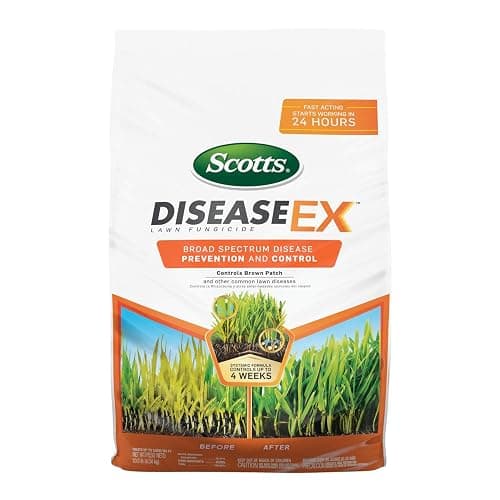
Scotts DiseaseEx Lawn Fungicide
A granular azoxystrobin fungicide that covers brown patch, dollar spot, and several other common turf diseases.
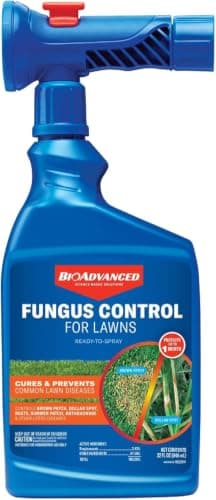
BioAdvanced Fungus Control for Lawns (32 oz)
A propiconazole liquid in a different chemical class, which matters for rotating products so pathogens do not build resistance.
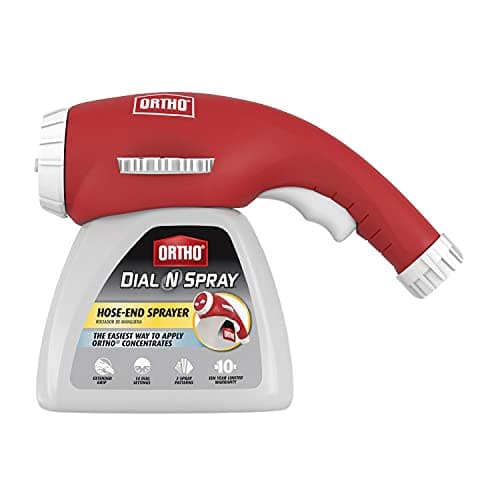
Ortho Dial N Spray Hose-End Sprayer
A hose-end sprayer with 14 dilution settings for applying a liquid fungicide at the labeled rate.
What Other Guides Miss: Common Mistakes to Avoid
Many online guides on lawn disease focus heavily on identification charts and product lists but underemphasize confirmation tests. Before acting, always perform at least one simple test, such as the screwdriver test for compaction, the root tug test for grubs, or soil moisture checks. This avoids the common mistake of treating disease when the main issue is irrigation or insects.
Another area often glossed over is timing. It is not enough to know that brown patch is a problem, you need to align mowing, watering, and any fungicide use with critical temperature and humidity windows. For example, continuing to fertilize a cool season lawn heavily in June and July in a humid climate almost guarantees more trouble, no matter what products you buy.

Finally, many guides ignore regional and species differences. Advice that works for a Kentucky bluegrass lawn in Michigan does not transfer directly to a St. Augustine lawn in Florida. When reading any recommendation, cross check it with your grass type and USDA hardiness or turf zone. If the recommendation contradicts what local extension publications suggest, lean toward the local source.
Conclusion: Building a Long-Term Disease-Resistant Lawn
Preventing lawn diseases consistently is less about chasing individual spots and more about creating conditions where your turf is strong and fungi are at a disadvantage. Healthy soil with the right pH, steady but not excessive nutrition, deep and infrequent watering, correct mowing height, and periodic aeration work together to break the disease triangle.
When you encounter problems, use simple confirmation steps to distinguish true disease from lookalikes like drought, pet damage, weeds, or grubs. Adjust cultural practices first, then consider targeted fungicides if needed, applied at the right time and rate. Over one to two growing seasons, these best practices to avoid lawn diseases will usually reduce outbreaks and recovery time so your lawn stays fuller and greener with less effort.
If you are also dealing with weeds along with disease issues, check out Common Lawn Weeds and How to Remove Them, How to Kill Crabgrass and Prevent It from Returning, and How to Kill Dandelions in Your Lawn to build a complete, integrated lawn health plan.
Top Picks
- BioAdvanced Fungus Control for LawnsCheck price on Amazon
- Scotts DiseaseEx Lawn FungicideCheck price on Amazon
As an Amazon Associate we earn from qualifying purchases.
Free Lawn Care Tools
Lawn diseases are usually caused by fungi that live in the soil or on plant debris and feed on turfgrass leaves, stems, or roots when conditions favor them. The core concept professionals use is the disease triangle: a susceptible host (your grass), a pathogen (fungus or other organism), and a favorable environment. All three must be present at the same time for disease to develop. If you break any side of that triangle, you prevent or greatly limit disease.
Check both the blades and the roots. Disease patches often stay brown while nearby grass looks normal, and blades at the edge may show dark, water‑soaked lesions, smoky halos, or cottony white growth in the morning dew. If you gently pull on the turf at the edge and roots are short but intact in moist soil, disease is more likely. If the soil is bone dry several inches down or the sod peels back easily with grubs underneath, drought or insects are the main problem instead.
Frequent, shallow watering, mowing too low, and overusing high‑nitrogen fertilizer all create conditions fungi love. Chronic thatch layers that hold moisture and compacted soil that keeps roots shallow also increase disease risk. These issues may not show until weather suddenly favors a particular fungus, then damage appears quickly. Adjusting these cultural practices is often more effective than relying on fungicides alone.
Water deeply but only once or twice per week so moisture reaches several inches into the soil, encouraging deep roots and quicker surface drying. Avoid daily, light watering and late‑evening irrigation, because extended leaf wetness and high humidity give fungal spores time to infect grass blades. Morning watering is usually best so foliage dries through the day. Consistent, deep watering also makes it easier to distinguish disease from simple drought stress.
Mowing too low stresses turf and weakens roots, making grass more susceptible to fungi when weather turns favorable for disease. Proper mowing height varies by grass type but generally leaves enough leaf area for strong photosynthesis and deeper rooting. Healthier, less stressed grass recovers faster from minor infections and is less likely to thin out into bare, disease‑prone spots. Consistent mowing at the recommended height is a core best practice in every climate zone.
Core aeration and soil testing work best when timed to the active growing season of your grass type. For cool season lawns, most intensive work, including aeration and overseeding, is done in fall when temperatures are in the 60–75°F range. Warm season lawns benefit from aeration in late spring or early summer as growth ramps up in 80–95°F weather. Testing soil every few years and relieving compaction improve root health, which makes turf more resistant to many common diseases.
Photos: Tom Fisk / Pexels, Kindel Media / Pexels, RDNE Stock project / Pexels

Beat weeds and brown spots from your phone
Snap a photo, get the fix, and follow a plan timed to your soil and weather. Free on iPhone.