Scotts Weed and Feed Instructions: When, How and Settings (2026)

As an Amazon Associate we earn from qualifying purchases.
Brown patches with scattered broadleaf weeds usually indicate that the grass is losing the competition to dandelions, clover, and other invaders. Scotts Weed and Feed products are designed to flip that balance so your turf thickens while the weeds decline, but only if you match the product and timing to your lawn. The right Scotts formula can strengthen grass and clean up a moderate weed problem without multiple passes.
Many homeowners apply weed and feed too early, too late, or to the wrong grass type, which reduces results and can injure turf. Confirm your grass type first, then identify whether your weeds are mostly broadleaf (good fit for weed and feed) or grassy like crabgrass (needs a different approach). Use our herbicide timing calculator to find your exact pre-emergent or post-emergent window by ZIP and grass type. Plan to apply when daytime highs are roughly 60 to 90 degrees, the lawn is slightly damp, and rain is not forecast for at least 24 hours.
When used correctly, you should see weed curling and discoloration within 5 to 14 days and a noticeable thickening of the lawn over 3 to 6 weeks. Avoid reseeding for at least 4 weeks after most Scotts weed and feed treatments, and do not reapply more often than the label allows, typically 6 to 8 weeks. If weed pressure is still heavy after 30 days, spot treat remaining weeds instead of repeatedly blanketing the whole yard.
If your lawn has a mix of green grass and visible dandelions, clover, plantain, or similar broadleaf weeds, Scotts Weed and Feed can be effective. Confirm that your weeds have broad, flat leaves rather than grassy blades, and that your grass is not newly seeded or stressed from drought. If you have mostly crabgrass or nutsedge, a weed and feed is not the right tool.
The fix is to choose the Scotts formula labeled for your grass type, apply on slightly damp foliage, and keep it dry from rain or irrigation for at least 24 hours so the herbicide can be absorbed. Do not apply when temperatures are above roughly 90°F or when the lawn is suffering from drought or disease, since this increases the risk of turf injury. Expect weeds to start curling or yellowing in about a week, with full results in 3 to 4 weeks.
If weeds are still thriving after 30 days, it usually indicates either under-application, very tough species, or heavy thatch that blocked the granules. At that point, repeat only if the label allows, or switch to a targeted liquid broadleaf herbicide for spot treatment. Avoid overseeding until at least 4 weeks after a weed and feed product, and always confirm with the specific label, since some formulas have longer waiting periods.
Scotts Weed and Feed products combine fertilizer and weed control in a single step so homeowners can both thicken turf and reduce broadleaf weeds in one application. As part of a complete lawn care program, weed and feed is a tactical tool rather than a standalone solution. It fits between regular fertilization, pre-emergent crabgrass control, and cultural practices such as aeration and proper mowing height.
Recommended products
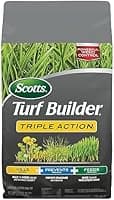
Scotts Turf Builder Triple Action
Kills broadleaf weeds, prevents crabgrass, and feeds the lawn in one bag.
$38.46
View on Amazon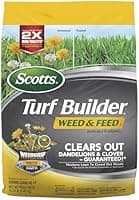
Scotts Turf Builder Weed and Feed
Classic broadleaf control plus 28-0-3 fertilizer.
$64.99
View on AmazonThe Andersons Barricade Professional-Grade Pre-Emergent
Pro-grade prodiamine for homeowners with persistent crabgrass.
$46.88
View on AmazonIn lawn care, the way a product is used often matters more than the brand printed on the bag. This is especially true with Scotts Weed and Feed. The key variables are choosing the right product for your grass type and weed problem, applying it at the correct time of year, and following the label directions for spreader settings, moisture, and post-application watering. A well-chosen, precisely applied weed and feed will outperform a premium product used at the wrong time or on the wrong lawn.
Most people searching for a Scotts Weed and Feed: application guide & best products fall into a few groups. Some want to clean up visible weeds and feed the grass in a single pass. Others are confused by the long list of Scotts Turf Builder, Triple Action, and regional formulations and are not sure which one is safe for their grass. Many also have questions about safety for pets and kids, how soon they can water or mow, and whether rain will ruin the treatment.
This guide covers how Scotts weed and feed products actually work, the best options for different lawn types and weed problems, and exact step-by-step application instructions. It also explains seasonal timing by region, how to avoid damage to new or stressed lawns, and what to do when results are disappointing. By the end, you will know when a weed and feed is the right tool, which bag to buy, and precisely how to apply it for consistent, professional-level results.
Understanding Scotts Weed and Feed Products
What “Weed and Feed” Actually Means
The term “weed and feed” refers to a combined herbicide plus fertilizer product, usually sold as a granular material, sometimes as a liquid. The “weed” side is a selective herbicide designed to injure broadleaf weeds while leaving established turf grass largely unharmed. The “feed” side is a blend of nitrogen, and sometimes phosphorus and potassium, intended to push healthy growth and color.
In practice, this combination attacks the problem from two angles. The herbicide weakens or kills existing broadleaf weeds such as dandelions and clover. At the same time, the fertilizer provides nutrients that encourage your desirable grass to grow more densely. As the grass thickens, it shades the soil more effectively and makes it harder for new weeds to establish, especially the light-loving annuals that germinate in open bare patches.
It is important to distinguish between pre-emergent and post-emergent weed and feed formulations. Pre-emergent products focus on preventing new weeds from sprouting by forming a chemical barrier at or near the soil surface. These are typically used for crabgrass and other annual grassy weeds. Most Scotts Weed and Feed products sold under the Turf Builder Weed & Feed name are post-emergent, which means they are designed to kill weeds that are already up and growing, and primarily target broadleaf weeds rather than grassy types.
How Scotts Weed and Feed Works (Mechanism Overview)
Most Scotts Weed and Feed fertilizers use a blend of selective broadleaf herbicides that are systemic, not just contact. They are absorbed through the leaves of the weed and move through the plant’s vascular system, disrupting growth processes. The reason these products are “selective” is that they target growth pathways that are much more active or differently structured in broadleaf plants than in monocot grasses.
This mode of action explains two critical label directions: the granules need to stick to moist weed leaves, and the lawn should remain dry for at least 24 hours afterward. When you apply to slightly damp foliage, the herbicide-coated granules adhere to the weed leaves. As the leaf surface dries, the active ingredients are absorbed. Watering too soon or applying to dry, dusty leaves allows the granules to fall off and reduces effectiveness.
The weed spectrum for most Scotts weed and feed products includes common nuisance species such as dandelion, white clover, chickweed, plantain, henbit, and several others. If your lawn issues align mostly with these broadleaf weeds, the fit is good. If the majority of your problem is grassy weeds such as crabgrass or foxtail, or sedges like yellow nutsedge, this type of herbicide will not provide satisfactory control and you will need different products, as covered later.
On the fertilizer side, Scotts labels display an N-P-K analysis, such as 28-0-3. The three numbers show the percentage by weight of nitrogen (N), available phosphate (P2O5), and soluble potash (K2O). Many modern lawn fertilizers, including several Scotts Turf Builder formulations, have zero phosphorus for environmental reasons, which is why you will often see something like 28-0-3 or 26-0-4. The relatively high nitrogen supports strong green-up and recovery from weed stress, while potassium helps with stress tolerance and root health.
Scotts Turf Builder Weed and Feed Formulations and Instructions
Most homeowners encounter Scotts Weed and Feed as granular products that are spread with a broadcast or drop spreader. Granular formulations are more forgiving, especially on larger lawns, because you can calibrate your spreader, walk at a steady pace, and visually confirm coverage. They also tend to be safer for DIY users because you are less likely to over-apply in one spot the way you might with an under-diluted or unevenly sprayed liquid.
Liquid weed and feed products exist in the Scotts lineup and in other brands, typically as hose-end sprayers. These can deliver faster visible results because the herbicide covers leaf surfaces more completely, but they are also easier to misuse. Uneven walking speed, wind, and overlap patterns can create stripes of over- or under-treated turf. For most homeowners, granular Scotts Turf Builder Weed & Feed is the safer first choice.
Within the Scotts portfolio, the Turf Builder line offers several weed and feed-adjacent products:
- Scotts Turf Builder Weed & Feed- classic broadleaf weed control plus fertilizer for many cool-season and some warm-season grasses.
- Scotts Turf Builder Triple Action - combines lawn fertilizer, broadleaf weed control, and crabgrass prevention in a single bag, typically labeled for Northern lawns.
- Scotts Turf Builder Southern Triple Action - tailored for warm-season grasses with a crabgrass preventer and control of fire ants plus fertilizer.
- Regional and grass-specific blends - formulated for Southern lawns, St. Augustinegrass, or similar.
There are also clear cases where you should not use weed and feed products. Newly seeded lawns are a primary example. Most labels advise waiting until new grass has been mowed at least 2 or 3 times before using broadleaf herbicides. This often means 6 to 8 weeks after germination. Using weed and feed earlier can injure tender seedlings. You should also avoid weed and feed on dormant or heavily stressed lawns, such as those in summer drought or suffering active disease like brown patch. In addition, some warm-season grasses are temporarily sensitive to certain herbicides during spring green-up or periods of extreme heat, so always confirm your grass and read the label for specific restrictions.
Choosing the Best Scotts Weed and Feed Product for Your Lawn
Step 1: Identify Your Grass Type
The first step in choosing the right Scotts weed and feed is to identify whether you have a cool-season or warm-season lawn, and ideally which specific grass species or mix you are growing. This matters because some herbicide and fertilizer combinations that are safe on tall fescue could damage St. Augustinegrass, and vice versa.
Cool-season grasses dominate in the northern half of the United States and transition zones. Common species include Kentucky bluegrass, perennial ryegrass, tall fescue, and various fine fescues. These grasses are typically deep green in spring and fall, slow down or may go tan-dormant in hot summer, and stay somewhat active at cooler temperatures. The blades are usually narrower than warm-season types, and they often form dense, carpet-like turf.
Warm-season grasses such as Bermudagrass, St. Augustinegrass, Zoysiagrass, Centipedegrass, and Bahiagrass are common in the South and coastal areas. They tend to grow vigorously in hot weather, slow down significantly in cooler temperatures, and can go straw-brown dormant in winter. Many warm-season grasses spread via stolons or rhizomes, creating a more coarse, runner-like growth habit compared with the tufted look of many cool-season species.
You can quickly identify your grass type by a few visual cues. If your lawn naturally turns brown in winter and green in late spring in a southern state, you most likely have a warm-season grass. If your lawn stays at least somewhat green in winter and struggles in high heat, it is likely a cool-season lawn. Blade width, texture, and whether the grass has aboveground runners also provide clues. The article Common Lawn Weeds and How to Remove Them includes photos that can help differentiate turf types as well as weeds.
Once you have a good idea of your grass type, check the Scotts bag for the list of grass species the product is labeled as safe to use on. Scotts Turf Builder Weed & Feed for Northern lawns, for example, is generally intended for Kentucky bluegrass, ryegrass, and fescue, not St. Augustinegrass. The Southern or St. Augustine-specific formulations, on the other hand, are tailored to those warm-season species. Applying the wrong formulation to the wrong grass type is one of the most common reasons for yellowing or thinning after a weed and feed application.
Step 2: Diagnose Your Weed Problem
The second step is to define what you are actually trying to control. Not all weeds are equal, and not all are good candidates for a weed and feed approach. Broadleaf weeds such as dandelions, clover, chickweed, and plantain are the primary targets for most Scotts weed and feed products. They have flat, wide leaves and are visually distinct from the narrow blades of grass.
Grassy weeds and sedges are a different category. Crabgrass, foxtail, goosegrass, and similar invaders have grass-like blades and grow from the soil surface, often forming clumps or prostrate mats. Sedges like yellow nutsedge have triangular stems and glossy, bright green leaves, and they prefer wetter or poorly drained spots. Broadleaf herbicides in weed and feed products usually provide little to no control of these grassy and sedge weeds.
If most of your unwanted plants are clearly broadleaf, a Scotts Weed & Feed product is appropriate. If your main complaint is crabgrass along sidewalks or nutsedge in low spots, you will need different tools. Crabgrass is best prevented in spring with a pre-emergent such as a crabgrass preventer, and existing plants are usually treated with specific grassy weed herbicides. Nutsedge typically requires a separate sedge-selective herbicide.
Also consider the density of weeds. When weed pressure is light, with just a few scattered dandelions in an otherwise thick lawn, a bag of weed and feed may be overkill. In those cases, a spot spray of a liquid broadleaf herbicide is often more efficient, cheaper, and less stressful to the lawn. Weed and feed shines when you have a uniform, moderate infestation across much of the yard and you were already planning to fertilize.
Step 3: Assess Lawn Condition and Goals
Before you commit to a specific Scotts weed and feed product, evaluate the overall condition of your lawn and your long-term goals. If the turf is extremely thin, compacted, or suffering from underlying soil problems, simply fertilizing and killing weeds will not fix the root causes. Instead, you might be better served by a program that includes aeration, overseeding, and soil improvement.
Indicators that your lawn is stressed include dull, bluish-green color, footprints that linger in the grass, and soil that resists penetration by a screwdriver or soil probe. If you cannot push a screwdriver 6 inches into the soil without excessive force, that typically points to significant compaction. In that case, core aeration is recommended. The companion guide How to Aerate a Lawn explains when and how to do that, usually in fall for cool-season grasses and late spring to early summer for warm-season lawns.
If your main goal is to increase density, reduce broadleaf weeds, and improve color, and your lawn is otherwise healthy, then a Scotts Turf Builder Weed & Feed or Triple Action product can be a good fit. If your goal includes repairing bare patches or introducing better grass varieties by overseeding, you need to plan the timing carefully. Many weed and feed herbicides will inhibit seedling development for several weeks, which is why you generally seed either well before, or several weeks after, weed and feed applications.
Best Scotts Weed and Feed Products by Situation
Use this quick-reference table to find the right Scotts product for your lawn, then read the details below.
| Product | Grass Types | Weeds Controlled | NPK | Best For | Buy |
|---|---|---|---|---|---|
| Scotts Turf Builder Weed & Feed | Kentucky bluegrass, fescue, ryegrass, bahiagrass, bermudagrass, zoysiagrass | Dandelion, clover, plantain, chickweed, henbit, other broadleaf weeds | 28-0-3 | General broadleaf weed control on established cool- or warm-season lawns | Check on Amazon |
| Scotts Turf Builder Triple Action | Kentucky bluegrass, fescue, ryegrass (cool-season) | Broadleaf weeds + crabgrass prevention | 28-0-3 | Northern lawns that need both weed kill and crabgrass prevention in one pass | Check on Amazon |
| Scotts Turf Builder Southern Triple Action | St. Augustinegrass, bermudagrass, zoysiagrass, centipedegrass | Broadleaf weeds + fire ants + crabgrass prevention | 29-0-10 | Southern and warm-season lawns with fire ant or crabgrass pressure | — |
| Scotts Turf Builder Bonus S Southern Weed & Feed | St. Augustinegrass (including floratam), bermudagrass, zoysiagrass, centipedegrass | Dollarweed, clover, chickweed, dandelion, and other southern broadleaf weeds | 29-0-10 | St. Augustine and other sensitive southern grasses where standard weed & feed may cause damage | Check on Amazon |
For Northern Cool-Season Lawns with Broadleaf Weeds
In regions dominated by Kentucky bluegrass, ryegrass, and fescue, a standard Scotts Turf Builder Weed & Feed is often the go-to product when broadleaf weeds are visible in spring or early fall. These formulations typically provide a strong nitrogen punch, often around 28 percent N, along with a broadleaf herbicide blend tuned to dandelion, clover, and similar weeds common in cool-season lawns.
This product is best used when weeds are actively growing. For most northern lawns, that means daytime highs roughly 60 to 80°F, which often falls between mid-April and early June, or again in early fall, such as September. Applying too early, when soil and air temperatures are still cold, limits herbicide uptake. Applying during summer heat can stress cool-season turf. One application per growing season is standard, with a second only if the label allows and weed pressure remains moderate to high.
For homeowners who also want crabgrass prevention alongside broadleaf control and fertilization, Scotts Turf Builder Triple Action for Northern lawns may be a better choice. It adds a pre-emergent herbicide to stop crabgrass seeds from germinating while simultaneously killing active broadleaf weeds. This is typically timed in early spring, around the period when forsythia blooms fade or when soil temperatures are near 55°F for several days in a row. Because pre-emergent herbicides interfere with seed germination, do not plan to overseed within several months of Triple Action use without checking the label.
For Southern and Warm-Season Lawns
Warm-season lawns require more careful product selection because certain herbicides tolerated by cool-season grasses can injure or thin St. Augustinegrass, centipede, or zoysia. Scotts offers Southern-specific formulas, such as Scotts Turf Builder Southern Triple Action and dedicated St. Augustine blends, that are labeled as safe for these grasses when used as directed.
Southern Triple Action products usually provide three benefits: feeding the lawn, killing existing broadleaf weeds, and preventing or controlling certain grassy weeds or fire ants, depending on the exact SKU. These are generally timed for late spring when warm-season grasses are fully green and actively growing, not during the first stages of green-up. Applying too early in the season, while the grass is still transitioning out of dormancy, may increase the risk of yellowing or slow recovery from winter.
In hot climates, be mindful of temperature limits on the label. Many herbicides become more stressful to turf as temperatures approach or exceed 90°F. If you routinely see afternoon highs above that threshold, consider applying earlier in the day during a milder spell, or shifting your broadleaf control efforts to late spring and early fall when weather is more moderate. For persistent weed issues, you might alternate a weed and feed in one window with spot spraying of tough weeds at a different time so you are not repeatedly stressing the lawn with blanket treatments.
For Lawns With Mixed Weed Pressure and Crabgrass Concerns
Lawns that suffer both from broadleaf weeds and recurring crabgrass can benefit from combination products like Scotts Turf Builder Triple Action, which is available in formulations tailored for different regions. The main advantage is efficiency: one pass with the spreader can feed the lawn, prevent new crabgrass, and control existing broadleaf weeds.
To translate any bag's NPK into pounds of N per 1,000 square feet for your specific lawn size, use our free fertilizer calculator.
However, the timing for Triple Action is driven primarily by the pre-emergent component, not by when weeds are most visible. You want the crabgrass preventer down before crabgrass seeds germinate. This usually means early spring, when soil temperatures are consistently around 55°F and before you see crabgrass seedlings. If you wait until mid to late spring when crabgrass has already emerged, the pre-emergent value drops and you are mostly just doing broadleaf control and fertilization.
If your weeds are mostly broadleaf and crabgrass is only a minor issue, you may get better results by separating tasks. Apply a dedicated crabgrass preventer earlier in the season, then use a Scotts Turf Builder Weed & Feed later when broadleaf weeds are fully emerged and actively growing. This approach provides more flexibility in timing each product for maximum effect and avoids overloading the lawn with multiple active ingredients at once.
For homeowners ready to step up to pro-grade chemistry, mesotrione (sold under the Tenacity brand and several Amazon generics) handles tough weeds that Scotts Weed & Feed cannot reliably control, including creeping charlie, wild violet, nimblewill, and creeping bentgrass. See our Tenacity (mesotrione) application guide for mix rates, the surfactant requirement, and the overseeding window where Tenacity uniquely shines.
Scotts Weed and Feed Instructions: Exact Step-by-Step Directions
1. Preparation: Timing, Weather, and Lawn Readiness
Start by choosing an application window that aligns with product label guidance and local weather. For most Scotts Weed & Feed products that target broadleaf weeds, aim for a day when weeds are actively growing, daytime highs are between about 60 and 90°F, and there is no heavy rain forecast for at least 24 hours. If the soil is extremely dry and the grass is wilting, lightly water the lawn the day before and allow the surface to dry so blades are firm but not stressed.
Do a quick safety check of the lawn. Ensure it is not newly seeded or overseeded within the past few weeks unless the label explicitly allows it. If the grass has not yet been mowed a few times after seeding, postpone weed and feed. Inspect for signs of active disease, such as circular, water-soaked patches that indicate brown patch or other issues; if these are present, address disease and cultural problems first before applying weed and feed. The Brown Patch Prevention guide offers cultural practices and fungicide guidance for that scenario.
On the day of application, you want the grass leaves and weeds slightly damp so granules stick. A light watering 12 to 24 hours in advance often suffices, especially if you time application for early morning dew. Avoid heavy watering just before you spread the product, as wet soil can cause ruts and clumping, and saturated foliage can cause granules to slide off rather than adhere.
2. Calibrate Your Spreader and Measure Lawn Area
Accurate application rates are critical with Scotts weed and feed products. Over-application can burn grass or cause herbicide injury, while under-application reduces weed control. Begin by measuring your lawn area. Break the yard into rectangles, multiply length by width for each, and add them for a total square footage. Many Scotts bags clearly state coverage, such as “covers 5,000 sq ft” or “covers 15,000 sq ft,” and you should match the bag size to your lawn area so you can use the entire bag at the labeled rate.
Next, find your spreader model on the product label, which almost always lists settings for common Scotts spreaders and generic rotary or drop spreaders. Set your spreader accordingly. If your spreader is not listed, start with a conservative setting, such as one notch lower than the medium rate, and test on a small measured area. After covering, check how much product you used compared to what the label rate would indicate for that area, then adjust and retest until you are close.
For example, if you have 5,000 square feet and a bag labeled for 5,000 square feet, and after finishing the lawn you still have a quarter of the bag left, your setting was too low. Conversely, if you run out of product with a large section left untreated, the setting was too high. It is worth doing this calibration once because it will help with all future lawn products, including fertilizers and other granular treatments.
Scotts Spreader Settings Quick Reference
These are the typical dial settings for Scotts weed and feed products on common Scotts spreaders. Always confirm against the label on your specific bag, as settings can vary between formulations.
| Spreader Model | Turf Builder Weed & Feed | Triple Action | Southern Triple Action | Bonus S Southern |
|---|---|---|---|---|
| Scotts Elite | 4 | 4 | 4 | 4 |
| Scotts EdgeGuard DLX / Mini | 3.5 | 3.5 | 3.5 | 3.5 |
| Scotts Turf Builder Classic Drop | 7.5 | 7.5 | 7.5 | 7.5 |
| Scotts Hand-Held Wizz | 4 | 4 | 4 | 4 |
Tip: If you use a non-Scotts spreader, start one notch below the medium setting, spread over a measured 500 sq ft test area, and adjust from there. Running out of product early means the setting is too high; having leftover product means it is too low.
3. Application Technique: Walking Pattern and Overlap
Once the lawn is slightly damp and your spreader is calibrated, fill the hopper on a hard surface or tarp so spills are easy to clean. Do not fill on the grass itself. Start along the edges of your lawn, walking at a consistent pace with the spreader opening engaged. For rotary spreaders, maintain a comfortable walking speed, typically around 3 mph, which is a brisk but not rushed pace.
Use a consistent pattern to prevent misses and overlaps. A common method is to make two passes at half-rate, one in a north-south direction and one east-west. This crosshatch technique provides more even coverage and helps reduce stripes. If you prefer a single-pass method, slightly overlap each wheel track to ensure coverage but avoid doubling up in the same lane.
Be cautious around sidewalks, driveways, and flower beds. Many Scotts products include instructions to sweep granules off hard surfaces after application to keep them from washing into storm drains. For beds and gardens, stop the spreader flow when turning or use a border shield to keep herbicide granules away from desirable broadleaf plants, including vegetables and ornamentals, which can be injured by drift.
4. After Application: Watering, Mowing, and Safety
Once applied, most Scotts Weed & Feed products instruct you to avoid watering or rainfall for at least 24 hours, sometimes up to 48 hours. This dry window allows the herbicide to be absorbed through weed leaves without being washed off. After that period, you can water the lawn normally. A deep watering of about 0.5 to 1 inch helps move the fertilizer nutrients into the root zone, though this is not urgent on the first day.
Delay mowing for 24 to 48 hours both before and after application so there is enough leaf surface on the weeds to capture granules and absorb the herbicide. Cutting the lawn immediately before or after application reduces the contact area and can significantly lower weed control. Once the waiting period has passed, return to your regular mowing schedule, ideally removing no more than one-third of the grass blade height at each cut.
For pets and children, the general guidance on many lawn care products, including Scotts weed and feed, is to keep them off the treated area until the dust has settled and the lawn is dry after the first post-application watering. To be precise, read the safety section on your specific bag. As a rule of thumb, if you apply in the morning, wait until the recommended dry period passes and then water later that day or the next morning. Once the grass dries after that watering, light use of the lawn is typically considered acceptable.
- Ohio State Extension recommends waiting at least 24 hours before watering after granular broadleaf weed control applications to allow for leaf absorption, and emphasizes following label instructions for reentry of people and pets.
When to Apply Scotts Weed and Feed: Seasonal Timing by Region
Cool-Season Regions (North and Transition Zone)
In cool-season regions, timing is driven by periods when grass is actively growing but not heat stressed. Spring and early fall are the prime windows. For Scotts Turf Builder Weed & Feed in northern lawns, late April through May is typical for spring applications. The grass has come out of winter dormancy, weeds like dandelions are up and flowering, and temperatures are within the 60 to 80°F range that supports herbicide efficacy.
Early fall, roughly September into early October, is another productive time. Cool-season grasses are naturally energized in fall and use nutrients efficiently to build roots and density. Broadleaf weeds also make a final push before winter, so systemic herbicides tend to be particularly effective as plants are moving carbohydrates downward. A September weed and feed can clean up late-season dandelions and clover while positioning the lawn for winter.
What you want to avoid in cool-season regions is broadleaf weed and feed during peak summer heat when daytime highs consistently exceed the upper 80s or low 90s. At that point, cool-season turf is under stress and may be semi-dormant, making it less able to handle herbicide and high nitrogen. If weeds are severe in mid-summer, consider spot treatment instead, and reserve full-lawn weed and feed for the more favorable shoulder seasons.
Warm-Season Regions (South and Coastal)
For warm-season lawns, the timing shifts later into the year. You generally want to wait until the grass has fully greened up in spring before applying Scotts weed and feed products, especially those that include broadleaf herbicides. A common rule is to wait until you have mowed the lawn 2 or 3 times after dormancy break before using weed and feed, which indicates active growth.
In many southern states, this full green-up occurs between April and early June, depending on latitude and weather. That window is ideal for Southern Triple Action and similar products. Applying earlier during partial green-up can slow the transition, while applying in mid-summer during intense heat may increase stress. For some warm-season grasses like centipede, which are more sensitive to over-fertilization and certain herbicides, careful attention to the bag’s grass-specific instructions is important.
A second opportunity often comes in late summer to early fall, particularly if broadleaf weeds reappear as temperatures moderate. For warm-season grasses that remain actively growing into early fall, an appropriately timed weed and feed can knock down that late flush. However, avoid fertilizing too late in the season, as pushing excessive new growth right before winter can reduce cold tolerance for some warm-season lawns.
Rain, Irrigation, and Frost Considerations
Rain timing is a common concern. If a heavy rain falls within a few hours of application, before granules have had a chance to adhere and herbicide has been absorbed, effectiveness often drops. Light rain 24 hours or more after application is generally beneficial because it dissolves the fertilizer prills and moves nutrients into the soil. The key threshold is typically at least 24 hours of dry weather after spreading, though you should always check your specific product label.
Frost and near-freezing conditions are also poor times to apply Scotts Weed & Feed. Weeds are not actively growing in cold soil, and herbicide uptake will be minimal. In addition, some herbicides have label restrictions below certain temperatures. As a rough guideline, wait for a pattern of nighttime lows above 40°F and daytime highs at or above 60°F before applying most post-emergent weed and feed products in spring.
Troubleshooting and Confirmation Tests
How to Tell if Scotts Weed and Feed Is Working
Within 5 to 10 days of a correct weed and feed application, you should start to see subtle changes in susceptible broadleaf weeds. Leaves may curl, twist, or cup, and color may shift from vibrant green to dull green, yellow, or reddish. These symptoms indicate that the systemic herbicide is disrupting normal growth. Full death of targeted weeds can take 2 to 4 weeks, depending on species, size, and weather.
The grass itself should begin to show improved color within 7 to 14 days as the nitrogen kicks in. A uniform, deeper green is a good sign that fertilizer is being taken up. If you see stripes of darker and lighter green, that typically points to uneven application, such as missed passes or overlapping tracks. If these stripes are mild, they often even out over a few mowings as the grass grows.
If nothing seems to change after 2 weeks, confirm a few basics. Check whether the weeds are species listed on the bag as controlled. If many are grassy weeds or sedges, the product simply was not designed for them. Think back to weather conditions: if heavy rain fell within a few hours of application or if the leaves were completely dry and dusty, herbicide contact may have been poor. In those cases, a second, correctly timed treatment or a switch to a liquid spot control can make more sense than repeating the same approach.
Diagnosing Yellowing or Damage After Application
If your lawn turns yellow or shows brown tips after Scotts weed and feed, several causes are possible. Mild yellowing, especially in streaks that match overlap patterns, often signals fertilizer burn or over-application. This can occur if the spreader setting was too high, if you walked too slowly, or if you inadvertently doubled back over an area. In contrast, scattered patches of thin, injured turf may point to herbicide sensitivity in a particular grass type that was not fully compatible with the product.
To narrow this down, compare the damaged areas with your spreader route. If lines of damage roughly match your passes, uneven distribution is likely. Check your grass type again against the bag label. If, for example, you used a Northern formula on St. Augustinegrass that is not listed as tolerant, the issue is probably herbicide injury. In future, select a Southern or St. Augustine-safe formulation.
If yellowing occurs mainly in low spots or poorly drained areas, the issue might relate to excessive moisture or root stress that the fertilizer exacerbated. In that case, improving drainage and watering practices may matter more than the specific product used. If you also notice soft or spongy turf accompanied by animals like skunks digging, consider the possibility of grub damage. The guide How to Control Grubs in Your Lawn explains how to cut back a section of sod and count grubs; more than about 10 grubs per square foot typically warrants treatment.
- Michigan State University Extension notes that over 1.0 pound of nitrogen per 1,000 square feet in a single application can increase burn risk, especially in hot, dry conditions. Most home lawn fertilizer programs target 0.5 to 1.0 pound of N per application for safety and efficiency.
What Other Guides Miss: Common Mistakes to Avoid
Many weed and feed tutorials gloss over some critical nuances that drive real-world results. One frequent omission is the verification step. It is not enough to see “weeds” and spread a product. Confirm that your weeds are primarily broadleaf and that your grass species is listed on the bag. If you see more crabgrass-like plants than dandelions, or if you are not sure whether your lawn is St. Augustine or fescue, take a few minutes to compare with online or local extension photos before choosing a product.
Another common oversight is the effect of mowing and moisture on herbicide performance. Cutting the lawn short right before application, or applying to bone-dry leaves, drastically reduces herbicide contact. The best practice is to mow 2 to 3 days before, allow a bit of growth, and then apply to slightly damp foliage so granules stick. After that, hold off on mowing again for a couple of days. This small adjustment often makes the difference between partial weed curl and thorough control.
Finally, many guides under-emphasize regional and seasonal differences. Using a northern-style weed and feed schedule in the Deep South, or vice versa, is a recipe for frustration. Cool-season lawns prefer spring and early fall weed and feed, while warm-season lawns respond better to late spring or early summer timing after full green-up. Always adapt generic advice to your local climate. When in doubt, your county extension office can provide region-specific calendars and confirm whether conditions are right for weed control or if you should prioritize other tasks such as overseeding or disease management.
Conclusion
Choosing and applying Scotts Weed and Feed effectively comes down to three pillars: matching the product to your grass and weed types, timing it to active growth periods, and executing the application with attention to moisture, rate, and coverage. When those elements line up, one pass can significantly reduce broadleaf weeds and feed the lawn, setting your turf up to outcompete future invaders through sheer density and vigor.
If your weed situation is complex or you suspect other issues like compaction, grubs, or disease, take a broader view before reaching for another bag. Resources such as Common Lawn Weeds and How to Remove Them, How to Control Grubs in Your Lawn, and Brown Patch Prevention can help you build a complete, season-long plan rather than relying on any single product to fix everything.
When you shop for Scotts weed and feed: application guide & best products in mind, look for bags that are explicitly labeled for your grass species, list your primary weed targets, and provide an N-P-K ratio that fits your fertilization schedule. Use the application steps in this guide, monitor results over the next 4 to 6 weeks, and adjust your next move based on what you see. That diagnostic, stepwise approach is what turns a simple bag of fertilizer and herbicide into a reliable tool for a thick, resilient lawn.
Recommended products
Scotts Turf Builder Triple Action
Covers the most common cool-season scenario: feeds, kills broadleaf, and prevents crabgrass.
$38.46
View on AmazonScotts Turf Builder Weed and Feed
Pick this for pure broadleaf cleanup when crabgrass is not the issue.
$64.99
View on AmazonThe Andersons Barricade Professional-Grade Pre-Emergent
Proven pre-emergent control for persistent crabgrass.
$46.88
View on AmazonRelated Scotts Guides
- Lawn Weed Control: The Complete Guide
- Lawn Fertilizing: A Complete Guide
- How Often to Apply Scotts Weed and Feed? Safe Frequency (2026)
- How Long Does Scotts Weed and Feed Take to Work? (3-7 Days, Full Timeline)
- Is Scotts Weed and Feed a Pre-Emergent? (Short Answer: No)
- Can You Overseed After Applying Scotts Weed and Feed?
- Does Scotts Weed and Feed Actually Work? Honest Review
- Scotts Pre-emergent: When to Apply, Application Rate & 2026 Schedule
Free Lawn Care Tools
Common questions about this topic
Apply when daytime temperatures are consistently between about 60°F and 90°F and weeds are actively growing. The lawn should be slightly damp, and no rain should be forecast for at least 24 hours so the herbicide can be absorbed. Avoid very early spring on still-dormant grass and the peak of summer heat, when turf is under more stress.
Weed and feed products are designed primarily for broadleaf weeds with flat leaves, like dandelions, clover, and plantain. If most of your problem is grassy weeds such as crabgrass or sedges like nutsedge, this type of product will not provide good control. In that case, use a separate crabgrass or sedge-specific herbicide instead.
You can usually see signs of weed curling, yellowing, or discoloration within 5 to 14 days after a proper application. The grass itself typically thickens and looks fuller over the next 3 to 6 weeks as the fertilizer component takes effect. Full lawn improvement is gradual, not instant.
Weed and feed is not recommended for newly seeded or immature lawns, because the herbicide can injure tender grass plants. Wait until the grass is well established before using these products, and avoid overseeding for at least 4 weeks after application. Some specific formulas may require even longer, so checking the product label is important.
Do not apply more often than the label allows, which is typically every 6 to 8 weeks at most. If weeds are still heavy after about 30 days, focus on spot treating remaining weeds instead of blanketing the whole yard again. Over-application increases the risk of turf injury and nutrient overload.
For best results, apply to slightly damp foliage so the herbicide-coated granules stick to the weed leaves. Keep the lawn dry from rain or irrigation for at least 24 hours so the active ingredients can be absorbed. Make sure the lawn is not suffering from drought, disease, or extreme heat above roughly 90°F, as stressed grass is more likely to be damaged.
The directions for Scotts Weed and Feed are to apply when daytime temperatures are between 60°F and 90°F, weeds are actively growing, and the lawn is slightly damp so granules stick to weed leaves. Use a calibrated broadcast or drop spreader set to the product-specific notch on your bag, walk in a crosshatch pattern for even coverage, and do not water or mow for at least 24 hours after application. Reapply no more often than every 6 to 8 weeks, and do not use on newly seeded lawns or during drought or heat above 90°F.
Apply Scotts Turf Builder Weed and Feed with a broadcast or drop spreader set according to the label instructions for your spreader model. Make sure the lawn is slightly damp before application so granules adhere to weed leaves, walk at a steady pace in overlapping passes, and sweep any granules off sidewalks and driveways. Avoid watering or rain for 24 hours after application, then water deeply once to move the fertilizer into the soil. For Northern Turf Builder Weed and Feed, target Kentucky bluegrass, ryegrass, or fescue lawns in spring or early fall. For Southern or St. Augustine formulations, wait until warm-season grass is fully greened up and you have mowed 2 to 3 times.
Loading product recommendations...
Related Articles
- Roundup for Lawns vs Regular Roundup: Application Guide
Walk into any garden center and you will see two bottles sitting next to each other. They look almost identical and they do completely different things. Here is exactly what is in each bottle, when to...
- Tenacity Herbicide (Mesotrione) Application Guide for Cool-Season LawnsTenacity Herbicide (Mesotrione) Application Guide for Cool-Season LawnsMay 3, 2026•11 min read
Tenacity is the herbicide pro turf managers reach for when a 3-way is not enough. The active ingredient mesotrione kills weeds and tolerates new grass seedlings. Here is how to mix, spray, and avoid t...
- Scotts Weed and Feed: Free Printable Application Guide & InstructionsScotts Weed and Feed: Free Printable Application Guide & InstructionsMay 3, 2026•7 min read
If you’ve ever stared down at a patchy lawn riddled with stubborn weeds and wondered why your efforts aren’t paying off, you’re not alone. Even seasoned