
About Bahia Grass
Bahia grass (Paspalum notatum, written bahiagrass in university extension publications) is the workhorse of Florida and Gulf Coast lawns. It's not going to win any beauty contests against a well-maintained Bermuda or Zoysia lawn, and I want to be upfront about that. This grass is about resilience, plain and simple. It sends roots down 8 inches or more into the soil, shrugs off drought that would kill other grasses, grows in sandy soil that most lawns can't handle, and asks very little of you in return.
I've worked on hundreds of lawns across the Southeast, and I always tell homeowners the same thing: Bahia is the grass that keeps giving when everything else gives up. When your neighbor's St. Augustine is turning brown in a July drought because their irrigation system broke down, your Bahia will still be green. When that sandy lot where nothing wants to grow needs a lawn, Bahia is the answer. It's the honest, hard-working grass of the South.
Bahia is a bunch-type grass, meaning it grows in clumps rather than spreading aggressively through stolons or rhizomes like Bermuda does. It creates a coarser, more open turf, which means it's not as dense or carpet-like as some alternatives. You'll notice a rougher texture and a lighter green color compared to Bermuda or Zoysia. But if you have sandy, infertile soil and limited irrigation, Bahia will give you a green lawn where other grasses would simply fail.
Key Characteristics
- Blade width: Coarse (4-6mm), noticeably wider and rougher than Bermuda or Zoysia
- Color: Light green to gray-green, lighter than most other lawn grasses
- Growth habit: Bunch-type (clumping), does not spread aggressively. Fills in gaps slowly through short stolons and new seed
- Root system: Deep fibrous roots reaching 8+ inches, among the deepest of any lawn grass. This is Bahia's superpower
- Texture: Rough, coarse. Not the grass you choose for barefoot comfort
- Density: Moderate to low. More open than Bermuda or St. Augustine, which means weeds can find gaps more easily
Why Choose Bahiagrass?
Bahia is the right choice if you have sandy soil, limited irrigation, and want a lawn that survives with minimal input. It's extremely popular in central and north Florida, where sandy soils and summer thunderstorms create conditions it absolutely loves. It's also excellent for large properties, acreages, and rural homesites where intensive maintenance isn't practical or affordable.
Choose Bahia if you want to mow, maybe fertilize once or twice a year, and otherwise leave your lawn alone. It rewards neglect better than any other grass I know.
The Honest Trade-offs
- Coarse appearance: Bahia will never look like a golf course. Its wide blades and open growth create a rougher, less manicured look. If curb appeal is your top priority, Bermuda or Zoysia will look better
- Constant seed heads: Those Y-shaped seed stalks pop up every few days during summer. They're the single biggest complaint from Bahia owners, and there's no permanent fix. Just consistent mowing
- Slow to fill in: As a bunch-type grass, Bahia doesn't aggressively spread to fill bare spots. Thin areas stay thin unless you overseed or wait patiently for natural reseeding
- Shade intolerant: Bahia needs full sun. It thins out fast in anything less than 6 hours of direct sunlight
- Winter dormancy: Expect 3-4 months of brown lawn in north Florida, less in south Florida. Some homeowners overseed with ryegrass for winter color, but that's extra work and cost
What Does Bahia Grass Look Like? How to Identify It
What Bahiagrass looks like
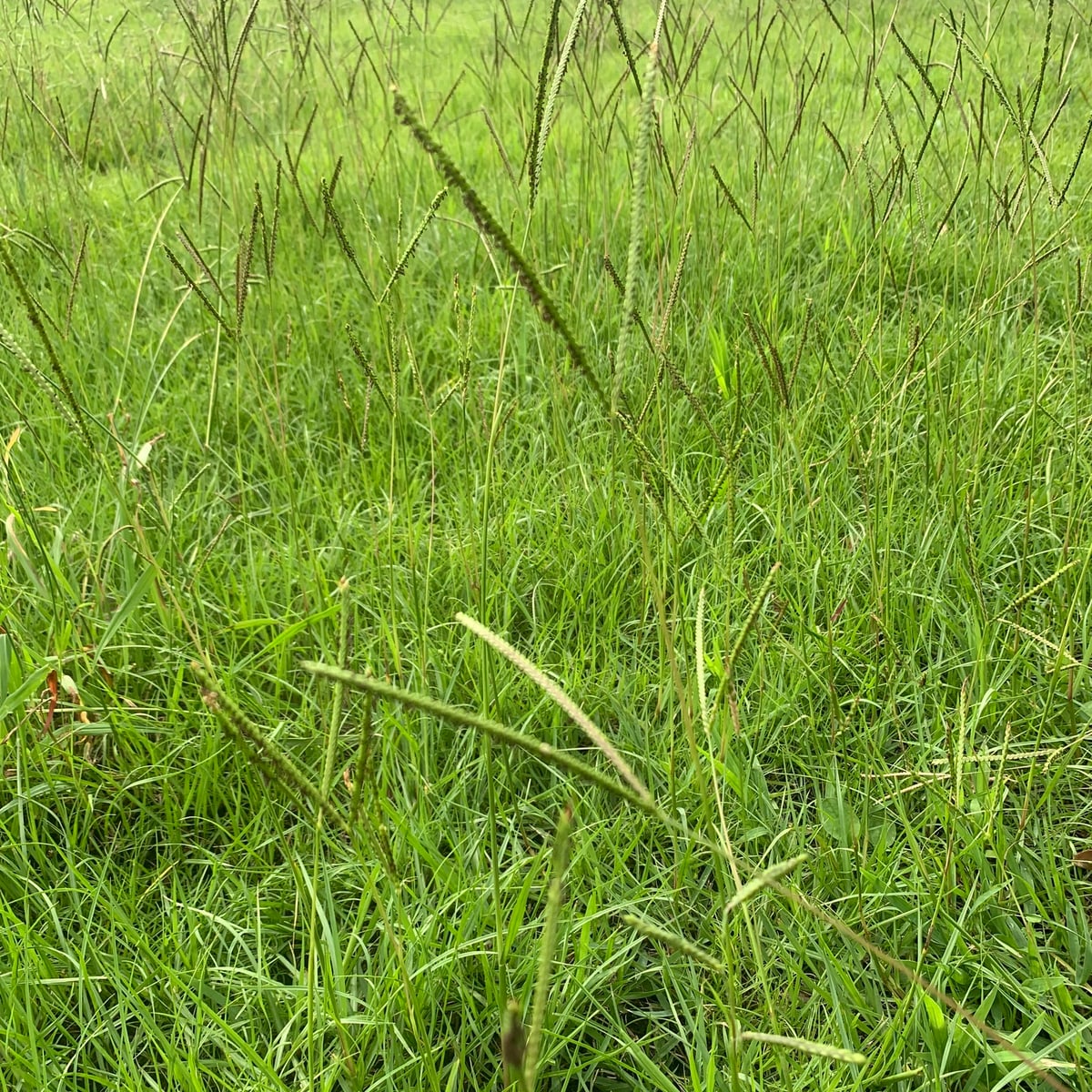
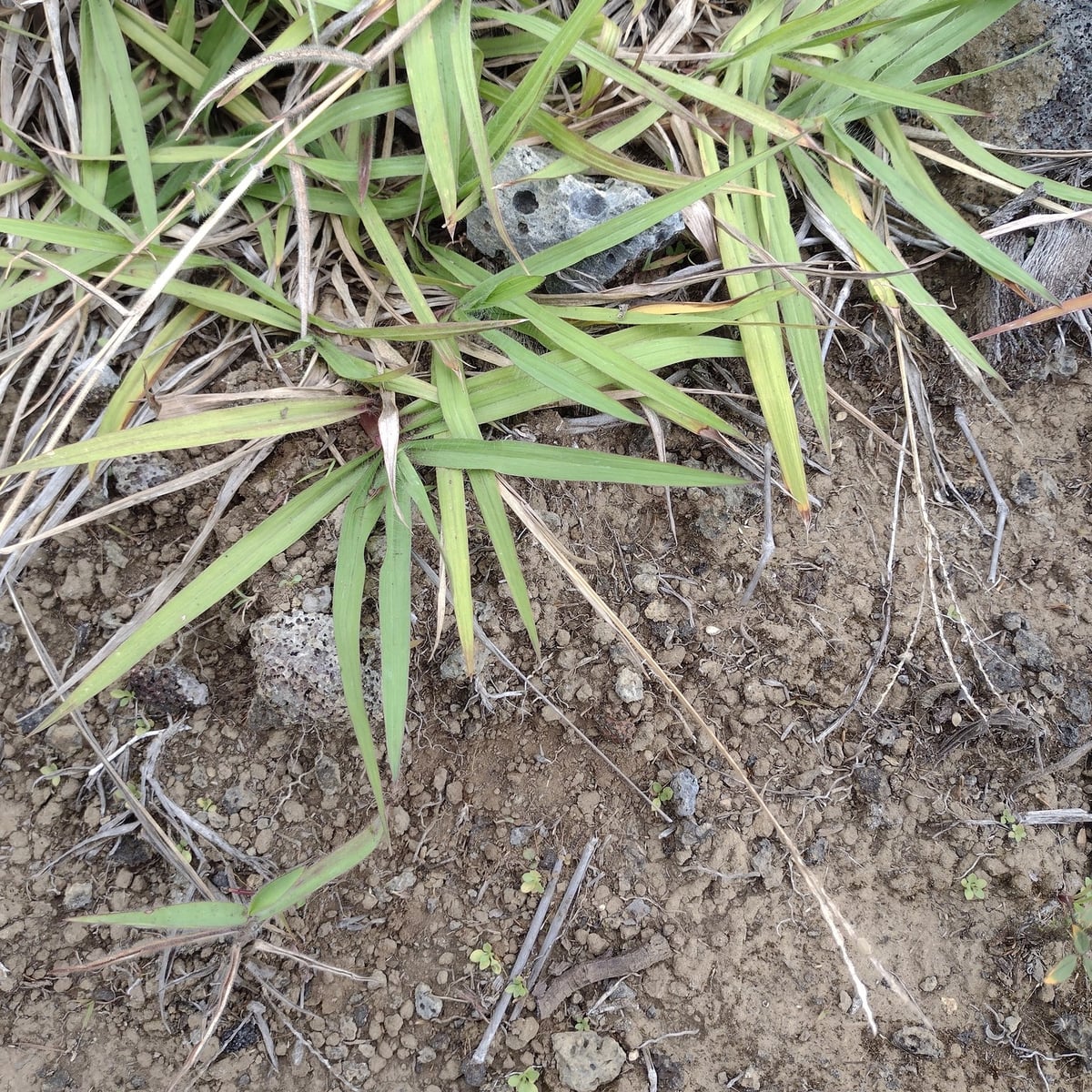
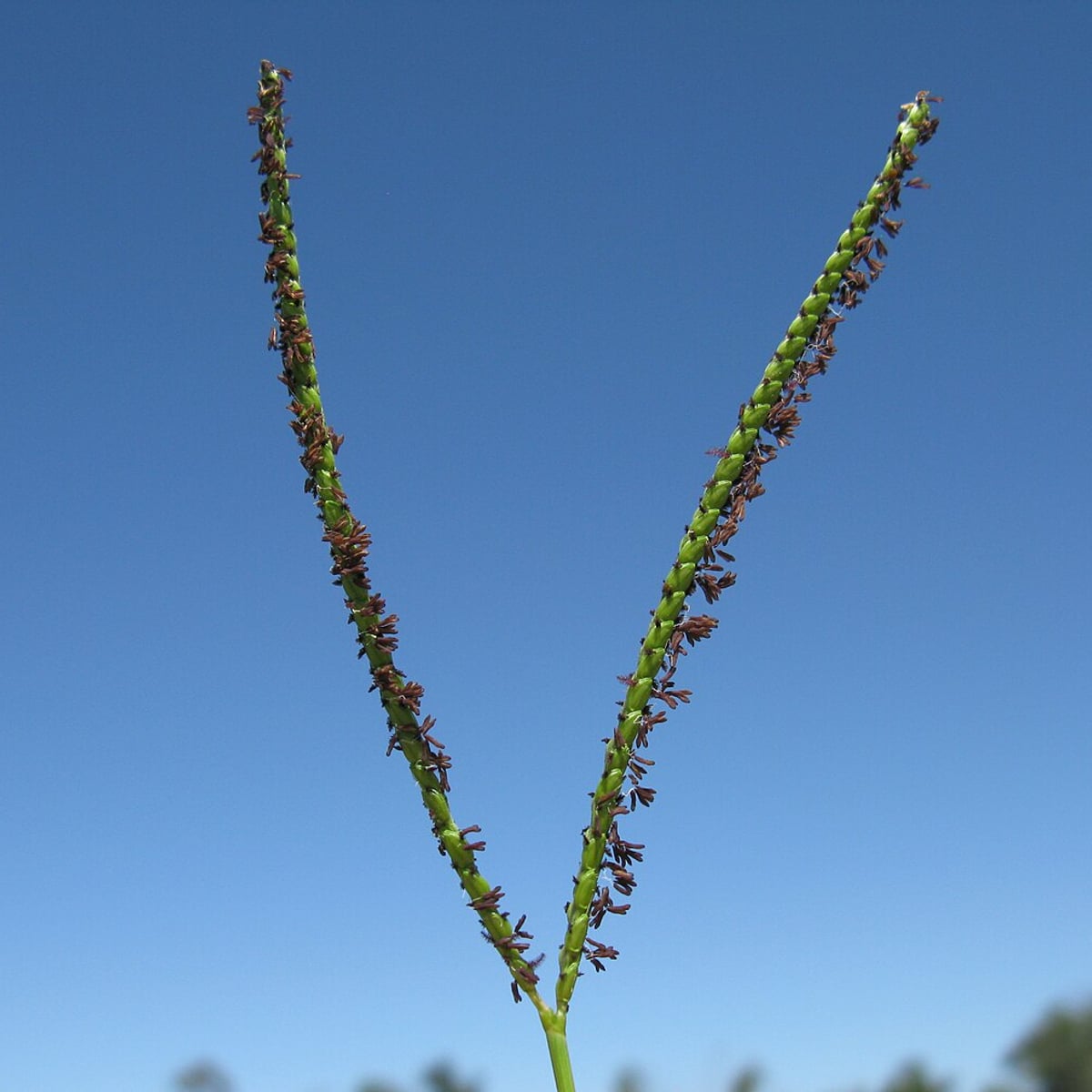
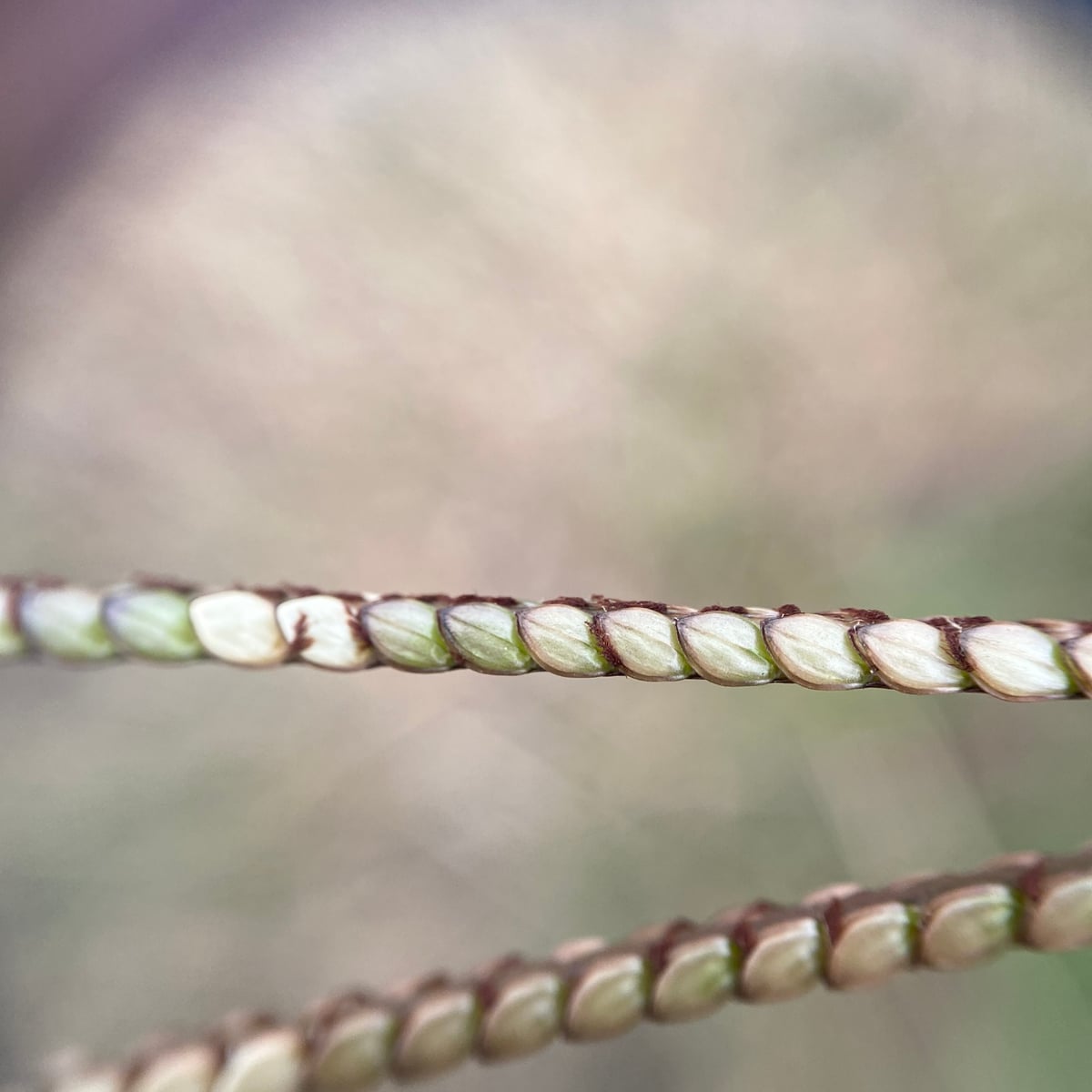
Bahia grass is one of the easiest lawn grasses to identify, mostly because of those unmistakable seed heads. But there are several other features that set it apart from the grasses it commonly grows alongside in the Southeast.
The Seed Head Test (The Easiest Way)
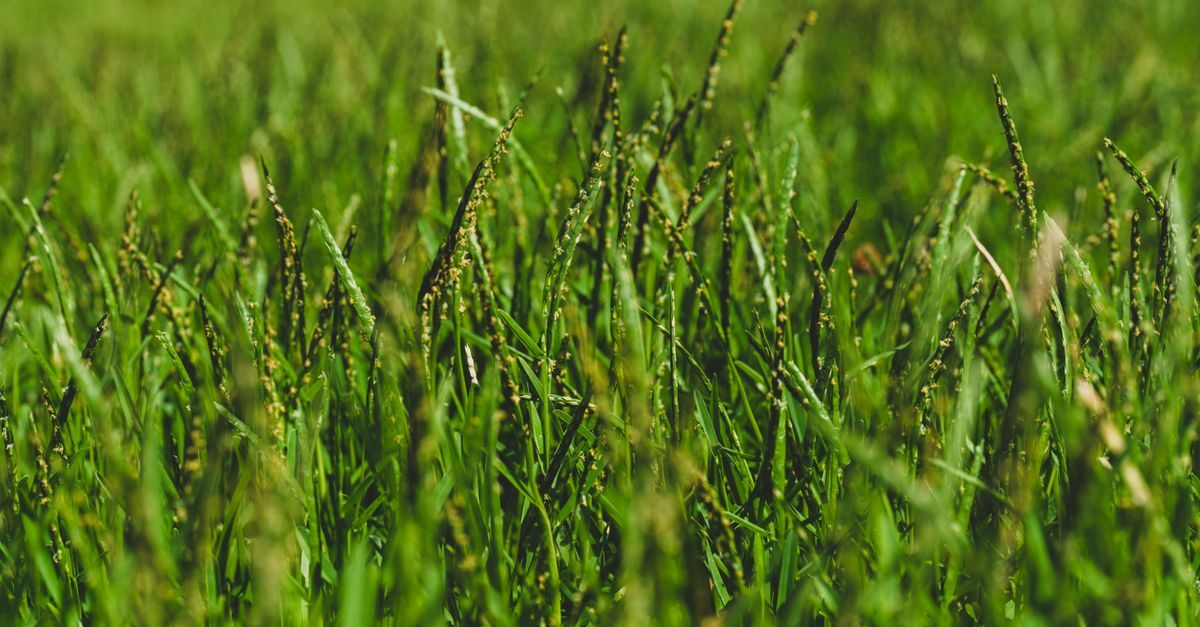
If your lawn produces tall, Y-shaped seed heads on long thin stems that shoot up just days after mowing, you almost certainly have Bahia grass. No other common lawn grass produces this distinctive forked seed head pattern. The stalks can reach 12-20 inches tall in just a few days, making your freshly mowed lawn look shaggy again almost immediately. It drives some homeowners crazy, but it's completely normal Bahia behavior.
The Blade Test
Pull a single blade and look at it closely. Bahia blades are wide (4-6mm), tough, and have a distinctive fold along the midrib that gives them a V-shape when viewed from the end. The blades feel rough and almost leathery compared to the softer blades of St. Augustine or the fine, wiry texture of Bermuda. If you can fold the blade without it tearing easily, that toughness is classic Bahia.
The Root Test
Try pulling up a small clump of grass. Bahia's root system is impressively deep and extensive. You'll feel significant resistance because those roots reach 8 inches or more into the soil. Compare this to St. Augustine, which has shallow stolons you can peel up relatively easily. Bahia holds on tight.
Other Visual Clues
- Growth pattern: Grows in clumps rather than forming a tight, even carpet. You can often see individual bunches, especially in younger lawns
- Color: Light green to gray-green, distinctly lighter than the dark green of Bermuda or the emerald green of St. Augustine
- Leaf sheath: Flattened and slightly hairy at the base, with a distinctive compressed appearance
- Stolon presence: Short, thick stolons at the base of the plant, but not the long runners you see with Bermuda or St. Augustine
Bahia vs. Common Look-alikes
Bahia is most often confused with Bermudagrass or Carpetgrass. The quick distinction: Bermuda has much finer blades and spreads aggressively through both stolons and rhizomes. Carpetgrass has wider, blunter leaf tips and its seed heads are branched differently (typically 2-3 spikes at the top rather than the clean Y-fork of Bahia). If you're seeing coarse, clumpy growth with Y-shaped seed heads in a sandy Florida lawn, it's Bahia. For a deeper side-by-side of the two most confused grasses, see our Bahia grass vs Bermuda grass comparison.
Not sure about your grass? Upload a photo to our free grass identifier for an instant analysis.
Best Zones & Climate
Bahia grass performs best in USDA Zones 8-10, concentrated in the Southeast coastal plain. This is a grass that evolved in South America's tropical and subtropical regions, so it loves heat and handles humidity without breaking a sweat.
Ideal Climate Conditions
- Air temperature: 80-95°F for peak growth. Bahia grows fastest during the hottest part of the year when many homeowners wish their grass would slow down
- Soil temperature: 65°F+ for active growth. Below this, Bahia starts shutting down and heading toward dormancy
- Heat tolerance: Excellent. One of the best warm-season grasses for sustained heat. Bahia barely flinches at 100°F days
- Cold tolerance: Moderate. Goes dormant below 55°F and can be damaged by hard freezes below 20°F. Extended cold snaps below 15°F can kill Bahia outright in exposed areas
- Humidity tolerance: Very good. Bahia handles the heavy humidity of coastal Florida and the Gulf Coast without the disease pressure that plagues some other grasses
Where Bahia Thrives
Central and north Florida are the heartland of Bahia. Drive through Gainesville, Ocala, or Jacksonville and you'll see Bahia everywhere, from residential lawns to highway medians to massive cattle pastures. It's also common in south Georgia, coastal Alabama, Mississippi, and southeast Texas. Its deep roots and drought tolerance make it especially well-suited for the sandy, well-drained soils common in these regions.
Bahia also performs well in the sandy soils of the coastal Carolinas, though it's less common there because homeowners in those areas tend to prefer Bermuda or Zoysia for appearance reasons.
Where Bahia Struggles
Shade
Shade is Bahia's number one weakness, and it's not even close. This grass needs full sun, which means 6-8 hours of direct sunlight minimum. In partial shade, Bahia thins out quickly, becomes leggy, and eventually gives way to weeds or bare soil. If your yard has significant tree cover, St. Augustine is a much better choice for those shaded areas. Many Florida homeowners run Bahia in the sunny front yard and St. Augustine under the oaks in the back. That combination works well.
Heavy Clay Soils
Bahia's deep root system is designed for sandy, well-drained conditions. In heavy clay soils, those roots can't penetrate effectively and the grass struggles with poor drainage. If your soil is heavy clay, Bermuda or Zoysia will outperform Bahia significantly.
Cold Climates
Don't try to grow Bahia north of Zone 8. The winters are simply too harsh. Even in the northern part of its range (north Florida, south Georgia), Bahia goes dormant for 3-4 months and can suffer damage during unusually cold winters. Pensacola varieties handle cold better than Argentine, but neither is truly cold-hardy.
Bahia and Rainfall
Bahia thrives in areas that receive 30-60 inches of annual rainfall, which conveniently describes most of Florida and the Gulf Coast. In these regions, supplemental irrigation is rarely needed. The combination of deep roots and regular afternoon thunderstorms during summer is exactly what Bahia wants.
Soil Preparation & pH
Bahia is remarkably adaptable to poor, sandy soils where most other grasses would struggle. In fact, it actually prefers these conditions. This is one of the few grasses where I tell homeowners: your "bad" soil might be exactly what this grass wants.
Get a Soil Test First
Even though Bahia is low-maintenance, a soil test through your local extension office is still worth the $15-25 investment. I know it's tempting to skip this step with a grass this forgiving, but a soil test will confirm your pH is in range and identify any major deficiencies. In sandy southeastern soils, iron deficiency is the most common issue, and it's easy to fix once you know about it.
Contact your county extension office (UF/IFAS in Florida is excellent) for a soil test kit. Collect samples from 6-8 spots across your lawn, mix them together, and send them in. You'll get back specific recommendations tailored to your soil. I've seen this simple step save homeowners hundreds of dollars in wasted fertilizer and amendments.
Ideal Soil Conditions for Bahia
- pH range: 5.0-6.5 (slightly acidic, which matches most southeastern soils naturally). Bahia is more acid-tolerant than most lawn grasses
- Soil type: Sandy, well-drained soils are ideal. This is where Bahia outperforms everything else on the market
- Fertility: Low to moderate. Bahia doesn't need rich soil and actually does well in nutrient-poor conditions that would starve other grasses
- Organic matter: Low is fine. Sandy southeastern soils typically have 1-2% organic matter, and Bahia handles that without complaint
- Drainage: Excellent drainage is essential. Bahia does not tolerate waterlogged soil or standing water
Adjusting Soil pH
If pH is too low (below 5.0): Apply pelletized lime at 25-50 lbs per 1,000 sq ft. In sandy soils, pH can drop below 5.0 over time, especially in areas with heavy rainfall that leaches calcium. A light lime application every 2-3 years usually keeps things in range. Apply in fall or winter and retest after 3 months.
If pH is too high (above 6.5): This is uncommon in sandy southeastern soils, but if it happens, elemental sulfur can lower pH. However, I'd first question whether you really have Bahia soil conditions, because alkaline sandy soil is unusual in Bahia country.
Soil Amendments: Less Is More
In most cases, Bahia needs little to no soil amendment. I see homeowners waste money trying to "improve" their sandy soil with heavy compost applications or topsoil, when Bahia is perfectly happy in that native sand. Save your money for other parts of the yard.
The one exception is iron. Sandy southeastern soils are frequently iron-deficient, and Bahia shows this as yellowing (chlorosis) even when nitrogen levels are adequate. Chelated iron supplements work better than trying to raise overall fertility. A foliar spray of chelated iron at 2 oz per 1,000 sq ft gives you greener color within days without the downsides of heavy fertilization.
Preparing Soil for a New Bahia Lawn
If you're starting from scratch, the preparation is straightforward compared to fussier grasses:
- Get a soil test and correct pH if needed
- Kill existing vegetation with glyphosate and wait 2 weeks for it to fully die
- Remove debris, rocks, and any construction rubble
- Lightly till the top 2-3 inches. You don't need to go deep with Bahia
- Grade the surface so water drains away from buildings and doesn't pool
- Roll lightly to create a firm seedbed without heavy compaction
- Apply starter fertilizer (something like 10-10-10 at 10 lbs per 1,000 sq ft) and seed or sod
Don't overthink the soil prep. Bahia's deep roots will find their way into even mediocre sandy soil. Getting good seed-to-soil contact matters more than building the perfect growing medium.
Recommended Products
- 1Check price
 Top pick
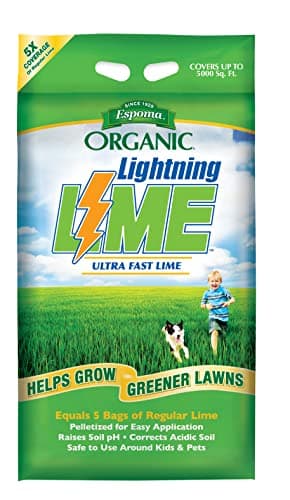
Espoma Organic Lightning Lime (Fast-Acting Pelletized Lime)
Fast-acting pelletized lime for low-pH lawns when a soil test confirms you need to raise pH before fertilizing harder. Covers up to 5,000 sq ft.
- 2Check price
 Best value
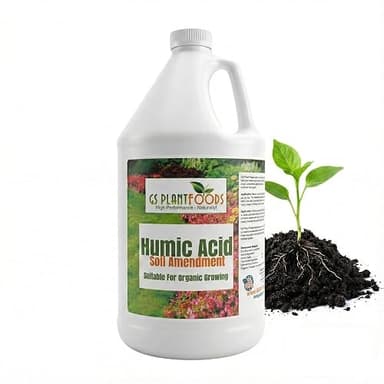
GS Plant Foods Liquid Humic Acid
Leonardite-derived humic acid that improves soil structure and nutrient availability. OMRI listed, 1 gallon.
As an Amazon Associate we earn from qualifying purchases.
Fertilizer Program
Bahia is one of the lightest feeders among warm-season grasses, and this is where I see homeowners make the most expensive mistake: they treat Bahia like Bermuda and dump nitrogen on it three or four times a year. The result? Explosive seed head production, a lawn that needs mowing twice a week, increased thatch, and no real improvement in appearance. More fertilizer on Bahia creates more problems, not a better lawn.
Annual Fertilizer Requirements
- Nitrogen: 1-2 lbs per 1,000 sq ft per year. That's it. Compare that to Bermuda's 3-5 lbs and you can see why Bahia is so much cheaper to maintain
- Phosphorus: Based on soil test only. Most Florida soils already have adequate phosphorus, and in fact, Florida law restricts phosphorus application in many counties unless a soil test shows a deficiency
- Potassium: 1-2 lbs per 1,000 sq ft per year. This is important in sandy soils because potassium leaches out quickly with rainfall. Potassium strengthens cell walls and improves drought tolerance, which plays right into Bahia's strengths
- Iron: Supplemental iron helps maintain color without pushing excessive growth. This is your secret weapon for a greener Bahia without the downsides of heavy nitrogen
Seasonal Fertilizer Schedule
Spring (April to May, After Green-up)
Wait until your Bahia is fully green and actively growing before applying anything. Fertilizing dormant or semi-dormant Bahia just feeds weeds. Apply 0.5-1 lb N per 1,000 sq ft of slow-release fertilizer. Choose a formula with equal or higher potassium than nitrogen, like 15-0-15 or 16-4-8. That potassium is critical for sandy soils.
Timing tip: in north Florida, green-up typically happens in mid to late April. In central Florida, it's late March to early April. In south Florida, Bahia may never fully go dormant. Wait until you see consistent new growth before feeding.
Summer (July, Optional)
This application is optional, and I mean truly optional. If your lawn looks thin, pale, or stressed, apply 0.5 lb N per 1,000 sq ft of slow-release fertilizer. If it looks reasonably green and healthy, skip this entirely. Every pound of nitrogen you add in summer translates directly to more seed heads and more time behind the mower. Ask yourself: is a slightly greener lawn worth mowing twice as often? For most people, the answer is no.
Fall (September to October, Optional)
A light potassium application (0.5 lb K per 1,000 sq ft) in early fall can help Bahia build reserves before dormancy. Use something like 0-0-16 or a similar low-nitrogen, high-potassium product. This is not essential, but it can improve winter hardiness in the northern part of Bahia's range.
Winter
Do not fertilize. Period. Bahia is dormant or nearly dormant, and any nitrogen applied now feeds weeds, not your lawn. This is one of the most common mistakes I see. Homeowners notice their lawn is brown in January and think fertilizer will help. It won't. The grass is sleeping. Let it sleep.
Iron for Color Without the Headaches
If you want your Bahia to look greener without the downsides of heavy nitrogen (more mowing, more seed heads, more thatch), apply chelated iron as a foliar spray. Iron deepens the green color within a few days without pushing vegetative growth. Use ferrous sulfate at 2 oz per gallon per 1,000 sq ft, or a commercial chelated iron product following label rates. Apply every 4-6 weeks during the growing season for consistent color improvement.
Iron is especially useful in sandy soils where iron deficiency causes yellowing even when nitrogen levels are fine. If your Bahia is yellow-green despite adequate fertilization, iron deficiency is almost certainly the culprit.
Fertilizer Mistakes to Avoid
- "If some is good, more is better." This is never true with Bahia. Over-fertilization is the number one management mistake, leading to excessive growth, seed heads, and thatch with no meaningful improvement in lawn quality
- Using high-nitrogen products designed for Bermuda. That 30-0-0 bag might be cheap, but it's the wrong tool for Bahia. You want balanced or potassium-heavy formulas
- Applying fertilizer before green-up. The grass can't use nutrients when it's dormant. You're just feeding crabgrass and other weeds
- Ignoring potassium. In sandy soils, potassium is the nutrient most likely to be deficient, and it's critical for the drought tolerance that makes Bahia so valuable
Recommended Products
- 1Check price
 Top pick
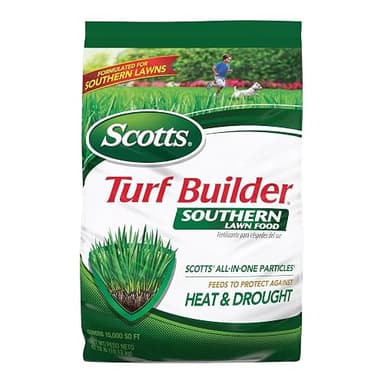
Scotts Turf Builder Southern Lawn Food
Warm-season fertilizer built for southern lawns, especially when you want a homeowner-friendly granular option.
- 2Check price
 Best value
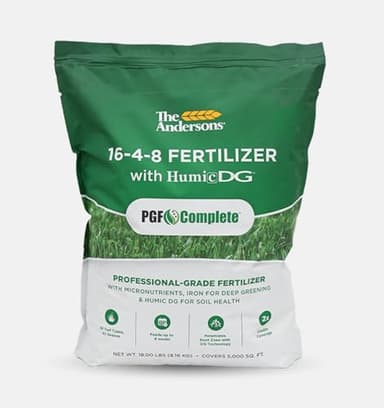
The Andersons PGF Complete 16-4-8
Balanced slow-release fertilizer for established lawns that need steady feeding without a quick flush of top growth.
As an Amazon Associate we earn from qualifying purchases.
Month-by-Month Care Calendar
Bahia has a simple annual rhythm: dormancy in winter, a burst of growth in spring, peak activity (and peak seed heads) in summer, and a gradual wind-down in fall. Your care calendar should match this rhythm, and honestly, most months require very little action. That's the beauty of this grass.
Winter (December to February)
Your Bahia is dormant and brown. This is completely normal and not a reason to do anything drastic.
- No fertilizer, no mowing, minimal activity. This is your off-season
- If you want winter color, you can overseed with annual ryegrass at 5-10 lbs per 1,000 sq ft. Be aware that ryegrass needs water and will compete with Bahia during spring transition. Many homeowners try this once and decide the brown isn't so bad after all
- Good time to sharpen mower blades (Bahia's tough blades dull them faster than most grasses), service equipment, and plan spring purchases
- If you have a soil test that showed low pH, apply lime during winter. Dormant turf tolerates applications better, and winter rains work the lime into the soil
Early Spring (March to April)
- Watch for green-up as soil warms above 65°F. This is your signal that the growing season is starting
- Apply pre-emergent herbicide for crabgrass when soil temp reaches 55°F for 3 consecutive days. In most of Florida, this is late February to mid-March. Timing is everything with pre-emergents
- Begin mowing once active growth starts, but don't rush it. Wait until the grass is clearly growing, not just showing a few green blades
- Hold off on fertilizer until the lawn is fully green. Feeding semi-dormant Bahia just helps the weeds
- Inspect for winter damage, especially in north Florida where hard freezes may have thinned the turf
Late Spring (May to June)
- First fertilizer application once the lawn is fully green (0.5-1 lb N per 1,000 sq ft, slow-release with potassium)
- Regular mowing at 3-4 inches. The seed heads start appearing aggressively now. This is normal Bahia behavior
- Start irrigation if rainfall drops below 1 inch per week, but don't overwater. Bahia's deep roots can access moisture other grasses can't reach
- Spot-treat broadleaf weeds with selective herbicide while they're actively growing and temperatures are between 60-85°F
- This is the ideal window for seeding new areas or overseeding thin spots
Summer (July to August)
This is Bahia's peak season. It's growing fast, producing seed heads constantly, and generally doing its thing.
- Peak growth and peak seed head production. Expect to mow every 7-10 days, primarily to control those seed stalks
- Optional light fertilizer (0.5 lb N per 1,000 sq ft) only if the lawn looks thin or pale. If it looks fine, skip it
- Water only if drought-stressed. In a normal Florida summer with regular afternoon thunderstorms, supplemental irrigation is usually unnecessary
- Watch for mole crickets, especially in June and July when nymphs are active. Do the soap flush test if you suspect them
- Keep mower blades sharp. Bahia's tough, coarse blades dull blades faster than softer grasses, and dull cuts leave ragged brown tips
Early Fall (September to October)
- Growth slows noticeably and seed head production decreases. You'll start getting some relief from the constant mowing
- Reduce mowing frequency as growth tapers off
- Apply fall pre-emergent for winter annual weeds (like annual bluegrass and henbit) in September
- Optional potassium application to build winter hardiness
- No nitrogen fertilizer. You want the grass to naturally slow down and harden off for winter
Late Fall (November)
- Final mow before dormancy. Set the height at your normal 3-4 inches
- Bahia turns brown as temps drop below 55°F consistently
- Remove fallen leaves and debris so they don't smother the turf going into winter
- Winterize irrigation systems in north Florida where freezes are expected
- Accept the brown. It's temporary. Your Bahia will be back in spring
Mowing Guide
Mowing is your biggest time investment with Bahia, and it's worth being honest about why: those constant seed heads. The grass itself doesn't grow especially fast compared to Bermuda or St. Augustine, but those seed stalks shoot up every few days during summer and make your freshly mowed lawn look shaggy again almost immediately. Understanding how to mow Bahia efficiently can save you hours of frustration.
Optimal Mowing Height
- Recommended range: 3-4 inches
- Sweet spot: 3.5 inches for most lawns. This height gives you good weed suppression, encourages deep rooting, and keeps the lawn looking neat between mowings
- Never mow below 3 inches. Cutting Bahia too short stresses the plant, exposes soil to sunlight (encouraging weed germination), and reduces the deep root system that makes Bahia so drought-tolerant
Why Height Matters More Than You Think
There's a direct relationship between mowing height and root depth in Bahia. Mow at 4 inches and those roots reach their full 8+ inch potential. Mow at 2 inches and you might cut root depth in half. Since drought tolerance is the whole reason most people choose Bahia, scalping it short defeats the purpose. I've seen homeowners cut their Bahia at 2 inches "because that's how my Bermuda neighbor does it" and then wonder why their grass dies in a dry spell. Keep it tall.
Mowing Frequency
- Peak summer (June to August): Every 7-10 days, mainly to remove seed heads. During wet summers, you might need to mow every 5-7 days
- Spring and fall: Every 10-14 days as growth is slower
- Dormant season: Not needed. The grass isn't growing
The Seed Head Reality
Let me be straight with you: the seed heads are going to come back no matter what you do. Mowing removes them temporarily, but new stalks emerge within days. No herbicide, growth regulator, or management practice will stop them permanently during summer. Some varieties (like Argentine) produce fewer seed heads than others (like Pensacola), but all Bahia produces them.
The best approach is to accept seed heads as part of the Bahia experience and mow consistently to keep them in check. If the constant seed heads really bother you, Bahia might not be the right grass for your expectations.
Blade Sharpness: Critical for Bahia
Keep your mower blades extra sharp. Bahia's tough, coarse blades are significantly harder to cut cleanly than finer grasses like Bermuda or Zoysia. A dull blade tears Bahia instead of cutting it, leaving ragged, brown tips that look bad and create entry points for disease. Sharpen your blades every 15-20 hours of mowing. With weekly summer mowing, that means sharpening roughly every month.
Buy a spare blade so you can swap instantly and sharpen the dull one at your convenience. A fresh sharp blade makes a visible difference on Bahia within one mowing.
Mower Selection
A rotary mower with sharp blades is the right tool for Bahia. Reel mowers (the cylinder-type mowers used on Bermuda and Zoysia lawns) struggle badly with Bahia's tough, wide blades. The reel can't make a clean cut on grass this coarse, and you'll end up with torn, bruised blades. Stick with a standard rotary mower with a good sharp blade.
For large Bahia lawns (which are common, since Bahia is popular on bigger properties), a riding mower or zero-turn saves significant time. At 7-10 day mowing intervals on a half-acre lot, a walk-behind mower can eat up your entire Saturday morning.
The 1/3 Rule
Never remove more than one-third of the grass blade in a single mowing. If your target height is 3.5 inches, mow when the grass reaches about 5 inches. This is easy to follow during normal growth, but after a rainy week in July when the seed heads have shot up 12 inches, you might need to make two passes at different heights to bring things back in line without shocking the grass.
Watering Schedule
Bahia's deep root system (8+ inches) makes it one of the most drought-tolerant lawn grasses available, and this is where it really earns its keep. In most years across Florida and the Gulf Coast, rainfall alone is sufficient to keep a Bahia lawn alive and reasonably green. I've seen Bahia lawns survive entire summers with zero supplemental irrigation while neighboring St. Augustine lawns turned to crispy brown mats.
Weekly Water Requirements
- Spring: 0.75-1 inch per week (including rainfall)
- Summer: 1 inch per week (including rainfall). In a typical Florida summer with regular afternoon thunderstorms, you may not need to irrigate at all
- Fall: 0.75 inch per week (including rainfall)
- Winter: None. The grass is dormant
The "Water Only When Needed" Strategy
The best watering strategy for Bahia is to not water at all unless you see signs of drought stress. This might sound like neglect, but it's actually the ideal approach for this grass. Bahia's deep roots access moisture well below the soil surface where shallow-rooted grasses can't reach. Frequent watering actually works against you by encouraging shallow root growth and promoting disease.
Signs of Drought Stress
- Color shift: Healthy Bahia is light green. Stressed Bahia turns a dull gray-green or bluish color
- Wilting: Blades fold lengthwise to reduce sun exposure. Walk across the lawn and your footprints stay visible because the grass doesn't spring back
- Slow recovery after mowing: The lawn looks beaten down for several days after cutting instead of bouncing back quickly
How to Water When You Do Water
When Bahia does need irrigation, water deeply and infrequently. You want to wet the soil to at least 6-8 inches deep to reach the full root zone. A shallow 10-minute sprinkle does more harm than good because it encourages roots to stay near the surface instead of growing deep.
- Frequency: Once per week is typically sufficient, even in summer. In sandy soil, you might need to split this into two sessions since sand drains so fast
- Amount per session: 0.5-0.75 inches, enough to wet the soil 6+ inches deep
- Time of day: Early morning (before 10 AM) to minimize evaporation and let the blades dry before evening. Evening watering promotes fungal disease
The Sandy Soil Factor
Bahia typically grows in sandy soil, and sand drains fast. Really fast. Water passes through sandy soil roughly four times faster than through clay. This means the 0.75 inches of water you applied might drain below the root zone within hours. If you're on very deep sand, consider splitting your weekly irrigation into two sessions of 0.4 inches each, spaced 3-4 days apart, to keep moisture available longer.
Drought Tolerance: Bahia's Greatest Strength
Bahia is one of the toughest grasses when it comes to drought, and this isn't just marketing. Its deep roots access moisture that shallow-rooted grasses like St. Augustine simply can't reach. During extended dry periods, Bahia will go semi-dormant and turn brown, but it recovers quickly once rain returns. A healthy Bahia lawn can survive 4-6 weeks of drought without permanent damage.
I've seen Bahia lawns in central Florida make it through the occasional dry spring (when the summer thunderstorms haven't started yet) with zero irrigation and bounce back fully within two weeks of the first rains. Compare that to St. Augustine, which can suffer permanent loss after just 2-3 weeks without water.
Common Watering Mistakes
- Watering on a fixed daily schedule. This is the worst thing you can do for Bahia. Daily watering trains roots to stay shallow, promotes fungal disease, and wastes money. Many Florida water management districts restrict watering to 1-2 days per week anyway
- Light, frequent watering. Running sprinklers for 10 minutes every day keeps only the top inch of soil moist. Bahia's roots are 8 inches deep. You're not reaching them
- Watering a dormant lawn. If Bahia goes dormant during a drought, watering it lightly just encourages it to break dormancy and then go dormant again when you stop. Either commit to consistent watering all season, or let it go dormant and wait for rain
Seeding & Establishment
Bahia is most commonly established from seed, which is one of its major advantages over grasses like St. Augustine (sod only) or improved Bermuda varieties (also sod or plugs). Good quality Bahia seed is widely available and affordable, making it a practical choice for large areas where sod would be prohibitively expensive.
Choosing Your Variety
The two most common Bahia varieties are Argentine and Pensacola, and choosing between them matters more than most people realize.
Argentine Bahia
- Darker green color with wider, denser blades
- Fewer seed heads than Pensacola (though still plenty)
- Better overall appearance for a residential lawn
- Slightly less cold-hardy than Pensacola
- More expensive seed ($3-5 per lb vs. $1-2 for Pensacola)
- My recommendation for most homeowners who want the best-looking Bahia lawn
Pensacola Bahia
- Narrower blades, lighter green color
- More cold-hardy (better choice for north Florida and south Georgia)
- More seed head production than Argentine
- Cheaper seed, making it economical for large areas and pastures
- Coarser appearance overall
- Better choice for large properties where appearance is secondary to coverage and cost
Best Time to Seed
Late spring to early summer (May to July) when soil temperatures are consistently above 65°F. Bahia seed needs warm soil and consistent moisture to germinate. Don't rush it. Seeding too early when soil is still cool results in poor germination and wasted seed. Check your actual soil temperature rather than guessing based on air temperature.
In north Florida, mid-May is usually safe. In central Florida, late April can work. The key is sustained warm soil, not just a few warm days.
Seeding Rates
- New lawn: 5-10 lbs per 1,000 sq ft. Yes, this is heavy compared to other grasses. Bahia has lower germination rates than Bermuda or ryegrass, and since it's a bunch-type grass, you need more plants per area to achieve good coverage
- Overseeding thin areas: 3-5 lbs per 1,000 sq ft
- Use scarified seed: Buy seed that's been mechanically scarified (the hard seed coat has been scratched or treated). Scarified seed germinates 30-50% faster than untreated seed. It costs a little more but it's absolutely worth it
Germination Timeline
Bahia germinates in 21-35 days, which is slow compared to most lawn grasses. Bermuda sprouts in 7-14 days, ryegrass in 5-7. With Bahia, you need patience. After 2 weeks with no visible growth, it's tempting to think the seed failed, but it's almost certainly still working below the surface. Scarified seed can cut germination time to 14-21 days.
Full coverage takes 1-2 growing seasons since Bahia is a bunch-type grass that fills in gradually. The first year, your lawn will look spotty with visible gaps between plants. By the second summer, those gaps will be mostly filled in through natural spreading and reseeding.
Step-by-Step Establishment Process
- Prepare the soil: Remove debris, kill existing vegetation, and lightly till the top 2-3 inches. Bahia doesn't need deep tilling
- Grade for drainage: Ensure water flows away from buildings and doesn't pool anywhere
- Apply starter fertilizer: Use a balanced formula like 10-10-10 at 10 lbs per 1,000 sq ft, working it into the top inch of soil
- Spread seed with a broadcast spreader: Make two perpendicular passes at half the total rate for even coverage
- Lightly rake to press seed into soil: Bahia seed needs soil contact but should not be buried more than 1/4 inch deep. Rolling with a light lawn roller also works well
- Water immediately and keep soil consistently moist: Light watering 2-3 times daily until germination. The top inch of soil should stay moist but not soaked
- Reduce watering frequency after germination: Transition to deeper, less frequent watering over 2-3 weeks to encourage deep root development
- First mow when grass reaches 4-5 inches: Cut to 3.5 inches with a sharp blade. Be gentle. New Bahia plants are not firmly anchored yet
Sod as an Alternative
Bahia sod is available and gives you instant coverage, but it's less commonly used than seed for a few reasons. Bahia sod is more expensive per square foot than Bermuda or St. Augustine sod, and since most people choose Bahia specifically because it's economical, paying premium sod prices somewhat defeats the purpose. However, sod makes sense for small areas, slopes where seed would wash away, or situations where you need immediate erosion control.
If you go with sod, install it on well-prepared soil, press the seams tightly together, and water heavily for the first 2 weeks until roots establish. Bahia sod roots in faster than most people expect, usually within 2-3 weeks.
Recommended Products
- 1Check price
 Top pick
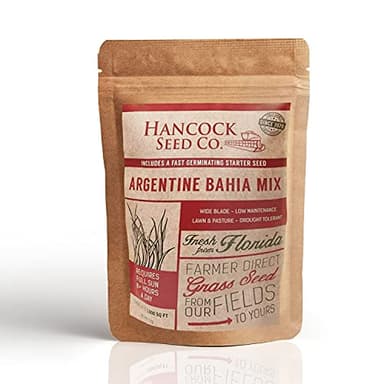
Hancock Argentine Bahia Grass Seed (10 lb)
Finer-textured Argentine bahia for low-input, drought-tolerant southern lawns on sandy soils; 10 lb full-lawn bag.
As an Amazon Associate we earn from qualifying purchases.
Weed Control
Bahia's open, bunch-type growth means it's less effective at crowding out weeds than dense-growing grasses like Bermuda or Zoysia. There are natural gaps between Bahia plants where weed seeds can find sunlight and germinate. Good weed control practices are important for maintaining a clean-looking Bahia lawn, but the good news is that Bahia tolerates most common herbicides well, giving you plenty of options.
Pre-Emergent Herbicides (Prevention)
Pre-emergents are your most important weed control tool. They create a chemical barrier in the top layer of soil that prevents weed seeds from germinating. Apply them before the weeds appear, because once you can see a weed, pre-emergent is too late for that plant.
- Spring application: Apply when soil temp reaches 55°F for 3 consecutive days. This is your crabgrass prevention window. In most of Florida, that's February to March. Up in north Florida and south Georgia, it's mid-March to early April
- Fall application: Apply in September for winter annual weeds like annual bluegrass (Poa annua), henbit, and chickweed
- Product choices: Prodiamine (Barricade) and pendimethalin (Pendulum) are both safe on Bahia and effective against a wide range of weeds
Atrazine: The Bahia Herbicide
Atrazine deserves its own section because it's the most commonly used herbicide on Bahia lawns in Florida. It provides both pre-emergent and post-emergent control of many common weeds, and Bahia tolerates it very well. However, there are important restrictions to know about.
- Atrazine is restricted or banned in some Florida counties and near water bodies. Check your local regulations before buying
- Do not apply atrazine when air temperatures exceed 85°F. High-temperature applications can damage even tolerant grasses
- Maximum of 2 applications per year
- Do not apply to newly seeded Bahia. Wait until the lawn has been mowed at least twice
- Atrazine is excellent for controlling doveweed, a common and frustrating weed in Bahia lawns
Post-Emergent Herbicides (Treatment)
For weeds that are already growing, Bahia tolerates most selective herbicides well. This is an advantage over St. Augustine, which is sensitive to many common products.
- Broadleaf weeds (dandelions, clover, dollarweed): Standard three-way broadleaf herbicides containing 2,4-D, dicamba, and MCPP work well. Apply when weeds are actively growing and temperatures are between 60-85°F
- Grassy weeds (tropical signalgrass, crabgrass): Sethoxydim targets grassy weeds without harming Bahia. This is especially important for tropical signalgrass, which is one of the most common and persistent weeds in Bahia lawns
- Spot-treat when possible: Rather than blanket-spraying, target individual weeds or weed patches. Less chemical, less cost, same results
Common Bahia Weeds and How to Handle Them
- Crabgrass: Spring pre-emergent is essential. If it breaks through, hand-pull young plants or treat with quinclorac
- Tropical signalgrass: One of the most common weeds in Florida Bahia lawns. A spreading grass that looks similar to crabgrass but persists year-round. Treat with sethoxydim when actively growing
- Doveweed: A fleshy-leaved weed that's prevalent in wet, poorly drained areas. Improve drainage first, then treat with atrazine (where legal) or a combination product containing penoxsulam
- Dollarweed (pennywort): Round-leaved weed common in overwatered or low-lying areas. Reduce irrigation and treat with a broadleaf herbicide. If you see lots of dollarweed, you're probably watering too much
- Sedges (nutsedge): Yellow and purple nutsedge are common in wet areas. These are not true grasses and require specific herbicides like halosulfuron (SedgeHammer) or sulfentrazone
Cultural Weed Control
The best long-term weed strategy for Bahia is maintaining healthy turf that competes effectively. Mow at the proper height (3-4 inches) to shade the soil surface, don't overwater (wet conditions favor many weeds), and fertilize appropriately to keep the grass vigorous without overstimulating it. A thick, well-maintained Bahia lawn will always have fewer weeds than a thin, stressed one.
Recommended Products
- 1Check price
 Top pick
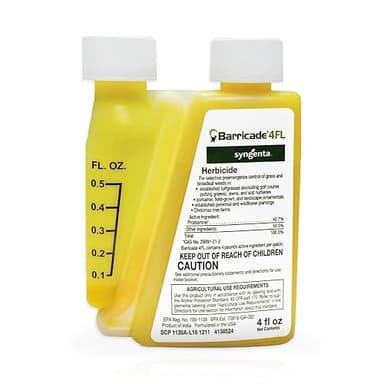
Barricade 4FL Herbicide Concentrate (4 Fl Oz)
Prodiamine pre-emergent concentrate for established lawns when the guide specifically calls for long-residual crabgrass prevention. The 4 oz bottle treats roughly half an acre at the standard label rate.
- 2Check price
 Best value
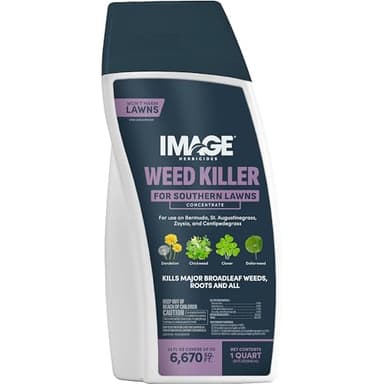
IMAGE Southern Lawn Weed Killer
Broadleaf weed killer labeled for several southern grasses, including St. Augustine, centipede, bahiagrass, buffalograss, and zoysia.
As an Amazon Associate we earn from qualifying purchases.
Pest & Disease Management
Bahia is generally a tough, resilient grass that shrugs off most pest and disease problems. Its deep root system and open growth habit make it less susceptible to many issues that plague denser, more intensively managed grasses. But there is one major pest you absolutely need to know about, and it can devastate a Bahia lawn if you're not watching for it.
The Big One: Mole Crickets
Mole crickets are the most significant pest for Bahiagrass, and I'm not exaggerating when I say they can destroy large sections of lawn in a single season. These large, burrowing insects (they look like a cricket crossed with a mole, which is about as ugly as it sounds) tunnel through the soil, uprooting grass and feeding on roots. The damage appears as irregular dead patches with spongy, tunneled soil underneath. If you push your finger into the soil in a damaged area, it feels hollow and spongy from all the tunneling.
How to Detect Mole Crickets
The soap flush test is the standard detection method, and it's simple. Mix 2 tablespoons of liquid dish soap in a gallon of water and pour it over a 4 square foot area where you suspect activity (the edges of damaged patches are the best spots to test). Mole crickets will come to the surface within 2-3 minutes if they're present. Do this test in the evening when mole crickets are more active.
When to Treat
Timing is critical with mole crickets. The best treatment window is June to early July, when the nymphs (babies) are small and close to the soil surface. Small nymphs are much easier to kill than the large, deep-burrowing adults. If you wait until fall when the adults are fully grown, treatment is much less effective because they're deeper in the soil and more resistant to insecticides.
Treatment Options
- Bifenthrin granules: The most common and effective treatment. Apply in June when nymphs are small, water in with 0.5 inches of irrigation to move the product into the soil where the crickets are
- Nematodes (Steinernema scapterisci): A biological control option. These microscopic worms infect and kill mole crickets naturally. Apply in spring or fall. They establish in the soil and provide ongoing control. This is the eco-friendly option, though results are slower than chemical treatment
- Bait products: Mole cricket baits work well in spring and fall when adults are actively foraging on the surface at night. Apply in the evening and don't irrigate after application
Common Diseases
Bahia has fewer disease problems than most warm-season grasses, thanks partly to its open growth habit that allows good air circulation. But a few issues do show up from time to time.
Dollar Spot
Small circular patches of straw-colored turf, roughly the size of a silver dollar or slightly larger. Dollar spot is most common in under-fertilized lawns during warm, humid weather with heavy morning dew. The diagnosis is usually simple: if your Bahia has dollar spot, it's probably hungry. A light fertilizer application (0.5 lb N per 1,000 sq ft) usually resolves it within a few weeks without any need for fungicide.
Helminthosporium Leaf Spot
Brown spots and lesions on individual leaf blades, most common during extended humid weather. The spots are small, dark brown, and can merge together if the disease progresses. Improve air circulation by removing any low-hanging branches, avoid evening watering, and mow at the proper height. Fungicide is only warranted for severe, persistent cases.
Large Patch (Rhizoctonia)
Circular patches of thinning, yellowish-brown turf, typically appearing in fall as the grass enters dormancy or in spring during green-up. The borders of the patches often have an orange-brown color. This disease is encouraged by excess nitrogen in fall, poor drainage, and nighttime irrigation. Prevention is straightforward: don't fertilize with nitrogen after September, improve drainage, and water only in the morning.
Other Pests
Sod Webworms
Small caterpillars that chew grass blades near the soil surface, creating irregular thinning. The telltale sign is small buff-colored moths flying in a zigzag pattern over your lawn at dusk. These moths are laying eggs that hatch into the damaging caterpillars. If damage is noticeable, treat with bifenthrin applied in the evening when caterpillars are actively feeding. Most Bahia lawns tolerate minor webworm damage without treatment.
White Grubs
The larvae of June bugs and other beetles feed on grass roots underground. Damage appears as brown patches that peel up like loose carpet because the roots have been eaten. Grubs are less common in Bahia than in other grasses thanks to Bahia's deep, extensive root system, which provides redundancy even when some roots are damaged. But if you're finding more than 6-8 grubs per square foot, apply a preventive grub control product (chlorantraniliprole) in late spring.
Fire Ants
Not a turf pest per se, but fire ant mounds in Bahia lawns are extremely common across the Southeast. The ants don't damage the grass directly, but the mounds are unsightly and the ants are a genuine safety hazard. Treat individual mounds with a contact insecticide or bait, or use a broadcast bait product across the entire lawn in spring and fall for ongoing control.
Aeration & Dethatching
Here's some good news for Bahia owners: aeration and dethatching are rarely major concerns. Bahia's bunch-type growth, preference for sandy soil, and relatively low maintenance requirements all work in your favor here. But it's still worth understanding when these services might be needed and how to do them properly.
Core Aeration
Does Bahia Need Aeration?
In most cases, no. Bahia typically grows in sandy, well-drained soils that don't compact easily. Sand particles are large and angular, creating natural pore space that resists compaction. Compare this to clay soils, where the tiny, flat particles pack together tightly under any traffic or pressure. If your Bahia is growing in its preferred sandy soil, routine aeration is unnecessary.
However, there are situations where even sandy soil compacts enough to warrant aeration:
- High-traffic areas (walkways, play areas, paths the dog runs every day)
- Areas where heavy equipment has driven (after construction or tree work)
- Lawns built on fill dirt that was compacted during construction
- If you notice water pooling or running off instead of soaking in, which is unusual for sandy soil and suggests compaction
When to Aerate
- Best time: Late spring to early summer (May to June) during active growth. The grass needs to be growing vigorously to recover from aeration quickly
- Frequency: Every 1-2 years only if compaction is an issue. Many Bahia lawns go years without needing aeration
- Never aerate dormant Bahia. The grass can't repair the disruption when it's not growing
How to Aerate Bahia
- Use a core aerator that pulls 2-3 inch plugs. Spike aerators are not effective because they compress soil around the holes instead of removing it
- Make 1-2 passes over the target area. You don't need the aggressive double-pass coverage recommended for clay soils
- Leave the plugs on the lawn. In sandy soil, they break down quickly, usually within 1-2 weeks
- Water after aerating to help plugs break down and to drive oxygen into the root zone
- Bahia's bunch-type growth actually recovers well from aeration because the intact clumps fill gaps quickly
Aeration Plus Overseeding
If your Bahia lawn has thin areas, aeration followed by overseeding is an effective combination. The aeration holes provide perfect seed-to-soil contact and protect the seed from birds. Aerate first, then immediately broadcast seed at 3-5 lbs per 1,000 sq ft, then water to settle the seed into the holes. Late spring (May to June) is the ideal window for this combination since both the existing grass and new seed want warm conditions.
Dethatching
Does Bahia Build Thatch?
Bahia builds thatch slowly compared to stoloniferous grasses like Bermuda and St. Augustine. Those grasses produce dense mats of above-ground runners (stolons) that accumulate into thick thatch layers. Bahia's bunch-type growth doesn't create that same dense mat, so thatch accumulation is naturally slower.
That said, over-fertilized Bahia lawns can develop thatch over time. If you've been applying more than 2 lbs of nitrogen per 1,000 sq ft per year (which is more than Bahia needs), you may see thatch building up. This is another reason to keep fertilization conservative.
How to Check for Thatch
Cut a small wedge of turf with a knife or sharp spade. Look at the cross-section and measure the brown, spongy layer between the green blades and the soil surface. If it's under 1/2 inch, you're fine, and most Bahia lawns will be well under this threshold. If it's over 1/2 inch, it's time to address it.
When and How to Dethatch
- Only consider dethatching if thatch exceeds 1/2 inch, which is uncommon for properly maintained Bahia
- If needed, dethatch in late spring (May to June) during active growth when the grass can recover quickly
- Use a power dethatcher (vertical mower) for thick thatch, or simply core aerate as a gentler alternative. Core aeration introduces soil organisms into the thatch layer that break it down naturally
- For most Bahia lawns, core aeration is a better choice than aggressive dethatching. It addresses compaction and thatch simultaneously with less damage to the turf
- After dethatching or aerating, water well and consider a light fertilizer application to support recovery
The Bottom Line
If you're managing your Bahia properly (conservative fertilization, correct mowing height, sandy well-drained soil), aeration and dethatching should be minor concerns. I tell most Bahia homeowners to aerate every 2-3 years as a general tune-up and not to worry about dethatching unless they can actually see a problem. Focus your time and money on mowing, occasional fertilization, and mole cricket prevention instead.