
About St. Augustinegrass
If you live along the Gulf Coast or in Florida, St. Augustinegrass is probably what's already growing in your yard. It's the dominant lawn grass from eastern Texas through the Carolinas, and for good reason: it handles shade better than any other warm-season grass, creates a lush tropical-looking lawn, and thrives in the heat and humidity of the Deep South.
I spent years managing St. Augustine on golf course roughs and resort properties across the Southeast, and I can tell you this grass has a personality. It wants to grow thick, lush, and tall. It wants to creep into your flower beds, over your sidewalks, and across your neighbor's driveway. That aggressive stolon growth is actually a strength, because it means St. Augustine fills in gaps and repairs moderate damage on its own without any help from you.
St. Augustine has a distinctive broad-bladed, coarse texture that gives it that classic "Southern lawn" look. It won't be confused with the fine-bladed look of Bermuda or Zoysia, but many homeowners love the lush, full appearance. When a well-maintained St. Augustine lawn catches afternoon sunlight, it has a deep, rich green that's hard to beat.
Key Characteristics
- Blade width: Broad (5-8mm), the widest of common lawn grasses. You can easily see individual blades from a standing position
- Color: Dark green, with some varieties having a blue-green tint. Palmetto tends toward emerald green, while CitraBlue has a noticeable blue cast
- Growth habit: Spreading via stolons (above-ground runners). No rhizomes, so all spreading happens on the surface
- Texture: Coarse, broad blades with rounded tips. The thickest feeling underfoot of any common lawn grass
- Density: Dense and lush when healthy, creating a thick carpet that crowds out most weeds naturally
- Root depth: 4-6 inches in good soil, deeper than many homeowners expect. This gives St. Augustine decent drought survival when established
Why Choose St. Augustinegrass?
If your yard has significant shade and you live in a warm climate, St. Augustine is likely your best option. It needs only 4 hours of sunlight to maintain good density, while Bermuda needs 6-8 hours. That difference is enormous when you have mature live oaks or pecans casting shade over most of your property. It's also salt-tolerant, making it excellent for coastal properties within a few miles of the ocean.
St. Augustine is also a solid choice if you simply want a thick, good-looking lawn without the intense maintenance that Bermuda demands. You don't need to mow it twice a week. You don't need a reel mower. You don't need to sand-level every spring. St. Augustine looks great at 3.5 to 4 inches with a standard rotary mower, and that simplicity is appealing to a lot of homeowners.
The Honest Trade-offs
- Traffic tolerance: St. Augustine doesn't handle heavy foot traffic as well as Bermuda. If you have kids running the same path daily or dogs wearing a track along the fence line, those areas will thin out
- Cold sensitivity: Hard freezes below 20°F can damage or kill St. Augustine. If you're in the northern edge of its range (Zone 8), you'll deal with occasional winter damage
- Chinch bugs: This is the big one. St. Augustine is the preferred host for southern chinch bugs, and these pests can destroy a lawn in weeks if you're not watching. More on this in the pest section
- Cannot mow low: If you want that tight, manicured golf course look at 1 inch or below, St. Augustine isn't your grass. It needs to stay at 3 inches minimum
- No seed available: You can't just throw down seed like Bermuda or Centipede. St. Augustine is established from sod or plugs, which costs more upfront
- Disease pressure: Gray leaf spot and take-all root rot are real concerns, especially during humid summers and in overwatered lawns
What Does St. Augustine Grass Look Like? How to Identify It
What St. Augustinegrass looks like
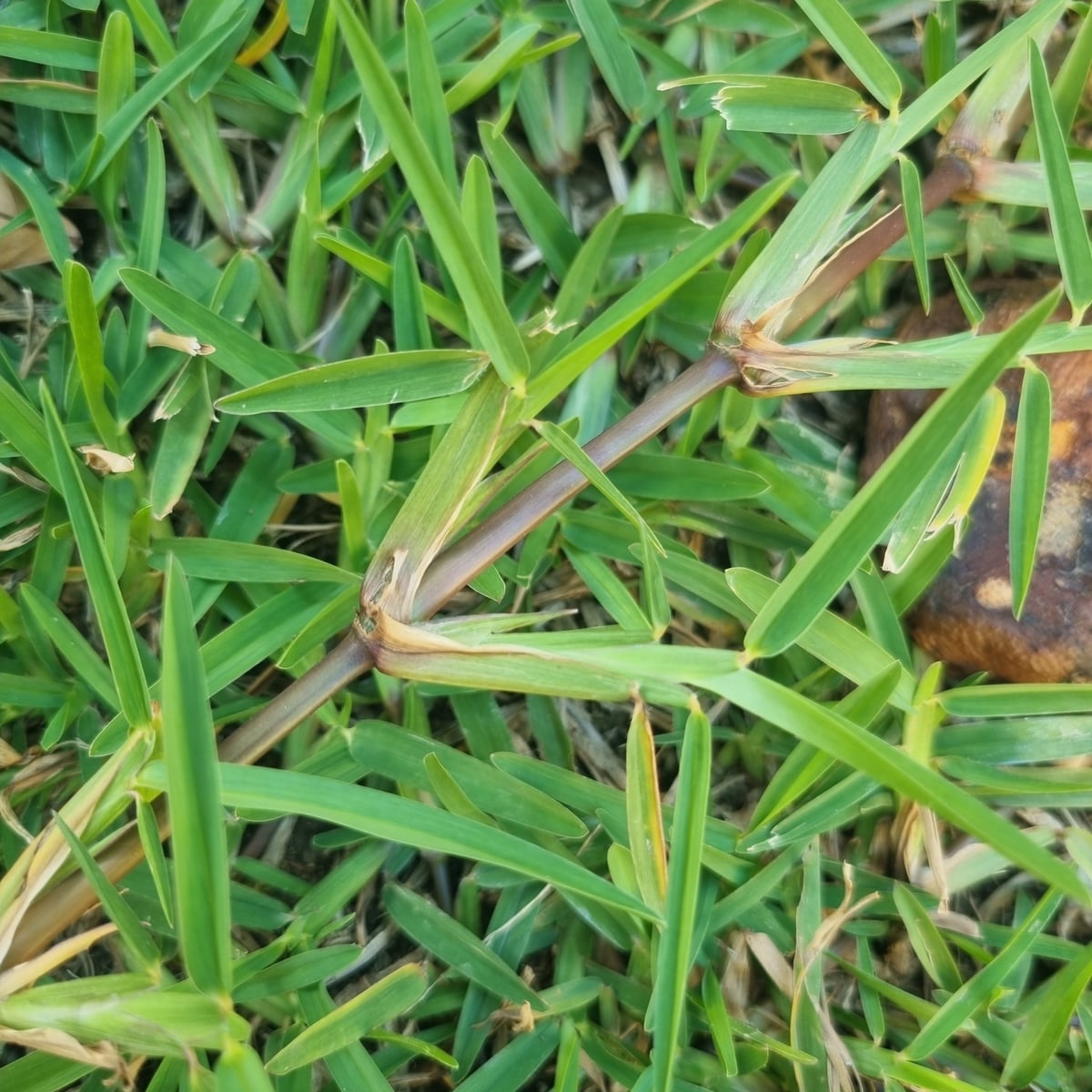
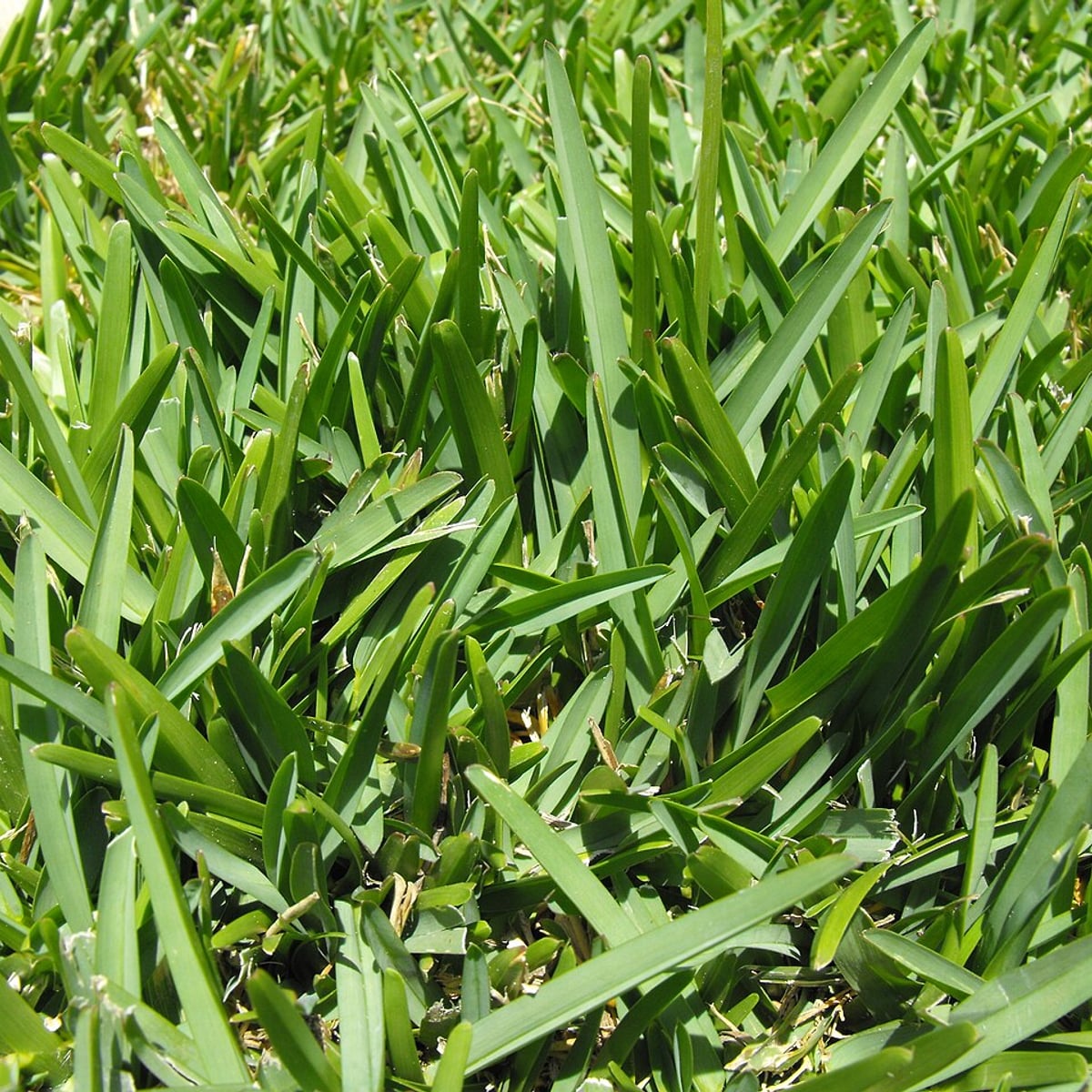
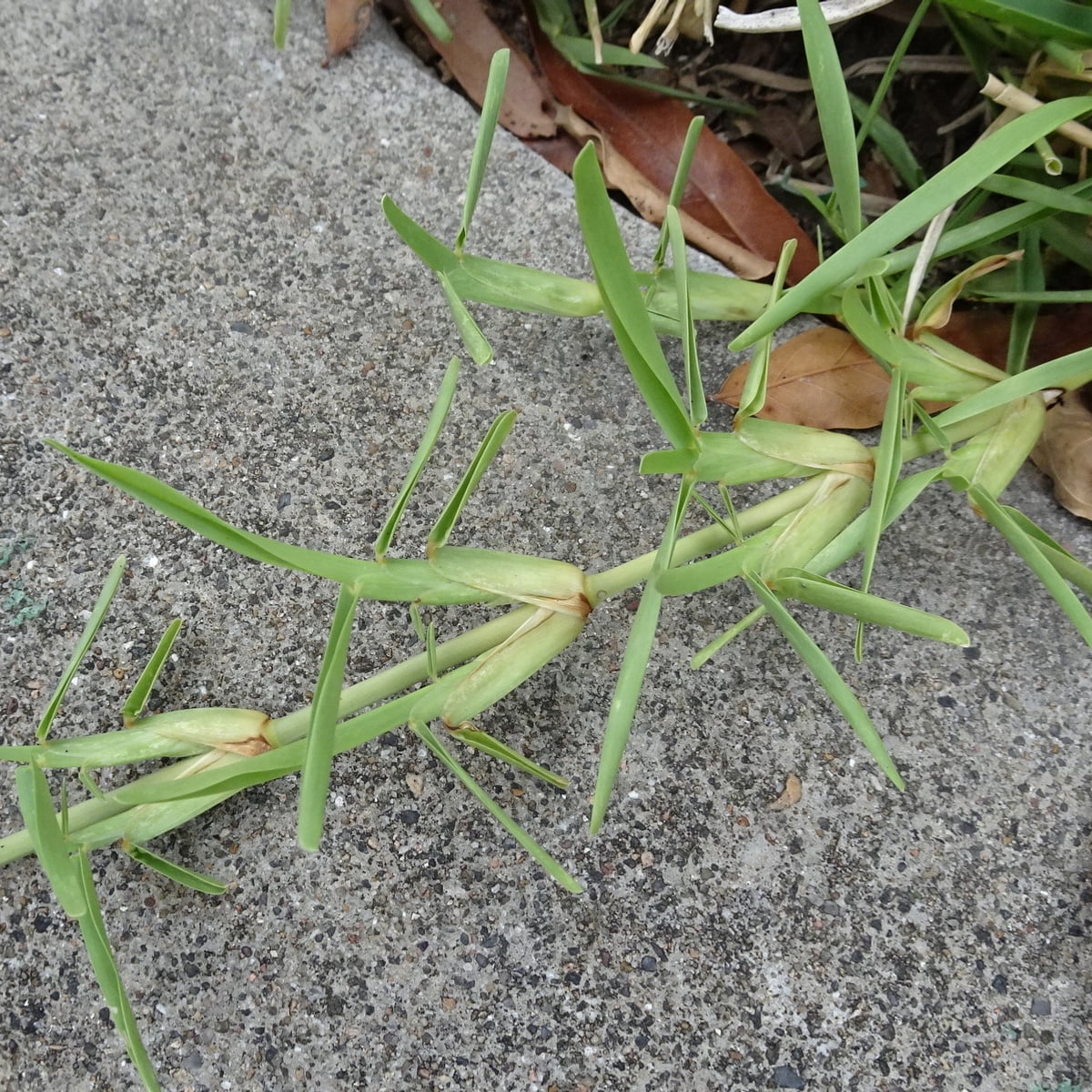
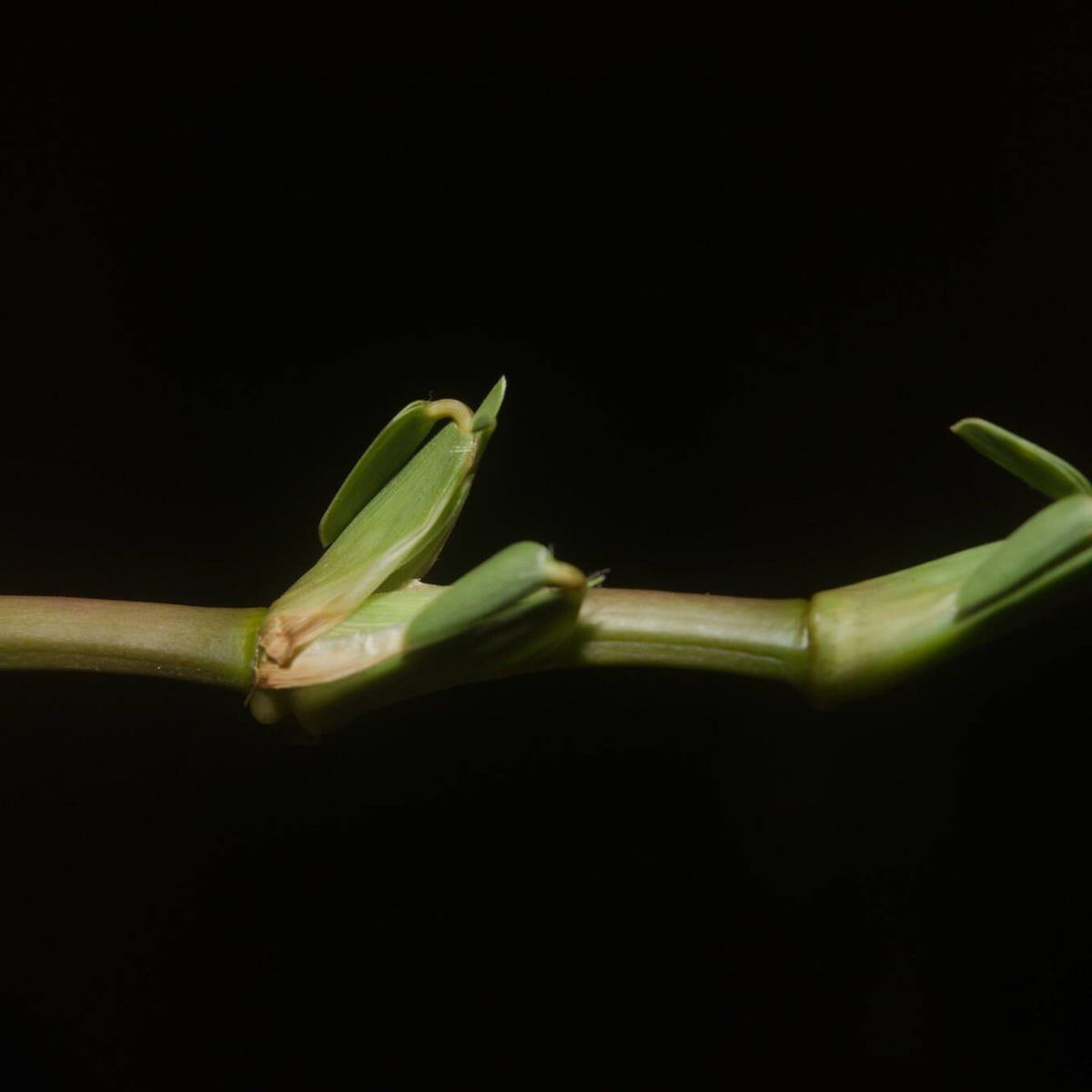
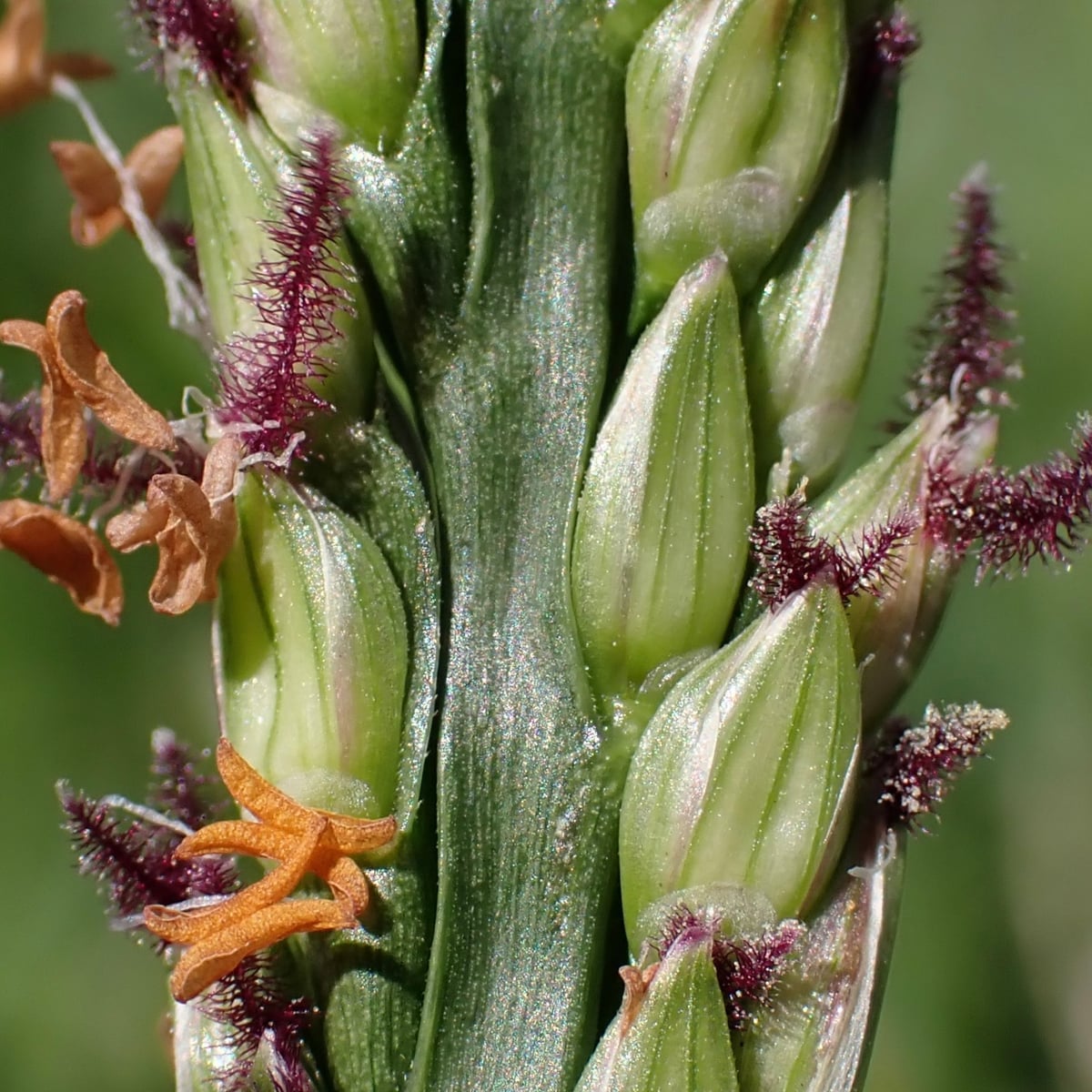
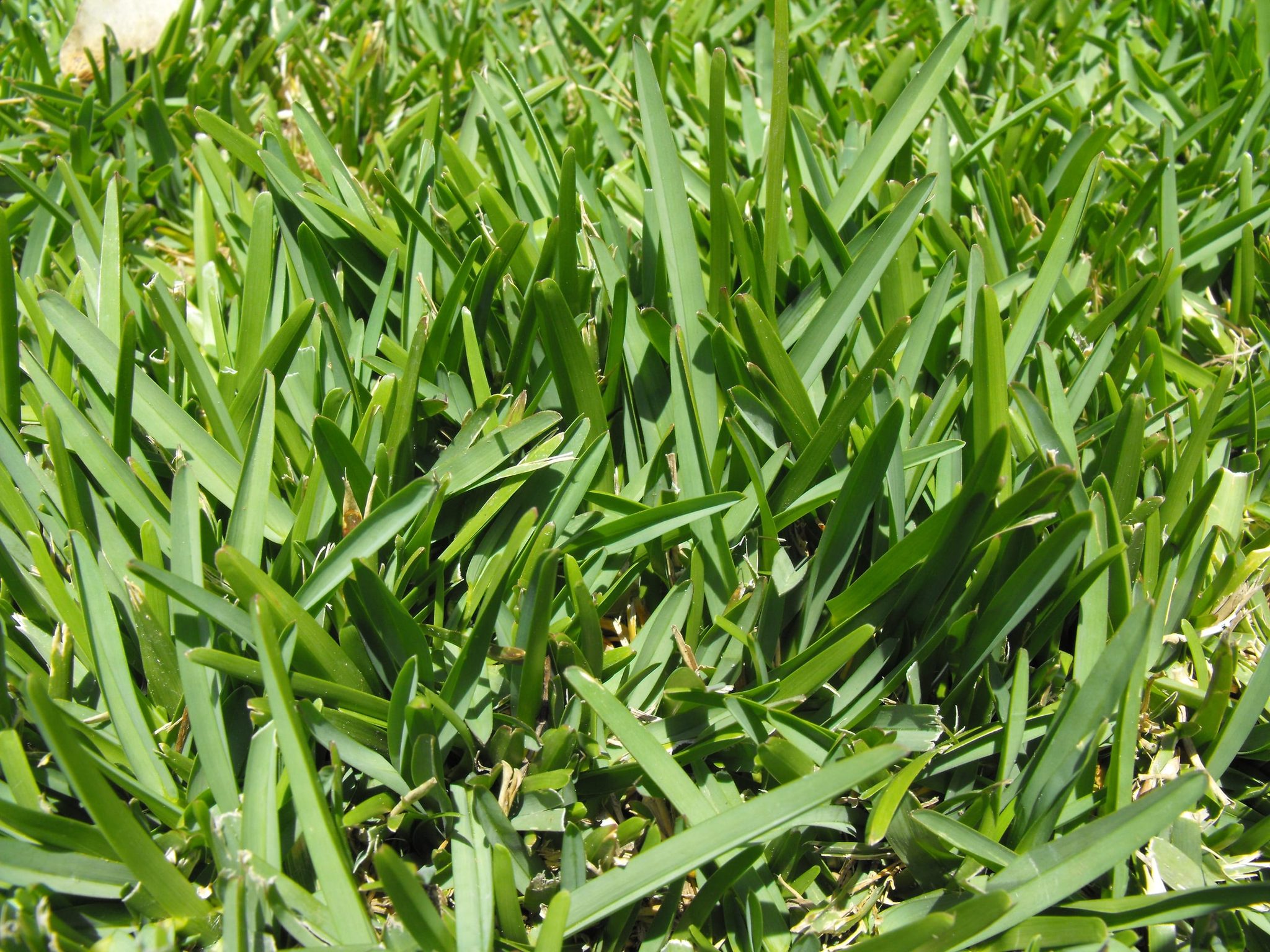
St. Augustine grass looks like a coarse, dark-green carpet of unusually broad blades. Each blade is 5-8mm wide (about the width of a pencil eraser) with a rounded, blunt tip, and the grass spreads by thick above-ground runners (stolons) you can see creeping over soil, sidewalks, and bed edges. That broad blade, rounded tip, and surface-runner combination is what sets St. Augustine apart from finer grasses like Bermuda and Zoysia.
St. Augustine is one of the easiest grasses to identify thanks to its broad, distinctive blades. Even from across the yard, you can usually tell St. Augustine apart from other warm-season grasses.
The Blade Width Test (The Easiest Way)
Pull a single blade and look at it. St. Augustine blades are noticeably wider than any other common lawn grass, measuring 5-8mm across. For reference, that's roughly the width of a pencil eraser. Bermuda blades are about half that width, and Zoysia falls somewhere in between. If the blade in your hand feels broad and flat, almost like a tiny strap, you're probably looking at St. Augustine.
The Blade Tip Test
Look at the tip of the blade. St. Augustine has a rounded, blunt tip rather than a sharp point. Bermuda blades come to a fine point. Zoysia blades have a slight point. But St. Augustine tips look like someone took tiny scissors and rounded them off. This is one of the most reliable identification features.
The Stolon Test
Look at the base of the turf and along edges where the grass meets sidewalks, driveways, or flower beds. St. Augustine spreads through thick, fleshy stolons (above-ground runners) that root at the nodes. These stolons are distinctly thicker than Bermuda's runners, often 3-4mm in diameter, and they're easy to see. They look like small, segmented green-purple stems crawling across the soil surface. St. Augustine does not have underground rhizomes like Bermuda, so all spreading happens above ground where you can see it.
Other Visual Clues
- Leaf sheath: Flat, folded blades emerge from a compressed sheath at the base. If you part the canopy and look down, you'll see the blades folded flat against each other, not rolled
- Color: Dark green to blue-green depending on variety. Floratam tends toward a classic dark green, while CitraBlue has a pronounced blue-green tint
- Overall texture: Coarser than any other common lawn grass. When you run your hand across a St. Augustine lawn, you feel the individual blades clearly
- Internode spacing: The spaces between nodes on the stolons are relatively long (1-3 inches), giving the runners a distinctly segmented look
St. Augustine vs. Common Look-alikes
St. Augustine vs. Centipede: People confuse these two more than you'd expect. Centipede has a lighter, apple-green color and narrower blades. St. Augustine is darker green with broader blades. Centipede stolons are thinner and its growth is noticeably slower.
St. Augustine vs. Carpetgrass: Carpetgrass has a similar broad blade but produces a tall, distinctive V-shaped seed head. It also has a lighter color and much thinner stolons.
St. Augustine vs. Zoysia: Zoysia blades are much narrower (about 2-4mm) and taper to a finer point, while St. Augustine blades are broad (5-8mm) with rounded tips. Zoysia feels stiff and wiry underfoot; St. Augustine feels thick and almost spongy. Both spread by stolons, but Zoysia also runs underground rhizomes, so it knits in more tightly.
St. Augustine vs. Bermuda: This is the easiest call. Bermuda blades are very fine (around 2mm) with sharp, pointed tips and a gray-green cast, and Bermuda spreads aggressively by both stolons and rhizomes. If the blade in your hand is broad, flat, and strap-like with a blunt tip, you are looking at St. Augustine, not Bermuda.
Want a definitive answer? Upload a photo to our free grass identifier for an instant analysis.
Best Zones & Climate
St. Augustinegrass is strictly a warm-climate grass, performing best in USDA Zones 8-10 along the Gulf Coast, Florida, and the southern Atlantic coast. It does not survive northern winters, and unlike Bermuda, there are no "cold-hardy" varieties that push the range northward significantly.
Ideal Climate Conditions
- Air temperature: 80-95°F for peak growth. St. Augustine loves heat and grows most aggressively when daytime highs are in this range
- Soil temperature: 65°F+ for active growth. Below that, growth slows dramatically and the grass begins transitioning toward dormancy
- Heat tolerance: Excellent. St. Augustine thrives in hot, humid conditions that would stress cool-season grasses into oblivion. 95°F and humid? That's prime growing weather
- Cold tolerance: Poor. This is St. Augustine's weakness. Sustained temperatures below 25°F cause significant damage, and hard freezes below 20°F can kill the grass outright, especially if the stolons are exposed
- Humidity: St. Augustine actually performs better in humid climates. The high humidity along the Gulf Coast reduces water stress on the broad blades
Where St. Augustine Thrives
The Gulf Coast is St. Augustine territory: Florida (the entire state), coastal Texas from Corpus Christi to Beaumont, Louisiana, Mississippi, Alabama, and the coastal Carolinas. In these areas, you'll see St. Augustine on probably 60-70% of residential lawns. It does particularly well in Florida, where the combination of warm winters, sandy soil, and consistent humidity creates nearly perfect conditions.
The Northern Edge
If you're in Zone 8 (northern Gulf Coast, inland Carolinas), St. Augustine is possible but risky. You'll get winter damage every few years when a hard freeze pushes through. Varieties like Palmetto and CitraBlue offer slightly better cold tolerance, but even they can't survive a sustained freeze below 15°F. In these borderline areas, I recommend planting in protected microclimates (south-facing slopes, areas sheltered by buildings) and being prepared to patch with sod after severe winters.
Shade Performance: The Real Superpower
This is St. Augustine's claim to fame, and it's not even close. Varieties like Palmetto, Seville, and CitraBlue can maintain decent turf quality with just 4 hours of filtered sunlight per day. For context, Bermuda needs 6-8 hours of direct sun. Zoysia needs 5-6 hours. Centipede needs 4-5 hours. No other warm-season grass comes close to St. Augustine's shade tolerance.
If you have large live oaks, mature pecans, or heavy canopy cover and you live in a warm climate, St. Augustine is almost certainly your best choice. I've seen gorgeous St. Augustine lawns under oak canopies where Bermuda wouldn't survive a single season.
Where St. Augustine Is Not the Right Choice
If you're north of Zone 8, don't plant St. Augustine. If you need a low-cut, manicured look for a sports-field style lawn, choose Bermuda instead. If you want the absolute lowest maintenance possible and your yard gets decent sun, Centipede is a better fit. And if your property has no shade at all and you live in a hot, dry climate like west Texas, Bermuda will outperform St. Augustine in drought tolerance.
Soil Preparation & pH
St. Augustine is relatively adaptable to different soil types, which is part of why it thrives across such a wide range of conditions along the Gulf Coast. From the pure sand of coastal Florida to the heavy clay of inland Alabama, St. Augustine finds a way. But "finds a way" and "performs its best" are two different things. Getting your soil right makes a real difference in density, color, and pest resistance.
Get a Soil Test First
Before you spend money on any amendments, get a soil test through your local extension office. In Florida, that's through UF/IFAS. In Texas, Texas A&M AgriLife. These tests cost $10-25 and tell you exactly what your soil has and what it needs. I've seen homeowners dump bags of lime on their St. Augustine because "someone said to," only to discover their Florida soil was already at pH 7.8 from the limestone bedrock. That lime made things worse.
Ideal Soil Conditions
- pH range: 6.0-7.5. St. Augustine tolerates a wider pH range than most grasses, which is one reason it does well in both the acidic sandy soils of the Carolinas and the alkaline calcareous soils of south Florida
- Soil type: Performs well in sandy, loamy, and clay soils. Sandy soils are most common in its growing range and work fine as long as you account for the faster drainage
- Salt tolerance: Good to excellent, making it ideal for coastal properties. St. Augustine handles salt spray and brackish irrigation water better than most warm-season grasses
- Drainage: Prefers well-drained soil but tolerates brief wet periods better than Bermuda. That said, standing water for more than 24 hours will damage even St. Augustine
- Organic matter: 2-4% is ideal. Most sandy coastal soils are well below this, which is why topdressing with compost is so beneficial
Common Soil Challenges by Region
Sandy Soils (Florida, Coastal Areas)
This is the most common soil type in St. Augustine territory. Sandy soil drains quickly, which is good for preventing root rot, but it also means water and nutrients pass right through. You'll need to water more frequently (but still deeply), and you'll get more value from slow-release fertilizers that don't wash away after one rain. The long-term fix is annual topdressing with a thin layer (1/4 inch) of quality compost. Over 3-4 years, this builds organic matter that dramatically improves water and nutrient retention.
Clay Soils (Inland Areas, Parts of Texas)
Clay holds moisture and nutrients well, but it compacts easily and drains poorly. St. Augustine handles clay better than Bermuda, but you'll still see better results if you improve drainage with annual core aeration and topdressing with a sand/compost mix (50/50 by volume). Focus on getting water to infiltrate rather than pool on the surface.
Alkaline Soils (South Florida Limestone, Coastal Shell)
In parts of south Florida and along the coast, soils can be pH 7.5-8.5 due to underlying limestone or shell deposits. At these high pH levels, St. Augustine struggles to absorb iron and manganese, leading to yellowing (chlorosis). The fix is not more nitrogen. Apply chelated iron (look for EDDHA chelate, which works at high pH) and consider acidifying fertilizers that contain ammonium sulfate rather than urea.
Preparing Soil for New St. Augustine Sod
- Get a soil test and correct any major pH or nutrient issues first
- Grade the area for proper drainage (water flows away from buildings at a minimum 1% slope)
- If starting from bare ground, incorporate 2-3 inches of compost into the top 4-6 inches of soil
- Firm the surface with a light roller so sod has good contact, but don't over-compact
- Apply a starter fertilizer with phosphorus (like 18-24-12) right before laying sod
- Install sod immediately, water heavily, and keep the soil moist for 2-3 weeks while roots establish
Recommended Products
- 1Check price
 Top pick
GS Plant Foods Liquid Humic Acid
Leonardite-derived humic acid that improves soil structure and nutrient availability. OMRI listed, 1 gallon.
- 2Check price
 Best value
GS Plant Foods Liquid Kelp Fertilizer
OMRI-listed seaweed concentrate for root development and stress recovery. 1 gallon makes 800+ gallons.
As an Amazon Associate we earn from qualifying purchases.
Fertilizer Program
St. Augustine has moderate fertility requirements, falling between the heavy appetite of Bermuda and the minimal needs of Centipede. The key is feeding it during the active growing season and backing off completely in fall and winter. I've seen more St. Augustine lawns damaged by fall fertilization than by underfertilizing. When you push growth heading into cold weather, you're setting the grass up for freeze damage.
Annual Fertilizer Requirements
- Nitrogen: 2-4 lbs per 1,000 sq ft per year. Florida lawns on the lower end (2-3 lbs), Texas lawns on the higher end (3-4 lbs) due to longer growing season in some areas
- Phosphorus: Based on soil test only. Many Florida soils are naturally high in phosphorus, and several Florida counties actually restrict phosphorus application by law. Always test first
- Potassium: 2-3 lbs per 1,000 sq ft per year. Potassium is critical for St. Augustine, especially in sandy soils where it leaches quickly. It strengthens cell walls, improves cold tolerance, and enhances drought resistance
- Iron: St. Augustine is prone to iron chlorosis (yellowing between leaf veins). Supplemental iron through foliar sprays or granular products can dramatically improve color without the risks of excess nitrogen
Seasonal Fertilizer Schedule
Spring (April to May, After Full Green-up)
Wait until your lawn is fully green and actively growing before the first application. This is important. If you fertilize too early while the grass is still emerging from dormancy, you push tender new growth that's vulnerable to any late cold snaps. Once you see consistent growth and the lawn is solidly green, apply 1 lb N per 1,000 sq ft of slow-release fertilizer. A product with a ratio like 15-0-15 or 16-4-8 (with iron) works well for this first round.
Early Summer (June)
Apply 0.5-1 lb N per 1,000 sq ft of slow-release fertilizer with potassium and iron. This fuels the peak growing season when St. Augustine is putting out new stolons and filling in any thin areas. If your lawn looks dark green and thick, you can use the lower rate. If it looks a little pale or thin, go with the full pound.
Midsummer (Late July to August)
Another 0.5-1 lb N per 1,000 sq ft, again with potassium. Here's where you need to be careful about gray leaf spot disease, which is most active in hot, humid weather. High nitrogen rates during midsummer increase susceptibility. If gray leaf spot has been an issue in previous years, drop to 0.5 lb N and supplement with iron for color instead.
Early Fall (September)
Final application: 0.5-1 lb N per 1,000 sq ft with potassium emphasis. A product like 5-0-20 or similar high-K formula is ideal here. The potassium helps harden off the grass before cooler weather, improving its chances of surviving winter without damage.
Late Fall and Winter
Do not fertilize. Period. Nitrogen applied to dormant or semi-dormant St. Augustine increases cold damage risk significantly. It also feeds winter weeds while your grass can't compete. I've seen homeowners lose entire lawns because they applied a "winterizer" product in November thinking it would help. It doesn't. St. Augustine doesn't work like cool-season grasses.
The Iron Trick
If you want your St. Augustine to look darker green without pushing excessive growth, iron is your best friend. A foliar iron spray (ferrous sulfate at 2 oz per gallon per 1,000 sq ft, or a chelated iron product) deepens the color within 24-48 hours without adding nitrogen. I used this constantly on golf course properties when we wanted that deep green look for events without the disease risk of extra nitrogen. Apply it early morning or late evening to avoid leaf burn, and avoid application when temperatures exceed 90°F.
Common Fertilizer Mistakes
- Fertilizing before full green-up: The grass can't use it yet, and you're feeding weeds instead
- Using "weed and feed" in summer: The herbicide component can stress St. Augustine in peak heat. Fertilize and treat weeds separately
- Ignoring potassium: Homeowners focus on nitrogen for color but skip potassium. In sandy soils, potassium deficiency causes thin, weak turf that's more susceptible to disease and cold injury
- Applying to wet foliage: Granular fertilizer that sticks to wet blades can cause burn spots. Apply to dry grass or water in immediately after application
Recommended Products
- 1Check price
 Top pick
Scotts Turf Builder Southern Lawn Food
Warm-season fertilizer built for southern lawns, especially when you want a homeowner-friendly granular option.
- 2Check price
 Best value
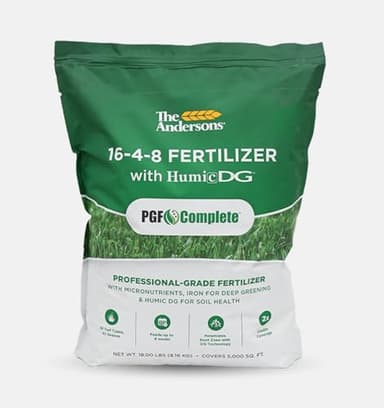
The Andersons PGF Complete 16-4-8
Balanced slow-release fertilizer for established lawns that need steady feeding without a quick flush of top growth.
- 3Check price
 Also great
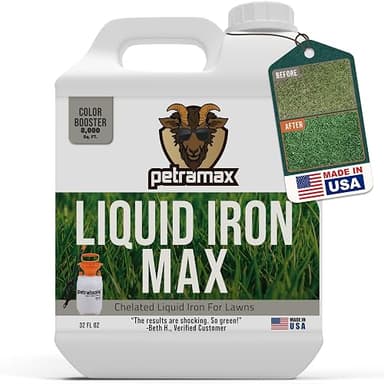
PetraTools Liquid Iron for Lawns
Chelated liquid iron for deep green color without pushing nitrogen growth. EDTA-free, 32 oz concentrate.
As an Amazon Associate we earn from qualifying purchases.
Month-by-Month Care Calendar
St. Augustine's growing season is driven by soil temperature and day length. In south Florida, the grass may stay green and semi-active year-round. Along the northern Gulf Coast, you'll see full dormancy from December through February. Adjust this calendar based on your specific location.
Winter (December to February)
St. Augustine is dormant or semi-dormant. In south Florida and the lower Texas coast, you may see some green color persist, but growth is minimal.
- Avoid foot traffic on frosted turf. Frozen blades shatter when stepped on, and the damage shows up as brown footprint-shaped patches for weeks
- Do not fertilize or apply herbicides to dormant turf
- If you see green weeds growing in your brown lawn, resist the urge to spray. Wait until spring when the grass is actively growing and can compete
- Service your mower: sharpen blades, change oil, replace spark plugs, and clean the deck
- This is a great time to get a soil test so you have results before spring
Early Spring (March to April)
Watch for green-up. St. Augustine is one of the later warm-season grasses to wake up in spring. If your neighbor's Bermuda is green and yours isn't, don't panic. That's normal.
- Apply pre-emergent herbicide when soil temperature reaches 55°F at a 4-inch depth for 3 consecutive days. This is your crabgrass prevention window
- Begin mowing once active growth resumes. First cut can be at the lower end of the range (3 inches) to clean up winter debris
- Hold off on fertilizer until the lawn is fully green and growing. Patience here pays off
- Inspect your irrigation system for leaks, clogged heads, and coverage gaps before the heat arrives
- Check for any winter damage. Dead areas with no signs of green regrowth by mid-April likely need sod replacement
Late Spring (May to June)
This is when St. Augustine hits its stride. Growth accelerates rapidly, and this is your window for major lawn projects.
- First fertilizer application (1 lb N per 1,000 sq ft slow-release)
- Regular mowing at 3-4 inches. You'll likely need to mow weekly or even every 5-6 days as growth peaks
- Begin watching for chinch bugs, the number one St. Augustine pest. They become active when temps hit 80°F consistently
- Start irrigation if rainfall is insufficient (aim for 1-1.3 inches per week total from rain plus irrigation)
- This is the ideal time to lay new sod or install plugs. The full growing season ahead gives roots time to establish
- Spot-treat any broadleaf weeds that escaped pre-emergent
Summer (July to August)
Peak growing season and peak pest pressure. This is when your lawn demands the most attention.
- Continue fertilizer every 6-8 weeks (0.5-1 lb N per 1,000 sq ft with potassium)
- Monitor closely for chinch bugs, especially in sunny, dry areas near pavement. Check every 2 weeks by parting the turf at the edge of any suspicious yellow patches
- Watch for gray leaf spot fungus, which shows up as gray-brown spots with dark borders on individual blades. Reduce nitrogen if you see it
- Water deeply 2-3 times per week. Early morning only. Evening watering in summer is asking for fungal disease
- Keep mowing at 3.5-4 inches. Do not scalp St. Augustine in summer. Ever
- Edge along sidewalks and beds regularly. St. Augustine stolons will aggressively invade flower beds and cross hardscape boundaries
Early Fall (September to October)
- Final fertilizer application with potassium emphasis. This hardens the grass for winter
- Growth begins slowing as day length decreases and temperatures cool
- Reduce mowing frequency to match the slower growth rate
- Core aerate if needed, though late spring is the preferred timing for St. Augustine
- Apply fall pre-emergent for winter annual weeds (annual bluegrass, henbit, chickweed)
- This is your last practical window to address any thin or bare areas with sod before dormancy
Late Fall (November)
- St. Augustine begins dormancy as soil temperatures drop below 60°F consistently
- Final mow at the normal height. Unlike cool-season grasses, you do not need to lower the cut before winter
- Remove fallen leaves and debris promptly. A thick layer of wet leaves smothers St. Augustine and creates disease conditions
- Stop fertilizing. Do not apply nitrogen after early October in most of the St. Augustine growing range
- If you're in a freeze-prone area, make sure irrigation is set to run briefly if a hard freeze is forecast. A thin layer of ice on the grass actually insulates the crowns, but only works if applied before the freeze
Mowing Guide
St. Augustine needs to be mowed higher than Bermuda or Zoysia. This is non-negotiable. Cutting it too short is the single most common mistake I see homeowners make with St. Augustine, and it leads to a thin, weedy lawn that's vulnerable to pests and disease. I've walked up to lawns that were "dying" and the only problem was a mowing height set at 2 inches. Raise that deck and the lawn recovers on its own.
Optimal Mowing Height
- Full sun areas: 3-3.5 inches. This is the sweet spot for most St. Augustine lawns in full sunlight
- Partial shade areas: 3.5-4 inches. Taller grass captures more light, which is critical under tree canopies. Think of it this way: more blade surface area means more photosynthesis to compensate for less sunlight
- During heat or drought stress: 4 inches. The extra height shades the soil, reduces surface temperature, and retains moisture
- During active disease: Maintain the normal height but avoid mowing wet grass to limit disease spread
Cutting Height by Variety
The 3 to 4 inch range fits standard cultivars like Floratam and Raleigh, but semi-dwarf and dwarf varieties are bred to sit lower. Palmetto and other semi-dwarfs do well at 2.5 to 3 inches per sod producer guidance. True dwarfs like Seville, Delmar, and Captiva can be held at 2 to 2.5 inches, but only if your blade stays sharp and you mow often enough to honor the 1/3 rule. Whatever the cultivar, cutting below its target range exposes the stolons to direct sun, dries out the soil, and opens the door to crabgrass, sedges, and chinch bugs. When in doubt, lean toward the top of your cultivar's range.
How Tall Does St. Augustine Grow?
Left unmowed, St. Augustine reaches roughly 6 to 12 inches, with most of its energy going sideways into stolons rather than straight up. In a maintained lawn you never let it get there. Mow when the grass grows about one-third taller than your target: a Floratam lawn held at 4 inches gets cut once it reaches 5.5 to 6 inches, which in peak summer can mean every 5 to 7 days. St. Augustine is a spreading grass, not a tall one, and its finished look comes from a dense sideways mat rather than height.
Why Mowing Height Matters So Much for St. Augustine
St. Augustine stores a lot of its energy and growing points in the upper portion of the stem and stolon network. When you cut below 3 inches, you're removing a significant percentage of the plant's photosynthetic capacity and potentially damaging the growth points. The grass responds by sending up thinner, weaker blades and producing fewer stolons. Over time, the turf thins out, weeds move in, and chinch bugs find easy targets in the stressed turf.
Compare that to mowing at 3.5 inches. At that height, the canopy is dense enough to shade out weed seeds, the root system stays robust, and the grass has plenty of energy to spread via stolons and fill in thin areas. Higher is almost always better with St. Augustine.
The 1/3 Rule
Never remove more than one-third of the blade height in a single mowing. If your target is 3.5 inches, mow when the grass reaches about 5 inches. Violating this rule scalps the lawn and exposes the lower stems to sunlight they're not adapted to handle, causing white or tan discoloration that takes weeks to grow out. If you've been away on vacation and the grass is 6-7 inches tall, bring it down gradually over 2-3 mowings spaced a few days apart.
Mowing Frequency
- Peak growth (late spring/summer): Every 5-7 days. In south Florida during the rainy season, you may need to mow twice a week if the lawn is well fertilized
- Moderate growth (early spring, fall): Every 7-10 days
- Slow growth/dormancy: As needed, or not at all. If the grass isn't growing, don't mow it
Equipment and Practical Tips
Use a Rotary Mower
A standard rotary mower is the right choice for St. Augustine. Reel mowers are designed for grasses cut below 2 inches and physically cannot cut high enough for St. Augustine. I know some homeowners buy reel mowers because they look like "serious lawn equipment," but for St. Augustine, a quality rotary mower with a sharp blade produces a better cut at the heights this grass needs.
Blade Sharpness Matters
St. Augustine's broad blades show ragged cuts more clearly than any other grass. A dull blade tears the tips rather than cutting them cleanly, leaving white or brown frayed edges visible across the entire lawn. It looks terrible, and those torn tips are open doors for disease. Sharpen your blade every 20-25 hours of mowing, which is roughly monthly during the growing season. Buy a spare blade so you can swap immediately and sharpen the dull one at your convenience.
Mulch Your Clippings
Mulch clippings back into the lawn. They decompose quickly in warm weather and return nutrients (roughly 1 lb of nitrogen per 1,000 sq ft per year). The only time to bag is if the clippings are clumping so heavily they smother the grass underneath, which usually means you let it grow too long between mowings.
Mow Shade Areas Higher
If part of your lawn is in full sun and part is under tree cover, adjust your mowing height for each area. Mow the shaded sections at 4 inches and the sunny sections at 3-3.5 inches. The extra height in shade makes a meaningful difference in turf density over the course of a season.
Watch the Edges
St. Augustine's aggressive stolons will creep over sidewalks, into flower beds, and across property lines. Edge regularly with a blade edger (not a string trimmer set vertically, which tends to scalp). A clean edge not only looks sharp but also prevents stolons from rooting into areas where you don't want them.
Watering Schedule
St. Augustine has moderate water needs. It's not as drought-tolerant as Bermuda, but it's more forgiving than its reputation suggests. The key is deep, infrequent watering that trains roots to grow deeper. I see far more St. Augustine lawns damaged by overwatering than by underwatering, especially in Florida where homeowners run irrigation daily "just in case." Daily watering creates shallow roots, promotes fungal disease, and wastes water. It's the worst irrigation habit you can have.
Weekly Water Requirements
- Spring: 1 inch per week (including rainfall)
- Summer: 1-1.3 inches per week. In particularly hot, dry stretches you may need up to 1.5 inches
- Fall: 1 inch per week, tapering off as growth slows
- Winter: None needed in most areas during dormancy. In south Florida where the grass stays semi-active, 0.5 inches per week during dry spells
The Deep Watering Strategy
The goal is getting water 4-6 inches into the soil profile so roots grow deep and the plant can access subsurface moisture between irrigation events. You accomplish this by watering less often but for longer each time.
- Frequency: 2-3 times per week during the growing season. Not daily. Not every other day. Two to three solid watering sessions per week is all St. Augustine needs
- Amount per session: 0.5-0.75 inches per session, enough to wet the soil profile 4-6 inches deep
- Time of day: Early morning, between 4 AM and 8 AM. This allows the grass blades to dry as the sun rises, minimizing the window for fungal disease. Afternoon watering loses significant water to evaporation. Evening watering leaves blades wet all night and dramatically increases disease risk
How to Measure Your Sprinkler Output
Place 5-6 empty tuna cans or similar shallow containers across your sprinkler zone. Run the system and time how long it takes to collect 0.5 inches of water in the cans. That's your run time per zone per session. Most pop-up spray heads deliver 0.5 inches in about 15-20 minutes. Rotor heads take 30-45 minutes. Do this test once for each zone and write the times down so you don't have to guess.
Signs Your St. Augustine Needs Water
St. Augustine communicates its water needs clearly before any real damage occurs. Learn to read these signals:
- Footprinting: Walk across the lawn. If your footprints stay visible for more than a few seconds (the blades don't spring back), the grass is losing turgor pressure and needs water
- Color change: Healthy St. Augustine is dark green. Under water stress, it shifts to a dull gray-green or blue-gray color. This is the earliest visible signal
- Blade folding: Individual blades fold in half lengthwise to reduce their exposed surface area. When you see half the lawn looking "narrow-bladed," it's not a different grass. It's St. Augustine folding up to conserve moisture
Sandy Soil Adjustments
If you're on sandy soil (most of Florida and the coastal Southeast), water moves through the root zone faster. You may need to water 3 times per week instead of 2, but reduce the duration per session slightly. The goal is the same: keep the root zone moist without letting water drain past the roots entirely. Adding organic matter through annual compost topdressing gradually improves water retention in sandy soils.
Drought Response and Recovery
St. Augustine will go dormant during extended drought, turning brown from the blades down. It can recover from moderate drought lasting 2-3 weeks with minimal permanent loss. Extended drought beyond 3-4 weeks causes increasing thinning as stolons die. The grass doesn't recover as quickly or as completely from drought as Bermuda does, because Bermuda has both stolons and rhizomes while St. Augustine relies solely on stolons.
If you have no irrigation and live in an area with unreliable summer rainfall, consider Bermuda for the sunny areas and St. Augustine only for shaded spots where Bermuda won't grow. That combination gives you the best of both worlds.
Overwatering: The Hidden Killer
In my experience, overwatering causes more St. Augustine problems than drought. Daily irrigation keeps the soil saturated, which suffocates roots, promotes take-all root rot (TARR), creates ideal conditions for gray leaf spot, and encourages dollarweed and other moisture-loving weeds. If you see dollarweed in your St. Augustine, that's almost always a signal that you're watering too much. Cut back your irrigation before reaching for herbicide.
Establishing St. Augustine
Sod, Plugs, or Seed?
St. Augustine is almost always established from sod or plugs. Very few varieties are available as seed, and those that are (like Sapphire) have limited availability and mediocre performance compared to sod varieties. For the vast majority of homeowners, sod is the standard approach. It costs more upfront than seeding other grasses, but you get an instant lawn that's usable within 3-4 weeks.
Plugs are a budget-friendly alternative if you're willing to wait. You're essentially buying small pieces of sod and spacing them out, letting the stolons fill in the gaps over time. It takes patience, but it works well and costs significantly less.
Choosing a Variety
Not all St. Augustine is the same. Choosing the right variety for your specific conditions makes a significant difference in long-term performance.
- Floratam: The most widely planted variety in Florida and the Gulf Coast. Vigorous, good chinch bug resistance, but poor cold tolerance and poor shade tolerance compared to other varieties. Best for full sun in Zone 9-10
- Palmetto: Excellent shade tolerance (the best available), good cold tolerance, and a compact growth habit that means less mowing. My top recommendation for shaded lawns
- CitraBlue: Newer variety with a distinctive blue-green color, good shade tolerance, and tighter growth than Floratam. Becoming very popular in Florida
- Seville: Fine-textured for a St. Augustine (narrower blades), excellent shade tolerance, but slower to establish and less traffic-tolerant
- Raleigh: The go-to variety for Zone 8 (Carolinas, north Texas) due to its superior cold tolerance. Not as chinch-bug-resistant as Floratam
- ProVista: Genetically modified for glyphosate tolerance, meaning you can spray Roundup on it to kill weeds without harming the grass. Also has a slower vertical growth rate, reducing mowing frequency by up to 50%
Best Time to Plant
Late spring to early summer (May to July) when soil temps are consistently above 65°F and the grass has a full growing season ahead to establish. This timing gives roots 4-5 months of warm weather to anchor before winter. Avoid planting in fall since the grass won't have time to root deeply before cooler weather slows growth, leaving it vulnerable to winter damage and washout.
Sod Installation: Step by Step
- Prepare the soil by grading for drainage and adding amendments based on your soil test. The finished grade should slope away from buildings at a minimum 1% grade
- Apply starter fertilizer (high phosphorus, like 18-24-12) to the bare soil before laying sod
- Lay sod within 24 hours of delivery. This is critical. Sod on a pallet generates heat as it respires, and interior rolls can hit 130°F+ within 36 hours. That kills the grass. If you can't install it all in one day, unroll unused pallets in a shaded area and keep them moist
- Stagger seams like bricks so the joints don't line up. This prevents erosion channels and creates a more stable installation
- Press sod firmly against the soil, eliminating air pockets. A lawn roller filled halfway with water works perfectly. Air gaps between sod and soil prevent root contact and cause drying
- Water immediately and heavily after installation. The soil beneath the sod should be wet 3-4 inches deep. Then continue watering 2-3 times daily for the first 2 weeks to keep the sod and underlying soil consistently moist
- Reduce watering gradually starting week 3. Transition from 3 times daily to once daily, then to the normal 2-3 times per week schedule as roots establish
- Test for rooting by gently tugging a corner of the sod. When it resists pulling and feels anchored, roots are growing into the soil. This typically takes 2-3 weeks
- First mow when the grass reaches 4-5 inches. Cut to 3.5-4 inches with a sharp blade. Be gentle with new turf. If the sod shifts under the mower, it's not rooted enough yet. Wait another week
Plug Installation
Plugs are 2-4 inch squares or circles of sod that you plant at regular intervals and let grow together.
- Spacing: 12 inches apart for coverage in one growing season. 18 inches apart for coverage in two growing seasons. Closer spacing costs more but gives you a full lawn faster
- Planting depth: Set plugs so the top of the soil in the plug is level with the surrounding ground. Too deep and the stolons can't spread effectively. Too shallow and they dry out
- Weed control: This is the biggest challenge with plugs. The open soil between plugs is prime weed territory. Apply a pre-emergent safe for St. Augustine (atrazine where legal, or pendimethalin) after planting, and hand-pull any weeds that break through
- Watering: Keep plugs consistently moist for the first 2-3 weeks. Once they're rooted and sending out stolons, transition to normal deep watering
- Fertilizer: Light applications (0.5 lb N per 1,000 sq ft) every 4-6 weeks during the growing season encourage faster stolon growth and fill-in
Recommended Products
- 1Check price
 Top pick
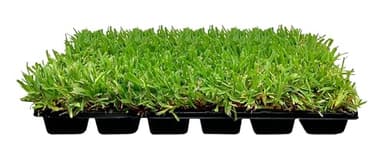
St. Augustine Palmetto Grass Plugs (18 Extra-Large Live Plugs)
Live Palmetto St. Augustine plugs — the way you actually start a St. Augustine lawn, since this grass is established from plugs or sod rather than seed.
As an Amazon Associate we earn from qualifying purchases.
Weed Control
A thick, healthy St. Augustine lawn is naturally resistant to weeds thanks to its dense stolon growth. When St. Augustine is growing well at the right mowing height, that canopy shades the soil so effectively that most weed seeds never get enough light to germinate. Most weed problems are a sign of an underlying issue: mowing too low, underwatering, pest damage thinning the turf, or compacted soil. Fix the underlying problem and the weeds usually resolve themselves over time.
Pre-Emergent Herbicides (Prevention)
Pre-emergents create a chemical barrier in the top layer of soil that prevents weed seeds from germinating. They don't kill existing weeds, but they stop new ones from starting. For St. Augustine, they're your first line of defense.
- Spring application: Apply when soil temperature reaches 55°F at a 4-inch depth to prevent crabgrass and other summer annuals. In most of the St. Augustine growing range, this is mid-February to mid-March
- Fall application: Apply in late September to early October for winter annual weeds like annual bluegrass (Poa annua), henbit, and chickweed
- Products safe for St. Augustine: Prodiamine (Barricade), pendimethalin (Pre-M), dithiopyr (Dimension), and atrazine (where legal) are all safe for established St. Augustine
- Atrazine note: Atrazine works as both a pre-emergent and post-emergent for many broadleaf and grassy weeds. It's commonly used on St. Augustine but is restricted or banned in some states and counties (especially near waterways). Check your local regulations before purchasing
Post-Emergent Herbicides (Treatment)
Critical warning: St. Augustine is sensitive to certain herbicides that are perfectly safe on other grasses. Using the wrong product can damage or kill your lawn. Here's what you need to know:
- NEVER use: MSMA, DSMA, or 2,4-D ester formulations on St. Augustine. These will cause severe damage
- Use with caution: 2,4-D amine formulations at the lowest label rate. Always use the amine version, never the ester
- Safe options for broadleaf weeds: Atrazine (where legal), carfentrazone (Quicksilver), and combination products specifically labeled for St. Augustine
- Safe options for sedges: Sulfentrazone or halosulfuron (Sedgehammer). Both are safe for St. Augustine and effective against nutsedge and kyllinga
- Always check the label. Every herbicide label lists compatible grass types. If St. Augustine isn't listed, don't use it. The label is the law and your protection
Common Weeds and How to Handle Them
Crabgrass
Prevented by properly timed spring pre-emergent. If it breaks through, hand-pull individual plants before they set seed, or spot-treat with quinclorac (safe for St. Augustine). Crabgrass is an annual that dies with the first frost, so late-season plants aren't worth treating.
Dollarweed (Pennywort)
Those round, coin-shaped leaves popping up throughout your lawn are almost always a sign of overwatering. Before reaching for herbicide, reduce your irrigation frequency. Dollarweed thrives in constantly moist soil and often disappears when you switch to proper deep, infrequent watering. If it persists, spot-treat with atrazine or a three-way herbicide.
Sedges (Nutsedge, Kyllinga)
Sedges look like grass but grow faster and have a triangular stem (roll the stem between your fingers and you'll feel the three edges). They love wet areas. Treat with sulfentrazone or halosulfuron, both safe for St. Augustine. You'll typically need 2 applications spaced 2-3 weeks apart for full control.
Torpedograss
This is the nightmare weed of St. Augustine lawns, especially in Florida. It spreads through both rhizomes and stolons, grows through anything, and there is no selective herbicide that kills it without also killing St. Augustine. Your options are limited: spot-treat with glyphosate (which kills everything, including the St. Augustine), hand-pull persistently, or learn to live with it. For severe infestations, some homeowners resort to killing entire sections with glyphosate and re-sodding.
Broadleaf Weeds (Clover, Plantain, Spurge)
Spot-treat with a three-way herbicide labeled for St. Augustine at the lowest effective rate. Apply when weeds are actively growing, temps are between 65-85°F, and no rain is expected for 24 hours. Multiple applications may be needed for tough species.
The Best Weed Control: A Thick Lawn
I always tell homeowners that the best herbicide is a thick, healthy St. Augustine lawn. Mow high (3.5-4 inches), fertilize properly, water correctly, and manage pests. A dense St. Augustine canopy is remarkably effective at preventing weeds naturally. The homeowners who have the worst weed problems are almost always the ones with thin, stressed turf from mowing too low or ignoring chinch bug damage.
Recommended Products
- 1Check price
 Top pick
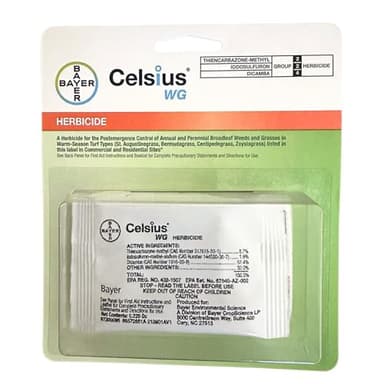
Celsius WG Herbicide (Easy Mix Packet)
Warm-season post-emergent that controls 150+ broadleaf, grassy, and sedge weeds and stays safe on bermuda, zoysia, centipede, and St. Augustine, including in summer heat. Not labeled for cool-season lawns.
- 2Check price
 Best value
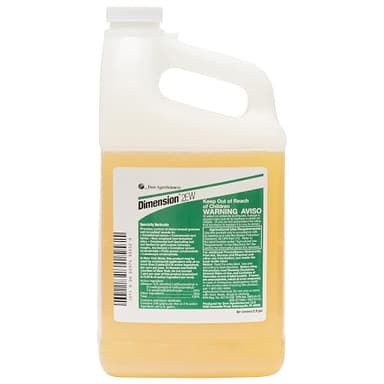
Dimension 2EW
Dithiopyr pre-emergent that also provides early post-emergent activity on young crabgrass escapes.
- 3Check price
 Also great
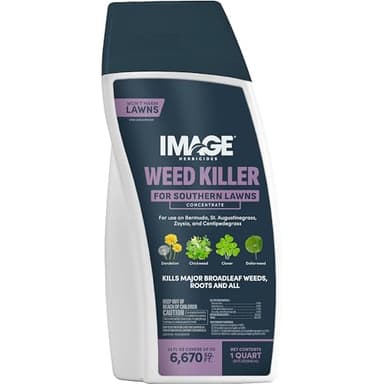
IMAGE Southern Lawn Weed Killer
Broadleaf weed killer labeled for several southern grasses, including St. Augustine, centipede, bahiagrass, buffalograss, and zoysia.
As an Amazon Associate we earn from qualifying purchases.
Pest & Disease Management
St. Augustine has some very specific pest and disease vulnerabilities that every owner needs to understand. The good news is that most problems are preventable or treatable if you catch them early. The bad news is that ignoring them, even for a few weeks, can mean losing large sections of your lawn.
The Big One: Chinch Bugs
Southern chinch bugs (Blissus insularis) are the number one enemy of St. Augustine lawns, and it's not even close. These tiny insects (about the size of a grain of rice) suck sap from the grass blades and inject a toxin that kills the plant. A chinch bug infestation can destroy a healthy lawn in 2-3 weeks if left untreated.
How to Spot Chinch Bug Damage
Damage appears as irregular yellow patches that turn brown, usually starting in the hottest, sunniest, driest parts of your lawn. Pay special attention to areas near pavement (driveways, sidewalks, streets), because the reflected heat creates ideal chinch bug habitat. The damage expands outward from these hot spots. Many homeowners mistake early chinch bug damage for drought stress, but here's the key difference: drought-stressed grass recovers when you water it. Chinch bug-damaged grass does not.
The Coffee Can Test
To confirm chinch bugs, push a bottomless coffee can (or any open-ended cylinder) into the turf at the edge of a damaged area, where yellow grass meets green. Fill it with water and wait 5-10 minutes. Chinch bugs float to the surface. You'll see tiny black insects with white wings folded across their backs. Immature nymphs are reddish-orange with a white stripe across the back. If you find more than 15-20 per square foot, treatment is warranted.
Treatment
Treat immediately with bifenthrin (the most common homeowner option) applied as a broadcast spray across the affected area and a 10-foot buffer zone into the healthy grass. Chinch bugs are always ahead of the visible damage line, so treating only the brown area misses the active population. Water lightly after application to move the product into the thatch layer where chinch bugs live. A second application 2-3 weeks later may be needed for heavy infestations.
Prevention
Choose chinch bug-resistant varieties where possible. Floratam was originally bred for chinch bug resistance, though new biotypes have overcome that resistance in some areas. CitraBlue shows promising resistance. Avoid excessive nitrogen, which produces the lush growth chinch bugs prefer. And maintain a healthy, unstressed lawn through proper watering and mowing, because chinch bugs preferentially attack stressed turf.
Common Diseases
Gray Leaf Spot (Pyricularia grisea)
The most common St. Augustine disease and the one I dealt with most frequently on managed properties. Gray leaf spot causes gray-brown spots on individual blades with a dark brown border. In severe cases, the spots merge and entire blades die, giving the lawn a scorched appearance. It's most active during hot, humid weather from June through September.
What triggers it: Excess nitrogen during summer is the number one trigger. High humidity, warm nights (above 70°F), and frequent rainfall or irrigation create perfect conditions. Evening watering that keeps blades wet overnight dramatically increases risk.
What to do: Reduce nitrogen applications during peak summer. Switch to iron for color. Water only in the early morning. Improve air circulation by pruning low tree branches. If outbreaks are severe, apply azoxystrobin (Heritage) or thiophanate-methyl (Cleary 3336) as a curative fungicide. But fixing the cultural conditions is more important than spraying.
Brown Patch (Large Patch)
Circular patches of yellowing, thinning turf, typically 1-5 feet in diameter, that appear in spring and fall when temperatures are between 60-75°F. You'll notice the outer edge of the patch has a yellowish "smoke ring" where the fungus is actively expanding. The grass in the center may actually look healthier than the margins.
Prevention: Reduce nitrogen in fall (the potassium-heavy approach I recommended in the fertilizer section). Improve drainage. Avoid evening watering. If you've had recurring brown patch for 2+ years, apply a preventive fungicide (azoxystrobin or propiconazole) in early October and again in early March.
Take-All Root Rot (TARR)
This is becoming increasingly common in St. Augustine lawns and it's a tough one. TARR (Gaeumannomyces graminis) attacks the roots, causing irregular yellowing and thinning that doesn't respond to fertilizer or water. Pull up affected grass and the roots will appear short, black, and rotted rather than healthy white.
The cultural fix: Maintain soil pH on the slightly acidic side (6.0-6.5). Avoid overliming. Reduce nitrogen. Improve drainage. Apply a peat moss topdressing (1/4 inch) over affected areas, which acidifies the surface layer and creates conditions unfavorable to the fungus. This peat moss approach has shown very good results in university trials.
Chemical options: Azoxystrobin applied preventively in spring and fall can help, but cultural management is the primary solution for TARR.
Other Pests
Grubs (White Grubs)
The larvae of June beetles, masked chafers, and other beetles feed on St. Augustine roots underground. Signs include irregular brown patches that feel spongy underfoot and peel up like carpet (because the roots are gone). Increased bird activity or armadillo digging in your lawn often signals a grub problem. Check by pulling back the turf at the edge of a damaged area. More than 6-8 grubs per square foot warrants treatment. Apply chlorantraniliprole (GrubEx) preventively in late spring, or use carbaryl or trichlorfon for curative treatment of active infestations.
Sod Webworms (Tropical Sod Webworm)
Small caterpillars that feed on grass blades, creating irregular brown patches that resemble close mowing. The telltale sign is small tan or buff-colored moths flying in a zigzag pattern low over the lawn at dusk. Those moths are laying eggs. You may also notice small green pellets (frass) at the soil surface. Treat with bifenthrin or Bt (Bacillus thuringiensis) applied in the evening when caterpillars are actively feeding on the surface.
Mole Crickets
These unusual-looking insects tunnel through the soil surface, uprooting grass and creating raised trails visible across the lawn. Damage is worst in sandy soils. Apply bifenthrin or a mole cricket bait in late spring when nymphs are small and near the surface. The soap flush test works well: mix 2 tablespoons of dish soap in a gallon of water and pour it over a 4-square-foot area. Mole crickets come to the surface within minutes if present.
Aeration & Dethatching
St. Augustine benefits from periodic aeration, but you need to approach both aeration and dethatching more carefully than you would with Bermuda or Zoysia. St. Augustine's thick stolon network is its spreading mechanism, and aggressive mechanical treatments can damage it significantly. The goal is improving soil health without tearing up the stolon layer that keeps your lawn dense and self-repairing.
Core Aeration
Why St. Augustine Lawns Need Aeration
St. Augustine's thick stolon growth creates a dense mat near the soil surface. Over time, this density (combined with foot traffic, irrigation compaction, and natural soil settling) compresses the soil underneath. Compacted soil restricts water infiltration, limits oxygen to roots, and reduces nutrient uptake. You'll notice the signs: water pooling on the surface instead of soaking in, the lawn looking stressed despite adequate irrigation, and roots that are shallow even though you're watering deeply.
When to Aerate
- Best time: Late spring to early summer (May to June) during active growth. The grass is growing vigorously and will fill in the aeration holes within 3-4 weeks
- Soil temperature: 65-75°F or above. The grass needs to be in active growth mode to recover
- Avoid fall aeration. Unlike cool-season grasses where fall aeration is ideal, St. Augustine needs the remaining growing season to recover from aeration before dormancy. Fall aeration in September might work in south Florida where growth continues through October, but it's risky in Zone 8 where the growing season ends sooner
- Frequency: Every 1-2 years for clay soils or high-traffic areas. Every 2-3 years for sandy soils with minimal compaction. Sandy soils in Florida often need less frequent aeration than clay soils in Texas
- Soil moisture: Aerate when the soil is moist but not saturated. Water the day before if conditions are dry. The tines need to penetrate cleanly and pull complete plugs
How to Aerate Effectively
- Use a core aerator that pulls 2-3 inch plugs. Spike aerators just push soil sideways without removing it, which can actually increase compaction around the holes
- One pass is usually sufficient for St. Augustine. Two perpendicular passes are fine for severely compacted areas but will temporarily make the lawn look rough
- Leave the plugs on the lawn to break down naturally. They'll decompose within 2-3 weeks in warm weather, returning topsoil and organic matter to the surface
- Follow immediately with fertilizer (0.5-1 lb N per 1,000 sq ft) and deep watering. The combination of open channels and available nutrients accelerates recovery
- St. Augustine's stolons will grow across and fill in aeration holes within 3-4 weeks during active growth
- Rent a core aerator ($75-100 per day) or hire a lawn service ($75-150 for an average lawn). The rental route makes sense if you have a large property
Dethatching
St. Augustine naturally builds thatch through its stolon growth. All those above-ground runners create a spongy layer between the green blades and the soil surface. Here's the important thing to understand: a moderate thatch layer (under 1/2 inch) is actually beneficial for St. Augustine. It insulates roots from extreme heat, retains soil moisture, and provides a buffer against temperature swings. Do not dethatch just because you see some thatch. Only dethatch if the layer exceeds 3/4 inch and is actively preventing water from reaching the soil.
How to Check Thatch Depth
Cut a small wedge of turf with a knife or sharp spade, about 3 inches deep. Look at the cross-section and measure the brown, spongy layer between the green grass blades and the actual soil. If it's under 1/2 inch, leave it alone. Between 1/2 and 3/4 inch, core aeration alone will manage it. Over 3/4 inch, you may need more aggressive action.
When and How to Dethatch
- Timing: Late spring only (May to June), during peak growth when the grass can recover quickly
- Be careful: St. Augustine's stolons are easily damaged by aggressive dethatching. Use a light touch with a vertical mower (set blades high) rather than an aggressive power rake. The goal is thinning the thatch layer, not stripping it completely
- Better alternative: Core aeration is almost always a better approach for St. Augustine than mechanical dethatching. Aeration breaks up thatch by introducing soil into the layer (soil contains microorganisms that decompose thatch naturally) without damaging the stolon network. If your thatch is between 1/2 and 3/4 inch, two perpendicular passes with a core aerator will manage it effectively
- Recovery: Even light dethatching will make your St. Augustine lawn look rough for 3-4 weeks. Plan accordingly and don't dethatch before any event where lawn appearance matters
Preventing Excessive Thatch
The best strategy is preventing thatch from building up in the first place:
- Core aerate annually or every other year (introduces thatch-decomposing microbes from the soil)
- Don't overfertilize with nitrogen (excess growth means excess thatch material)
- Mulch clippings rather than bagging. Clippings do NOT cause thatch. This is one of the most persistent myths in lawn care. Thatch comes from stems, stolons, and roots, not from leaf blade clippings
- Maintain proper soil pH so decomposing organisms can do their work effectively
- Avoid pesticide overuse, which can kill the beneficial microorganisms that break down thatch naturally