
About Zoysiagrass
A zoysiagrass lawn is the warm-season choice for people who want a beautiful yard without spending every weekend working on it. Once established, Zoysia forms an incredibly dense, carpet-like turf that feels great underfoot, crowds out most weeds naturally, and requires less fertilizer and water than Bermudagrass. It's the grass I recommend more than any other for homeowners who want quality turf without the intensity of a Bermuda maintenance schedule.
The catch? Patience. Zoysia is slow to establish, slow to spread, and slow to recover from damage. Where Bermuda would fill in a bare spot in a couple of weeks, Zoysia might take a couple of months. I managed Zoysia fairways early in my career, and learning to wait for this grass to do its thing was one of the hardest lessons. But once it fills in, you'll have one of the most beautiful and self-sufficient warm-season lawns possible.
Think of Zoysia as the tortoise in the tortoise and hare story. Bermuda is the hare, fast, aggressive, always moving. Zoysia takes its time, grows methodically, and ends up with a denser, tighter turf that needs less ongoing input. If you can handle the slow establishment period, Zoysia rewards you for years with reduced mowing, less fertilizer, fewer weeds, and a lawn that makes your neighbors ask what your secret is.
Key Characteristics
- Blade width: Varies by cultivar. Fine-bladed varieties (Emerald, Zeon, Innovation) have blades 2-3mm wide. Standard varieties (Meyer, El Toro) run 3-5mm. All are finer than St. Augustine
- Color: Rich, dark green during the growing season. Noticeably darker than Bermuda, which gives it that premium look homeowners love
- Growth habit: Slow, methodical spreading primarily via rhizomes (underground runners) with some stolons. Creates an extremely dense mat over time
- Texture: Stiff but pleasant underfoot when mowed properly. The blades have a slightly rough feel when you run your hand against the grain
- Density: One of the densest lawn grasses available. A mature Zoysia lawn can be so thick that pushing your finger down to the soil surface requires genuine effort. This density is its natural weed barrier
- Root depth: 4-6 inches in good soil, contributing to respectable drought tolerance for a grass that doesn't get enough credit in that department
Why Choose Zoysiagrass?
Zoysia sits in a sweet spot between high-maintenance Bermuda and shade-loving St. Augustine. It handles moderate shade (3-4 hours of direct sun), tolerates cold better than other warm-season grasses (making it the champion of the transition zone), and requires significantly less fertilizer, roughly half of what Bermuda demands. If you want a lawn you can be proud of without becoming a slave to the maintenance schedule, Zoysia deserves serious consideration.
I especially recommend Zoysia for homeowners who travel frequently, don't want to mow twice a week, or simply have better things to do with their weekends than fuss over their lawn. Zoysia forgives neglect better than Bermuda does.
The Honest Trade-offs
- Slow establishment: Zoysia from plugs can take 1-2 full growing seasons to fill in. From seed (where available), expect 14-21 days to germinate and 1-2 seasons for full coverage. This tests your patience and your tolerance for looking at a patchy lawn
- Slow recovery: When damage occurs (dog spots, heavy traffic, disease), Zoysia fills in much slower than Bermuda. A bare spot that Bermuda would cover in 3 weeks might take Zoysia 6-8 weeks
- Thatch buildup: Zoysia builds thatch faster than most grasses. If you ignore thatch management, the lawn develops a spongy, uneven surface and becomes more susceptible to disease and drought
- Winter dormancy: Like all warm-season grasses, Zoysia goes brown in winter. The dormancy period is slightly longer than Bermuda because Zoysia is slower to green up in spring
- Tough on mower blades: Zoysia's dense, wiry growth dulls mower blades faster than other grasses. Plan on sharpening more frequently
How to Identify Zoysiagrass
What Zoysiagrass looks like
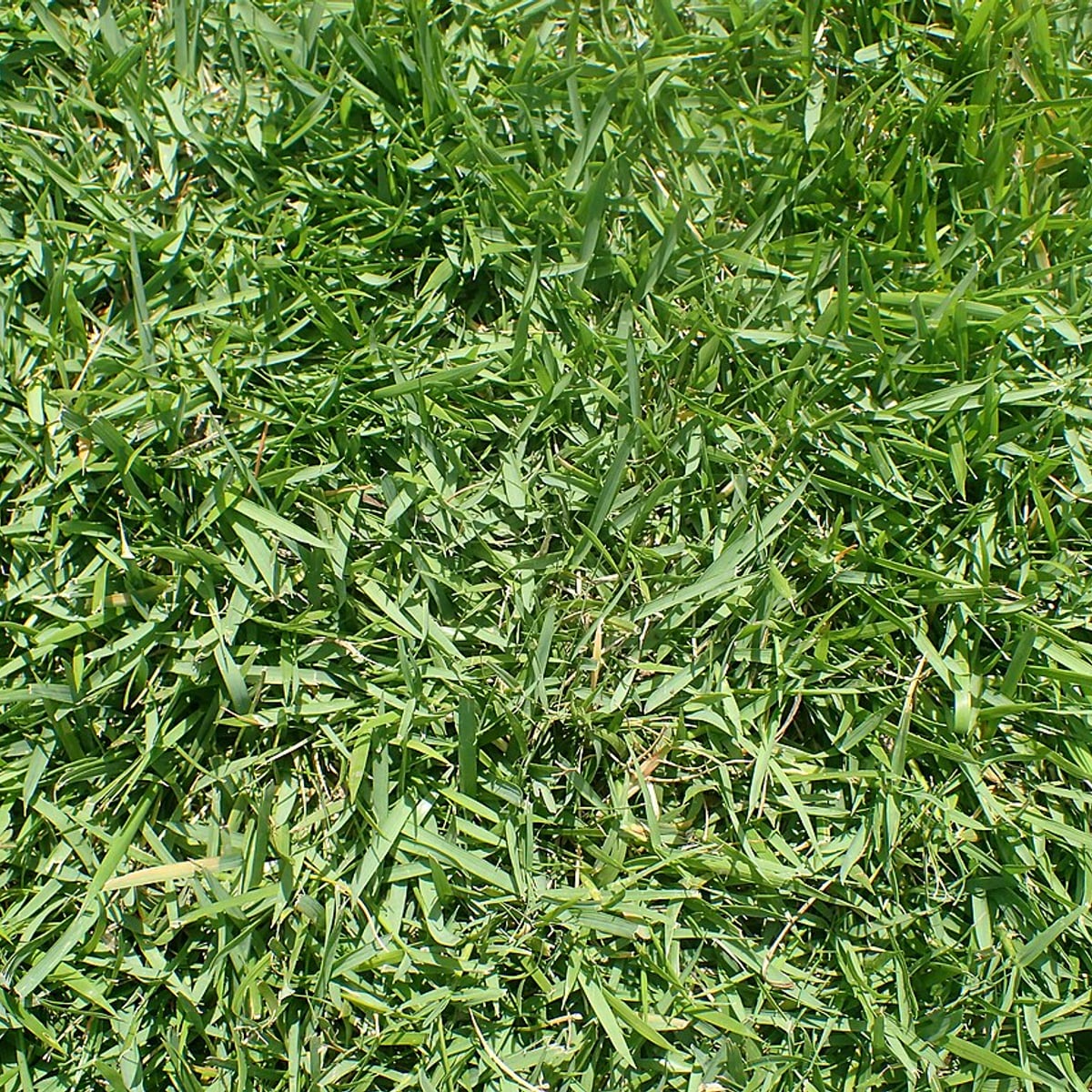
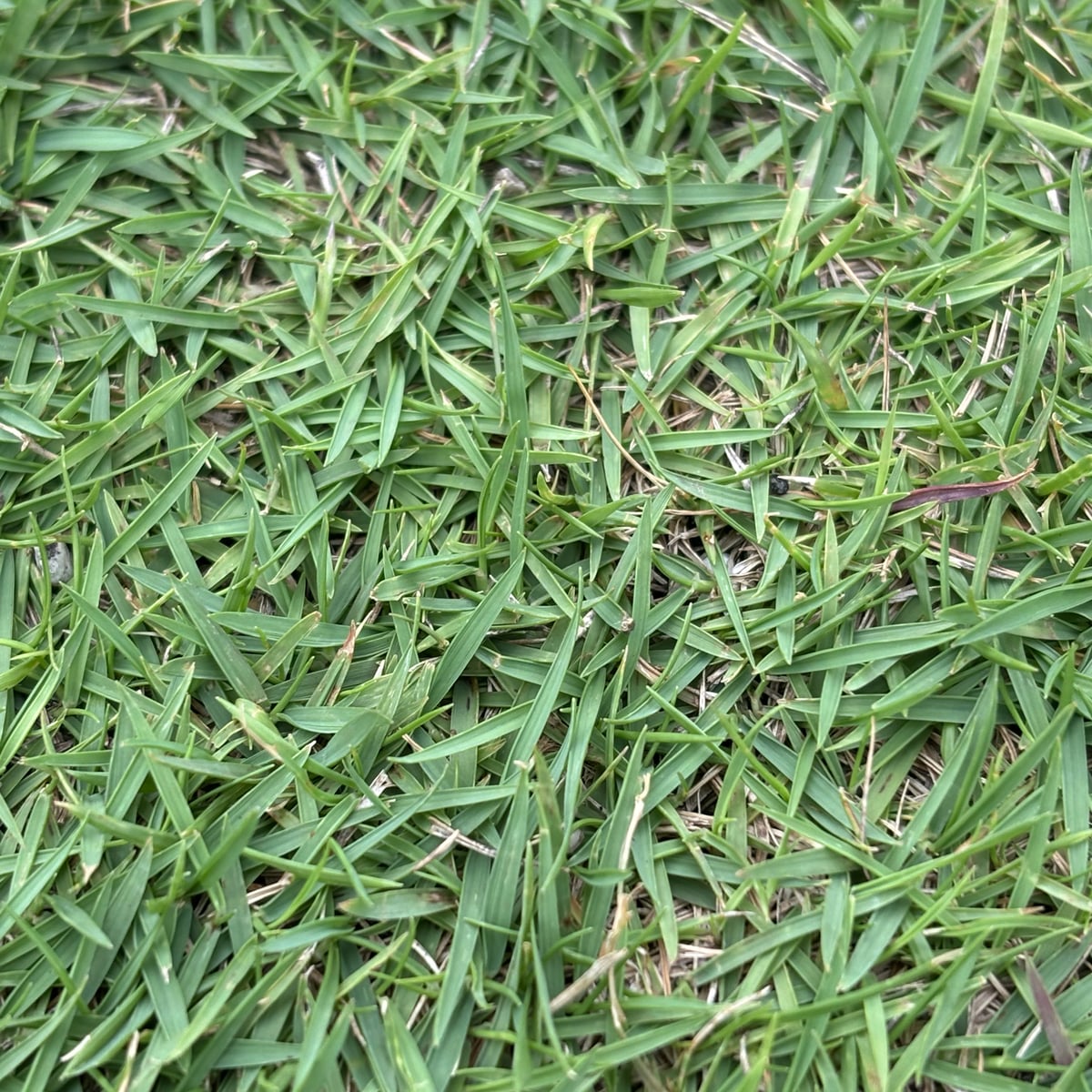
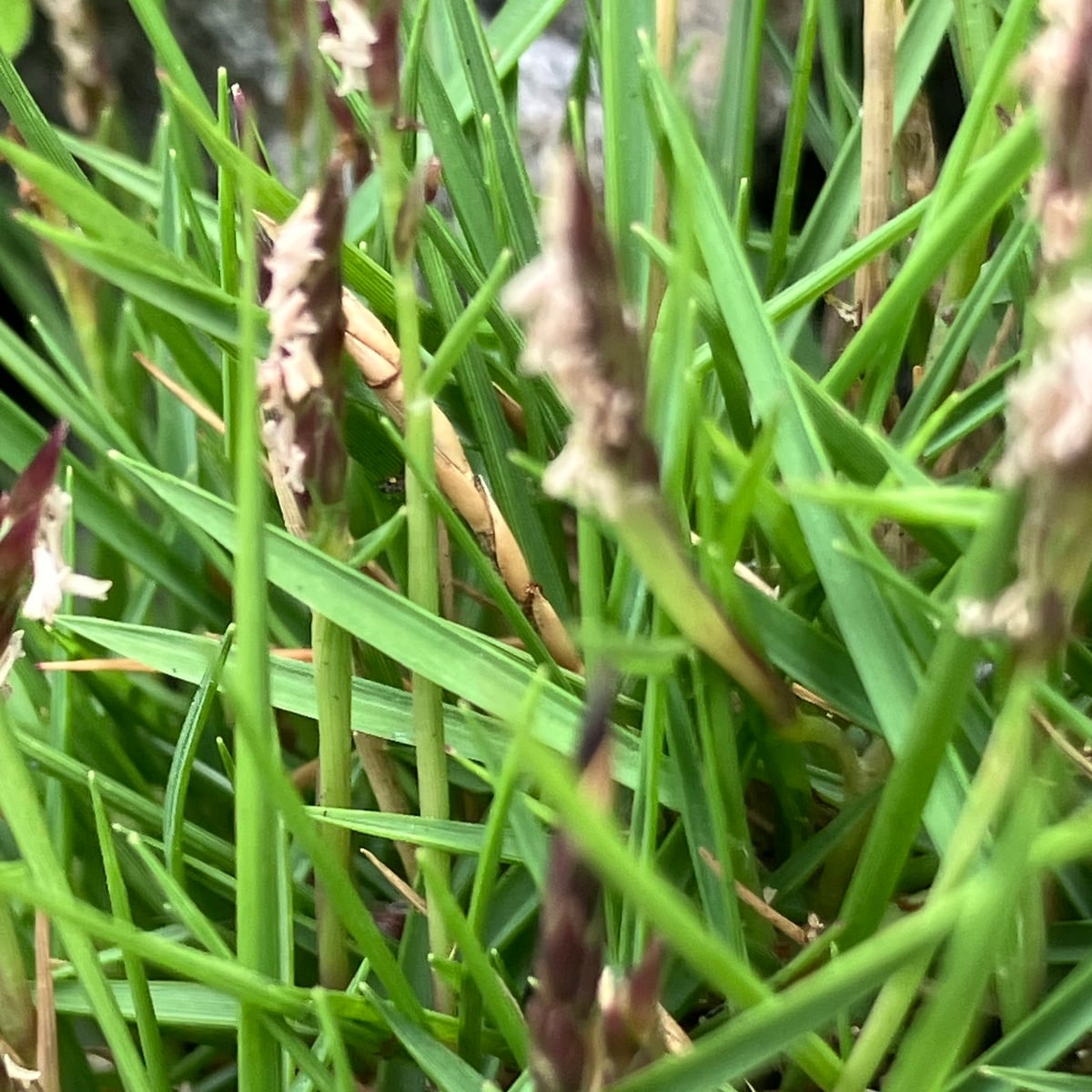
Zoysia has some distinctive traits that set it apart from other warm-season grasses. Once you know what to feel and look for, it's hard to confuse with anything else.
The Density Test (The Easiest Way)
Try to push your finger straight down through the turf to the soil. If the grass is so dense that it resists your finger and you have to push hard to reach the soil, there's a good chance you're standing on Zoysia. Bermuda is dense too, but not this kind of "I can barely get through" dense. St. Augustine is not even close. Zoysia's density is in a class of its own among warm-season lawn grasses.
The Feel Test
Run your hand across the grass in one direction, then the other. Zoysia blades are stiff and feel noticeably rougher when you rub against the grain compared to with the grain. Bermuda blades are finer and more flexible. St. Augustine blades are wider and smoother. Zoysia has this distinctive wiry resistance that's easy to recognize once you've felt it.
Visual Identification
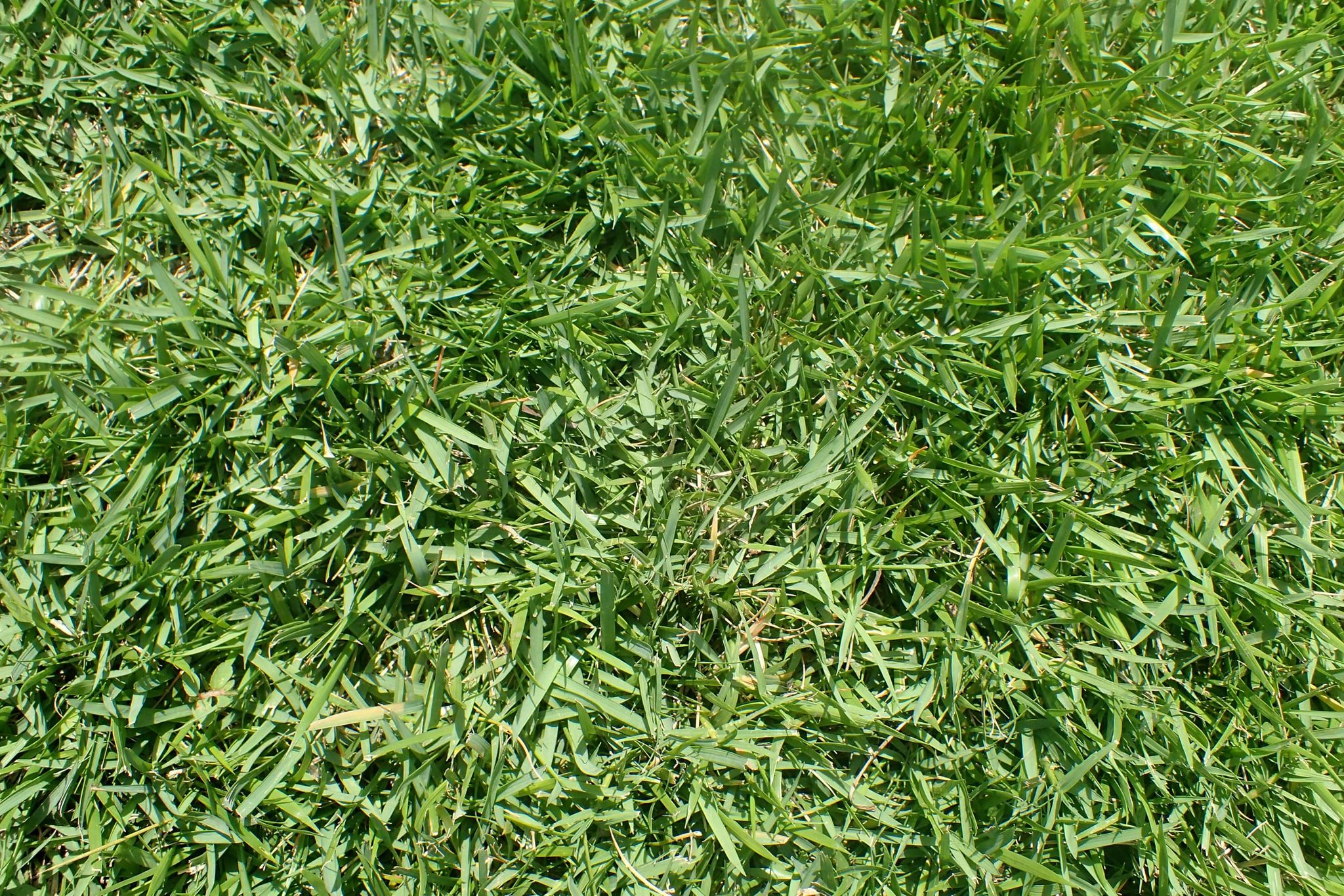
- Blade texture: Medium width, noticeably stiffer than Bermuda or St. Augustine. Blades hold their shape rather than bending over
- Blade shape: Blades taper to a pointed tip and have a slight curl or roll at the edges
- Color: Rich dark green during the growing season, distinctly darker than Bermuda. Turns tan or golden brown during dormancy, not the straw-brown of Bermuda
- Thatch layer: Zoysia builds a noticeable spongy layer between the green grass and the soil. When you walk on it, it feels like walking on a slightly springy mat
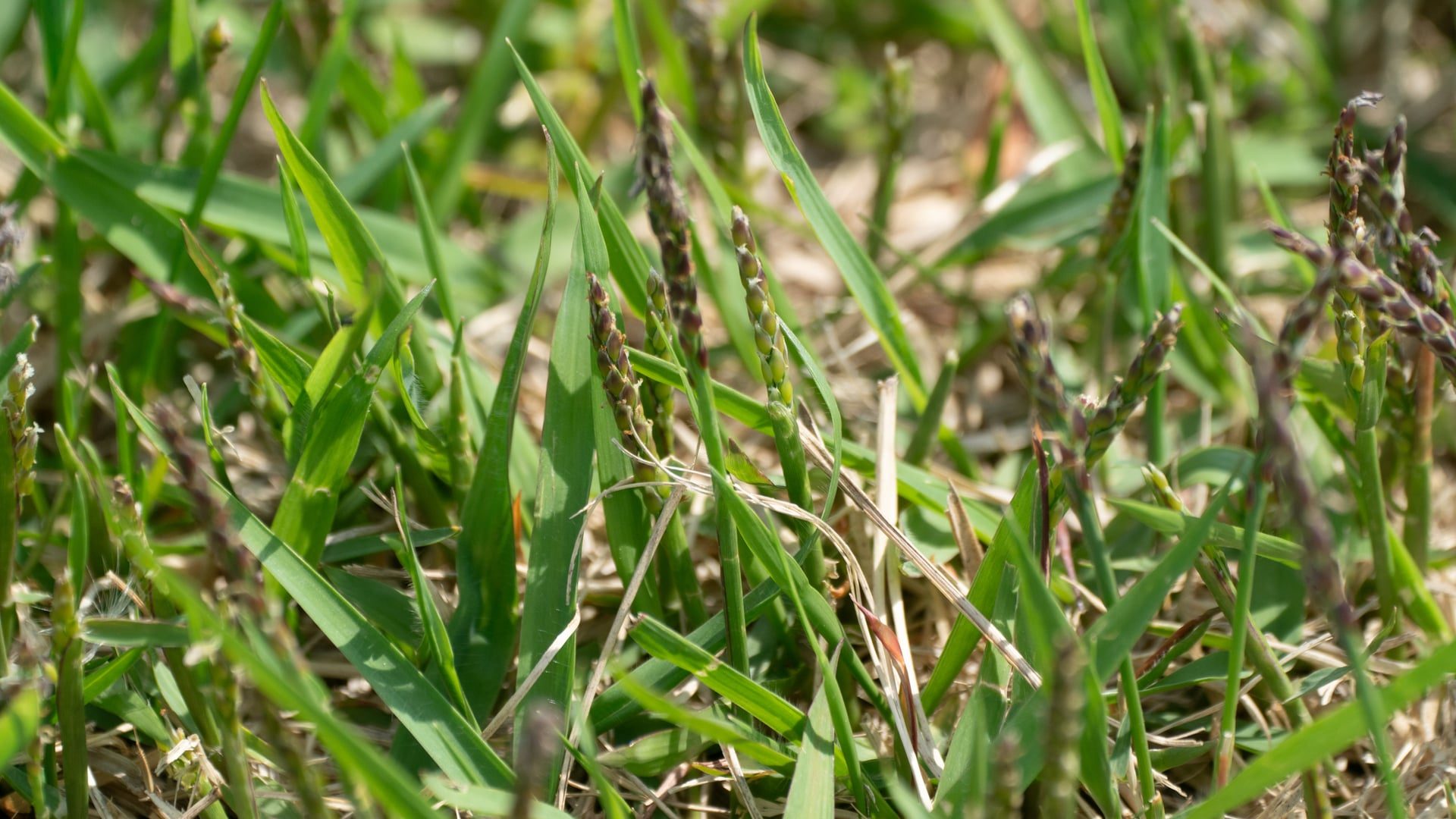
- Seed heads: Small, inconspicuous seed heads that are rarely noticed. Much less prominent than Bermuda's distinctive finger-like seed heads
Growth Pattern
Zoysia spreads primarily via rhizomes (underground runners), unlike Bermuda which sends visible stolons racing across the surface. You won't see aggressive above-ground runners like you would with Bermuda or St. Augustine. Zoysia's expansion happens quietly underground, and new shoots seem to pop up from nowhere. The turf feels thick and spongy when you walk on it due to the dense growth and thatch layer, almost like walking on a foam mattress.
Telling Zoysia Apart from Similar Grasses
Zoysia vs. Bermuda: Zoysia is darker green, stiffer, denser, and slower growing. Bermuda has visible above-ground stolons; Zoysia does not. Bermuda produces prominent seed heads; Zoysia's are barely visible.
Zoysia vs. St. Augustine: Zoysia blades are much narrower and stiffer. St. Augustine has wide, flat blades and thick, flat stolons. St. Augustine is lighter green and has a coarser texture overall.
Not sure what grass you have? Upload a photo to our free grass identifier for an instant analysis.
Types & Varieties
Zoysia is a genus, not a single grass, and the cultivar you choose decides texture, color, shade tolerance, and how you establish it. For home lawns it mostly comes down to five.
| Cultivar | Texture | Color | Shade tolerance | Establish by | Best for |
|---|---|---|---|---|---|
| Emerald | Fine | Dark green | High | Sod / plugs | High-end, manicured lawns |
| Meyer | Medium | Medium green | Medium | Sod / plugs | Transition zone (best cold tolerance) |
| Zeon | Fine, soft | Bright green | High | Sod / plugs | Shaded lawns, premium feel |
| El Toro | Coarse | Medium green | Medium | Sod / plugs | Faster establishment, drought |
| Zenith | Medium | Medium green | Medium | Seed | DIY seeding, budget lawns |
The practical split: if you want the finest, densest lawn and will buy sod, Emerald or Zeon win, with Zeon the pick if you have shade. For the transition zone where winter cold is the real risk, Meyer is the proven choice. And if you want to establish from seed instead of paying for sod, Zenith is essentially the only mainstream option, because most fine-textured zoysias are seedless and must be sodded or plugged.
Best Zones & Climate
Zoysia is one of the most versatile warm-season grasses when it comes to climate tolerance, performing well in USDA Zones 6-9. That Zone 6 capability is Zoysia's secret weapon and the main reason I recommend it so often in regions where other warm-season grasses struggle.
Ideal Climate Conditions
- Air temperature: 80-95 degrees F for peak growth. Zoysia is a true warm-season grass that wants heat to perform its best
- Soil temperature: 70 degrees F and above for active growth. Zoysia requires warmer soil than Bermuda to get going, which is why it's one of the last warm-season grasses to green up in spring
- Cold tolerance: Best among warm-season grasses. Can survive in Zone 6 where temperatures regularly drop into the single digits. Bermuda starts dying at 25 degrees F; Zoysia handles temperatures well into the teens without damage
- Heat tolerance: Excellent, though growth can slow in extreme heat above 100 degrees F. In those conditions, Zoysia conserves energy rather than pushing growth, which is actually a smart survival strategy
The Transition Zone Champion
Zoysia's real superpower is its cold tolerance, and this is where my recommendation gets strongest. The transition zone, which includes parts of Virginia, Kentucky, Tennessee, Missouri, Kansas, southern Ohio, southern Indiana, and similar climates, is a notoriously difficult region for lawns. Winters are too harsh for most warm-season grasses (Bermuda gets winterkill) but summers are too hot and humid for cool-season grasses (Kentucky Bluegrass struggles terribly).
Zoysia threads that needle perfectly. I've installed Zoysia lawns in the Nashville, Memphis, and Kansas City areas that have thrived for 10+ years without winterkill, even in unusually harsh winters. If you're in the transition zone and tired of watching your cool-season lawn melt in July or your Bermuda thin out after cold winters, Zoysia is very likely your answer.
Shade Tolerance
Zoysia handles moderate shade better than Bermuda, needing only 3-4 hours of direct sunlight per day. This is a meaningful advantage for homeowners with mature trees. Where Bermuda would thin out and eventually die under a partial canopy, Zoysia can maintain reasonable density.
That said, Zoysia still performs best in full sun. For heavy shade (less than 3 hours of direct sun), St. Augustine is the better warm-season choice, or consider a shade-tolerant cool-season grass like Fine Fescue. I typically advise clients to run Zoysia in the open areas and partial shade, then transition to St. Augustine or Fescue in the deep shade under dense tree canopies.
Where Zoysia Is Not the Right Choice
Zoysia is not ideal if you need fast establishment (choose Bermuda), if you have deep shade (choose St. Augustine), or if you're in Zone 10 or the Deep South and want maximum heat performance (Bermuda will outperform Zoysia in extreme heat). Zoysia is also not great for heavily trafficked sports fields or areas that take constant abuse, because its slow recovery means damage accumulates faster than it heals.
Soil Preparation & pH
Zoysia is adaptable to a wide range of soils, which is part of what makes it such a practical choice. But because Zoysia establishes slowly, investing in good soil preparation upfront pays dividends that compound over years. A Zoysia lawn planted in well-prepared soil will fill in faster, develop deeper roots, and need less ongoing intervention than one planted in neglected ground.
Get a Soil Test First
A soil test through your local extension office ($15-25) is the smartest investment you can make before planting or troubleshooting any lawn issue. It tells you exactly what to add and, just as importantly, what not to waste money on. I've lost count of the number of homeowners I've talked to who have been applying products their soil doesn't need. A soil test eliminates the guessing.
The test will report your soil pH, phosphorus, potassium, organic matter percentage, and often micronutrient levels. The accompanying recommendations tell you exactly what amendments to apply and at what rates. Follow those recommendations, not the advice from the guy at the hardware store.
Ideal Soil Conditions
- pH range: 6.0-7.0 (slightly acidic to neutral). This is where Zoysia absorbs nutrients most efficiently. Zoysia tolerates a somewhat wider range (5.5-7.5) but performance drops outside the ideal window
- Soil type: Adaptable to clay, loam, and sandy soils as long as drainage is adequate. Zoysia's deep-root potential is best realized in loamy or amended clay soils that retain moisture without becoming waterlogged
- Drainage: Good drainage is important. Zoysia can handle brief wet periods after heavy rain but not persistent standing water. If puddles remain for more than a few hours after rain, address the drainage issue before planting
- Organic matter: 2-4% is ideal. Organic matter improves water retention in sandy soils and drainage in clay soils, helping Zoysia in both directions
Adjusting Soil pH
If pH Is Too Low (Acidic)
Apply pelletized lime at 50 lbs per 1,000 sq ft to raise pH by approximately one point. This is common in the Southeast where soils trend acidic. Apply in fall or winter, as lime takes 2-3 months to fully react. Retest after 3 months and reapply if needed. Don't try to correct a major pH problem in one application. Gradual adjustment, spread over 2-3 applications, is safer for the grass.
If pH Is Too High (Alkaline)
Apply elemental sulfur according to soil test recommendations. More common in western and southwestern states. Sulfur works slowly through microbial conversion, so apply in fall and retest in spring. If you see iron chlorosis (yellowing with green veins), alkaline pH is often the culprit because iron becomes unavailable to the plant above pH 7.0.
Soil Preparation for New Zoysia Lawns
Because Zoysia establishes slowly, giving it great soil from the start pays off more than with any other grass. The difference between Zoysia planted in well-prepared soil versus poor soil is not just speed of establishment. It's the difference between a lawn that needs minimal inputs for years and one that constantly struggles.
- Get a soil test and address pH before any other preparation
- Kill existing vegetation with glyphosate and wait 2 weeks for complete kill
- Rototill the top 4-6 inches, incorporating 2-3 inches of quality compost. This is especially important for clay soils, which are common in the transition zone where Zoysia thrives
- Grade the surface for drainage. Water must flow away from structures. A 1-2% grade (1-2 inches of drop per 10 feet) is ideal
- Roll lightly to firm the seedbed without creating compaction
- Let the soil settle for a week, then rake to final grade
- Apply starter fertilizer (high phosphorus, like 18-24-12) just before planting
Improving Soil on Existing Zoysia Lawns
For established lawns on compacted or clay-heavy soil, annual core aeration followed by compost topdressing is the path to improvement without destroying your turf. After aerating in late spring, spread a thin layer (1/4 inch) of quality compost over the lawn. Over 2-3 years, this gradually transforms even heavy clay into workable soil with better drainage and root penetration. Zoysia recovers from aeration slower than Bermuda (3-4 weeks vs. 2-3 weeks), so time this for peak growth when recovery conditions are best.
Recommended Products
- 1Check price
 Top pick
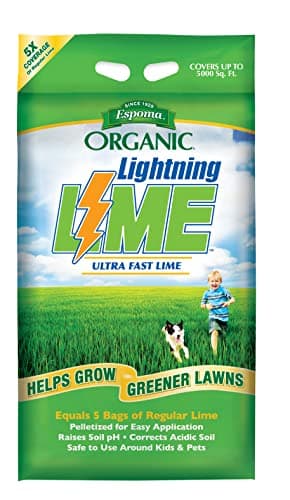
Espoma Organic Lightning Lime (Fast-Acting Pelletized Lime)
Fast-acting pelletized lime for low-pH lawns when a soil test confirms you need to raise pH before fertilizing harder. Covers up to 5,000 sq ft.
- 2Check price
 Best value
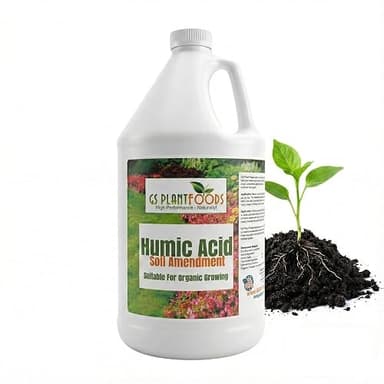
GS Plant Foods Liquid Humic Acid
Leonardite-derived humic acid that improves soil structure and nutrient availability. OMRI listed, 1 gallon.
As an Amazon Associate we earn from qualifying purchases.
Fertilizer Program
One of Zoysia's biggest selling points is its modest appetite for fertilizer. Where Bermuda wants 4-5 lbs of nitrogen per 1,000 sq ft per year, Zoysia does beautifully with about half that amount. This is not just a cost savings, though that's real. It's also less time buying, hauling, and spreading product. Less fertilizer means less environmental runoff. And here's the thing most people don't expect: overfeeding Zoysia is actually one of the most common mistakes I see, and it causes more problems than underfeeding.
Annual Fertilizer Requirements
- Nitrogen: 2-3 lbs per 1,000 sq ft per year, split across 2-3 applications. That's it. Resist the urge to add more
- Phosphorus: Based on soil test only. Many soils already have adequate phosphorus, and adding unnecessary phosphorus wastes money and can pollute waterways
- Potassium: 1-2 lbs per 1,000 sq ft per year. Important for cold hardiness, which matters especially in the transition zone
- Ideal ratio: 4-1-2 or 3-1-2 (e.g., 15-0-15 if phosphorus is adequate, or 16-4-8 if it's not)
Seasonal Fertilizer Schedule
Late Spring: First Application (Soil Temp Consistently Above 70 Degrees F)
Apply 0.5-1 lb N per 1,000 sq ft of slow-release fertilizer. This is your primary growth application, and timing is critical. Wait until Zoysia is fully green before applying. I mean fully green, not 50% green, not "mostly there." Zoysia is one of the last warm-season grasses to emerge from dormancy, and fertilizing before full green-up does nothing but feed weeds. In most of the South, full green-up doesn't happen until mid-May or even early June. Be patient.
Summer: Optional Second Application (June Through July)
Apply 0.5-1 lb N per 1,000 sq ft if the lawn needs it. Here's my advice: look at your lawn. If it's maintaining good dark green color and growing steadily, skip this application entirely. Zoysia doesn't need to be pushed. If color is fading or growth seems slow, go ahead and apply. But don't fertilize just because the calendar says it's time. Let the grass tell you.
Early Fall: Final Application (August Through September)
Apply 0.5 lb N per 1,000 sq ft with added potassium to help prepare for winter dormancy. Use a low-nitrogen, high-potassium formula like 15-0-15 or 5-0-20. The potassium strengthens cell walls, improving cold tolerance and disease resistance heading into the dormant period. This is especially important in the transition zone where winter stress is the biggest threat to Zoysia health.
Winter
Do not fertilize dormant Zoysia. Any nitrogen applied during dormancy feeds winter weeds and is completely wasted on the grass. Even slow-release products applied in late fall can release nitrogen during warm spells that benefits weeds, not Zoysia.
The Danger of Overfertilizing Zoysia
I want to spend some extra time on this because it's the mistake I correct most often with Zoysia homeowners. People who switch from Bermuda to Zoysia often bring their Bermuda fertilizer habits with them, and the results are predictable and bad.
Excess nitrogen on Zoysia causes:
- Excessive thatch buildup: More nitrogen means faster growth means more dead stolons and roots accumulating. Thatch is already Zoysia's biggest maintenance challenge. Overfeeding makes it dramatically worse
- Increased disease susceptibility: Lush, soft growth from excess nitrogen is more vulnerable to large patch and other fungal diseases. You're literally feeding the disease
- More mowing: One of Zoysia's advantages is that it grows slower than Bermuda, meaning less mowing. Push it with nitrogen and you lose that advantage
- Shallow roots: Excess nitrogen pushes top growth at the expense of root development, reducing drought tolerance
The bottom line: if your Zoysia looks good, leave it alone. More fertilizer will not make a good Zoysia lawn look better. It will make it look the same while creating problems you can't see yet.
Fertilizer Types That Work Well for Zoysia
- Slow-release granular is ideal because it meters out nitrogen over weeks, matching Zoysia's steady but moderate growth rate. Polymer-coated products are particularly good
- Organic options (Milorganite, compost-based fertilizers) work well for Zoysia because their gentle, slow nutrient release matches the grass's lower demand. Milorganite at the bag rate is a popular and effective choice for Zoysia homeowners
- Quick-release fertilizers should be used sparingly, if at all. The surge growth from quick-release nitrogen causes thatch and can burn Zoysia in hot weather
Recommended Products
- 1Check price
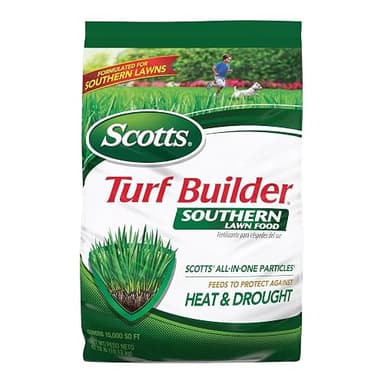 Top pick
Scotts Turf Builder Southern Lawn Food
Warm-season fertilizer built for southern lawns, especially when you want a homeowner-friendly granular option.
- 2Check price
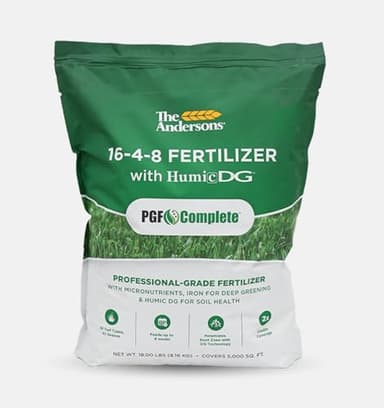 Best value
The Andersons PGF Complete 16-4-8
Balanced slow-release fertilizer for established lawns that need steady feeding without a quick flush of top growth.
As an Amazon Associate we earn from qualifying purchases.
Month-by-Month Care Calendar
Zoysia has a shorter active growing season than Bermuda, greening up later in spring and going dormant earlier in fall. The good news is that means fewer months of active maintenance. The rhythm of Zoysia care is: wait patiently in spring, maintain lightly in summer, prepare for winter in fall, and relax in winter.
Winter (December Through February)
Zoysia is dormant and tan or golden brown. This is completely normal.
- Minimize foot traffic, especially when the turf is frosted or frozen. Walking on frozen Zoysia can crush the crowns and cause damage that shows up as thin patches in spring
- Do not fertilize. Everything applied now feeds winter weeds
- If winter weeds are present, you can spot-treat with a selective herbicide on mild days above 50 degrees F
- Service equipment, sharpen mower blades (remember, Zoysia dulls blades faster than most grasses)
- Plan spring purchases. Order any amendments your soil test recommended
- Remove heavy leaf accumulation. A thick layer of wet leaves on dormant Zoysia promotes disease and can smother the grass
Early Spring (March Through April)
Zoysia is one of the last warm-season grasses to green up. Don't panic if your neighbor's Bermuda is green while your Zoysia is still brown. This is expected.
- Apply pre-emergent when soil temp reaches 50-55 degrees F for 3 consecutive days. This is your crabgrass prevention window and it happens before Zoysia shows any green
- Watch for green-up. Zoysia needs soil temperatures consistently at or above 70 degrees F before it really gets moving. In most areas, that's late April at the earliest
- Resist the urge to fertilize. Seriously. Wait for full green-up, which might not come until May or even June
- Light raking to remove winter debris and break up any matted areas. Don't be aggressive with raking. Zoysia's dense thatch can be pulled up if you rake too hard
- Unlike Bermuda, Zoysia does not need a spring scalp. The previous year's growth breaks down on its own and doesn't inhibit green-up the way Bermuda's dead canopy does
Late Spring (May Through June)
- First fertilizer application once Zoysia is fully green (0.5-1 lb N per 1,000 sq ft slow-release)
- Begin regular mowing schedule. Start at the higher end of Zoysia's range (2 inches) and adjust down if desired
- Treat broadleaf weeds with selective herbicide if present. Target weeds while they're actively growing and temps are 60-85 degrees F
- Start irrigation if rainfall drops below 1 inch per week
- This is the ideal window for core aeration if your soil is compacted or if thatch is building up
- Late May through June is also prime time for planting new Zoysia (sod, plugs, or seed)
Summer (July Through August)
Zoysia's peak growing season, though it's less frantic than Bermuda's summer schedule.
- Mow regularly at 1-2 inches, typically every 7-10 days. One of the nice things about Zoysia is that you're mowing weekly, not every 3-5 days like Bermuda
- Optional second fertilizer application if lawn color is fading (0.5-1 lb N per 1,000 sq ft). If it looks good, skip it
- Water about 1 inch per week if no rain. Zoysia's drought tolerance means you can push this a bit, but consistent moisture produces the best-looking lawn
- Monitor for large patch disease in humid climates. Look for circular patches of thinning, orange-brown turf
- Watch for billbugs, grubs, and armyworms. Zoysia is susceptible to all three during summer
Early Fall (September Through October)
- Apply final fertilizer with potassium emphasis (15-0-15 or similar). Time this 6-8 weeks before your average first frost date
- Apply fall pre-emergent in late August or September for winter annual weeds (Poa annua, henbit, chickweed)
- If large patch has been a problem in previous years, apply preventive fungicide when soil temperatures drop to 70 degrees F
- Growth begins slowing as temperatures drop and days shorten
- Reduce mowing frequency as growth slows. Gradually raise height by 0.5 inch heading into dormancy
- Core aerate if you missed the late spring window, though recovery will be slower this late in the season
Late Fall (November)
- Zoysia goes dormant as soil temp drops below 55 degrees F. The lawn transitions from green to a golden tan
- Perform your final mow before dormancy at your normal mowing height
- Remove fallen leaves promptly. This is critical for Zoysia because its dense thatch layer traps moisture under the leaves, creating ideal disease conditions
- Winterize your irrigation system before the first hard freeze
- I generally do not recommend overseeding Zoysia with ryegrass for winter color. The ryegrass competes with Zoysia during spring transition and delays green-up significantly. Zoysia is already the last to green up; adding ryegrass competition makes it worse
Zoysia Grass in Winter: Dormancy, Browning, and What to Do
Zoysia grass in winter turns a uniform golden tan, and that color change worries more homeowners than any other part of owning a zoysiagrass lawn. Here's the reassuring truth: dormancy is a survival feature, not a health problem. The grass shuts down top growth once soil temperatures hold below 55 degrees F and lives off stored carbohydrates in its rhizomes until spring.
What's Normal in Winter
- Full browning: A dormant zoysia lawn goes completely tan, usually a bit more golden than Bermuda's straw brown. Uniform color is the sign of a healthy shutdown
- Long dormancy: Zoysia is the last warm-season grass to green up. Depending on your zone, expect brown from roughly November through April, a few weeks longer than Bermuda on both ends
- No growth at all: You will not mow from the final cut in late fall until green-up. That's normal, not a problem to fix
Should You Water or Fertilize Zoysia in Winter?
Skip fertilizer entirely. Nitrogen on dormant Zoysia feeds winter weeds and can trigger tender growth during warm spells that the next freeze kills. Watering is mostly unnecessary too, with one exception: during extended dry, windy cold snaps with no snow cover, a deep drink every 3-4 weeks prevents winter desiccation, especially on sandy soils.
What About Winter Color?
You have two options for a green lawn in winter, and I only like one of them. Turf colorant (lawn paint) gives a convincing green with zero effect on spring green-up, and golf courses use it constantly. Overseeding with ryegrass is the option I recommend against for Zoysia: the ryegrass competes hard during spring transition and delays the green-up of a grass that is already the slowest to wake. If winter brown truly bothers you, paint it, don't overseed it.
Red Flags During Dormancy
Two things are worth acting on in winter. First, heavy leaf cover: fallen leaves sitting on Zoysia's dense thatch trap moisture and set up large patch disease for spring, so keep leaves off the lawn. Second, traffic: dormant crowns can't repair themselves, so repeated foot or vehicle traffic across frozen, dormant Zoysia leaves tracks that persist well into summer.
Mowing Guide
Mowing Zoysia correctly is one of the simplest ways to keep it looking great, and the good news is that Zoysia's slower growth rate means less time behind the mower compared to Bermuda. The dense growth habit means it mows up cleanly and holds its shape well between cuttings. When people tell me their Zoysia lawn "looks like a putting green," it's usually because they found the right mowing height and stuck with it.
Optimal Mowing Height
- Standard varieties (Meyer, El Toro, Palisades): 1-2 inches. These coarser varieties look best at the higher end of this range
- Fine-bladed varieties (Emerald, Zeon, Innovation): 0.5-1.5 inches. These premium cultivars can be maintained very low for a true putting-green look
- During stress (drought, excessive heat, shade): Raise height by 0.5 inch to give the grass more leaf area for photosynthesis and better root shading
Why Mowing Height Matters for Zoysia
Zoysia mowed at the correct height develops a tight, level surface that's visually stunning. Mow it too high (above 2.5 inches) and the grass gets leggy, develops excessive thatch, and loses that carpet-like density. Mow it too low without a reel mower and you scalp the crowns, leaving brown patches. The sweet spot is specific to your variety and your mower type, and finding it is worth the effort.
Mowing Frequency
- Active growth (late spring through summer): Every 7-10 days. This is one of Zoysia's practical advantages. Bermuda owners are mowing every 3-5 days during peak season. You're mowing once a week, maybe less
- Peak summer heat: Every 5-7 days if growth accelerates during consistently hot weather
- Spring and fall transitions: Every 10-14 days as growth slows
- Dormant season: Not needed. The grass isn't growing
Reel Mower vs. Rotary Mower for Zoysia
The mower question matters with Zoysia, and the answer depends on your target height.
Below 1 inch: You need a reel mower. A rotary mower cannot produce a clean, even cut at these heights. A quality reel mower ($500-2,000 for homeowner models) delivers a scissor-like cut that makes fine-bladed Zoysia look absolutely phenomenal.
1 to 2 inches: A rotary mower works fine as long as the blade is sharp. Most homeowners fall in this range and their standard mower does the job well.
The critical difference: Zoysia's dense, wiry growth is harder on mower blades than most grasses. Whether you're using a reel or rotary mower, plan on sharpening more frequently than you would for Bermuda or cool-season grasses. I recommend sharpening rotary blades every 10-15 hours of mowing during the Zoysia season, roughly twice as often as most people currently do.
The Spongy Mowing Problem
This is a Zoysia-specific issue that catches a lot of homeowners off guard. As thatch builds up, the mower wheels sink into the spongy thatch layer, causing the blade to scalp the grass unevenly. You'll see a "washboard" pattern or random scalp marks. If this is happening, it's a sign your thatch has gotten too thick and needs to be addressed through aeration or dethatching. Proper thatch management eliminates this problem.
Practical Mowing Tips
- Keep blades sharp. Zoysia's stiff blades are more likely to tear than cut cleanly if the blade is dull. Torn tips turn gray-brown and look unhealthy
- Mulch clippings back into the lawn. Zoysia clippings break down and return nutrients to the soil. Despite the common myth, clippings do not contribute to thatch. Thatch comes from stems and roots, not leaf blades
- Alternate mowing direction each time to prevent grain and ensure an even cut
- Mow when dry for the cleanest cut. Wet Zoysia clumps heavily and can clog mower decks
- Don't skip mowings. Letting Zoysia get too tall and then cutting it back hard exposes the lower stems, which haven't adapted to sunlight, resulting in a brown, scalped appearance that takes days to recover
Watering Schedule
Zoysia has good drought tolerance once established, and it actually performs better when you water less frequently. This is one of those areas where doing less truly produces better results. Overwatering Zoysia is a more common problem than underwatering, and the consequences (shallow roots, disease, weed invasion) are often worse than the drought stress you were trying to prevent.
Weekly Water Requirements
- Spring: 0.75-1 inch per week (including rainfall). Zoysia is just waking up and doesn't need much
- Summer: 1-1.25 inches per week. Notice this is less than Bermuda (1-1.5 inches) and significantly less than Kentucky Bluegrass (1.5-1.8 inches)
- Fall: 0.75-1 inch per week, tapering as growth slows and dormancy approaches
- Winter: None needed. Zoysia is dormant and doesn't use water
The Deep Watering Strategy
The goal, just like with any grass, is training roots to grow deep by watering deeply and infrequently. Zoysia's root system can reach 4-6 inches in good soil, and deep watering encourages those roots to explore the full depth of their potential.
- Frequency: 1-2 times per week is ideal for Zoysia. Yes, just once or twice. This is not a grass that needs every-other-day watering. Apply enough to wet the soil 4-6 inches deep, then let it dry out before watering again
- Amount per session: 0.5-0.75 inches, applied slowly to allow absorption without runoff
- Time of day: Early morning (before 8 AM) reduces evaporation and ensures blades dry quickly. Evening watering is the single worst irrigation habit for any warm-season grass, promoting fungal diseases that Zoysia is already somewhat susceptible to
How to Know When Zoysia Needs Water
Zoysia gives you clear signals before drought damage becomes serious. Learning to read these signals is better than following a rigid calendar:
- Footprinting: Walk across the lawn and look behind you. If your footprints stay visible and the grass doesn't spring back within a few seconds, it's time to water
- Color shift: Zoysia under mild drought stress shifts from dark green to a dull gray-green. This is the plant's first warning signal
- Leaf curling: Individual blades fold or roll inward along their length to reduce surface area and conserve moisture. This is the last warning before dormancy
Drought Response: What Happens When You Don't Water
When Zoysia doesn't get enough water, it goes dormant and turns brown rather than dying. This is a survival mechanism, not a death sentence. The rhizome system stays alive underground even when the visible grass looks completely dead. Once water returns, whether from rain or irrigation, Zoysia greens back up. Established Zoysia can handle 3-4 weeks of drought without permanent damage, and I've seen it recover from even longer dry spells in heavier soils.
The important rule: commit to one strategy. Either water consistently through summer, or let it go dormant. The worst approach is inconsistent watering, two weeks on, one week off, then back on. This forces the plant to repeatedly switch between active growth and dormancy, exhausting its energy reserves and weakening the turf overall.
Overwatering: The Hidden Problem
I see more Zoysia problems from overwatering than underwatering. The symptoms are subtle at first but compound over time:
- Shallow root system (roots stay in the top 1-2 inches because moisture is always available there)
- Increased susceptibility to large patch disease, which thrives in consistently moist conditions
- Nutsedge and other moisture-loving weeds moving in
- Spongy, excessive thatch buildup (wet conditions slow thatch decomposition)
If you're watering every day and your Zoysia has any of these symptoms, the solution is almost certainly less water, not more.
Seeding & Establishment
Establishment Methods: Understanding Your Options
Most premium Zoysia varieties are established from sod, plugs, or sprigs rather than seed. Seeded varieties exist (Zenith, Compadre, and Zorro are the most common), but they're limited compared to the superior cultivars available only as vegetative stock. The best-looking Zoysia lawns I've installed have been sod varieties like Zeon, Emerald, Innovation, or Geo, which produce a finer texture and darker color than any seeded variety on the market.
Here's the breakdown of each method:
Sod
Instant lawn. You lay it, water it, and within 2-3 weeks the roots are established. Sod costs $0.35-0.80 per square foot for material (plus installation if you hire it out), but you skip the 1-2 year wait for fill-in. For homeowners who value their time and want to enjoy their lawn this season, sod is worth the investment. Make sure to buy from a reputable sod farm and verify the variety before it's delivered.
Plugs
Small squares or rounds of established turf planted in a grid pattern. Plugs are cheaper than sod but require patience. The grass spreads from each plug via rhizomes until the spaces between them fill in. This is a proven method, but understand what you're signing up for: you'll be looking at a lawn with visible gaps for months.
Seed (Seeded Varieties Only)
The most affordable option, but limited to varieties like Zenith and Compadre. Seeded Zoysia is coarser and lighter in color than the premium sod varieties. It works, but if you're choosing Zoysia for its carpet-like appearance, seeded varieties may not fully deliver that vision.
Best Time to Plant
Late spring to early summer (May through July) when soil temperatures are consistently above 70 degrees F and daytime highs are reliably above 80 degrees F. Zoysia needs warm soil and plenty of growing time before fall dormancy. Because it establishes slowly, every week of growing season you can give it matters.
Do not plant Zoysia in fall. I know it's tempting to lay sod in October when the weather is pleasant, but Zoysia won't root properly before going dormant. I've seen fall-planted Zoysia sod lift right off the ground in spring because the roots never anchored. Don't risk it.
Seeding Rates (for Seeded Varieties)
- New lawn: 2-3 lbs per 1,000 sq ft. Use the higher rate for faster coverage
- Overseeding existing thin areas: 1-2 lbs per 1,000 sq ft
Germination and Fill-in Timeline
Zoysia seed germinates in 14-21 days under ideal conditions (soil temperature above 70 degrees F, consistent moisture, good seed-to-soil contact). But germination is just the beginning. Full coverage from seed takes 1-2 full growing seasons because Zoysia spreads so slowly. This is normal for this grass and is not a sign that something is wrong. If you seeded in June and the lawn looks patchy in September, that's expected. By the following June, it should be filling in nicely, and by the end of the second growing season, most seeded Zoysia lawns are fully covered.
Plug Spacing and Fill-in Rates
If using plugs, spacing determines how quickly you get a complete lawn:
- 6-inch spacing: Expect coverage in one growing season. More expensive due to the number of plugs needed, but you get a lawn fastest
- 12-inch spacing: Plan on 1.5-2 growing seasons for full coverage. More affordable but requires more patience
- 18-inch spacing: Budget-friendly but can take 2+ growing seasons. I generally don't recommend going wider than 12 inches because the gaps stay open so long that weeds become a major management issue
Establishment Tips
- Prepare soil thoroughly (see the soil preparation section). Good soil preparation is more impactful for slow-establishing Zoysia than for any other grass
- For seed: spread with a broadcast spreader in two perpendicular passes at half rate each direction. Lightly rake for seed-to-soil contact. Do not bury seed deeper than 1/4 inch
- For plugs: use a plugging tool or bulb planter to cut holes at your chosen spacing. Press each plug firmly into the hole so the top is level with the surrounding soil
- Water lightly 2-3 times daily to keep the seedbed or plugs consistently moist during the first 2-3 weeks. This is the most critical maintenance task during establishment
- Gradually transition to deep, infrequent watering over 3-4 weeks as roots establish
- First mow when grass reaches 2-2.5 inches. Cut to about 1.5 inches with a sharp blade
- Do not apply broadleaf herbicide for at least 8 weeks after planting. Young Zoysia is sensitive to chemical stress
- Fertilize lightly (0.5 lb N per 1,000 sq ft) 4-6 weeks after planting to encourage spread
Recommended Products
- 1Check price
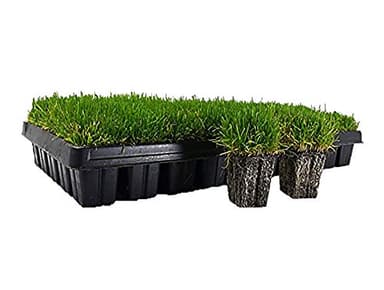 Top pick
Zoysia Grass Plugs (50 Large Plugs, EZPlug)
Fifty live zoysia plugs — the practical way to start or spread a zoysia lawn, since zoysia establishes far better from plugs than from seed.
As an Amazon Associate we earn from qualifying purchases.
Weed Control
A mature, dense Zoysia lawn is one of the best natural weed barriers you can have. The thick turf simply doesn't leave room for weed seeds to reach the soil and germinate. I've seen established Zoysia lawns that haven't needed a single herbicide application in years because the density does the work. But getting to that point, and maintaining it through dormancy, requires a thoughtful approach.
When Weeds Are a Problem
Most weed issues in Zoysia lawns happen during two windows: during establishment (before the lawn fills in) and during winter dormancy (when the brown, dormant grass offers zero competition). During establishment, the gaps between plugs or the thin stands from seed give weeds direct access to bare soil and sunlight. During dormancy, winter annual weeds like Poa annua, henbit, and chickweed germinate and grow freely in the absence of competition. Understanding these windows helps you target your weed control efforts where they matter most.
Pre-Emergent Herbicides (Prevention)
Pre-emergent is your most important chemical tool for Zoysia lawns. It creates a barrier in the top layer of soil that prevents weed seeds from germinating.
Spring Pre-Emergent
Apply when soil temperature reaches 50-55 degrees F for 3 consecutive days. This prevents crabgrass, goosegrass, and other summer annual weeds. Timing is before Zoysia greens up, which feels counterintuitive, but the weeds germinate before Zoysia wakes up. Products containing prodiamine (Barricade) or dithiopyr (Dimension) are the most effective options. In most areas, the application window is March through mid-April.
Fall Pre-Emergent
Apply in late August to September to prevent winter annual weeds. This application is critical for Zoysia because winter weeds are the biggest cosmetic problem during the months-long dormancy period. Those patches of bright green in your otherwise brown, dormant lawn? Fall pre-emergent would have prevented them.
The Establishment Conflict
Do not apply pre-emergent if you plan to plant plugs or seed within 8-12 weeks. Pre-emergent prevents grass seed germination too. This is the biggest challenge during Zoysia establishment: you can't protect against weeds chemically when you're trying to establish new grass. Hand-pulling is your best option during this period.
Post-Emergent Herbicides (Treatment)
Zoysia tolerates most selective broadleaf herbicides well, but with one important caveat: apply only when Zoysia is actively growing and not under stress. Dormant or stressed Zoysia can be damaged by herbicides that it would handle easily during active summer growth.
Broadleaf Weeds
For dandelions, clover, henbit, and other broadleaf weeds, use a three-way herbicide (2,4-D + dicamba + MCPP) when air temperatures are 60-85 degrees F. Liquid spray formulations give better results than granular "weed and feed" products.
Grassy Weeds
For crabgrass that breaks through pre-emergent, quinclorac is safe on Zoysia and effective on young crabgrass. For goosegrass, you may need a more specialized product.
Common Zoysia Weeds and Specific Solutions
- Winter weeds (Poa annua, henbit, chickweed): These are the biggest problem for Zoysia lawns because they thrive during the long dormancy when Zoysia offers no competition. Fall pre-emergent is your best defense. If they establish, post-emergent treatment during winter is possible but less effective than prevention
- Nutsedge: The triangular-stemmed menace loves the same warm, moist conditions Zoysia grows in. Treat with sulfentrazone (Dismiss) or halosulfuron (SedgeHammer). Multiple applications are usually needed because underground nutlets keep producing new shoots
- Crabgrass: Prevented by spring pre-emergent. If it breaks through, treat young plants with quinclorac. Large, mature crabgrass is nearly impossible to control and will die with the first frost
- Dallisgrass: Difficult in any lawn, including Zoysia. Spot-treat with MSMA where legal, or carefully paint individual clumps with glyphosate and let the surrounding Zoysia fill in (slowly)
The Cultural Approach
For Zoysia more than any other grass, the best weed control is a thick, healthy lawn. A mature Zoysia stand at the right mowing height with adequate fertility is so dense that weeds simply cannot establish. Every management practice that promotes Zoysia density (proper mowing, correct fertilization, annual aeration) is also a weed prevention practice. The homeowners I work with who have the fewest weed problems are invariably the ones who maintain the thickest Zoysia turf.
Recommended Products
- 1Check price
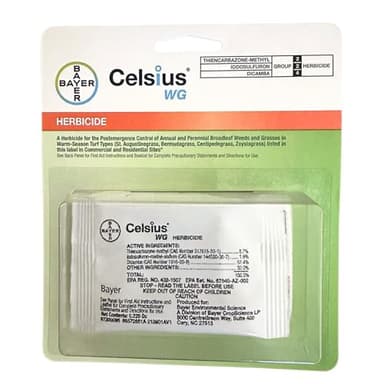 Top pick
Celsius WG Herbicide (Easy Mix Packet)
Warm-season post-emergent that controls 150+ broadleaf, grassy, and sedge weeds and stays safe on bermuda, zoysia, centipede, and St. Augustine, including in summer heat. Not labeled for cool-season lawns.
- 2Check price
 Best value
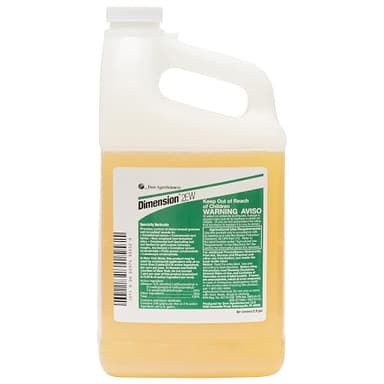
Dimension 2EW
Dithiopyr pre-emergent that also provides early post-emergent activity on young crabgrass escapes.
- 3Check price
 Also great
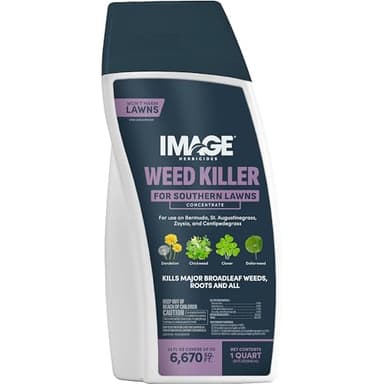
IMAGE Southern Lawn Weed Killer
Broadleaf weed killer labeled for several southern grasses, including St. Augustine, centipede, bahiagrass, buffalograss, and zoysia.
As an Amazon Associate we earn from qualifying purchases.
Pest & Disease Management
Zoysia is generally healthier and more pest-resistant than many warm-season grasses, but it does have a few well-known vulnerabilities. The good news is that most Zoysia pest and disease problems are manageable, and many can be prevented entirely through proper cultural practices. In my experience, a well-maintained Zoysia lawn needs chemical disease or pest treatment far less often than Bermuda.
Common Zoysia Diseases
Large Patch (Rhizoctonia solani)
This is the number one disease problem for Zoysia, and the one I get the most questions about. You'll see large, circular patches of thinning, orange-brown turf that can range from 3 feet to 20 feet or more across. The patches typically appear in spring and fall when soil temperatures are 50-70 degrees F and humidity is high. The advancing edge of the patch often shows an orange-brown discoloration on the leaf sheaths.
Large patch is frustrating because the infection actually occurs in fall and spring when conditions are cool and moist, but the damage becomes most visible during the transitions in and out of dormancy. Here's the thing: large patch rarely kills the Zoysia permanently. The grass typically grows back from the rhizomes during summer, though it can take most of the growing season for large patches to fill in.
Prevention (much more effective than treatment):
- Avoid excess nitrogen in fall. High nitrogen produces soft, succulent growth that's highly susceptible to infection. This is the single biggest controllable risk factor
- Don't water in the evening. Morning watering only. Wet foliage overnight in cool weather is a direct invitation for large patch
- Improve drainage in areas where water collects or soil stays persistently moist
- Reduce thatch. Heavy thatch traps moisture at the crown level where the fungus attacks
- Apply preventive fungicide (azoxystrobin or propiconazole) in early fall when soil temperatures drop to 70 degrees F, and again in early spring when soil temps rise to 60 degrees F. Two applications per season, timed correctly, provide excellent protection for lawns with a history of large patch
Dollar Spot
Small circular patches of straw-colored turf, roughly the size of a silver dollar to a few inches across. Individual blades show an hourglass-shaped lesion with tan center and dark border. Dollar spot indicates the lawn needs more nitrogen. In most cases, a proper fertilizer application resolves dollar spot without fungicide. If it persists despite adequate fertility, treat with a labeled fungicide, but address the nutrition first.
Rust
Orange or yellow powdery coating on grass blades, most noticeable in fall when growth is slowing. Rust looks alarming but is mostly cosmetic. It's common on Zoysia that's slightly underfed or stressed heading into dormancy. A light fertilizer application and regular mowing (which removes the affected blade tips) usually resolves it. Rust rarely requires fungicide treatment.
Fairy Ring
Circles or arcs of darker green grass, sometimes with mushrooms along the ring. Caused by soil-borne fungi breaking down organic matter. Fairy ring is more common in Zoysia than some other grasses because of the thatch layer, which provides ample organic material for the fungi to feed on. Aeration and thatch management are the best long-term solutions. Individual mushrooms are cosmetic and can be knocked down with a rake or mowed off.
Common Pests
Hunting Billbugs
This is the most damaging insect pest specific to Zoysia. The adults are small, dark weevils (about 1/4 inch long) that you'll see walking across sidewalks and driveways in spring. The larvae feed inside Zoysia stems and then move to the roots, creating irregular dead patches that look similar to drought stress or disease.
How to confirm: Tug on the grass in a suspect area. If stems break easily at the soil line and you see sawdust-like frass (waste material) at the base, billbugs are the likely culprit.
Prevention: Apply a preventive insecticide containing bifenthrin or clothianidin in late April to May when adult billbugs are active and laying eggs. Timing is important because once larvae are inside the stems, they're protected from contact insecticides.
Treatment: For active infestations, apply bifenthrin or trichlorfon and water thoroughly to move the product into the root zone where larvae are feeding.
White Grubs
The larvae of Japanese beetles, June bugs, and masked chafers feed on Zoysia roots, causing brown patches that feel spongy and lift like carpet. Increased digging by birds, skunks, or armadillos is a telltale sign that grubs are present.
Check: Pull back the turf at the edge of a suspect area. More than 6-8 white, C-shaped grubs per square foot warrants treatment.
Prevention: Apply chlorantraniliprole (GrubEx) in late spring when beetles are laying eggs. Treatment: For existing infestations, apply carbaryl or trichlorfon in late summer or early fall.
Armyworms
Fall armyworms can damage Zoysia quickly, stripping the leaf blades and leaving a brown, scalped appearance. Watch for birds feeding heavily on your lawn and check for caterpillars by pouring soapy water on a suspect area. Treat immediately with bifenthrin or carbaryl applied in the evening when caterpillars are actively feeding. Zoysia recovers from armyworm damage, but because of its slower growth rate, recovery takes longer than it would for Bermuda.
Zoysiagrass Mites (Eriophyid Mites)
Similar to Bermuda mites, these microscopic pests cause stunted, tufted growth and curled leaves. Affected areas appear thin and fail to grow normally. There are no reliable chemical controls for homeowners. The best management is to keep the lawn healthy and vigorous so it outgrows the damage. Mowing at the correct height and maintaining proper fertility helps the grass compensate for mite damage.
Aeration & Dethatching
If there's one maintenance task that's more important for Zoysia than for any other warm-season grass, it's thatch management. Zoysia builds thatch faster than most grasses, and a thick thatch layer is the root cause of the most common Zoysia problems: spongy mowing, scalping, poor water penetration, shallow roots, and increased disease susceptibility. Understanding the connection between aeration, dethatching, and thatch prevention is essential for long-term Zoysia success.
Core Aeration
Why Zoysia Lawns Need Annual Aeration
Zoysia's dense growth creates a tight network of rhizomes and roots near the soil surface that compresses over time. Add its prolific thatch production, and you get a situation where the root zone becomes increasingly sealed off from water, oxygen, and nutrients. Annual aeration punches through this compacted layer, creating channels for essential elements to reach the roots. But aeration does something else that's equally important for Zoysia: the soil cores brought to the surface contain microorganisms that, when mixed back into the thatch layer, accelerate thatch decomposition. So aeration addresses both compaction and thatch simultaneously.
When to Aerate
- Best time: Late spring to early summer (May through June) after Zoysia has fully greened up and is growing actively. Soil temperature should be 70-80 degrees F for optimal recovery
- Second best: Mid-summer (July) if you missed the late spring window. Growth is still active enough for recovery
- Avoid fall aeration. This is critical for Zoysia. Because of its slow growth, fall aeration holes won't fill in before dormancy, leaving exposed soil that invites winter weed germination. I've seen people aerate Zoysia in October and spend the entire winter looking at a lawn full of Poa annua growing out of aeration holes
How to Aerate Effectively
- Use a core aerator that pulls 2-3 inch plugs. Spike aerators are ineffective and can actually increase compaction around the holes
- Make 2 passes in perpendicular directions for thorough coverage
- Water the lawn the day before aerating. Moist soil produces clean, deep plugs. Dry soil produces shallow, crumbling plugs
- Leave the plugs on the lawn to decompose naturally. They break down in 2-3 weeks and return topsoil and microbes to the surface
- Follow with fertilizer (0.5-1 lb N per 1,000 sq ft) and thorough watering to push nutrients into the open channels
- Expect recovery in 3-4 weeks, somewhat slower than Bermuda (2-3 weeks) due to Zoysia's more measured growth rate
Aeration + Topdressing for Zoysia
Following aeration with a thin topdressing of sand or compost is particularly beneficial for Zoysia because it fills aeration holes with material that promotes drainage and microbial activity in the root zone. Apply 1/4 inch of sand or screened compost after aerating and drag it into the holes with a mat or the back of a leaf rake. Over 2-3 years of annual aeration plus topdressing, you'll see measurable improvement in water infiltration and thatch decomposition.
Dethatching
Why Thatch Is Zoysia's Biggest Challenge
Zoysia builds thatch faster than most warm-season grasses because its dense network of rhizomes, stems, and roots produces organic material faster than soil microbes can break it down. A thin thatch layer (under 1/2 inch) is actually beneficial. It insulates roots from temperature extremes, retains moisture, and cushions the grass from foot traffic. But when thatch exceeds 1/2 inch, the problems start stacking up:
- Water runs off the thatch surface instead of penetrating to the soil, and your lawn stays dry even though you're watering
- Roots grow in the thatch layer instead of the soil, making the grass extremely vulnerable to drought and temperature stress
- The mower wheels sink into the spongy thatch, causing uneven, scalped cuts
- Disease organisms (especially large patch) thrive in the moist, organic thatch layer
- Insects find shelter in the thatch, making pest problems worse
How to Check Thatch
Cut a small wedge of turf with a sharp knife or spade. Measure the brown, spongy layer between the green grass blades and the soil surface. Under 1/2 inch: you're in good shape. 1/2 to 3/4 inch: annual aeration should manage it. Over 3/4 inch: you need to actively dethatch. I recommend checking at least once a year, ideally in late spring when you can see the thatch layer most clearly.
When and How to Dethatch
- Timing: Late spring to early summer (May through June) during active growth. The grass must be growing vigorously to recover from dethatching, which is an aggressive process
- Method: A power dethatcher (vertical mower or verticutter) with blades set to cut through the thatch layer and lightly into the soil surface. Set blade spacing at 1-2 inches for Zoysia (tighter than the 3-inch spacing used for some other grasses) and depth to penetrate 1/4 inch into the soil
- Make two passes in perpendicular directions for thorough thatch removal
- Be prepared: Dethatching a Zoysia lawn produces a shocking amount of debris. It will look like you destroyed the lawn. Rake or blow all debris off the turf
- Recovery: Follow immediately with fertilizer (1 lb N per 1,000 sq ft) and thorough watering. Zoysia will look rough for 3-5 weeks, then begin filling in. By 6-8 weeks after dethatching, most lawns look as good or better than before
Preventing Thatch Buildup
Prevention is significantly easier than correction, and a good prevention program can keep most Zoysia lawns from ever needing aggressive dethatching:
- Core aerate annually. This is the single most effective thatch prevention practice. The soil cores introduce decomposing organisms directly into the thatch layer
- Don't overfertilize. Excess nitrogen is the biggest driver of thatch accumulation in Zoysia. Stick to 2-3 lbs N per year, not more. Every additional pound of nitrogen produces proportionally more stems and roots that become tomorrow's thatch
- Mow at the correct height. Zoysia mowed too high produces leggier growth with more stem material, accelerating thatch buildup
- Maintain soil pH. The microorganisms that decompose thatch work best at pH 6.0-7.0. Acidic soil (below 5.5) slows microbial activity and lets thatch accumulate
- Mulching clippings does NOT cause thatch. This myth persists but is simply wrong. Grass clippings are 85% water and decompose within days. Thatch is composed of stems, rhizomes, and roots, not leaf clippings. Mulching is fine and beneficial