Best Fertilizer Ratio for Bermuda Grass (NPK Guide)
 Marcus GreenTurf Management Pro | 18 Years
As an Amazon Associate we earn from qualifying purchases.
Even dedicated homeowners with years of experience struggle to get Bermuda grass to its full potential. The culprit is almost always the wrong fertilizer ratio. Without the right NPK (nitrogen, phosphorus, potassium) balance, Bermuda lawns end up pale, thin, or patchy, no matter how much you water or mow. On the other hand, dialing in your fertilizer ratio unlocks the signature dense, emerald-green look that sets professional turf apart. For the complete reference, see the Bermudagrass pillar guide.
The NPK balance is far more than just numbers on a bag. Nitrogen drives that lush green color and rapid growth. Phosphorus builds roots and early establishment. Potassium arms your lawn against drought and disease. Get these wrong, and you risk excessive thatch, stunted roots, or even chemical burn. Over the past 18 years working with Bermuda, from championship golf fairways to family backyards, I’ve seen how the right approach transforms even the trickiest lawns.
This comprehensive guide will show you exactly how to choose the best fertilizer ratio for Bermuda grass, how to read and understand NPK labels, advanced seasonal fertilizing strategies, and pro-level tips for building a dense, resilient lawn. Whether you’re starting with bare soil or fine-tuning a mature turf, this is your blueprint for Bermuda grass success.
The best fertilizer ratio for Bermuda grass is typically a high-nitrogen blend, such as 4-1-2 (like 16-4-8), which promotes dense growth and deep green color. To confirm your lawn’s needs, start with a professional soil test. If your soil already has adequate phosphorus and potassium, stick to high-nitrogen fertilizers and adjust only if deficiencies appear.
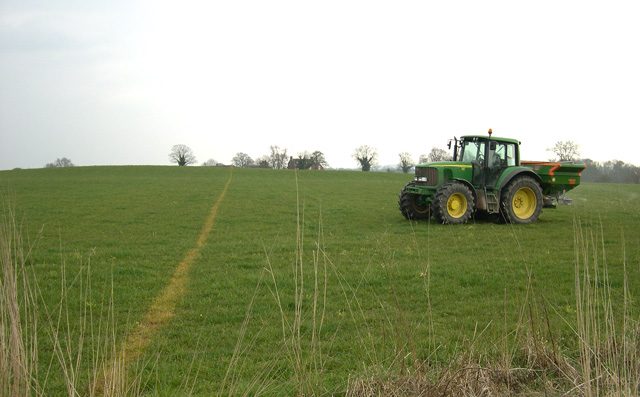
Apply fertilizer at a rate of 0.5 to 1 pound of actual nitrogen per 1,000 square feet every 4-6 weeks during the active growing season, starting in spring once soil temps hit 65°F. Never apply heavy nitrogen just before dormancy or during extreme heat. For best results, water in granular fertilizer immediately after application, and keep pets and kids off the lawn for 24-48 hours or as the label directs.
Understanding NPK: What the Numbers Mean for Bermuda Grass
What is NPK and Why Does It Matter?
NPK stands for nitrogen (N), phosphorus (P), and potassium (K), the three primary nutrients listed on every fertilizer bag. Each one plays a distinct role in Bermuda grass health:
- Nitrogen (N): Fuels leaf growth, color, and density. It’s what gives Bermuda that signature thick, green carpet look. Without enough nitrogen, your lawn will look pale and grow thin.
- Phosphorus (P): Supports root establishment and early growth. Most mature Bermuda lawns need only small amounts unless soil tests show a deficiency or you’re establishing new turf.
- Potassium (K): Enhances stress tolerance, drought resistance, and disease defense. Potassium is especially important in sandy soils and for lawns under heavy use.
Balancing these nutrients is critical. Too much nitrogen can cause excessive growth and thatch, while low potassium leaves Bermuda grass vulnerable to drought and wear.
Bermuda Grass Nutrient Needs (vs. Other Grasses)
Bermuda grass stands apart from other turf types, especially cool-season grasses like fescue or bluegrass, due to its aggressive warm-season growth. Bermuda’s rapid lateral spread and high density demand more nitrogen than most home lawns. It’s not uncommon for a healthy Bermuda lawn to require up to 4 pounds of actual nitrogen per 1,000 square feet each year, double or triple the needs of many cool-season lawns.
Phosphorus requirements are generally lower for established Bermuda. Unless your soil test shows a deficiency, excess phosphorus can build up and even harm the environment. Potassium is vital for withstanding Southern heat and drought, especially in sandy soils common across the Southeast. The key most homeowners miss is adjusting these nutrients by region, soil type, and season.
Reading Fertilizer Labels: Decoding the Numbers
Every bag of fertilizer displays three numbers, such as 16-4-8. These represent the percentages by weight of nitrogen, phosphorus (as phosphate, P2O5), and potassium (as potash, K2O), in that order. For example, a 50-pound bag of 16-4-8 contains 8 pounds of nitrogen, 2 pounds of phosphate, and 4 pounds of potash.
To choose the right product:
- Look for a high first number-this is nitrogen, critical for Bermuda grass.
- Check for slow-release (SRN, WIN, PCU, or coated urea) vs. quick-release nitrogen. Slow-release feeds steadily, reducing burn risk.
- Scan for secondary nutrients like iron or magnesium, helpful for color and stress resistance.
- Review the bag for coverage area (e.g., “covers 5,000 sq ft”) and recommended application rates.
Professional crews approach this differently. On golf courses, we calibrate spreaders for precise application based on actual soil needs, not just label directions. At home, you can get close by carefully matching your spreader setting to the bag’s instructions and double-checking your lawn’s square footage.
The Best Fertilizer Ratio for Bermuda Grass (NPK Guide)
| NPK ratio | When to use it | Why it works for Bermuda |
|---|---|---|
| 16-4-8 | Main growing-season feed (May to August) | The classic 4-1-2 balance: enough nitrogen to push growth with supporting phosphorus and potassium in the proportion Bermuda actually uses. |
| 21-0-0 | Early summer green-up push | Straight ammonium sulfate delivers fast nitrogen and slightly acidifies alkaline soil, which helps iron uptake and color. |
| 15-0-15 | Late summer | Higher potassium hardens the turf against heat and drought stress. As fall approaches, step nitrogen down further toward a 10-0-14 pre-dormancy feed. |
| 6-4-0 | Summer slow-feed or organic programs | Slow-release organic nitrogen with iron feeds steadily in high heat with no burn risk. |
The Ideal NPK Ratio for Bermuda Grass: General Recommendations
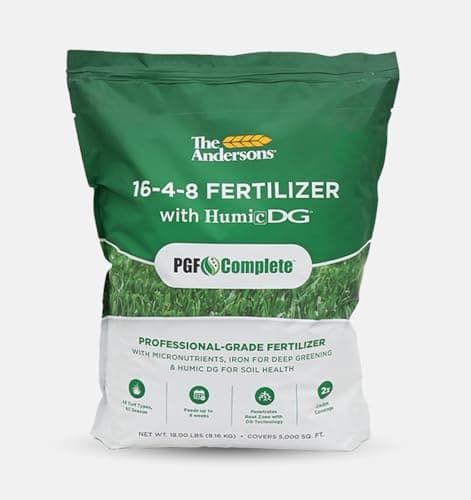
The best fertilizer ratio for Bermuda grass is typically in the range of 4-1-2. In homeowner products, that translates to common blends like 16-4-8 (such as The Andersons PGF Complete, which pairs the analysis with 7% humic DG for steadier release) or 21-3-6. These ratios deliver high nitrogen for robust growth, moderate potassium for stress tolerance, and just enough phosphorus for ongoing root health, provided your soil isn’t deficient.
Why high nitrogen? Bermuda thrives on nitrogen, using it to drive both top growth and lateral spread. Too much phosphorus can actually interfere with micronutrient uptake and cause runoff issues. Potassium, meanwhile, is the insurance policy, especially for lawns facing heavy play, drought, or sandy soils.
Once you have the ratio sorted, matching it to a proven bag is the next step. Our roundup of the best fertilizer for bermuda grass puts the leading high-nitrogen picks side by side so you can pair the right product with the NPK plan above.
If you’re managing a specialty Bermuda variety like Celebration, Tifway, or TifTuf, you can fine-tune by referencing university variety trials. Some cultivars need slightly more or less potassium. Always check your soil test before making big adjustments.
- NC State Extension recommends a 4-1-2 ratio for established Bermuda grass lawns, applied at a rate of 1 pound of actual nitrogen per 1,000 sq ft per application during the growing season.
Seasonal NPK Adjustments: Spring, Summer, Fall, and Dormancy
Like championship greens, a Bermuda lawn’s needs shift with the seasons. Here’s how to adapt your NPK ratio throughout the year:
- Spring (March-May, when soil temps reach 65°F): Focus on high-nitrogen (16-4-8 or 21-3-6) to jump-start growth and color. Apply 0.5-1 lb actual N per 1,000 sq ft every 4-6 weeks. Use moderate potassium, minimal phosphorus unless soil test shows a deficiency.
- Summer (June-August): Maintain nitrogen at the same rate but monitor for heat stress. Never fertilize during drought or when temps exceed 95°F. Potassium should be sustained or slightly increased, especially in sandy soils. Avoid heavy phosphorus.
- Fall (September-early October): Reduce nitrogen to half-rate or less, increase potassium (look for ratios like 10-0-14) to prepare grass for dormancy and stress. Do not apply high-nitrogen fertilizer after October in most regions.
- Dormant/Winter (late October-February): In the Deep South, winter fertilization is rarely needed-focus on soil health with compost or light potassium if soil test calls for it. In the Transition Zone, stop all nitrogen by October and let Bermuda go dormant naturally.
Bermuda grass roots absorb nutrients best when actively growing. Applying fertilizer outside the active season is not only wasteful. It can also leach nutrients beyond the root zone.
Liquid vs. Granular Fertilizers: Which is Best for Bermuda?
Both liquid and granular fertilizers work for Bermuda grass, but each has distinct advantages. Granular fertilizers are easy to spread, offer longer-lasting nutrition (especially slow-release types), and are ideal for most home lawns. Liquid fertilizers allow for fast uptake and precise correction of deficiencies, useful for spot-treating pale areas or for rapid green-up before a big event.

For most homeowners, granular is best for broad feedings in spring and summer. Use a broadcast or rotary spreader for even coverage. Liquids are best reserved for supplemental feedings or when you need quick results. If you choose liquid, apply during cool parts of the day and avoid overlap to prevent burn. Always follow label rates exactly.
On golf courses, we often blend both: granular for base feeding, liquid for targeted corrections. Homeowners can use the same principle, but always avoid doubling up nutrients in a single week.
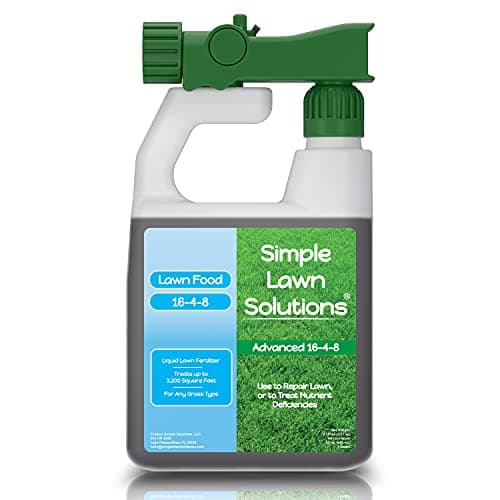
If you would rather spray, a balanced Simple Lawn Solutions Advanced 16-4-8 is an easy liquid match for Bermuda's appetite, feeding steady color and growth through the season.
When the lawn is hungry and you want a faster green-up, a high-nitrogen Simple Lawn Solutions Maximum Green 28-0-0 pushes color quickly. For the full set of liquid options ranked by need, see our best liquid lawn fertilizer guide.
Slow-Release vs. Quick-Release Fertilizers
Bermuda’s growth habits benefit from a mix of both slow- and quick-release nitrogen. Slow-release (look for polymer-coated, sulfur-coated, or “WIN” on the label) feeds gradually, reducing the risk of surge growth and burn, and keeps color steady between applications. Quick-release (urea or ammonium sulfate) acts fast, great for early spring or when you need a rapid boost.
The best approach is to use a fertilizer that contains 30-60% slow-release nitrogen. This provides a steady supply, while a smaller portion gives immediate green-up. Professional crews often “spoon-feed” small amounts every 3-4 weeks for perfect density, but homeowners can stick to 4-6 week intervals with blended products.
If you only have quick-release, use lower rates and water in immediately. Avoid applying before heavy rain to prevent runoff.
Advanced Fertilizer Strategies for Bermuda Grass
Soil Testing: The Foundation for Custom NPK Ratios
Every elite Bermuda lawn starts with a soil test. Without it, you’re guessing, and even the best fertilizer ratio for Bermuda grass (NPK guide) can backfire if your soil is already high or low in certain nutrients.
Here’s how to collect and interpret a Bermuda grass soil test:
- Collect 10-12 cores from across your lawn (3-4 inches deep) and mix them in a clean bucket.
- Send the sample to a reputable lab or your local extension service. Request both NPK and pH analysis.
- Review the results: Look for phosphorus and potassium levels. If both are “high,” you can choose a high-nitrogen, zero-phosphorus blend. If potassium is low, bump up with a fertilizer like 15-0-15.
- Adjust for pH: Bermuda prefers pH 6.0-6.5. If your soil is outside this range, adjust before focusing on fertilizer. See How to Improve Soil pH for Grass for detailed steps.
Soil test every 2-3 years for established lawns, or annually if you’re troubleshooting problems. For more details, see How to Improve Soil pH for Grass.
Addressing Special Situations and Lawn Goals
Different lawn challenges call for different NPK tweaks:
- High-traffic lawns: Increase potassium by 25-50% over standard rates (use 4-1-3 or 10-0-14) to toughen grass against wear and recovery.
- Golf-course or sports turf: Use spoon-feeding (0.25-0.5 lbs N per 1,000 sq ft every 2-3 weeks) and precision soil monitoring. Apply micronutrients like iron as needed for elite color.
- Repairing thin or bare patches: Apply a high-nitrogen starter fertilizer (16-20% N) at the upper end of the recommended rate. Water in well and reduce mowing for 10-14 days to allow recovery.
From my time managing championship greens, the key is matching fertilizer intensity to your lawn’s actual use, not all Bermuda lawns need sports-turf levels of input.
Organic vs. Synthetic Fertilizers: Pros, Cons, and Best Practices
Organic fertilizers (like Milorganite, composted manure, or feather meal) release nutrients slowly and improve soil structure over time. They tend to have lower NPK numbers (often 5-1-3 or 6-2-0) but feed steadily, reducing surge growth and runoff. Synthetic fertilizers deliver nutrients quickly and in higher concentrations, great for rapid results but require careful measurement to avoid burn.
Best organic fertilizers for Bermuda grass include Milorganite (6-2-0), Espoma Lawn Food (9-0-0), and high-quality compost. Apply these at higher rates (as directed) and expect slower green-up but improved long-term health. For a hybrid approach, use organics for base feeding and synthetics for in-season corrections.
Organic options are ideal for eco-sensitive areas or where pets and kids play. Just remember, organics won’t correct severe deficiencies overnight. Stick with synthetics for acute problems.
Supplementing with Micronutrients: Going Beyond NPK
Bermuda grass often benefits from micronutrients, especially iron, magnesium, and calcium. Iron is the secret to deep green color, especially in high-pH soils where uptake is limited. Magnesium supports chlorophyll production. Calcium helps with cell wall strength and root development.
Signs of micronutrient deficiencies include:
- Iron deficiency: Yellowing between leaf veins (interveinal chlorosis), especially in midsummer.
- Magnesium deficiency: General yellowing, weak growth, often in sandy or acidic soils.
- Calcium deficiency: Tip burn or poor rooting, rare in most lawns but possible in acidic soils.
Address deficiencies with labeled granular supplements or chelated sprays. Don’t overapply-micronutrients are potent in small doses.
How to Apply Fertilizer to Bermuda Grass for Best Results
Timing and Frequency: Creating Your Fertilization Calendar
Bermuda grass is most responsive to fertilization during its active growing season. Here’s a proven schedule for each region:
- Deep South (USDA Zones 8-10): Start fertilizing in mid-March when soil temps reach 65°F. Apply every 4-6 weeks through early October. Total for the year: 3-4 lbs N/1,000 sq ft.
- Transition Zone (Zones 6-7): Begin in late April or early May. Last application by mid-September. Use lower rates (2-3 lbs N/1,000 sq ft/year) to avoid winter kill.
Never fertilize dormant Bermuda. Nutrients won’t be absorbed and may leach away. For more details, review the Lawn Fertilization Schedule for Warm-Season Grasses.
Step-by-Step Fertilizer Application Process
Proper application makes all the difference. Here’s how to get it right:
- Calculate your lawn size: Measure length x width in feet for each section. Add up to get total square footage.
- Determine application rate: For a 16-4-8 fertilizer applied at 1 lb N/1,000 sq ft, you’ll need 6.25 lbs of product per 1,000 sq ft (since 16% of 6.25 lbs = 1 lb N).
- Set your spreader: Match the setting on your spreader to the product’s label. If uncertain, use half the product in one direction, then the second half at a right angle for even coverage.
- Apply evenly: Walk at a steady pace, overlap slightly but don’t double-apply at edges or turns.
- Water in: After granular fertilizer, irrigate with 0.25-0.5 inches of water within 24 hours.
Calibration is critical. On golf courses, we calibrate spreaders monthly. At home, check by spreading a known amount over a tarp and measuring coverage. Adjust as needed for your specific equipment.
Safety Tips: Protecting Pets, Kids, and the Environment
Fertilizer is safe when used as directed, but always follow these precautions:
- Store securely: Keep bags sealed and out of reach of pets and children.
- Apply carefully: Don’t overlap or spill near driveways, sidewalks, or water bodies.
- Wait before re-entry: Most fertilizers recommend keeping pets and kids off the lawn for 24-48 hours or until the product is watered in and dry. Check your product’s label for specifics.
- Dispose of waste properly: Sweep up spills and never wash fertilizer into storm drains.
Professional crews use flags or signage after application. Homeowners can mark treated areas or set reminders to prevent accidental exposure.
Troubleshooting: Diagnosing Fertilizer and NPK Problems in Bermuda Grass
Signs of Nutrient Deficiency or Excess
Even with the best fertilizer ratio for Bermuda grass, problems can arise. Typical symptoms include:
- Yellowing leaves: Usually nitrogen or iron deficiency. If yellowing is uniform, suspect nitrogen; if between veins, suspect iron.
- Stunted growth: Often due to phosphorus deficiency or compacted soil. Confirm with a soil test.
- Excessive thatch: Too much nitrogen or lack of microbial activity. Thatch feels spongy underfoot and is over 0.5 inch thick.
- Burned spots: Overapplication or applying on wet grass. Leaves appear scorched or brown at the tips.
If you see yellowing and thin spots after fertilizing, confirm the cause by reviewing your application rates and checking for watering or spreader errors.
Fixes for Common NPK Issues
To correct over-fertilization, irrigate deeply with 1-2 inches of water to flush excess nutrients from the root zone. Wait 2-3 weeks before reapplying. For under-fertilized or pale lawns, apply a quick-release nitrogen source at half-rate and monitor for green-up within 7-10 days. If no improvement, test for micronutrient deficiencies.
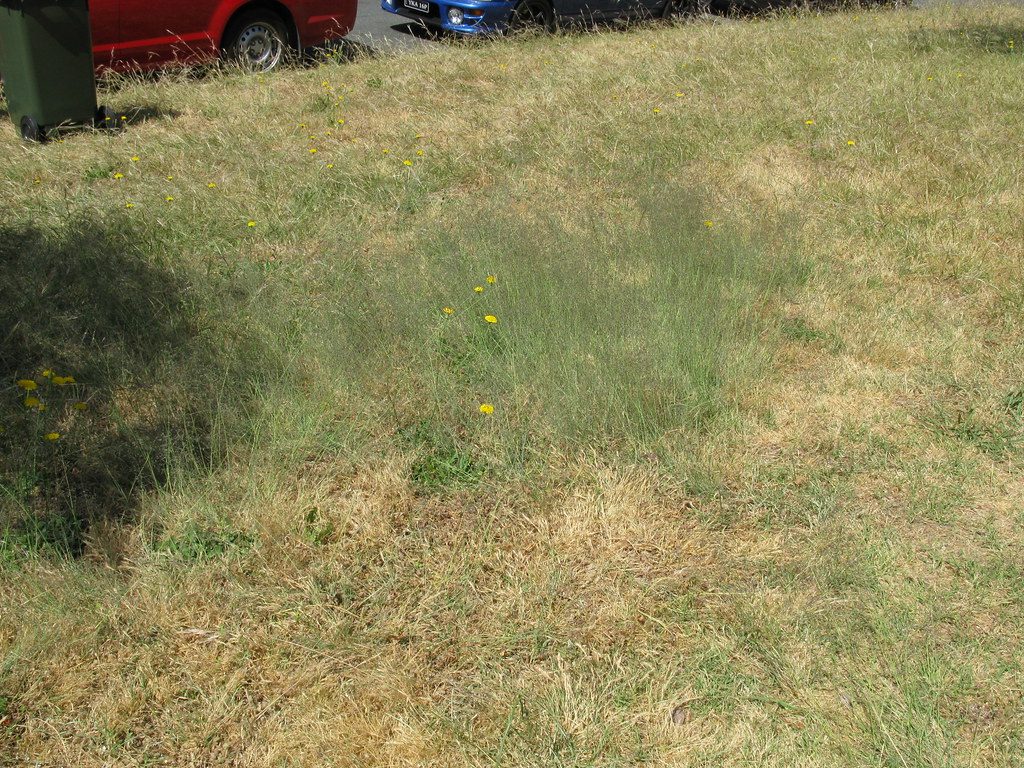
Excessive thatch requires mechanical removal, dethatching or core aeration, not just fertilizer adjustments. For spotty color, supplement with chelated iron or adjust pH for better nutrient uptake.
- University of Florida IFAS Extension recommends flushing over-fertilized Bermuda grass with 1-2 inches of water and waiting 2-3 weeks before resuming fertilization.
Common Mistakes to Avoid with Bermuda Grass Fertilizer (What Other Guides Miss)
While most guides cover the basics, here are critical missteps I see homeowners make, and how to avoid them:
- Skipping Soil Tests: Guessing your lawn’s NPK needs wastes money and can damage turf. Always confirm with a soil test before changing ratios. See How to Test Your Lawn's Soil for instructions.
- Improper Timing Based on Region: Fertilizing too early or late (especially in the Transition Zone) leads to wasted nutrients or winter injury. Tailor your schedule to your climate, not just the calendar.
- Incorrect Product Application: Misreading labels, using the wrong spreader setting, or overlapping passes causes uneven growth or burns. Calibrate your spreader and walk in a consistent pattern.
- Neglecting Safety for Pets and Family: Not waiting for fertilizers to be absorbed before allowing re-entry can pose risks. Always check the product label for safe intervals. For more, see Pet-Safe Lawn Care Practices.
- Ignoring Micronutrient Imbalances: Focusing only on NPK but missing iron or magnesium deficiencies. If your Bermuda is pale despite proper fertilizing, test for micronutrients. See Common Lawn Fertilizer Mistakes for more troubleshooting.
The difference between a good Bermuda lawn and a standout one is often in these details-especially proper testing, timing, and safety practices.
Conclusion
Achieving the best fertilizer ratio for Bermuda grass (NPK guide) is about more than just picking a bag off the shelf. It requires understanding your lawn’s unique needs, adjusting your approach with the seasons, and confirming everything with a reliable soil test. Prioritize a high-nitrogen ratio like 4-1-2 for most Bermuda lawns, adapt based on soil test results, and fine-tune for your microclimate and grass variety.
Apply fertilizer at the correct rate and timing, using a blend of slow- and quick-release products for season-long results. Always follow safety guidelines for pets and family, and don’t overlook micronutrients-they’re often the missing link to that deep, professional green. For a step-by-step plan, start with a soil test, set your fertilization calendar, and monitor your Bermuda grass for signs of stress or deficiency.
Ready to take your lawn to the next level? Check out related guides like Overseeding Bermuda Grass, Lawn Watering Best Practices, and How to Control Weeds in Bermuda Lawns for a complete warm-season care program.
Free Lawn Care Tools
The best NPK ratio for Bermuda grass is typically 4-1-2, such as 16-4-8. This supports dense growth, strong color, and stress resistance. Adjust based on soil test results for phosphorus and potassium.
Fertilize Bermuda grass every 4-6 weeks during the active growing season (spring through early fall). In the Deep South, start in mid-March; in the Transition Zone, start in late April.
Yes, organic fertilizers like Milorganite or compost work well for Bermuda grass, especially for long-term soil health. They release nutrients slowly and are safe for pets and kids, but may require higher application rates and show color improvement more gradually.
No, avoid fertilizing Bermuda grass when it is dormant (late fall and winter). The grass won't absorb nutrients efficiently, and fertilizer can be lost to runoff or leaching.
If your Bermuda lawn shows weak growth, poor drought tolerance, or increased disease, a soil test may reveal low potassium. Lawns with heavy use or sandy soils may benefit from a higher potassium ratio like 10-0-14.
Keep pets and kids off the lawn for at least 24-48 hours after fertilizer application, or until the product is watered in and dry. Always follow the specific instructions on your fertilizer label.

Your lawn plan, in your pocket all season
Grass ID, a season plan, soil-timed reminders, and a lawn journal that remembers what you did. Free on iPhone.