How Often to Apply Milorganite and How Long It Takes to Work
 Marcus GreenTurf Management Pro | 18 Years
As an Amazon Associate we earn from qualifying purchases.
Apply Milorganite every 8 to 10 weeks while the grass is actively growing, and expect green-up in 7 to 14 days, longer if the soil is still cool. It is slow-release, so nothing changing two or three days after spreading is normal. Color shows up in week two and holds for 8 to 10 weeks.
The current label rate is one 32 lb bag per 2,500 square feet, about 13 pounds per 1,000 square feet. Most lawns get three to four applications a year on the holiday schedule. Time the first one to soil around 55°F and rising, not to a calendar date.
Milorganite is the most polarizing bag of fertilizer at the home center. People either swear by it as the only thing they put on their lawn, or they walk past it because of the smell and the rumor that it is just sewage. Both reactions miss the point. Milorganite is a heat-dried organic nitrogen source that has been on the market since 1926, and used correctly it is one of the most forgiving fertilizers a homeowner can buy. Used incorrectly, it just sits there looking expensive.
This guide walks through what is actually in the bag, when the holiday schedule works (and when it does not), how to dial in your spreader, and what to reach for if your local store is sold out. I lean organic in my own program, so I am giving you the real tradeoffs, not a sales pitch.
What Milorganite is and how it works
Milorganite is short for Milwaukee Organic Nitrogen. The Milwaukee Metropolitan Sewerage District has been producing it for almost a century by capturing microbes that clean the city's wastewater, then heat-drying those microbes into a granule. The end product is a USEPA Class A biosolid, which is the cleanest classification the agency assigns. It is the same product used on countless golf courses, including Augusta National.
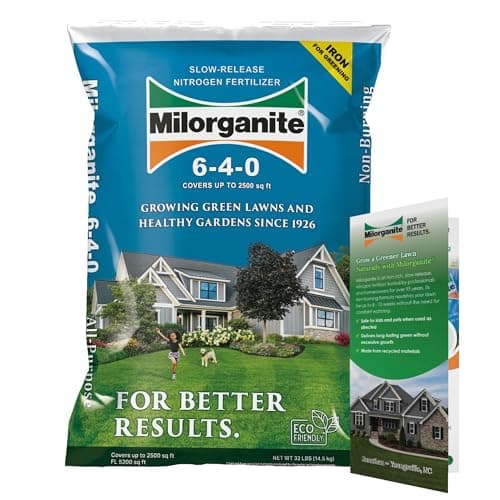
The current 2026 analysis is 6-4-0 with 2.5% iron. That means each bag contains 6% nitrogen, 4% phosphorus, no added potassium, and a meaningful slug of iron that contributes to the deep green color you see a couple of weeks after application. The bag size is 32 pounds, and one bag covers 2,500 square feet at the label rate.
The number that matters most on the label is buried in the fine print: about 85% of the nitrogen is water-insoluble. In practical terms, that means the nitrogen does not dissolve in the next rain and run off into your storm drain. Soil microbes break the granules down over 8 to 10 weeks, and your lawn pulls the nitrogen out as it becomes available. That is why people call it slow-release, and it is why Milorganite is essentially impossible to burn the lawn with.
The tradeoff is patience. A fast synthetic urea can green up a lawn in three days. Milorganite typically takes 7 to 14 days, longer if the soil is still cool. If you are looking for an instant color fix the night before a backyard wedding, this is not your product. If you want a steady feed that holds color through the heat of summer without surge growth, it is hard to beat.
How Long Does It Take for Milorganite to Work?
Milorganite usually takes 7 to 14 days to green up the lawn, and up to three weeks if the soil is still cool. It is a slow-release organic fertilizer, so soil microbes have to break the granules down before your grass can use the nitrogen. Warm, moist soil speeds this up; cold soil slows it down. If the lawn looks the same two or three days after spreading, that is normal. Color shows up in week two and holds for 8 to 10 weeks.
A related timing question I get a lot: there is no waiting period to mow after applying Milorganite. The granules settle down to the soil surface, so the mower is not going to vacuum them up. My own habit is to mow first, then spread, so the granules reach the soil more easily and fresh clippings do not sit on top of them. If you bag your clippings, wait until after the first rain or irrigation cycle before bagging again.
When to Apply Milorganite: Annual Fertilizer Schedule
The classic Milorganite recommendation is the holiday schedule. For northern cool-season lawns, the label suggests applications around Memorial Day, the Fourth of July, Labor Day, and a dormant feeding near Thanksgiving. For southern warm-season lawns the schedule shifts earlier: around Easter, Memorial Day, Labor Day, and early October. The reason these dates work is not because the holidays are magic. It is because they line up roughly with the soil temperature windows where cool-season and warm-season grasses are actively growing and pulling nutrients from the root zone.
That said, calendar dates only get you so far. The real trigger is soil temperature. Milorganite needs warm, moist soil for the microbes to break it down, which means a target soil temperature of about 55°F and rising for the first application of the year. North of the Mason-Dixon line that usually means late April to mid-May. In the deep South it can mean as early as March.
Here is how I think about the schedule by region:
- Cool-season lawns (north): Skip the deep summer Fourth of July application if you are in transition zone heat or if you have Kentucky bluegrass that goes dormant in August. Use Memorial Day, Labor Day, and a fall winterizer application around mid-October. Three feedings per year is plenty for most northern lawns.
- Warm-season lawns (south): The full four-holiday schedule works well for Bermuda, zoysia, and St. Augustine. You can stretch the last application into Thanksgiving in the Gulf states where the lawn is still actively growing in November.
- Transition zone: Watch the lawn, not the calendar. If your tall fescue is browning out in late July, hold off on the Fourth application until the heat breaks. Pushing nitrogen into a heat-stressed cool-season lawn invites brown patch and pythium.
If you want to be more precise about timing, run your zip through the soil temperature tool before each application. Soil temp is the most reliable trigger I know of, more useful than air temperature and definitely more useful than the calendar.
How to Apply Milorganite Step-by-Step

The current label rate for established lawns is one 32 pound bag per 2,500 square feet, which works out to about 13 pounds of Milorganite per 1,000 square feet, or roughly 0.75 pound of nitrogen. A 5,000 square foot lawn needs two bags per application. For a brand new lawn, the label doubles the rate to 64 pounds per 2,500 square feet worked into the soil before seeding or sodding. One heads-up: the rate has changed over the years as the bag shrank from 36 to 32 pounds, so if you memorized 16 pounds per thousand from an old bag, the current label is lower. Always go by the bag in your hand.
Here is the process I follow:
- Calculate your lawn size. If you do not know it, the lawn size calculator handles the math from your address. Eyeballing it is the most common reason people overspend on fertilizer.
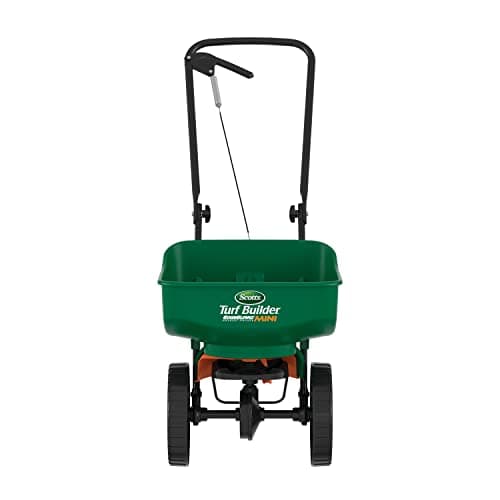
- Set your spreader. For broadcast (rotary) spreaders, the bag itself usually lists settings, but the most common ones I see are: Scotts Edgeguard / Elite around setting 8, Earthway 2150 around setting 14, and Lesco rotary around setting M. For a drop spreader, settings run higher because the path is narrower. When in doubt, set the spreader low and walk the lawn twice in a crosshatch pattern instead of once at high flow. You cannot fix a stripe.
- Spread when grass is dry. Wet blades hold granules in the canopy and you end up with little burn spots from concentrated piles. Mow first if you can, then spread.
- Walk a perimeter strip first. Lay down a header strip around the edge of the lawn, then fill in the middle with overlapping back-and-forth passes. This stops you from running off the edge with the spreader still flowing and dumping a hot pile in the bed.
- Water it in if convenient, but do not stress. A quarter-inch of irrigation or rain settles the granules and starts the microbial activity. Unlike fast synthetics, you have a multi-day window. If rain is coming in 48 hours, just let the weather handle it.
The most common mistakes I see are spreading on wet grass, using the wrong spreader setting (usually too high), and skipping the perimeter strip. None of them ruin a lawn, but they do produce uneven color that takes weeks to grow out.
If you want to dial in the rate to your exact lawn size, the fertilizer calculator will translate the 6-4-0 analysis into pounds of product for your square footage.
Does Milorganite Need to Be Watered In?
No. Milorganite's own guidance is that it does not require watering after application, which is one of its underrated selling points. Because roughly 85% of the nitrogen is water-insoluble, there is no salt sitting on the lawn waiting to burn it if you skip the sprinkler. The granules will just wait for the next rain or watering cycle to start breaking down.
That said, watering it in is still worth doing when it is convenient. A quarter-inch of irrigation settles the granules into the soil where the microbes can get to work, speeds up the green-up by a few days, and knocks down the earthy smell dramatically within a few hours. My rule: if rain is in the forecast within 48 hours, let the weather do it. If not, run one normal irrigation cycle and move on.
Is Milorganite Good for Zoysia (and Other Grass Types)?
Yes, and this is one of the questions I get most. Milorganite is grass-type agnostic in the sense that it will not hurt anything, but the fit is better for some lawns than others:
- Zoysia: A great match. Zoysia only wants 1 to 2 pounds of nitrogen per 1,000 square feet per year, and Milorganite's slow release matches that modest appetite without the surge growth and thatch buildup a fast synthetic can cause. Apply after the lawn has fully greened up in late spring, with an optional second feeding in midsummer.
- Bermuda: Works well, but heavy Bermuda programs often want more nitrogen than Milorganite alone delivers economically. Many Bermuda owners use it as the summer base feed and supplement with synthetic for push.
- St. Augustine: Very good fit. The low-burn profile matters on St. Augustine, which is sensitive to fertilizer burn in Gulf-coast heat, and the iron deepens its color noticeably.
- Centipede: Use caution. Centipede prefers very low nitrogen and low phosphorus, so a half-rate application once or twice a year is plenty; skip it entirely if your soil test shows adequate phosphorus.
- Tall fescue and Kentucky bluegrass: Excellent in spring and fall. Ease off during summer heat stress, when pushing nitrogen invites brown patch.
One more caveat that applies to every grass type: Milorganite carries 4% phosphorus, and some states restrict phosphorus applications unless a soil test shows a deficiency or you are establishing a new lawn. Check your local rules before running the full holiday schedule.
Best Milorganite alternatives and pro-grade options

Milorganite goes on backorder almost every spring, especially in the Midwest where demand outstrips production. It is also more expensive per pound of nitrogen than most synthetic options, because you are paying for the slow-release organic format. If your store is empty, or if you want a stronger color response, here are the alternatives I actually keep on the shelf.
The bag itself, an organic competitor, and a synthetic-but-slow pro-grade option cover most of what people are trying to do when they ask about Milorganite:
| Product | NPK | Type | Coverage | Best for |
|---|---|---|---|---|
| Milorganite All-Purpose Eco-Friendly Slow-Release Nitrogen 6-4-0 Fertilizer, 32 Pound Bag (Pack of 3) - for Lawns, Flowers, Gardens | 6-4-0 | Heat-dried biosolid, organic | ~7,500 sq ft (3 bags) | Homeowners running the full holiday schedule who want one box that lasts the season. |
| Espoma Lawn Food for All Seasons;15-0-5 Analysis with Non-Staining Iron; Exclusive Bio-Tone Formula with Long Lasting Slow Release Nitrogen for a Greener Lawn. 40 lb. Bag Covers up to 12,000 Sq. Ft. | 15-0-5 | Organic, microbial inoculant | 12,000 sq ft | Bigger lawns where Milorganite math gets expensive, and anyone who wants potassium in the mix. |
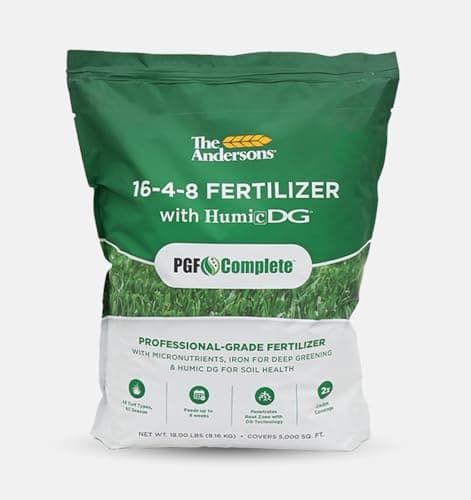
| The Andersons Professional 16-4-8 Fertilizer with Humic | 16-4-8 | Synthetic, slow-release with humic | 5,000 sq ft | People who want Milorganite's gentle feed curve but a stronger green color and quicker response. |
A few notes on this short list. Espoma is the closest direct competitor for "I want an organic feed I can trust." It carries higher nitrogen, so the per-bag cost goes further on big yards. The Andersons PGF Complete is not organic, but it uses small particle size (SGN) and humic DG to feed slowly and evenly, which is what most people are actually after when they buy Milorganite. If your goal is the soil biology benefit specifically, stay with Milorganite or Espoma. If your goal is slow feed and color, PGF Complete is the better value. And if you have seen the store-brand biosolid bags popping up next to Milorganite, we broke down how the biggest one stacks up in our Bio-Nite vs Milorganite comparison.
One brand I get asked about that I cannot recommend through Amazon is Lesco. Lesco bags are sold through SiteOne commercial supply and are excellent products, but they are not on Amazon and trying to source them as a homeowner is more trouble than it is worth.
Milorganite vs Scotts Weed and Feed: which should you use?
This is the most common Milorganite comparison, and the short answer is that they are not really competitors. Milorganite is a pure organic, slow-release nitrogen fertilizer. Scotts Turf Builder Weed & Feed is a synthetic combo that both feeds the lawn and kills broadleaf weeds like dandelions and clover. The combo bag only makes sense on cool-season lawns with active broadleaf weeds in spring or fall. Keep it off centipede and St. Augustine, which are sensitive to the herbicides in most weed and feed products and can thin out or die back after an application. On those lawns, spot-treat the weeds you actually have and leave the fertilizer job to Milorganite. Milorganite is also the better routine choice on any lawn that is already weed-free, and cool-season owners who want both usually run the combo bag once in spring and Milorganite across summer and fall.
| Milorganite | Scotts Turf Builder Weed & Feed | |
|---|---|---|
| Type | Organic slow-release fertilizer | Synthetic herbicide + fertilizer combo |
| NPK | 6-4-0 | 28-0-3 (varies by variant) |
| Weed control | None | Yes, kills broadleaf weeds |
| Burn risk | Very low | Medium (apply to dry lawn, water in) |
| Feeding duration | 8 to 10 weeks | 4 to 6 weeks |
| Best for | Routine summer feeding, no weed pressure | Spring or fall weed knockdown plus feed, cool-season lawns only |
For the full side-by-side, including timing, overseeding effects, and price per application, see our Scotts Weed & Feed vs Milorganite comparison.
Common mistakes and Milorganite FAQ
Most Milorganite problems are not really product problems, they are expectation problems. Here are the ones I hear most often.
Expecting a fast green-up. Milorganite is slow by design. If you spread on Saturday and the lawn looks the same on Wednesday, that is normal. Color shows up in week two, sometimes week three in cool soil. If you cannot wait, you bought the wrong bag.
Worrying about burn. Milorganite cannot burn the lawn at any reasonable rate. The water-insoluble nitrogen does not spike soil salts the way urea does. If you spilled half a bag in one spot, rake it out and water heavily, but you do not need to panic.
The smell. The first 24 to 48 hours after application, especially in warm weather, the lawn has an earthy organic smell. It fades fast. If your neighbor complains, water it in and the smell drops dramatically within a few hours.
Pets and kids. Once the granules are settled and watered in, the lawn is safe to walk on, lay on, and play on. The product is heat-treated to USEPA Class A biosolid standards. The only real rule is do not let the dog eat granules straight out of the open bag, which is true of any fertilizer.
Mixing with synthetic. A lot of advanced homeowners run Milorganite as a base layer for the slow nitrogen and the iron, then add a smaller dose of synthetic urea or ammonium sulfate for a quick boost. This is a perfectly valid program. Just count all of the nitrogen toward your annual budget. Most lawns want 2 to 4 pounds of total nitrogen per 1,000 square feet per year, and overshooting that is where disease pressure starts.
Storage. Keep opened bags dry. Milorganite is hygroscopic and will clump if it sits in a humid garage all summer. Clumped product still works, but it spreads unevenly. A sealed plastic tote keeps a partial bag fresh until next year.
Can you apply Milorganite to wet grass?
You can, but dry grass is better. Milorganite spreads most evenly on a dry lawn because the granules slide off the blades and settle into the soil. On wet or heavily dewy grass, granules cling to the leaf blades and can leave faint streaks or small concentrated piles as the lawn dries. The good news is that Milorganite cannot burn, so a wet-grass application will not hurt anything; it just risks uneven color. If the lawn is only lightly dewy, go ahead. If it is soaked from rain or irrigation, wait a few hours for the blades to dry, then spread.
Can you apply Milorganite before rain?
Yes, and a light rain right after spreading is actually ideal. A quarter-inch of rain waters the granules in and kick-starts the soil microbes that release the nitrogen, which saves you from dragging out a hose. The only thing to avoid is a heavy downpour or flooding rain that could wash granules off slopes or into the street before they settle. Aim for a gentle soaking rain in the forecast, not a thunderstorm.
How often can you apply Milorganite? Can you apply it every month?
You can apply it monthly, but most lawns do not need it. Each application feeds for 8 to 10 weeks, so monthly feeding overlaps doses and quickly pushes past the 2 to 4 pounds of total nitrogen per 1,000 square feet that most lawns want in a year. The standard program is three or four applications on the holiday schedule. If you want a more frequent, lighter program, every 6 to 8 weeks at a reduced rate keeps you inside the annual nitrogen budget.
Can you put Milorganite on new sod?
Wait until new sod has rooted, usually about 3 to 4 weeks, before applying Milorganite. Because the nitrogen is water-insoluble and cannot burn, Milorganite is one of the safer fertilizers for young sod, but the roots need to knit into the soil first so the spreader and your footsteps do not shift the slabs. Once the sod is rooted and you have mowed it once or twice, a normal application at the standard rate is fine.
Used the way it was designed, Milorganite is one of the easiest products to get right. Spread it warm, spread it dry, water it when convenient, and let the soil microbes do the slow work that makes the lawn look the way it does in week three. That is the whole program.
Free Lawn Care Tools
No, Milorganite is essentially burn-proof at normal application rates. Around 85% of its nitrogen is water-insoluble and releases as soil microbes break it down, so even doubling the rate by mistake will not scorch turf the way a fast synthetic can. The worst-case outcome is wasted product.
There is a noticeable earthy smell for the first 24 to 48 hours, especially in warm weather. The odor fades quickly once the granules absorb moisture from dew or irrigation. Most homeowners stop noticing it within two days.
Yes, once it is watered in or has been on the lawn for a day. Like any fertilizer, you do not want pets eating granules straight out of the bag, but the product itself is heat-treated to USEPA Class A biosolid standards and is widely used on golf courses and athletic fields where pets and people walk every day.
The current analysis is 6-4-0 with about 2.5% iron. The bag size is 32 pounds and covers roughly 2,500 square feet at the standard rate.
Yes, and it is a common pro strategy. Many lawn enthusiasts run Milorganite as a base feed for the slow nitrogen release, then top off with a smaller dose of synthetic if they need a quick color bump. Just count both products toward your annual nitrogen budget so you do not overshoot.
Every 8 to 10 weeks during the growing season is the standard cadence. The classic holiday schedule lands four applications per year for southern lawns and three for northern lawns, which keeps total nitrogen in a healthy range.
Expect visible color change in 7 to 14 days, depending on soil temperature and moisture. Cooler soils slow the microbial breakdown that releases the nitrogen, so a spring application in the north works more slowly than a summer application in the south.
It helps but is not strictly required. A light watering or a normal rain event within a few days settles the granules into the canopy and starts the breakdown process. Unlike fast synthetics, there is no urgency to water within hours of spreading.

Your lawn plan, in your pocket all season
Grass ID, a season plan, soil-timed reminders, and a lawn journal that remembers what you did. Free on iPhone.