Electric Lawn Mowers vs Gas
 James ThorntonLawn Equipment & Maintenance Expert | 20 Years
As an Amazon Associate we earn from qualifying purchases.
Quick verdict: are electric lawn mowers better than gas? For most yards under about a third to half an acre, yes. A modern battery mower is quieter, far cheaper to run, and nearly maintenance free, and on a regularly mowed lawn it cuts just as cleanly as gas. Gas still wins on larger properties, in tall or wet grass, and for heavy fall leaf work, where higher sustained torque and refuel-in-minutes runtime matter. Our rule of thumb: under roughly a third of an acre, go electric. Over half an acre, go gas. In between, let slope, grass type, and your mowing habits decide.
Choosing between an electric mower and a gas mower in 2026 is a power, cost, and lawn health decision, not just a brand preference. Fuel prices, neighborhood noise limits, and stricter emissions rules all affect how practical each type of mower really is for your yard. Going electric? See how the options stack up in our robot lawn mower buying guide and our riding mower and zero-turn buying guide.
The issue most homeowners face is simple: a mower that is underpowered, too loud, or too expensive to run becomes a constant frustration. A poor match between mower type and lawn size or grass type also causes scalping, uneven cuts, and stress on the turf. That directly affects weed pressure, disease risk, and how often you need to mow.
This guide answers the core search questions behind electric mower vs gas mower comparison queries: whether an electric mower is worth it, how it stacks up against gas in real-world conditions, and which eco friendly mower actually works for small and large yards. We will define the different types of electric mowers (corded, battery, robotic) and gas mowers (push, self-propelled, riding), then compare power, cut quality, cost, maintenance, noise, and environmental impact.
You will also see how mower choice connects with broader lawn strategy topics like Chemical‑Free Lawn Care Tips, Smart Irrigation Systems: Are They Worth It?, Low‑Water Lawn Ideas, and Common Lawn Care Mistakes Beginners Make. By the end, you will have a clear, evidence-based recommendation for your specific yard size, slope, and grass type, along with realistic expectations for performance and long-term cost.
If you're stuck choosing between an electric and a gas lawn mower, start by considering your lawn size and neighborhood rules. Electric mowers, especially cordless models, are ideal for lawns up to 10,000 square feet, and they shine in areas with noise restrictions or emissions concerns. Verifying these features can save you from unnecessary frustration and ensure you're not overpaying on operational costs.
For an action plan, opt for a cordless electric mower if your lawn is under 10,000 square feet and you value eco-friendliness. You can expect to invest around 30-60 minutes per mowing session, with minimal maintenance compared to gas models. This choice not only reduces noise and emissions but also aligns with a more sustainable lawn care strategy.
Are Electric Lawn Mowers Better Than Gas?
It depends on what better means for your yard, so here is the whole electric vs gas comparison in one table. Battery electric mowers win on running cost, maintenance, noise, and emissions. Gas mowers win on raw power in tall or wet grass and on effectively unlimited runtime. Upfront cost and lifespan are close to a wash.
| Factor | Electric (battery) | Gas |
|---|---|---|
| Upfront cost | Roughly $400 to $700 with batteries | Roughly $250 to $900 depending on drive |
| Running cost | Often under $15 per year in electricity | Around $35 to $80 per year in fuel |
| Maintenance | Blade sharpening and cleaning, little else | Oil, filters, plugs, fuel stabilizer |
| Noise | About 70 to 80 dB | About 85 to 95 dB |
| Power in tall or wet grass | Can bog down in heavy growth | Higher sustained torque, clear edge |
| Runtime | Typically 30 to 60 minutes per charge | Unlimited with a quick refuel |
| Lifespan | Roughly 7 to 10 seasons, battery dependent | Roughly 10 to 15 years with upkeep |
| Emissions | Zero exhaust at the mower | Significant small-engine exhaust |
So are electric lawn mowers as good as gas? For cut quality on a maintained lawn, yes. University extension research consistently finds that blade sharpness and mowing height matter more than the power source. Where they are not as good is brute force: pushing through 6 inch wet grass or mulching a heavy carpet of oak leaves is still gas territory.
Battery Lawn Mower vs Gas: The Runtime Question
Runtime is the spec that decides most battery lawn mower vs gas debates. Most battery mowers run about 30 to 60 minutes per charge, and independent testing tends to land in the 45 to 50 minute range for a typical 21 inch deck. Real-world numbers vary a lot with conditions: thick, damp spring growth, tall grass, and larger decks can cut runtime by a third or more, while a light summer trim stretches it.
That is usually enough for a quarter acre of turf on one charge. If you are between a quarter and half an acre, plan on a second battery on the charger and swap mid-mow. Beyond half an acre, battery swapping gets tedious, and gas starts winning on pure convenience because a tank refill takes a minute or two and a gallon or so of fuel covers the whole job.
Understanding the Different Types of Lawn Mowers
Electric Lawn Mowers: Corded, Cordless, and Robotic
Corded electric mowers plug into an outdoor outlet and run on household current, usually 120 volts in North America. They provide effectively unlimited runtime as long as you have power, so there is no battery to recharge or fuel to buy. The limitation is cord management. Most homeowners are restricted to about 50 to 100 feet of extension cord, which makes corded models best for small, relatively open lawns under roughly 5,000 square feet.
Cordless or battery electric mowers use rechargeable lithium-ion batteries, typically rated between 36 and 80 volts. Runtime usually ranges from 30 to 60 minutes per battery in normal conditions. These mowers suit small to medium lawns, especially in dense neighborhoods where noise and exhaust are a concern. Owners who mow weekly and keep grass height under control see the most consistent performance from cordless mowers.
Robotic mowers operate autonomously within a defined boundary, either set by perimeter wires or GPS-based systems. They use small cutting decks, low-noise electric motors, and frequent mowing (often 3 to 7 days per week) to keep grass at a consistent height. Robotic mowers fit smaller to medium-sized properties with simple layouts and owners who prioritize low-maintenance, chemical-free lawn care.
Gas Lawn Mowers: Push, Self-Propelled, and Riding
Push gas mowers use a gasoline engine to spin the blade, but the operator supplies all the pushing force. With cutting widths around 20 to 22 inches and engines typically in the 140 to 160 cc range, they work well for small to medium, mostly flat lawns, usually under 8,000 to 10,000 square feet.
Self-propelled gas mowers drive their own wheels, which reduces physical effort, especially on slopes or uneven ground. Many models allow speed adjustment from roughly 2 to 4 miles per hour. These mowers are well suited for medium to large lots, lawns with 10 to 20 degree slopes, or homeowners who want shorter mowing sessions.
Riding mowers and zero-turn mowers are designed for large properties, typically 0.5 acre and up. Cutting decks range from 30 to 60 inches or more, and engines commonly produce 15 to 25 horsepower. Zero-turn models, which pivot quickly around their center, are standard for properties with many obstacles or professional-level mowing requirements.
Power & Performance: Cut Quality, Torque, and Grass Types
How Much Power Do You Really Need?
Three numbers dominate mower power discussions: torque, horsepower, and battery voltage.
Torque, measured in foot-pounds (ft-lb) or Newton meters (Nm), describes the rotational force at the blade. Higher torque means the mower keeps the blade spinning under load, instead of bogging down in tall or wet grass.
Horsepower (hp) measures how fast work is done. A typical walk-behind gas mower engine produces roughly 4 to 6 hp. Battery mowers do not usually advertise horsepower, but their performance aligns with this range for normal residential use when batteries are fully charged.
Battery voltage is a rough indicator of electric mower strength. Entry-level cordless mowers run at 36 to 40 volts, mid-range models at 56 volts, and heavy-duty homeowner systems at 60 to 80 volts. Higher voltage systems sustain blade speed better under load, especially with 21 inch or larger decks.
For most cool-season residential lawns with Kentucky bluegrass, perennial ryegrass, or tall fescue that is mowed regularly at 2.5 to 4 inches, modern 56 to 60 volt electric mowers supply ample cutting power. In hundreds of lawn assessments, I have seen battery systems consistently handle weekly cuts on 5,000 to 10,000 square foot lawns when grass height is kept within a 1 inch range between mowings.
Gas mowers gain the advantage when grass is tall, wet, or especially dense. Warm-season grasses like Bermuda, Zoysia, and St. Augustine form thick stolons and thatch layers. When these lawns are allowed to grow over 5 inches or more between cuts, the additional mass and moisture demand the higher torque and sustained power of a gas engine. For heavily overgrown conditions, or when you routinely cut more than one third of the grass blade at a time, gas power clearly outperforms electric.
Cut Quality: Electric Mower vs Gas Mower Comparison
Both electric and gas mowers deliver excellent cut quality when the blade is sharp, the deck is level, and mowing height matches the grass species. Extension research from multiple land grant universities, including Kansas State University and University of Wisconsin, confirms that blade sharpness influences turf appearance and disease risk more than mower type.
Electric mower advantages include very consistent blade speed in normal conditions, especially with brushless motors and automatic load sensing. Many electric models are lighter, often under 60 to 70 pounds, which makes them easier to maneuver around beds, trees, and tight corners. This weight reduction reduces operator fatigue and lowers the chance of scalping uneven spots because the wheels respond more quickly to small bumps and dips.
Gas mower advantages show up when grass is tall or heavy. A 160 cc gas engine handles 6 to 8 inch tall grass or thick weeds without stalling, as long as the operator slows walking speed or raises the deck. Gas mowers also offer wider cutting decks, commonly 21 to 30 inches on walk-behind units and 42 to 60 inches on riders and zero-turns. Wider decks cut more grass per pass, which is critical once lawns exceed about 15,000 square feet.
A quick checklist signals when a gas mower is likely the better choice:
- You frequently let grass grow taller than 5 inches before mowing.
- Your total lawn area exceeds 10,000 to 15,000 square feet (about a quarter acre to one third acre of turf).
- You have thick, coarse turf or a high percentage of stemmy weeds like crabgrass, nutsedge, or clumping fescues.
- You plan to bag heavy leaf fall every autumn instead of mulching lightly over multiple passes.
When diagnosing cut problems, the telltale sign of underpowered mowing is torn or shredded leaf tips rather than clean, scissor-like cuts. If you see this regularly even with a sharp blade, it signals that your mower is either moving too fast for the grass density or lacks the torque needed for the conditions.
Performance in Different Seasons & Conditions
Spring brings fast growth and often damp soil. Cool-season lawns can grow 0.25 to 0.5 inches per day in April and May when temperatures are between 60 and 75 degrees Fahrenheit and rainfall is frequent. Wet or lush grass clumps easily and sticks under decks. Gas mowers handle this load better, especially when cutting off more than 1 inch at a time. Electric mowers still perform well if you mow every 4 to 5 days during peak growth and avoid early morning when grass is saturated with dew.
Summer growth usually slows as soil dries and temperatures exceed 80 degrees Fahrenheit. This is precisely where electric mowers shine. With less biomass to remove per cut, they maintain blade speed, reduce noise on hot weekends, and eliminate fuel storage issues. Combining a battery mower with practices from Low‑Water Lawn Ideas and Smart Irrigation Systems: Are They Worth It? also cuts overall resource use significantly.
Fall introduces leaf management. Light to moderate leaf fall works with both electric and gas mulching mowers, as long as you follow the common extension guideline of not allowing leaves to form a mat thicker than 0.5 to 1 inch before mowing. For heavy leaf drop under mature trees, gas walk-behind or riding mowers with higher torque and large bags or mulching capacity process material more efficiently. Some higher voltage electric mowers handle fall mulching effectively on lawns under about 8,000 square feet if you mow leaves in 2 to 3 passes.
Winter is primarily about storage and readiness. Electric mowers require battery care, such as storing packs between 40 and 80 percent charge in a cool, dry location, usually between 40 and 70 degrees Fahrenheit, to preserve capacity. Gas mowers require fuel stabilization, oil changes, and carburetor protection. Both approaches prepare the mower to perform immediately when spring growth resumes.
Operating Costs, Maintenance, and Long-Term Reliability
Upfront Cost vs Lifetime Cost
Sticker price alone does not reveal total cost of ownership. A basic corded electric mower might cost 150 to 250 dollars. Mid-range cordless mowers with one or two batteries and a 21 inch deck often fall between 400 and 700 dollars. Robotic mowers range widely, from about 800 dollars for small-yard models to 3,000 dollars or more for larger, GPS-guided units.
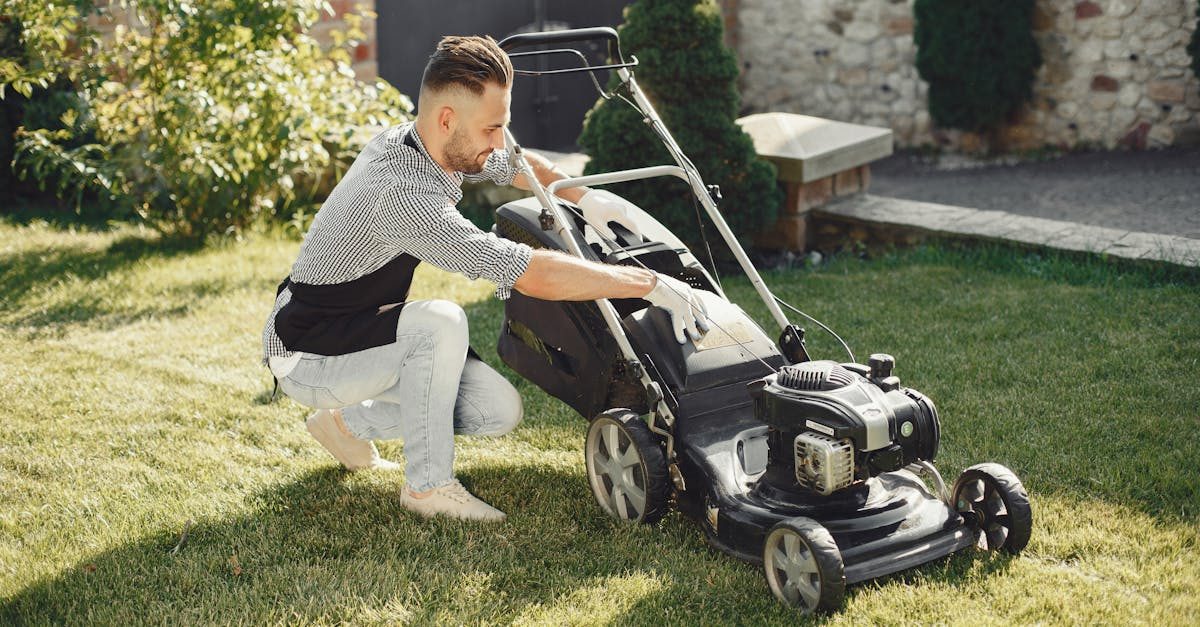
Gas push mowers typically cost 250 to 500 dollars. Self-propelled models are often in the 400 to 900 dollar range, depending on drive system and deck features. Riding mowers usually start around 2,000 dollars and can exceed 6,000 dollars for larger or zero-turn units.
Operating cost divides mainly into fuel or electricity, maintenance, and parts replacement over 5 to 10 years. According to cooperative extension calculations and typical residential use of about 25 to 40 mowing hours per season, a gas walk-behind mower consumes roughly 0.4 to 0.6 gallons of gasoline per hour. At 3.50 dollars per gallon, that equals about 35 to 80 dollars in fuel per year. Electric mowers, drawing 0.6 to 1.2 kWh per mowing session for a typical suburban lawn, generally cost under 15 dollars per year in electricity, assuming 0.15 dollars per kWh.
Battery replacement is the largest long-term cost factor for cordless mowers. Lithium-ion batteries retain useful capacity for about 500 to 800 charge cycles, which equates to roughly 5 to 8 seasons for a homeowner who mows weekly for 6 to 7 months per year. Replacement batteries often cost 150 to 300 dollars each. When measured across a full decade, the total operating cost of an electric mower and a gas mower is usually comparable, provided the electric batteries last at least 6 seasons before replacement.
Maintenance Requirements: Electric vs Gas
Electric mowers have far fewer moving parts and no combustion system. Routine maintenance focuses on:
- Keeping blades sharp, typically sharpening every 20 to 25 mowing hours.
- Cleaning the deck after mowing to prevent caked clippings and corrosion.
- Inspecting and storing batteries correctly to maintain capacity.
Gas mowers require more frequent and detailed service. Standard tasks include:
- Oil changes every 25 to 50 hours of operation or once per year.
- Air filter replacement or cleaning at least once per season.
- Spark plug replacement every 1 to 2 seasons.
- Fuel stabilization each fall and complete fuel system inspection every few years.
Extension services report that homeowners who follow annual maintenance schedules reduce major mower failures by 30 to 40 percent compared to neglecting these tasks. Electric mowers reduce the number of maintenance steps but do not eliminate the need for blade care and cleaning. Both types still benefit from annual inspection, especially for safety components like blade brakes.
Homeowners who value minimal hands-on maintenance usually prefer electric mowers. Those who are comfortable changing oil and performing small engine tasks gain more freedom with gas, especially on large properties.
Reliability and Lifespan
Well-built gas walk-behind mowers frequently operate for 10 to 15 years or more with consistent maintenance. Engines may need carburetor work or valve adjustments after several hundred hours, but decks and drivetrains remain usable. Rust, not the engine, is often what ends a gas mower's life.
Electric mower lifespans depend largely on battery pack durability and motor quality. Many homeowner-grade cordless mowers function effectively for 7 to 10 seasons when stored indoors and kept clean. Brushless motors, which avoid physical brushes that wear out, significantly extend working life compared to older brushed designs.
When heavy mowing is required, such as weekly mowing of a 15,000 square foot lawn or frequent leaf mulching, gas mowers still hold a reliability edge because engines maintain performance even as they age beyond 500 hours. For light to moderate duty on small to medium lawns, electric mowers deliver equal reliability with lower maintenance burden.
Noise, Emissions, and Environmental Impact
Noise Levels in Real Neighborhoods
Noise is not just a comfort issue, it is also a regulatory one. Many municipalities specify quiet hours and sound level limits, particularly above 60 to 70 decibels in early mornings or evenings.
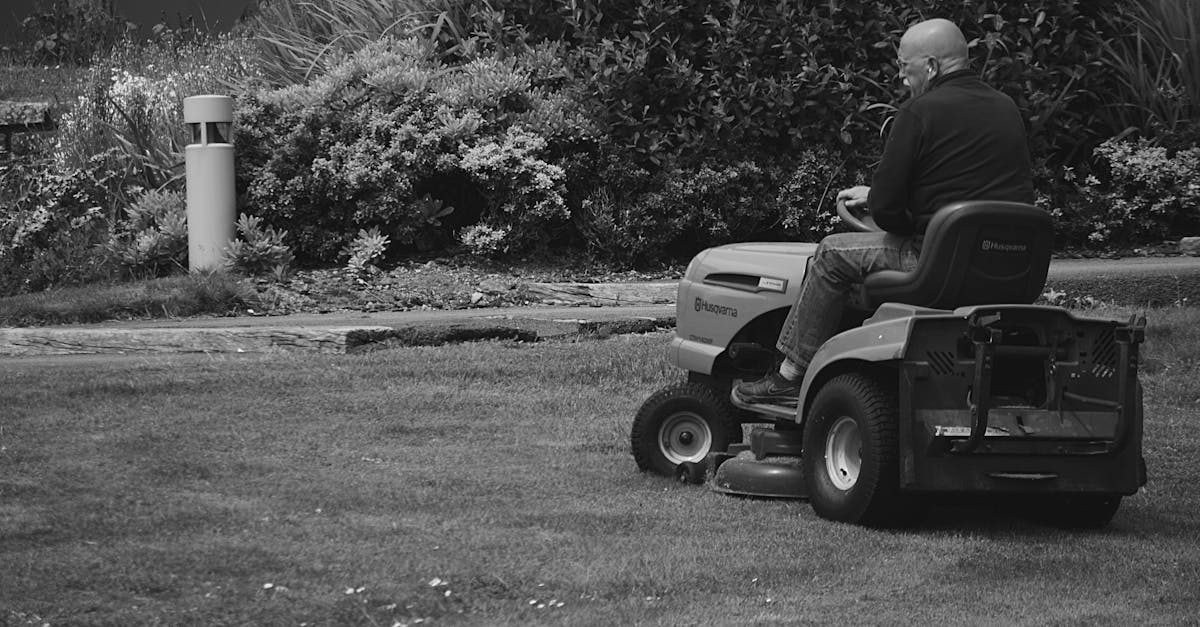
Typical sound levels measured at the operator's ear are:
- Electric walk-behind mower: 70 to 80 dB.
- Gas walk-behind mower: 85 to 90 dB.
- Gas riding mower or zero-turn: 90 to 95 dB.
Decibels use a logarithmic scale, so an increase of 10 dB represents roughly double the perceived loudness. This means a typical gas mower sounds about twice as loud as an electric mower at the same distance. In dense neighborhoods with houses 20 to 40 feet apart, this difference strongly influences neighbor satisfaction and compliance with local ordinances.
Emissions and Eco Friendly Mower Choices
Small gasoline engines emit carbon monoxide, nitrogen oxides, unburned hydrocarbons, and particulate matter. U.S. Environmental Protection Agency data indicates that older non-catalyst small engines can emit as much pollution in one hour as driving a modern car for several hundred miles.
Electric mowers produce zero exhaust at the point of use. Their total environmental footprint depends on the electricity generation mix in your region, but even in grids with a high percentage of fossil fuel power, lifecycle emissions per mowing hour are significantly lower. Studies from land grant universities and environmental agencies consistently show 30 to 70 percent lower greenhouse gas emissions for electric lawn equipment over a 10 year period, especially when powered partially by renewables.
For homeowners who prioritize eco friendly mower options and integrate practices from Chemical‑Free Lawn Care Tips and Low‑Water Lawn Ideas, electric and robotic mowers align strongly with reduced chemical and water use strategies. Reduced turf area, taller mowing heights, and clover or native plant integration further decrease total mowing hours, which compounds environmental benefits.
Battery Disposal and Fuel Handling
Environmental impact is not only about exhaust. Spilled gasoline, stale fuel disposal, and improper oil dumping all degrade soil and water quality. Storing 1 to 5 gallons of gasoline in a typical garage also introduces vapor emissions and safety considerations.
Electric mowers remove gasoline from the equation but introduce battery end-of-life concerns. Lithium-ion batteries are recyclable, but they require proper handling through manufacturer take-back programs or municipal hazardous waste systems. As of 2026, more retailers participate in battery recycling networks, which simplifies responsible disposal. Homeowners should plan to recycle, not landfill, batteries once their capacity drops below practical mowing use, usually when runtime falls under 50 percent of original, such as a decline from 45 minutes to under 20 minutes per charge.
Which Mower Is Best for Your Yard Size, Slope, and Lifestyle?
Small Yards: Under 5,000 Square Feet
For small lawns, less than about 5,000 square feet, an electric mower is usually the most efficient and practical choice. Corded models work well when you have a simple layout with few obstacles and accessible outdoor outlets. Cordless mowers are ideal when there are trees, beds, or tight spaces where a cord becomes cumbersome.
Key selection points for small yards:
- Deck width of 16 to 20 inches keeps the mower light and easy to store.
- Battery capacity that provides at least 30 minutes of runtime covers most small lots in a single charge.
- Noise and exhaust are minimized, which matters in dense townhome or urban neighborhoods.
Robotic mowers are also an option for small lawns if you want minimal weekly involvement. They pair effectively with Smart Irrigation Systems: Are They Worth It? because both automation systems coordinate to maintain consistent turf conditions with low manual input.
Medium Yards: 5,000 to 15,000 Square Feet
Medium-sized lawns, roughly one eighth to one third of an acre of turf, sit on the decision boundary. Both advanced battery mowers and gas mowers perform well here, but correct matching of deck width, battery capacity, and mowing frequency is critical.
For electric mowers in this range:
- Choose at least a 21 inch deck to keep mowing time under 45 to 60 minutes.
- Use two batteries or one high capacity pack rated around 6 to 10 amp-hours to finish in 1 to 2 charge cycles.
- Mow at least once per week during peak growth so you rarely remove more than one third of blade height.
Gas push or self-propelled mowers are appropriate when the lawn includes slopes over 10 degrees, dense warm-season turf, or heavy leaf fall. In these cases, operator effort and torque requirements justify the additional noise and maintenance. Homeowners who enjoy mechanical work or already own gas-powered tools also find gas mowers more integrated with their existing tool ecosystem.
Extension services report that homeowners with medium yards often see the best long-term satisfaction when they align mower type with their mowing habits. If you are committed to weekly cuts and basic battery care, an electric mower serves this yard size well. If you tend to skip weeks or handle heavy thatch and weeds, gas preserves cut quality more consistently.
Large Yards: Over 15,000 Square Feet
Once turf area exceeds about 15,000 square feet, or 0.35 acre, cutting time and operator fatigue become primary constraints. At this scale, self-propelled gas mowers, riding mowers, and zero-turns dominate, although high-end battery riders are emerging.
For large properties:
- A walk-behind mower is practical up to about 20,000 to 25,000 square feet for fit operators willing to spend 60 to 90 minutes per mow.
- Riding mowers with 38 to 54 inch decks cut 0.5 to 1 acre in 45 to 60 minutes at 3 to 4 mph.
- Zero-turn mowers reduce mowing time further on complex properties with many beds and trees.
Battery-powered riding mowers and commercial-grade electrics are improving, with some models capable of cutting 1 to 2 acres per charge. However, they come with higher upfront costs, often 4,000 to 8,000 dollars, and require larger charging infrastructure. For now, gas remains the default choice for most large residential properties, especially when budget and simple refueling are priorities.
Special Cases: Slopes, Tight Spaces, and Time Constraints
Sloped lawns, especially those with grades above 15 degrees, introduce safety and traction issues. Walk-behind self-propelled mowers, either electric or gas, handle moderate slopes better than riding mowers, which risk tipping. Electric self-propelled models are attractive on slopes because the lighter weight reduces the force needed to control the mower both uphill and downhill.
Tight spaces with many planting beds, fences, and narrow side yards favor lighter, narrower electric mowers and even robotic units. Here, maneuverability and storage footprint matter more than raw cutting power.
Time constraints also affect the decision. If you consistently have less than 45 minutes available to mow, a wider deck or riding mower makes sense even on smaller properties. If your schedule allows flexible mowing days, electric mowers perform reliably as long as you avoid letting grass become excessively tall between cuts.
Recommended products
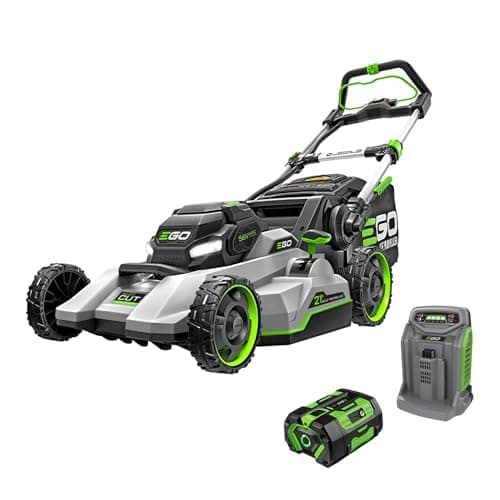
EGO POWER+ Self-Propelled Mower (LM2135SP)
A 56V self-propelled mower with select-cut blades that matches gas torque on most residential lawns.
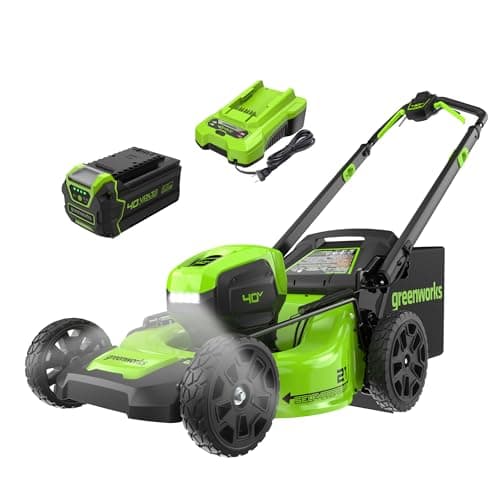
Greenworks 40V 21 inch Self-Propelled Mower
A lighter 40V self-propelled mower for lawns under a quarter acre.
Greenworks 13 Amp Corded Dethatcher
A corded electric dethatcher for homeowners who want unlimited runtime and no second battery platform.
Conclusion: Making a Data-Driven Mower Choice
The central question in any electric mower vs gas mower comparison is not which technology is universally better, but which matches your lawn size, grass type, and mowing habits. Electric mowers deliver lower noise, fewer emissions, simpler maintenance, and lower operating cost for small to medium lawns that are mowed consistently. Gas mowers provide higher torque, wider decks, and greater endurance for large properties, dense turf, tall growth, and heavy leaf work.
For a small city lot with 3,000 square feet of Kentucky bluegrass, a 56 volt cordless mower with a 20 inch deck is the most efficient and eco friendly mower choice. For a 0.75 acre property with Bermuda grass and mature trees, a gas riding or zero-turn mower remains the practical tool.
Once your mower is matched correctly, focus on broader lawn care systems. Combine proper mowing with Chemical‑Free Lawn Care Tips, Smart Irrigation Systems: Are They Worth It?, Low‑Water Lawn Ideas, and guidance from Common Lawn Care Mistakes Beginners Make and Essential Lawn Care Tools Every Homeowner Needs. With the right equipment and practices, your lawn will respond with better density, fewer weeds, and more predictable performance across seasons.
Top Picks
- EGO POWER+ Self-Propelled Cordless Lawn Mower (Select Cut, LM2135SP)Check price on Amazon
- Garden Weasel Edger-Chopper Manual Lawn EdgerCheck price on Amazon
- Professional Lawn Leveling Rake 36x10 inchCheck price on Amazon
As an Amazon Associate we earn from qualifying purchases.
Free Lawn Care Tools
For most yards under about a third to half an acre, yes. Battery mowers are quieter, cost far less to run, and need almost no maintenance beyond blade care, and they cut a regularly mowed lawn just as cleanly as gas. Gas mowers are still the better tool for large properties, tall or wet grass, thick warm-season turf, and heavy fall leaf mulching, where sustained torque and unlimited refuel-and-go runtime matter most.
On cut quality, yes, as long as the lawn is mowed regularly. Extension research shows blade sharpness and mowing height affect turf appearance more than the power source, and modern 56 to 80 volt mowers deliver power comparable to typical 4 to 6 hp walk-behind gas engines. They fall short of gas mainly in brute force situations: very tall, wet, or neglected grass and heavy leaf loads still favor a gas engine.
Most battery lawn mowers run about 30 to 60 minutes per charge, with independent testing often landing around 45 to 50 minutes for a typical 21 inch deck. Conditions matter a lot: thick, damp, or tall grass and larger decks can shorten runtime by a third or more. That usually covers about a quarter acre per charge, so yards between a quarter and half an acre generally need a second battery.
For normal residential use, modern battery mowers with mid- to high-voltage batteries deliver power in the same general range as typical 4–6 hp walk-behind gas mowers when fully charged. They handle regular weekly mowing on maintained lawns well, but gas mowers still have an edge when pushing through very tall, wet, or neglected grass because of their higher sustained torque. Keeping grass height under control and mowing on a regular schedule helps electric mowers maintain cut quality. If your lawn frequently gets overgrown, a gas mower or higher-voltage electric system is usually more reliable.
Corded electric mowers work best on small, relatively open lawns under about 5,000 square feet. Most homeowners are limited to 50–100 feet of extension cord, so large yards or complicated layouts with many obstacles are harder to manage safely. If you can reach all mowing areas without constantly moving cords around beds and trees, a corded mower can provide unlimited runtime with no fuel or charging. For anything beyond that, cordless or gas is usually more practical.
A self-propelled gas mower is a good choice for medium to large yards, especially if your lawn has slopes of 10–20 degrees or uneven ground. The drive system powers the wheels, so you use less physical effort and can maintain a steady pace between about 2 and 4 mph. Push mowers are better suited to smaller, flatter lawns under 8,000–10,000 square feet where maneuverability and lower cost matter more than ease on hills. If you want shorter, less tiring mowing sessions on a bigger property, self-propelled is the better fit.
Robotic mowers are designed for homeowners who want minimal hands-on mowing and a quiet, low-emission option. They use small electric motors, run frequently, often 3 to 7 days per week—and keep grass at a consistently low height, which can support healthier turf with fewer weeds when combined with good lawn care practices. These units work best on small to medium yards with simple layouts and clear boundaries. They pair especially well with chemical-free and water-smart lawn strategies.
Using a mower that matches your lawn size and grass type helps avoid scalping and uneven cuts, both of which stress turf and open space for weeds and disease. Underpowered or poorly matched mowers can bog down, tear grass instead of cutting it cleanly, and leave an irregular surface that dries out faster. Electric, gas, and robotic mowers can all support a healthy lawn if they deliver enough power and a consistent cut at the right height. Combined with proper watering and chemical-free lawn care habits, the right mower choice reduces weed pressure and mowing frequency over time.
Photos: minree / Pixabay, Gustavo Fring / Pexels, Richard REVEL / Pexels

Beat weeds and brown spots from your phone
Snap a photo, get the fix, and follow a plan timed to your soil and weather. Free on iPhone.