

Building Your Lawn Starter Kit for Beginners
 James ThorntonLawn Equipment & Maintenance Expert | 20 Years
As an Amazon Associate we earn from qualifying purchases.
Brown spots, weeds, and thin turf usually are not the real problem. The real problem is walking into a garden center or scrolling online and having no idea which mower, seed, or fertilizer actually matters, so money gets burned on the wrong gear.
Building your lawn starter kit for beginners is about skipping that chaos and putting together a small, smart set of tools and products that match your specific lawn, climate, and budget. Once you know what you are working with on the ground, the right kit almost picks itself.
This guide is for first time lawn owners, new homeowners, and renters who handle their own yard and want clean, practical answers. I will walk through how to assess your lawn, choose essential tools, pick soil and seed products that actually work, plan by season, and store and use everything safely without wasting money.
Before you buy anything, walk your yard and decide which of four categories it fits: mostly bare soil, patchy lawn, weed-dominated, or decent lawn that just looks tired. If the soil is hard like concrete, water puddles after rain, and grass roots are shallow, your core problem is compaction and poor soil, not a "bad" seed or the wrong fertilizer. Confirm this with a screwdriver test, if you cannot push a screwdriver 6 inches into the soil with moderate pressure, the soil is compacted and you should plan on aeration and light overseeding, not just dumping more fertilizer.
For most beginners, the fix is a lean starter kit: a reliable mower, a basic broadcast spreader, a sturdy rake, a hose and sprinkler, region appropriate grass seed, and a simple starter fertilizer based on a soil test. Do not load up on every weed and insect product on the shelf. Start with mowing at the correct height, watering about 1 to 1.5 inches per week during active growth, and feeding at the right time for your grass type. Within one growing season, usually 3 to 6 months, a lawn that looked hopeless can be dense and green if you focus on soil, mowing, and watering first, then add extras only if a specific problem shows up.
Know Your Lawn Before You Buy Anything
Before we talk mowers and spreaders, you need a basic diagnosis of your yard. After maintaining thousands of lawns, the pattern is clear, the people who win are not the ones with the most gear, they are the ones who match simple tools to the actual condition of their lawn.
This section will give you a quick field checklist so you can decide what type of starter kit you actually need instead of guessing at the store.
Diagnose Your Starting Point: What Are You Working With?
Start by walking the entire yard. Do not just look out the window and guess. You are trying to answer three questions: what is on the ground now, how much sun does it get, and how much traffic it sees.
First, classify the current lawn surface into one of these buckets:
- Mostly bare soil: Large areas of dirt, maybe a few tufts of grass or weeds. This is typical for new construction or neglected rental properties.
- Patchy grass: Some grass, but thin, with visible soil between plants. It may look uneven in color, with better patches near downspouts or shaded edges.
- Mostly weeds: Green from a distance, but up close it is dandelions, crabgrass, clover, and other broadleaf or grassy weeds with very little desirable turf.
- Established lawn needing improvement: Overall coverage is good, but color is off, a bit lumpy, or some thin spots and minor weeds.
This quick classification drives your starter kit. Bare soil usually means you need enough seed or sod and tools for a full lawn renovation. Patchy lawns push you toward overseeding and soil improvement. Weed dominated lawns may need a season of better mowing and fertilizing before you bother with renovation, or you might decide on a more aggressive reset. Established lawns just need good maintenance gear and a few targeted products.
Next, look at sun exposure. Grass is not one size fits all when it comes to light:
- Full sun: 6 or more hours of direct sunlight per day.
- Partial shade: 3 to 6 hours of broken or filtered sun.
- Heavy shade: Less than 3 hours of direct sun, under trees or between buildings.
If most of your yard is heavy shade, you do not buy a standard sunny mix seed and expect miracles. You either choose appropriate shade tolerant grasses or accept that some areas are better off as mulch beds or ground cover. Partial shade lawns shape your seed choice and might shift how often you water, since shaded soil tends to stay wetter.
Finally, think about traffic. A decorative front lawn with only foot traffic from the mailman can handle more delicate grasses and higher mowing heights. A backyard with kids and dogs playing daily needs tougher grass, usually at the higher end of recommended mowing heights, and your starter kit might prioritize a more durable seed blend and maybe a better sprinkler solution.
Once you know surface condition, sun, and traffic, you can decide what level of overhaul you are targeting:
- Full renovation: Best when 50 to 70 percent or more of the area is bare soil or weeds, or the wrong grass type for your region. That calls for tools like a rental dethatcher or power rake, possibly a sod cutter, plus enough seed or sod to start over.
- Overseeding: Right when you have a lawn that is thin but has decent coverage and few bare spots larger than about a dinner plate. Here your kit leans toward a mower, rake, broadcast spreader, and enough seed to cover at 2 to 4 pounds per 1,000 square feet, depending on grass type.
- Maintenance and improvement: If coverage is generally good but color and density are off, your kit can stay light, a mower, basic spreader, hose, sprinkler, seasonal fertilizer, and maybe a plan for core aeration once a year if the soil is compacted.
If you are not sure which path is right, a practical test is weed density. If more than about half of what is green in summer is weeds and not turf, you are usually better off planning a phased renovation than chasing weeds individually. For details on that process, look at lawn renovation step by step and overseeding your lawn in fall or spring, which walk through timing and preparation.
Understand Your Grass Type and Climate Zone
The next piece is knowing what kind of grass you have or want, and what your climate will let you grow without constant struggle. This matters more for your starter kit than most people realize, because it affects your seed choice, fertilizer schedule, and even whether you ever need dethatching tools.
In the United States, lawns fall into two big buckets: cool season grasses and warm season grasses.
Cool season grasses include Kentucky bluegrass, perennial ryegrass, and the fescues (tall fescue, fine fescue). They grow best where summers are moderate and winters are real winters, like the Midwest, Northeast, Pacific Northwest, and parts of the upper South. These grasses do their strongest growing in spring and fall when soil temperatures are roughly 50 to 65 degrees Fahrenheit. They slow way down in summer heat and can go dormant if it is hot and dry.
Warm season grasses include Bermuda, Zoysia, St. Augustine, and Centipede. They like long, hot summers, common in the South, Southeast, and parts of the Southwest. These grasses really wake up when soil temps pass about 65 degrees and love it when air temps are in the 80s. They go brown and dormant in colder winter weather.
If you are not sure which you have, start by checking a simple regional map from a reputable source or your state extension office. Cool season is typical from roughly the transition zone northward, warm season dominates in the Deep South and Gulf states. A quick on-the-ground check helps too. If your lawn is fully brown all winter and goes bright green in late spring, warm season is likely. If it stays at least somewhat green under snow-free conditions in winter, cool season is likely.
Photo ID apps can help you distinguish between, say, Bermuda and Zoysia, but they are not perfect. A better path is checking identifying your grass type, which walks through blade texture, growth habit, and color, or sending clear photos to your local extension office.
While USDA Hardiness Zones are mainly about plant cold tolerance, they give a rough frame for lawn decisions. A Zone 3 or 4 lawn is almost certainly cool season. Zone 9 or 10 is almost certainly warm season. For lawns, some universities break the map into lawn specific climate zones, focusing on summer heat stress and winter kill. Those are useful because grass choice is as much about how hot it gets in July as how cold it gets in January.
Here is how grass type and zone affect your starter kit:
- Seed or sod choice: In a cool season zone, your starter kit should include a grass seed blend designed for your region, often a mix of Kentucky bluegrass and fescue or ryegrass. In warm season zones, you might not buy seed at all, since many warm season grasses are installed as sod, plugs, or sprigs. St. Augustine, for example, is almost always sodded or plugged, not seeded.
- Fertilizer timing: Cool season lawns get the most benefit from fall fertilization, typically September through November, with maybe a lighter spring feeding. Warm season lawns are usually fertilized from late spring through mid summer once they are fully green, not in early spring when they are still waking up.
- Tools and timing: Dethatching, for example, is mainly useful on certain species like Kentucky bluegrass and some warm season grasses that build thatch. Tall fescue does not usually need dethatching. If you ever rent a dethatcher or power rake, you must time it during the active growth period for your grass type so it can recover, that means fall for cool season and late spring to early summer for warm season.
If you want more on selecting the right seed, check choosing the best grass seed for your region and cool season vs warm season lawn calendars. They pair nicely with this starter kit guide because they deal with what you plant and when, while this article focuses on what gear you actually need to support that plan.
Soil Basics: The Foundation of Your Lawn Starter Kit
Every company wants to sell you magic fertilizer or weed control, but soil quality is what decides whether your lawn can actually use any of those products. When I walk up to a struggling lawn, I assume the soil is the weak link until a test proves otherwise. Building your lawn starter kit for beginners without thinking about soil is like buying fancy wheels for a car with no engine.
Start with a quick field check. Grab a handful of slightly moist soil from 3 to 4 inches down, not just the top crust. Squeeze it in your hand. If it falls apart immediately and feels gritty, you have sandy soil. If it holds together in a tight, slick ball that can be ribboned out when you push it between your fingers, you are heavy on clay. If it forms a crumbly ball that breaks apart when poked, you are somewhere in the loam range, which is what you want.
Next, do a simple drainage or infiltration test. After a dry spell, dig a small hole about 6 inches wide and 6 inches deep. Fill it with water and let it soak in once. Then fill it again and time how long it takes to drain. If it drops 1 to 2 inches per hour, you are in the good range. Much faster, and the soil may not hold moisture or nutrients well. Slower than about 1 inch per hour, and you are probably dealing with compaction or heavy clay.
Visual signs matter too. Puddling after moderate rain, water running off onto sidewalks instead of soaking in, and grass roots that only go an inch or two deep are all signs of compaction and poor soil structure. That affects your kit because it tells you whether to prioritize tools like a core aerator or products like compost over more fertilizer.
On top of those quick checks, a real lab soil test is worth every penny. Skip the marketing claims - here is what I have seen actually work. When people finally stop guessing and send in a soil sample, they almost always save money the next season because they stop buying random lime, phosphorus heavy fertilizers, or "soil conditioners" they do not need.
To do a test right, take 10 to 15 small cores or slices of soil from the top 3 to 4 inches across the lawn, mix them in a clean bucket, and send a composite sample to a local or regional lab. Your county extension website will usually have a recommended lab and instructions.
- Penn State Extension recommends soil testing every 3 years for established lawns and before any major renovation, focusing on pH and phosphorus levels.
When the results come back, do not get lost in every number. For your starter kit, focus on:
- pH: Most turfgrasses like a pH between 6.0 and 7.0. Below that, lime is usually recommended. Above that, sulfur or other acidifying strategies may be suggested, though changing high pH soil is harder.
- Organic matter: If it is below about 3 percent, you will benefit from compost or other organic matter additions over time.
- Phosphorus and potassium: These tell you if you need a balanced fertilizer or if you can use high nitrogen, low P and K products.
- CEC (cation exchange capacity): This is essentially a measure of how well your soil holds nutrients. Sands have low CEC, clays higher. It guides how lightly and frequently you fertilize.
The soil test output will often include recommendations like "apply 25 pounds of lime per 1,000 square feet" or "use a starter fertilizer with 1 pound of nitrogen per 1,000 square feet." Those recommendations tell you very directly what belongs in your lawn starter kit. For example:
- If your pH is 5.5, your kit should include an appropriate lime product and a basic spreader that can handle it.
- If phosphorus is already high, you should avoid "starter" fertilizers loaded with phosphorus and choose a nitrogen focused fertilizer instead.
- If organic matter is low, your starter kit should include a plan (and maybe basic tools) for applying a thin compost topdressing, not just more synthetic fertilizer.
To go further into reading and using soil tests, see understanding lawn soil tests and improving clay or sandy soil. For this guide, the key takeaway is that the right test upfront prevents you from hauling home the wrong products.
Core Components of a Beginner-Friendly Lawn Starter Kit
Once you understand your lawn's condition, grass type, and soil, you can build a lean starter kit that does 80 percent of what a beginner will ever need. You do not need a shed full of machines. You need a few durable tools that match your lawn size and a handful of products selected based on your soil and climate.
I will start with the true must haves, then mention a few smart add-ons you might include later as your budget allows.
The “Must Have” Short List for True Beginners
Here is the baseline kit I recommend after 20 years of doing this. It is enough to renovate a small yard or significantly improve an existing one and maintain it year to year.
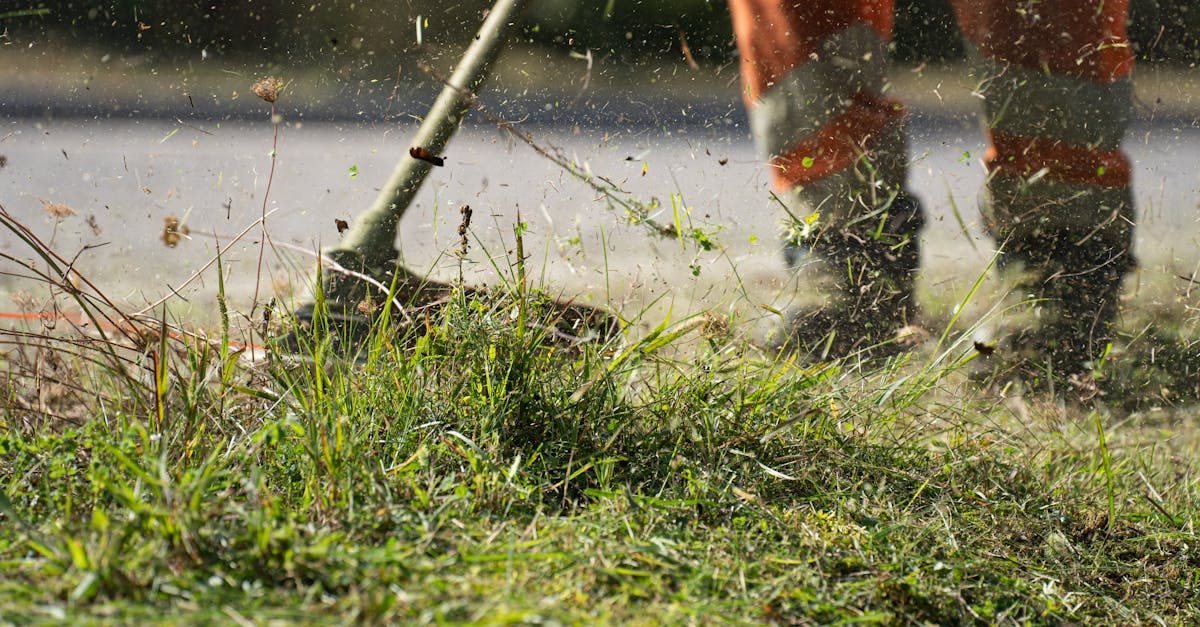
1. A lawn mower sized to your yard
Your mower is the one tool you will use most often. Choosing the right type and size saves more time and frustration than almost anything else.
For small yards, say under 5,000 square feet, a 14 to 21 inch walk behind mower is plenty. For most beginners, a simple gas push mower or a quality battery mower will do fine. If you are on a slope or do not like pushing, consider self propelled, but do not overbuy. You do not need a ride on mower for a 4,000 square foot suburban lot.
Key features that actually matter:
- Adjustable cutting height: You should be able to set at least 3 heights between roughly 2 and 4 inches.
- Reliable starting and easy maintenance: For gas, that means a decent brand with parts availability. For battery, that means a brand that uses common battery platforms and has good run time reviews.
- Mulching capability: Being able to mulch clippings instead of bagging saves fertilizer because you are returning nitrogen to the soil.
Mowing height depends on grass type. For cool season like Kentucky bluegrass or fescue, I typically recommend 3 to 4 inches in most home situations. For Bermuda or Zoysia, often 1 to 2.5 inches is the target, depending on the variety and how smooth the lawn is. The most important rule is the one third rule: never remove more than one third of the grass blade in a single mowing. If your grass is 4 inches, do not cut it shorter than about 2.75 inches at once. This keeps the lawn healthier and reduces stress.
2. A sturdy rake
You need at least one good rake. A metal leaf or lawn rake is enough to clear debris, rough up soil for seeding, and lightly remove thatch if needed. Avoid the super cheap flimsy rakes, they bend and slow you down. A mid priced metal rake with a comfortable handle will last for years.
3. A broadcast spreader and small hand spreader
A broadcast (rotary) spreader is crucial for even application of seed, fertilizer, lime, and other granules. Uneven spreading causes stripes, burn spots, and poor germination. For most homeowners with 2,000 to 10,000 square feet, a walk behind broadcast spreader is ideal. Look for:
- A solid frame that does not flex under load.
- Pneumatic or solid wheels that roll easily.
- Adjustable gate settings with a chart from the manufacturer.
A small handheld spreader is nice for tight areas, side yards, or spot seeding. It is not mandatory on day one, but it is cheap and useful.
4. A basic hose and sprinkler or simple irrigation
Grass seed and new sod fail more often from poor watering than from bad seed. Your starter kit needs enough hose length to reach all areas and at least one decent sprinkler.
For rectangular lawns, an oscillating sprinkler is easy and predictable. For odd shaped areas, a rotary or multi pattern sprinkler can help. The goal is to deliver about 1 to 1.5 inches of water per week during active growth for established lawns, and light but frequent watering for new seed, usually 2 to 4 times per day for 5 to 10 minutes per zone to keep the top quarter inch of soil consistently moist.
You can confirm how much water you are applying using a simple tuna can or rain gauge. Set it in the watering zone and run the sprinkler until you reach the desired depth. If it takes 40 minutes to reach 1 inch, that is your run time per week, which you can split across 2 to 3 sessions for established turf.
5. Starter fertilizer and grass seed or sod plugs
Based on your soil test and region, you will choose either a starter fertilizer (for new seeding or sod) or a regular lawn fertilizer (for existing lawns), and an appropriate grass seed or sod/plug type.
For cool season overseeding, typical starter fertilizer rates are around 0.5 to 1.0 pound of nitrogen per 1,000 square feet at seeding, but always go by the product label. Grass seed rates vary by type. As a ballpark:
- Perennial ryegrass: about 5 to 8 pounds per 1,000 square feet for new lawns, 2 to 4 for overseeding.
- Tall fescue: about 6 to 8 pounds new, 3 to 5 overseeding.
- Kentucky bluegrass: about 2 to 3 pounds new, 1 to 2 overseeding.
For warm season lawns, you may buy seed for Bermuda or Zoysia (depending on variety), but many people start with sod or plugs. Your starter kit in that case might include a knife or spade for cutting sod, and a roller rental if you are laying a whole yard.
6. A temporary soil test kit plus plan for a lab test
Over the long term, a lab test is what drives smart fertilizer and lime decisions. For immediate rough guidance, an inexpensive DIY test kit can give you a ballpark pH reading. I do not recommend relying on these for nutrient levels, but they can tell you if you are way off on acidity.
So I like to see beginners include either a mail in test kit from a reputable lab or a note on their calendar to pick up a test kit from their extension office within the first season. Your kit should include a clean trowel or soil probe (or you can use your hand trowel) for sampling.
With that baseline starter kit, you can mow, seed, fertilize, and water properly. For many small to medium lawns, that is enough to get a healthy, dense turf within one growing season.
Recommended products
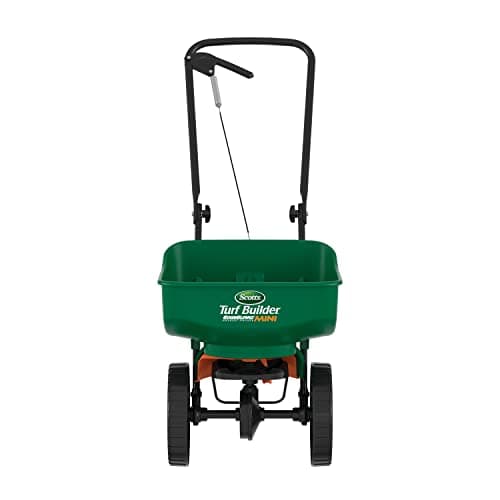
Scotts Turf Builder EdgeGuard Mini Spreader
A small broadcast spreader sized for lawns under 5,000 square feet, with an edge guard that keeps product off the driveway.
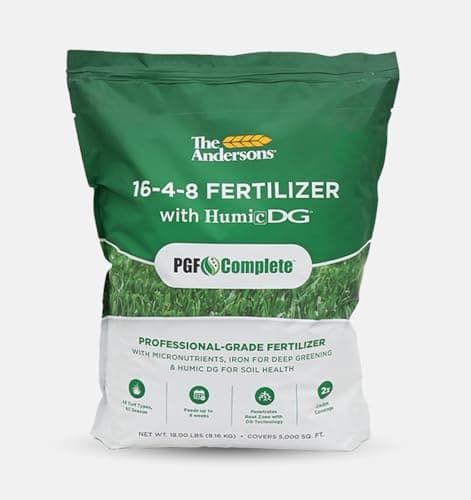
The Andersons PGF Complete 16-4-8
A slow-release 16-4-8 that works as the regular lawn food this kit list calls for on an existing lawn.
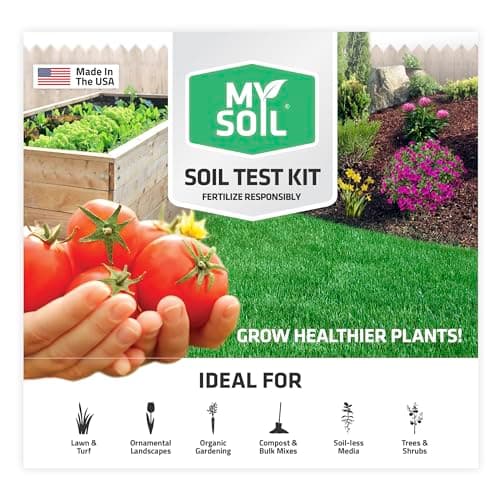
MySoil Soil Test Kit
A mail-in lab test standing in for the lab test this section recommends over a DIY pH kit.
Seasonal Strategies With Your Starter Kit
Tools are only half the equation. Knowing when to use them is where most beginners either make progress or stall. The right starter kit lets you follow a simple seasonal rhythm without getting overwhelmed.
Your exact calendar depends on cool season versus warm season grass, but the logic is the same: work with the natural growth peaks, not against them.
Spring: Clean Up and Assessment
In spring, your goal is to clean up winter debris, assess damage, and do light fixes, not to do everything at once.
For cool season lawns, once the soil is no longer soggy and you can walk without leaving deep footprints, use your rake to remove leaves, sticks, and dead grass. Set your mower slightly lower than summer height for the first cut, but still respect the one third rule. This helps stimulate new growth.
If you see thin areas or bare patches after winter, mark them mentally for overseeding at the right time. In many cool season areas, that is early fall, not spring, though light patch repairing in spring can be done if needed.
For warm season lawns, spring is when the grass is greening up. Avoid heavy fertilization or aggressive dethatching before the lawn is mostly green and actively growing. Your starter kit in this phase is mostly rake, mower, and sprinkler if spring is dry.
Summer: Mowing and Watering Discipline
Summer is when most lawns are under stress. Your starter kit pays off by letting you maintain without overdoing it.
Raise your mowing height slightly during peak heat. Taller grass shades the soil, reduces evaporation, and encourages deeper roots. For cool season lawns, staying toward the high end, around 3.5 to 4 inches, is smart in summer. For warm season grasses, you may keep them a bit lower but still avoid scalping.
Water deeply and infrequently for established lawns. Aim for about 1 to 1.5 inches per week total, from rain and irrigation combined, applied in 2 to 3 sessions. The tuna can test is your confirmation tool. If you see the grass turning dull and footprints remain visible after you walk on it, that typically points to early drought stress. Confirm by checking the soil 2 to 3 inches down. If it is dry, it is time to water.
Avoid heavy seeding in mid summer heat for cool season lawns. New seedlings struggle in high temperatures and weed pressure is intense. Warm season seeding must happen during their active season though, usually late spring to early summer when soil temperatures are well above 60 degrees.
Fall: The Main Improvement Window for Cool Season Lawns
If you have cool season grass, fall is your main project season. This is when your starter kit really goes to work for overseeding and heavier fertilization.
Cool nights and warm days create ideal germination conditions. If you plan to overseed, mow the lawn shorter than usual one time, bagging the clippings, then use your rake to loosen the top of the soil in bare or thin areas. Use your broadcast spreader to apply seed at the recommended overseeding rate, then lightly rake again to mix seed with the top quarter inch of soil.
Follow with a starter fertilizer if your soil test allows for phosphorus. Keep the seeded areas consistently moist by watering lightly 2 to 3 times per day until germination, usually 7 to 21 days depending on species, then gradually transition to deeper, less frequent watering.
Fall is also when you apply one or two fertilizer applications to cool season lawns at about 0.75 to 1 pound of nitrogen per 1,000 square feet, spaced 4 to 6 weeks apart, based on your soil recommendations. Your spreader and mower will see a lot of use in this period.
Late Spring to Summer: Improvement Window for Warm Season Lawns
Warm season lawns do their big projects when they are fully awake. If you are establishing Bermuda from seed or plugs, or thickening Zoysia, you want soil temps 65 degrees and up, often May through July depending on your region.
Use your starter kit similarly: clear debris, prep soil with the rake, spread seed or lay plugs or sod, apply starter fertilizer if allowed, and water consistently. For warm season grasses, you can be a bit more aggressive with mowing height reduction if you are trying to encourage spreading, but never scalp the lawn down to dirt unless you know your specific grass type tolerates that and you are in the right time window.
Safety, Storage, and Getting the Most From Your Kit
Even a basic lawn starter kit includes sharp blades, powered equipment, and chemical products. Handling and storing them correctly keeps you and your family safe and keeps your tools working for years.
Safe Handling of Tools and Products
For mowers, always disconnect the spark plug wire (gas) or remove the battery (cordless) before you tip the mower or touch the blade. I have seen too many close calls from people flipping a mower to clean it while it is technically still "live." Sharpen the blade at least once per season for home use. A dull blade tears grass, which leads to brown tips and more disease pressure.
For fertilizers and seed, read the labels and follow the recommended application rates. More is not better. Exceeding label rates can burn grass or cause runoff into storm drains. Use gloves when handling concentrated products and wash hands afterward.
Store any herbicides, insecticides, or other chemicals in a locked or high cabinet away from pets and children. Keep them in their original containers with labels intact.
Storage and Maintenance of Tools
Your mower will last much longer if you do simple annual maintenance. For gas mowers, that means changing the oil once per year, replacing or cleaning the air filter, and checking or replacing the spark plug. Run the fuel tank dry or add fuel stabilizer before winter storage. For battery mowers, store batteries in a cool, dry place and avoid leaving them on the charger for weeks.
Rinse your spreader after each use, especially after lime or fertilizers, and let it dry. Corrosion will ruin a spreader faster than anything else.
Hoses should be drained before freezing weather and stored out of direct sun when possible. Sprinklers last longer if they are not left in the yard to be run over by mowers or baked year round.
- Michigan State University Extension notes that sharp mower blades can reduce fuel use by up to 20 percent and improve cut quality, recommending sharpening at least once per season.
What Other Guides Miss: Common Mistakes to Avoid
Most guides about building your lawn starter kit for beginners either list every tool in the store or stay so generic that you still do not know what to buy. Here are the mistakes I see over and over that you can skip.
Buying Advanced Gear Before Nailing Basics
People love to buy dethatchers, aerators, and specialty sprayers before they have a reliable mower and a good spreader. The issue is that 80 percent of your lawn quality is mowing, watering, and correct fertilization. Aeration and dethatching help in specific cases, but they are not daily tools. You can rent them once a year if needed instead of buying.
Ignoring Grass Type and Climate
Another common mistake is grabbing a generic "all purpose" seed mix without checking if it is suited to your climate or shade conditions. If you see a cool season mix loaded with perennial ryegrass being sold in a Deep South store, or a sunny Bermuda mix pushed for a shady northern lot, that is a red flag. Confirm your grass type and region first, then pick seed. If in doubt, ask your local extension which species perform best in your county.
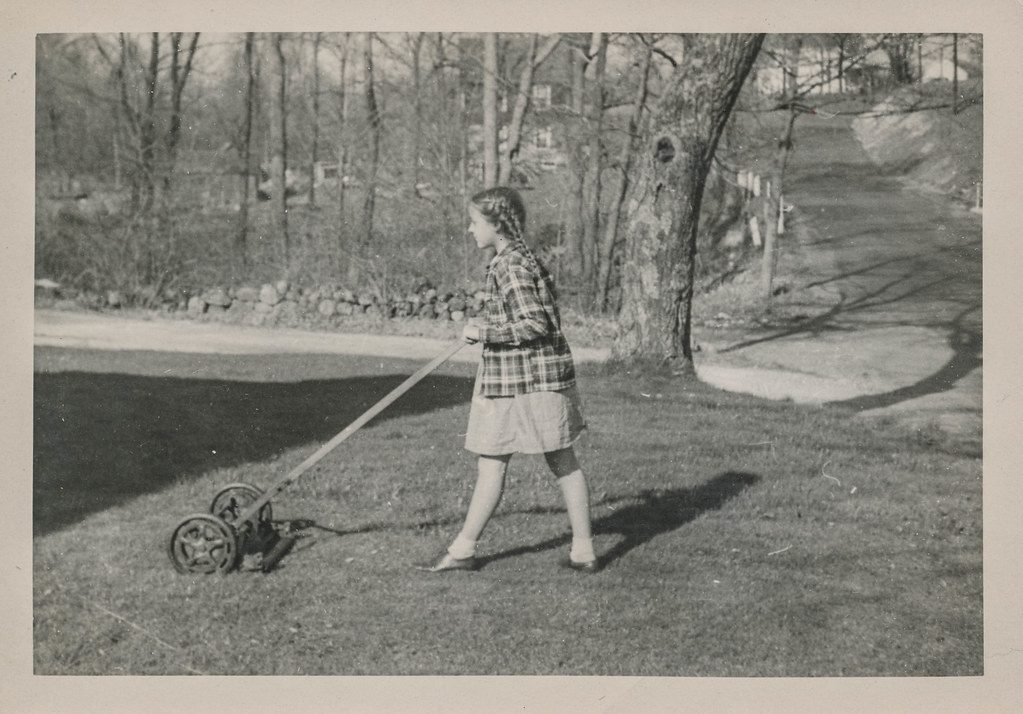
Skipping Soil Tests and Guessing With Fertilizer
Many beginner kits include a random bag of 10-10-10 or high phosphorus "starter" fertilizer without any soil test. If phosphorus is already high in your soil, more can create environmental issues and will not help your lawn. The trigger for testing is simple: if you have never tested or it has been more than 3 years, get a test before committing to a multi year fertilizer plan. Confirm that your pH is within about 6.0 to 7.0 and that phosphorus is not already high before you stockpile products.
Mis-timing Big Projects
Overseeding cool season grass in late spring or mid summer is a classic timing error. The seedlings get hammered by heat and weeds. The better window is usually late summer to early fall, when soil is warm but air temps are starting to cool. For warm season grass, trying to seed or establish plugs in late fall when soil temps are dropping below 60 degrees is another widespread mistake. Use soil temperature or local extension calendars as your confirmation tool before you start a big project.
Putting It All Together: A Simple Starter Plan
To make this practical, here is how you might roll out your beginner lawn starter kit across a first year.
Month 1: Walk the yard, classify its condition, sun, and traffic. Do the screwdriver and drainage tests. Order or pick up a soil test kit and send samples. In the meantime, buy your core kit: mower, rake, hose, sprinkler, and spreader.
Month 2: When soil results arrive, choose your fertilizer and decide if lime or other amendments are needed. Plan any overseeding or renovation for the correct season for your grass type. Start regular mowing at correct height and correct watering based on that 1 to 1.5 inches per week target.
Months 3 to 6: Use your kit to execute the plan: overseed or renovate in the right window, fertilize at recommended rates and timing, water correctly, and keep blades sharp. Track results. Within one full growing season, you should see thicker turf, fewer weeds, and more even color. If you still see issues, that is the time to consider renting specialized tools like a core aerator or consulting more specific guides on disease or insect problems.
You do not need expensive equipment for this, here is what actually matters. A solid mower, a good spreader, a hose and sprinkler, plus smart seed and fertilizer choices guided by a soil test will beat a garage full of shiny but unnecessary gear every time.
Conclusion and Next Steps
Building your lawn starter kit for beginners is not about buying everything at once. It is about matching a small, durable set of tools and products to your lawn's reality: its grass type, soil, sun, and use. Once those pieces line up, day to day lawn care becomes routine instead of a guessing game.
If you want to go deeper on the timing side, especially for different grass types, check out cool season vs warm season lawn calendars. Then, when you are ready to choose the actual seed bag, use choosing the best grass seed for your region to avoid blends that fight your climate from day one.

Free Lawn Care Tools
At minimum you need a mower with adjustable cutting height, a rake, a broadcast spreader, and a hose with a basic sprinkler. With those four items you can mow correctly, fertilize evenly, overseed thin spots, and water properly, which covers most beginner lawn needs.
If you improve mowing, watering, and fertilizing based on a soil test, you can usually see noticeable improvement within 4 to 8 weeks in the growing season. Full transformation of a thin or weedy lawn into dense turf typically takes one full growing season, about 3 to 6 months depending on grass type and climate.
For cool-season grasses like fescue and Kentucky bluegrass, the best window is late summer to early fall when soil is warm and air temperatures are cooling. For warm-season grasses like bermuda, overseeding or establishing should be done in late spring to early summer once soil temps are consistently above about 65°F.
You can, but it is not ideal. A soil test tells you if your pH and phosphorus levels are already in range, which prevents wasting money on products you do not need and reduces the risk of runoff. If you have never tested or it has been more than 3 years, you should get a lab test before committing to a multi-year fertilizer plan.
If more than about 50 to 70 percent of what you see is bare soil or weeds rather than desirable grass, a full renovation is usually more efficient. If grass coverage is mostly there with some thin spots and bare patches smaller than a dinner plate, a focused overseeding combined with better mowing and watering is typically enough.
For most cool-season lawns, set your mower between 3 and 4 inches and never remove more than one-third of the blade in a single cut. For warm-season grasses like bermuda or zoysia, heights between 1 and 2.5 inches are common, but always confirm the recommended range for your specific species and adjust slightly higher during heat stress.

Your lawn plan, in your pocket all season
Grass ID, a season plan, soil-timed reminders, and a lawn journal that remembers what you did. Free on iPhone.
Related Articles
 Lawn Care Tips
When to Apply Scotts Turf Builder & Pre-Emergent: 2026 Schedule
Apr 30, 2026•6 min read Lawn Care Tips
Scotts Turf Builder Triple Action Instructions: Complete Application Guide
Mar 29, 2026•6 min read Lawn Care Tips
When Does Bermuda Grass Turn Green? 2026 Timeline by Region
May 3, 2026•7 min read

