How to Repair Bare Patches in Your Lawn
 James ThorntonLawn Equipment & Maintenance Expert | 20 Years
As an Amazon Associate we earn from qualifying purchases.
Patchy turf falls into two categories: grass that is thin but still alive, and true bare patches where grass has died and soil shows through. Repairing both requires correct diagnosis, not just scattering seed.
Bare spots stand out sharply against green turf, so they dominate curb appeal. Turfgrass science also shows that thin or open areas act as entry points for weeds, diseases, and erosion. According to Purdue University Extension, weed invasion increases dramatically once turf density drops below about 70 percent cover. In other words, if you leave bare soil, something will fill it, and it will not be the grass you want.
This guide explains how to repair bare patches in your lawn in a way that actually lasts. You will see how to:
- Identify the underlying cause before doing any lawn repair.
- Choose seed, sod, or patch repair products depending on your situation.
- Match your patch repair method to sun or shade, cool season or warm season grasses, and kid or pet traffic.
- Plan a realistic timeline from diagnosis to full turf recovery.
Along the way, this article will address common search questions directly, including how to repair bare patches, how to fix bare spots in grass, fast options for quick lawn repair, and the best way to patch repair your lawn without the problem returning. For deeper learning, you can later explore topics such as Overseeding Best Practices, Quick Fixes for Common Lawn Problems, How to Tell if Your Lawn is Healthy, How to Aerate Your Lawn the Right Way, and Essential Lawn Care Tools Every Homeowner Needs.
To repair bare patches in your lawn effectively, start by diagnosing the cause. Check if the patch is due to high foot traffic, poor drainage, or pests. A soil test can reveal nutrient deficiencies or pH imbalances. Identifying the root issue is crucial because 70% of lawn problems stem from environmental stressors.
Once you've identified the cause, choose between reseeding or laying sod. For quick results, sod is your best bet, covering bare spots instantly. However, reseeding is cost-effective and can fill patches in 4 to 6 weeks. Remember to water daily and keep foot traffic minimal during this period for best results.
Understanding Bare Patches: What They Are and Why They Happen
What Counts as a “Bare Patch” in Your Lawn?
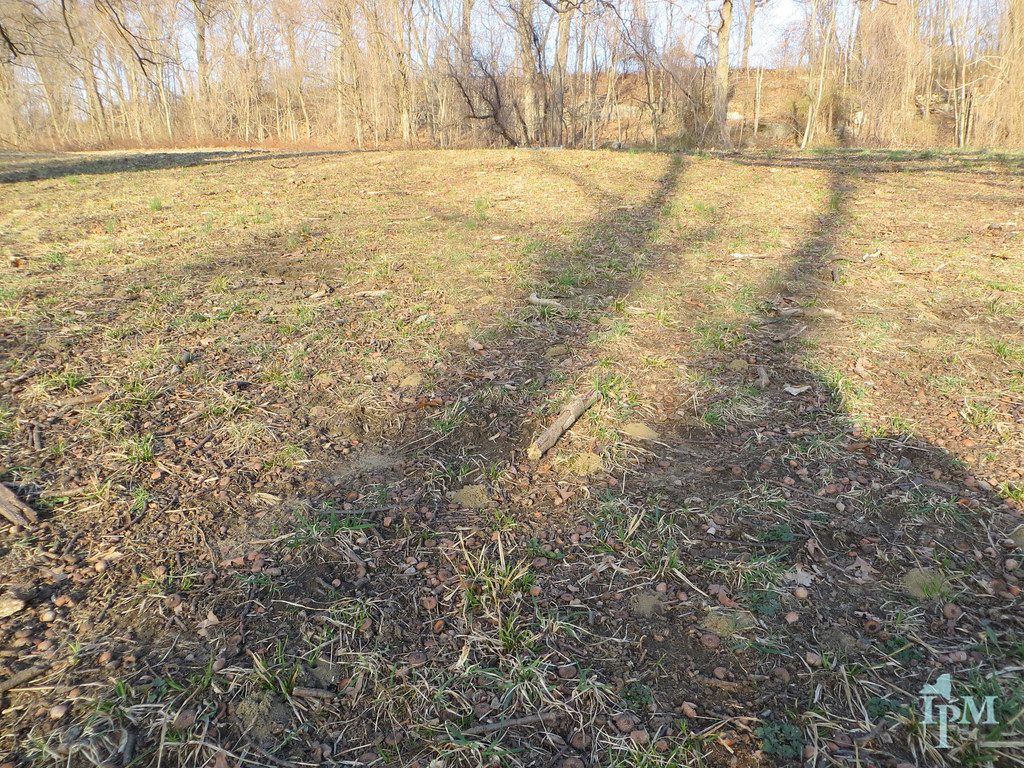
In turf management, a bare patch is any area where live grass plants do not cover the soil surface. This ranges from small coin-sized spots to irregular areas several feet wide. Even if there are a few struggling plants, an area is functionally bare when there is more exposed soil than turf.
Typical visual indicators include:
- Exposed soil that turns light when dry or muddy after rain.
- Moss or opportunistic weeds filling the gap instead of grass.
- Grass blades that are sparse, thin, and spaced far apart.
- Patches that look threadbare compared to surrounding lawn thickness.
Some bare spots are purely cosmetic, for example a single shallow depression where seed never took. Others signal a deeper issue. Patterns such as stripes following mower paths, dead zones along sidewalks, or circular patches in otherwise healthy turf usually indicate an ongoing cause that will defeat any quick lawn repair unless you address it first.
Common Causes of Bare Patches
Effective patch repair starts with cause analysis. Different causes require different corrections before you even think about seed or sod.
Traffic-related causes
Heavy use compresses soil and injures turfgrass leaves and crowns. Common situations include:
- Kids or pets running the same route repeatedly, creating informal paths.
- People cutting across the lawn to reach gates, trash bins, or driveways.
- Parking vehicles or trailers on turf areas.
- Repeated mower turns in tight areas, which create tire ruts or scuffed turf.
According to Penn State Extension turf bulletins, repeated traffic increases soil bulk density and reduces pore space, which restricts root growth and water infiltration. Grass eventually thins and dies, leaving bare soil that compacts even further under continued use.
Environmental causes
Environment covers light, water, and soil conditions. Key drivers of bare patches include:
Insufficient sunlight
Certain lawn grasses require full sun, which is at least 6 hours of direct light. Areas under trees, next to fences, or on the north side of buildings that only receive 2 to 4 hours of light are high-risk for thinning turf.
Cool season grasses like Kentucky bluegrass struggle particularly in dense shade. Fine fescues tolerate lower light better, but even they decline when light levels drop below about 3 hours of filtered sun daily. If grass cannot photosynthesize enough, it gradually dies, leaving bare ground where moss or shade weeds emerge.
Drought stress and inconsistent watering
Dry spots appear where irrigation coverage is poor, where soil is shallow over rock, or along hot hardscape edges such as driveways and sidewalks. Without adequate soil moisture during active growth, blades first turn dull green, then straw-colored, then die, producing bare patches that crumble to dust.
University of Nebraska-Lincoln turf research shows that cool season grasses start to experience drought stress when available soil moisture drops below roughly 50 percent of field capacity, especially in shallow compacted soils. Uncorrected drought spots do not simply green back up; once plants die, you must reestablish turf.
Poor soil conditions
Compaction, low organic matter, and pH extremes all limit root function. Compacted clay, for instance, holds water but drains slowly, which suffocates roots during wet periods and bakes hard in drought. On the other side, very sandy soils drain too quickly and hold little nutrition.
Soil pH outside the range of about 6.0 to 7.0 for most turfgrasses drastically reduces nutrient availability. According to Ohio State University Extension, iron and manganese deficiencies become common in high pH soils, leading to chlorosis and thinning that progresses to bare patches if not corrected.
Biological and pest causes
Living organisms also create gaps in turf.
Pet urine spots
Dog urine contains high nitrogen and salts. In concentrated doses, it chemically burns turf in the center of the spot while acting like a strong fertilizer around the edges. This creates a classic pattern: a brown or bare center with a darker green ring around it. Repeated urination on the same area kills crowns and roots, leaving persistently bare spots.
Grubs and other insects
White grubs, the larvae of several beetle species, feed on grass roots. Once root density drops below a critical threshold, grass cannot absorb enough water, and patches suddenly wilt and die, often in late summer. The surface may feel spongy, and sod can be lifted like a loose carpet. Michigan State University Extension identifies 10 or more grubs per square foot as a damage threshold for many cool season lawns.
Other insects such as chinch bugs or sod webworms damage foliage or crowns, which also results in bare patches if untreated.
Fungal diseases
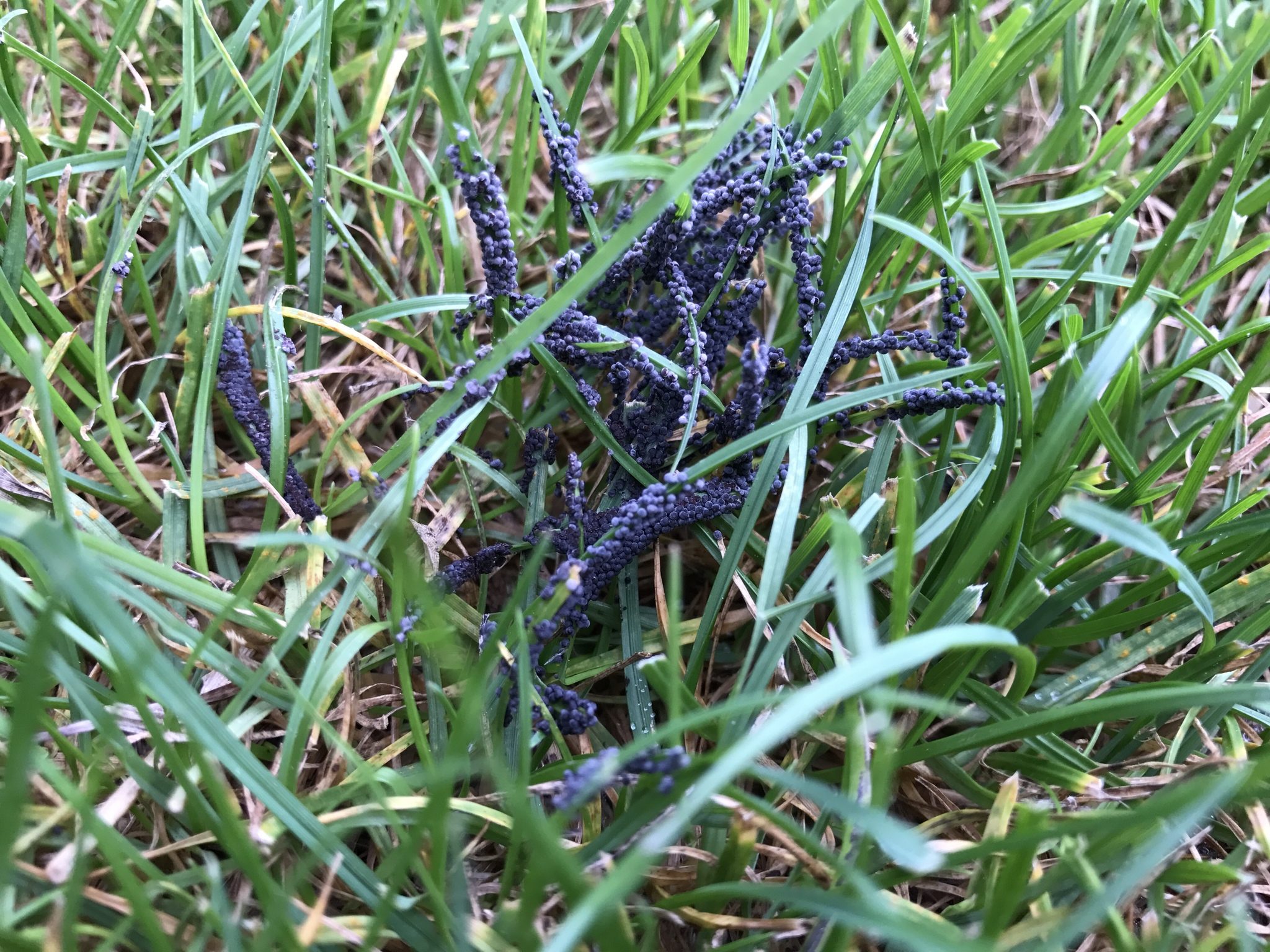
Diseases like brown patch, dollar spot, and necrotic ring spot attack turf under specific moisture and temperature conditions. Some create rings or arcs, others produce irregular lesions that coalesce into larger dead areas. If the disease is active, reseeding without treatment usually fails because new seedlings are quickly infected.
Mechanical and maintenance causes
How you care for the lawn can also create bare patches.
Scalping from mowing too low
When mower blades are set too low or the ground is uneven, the mower cuts into the crown of the plant where new growth originates. According to NC State Extension, removing more than one-third of the leaf blade at a time reduces root mass and can kill plants outright. Repeated scalping on high spots produces chronic bare lines or patches.
Chemical burns
Fertilizer spills or heavy overlaps, misapplied herbicides, and de-icing salts cause leaf burn and root injury. This often shows up as starkly defined streaks, splotches, or zones along pavement edges where salt accumulates. If the dose is high enough, turf dies and leaves bare soil that may remain hydrophobic or saline until leached and amended.
Construction and renovation damage
Installing patios, utility lines, or even heavy landscape beds often involves storing materials or driving equipment over turf areas. This scrapes crowns, smothers grass with soil, or compacts subsoil. When projects finish, these disturbed zones typically become patchy or completely bare unless proactively repaired.
Why Identifying the Cause Matters for Successful Lawn Repair
Bare patches that appear again and again in the same locations almost always indicate that the original cause was not corrected. Spreading seed on compacted soil, for example, produces a flush of seedlings that die under the same traffic or poor drainage that killed the previous turf.
Effective patch repair always matches the fix to the problem:
- Pet urine damage requires dilution or training adjustments, plus tolerant species in high-use zones, not just seed.
- Shade thinning requires either pruning to increase light, switching to shade tolerant species, or accepting a groundcover instead of turf.
- Compaction requires aeration and potentially traffic management, not just topdressing.
- High pH soil requires lime-free management and sometimes elemental sulfur to move pH toward the 6.0 to 7.0 range.
In cases of disease or severe insect damage, treatment first, then reseeding, is the correct sequence. According to University of Kentucky Extension, reseeding into an active fungal disease outbreak commonly results in seedling loss because young grass is more susceptible than established plants.
The rest of this guide follows a structured approach: diagnose, correct underlying issues, select the right repair method, then implement with precise steps and timing.
Step 1: Diagnose the Problem Behind Your Bare Patches
Visual Clues to Pinpoint the Cause
Visual patterns in color, shape, and location provide strong diagnostic clues when you evaluate bare spots systematically.
Color and edge patterns
- Perfectly round small spots, brown center and dark green ring - this pattern signals dog urine damage. The ring is fertilized by diluted nitrogen, while the center is burned by high concentration.
- Circular or doughnut shaped patches, sometimes with a green center - distinct circles or rings in cool season turf indicate fungal diseases like brown patch or necrotic ring spot. The edges may appear water soaked before browning.
- Irregular patches that start yellow then turn straw colored - this pattern indicates drought stress, nutrient deficiency, or root damage such as grubs. The initial chlorosis then complete browning indicates a progressive stress rather than instant kill from chemicals.
- Sharp, straight line damage - straight edges or right angles usually follow spreader passes, hose lines, or property boundaries, which points to fertilizer, herbicide, or other chemical exposure differences.
Location-based hints
Where bare patches show up across the yard is often as important as how they look.
- Along fences, dense shrubs, or north sides of houses - consistent thinning in these areas signals light limitation. Shade-compacted soil under trees often combines low light with moisture competition.
- Next to driveways, sidewalks, and streets - bare strips in these zones often result from heat reflected from pavement, de-icing salt, or irrigation coverage gaps. Pavement edges also dry out faster.
- Around play structures, gates, and narrow side yards - bare ground here indicates chronic foot traffic and soil compaction. The path people actually walk, not the one intended, defines where grass fails.
- On high points or slopes - exposed knobs and slopes lose water quickly and experience scalping from mowing, both of which produce bare areas if cutting height and irrigation are not adjusted.
Simple At-Home Tests You Can Do
Several quick tests help confirm what visual clues suggest without specialized equipment.
Screwdriver or garden fork test for compaction
To assess compaction, push a long screwdriver, soil probe, or garden fork into the soil in and around the bare patch. Compare resistance in the problem area to healthy turf nearby.
If the tool stops within the top 1 to 2 inches or requires significant force, soil is compacted. In healthy, well structured soil, the tool penetrates to at least 4 to 6 inches with moderate effort when moisture is adequate.
Penn State Extension emphasizes that high compaction severely restricts root depth, which makes turf more vulnerable to drought, heat, and traffic. If your screwdriver test indicates hardpan near the surface, aeration or cultivation must be part of the repair plan.
DIY soil moisture check
Water stress diagnosis starts with a simple dig test. Use a hand trowel or narrow spade to remove a small vertical slice of soil about 4 to 6 inches deep in the bare spot and in an adjacent healthy area.
Evaluate:
- Is the soil powder dry, with crumbs that do not stick together even when squeezed? This indicates chronic under watering or poor water holding capacity.
- Is it saturated, sticky, or has visible standing water in the hole? This indicates poor drainage or irrigation excess, which deprives roots of oxygen.
- Is there an abrupt change in texture, such as a layer of dense clay over sand? This can cause perched water tables that suffocate roots.
Compare moisture in bare patches versus healthy turf. If bare zones are consistently drier or wetter than surroundings, irrigation pattern and soil structure modifications are required.
Basic soil pH test
Soil pH directly affects nutrient availability. For a do it yourself baseline, use a garden center pH kit or send a sample to your local Cooperative Extension office.
Collect multiple cores from bare patches and mix them for a composite sample. If pH reads below about 5.5, many nutrients, especially phosphorus and calcium, become less available, and aluminum toxicity can develop. If pH reads above about 7.5, iron and manganese availability drops, leading to chlorosis.
According to University of Minnesota Extension, most cool season turfgrasses perform best between pH 6.0 and 7.0. Warm season species often tolerate slightly more alkaline conditions, but extreme values in either direction inhibit turf recovery. Attempting patch repair without addressing major pH imbalance usually results in poor seed germination and weak seedlings.
When to Suspect Pests or Disease
When physical and environmental tests do not fully explain the pattern, biological issues often play a role.
Signs of grub damage
To check for grubs, cut three sides of a 1 foot square in the damaged area with a shovel and peel back the sod like a flap. Inspect the top 2 inches of soil and root zone.
Indicators include:
- Turf that lifts easily with almost no roots attached.
- White, C shaped grubs about 0.5 to 1 inch long present in the soil.
- Counts exceeding thresholds. Michigan State University Extension lists 10 to 12 grubs per square foot as a level that causes visible damage in many home lawns.
If counts exceed threshold levels, incorporate grub control into your plan before or alongside lawn repair. Repair without stopping feeding activity results in repeated bare patches.
Signs of fungal disease
Fungal patches often have distinctive shapes or surface characteristics. Key indicators include:
- Smoke rings or water soaked margins at the edge of a patch.
- Fine web like mycelium visible in early morning dew.
- Lesions on individual blades, often with darker borders and lighter centers.
- Rings or arcs that enlarge over time while centers may partially green back up.
University of Kentucky Extension turf disease guides show that brown patch typically forms circular areas from a few inches to several feet across in hot, humid conditions when night temperatures stay above about 68°F. Necrotic ring spot creates arcs or rings on Kentucky bluegrass, often with a sunken appearance.
If disease is present, correct cultural conditions that favor it, such as overwatering at night or over fertilizing with nitrogen, and use fungicides only when clearly indicated. Then move on to patch repair once the disease is inactive.
Step 2: Prepare the Site so Patch Repair Actually Works
Once you understand why bare patches formed, the next stage is site preparation. This stage lays the foundation for successful seeding or sodding and determines whether repairs integrate seamlessly into existing turf.
Site preparation focuses on three goals:
- Remove dead and problematic material.
- Loosen and improve the soil in the patch area.
- Create a smooth interface with the surrounding lawn.
Correct the Underlying Cause First
Before touching the bare soil, address the cause you identified in Step 1.
- Compaction - schedule core aeration across the affected area, not just the patches. For moderate compaction, one pass in two directions with a core aerator that removes 2 to 3 inch deep plugs is appropriate. For severe compaction, plan 2 sessions spaced 4 to 6 weeks apart.
- Shade - selectively prune branches to increase light penetration, relocate high shade plantings, or adjust expectations by considering groundcovers where turf simply will not thrive.
- Irrigation issues - adjust sprinkler head coverage, run times, and nozzle types. Perform a catch can test to verify uniformity and modify until dry or wet spots align with hardware issues, not just soil variation.
- Pets - train dogs to use a designated mulched area, rinse urine spots with water soon after deposition, or rotate access to spread impact.
- Grubs or disease - apply control products according to extension recommendations, then wait the appropriate interval before seeding or sodding.
Skipping this stage leads to frustration, because even expertly executed patch repair fails when the same stress persists.
Remove Dead Turf, Thatch, and Debris
Dead grass and thick thatch interfere with seed-to-soil contact and sod rooting.
For small patches (under 1 square foot), use a hand rake or cultivator to scratch away dead material down to soil level. For larger areas, use a flat shovel or half-moon edger to cut out dead sod and organic debris so that only mineral soil and a thin organic layer remain.
If thatch exceeds 0.5 inch thick across the lawn, consider dethatching or power raking in addition to localized removal. According to Iowa State University Extension, excessive thatch limits water movement and harbors disease, both of which hinder new turf establishment.
Loosen and Amend the Soil
Once surface debris is gone, loosen the top 2 to 4 inches of soil in the bare patch and slightly beyond its edges. Use a hand cultivator, garden fork, or small tiller, depending on patch size.
As you loosen soil, incorporate amendments based on your earlier tests:
- Compacted clay - mix in 0.5 to 1 inch of quality compost to improve structure and porosity.
- Very sandy soil - blend in compost to improve water and nutrient holding capacity.
- Low pH (acidic) - if soil test recommendations call for lime, apply finely ground or pelletized lime to the patch and lightly work it in. Full correction across the entire lawn should follow the same soil test rates.
- High pH (alkaline) - use composts and fertilizers without lime, and if recommended by a soil test, apply elemental sulfur at the prescribed rate. Do not over apply sulfur; follow university guidelines exactly.
This localized improvement helps new seedlings or sod roots establish a stronger foothold. However, large scale soil issues require whole-lawn amendment strategies as described in broader renovation resources.
Regrade and Blend With Existing Turf
The repaired area must sit at the same final height as surrounding lawn to avoid scalp prone humps or water collecting depressions.
After loosening and amending the soil, use a rake to level the area. Aim to leave soil about 0.25 to 0.5 inch lower than the adjacent turf surface if you plan to add a light layer of topsoil or compost, or if you are installing sod that has its own soil layer. For seed only repairs, match the grade as closely as possible, then lightly firm the soil with the back of a rake or by foot stepping to ensure even firmness.
Check the interface by laying a straight board across the boundary between existing turf and the patch. The board should sit flat or with a very slight crown. Water should not pool in the patch after irrigation or rain. If you see ponding, rework grade before proceeding.
Step 3: Choose the Right Patch Repair Method: Seed, Sod, or Patch Products
Once the site is ready, select how you will reestablish turf. The main options are seeding, sodding, and using commercial patch repair products that combine seed, mulch, and starter fertilizer.
When to Use Seed for Patch Repair
Seeding is the most common and cost effective method for repairing bare patches in lawns with cool season grasses like Kentucky bluegrass, perennial ryegrass, and fescues.
Best situations for seeding
- Patches ranging from a few inches to several square feet.
- Areas where you can maintain consistent moisture for 3 to 4 weeks.
- Cool season climates where optimal seeding windows occur in early fall or early spring.
- Warm season lawns when seeding species such as bermudagrass or zoysiagrass in their active growth period and in regions where seeding of these species is practical.
According to Michigan State University Extension, early fall is the preferred time for seeding cool season lawns because soil is still warm, air temperatures are cooler, and weed pressure is lower. They recommend daytime highs between 60°F and 75°F and soil temperatures around 55°F or above for best germination.
Advantages of seeding
- Lower cost than sod, especially for multiple patches.
- Ability to match existing turf varieties more precisely by selecting appropriate mixes.
- Deeper rooting potential over the long term if properly managed.
Limitations of seeding
- Slower time to full coverage, typically 4 to 8 weeks for initial fill and several months for full maturity.
- Requires careful watering and protection from traffic during establishment.
- Less reliable in late spring or mid summer in hot climates due to heat and weed competition.
When to Use Sod for Instant Coverage
Sod provides mature grass plants with an intact root and soil layer that you can install for immediate green cover.
Best situations for sodding
- Highly visible areas where quick lawn repair is critical, such as front yard focal points or real estate listings.
- Patches larger than about 1 to 2 square feet where seed would leave the area bare for weeks.
- Slopes or erosion prone spots where seed or mulch would wash away.
- Regions and grass types where quality sod is readily available that matches your existing species.
NC State Extension notes that sod can be installed any time the ground is not frozen, but rooting and establishment are fastest when temperatures suit the grass species. Cool season sod roots best in early fall and spring, while warm season sod establishes best in late spring through early summer.
Advantages of sodding
- Instant cover and immediate visual improvement.
- Faster functional use, often within 2 to 3 weeks when rooted.
- Reduced weed invasion in the repaired area compared to bare seeded soil.
Limitations of sodding
- Higher cost per square foot than seed.
- Potential mismatch in color or texture if sod species or cultivar differs from existing turf.
- Requires very good soil contact and moisture management to prevent edges from drying out.
When to Use Patch Repair Products
Patch repair products combine seed, mulch, and often starter fertilizer in an easy to spread form. They are designed for homeowner convenience on small to medium bare spots.
Best situations for patch repair products
- Scattered small bare patches where measuring and mixing seed, mulch, and fertilizer individually would be impractical.
- Homeowners who prefer a simple, all in one solution and are willing to pay a bit more per square foot for convenience.
- Cool season lawns in suitable seeding windows with light traffic.
Considerations for using patch products
- Check the seed species and mixture to ensure compatibility with your existing grass type.
- Do not skip soil preparation; even pre mixed products require loose, well graded soil and good seed-to-soil contact.
- Avoid doubling up on fertilizer if you recently applied a lawn wide feeding, to prevent nutrient excess.
Commercial patch products are essentially seeding systems. The same principles of timing, watering, and protection apply.
Step 4: How to Patch Repair With Seed, Step by Step
Seeding is the core method for most homeowners fixing bare spots. Precise execution determines success far more than brand of seed alone.
1. Select the Right Seed for Sun, Shade, and Climate
Match seed to your region, site light levels, and existing turf.
- Cool season full sun lawns - Kentucky bluegrass and perennial ryegrass blends perform well in many northern climates. Bluegrass spreads by rhizomes, which helps fill small gaps over time, while ryegrass establishes rapidly for faster cover.
- Cool season shade areas - fine fescues (chewings, creeping red, hard fescue) tolerate lower light and are recommended by universities such as University of Minnesota Extension for moderate shade. Use mixes labeled specifically for shade if tree cover is dense.
- Warm season lawns - bermudagrass, zoysiagrass, centipedegrass, and bahiagrass dominate different southern regions. Choose a seed or plug type that matches your existing lawn. In many warm climates, sodding or plugging is more reliable than seeding for certain species like St. Augustinegrass, which is rarely seeded.
When possible, identify your current lawn species from a prior seed purchase or by comparison to extension turf ID guides, then select patch seed that closely matches for uniformity.
2. Calculate and Apply the Correct Seeding Rate
Overseeding rates differ from bare soil seeding rates. For patch repair on bare soil, you generally follow full seeding recommendations, then adjust slightly because edges will blend into existing turf.
Typical full seeding rates on a bare seedbed, according to Penn State Extension, are:
- Kentucky bluegrass: 2 to 3 pounds of seed per 1,000 square feet.
- Perennial ryegrass: 5 to 9 pounds per 1,000 square feet.
- Tall fescue: 6 to 8 pounds per 1,000 square feet.
To calculate patch amounts, measure patch area in square feet (length times width) and multiply by the recommended pounds per 1,000 square feet divided by 1,000.
For example, a 10 square foot bare area seeded with tall fescue at 7 pounds per 1,000 square feet requires:
10 square feet x 7 pounds / 1,000 square feet = 0.07 pounds, or about 1.1 ounces of seed.
Spread seed evenly over the loosened soil. Split seed into two equal portions and apply in perpendicular directions to improve uniformity. After seeding, lightly rake to cover seed with about 0.125 inch of soil and ensure good soil contact.
3. Mulch and Protect the Seedbed
Mulch conserves moisture and reduces erosion, which greatly improves germination rates.
Options include:
- Clean straw applied at about 1 bale per 1,000 square feet, spread thinly so that about 50 percent of soil still shows through.
- Compost screened and applied as a very light 0.125 to 0.25 inch layer, which also adds organic matter.
- Biodegradable seed blankets or mats, useful on slopes or where birds are an issue.
Avoid heavy mulching that smothers seedlings. The goal is light coverage that shades soil but lets shoots emerge easily.
4. Water Correctly Through Germination and Establishment
Watering is the main variable that determines whether patch repairs succeed. Seed must stay consistently moist but not saturated until germination and early rooting finish.
A practical watering schedule for cool season patch repair in moderate conditions is:
- Days 1 to 7 - water 2 to 3 times per day for short intervals (5 to 10 minutes) to keep the top 0.5 inch of soil moist at all times.
- Days 8 to 21 - once most seed has germinated, reduce frequency to 1 to 2 times daily but increase each watering slightly so moisture reaches 1 to 2 inches deep.
- Weeks 3 to 6 - begin transitioning to deeper, less frequent watering (every 2 to 3 days) to encourage deeper root growth.
Adjust frequency based on weather. Hot, windy conditions require more frequent light cycles; cool, cloudy conditions require less. Avoid creating puddles or persistent wetness that attracts disease.
5. Mow and Fertilize New Seedlings Properly
Begin mowing when seedlings reach about 3 to 4 inches tall, depending on your target mowing height. Use a sharp blade and remove no more than one-third of the blade length. Walking lightly on the area for mowing is acceptable once plants are 3 inches tall and firmly rooted.
Starter fertilizer that is higher in phosphorus supports root development during establishment. According to Ohio State University Extension, an application providing about 0.5 to 1.0 pound of actual nitrogen per 1,000 square feet at seeding or soon after germination is effective for most lawns, as long as you follow soil test guidance regarding phosphorus use in your region.
After the initial feeding, follow your regular lawn fertilization schedule and avoid heavy nitrogen applications that could stimulate excessive top growth at the expense of rooting.
Recommended products
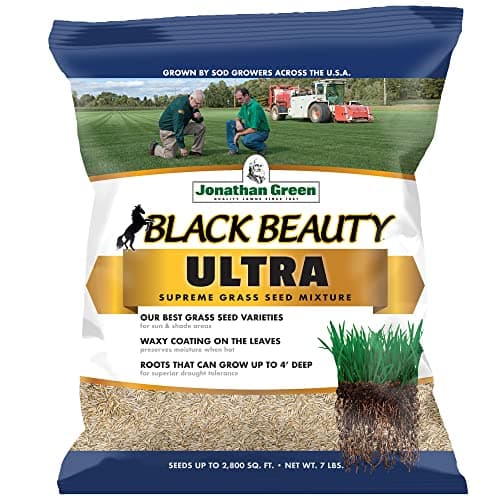
Jonathan Green Black Beauty Ultra Grass Seed (7 lb)
A cool-season blend that matches most northern lawns closely enough that repairs blend in rather than standing out.
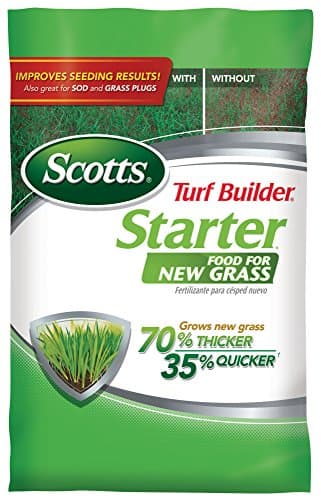
Scotts Turf Builder Starter Food for New Grass
A starter fertilizer that gets patch seedlings rooted before surrounding turf crowds them out.
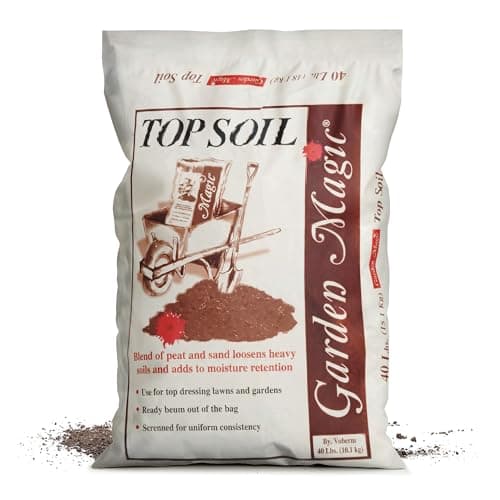
Michigan Peat Garden Magic Organic Top Soil
A screened topsoil for bringing a sunken bare spot up to grade before seeding.
Step 5: How to Patch Repair With Sod, Step by Step
For homeowners seeking quick lawn repair, sod provides an immediate green solution, but like seeding, it requires precise installation.
1. Source Matching Sod
Choose sod that matches your existing turf type as closely as possible. Color, leaf texture, and growth habit all affect final uniformity. Discuss your current lawn species with the sod supplier, or bring a small sample for comparison.
Inspect sod before purchase. It should have:
- Uniform green color without significant weeds or disease.
- Roots that hold soil firmly when a strip is lifted.
- Moist but not waterlogged soil beneath the grass.
2. Cut Sod Pieces to Fit the Patch
Measure the patch after you have completed soil preparation and grading. Cut sod slightly larger than the patch footprint using a sharp knife or edging tool. For irregular shapes, cut sod in place after laying it across the area.
Where possible, avoid small fragments that dry out quickly and leave seams. Larger, continuous pieces root and blend more reliably.
3. Install and Firm the Sod
Lay sod onto moist soil, not dry ground. Press each piece into place so that the grass blades meet or slightly overlap the existing turf at the edges without gaps.
Use a lawn roller or walk over the sod carefully to ensure good root-to-soil contact and to eliminate air pockets. Edges and corners require particular attention because they are prone to drying.
Stagger seams in a brick-like pattern if you are patching a larger area with multiple pieces. Avoid aligning seams in straight lines, which are more noticeable and more prone to separation.
4. Water Sod Thoroughly and Maintain Moisture
Immediately after installation, water sod until moisture penetrates through the sod layer and 3 to 4 inches into the underlying soil. Check by lifting a corner and probing the soil.
For the first 7 to 10 days, keep sod and underlying soil consistently moist. This usually means watering once or twice daily, depending on weather. After about 10 to 14 days, gently tug on the sod. If it resists lifting, roots have begun to knit into the soil.
At this point, gradually shift to deeper, less frequent watering every 2 to 3 days, with the goal of encouraging deeper rooting. By 3 to 4 weeks, sod in cool conditions or 2 to 3 weeks in warm conditions is typically ready to join your regular irrigation schedule.
5. Resume Mowing and Traffic
Delay regular foot traffic and mowing until sod has rooted sufficiently, usually after 2 to 3 weeks in active growing conditions. Begin mowing when grass reaches about 0.5 inch above your normal mowing height, again removing no more than one-third of the blade.
If sod was installed at a different height than the surrounding lawn, gradually adjust mower height over several mowings to blend transitions.
Seasonal Timelines and Action Plans for Patch Repair
Timing affects every aspect of lawn repair. Align seed or sod installation with your grass type's natural growth cycle and local climate for better outcomes.
Cool Season Lawns (Kentucky Bluegrass, Ryegrass, Fescues)
Best repair windows
- Primary window: Late summer to early fall, generally when daytime highs range from 60°F to 80°F and soil temperatures are around or above 55°F, which in many northern regions runs from late August through September.
- Secondary window: Early spring, as soon as soil is workable and before consistent high temperatures arrive, often from late March through April in many areas.
Sample 6 week patch repair plan for fall
- Week 1: Diagnose causes, perform soil tests if needed, schedule aeration for compacted areas.
- Week 2: Aerate (whole lawn where compaction exists), prune shade sources if necessary, adjust irrigation heads.
- Week 3: Remove dead turf in bare patches, amend soil, regrade, and prepare seedbed.
- Week 3 to 4: Seed or sod bare spots, apply light starter fertilizer if appropriate, mulch seed as needed.
- Week 4 to 6: Maintain frequent light watering for seed or consistent moisture for sod, begin mowing once seedlings or sod reach proper height, limit traffic.
Warm Season Lawns (Bermudagrass, Zoysiagrass, St. Augustine, Centipede)
Best repair windows
- Late spring through mid summer, when soil temperatures reach about 65°F to 70°F and grass is in active growth. In many southern areas, this ranges from late April through July.
Warm season grasses often spread laterally, so small bare patches fill themselves once underlying issues are corrected and the growing season is active. Larger patches may require sodding or plugging rather than seeding, depending on species.
Sample 6 week patch repair plan for warm season sod repair
- Week 1: Diagnose compaction, shade, or pest issues; apply any needed insecticides or fungicides; adjust irrigation.
- Week 2: Remove dead turf, cultivate soil, amend, and grade.
- Week 3: Install matching sod or plugs; water deeply immediately after installation.
- Week 3 to 4: Keep sod moist daily, checking rooting progress by gentle tugging.
- Week 5 to 6: Begin normal mowing and transition irrigation frequency to match established lawn.
Preventing Future Bare Patches
Once repair is complete, prevention strategies keep bare spots from reappearing. This connects closely with broader topics such as How to Tell if Your Lawn is Healthy and Quick Fixes for Common Lawn Problems.
Manage Traffic and Use Patterns
Redirect foot traffic with stepping stones, paths, or edging where people naturally walk. Install mulch or gravel in pet relief areas and around heavy use zones like play equipment. For side yards that function as thoroughfares, consider reducing turf area in favor of hardscape plus landscape beds.
Optimize Mowing Practices
Maintain your grass at the recommended height for the species and climate. For many cool season lawns, this means 2.5 to 3.5 inches. For many warm season grasses, recommended heights range from 1 to 2.5 inches, depending on species. Follow university extension guidelines specific to your grass.
Sharpen mower blades at least once or twice per season and avoid mowing when soil is saturated to prevent rutting and scalping.
Maintain Balanced Fertility and Watering
Follow a soil test based fertilization plan instead of guessing. According to Purdue University Extension, over fertilization increases disease pressure and thatch, while under fertilization leads to thin turf that cannot compete with weeds.
Water deeply and infrequently once turf is established. Aim for about 1 to 1.5 inches of total water per week from rainfall and irrigation combined for most cool season lawns, adjusting based on local conditions, soil type, and seasonal demand.
Monitor for Early Signs of Pests and Disease
Regularly inspect the lawn during active growing seasons. Look for early discoloration, minor thinning, or irregular spots. Catching problems when they are still small allows you to apply targeted corrections before turf dies and bare patches form.
Extension diagnostic labs and online resources can assist in identifying specific diseases or insects so you can use the most effective and least disruptive control options.
Conclusion
Persistent bare patches indicate underlying problems in soil, environment, or management, not just a lack of seed. Effective lawn repair depends on accurate diagnosis, thorough site preparation, and choosing the right patch repair method for your grass type, site conditions, and timeline.
By following the step-by-step process in this guide, you can convert exposed soil into dense turf that resists weeds, tolerates use, and improves curb appeal. For broader improvements beyond individual spots, explore Overseeding Best Practices, How to Aerate Your Lawn the Right Way, Essential Lawn Care Tools Every Homeowner Needs, and How to Tell if Your Lawn is Healthy to build a comprehensive, long term lawn care plan.
Use this season to analyze your bare patches, implement targeted repairs, and set your lawn on a path toward consistent, uniform growth.
Top Picks
- Jacklin Seed by Barenbrug Heisman Kentucky Bluegrass Blend (5 lb)Check price on Amazon
- MySoil Soil Test KitCheck price on Amazon
- HSLGOVE 7-in-1 Soil Test KitCheck price on Amazon
As an Amazon Associate we earn from qualifying purchases.
Free Lawn Care Tools
In turf management, a bare patch is any area where live grass plants do not cover the soil surface. This ranges from small coin-sized spots to irregular areas several feet wide. Even if there are a few struggling plants, an area is functionally bare when there is more exposed soil than turf.
Bare patches are more than a cosmetic problem; they act as open doors for weeds, diseases, and erosion. Turfgrass research shows weed invasion rises dramatically once grass cover drops below about 70 percent. If you leave soil exposed, something will fill that space, and it’s usually not desirable turf. Repairing bare spots protects curb appeal and the overall health and density of your lawn.
Start by looking for patterns, such as paths where kids or pets run, areas along sidewalks, or circular patches in otherwise healthy grass. Check environmental factors like shade, drought-prone edges near driveways, or soggy compacted soil. Also look for signs of pests, pet urine patterns, or mower scalping. Matching what you see on the lawn to these common causes helps you correct the problem before seeding or sodding.
Yes, repeated traffic from kids, pets, or vehicles compresses soil and injures grass leaves and crowns. Over time, the soil becomes denser with less pore space, which restricts root growth and water movement. The turf gradually thins and eventually dies, leaving bare, compacted soil that’s even harder for new grass to establish. Redirecting traffic and relieving compaction are essential steps before you repair those spots.
Many lawn grasses need at least 6 hours of direct sun, so areas under trees, beside fences, or on the north side of buildings often struggle. Cool season grasses like Kentucky bluegrass decline quickly in dense shade, while fine fescues tolerate lower light but still fail if light drops below about 3 hours of filtered sun a day. When grass can’t photosynthesize enough, it slowly dies back, allowing moss and shade-loving weeds to move into the bare soil. Matching grass type and expectations to your actual light levels is key to lasting repair.
Grub damage often shows up in late summer as suddenly wilted or dead patches that don’t respond to watering. The turf may feel spongy, and you can sometimes lift it like a loose carpet because the roots have been eaten. When grub numbers reach around 10 or more per square foot, grass can’t take up enough water and quickly dies, creating bare areas. Other insects such as chinch bugs or sod webworms also damage foliage and crowns and can leave similar dead or thinning spots if not controlled.

Beat weeds and brown spots from your phone
Snap a photo, get the fix, and follow a plan timed to your soil and weather. Free on iPhone.