How to Build a Lawn Watering Schedule That Actually Works
 Sarah MitchellLawn Diagnostics Specialist | 12 Years
As an Amazon Associate we earn from qualifying purchases.
Most lawns need about 1 to 1.5 inches of water per week, including rainfall. Water deeply 2 to 3 times per week rather than lightly every day. Always water in the early morning (before 10 AM) to reduce evaporation and disease risk. The exact amount depends on your grass type, soil type, and climate. Build a personalized schedule with our Watering Schedule Generator.
The Problem With "Just Water Your Lawn"
When I am diagnosing lawn issues, watering problems are behind at least 40 percent of the cases I see. And the surprising part is that overwatering causes almost as many problems as underwatering. Homeowners who water a little bit every single day end up with shallow roots, fungal diseases, and lawns that cannot survive even a short dry spell.
The goal of a good watering schedule is simple: deliver the right amount of water at the right time so your grass develops deep, resilient roots. Let me walk you through how to build one that works for your specific lawn.
How Much Water Does Your Lawn Actually Need?
The general guideline of 1 to 1.5 inches per week is a solid starting point, but your grass type, soil, and climate all influence the actual number.
Water Needs by Grass Type
Cool-Season Grasses
- Kentucky Bluegrass: 1.5 to 2 inches per week. KBG is one of the thirstier lawn grasses. It looks great but demands consistent moisture, especially during summer.
- Tall Fescue: 1 to 1.25 inches per week. Tall fescue's deep root system makes it more drought-tolerant than KBG, requiring less frequent watering.
- Perennial Ryegrass: 1 to 1.5 inches per week. Similar to KBG in water needs, though it establishes faster.
- Fine Fescue: 0.75 to 1 inch per week. The most drought-tolerant of the cool-season grasses. Fine fescues can go longer between waterings.
Warm-Season Grasses
- Bermuda Grass: 1 to 1.25 inches per week. Bermuda is drought-tolerant and recovers well from dry periods.
- Zoysia Grass: 0.75 to 1 inch per week. Zoysia is one of the most water-efficient lawn grasses, making it a great choice for areas with watering restrictions.
- St. Augustine Grass: 1 to 1.5 inches per week. Despite being a warm-season grass, St. Augustine has moderate to high water needs.
- Centipede Grass: 0.75 to 1 inch per week. Low-maintenance and low water needs, but centipede is sensitive to overwatering.
Soil Type Makes a Big Difference
Your soil type determines how quickly water infiltrates and how long it stays in the root zone.
Sandy soil drains fast. Water passes through quickly, which means you may need to water more frequently but for shorter durations. Sandy soil might need three watering sessions per week.
Clay soil drains slowly. Water sits on the surface and penetrates gradually. With clay, you want to water less frequently but for longer, and you may need to use a cycle-and-soak method (water for 10 minutes, pause for 30 minutes, then water again) to avoid runoff.
Loamy soil is the sweet spot. It holds moisture well while still draining adequately. Two to three watering sessions per week usually works perfectly for loam.
When to Water: Morning Wins Every Time
Water your lawn between 4 AM and 10 AM, as covered in Best Time of Day to Water Your Lawn. Here is why this window matters:
- Less evaporation. Morning temperatures are cooler and winds are calmer, so more water reaches the soil instead of evaporating into the air.
- Blades dry by afternoon. Grass that stays wet overnight is far more susceptible to fungal diseases like brown patch, dollar spot, and pythium. Morning watering ensures the blades dry during the day.
- Better water pressure. In many municipalities, water pressure is highest in the early morning hours before peak household usage.
If you absolutely cannot water in the morning, late afternoon (4 PM to 6 PM) is your second-best option. The grass still has time to dry before nightfall. Never water at night if you can avoid it.
Deep and Infrequent Beats Shallow and Daily
This is the single most important watering principle, and the one most homeowners get wrong. Watering lightly every day encourages roots to stay near the surface where the moisture is. Those shallow roots make your lawn vulnerable to heat, drought, and foot traffic.
Instead, water deeply enough to soak the soil 6 to 8 inches deep, and then let the surface dry out before watering again. This forces roots to grow downward in search of moisture, building a stronger, more resilient lawn.
The one exception is newly seeded grass, which needs light daily watering until it roots. Here is how often to water new grass seed.
How do you know if you are watering deeply enough? Use the screwdriver test. Push a long screwdriver into the soil after watering. It should slide in easily to 6 inches. If it stops short, you need to water longer. If the soil is muddy and waterlogged, you are overdoing it.
Signs of Underwatering
Catch these early and you can correct course before the lawn takes real damage:
- Footprinting: When you walk across the lawn and your footprints stay visible (the grass does not spring back), the grass is not getting enough water.
- Blue-gray color: Grass under drought stress shifts from bright green to a dull blue-gray before turning brown.
- Curling blades: Grass blades fold in half lengthwise to reduce the surface area exposed to sun. This is an early drought stress signal.
- Slow growth: If your lawn suddenly stops needing mowing, it may be conserving energy due to insufficient water.
Signs of Overwatering
Overwatering is just as damaging, and often harder to diagnose because the lawn looks green right up until it crashes:
- Spongy feel underfoot: If the lawn feels soft and squishy when you walk on it, the soil is saturated.
- Mushrooms: Frequent mushroom growth indicates excess moisture in the soil.
- Fungal disease: Brown patch, dollar spot, and other fungal issues thrive in consistently wet conditions. If you are battling fungus, overwatering is often the root cause.
- Runoff: Water pooling on the surface or running off into the street means you are applying water faster than the soil can absorb it.
- Weed invasion: Nutsedge, in particular, thrives in wet conditions. A nutsedge outbreak is a reliable sign of overwatering.
Building Your Watering Schedule
Here is a simple framework to build your own schedule:
- Determine your weekly water need based on your grass type (see the list above).
- Subtract rainfall. A rain gauge (or a weather app) tells you how much nature is already providing.
- Divide the remaining amount by 2 or 3 watering sessions per week.
- Calculate how long to run your sprinklers. Place a few tuna cans or rain gauges on your lawn, run the sprinklers for 15 minutes, and measure the water depth. Use that rate to calculate how long you need to run for each session.
- Adjust for soil type. Sandy soil may need three shorter sessions. Clay soil may need two longer sessions with cycle-and-soak.
Or skip the math entirely and use our Watering Schedule Generator. Enter your grass type, soil type, and zip code, and it builds a customized watering schedule for you in seconds.
Recommended products

Rachio 3 Smart Sprinkler Controller (8-Zone)
An eight zone controller that pulls local weather and adjusts run times.

RAINPOINT 3-in-1 WiFi Soil Moisture Sensor
A wireless soil probe that reports moisture, light and temperature to your phone.
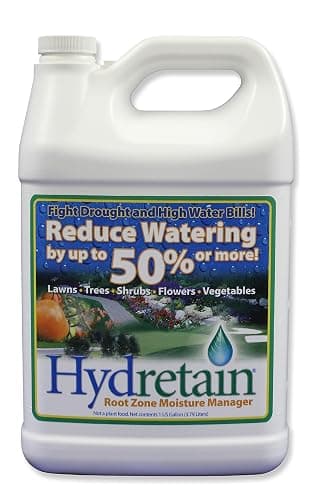
Hydretain Root Zone Moisture Manager
A soil humectant that holds water in the root zone between cycles.
Adjusting Through the Seasons
Your watering schedule is not set-and-forget. Adjust it as conditions change.
Spring: Start light. Cooler temperatures and spring rain often cover most of your lawn's water needs. Overwatering in spring is common and promotes shallow roots heading into summer.
Summer: Peak water demand. You may need to increase both frequency and duration, especially during heat waves. Watch for drought stress signs and respond quickly.
Fall: Gradually reduce watering as temperatures cool and growth slows. Continue watering until the ground freezes (for cool-season lawns) or the grass goes dormant (for warm-season lawns).
Winter: In most regions, you can shut off irrigation entirely. Warm-season grasses are dormant and cool-season grasses receive sufficient moisture from rain and snow.
Get Your Personalized Schedule
Every lawn is different, and a one-size-fits-all watering schedule does not exist. Our Watering Schedule Generator accounts for your grass type, soil conditions, and local climate to give you a schedule that actually works.
For more on keeping your lawn properly hydrated, read our guide on how often to water based on grass type and learn to recognize the signs of underwatering in grass. If you are considering an upgrade, we also cover whether smart irrigation systems are worth it.
Free Lawn Care Tools
It depends on your sprinkler's output rate. Place a few empty tuna cans on your lawn, run the sprinklers for 15 minutes, and measure the water depth collected. Most rotary sprinklers put out about 0.5 inches per hour, so you would need to run them for about 30 minutes to deliver 0.25 inches per session. Spray heads put out about 1.5 inches per hour, so they need less time.
Yes, in most cases. Daily light watering encourages shallow root growth, making your lawn less drought-tolerant and more prone to disease. Instead, water deeply 2 to 3 times per week to encourage roots to grow deep into the soil. The only exception is newly seeded or newly sodded lawns, which need frequent light watering to keep the surface moist during establishment.
It is best to avoid nighttime watering. Grass that stays wet overnight is much more susceptible to fungal diseases like brown patch and dollar spot. The ideal watering window is early morning, between 4 AM and 10 AM, so the grass blades dry during the day. Late afternoon (4 to 6 PM) is an acceptable backup.
Common signs include a spongy feel when walking on the lawn, frequent mushroom growth, fungal disease outbreaks (especially brown patch), water pooling or running off during irrigation, and nutsedge weed growth. If you notice any of these, reduce watering frequency and check that your soil is drying out between sessions.

Your lawn plan, in your pocket all season
Grass ID, a season plan, soil-timed reminders, and a lawn journal that remembers what you did. Free on iPhone.