Roundup for Lawns vs Regular Roundup: Application Guide
 James ThorntonLawn Equipment & Maintenance Expert | 20 Years
As an Amazon Associate we earn from qualifying purchases.
Walk into any garden center and you'll see two bottles sitting next to each other: Roundup and Roundup For Lawns. They look almost identical. The names differ by three words, and they do completely different things.
Regular Roundup kills everything green. Roundup For Lawns kills weeds and leaves your grass standing. Spray the wrong one and you'll be reseeding in October. This guide walks through exactly what's in each bottle, when to apply Roundup For Lawns, how to apply it without scorching your turf, and which alternatives are usually a better buy.
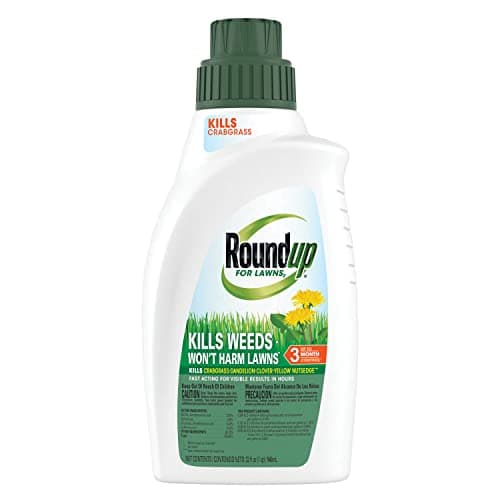
Roundup For Lawns is a selective post-emergent that kills weeds and leaves your grass standing. Regular Roundup is glyphosate and kills every green plant it touches. The confirmation test is the front of the bottle: if it does not say "For Lawns," it will kill your turf.
The Northern bottle uses MCPA, quinclorac, dicamba, and sulfentrazone for cool-season lawns. The Southern bottle is penoxsulam-based for St. Augustine, centipede, zoysia, and Bermuda. Spray when daytime temps are 60 to 85°F, weeds are actively growing, and rain is at least 6 hours away. Do not mow for 48 hours.
What Roundup for Lawns Actually Is (and How It Differs from Regular Roundup)
Most homeowners assume "Roundup" is a single product. It isn't. It's a brand, like Coke or Tylenol, and the brand now sits on top of two completely different herbicide classes.
The original Roundup, owned by Bayer (formerly Monsanto), contains glyphosate. Glyphosate is non-selective. It kills any green plant by blocking an enzyme called EPSP synthase that plants need to build amino acids. Spray it on your lawn and the lawn dies along with the dandelions.
Roundup For Lawns is a Scotts-licensed product that uses the brand name but contains zero glyphosate. The Northern formulation combines four selective herbicides: MCPA, quinclorac, dicamba, and sulfentrazone. Each one targets a specific weed family while leaving turfgrass alone. The Southern formulation drops a couple of those and adds penoxsulam, because warm-season grasses like St. Augustine and centipede are sensitive to ingredients (especially MCPA at high rates) that Northern grasses tolerate fine.
This is the table you came here for:
| Product | Active Ingredient(s) | Selective? | Use Case |
|---|---|---|---|
| Roundup (original) | Glyphosate (~18-50% depending on formula) | No, kills all green plants | Driveways, patios, lawn renovation, fence lines. Never on a lawn you want to keep. |
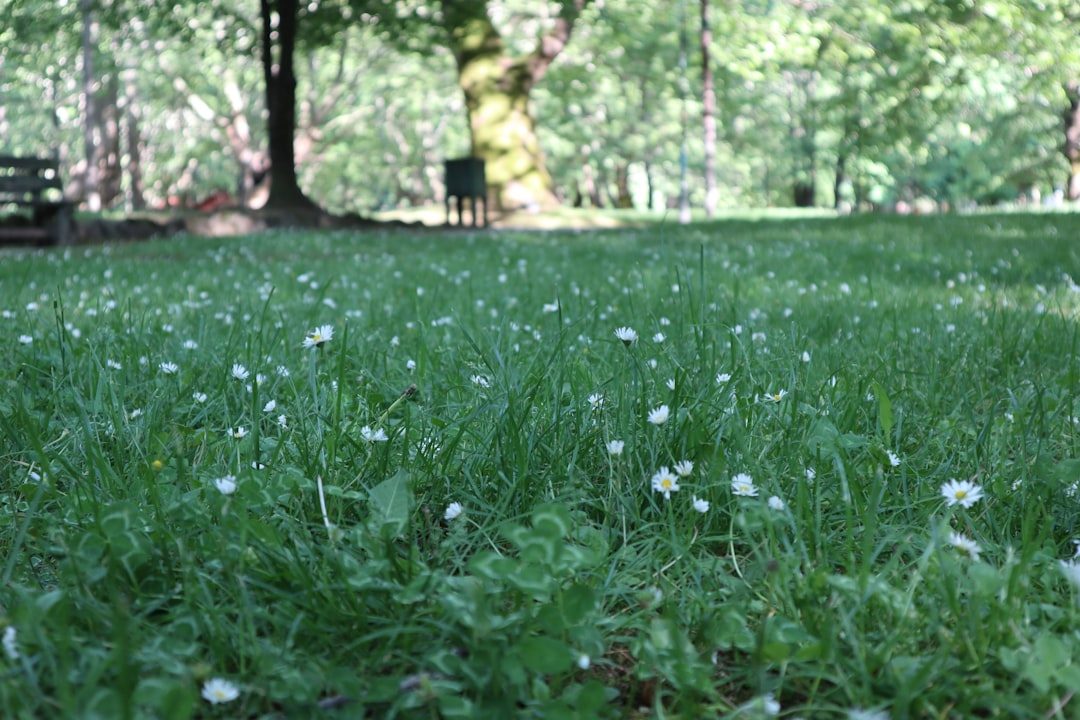
| Roundup For Lawns (Northern) | MCPA + quinclorac + dicamba + sulfentrazone | Yes, safe on cool-season turf | Kentucky bluegrass, tall fescue, fine fescue, perennial ryegrass. Kills crabgrass, dandelion, clover, plantain, yellow nutsedge. |
| Roundup For Lawns (Southern) | Penoxsulam + sulfentrazone + dicamba | Yes, safe on warm-season turf | St. Augustine, centipede, zoysia, Bermuda. Targets broadleaf weeds and yellow nutsedge. |
| Roundup Dual Action | Glyphosate + diquat + imazapic | No, with residual | Don't confuse this with For Lawns. Same brand, kills everything, plus prevents regrowth. |
Why the confusion matters: Bayer and Scotts both have rights to the "Roundup" name in different categories under a long-standing licensing deal. The bottles deliberately look similar. Every spring, lawn forums and our own inbox fill up with the same story: I sprayed Roundup on my dandelions and now my whole yard is yellow. They grabbed the wrong bottle.
The fix is simple: read the front label for the words "For Lawns." If it doesn't say that, it will kill your grass.
When to Apply Roundup for Lawns
Roundup For Lawns is post-emergent only. That means weeds need to be up and actively growing for it to work. Spraying bare soil before crabgrass germinates does nothing. You want a different product, like Prodiamine or Dimension, for that pre-emergent window.
The temperature sweet spot is 60 to 85°F daytime high. Below 60°F the weeds aren't transpiring fast enough to pull the herbicide systemically, so you get poor uptake. Above 85°F (especially with dicamba in the mix) you risk turf injury and vapor drift onto your neighbor's tomatoes. Mid-spring and early fall are the prime windows in most regions.
Weed life-stage timing is the next variable. Young, actively growing weeds (think 2-4 true leaves on broadleaves, or crabgrass with 1-3 tillers) absorb herbicide far more efficiently than mature, hardened-off plants. Dandelions in May with fresh rosettes? Easy kill. Dandelions in late July that have been baking through a drought? You'll need a second pass.
Then there's the Northern vs Southern split, which is really a turf-tolerance question. The Northern bottle is calibrated for cool-season lawns: Kentucky bluegrass, tall fescue, fine fescue, and perennial ryegrass. The MCPA dose in Northern would yellow out St. Augustine. The Southern bottle is calibrated for warm-season turf and uses penoxsulam, which is gentler on St. Augustine and centipede but won't fully control crabgrass. If you live in the transition zone (Tennessee, North Carolina, Oklahoma) and have a Bermuda lawn overseeded with rye, read both labels carefully and pick based on the dominant grass right now.
One more timing rule: don't apply within 30 days of seeding new grass, and wait at least 4 weeks after application before overseeding. The residual activity from quinclorac and sulfentrazone will suppress germination of cool-season seed.
How to Apply Roundup for Lawns Step-by-Step
You'll see Roundup For Lawns sold in three formats: Ready-To-Use (RTU) trigger spray, Ready-To-Spray (RTS) hose-end, and Concentrate. Concentrate is the cheapest per square foot but requires a pump sprayer and some math. Here's how each works.
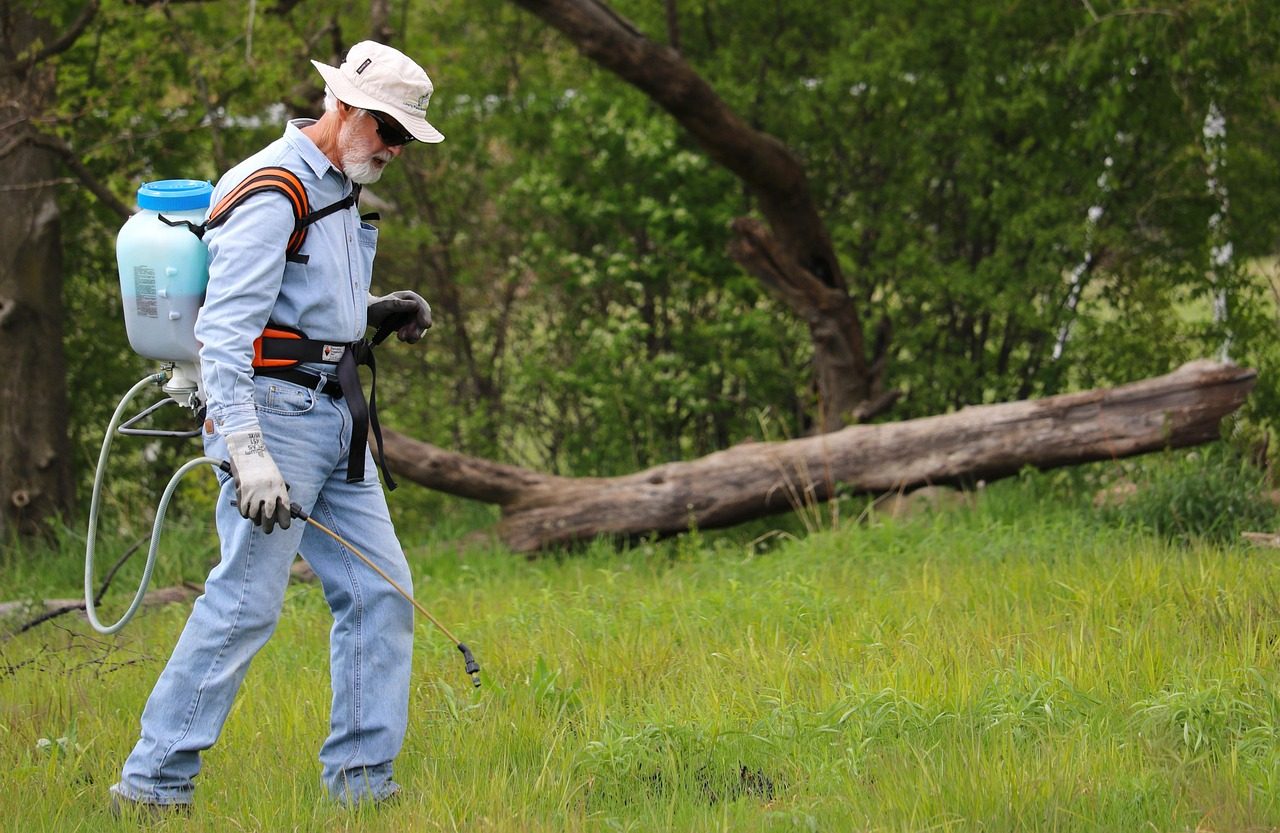
Concentrate (recommended for lawns over 2,000 sq ft): Mix according to label, typically 6 fl oz per gallon of water for spot treatment, or roughly 1.5 fl oz per 1,000 sq ft for broadcast. Use a 1- or 2-gallon pump sprayer. Set the nozzle to a coarse fan pattern, not a fine mist. Pump pressure to about 20-30 psi (you'll feel resistance on the handle).
Ready-To-Spray (hose-end): Screw the bottle onto a garden hose, turn on full pressure, and walk the lawn at the pace the label specifies (typically 4 minutes per 1,000 sq ft). The bottle does the dilution math for you. Watch out for the spray tip clogging if your water has high mineral content.
Ready-To-Use trigger: Only practical for spot-spraying. A 32 oz trigger bottle covers maybe 200-300 sq ft of actual coverage if you're being careful.
The application sequence:
- Mow 2-3 days before, not the day of. Mowing right before spraying removes the leaf surface area the herbicide needs to land on. Mowing right after washes it off. Give the weeds 48-72 hours of leaf regrowth.
- Check the forecast. You need at least 6 hours rain-free, ideally 24. Wind under 5 mph. Temp between 60 and 85°F.
- Lightly water the lawn the day before if soil is bone dry. Stressed weeds don't absorb herbicide well.
- Walk a consistent pattern. Use the same overlap technique as fertilizer: rows in one direction, then perpendicular rows on the second pass for edges. Don't double-coat the same patch, or you'll yellow the turf.
- Don't water for 24 hours. The actives need to translocate down into the weed's root system. Watering rinses them off.
- Don't mow for 48 hours after application. Same logic. Let the herbicide finish its work.
You should see weed leaves curling and twisting within 24-48 hours (that's the dicamba and MCPA working). Full kill takes 7-14 days for most broadleaves, 14-21 days for crabgrass.
Best Roundup for Lawns Alternatives and Selective Herbicide Options
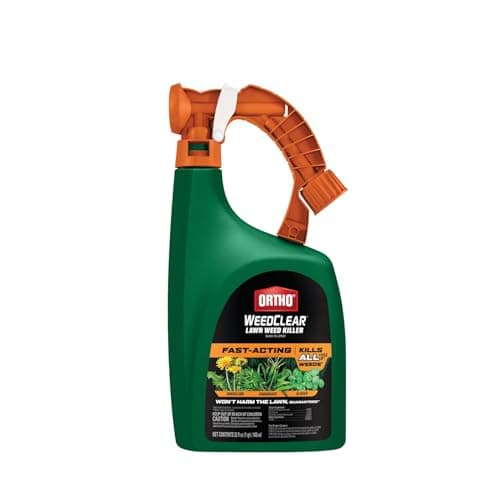
Roundup For Lawns is solid, but it isn't always the cheapest or the best fit. If your weed problem is mostly broadleaf with no crabgrass, a classic three-way selective weed killer like Ortho Weed B Gon does the same job for less money. If you have a Bermuda or zoysia lawn dealing with sedge, you'll want a sedge-specific tool. Here's how the most common options stack up:
| Product | Actives | Best For | Coverage (32 oz) |
|---|---|---|---|
| Roundup for Lawns₂ Concentrate, Weed Killer for Northern Grasses, Kills Crabgrass, 32 fl. oz. | MCPA + quinclorac + dicamba + sulfentrazone | Cool-season lawns with mixed broadleaf + crabgrass + nutsedge | Up to 16,000 sq ft |
| Roundup for Lawns₅ Concentrate for Use on Southern Grasses, Kills Dandelion, Clover, and More, 32 fl. oz. | Penoxsulam + sulfentrazone | St. Augustine, centipede, zoysia, Bermuda | Up to 16,000 sq ft |
| Ortho Weed B Gon Weed Killer for Lawns Concentrate, 32-Ounce (420005) | 2,4-D + MCPP + dicamba | Broadleaf-only problems on most cool- and warm-season turf | Up to 64,000 sq ft |
A few honorable mentions worth knowing about even though we don't link them:
- Tenacity (mesotrione): The pro favorite. Works pre- and post-emergent, safe to spray at the time of seeding on cool-season grasses, kills nimblewill and bentgrass too. Pricey upfront ($90+ for 8 oz) but treats 80,000+ sq ft.
- Sedgehammer (halosulfuron): The right tool for nutsedge specifically. If yellow or purple nutsedge is your main problem, this is more effective than the sulfentrazone in Roundup For Lawns.
- Triclopyr (Ortho Weed B Gon Chickweed/Clover/Oxalis or Turflon Ester): For wild violet, ground ivy, oxalis, and other waxy-leaf weeds that shrug off MCPA and 2,4-D.
One thing to watch out for: don't stack a second weed killer on top of Roundup For Lawns within the same week. Most label intervals are 30 days minimum between applications.
Common Mistakes and FAQ
The mistakes we see homeowners make with this product, in rough order of frequency:
Buying the wrong bottle. Already covered, but worth saying again. The original Roundup will kill your lawn. Read the front of the label for "For Lawns" before you check out.
Spraying in heat. Dicamba volatilizes above 85°F. The vapor can drift hundreds of feet onto sensitive plants. If your tomato leaves cup downward two days after you sprayed, you've found out the hard way. Stick to mornings under 80°F.
Using the Northern bottle on St. Augustine. The MCPA dose will yellow it out. Even if a forum says they got away with it, the label is calibrated against grass injury, not as a suggestion. Use the Southern bottle if you have St. Augustine, centipede, or warm-season turf.
Spraying right before mowing. Cuts off the leaf area where the herbicide is sitting. Wait at least 48 hours.
Trying to reseed too soon. The residual on quinclorac and sulfentrazone runs 4-6 weeks. If you spray in late August and try to drop fescue seed Labor Day weekend, germination will be poor and patchy. Plan your weed control for early summer or use a different product (Tenacity) when you need to spray and seed close together.
Expecting it to kill everything. Wild violet, ground ivy in shade, established Bermuda in a fescue lawn, and quackgrass are all weeds Roundup For Lawns won't touch reliably. For those, you need a different chemistry or a renovation plan.
Treating it like glyphosate for spot kills. If you want to nuke a patch of weeds and start over, original glyphosate Roundup is actually the right tool, and our comparison of non-selective vegetation killers breaks down when to reach for it versus a longer-lasting bare-ground product. Roundup For Lawns is for keeping your lawn while removing weeds within it. Different jobs.
Cost-wise, Roundup For Lawns Northern Concentrate sits in the middle of the field. It's more expensive per square foot than a basic three-way like Ortho Weed B Gon, cheaper than Tenacity by the bottle, and roughly comparable to Spectracide Weed Stop Plus Crabgrass. The reason to pay a little more for Roundup For Lawns specifically is the four-way active mix, which covers crabgrass, broadleaves, and yellow nutsedge in a single application. If you only have one of those problems, a cheaper specialist usually wins.
Last thing: store the concentrate in a cool, dark spot. Quinclorac and sulfentrazone hold up fine for 2-3 years if sealed, but once mixed in the sprayer they're best used within 24 hours. Don't leave a half-mixed pump sprayer in a hot garage.
Free Lawn Care Tools
No, not if you grab the right bottle. Roundup for Lawns is selective, meaning it targets broadleaf weeds, crabgrass, and sedges while leaving turfgrass alone. The catch: the Northern formula is safe on cool-season grasses (Kentucky bluegrass, fescue, ryegrass), and the Southern formula is safe on warm-season grasses (St. Augustine, centipede, zoysia, Bermuda). Cross them and you can damage the lawn. Regular Roundup (glyphosate) is the one that kills everything green.
Wait at least 4 weeks before overseeding. The label residual on quinclorac and sulfentrazone can interfere with seed germination, especially fescue and ryegrass. If you're planning a fall overseed, knock out broadleaf weeds in early summer, not the week before you drop seed.
It struggles with established Bermuda invading a Northern lawn (the grass is too tough), wild violet (notoriously stubborn, often needs triclopyr), and ground ivy in heavy shade. It also won't touch most grassy weeds that aren't crabgrass, like quackgrass or tall fescue clumps in a bluegrass lawn. Those need glyphosate spot-treatment, which means renovating that patch.
Different actives entirely. Regular Roundup is glyphosate, a non-selective that kills any green plant. Roundup for Lawns Northern uses MCPA + quinclorac + dicamba + sulfentrazone (selective). Same brand name, same shelf at Home Depot, completely different chemistry. The licensing situation is also different: Bayer owns the original Roundup, and Scotts licenses the "Roundup" name for the lawn-safe version.
Don't tank-mix it with liquid fertilizer unless the label says so (most don't). The surfactants and acidity can drop weeds out of solution or burn the lawn. Apply weed control, wait the labeled interval, then fertilize.
Yes, if you spray on a windy day. Dicamba and MCPA are notorious for vapor drift in heat above 85°F, and they can damage tomatoes, grapes, and ornamentals at trace amounts. Spray when wind is under 5 mph and temps are below the mid-80s. Use a coarse droplet nozzle, not a fine mist.
Roundup for Lawns Northern Concentrate runs roughly $20-25 for 32 oz, treats up to 16,000 sq ft. Tenacity (mesotrione) is closer to $80-100 for 8 oz but treats up to 80,000+ sq ft and is gentler on new seed. Per square foot, Tenacity is cheaper at scale; Roundup for Lawns is cheaper for one bottle and one weekend.
Once dry (typically 1-2 hours, longer in humidity), the lawn is safe for pets per label. Keep them off during application and until the spray dries. The actives are not glyphosate, so the cancer-litigation concerns tied to original Roundup don't apply here, but it's still a herbicide. Treat it like one.

Your lawn plan, in your pocket all season
Grass ID, a season plan, soil-timed reminders, and a lawn journal that remembers what you did. Free on iPhone.
Related Articles
 Weed Control
Tenacity Herbicide (Mesotrione) Application Guide for Cool-Season Lawns
May 3, 2026•11 min read Weed Control
Ortho GroundClear vs Roundup: Which to Use (and How to Apply GroundClear)
Jul 8, 2026•11 min read Weed Control
Scotts Weed and Feed: Free Printable Application Guide & Instructions
May 3, 2026•7 min read