Best Fertilizer for Centipede Grass (2026 Guide)
 Marcus GreenTurf Management Pro | 18 Years
As an Amazon Associate we earn from qualifying purchases.
The best fertilizer for centipede grass is a phosphorus-free 15-0-15 (or a low-phosphorus 16-4-8) slow-release blend, applied only after full spring green-up at no more than 1 pound of nitrogen per 1,000 square feet per year. Centipede grass stands out for its promise of low-maintenance beauty, but even experienced homeowners run into issues: yellow patches, lackluster color, or frustratingly slow growth. Most of these headaches trace back to fertilizer choices-either the wrong product, the wrong timing, or simply too much of a good thing. As we move into 2026, climate swings and a flood of new fertilizer products make it even more critical to get your centipede grass nutrition dialed in. For the complete reference, see the Centipede pillar guide.
Choosing the best fertilizer for centipede grass isn’t about grabbing what works for Bermuda or St. Augustine. Centipede is unique-acid-loving, sensitive to overfeeding, and quick to show stress from excess nitrogen or the wrong pH. This guide brings you a science-backed, step-by-step strategy tailored to both beginners and lawn care veterans. We’ll cover everything from soil testing and product selection to seasonal timing and troubleshooting, with recommendations rooted in my 18 years of managing warm-season turf under real-world pressures.
Ready to transform your centipede grass lawn into a consistently lush, green carpet? Here’s everything you need to know for 2026.
If your centipede grass is turning yellow or showing patchy growth, check for over-fertilization or pH drift above 6.0. Confirm with a soil test-look for nitrogen and iron levels, and especially pH. If pH is above 6.0 or nitrogen exceeds 1 lb per 1,000 sq ft per year, back off fertilization and consider applying elemental sulfur to lower pH over time.
The fix: Use a fertilizer with low nitrogen (preferably 15-0-15 or 16-4-8) and only apply after full green-up, never before May in most southern regions. Avoid high-phosphorus products and never fertilize centipede grass in late fall or winter. You’ll see greener color within 2-3 weeks of proper feeding, but pH adjustments can take several months. Monitor and retest soil in midsummer for best results.
Understanding Centipede Grass Nutrition in 2026
What Makes Centipede Grass Unique
Centipede grass (Eremochloa ophiuroides) is renowned for its very low maintenance requirements, a trait that’s made it a favorite across the Southeast. Its most defining features are its shallow root system-roots rarely extend beyond 3 inches-its preference for acidic soils, and its sensitivity to excessive nitrogen. Unlike robust Bermuda or thick-bladed St. Augustine, centipede grass thrives with minimal input and can quickly decline if overfed or grown in alkaline soils.
Recommended products
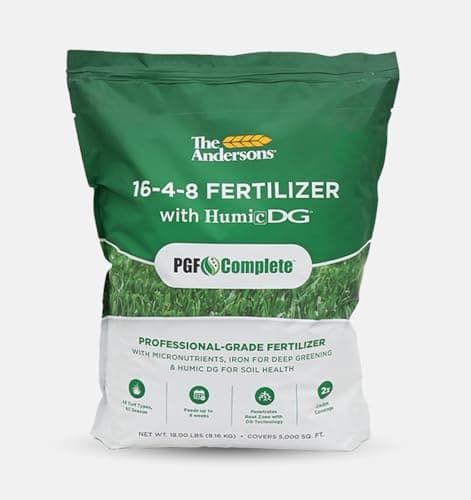
The Andersons Professional PGF Complete 16-4-8
Professional-grade slow-release with humic acid.
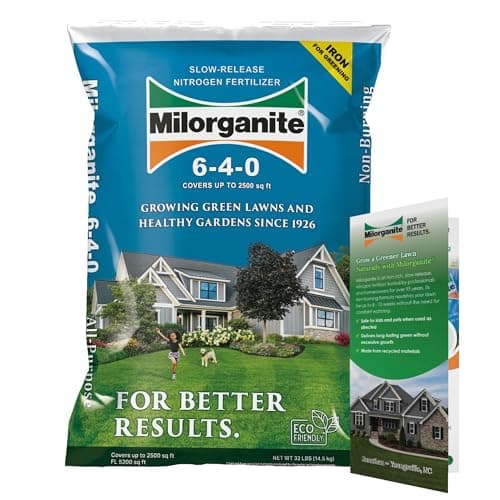
Milorganite 6-4-0 Nitrogen Fertilizer
Slow-release organic, won't burn even on overcast humid days.
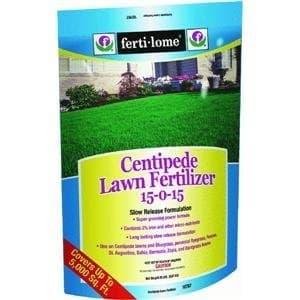
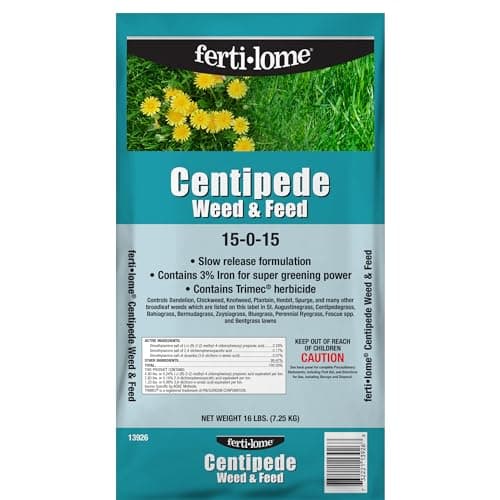
Ferti-Lome Centipede Lawn Fertilizer 15-0-15
The 15-0-15 ratio this guide recommends for centipede: no phosphorus, high potassium, one or two feedings a year is plenty.
Compared to St. Augustine or Zoysia, centipede grass requires far less fertilizer and is more tolerant of low soil fertility but less tolerant of heavy traffic (if you manage a Zoysia lawn instead, see our picks for the best fertilizer for Zoysia grass, which feeds at a much higher rate). While St. Augustine can handle moderate shade and higher nutrient loads, and Bermuda excels in full sun with aggressive feeding, centipede’s sweet spot is a light hand and consistent, gentle care.
If you’re unsure which grass you have, see How to Identify Centipede Grass or Centipede Grass vs. St. Augustine for detailed visual cues and growth habits.
Essential Nutrients for Centipede Grass Health
Centipede grass’s core needs revolve around the “big three” macronutrients: nitrogen (N), phosphorus (P), and potassium (K). However, the ideal N-P-K ratio for centipede is quite different from other warm-season grasses:
- Nitrogen (N): Centipede is highly sensitive to excess. Our Grass Database recommends 1 lb of nitrogen per 1,000 sq ft annually for centipede grass-less than half the rate for Bermuda or Zoysia.
- Phosphorus (P): Centipede often suffers from phosphorus toxicity if overapplied. Only add phosphorus if your soil test shows a deficiency.
- Potassium (K): Important for root health and drought tolerance. A balanced ratio with nitrogen (e.g., 15-0-15) supports resilience.
Secondary nutrients and micronutrients, especially iron, play a vital role in color. Iron chlorosis (yellowing despite adequate nitrogen) is common in centipede, especially at high pH. Magnesium and sulfur support overall vigor, but deficiencies are rare unless soil is extremely sandy or has been over-limed.
Common deficiency signs in centipede grass:
- Nitrogen deficiency: Uniform pale green to yellow color, slow growth
- Iron deficiency: Bright yellow leaves with green veins, especially after high pH irrigation or liming
- Potassium deficiency: Weak, thin turf with increased drought and disease susceptibility
How Soil pH Affects Fertilizer Effectiveness
The single most important soil parameter for centipede grass is pH. Centipede prefers acidic soils-optimal range: 5.0 to 6.0. Above 6.0, iron becomes less available, leading to chronic yellowing and poor growth even with perfect fertilization.
To maintain this sweet spot, you need to test your soil every 2-3 years. See How to Test Lawn Soil pH for step-by-step instructions. If your pH is above 6.0, apply elemental sulfur to lower it gradually-never attempt to correct more than 0.5 pH units per season. If pH is below 5.0, use dolomitic lime sparingly, but this is rarely needed for centipede lawns.
Remember, fertilizer efficiency drops sharply outside the proper pH range. Always adjust pH first, then address nutrient deficiencies.
Types of Fertilizer for Centipede Grass: Pros, Cons & 2026 Product Picks
Granular vs. Liquid Fertilizers
Fertilizer comes in two main forms: granular and liquid. Granular fertilizers are the traditional choice-easy to apply with a spreader, providing slow, steady release. They’re ideal for full-lawn feedings and offer less risk of burning centipede’s sensitive roots when applied as directed. Liquid fertilizers, on the other hand, are faster-acting and perfect for spot treatments or rapid correction of deficiencies, especially iron. However, liquids require more frequent application and even coverage can be tricky for beginners.
My professional crews often use granular for baseline feeding, then liquid iron for quick green-up or to correct small problem areas. For most homeowners, granular is easier and more forgiving.
If you prefer to spray rather than spread, a liquid program suits centipede well as long as you keep nitrogen light. A phosphorus-free Simple Lawn Solutions Superior 15-0-15 delivers nitrogen and potassium at a gentle rate without the phosphorus centipede does not need.
For summer color, Simple Lawn Solutions Liquid Iron deepens the green without pushing the growth centipede wants to avoid. For a side-by-side look at the liquid options by need, see our best liquid lawn fertilizer guide.
Organic vs. Synthetic Fertilizers
Organic fertilizers are gaining popularity in 2026, prized for their environmental safety and slow nutrient release. They typically use natural sources like poultry manure, feather meal, or composted plant material. The benefits: reduced risk of burning, improved soil health, and pet safety. However, organics tend to be lower in nitrogen, making it a challenge to hit the precise 1 lb/1,000 sq ft annual rate recommended for centipede grass. They also release nutrients more slowly, so green-up may lag behind synthetics.
Synthetic fertilizers deliver nutrients in precise amounts and predictable release patterns. They’re reliable, cost-effective, and easy to source. The main drawbacks are the risk of over-application and the potential for runoff if misapplied, which can harm waterways and pollinators.
In 2026, the trend is moving toward hybrid products-synthetic-organic blends that offer the best of both worlds: quick response and gentle, sustained feeding.
Slow-Release vs. Fast-Release Formulations
Slow-release fertilizers are essential for centipede grass. They deliver nutrients gradually, minimizing the risk of root burn and excessive top growth. Look for products labeled “slow-release” or containing controlled-release nitrogen sources like polymer-coated urea or methylene urea. These support season-long health with just one or two feedings.
Fast-release fertilizers (like ammonium sulfate) can cause a quick green-up, but they spike growth, increase mowing, and often lead to thatch or disease. Use fast-release only for correcting acute deficiencies or after heavy rain has leached nutrients-never as your primary feeding strategy for centipede grass.
Why 15-0-15 Fertilizer Is the Best NPK Ratio for Centipede Grass
15-0-15 fertilizer is widely considered the best NPK ratio for centipede grass because it delivers nitrogen and potassium in equal parts with zero phosphorus. That ratio matches centipede biology almost perfectly: it is sensitive to phosphorus toxicity, it benefits from potassium for root health and drought tolerance, and it only needs about 1 pound of nitrogen per 1,000 sq ft per year. A 15-0-15 product lets you hit the right nitrogen rate without overloading on phosphorus, which is the single most common over-fertilization mistake on centipede lawns.
If your soil test shows adequate phosphorus (which is typical in the Southeast), reach for a 15-0-15 product or a similar low-phosphorus blend like 17-0-17. Apply at half-rate twice during the growing season rather than a single full application. Liquid 15-0-15 works well for spot-feeding and quick green-up, while granular slow-release versions support steady season-long color.
Centipede Grass Fertilizer NPK Ratios Compared
Not every bag on the shelf suits centipede grass. This quick comparison shows how the most common ratios stack up so you can match the numbers on the bag to what centipede actually wants. When in doubt, follow the bag label rate and your local extension office soil-test results.
| N-P-K Ratio | Phosphorus | Fit for Centipede | Best Use |
|---|---|---|---|
| 15-0-15 | None | Excellent | Primary spring and late-summer feeding |
| 17-0-17 | None | Very good | Direct alternative to 15-0-15 |
| 16-4-8 | Low | Very good | Slow-release spring and summer feeding on low-phosphorus soils |
| 6-4-0 (organic) | Low | Good | Gentle, pet-safe mid-summer feeding |
| 10-10-10 | High | Fair | Only if already on hand; apply at a reduced rate |
| 32-0-10 (high nitrogen) | None | Poor | Half-rate spot repairs only |
Can You Use 10-10-10 Fertilizer on Centipede Grass?
You can use 10-10-10 fertilizer on centipede grass, but it is not the ideal choice for most lawns. The 1:1:1 NPK ratio adds phosphorus that centipede usually does not need, and the lower nitrogen-to-bag ratio means you have to spread more product to hit the recommended 1 pound of nitrogen per 1,000 sq ft. If 10-10-10 is what you have on hand, apply at a reduced rate after green-up, and skip phosphorus on your next application to avoid building up soil P levels. For long-term feeding, switch to a 15-0-15 or 16-4-8 product specifically formulated for warm-season acidic-soil grasses like centipede.
Can You Use Weed and Feed on Centipede Grass?
Most weed and feed products are a poor match for centipede grass, and using the wrong one is a common way to thin or kill a centipede lawn. The problem is twofold: many weed and feed blends carry a high nitrogen rate that pushes centipede past the 1 pound of nitrogen per 1,000 square feet it wants for the entire year, and some contain herbicides or added phosphorus that centipede does not tolerate well. Before you buy, confirm the label specifically lists centipede grass as safe; if it does not, skip it. For the rare case where you have a real broadleaf weed problem, a centipede-labeled weed and feed applied once after full green-up is acceptable, but spot-treating weeds with a centipede-safe liquid herbicide and feeding separately with a 15-0-15 product is almost always the safer route.
Is Ironite Good for Centipede Grass?
Ironite is a useful supplement for centipede grass when the problem is color, not growth. It is a mineral iron product with very little nitrogen, so it greens up yellowing (chlorotic) turf without pushing the excess growth centipede tries to avoid. That makes it a reasonable choice for iron chlorosis, which shows up as bright yellow blades with greener veins, especially on soils with pH above 6.0. Ironite does not replace a balanced feeding, so use it alongside a low-nitrogen program rather than as your main fertilizer, and always follow the bag label rate. Keep pets off the lawn until the product is watered in and dry.
Is Milorganite Good for Centipede Grass?
Milorganite works well on centipede grass as a gentle, slow-release feeding. Its low, organic nitrogen and added iron fit centipede's light appetite and help deepen color without the burn risk of fast-release synthetics, which makes it a forgiving pick for pet-heavy or beginner lawns. Because the nitrogen is low, plan on covering only part of your annual nitrogen budget with it and lean on the bag label rate so you stay near the roughly 1 pound of nitrogen per 1,000 square feet centipede wants for the whole year. It is a good match for a mid-summer feeding when you want color and vigor without a growth spike.
Is Scotts Fertilizer Good for Centipede Grass?
It depends on the specific Scotts product. Scotts Turf Builder Southern Lawn Food is a high-nitrogen blend (around 32-0-10), which is more nitrogen than centipede grass needs, so it should only be used at a reduced rate for spot repairs, never as a full-lawn feeding. Avoid Scotts weed and feed formulas unless the label specifically lists centipede grass as safe. For routine feeding, a phosphorus-free 15-0-15 or a slow-release 16-4-8 is a better match than most general-purpose southern lawn foods. Whatever product you choose, confirm centipede grass on the label and follow the bag rate.
Best Starter Fertilizer for New Centipede Grass Sod and Seed
New centipede sod, plugs, and seed benefit from a starter fertilizer only when a soil test shows phosphorus is actually low, since centipede is prone to phosphorus toxicity when it is overapplied. If your soil is deficient, choose a starter blend with a small amount of phosphorus (roughly 4 percent or less) and keep the area consistently moist while roots establish. Where phosphorus already tests adequate, which is common across the Southeast, skip the starter product and use a light, phosphorus-free feeding after the new grass is rooted and actively growing. Do not push heavy nitrogen on young centipede; slow, steady establishment is the goal. Follow the bag label rate and your local extension office recommendation for new lawns.
Top Fertilizer Products for Centipede Grass (2026 Updated List)
Below is a comparison of the best fertilizer products for centipede grass in 2026. These have been selected based on nutrient ratio, release type, safety, and user feedback.
| Product | N-P-K | Release Type | Organic/Synthetic | Pet Safety | Best For | Buy |
|---|---|---|---|---|---|---|
| Lesco Professional Centipede Lawn Fertilizer | 15-0-15 | Slow-Release | Synthetic | Moderate | Spring, Summer | , |
| Scotts Turf Builder Southern Lawn Food | 32-0-10 | Slow-Release | Synthetic | Low | High-traffic repairs only (apply at half the label rate; 32-0-10 is high nitrogen for centipede) | Check on Amazon |
| Espoma Organic Lawn Food | 8-0-0 | Slow-Release | Organic | High | New Lawns, Pet Areas | Check on Amazon |
| Safer Brand Lawn Restore | 10-0-6 | Slow-Release | Organic | High | Summer Feeding | Check on Amazon |
| Milorganite 6-4-0 Nitrogen Fertilizer | 6-4-0 | Slow-Release | Organic | High | Mid-Summer Feeding, Pet Safe | Check on Amazon |
| Ironite II Pennington Mineral Lawn Supplement | 1-0-0 + Fe | Slow-Release | Synthetic | Low | Iron Boost, Color Correction | Check on Amazon |
| Southern Ag Chelated Liquid Iron | 0-0-0 + Fe | Liquid | Synthetic | Moderate | Spot Treatment, Chlorosis | Check on Amazon |
| The Andersons Professional PGF Complete 16-4-8 | 16-4-8 | Slow-Release | Synthetic | Moderate | Premium Spring/Summer Feeding | Check on Amazon |
Always check local availability-some products are region-specific, and formulas may change based on state regulations regarding phosphorus or slow-release content.
How to Choose the Best Fertilizer for Your Centipede Lawn
Step 1: Soil Testing - The Non-Negotiable First Step
Do not guess when it comes to centipede grass nutrition. Soil testing is mandatory. It tells you exactly what your soil contains (nutrient levels, pH, organic matter) and what it lacks. Without a test, you risk applying nutrients your lawn doesn’t need, wasting money, and potentially harming your grass.
Send samples to a university lab or reputable service. When you get results, look for pH (should be 5.0-6.0), nitrogen, phosphorus, and potassium. If phosphorus is high, avoid “weed and feed” products with added P. For a deep dive, refer to the Complete Lawn Soil Test Guide.
Step 2: Matching Fertilizer to Your Soil and Lawn Needs
With your test results in hand, select a fertilizer that matches your lawn’s actual needs. For established lawns, stick to the recommended N-P-K ratio-products like 15-0-15 or 16-4-8 are ideal. For new sod or seeding, a starter fertilizer with a small amount of phosphorus (<4%) may help, but only if your soil is deficient. In shaded areas or spots with frequent pet traffic, consider a lighter feed rate and supplement with iron for better color.
Our Grass Database recommends precisely 1 lb of nitrogen per 1,000 sq ft per year for centipede grass. For a 5,000 sq ft lawn, that’s only 5 lbs of actual nitrogen-not fertilizer product-spread throughout the growing season.
Step 3: Regional and Seasonal Considerations
Climate has a huge influence on fertilizer timing and choice. In the Southeast, centipede lawns break dormancy in late April or early May-do not fertilize before full green-up. Coastal Carolinas often see earlier warm-ups, while Texas may lag by 2-3 weeks. Factor in rainfall: heavy summer storms can leach nutrients, requiring a mid-season light feed, while drought-prone areas need watering support for fertilizer to work.
With climate shifts in 2026, monitor local weather patterns and adapt your fertilization window accordingly. During prolonged drought, cut back on nitrogen to prevent stress. After major rain events, consider a spoon-feeding approach-small, frequent doses rather than one big application.
Best Fertilizer for Centipede Grass in South Carolina
Centipede grass is well-suited to South Carolina lawns, but it has stricter fertilizer needs than Bermuda or zoysia. Aim for 1 to 2 pounds of nitrogen per 1,000 square feet per year, total. That is roughly half what most warm-season grasses get. Over-fertilizing centipede in SC is one of the fastest ways to trigger "centipede decline," a yellowing and thinning pattern that can take a full season to recover from.
Most South Carolina soils run slightly acidic, which centipede prefers (target pH 5.0 to 6.0). A 15-0-15 or 17-0-17 ratio works well, with iron supplements as needed for color. Apply your first feeding in mid-April after the lawn has fully greened up, and stop nitrogen by early September so the grass has time to harden off before winter.
- Clemson Cooperative Extension (HGIC 1217) recommends 1 to 2 pounds of nitrogen per 1,000 square feet annually for centipede grass in South Carolina, applied in 0.5 lb increments and spaced through the growing season.
- Centipede prefers a soil pH of 5.0 to 6.0; lime should only be added if a soil test shows pH below 5.0.
Best Fertilizer for Centipede Grass in Georgia
Georgia lawns follow the same low-nitrogen rule: about 1 pound of nitrogen per 1,000 square feet per year, applied after full green-up in late April or May. UGA Extension notes centipede performs best on acidic soil (pH 5.0 to 6.0), so skip lime unless a soil test calls for it. A 15-0-15 centipede fertilizer works well statewide, with an iron supplement in summer if color fades in the heat.
Best Fertilizer for Centipede Grass in North Carolina
In North Carolina, centipede thrives in the sandy Coastal Plain and Sandhills, where nutrients leach quickly. NC State Extension guidance is to split the annual nitrogen into two half-pound feedings, the first after full green-up in June and a second in mid-summer only if the lawn needs it. Stop nitrogen roughly 6 weeks before your first expected frost, which across much of North Carolina lands in late summer to early fall; late feeding is a leading cause of winter injury, especially in the Piedmont, so confirm the exact cutoff with NC State Extension for your area.
Best Fertilizer for Centipede Grass in Florida
Florida adds one wrinkle: many counties enforce summer fertilizer blackout periods, typically June through September, to protect waterways. Plan your main feeding for spring green-up and choose a slow-release, phosphorus-free centipede grass fertilizer. UF/IFAS recommends no more than about 2 pounds of nitrogen per 1,000 square feet per year even in Florida’s long season, and iron is the safer way to deepen color in alkaline coastal soils.
Step 4: Reading Fertilizer Labels Like a Pro
Manufacturers love flashy claims, but what matters is the guaranteed analysis (N-P-K), slow-release percentage, and additional micronutrients like iron. Avoid products with high phosphorus unless your soil test demands it. Potassium sources vary; potassium chloride (muriate of potash) and potassium sulfate are both used on centipede lawns, so follow your soil test and your local extension office recommendation on which fits your soil.
Red flags: “Quick green-up” or “high nitrogen” for centipede lawns often means 30%+ nitrogen, which is excessive. Also, avoid “weed and feed” combos unless you have a proven weed problem and confirm the product is labeled safe for centipede grass.
When and How to Fertilize Centipede Grass - Month-by-Month (2026 Schedule)
Annual Fertilizer Calendar
Getting the timing right is as important as product choice. Here’s a month-by-month guide for 2026, based on Southeast regional climate data:
- Spring (Late April - May): Wait until centipede grass is fully green and actively growing-typically soil temps above 65°F. Apply the first fertilizer at a rate to deliver 30% of annual nitrogen (0.3 lbs/1,000 sq ft). Early feeding (before green-up) risks root burn and wasted nutrients.
- Summer (June - August): Peak growth window. Apply 50% of annual nitrogen, split into one or two light applications. Monitor for drought and supplement with iron if color fades.
- Fall (about 6 weeks before your first expected frost): Apply the last 20% of annual nitrogen, timed so the lawn finishes feeding roughly 6 weeks before your first frost and has time to harden off. In much of the Southeast that falls in early fall, but the exact cutoff shifts by region, so confirm your date with your local extension office. Late feeding increases winter kill risk and weakens roots.
- Winter (November - March): Do not fertilize. Centipede is dormant. Let the lawn rest and prep for spring by cleaning up debris and checking pH.
According to our Grass Database, following this split-Spring 30%, Summer 50%, Fall 20%, Winter 0%-delivers the best results for centipede grass health and color.
When to Fertilize Centipede Grass
The short version: fertilize centipede grass only while it is actively growing, from full spring green-up through late summer, and never during dormancy. Timing shifts a few weeks earlier or later depending on your state, so use the schedule below as a starting point and confirm local timing with your extension office.
| Season | Window | Share of Annual Nitrogen | Notes |
|---|---|---|---|
| Spring | Late April to May (after full green-up) | About 30% | Wait for soil to warm; never feed before green-up |
| Summer | June to August | About 50% | Split into one or two light feedings; add iron if color fades |
| Early Fall | Finish about 6 weeks before first frost | About 20% | Last feeding of the year; potassium aids winter hardiness; confirm your local cutoff with your extension office |
| Winter | November to March | 0% | Do not fertilize; the grass is dormant |
In North Carolina and other sandy Coastal Plain areas, many lawns hold off the first feeding until June and split the nitrogen into two half-pound applications, finishing about 6 weeks before the first frost to avoid winter injury. Florida homeowners should check for local summer fertilizer blackout rules before feeding.
Application Techniques for Best Results
Professional results come from precision, not just product. Here’s how to apply fertilizer effectively:
- Spreader Calibration: Set your spreader based on product label rates. Weigh out the correct amount for your square footage (calculate your lawn size if you are not sure) and test on a driveway or tarp to ensure even coverage.
- Overlap Technique: Walk the lawn in straight, slightly overlapping passes to avoid streaks or missed spots. Apply half the rate in one direction, then the other half perpendicular for maximum uniformity.
- Liquid Applications: Use a hose-end or backpack sprayer for iron supplements or spot feeding. Maintain steady walking speed and consistent pressure to ensure even distribution.
- Watering: Water the lawn with 0.25-0.5 inches immediately after granular fertilization (unless rain is forecast). Our data shows centipede needs 1 inch of water per week in summer for optimal response.
Pro Tips for Problem Lawns
Yellow or bare patches often signal iron deficiency, drought stress, or pest damage. For iron chlorosis, apply a chelated liquid iron product every 4-6 weeks during the growing season. For bare spots, spot-feed with a starter fertilizer (low P) and keep well-watered until recovery. If you’ve recently installed sod or overseeded, reference How to Repair Centipede Grass for recovery steps and timing.
Weed and pest issues often flare up after fertilization-use the Centipede Grass Weed Control Guide for safe options. Always spot-treat weeds, never blanket spray unless absolutely necessary, as centipede is sensitive to many common herbicides.
Advanced Strategies: Maximizing Centipede Grass Health with Fertilization
Integrating Fertilizer with Other Lawn Care Practices
Fertilizer performs best when integrated with good mowing and soil management. Set your mower height to 1-2 inches per our Grass Database (never scalp below 1 inch), and mow frequently enough that you never remove more than 1/3 of the blade at a time. For details, see Best Mowing Height for Centipede Grass.
Aeration and dethatching open up the soil, allowing roots to access nutrients more efficiently. Schedule aeration in late spring, just before peak growth, for best synergy with fertilizer-see How to Aerate Centipede Grass for timing and technique. Smart irrigation practices-watering deeply but infrequently, and never during the heat of the day-help minimize fertilizer runoff and maximize uptake.
Sustainable & Eco-Friendly Fertilization in 2026
Eco-friendly practices are a major focus in 2026. Use compost teas, bio-stimulants, and light topdressing with organic matter to build soil health and supply trace nutrients. Organic fertilizers and clippings recycling (mulch mowing) reduce reliance on synthetic inputs and support natural nutrient cycling. Always sweep fertilizer granules off sidewalks and driveways to prevent runoff into storm drains, protecting pollinators and waterways.
For more on natural options, consult Composting for a Healthier Lawn and Organic vs Synthetic Fertilizers for a full breakdown.
- NC State Extension recommends not exceeding 1 lb of nitrogen per 1,000 sq ft per year for centipede grass and warns that over-fertilization can cause decline and iron chlorosis.
Common Mistakes to Avoid
Many guides miss critical steps that separate healthy centipede lawns from those that struggle. Here’s what most homeowners-and, frankly, some online articles-get wrong:
Misreading Soil Test Results
Generic fertilizer recommendations can backfire. Centipede grass often suffers more from phosphorus toxicity or high pH than true nutrient deficiency. Always confirm actual shortages with a soil test before adding any nutrient, especially phosphorus or lime.
Poor Timing and Over-Application
Fertilizing too early-in March or early April-can shock centipede grass, leading to yellowing or weak roots. Similarly, late fall feeding extends growth when the lawn should be preparing for dormancy, resulting in winter injury or even die-off. Over-fertilizing is a leading cause of thatch buildup, root burn, and increased disease in centipede lawns. Stick to the annual rate: 1 lb of nitrogen per 1,000 sq ft, split by season as outlined above.
Ignoring Regional and Product-Specific Warnings
Some fertilizers are labeled for “Southern Lawns” but are not safe for centipede grass due to high nitrogen or phosphorus content. Sandy soils (common in coastal regions) leach nutrients quickly, so slow-release is critical. If you have pets, check for pet-safe formulations-many synthetic options require keeping dogs and cats off the lawn for 24-48 hours after application.
- Contact your local extension office for region-specific fertilizer and pH recommendations, as regulations and climate can shift recommendations from year to year.
Recommended products
The Andersons Professional PGF Complete 16-4-8
If you only buy one thing for spring + summer feeding, this is it.
Milorganite 6-4-0 Nitrogen Fertilizer
Pick this if your lawn has pets or kids.
Ferti-Lome Centipede Lawn Fertilizer 15-0-15
Centipede-specific 15-0-15 with iron: the ratio the whole guide argues for, in one bag.
Conclusion
Choosing and applying the best fertilizer for centipede grass in 2026 is more nuanced than ever, but the rewards are worth it: a lush, low-maintenance lawn with fewer weeds and less disease pressure. The key steps-test your soil, select the right N-P-K ratio (ideally 15-0-15 or 16-4-8), time your feedings strictly to active growth, and avoid the common pitfalls of over-fertilization and poor timing-are simple, but make all the difference.
If you want that consistently green, healthy centipede lawn, start with a soil test, follow the seasonal feeding calendar, and check out our related guides like How to Repair Centipede Grass and Centipede Grass Watering Schedule for a complete care routine. Questions about a specific fertilizer brand or application technique? Leave a comment below-I’m here to help you get professional-grade results at home.
Top Picks
 Ferti-Lome Centipede Lawn Fertilizer 15-0-15 (20 lb)Check price on Amazon
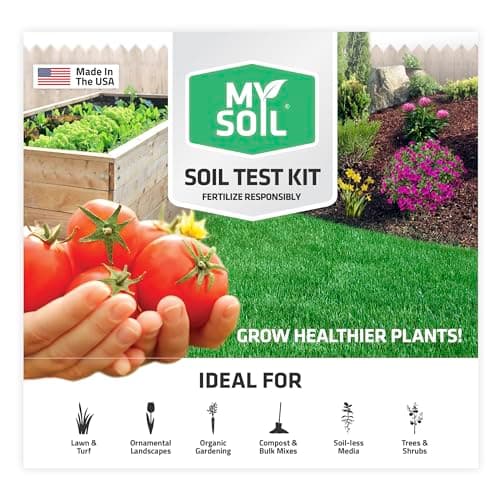
 MySoil Soil Test KitCheck price on Amazon
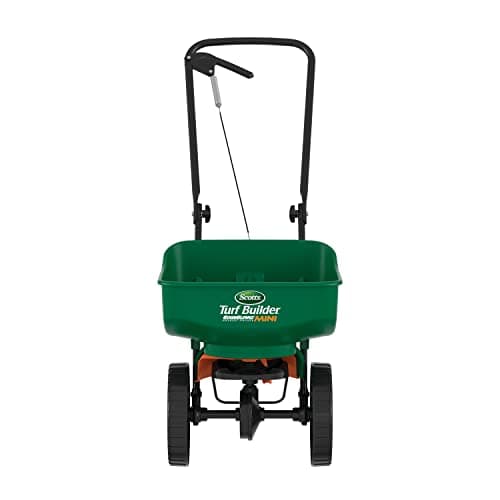
 Scotts Turf Builder EdgeGuard Mini Broadcast SpreaderCheck price on Amazon
As an Amazon Associate we earn from qualifying purchases.
Free Lawn Care Tools
The best N-P-K ratio for centipede grass is 15-0-15 or 16-4-8. Avoid high-phosphorus products unless a soil test shows a deficiency.
Fertilize centipede grass after full green-up in late spring, then lightly in summer and early fall. Never fertilize during dormancy or late fall.
Centipede grass needs only 1 lb of nitrogen per 1,000 sq ft per year, as recommended by our Grass Database. Over-application can cause decline.
Yes, but ensure it provides enough nitrogen and is applied at the correct rate. Organic fertilizers are safer for pets and improve soil health.
Yellow spots usually indicate iron deficiency or high pH. Apply liquid iron supplements and check soil pH, adjusting as needed for optimal color.
Use caution - many weed and feed products are not labeled for centipede grass. Always check the label and only use if the product is specifically approved.
In South Carolina, centipede grass needs only 1 to 2 pounds of nitrogen per 1,000 square feet per year, much less than other warm-season grasses. A 15-0-15 ratio is a good fit, with iron supplements for color. Apply the first feeding mid-April after green-up, and stop nitrogen by early September. SC’s typically acidic soils (pH 5.0 to 6.0) match centipede’s preference, so lime is rarely needed unless a soil test shows pH below 5.0. Per Clemson Extension, over-fertilizing is the leading cause of centipede decline in SC lawns.
15-0-15 fertilizer is one of the best choices for centipede grass. The 15-0-15 ratio delivers nitrogen and potassium in equal amounts with zero phosphorus, which matches centipede biology almost perfectly. Centipede is sensitive to phosphorus toxicity and only needs about 1 pound of nitrogen per 1,000 sq ft per year, so a phosphorus-free product avoids the most common over-fertilization mistake. Apply 15-0-15 at half-rate twice during the growing season rather than a single full application, and pair it with a soil test every 2 to 3 years to confirm phosphorus levels stay in range.
You can use 10-10-10 fertilizer on centipede grass, but it is not the ideal choice. The 1:1:1 ratio adds phosphorus that centipede usually does not need, and the lower nitrogen percentage means you have to spread more product to hit the target rate of 1 pound of nitrogen per 1,000 sq ft. If 10-10-10 is what you already have, apply at a reduced rate after full green-up and skip phosphorus on your next feeding. For ongoing care, switch to a 15-0-15 or 16-4-8 product designed for warm-season acidic-soil grasses like centipede.
Ironite is good for correcting color on centipede grass, not for feeding it. It supplies iron with very little nitrogen, so it greens up yellow, chlorotic turf without forcing the extra growth centipede does not want. Use it alongside a low-nitrogen program rather than as your main fertilizer, follow the bag label rate, and keep pets off the lawn until it is watered in and dry.
Yes, Milorganite is a good fit for centipede grass. Its low, slow-release organic nitrogen and added iron match centipede's light appetite and deepen color without burn risk, which makes it forgiving for pet or beginner lawns. Because the nitrogen is low, use it for part of your annual nitrogen budget, ideally as a mid-summer feeding, and stay near about 1 pound of nitrogen per 1,000 square feet for the whole year.
Use a starter fertilizer on new centipede sod or seed only if a soil test shows phosphorus is low, since centipede is prone to phosphorus toxicity. If it is needed, pick a blend with 4 percent phosphorus or less and keep the area moist while roots establish. Where phosphorus already tests adequate, skip the starter and use a light, phosphorus-free feeding once the grass is rooted and actively growing.
Photos: Masood Aslami / Pexels, Engin Akyurt / Pexels, Magda Ehlers / Pexels

Beat weeds and brown spots from your phone
Snap a photo, get the fix, and follow a plan timed to your soil and weather. Free on iPhone.