Spring Lawn Fertilizer Schedule: When to Apply by Grass Type
 Sarah MitchellLawn Diagnostics Specialist | 12 Years
As an Amazon Associate we earn from qualifying purchases.
Every spring, questions flood in from homeowners about the best time and way to fertilize their lawns for a lush, healthy start to the season. The short version: the best time to fertilize your lawn in spring is when soil temperature at 2-4 inches hits 50-55°F for cool-season grass or 60°F for warm-season grass, not a date on the calendar. Get the timing or product wrong, and you risk weak growth, patchy turf, or wasted effort. Your grass type, local climate, and even your lawn’s microclimates all play a crucial role. What works for your neighbor might not work for you.
Loading Fertilizer Calculator...
This guide is built on a decade of hands-on diagnostic work. We’ll walk step by step through the spring lawn fertilizer schedule: when to apply by grass type, how to identify your turf, choose the right product, and avoid the pitfalls that most guides skip. Whether you have Kentucky bluegrass in a northern state or Bermuda in the South, you’ll get a clear, actionable timeline to set your lawn up for success-without guesswork.
Best Time to Fertilize Your Lawn in Spring
The best time to fertilize your lawn in spring is when soil temperature at a 2 to 4 inch depth is warm enough to trigger active growth, not on a fixed calendar date. Feed cool-season grasses like Kentucky bluegrass and fescue once soil holds steady at 50-55°F, usually late March to mid-April. Wait for warm-season grasses like Bermuda, Zoysia, and St. Augustine until soil reaches 60°F and green-up is at least 50% complete, often late April to early May.
For cool-season grasses like Kentucky bluegrass and fescue, wait until soil temperatures consistently reach 50-55°F and grass is actively growing-usually late March to mid-April in northern zones. For warm-season lawns such as Bermuda, Zoysia, or St. Augustine, delay fertilizing until soil temperatures hit 60°F and green-up is at least 50% complete, often late April to early May in the South. Confirm your timing with a soil thermometer at 2-4 inches deep, not just air temperature.
Avoid fertilizing too early in spring before your grass is ready, as nutrients can leach away or feed weeds instead. Always test your soil before application to tailor the fertilizer type and rate-skip this, and you risk over- or underfeeding. Once confirmed, apply a balanced, slow-release fertilizer at the rate recommended for your grass type, water in lightly, and keep pets off until dry. Most lawns show improved color and growth within 7-14 days if timing and product are right.
Understanding the Importance of Timing in Spring Lawn Fertilization
Spring is a pivotal time for lawn feeding because it coincides with your grass coming out of winter dormancy and beginning a new growth cycle. For most lawns, this is when root systems ramp up activity, shoots start to green, and stored carbohydrates from winter are depleted. Feeding your lawn at the right moment can boost root development, improve color, and give your grass a competitive edge over weeds.
But timing isn’t about the calendar-it's about soil temperature and grass physiology. Grass doesn’t respond to fertilizer until soil temperatures rise enough to trigger root and shoot growth. For cool-season grasses, this threshold is generally 50-55°F at a 2-4 inch depth. Warm-season grasses need even more warmth, with 60°F as the usual trigger for active growth.
Fertilizing too early, while soil is still cold, means nutrients can leach away with spring rains or be taken up by weeds. Fertilizing too late misses the surge of root growth and can even stress your grass during the onset of summer heat. Understanding why this happens helps you prevent it next time-matching your fertilizer schedule to the real needs of your lawn is the foundation for a healthy, resilient turf.
Let’s diagnose this step by step: identifying your grass type is the first, crucial step toward a customized spring lawn fertilizer schedule.
How to Identify Your Grass Type Before Scheduling Fertilizer
Common Lawn Grass Types in North America
The first diagnostic step is knowing what you’re working with. North American lawns typically fall into one of two categories:
- Cool-season grasses: These thrive in northern climates and include Kentucky bluegrass, perennial ryegrass, and fine or tall fescue. They grow best in spring and fall, struggling during summer heat.
- Warm-season grasses: Common in the South and coastal regions, these include Bermuda, Zoysia, St. Augustine, and Centipede. Their peak growth period is late spring through summer, with dormancy in winter.
The transitional zone (central US) often features blends or mixes of both, which complicates scheduling. Some lawns also contain shade-tolerant blends or overseeded ryegrass for winter color.
Step-by-Step Grass Identification Checklist
To accurately identify your grass type, look for these diagnostic clues:
- Visual appearance: Examine blade texture (fine, medium, or coarse), color, and growth pattern. Kentucky bluegrass has fine blades and forms a dense carpet, while tall fescue blades are wider and grow in clumps.
- Growth habit: Observe if the grass spreads by underground rhizomes (like bluegrass) or above-ground stolons (like St. Augustine and Bermuda).
- Seasonal cues: Which months does your lawn look greenest? Cool-season lawns bounce back in early spring and fall; warm-season lawns peak in midsummer.
- Regional clues: Your climate zone often narrows the possibilities. Consult your local extension office for a regional grass list, or use online grass ID tools for guided visual comparisons.
If you’re unsure, pull a small plug and bring it to your county extension office-they'll help confirm the species. This step is worth the time, as it determines your entire fertilization and maintenance plan.
Why Grass Type Matters for Fertilizer Schedules
Each grass species has a unique growth calendar and nutrient demand. Cool-season lawns benefit from early spring feeding to restore winter losses, but too much nitrogen can cause weak, disease-prone growth. Warm-season lawns, on the other hand, are dormant until late spring and can be harmed by early feeding. Product selection, application rates, and even the ideal NPK ratio all hinge on your grass type. If you get this wrong, you risk burning, overfeeding, or undernourishing your turf.
Spring Lawn Fertilizer Schedule: When to Apply by Grass Type
Use this at-a-glance spring schedule to match your grass type to the right soil-temperature trigger, timing window, NPK ratio, and follow-up feeding.
| Grass Type | Soil Temp Trigger (2-4 in) | Spring Window | Suggested NPK | Follow-Up Feeding |
|---|---|---|---|---|
| Kentucky bluegrass | 50-55°F | Late March to mid-April | 20-5-10 or 24-0-10 | Light second feed 6-8 weeks later |
| Perennial ryegrass / Fescue | 50-55°F | Early to mid-April | 20-5-10 | Light second feed in late May |
| Bermuda | 60°F+ | Mid to late April | 16-4-8 | Every 4-6 weeks through summer |
| Zoysia | 60°F+ | Late April to mid-May | 16-4-8 | Once more in early summer |
| St. Augustine / Centipede | 60°F+ | Late April to early May | 15-0-15 (0.5 lb N) | Light feed midsummer |
Cool-Season Grasses: Kentucky Bluegrass, Fescue, Ryegrass
For cool-season grasses, timing is everything. The optimal window for spring lawn fertilization is tied closely to soil temperature rather than air temperature or the calendar. The symptom you’re seeing-slow green-up or patchy color-usually points to a need for nutrients, but only if the soil is ready.
Ideal soil temperature: Begin fertilizing when soil at 2-4 inches deep reaches 50-55°F for several days. You can verify this with an inexpensive soil thermometer or consult soil temperature maps from your local extension.
Visual cues: Wait until your grass is actively growing and you’ve mowed at least once. If your lawn is still brown or dormant-looking, hold off.
Optimal window:
- Northern states (USDA Zones 3-5): Late March to mid-April
- Upper Midwest/Northeast: Early to mid-April
- Pacific Northwest: Late March to early April
Split applications: For most cool-season lawns, split your spring fertilization into two light applications rather than one heavy one. Apply the first dose when growth resumes, and a second, lighter application 6-8 weeks later (late May), but avoid feeding after temperatures consistently exceed 80°F.
Pro Tip: If you plan to use a pre-emergent weed control, select a combination product or time your fertilizer so it coincides with the recommended pre-emergent window-typically when forsythia blooms drop or soil hits 55°F. This streamlines maintenance and prevents crabgrass invasion.
Warm-Season Grasses: Bermuda, Zoysia, St. Augustine, Centipede
Warm-season grasses operate on a different calendar. Fertilizing too early, before green-up, can waste product and even damage the grass. The key is to feed after the grass has exited dormancy and started vigorous growth.
Soil temperature benchmark: Wait until soil at a 2-4 inch depth is consistently above 60°F. For most southern climates, this is late April to early May, but some regions may warm sooner. Never use air temperature as your only guide-soil warmth is what matters for root uptake.
Regional variations:
- Deep South (USDA Zones 8-10): Mid- to late April
- Transitional zone: Late April to mid-May
- Coastal Southeast: Early April to early May
Special notes: Centipede and St. Augustine grasses are especially sensitive to overfertilization. They require less nitrogen than Bermuda or Zoysia. For these species, use a low-nitrogen, slow-release product and apply lightly-typically 0.5 lb nitrogen per 1,000 sq ft in spring.
Always confirm at least 50% green-up before feeding. If large patches remain tan or straw-colored, delay application another week and recheck soil temperature.
Blended or Mixed Lawns: Special Considerations
If your lawn contains a mix of cool- and warm-season grasses, or if you have overseeded ryegrass for winter color, timing and product choice become more nuanced. In these cases:
- Base your main fertilizer schedule on the dominant grass type covering the majority of your lawn.
- For overseeded ryegrass, fertilize lightly in early spring, then switch to a warm-season regimen as temperatures rise and rye fades.
- Shaded areas often green up later; adjust timing for these microclimates by a week or two if necessary.
- During lawn renovations or after overseeding, use a starter fertilizer with a higher phosphorus ratio only if a soil test confirms a deficiency. Otherwise, stick to maintenance rates to avoid burning young roots.
Blended lawns require close observation and sometimes staggered treatments, especially in the transitional zone.
Best Spring Fertilizer for Grass: What to Look For
Shopping for the best spring fertilizer for grass comes down to two things on the bag: the NPK ratio and how the nitrogen is released. The best fertilizer ratio for spring is roughly 3-1-2 or 4-1-2, which shows up on bags as numbers like 20-5-10 and 16-4-8. That mix gives you enough nitrogen for a steady green-up, a small dose of phosphorus for roots (skip it entirely if your soil test shows you already have plenty), and potassium to help the lawn handle heat and stress later in the season.
Release type matters just as much as the numbers. Slow-release nitrogen feeds the lawn gradually over 6 to 8 weeks, which means even color, less mowing surge, and very little risk of fertilizer burn. Quick-release nitrogen greens up faster but pushes soft, flushy growth that invites disease, and it is much easier to over-apply. For spring, pick a product where at least a third to half of the nitrogen is slow-release, and save quick-release for small spot corrections rather than the whole lawn.
One caution for cool-season lawns: do not go heavy on nitrogen this early. A light spring feed at the lower end of the label rate protects bluegrass, rye, and fescue from weak, disease-prone growth heading into summer heat. The big nitrogen push for those lawns belongs in fall. Warm-season bermuda and zoysia are the opposite: once soil passes 60°F they can handle a higher-nitrogen product, while sensitive centipede and St. Augustine should stay on lighter, low-nitrogen southern blends.
Best Spring Lawn Fertilizers by Grass Type (2026 Picks)
Once your soil hits the right temperature, the product you choose should match your grass type. These four spring fertilizers cover cool-season, warm-season, and sensitive southern lawns.
| Fertilizer | Type | Best For | Price |
|---|---|---|---|
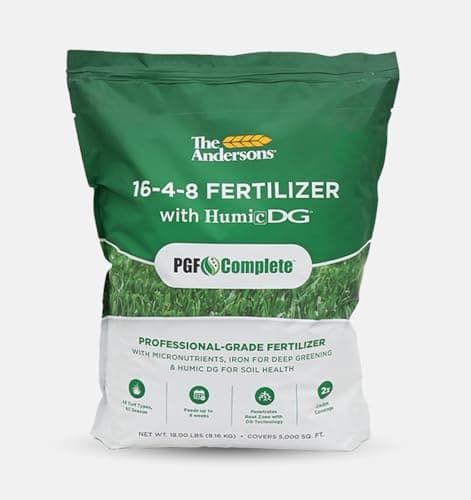
| The Andersons Professional PGF Complete 16-4-8 Fertilizer | Granular, slow-release (16-4-8) | Cool-season lawns (bluegrass, rye, fescue) wanting even, steady feeding | ~$60 |
| Pennington Full Season Lawn Fertilizer 32-0-5 | Granular, high-nitrogen (32-0-5) | Warm-season bermuda and zoysia needing a high-nitrogen, one-and-done spring feed | ~$21 |
| Scotts Turf Builder Southern Lawn Food | Granular southern formula | Sensitive St. Augustine and centipede lawns that need lighter, southern-specific feeding | ~$64 |
| Scotts Turf Builder Lawn Food | Granular all-purpose | An all-purpose quick green-up on any grass type | ~$22 |
Always follow the label rate for your grass type and water in lightly after applying. Skip phosphorus unless a soil test shows a deficiency.
Choosing the Right Spring Fertilizer for Your Lawn
Understanding Fertilizer Labels and NPK Ratios
Fertilizer labels use a three-number system indicating the percentage by weight of nitrogen (N), phosphorus (P), and potassium (K). For example, a 24-0-10 formulation contains 24% nitrogen, 0% phosphorus, and 10% potassium. Nitrogen drives leafy growth and color, phosphorus supports root development, and potassium helps with stress tolerance and disease resistance.
Spring-specific fertilizers often emphasize nitrogen for quick green-up. However, the best product for your lawn depends on both grass type and soil condition. Consider slow-release formulations for steady feeding and reduced risk of burn, or quick-release products for rapid color improvement. Organic fertilizers release nutrients more slowly and improve soil health long-term, while synthetic products offer immediate results.
Selecting Products by Grass Type and Soil Condition
Match your fertilizer to your lawn’s needs:
- Cool-season grasses: Favor a balanced or slightly high-nitrogen product such as 20-5-10 or 24-0-10. If your soil test shows adequate phosphorus, skip it to prevent runoff.
- Warm-season grasses: Use lower-nitrogen, slow-release fertilizers like 16-4-8 or 15-0-15, especially for St. Augustine and centipede.
- Specialty products: If your lawn struggles with color but soil nitrogen is adequate, consider iron supplements. For compacted or alkaline soils, soil amendments like sulfur or compost may be needed-see the Soil Amendment Guide for Lawns.
Always review product labels for pet and child safety if your lawn is used by families or animals.
Soil Testing: The Essential Step Before Fertilizer Application
The most common mistake I see is skipping the soil test. This single step can save you money, prevent nutrient imbalances, and help you choose the right spring fertilizer. Here’s how to do a DIY Lawn Soil Test:
- Collect soil samples from 4-6 spots in your lawn at a 2-4 inch depth.
- Mix the samples, let them dry, and send to a reputable lab or your county extension office.
- Interpret the results: Look for recommendations on N-P-K ratios, soil pH, and organic matter. If your pH is outside the optimal range (6.0-7.0 for most grasses), amend before fertilizing-see How to Improve Soil pH for Grass for step-by-step instructions.
Most lawns benefit from testing every 2-3 years, but new lawns or those with visible problems should be tested annually.
- Penn State Extension recommends soil testing before any fertilizer application to tailor nutrient rates and prevent phosphorus runoff.
Step-by-Step: How to Apply Spring Lawn Fertilizer Correctly
Preparation Checklist
Proper preparation ensures even coverage and reduces the risk of runoff. Here’s your checklist:
- Tools: Broadcast or drop spreader, gloves, soil probe or thermometer, and a broom or blower for cleanup.
- Mowing: Mow your lawn 1-2 days before fertilizing to ensure granules reach the soil surface. Avoid mowing immediately after applying fertilizer.
- Watering: If soil is dry, water lightly the day before application. Never apply fertilizer to drought-stressed turf.
Application Techniques for Uniform Coverage
How you apply fertilizer matters as much as what you use. A broadcast (rotary) spreader is best for large, open lawns and provides even coverage, but can scatter granules onto sidewalks and driveways. A drop spreader offers more precise control for smaller or irregularly shaped lawns, but requires careful overlap to avoid striping.
Calibrate your spreader according to product instructions and your lawn size. Many homeowners unintentionally over- or under-apply. To confirm, measure product output on a driveway and adjust as needed. Always walk at a steady pace and overlap slightly for even coverage.
Post-Application Best Practices
After applying fertilizer:
- Water in: Lightly water your lawn with about 0.25-0.5 inches within 24 hours unless rainfall is expected. This activates the fertilizer and moves nutrients into the root zone.
- Cleanup: Sweep or blow any stray granules off hard surfaces to prevent runoff and protect water quality.
- Safety: Keep pets and children off the treated lawn until the product is dry-usually 1-2 hours for granular fertilizers, but always check the label for specifics.
Fertilizer burn can occur if you over-apply or fail to water in promptly, especially with fast-release products or during hot, dry spells.
Your Full-Year Lawn Fertilizer Schedule at a Glance
Spring is just one feeding in a full-year plan. Here is how the seasons line up for cool- and warm-season lawns. For a schedule dialed in to your exact grass type and location, run the numbers through our fertilizer schedule calculator.
| Season | Cool-Season Lawns | Warm-Season Lawns |
|---|---|---|
| Spring | Light feeding once soil hits 50-55°F and growth resumes | Hold off until 60°F soil and 50% green-up, then first feed |
| Summer | Feed sparingly; avoid heavy nitrogen in the heat | Peak feeding window, roughly every 4-6 weeks |
| Fall | Most important feeding of the year for root growth | Final feed 6-8 weeks before first frost, then stop |
| Winter | Dormant; no feeding needed | Dormant; no feeding needed |
Regional and Climate-Based Adjustments for Spring Fertilizer Schedules
Adapting the Schedule for Northern, Southern, and Transitional Zones
Spring arrives at different times across North America, and your spring lawn fertilizer schedule should reflect local conditions. In northern regions, snowmelt and cool soil delay green-up and fertilization. Southern states may see lawns greening as early as March, but late frosts are still possible in transitional zones. Always use soil temperature and grass growth as your primary cues, not just dates on the calendar.

For microclimates-like shaded or south-facing areas-adjust your fertilization by a week or two as needed. If you experience a late spring frost after fertilizing, monitor your lawn for stress and avoid additional applications until growth resumes.
Drought, Rain, and Soil Moisture Considerations
Wet or dry springs can dramatically alter your fertilization strategy. Heavy spring rains can leach nutrients before your grass can absorb them, while drought stresses roots and makes lawns more vulnerable to fertilizer burn.
- If rain is forecast within 24 hours, you can skip post-application watering but avoid applying immediately before a downpour.
- During dry spells, irrigate before and after fertilizing to ensure moisture is available for nutrient uptake.
- If your soil is compacted or has poor drainage, consider core aeration before fertilizing for better penetration-see Spring Lawn Renovation Tips for more on this process.
Preventing fertilizer burn and nutrient leaching requires careful timing and attention to weather forecasts.
Special Situations: New Lawns, Overseeding, and Lawn Recovery
Newly seeded or sodded lawns need a different approach. Use a starter fertilizer with a higher phosphorus content only if your soil test shows a deficiency. Apply at half the rate of mature lawns, and delay regular feeding until after the first mowing.
For lawns recovering from winter damage, disease, or heavy traffic, use a balanced fertilizer with supplemental potassium to promote stress recovery. Avoid heavy nitrogen applications on stressed turf-split doses over several weeks instead.
If you recently overseeded, time your fertilizer to coincide with seedling establishment, not just the calendar. For more, see How to Repair Winter Lawn Damage and Spring Lawn Renovation Tips.
- NC State Extension recommends delaying fertilization of warm-season grasses until at least 50% green-up and soil temperatures consistently exceed 60°F at 2-4 inch depth.
Pro Tips for Maximizing Spring Lawn Fertilizer Effectiveness
After diagnosing more than a thousand lawns, I’ve found a few spring strategies consistently yield better results:
- Combine pre-emergent weed control with fertilizer only if the products are compatible-read labels carefully. Timing is critical: apply when soil reaches 55°F and weeds are just beginning to germinate.
- Use a soil temperature probe or a reliable soil temp app for precise scheduling. This is more accurate than any calendar guesswork.
- Leverage mulching mowers and grass cycling to naturally return nutrients to the soil. Over a season, this can provide up to 25% of your lawn’s nitrogen needs, reducing your dependence on synthetic fertilizers. See Organic Lawn Care in Spring for more sustainable practices.
- If you’re struggling with persistent weeds, pair your feeding schedule with guidance from Lawn Weed Control Strategies for integrated management.
These steps not only boost effectiveness but also improve soil health and reduce environmental impact in the long run.
Common Mistakes to Avoid with Spring Lawn Fertilizer Schedules
Many guides gloss over some of the most critical errors homeowners make with spring fertilization. Here’s what I see most often-and how to avoid them:
- Mistake 1: Skipping the soil test or using a generic schedule without confirming your lawn’s needs
Without a soil test, you’re guessing. Many lawns already have sufficient phosphorus or potassium, and adding more can harm both turf and local waterways. Always confirm your lawn’s actual nutrient status before applying product.
- Mistake 2: Misjudging the right timing for your grass type and region
Applying fertilizer too early-before soil warms and grass is actively growing-leads to wasted product or weed growth. Waiting too late, especially in cool-season lawns, means you miss the root-growth surge and stress your grass ahead of summer. Don’t rely on your neighbor’s schedule; microclimates and local weather patterns matter.
- Mistake 3: Product misuse and safety oversights
Over-application is common and can cause fertilizer burn, environmental runoff, or harm to pets and kids. Always calibrate your spreader, follow label rates, and water in promptly. Never leave granules on hard surfaces-sweep them back onto the lawn to prevent runoff into storm drains.
Being methodical about diagnosis and following these confirmation steps can save you time, money, and frustration down the line.
Conclusion
The spring lawn fertilizer schedule: when to apply by grass type, isn’t just about picking a date and tossing down product. By identifying your grass type, confirming soil readiness, and matching your fertilizer to both your lawn’s biology and your region’s climate, you set the foundation for healthy, resilient turf all season long. Remember: test your soil, diagnose your grass, time your application to soil temperature and active growth, and always confirm product rates for your specific lawn.
Ready to take the next step? Check out our guide on How to Choose Lawn Fertilizer for detailed product comparisons, or dive into the Year-Round Lawn Maintenance Calendar for a complete seasonal action plan. With these tools, you’ll be set for a greener, healthier lawn this year-and the knowledge to prevent problems before they start.
Free Lawn Care Tools
Cool-season grasses should be fertilized when soil temperatures reach 50-55°F, typically late March to mid-April. Warm-season grasses need 60°F soil and at least 50% green-up, usually late April or May.
Use a soil thermometer at 2-4 inches depth. Fertilize when soil reaches the correct temperature for your grass type and growth is visibly active. Mowing once is a good sign your lawn is ready.
No, different grass types have varying nutrient needs. Cool-season lawns often require more nitrogen, while warm-season types like centipede and St. Augustine need less and benefit from slow-release or specialty blends.
Applying fertilizer too early can lead to nutrient runoff, weed problems, or poor uptake by dormant grass. Always wait for soil temperatures and visible green-up before fertilizing.
Yes, a soil test reveals your lawn's actual nutrient needs and pH. This prevents over-application and ensures you choose the correct fertilizer blend for healthy growth.
Most lawns show greener color and improved growth within 7-14 days after proper spring fertilization. Timing and correct application are key for visible results.
The best spring fertilizer depends on your grass type. Cool-season lawns like Kentucky bluegrass, ryegrass, and fescue do well with a balanced, slow-release product such as a 16-4-8 or 20-5-10. Warm-season bermuda and zoysia prefer a higher-nitrogen feed once soil passes 60F, while sensitive St. Augustine and centipede lawns need a lighter, low-nitrogen southern formula. Whatever you choose, apply at the label rate, water in lightly, and skip phosphorus unless a soil test shows a deficiency.
The best spring fertilizer for grass is a slow-release product matched to your grass type. Cool-season lawns respond well to a 20-5-10 or 16-4-8 blend applied lightly once soil hits 50-55F. Warm-season bermuda and zoysia can take a higher-nitrogen feed after soil passes 60F, and sensitive centipede or St. Augustine lawns need a low-nitrogen southern formula.
A roughly 3-1-2 or 4-1-2 NPK ratio is the best fertilizer ratio for spring, which shows up on bags as numbers like 20-5-10 or 16-4-8. That mix supplies nitrogen for green-up, a little phosphorus for roots, and potassium for stress tolerance. Skip phosphorus entirely unless a soil test shows a deficiency.
The best time to fertilize your lawn in spring is when soil temperature at 2-4 inches deep signals active growth: 50-55F for cool-season grasses like bluegrass and fescue (usually late March to mid-April) and 60F with at least 50% green-up for warm-season grasses like bermuda and zoysia (late April to May).

Your lawn plan, in your pocket all season
Grass ID, a season plan, soil-timed reminders, and a lawn journal that remembers what you did. Free on iPhone.