

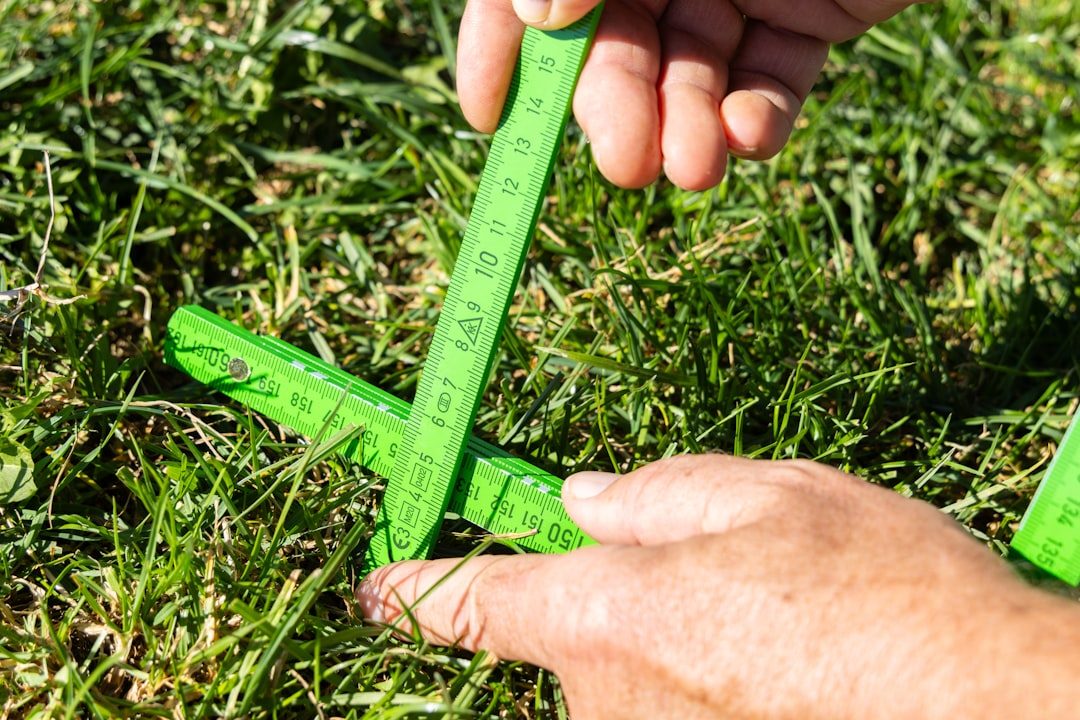
How to Measure Your Lawn Size (And Why Every Product Label Demands It)
 James ThorntonLawn Equipment & Maintenance Expert | 20 Years
As an Amazon Associate we earn from qualifying purchases.
Most homeowners overestimate or underestimate their lawn size by 20 to 40 percent, which leads to wasted product, burned grass, or thin results. You can measure your lawn accurately using the walk-and-count method, a satellite measurement app, or our free Lawn Size Calculator. Knowing your exact square footage is the single most important step before buying fertilizer, seed, or herbicide.
Why Lawn Size Is the Number Every Product Label Asks For
Pick up any bag of fertilizer, any jug of weed killer, or any box of grass seed. Somewhere on the label you will find the same question: "How many square feet is your lawn?" In my experience working with homeowners, at least half of them guess. And guessing is where problems start.
Apply too much fertilizer and you risk burning your turf, polluting local waterways, and wasting money. Apply too little and you end up wondering why your neighbor's lawn looks better than yours despite using the same product. The difference almost always comes down to measurement.
I have spent 15 years helping homeowners get this right, and I can tell you that an accurate lawn measurement pays for itself on the very first application. Let me walk you through how to do it.
Three Ways to Measure Your Lawn
Method 1: The Walk-and-Count Method
This is the old-school approach, and it still works surprisingly well for simple yards. Here is how to do it:
- Walk along the longest side of your lawn and count your steps. Each adult stride is roughly 2.5 to 3 feet.
- Walk along the shorter side and count again.
- Multiply the two numbers together to get your square footage.
- If your yard is not a perfect rectangle, break it into smaller rectangles, triangles, or circles and measure each section separately.
For example, if your front yard is roughly 40 steps long and 30 steps wide, that is about 100 feet by 75 feet, or 7,500 square feet. Simple enough for a rectangular lot.
The downside? Irregular shapes, curved beds, driveways, and patios make this method tedious. You also need to subtract any non-grass areas like garden beds, walkways, and your house footprint.
Method 2: Satellite and App-Based Measurement
Modern satellite tools let you trace your lawn boundary on a map and calculate the area instantly. Google Earth is free, and several lawn care apps offer measurement features. These tools are great for getting a ballpark number without stepping outside.
Several brands offer their own versions too. If you have searched for the Scotts lawn size calculator, that is one of these satellite tracing tools, and our free Lawn Size Calculator does the same measurement without pushing you toward one product line.
The accuracy depends on satellite image quality and how carefully you trace your lawn edges. In my experience, satellite measurements tend to be within 5 to 10 percent of actual size for most suburban lots.
Method 3: Use a Dedicated Calculator
The fastest and most reliable option for most homeowners is to use a purpose-built tool. Our Lawn Size Calculator lets you enter your property dimensions, subtract hardscape areas, and get an accurate number in under a minute. It accounts for irregular shapes and automatically handles the math that trips most people up.
How to Calculate the Square Footage of Your Lawn
Once you have your measurements, calculating the square footage of your lawn comes down to one simple formula: length times width. The trick is handling yards that are not a clean rectangle, which is almost all of them. Here is the step method I walk homeowners through to figure out the square footage of any yard.
- Break your lawn into sections. Look at your yard and divide it into simple shapes you can measure: rectangles for the main areas, triangles for the corners, and half-circles for curved edges. The front yard, back yard, and side strips are usually three separate sections to start.
- Measure the length and width of each section. Use a tape measure, a measuring wheel, or the walk-and-count method for each piece. Write each measurement down so you do not lose track.
- Multiply length by width for each section. A rectangle that is 40 feet by 25 feet is 1,000 square feet. For a triangle, multiply length by width and then divide by two. For a circle, the area is roughly 3.14 times the radius times the radius.
- Add all the sections together. Sum the square footage of every section to get your total lawn area. This combined number is what you put on the product label math.
- Subtract the non-grass areas. Take out the footprint of your house, driveway, patio, sidewalks, and garden beds. What remains is your true lawn square footage.
To calculate the square footage of a yard quickly, here is a worked example. Say your back lawn is 50 feet by 30 feet, that is 1,500 square feet. Your front lawn is 40 feet by 25 feet, another 1,000 square feet. A side strip runs 30 feet by 10 feet, adding 300 square feet. Add them together and you get 2,800 square feet of grass. If figuring out the square footage of your yard by hand feels error-prone, our Lawn Size Calculator does every step for you, including the section math and the hardscape subtraction.
What Is the Average Lawn Size?
The average lawn size in the United States is roughly 10,000 to 20,000 square feet for a typical suburban property, though that includes the whole lot. The actual grass area is usually smaller once you remove the house and hardscape. In denser neighborhoods and newer developments, lawns of 5,000 to 8,000 square feet of grass are common, while rural and large-lot properties can run well over an acre, which is 43,560 square feet.
Breaking it down further, the average American backyard runs around 8,500 square feet, or about 0.2 acres, and the number swings quite a bit by region. Midwestern backyards average closer to 9,500 square feet, Pacific coast backyards sit closer to 6,500 square feet, and dense urban lots are often under 5,000 square feet total. Front yards are typically the smaller share of the property, often a third or less of the total yard space, since builders push most of the usable green space behind the house.
Knowing where your lawn falls helps you sanity-check your own measurement, but never substitute the average for measuring your own yard. Two houses on the same street can differ by thousands of square feet.
How Big Is 1,000 Square Feet of Lawn?
1,000 square feet is the unit almost every fertilizer, seed, and herbicide label is built around, so it helps to picture it. A patch of grass 1,000 square feet in size is about 32 feet by 32 feet, or roughly the size of a two-and-a-half car garage. It is also close to the footprint of a small home or about four parking spaces lined up together. Once you can picture a 1,000-square-foot square in your head, it gets much easier to estimate whether your lawn is two, five, or ten of those units, which is exactly how product labels expect you to think about coverage.
Common Mistakes When Measuring Your Lawn
After years of helping people measure their yards, I see the same mistakes again and again.
Forgetting to Subtract Hardscape
Your property lot size and your lawn size are not the same thing. Your house, driveway, patio, garden beds, and sidewalks all reduce the actual grass area. A 10,000-square-foot lot might only have 6,000 square feet of grass. If you apply product for 10,000 square feet, you are over-applying by nearly 70 percent.
Rounding Up "Just to Be Safe"
Homeowners love to round up. "I think it's about 5,000 square feet, so I'll buy the 7,500-square-foot bag." This is not being safe. With fertilizer, more is not better. Excess nitrogen burns grass, encourages thatch buildup, and can contaminate groundwater.
Measuring Once and Never Again
Landscapes change. You added a patio last summer, expanded a garden bed, or removed a tree and filled the area with sod. Remeasure any time you make changes to your yard layout.
Why Accurate Measurement Matters for Every Product
Fertilizer
Fertilizer rates are expressed as pounds of nitrogen per 1,000 square feet. If your lawn is 5,000 square feet and you apply enough product for 8,000 square feet, you are delivering 60 percent more nitrogen than the grass can use. That excess has to go somewhere, and it usually ends up in stormwater runoff or sitting in the soil causing root damage.
Grass Seed
Seeding rates vary by grass type, but they all depend on square footage. Kentucky bluegrass might call for 2 to 3 pounds per 1,000 square feet for overseeding, while tall fescue needs 6 to 8 pounds. Get the area wrong and you will either have bare spots or waste expensive seed.
Herbicides and Pesticides
Herbicide labels are even more critical because you are dealing with chemicals designed to kill plants. Overapplication can damage your lawn, harm ornamentals, and violate EPA label requirements. The label is the law, and the label requires accurate square footage.
Recommended products
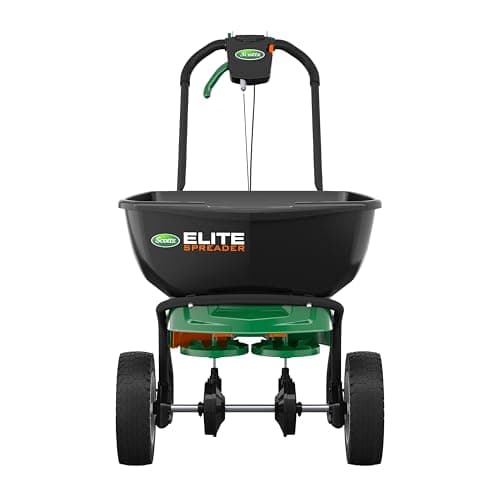
Scotts Elite Spreader
A twin-rotor broadcast spreader with a six-foot pattern and calibrated rate settings.
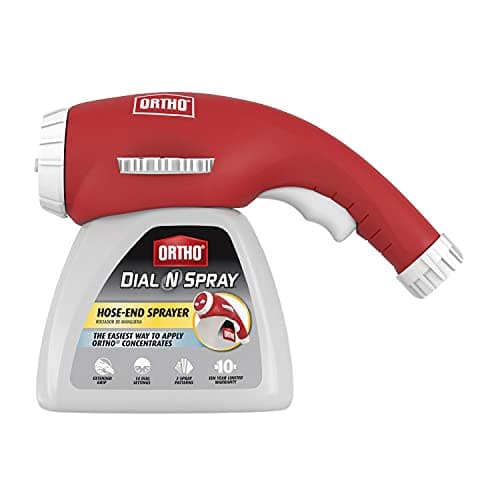
Ortho Dial N Spray Hose-End Sprayer
A hose-end sprayer with fourteen dilution settings for liquid concentrates.
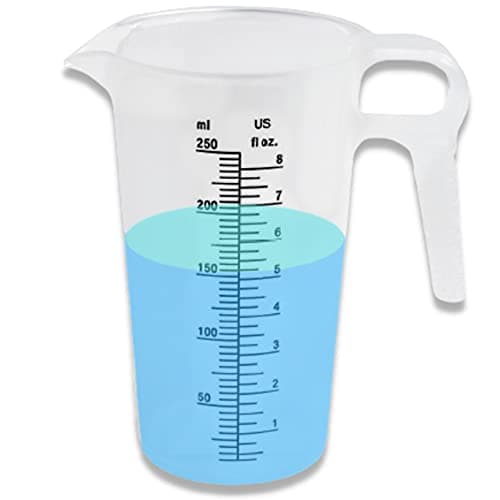
ACCUPOUR 8oz Measuring Pitcher
A small graduated pitcher for measuring concentrate in ounces and milliliters.
Pro Tips for Getting the Best Measurement
- Break irregular yards into shapes. Rectangles, triangles, and half-circles are your friends. Measure each section and add them together.
- Use a measuring wheel for precision. If you have a large or complex property, a measuring wheel from your local hardware store costs under $30 and gives you exact distances.
- Double-check with satellite imagery. After measuring by hand, pull up your address on Google Earth to sanity-check your numbers.
- Write it down. Keep your lawn measurements somewhere accessible. You will reference them multiple times per season.
Putting Your Measurement to Work
Once you know your lawn's square footage, every product decision becomes easier. You can buy the right bag size, mix the correct concentration of liquid products, and calibrate your spreader with confidence.
If you have not measured your lawn yet, or if you have been guessing, take two minutes and use our Lawn Size Calculator right now. It is the foundation for everything else you do with your lawn this season.
Already know your lawn size and ready for the next step? Check out our guide on essential lawn care tools every homeowner needs to make sure you have the right equipment, or read how to start a lawn from scratch in 2025 if you are building from the ground up.
Free Lawn Care Tools
Use the walk-and-count method. Walk along each side of your lawn, counting your steps. Each adult stride is roughly 2.5 to 3 feet. Multiply the length by the width to get your approximate square footage. For irregular shapes, break your lawn into smaller rectangles and triangles, measure each one, and add them together.
The three easiest ways to measure your yard size are pacing it off (count your steps along each side and multiply, with each stride roughly 2.5 to 3 feet), tracing your lawn on a satellite map like Google Earth, or using a free online lawn size calculator. Whichever method you choose, break irregular yards into simple rectangles and triangles, measure each section, add them together, and subtract non-grass areas like the driveway and garden beds.
To calculate the square footage of a lawn, break the yard into simple shapes, measure the length and width of each section, then multiply length by width for each one. A rectangle 40 feet by 25 feet is 1,000 square feet. Add all the sections together to get the total, then subtract non-grass areas like the house, driveway, patio, and garden beds. What remains is your true lawn square footage. A lawn size calculator does this math for you automatically.
The average lawn size in the United States is roughly 10,000 to 20,000 square feet when you count the whole lot, though the actual grass area is smaller once you remove the house and hardscape. In newer and denser neighborhoods, 5,000 to 8,000 square feet of grass is common, while rural and large-lot properties can exceed an acre, which is 43,560 square feet. Always measure your own yard rather than relying on the average, since two homes on the same street can differ by thousands of square feet.
The average American backyard is around 8,500 square feet, or roughly 0.2 acres, though it varies a lot by region. Midwestern backyards average closer to 9,500 square feet, while Pacific coast backyards run closer to 6,500 square feet, and dense urban lots are often under 5,000 square feet total. Remember that backyard square footage includes patios, decks, and garden beds, so the actual grass area you treat is usually smaller.
1,000 square feet of lawn is about 32 feet by 32 feet, roughly the size of a two-and-a-half car garage or about four parking spaces lined up together. It is the standard unit most fertilizer, seed, and herbicide labels are built around, so picturing it makes it easier to estimate how many of those units your lawn covers.
No. Your lawn size is your property size minus the footprint of your house, driveway, sidewalks, patios, garden beds, and any other non-grass areas. A 10,000-square-foot lot might only have 5,000 to 7,000 square feet of actual grass.
For most homeowners, getting within 10 percent of your actual lawn size is sufficient. Being off by more than 20 percent can lead to problems like fertilizer burn, bare spots from under-seeding, or wasted herbicide. A dedicated lawn size calculator will get you the most accurate result.
Remeasure whenever you make changes to your landscape, such as adding a patio, expanding garden beds, planting trees, or removing hardscape. Otherwise, measuring once and keeping the number on file is sufficient for ongoing lawn care.

Your lawn plan, in your pocket all season
Grass ID, a season plan, soil-timed reminders, and a lawn journal that remembers what you did. Free on iPhone.
Related Articles
 Lawn Care Tips
When Does Bermuda Grass Turn Green? 2026 Timeline by Region
May 3, 2026•7 min read Lawn Care Tips
Scotts Turf Builder Triple Action Instructions: Complete Application Guide
Mar 29, 2026•6 min read Lawn Care Tips
How Much Does It Cost to Install Sod in 2026? Real Prices Per Square Foot
Sep 16, 2026•6 min read

