
About Centipede Grass
Centipede grass (Eremochloa ophiuroides) has earned its nickname as the "lazy man's grass" because it genuinely performs best when you do less. Less fertilizer. Less mowing. Less fussing. It's the rare lawn grass where the biggest mistake homeowners make is caring for it too much. I've seen it happen over and over: a homeowner moves from a Bermuda lawn to a Centipede lawn and applies the same aggressive fertilizer program. Six months later, they're staring at a declining, thinning lawn wondering what went wrong. The answer is almost always "too much love."
Originally from China, Centipede was introduced to the United States in 1916 and found a happy home in the acidic, sandy soils of the Southeast. It spreads slowly through stolons, forming a medium-density turf with a distinctive apple-green color that's lighter than most other lawn grasses. That lighter color throws off a lot of homeowners. They see it next to their neighbor's dark green Bermuda and think something's wrong. Nothing's wrong. That's just what healthy Centipede looks like.
During my years managing turf across the Southeast, I learned to respect Centipede for what it is: a grass that knows what it wants (acidic soil, low nitrogen, and to be left alone) and punishes you when you give it something different. Once you understand its personality, Centipede is one of the easiest grasses to maintain. The trick is resisting the urge to do more.
Key Characteristics
- Blade width: Medium (3-5mm) with a pointed tip. Wider than Bermuda but noticeably narrower than St. Augustine
- Color: Light green to yellow-green. This is its natural color, not a sign of nutrient deficiency. Some people describe it as apple-green
- Growth habit: Slow spreading via stolons. No rhizomes. Centipede takes its time filling in, which means less mowing but also slower recovery from damage
- Texture: Medium-coarse, with a softer feel underfoot than Bermuda but not as plush as St. Augustine
- Density: Moderate. Not as dense as Bermuda or Zoysia, which means it's less effective at crowding out weeds on its own
- Root depth: Shallow, typically 2-3 inches. This is one of Centipede's weaknesses and affects its drought tolerance
Why Choose Centipede?
If you want a decent-looking lawn without spending every weekend working on it, Centipede is hard to beat. It needs only 1-2 fertilizer applications per year (compared to 4-6 for Bermuda). It grows so slowly that you mow every 10-14 days instead of weekly. It doesn't require a fancy reel mower or regular dethatching. And it actually thrives in the acidic, nutrient-poor soils that stress other grasses.
Centipede is the ideal grass for the homeowner who wants a green lawn, not a showpiece lawn. It won't win any "yard of the month" awards against a well-maintained Bermuda, but it'll look good with a fraction of the effort and expense.
The Honest Trade-offs
- Traffic tolerance: Poor. Centipede doesn't handle heavy foot traffic well at all. If you have kids playing football in the yard or dogs running the same path daily, those areas will thin out and recover slowly
- Slow recovery: Because Centipede spreads slowly, damage from disease, drought, or traffic takes weeks to months to fill in. Bermuda might recover from a bare spot in 2-3 weeks; Centipede takes 6-8 weeks or longer
- Color: That lighter green isn't for everyone. If you want a dark, emerald green lawn, Centipede will always disappoint you
- Cold tolerance: Moderate. Centipede handles cold better than St. Augustine but worse than Bermuda or Zoysia. Hard freezes below 15°F can cause significant damage
- Shade tolerance: Moderate at best. Centipede needs 4-5 hours of sunlight. For deep shade, St. Augustine is a better choice
- pH sensitivity: Centipede requires acidic soil (pH 4.5-6.0). If your soil is alkaline, Centipede will struggle no matter what else you do right
- Pest vulnerability: Ground pearls and nematodes are serious threats with no effective chemical controls. You either tolerate the damage or replace affected areas
How to Identify Centipede Grass
What Centipede Grass looks like
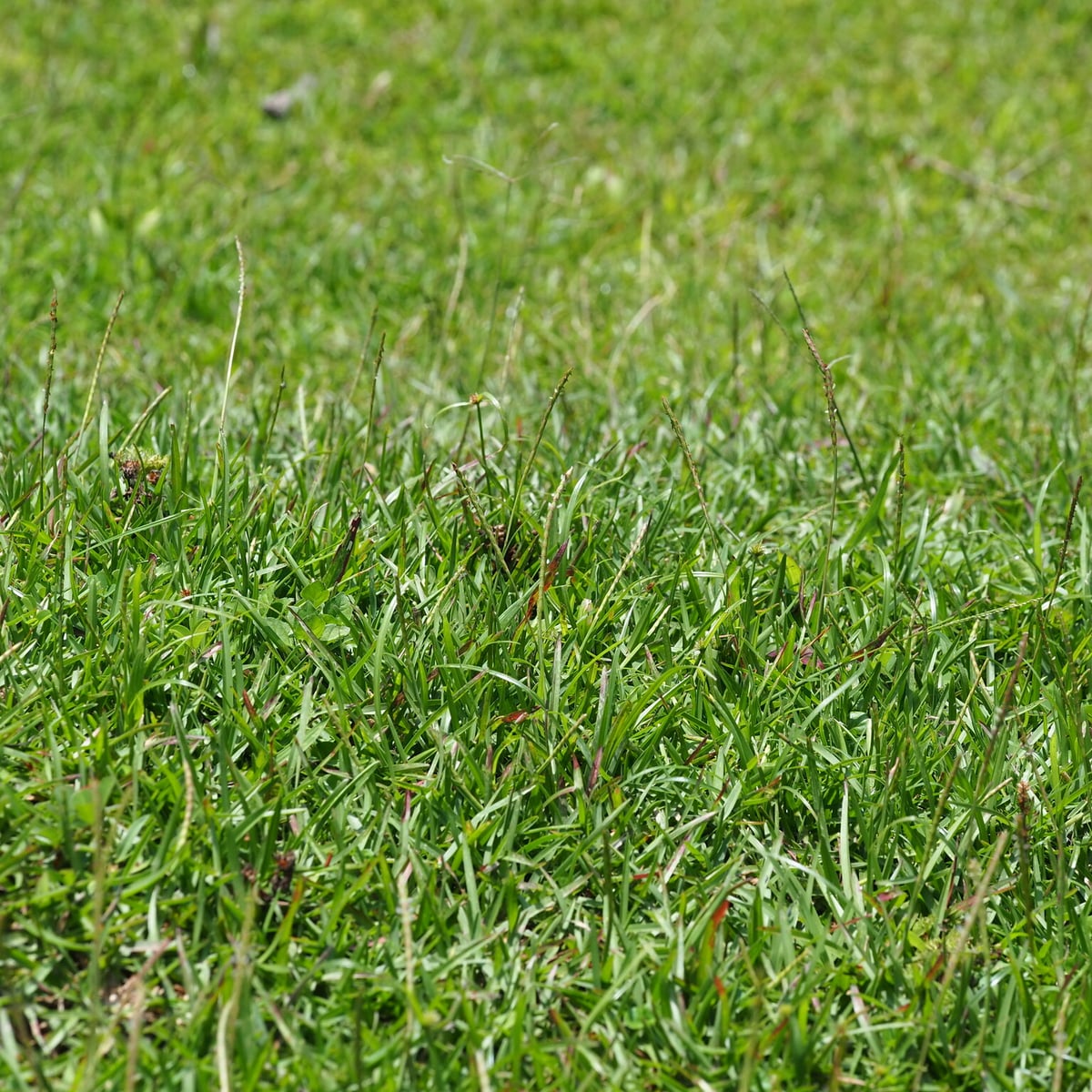
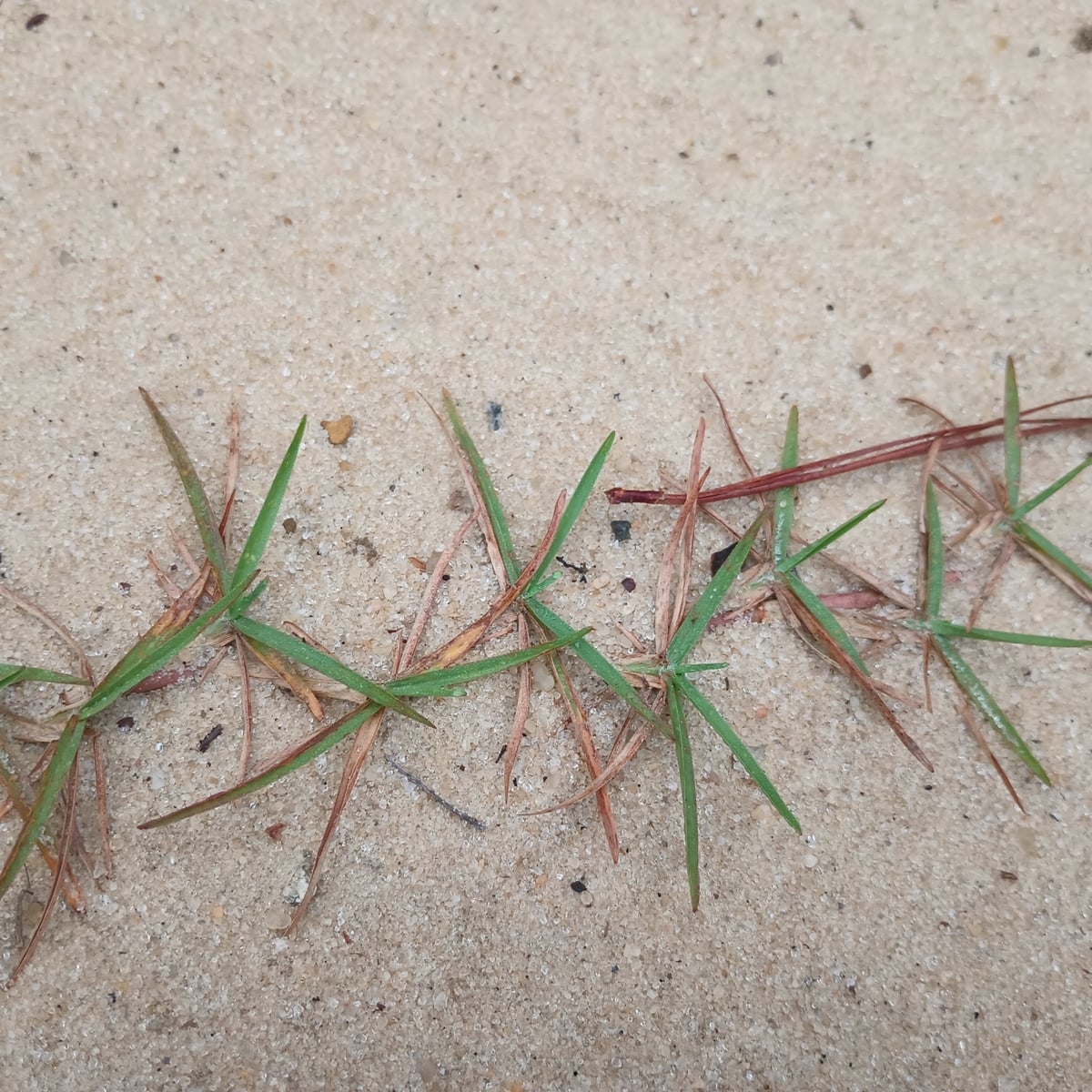
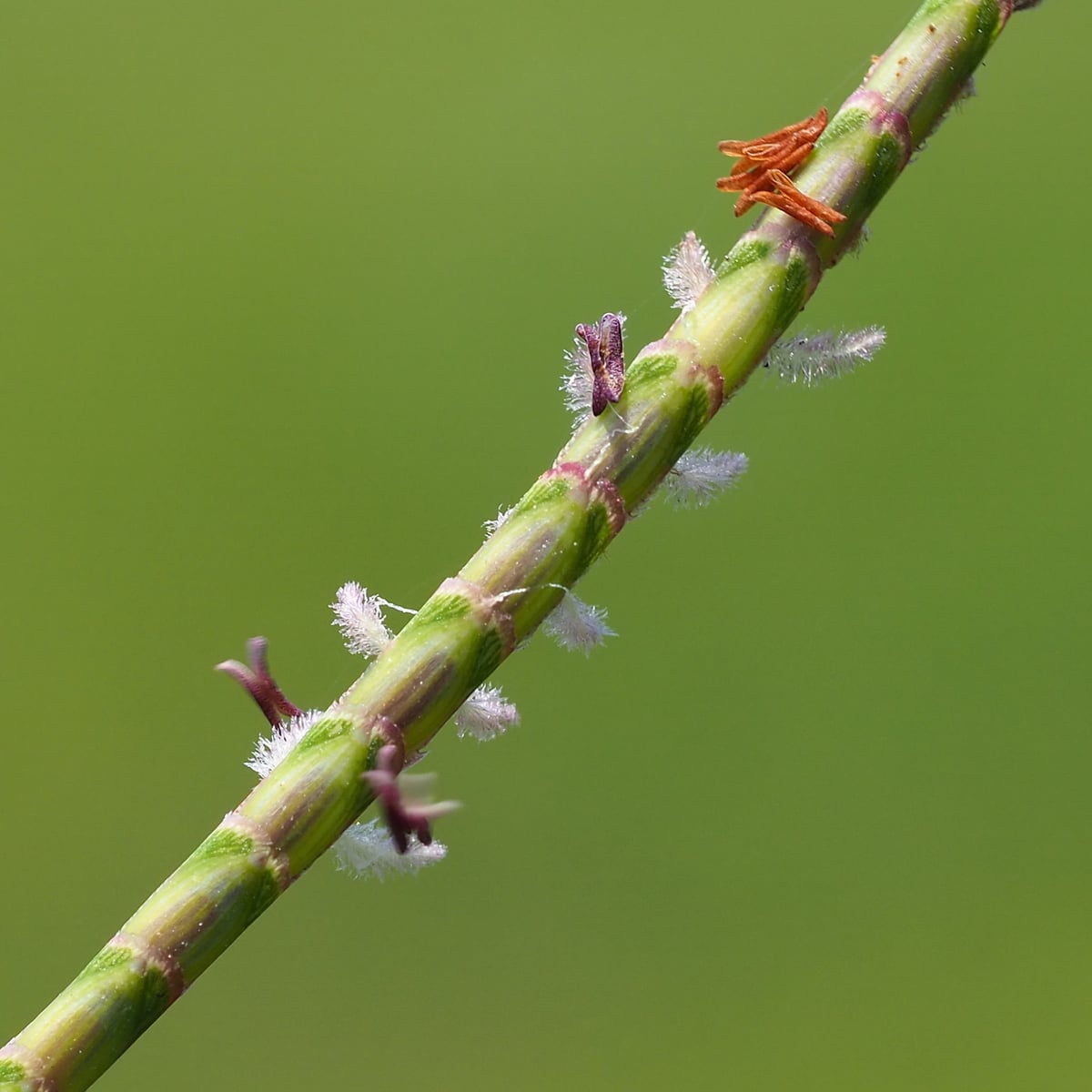
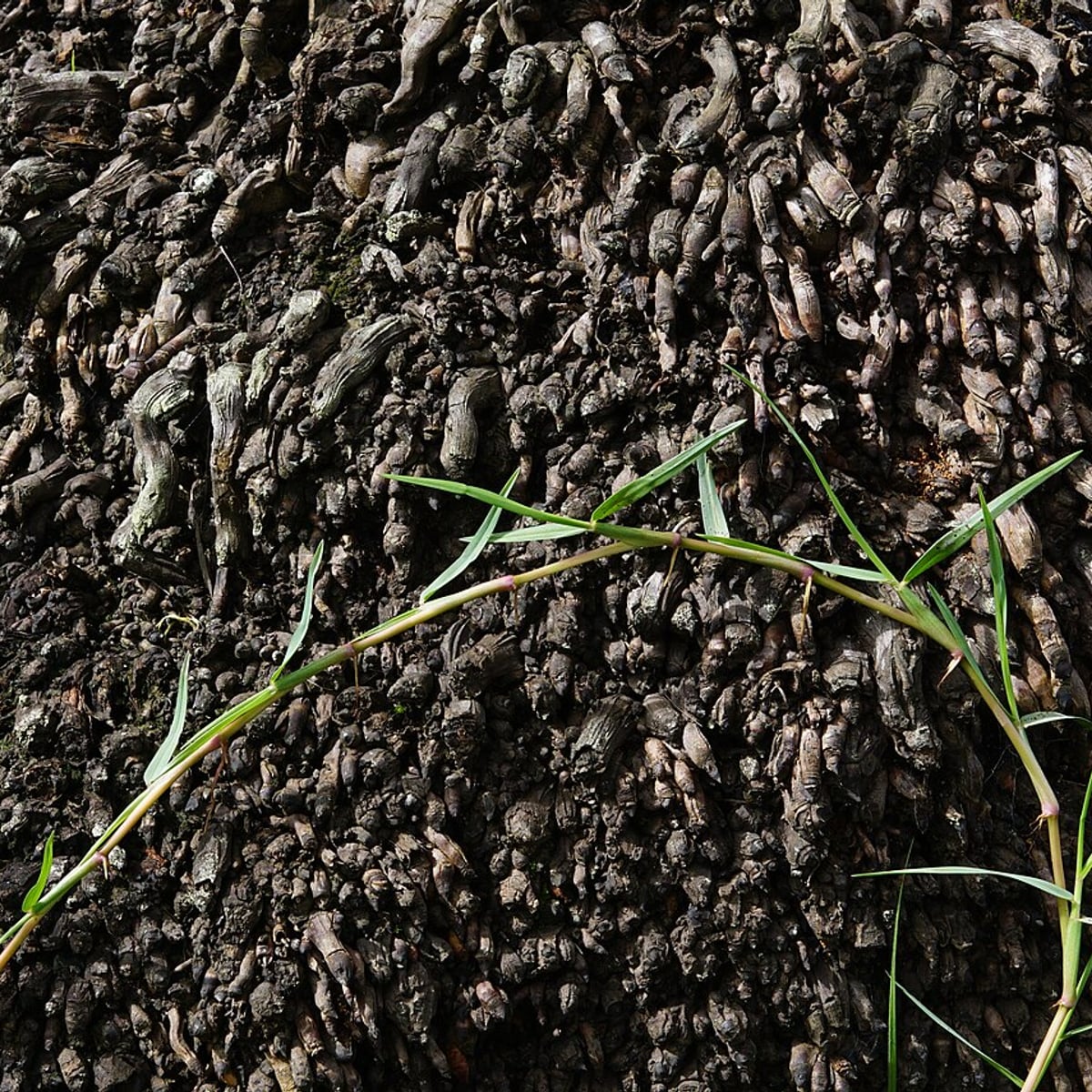
Centipede is moderately easy to identify once you know what to look for, but it gets confused with St. Augustine and even Bermuda more often than you'd expect. The key distinguishing features are its color, blade width, and growth speed.
The Color Test (The Easiest Way)
Stand back and look at the overall color of your lawn compared to neighboring lawns. Centipede has a distinctly lighter green than Bermuda, Zoysia, or St. Augustine. It's almost apple-green or yellow-green, sometimes described as "lime green" in certain lighting. If your lawn is noticeably lighter than every Bermuda lawn on your street, there's a good chance you have Centipede. This color difference is most obvious in late spring and early summer when all grasses are actively growing.
The Blade Width Test
Pull a blade and examine it. Centipede blades are medium width (3-5mm), falling between the narrow blades of Bermuda (1-2mm) and the broad blades of St. Augustine (5-8mm). The blade tip is bluntly pointed, not rounded like St. Augustine and not as sharply pointed as Bermuda.
The Stolon Test
Look at the base of the turf and along edges where the grass meets hardscape. Centipede spreads via above-ground stolons, but they're distinctly thinner and slower-growing than St. Augustine stolons. Centipede stolons are typically 1-2mm in diameter with short internodes (the spaces between leaf nodes). The stolons have a somewhat flat, creeping appearance close to the ground.
The Seed Head Test
If your grass is producing seed heads (common in late spring and early summer), Centipede's seed head is highly distinctive: a single spike rising above the canopy with seeds arranged alternately along one side. It resembles a tiny centipede, which is exactly how the grass got its name. No other common lawn grass produces a seed head quite like this. Bermuda seed heads branch into 3-6 fingers. St. Augustine rarely produces visible seed heads. But Centipede's single, segmented spike is unmistakable.
The Growth Speed Test
Centipede grows noticeably slower than other warm-season grasses. If your neighbor's Bermuda needs mowing twice a week while your grass barely needs it every 10 days, you might have Centipede. This slow growth rate is one of its identifying characteristics and one of its biggest benefits.
Centipede vs. Common Look-alikes
Centipede vs. St. Augustine: St. Augustine has much broader blades (nearly twice as wide), darker green color, thicker stolons, and rounded blade tips. If the blades are wide enough to easily see individually from a standing position, it's probably St. Augustine, not Centipede.
Centipede vs. Bermuda: Bermuda has narrower blades, darker green color, much faster growth, and spreads through both stolons and underground rhizomes. Bermuda also tolerates very low mowing (under 1 inch), while Centipede should never be cut that short.
Centipede vs. Carpetgrass: These two look similar, but Carpetgrass has a slightly broader blade and produces a tall, branched, V-shaped seed head rather than Centipede's single spike. Carpetgrass also prefers wetter conditions.
Not sure what you're looking at? Upload a photo to our free grass identifier for an instant analysis.
Types & Varieties
Centipede has fewer cultivars than Bermuda or zoysia, and the differences are mostly about cold tolerance and how you establish the lawn. Four cover almost every situation.
- Common Centipede: the default, widely available as seed or sod, and a good fit for most of the Southeast.
- TifBlair: the one to choose at the cold edge of centipede's range, since it survives colder winters into zone 7, with slightly darker color and a bit more vigor. The standard pick for the upper South.
- Oaklawn: moderate cold tolerance and a finer texture, but slower to spread.
- Santee: dense, uniform growth that is popular for sod production.
How to choose: if you are anywhere near the northern limit of centipede, plant TifBlair. Everywhere else, Common Centipede (cheapest, and it seeds readily) or Santee sod will do the job. Unlike most fine-textured zoysias, centipede seeds well, so seeding is a genuine budget option here rather than a compromise.
Best Zones & Climate
Centipede grass performs best in USDA Zones 7-9, spanning the Southeast from eastern Texas through the Carolinas. Its range overlaps with both Bermuda and St. Augustine, but Centipede carves out its own niche in areas with acidic soil and homeowners who want low maintenance.
Ideal Climate Conditions
- Air temperature: 75-90°F for optimal growth. Centipede's growth peaks are less dramatic than Bermuda's. It doesn't grow explosively in heat; it maintains a steady, moderate pace
- Soil temperature: 65-70°F for active growth. Centipede is one of the last warm-season grasses to green up in spring, so don't panic if your Bermuda-growing neighbors are green 2-3 weeks before you
- Heat tolerance: Good, but not exceptional. Centipede can struggle in extreme heat (100°F+) combined with low humidity, which is why it's less common in west Texas and the dry Southwest. In the humid Southeast, heat is rarely a problem
- Cold tolerance: Moderate. Centipede goes dormant below 50°F and suffers damage below 15°F. It handles cold better than St. Augustine but worse than Bermuda or Zoysia. Extended freezes below 10°F can kill it
- Humidity: Centipede does well in the moderate to high humidity typical of the Southeast. Very low humidity combined with heat can cause stress
Where Centipede Thrives
The Southeast is Centipede country: Georgia, the Carolinas, Alabama, Mississippi, Louisiana, and northern Florida. These areas share the combination of naturally acidic soil, warm summers, moderate winters, and reasonable rainfall that Centipede needs. Georgia and the Carolinas are particularly strong Centipede regions, where the acidic red clay and sandy loam soils hit the pH sweet spot naturally.
Where Centipede Struggles
Centipede is less common in Texas west of Houston (soils tend toward alkaline), south Florida (too tropical, St. Augustine dominates), and anywhere with naturally alkaline or calcareous soil. If your soil pH is above 6.5 without amendment, think carefully before choosing Centipede. You'll be fighting the soil chemistry constantly.
The Northern Edge
In Zone 7 (upper Carolinas, northern Georgia, parts of Tennessee), Centipede is possible but risky at the margins. It handles occasional dips to 10-15°F but doesn't tolerate sustained cold the way Bermuda does. In these borderline areas, choose planting locations with southern exposure and protection from north winds. Be prepared for occasional winter damage after especially harsh winters.
Shade Tolerance
Centipede has moderate shade tolerance, needing at least 4-5 hours of sunlight per day. It handles light, dappled shade reasonably well but thins out noticeably in heavy shade (less than 4 hours of light). For deep shade, St. Augustine is a significantly better choice. In areas that get 4-5 hours of filtered light, Centipede can work if you raise the mowing height to 2.5 inches and reduce fertilizer expectations. Just know that the turf will be thinner and less uniform than in full sun.
Rainfall and Irrigation Needs
Centipede performs best in areas that receive 30-50 inches of annual rainfall, which conveniently describes most of the Southeast. In these regions, you may only need supplemental irrigation during occasional dry stretches. If you're in an area with less than 30 inches of annual rainfall, you'll need regular irrigation to maintain Centipede, which starts to undermine its "low maintenance" advantage.
Soil Preparation & pH
This is where Centipede is truly unique, and honestly, this section might be the most important part of this entire guide. While most lawn grasses prefer neutral to slightly acidic soil (pH 6.0-7.0), Centipede actively prefers strongly acidic conditions. Getting the pH right is the single most important factor in Centipede success. I cannot overstate this. I've seen beautiful Centipede lawns decline and die for no apparent reason, and the cause was almost always a pH problem.
Get a Soil Test First
Before you plant Centipede, before you buy a single bag of fertilizer, get a soil test. Contact your local extension office (in Georgia, that's UGA Extension; in the Carolinas, NC State or Clemson). The test costs $10-25 and tells you your soil pH, nutrient levels, and organic matter content. For Centipede, the pH result is the number that matters most.
Ideal Soil Conditions
- pH range: 4.5-6.0 (strongly acidic to slightly acidic). The sweet spot is 5.0-5.5. At this pH, Centipede absorbs nutrients efficiently, maintains its natural color, and resists disease
- Soil type: Sandy, low-fertility soils are actually ideal. Centipede evolved in nutrient-poor conditions and performs best in them. Rich, fertile garden soil can actually cause problems by encouraging too much growth
- Organic matter: Low to moderate (1-3%) is fine. Centipede doesn't need the 3-5% organic matter that cool-season grasses thrive in
- Drainage: Good drainage is important. Centipede's shallow root system is vulnerable to root rot in waterlogged conditions
The pH Problem: Why It Matters So Much
When soil pH rises above 6.5, Centipede loses its ability to absorb iron from the soil, even though iron may be present in adequate amounts. The iron gets chemically "locked up" in alkaline conditions. The result is iron chlorosis: the grass turns yellow between the veins while the veins remain green. In severe cases, the entire lawn turns a sickly yellow.
Here's where the dangerous cycle begins. The homeowner sees yellow grass and thinks "it needs fertilizer." They apply nitrogen. The grass temporarily greens up (nitrogen itself provides some green color), but the extra growth depletes the grass's energy reserves while the underlying pH problem remains. The lawn looks good for 2-3 weeks, then declines further. More fertilizer gets applied. The cycle repeats. This is how "Centipede decline" develops, and it kills more Centipede lawns than any disease or pest.
The Cardinal Rule: Do NOT Lime a Centipede Lawn
Lime raises soil pH. That's the exact opposite of what Centipede wants. This is the number one killer of Centipede lawns, and I've watched it happen dozens of times. Your neighbor with Bermuda grass is liming their lawn every fall because Bermuda prefers pH 6.0-7.0. You figure, "If it's good for their lawn, it's good for mine." You spread lime on your Centipede. Within a few months, the iron chlorosis starts. The lawn yellows. You add more fertilizer. The decline accelerates. All because of lime that should never have been applied.
The only scenario where lime belongs on a Centipede lawn is if a soil test shows pH below 4.5, which is extremely rare in residential settings. Below 4.5, even Centipede struggles, and a small lime application to bring pH up to 5.0-5.5 makes sense. But this is uncommon.
Lowering Soil pH (When Needed)
If your soil test shows pH above 6.0, you'll need to lower it before planting Centipede. Here's how:
- Elemental sulfur: The standard amendment for lowering pH. Apply at rates recommended by your soil test (typically 5-10 lbs per 1,000 sq ft to lower pH by one point in sandy soil, 15-20 lbs in clay soil)
- Timing: Apply sulfur 3-6 months before planting. It takes time for soil bacteria to convert sulfur into the sulfuric acid that actually lowers pH. This is not an overnight fix
- Iron sulfate: Acts faster than elemental sulfur but the effect is shorter-lived. Good for a quick boost while waiting for elemental sulfur to take effect
- Acidifying fertilizers: Ammonium sulfate (21-0-0) has an acidifying effect on soil. Using this as your nitrogen source provides double duty: feeding the grass and helping maintain acidic conditions
- Retest: After 3-4 months, retest the soil to see if your amendments have brought pH into the target range. Adjust as needed
Preparing Soil for New Centipede
- Get a soil test and correct pH issues first. This step cannot be skipped
- Kill existing vegetation (glyphosate, wait 2 weeks for complete die-off)
- Grade the area for proper drainage (minimum 1% slope away from buildings)
- If pH is in range, prepare a smooth, firm seedbed by raking and light rolling
- Do not add rich compost or topsoil in heavy amounts. Centipede prefers lean soil
- Apply a low-phosphorus starter fertilizer just before seeding or sodding
Recommended Products
- 1Check price
 Top pick
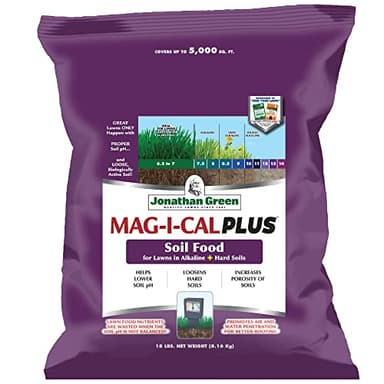
Jonathan Green Mag-I-Cal Plus for Lawns in Alkaline & Hard Soil
Lawn soil amendment for high-pH, compacted soils when you need to loosen the soil and help move pH in the right direction.
- 2Check price
 Best value
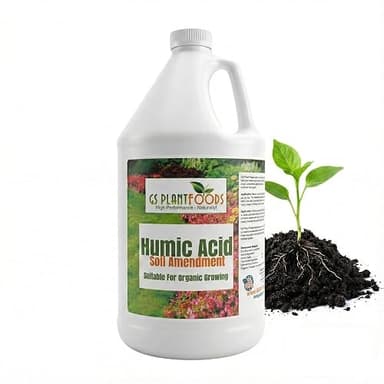
GS Plant Foods Liquid Humic Acid
Leonardite-derived humic acid that improves soil structure and nutrient availability. OMRI listed, 1 gallon.
As an Amazon Associate we earn from qualifying purchases.
Fertilizer Program
Here's the golden rule for Centipede: less is more. This isn't a catchy slogan. It's the fundamental truth of Centipede care. Centipede grass actually performs worse with heavy fertilization. Over-fertilizing triggers "Centipede decline," a condition where the grass looks great for a few weeks (that burst of green growth from excess nitrogen), then rapidly deteriorates as the top growth outpaces the shallow root system's ability to support it. This is the most common way homeowners kill their Centipede lawns, and I've seen it happen enough times that I lead every Centipede consultation with this warning.
Annual Fertilizer Requirements
- Nitrogen: 1-2 lbs per 1,000 sq ft per year. That's it. Compare that to Bermuda (4-6 lbs) or even St. Augustine (2-4 lbs). Centipede needs the least nitrogen of any common lawn grass
- Phosphorus: Based on soil test only. Usually not needed, and many Southeast soils already have adequate phosphorus. Excess phosphorus can raise pH, which creates problems for Centipede
- Potassium: 1-2 lbs per 1,000 sq ft per year. Potassium is actually more important than nitrogen for Centipede. It strengthens cell walls, improves cold tolerance, and enhances drought resistance without the risks of excess nitrogen
- Iron: This is your color enhancer. If Centipede looks yellow, apply chelated iron before adding more nitrogen. Iron deepens the green without pushing excessive growth
Seasonal Fertilizer Schedule
Late Spring (Soil Temperature Above 65°F, Grass Fully Green)
This is your primary fertilizer application, and for many Centipede lawns, it's the only one you need all year. Apply 0.5-1 lb N per 1,000 sq ft of slow-release fertilizer. Use a formula with low or zero phosphorus and includes iron, like a 15-0-15 with iron or a 5-0-20 with iron. The slow-release form is important because it feeds the grass gradually over 6-8 weeks rather than dumping all the nitrogen at once.
Wait until the grass is fully green and actively growing before this application. In most of the Centipede growing range, that's mid-May to early June. If you apply fertilizer while the grass is still emerging from dormancy, you're feeding weeds (which green up earlier) while the Centipede can't even use it yet.
Midsummer (July, Optional)
Here's where restraint matters. Look at your lawn honestly. If it looks healthy and green (remember, "green" for Centipede means light green, not dark green), skip this application entirely. Only apply 0.5 lb N per 1,000 sq ft if the grass is genuinely thin or struggling. Most Centipede lawns do fine with just the single late spring application. If you're applying a second round "just because," you're probably overfertilizing.
Fall and Winter
Do not fertilize Centipede in fall or winter. Period. Fall nitrogen pushes tender new growth that's vulnerable to freeze damage. It also feeds winter weeds while your Centipede is dormant and can't compete. I know some fertilizer bags say "apply in September" for warm-season grasses, but that advice is aimed at Bermuda and Zoysia, not Centipede. For Centipede, the growing season ends in August for fertilizer purposes.
The Iron Trick for Color
If you want your Centipede to look greener without the risks of excess nitrogen, iron is your answer. A foliar iron application (chelated iron or ferrous sulfate at 2 oz per gallon per 1,000 sq ft) can deepen the color from light green to a more satisfying medium green within 24-48 hours. The effect lasts 2-4 weeks. This gives you the visual improvement without pushing excessive growth, thatch buildup, or disease susceptibility. I used this approach constantly on managed properties where clients wanted a richer green but the agronomics demanded low nitrogen.
What NOT to Do: Common Fertilizer Mistakes
- Do not use "weed and feed" products. They typically contain too much nitrogen for Centipede, and the herbicide may be applied at the wrong time for your weed issues. Fertilize and treat weeds as separate operations
- Do not fertilize in fall or winter. This bears repeating because it's the second most common Centipede-killing mistake (after liming)
- Do not try to make Centipede dark green. If you keep adding nitrogen chasing a dark green color, you'll push past the point of benefit into decline. Centipede's natural color is light green. Accept it or choose a different grass
- Do not use high-phosphorus fertilizers. Phosphorus raises soil pH over time, working against Centipede's acidic soil preference
- If the grass turns yellow, try iron first, not more nitrogen. Yellowing in Centipede is usually iron chlorosis from high pH, not nitrogen deficiency. Adding nitrogen to a pH problem makes things worse, not better
- Do not follow your Bermuda neighbor's fertilizer schedule. Bermuda needs 3-4 times more nitrogen than Centipede. What's healthy for their lawn will kill yours
The Ideal Fertilizer Product
Look for a fertilizer with these characteristics: slow-release nitrogen source, zero or very low phosphorus, includes potassium, and contains iron. A ratio like 15-0-15 or 5-0-20 with iron is close to ideal. Some products are specifically marketed for Centipede and already have this formulation. Ammonium sulfate (21-0-0) is another good option because it provides nitrogen while acidifying the soil, which Centipede appreciates.
Recommended Products
- 1Check price
 Top pick
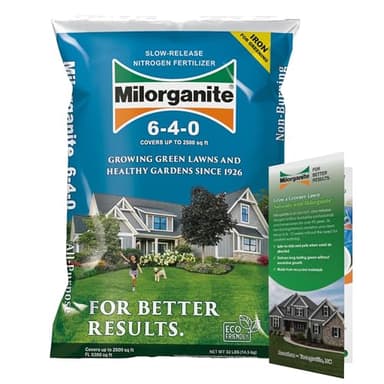
Milorganite 6-4-0 (32 lb)
Lower-nitrogen, slow-release option that is a better fit for centipede and other lawns that burn easily with aggressive feeding.
- 2Check price
 Best value
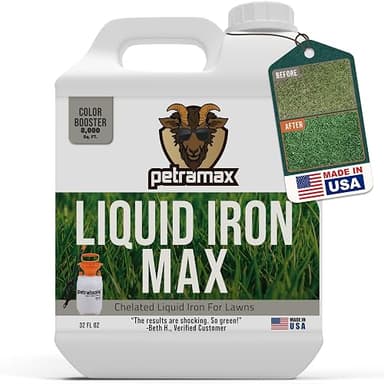
PetraTools Liquid Iron for Lawns
Chelated liquid iron for deep green color without pushing nitrogen growth. EDTA-free, 32 oz concentrate.
As an Amazon Associate we earn from qualifying purchases.
Month-by-Month Care Calendar
Centipede's care calendar is refreshingly simple compared to Bermuda or even Zoysia. There are fewer tasks, fewer products to buy, and fewer decisions to make. That's the whole point of this grass. Here's what each season looks like.
Winter (December to February)
Centipede is dormant and brown. This is your "do nothing" season, and for Centipede, doing nothing is exactly right.
- Leave it alone. Do not fertilize, mow, or apply herbicides to dormant Centipede
- Avoid heavy foot traffic on frozen turf. Ice crystals can shatter grass crowns, and Centipede's slow recovery means that damage lingers well into summer
- Resist the urge to apply lime just because the lawn looks brown. It's dormant, not dying. Lime will create real problems when the grass wakes up
- This is a great time to get a soil test so you have results before spring
- Service your mower: sharpen the blade, change the oil, and clean the deck. For Centipede, a sharp blade matters because the medium-width blades show ragged cuts clearly
Early Spring (March to April)
Centipede is one of the last warm-season grasses to green up in spring. Don't panic if your neighbor's Bermuda is green and your Centipede still looks brown. Centipede waits until soil temperatures are solidly above 65°F before committing to growth. That's typically 2-3 weeks later than Bermuda.
- Apply pre-emergent herbicide when soil temperature reaches 55°F at a 4-inch depth. This prevents crabgrass and other summer annual weeds. In the Centipede growing range, that's typically mid-March to early April
- Do not fertilize yet. Wait until the lawn is completely green and actively growing, which is usually May or even early June
- Do not attempt to "speed up" green-up with fertilizer. Early nitrogen feeds weeds while Centipede can't use it
- If you see large dead patches that show no signs of green by mid-May, those areas may have winter-killed. You'll need to reseed or plug those spots
Late Spring (May to June)
This is when Centipede finally hits its stride, and it's your window for the major care tasks of the year.
- First (and possibly only) fertilizer application once the lawn is fully green and soil temps are above 65°F. Apply 0.5-1 lb N per 1,000 sq ft of slow-release fertilizer with iron
- Begin regular mowing at 1.5-2 inches. Centipede grows slowly enough that you may only need to mow every 10-14 days even during late spring
- Start irrigation if rainfall drops below 1 inch per week. Water deeply when you do water, then let the soil dry before the next session
- This is the ideal time for seeding, sodding, or plugging new Centipede areas. Soil is warm, the full growing season is ahead, and establishment conditions are optimal
- Spot-treat any broadleaf weeds that escaped pre-emergent. Use products safe for Centipede at the lowest label rate
Summer (July to August)
Centipede continues growing at its characteristic slow pace. Your job is mostly to mow, water when needed, and monitor for problems.
- Mow every 10-14 days at 1.5-2 inches. Centipede's slow growth means your weekend mowing schedule is relaxed compared to Bermuda owners
- Water only when the grass shows drought stress (dull color, footprinting, blade wilting). Don't water on a fixed schedule. Water when the grass tells you it needs it
- Optional second fertilizer if the lawn looks genuinely thin or stressed (0.5 lb N per 1,000 sq ft maximum). If it looks healthy, skip it entirely
- Monitor for ground pearls and nematodes. Signs include irregular thin or dead patches that don't respond to water or fertilizer. Unfortunately, there are no effective chemical treatments for either pest
- Watch for spittlebugs (white frothy masses on stems). Usually cosmetic, but heavy infestations can damage the turf
Early Fall (September to October)
- Growth slows significantly as day length decreases and temperatures cool
- Reduce mowing frequency to match the slower growth. You may only need to mow every 2-3 weeks
- Do not fertilize. The season for Centipede fertilization ended in July at the latest
- Apply fall pre-emergent for winter annual weeds (Poa annua, henbit, chickweed). Timing is typically late September to early October
- This is a good time to get a soil test if you didn't do one in winter. Results will guide your spring fertility plan
Late Fall (November)
- Final mow as growth stops. Cut at the normal height. Do not scalp Centipede before winter
- Centipede enters dormancy and turns brown. This is normal
- Remove fallen leaves promptly. A thick layer of wet leaves can smother Centipede and promote disease in the crown area
- Do not apply any products. Let the grass go dormant peacefully
Mowing Guide
One of the best things about Centipede is how little mowing it needs. Its slow growth rate means you're mowing far less frequently than Bermuda owners (who sometimes feel chained to their mower) and even less than St. Augustine or Zoysia. But mowing height and technique still matter. Getting the height wrong is one of the few ways you can seriously damage Centipede through routine care.
Optimal Mowing Height
- Recommended range: 1.5-2.5 inches
- Sweet spot for most lawns: 2 inches. This is the height I recommend as a starting point for nearly all Centipede lawns
- Full sun: 1.5-2 inches works well
- Partial shade: 2-2.5 inches. The extra height helps capture more light, just as it does with St. Augustine
- During stress (drought, heat, disease): Move to the upper end of the range (2.5 inches) to reduce additional stress on the grass
Why Mowing Height Matters for Centipede
Centipede stores energy in its stolons and crown area near the soil surface. When you mow too low (below 1.5 inches), you remove too much leaf blade and the grass can't photosynthesize enough to sustain itself. When you mow too high (above 3 inches), the grass develops a puffy, thatchy canopy that's prone to scalping when you do cut it and creates an environment favorable to disease.
The 2-inch sweet spot keeps the canopy dense enough to shade out weed seedlings while maintaining enough leaf blade for healthy photosynthesis. It's the Goldilocks zone for Centipede.
The 1/3 Rule
Never remove more than one-third of the blade height in a single mowing. If your target is 2 inches, mow when the grass reaches 3 inches. With Centipede's slow growth, you'll typically hit that threshold every 10-14 days during the active growing season, which is a pleasant mowing schedule for any homeowner.
If you've been away for a couple of weeks and the grass is taller than 3 inches, bring it down gradually over 2 mowings rather than scalping it in one pass. Centipede recovers from scalping very slowly (remember, slow growth works both ways), and a severe scalping can leave brown, bare areas for weeks.
Mowing Frequency
- Active growth (late spring/summer): Every 10-14 days. This is one of Centipede's biggest selling points. While Bermuda owners are mowing every 4-5 days, you're relaxing
- Peak summer: Every 7-10 days if the lawn has been fertilized. If you kept fertilizer minimal (as you should), 10-14 days is still typical
- Early spring and fall: Every 14-21 days as growth slows
- Dormant season: Not needed at all
Equipment and Practical Tips
Mower Type
A standard rotary mower works perfectly for Centipede at the recommended 1.5-2.5 inch range. You do not need a reel mower. Reel mowers can work on Centipede if set to the right height, but they offer no advantage over a quality rotary mower for typical homeowner use.
Blade Sharpness
Keep your blades sharp. Centipede's medium-width blades show a ragged cut clearly, and torn blade tips turn brown and become entry points for disease. Sharpen every 20-25 hours of mowing, which for Centipede's infrequent mowing schedule might mean only 2-3 times per season.
Mulch Your Clippings
Mulch clippings back into the lawn. Centipede produces so little clipping volume per mowing (thanks to slow growth) that clumping is rarely an issue. The decomposing clippings return a small amount of nitrogen and nutrients, reducing your already minimal fertilizer needs even further.
Never Spring-Scalp Centipede
Some warm-season grass guides recommend scalping (cutting very low) in early spring to remove dead material and promote green-up. This works for Bermuda because Bermuda has underground rhizomes that regenerate the turf quickly. Do NOT scalp Centipede. It lacks rhizomes, and the stolons and crowns you'd damage with a scalp recover too slowly. You'll be looking at brown, thin turf for weeks while it struggles to regrow. Just begin mowing at the normal height once growth resumes.
Clipping Direction
Alternate your mowing direction each time. This prevents the grass from developing a grain (leaning in one direction) and ensures a more even cut. Even with Centipede's infrequent mowing, alternating directions makes a visible difference in appearance.
Watering Schedule
Centipede has moderate drought tolerance, better than St. Augustine but not as hardy as Bermuda. Its shallow root system (2-3 inches) is the limiting factor. Those roots can't reach deep soil moisture, so Centipede depends on the top few inches of soil staying at least partially moist. The good news is that in the humid Southeast where Centipede grows, natural rainfall handles much of the watering. The key is supplementing wisely during dry stretches and, just as importantly, not overwatering.
Weekly Water Requirements
- Spring: 0.75-1 inch per week (including rainfall). Centipede is just waking up and doesn't need much
- Summer: 1-1.25 inches per week. This is the peak demand period, but it's still less than what St. Augustine or Bermuda in full sun requires
- Fall: 0.75-1 inch per week, tapering as growth slows
- Winter: None. Centipede is dormant. Don't water it
The "Wait and See" Approach
The best watering strategy for Centipede is reactive, not proactive. Instead of watering on a fixed schedule ("every Tuesday and Friday"), water when the grass tells you it needs it. Centipede communicates water stress clearly:
- Footprinting: Walk across the lawn. If your footprints remain visible for more than a few seconds (the blades don't spring back), the grass is losing turgor pressure and needs water
- Color change: Healthy Centipede is light green. Under drought stress, it shifts to a dull, grayish green. This color shift is the earliest warning sign
- Blade wilting: The blades start to fold or curl inward to reduce exposed surface area. At this point, water soon to prevent dormancy
When you see these signs, water deeply (0.5-0.75 inches) and then wait for the signs to reappear before watering again. This reactive approach typically results in watering once or twice per week during summer, which is less than most fixed schedules would apply.
Deep Watering When You Do Water
When it's time to water, do it thoroughly. Apply 0.5-0.75 inches per session, which wets the soil 3-4 inches deep, reaching the full extent of Centipede's root zone. Then let the soil surface dry out between waterings. This cycle encourages roots to grow as deep as they can within their shallow range, improving the grass's overall drought resilience.
Time of Day
Water early morning (before 8 AM). This allows blades to dry quickly as the sun rises, minimizing the humid conditions that favor fungal disease. Avoid evening watering, which keeps blades wet all night and significantly increases large patch and other disease risk. Afternoon watering isn't harmful but loses more water to evaporation, especially on hot summer days.
Sandy Soil Adjustments
In sandy soils (common in the Centipede growing range), water moves through the root zone quickly. You may need to water slightly more frequently (2-3 times per week during peak summer) but for shorter durations per session. The idea is to keep the shallow root zone moist without water draining far below the roots and being wasted. Adding organic matter through occasional compost topdressing gradually improves water retention in sandy soils.
The Overwatering Trap
Overwatering causes more problems for Centipede than underwatering. Constantly wet soil promotes large patch disease, encourages shallow root growth (the opposite of what you want), creates ideal conditions for weeds like dollarweed and sedges, and can lead to root rot in poorly drained areas. If you have Centipede and you're watering daily, you're almost certainly overwatering. Cut back to the reactive approach described above and you'll likely see improvement in turf quality within a few weeks.
Drought Dormancy
During extended drought, Centipede goes dormant and turns brown. It can survive moderate drought (2-4 weeks) and green up when rain returns. However, its shallow roots make it less drought-resilient than Bermuda, which can survive 6-8 weeks of dormancy without significant loss. If your area frequently goes 3-4 weeks without meaningful rain and you don't have irrigation, Bermuda may be a more practical choice.
Seeding & Establishment
Unlike St. Augustine, Centipede can be successfully established from seed, which makes it one of the most affordable warm-season grasses to plant. Seed is widely available, germinates reliably in warm soil, and costs a fraction of what sod does. The trade-off is patience: Centipede's slow growth means full coverage from seed takes one to two growing seasons.
Establishment Methods Compared
Seed (Most Economical)
Centipede seed costs roughly $4-8 per 1,000 sq ft, compared to $150-400 per 1,000 sq ft for sod. That's a massive cost difference for large lawns. Seed germinates reliably when soil temperatures are consistently above 65°F, and establishment rates are good for a warm-season grass. The downside is the time to full coverage: 12-18 months from seed to a dense, mature lawn.
Sod (Fastest Coverage)
Centipede sod gives you an instant lawn that's usable within 2-3 weeks. It's ideal for erosion-prone areas, small lawns where the cost difference is manageable, and homeowners who don't want to wait two seasons for full coverage. Expect to pay $0.35-0.60 per square foot installed, or $150-260 per 1,000 sq ft for the sod alone.
Plugs (Middle Ground)
Plugs split the difference between seed and sod in both cost and time. Plant 2-inch plugs at 12-inch spacing and expect coverage in one growing season. At 18-inch spacing, plan on two seasons. Plugs are a good choice for filling in areas within an existing Centipede lawn.
Best Time to Plant
Late spring to early summer (May to July) when soil temps are consistently above 65°F and there's a full growing season of warm weather ahead. This timing is critical for Centipede because of its slow establishment. Plant too late (August or later) and the grass won't have enough time to develop a root system before winter dormancy. That means it goes into its first winter weak and vulnerable.
Seeding Rates
- New lawn: 0.25-0.5 lbs per 1,000 sq ft. Centipede seed is tiny (roughly 400,000 seeds per pound), so a little goes a surprisingly long way. Overseeding won't speed things up. It just wastes seed and creates competition between seedlings
- Overseeding thin areas: 0.125-0.25 lbs per 1,000 sq ft
- Coated vs. uncoated seed: Many Centipede seeds are sold coated (with a clay or fertilizer coating that makes individual seeds larger). Coated seed is easier to spread evenly but weighs more per seed, so adjust your rate according to the product label
Germination Timeline
Centipede seed germinates in 14-21 days under optimal conditions (soil temp above 70°F, consistent moisture). You'll see thin, grass-like sprouts that look fragile. They are fragile. Don't walk on them, don't mow them, and keep them moist. Germination can take up to 28 days in cooler conditions (soil temp 65-70°F). If you don't see anything after 10 days, don't panic. Be patient.
The Seeding Process: Step by Step
- Test soil pH. If above 6.0, amend with sulfur and wait 3-6 months before seeding. Do not skip this step for Centipede
- Prepare a smooth, firm seedbed. Remove debris, grade for drainage, and rake to a fine surface. Roll lightly to firm the surface without compacting
- Do not bury the seed. Centipede seed needs light to germinate. Either press it into the soil surface with a roller or barely cover it with a thin layer of straw mulch (light enough to see the soil through it). Burying seed even 1/4 inch deep significantly reduces germination rates
- Apply a light starter fertilizer. Emphasis on "light." A half-rate application of a low-phosphorus starter is sufficient. Do not apply full-rate fertilizer to newly seeded Centipede
- Water lightly and frequently. Keep the seedbed consistently moist (not soaked) with 2-3 light waterings per day for the first 3 weeks. Each session should just moisten the surface, not create runoff. As seedlings establish, gradually reduce frequency and increase depth
- Keep the area weed-free. Young Centipede seedlings are poor competitors against weeds. Hand-pull any weeds that appear. Do not apply post-emergent herbicides to seedlings less than 2 months old
- First mow when seedlings reach 2.5-3 inches. Cut to 2 inches with a sharp blade. Mow gently and avoid sharp turns that could uproot seedlings
- Full coverage from seed takes one to two growing seasons. The first year, you'll have a lawn that's thin but establishing. By the end of the second growing season, a properly seeded Centipede lawn should be dense and attractive
Sod Installation Tips
If you choose sod, the process is similar to any warm-season sod installation: prepare the soil, lay sod within 24 hours of delivery (Centipede sod is less heat-tolerant on the pallet than Bermuda sod), stagger seams, press firmly for soil contact, and water heavily for the first 2 weeks. First mow when the grass reaches 3 inches and the sod resists tugging (roots are established).
Recommended Products
- 1Check price
 Top pick
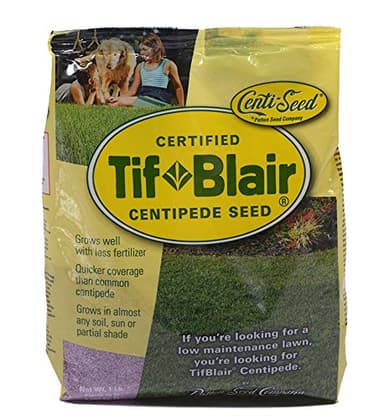
TifBlair Centipede Grass Seed (1 lb, covers up to ~4,000 sq ft)
The improved TifBlair centipede cultivar for acidic, low-input southeastern lawns; 1 lb covers a full lawn at centipede's low seeding rate.
As an Amazon Associate we earn from qualifying purchases.
Weed Control
Centipede's moderate density means it's less able to crowd out weeds than Bermuda or even St. Augustine. A healthy Centipede lawn provides decent weed suppression, but it doesn't have the aggressive, smothering growth habit that makes Bermuda nearly weed-proof when thick. Pre-emergent herbicides are especially important for Centipede lawns because prevention is far easier than cure.
Pre-Emergent Herbicides (Prevention)
Pre-emergents are your primary weed defense in a Centipede lawn. They create a chemical barrier in the top layer of soil that prevents weed seeds from germinating.
- Spring application: Apply when soil temperature reaches 55°F at a 4-inch depth. This prevents crabgrass, goosegrass, and other summer annual weeds. In the Centipede growing range, that's typically mid-March to early April
- Fall application: Apply in late September to early October for winter annuals (Poa annua, henbit, chickweed)
- Products safe for Centipede: Prodiamine (Barricade) and pendimethalin (Pre-M) are the most commonly recommended pre-emergents for Centipede. Both are safe and effective at labeled rates
- The overseeding conflict: If you're seeding new Centipede areas, you cannot apply pre-emergent in those areas. Pre-emergent prevents grass seed germination just as effectively as weed seed germination. Plan your seeding and pre-emergent applications for different zones
Post-Emergent Herbicides (Treatment)
Important caution: Centipede is sensitive to certain herbicides that are safe on other warm-season grasses. Using the wrong product or the wrong rate can damage or kill your lawn. Here's what you need to know:
- NEVER use: MSMA, DSMA, or high rates of 2,4-D on Centipede. These will cause serious damage
- Use with caution: Three-way broadleaf herbicides (containing 2,4-D, dicamba, and MCPP) at the lowest label rate only. Higher rates risk Centipede damage
- Safe for grassy weeds: Sethoxydim (Vantage) is safe for Centipede and effective against most grassy weeds, including crabgrass that escaped pre-emergent
- Safe for sedges: Sulfentrazone and halosulfuron (Sedgehammer) are safe for Centipede
- Atrazine: Safe for Centipede and effective as both pre-emergent and post-emergent for many broadleaf weeds. Check local regulations, as atrazine is restricted in some areas
- Always check the label. Every herbicide label specifies compatible grass types. If Centipede isn't listed, don't risk it
Common Weeds and How to Handle Them
Crabgrass
The number one annual weed in Centipede lawns. Spring pre-emergent is your primary defense. If crabgrass breaks through, apply sethoxydim for post-emergent control while plants are young (before tillering). Mature crabgrass is harder to kill. Remember that crabgrass is annual and dies with the first frost, so late-season plants may not be worth treating.
Tropical Signalgrass
Common in Centipede lawns across the Southeast. It's a perennial grassy weed that resembles crabgrass but doesn't die in winter. Apply sethoxydim for post-emergent control. Multiple applications may be needed for established stands.
Broadleaf Weeds (Clover, Plantain, Spurge)
Spot-treat with a three-way broadleaf herbicide at the lowest rate labeled for Centipede. Apply when weeds are actively growing, temperatures are between 65-85°F, and no rain is expected for 24 hours. For small infestations, hand-pulling is the safest approach.
Dollarweed
Round, coin-shaped leaves that indicate overwatering. Reduce irrigation first. If dollarweed persists after cutting back water, spot-treat with atrazine or a broadleaf herbicide.
Sedges
Nutsedge and kyllinga are common in the wet conditions that Centipede sometimes grows in. Treat with halosulfuron (Sedgehammer), which is safe for Centipede. You'll typically need 2 applications.
Cultural Weed Prevention
The best weed control for Centipede is a dense, healthy lawn maintained at the right height (2 inches) with proper pH and minimal but adequate fertility. A thick Centipede canopy shades the soil surface effectively. Thin, stressed Centipede with visible soil between the stolons is an invitation for weeds. Address the cause of thinning (pH problems, over-fertilization, pest damage, compaction) and the weed pressure decreases naturally.
Recommended Products
- 1Check price
 Top pick
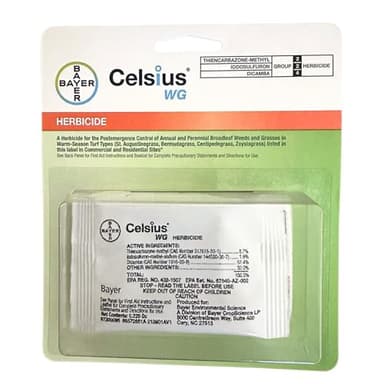
Celsius WG Herbicide (Easy Mix Packet)
Warm-season post-emergent that controls 150+ broadleaf, grassy, and sedge weeds and stays safe on bermuda, zoysia, centipede, and St. Augustine, including in summer heat. Not labeled for cool-season lawns.
- 2Check price
 Best value
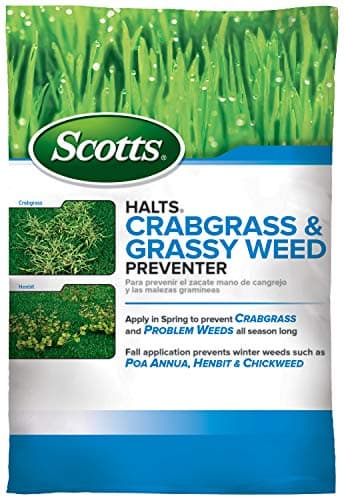
Scotts Halts Crabgrass and Grassy Weed Preventer
Granular pre-emergent for homeowners who want a simple crabgrass-prevention product before soil temperatures hit the danger zone.
- 3Check price
 Also great
IMAGE Southern Lawn Weed Killer
Broadleaf weed killer labeled for several southern grasses, including St. Augustine, centipede, bahiagrass, buffalograss, and zoysia.
As an Amazon Associate we earn from qualifying purchases.
Pest & Disease Management
Centipede has some unique pest and disease challenges that differ significantly from Bermuda or St. Augustine. The most frustrating aspect is that Centipede's two worst pests, ground pearls and nematodes, have no effective chemical controls. Managing Centipede health is more about cultural practices and maintaining the right soil conditions than it is about spraying products.
Centipede Decline: The Number One Problem
I'm listing this first because it affects more Centipede lawns than any actual disease or pest. Centipede decline isn't a single disease. It's a syndrome caused by one or more cultural mistakes, usually some combination of:
- Over-fertilization: Too much nitrogen pushes top growth that the shallow root system can't support
- High soil pH: Above 6.5, iron becomes unavailable and the grass slowly starves
- Compacted soil: Restricts the already-shallow root system even further
- Thatch buildup: Excessive thatch prevents water and nutrients from reaching roots
- Improper mowing: Cutting too low damages the crowns and stolons
The lawn gradually thins and dies in patches, often starting in the areas that receive the most sun and traffic. The homeowner panics and applies more fertilizer, which accelerates the decline. By the time they call for help, the damage is often extensive.
The fix: Get a soil test. Correct pH if it's above 6.0. Stop all fertilizer for the remainder of the season. Let the grass recover on its own (it can take an entire growing season for severely stressed Centipede to rebuild). Resume with minimal fertilizer (1 lb N per 1,000 sq ft per year maximum) the following spring. This is one of the few lawn problems where "stop doing things" is the correct treatment.
Common Diseases
Large Patch (Rhizoctonia solani)
Circular patches of thinning, yellowing turf, typically 1-5 feet in diameter, that appear in spring and fall when temperatures are between 60-75°F. The outer margin of the patch often has a yellow-orange "smoke ring" where the fungus is actively expanding. Pull a blade from the margin and you'll see the leaf sheath is rotted and separates easily from the stolon.
What triggers it: Excess nitrogen in fall (the most common trigger), poor drainage, heavy thatch, and evening watering. If you're fertilizing Centipede in September or October, you're practically inviting large patch.
Prevention: Stop all fertilizer by August. Improve drainage in low areas. Water only in the morning. Reduce thatch through core aeration. If you've had large patch for 2+ consecutive years, apply a preventive fungicide (azoxystrobin or propiconazole) in early October when soil temps drop to 70°F.
Recovery: Centipede recovers slowly from large patch. The grass usually fills back in during the following summer, but it takes the full growing season. Do not try to speed recovery with nitrogen, which can trigger a recurrence.
Dollar Spot
Small circular patches (roughly silver-dollar sized) of straw-colored turf with an hourglass-shaped lesion on individual blades. Dollar spot in Centipede usually indicates the lawn needs a light nitrogen application. A properly timed 0.5 lb N per 1,000 sq ft application typically resolves dollar spot without fungicide.
Fairy Ring
Circular rings of dark green grass (sometimes with mushrooms) caused by fungi decomposing organic matter in the soil. Mostly cosmetic in Centipede lawns. Core aerate through the ring to improve water penetration. In severe cases where the soil becomes hydrophobic (water-repellent), apply a soil surfactant.
Common Pests
Ground Pearls
These are tiny scale insects (family Margarodidae) that attach to Centipede roots and feed on the sap. They're called "ground pearls" because the immature stage forms a round, pearl-like cyst in the soil that's visible to the naked eye (about 1-2mm in diameter, yellowish to brown). Ground pearls are the most damaging pest for Centipede, and here's the frustrating reality: there are no effective chemical controls. No insecticide currently available reliably kills ground pearls without also destroying the lawn.
Signs: Irregular patches of thin, yellowing, or dead turf that don't respond to water, fertilizer, or fungicide. Pull up affected turf and look at the roots. The pearl-like cysts attached to roots confirm the diagnosis.
Management: Maintain the healthiest possible lawn to help it tolerate the damage. Correct pH, fertilize conservatively, water properly, and keep stress to a minimum. For severely damaged areas, strip the dead turf, replace the top 2-3 inches of soil (to remove the cyst population), and re-sod or re-seed. Some turf professionals report that maintaining slightly higher nitrogen rates (but still within Centipede's range) helps the grass outgrow moderate ground pearl damage.
Nematodes
Microscopic worms that damage roots, especially in sandy soils. Like ground pearls, there are no effective chemical controls available to homeowners. Symptoms are similar to ground pearls: irregular thinning and yellowing that doesn't respond to water or fertilizer. A nematode assay from your extension office (a specific soil test) is the only way to confirm nematode damage versus other root problems.
Management: Build soil health with organic matter (compost topdressing encourages beneficial organisms that suppress nematodes). Maintain proper cultural practices. In severe cases, TurfVive (a biological nematicide) shows some promise but results are inconsistent.
Spittlebugs
Two-lined spittlebugs leave distinctive white, frothy masses on the stems and at the soil surface. The nymphs hide inside this spittle mass while feeding on the grass. Damage is usually cosmetic (slight browning), but heavy infestations can cause significant turf decline.
Treatment: For light infestations, wash off the spittle masses with a strong spray of water. For heavy infestations, apply bifenthrin or carbaryl. Mow the lawn before treatment to improve spray contact with the insects at the base of the turf.
Mole Crickets
These tunneling insects are less common in Centipede than in Bermuda or Bahia, but they do occur, especially in sandy soils. They uproot grass by tunneling near the surface, creating raised trails and thin, damaged areas. Apply bifenthrin or a mole cricket bait in late spring when nymphs are small and near the surface.
Aeration & Dethatching
Centipede needs aeration and dethatching less frequently than more aggressive grasses like Bermuda. Its slow growth rate means thatch accumulates slowly, and its preference for sandy, well-drained soils means compaction is often less of an issue. When you do aerate or dethatch, you need to be gentle. Centipede's slow recovery means any damage from aggressive mechanical treatments takes weeks to months to repair.
Core Aeration
Why and When to Aerate
Aeration relieves soil compaction, improves water infiltration, and introduces soil organisms into the thatch layer. For Centipede, the primary benefit is improving water and nutrient delivery to that shallow (2-3 inch) root zone.
- Best time: Late spring (May to June), after full green-up and during active growth. The grass needs to be growing vigorously enough to recover from the aeration holes
- Frequency: Every 1-2 years for clay soils or high-traffic areas. Every 2-3 years for sandy soils with minimal compaction. If your Centipede grows in sandy soil and doesn't get much traffic, you may only need aeration every 3 years
- Avoid fall aeration. Centipede's slow growth means it won't fill in the holes before dormancy, leaving exposed soil that's vulnerable to winter weed invasion and erosion
- Soil conditions: Aerate when soil is moist but not waterlogged. The tines need to penetrate cleanly and pull complete plugs. Water the day before if conditions are dry
How to Aerate
- Use a core aerator that pulls 2-inch plugs. Spike aerators are not effective and can actually increase compaction around the holes
- One pass is usually sufficient for Centipede. The lawn doesn't need the aggressive double-pass treatment that Bermuda handles easily
- Leave the plugs on the lawn to break down naturally. They decompose within 2-3 weeks in warm weather
- Follow with light watering to help the plugs break down and settle
- Recovery is slower than other warm-season grasses: expect 4-6 weeks for aeration holes to fill in completely. Plan accordingly and don't aerate before any event where lawn appearance matters
- After aeration is a good time for a light fertilizer application (0.5 lb N per 1,000 sq ft) if you haven't already applied your annual allotment. The open channels allow nutrients to reach the root zone directly
Dethatching
Centipede builds thatch slowly due to its slow growth rate. A thin thatch layer (under 1/2 inch) is actually beneficial for Centipede. It insulates the shallow root system from heat extremes, retains some soil moisture, and provides a physical buffer for the stolons and crowns. Do not dethatch simply because you can see some thatch. Only address it when the layer exceeds 1/2 inch and is genuinely blocking water from reaching the soil.
How to Check Thatch Depth
Cut a small wedge of turf with a knife or sharp spade, about 3 inches deep. Look at the cross-section and measure the brown, spongy layer between the green grass blades and the actual soil. Under 1/2 inch? Leave it alone. Over 1/2 inch? Consider intervention.
When and How to Dethatch
- Timing: Late spring only (May to June), during peak growth. This is the only time Centipede has enough growth energy to recover
- Use a light touch. Aggressive dethatching (power raking at a deep setting) can devastate a Centipede lawn. The stolons are easily ripped out, and the slow growth rate means bare areas persist for months. Set a vertical mower with blades high, making a shallow pass rather than an aggressive one
- Better alternative: Core aeration is almost always a better approach for Centipede than mechanical dethatching. Aeration breaks up thatch by introducing soil microorganisms into the thatch layer (they decompose it naturally) without the physical damage to stolons that dethatching causes. For moderate thatch (1/2 to 3/4 inch), two perpendicular aeration passes are usually sufficient
- Recovery time: Even light dethatching leaves Centipede looking rough for 4-6 weeks. Plan accordingly
Preventing Thatch Buildup
Prevention is far easier than treatment with Centipede:
- Core aerate every 1-2 years. This introduces thatch-decomposing organisms from the soil cores
- Don't overfertilize. Excess nitrogen accelerates growth (and thatch production) beyond what Centipede's natural pace can handle. Stick to 1-2 lbs N per 1,000 sq ft per year
- Mulch clippings. Clippings do NOT cause thatch. This is a persistent myth. Thatch comes from stems, stolons, and roots. Clippings are leaf material that decomposes quickly. Mulching returns nutrients without adding thatch
- Maintain proper soil pH. The beneficial microorganisms that decompose thatch are more active in the mildly acidic conditions Centipede prefers. Alkaline soil (from liming) reduces microbial decomposition, allowing thatch to accumulate faster
- Avoid pesticide overuse. Broad-spectrum insecticides can kill the beneficial organisms in the thatch layer that help break it down